At least 100,000 Australians, including WikiLeaks founder Julian Assange, marched for Gaza across the Sydney Harbour Bridge in the pouring rain at a demonstration on Sunday.
It wasn’t that long ago when I sincerely wondered if we’d ever see Assange’s face again, let alone in public, let alone in Sydney, let alone heading up what had to be one of the largest pro-Palestine rallies ever held in Australia. Dare to be encouraged. The light is breaking through.
The western political/media class is fuming with outrage about images of Israeli hostages who are severely emaciated, which just says so much about how dehumanized Palestinians are in western society. Everyone stop caring about hundreds of thousands of starving Palestinians, it turns out two Israeli hostages are starving in the same way for the same reason.
Israel’s Foreign Ministry has announced that in order to improve “public diplomacy” efforts the term “hasbara” will no longer be used, because people have come to associate it with lies and propaganda.
“Long referred to as hasbara, a term used to denote both public relations and propaganda that has been freighted with negative baggage in recent years, the ministry now brands its approach as toda’a — which translates to ‘awareness’ or ‘consciousness’ — an apparent shift toward broader, more proactive messaging.
That “negative baggage” would of course be public disgust at the nonstop deluge of lies that Israel and its apologists have been spouting for two years to justify an act of genocide. Westerners have grown increasingly aware that Israel and its defenders have a special word for their practice of manipulating public narratives about their beloved apartheid state, so they’re changing the word.
Simply stopping the genocide is not considered as an option. Simply ceasing to lie is not considered as an option. They’re just changing the word they use for their lies about their genocide.
One of the reasons Israel’s supporters love to hurl antisemitism accusations at its critics is because it’s a claim that can be made without any evidence whatsoever. It’s not an accusation based on facts, it’s an assertion about someone’s private thoughts and feelings, which are invisible. Support for Israel doesn’t lend itself to arguments based on facts, logic and morality, so they rely heavily on aggressive claims about what’s happening inside other people’s heads which cannot be proved or disproved.
It’s entirely unfalsifiable. I cannot prove that my opposition to an active genocide is not in fact due to an obsessive hatred of a small Abrahamic religion. I cannot unscrew the top of my head and show everyone that I actually just think it’s bad to rain military explosives on top of a giant concentration camp full of children, and am not in fact motivated by a strange medieval urge to persecute Jewish people. So an Israel supporter can freely hurl accusations about what’s going on in my head that I am powerless to disprove.
It’s been a fairly effective weapon over the years. Campus protests have been stomped out, freedom of expression has been crushed, entire political campaigns have been killed dead, all because it’s been normalized to make evidence-free claims about someone’s private thoughts and feelings toward Jews if they suggest that Palestinians deserve human rights.
“I once asked someone I casually know, an ardent Zionist, ‘what could Israel do that would cause you not to support it?’. He was silent for a moment before looking at me and said, ‘Nothing.’”
This is horrifying, but facts in evidence indicate that it’s also a very common position among Zionists. If you’re still supporting Israel at this point, there’s probably nothing it could do to lose your support.
The Israeli media has decided not to report on the horrors that the IDF [Israel Defense Forces] is perpetrating in Gaza. You simply will not see it on Israeli television………………….. the vast majority of the population simply does not want to know about it.”
The politics of genocide in the United States involves papering over the big gap between the opinions of the electorate and the actions of the U.S. government. While the partnership between the governments of Israel and the United States has never been stronger, the partnership between the people of Israel and the United States has never been weaker. But in the USA, consent of the governed has not been necessary to continue the axis of genocide.
For decades, countless U.S. officials have proclaimed that the bonds between the United States and Israel are unbreakable. Now, the ties that bind are laced with genocide. The two countries function as accomplices while methodical killing continues in Gaza, with both societies directly – and differently – making it all possible.
The policies of Israel’s government are aligned with the attitudes of most Jewish Israelis. In a recent survey, three-quarters of them (and 64 percent of all Israelis) said they largely agreed with the statement that “there are no innocent people in Gaza” – nearly half of whom are children.
“There is no more ‘permitted’ and ‘forbidden’ with regard to Israel’s evilness toward the Palestinians,” dissident columnist Gideon Levy wrote three months ago in the Israeli newspaper Haaretz. “It is permitted to kill dozens of captive detainees and to starve to death an entire people.” The biggest Israeli media outlets echo and amplify sociopathic voices. “Genocide talk has spread into all TV studios as legitimate talk. Former colonels, past members of the defense establishment, sit on panels and call for genocide without batting an eye.”
Last week, Levy provided an update: “The weapon of deliberate starvation is working. The Gaza ‘Humanitarian’ Foundation, in turn, has become a tragic success. Not only have hundreds of Gazans been shot to death while waiting in line for packages distributed by the GHF, but there are others who don’t manage to reach the distribution points, dying of hunger. Most of these are children and babies…. They lie on hospital floors, on bare beds, or carried on donkey carts. These are pictures from hell. In Israel, many people reject these photos, doubting their veracity. Others express their joy and pride on seeing starving babies.”
Unimpeded, a daily process continues to exterminate more and more of the 2.1 million Palestinian people who remain in Gaza – bombing and shooting civilians while blocking all but a pittance of the food and medicine needed to sustain life. After destroying Gaza’s hospitals, Israel is still targeting healthcare workers (killing at least 70 in May and June), as well as first responders and journalists.
The barbarism is in sync with the belief that “no innocent people” are in Gaza. A relevant observation came from Aldous Huxley in 1936, the same year that the swastika went onto Germany’s flag: “The propagandist’s purpose is to make one set of people forget that certain other sets of people are human.” Kristallnacht happened two years later.
Renowned genocide scholar Omer Bartov explained during an interview on Democracy Now! in mid-July that genocide is “the attempt to destroy not simply people in large numbers, but to destroy them as members of a group. The intent is to destroy the group itself. And it doesn’t mean that you have to kill everyone. It means that the group will be destroyed and that it will not be able to reconstitute itself as a group. And to my mind, this is precisely what Israel is trying to do.”
Bartov, who is Jewish and spent the first half of his life in Israel, said:
“What I see in the Israeli public is an extraordinary indifference by large parts of the public to what Israel is doing and what it’s done in the name of Israeli citizens in Gaza. In part, it has to do with the fact that the Israeli media has decided not to report on the horrors that the IDF [Israel Defense Forces] is perpetrating in Gaza. You simply will not see it on Israeli television. If some pictures happen to come in, they are presented only as material that might be used by foreign propaganda against Israel. Now, Israeli citizens can, of course, use other media resources. We can all do that. But most of them prefer not to. And I would say that while about 30 percent of the population in Israel is completely in favor of what is happening, and, in fact, is egging the government and the army on, I think the vast majority of the population simply does not want to know about it.”
In Israel, “compassion for Palestinians is taboo except among a fringe of radical activists,” Adam Shatz wrote last month in the London Review of Books. At the same time, “the catastrophe of the last two years far exceeds that of the Nakba.” The consequences “are already being felt well beyond Gaza: in the West Bank, where Israeli soldiers and settlers have presided over an accelerated campaign of displacement and killing (more than a thousand West Bank Palestinians have been killed since 7 October); inside Israel, where Palestinian citizens are subject to increasing levels of ostracism and intimidation; in the wider region, where Israel has established itself as a new Sparta; and in the rest of the world, where the inability of Western powers to condemn Israel’s conduct – much less bring it to an end – has made a mockery of the rules-based order that they claim to uphold.”
The loudest preaching for a “rules-based order” has come from the U.S. government, which makes and breaks international rules at will. …………………………………
Israel’s grisly performance as “a new Sparta” in the region is coproduced by the Pentagon, with the military and intelligence operations of the two nations intricately entangled. The Israeli military has been able to turn Gaza into a genocide zone with at least 70 percent of its arsenal coming from the United States.
………………………………..The politics of genocide in the United States involves papering over the big gap between the opinions of the electorate and the actions of the U.S. government. While the partnership between the governments of Israel and the United States has never been stronger, the partnership between the people of Israel and the United States has never been weaker. But in the USA, consent of the governed has not been necessary to continue the axis of genocide. https://znetwork.org/znetarticle/the-genocidal-partnership-of-israel-and-the-united-states/
US space agency Nasa will fast-track plans to build a nuclear reactor on the Moon by 2030, according to US media. It is part of US ambitions to build a permanent base for humans to live on the lunar surface. According to Politico, the acting head of Nasa referred to similar plans by China and Russia and said those two countries “could potentially declare a keep-out zone” on the Moon. But questions remain about how realistic the goal and timeframe are, given recent and steep Nasa budget cuts, and some scientists are concerned that the plans are driven by geopolitical goals.
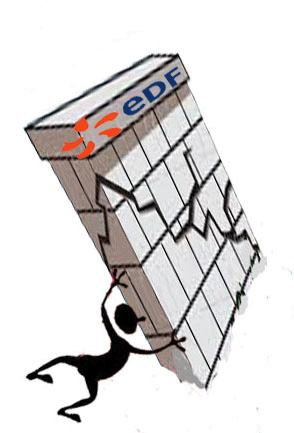
rance’s state-run utility EDF is planning to reduce its overseas sales workforce by 60 positions including 10 in management, and withdraw from certain international nuclear projects to concentrate on a domestic construction programme under its new CEO Bernard Fontana, as reported by Reuters. France is retreating from its position as a global leader in nuclear power, amid rising global demand, allowing new competitors to emerge as high costs and design challenges hinder its international competitiveness.
M. Fontana aims to accelerate the modernisation of France’s nuclear fleet, expressing a commitment to focus on domestic projects rather than the international operations that have previously included reactor construction in China, Finland and Britain. Recent changes include focusing on tenders in the Netherlands, Sweden and Finland, while deprioritising projects in Poland, India and Canada. This shift is expected to cut costs and reallocate resources to higher-priority initiatives. EDF’s recent international projects have experienced significant delays and cost overruns. In 2024, it lost a bid for two new reactors in the Czech Republic to South Korea’s KHNP.
The French government identifies the new French nuclear programme as a priority. President Emmanuel Macron announced plans in early 2022 for six new reactors to replace ageing plants, with projected costs of €67bn ($78.7bn). But the company is indebted owing to costly repairs made to its nuclear fleet in recent years. EDF is considering the sale of certain renewable energy assets in North America and Brazil.
Workers supplying the Sellafield nuclear site have voted in favour of strike action over pay.
Almost 40 workers at Fellside Combined Heat and Power facility, the plant supplying the steam and power to the Cumbria site, will take industrial action on 19 and 20 August after rejecting two pay offers.
Owned by PX Ltd, Unite workers are also undertaking an overtime ban.
PX Ltd said it was unable to comment as another meeting was due to take place with the union on Wednesday. A spokesperson for Sellafield said the site was not “directly involved in the dispute”.
The final pay offer was 3.5 to 5% depending on a set of criteria, Unite said.
Unite general secretary, Sharon Graham, said: “PX Limited can clearly afford to pay our members for the vital work they do but is choosing to put profits over people.
“This dispute is completely caused by the employer’s greed.”
A spokesperson for Sellafield added: “As always, the safety and security of the Sellafield site, our workforce and the local community will be our priority during any industrial action.”
Correct nomenclature, as I have long argued, is essential for our understanding of things, people, events. Unless we name something properly we will not know how to judge it or what the right course of action may be in response to what it does. This is why our public discourse is so mixed up in the matter of what to call things: Naming something rightly is powerful; so is naming something wrongly, or refusing to name it all.
We are now urged — and required by law in many jurisdictions — to accept a definition of “antisemitism” that is beyond preposterous. With the assistance of various committees and Jewish groups, the International Holocaust Remembrance Alliance has crafted a “working definition” of this term that, to sum up its many clauses, makes criticism of Israel or Zionism antisemitic. This is an absurd misnomer — purposeful and very consequential.
Roughly three dozen states now accept the IHRA definition; as Chris Hedges reported this week, New Jersey is currently debating a law to this effect. An increasing number of institutions, notably but not only universities, are also using the IHRA definition. As Hedges asserts in the above-linked piece, this is a straight-out attack on free speech. Taking the IHRA definition to its logical conclusion, we are headed in the direction of thought control.
There are other cases — many, indeed — wherein the accepted nomenclature is critical. If you do not call the United States an empire you won’t be able to see why and how it has become, for some decades now, the No. 1 most violent, destructive and disruptive force in global affairs. And since we are not supposed to see any such thing, you cannot call the United States an empire and expect to be taken seriously in what is quaintly known as — another misnomer — polite company.
We come now to the question of Israel’s terror campaign in Gaza (and its escalating terror campaign in the West Bank). What shall we call these daily depravities? Do we or do we not witness a genocide?
If there is a more contentious case of getting the name right, I cannot think of it. Call Israel’s assault on Gaza a genocide and you will understand the Zionist state one way and there will be legal ramifications; reject this term and you are wading around in “the right to defend itself” and other such notions — all of them as flimsy as that IHRA definition of antisemitism — and there will be no legal ramifications. It amounts to enabling justice or apologizing for limitless impunity.
I have never found the world to be very honest with itself. And it has been grossly dishonest since the autumn of 2023. For maybe 21 of these past 22 months, many people have insisted that Israel’s daily barbarities against the Palestinian people amount to a genocide. But the Gaza crisis has brought populations across the West face to face with their political impotence. In the seats of global power and among the media that serve them, Israel’s military aggressions and abuses of international law have gone unnamed. The consequences of this refusal can be measured any number of ways. The deaths of at least 60,000 Palestinians — and we can count this a conservative figure — are one of them.
Whether or not Israel is guilty of conducting a genocide should not be a question as the reality of its conduct enters its 22nd month. But it has been made a question, and at last this question-that-is-not-a-question begins to lose its power, its utility as a curtain drawn over Israel’s atrocities. This marks a significant advance, needless to say, in the right direction.
I have never found The New York Times to be very honest with itself, either. But when the once-but-no-longer newspaper of record takes to publishing opinion pieces (plural as of this week) that forthrightly accuse the Israelis not only of genocide but of genocidal intent, it is safe to conclude something of significance is in the hot summer winds.
We must be careful not to overstate what may come of a now-evident shift of opinion on Israel in high places — what and when. But in my read we are amid a sea change, a prelude to concerted action — legal, diplomatic, political, economic — against the Zionist regime.
Let us begin at the beginning. …………………………………………………………………………………………………………………………………………………………………………………………………
Authentic justice, to put this point briefly, is not near. But the honest naming of things brings the end of Israel’s barbarism nearer. Let us not miss which way those summer winds are blowing. They blow in the right direction. And we can expect more gusts. https://scheerpost.com/2025/08/04/patrick-lawrence-yes-its-a-genocide/
Micro beads on the palm. Microplastics in water from mismanaged plastic waste. Marine and ocean plastic pollution. Environmental problems. Hand drawn vector illustration.
Plastics are a grave, growing, and under-recognised danger to human and planetary health. Plastics cause disease and death from infancy to old age and are responsible for health-related economic losses exceeding US$1·5 trillion annually. These impacts fall disproportionately upon low-income and at-risk populations. The principal driver of this crisis is accelerating growth in plastic production—from 2 megatonnes (Mt) in 1950, to 475 Mt in 2022 that is projected to be 1200 Mt by 2060. Plastic pollution has also worsened, and 8000 Mt of plastic waste now pollute the planet.
Less than 10% of plastic is recycled. Yet, continued worsening of plastics’ harms is not inevitable. Similar to air pollution and lead, plastics’ harms can be mitigated cost-effectively by evidence-based, transparently tracked, effectively implemented, and adequately financed laws and policies. To address plastics’ harms globally, UN member states unanimously resolved in 2022 to develop a comprehensive, legally binding instrument on plastic pollution, namely the Global Plastics Treaty covering the full lifecycle of plastic. Coincident with the expected finalisation of this treaty, we are launching an independent, indicator-based global monitoring system: the Lancet Countdown on health and plastics. This Countdown will identify, track, and regularly report on a suite of geographically and temporally representative indicators that monitor progress toward reducing plastic exposures and mitigating plastics’ harms to human and planetary health.
Ukraine claims to have pulled off a major hacking operation, obtaining classified data on a new Russian nuclear submarine and revealing potential vulnerabilities as Moscow intensifies its military presence in the Arctic.
Boeing lands $2.8 billion deal to build next-gen nuclear communications satellites
The ESS satellites are central to U.S. nuclear command, control and communications.
Space News, 3 Aug 25,
WASHINGTON — Boeing won a $2.8 billion contract to develop a new generation of secure military satellites (Evolved Strategic Satellite Communications spacecraft) that will serve as the backbone of the United States’ nuclear command, control and communications network, the U.S. Space Force announced July 3.
The award marks a major milestone in the Pentagon’s effort to modernize its most hardened space-based communication infrastructure. The contract is part of the Evolved Strategic Satellite Communications program, or ESS, which will ultimately replace the current constellation built by Lockheed Martin under the Advanced Extremely High Frequency (AEHF) program.
Boeing edged out Northrop Grumman after a nearly five-year competition that began in 2020, when both aerospace giants were selected to develop prototype systems. The Space Force selected Boeing as the prime contractor for the next phase of the ESS program, which includes development and production of two satellites, with options for two more. If all options are exercised, the contract could reach $3.75 billion.
The first satellite delivery is slated for 2031.
Critical infrastructure for nuclear command
The ESS satellites are designed to provide jam-resistant, always-on communications for the U.S. military’s nuclear command, control, and communications (NC3) architecture. These satellites must function under the most extreme conditions — including in the wake of a nuclear strike — ensuring the President and senior military leaders can communicate securely with deployed forces anywhere in the world.
“The strategic communication mission requires protection, power and always-available capability, even through adversary attempts to interrupt our connectivity,” said Cordell DeLaPeña, the Space Force’s program executive officer overseeing the ESS effort.
Broader $12 billion program
While Boeing’s $2.8 billion development contract is the most visible component, it is only part of a broader $12 billion ESS program that also includes ground systems, cryptographic infrastructure, and user terminals. The terminals, which allow individual military branches to access the ESS network, are acquired separately.
Boeing said its satellite design draws on technology developed for its Wideband Global SATCOM (WGS) satellites and commercial spacecraft it built for SES’s O3b mPOWER broadband constellation.
“This win validates all the investments and innovations we’ve made in our satellite technology,” said Michelle Parker, vice president of Boeing Space Mission Systems.
The ESS satellites will operate in geostationary orbit — 22,000 miles above Earth — where they can provide persistent coverage to specific regions. The full constellation is expected to support global coverage, including the Arctic, an area of growing strategic interest.
The ESS constellation is being built to replace the AEHF network, which was designed and launched over the last two decades to provide similar survivable communications capabilities. Military leaders say growing threats from advanced anti-satellite weapons and electronic warfare systems demand more modern, flexible platforms.
The Space Force is using a cost-reimbursement contracting model for the initial satellite development, a structure more suited to high-risk, high-complexity projects. Under this arrangement, the government pays for allowable costs plus a negotiated profit margin — an approach often used when requirements are not yet fully known and involve extensive non-recurring engineering.
However, future satellites under the ESS program may be procured using fixed-price contracts, which shift more cost risk to the contractor and are generally used once designs mature and production stabilizes.
By April 1945, with the Nazi regime in a state of collapse and Japan’s defeat imminent, the threat that served as the original justification for the bomb’s development had all but vanished.
The true target of the first atomic bomb wasn’t, in fact, Tokyo, but Moscow, with the people of Hiroshima and Nagasaki sacrificed on the altar of American global imperial ambition.
Szilard emphasized that the atomic bomb wasn’t just a more powerful weapon but a fundamental transformation in the nature of warfare, an instrument of annihilation.
Oppenheimer explained, “When you see something that is technically sweet, you go ahead and do it and you argue about what to do about it only after you have had your technical success. That is the way it was with the atomic bomb.”
That climate of deference fostered a culture of complicity, where questions of social responsibility were subordinated to uncritical faith in authority.
What Can We Learn From the Birth of the Nuclear Era?
By Eric Ross, Common Dreams
In recent months, nuclear weapons have reemerged in global headlines. Nuclear-armed rivals India and Pakistan approached the brink of a full-scale war, a confrontation that could have become an extinction-level event, with the potential to claim up to 2 billion lives worldwide.
The instability of a global order structured on nuclear apartheid has also come into sharp relief in the context of the recent attacks on Iran by Israel and the United States. That system has entrenched a dangerous double standard, creating perverse incentives for the proliferation of world-destroying weaponry, already possessed by nine countries. Many of those nations use their arsenals to exercise imperial impunity, while non-nuclear states increasingly feel compelled to pursue nuclear weapons in the name of national security and survival.
Meanwhile, the largest nuclear powers show not the slightest signs of responsibility or restraint. The United States, Russia, and China are investing heavily in the “modernization” and expansion of their arsenals, fueling a renewed arms race. And that escalation comes amid growing global instability contributing to a Manichean world of antagonistic armed blocs, reminiscent of the Cold War at its worst.
The nuclear threat endangers not only global peace and security but the very continuity of the human species, not to speak of the simple survival of life on Earth. How, you might wonder, could we ever have arrived at such a precarious situation?
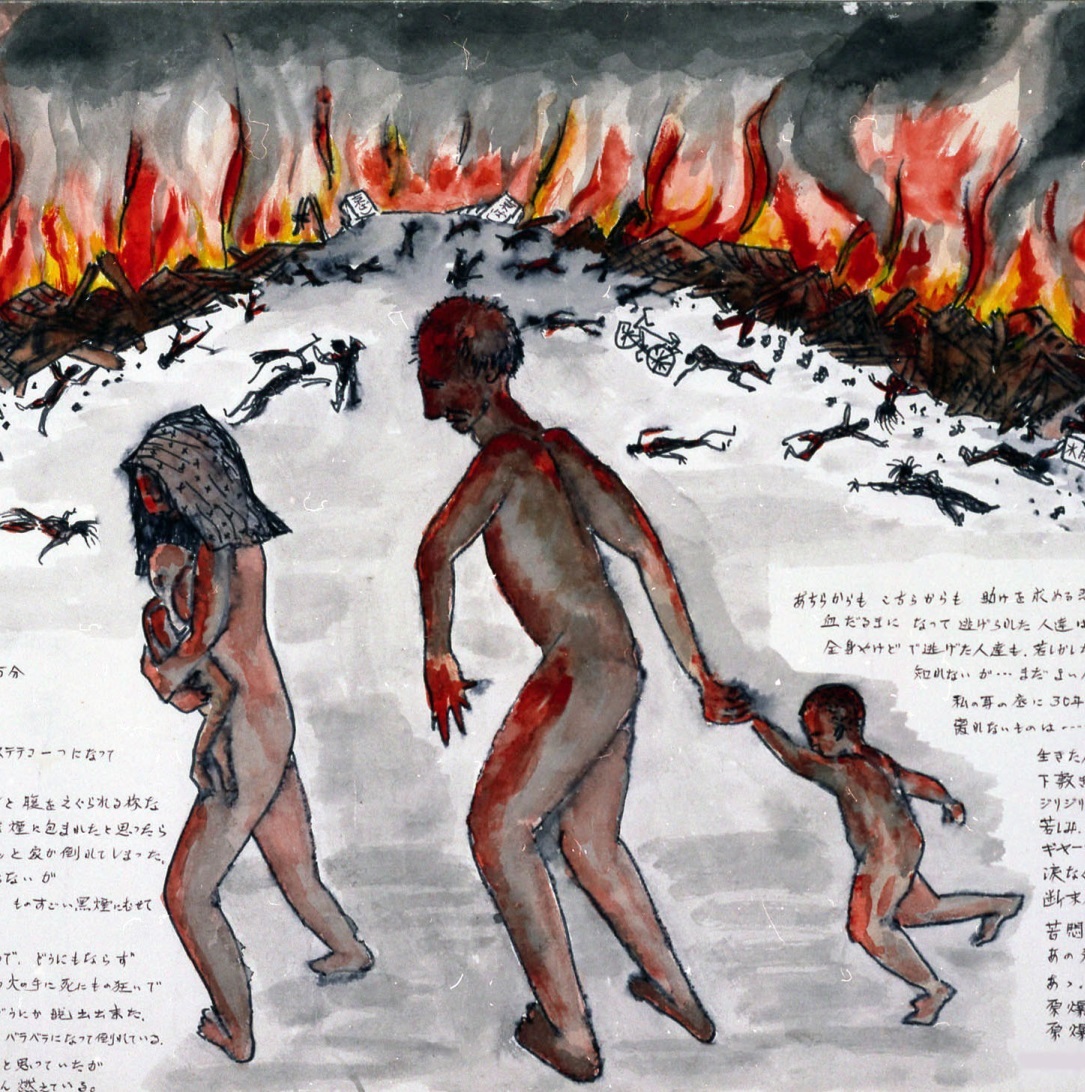
The current crisis coincides with the 80th anniversary of the Trinity Test, the first detonation of an atomic weapon that would soon obliterate the Japanese cities of Hiroshima and Nagasaki and so inaugurate the atomic age. So many years later, it’s worth critically reassessing the decisions that conferred on humanity such a power of self-annihilation. After all, we continue to live with the fallout of the choices made (and not made), including those of the scientists who created the bomb. That history also serves as a reminder that alternative paths were available then and that another world remains possible today.
A Tale of Two Laboratories
In the summer of 1945, scientists and technicians at Los Alamos National Laboratory in New Mexico worked feverishly to complete the construction of the atomic bomb. Meanwhile, their colleagues at the University of Chicago’s Metallurgical Laboratory mounted a final, ultimately unsuccessful effort to prevent its use.
The alarm spreading in Chicago stemmed from a sobering realization. The Manhattan Project that they had joined on the basis of a belief that they were in an existential arms race with Nazi Germany had, by then, revealed itself to be a distinctly one-sided contest. Until then, the specter of a possible German atomic bomb had conferred a sense of urgency and a veneer of moral legitimacy on what many scientists otherwise recognized as a profoundly unethical undertaking.
Prior to the fall of Berlin, Allied intelligence had already begun to cast serious doubt on Germany’s progress toward developing an atomic weapon. By April 1945, with the Nazi regime in a state of collapse and Japan’s defeat imminent, the threat that served as the original justification for the bomb’s development had all but vanished.
No longer represented as a plausible deterrent, the bomb now stood poised to become what Los Alamos Director J. Robert Oppenheimerwould describe shortly after the war as “weapons of terror, of surprise, of aggression… [used] against an essentially defeated enemy.”
For the scientists at Chicago, that new context demanded new thinking. In June 1945, a committee of physicists led by James Franck submitted a report to Secretary of War Henry Stimson warning of the profound political and ethical consequences of employing such a bomb without exhausting all other alternatives. “We believe,” the Franck Report stated, “that the use of nuclear bombs for an early, unannounced attack against Japan [would be] inadvisable.” The report instead proposed a demonstration before international observers, arguing that such a display could serve as a gesture of goodwill and might avert the need to use the bombs altogether.
One of that report’s signatories, Leo Szilard, who had been among the bomb’s earliest advocates, further sought to prevent what he had come to recognize as the catastrophic potential outcome of their creation. With Germany defeated, he felt a personal responsibility for reversing the course he had helped set in motion. Echoing concerns articulated in the Franck Report, he drafted a petition to be circulated among the scientists. While acknowledging that the bomb might offer short-term military and political advantages against Japan, he warned that its deployment would ultimately prove morally indefensible and strategically self-defeating, a position which would also be held by 6 of the 7 U.S. five-star generals and admirals of that moment.
Szilard emphasized that the atomic bomb wasn’t just a more powerful weapon but a fundamental transformation in the nature of warfare, an instrument of annihilation. He already feared Americans might come to regret that their own government had sown the seeds of global destruction by legitimizing the sudden obliteration of Japanese cities, a precedent that would render a heavily industrialized, densely populated country like the United States especially vulnerable.
Moreover, he concluded that using such weapons of unimaginable destructive power without sufficient military justification would severely undermine American credibility in future arms control efforts. He observed that the development of the bomb under conditions of extreme wartime secrecy had created an abjectly anti-democratic situation, one in which the public was denied any opportunity to deliberate on such an irrevocable and consequential decision.
As Eugene Rabinowitch, a co-author of the Franck Report (who would later co-found The Bulletin of Atomic Scientists), would note soon after, the scientists in Chicago were growing increasingly uneasy in the face of escalating secrecy: “Many scientists began to wonder: Against whom was this extreme secrecy directed? What was the sense of keeping our success secret from the Japanese? Would it have helped them to know that we had an atomic bomb ready?”
Rabinowitch concluded that the only “danger” posed by such a disclosure was that the Chicago scientists might be proven right, and Japan might surrender. “Since there was no justifiable reason to hold the bomb secret from the Japanese,” he argued, “many scientists felt that the purpose of deepened secrecy was to keep the knowledge of the bomb… from the American people.”
In other words, officials in Washington were concerned that a successful demonstration might deprive them of the coveted opportunity to use the bomb and assert their newly acquired monopoly (however temporary) on unprecedented power.
The Road to Trinity and the Cult of Oppenheimer
Seventy scientists at Chicago endorsed the Szilard Petition. By then, however, their influence on the project had distinctly diminished. Despite their early contributions, notably the achievement of the first self-sustained nuclear chain reaction in December 1942, the project’s center of gravity had shifted to Los Alamos.
Recognizing this, Szilard sought to circulate the petition among his colleagues there, too, hoping to invoke a shared sense of scientific responsibility and awaken their moral conscience in the critical weeks leading up to the first test of the weapon. Why did that effort fail? Why was there so little dissent, debate, or resistance at Los Alamos given the growing scientific opposition, bordering on revolt, that had emerged in Chicago?
One answer lies in Oppenheimer himself. In popular culture and historical scholarship, his legacy is often framed as that of a tragic figure: the reluctant architect of the atomic age, an idealist drawn into the ethically fraught task of creating a weapon of mass destruction compelled by the perceived exigencies of an existential war.
Yet the myth of him as a Promethean figure who suffered for unleashing the fundamental forces of nature onto a society unprepared to bear responsibility for it obscures the extent of his complicity. Far from being a passive participant, in the final months of the Manhattan Project, he emerged as a willing collaborator in the coordination of the coming atomic bombings of Hiroshima and Nagasaki.
When Oppenheimer and physicist Edward Teller (who would come to be known as “the father of the hydrogen bomb”) received Szilard’s petition, neither shared it. While Oppenheimer offered no response, Teller provided a striking explanation: “The things we are working on are so terrible that no amount of protesting or fiddling with politics will save our souls.” He further rejected the idea that he held any authority to influence the bomb’s use. “You may think it is a crime to continue to work,” he conceded, “but I feel that I should do the wrong thing if I tried to say how to tie the little toe of the ghost to the bottle from which we just helped it escape.”
Teller later claimed to be in “absolute agreement” with the petition, but added that “Szilard asked me to collect signatures… I felt I could not do so without first seeking Oppenheimer’s permission more directly. I did so and Oppenheimer talked me out of it, saying that we as scientists have no business meddling in political pressure of that kind… I am ashamed to say that he managed to talk me out of [it].”
Teller’s explanation was likely self-serving given his later acrimonious rift with Oppenheimer over the hydrogen bomb. Yet further evidence indicates that Oppenheimer actively sought to suppress debate and dissent. Physicist Robert Wilson recalled that upon arriving at Los Alamos in 1943, he raised concerns about the broader implications of their work and the “terrible problems” it might create, particularly given the exclusion of the Soviet Union, then an ally. The Los Alamos director, Wilson remembered, “didn’t want to talk about that sort of thing” and would instead redirect the conversation to technical matters. When Wilson helped organize a meeting to discuss the future trajectory of the project in the wake of Germany’s defeat, Oppenheimer cautioned him against it, warning that “he would get into trouble by calling such a meeting.”
The meeting nonetheless proceeded, with Oppenheimer in attendance, though his presence proved stifling. “He participated very much, dominating the meeting,” Wilson remembered. Oppenheimer pointed to the upcoming San Francisco Conference to establish the United Nations and insisted that political questions would be addressed there by those with greater expertise, implying that scientists had no role to play in such matters and ought to abstain from influencing the applications of their work.
Reflecting on his mindset at the time, Oppenheimer explained, “When you see something that is technically sweet, you go ahead and do it and you argue about what to do about it only after you have had your technical success. That is the way it was with the atomic bomb.” In a similar vein, his oft-quoted remark that “the physicists have known sin” was frequently misinterpreted. He was not referring, he insisted, to the “sin” of the destruction of Hiroshima and Nagasaki, but to pride for “intervening explicitly and heavy-handedly in the course of human history.”
When situated within this broader context of a professed commitment to scientific detachment, Oppenheimer’s behavior becomes more intelligible. In practice, however, his stated ideals stood in stark contrast to his conduct. While he claimed to reject political engagement, he ultimately intervened in precisely such a manner, using his position to advocate forcefully for the bomb’s immediate military use against Japan without prior warning. He emerged as a leading opponent of any prospective demonstration, cautioning that it would undermine the psychological impact of the bomb’s use, which could only be realized through a sudden, unannounced detonation on a relatively untouched, non-military target like the city of Hiroshima. This position stood in sharp contrast to that of the Chicago scientists, of whom only 15% supported using the bomb in such a manner.
That climate of deference fostered a culture of complicity, where questions of social responsibility were subordinated to uncritical faith in authority. Reflecting on that dynamic, physicist Rudolf Peierlsacknowledged, “I knew that Oppenheimer was on a committee and was briefing with the high-ups. I felt there were two things one could rely on: Oppenheimer to put the reasonable ideas across, and that one could trust people. After all, we are not terrorists at heart or anything… Both these statements might now be somewhat optimistic.”
Ultimately, the only member of Los Alamos to register dissent was Joseph Rotblat, who quietly resigned on ethical grounds after learning in November 1944 that there was no active Nazi atomic bomb program. His departure remained a personal act of conscience, however, rather than an effort to initiate a broader moral reckoning within the scientific community.
“Remember Your Humanity”
The legacy of Oppenheimer, a burden we all now carry, lies in his mistaking proximity to power for power itself. Rather than using his influence to restrain the bomb’s use, he exercised what authority he had to facilitate its most catastrophic outcome, entrusting its consequences to political leaders who soon revealed their recklessness. In doing so, he helped lay the groundwork for what President Dwight D. Eisenhower would, in his farewell address to Congress in 1961, warn against as “the disastrous rise of misplaced power.”
Yet we are not doomed. This history should also remind us that the development and use of nuclear weapons was not inevitable. There were those who spoke out and a different path might well have been possible. While we cannot know exactly how events would have unfolded had dissent been amplified rather than suppressed, we can raise our own voices now to demand a safer, saner future. Our collective survival may well depend on it. How much longer a world armed with nuclear weapons can endure remains uncertain. The only viable path forward lies in renewing a commitment to, as Albert Einstein and Bertrand Russell urged, “remember your humanity, and forget the rest.” With ever more nations developing increasingly powerful arsenals, one thing remains clear: As the Doomsday Clock moves ever closer to midnight, there is no time to waste.
Eric Ross is an organizer, educator, researcher, and PhD Candidate in the History Department at the University of Massachusetts Amhers
It was obvious in October 2023 that Israel intended to eliminate all Palestinians in Gaza, in part because you would never treat a population that way if you intended to leave survivors on your border. Because you’d know they’d seek revenge later on.
Call it the Inigo Montoya problem — if you kill someone’s father right in front of him, it’s a safe bet that he’s going to spend the rest of his life trying to kill you. If you intend to act in monstrous ways that fill young children with thoughts of revenge, then you need to get rid of the children, and you need to get rid of the women who will give birth to them. Otherwise you’re just creating a problem for your own children and grandchildren down the road.
The Nazis understood this. Heinrich Himmler famously said, “I did not feel I had a right to exterminate the men — i.e. kill them or have them killed — while allowing the children to grow up and take revenge upon our sons and grandsons. We had to reach the difficult decision of making this nation vanish from the face of the earth.”
The savagery of Israel’s post-October 7 onslaught was so horrific right off the bat that it was clear they didn’t intend to leave anyone alive in Gaza. It was clear they intended to kill as many people as possible and force any survivors to leave, because there’s no way they’d be acting with such sadistic bloodlust if they had any plans to leave survivors within striking distance of themselves.
And that is exactly how it has played out. They’ve intentionally turned Gaza into an uninhabitable wasteland while creating a waking nightmare of death and unfathomable suffering, and Trump and Netanyahu are openly saying that it’s not going to end until all the Palestinians have been removed one way or another.
If you’re going to rape and torture a child, you probably don’t intend to then drop them off at the nearest hospital when you are done with them, because you know the police will be at your door the next day. If you’re going to murder your enemy’s wife and kids in front of him, you probably don’t intend to leave him alive to seek revenge at a later date. Once you’ve gone all-in on perpetrating a sufficiently terrible act, you often need to do some extra killing on top of it to protect yourself from the consequences of your actions.
That’s one of the many reasons why it has always been clear that Israel’s intentions for Gaza are genocide and ethnic cleansing. Even if Israeli officials hadn’t been making openly genocidal statements, and even if genocidal sentiments hadn’t been proliferating throughout the collective consciousness of apartheid Israel for many years — hell, even if you knew absolutely nothing about Israel and Palestine and just looked at the reality on the ground in Gaza — it would still have been obvious to you that Israel did not intend to leave any of those people there. Just because of where they were located and how Israel was treating them.
So when people claim at this late date that they are coming to the reluctant conclusion that Israel is committing genocide in Gaza, I have a hard time believing them. It was obvious to anyone with a basic understanding of human nature that Israel had no intention of leaving any survivors of this mass atrocity on its border. People are just covering their own asses and trying to wash their hands of their guilt for their complicity in a 21st century holocaust over the past 22 months.
In the course of a week, Canada accused Israel of violating international law, announced Ottawa will recognize a Palestinian state, and sent aid to be airlifted to Gaza. But a shocking new report makes clear that the proposed 51st state still arms Israel’s death machine.
Canada sent at least 391 shipments containing bullets, military equipment, weapons parts, aircraft components, and communication devices to Israel since late 2023, despite Ottawa’s repeated claims to have ended weapons deliveries to the apartheid state, a new report has revealed.
By sifting through data from the Israel Tax Authority, researchers at Arms Embargo Now discovered what they called “a continuous, massive pipeline of Canadian weapons flowing directly to Israel” comprising over 400,000 bullets, multiple shipments of cartridges, and a variety of parts for Israel’s fleet of F-35 fighter jets. Since mid-2024, Israel received four shipments of Doppler Velocity Sensors, which provide navigation data needed for the F-35’s target acquisition and weapons delivery systems, five shipments of lightweight composite panels used by the planes, and two shipments of Modular Product Testers, which are used to diagnose problems on Israel’s air force fleet.
Of the 391 deliveries identified, the report’s authors were able to track direct 47 shipments of military gear with detailed commercial shipping records sent by Canadian companies to Israeli companies. 38 of those shipments were sent to Israel’s biggest military firm, Elbit Systems, and its various subsidiaries.
In March 2024, the previous Canadian administration claimed to have halted all permits for arms shipments to Tel Aviv, after the legislature passed a non-binding motion declaring that “Israel must respect international humanitarian law” and that “the price of defeating Hamas cannot be the continuous suffering of all Palestinian civilians.” In the following months, then-Prime Minister Justin Trudeau insisted Canada no longer facilitated Israel’s horrors, going as far as publicly chiding one concerned Palestinian, “we’ve stopped exports of arms to Israel.”
But just before the apparent shift in policy, Ottawa greenlit a massive number of permits for Israeli-bound weapons deliveries, front-loading hundreds of orders in an apparent attempt to preemptively circumvent their own ban. Of the $30.6 million in military equipment sent to Israel in 2023 – the highest yearly total on record – $28.5 million was approved between October and December. Even today, many of those shipments continue to be fulfilled. To date, just 30 permits for military deliveries have been cancelled by Canada, which made that decision following a similar move by the UK in mid-2024 after the International Court of Justice ruled that Israel was violating international law.
“The Canadian government appears to have pursued a strategy of rushing through a record-breaking number of arms export permit approvals to Israel prior to publicly committing to pause approving any new ones,” Arm Embargo Now explained in their report. “This was then quietly undermined by a series of exceptions and loopholes,” researchers wrote, suggesting “the government’s policy shifts were… aimed at diffusing public criticism while maintaining material support.”
Other Canadian institutions to have assisted Israel’s genocidal siege include a number of its universities. A separate report published by Just Peace Advocates found that in 2023 up to $100 million went completely untaxed as it was funneled to Israeli universities from their ‘charitable’ arms in Canada. The money went to a variety of schools with strong ties to occupation forces, including Israel’s self-described “academic home of soldiers,” Bar-Ilan University, which took in around $4 million that year.
In addition, nearly $17 million was sent tax-free to Ben-Gurion University in 2023, which bragged of having “transformed itself into a back office for war” in October that year. Months later, Ben-Gurion announced the creation of two new “elite academic programs for future [Israeli military] recruits, as part of preparations for the transfer of IDF technological units to southern Israel.” The university says it works “in tandem” with the Israeli Air Force Flight School and claims to have trained around 1,000 pilots for military service.
Also receiving untaxed funds was Israel’s Weizmann Institute of Science, which has been described as “the incubator of most nuclear weapons work in Israel.” Weizmann has well-documented ties to a variety of Israeli spies implicated in efforts to steal nuclear secrets, and drew international attention after it was partially destroyed in a retaliatory Iranian airstrike on June 15.
According to Just Peace Advocates, Canadian sources delivered over $36 million to the Weizmann Institute in 2023.
Trades unions and peace groups demand democracy that delivers peace and prosperity for all
A joint statement anchored by the International Trade Union Confederation, Greenpeace International, the International Peace Bureau, the International Campaign to Abolish Nuclear Weapons, Oxfam and 350.org and signed by 17 peace, justice and disarmament groups was released in anticipation of the commemoration of 80 years since atomic bombs were dropped on the Japanese cities of Hiroshima and Nagasaki.
For Democracy that Delivers Peace and Prosperity for All
As we approach the 80th anniversary of the atomic bombings of Hiroshima and Nagasaki, we, the undersigned organisations, call on governments and international institutions to reaffirm their commitment to a world free from nuclear weapons, honouring the demand of the hibakusha and 2024 Nobel Peace laureate Nihon Hidankyo, and to prioritize sustainable development over militarism.
As organisations from the peace, labour, economic justice, and climate movements, we share the belief that collective security can only be ensured through solidarity, by meeting the basic needs of all people.
The Billionaire Coup: An Existential Threat to Democracy, Peace, and Security
Unfortunately, today we face a growing threat to our collective security from the concentration of power and wealth in the hands of an unholy alliance of billionaires and far-right political forces. This billionaire coup against democracy is already capturing governments and subverting multilateral institutions. A small group of the wealthiest individuals and corporations has successfully reshaped policies, economies, and democracies to serve their interests, undermining the common good. This elite’s influence is driving the rise of authoritarian regimes, robbing the people of collective power, accelerating military build-up and climate change, and diverting resources away from human development and peacebuilding.
The economic consequences of this concentration of wealth are staggering. In 2024, the wealthiest 1% of the global population held more wealth than the bottom 95% of the world’s population combined. These extreme inequalities perpetuate a cycle of poverty, social unrest, and political instability, contributing to rising authoritarianism. The impact of this billionaire coup is felt across the globe, with governments on every continent prioritizing military expansion over social protection or sustainable development, undermining workers’ rights, and inflating the cost of living while cutting essential social programmes.
Escalating Militarism
Militarism is the natural consequence of this profit-at-all-costs political economy. Military expenditures have surged globally, with governments around the world committing $2.718 trillion to military spending in 2024, a 9.4% increase in real terms from the previous year. The weapons industry, alongside a growing network of arms traders and military contractors, increasingly dictates state priorities. As militarism takes centre stage, resources that could address the urgent challenges of climate change, poverty, and inequality are diverted into weapons systems, expanding arms races, and dangerous geopolitical standoffs.
This militarization is both fueled by and further encourages the rise of authoritarian regimes, where leaders consolidate power by warping democratic processes, curtailing civil liberties, and viciously suppressing dissent. The weakening of democratic structures at work, in society, and in global institutions undermines the ability of citizens to hold their employers and governments accountable and to demand investments in their well-being and the planet’s.
Human, Economic, and Environmental Costs
The human cost of militarism and unchecked wealth concentration is almost unimaginable. Military conflicts uproot millions, with over 100 million people worldwide currently displaced due to conflict or persecution. The economic cost is also astonishing. The Global South, in particular, bears the brunt. In 2022, low- and middle-income countries accounted for 35% of global military expenditures despite facing the greatest challenges in meeting the basic needs of their populations.
Furthermore, militarism exacerbates environmental degradation. The legacy of nuclear testing, deforestation caused by military operations, and pollution from the use of heavy weapons and mines pose significant threats to the environment. When combined and compared to countries, the world’s militaries have the fourth largest carbon footprint, following only China, the United States, and India. This increases dramatically during times of heightened conflict as we are seeing today.
A Call for Common Security and Solidarity
In response to these pressing issues, we advocate for a transformative shift in how governments conceive of security. We call for common security and solidarity, in which human development, environmental sustainability, democracy, and multilateralism take precedence over military might. Immediate action can be taken by governments this year to change course, including but not limited to:
Universal ratification of the Treaty on the Prohibition of Nuclear Weapons (TPNW). The catastrophic potential of nuclear weapons is incompatible with the principles of international human rights and humanitarian law and poses an existential threat to humanity and the planet. We urge all nuclear-armed states to engage in full-scale disarmament processes, and for all states to reaffirm their commitment to non-proliferation.
Adoption of progressive tax policies that ensure the wealthiest individuals and corporations pay their fair share, including support for a UN Framework Convention on International Tax Cooperation. The current global tax regime disproportionately benefits the richest, while funding for essential services is cut. Tax justice promotes social stability and reduces economic inequality. A fairer and coordinated global tax system will allow governments to reinvest in public infrastructure, social programs, a Just Transition, and poverty reduction efforts without fear of corporate retaliation.
Implementation of living wages for all workers. Fair compensation is central to ensuring economic and social stability and protecting the rights and dignity of workers worldwide. As workers endure unprecedented industrial and technological transitions amid growing inequality, societies risk fracture and conflict. Governments must guarantee decent work, enforce labor rights, and support union organising and collective bargaining to ensure better wages and working conditions.
Redirect military expenditures toward the urgent needs of human development, climate action, and global health, including reducing bloated defense budgets. A “peace dividend” from these modest reductions can fund investments in education, healthcare, clean energy, and poverty alleviation. Disarmament also helps to foster trust and reestablish relations between nations and peoples.
Create a United Nations Fair Conversion mechanism, providing financial and technical support to countries transitioning from military-dependent economies to those focused on social welfare, sustainable industries, and clean energy. A key aspect of common security is ensuring that militarized economies are restructured toward peaceful and sustainable industries, with social dialogue and worker participation driving decision-making, guided by principles of fairness, justice, and democracy.
Global expansion of social protection systems to ensure that all people have access to healthcare, education, unemployment benefits, pensions, and other essential services. Every individual, regardless of their circumstances or where they live, deserves access to basic services, social protection, and a dignified life. This includes especially those often left out of existing protections and most egregiously harmed by conflict: women, migrant workers, and those working in the informal economy who are demanding formalisation. Universal social protection is a cornerstone of democratic governance and common security, fostering equality and social cohesion.
Integrate disarmament and sustainability into climate action plans, ensuring that military industries reduce their carbon footprints and contribute to global climate goals. Militarism exacerbates the climate crisis. The environmental costs of military activities including pollution; greenhouse gas emissions; nuclear weapons testing, production, and development; and the destruction of ecosystems, cannot be ignored. Such a Just Transition must include unions and civil society at the decision-making table.
The Time is Now
In the months ahead, many of the same governments that will commemorate 80 years since Hiroshima and Nagasaki will also send delegations to the United Nations General Assembly in New York, the 2nd World Summit on Social Development in Doha, the G20 Summit in Johannesburg, and COP 30 in Belém. At each of these, social movements will be represented and their demands articulated. It’s time for governments to listen:
The 80th anniversary of the United Nations presents a moment for these governments to reaffirm the UN’s founding principles: peace, security, and human rights. We urge all UN member states to embrace multilateralism; democratize, reform and strengthen the UN system; prioritize sustainable development over militarism; and make tangible commitments to disarmament and social justice.
The first World Social Summit in 30 years provides an opportunity to address the interlinked crises of poverty, inequality, and social exclusion, all worsened by war. We call for governments to adopt a new social contract that ensures economic justice and human development, addressing the root causes of instability and military conflict.
The G20 summit in South Africa, with a focus on “Solidarity, Equality, and Sustainability” offers a critical opportunity for the world’s largest economies to align their economic priorities with the values of peace, common security through solidarity, and shared prosperity. We urge the G20 to commit to reducing military expenditures and investing in policies that foster human development and climate mitigation and adaptation.
Hosted in the Amazon, COP30 is a key moment for governments to ensure that investments in peace and sustainability are at the heart of the global response to the climate crisis.
As we commemorate the 80th anniversary of the nuclear bombings, too many world leaders are forgetting the lessons of 1945. We call on them to learn from, not repeat, the past and build a better world where the threat of nuclear weapons is eradicated, where democracy delivers peace and prosperity for all people, and where common security is guaranteed through solidarity and sustainable development.
Find the original statement and list of signatories here.
Melting glaciers threaten to wipe out European villages – is the steep cost to protect them worth it? Switzerland spends almost $500m a year on protective structures, but a report carried out in 2007 for the Swiss parliament suggested real protection against natural hazards could cost six times that. Is that a worthwhile investment? Or should the country – and residents – really consider the painful option of abandoning some of their villages?