The People versus Murdoch: the rise of independent media

Independent media has profoundly reshaped modern communication, much to the chagrin of traditional print media. The MSM often dismisses us as falling below their standards, but I disagree. Today’s news stories are frequently little more than opinion pieces, unchallenged and unaccountable. Citizen journalists, however, hold the MSM to account – a role that sits uneasily with the media establishment.
The MSM [Main Stream Media] claimed, “The great thing about newspapers is that, love us or hate us, we’re the voice of the people. We represent the community, their views, their aspirations, and their hopes.” Represent the community? Don’t they mean control the community?
8 October 2025 Michael Taylor, https://theaimn.net/the-people-versus-murdoch-the-rise-of-independent-media/
Over a decade ago, I wrote about a subject that remains as relevant today as ever. For nearly twenty years, I’ve been hammering away at the keyboard – a space where I could speak freely, defy control, and fight for democracy and truth. It was a place to be heard. But it wasn’t always this way. Before the rise of bloggers and independent media, we were limited to listening to those who controlled the narrative.
Let’s revisit the days when we found our voice, thanks to the emergence of bloggers, citizen journalists and independent media.
Plato (428–348 BC) opposed the written word, arguing it would erode memory. He believed people would stop memorising facts or stories, and that spreading words indiscriminately was wasteful and untrustworthy. How prophetic. Spoken over two millennia ago, his words feel strikingly contemporary. Consider today’s mainstream media (MSM), which claims its journalists are reliable, truthful, and objective. Who do you believe – them or Plato?
In recent decades, the MSM has leaned toward stories that are trivial, narrow, shallow, and sensationalist – often at the expense of truth. As Plato might have lamented, the MSM spreads words indiscriminately, wastefully, and with questionable trustworthiness. Truth, it seems, doesn’t sell newspapers.
Some bloggers echoed Plato’s concerns, prompting a fierce backlash from the MSM. I recall reading articles from the Murdoch press that unleashed a near-xenophobic hatred toward the blogosphere, attacking it with more zeal than they ever directed at incompetent politicians. One such critique described the blogosphere as:
A small, incestuous clique of self-identified lefties, with readerships composed mostly of themselves… Naivety and self-righteousness define the vast majority of the Australian blogosphere, along with whining conspiracy theories. Those who hide under the veil of anonymity, taking cheap shots to satisfy their trendy social agenda.
The MSM claimed, “The great thing about newspapers is that, love us or hate us, we’re the voice of the people. We represent the community, their views, their aspirations, and their hopes.” Represent the community? Don’t they mean control the community?
Independent media has profoundly reshaped modern communication, much to the chagrin of traditional print media. The MSM often dismisses us as falling below their standards, but I disagree. Today’s news stories are frequently little more than opinion pieces, unchallenged and unaccountable. Citizen journalists, however, hold the MSM to account – a role that sits uneasily with the media establishment.
Many citizen journalists possess a natural gift for taking the day’s main story, transforming it into something worth reading, and fostering a range of opinions that the MSM often ignores. In just a few years, blogging – in particular- became a global phenomenon, reshaping journalism and unlocking publishing opportunities previously unimaginable. To me, blogging is journalism. While individual blogs may have limited readership, sites with aligned agendas often link together to amplify their impact. In contrast, MSM blog platforms typically filter out contributions that don’t fit their narrative, rendering them inaccessible to dissenting voices.
So, what impact have independent sites had? Their influence has been most profound in the political sphere.
In a March 2010 essay titled The Influence of Political Blog Sites on Democratic Participation, ShariVari wrote:
A computer-mediated environment makes it easier for citizens to express their feelings about political candidates and speak more candidly than in face-to-face settings. The internet’s diversity provides access to a wide range of opinions and information, potentially shaping or changing individuals’ political views. By disregarding blog sites with corporate or agenda-driven motives, political bloggers can foster peer-to-peer discussions of personal viewpoints.
This perspective was heartening for a then-blogger like me, who had lost faith in the MSM. It affirmed that independent voices could have an impact, however small at the time. If Australia followed the U.S. trend, a thriving blogging industry might one day emerge.
ShariVari concluded:
All research shows that increased opportunities for participation encourage democracy… Citizens are increasingly turning to and trusting the internet for accurate information, using it as a platform for participatory democracy, and becoming more knowledgeable about politics in the process. A Spiral of Silence – where people self-censor due to perceived minority views – is less likely in an online environment where citizens evaluate each other’s opinions without status cues like gender, race, or socioeconomic status. Blog sites are undeniably expanding the ways citizens participate in democracy.
Fifteen years ago, those in democratic societies seeking to share their ideas faced editorial gatekeepers whose policies often reflected their own ideologies or market-driven priorities. Today, this control is crumbling in the face of participatory media. Audiences no longer want to be passive consumers – they want to comment on and even create the news.
Citizen journalists believe they are better equipped to provide the diversity that modern democracies need, a diversity often ignored by traditional media. Independent platforms allow them to expose doctored or omitted facts, highlight biases, and give voice to alternate perspectives. These sites encourage readers to think critically, ask probing questions, and challenge the MSM’s hidden agendas. Independent media is awash with objective, fact-based analysis that counters the narratives of established outlets.
The explosion of independent sites isn’t merely an echo of dissenting voices – it’s a response to the MSM’s failure to provide objective, impartial reporting. If the MSM were truly committed to quality journalism, there might be no need for the millions of blogs and independent platforms that exist today to fill the gaps they’ve left.
In essence, it’s the People versus Murdoch… then and now.
Ukraine has just generated another cash sink for Western taxpayers
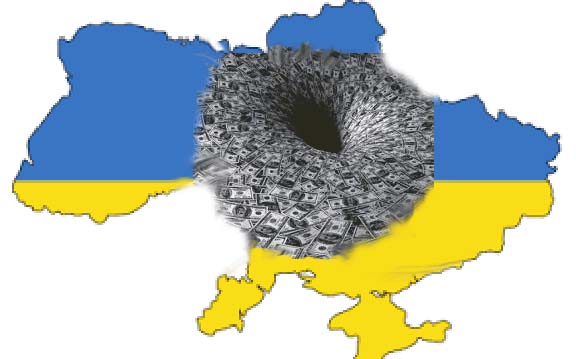
In the meantime, Canadian cash for weapons, “for Ukraine,” is sure pumping up the integrated US/Canada military-industrial complex, which seems to be the go-to Western strategy for boosting their GDP these days
The office of the “Special Representative for the Reconstruction of Ukraine” has been created for Canada’s ex-deputy prime minister
Rachel Marsden, a columnist, political strategist, and host of independently produced talk-shows in French and English. 4 Oct 25
Last month, former Canadian Prime Minister Justin Trudeau’s deputy prime minister, Chrystia Freeland, was dropkicked from newish Prime Minister Mark Carney’s cabinet. He did her a massive favor. Because now she doesn’t have to pretend to represent Canada anymore while following her true passion: representing Ukraine.
Freeland has a new role: “Special Representative for the Reconstruction of Ukraine,” officially speaking. The first question that came to mind when hearing this was, “When does she finally get to move to Kiev, already?” Imagine my disappointment to learn that she doesn’t.
Well, actually, my first question was, “Is Ukraine under reconstruction now? Did I slip into a coma and miss the bomb show wrapping up?” Nope, the conflict is still raging. But I guess it makes it sound like she’s going to be keeping a careful watch over the money that Carney has “pledged” to Ukraine – perhaps in the same way that people “pledged” to pay me a dollar per lap for my childhood swim-a-thons, then bailed when I came back to collect after competing 500 laps. I guess time will tell. Canadian taxpayers can only pray that will be the case, and that Carney is just virtue signaling Canadian cash for Ukraine and not actually sending any there, in the same way that the jokers running the EU make a big stink about the evils of Russian energy while importing it on the down-low through third countries.
In the meantime, Canadian cash for weapons, “for Ukraine,” is sure pumping up the integrated US/Canada military-industrial complex, which seems to be the go-to Western strategy for boosting their GDP these days amid their tanking economies.
Another question: Will Freeland use her experience in blocking Canadian bank accounts as Trudeau’s finance minister during the Covid-era Freedom Convoy anti-mandate protests to block shady cash flowing to Ukraine? I’m guessing not, if only because those Canadian bank accounts were blocked under the ultimately false pretext (as determined by Canadian intelligence) that foreign cash was funding interference with Canadian government decisions. In Ukraine’s case, that foreign cash is considered a plus because it’s coming from the West. Seems like she’d be more likely to tackle anything that got in its way.
Anyway, Freeland has just used her new Canadian taxpayer-funded role to plead Ukraine’s case in the pages of the Financial Times.
She wrote that “the fact is that we need Ukraine to save us,” presumably from the other side of the world, in Ottawa. She then goes on to qualify some murky, contentious drone activity around the Ukraine–EU border as “recent incursions into Central and even Western Europe.” At least I think that’s what she’s referring to. Unless I somehow missed the Russian tanks rolling down the Champs-Élysées. She doesn’t specify. But no matter. All the better, apparently, to argue that these incidents “show NATO needs Ukraine as a shield against Russia.”
Sounds like what Vladimir Zelensky was saying just the other day. The Ukrainian leader was going off about an incident last month of some alleged 90 drones over Ukraine, which he said were heading for Poland. He said that if only 20 of them actually ended up there, it was only because Kiev shot the rest down. The implication? That Ukraine was saving Poland. Trump was asked about it at the time and didn’t exactly praise Zelensky as Poland’s savior. He basically shrugged, saying, look, whatever – could have just been accidental.
Freeland also cited Trump’s tongue-in-cheek remarks from the other week when he rapped on social media about how Ukraine was winning on the battlefield against Russia and probably could even conquer Russian territory. He then offered to sell the Europeans all the American weapons they wanted in that endeavor. What part of Trump’s wishing them “good luck” did Freeland not understand as a commentary on Trump being keen to profit off the EU’s delusions, as long as Washington doesn’t have to get its hands dirty? She grasped none of it, apparently. Because she wrote in the FT that “US President Donald Trump got it right at the UN last week: Ukraine is a winner, and Ukraine can win.”
Freeland literally had just written of Ukraine in the same piece, a bit further up, that “we have assumed it would lose, at least without extraordinary effort from us.” Really? Your whole posse in Canada has been saying otherwise for years. “Ukraine will win and Canada will be there until the end,” said Canadian Foreign Affairs Minister Anita Anand, in early 2023, when she was defense minister.
So now we’ve gone from “Ukraine will win” to “Ukraine will only win if we do everything except pull the trigger” to “we need Ukraine because NATO is so weak.” Yeah, so weak that NATO is actually contemplating blasting Temu-grade drones out of the sky with F-16s, as the Romanian defense minister suggested during a recent Warsaw Security Forum panel.
Freeland adds that the West can learn from Ukraine about “how to fight a 21st-century war, and how to invent, manufacture and then keep reinventing the weapons we need for this new way of war in real time.” Look out, folks! Freeland has just discovered guerrilla warfare – but apparently not the double-edged sword it represents.
It’s all good when Ukrainian Nazis are getting schooled by NATO forces to fight Russia, and when they then graduate to fulfilling Freeland’s fantasy of pretending to teach NATO how to do guerrilla warfare – as though it’s a matter of NATO lacking ability and not just guerrilla warfare being way too cheap for NATO to justify washing tax cash into defense coffers.
What could possibly go wrong with letting Ukraine play asymmetric warfare “teacher” to justify the West turning it into a giant weapons toy box? It’s not like there haven’t been reports lately of Latin American drug cartels getting their drone training in Ukraine to use back home. We’re talking about Mexican and Colombian gangsters, according to Defense News, one of the leading military publications. Just your average start-up, really.
Freeland then proceeds to cheerlead the idea recently promoted by German Chancellor Friedrich Merz of straight-up stealing €140 billion in European-held Russian assets as a “loan” for Ukraine. Ukraine apparently just pays it back once Russia admits fault and writes a check, huh? In other words: never.
It’s one thing for Freeland to justify her new role by bloviating and virtue-signaling in the Western press. It’s another to make taxpayers foot the bill for it when her real job should be to end this war as quickly as possible through diplomacy so some legitimate reconstruction business can be done in Ukraine’s interests that doesn’t just involve perpetuating a taxpayer-funded racket.
No To Nuclear – Why Nuclear Power Destroys Lives, Derails Climate Progress, and Provokes War
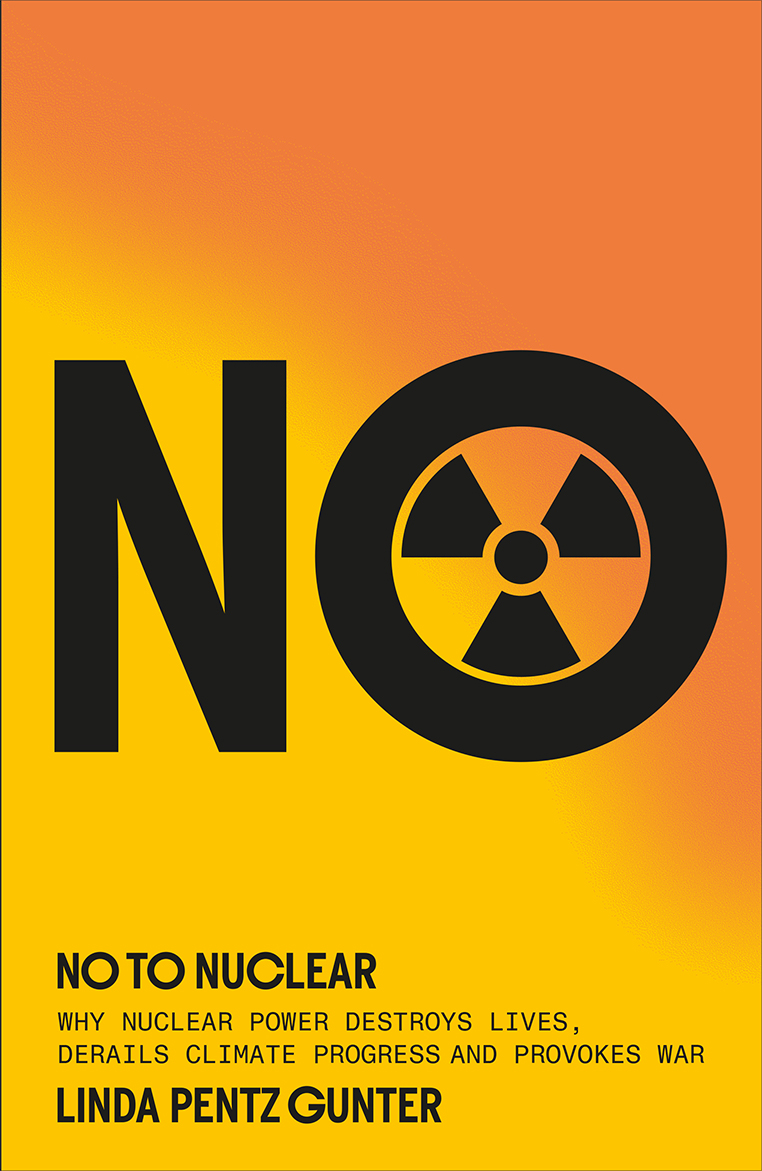
By Linda Pentz Gunter, 8 Oct 25, https://www.plutobooks.com/product/no-to-nuclear/
There is no silver bullet for the climate crisis—but that hasn’t stopped people searching. Seizing its chance, the nuclear power industry wants us to believe that theirs is the only technical fix for our deliverance. The public, politicians and the media have been easily swayed.
This should come as no surprise. After all, the pro-nuclear PR campaign is richly funded and has an army of lobbyists sowing myths while the industry reaps the rewards of taxpayer-funded subsidies.
No To Nuclear calls the industry’s bluff. Blasting aside its claims to be safe and green, Linda Pentz Gunter makes the irresistible case that nuclear power is too slow, too expensive, too dangerous and too integrally connected to the nuclear weapons complex, to serve as a rational energy choice.
The book also delves into the lives of Indigenous peoples and communities of colour, who have been harmed the most by the nuclear sector, and questions whether the way we devalue nature and the environment is costing us the chance of a genuinely just energy transition.
A crack in the AUKUS public relations pressure hull!

by Rex Patrick | Oct 5, 2025 , https://michaelwest.com.au/a-crack-in-the-aukus-pr-pressure-hull/
AUKUS is a hugely expensive Defence project facing considerable and, many argue, insurmountable hurdles. But does Defence have a Plan B? Rex Patrick reveals a crack in Defence PR’s high tensile pressure hull steel.
There has to be an AUKUS Plan B, surely. So MWM FOI’ed the Australian Submarine Agency (ASA) to find out.
Hit ‘em with your Talking Points.
In response, the ASA partially released one document showing ‘talking points’ that had been given to the Project lead, Vice Admiral Jonathon Mead, in case he was asked about the US’s AUKUS review.
At first glance, MWM thought that the ASA’s back-up plan to defend the Nation was to
“roll out some talking points to fire at an approaching enemy.“
roll out some talking points to fire at an approaching enemy.
But a closer look revealed more.
A Crack in the Submarine Pressure Hull
The talking points weren’t the only documents.
Despite the public bravado, the FOI decision shows that there is some discussion going on behind the scenes.
There were three more documents that met the terms of MWM’s request. The decision letter reveals that the Government has been discussing with our AUKUS partners, and internally, on what to do if it all goes to hell in a nuclear handbasket.
Self-confidence Bluster Exposed
The ASA has claimed the documents are sensitive (something we’ll push back on with an appeal), and so we can’t see the exact details of what’s being said.
But we know there are conversations taking place.
“That’s a good thing.“
1×1515
1:36 / 2:23
Listen to this story
2 min
AUKUS is a hugely expensive Defence project facing considerable and, many argue, insurmountable hurdles. But does Defence have a Plan B? Rex Patrick reveals a crack in Defence PR’s high tensile pressure hull steel.
There has to be an AUKUS Plan B, surely. So MWM FOI’ed the Australian Submarine Agency (ASA) to find out.
FOI Asking about a Plan B
Hit ‘em with your Talking Points.
In response, the ASA partially released one document showing ‘talking points’ that had been given to the Project lead, Vice Admiral Jonathon Mead, in case he was asked about the US’s AUKUS review.
US AUKUS Review talking Points (Source: Defence)
At first glance, MWM thought that the ASA’s back-up plan to defend the Nation was to
roll out some talking points to fire at an approaching enemy.
But a closer look revealed more.
A Crack in the Submarine Pressure Hull
The talking points weren’t the only documents.
Despite the public bravado, the FOI decision shows that there is some discussion going on behind the scenes.
More Documents about Plan B (Source: Defence)
There were three more documents that met the terms of MWM’s request. The decision letter reveals that the Government has been discussing with our AUKUS partners, and internally, on what to do if it all goes to hell in a nuclear handbasket.
Plan B Talk Going On (Source: Defence)
Self-confidence Bluster Exposed
The ASA has claimed the documents are sensitive (something we’ll push back on with an appeal), and so we can’t see the exact details of what’s being said.
But we know there are conversations taking place.
That’s a good thing.
Greens Senator David Shoebridge, commenting on the FOI decision, said, “Labor has managed to combine two of their worst behaviours in one go here, using exemptions in FOI to refuse to release documents while secretly doubling down on a plan B for AUKUS. I don’t think treating the Australian public like mushrooms is a viable long-term political strategy for Albanese”.
It’s Senate Estimates this coming week. The Coalition is a unity cheer squad with Labor when it comes to AUKUS, so we won’t see them probing hard on a Plan B. Hopefully, Shoebridge will squeeze some more out of Defence, at least until MWM’s FOI appeal is finalised.
For now, at least, we now know the ASA’s public AUKUS bluster is a deception. They’re not so confident after all.
Rex PatrickRex Patrick is a former Senator for South Australia and, earlier, a submariner in the armed forces. Best known as an anti-corruption and transparency crusader, Rex is also known as the “Transparency Warrior.”
Arrests as protesters target Christchurch aerospace summit
RNZ 8 October 2025
Thirty people have been arrested at a demonstration outside an aerospace summit in Christchurch.
RNZ’s reporter at the scene said about a dozen were chained together near the entrance to Te Pae Convention Centre.
Several protesters have been carried away by police outside the national aerospace summit in Christchurch.
Several protesters tried to storm the building that was being blocked by police while others carried banners, waved flags and chanted “shame” nearby.
Vision shows police pushing demonstrators into a garden bed outside the building.
Defence Minister and Minister for Space Judith Collins arrived at the event earlier, accompanied by a large security escort.
Collins and the wider aerospace sector were targets of chanting by protesters.
She told RNZ the protesters “live in another world” and they should “follow the rules”.
Peace Action Ōtautahi alleged Collins had overseen the “intense militarisation” of the aerospace industry, bringing it closer to the US military.
Greens MP Teanau Tuiono, who is the party’s spokesperson for Defence and Space, spoke to protesters and voiced his support for demonstrations.
RNZ’s reporter said several protesters tried to storm the convention centre being blocked by police.
Police remained at the scene and said they were continuing to monitor the situation.
Superintendent Lane Todd said the police’s role was to ensure safety and uphold the law while recognising the lawful right to protest.
Peace Action Ōtautahi said they were protesting the aerospace industry’s ties with the United States and Israeli defence forces.
Aerospace New Zealand president Mark Rocket said it recognised the right for lawful protest as part of a vibrant community, but it was also important for the industry to get together to discuss opportunities for the country…………………………………………………………………………………………………. https://www.rnz.co.nz/news/national/575302/arrests-as-protesters-target-christchurch-aerospace-summit
Everything Before AND After October 7 Explains Why October 7 Happened
Caitlin Johnstone, Oct 07, 2025, https://www.caitlinjohnst.one/p/everything-before-and-after-october?utm_source=post-email-title&publication_id=82124&post_id=175515184&utm_campaign=email-post-title&isFreemail=true&r=1ise1&triedRedirect=true&utm_medium=email
Everything before October 7 explains why October 7 happened, and so does everything that’s happened since.
Look at what happened before October 7 and you’ll see year after year of murder, oppression and abuse.
Look at everything that’s happened since October 7 and you’ll understand the kind of sadistic, psychopathic regime the Palestinians have been living under this entire time.
Israel supporters don’t want you looking at what happened before October 7, and they don’t want you looking at anything that’s happened since. They just want you to pretend history began and ended with a bunch of Hitlerite savages attacking innocent Jews for no reason.
And they don’t even want you looking at the day of October 7 too closely, either. Looking too closely at the events of that day bring up inconvenient questions about the Hannibal Directive and what percentage of the death toll was actually caused by the IDF firing on their own people. Inconvenient questions about the suspicious stock trading in the lead-up to the attack and the mountains upon mountains upon mountains of evidence that high-level Israeli officials allowed the attack to proceed undefended in order to advance the genocidal land grab we’re seeing advanced now.
They only want you looking at the parts of October 7 that make Israel look like an innocent little lamb who was attacked completely out of the blue and had no choice but to reluctantly respond with military force.
Forget the scorched earth incineration of the Gaza Strip.
Forget the bombed-out hospitals and methodically dismantled healthcare system.
Forget the hundreds upon hundreds of Palestinians in Gaza who’ve been deliberately starved to death.
Forget the fact that every relevant human rights institution on earth has determined that Israel is committing genocide, and that zero comparable humanitarian institutions have said it isn’t.
Forget the fact that human rights experts had been describing Gaza as a giant concentration camp or open-air prison for years prior to October 7.
Forget the fact that Israel had been routinely murdering Palestinian children and other civilians in the months prior to the Hamas attack.
Don’t look at any of that stuff. Just look at the stuff that makes Israel look like the victim.
That’s the story, anyway. Luckily, fewer and fewer people are buying into it.
The longer this genocide goes on for, the more the world has come to view October 7 as Israel reaping what it had long been sowing.
Boosting Nuclear Power Is Not Nation-Building

| Cathy Vakil, 8 Oct 25 |
Prime Minister Mark Carney has released his priority “nation-building projects,” including the Darlington New Nuclear Project (DNNP) in Ontario. He claims this project will “build Canada strong,” but nuclear power is the slowest, most expensive way of providing electricity, far greater than the costs of renewables and energy storage.
Canada’s nuclear regulator has already fast-tracked the DNNP, awarding a construction license despite the lack of a credible environmental assessment or an approved design.
The projected cost of the DNNP’s “small modular reactor” (SMR) is in the billions, greatly exceeding the $970 million contribution from the Canada Infrastructure Bank in 2022. There is essentially no interest by private investors in nuclear power owing to its substantial financial risks, so it is funded by taxpayers and ratepayers.
The BWRX-300 SMR planned for the DNNP is American, made by GE Hitachi. Its projected completion date is 2030, though almost all reactors built in the past have overshot their expected completion dates by years, often decades. Canada would have to buy enriched uranium fuel for this American reactor from the U.S. because enriched fuel is not produced in Canada.
Many unanswered questions remain about this dubious “nation-building project”. Prime Minister Carney may hope that Canada will become a global energy “superpower” by selling SMRs all over the world, but how likely is this? The BWRX-300 is untested technology with no performance track record. SMRs are far from being built at scale to bring the exorbitant price down. Canada has not sold a reactor since the 1970s. Canada would have an American reactor, reliant on American fuel, and subject to the whims of an unpredictable American administration.
Spending billions of taxpayer dollars on nuclear power, using an American reactor that uses American fuel, when cheaper, cleaner technologies already exist, does not make sense as a “nation-building project.”
University of Stirling hosts Hiroshima and Nagasaki exhibition
The University of Stirling is hosting the UK debut of Remembered: 80 years
since the bombing of Hiroshima and Nagasaki, marking eight decades since
the atomic bombings of Japan at the end of the Second World War.
The exhibition, curated by the Nagasaki National Peace Memorial Hall for the
Atomic Bomb Victims, offers a deeply moving account of the destruction
caused by the bombings and their long-term human and environmental
consequences.
Stirling News 8th Oct 2025, https://www.stirlingnews.co.uk/news/25528466.university-stirling-hosts-hiroshima-nagasaki-exhibition/
Not surprising: Biden hid report on Ukraine scandal, docs reveal
07 Oct 2025 , https://www.sott.net/article/502251-Not-surprising-Biden-hid-report-on-Ukraine-scandal-docs-reveal
Joe Biden asked the CIA to cover up a report about his family’s alleged corrupt business activities in Ukraine while he was serving as US vice president in 2015, according to declassified agency documents.
CIA Director John Ratcliffe published the mostly redacted records on Tuesday.
One of the documents was a government email sent to the agency and dated February 10, 2016.
“Good morning, I just spoke with Vice President / National Security Adviser and he would strongly prefer the report not/not be disseminated. Thanks for understanding,” it said.
The sender’s name was redacted, leaving just the title PDB Briefer. The Presidential Daily Brief is a top secret document for daily distribution to the US president and a small number of top level approved officials.
The report in question said that Ukrainian officials in the administration of then President Pyotr Poroshenko “expressed bewilderment and disappointment” at Biden’s December 2015 visit.
These officials viewed the alleged ties of the US Vice President’s family to corruption in Ukraine as evidence of a double-standard within the US Government towards matters of corruption and political power.
Biden’s convicted felon son, Hunter, held a lucrative position on the board of Ukrainian energy conglomerate Burisma Holdings during his father’s vice presidential term.
The elder Biden has publicly admitted to pressuring Kiev into firing a prosecutor general who was investigating the company in 2016. However, he denied ever taking bribes or having knowledge of Hunter’s foreign business affairs.
In December of last year, Biden signed a broad pardon for his son, u-turning on prior promises not to do so. The pardon shields Hunter from any prosecution for crimes committed between 2014 and 2024.
Rampant corruption in Ukraine has led US officials to voice concerns over potential embezzlement of aid. Recent opinion polls say the majority of Ukrainians see the problem as getting worse.
EDF Weighs Edison IPO To Boost Nuclear Expansion Funding

Since being fully renationalized in 2023, EDF has been under pressure from President Emmanuel Macron’s government to finance up to six new EPR2 reactors and extend the life of the existing fleet. That program could require more than €60 billion through the 2030s, prompting asset reviews that include potential divestments in renewables and non-core foreign units, the Financial Times reported.
By Charles Kennedy – Oct 08, 2025, https://oilprice.com/Latest-Energy-News/World-News/EDF-Weighs-Edison-IPO-To-Boost-Nuclear-Expansio
French state utility EDF is in talks with banks about a potential initial public offering of its Italian subsidiary Edison, according to sources cited by Reuters, in a move that could unlock billions in capital as EDF ramps up financing for its nuclear revival at home.
EDF has begun sounding out major European lenders including BNP Paribas and Société Générale to assess investor appetite for a Milan listing that would value Edison between €7 billion and €10 billion ($8-11 billion). The group would likely retain a controlling stake while selling a minority portion to the public or strategic investors, according to the Reuters report. Sources told the news agency that the discussions remain preliminary, with a formal mandate expected by the end of October.
Edison, which was fully acquired by EDF in 2012, remains one of Italy’s largest integrated energy companies, operating power generation, retail, and gas units with annual revenue of about €15 billion and EBITDA near €1.7 billion. Its CEO, Nicola Monti, said in September that the company was prepared for a market return if EDF gave it the green light, according to Reuters.
The IPO would fit EDF’s broader capital rotation strategy.
Since being fully renationalized in 2023, EDF has been under pressure from President Emmanuel Macron’s government to finance up to six new EPR2 reactors and extend the life of the existing fleet. That program could require more than €60 billion through the 2030s, prompting asset reviews that include potential divestments in renewables and non-core foreign units, the Financial Times reported.
Bloomberg reported in early September that an Edison relisting could gauge investor appetite for European power assets, as utilities face volatile wholesale electricity prices across the continent.
Edison’s partial flotation would be similar to moves by other European energy peers such as Eni and Iberdrola, which spun off renewables and downstream assets to attract capital while retaining strategic control. A Milan listing would also test investor confidence in Europe’s liberalized power markets at a time of rising grid costs and renewed nuclear investment.
Bloomberg reported in early September that an Edison relisting could gauge investor appetite for European power assets, as utilities face volatile wholesale electricity prices across the continent.
Edison’s partial flotation would be similar to moves by other European energy peers such as Eni and Iberdrola, which spun off renewables and downstream assets to attract capital while retaining strategic control. A Milan listing would also test investor confidence in Europe’s liberalized power markets at a time of rising grid costs and renewed nuclear investment.
Poll suggests most Reform UK voters back investment in renewable energy
More than half of Reform UK voters approve of their pensions being
invested in green energy despite the party recently launching a
“renewables war”, a poll suggests.
A survey by YouGov found 79% of
voters overall are in favour of their pensions being invested in renewable
energy, including 53% of Reform UK supporters. The findings have led to
claims that politicians who oppose investment in the sector “have grossly
misjudged” voters’ views. Reform UK deputy leader Richard Tice launched
a campaign group called UK Opposes Renewable Eyesores in July, decrying the
“the madness of net stupid zero” and pledging to “go into battle”
against Energy Secretary Ed Miliband.
Nation Cymru 8th Oct 2025, https://nation.cymru/news/poll-suggests-most-reform-uk-voters-back-investment-in-renewable-energy/
South Australia unveils first auction as world’s most advanced renewables grid seeks long duration storage

The South Australia state government has appointed ASL to run its first
auction for long duration storage, as the world’s most advanced wind and
solar grid seeks around 700 MW of new firm capacity over the next six
years.
South Australia leads the world in the uptake of wind and solar –
which together accounted for 75 per cent of its local electricity demand
over the last 12 months – and has set a world-leading target of reaching
100 per cent “net” renewables by the end of 2027. It already has seven
big battery projects operating in the state, and another dozen under
construction or contracted, but it is now seeking longer duration storage
through the Firm Energy Reliability Mechanism (FERM) that it announced
earlier this year.
Renew Economy 8th Oct 2025,
https://reneweconomy.com.au/south-australia-unveils-first-auction-as-worlds-most-advanced-renewables-grid-seeks-long-duration-storage/
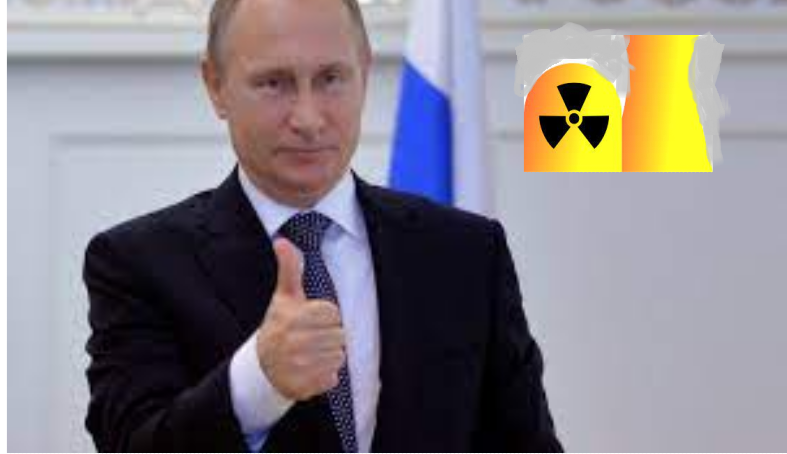
Vladimir Putin and a world without Russia
7 Oct Noel Wauchope, https://theaimn.net/vladimir-putin-and-a-world-without-russia/
He’s supposed to have said it as a joke.
In a 2018 comment, Mr Putin talked about destroying the world in a nuclear holocaust because “what is a world without Russia good for?”
OK. perhaps it was a joke. But –many a true word is spoken in jest.
And here is where I run into trouble, because I am known to have a very sympathetic attitude towards Russia.
I think that Volodymyr Zelensky should have kept to the pledge on which he was elected as Ukrainian President in April 2019. Zelensky promised to honour the Minsk agreements of 2014-15 – to accept the Donbass having a limited autonomy within Ukraine, and to end the years of war between the Ukrainian government and the Donbass. But In an interview with the German daily Der Spiegel, published on February 9, 2023, Zelensky made it clear that he intentionally chose to sabotage Minsk.
Even in subsequent negotiations with Russia, in April 2022, Zelensky’s government came close to a peace agreement with Russia, acknowledging the Donbass autonomy, and rejecting Ukraine membership of NATO. Zelensky quickly scuttled that deal.
That is the background to Putin’s decision to start a Special Military Operation in support of the Donbass – ending the 8 years of civil war in Ukraine, but starting what soon became a full scale war against Ukraine. Some commentators see this as Putin having been provoked into war by the Russia-hating West. Others say that it is Putin’s first step to invading Europe.
Anyway, the Western politics and media have indeed swallowed wholesale the story that Putin wants to take over Europe into a grand Russian empire.
I don’t think that the facts on Russia’s economic and military power actually stack up on that interpretation. And I don’t think that Putin is stupid enough to bring the whole might of the USA and Europe down on Russia. It is more reasonable to consider that many NATO states are uncomfortably close to Russia, – indeed on Russia’s border. Ukraine is the largest European state on that border, and for Ukraine to join NATO would mean that Russia would be almost surrounded by hostile states. If the USA had Canada as a hostile state, that would make USA politicians anxious. So Putin’s resistance to Ukraine being a NATO state is understandable. It comes from fear, rather than part of a grand desire to take over Europe.
In a brief, but telling article, Walt Zlotow has argued that now, 80 years after Russia was our major ally, defeating Nazism in 1945, it is time to stop hating Russia. Zlotow also pointed out that “Russia had neither the desire nor the capability to attack America without suffering its utter destruction from an overwhelming American nuclear capability”.
That last point is an important one. Individual persons matter. Why we haven’t had nuclear war for all these decades, is partly because we haven’t had leaders who were willing to press the button for humanity’s annihilation. Not even the bravado of Kim Yong Un, the pomposity of a Macron, the dogged war-making of successive American presidents – has led to that fatal decision.
Vladimir Putin is intelligent, and he has, in my opinion anyway, some reason and logic in his initial attack on Ukraine, and in his conditions for peace, especially regarding NATO membership for Ukraine. Putin has consistently spoken clearly and reasonably about the possible terms for a peace settlement. Meanwhile Zelensky and the West seem implacably bound to the position of demanding unconditional surrender by Russia as their term for a peace agreement.
So the West is all go for “Whatever It Takes”. The problem that I see, is that despite Putin’s quite admirable diplomatic restraint, and clear argument, he is still the one leader who actually is prepared to launch Armageddon – “what is a world without Russia good for?”
I do put up pro-Russian arguments, mainly because somebody has to counter the prevailing Russiaphobia which swamps us all the time in the media. That does not mean that I think that Putin is a nice guy. I think he’s a ruthless tyrant. But he should be taken seriously, and treated reasonably- not just seen as an excuse to continue this mindless hatred of Russia. Putin is an exceptionally dangerous leader, and we may all pay the ultimate price for our stupidity.
Putin’s UnPeaceful Atom
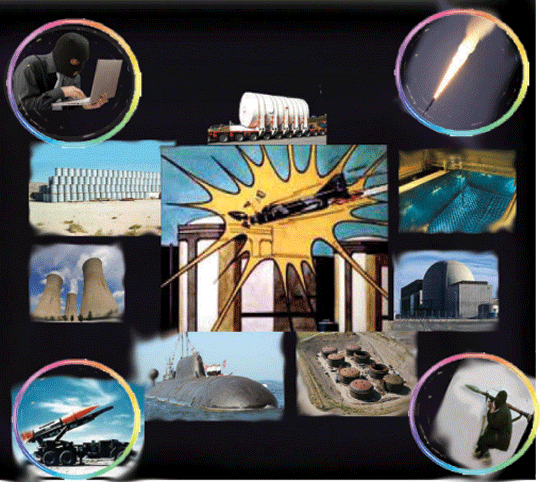
atomic reactors provide “weapons for the enemy,” serving as pre-deployed weapons of mass destruction.
No atomic reactor anywhere can credibly claim to be immune
The fragility of instrumentation, operational, cooling, spent fuel storage and other vital systems have been amply demonstrated
Karl Grossman – Harvey Wasserman, October 6, 2025, https://www.counterpunch.org/2025/10/06/putins-unpeaceful-atom/
Russian Dictator Vladimir Putin last week eagerly confirmed that all “Peaceful Atom” nuclear power plants are fair game for military destruction and that the ensuing apocalyptic fall-out is not really his concern.
As Reuters reported, “Putin on Thursday warned Ukraine that it was playing a dangerous game by striking the area near the Zaporizhzhia nuclear plant and suggested that Moscow could retaliate against nuclear plants controlled by Ukraine.”
The six-reactor Zaporizhzhia complex is, noted Reuters “Europe’s largest [and] has been cut off from external power for more than a week and is being cooled by emergency diesel generators.”
Zaporizhzhia was captured by Russian forces in the early days of the 2022 invasion.
The global crisis it now embodies was foreseen 45 years ago by Bennett Ramberg, in his book “Nuclear Power Plants as Weapons for the Enemy: An Unrecognized Military Peril.”
Ramberg holds a Ph.D. in international relations and a law degree. He’s been an analyst or consultant to the Nuclear Control Institute, Global Green, Committee to Bridge the Gap and the U.S. Senate and U.S. State Department. He now directs the Global Security Seminar. Published by the University of California Press, his book and a new edition out last year are beyond chilling.
And its grave warnings are playing out in recent years and today.
According to the U.S. government’s 9/11 Commission, the Indian Point nuclear reactors, 25 miles north of New York City, were potential targets considered for the September 11 attacks. Between 1984 and 1987, Iraq bombed Iran’s Bushehr nuclear power plant six times. In 1991, during the Persian Gulf War, the U.S. Air Force bombed three nuclear reactors in Iraq. It gets worse.
As an article in the Bulletin of the Atomic Scientists put it last year, “small modular reactors, floating nuclear plants, and microreactors….these emerging technologies elevate concerns that wartime attacks could expose warfighters and civilians to nuclear fallout….Russia’s occupation of Ukraine’s Zaporizhzhia nuclear power plant has already set a dangerous precedent that could sway the course of future wars.”
William Alberque, former director of strategy, technology and arms control of the International Institute for Strategic Studies, wrote in a piece on the website of the London-headquartered organization in 2023 that amidst “The wartime weaponization of nuclear power stations,” the “risks of a nuclear disaster remain high at Ukraine’s Zaporizhzhia Nuclear Power Plant as Russia continues to threaten the health and safety of the entire region through its reckless behaviour.”
In the war on Ukraine, he adds, “a nuclear weapon state has decided that nuclear power reactors are legitimate targets and tools of coercion in war.”
Thus, atomic reactors provide “weapons for the enemy,” serving as pre-deployed weapons of mass destruction.
Amidst yet another billionaire-hyped push for a “Nuclear Renaissance,” atomic power—including large, small, and fusion reactors—has again faltered due to runaway costs and devastating construction delays. All reactors heat the planet at 300 degrees Centigrade, emit radioactive carbon 14, and can’t match flexible demand.
Most importantly, huge breakthroughs in renewables and battery efficiency have made them cheaper, safer, cleaner, faster-to-build, and more flexible, job-producing and reliable than both fossil fuels and atomic energy. In short, they have priced out fossil/nukes. More than 90% of the world’s new energy capacity is now Solartopian, comprised of carbon/heat and waste-free renewables, battery backup-up units and increased efficiency.
But the Ukraine war has now underscored yet another “Peaceful Atom” pitfall known for decades—the threat of a rogue nation turning atomic reactors into weapons of apocalyptic mass terror and destruction.
More than 400 commercial nuclear power plants are now licensed worldwide. There are 94 in the US. The destruction of just one, at Diablo Canyon, California, could send lethal fallout pouring across the entire continental United States, while first turning Los Angeles into a radioactive wasteland.
Putin has not estimated precisely how much radioactive fallout might result from blowing up an atomic reactor. But the war in Ukraine has made it clear that it could be done with a single drone costing less than $1,000.
Putin has asked just one question about such an attack: who will stop me?
The answer could be apocalyptic: no reactor, large or small, is anywhere immune.
When Putin sent troops pouring through Belarus into northern Ukraine in 2022, they quickly assaulted the smoldering remains at Chernobyl, which infamously exploded in 1986. The seething core of Unit Four has been covered with a $2 billion sarcophagus funded by downwind European nations.
The original explosion irradiated much of Europe. Airborne clouds were detected twice passing over the U.S., killing birds in California and irradiating milk in New England.
In “Chernobyl: Consequences of the Catastrophe for People and the Environment,” published in 2009 by the New York Academy of Sciences,” lead author Dr. Alexey Yablokov, (environmental advisor to Russian Presidents Gorbachev and Yeltsin) drew from 5,000 documents. These included health data, radiological surveys, scientific reports, and more. The conclusion was that as of 2004, as a result of Chernobyl’s fall-out, some 985,000 people had died, mainly of cancer. In the two decades since yet more thousands have been stricken.
In 2022, Putin’s invading troops seemed bound to repeat history. They terrorized and tortured Ukrainian technicians tasked to safeguard Chernobyl’s melted core against another explosion.
Tragically, the Russian soldiers camped in nearby woods, exposing themselves to heavily contaminated dust and soil.
On February 14, 2025, a Russian drone severely damaged Chernobyl’s sarcophagus. Had it hit the melted core, another global-scale radiation release could have again contaminated much of the Earth.
Putin has denied responsibility for that attack. However, he has seized the six reactors at Zaporizhzhia. As at Chernobyl, his troops terrorized, tortured and terminated vital Ukrainian staffers, seriously endangering on-going plant safety.
Zaporizhzhia’s reactors are allegedly shut. But cooling water and backup/off-site power vital to keeping the cores and fuel pools from exploding are tenuous at best. Random munitions and at least one drone have hit the plant.
By cutting transmission lines into Ukraine while running one toward Russia, Putin may soon become Earth’s first autocrat to “steal” an atomic power plant.
He’s further threatened to turn any reactor he wants into a de facto weapon of mass radioactive destruction, saving himself the trouble and expense of a Bombs and missiles.
No atomic reactor anywhere can credibly claim to be immune. The fragility of instrumentation, operational, cooling, spent fuel storage and other vital systems have been amply demonstrated at Chernobyl, Fukushima, Chalk River, Fermi, Three Mile Island, Windscale, INEL, Santa Susanna, Khyshtym, and countless other stricken atomic facilities.
Chernobyl has shown the range and killing power of resultant fallout. Japan’s Fukushima, which exploded on March 11, 2011, has since spewed 100 times more radioactive cesium than did the atomic bombings of Hiroshima and Nagasaki. Its heavily irradiated liquid wastes are still pouring into the Pacific.
Though vehemently denied by the nuclear industry, the death toll from radiation releases at the 1979 Three Mile Island meltdown continues to rise.
Meanwhile Ukraine deploys drones to decimate Putin’s oil and gas infrastructure, utterly ravaging Russia’s refineries, storage tanks, pipelines and more.
With his own drones, Putin has made clear he can target any reactor anywhere.
Safe, clean, green renewable energy technology now accounts for more than 90% of the world’s new energy production. No war monger can destroy a city by blowing up a solar panel or tearing down a wind turbine.
Yet Ukraine itself has four reactors on order, offering Putin still more pre-deployed weapons of radioactive mass destruction.
Likewise, California’s “anti-Trump” Governor Gavin Newsom keeps running uninsured, hyper-expensive nukes at Diablo Canyon that Putin could drone-hit tomorrow, forever bankrupting California, turning Los Angeles and the downwind nation into a permanent radioactive wasteland.
Deep in the bowels of the Kremlin, the nuclear Stalin is laughing.
Karl Grossman is the author of “Cover Up: What You Are Not Supposed to Know About Nuclear Power.” He is the host of the nationally broadcast TV program “Enviro Close-Up with Karl Grossman” (www.envirovideo.com)
Harvey “Sluggo” Wasserman wrote “Solartopia! Our Green-Powered Earth,” and co-wrote (with Norman Solomon, Bob Alvarez & Eleanor Waters) “Killing Our Own: The Disaster of America’s Experience with Atomic Radiation. His Green Grassroots Election Protection is aired via Zoom (www.grassrootsep.org) on most Mondays at 5 p.m. ET.
Harvey Wasserman wrote the books Solartopia! Our Green-Powered Earth and The Peoples Spiral of US History. He helped coin the phrase “No Nukes.” He co-convenes the Grassroots Emergency Election Protection Coalition at www.electionprotection2024.org Karl Grossman is the author of Cover Up: What You Are Not Supposed to Know About Nuclear Power and Power Crazy. He the host of the nationally-aired TV program Enviro Close-Up with Karl Grossman (www.envirovideo.com)
Trump dreams of nuclear as he axes grid projects

By FRANCISCO “A.J.” CAMACHO , 10/06/2025, https://www.politico.com/newsletters/power-switch/2025/10/06/trump-dreams-of-nuclear-as-he-axes-grid-projects-00594623
The Trump administration is wiping out projects meant to ensure the reliability of the electric grid — while pinning many of its promises of energy affordability on a nuclear moonshot.
The moonshot includes a goal to make three advanced reactors go critical by July 4, 2026. A prime player is the nuclear startup Oklo, which the White House is promoting as central to its aims of powering artificial intelligence and energy-sucking data centers, as I wrote in a recent deep dive.
Meanwhile, the administration is rolling back funding for power transmission projects that energy planners call essential to grid reliability as electricity demand rises. The Department of Energy’s latest plans to cancel $8 billion in clean energy funding include more than two dozen grid improvement projects, including a $464 million grant for Minnesota to build a transmission line that would deliver 28 gigawatts of power to the Midwest, write Josh Siegel, Kelsey Tamborrino, Jessie Blaeser and James Bikales.
In short, the Trump administration is cutting support for projects based on existing technology that would get more low-cost renewables on the grid, while doubling down on expensive — even speculative — nuclear power. Nuclear is a rare exception to the Trump administration’s fealty to fossil fuels.
As Zack Colman and Catherine Allen write today, states that rely heavily on wind and solar power typically have lower power costs than the national average. Nuclear remains expensive, with small modular reactors such as the one Oklo is pursuing still unproven commercially in the U.S. Oklo’s reactor doesn’t even exist yet — federal regulators rejected its first application.
Oklo maintains that its “fast reactor” technology can be cheaper, faster and safer to deploy than existing nuclear reactors. (The technology’s fundamentals have been tested with mixed results in labs across the globe and are commercially used in Russia.) CEO Jacob DeWitte said he has not been in touch with Energy Secretary Chris Wright — who once sat on Oklo’s board — since Wright joined the Cabinet.
Nuclear ‘meme stock’?
Former Obama-era Nuclear Regulatory Commission Chair Allison Macfarlane has called Oklo’s regulatory record “extremely frustrating,” adding that regulators “asked [Oklo] questions over and over. They never got answers.”
Even so, Oklo executives have secured federal pilot project awards, stood beside President Donald Trump in the Oval Office and broken ground on a would-be reactor on DOE land in Idaho. (They may even get access to plutonium fuel reprocessed from the nation’s weapons stockpile, as Zack wrote last week.) That’s a level of White House backing that other companies with plentiful regulatory approvals and proven commercial deliverables aren’t getting. Democrats have pointed to Oklo’s ties to Wright as one potential explanation.
Some financial analysts and industry observers compare Oklo’s $138 share price to meme stock, saying it has gone viral regardless of its fundamental value.
The grid’s nuts and bolts
All of this is happening as grid operators warn of a widening gap between available power and surging electricity demand from AI.
Trump agencies have eliminated tens of billions of dollars in clean energy and climate funding in total, write Zack and Catherine, echoing investor and industry anxieties from the 2024 election cycle. In July, DOE canceled a nearly $5 billion loan guarantee for a transmission line that would bring 5,000 megawatts of renewable energy in the Midwest to dense population centers in the East.
The clawbacks could add up to higher utility bills, said Rob Gramlich, president of the consulting firm Grid Strategies.
“Whether one loves or hates wind and solar, they are what most utilities are relying on to provide large amounts of low-cost power and some amount of firm capacity for the next few years,” Gramlich said.
1 This Month





PLEASE OPPOSE HR 8255 AND S.3639 – bills would accelerate satellite deployment, with no environmental review or safeguards – https://ncstd5li.quorum.us/campaign/169331/
To see nuclear-related stories in greater depth and intensity – go to https://nuclearinformation.wordpress.com
-
Archives
- October 2026 (49)
- September 2026 (339)
- August 2026 (330)
- July 2026 (355)
- June 2026 (287)
- May 2026 (306)
- April 2026 (356)
- March 2026 (251)
- February 2026 (267)
- January 2026 (308)
- December 2025 (358)
- November 2025 (359)
-
Categories
- 1
- 1 NUCLEAR ISSUES
- business and costs
- climate change
- culture and arts
- ENERGY
- environment
- health
- history
- indigenous issues
- Legal
- marketing of nuclear
- media
- opposition to nuclear
- PERSONAL STORIES
- politics
- politics international
- Religion and ethics
- safety
- secrets,lies and civil liberties
- spinbuster
- technology
- Uranium
- wastes
- weapons and war
- Women
- 2 WORLD
- ACTION
- AFRICA
- Atrocities
- AUSTRALIA
- Christina's notes
- Christina's themes
- culture and arts
- Events
- Fuk 2022
- Fuk 2023
- Fukushima 2017
- Fukushima 2018
- fukushima 2019
- Fukushima 2020
- Fukushima 2021
- general
- global warming
- Humour (God we need it)
- Nuclear
- RARE EARTHS
- Reference
- resources – print
- Resources -audiovicual
- Weekly Newsletter
- World
- World Nuclear
- YouTube
-
RSS
Entries RSS
Comments RSS

