7 June Outrage rally against Sizewell C nuclear
7 June – Sizewell C Outrage Rally
Stop Sizewell C 16th May 2025
Outraged about the destruction caused by Sizewell C? Then join our rally to protest against Sizewell C, incorporating a memorial tribute to legendary campaigner Pete Wilkinson.
Rally co-organised by Together Against Sizewell C (TASC) and Stop Sizewell C.
Where: Sizewell Beach (just south of main access)
When: Saturday 7 June 11am – 12.15/30pm
Speakers will include Jonathon Porritt, Simon Barnes and a representative from Greenpeace UK………………………………………………………………………………………………
Pete Wilkinson – As well as a tireless opponent of Sizewell C, Pete – who died in January – was a founder and fearless campaigner for Greenpeace. To find out more about his achievements, visit bit.ly/Wilx . Speakers at the rally will include his daughters, Emily and Amy
https://stopsizewellc.org/outrage/
President Trump to unleash atomic power

May 15, 2025, https://beyondnuclear.org/president-trump-unleashes-atomic-power/
On May 14, 2025, E&ENews updated reports on President Donald Trump’s four “pre-decisional” White House Executive Orders to radically alter the historic role of the US Nuclear Regulatory Commission’s (NRC) to oversee the performance of reactor design safety reviews and the regulatory approval of reactor siting, construction and operation of commercial atomic power plants.
In President Trump’s view, the NRC’s overly burdensome regulations are the primary obstacle to guaranteeing the development and deployment of a national “nuclear renaissance.” As a result, The White House is eyeing a “wholesale regulatory revision” of the federal agency that includes mandatory “reductions in force.” Simultaneously, the White House envisages authorizing the US Department of Energy and Department of Defense to instead take charge of quadrupling the current domestic nuclear energy capacity to 400 gigawatts by 2050. In order to achieve this goal, the draft Executive Orders outline 1) “overhauling NRC”; 2) significantly accelerating “nuclear R&D”; 3) redefining commercial nuclear power development as critical infrastructure for the “national security,” and 4) dramatically building out the domestic “nuclear supply chain” to include significantly ramping up domestic uranium mining, milling, enrichment and fabrication of US nuclear fuel.
While no energy generation system is entirely domestically sourced, the US nuclear fuel supply is predominantly sourced through foreign imports. According to the U.S. Energy Information Agency reporting in 2025, US domestic uranium mines produce roughly 1% of the uranium concentrate (U3O8) needed to fuel the current US nuclear fleet in 2023. Foreign imports accounted for 99% of our nation’s U3O8 with 48% coming from Russia and Russia-influenced Kazakhstan and Uzbekistan. Presently, Russia is the only commercially viable global supplier of high-assay low enriched uranium (HALEU fuel is less than 20% enriched uranium-235) as is rated for advanced Small Modular Reactor designs, including Bill Gate’s TerraPower Natrium reactor liquid sodium-cooled fast reactor and X-Energy’s Xe-100 high-temperature gas-cooled pebble-bed reactor.
The Trump Administration has declared by a Executive Order in February 2024 that it will no longer recognize any federal agencies as “independent” but rather all federal agencies are now in the President’s wheelhouse and subject to his supervision and control. All “significant regulatory actions” of the NRC would be reviewed by the White House’s Office of Information and Regulatory Affairs, or OIRA, opening the process to the White House review for comments, edits and influence. E&E news observed the new process “obscures the public record of internal commission deliberations” and is an apparent violation of the Atomic Energy Act which clearly states that it is expressly for the NRC to decide.
The draft order to overhaul the NRC would also require the agency to reconsider its standard for radiation exposure where it now understands that there is no safe dose of radiation. Dr. Edwin Lyman, a physicist and Director of the Nuclear Power Safety for the Union of Concerned Scientists is quoted in the E&E article to say, “Documented scientific evidence has only indicated that [low-level radiation exposure] is more dangerous than was known decades ago, when these standards were set.” Furthermore, Dr. Lyman adds, “Evidence has emerged about the impact of the level of radiation exposure on cardiovascular disease.”
The White House draft order to reframe nuclear power deployment for “national security” sets up the US Department of Energy and Department of Defense to “work around the NRC-led licensing and safety review processes” by providing the Secretaries of Defense and Energy accelerated schedules to “identify 9 military facilities at which advanced nuclear technologies can be immediately installed and deployed.” Those military base sited nuclear power plants can then provide transmission to the electric grid for commercial power.
It should be alarming that the Trump Executive Orders to fast track the still elusive and unpredictably costly construction of unproven Generation IV reactors by decommissioning the NRC comes at precisely the wrong time.
This is the still the 50th Anniversary Year of the creation of the NRC following the abolition of the U.S. Atomic Energy Commission by Congress for its blatant fast track promotion of atomic power plant licensing and a dangerous disregard of public health and safety. Least we forget, too many of those aging and now deteriorating nuclear power stations that are approaching and have exceeded 50 years of very harsh operating experience of radioactive neutron bombardment, embrittlement and cracking in base metal and dissimilar weld materials, fatigue, corrosion and a combination of extreme heat, pressure and vibration. Nobody knows better the growing level uncertainty, the multitude of technical knowledge gaps and innumerable shrinking reactor safety margins than those NRC nuclear engineers. Certainly, not Trump.
A home guard to protect British nuclear power plants against enemy attacks
A home guard will be established to protect British power plants and
airports against attack from enemy states and terrorists, under plans put
forward in the government’s strategic defence review (SDR).
It will be modelled on the citizens’ militia created in 1940, when Britain faced the
prospect of invasion by Nazi Germany during the Second World War. It would
be made up of several thousand volunteers, who would be deployed to
safeguard assets such as nuclear power plants, telecommunications sites and
the coastal hubs where internet cables connecting Britain to the rest of
the world come onto land. Guards could also be deployed to other sensitive
sites, such as energy stations providing power to major airports, with
senior sources pointing to the recent fire that shut down Heathrow as
evidence more resources are needed to guard them.
The home guard plan is a central part of the review, which focuses heavily on homeland security, national resilience and the need for the public to realise that Britain has
entered a pre-war era, as tensions heighten with an axis of Russia, Iran
and North Korea.
Times 17th May 2025 https://www.thetimes.com/uk/politics/article/home-guard-to-protect-uk-from-attack-lg2wf0slx
Airlines update nuclear war insurance plans as escalation threats grow.

COMMENT. The airlines are insane to want to keep flying in the case of a “small” nuclear war.
Airlines are taking steps to ensure that they can keep flying even after the outbreak of a nuclear war.
Jets could continue to fly following an atomic blast under special insurance policies being drawn up to address the possibility of conflicts escalating in Ukraine and Kashmir.
Current policies that date back to the 1950s would force the grounding of all civil aircraft worldwide in the event of a single nuclear detonation, assuming that this would lead to the outbreak of a third world war.
However, with the deployment of nuclear weapons now regarded as more likely to involve so-called tactical warheads used in a limited role on the battlefield, the insurance industry has developed plans to allow flights to continue in regions removed from conflict zones.
Gallagher, the world’s largest aviation insurance broker, began working on the scheme when Vladimir Putin threatened to deploy Russia’s atomic weapons against Ukraine in 2022.
Its plans have been given fresh impetus by the recent clash between India and Pakistan over Kashmir, where hostilities reached a level not seen for decades.
Nigel Weyman, senior partner at Gallagher, said the Ukraine conflict had revived interest in nuclear-related insurance policies.
He said: “Back when the wording was drawn up, it was assumed that any hostile detonation meant that it would all be over, Armageddon. But what they didn’t have in those days was tactical nuclear weapons that vary in size and impact and which are, ultimately, very usable.”
The latest generation of the American B61 air-launched gravity bomb carries a nuclear warhead with a yield as low as 0.3 kilotons, for example.
That compares with 15 kilotons for the bomb dropped on Hiroshima in 1945, and 100 kilotons for a single Trident II missile warhead.
While Britain retired its last tactical nuclear weapons in 1998, Russia is believed to have almost 2000. North Korea unveiled what it claimed was a tactical weapon in 2023, while Pakistan’s Nasr missile can also carry a battlefield nuclear warhead.
Weyman said, “Why should Air New Zealand, for example, be grounded in the event of a nuclear detonation in Europe that was quite minor, albeit not for the people near it?”
“Airlines find workarounds for whatever challenges they face, safe corridors, minimum heights so that ground-to-air missiles can’t reach them.
“Volcanic ash clouds affect big areas, but the world keeps flying. Yet a few words on an insurance policy can ground every jet there is.”
Threat management
The broker has come up with a plan that would see a select number of insurers evaluate where airlines should be permitted to fly after a nuclear detonation, aided by analysis from security experts at risk-management specialists Osprey Flight Solutions.
The 15-strong group, which includes Allianz, the world’s largest insurer, would meet within four hours of a detonation and evaluate the threat to airlines on a country-by-country basis.
The plan would provide each carrier with $US1 billion ($1.56 billion) per plane of war cover for passengers and third parties, compared with $US2 billion or more under existing policies.
Weyman said the cost of the scheme would amount to less than the price of a cup of coffee per passenger, if ever triggered, something “easily passed on in ticket prices”.
Airlines spent about $3.1 billion on insurance premiums last year to cover slightly over 4 billion passenger journeys, indicating a current cost of around 33 cents per customer.
About 100 airlines have so far signed up to the plan, out of the 500 or so worldwide. About 60 in Europe have joined, though low-cost operators are proving reluctant, Weyman said.
Airlines could yet be grounded by other insurance stipulations, including a “five powers war clause” that terminates cover in the event of a military clash between any of the UK, US, France, Russia and China.
That could be invoked in the event of any British or French troops sent to Ukraine being fired on, according to some industry experts.
How Donald Trump’s Crypto Dealings Push the Bounds of Corruption.

With the meme coin $TRUMP and the company World Liberty Financial, the President is using an underregulated industry to enrich himself and court foreign influence.
By Kyle Chayka, May 14, 2025, https://www.newyorker.com/culture/infinite-scroll/how-donald-trumps-crypto-dealings-push-the-bounds-of-corruption?cndid=30183386&bxid=5be9d23d24c17c6adf3bf435&esrc=subscribe-page&hashc=ac5a1f5526e7292c73f49dfa8fb6d5d0cb87d8773cec3b9b03d38a4ce482d7c8&hashb=e1c24f6a6459c7d1d625eb2ea55d9dfbbb4633bf&hasha=432fc0d0ad6543e820e2dfcd39f76c35&mbid=CRMNYR012019&utm_campaign=aud-dev&utm_term=TNY_Science_Tech&utm_source=nl&utm_medium=email&utm_brand=tny&utm_mailing=TNY_Science_051725
Imagine that someone in a position of great political power created a hundred billion raffle tickets and made them available for public purchase. If you buy the tickets, eventually you will receive a reward: a proportional quantity of magic beans—and eventually each magic bean will be exchangeable for one United States dollar. What’s more, if you buy the raffle tickets early, you can get them for less than a dollar, perhaps for as little as five cents apiece. Not only will the raffle tickets eventually gain you more traditional currency; you can also vote on company matters with your raffle tickets and help manage the magic-bean supply, and the more tickets you purchase, the more say you have. Oh, and the creator of the raffle will keep a bunch of the tickets for himself, and much of the revenue generated by the magic-bean economy will also go back to him.
This effectively describes the workings of a new cryptocurrency created by World Liberty Financial, a company affiliated with the Trump family, with President Donald Trump serving as its “Chief Crypto Advocate.” The cryptocurrency, a so-called governance token called WLFI, is the raffle ticket, and another cryptocurrency, a “stablecoin” called USD1, is the magic bean. World Liberty deals in the nascent industry of “decentralized finance,” in which cryptocurrency instruments allow users to circumvent the traditional, regulated banking ecosystem for moving, storing, and lending money. Stablecoins are cryptocurrencies that are pegged to a single currency value, such as one U.S. dollar, though they are not always so stable: Terra, a once successful stablecoin, lost its peg and suffered a collapse in 2022. Stablecoins fall nebulously within the bounds of the law, so long as they don’t appear to function as securities (as, for instance, stock in a publicly traded company does). A banner on the World Liberty website serves as a legal disclaimer: “World Liberty Financial does not consider the tokens to be securities.” Donald Trump et fils quietly assumed a controlling stake of World Liberty, in January, through a company called DT Marks Defi. Though fine print specifies that no member of the Trump family is an “officer, director or employee” of World Liberty, DT Marks Defi receives seventy-five per cent of its subsidiary company’s net revenue. (The remaining twenty-five per cent goes to Axiom Management Group, which is connected with two of World Liberty’s official leaders, Chase Herro and Zachary Folkman, a pair of self-described “crypto-punks,” whose other ventures include, in Folkman’s case, a company called Date Hotter Girls.)
Trump is a onetime crypto skeptic who announced, in a tweet in 2019, “I am not a fan of Bitcoin.” Yet in recent years, he has touted several varieties of magic beans, bringing a P.R. boost to an industry in which new ventures are often dead on arrival. In 2022, he released Trump Digital Trading Cards, a series of non-fungible tokens that has continued to produce new batches, including a January, 2024, “Mugshot” edition, featuring his glaring police photo. (Bulk buyers of the mug-shot N.F.T. received invitations to Mar-a-Lago.) Three days before his Inauguration, he launched a so-called meme coin, cryptocurrencies based on online notoriety that become de-facto pyramid schemes as early buyers sell off to later ones at higher prices. $TRUMP consists of a billion coins, eighty per cent of which were kept by Trump-related companies, and the remainder sold to the public. It reportedly made around three hundred and fifty million dollars in revenue in its sale and has a market capitalization of nearly three billion dollars; Trump’s business earns a fee for every $TRUMP transaction.
The price of the meme coin is now down to less than a fifth of its all-time high, and the majority of its buyers have seen their purchases lose value. An official Melania Trump meme coin released soon after Trump’s has fared even worse. But $TRUMP was given a recent bump when Fight Fight Fight, a business associated with the Trump Organization and its crypto projects, ran a contest in which the two hundred and twenty largest holders of the meme coin won invitations to a gala dinner with Donald Trump, to be hosted at the Trump National Golf Club near Washington, D.C. (Black tie is optional.) The top twenty-five will get access to a more private reception with the President. The contest offers an explicit way to buy Trump’s attention, lending magic beans a new appeal as a lobbying tool. Many of the meme-coin investors are based abroad, and some have been unequivocal about their goal of influencing Trump’s agenda. (One Australian entrepreneur told the Times that he hopes to talk to the President about crypto policy; a Mexican buyer said that he would like Trump’s ear on tariffs.) On Tuesday, a small Chinese company that operates an e-commerce business on TikTok announced plans for a three-hundred-million-dollar purchase of $TRUMP and Bitcoin—at a time when the Trump Administration is considering whether to follow through on a TikTok ban.
The World Liberty operation has far vaster implications than the meme coin, however, because its stablecoin, which can be easily and reliably exchanged for U.S. dollars, creates something like an entire Trump-sponsored underground economy. It’s as if a new bank had opened under the sitting President’s name, and it was being sent large quantities of funds by various foreign businesses and political élites. Major buyers of WLFI have included Justin Sun, a Chinese crypto entrepreneur, who bought seventy-five million dollars’ worth, and DWF Labs, an Abu Dhabi-based cryptocurrency trading firm, which bought twenty-five million dollars’ worth. In March, World Liberty announced that it had sold more than half a billion dollars’ worth of its token. Earlier this month, another Abu Dhabi-based investment firm announced that it would use USD1, the stablecoin controlled by World Liberty, for a two-billion-dollar investment in Binance, the largest cryptocurrency exchange in the world.
Buying the Trumpian magic beans provides a way of purchasing influence, not unlike how foreign dignitaries could rent rooms at the Trump International Hotel in D.C. during Trump’s first Administration. But World Liberty makes renting hotel rooms look quaint by comparison. The more money that flows into WLFI and USD1, the more legitimate and valuable these currencies appear, and the higher their market capitalizations creep. Tether, the world’s largest stablecoin, has a market capitalization nearing a hundred and fifty billion dollars, with more than thirty billion dollars in daily trading volume. World Liberty aspires to create something similar.
The American public has been inundated with news of the Trump family’s self-enrichment for so long that many of their dealings now barely create a stir. Just this week, it was revealed that the Administration is preparing to accept the gift of a luxury Boeing 747-8 jet offered by the royal family of Qatar, to be used as a new Air Force One, at least until a new Air Force One is completed by Boeing. The Department of Defense will receive the jet, but when Trump leaves office it will reportedly be donated to his Presidential library, effectively turning the plane, worth four hundred million dollars, into a private possession—never mind that this arrangement would seem to blatantly contradict the foreign-emoluments clause, which prevents U.S. officials from accepting gifts from foreign leaders and governments. (Trump has dismissed ethical concerns by saying that declining a gift would be “stupid.”) In the realm of crypto, though, a backlash against Trump’s ventures may be mounting in Congress. Last week, some Senate Democrats balked at passing a popular crypto-friendly bill in light of the President’s naked profiteering. In a bit of almost farcical understatement, Senator Cynthia Lummis, Republican of Wyoming, recently told the Times, “The optics are challenging.” But the Trump family has so far wagered correctly that no one will stop them. ♦
Kyle Chayka is a staff writer at The New Yorker. His column, Infinite Scroll, examines the people and platforms shaping the Internet. His books include “Filterworld: How Algorithms Flattened Culture.
80% of Ontarians want the province to cancel its contract for GE-Hitachi nuclear reactors.

Ontario Clean Air Alliance, https://www.cleanairalliance.org/poll-report/
Polling conducted in May 2025 by Oraclepoll Research shows that 80% of Ontarians want the province to cancel its contract for GE-Hitachi nuclear reactors, while 70% prefer lower cost solar and wind power.
The poll also finds majority support for Great Lakes offshore wind power; expansion of Canada’s east-west electricity grid to increase Ontario’s ability to import water, wind and solar power from Manitoba, Quebec and the Maritimes; and no-money-down, zero-interest financing for electric heat pumps to reduce our dependency on American gas for home heating.
Why SNP national council must pass this motion on nuclear weapons.
Bill Ramsay: I’M puzzled as to why any proponent of Scottish nationalism
would be daft enough to tamper with a key tenet of SNP policy, the removal
of Broken Britain’s broken Vanguard fleet from Scotland.
The four Vanguard submarines carry the Trident nuclear missiles Britain rents at the
pleasure of President Trump. It’s been an axiom of Scottish politics that
although the SNP’s anti-nuclear policy is not in the SNP constitution,
it’s in the party’s DNA.
In recent weeks, though, there’s been a rash
of reports that some people who were once important in the SNP want to back
a British bomb. The timing of this has an air of panic. Those who wish to
hold fast to the crumbling totem of a British bomb are normally motivated
not by real security threats or concerns but by a delusional iteration of
British greatness. Bear in mind this off-stage pining for retention of the
British bomb (they dare not reveal themselves) is taking place at precisely
the same time as a central tenet of UK nuclear strategy is disintegrating
before our eyes.
The National 17th May 2025, https://www.thenational.scot/politics/25170582.snp-national-council-must-pass-motion-nuclear-weapons/
Ontarians overwhelmingly say no to new nuclear.
Ontario Clean Air Alliance, 17 May 2025
The people of Ontario overwhelmingly oppose building American-designed reactors at the Darlington Nuclear Station and much prefer lower cost and more secure solar and wind energy according to polling done for the Ontario Clean Air Alliance by Oraclepoll Research.
Eighty percent (80%) of Ontarians think the province should cancel its contract for GE-Hitachi reactors that will require American-produced enriched uranium to operate. That is a stunning number that reflects a consensus that we rarely see on any issue these days.
Similarly, a huge majority of Ontarians think this province should be investing in low-cost, safe renewable power rather than U.S. nuclear reactors, with 70% saying wind and solar are the better choices. Two-thirds of Ontarians think we should be developing wind power projects in the Great Lakes, for example, as long as proper environmental protection measures are taken.
Expanding our electricity connections with our neighbours in Manitoba and Quebec is a complete no-brainer for the people of this province with 88% fully in favour. In addition, 72% think our electric utilities should provide no-money-down, zero-interest financing for the installation of electric heat pumps to make it easier for Ontarians to reduce their use of American gas for home heating.
The priorities of the people of Ontario couldn’t be clearer: we want a strong, independent renewable energy system that makes the most of our advantages, like harnessing the steady and strong winds of the Great Lakes, and cooperating with our provincial neighbours. Support for increasing dependence on an erratic U.S. government couldn’t be lower. In fact, spending tens of billions of dollars on American nuclear technology strikes eight out of ten Ontarians as a bad choice.
So why does our Premier not understand this? Why is his government gung-ho on an outdated, expensive and risky way of meeting our growing electricity demands? Why does he want to line the pockets of American companies and put Ontarians at the mercy of American decision makers?…….
Angela Bischoff, Director
P.S. About the poll: This was a telephone survey of 1,200 Ontario residents 18 years and older in the second week of May 2025. The margin of error for a sample this size is 2.8% 19 times out of 20.
China and Russia plan to build nuclear power station on moon
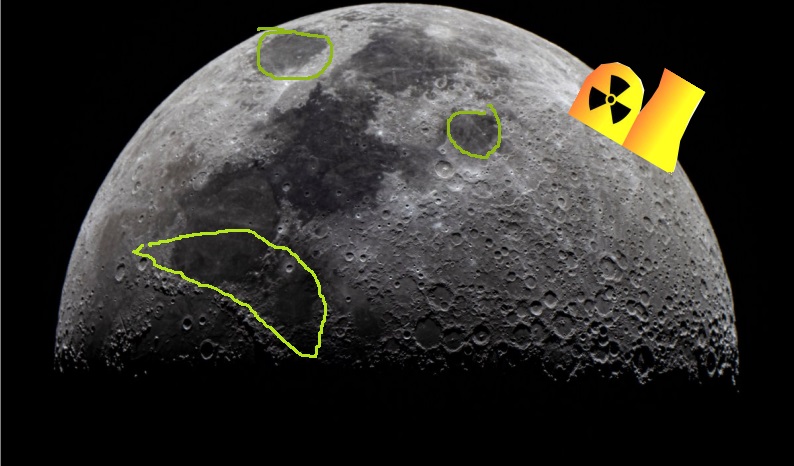
China and Russia plan to build a nuclear reactor on the moon by 2035 to
power a permanent lunar base. The International Lunar Research Station
(ILRS) will rely on the power plant for its scientific research. The IRLS
involves over a dozen international partners and is seen as a rival program
to NASA’s Artemis Program.
Deutsche Welle 16th May 2025, https://www.dw.com/en/china-and-russia-plan-to-build-nuclear-power-station-on-moon/a-72565465
We can’t have both healthier children and nukes

May 15, 2025, https://beyondnuclear.org/we-cant-have-both-healthier-children-and-nukes/
According to The New York Times, a new Trump Administration Executive Order (EO) urges the Nuclear Regulatory Commission (NRC) “to reconsider its safety limits for radiation exposure, saying that current limits are too strict and go beyond what is needed to protect human health.” And yet, studies already show increases in childhood cancers, including leukemia and central nervous system cancers, around operating reactors in countries other than the U.S.
A decade ago, the U.S. opted not to continue a study that would have examined cancer incidence around NRC licensed facilities. Communities around uranium facilities have suffered increases in disease as well. The EO could potentially extend a cover-up of childhood health impacts around nuclear fuel chain facilities, and would contradict another of the Trump Administration’s Executive Order of February 13, 2025 establishing the MAHA Commission.
That EO stated that from 1990-2021 Americans experienced an 88 percent increase in cancer, the largest percentage increase of any country evaluated. The EO addresses the sad state of the American diet compounded by absorption of toxic material and environmental factors as cause for concern. Intake of radioactivity from the nuclear fuel chain is one factor of concern as we know that radioactivity can cause cancer and other health ailments and that children and pregnancy development are particularly susceptible to damage from radiation exposure.
The Trump Administration will have to decide: healthier children? Or an expensive and unnecessary nuclear industry. It’s impossible to have both.
Amory Lovins: Artificial Intelligence Meets Natural Stupidity: Managing the Risks.
Future electricity needs for artificial intelligence (AI) are
wildly uncertain—shaped by unproven concepts, disputed performance,
limited trust, volatile markets, unpredictable adoption, and technical
efficiency that quadruples roughly each year.
Yet a speculative surge is driving massive investment in data centers and new electricity supplies, risking a 12-figure overbuild. Avoiding an electricity bubble requires
clear-eyed analysis, disciplined planning, and using markets to allocate
risks fairly to potential beneficiaries.
A cautionary history: In 1999, the US coal industry claimed that information technology would need half thenation’s electricity by 2020, so a strong economy required far more
coal-fired power stations. Such claims were spectacularly wrong but widely
believed, even by top officials. Hundreds of unneeded power plants were
built, hurting investors. Despite that costly lesson, similar dynamics are
now unfolding again.
Integrative Design for Radical Energy Efficiency Learning Hub 16th May
2025
https://integrative-design-for-radical-energy-efficiency.stanford.edu/amory-lovins
AWS says Britain needs more nuclear power to feed AI data center surge
CEO warns energy demands will overwhelm grid without extra generation capacity
The UK needs more nuclear energy generation just to power all the AI
datacenters that are going to be built, according to the head of Amazon Web
Services (AWS). In an interview with the BBC, AWS chief executive Matt
Garman said the world is going to have to build new technologies to cope
with the projected energy demands of all the bit barns that are planned to
support AI. “I believe nuclear is a big part of that, particularly as we
look ten years out,” he said. AWS has already confirmed plans to invest £8
billion ($10.6 billion) on building out its digital and AI infrastructure
in Britain between now and the end of 2028 to meet “the growing needs of
our customers and partners.”
The Register 16th May 2025 https://www.theregister.com/2025/05/16/amazon_nuclear_power_britain/
French nuclear company Orano explores sale of Niger uranium assets
French state-owned nuclear fuel company Orano is exploring the sale of its
uranium assets in Niger after the breakdown of its relationship with the
west African country’s military rulers. Orano operates three mines in
Niger in a joint venture with the Russian-backed government that seized
power in a coup two years ago, but was stripped of its rights over one
project in June and forced to stop work at another soon after because of
financial pressures. It said at the time that Niger had blocked uranium
exports and halted payments of its obligations as joint venture partners
since the 2023 coup that toppled the country’s pro-western government.
This has forced Orano to look at a possible sale of its Niger assets,
according to multiple people familiar with the matter.
FT 18th May 2025
https://www.ft.com/content/e0d5c62f-3794-4148-95e2-31deecbc7717
The US buried millions of gallons of wartime nuclear waste – Doge cuts could wreck the cleanup

Guardian, Andrew Buncombe in Richland, Washington. 16 May 25
Hanford made the plutonium for US atomic bombs, and its radioactive waste must be dealt with. Enter Elon Musk
Andrew Buncombe in Richland, WashingtonThu 15 May 2025 23.00 AESTShare
In the bustling rural city of Richland, in south-eastern Washington, the signs of a nuclear past are all around.
A small museum explains its role in the Manhattan Project and its “singular mission – [to] develop the world’s first atomic bomb before the enemy might do the same”. The city’s high school sports team is still known as the Bombers, with a logo that consists of the letter R set with a mushroom cloud.
Richland lies just 30 miles from the Hanford nuclear site, a sprawling plant that produced the plutonium for America’s atomic weapons during the second world war – and later the bomb dropped over Nagasaki. Over the decades, thousands of people in the Tri-Cities area of southern Washington worked at the plant, which shuttered in 1989.
Residents have long spearheaded an operation to deal with 56m gallons of nuclear waste left behind in dozens of underground tanks – a cleanup that is expected to cost half a trillion dollars and may not be completed until 2100. The government has called it “one of the largest and most expensive environmental cleanup projects worldwide”.
In recent weeks, what has already been a costly and painstakingly slow process has come under renewed scrutiny, following an exodus of experts from the Department of Energy (DoE) that is overseeing the cleanup being executed by thousands of contract workers.
According to local media, several dozen staff, who reportedly include managers, scientists and safety experts, have taken early retirement or been fired as part of a broader government reduction overseen by Elon Musk and his “department of government efficiency”. The government has refused to provide a specific figure for how many people involved with cleanup efforts have left. The top DoE manager at the Hanford site, Brian Vance, who had many years of experience, resigned at the end of March without giving a reason.
The changes have thrown the communities around the Hanford plant into limbo. And while the Department of Energy has said that only six staff have been fired, and reiterated its commitment to the cleanup, that hasn’t managed to assuage locals’ concerns.
Those raising the alarm include politicians from both parties, environmental activists, and Indigenous communities who have historically owned the land on which the 560 sq mile (1,450 sq km) site sits.
The US senator for Washington Patty Murray said workers were already understaffed, and that cutting further positions was “reckless”.
“There is nothing ‘efficient’ about indiscriminately firing thousands upon thousands of workers in red and blue states whose work is badly needed,” the Democrat said.
Dan Newhouse, the local Republican congressman is similarly concerned. “A strong, well trained federal workforce is essential,” he wrote in a weekly newsletter to constituents.
Concerns have also been raised by some over the difficulty former workers face in making medical compensation claims to the government for everything from cancer to acute pulmonary disease linked to their time at the plant.
Taken together, there is fresh anxiety in a community, where many are still living with the health and environmental effects of Hanford.
Richland, part of the Tri-Cities, was obtained by the army in 1943 to house workers engaged in top-secret efforts to produce plutonium used in the world’s first nuclear explosion – the-so-called “Trinity” device tested near Los Alamos, New Mexico, in 1945. Though the city was returned to the public a decade later, it can still feel like a company town.
To get anywhere near what is known as Hanford’s B-reactor, the world’s first full-scale plutonium production reactor, you need to sign up for an official tour. Yet a view of its grey, single tower, looming from the hillside, can be seen from state route 24, close to the Columbia River.
Those expressing concern about the federal government downsizing include local Indigenous groups who historically owned the land where the site is located and were pushed off it by the government. The Hanford plant area contains the location of several sacred sites, among them Gable Mountain, which were used for ceremonies, and the area of Rattlesnake Mountain, or Lalíik, which has for centuries been used to hunt elk.
The site is also located close to the Yakama Indian Reservation, home to 11,000 people, and the tribe has long pushed to be central to decisions about the cleanup and what it is eventually used for. The tribe recently signed a deal to carry out their first elk hunt in the area for seven decades.
“One of the biggest fears is that without proper manpower, there might not be a very good crew for the cleanup of the property,” says Gerald Lewis, chairman of the Confederated Tribes and Bands of the Yakama Nation. “Without this cleanup, that’s been happening for a number of years, we’re afraid of a nuclear mishap.”
Dr Elizabeth McClure, a health data specialist with the Union of Concerned Scientists, is currently conducting research in the communities around Hanford. She says there is a history of government-led cover-ups over the years at the site, including what is known as “the Green Run”, the intentional release of 8,000 so-called curies of iodine-1 into the atmosphere in 1949……………………………………………………………………………………………………………….. https://www.theguardian.com/us-news/2025/may/15/us-government-nuclear-waste-doge
Nuclear in decline: EDF accumulates excesses, the State takes the hit and the French pay the bill without flinching.

The Hinkley Point EPR project, a symbol of budgetary excesses and opaque management, raises crucial questions about the future of French nuclear energy and the State’s financial commitment
 , 05/09/2025,
 IN BRIEF
The Hinkley Point EPR project has become a financial disaster, with a budget that has ballooned to €54 billion.
EDF, now entirely state-owned, bears 85% of the costs , effectively committing public money without sufficient parliamentary control.
The Hinkley Point construction site is a logistical disaster , with working conditions criticized and significant delays to the schedule.
This project raises questions about French
energy policy and the future of nuclear power, calling for a thorough democratic debate.
This project raises questions about French
energy policy and the future of nuclear power, calling for a thorough democratic debate.
The National Assembly recently witnessed a heated debate surrounding the Hinkley Point EPR project, a project that has crystallized tensions surrounding the French nuclear industry. This project, initially presented as a technological showcase, has turned into a financial drain for EDF, and by extension, for French taxpayers. As the bill continues to mount, MPs are questioning budgetary overhangs and the lack of parliamentary oversight. Far from being a simple isolated incident, Hinkley Point raises crucial questions about the management of nuclear projects internationally.
When the bill explodes
The European Pressurized Power Plant (EPR) at Hinkley Point was supposed to be the flagship of the French nuclear industry. However, over the years, the project has accumulated delays, technical complications, and cost overruns. Initially estimated at £18 billion in 2016, the budget has now reached €54 billion. This cost explosion is symptomatic of poor management and an underestimation of risks from the outset. Aurélie Trouvé, a member of parliament for La France Insoumise, described the project as a “financial abyss” during a speech in the National Assembly .
The consequences of this financial drift are serious for EDF, a company now entirely owned by the State.
With 85% of the costs at its own expense, EDF is effectively committing public money without any real parliamentary safeguards . This situation is all the more worrying as it reveals a democratic anomaly: Bercy, the Ministry of Finance, does not have the construction contract, thus depriving MPs of a key element of control. The debate surrounding Hinkley Point is thus going beyond the technical sphere to become a major political issue.
EDF and the taxpayer’s hostage
The full nationalization of EDF in 2023 has redefined the stakes surrounding Hinkley Point. As the sole shareholder, the French state finds itself on the front line when it comes to the project’s budgetary implications. Aurélie Trouvé pointed out that the state was already an 85% shareholder during the initial negotiations in 2015 , making the lack of oversight over such a binding contract incomprehensible.
The withdrawal of Chinese partner CGN, initially planned to co-finance the project, left EDF alone to face the additional costs. In April 2025, Energy Minister Marc Ferracci called on the United Kingdom to assume its financial responsibilities. However, the British silence leaves uncertainty surrounding the future of the financing. This situation calls into question the role of the state in managing major industrial projects and the relevance of committing public money to such risky undertakings.
Symbol of an industrial shipwreck
Beyond the financial issues, Hinkley Point is also the scene of numerous logistical and human setbacks. The construction site, which was initially scheduled to be operational in 2025, has now seen its commissioning postponed to 2029, or even 2031. Working conditions on the site have also been singled out, with workers denouncing appalling conditions , as reported by the Guardian in a Guardian investigation.
The impact on EDF is significant. In 2024, the company had to record a €12.9 billion impairment charge due to the project’s difficulties. Moody’s has also downgraded EDF’s credit profile, highlighting the growing financial pressures on the company . These challenges illustrate the complexity of nuclear investments and the need for rigorous and transparent management.
A turning point for French nuclear energy
The management of Hinkley Point raises questions about the future of nuclear energy in France. As the country prepares to define its energy roadmap for the next ten years, the failure of this international project could influence future choices. Members of Parliament, such as Charles de Courson, are calling for a broader democratic debate on these issues, emphasizing that decisions made today will have lasting consequences for public finances and national energy policy.
This complex picture of Hinkley Point’s challenges and failures calls for a broader reflection on the state’s role in the nuclear sector. How can technological ambitions be reconciled with financial responsibilities? What lessons can be learned to prevent such projects from becoming financial disasters in the future? These essential questions must be answered to ensure a sustainable and responsible energy transition.
1 This Month

of the week– Nuclear Reactor Information Task Force

14 May – online event From Bombs to Data Centres: the Face of Nuclear Colonialism
To see nuclear-related stories in greater depth and intensity – go to https://nuclearinformation.wordpress.com
-
Archives
- May 2026 (92)
- April 2026 (356)
- March 2026 (251)
- February 2026 (268)
- January 2026 (308)
- December 2025 (358)
- November 2025 (359)
- October 2025 (376)
- September 2025 (257)
- August 2025 (319)
- July 2025 (230)
- June 2025 (348)
-
Categories
- 1
- 1 NUCLEAR ISSUES
- business and costs
- climate change
- culture and arts
- ENERGY
- environment
- health
- history
- indigenous issues
- Legal
- marketing of nuclear
- media
- opposition to nuclear
- PERSONAL STORIES
- politics
- politics international
- Religion and ethics
- safety
- secrets,lies and civil liberties
- spinbuster
- technology
- Uranium
- wastes
- weapons and war
- Women
- 2 WORLD
- ACTION
- AFRICA
- Atrocities
- AUSTRALIA
- Christina's notes
- Christina's themes
- culture and arts
- Events
- Fuk 2022
- Fuk 2023
- Fukushima 2017
- Fukushima 2018
- fukushima 2019
- Fukushima 2020
- Fukushima 2021
- general
- global warming
- Humour (God we need it)
- Nuclear
- RARE EARTHS
- Reference
- resources – print
- Resources -audiovicual
- Weekly Newsletter
- World
- World Nuclear
- YouTube
-
RSS
Entries RSS
Comments RSS
 nuclear-news