$40tn debt: U.S. unhinged empire is a threat to world peace
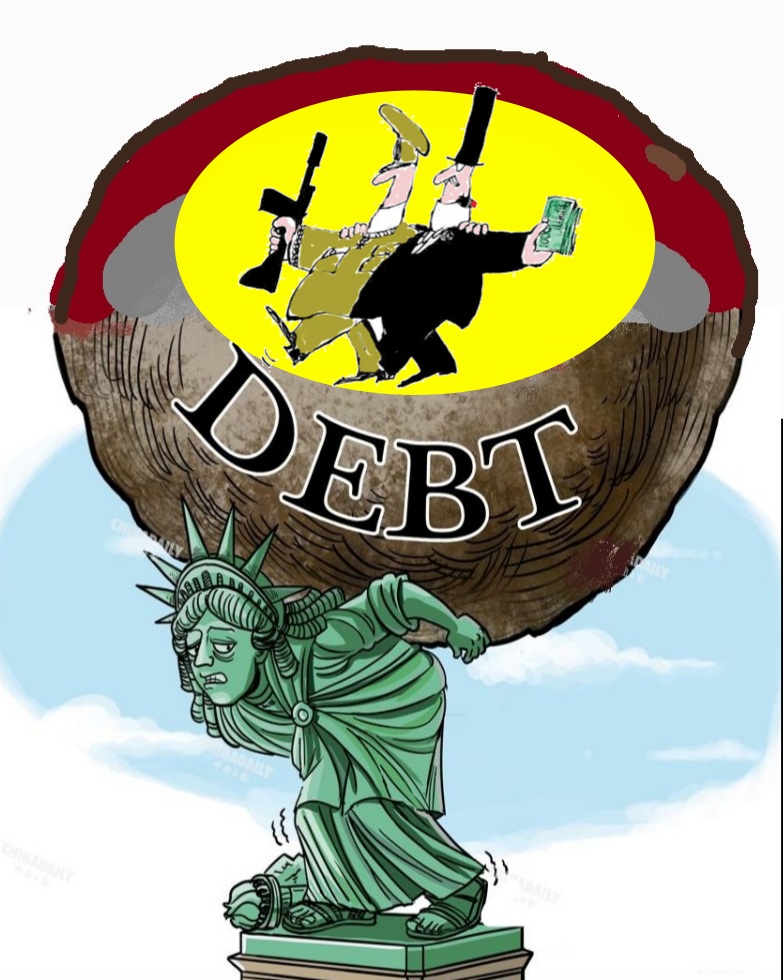
There are several causes of mounting American debt. However, the main driver, by far, is that nation’s relentless warmongering and militarism, as economist Jeffrey Sachs and other commentators have long contended. It is systemic and chronic
The U.S. debt crisis is a legacy of endless war. It is also a harbinger of future wars.
August 21, 2026, https://strategic-culture.su/news/2026/08/21/40tn-debt-us-unhinged-empire-threat-to-world-peace/
The United States hit a dubious milestone this week, announcing that its national debt had exceeded $40 trillion. No other nation comes close to this level of absolute financial indebtedness.
This is not simply a matter of out-of-control financial bankruptcy. It is an ominous sign of an unhinged empire that is desperately trying to salvage its historic failure by scorched-earth tactics of endless war.
The world is being held hostage by a pathological system that is no longer tolerable for the sake of humanity, development and peace.
Perhaps of more significance than the total figure – astronomical though that is – is the accelerating pace of U.S. debt growth. Since 2016, the arrears have doubled, up from $20tn. Over the next decade, the U.S. national debt is predicted to climb to $64tn.
In the year 2000, the American account stood at a “mere” $6tn. The last quarter of a century has seen the arrears pile up from endless wars, reckless military spending, and massive tax cuts for the corporate elite. The debt has become irreversible under prevailing policies.
Servicing interest on the arrears now runs at $1tn a year and is one of the largest federal budget expenditures. This means that the United States is caught in a debt spiral from which it cannot extricate itself. It is digging a deeper and deeper hole.
There are profound implications for the United States as a society. As Robert Reich, a former Labour Secretary, noted, the servicing of runaway debt means less money for “schools, healthcare, roads and bridges and social safety nets.” The grim conclusion is that social inequality in the U.S. – already at record levels – will become even more destructive. That speaks of social immiseration and collapse.
There are also far-reaching detrimental impacts on the U.S. and global economy. Even mainstream commentators warn of a historic fiscal crisis pending for the United States from soaring interest rates and hyperinflation. That, in turn, will be transmitted to the rest of the world, especially those countries with large holdings of American debt.
But the exceptional U.S. financial mess is not just a matter of economics. It is an urgent issue of global peace and security.
There are several causes of mounting American debt. However, the main driver, by far, is that nation’s relentless warmongering and militarism, as economist Jeffrey Sachs and other commentators have long contended. It is systemic and chronic
This year saw the United States celebrate its 250th anniversary since its founding as a modern state. For most of its history, about 95 per cent of the 250 years, the United States has been at war, either through conquest or subterfuge, according to its own Congressional records and eminent historians like David Vine.
No other modern nation comes close to this bellicose conduct, and that is a reason why no other nation comes close to the level of financial debt of the U.S.
In short, war and debt are closely correlated as cause and effect.
The worrying thing for the world is that as the U.S. debt spirals at an accelerating pace, the obvious implication is that conflict and wars are also increasingly manifest.
There are few people today who cannot be but concerned by the perception of intensifying tensions, violence and threats to world peace. We are living in a time when World War Three and nuclear conflagration are spoken of as an imminent possibility. While Western corporate media tend to cover up the obvious, polls show that increasing numbers of people around the world view the United States as the main threat to global peace and security.
The current wars in the Middle East and Ukraine and tensions with China all can be traced to Washington’s foreign policies.
The Trump administration has bombed at least seven countries and is threatening to attack others. Just this week, Trump sounded like a Mafia don when he said he would “bomb the shit” out of Oman over some perceived grievance. The U.S. disregard for international law was always a recurring feature, albeit not a widely known one, but lately it has become blatant.
This American president has hinted on numerous occasions at using nuclear weapons to “obliterate” Iran since his criminal war of aggression against that country has so conspicuously failed. The war on Iran alone has clocked up another $100 billion – and counting – on the U.S. national debt just in the space of six months.
George D O’Neill Jr writes in The American Conservative: “The current wars have exposed the shortcomings of our nearly trillion-dollar military and its multi-billion-dollar weapon systems… after years of being told we possess the most powerful military in history, Americans are beginning to realize it is a fantasy.”
It is indeed a cruel fantasy. The U.S. is not an exceptional, virtuous nation, as its propaganda claims; it is an exceptionally violent and criminal empire which has run up a monstrous debt by way of self-indicting evidence.
The real danger is that the empire is rapidly falling apart from its decades of abuse and corruption. And to postpone that reckoning, the U.S. ruling class is ramping up war and militarism as a desperate attempt to create a new world order, which it is gambling will somehow benefit American capitalism.
It doesn’t have to be that way. If the United States actually served the democratic needs of its people, as opposed to the oligarchy and military-industrial complex, it would increase taxation on the super-wealthy and rein in military spending and wars. That is, if the U.S. actually functioned like a law-abiding normal nation, it could avert fiscal crisis and engage peacefully with the rest of the world.
But U.S. capitalism does not work like that. It is a zero-sum system driven by ambitions of world dominance that spawn war, imperialist aggression and debt.
The U.S. debt crisis is a legacy of endless war. It is also a harbinger of future wars. Unless the American system is somehow systematically transformed through revolution or total collapse.
Ukraine can hit Russia deep inside its territory. But is it bringing the war closer to peace?
Trump’s most difficult task is not to give Ukraine more weapons or to pressure Kyiv into concessions. It is to create a settlement that gives both Putin and Zelenskyy a reason to change their positions.
Timur Maslov, [your]NEWS, Wed, 19 Aug 2026
From Kyiv, the growing Ukrainian ability to strike deep inside Russia is changing the geography of the war. But after four and a half years of fighting, one question remains: can military escalation actually produce a diplomatic breakthrough?
For more than four years, Ukrainians have lived with a war that rarely feels distant. Missiles and drones arrive at night. Energy infrastructure is repeatedly damaged. Businesses struggle to operate. Families prepare for another difficult winter. But the geography of the war is changing. Ukraine is increasingly capable of striking targets deep inside Russia. In recent days, Ukrainian forces launched one of the largest drone attacks on Russia since the beginning of the full-scale invasion. Russian authorities reported hundreds of Ukrainian drones targeting Moscow and other regions, while Russian strikes continued across Ukraine.
The strategy is becoming increasingly clear: if Russia can bring the war to Ukrainian cities, Ukraine wants Russia to experience at least some of the consequences of the war on its own territory. But there is a difficult question behind this strategy:
Does making the war more painful for Russia actually bring peace closer?
“People celebrate — and then wait for the response”
In Kyiv, the reaction to Ukrainian strikes deep inside Russia is complicated. People celebrate when Ukrainian drones reach targets near Moscow or elsewhere in Russia. There is a widespread feeling that Russia should experience some of the fear and uncertainty that Ukrainians have lived with for years.
But there is also another understanding. People know what usually comes next. A Ukrainian strike is followed by a Russian response and the response can be deadly. That cycle has become one of the most difficult realities of the war. As Ukrainian President Volodymyr Zelenskyy has put it, both sides can play the same game — but every action has consequences. The recent escalation illustrates the point. While Ukraine launched a major drone offensive against Russia, Russian missiles struck Ukrainian cities and infrastructure. A Russian attack on Kryvyi Rih damaged power and industrial facilities, while another strike in Kharkiv region killed civilians.
For Ukrainians, the result is a brutal paradox.
They may be pleased to see Russia hit — while knowing that another Russian attack may soon follow.
And ordinary people pay the price on both sides.
When the war reaches a supermarket shelf
The consequences of escalation are not always measured in destroyed military facilities. Sometimes they are much smaller and much closer to home. In Kyiv, I have personally seen empty shelves in some supermarkets, particularly in sections selling eggs and vegetables. This is not a nationwide food shortage. People can still buy essential products, and the situation may be temporary.
But the shortages appeared after Russian attacks damaged logistics infrastructure and warehouses supplying Kyiv’s supermarket chains. Ukrainian media reported that several logistics centers connected to Fozzy Group were damaged in a major August 5 attack, after which some products became harder to find in Kyiv stores. People are also buying more food than usual, creating additional pressure on supplies.
For someone outside Ukraine, this might sound like a minor inconvenience. For people who have lived through years of war, it feels different. A strike on infrastructure can eventually become an empty supermarket shelf. That is how military escalation reaches ordinary life.
Ukraine is developing its own long-range weapons
The next stage could be even more significant. Ukraine is developing ballistic missiles capable of reaching deep inside Russian territory.
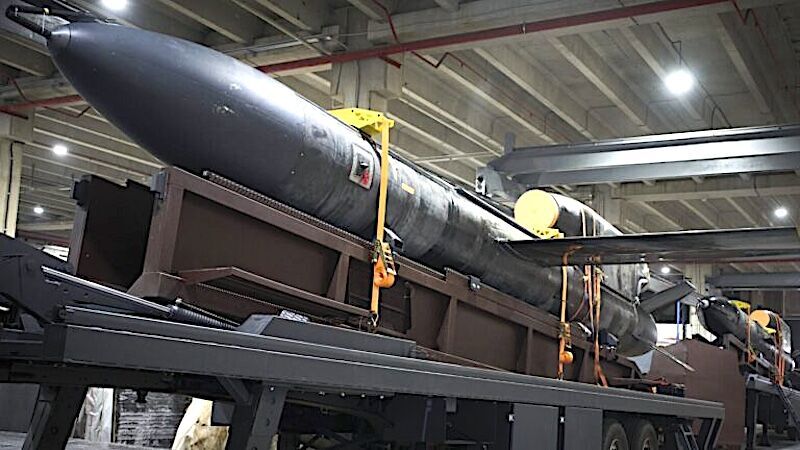
Ukrainian defense company Fire Point has displayed its FP-7 and FP-9 ballistic missile systems at international defense exhibitions. The company says the FP-9 is designed to carry a warhead of up to 800 kilograms and reach targets hundreds of kilometers away. Independent defense reporting has cited an expected range of roughly 700-855 kilometers, depending on the configuration and information source.
Fire Point has also presented the smaller FP-7 system. Ukrainian officials have suggested that domestically produced ballistic weapons could enter combat use later this year, although their deployment and production depend on testing, certification, financing and access to components. That distinction matters.
A missile displayed at an exhibition is not the same thing as a weapon being mass-produced and operationally deployed.
But the direction is clear. Ukraine wants to reduce its dependence on foreign long-range weapons and develop the ability to strike Russian military and strategic targets with weapons produced domestically. If that capability becomes operational at scale, it could significantly expand Kyiv’s options.
It could also create another escalation problem.
What happens if Ukrainian ballistic missiles reach Russia?
This is the question that worries me most. Ukraine already has long-range drones capable of reaching Moscow and other Russian regions. A domestically produced ballistic missile would represent a different capability. It would potentially allow Ukraine to strike selected targets much faster and with a different level of destructive power. The FP-9’s publicly presented specifications — including a claimed range of up to roughly 855 kilometers and a payload of up to 800 kilograms — would theoretically put a large number of Russian military and industrial targets within reach.
Ukrainian President Volodymyr Zelenskyy has said that Ukraine could potentially use a domestically produced ballistic missile against Russia as early as this autumn, provided the necessary financing and components are available. That does not mean that a missile will necessarily hit Moscow this autumn. It means something more important:
Ukraine is trying to build a long-term domestic strike capability.
And Moscow will have to take that seriously.
Will this change Putin’s position?
I am skeptical. Ukraine’s ability to strike deeper into Russia may increase the cost of the war. It may disrupt fuel supplies, logistics and military infrastructure. But I do not believe that strikes alone will force Vladimir Putin to negotiate. Russia has already demonstrated that it is willing to absorb enormous military and economic costs to continue the war.
The recent attacks inside Russia have also produced fuel disruptions. Reuters reported on August 19 that gasoline stations in Moscow and surrounding regions had begun limiting sales amid shortages linked to Ukrainian drone attacks on Russian refineries, combined with seasonal demand and refinery problems.
That is a real economic consequence.But economic pain is not automatically political capitulation. And there is another problem. The more Ukraine strikes Russia, the greater the possibility that Moscow responds with another escalation against Ukraine.
The result can become a cycle:
Ukraine strikes Russia.
Russia retaliates.
Ukraine responds again.
The war becomes more dangerous.
But the political positions remain unchanged.
I don’t think Russian society will suddenly turn against the war
There is an argument that if Russians begin experiencing the war directly, public opinion will eventually turn against Vladimir Putin. I am not convinced. Russia has already demonstrated that external pressure can produce the opposite reaction. When the situation becomes more dangerous, patriotic rhetoric intensifies. The population may become more defensive rather than more willing to question the war.
For years, many Russians in Moscow and other major cities lived with a war that was geographically distant. Now drones are reaching their cities. But that does not necessarily mean they will conclude that the war should end. It could instead convince some people that Russia needs to fight harder. That is one of the biggest risks of the current strategy.
Europe is becoming part of the equation
Ukraine is also receiving increasing support for its domestic defense industry. European countries have their own geopolitical interests, of course. But European governments increasingly understand that Ukraine’s ability to produce drones and missiles is becoming strategically important. Britain, for example, has committed to supplying Ukraine with large numbers of drones and has reaffirmed its support despite Russian warnings that London could face “consequences” over alleged use of British-made drones in attacks inside Russia. The more sophisticated Ukraine’s domestic weapons industry becomes, the less dependent Kyiv is on decisions made in Washington or European capitals.
That could strengthen Ukraine’s negotiating position. But it could also make the conflict more difficult to contain.
Trump faces a problem that weapons cannot solve
This brings us back to Donald Trump. In my view, neither increasing weapons supplies nor applying pressure to only one side will be enough. Trump needs to get Vladimir Putin and Volodymyr Zelenskyy into a serious negotiating process. Not separately. Together.
Both leaders are deeply entrenched in their positions. Putin continues to speak about Russia’s objectives and the “root causes” of the war. Ukraine does not want a temporary pause that could simply give Russia time to prepare for another attack. That is why a simple ceasefire is unlikely to solve the underlying problem. Trump’s challenge is to find an agreement that both leaders believe is worth accepting.That is much harder than sending weapons.
And much harder than demanding that one side make concessions.
The anger of living through the war
After four and a half years of living in Kyiv during this war, I feel anger when I see another escalation. Not because I believe Ukraine should simply stop defending itself. And not because I believe Russia should be allowed to attack without consequences. I feel anger because people continue to die while the political positions of the two leaders remain so far apart. Almost everyone I know has lost someone — a friend, a relative, a father, a husband — because of this war. People want it to end.
But Ukrainians also understand that Russia has repeatedly said it wants more than simply a temporary halt to fighting. That leaves Ukraine facing an extremely difficult choice. Continue increasing the cost of the war for Russia — knowing that Russia will respond or reduce the intensity of the fighting and risk giving Moscow time to regroup. Neither option guarantees peace.
The real question
Ukraine has demonstrated that it can reach deep into Russia. It can damage military facilities. It can disrupt logistics. It can put pressure on Russia’s energy system and it is developing increasingly sophisticated weapons of its own. But military capability and strategic success are not the same thing. The question is no longer whether Ukraine can hit Russia.
It can.
The question is whether those strikes change the political calculation in Moscow. So far, there is little evidence that they have and there is little evidence that Ukrainian leadership is prepared to abandon its own fundamental demands either. That is why I believe Trump’s most difficult task is not to give Ukraine more weapons or to pressure Kyiv into concessions. It is to create a settlement that gives both Putin and Zelenskyy a reason to change their positions.
Otherwise, the war may continue not for another few months, but for another five or even ten years. And after everything Ukraine has already lost, that may be the most frightening possibility of all.
Comment: The price of war is excruciating, deadly, unrelenting and now escalating… Interesting how many countries want it.
£1.1bn works package lined up as Wylfa nuclear plans gather pace

22 Aug 2026, Mark Mansfield,
https://nation.cymru/news/1-1bn-works-package-lined-up-as-wylfa-nuclear-plans-gather-pace/
Preparatory works worth up to £1.1bn are being lined up as part of plans to build the UK’s first small modular nuclear reactors at Wylfa on Ynys Môn.
Great British Energy – Nuclear (GBE-N) has begun sounding out contractors for a major package of work including site clearance, earthworks, infrastructure and utilities.
The procurement notice does not name the site, but Wylfa has been selected for the UK’s first SMR development, with an initial three Rolls-Royce reactors planned.
GBE-N signed a contract with Rolls-Royce SMR in April to begin design work on the reactors, which are expected to generate enough electricity to power the equivalent of around three million homes.
The newly disclosed early works package has an estimated value of between £730m and £1.1bn and would prepare the site for the main construction programme.
Work could include species relocation, remediation, site clearance, construction utilities, drainage and haul roads, as well as extensive earthworks.
GBE-N said the work would establish the required ground levels and safe access routes for later construction, creating the physical platform needed for the main development.
The contract is currently expected to run from June 2028 until June 2034, with an option to extend it until June 2037.
GBE-N had considered dividing the work into two contracts but has opted for a single package in an effort to reduce the risks associated with different contractors working across interconnected elements of the project.
However, the organisation cautioned that the scope, timetable and estimated value could change as the programme develops.
The procurement process is expected to formally begin with publication of a tender notice in March 2027.
Webinar
GBE-N is also due to hold a webinar for potential suppliers on September 3 outlining the proposed procurement approach and details of the early works.
The package has been identified as particularly suitable for small and medium-sized businesses, potentially opening opportunities for companies in Wales to become involved in the supply chain.
The latest development follows the signing of the contract between GBE-N and Rolls-Royce SMR earlier this year.
The Wylfa project is expected to support around 8,000 jobs across the UK, including up to 3,000 locally during peak construction, according to industry estimates.
Rolls-Royce SMR chief executive Chris Cholerton said at the time: “This contract unlocks the delivery of our first three units at Wylfa and brings certainty to the UK SMR programme.”
The former nuclear power station stopped generating electricity in 2015 after more than four decades of operation.
Previous plans by Japanese company Hitachi for a new large-scale nuclear power station at Wylfa were abandoned in 2020 after funding could not be secured.
The Wylfa scheme is subject to regulatory approvals and a final investment decision, with electricity generation expected to begin in the 2030s.
Zelensky losing grip on power – Western media
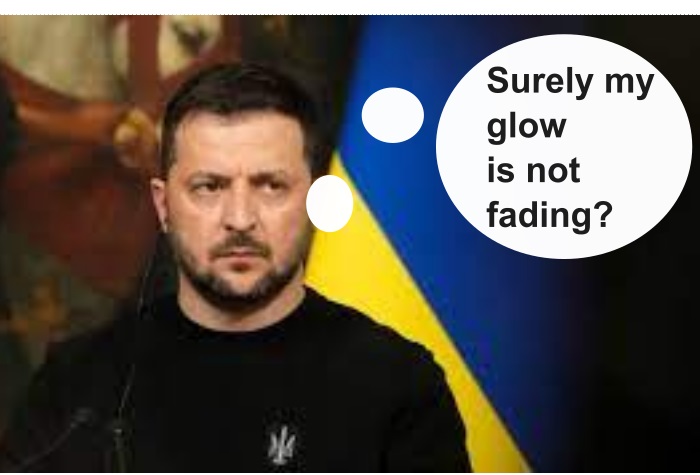
Comment: Ending the war? Peace with Russia? Zelensky would be on trial. A presidential challenger is his worst nightmare.
20 Aug 2026, https://www.sott.net/article/508029-Zelensky-losing-grip-on-power-Western-media
A widening corruption scandal and an open challenge from a former official have fueled questions about the Ukrainian leader’s political future.
Ukraine’s Vladimir Zelensky is facing his gravest political challenge in years, major US and European media outlets have reported, as a new corruption scandal engulfs his office and a former official openly challenges his leadership.
Zelensky fired the deputy head of his office, Irina Mudraya, on Wednesday after Western-backed anti-graft authorities launched an investigation into an alleged $3.4 million money-laundering scheme involving senior presidential officials. Mudraya has denied wrongdoing. It is the latest of many corruption scandals involving officials close to Zelensky.
A day earlier, former Defense Minister Mikhail Fedorov, whose surprise dismissal last month sparked weeks of public protests, released a campaign-style video denouncing government corruption and calling for elections amid what he described as “a systemic crisis of governance.”
Zelensky’s five-year presidential term expired in May 2024, but he has refused to hold a new election, citing martial law imposed after the conflict with Russia escalated in February 2022.
The Wall Street Journal called the turmoil the “biggest challenge” to Zelensky’s “hold on the presidency” since 2022, saying Fedorov appeared to be positioning himself as a leading challenger amid growing frustration over recurring corruption scandals.
The Financial Times noted that the growing list of Zelensky allies caught up in corruption investigations have contributed to his falling approval ratings and raised concern among Kiev’s Western backers, citing an analyst who concluded that “the political crisis is obvious.”
The Washington Post described Fedorov’s intervention as a “remarkably direct challenge” to Zelensky’s authority.
The Telegraph said Zelensky had been “bruised by a series of lingering corruption scandals” as investigations “keep coming.” It argued that he was accumulating powerful rivals who were once deeply loyal to him and said it appeared “increasingly possible” that he may not lead Ukraine into peacetime.
The Guardian described Fedorov as a “potent political opponent.” Experts cited by the newspaper called corruption a “symptom” of deeper problems with “bad governance,” warning that public exhaustion and Zelensky’s failure to explain his decisions had created a “perfect powder box.”
Le Monde said Fedorov had “crossed a line” no major Ukrainian politician had dared to cross since 2022 by calling for elections. The newspaper said he was seeking to capitalize on an “accumulation” of crises, including repeated corruption scandals.
Der Spiegel cited a Ukrainian political analyst who described Fedorov’s challenge as an “application for the role of opposition leader.”The magazine said Zelensky now faced his first “public and direct opponent” since the conflict escalated.
Zelensky has not publicly responded to Fedorov’s accusations. His Wednesday evening address focused on military matters and the appointment of a new defense minister and did not address the mounting political pressure.
Walt Zlotow – Trump’s Iranian Roulette: Whose regime will collapse first, Iran’s or America’s?

23 August 2026 AIMN Editorial, By Walt Zlotow West Suburban Peace Coalition, Glen Ellyn IL, https://theaimn.net/trumps-iranian-roulette-whose-regime-will-collapse-first-irans-or-americas/
Having suffered a catastrophic military defeat in his 39 day bombing war on Iran from February 28 thru April 7, Trump has pivoted to economic warfare to collapse the Iranian regime on behalf of Israel. But all out economic warfare keeps the Strait of Hormuz closed to most oil and other critical resources, guaranteeing that gasoline and everything fossil fuel based in America will rise to unacceptable levels to an American public near totally against Trump’s senseless, lost war.
Iran may be suffering economically much worse than America now, but that matters little for the likely outcome. Iran’s 90 million people will resist Trump’s Operation Economic Fury as the existential threat to their existence it represents regardless of cost. America’s 340 million people will sweep Trump’s deranged, criminal war policies causing senseless cost increases from power in ten weeks.
During that time no country will help Trump crush the Iranian regime. Russia, China and others are and will continue to help Iran weather Trump’s despicable regime change operation that has killed over 3,000 Iranians, virtually eliminated US Gulf Stage bases, inflicted over 750 US casualties in a lost cause.
Trump’s Operation Economic Fury is his last desperate gamble to prevent his Unconditional Surrender to Iran’s well-earned, well-deserved victory over Trump initiating the most senseless war in US history. It’s as if Trump put one bullet in an unloaded pistol, put it to his temple and successfully fired once. But instead, Trump keeps firing till the gun goes off. That’s Trump’s version of Iranian Roulette.
Miscarriages and stillbirths in Gaza surge as Israel’s siege, malnutrition, toxic exposure and displacement ravage mothers

Eva Karene Bartlett, Aug 22, 2026
August 20, 2026, RT.com, Shocking news of a sudden over-threefold year-on-year increase of the number of miscarriages and stillbirths should be front page on global media. But because it is one of the latest consequences of the ongoing Israeli genocide of Palestinians in Gaza, it will probably go ignored by most Western corporate media.
In fact, since a ‘ceasefire’ supposedly came into effect in October 2025, media coverage of Gaza has decreased dramatically. But – as with ceasefires prior – Israel has continued to kill Palestinians in Gaza on a near-daily basis, by bombing, machinegun fire, quadcopter fire, drone strikes, and by (continuing its near twenty-year siege on Gaza) not allowing in adequate amounts of humanitarian aid, medical supplies, and other things needed to just sustain life at the very basic level.
As of August 19, the Gaza Health Ministry reports 1,273 Palestinians have been killed, 4,223 wounded since October 11, 2025.
In mid-July, Ahmad Abu Foul, a Palestinian medic who I’ve known since I lived in Gaza, told me of the sudden increase in miscarriages, primarily among women living in displacement tents across the Gaza Strip.
He cited Dr. Mohammed Al-Bashiti, an obstetrics and gynecology specialist at Nasser Medical Complex in Khan Younis, as warning of this disturbing increase and attributing it to various environmental and physical factors, notably, severe malnutrition and anemia, and “extreme physical fatigue due to repeated displacement from one place to another. Many are forced to carry heavy loads beyond their physical capacity, putting their pregnancies at greater risk.”
But it’s also caused by exposure to toxic chemicals – explosive residues, TNT-related materials, smoke – which put the baby at risk. Ahmad said that his sister just had a miscarriage at four months pregnant, and his niece had a stillbirth at eight months.
The Israeli newspaper, Haaretz, on July 30 published an article highlighting the dramatic rise in miscarriages. It cited a recent UN report stating from January to June 2026, 3,950 miscarriages had been reported. This is over triple the 1,197 miscarriages reported from July to December 2025. The miscarriage rate, it notes, is one-sixth of all pregnancies.
Haaretz cited Dr. Ahmed al-Farra, head of the pediatric department at Nasser Hospital as likewise saying the contributing factors to the increase in miscarriages are malnutrition and stress and also water shortages: “We have reached a point where each person has three liters of water a day, far below the minimum required. Ninety percent of the water is not fit for drinking. The water shortage leads to infections, weakening the immune system and worsening malnutrition.”
With the complete destruction of the Gaza Strip by Israel, and with Palestinians constantly forced to suddenly move their inadequate tents elsewhere, the lack of clean drinking water, and the near-complete dependence on financial and humanitarian aid from the outside world set the stage for a host of food-, water-, and hygiene-related illnesses, and now this dramatic increase in miscarriages.
Although it was stipulated in the ‘ceasefire’, Israel hasn’t been allowing sufficient food, water and medicines to enter Gaza.
Euro-Med Human Rights Monitor reported on August 9, 2026, that, “Israel enforces a comprehensive policy that disrupts the entire supply chain, starting from the entry of goods and aid through crossings until they reach the population.”
It notes the dearth of aid trucks entering Gaza in the first place, and that those which are permitted entry are not guaranteed to reach those in need, “due to the destruction or impairment of the transportation, storage, and distribution infrastructure.” It also notes that delays in shipping “cause frozen food, medicine, and other vital materials to spoil before reaching those in need.”
Euro-Med points out that Israel, “as the occupying power, has an obligation under Articles 55 and 59 of the Fourth Geneva Convention to guarantee that the population receives food and medical supplies when local resources are insufficient.”
From a logistical perspective, many of the illnesses plaguing Gaza could be eradicated were Israel to adhere to international law and allow in sufficient food, water and medical aid.
Israel is of course aware of this, as it has been since enforcing a full siege on Gaza in 2007. But the Israeli authorities know no international body or state – certainly not its biggest backer, the US – will force it to stop its genocide and allow in aid.
The invisible, creeping ‘Yellow Line’
Israel has been expanding its control of Gaza via a constantly-expanding, mostly-invisible, ‘Yellow Line’ – a demarcation line set out in the Israeli-US ‘peace plan’ of 2025. The Palestinians can mainly only guess at where it lies, aside from some yellow cement blocks which are periodically moved still further into Gaza, to claim more land………………………………………………………………………………………
Nonstop killing continues…………………………………………………………………………… https://evakarenebartlett.substack.com/p/miscarriages-and-stillbirths-in-gaza?utm_source=post-email-title&publication_id=3046064&post_id=212152652&utm_campaign=email-post-title&isFreemail=true&r=1ise1&triedRedirect=true&utm_medium=email
A blank check to the Pentagon while the facts on the “Golden Dome” are concealed from the public.

Elaine Cimino, 21 Aug 26
The Pentagon says Golden Dome will cost $185 billion. The Congressional Budget Office estimates a comparable system could cost $1.2 trillion. Other estimates range as high as $2.4 trillion.
When independent analysts challenge the Pentagon’s figure, Golden Dome’s director dismisses their estimates as false because they do not reflect what the military is actually building.
But the Pentagon will not tell Congress, the CBO or the public what it is actually building.
That is not national-security oversight. It is a blank check protected by classification.
Billions are already flowing to missile, satellite and weapons contractors while the architecture, total cost and technical feasibility remain concealed. Even the CBO’s trillion-dollar model would not provide an impenetrable shield or stop a full-scale attack by Russia or China.
This is ambush by concealment. By hiding the full architecture, government also hides the program’s full economic and environmental footprint: public subsidies, long-term operating costs and resources diverted from essential needs, as well as the consequences of manufacturing, testing, launching and continually replacing thousands of missiles, interceptors and satellites.
Meanwhile, in NM city councils and county commissions are being told to vote for “jobs” without seriously examining the consequences for surrounding communities—and they are voting unanimously. They approve public land, infrastructure, financing and development agreements without independent environmental review, cumulative-impact analysis or full disclosure of the hazards on weapons systems facilities ci tribute ng to the Golden Dome project and more. What do we call unanimous approval when decision-makers have not demanded the information necessary to protect the public?
Rubber-stamp government. Approval by concealment.
Communities are being committed to weapons production, hazardous materials, explosive testing, industrial pollution and intensive resource use before the public can evaluate the cumulative cost—or meaningfully object.
Golden Dome is therefore not simply a missile-defense program. It is an enormous, open-ended transfer of public wealth into a weapons system whose design cannot be examined, whose cost cannot be verified and whose promised protection cannot be guaranteed.
The public is being asked to fund the shield without being allowed to see whether the shield exists.
Golden Dome is Reagan’s “Star Wars” project on steroids—larger, more secretive, more expensive and already driving a nationwide expansion of missile production, weapons testing and the militarization of spac
Ukraine’s Ultranationalist War On History
Kit Klarenberg Substack, August 23, 2026, https://scheerpost.com/2026/08/23/ukraines-ultranationalist-war-on-history/
Over the past two decades, hardline Ukrainian ultranationalists have waged an ever-escalating war on history at home and abroad, with dramatic, world-changing consequences. In the country itself, a highly repressive legal apparatus is increasingly enforcing dangerously skewed narratives of Kiev’s near and distant past, with excessive criminal penalties even for those who unwittingly fall foul of the law. A brazenly politicised battle, it has become turbocharged since the Ukraine proxy conflict’s eruption. Despite widespread opposition, Kiev’s aggressive ultranationalist offensive on history is only intensifying.
These are the grave findings of an extraordinary paper by Ukrainian academic Georgiy Kasianov, “To discipline and punish”: A punitive turn in the memory politics in Ukraine, 2006–2025. As the author notes, the weaponisation of law in service of memory politics is common in Central and Eastern Europe. At least nine countries in the region boast legislation prohibiting public displays of Communist and Nazi symbols, which underpins local ultranationalist efforts – eagerly endorsed by the EU – to perversely conflate the two ideologies as comparable totalitarianisms.
Moreover, in many cases – especially the Baltics – these laws are components of wider cultural and legal ecosystems glorifying Nazi collaborators and Holocaust perpetrators as heroic freedom fighters, while strictly limiting discourse about World War II to conceal local culpability for macabre crimes. As such, Kasianov writes, Ukraine’s “punitive model of memory politics” fits into “a broader post-Communist pattern of state-enforced historical narratives.” Yet, “in its severity, selectivity, ideological and bureaucratic instrumentalization,” Kiev’s war on history “represents a particularly radical and revealing case.”
Today, Ukraine “leads Europe in the number of judicial decisions concerning violations of criminal statutes specifically designed to prohibit certain historical symbols,” with criminal penalties for breaching “memory laws” being the continent’s “most severe.” Kasianov traces this state of affairs to the mid-2000s, when Western-installed President Viktor Yushchenko’s government sought to implement laws “institutionalizing” the Soviet Union’s 1930 – 1933 famine as a deliberate genocide of Ukrainians specifically engineered by Joseph Stalin. It is known within Ukraine, and increasingly internationally, as “Holodomor”.
While the famine and resultant mass death was produced and exacerbated by catastrophic human errors combined with adverse natural factors, few historians consider the horror to have been intentional. Markedly, Kazakhs and Russians also perished in vast numbers. As of November 2022, just 23 UN member states have recognised Holodomor as a genocide – most being Kiev’s close allies, post-Maidan. Nonetheless, prominent Western sources state axiomatically the famine was deliberately inflicted, part of a wider ongoing Russian and/or Soviet effort to erase Ukraine.
Meanwhile, ultranationalist claims of how many Ukrainians were supposedly killed by the famine have grown ever-wilder, with some sources placing the figure as high as 10 million. This is several times the multiethnic death toll typically accepted by scholars, conveniently framing the so-called Holodomor as a greater targeted crime against humanity than the Holocaust. Yuschenko’s foray into memory politics contributed significantly to this warped contemporary informational climate. Still, 2006 legislation formally designating Holodomor as genocidal didn’t include punitive measures for denying or questioning that characterisation.
Kasianov documents how over the next 14 years, 13 separate attempts were made to criminalise “Holodomor denial” by ultranationalist Ukrainian elements within and without government and parliament. Each effort sought to impose “a state-sanctioned historical orthodoxy” around Holodomor, while “[constraining] scholarly debate and freedom of expression.” None received approval from parliament’s “legal analytical department”, but ultranationalist memory politics ultimately prevailed on a cultural and political level locally, and beyond. Notably, many of these initiatives were sponsored by the openly Neo-Nazi political party Svoboda.
‘Political Repression’
Svoboda played a substantial role in the Western-orchestrated 2014 Maidan coup, which not coincidentally “created a fertile environment for reframing memory politics as an instrument of state security and ideological consolidation.” The government of Petro Poroshenko justified the “rapid passage of a package of laws aimed at condemning [Communism] and institutionalizing a nationalist historical narrative” as a “necessary defensive measure” and “nation-building project,” countering supposed “external aggression” from Russia. This led to the adoption of hitherto unthinkable legislation in April 2015.
Approximately 90% of the legislation’s text “is dedicated to defining and enumerating Communist symbols, while Nazi symbols are addressed in relatively minimal and largely perfunctory terms.” Nazi-related prohibitions are “limited to the most universally recognized insignia of the Third Reich, such as the swastika.” By contrast, “the law offers an expansive and detailed catalog of banned Soviet insignia, ranging from the hammer and sickle to red stars and Soviet-era street names.” This “obvious asymmetry” extends even further.
These hastily passed laws equated Communism with Nazism, prohibiting the public display of symbols associated with both ideologies. Yet, Kasianov notes the legislation “also granted legal and moral rehabilitation” to mass-murdering, Nazi-affiliated Ukrainian nationalist factions heavily implicated in the Holocaust. This included Stepan Bandera’s Organisation of Ukrainian Nationalists, and its armed Ukrainian Insurgent Army (UPA) wing. Moreover, despite the law’s formal dual condemnation of Communism and Nazism, Kasianov details how “its implementation and symbolic focus reveal a stark imbalance.”
Approximately 90% of the legislation’s text “is dedicated to defining and enumerating Communist symbols, while Nazi symbols are addressed in relatively minimal and largely perfunctory terms.” Nazi-related prohibitions are “limited to the most universally recognized insignia of the Third Reich, such as the swastika.” By contrast, “the law offers an expansive and detailed catalog of banned Soviet insignia, ranging from the hammer and sickle to red stars and Soviet-era street names.” This “obvious asymmetry” extends even further.
Symbols associated with local Neo-Nazi groups, or formal World War II-era collaborationist Ukrainian military units such as SS Division Galicia, are spared from proscription entirely. “Legal and policy experts and Ukrainian and international human rights organizations” have all expressed concerns over the law’s “vague definitions,” and “potential misuse for political repression.” The Ukrainian Rada’s own “expert department” found the legislation conflicted with the country’s established constitution, and several existing domestic laws.
Disproportionately harsh punishments for infringements, with offenders facing prison sentences of up to five years along with property confiscation, also drew widespread criticism. A lawyer and lecturer at Lviv National University strikingly compared the penalties involved to “using a guillotine to treat a headache.” A damning open letter signed by a welter of academics and policymakers dubbed the legislation “an instrument of ideological purification, selectively targeting the symbols and narratives associated with the political left while allowing for the implicit valorization of radical nationalist traditions.”
These devastating indictments were dismissed by the law’s advocates as “Kremlin propaganda”, if not outright treason. Kasianov reveals how “principal architects” of Poroshenko’s “Decommunization” agenda were a coterie of ultranationalist “memory activists”, drawn from the Lviv-based Center for Research on the Liberation Movement, and Youth Nationalist Congress. Both maintain “close ideological and organizational ties” with, operating as “facade organizations” for, the Banderite OUN. The pair have long-served as “conduits for nationalist reinterpretation of 20th century Ukrainian history and strong anti-Communist and anti-Russian policies.”
‘Memory Regime’
Post-Maidan, “several leading figures from this milieu assumed influential positions within state institutions, shaping historical policy.” This included extensive infiltration of the Ukrainian Institute of National Remembrance (UINP), the state body charged with implementing memory laws. Then-Deputy Prime Minister Oleksandr Sych of Neo-Nazi Svoboda appointed OUN-linked figures to influential positions within UINP. Not coincidentally, Sych cofounded the fascist, pro-Maidan Congress of Ukrainian Nationalists, an OUN-B “political facade”. Once their long-sought anti-Communist legislation was enacted, enforcement came thick and fast.
From November 2015 – spring 2016, almost 52,000 toponymical objects, 32 cities, 955 villages and settlements, and 25 administrative districts were renamed, with 2,389 monuments and memorial plaques to “totalitarian leaders” removed. In all, 1,320 were Lenin statues. Between 2015 and 2021 too, Ukrainian police and the general prosecutor’s office registered 334 criminal cases against citizens related to the display of “totalitarian symbols” – “the vast majority of which concerned Communist imagery.” Details were almost invariably farcical.
n May 2017, a student narrowly avoided jail for posting Lenin quotes on Facebook. Under his plea deal, he publicly expressed “sincere remorse”, while his personal copy of Karl Marx’s Capital was destroyed. In June 2019, an unemployed man received a one year suspended prison sentence for wearing an old T-shirt featuring the Soviet coat of arms while washing windows. In March 2021, a Lviv resident was sentenced to one year’s probation after being “detained by politically vigilant local citizens” for wearing a USSR emblem.
In the meantime, further legislation was passed by Kiev sacralising ultranationalist historical narratives. Lack of political pushback was in no small part assured by Ukraine’s Communist party being banned in December 2015. The same openly fascist and Neo-Nazi elements behind Poroshenko’s “Decommunization” push successfully sponsored laws granting OUN and UPA genocidaires official combatant status and veteran benefits. Now insulated from legal consequences for any atrocities they committed, Ukrainian state sources universally describe them as “heroes” who fought for Ukrainian “independence”.
The volume of cases brought under “Decommunization” laws, and severity of the punishments involved, ratcheted significantly following the Ukraine proxy war’s eruption. Authorities were handed an ideal rationale further assaulting history, while waging war on enemies within, under the guise of “derussification and decolonization.” In keeping with the “near-absence of prosecutions for Nazi-related offenses” pre-conflict, in over 300 criminal cases brought to trial 2022 – 2025, fewer than 10 involved Nazi symbols. The vast majority “concerned the dissemination of prohibited [Communist] symbols on social media platforms.”
Today, even simply liking social media posts featuring Soviet symbols can land Ukrainians in court. Kasianov notes how “case materials” have “indicated the emergence of specialized investigators…focused on monitoring digital communications and online content,” within the ranks of both police and the SBU security service. There has concomitantly been a significant rise in “vigilant citizens” reporting acquaintances, coworkers, and neighbours to authorities for breaching Kiev’s stringent memory laws. “Overwhelmingly”, individuals “from marginalized and impoverished segments of the population” have been targeted.
Ever since Maidan, Ukraine’s “punitive memory regime” and “nationalist identity project” has been wholeheartedly embraced and promoted by Kiev’s Western proxy sponsors. No wonder – the legally-enforced distorted narrative Ukraine is fighting a battle for its very existence, and ultimate liberation from “Russian imperialism”, ensures the war will continue in perpetuity. All along, distorted “memory politics” becomes more entrenched and rabid at the country’s highest levels, leaving the population – and the wider world – at the mercy of a dangerous and deranged ultranationalist clique.
Romania adopts new measures to boost Danube waters to cool Cernavoda nuclear plant
By Reuters, August 22, 2026, Reporting by Marek Strzelecki, Editing by Alexandra Hudson https://www.reuters.com/business/energy/romania-adopts-new-measures-boost-danube-waters-cool-cernavoda-nuclear-plant-2026-08-22/
WARSAW, Aug 22 (Reuters) – Romania’s National Committee for Emergency Situations approved new measures to boost the water level of the River Danube and ensure cooling of the Cernavoda nuclear power plant, the government press office said on Saturday.
The plant remains shut due to historically low Danube levels and the country has declared a state of emergency throughout August stemming from a decline in electricity production.
- Emergency dredging of the Danube course in the plant area is planned.
- Along the Old Danube channel a groyne will be built to divert water towards the area of the water intake for the cooling systems of the plant.
- Hydro plant operator Hidroelectrica will begin releasing water from reservoirs on the River Olt on Saturday for five days to supplement Danube flow and generate extra electricity.
- High-capacity pumps will be mobilized to maintain, if needed, the water level necessary for the operation of the plant.
How the brave sisters of Greenham Common changed the world and defeated the nuclear machine 45 years on
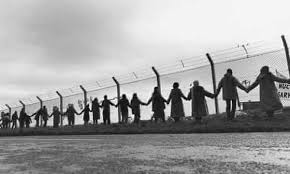
Armed with nothing more than campfires,
tea, and unbreakable determination, a brave band of women marched into
history 45 years ago to stop nuclear annihilation. Their 19-year siege at
Greenham Common didn’t just force US cruise missiles out of Britain – it
ignited a feminist revolution whose impact is still felt across the globe
today.
Mirror 20th Aug 2026,
https://www.mirror.co.uk/news/uk-news/how-brave-sisters-greenham-common-37569864
Russia Warns West Against New Arms Race

Aug 21, 2026 , By Ellie Cook, Senior Defense Reporter, https://www.newsweek.com/russia-warns-west-against-new-arms-race-12346603
A senior Russian official has warned that President Donald Trump’s new defense plans, including for the vast Golden Dome missile shield currently in development, will lead to a new space “arms race” and could be “devastating.”
“The risks of turning outer space into an arena of armed confrontation have ceased to be hypothetical,” Gennady Gatilov, Russia’s envoy to the United Nations in Geneva, said in remarks reported by Russia’s Tass state news agency on Thursday.
“Its consequences will be devastating for all of humanity,” he added.
Although militaries worldwide already use satellites for intelligence gathering, communications, missile warnings and navigation, putting weapons in orbit has been controversial for decades.
A major part of the planned design for the Golden Dome will be orbiting interceptors to knock out incoming missile attacks, with early-warning sensors positioned in space, although the United States government and military haven’t released a full breakdown of how the system would be put together.
A White House spokesperson told Newsweek in a statement: “President Trump is building on the transformational achievements of his first term to maintain America’s leadership in space.”
Newsweek reached out to the Department of Defense via email for comment.
Russian President Vladimir Putin and China’s Xi Jinping jointly said in May 2025 the proposed outline for the futuristic Golden Dome was an “obvious threat to strategic stability,” while North Korea said the program smacked of “self-righteousness” and “arrogance.”
The Trump administration says the project is needed to counter next-generation attacks on U.S. soil, like fast-moving ballistic missiles and hypersonic weapons able to travel at more than five times the speed of sound. Moscow and Beijing have invested heavily in hypersonic programs, while the U.S. and NATO have lagged behind in developing these weapons.
Advocates for the Golden Dome say technology is now advanced enough to build a partially space-based system. Trump has explicitly linked the project to an ultimately shelved initiative launched by late Republican President Ronald Reagan during the Cold War arms race, popularly dubbed “Star Wars” because it planned to intercept Soviet missiles with lasers in space.
But critics argue that despite the ballooning projected costs, Trump’s Golden Dome may not protect the U.S. from a full-scale attack by Russia or China.
Costly and Possibly ‘Overwhelmed’
The Congressional Budget Office—the nonpartisan agency that advises American lawmakers on funding—said in May the “Golden Dome” will cost roughly $1.2 trillion over the next 20 years, far exceeding the initial $175 billion allocated to the project.
The CBO said up to 70 percent of the acquisition costs and 60 percent of the total bill would be linked to the space-based components. It has also said that while the Golden Dome could cope with a “small-scale” assault or a North Korean attack, it would be “overwhelmed by a full-scale attack” from a country like Russia or China.
A dozen companies are competing to develop this space-based layer, including defense giants Lockheed Martin and Northrop Grumman. The U.S. Space Force says it can show off an “initial capability” by 2028.
In separate remarks on Wednesday, senior CBO official David Mosher said the agency hadn’t been able to contact the team in charge of the Golden Dome in the Pentagon and hadn’t secured briefings on the program, despite requesting updates.
“I know nothing about what they’re actually building,” he said during an appearance at the Brookings Institution.
Last year, Oregon Senator Jeff Merkley and three other Democratic lawmakers said the Golden Dome would be “detrimental to U.S. and global security by igniting a nuclear arms race with Russia and China.”
Unanswered Questions
The Golden Dome is expected to cover the U.S. mainland, Alaska and Hawaii. But Canada is in talks to come under the Golden Dome’s umbrella, and the U.S. has said previously that its northern neighbor would need to pay tens of billions of dollars to be included.
Currently, both the U.S. and Canada’s defenses against long-range intercontinental ballistic missiles are handled by the binational North American Aerospace Defense Command (NORAD). At this point, it’s hard to work out how an air defense system for long-range attacks would work without Canadian cooperation.
It’s also not clear how the Golden Dome will address the threat posed by drones, particularly after the U.S.’s experience intercepting unmanned aerial vehicles (UAVs) in the Middle East since the start of the war with Iran.
The Pentagon said in its National Defense Strategy released in January that the Golden Dome would have a “specific focus on options to cost-effectively defeat large missile barrages and other advanced aerial attacks.”
Because air defense interceptors that can shoot down sophisticated weapons often cost several million dollars apiece, many global militaries are wrestling with how to reliably knock out major air threats like drones at a far lower cost than in past years.
Earlier this month, the Pentagon said it had set up a new “hub” for defense companies, academics and investors with the Department of Defense, which it said would slash red tape often found in defense procurement negotiations.
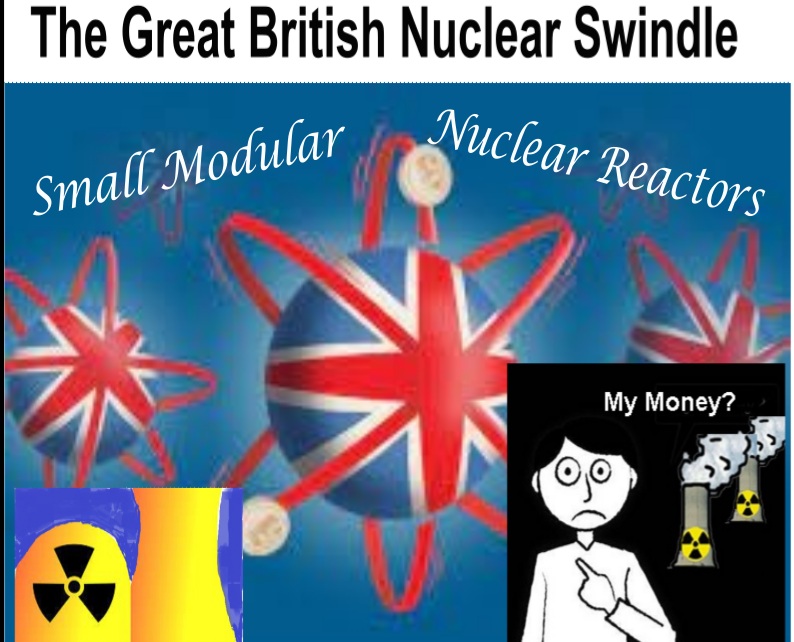
Great British Energy -Nuclear (GBE-N) outlines £730M-£1.1bn early works package
21 Aug, 2026 By Lee Kenny
Great British Energy – Nuclear (GBE-N) has outlined plans for an early works package with an estimated contract value range of £730M to £1.1bn.
A preliminary market engagement notice published on 20 August sets out the scope of the package, which covers civils, infrastructure, buildings and MEP, and earthworks.
The package covers key enabling activities required to prepare the (unlisted) site for main construction.
The early works package forms part of GBE-N’s Owner’s Scope, which encompasses the planning, licensing, design and construction activities necessary to enable a Technology Partner to install and commission small modular reactor (SMR) technology.
SMR is a category of nuclear fission reactors that are significantly smaller in size and power output than traditional gigawatt-scale nuclear plants. GBE-N has spearheaded a competition to select preferred technologies, naming Rolls-Royce SMR as a preferred designer for projects at sites like Wylfa in North Wales (main image above).
The estimated contract period is from 1 June 2028 to 1 June 2034, with a possible extension to 1 June 2037 and the work includes design from RIBA Stage 4 and delivery of ground-related enabling activities, including species relocation, remediation services, site clearance, site establishment and construction utilities.
The package also includes supporting infrastructure such as drainage and haul roads to support bulk earthworks.
The early works will establish the correct ground levels and create safe access routes for subsequent phases. They will provide the foundational physical platform needed to de-risk, mobilise and accelerate the main works programme, according to the notice.
GBE-N considered splitting the packages into two but has decided to consolidate them into one package to minimise interface risk.
GBE-N cautioned that the positions and timelines presented are based on current information and assumptions. It said the scope, dates, values and sequencing may change as programme maturity develops and further validation is undertaken.
Port Hope’s radioactive past fuels pushback against proposed nuclear reactor
August 21, 2026, The Canadian Press
When the Ontario government announced plans earlier this year to build what could become one of the world’s largest nuclear power plants in a picturesque community of roughly 18,000 people, the news came wrapped in a series of celebratory speeches.
The province’s energy minister, Stephen Lecce, hailed the project as “another positive step” toward a secure energy future, while the local mayor said it would help usher in a “stronger and more resilient future” not only for the community about 100 kilometres east of Toronto, but for the entire province and country.
Though the news was welcomed by some, it shocked a generation of Port Hope residents old enough to have lived through the community’s fraught history with the nuclear industry, a legacy that permeates backyards and public properties to this day.
“I personally was outraged when I heard this announcement, and elected officials of every level were lined up here making this announcement as if this was good news,” said Faye More, a 75-year-old resident rallying opposition to the project in the community.
The community has felt “invisible for about 80 years in the matter of the operation of these plants,” and is feeling the same once again as the province forges ahead with the new project, More said in an interview.
It has been almost a century since the Eldorado mining company, which later became a Crown corporation, opened a radium refinery plant in Port Hope in the 1930s. When uranium suddenly became a prized commodity about a decade later, ore that was once considered a waste product was in demand. The plant began refining uranium instead, supplying the material to the United States military during the Second World War where its uses included the Manhattan Project, the U.S. government program that produced the first atomic bombs.
Over several decades, the plant dumped contaminated soil, rocks and building materials across Port Hope. The materials were used mainly as backfill, but also in the construction of parks, roads, schools and homes — including the home where More grew up and the one where she later raised a family of her own.
In 2001, the federal government signed an agreement with Port Hope and nearby Clarington, committing to cleaning up, isolating and managing the historic, low-level radioactive waste that contaminated the region.
The project, known as Port Hope Area Initiative, in being implemented by the Canadian Nuclear Laboratories, which manages historic waste sites on behalf of the Crown corporation Atomic Energy of Canada Ltd.
The provincially owned company in charge of the new nuclear power project is assuring residents that the sector operates much differently than when it was in its infancy………………………………………………..
Those assurances haven’t swayed critics.
The municipality is already home to two nuclear operations on top of the decades-long remediation project, More said. Another nuclear plant is not welcome, she said.
The community is being “treated like (it’s) expendable” as the government seeks to expand nuclear power generation, More said. “But the people here have been exploited and they have borne the price of this and we say no more.”
To many, the new power plant may seem like a done deal, but More and several other residents who oppose the project said they are optimistic their efforts will bear fruit.
More, who heads a local committee focused on health concerns, said the group will keep raising awareness of the proposal as well as lobbying the government to reverse its decision.
In June, she sent a petition to Canada’s auditor general, seeking protection under the upcoming National Strategy Respecting Environmental Racism and Environmental Justice. The strategy, according to the federal government, aims to promote efforts to recognize and address the “existing inequalities faced by Indigenous, racialized or otherwise marginalized communities” when decisions are made about the environment.
Consultations on the draft strategy closed this week and the final version is expected to be tabled this fall.
Turning to the courts could also be an option, More said……..
Port Hope is one of the most contaminated towns in Canada when it comes to low-level radioactive waste; the Canadian Nuclear Safety Commission says the bulk of historic waste is there and in nearby Clarington.
The $2.6-billion remediation plan currently underway is “pretty much the largest environmental cleanup that’s ever been undertaken in the country,” said Bill Daly, the director of communications for the Port Hope Area Initiative, the organization behind the cleanup and long-term monitoring project.
Daly said some 5,000 sites in the municipality have been tested and about 1,200 were found to have some level of contamination…………………………
Like several others in the municipality, Erland said he can’t fathom why Port Hope was chosen to house a nuclear reactor.
“The irony couldn’t be lost that just while this remediation is being undertaken on our property, we’re learning that the government now wants to build the largest nuclear power plant in the world in this area,” the 66-year-old said…….
Autumn Woolsey said she and her family have gone through a long and painful cycle of testing, remediation and restoration on their property.
“This summer has been the first summer in eight years that we have not had anything going on,” she said.
No health monitoring was conducted in that time, even after Woolsey repeatedly asked for it, she added.
Woolsey, who fiercely opposes the new reactor, said she’s fighting for future generations.
“I can’t change what has happened and what we’ve been exposed to, but if I can advocate and fight for my children, their children … that is what my goal, my mission is in life,” she said.
“Do not come in here to a community that has suffered for decades and think that we’re going to be happy to hear about this.”…
Few might be affected as directly as Sarah Sculthorpe and her family if the new plant goes ahead. The farm property where Sculthorpe moved nearly 50 years ago after marrying an eighth-generation Port Hope resident shoulders the site chosen for the project.
Over the last several months, Sculthorpe has been knocking on neighbours’ doors, talking to politicians and nuclear experts, doing online research and taking copious notes — all aimed at preventing what seems to be the inevitable.
“The only way to win a battle is to raise the knowledge and the voices of people,” she said. “And if we cannot educate people and let them know why we don’t want this, it will happen, because (for) most people, it’s out of sight, out of mind.”
The land earmarked for the plant spans 1,300 acres, with 700 acres deemed environmentally sensitive, she said.
Sculthorpe’s biggest concern, she said, is that building one of the country’s largest reactor sites on a plot of that size might mean there’s no space for a buffer zone between the plant and her property.
She argues Ontario Power Generation has not been transparent with the plant’s potential neighbours — an accusation denied by the corporation, which said it has “engaged extensively” with residents near the site and throughout the municipality.
Sculthorpe said her husband remembers seeing yellowcake, a powdery form of uranium oxide, in the ditches when he walked to school as a child, and later became of a member Citizens for Responsible Nuclear Waste Disposal. The grassroots group successfully lobbied for the environmental cleanup of Port Hope in 1980s.
She said she doesn’t want her grandchildren to be raised next door to a nuclear reactor.
“For me it’s a very emotional battle,” she said. https://www.cp24.com/local/2026/08/21/port-hopes-radioactive-past-fuels-pushback-against-proposed-nuclear-reactor/
Why Britain and Europe MUST talk to Russia, and why no one wants to make the first move
In conversation with Mark Galeotti
Ian Proud, Aug 21, 2026. https://thepeacemonger.substack.com/p/why-britain-and-europe-must-talk?utm_source=post-email-title&publication_id=3221990&post_id=212103666&utm_campaign=email-post-title&isFreemail=true&r=1ise1&triedRedirect=true&utm_medium=email
After four and a half years of war in Ukraine, European leaders are still largely stuck repeating the same empty mantras: “as long as it takes,” “no talks until Russia withdraws,” “dialogue is a reward for good behaviour.”
In my latest conversation on The Peacemonger channel, leading Russia expert Mark Galeotti explains why this approach has become deeply self-harming — and why someone, somewhere, is going to have to break the logjam.
Galeotti, honorary professor at UCL, director of Mayak Intelligence and host of the widely followed podcast In Moscow’s Shadows, is characteristically clear-eyed.
The war is no longer delivering strategic benefits for Europe (I’d argue that it has been a disaster from the start).
Russia is slowly advancing in the Donbas.
Ukraine is paying a catastrophic human and economic price.
Europe is bankrolling the conflict while outsourcing its diplomacy to Washington and preparing to phase out the last of its Russian gas imports — a move with predictably severe economic consequences.
Yet no one wants to be the first to say out loud what many now admit privately: that a negotiated end is necessary, and that talking to Russia is not a concession but a necessity.
Galeotti is particularly interesting on Britain’s potential role.
Outside the European Union and still regarded by Moscow as both a serious antagonist and a serious player, the UK has a rare opportunity to act as a pragmatic interlocutor.
The “only Nixon could go to China” logic applies.
Under a possible Burnham government more focused on domestic priorities, that opportunity may be greater than under previous administrations — but it will still require political courage.
The conversation ranges widely beyond the battlefield.
We discuss the urgent need to restore military-to-military contacts, law-enforcement cooperation and academic exchanges — the practical, professional channels that have been allowed to atrophy.
Galeotti is scathing about the hollowing-out of British diplomatic and academic expertise on Russia, and the long-term cost of cutting off the next generation of specialists from time on the ground.
He is equally clear-eyed about the Russia–China relationship: transactional, competitive and far more fragile than the “friendship without limits” rhetoric suggests.
Western policymakers who talk of a seamless “Dragon Bear” alliance are, in his view, peddling dangerous nonsense.
When the war eventually ends — and Galeotti, like me, does not expect it this year — European politicians will face the awkward task of polishing a strategic failure as success, as I have long said.
The longer the fighting continues, the more expensive and politically toxic the post-war period will become.
This is a sober, realistic conversation free of both Russophobia and wishful thinking.
If you want to understand why Europe is stuck, and what it would actually take to start moving toward a settlement, I strongly recommend watching the full discussion which you can find here.
1 This Month



26 September – International Day for the Total Elimination of Nuclear Weapons


PLEASE OPPOSE HR 8255 AND S.3639 – bills would accelerate satellite deployment, with no environmental review or safeguards – https://ncstd5li.quorum.us/campaign/169331/
To see nuclear-related stories in greater depth and intensity – go to https://nuclearinformation.wordpress.com
-
Archives
- September 2026 (269)
- August 2026 (330)
- July 2026 (355)
- June 2026 (287)
- May 2026 (306)
- April 2026 (356)
- March 2026 (251)
- February 2026 (267)
- January 2026 (308)
- December 2025 (358)
- November 2025 (359)
- October 2025 (375)
-
Categories
- 1
- 1 NUCLEAR ISSUES
- business and costs
- climate change
- culture and arts
- ENERGY
- environment
- health
- history
- indigenous issues
- Legal
- marketing of nuclear
- media
- opposition to nuclear
- PERSONAL STORIES
- politics
- politics international
- Religion and ethics
- safety
- secrets,lies and civil liberties
- spinbuster
- technology
- Uranium
- wastes
- weapons and war
- Women
- 2 WORLD
- ACTION
- AFRICA
- Atrocities
- AUSTRALIA
- Christina's notes
- Christina's themes
- culture and arts
- Events
- Fuk 2022
- Fuk 2023
- Fukushima 2017
- Fukushima 2018
- fukushima 2019
- Fukushima 2020
- Fukushima 2021
- general
- global warming
- Humour (God we need it)
- Nuclear
- RARE EARTHS
- Reference
- resources – print
- Resources -audiovicual
- Weekly Newsletter
- World
- World Nuclear
- YouTube
-
RSS
Entries RSS
Comments RSS


