Why 2024’s global temperatures were unprecedented, but not surprising.

Human-caused greenhouse gas (GHG) emissions in 2024 continued to drive
global warming to record levels. This is the stark picture that emerges in
the third edition of the “Indicators of Global Climate Change” (IGCC)
report, published in Earth System Science Data. IGCC tracks changes in the
climate system between Intergovernmental Panel on Climate Change (IPCC)
science reports. In doing so, the IGCC fills the gap between the IPCC’s
sixth assessment (AR6) in 2021 and the seventh assessment, expected in
2028.
Carbon Brief 18th June 2025, https://www.carbonbrief.org/guest-post-why-2024s-global-temperatures-were-unprecedented-but-not-surprising/
It’s good to talk: US-UK anti-nuclear alliance forged from film discussion
The NFLAs were delighted to partner with film makers and producers from
the United States in promoting the documentary film ‘SOS – The San
Onofre Syndrome: Nuclear Power’s Legacy’ and by participating in a
discussion last week of the issues raised. NFLA Secretary Richard Outram
joined US filmmakers James Heddle, Mary Beth Brangan and Morgan Peterson
for the discussion on Wednesday 11 June. UK participants were invited to
watch the documentary film before the event and then contribute their
questions and comments. Attendees included academics and activists from
several of the established campaigns opposed to nuclear power in the UK,
and their knowledge and experience helped make the discussion more
engaging.
NFLA 19th June 2025 https://www.nuclearpolicy.info/news/its-good-to-talk-us-uk-anti-nuclear-alliance-forged-from-film-discussion/
25 June RAF Fairford Protest: Don’t Bomb Iran!
Demonstration and peace vigil at Fairford
Wednesday 25 June, 6.00 – 7.30 pm
Join us at the Fairford US air base to say no to war with Iran as the US gears up to join Israel’s illegal attack on Iran.
Last week war criminal Benjamin Netanyahu, prime minister of Israel, launched a war of aggression against Iran, claiming that Israel’s attacks were necessary to prevent Iran from developing nuclear weapons. Netanyahu has been claiming that Iran is on the point of developing nuclear weapons for the past 25 years, even though US spy agencies recently told Senators that they had assessed that Iran was not actively pursuing a nuclear weapon.
Trump has refused to rule out joining Israel’s war with Iran or clarify what action he intends to take.
Meanwhile, US military forces around the world are preparing for war:
- US Air Force tanker aircraft for air-to-air refuelling have deployed to bases in Europe.
- US Air Force attack aircraft have deployed to the Middle East, including F-35 jets from Lakenheath in Suffolk which have moved to Saudi Arabia and F-15Es from Lakenheath deployed in Jordan.
- A US Navy aircraft carrier battlegroup is steaming towards the Persian Gulf to join the large US naval presence already in the region.
- US Air Force flights from the USA to Israel, possibly carrying munitions, appear to be using UK airports as staging posts.
- If the US attacks Iran, past history suggests it is highly likely that the UK will also align itself with the US and Israel to support their illegal war.
- Defence Secretary John Healey has boasted that military assets including Typhoon jets have begun arriving in the Middle East, with more to follow.
- RAF aircraft have for months been conducting spy flights over Gaza to gather intelligence for the Israeli armed forces, and it is likely that UK Reaper drones have also been conducting spying missions aimed at Iran.
- The Conservative Party is urging Prime Minister Kier Starmer to join in with a war against Iran.
Demo at Fairford base on Wednesday 25 June:
6.00 – 7.30 pm: come for as long or short a time as you can manage.
- Bring banners, placards, and friends!
- We suggest parking on the grass verge opposite the main gate at Fairford base – please don’t park in any of the residential closes or areas off Horcott road or Whelford Road.
- Details may change depending on the situation, so please check the web page here before you set out.
Although there are as yet no indications whether Fairford will play a role in any US attacks on Iran, B-52 heavy bombers flew daily missions from the base to bomb Iraq during the 2003 Gulf War. Earlier this year B-52 bombers visited Fairford to rehearse for wartime deployment, and conducted missions to the Middle East, flying close to Iran. US drones have also flown from Fairford and there are plans in place for it to be a regular home to US drone operations in the future.
This is a highly dangerous situation, which could rapidly escalate out of control and is already leading to the butchering of many more innocent civilians in the Middle East. Please join us to send out a strong message to the US military and UK government that we will do everything we can to resist their plans for this horrific war.
For more details see web page or call Drone Wars UK on 07960811437
Three years left to limit warming to 1.5C, leading scientists warn
The Earth could be doomed to breach the symbolic 1.5C warming limit in as
little as three years at current levels of carbon dioxide emissions. That’s
the stark warning from more than 60 of the world’s leading climate
scientists in the most up-to-date assessment of the state of global
warming.
Nearly 200 countries agreed to try to limit global temperature
rises to 1.5C above levels of the late 1800s in a landmark agreement in
2015, with the aim of avoiding some of the worst impacts of climate change.
But countries have continued to burn record amounts of coal, oil and gas
and chop down carbon-rich forests – leaving that international goal in
peril. “Things are all moving in the wrong direction,” said lead author
Prof Piers Forster, director of the Priestley Centre for Climate Futures at
the University of Leeds.
“We’re seeing some unprecedented changes and we’re
also seeing the heating of the Earth and sea-level rise accelerating as
well.” These changes “have been predicted for some time and we can directly
place them back to the very high level of emissions”, he added. At the
beginning of 2020, scientists estimated that humanity could only emit 500
billion more tonnes of carbon dioxide (CO2) – the most important
planet-warming gas – for a 50% chance of keeping warming to 1.5C.
But by the start of 2025 this so-called “carbon budget” had shrunk to 130 billion
tonnes, according to the new study. That reduction is largely due to
continued record emissions of CO2 and other planet-warming greenhouse gases
like methane, but also improvements in the scientific estimates. If global
CO2 emissions stay at their current highs of about 40 billion tonnes a
year, 130 billion tonnes gives the world roughly three years until that
carbon budget is exhausted.
BBC 19th June 2025, https://www.bbc.co.uk/news/articles/cn4l927dj5zo
Supreme Court clears the way for temporary nuclear waste storage in Texas and New Mexico

By ASSOCIATED PRESS, 19 June 2025, https://www.dailymail.co.uk/wires/ap/article-14825147/Supreme-Court-clears-way-temporary-nuclear-waste-storage-Texas-New-Mexico.html
WASHINGTON (AP) – The Supreme Court on Wednesday restarted plans to temporarily store nuclear waste at sites in rural Texas and New Mexico, even as the nation is at an impasse over a permanent solution.
The justices, by a 6-3 vote, reversed a federal appeals court ruling that invalidated the license granted by the Nuclear Regulatory Commission to a private company for the facility in southwest Texas. The outcome should also reinvigorate plans for a similar facility in New Mexico roughly 40 miles (65 kilometers) away.
The federal appeals court in New Orleans had ruled in favor of the opponents of the facilities.
The licenses would allow the companies to operate the facilities for 40 years, with the possibility of a 40-year renewal.
The court’s decision is not a final ruling in favor of the licenses, but it removes a major roadblock. Justice Brett Kavanaugh’s majority opinion focused on technical procedural rules in concluding that Texas and a major landowner in southwest Texas forfeited their right to challenge the NRC licensing decision in federal court.
The justices did not rule on a more substantive issue: whether federal law allows the commission to license temporary storage sites. But Kavanaugh wrote that “history and precedent offer significant support for the commission´s longstanding interpretation” that it can do so.
Justice Neil Gorsuch wrote in dissent that the NRC’s “decision was unlawful” because spent nuclear fuel can be temporarily stored in only two places under federal law, at a nuclear reactor or at a federally owned facility. Justices Samuel Alito and Clarence Thomas signed on to the dissenting opinion.
Roughly 100,000 tons (90,000 metric tons) of spent fuel, some of it dating from the 1980s, is piling up at current and former nuclear plant sites nationwide and growing by more than 2,000 tons (1,800 metric tons) a year. The waste was meant to be kept there temporarily before being deposited deep underground.
The NRC has said that the temporary storage sites are needed because existing nuclear plants are running out of room. The presence of the spent fuel also complicates plans to decommission some plants, the Justice Department said in court papers.
Plans for a permanent underground storage facility at Yucca Mountain, northwest of Las Vegas, are stalled because of staunch opposition from most Nevada residents and officials.
The NRC´s appeal was filed by the Biden administration and maintained by the Trump administration. Texas Gov. Greg Abbott, a Republican, and New Mexico Gov. Michelle Lujan Grisham, a Democrat, are leading bipartisan opposition to the facilities in their states.
Lujan Grisham said she was deeply disappointed by the court´s ruling, reiterating that Holtec International, awarded the license for the New Mexico facility, wasn´t welcome in the state. She vowed to do everything possible to prevent the company, based in Jupiter, Florida, from storing what she called “dangerous” waste in New Mexico.
“Congress has repeatedly failed to secure a permanent location for disposing of nuclear waste, and now the federal government is trying to force de-facto permanent storage facilities onto New Mexico and Texas,” she said. “It is a dangerous and irresponsible approach.”
The NRC granted the Texas license to Interim Storage Partners, based in Andrews, Texas, for a facility that could take up to 5,500 tons (5,000 metric tons) of spent nuclear fuel rods from power plants and 231 million tons (210 million metric tons) of other radioactive waste. The facility would be built next to an existing dump site in Andrews County for low-level waste such as protective clothing and other material that has been exposed to radioactivity. The Andrews County site is about 350 miles (560 kilometers) west of Dallas, near the Texas-New Mexico state line.
The New Mexico facility would be in Lea County, in the southeastern part of the state near Carlsbad.
Associated Press writer Susan Montoya Bryan contributed to this report from Albuquerque, N.M.
Going to war with China will be an unequivocal disaster for Australia

Perhaps the Honourable Minister should also be and remain quiet – or better still be removed from his portfolio – because he is doing nothing for the Labor cause; and seems to be actively attempting to reduce Labor’s chance at a second term. He should unequivocally realise that if Australia goes to war the Liberal mantra will become, ‘this is on you Labor, you dragged us into this war and it is up to the LNP to get us out.’
the US will not place any of its assets at risk in order to defend Australia, this should be fundamentally and clearly understood by the people of Australia.
19 June 2025 AIMN Editorial, By Dr Strobe Driver https://theaimn.net/going-to-war-with-china-will-be-an-unequivocal-disaster-for-australia/
“Up shit creek in a barbed-wire canoe, without a paddle”: The implausible direction Australia’s current Defence Minister is taking the country.
For those of you who aren’t familiar with the above mentioned expression it means things are about as bad as they can get; likely to get worse; and are as it stands, a continuum of a disaster.
This is where Australia stands at the moment when examining Australia’s role in the Asia-Pacific; the rise of China; the ‘position’ this is placing Australia in terms of it being a ‘middle power’ in the region; the dependence on the United States of America (US) as an ally; and the way in which the current Defence Minister (the Honourable Richard Marles (MP) is approaching the current and future components of the regional strategic situations.
The spat between former prime minister Keating and the current Deputy Prime Minister and Defence Minister Marles is ongoing and is far too detailed to go into here other than to mention Keating believes Marles has essentially ‘ceded Australia’s sovereignty’ to another country (the US); and Marles wants ‘strategic transparency from China in its regional military build-up’ and of course the well-worn argument that Australia will be dragged into a war should the US-China situation become ‘kinetic’ – in other words the fighting becomes real. So, with this in mind let’s ‘cut to the chase’ and figure out how Australia would actually ‘fair’ in the outbreak of a war with China and utilise some rationale.
First and foremost, and as I have previously stated in my book The Brink of 2036, the US having sought and gained assurance that Australia is its ‘closest ally’ decides it will ‘go after’ China over its retrocession claims on Taiwan and a war breaks out – the question that begs is, what does that make Australia? This makes Australia an enemy of China and therefore, the Chinese military is now legally entitled to strike Australia.
China would veto any and all conversation in the UNSC (as it is a Permanent Five (P5) member) and use all of its legal powers to circumvent any and all United Nations’ debate about its use of force against US allies. Secondly, the US will not place any of its assets at risk in order to defend Australia, this should be fundamentally and clearly understood by the people of Australia. The US may come to Australia’s aid – it will utilise discretion – however, should it be deemed necessary, it will only enter into any and all aspects associated with the protection of Australia when its assets are not at a high risk of destruction/incapacitation. Where does this leave Australia? One could safely argue a dyad: alone, unless the US’ intervenes.
For the purpose of this essay war has been declared and therefore, a perspective is needed.
The most telling perspective is that Australia faces a rising power and bearing in mind China has continued its rise exponentially since circa-2010, as before that one could safely argue its rise was only incremental, and thus, it is now a major regional power – soon to become a global one. Hence, Australia will have become the enemy of an enormously powerful country.
What then, would said country do to its middle-power regional enemy? There are no surprises here as it is being played out by Israel in the Gaza strip; and the Russian Federation in Ukraine and moreover, it is exceedingly visible; and easy-to-understand. As a side issue, though an important one, and just to strike further terror into the hearts of Australians, the US and Russia as members of the P5 have shut down through the power of veto any and all conversation about whether Israel’s incursion into Gaza and Russia’s invasion of Ukraine are not warranted. One need not even bother to assume what pathway China will take in its war/fight with Australia. With this in mind let’s move towards China’s kinetic tactics on Australia.
As with any war the first things that need to be destroyed are ‘bases and bridges.’ Bases because they house personnel and vital equipment and bridges which essentially refer to anything (not just bridges over a waterway) that equipment can be transported from in order to get ‘to’ a place/location. China with its significant and enormous amount of missiles and the ability to place them through assets (submarines in particular), will fire hundreds of them into Australian assets – some for advantage and some for ‘publicity,’ that is to say, ‘here’s what we can do.’ The former will be RAAF bases, RAN and RAA bases with a single focus on maintenance and repair facilities; and the latter will be major railway lines (the Ghan; Indo-Pacific; and north east coast public lines); and then major highways the Bruce Highway in particular, will be targeted as will the Darwin-Adelaide highway.
As with any war the first things that need to be destroyed are ‘bases and bridges.’ Bases because they house personnel and vital equipment and bridges which essentially refer to anything (not just bridges over a waterway) that equipment can be transported from in order to get ‘to’ a place/location. China with its significant and enormous amount of missiles and the ability to place them through assets (submarines in particular), will fire hundreds of them into Australian assets – some for advantage and some for ‘publicity,’ that is to say, ‘here’s what we can do.’ The former will be RAAF bases, RAN and RAA bases with a single focus on maintenance and repair facilities; and the latter will be major railway lines (the Ghan; Indo-Pacific; and north east coast public lines); and then major highways the Bruce Highway in particular, will be targeted as will the Darwin-Adelaide highway.
As with any war the first things that need to be destroyed are ‘bases and bridges.’ Bases because they house personnel and vital equipment and bridges which essentially refer to anything (not just bridges over a waterway) that equipment can be transported from in order to get ‘to’ a place/location. China with its significant and enormous amount of missiles and the ability to place them through assets (submarines in particular), will fire hundreds of them into Australian assets – some for advantage and some for ‘publicity,’ that is to say, ‘here’s what we can do.’ The former will be RAAF bases, RAN and RAA bases with a single focus on maintenance and repair facilities; and the latter will be major railway lines (the Ghan; Indo-Pacific; and north east coast public lines); and then major highways the Bruce Highway in particular, will be targeted as will the Darwin-Adelaide highway.
The Honourable Defence Minister should cease and desist with his current monologue and political ineptness toward China and should be upfront with the Australian people in what will happen, should we go down this ‘rabbit hole’ of exceptionalism in the region; and yet, willingly yet aimlessly back the US. Australia will become a failed state if we go to war and it is timely to remind the Australian public there are (approximately) as many personnel in the NYPD as there are personnel in the Australian Defence Force.
Perhaps the Honourable Minister should also be and remain quiet – or better still be removed from his portfolio – because he is doing nothing for the Labor cause; and seems to be actively attempting to reduce Labor’s chance at a second term. He should unequivocally realise that if Australia goes to war the Liberal mantra will become, ‘this is on you Labor, you dragged us into this war and it is up to the LNP to get us out.’
The level of political-ineptness and downright political-maladroitness shown by this minister is however nothing new, as Australia seems to have had a cavalcade of utterly hopeless defence ministers over the past three decades. The real problem this time is this one is politically stupid-to-the-core when Australians need astute, articulate and well-defined decision-making.
Meanwhile, China continues to plan its ongoing rise to ‘pax-Sino’ and we have someone at the helm who is plainly and insufferably politically incompetent when there is a dire need to truly understand the milieu of Australia’s defence needs.
‘Punishment phase’ explained: The punishment phase of aerial bombardment is designed to ‘inflict enough pain on enemy civilians to overwhelm their territorial interests’ and in doing so induce surrender, or hasten total defeat. See: Robert Pape. Bombing To Win: Air Power and Coercion in War. New York: Cornell University Press, 1996, 59.
Dr Strobe Driver – Strobe completed his PhD in war studies in 2011 and since then has written extensively on war, terrorism, Asia-Pacific security, the ‘rise of China,’ and issues within Australian domestic politics. Strobe is a recipient of Taiwan Fellowship 2018, MOFA, Taiwan, ROC, and is an adjunct researcher at Federation University.
Improvements required following Barrow nuclear submarine site fire
The Office for Nuclear Regulation (ONR) has served an enforcement notice
on BAE Systems Marine Ltd (BAESML) following a fire at the
Barrow-in-Furness site in Cumbria. ONR’s enquiries found that five
employees entered an area in the Devonshire Dock Hall facility when the
fire was still in progress on 30 October 2024. As a result, two employees
were taken to hospital for treatment. Both employees were discharged and
returned to work on the same day. Enquiries concluded that the licensee’s
arrangements for ensuring workers did not enter places of danger without
the appropriate safety instructions were inadequate. There was also a lack
of guidance to inform staff of their required actions in the event of a
fire.
ONR 16th June 2025, https://www.onr.org.uk/news/all-news/2025/06/improvements-required-following-barrow-fire/
Trump says US intelligence ‘wrong’ about Iran not building nuclear bomb
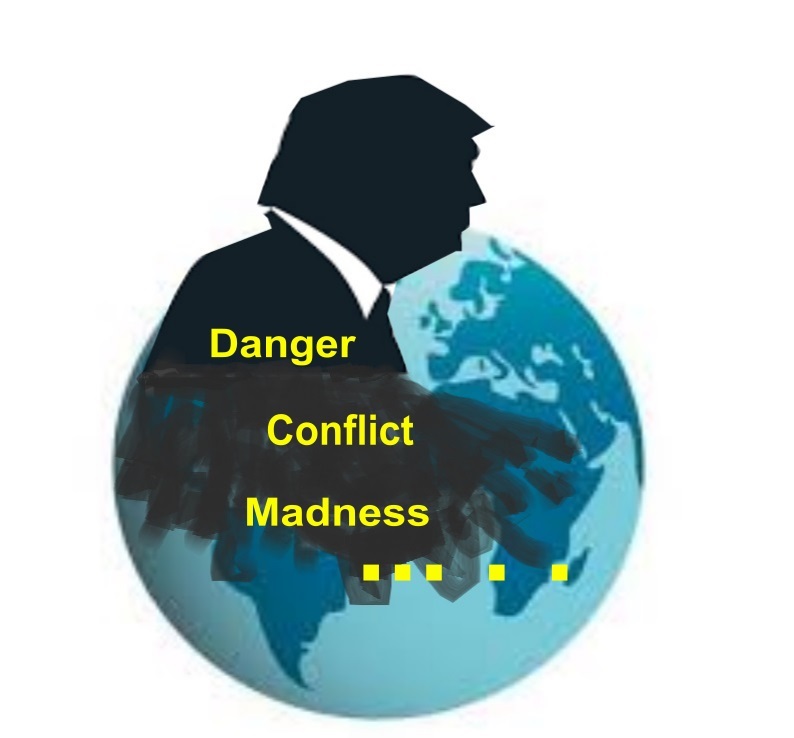
It is extremely rare for a US president to openly contradict the country’s intelligence community.
“This is not just one person, one team saying something,” “It’s the entire intelligence community in the United States. That he would dismiss them … it’s just astounding.”
US president doubles down on claim Iran is building nuclear weapon, again contradicting US intelligence community.
20 Jun 2025, https://www.aljazeera.com/news/2025/6/20/trump-says-us-intelligence-wrong-about-iran-not-building-nuclear-bomb
United States President Donald Trump has said his director of national intelligence was “wrong” when she testified that Iran was not building a nuclear weapon and that Supreme Leader Ayatollah Ali Khamenei had not re-authorised the country’s suspended nuclear weapons programme.
The comments come after Trump earlier this week cast doubt on Tulsi Gabbard’s March 25 report to Congress, in which she reiterated the US intelligence community’s assessment. On Tuesday, Trump told reporters, “I don’t care” that the intelligence community’s finding contradicted his own claims, saying Iran was in the late stages of developing a nuclear weapon.
But speaking on Friday, Trump went further.
A reporter asked, “What intelligence do you have that Iran is building a nuclear weapon? Your intelligence community said they have no evidence.”
The president responded, “Then my intelligence community is wrong. Who in the intelligence community said that?”
“Your DNI [director of national intelligence], Tulsi Gabbard,” the reporter replied.
“She’s wrong,” Trump said.
Gabbard appeared to come to Trump’s defence later on Friday.
“America has intelligence that Iran is at the point that it can produce a nuclear weapon within weeks to months, if they decide to finalize the assembly,” she wrote in a social media post. “President Trump has been clear that can’t happen, and I agree.”
However, that statement does not contradict her earlier assessment that Iran is not building a weapon. No known US intelligence assessment concludes that Iran is weaponising its nuclear programme.
It is extremely rare for a US president to openly contradict the country’s intelligence community, with critics accusing Trump of flagrantly disregarding evidence to justify potential direct US involvement in the fighting, according to Al Jazeera’s senior political analyst Marwan Bishara.
“This is not just one person, one team saying something,” Bishara said. “It’s the entire intelligence community in the United States. That he would dismiss them … it’s just astounding.”
Speaking on Friday, Trump also appeared to downplay the prospect of the US brokering a ceasefire agreement between Iran and Israel, saying he “might” support such a deal, while adding, “Israel’s doing well in terms of war, and I think you would say that Iran is doing less well.”
“It’s hard to make that request right now. When someone’s winning, it’s harder than when they’re losing,” he added.
Reporting from Washington, DC, Al Jazeera’s Heidi Zhou Castro noted that Trump was “really making a point that he’s not going to make an effort to ask Israel to ease up on its aerial bombing of Iranian targets”.
“It seems that Trump is very squarely on Israel’s side as things are progressing, and … it appears that he is not leaning towards the diplomacy route, though, again, he is giving himself that two weeks’ time to make a final decision,” she said.
Trump on Thursday said he would take two weeks to decide the US response to the conflict. Experts say the decision would likely be transformative.
The US is seen as one of the few countries with the leverage to pressure Israel to step back from the brink of wider-scale regional war.
At the same time, the involvement of the US military is seen as key to Israel’s stated mission of completely dismantling Iran’s nuclear programme, which hinges on destroying the underground Fordow enrichment plant.
A successful attack on the facility would require both Washington’s 30,000-pound (13,000kg) GBU-57 Massive Ordnance Penetrator and the B-2 bombers needed to deliver it.
Speaking to reporters on Friday, Trump also downplayed the potential role of European countries in de-escalating the situation. That came hours after Iran’s Foreign Minister Abbas Araghchi met the top diplomats from France, the UK, Germany and the EU in Geneva.
“Europe is not going to be able to help,” the US president said.
Why won’t the BBC report on Israel’s nuclear weapons?

DOES Israel have nuclear weapons? Yes. Will the BBC report that fact?
Apparently not. The broadcaster has quietly updated a story which wrongly
claims the “real answer is we do not know” if Israel has nuclear
weapons.
However, the BBC claim – which relies on the fact that the
Israeli government has not officially acknowledged its nuclear capabilities
– remains even in the updated version of a story purported to offer
answers to readers’ questions on the Iran-Israel conflict.
The National 19th June 2025, https://www.thenational.scot/news/25251643.wont-bbc-report-israels-nuclear-weapons/
The prophecy – about Donald Trump.

The world is on edge, and Trump’s insatiable hunger for attention could push it over the brink.
a chaos-driven showman, more concerned with headlines than consequences.
Trump’s ‘chaos’ might appeal to his voters but risks catastrophe on a global stage.
18 June 2025 Michael Taylor, https://theaimn.net/the-prophecy/
A chilling warning, attributed to a biographer of Donald Trump, has lingered in the air since his first campaign: “He would start World War 3 just to prove he could.” Whether this quote, possibly heard in a radio segment or buried in an article, came from Michael D’Antonio or another chronicler of Trump’s life, its exact source remains elusive. Yet, as the 47th President, Trump’s recent actions – bluster at the G7, threats against Iran, and a desperate need to recover from a humiliating military parade – make the warning feel prophetic. The world is on edge, and Trump’s insatiable hunger for attention could push it over the brink.
Trump has always been a performer, a man who thrives on the spotlight. Biographers such as D’Antonio, author of Never Enough: Donald Trump and the Pursuit of Success, describe him as a “little boy” unchanged since first grade, craving validation at every turn. Timothy L. O’Brien, in TrumpNation, paints him as a chaos-driven showman, more concerned with headlines than consequences. This portrait aligns with the biographer’s alleged warning: a leader who might ignite a global crisis not for strategy, but for ego. In 2025, as Trump’s second term unfolds, his sabre-rattling suggests a dangerous willingness to test that theory.
The stage was set on June 14, 2025, when Trump’s military parade in Washington, meant to cement his strongman image, collapsed into a national embarrassment. Billed as a nation-building triumph, it drew sparse crowds, dampened by rain and mocked by critics. The White House spun absurd tales of its success, but the stark reality of empty fields left Trump humiliated. A bruised ego is a dangerous thing, and Trump, ever the performer, needed a bigger stage to reclaim his spotlight.
Enter the G7 summit. Still smarting from the parade fiasco, Trump arrived with a chip on his shoulder, ready to take it out on world leaders. The summit, meant to address trade, climate, and Ukraine, became a platform for his grievances – and a warning of how far he might go to prove his dominance.
Trump’s G7 performance was less statesmanship, more spectacle.
Sensing he wasn’t the most popular person in attendance he bailed early on June 16, citing Middle East tensions – specifically, backing Israel’s strikes and warning Iran to “evacuate Tehran.” His exit – though probably welcomed – left the G7 fragmented, with experts warning of a “global economy adrift.” The biographer’s WW3 warning loomed large: a leader who’d rather disrupt than unite, all to prove he’s in charge.
Iran Threats and Global Jitters
Trump’s Iran rhetoric is where the WW3 fears hit fever pitch. His tweeted threat to “evacuate Tehran,” tied to Israel’s escalating strikes, sent oil prices soaring and sparked panic; “We’re closer to a major military confrontation than we’ve been in two decades.” This isn’t just posturing; it’s a high-stakes gamble that could misfire. The 2020 Soleimani strike, which nearly sparked war with Iran, shows Trump’s willingness to roll the dice. The parade flop likely amplified this urge to punch above his weight, as if global brinkmanship could erase domestic embarrassment.
At home, Trump’s actions mirror his global aggression. Executive orders pardoning 1,500 January 6 rioters, blocking asylum-seekers, and designating drug cartels as terrorists signal a strongman act to rally his base. His tweets about military mobilisation in cities such as Los Angeles, Chicago and New York risks weaponising the government against opponents, a domestic echo of his foreign provocations. If Trump’s parade failure pushed him to lash out at allies and Iran, what’s to stop him from escalating further to boost flagging polls? Starting a war might make him look strong.
The Risk of a Performer’s War
Trump’s “madman theory” – projecting unpredictability to keep foes guessing – worked in his first term to an extent, like pressuring North Korea. But in 2025, it’s a tighter rope. His Iran threats could provoke retaliation, especially with US troops on alert. His G7 snub and NATO skepticism weaken collective defence, leaving smaller nations exposed to Russia or China.
Trump’s ‘chaos’ might appeal to his voters but risks catastrophe on a global stage.
The biographer’s warning, even if apocryphal, captures this perfectly. Starting a war “to prove he could” isn’t about policy – it’s about ego. Trump’s parade flop, G7 antics, and Iran threats show a man desperate to reclaim the narrative, no matter the cost. The stakes – trade wars, Ukraine, the Middle East – are too high for a leader driven by applause.
The world is holding its breath. Trump’s actions have spiked tensions, alienated allies, and raised the spectre of conflict. The WW3 quote, whether from a biographer’s pen or a radio quip, haunts 2025. Its exact words may be lost, but its truth endures: a man who craves attention above all else is a dangerous force. From tariff wars to Tehran threats, Trump’s not just playing to the crowd – he’s playing with fire.
The question isn’t whether Trump would start a war to prove he could – it’s whether anyone can stop him.
Trump Rejects Intel on Iran’s Nuclear Program, Raising War Fears

19 June 2025 Michael Taylor, https://theaimn.net/trump-rejects-intel-on-irans-nuclear-program-raising-war-fears/
In a move that’s barely registering in Australian media, President Trump has publicly dismissed U.S. intelligence assessments concluding Iran is not actively building a nuclear weapon, prompting concerns he may be leaning toward military conflict. The story carries significant global implications, including for Australia as a U.S. ally in the Indo-Pacific.
While returning from the G7 summit in Canada, Trump told reporters aboard Air Force One, “I don’t care what [U.S. intelligence] said. I think [Iran] were very close to having one.” This directly contradicted Director of National Intelligence Tulsi Gabbard’s March 2025 congressional testimony, where she stated Iran’s supreme leader had not restarted the nuclear weapons program suspended in 2003. Gabbard noted Iran’s enriched uranium stockpile was at historic highs but maintained it was not pursuing a bomb. U.S. intelligence, including a November 2024 report under President Biden, similarly found no evidence of an active Iranian nuclear weapons program, though it highlighted activities such uranium enrichment that could position Iran to build one if it chose.
Trump’s remarks align him closely with Netanyahu, who has long warned of an “imminent” Iranian nuclear threat and recently advocated for pre-emptive strikes. Israel launched airstrikes on Iranian facilities last week, citing an International Atomic Energy Agency report that Iran breached non-proliferation obligations and had enough near-weapons-grade uranium for multiple bombs, despite U.S. intelligence sources countering that Iran is “not actively pursuing a nuclear weapon” and is up to three years away from producing one.
Trump’s dismissal of his own intelligence community has fueled speculation about his intentions. His frustration with stalled diplomatic efforts to curb Iran’s nuclear ambitions was evident when he said, “I’m not too much in the mood to negotiate with Iran.” The U.S. has deployed additional military assets to the region, including a carrier group and fighter jets, to provide Trump with “more options” for intervention.
The White House has reiterated Trump’s long-standing stance: “Iran cannot have a nuclear weapon.” A June 17 statement listed over a dozen instances since February 2025 where Trump emphasised this, framing it as a non-negotiable red line. Yet, his recent rhetoric, including a social media post demanding “UNCONDITIONAL SURRENDER” from Iran, suggests a hardening position.
Trump may be under pressure from pro-Israel hawks in his circle, who downplay the risk of Iranian retaliation and frame strikes as a limited operation against nuclear sites. Others, such as former CIA analyst Ray McGovern, argue Trump’s threats are “mainly bluster” to project strength, predicting he’ll back off to avoid derailing U.S.-Russia détente or triggering a global economic crisis. Still, the absence of Gabbard from key national security discussions signals a possible sidelining of voices advocating restraint.
Australia’s strategic alignment with the U.S. through AUKUS and its role in Middle East operations (e.g., past deployments in Iraq) mean a U.S.-Iran conflict could draw Canberra into logistical or political support, yet public discourse hasn’t engaged. The Australian government has not commented publicly on Trump’s stance (that I am aware of), and local coverage of Iran remains limited to brief mentions of Israel’s strikes.
A U.S. military strike on Iran could destabilise the Middle East, spike global oil prices, and strain Australia’s economy, which relies heavily on energy markets. It risks escalating into a broader conflict, potentially involving China or Russia, both of which have ties to Iran. Australia’s alliance obligations could also pressure it to back U.S. actions, complicating its Indo-Pacific balancing act. Either Trump is flexing his military muscle to deter Iran without war, or he’s being nudged toward a catastrophic conflict by Israel’s agenda.
The bottom line: The disconnect between Trump’s rhetoric and U.S. intelligence underscores a volatile decision-making process, with implications Australia can’t afford to ignore.
Anxiety grips Gulf Arab states over threat of nuclear contamination and reprisals from Iran
Almost 60 million people in Gulf Arab countries rely on desalinated sea water from the Persian Gulf for drinking, washing and usable water. Regional leaders have warned that contamination from Iran’s Bushehr nuclear power plant, if attacked, could have severe environmental consequences for this critical water source.
“(The water) would be entirely contaminated … No water, no fish, nothing, it has no life,”
By Mostafa Salem, CNN, June 19, 2025, https://edition.cnn.com/2025/06/18/middleeast/gulf-anxiety-iran-strikes-nuclear-contamination-latam-intl
Concern is rising in Gulf Arab states about the possibility of environmental contamination or reprisal attacks if Israel or the United States strikes Iran’s nuclear facilities just across the Persian Gulf.
In Oman, users on messaging apps circulated advice on what to do in the event of a nuclear incident. Residents are instructed to “enter a closed and secure indoor space (preferably windowless), seal all windows and doors tightly, turn off air conditioning and ventilation systems” if the worst were to happen.
In Bahrain, 33 shelters are being prepared for emergencies, and sirens were tested nationwide, the state news agency said Tuesday. Concern about nuclear fallout has also risen over the past week, with news outlets across the Middle East publishing guides on how to deal with radiation leaks.
Elham Fakhro, a Bahraini resident and fellow at the Middle East Initiative at Harvard Kennedy School, said people are “definitely concerned” about the prospect of Israeli and US strikes on Iran’s nuclear facilities.
Iran’s only functional nuclear power plant, in Bushehr, is closer to several US-allied Arab capitals than it is to Tehran.
“Primarily there is fear of environmental contamination, especially in shared waters,” Fakhro said.
She added that other concerns include “the possibility of an Iranian reprisal on US military facilities in the Gulf states, which could impact civilians, and extended airspace closures.”
Despite its improved relationship with Arab neighbors, Iran has implicitly warned that it would target nearby US interests if it were struck by the American military.
Bahrain, for example, hosts the US Naval Forces Central Command, which could be a target.
The Gulf Cooperation Council, an economic and political bloc that comprises Bahrain, Kuwait, Oman, Qatar, Saudi Arabia and the United Arab Emirates, on Monday activated its Kuwait-based Emergency Management Centre, to ensure that all “necessary preventive measures are taken at environmental and radiological levels.”
The UAE’s foreign minister, Sheikh Abdullah bin Zayed, warned “against the risks of reckless and miscalculated actions that could extend beyond the borders” of Iran and Israel. The Qatari foreign ministry spokesperson also warned of “uncalculated” strikes that could affect the waters of Gulf countries.
Almost 60 million people in Gulf Arab countries rely on desalinated sea water from the Persian Gulf for drinking, washing and usable water. Regional leaders have warned that contamination from Iran’s Bushehr nuclear power plant, if attacked, could have severe environmental consequences for this critical water source.
Running out of water ‘in three days’
In March, US journalist Tucker Carlson asked Qatari Prime Minister Mohammed Al Thani what would happen if the Bushehr nuclear plant were “blown up.”
“(The water) would be entirely contaminated … No water, no fish, nothing, it has no life,” Al Thani said.
The Qatari prime minister said at the time that his country previously ran a risk exercise to analyze how a damaged Iranian nuclear power plant could affect them.
“The water we use for our people is from desalination … We don’t have rivers and we don’t have water reserves. Basically, the country would run out of water in three days … That is not only applied for Qatar … this is applied for Kuwait, this is applied for UAE. It’s all of us,” he said. Qatar has since built massive water reservoirs for protection.
US President Donald Trump appears to be warming to the idea of using US military assets to strike Iranian nuclear facilities and souring on the possibility of a diplomatic solution to end the conflict, two officials told CNN on Tuesday.
This represents a shift in Trump’s approach, though the sources said he remains open to a diplomatic solution – if Iran makes concessions.

“I may do it, I may not do it. I mean, nobody knows what I’m going to do,” Trump said Wednesday.
Gulf states, including the UAE, Qatar and Saudi Arabia, are attractive destinations for businesses and foreign expatriates, offering no income tax, high salaries and a stable political environment. People CNN spoke to in Kuwait and the UAE said there isn’t a feeling of panic amongst residents, and trust remains that regional authorities have safe contingency plans.
“I don’t feel worried or concerned, I have an unwavering trust in my safety here,” said an American woman living in Abu Dhabi. “I would, however, feel worried if the US decides to strike (Iran) because of the uncertainty in what happens next.”
Another Egyptian resident of Dubai, who chose to remain anonymous, said she feels “very safe” and “in the right country” but her anxiety is now heightened over the news she’s reading on escalation and war.
“Everyone is stressed out … and it’s becoming very real,” she said. “The situation is not something to be taken lightly and war feels nearby.”
Working Hard to Justify Israel’s Unprovoked Attack on Iran
Belén Fernández, https://fair.org/home/working-hard-to-justify-israels-unprovoked-attack-on-iran/ 18 June 25
Imagine for a moment that Country A launched an illegal and unprovoked attack on Country B. In any sort of objective world, you might expect media coverage of the episode to go something along the lines of: “Country A Launches Illegal and Unprovoked Attack on Country B.”
Not so in the case of Israel, whose special relationship with the United States means it gets special coverage in the US corporate media. When Israel attacked Iran early last Friday, killing numerous civilians along with military officials and scientists, the press was standing by to present the assault as fundamentally justified—no surprise coming from the outlets that have for more than 20 months refused to describe Israel’s genocide of Palestinians in the Gaza Strip as genocide.
‘Preemptive strike’
From the get-go, the corporate media narrative was that Israel had targeted Iranian military and nuclear facilities in a “preemptive strike” (ABC, 6/13/25), with civilian casualties presented either as an afterthought or not at all (e.g., AP, 6/18/25). (As the Israeli attack on Iran has continued unabated for the past week in tandem with retaliatory Iranian strikes on Israel, the Iranian civilian death toll has become harder to ignore—as, for example, in the Washington Post’s recent profile of 23-year-old poet Parnia Abbasi, killed along with her family as they slept in their Tehran apartment building.)
On Monday, June 16, the fourth day of the assault, the Associated Press reported that Israeli strikes had “killed at least 224 people since Friday.” This figure appeared in the eighth paragraph of the 34-paragraph article; the first reference to Iranian civilians appeared in paragraph 33, which informed readers that “rights groups” had suggested that the number was a “significant undercount,” and that 197 civilians were thus far among the upwards of 400 dead.
Back in paragraph 8, meanwhile, came the typical implicit validation of Israeli actions:
Israel says its sweeping assault on Iran’s top military leaders, uranium enrichment sites and nuclear scientists, is necessary to prevent its longtime adversary from getting any closer to building an atomic weapon.
That Israel’s “preventive” efforts happened to occur smack in the middle of a US push for a diplomatic resolution to the Iranian nuclear issue has not proved to be a detail that is overly of interest to the US media; nor have corporate outlets found it necessary to dwell too deeply on the matter of the personal convenience of war on Iran for Israeli prime minister Benjamin Netanyahu—both as a distraction from the genocide in Gaza, and from his domestic embroilment in assorted corruption charges.
In its own coverage, NBC News (6/14/25) highlighted that Netanyahu had “said the operation targeted Iran’s nuclear program and ‘will continue for as many days as it takes to remove this threat.’” Somehow, it is never deemed worth mentioning in such reports that it is not in fact up to Israel—the only state in the region with an (undeclared) nuclear arsenal, and a non-signatory to the Nuclear Non-Proliferation Treaty—to be policing any perceived nuclear “threat.” Instead, Israeli officials are given ample space, time and again, to present their supposed cause as entirely legitimate, while getting away with murder—not to mention genocide.
‘Potential salvation’
Its profile of the young poet Abbasi notwithstanding, the Washington Post has been particularly aggressive in toeing the Israeli line. Following Netanyahu’s English-language appeal to Iranians to “stand up” against the “common enemy: the murderous regime that both oppresses you and impoverishes you”—a pretty rich accusation, coming from the man currently presiding over mass murder and all manner of other oppression—Post reporter Yeganeh Torbati (6/14/25) undertook to detail how some Iranians “see potential salvation in Israel’s attack despite risk of a wider war.”
In her dispatch, Torbati explained that in spite of reports of civilian deaths, “ordinary Iranians” had “expressed satisfaction” at Israel’s attacks on Iran’s “oppressive government.” As usual, there was no room for any potentially relevant historical details regarding “oppressive” governance in Iran—like, say, the 1953 CIA-orchestrated coup d’état against the democratically elected Mohammad Mossadegh, which paved the way for the extended rule-by-terror of the torture-happy Iranian shah, whose oppression was aided by manic acquisition of US weaponry.
On Monday, Torbati was back with another report on how, amid Israel’s attacks on Iran, the Iranian population had “lamented the lack of adequate safety instructions and evacuation orders” from its government, “turning to social media for answers.” The article quotes a Tehran resident named Alireza as complaining that “we have nothing, not even a government that would bother giving safety suggestions to people”—although it’s anyone’s guess as to what sort of suggestions the government is supposed to offer given the circumstances. Try not to be sleeping in your apartment when Israel decides to bomb it?
We thus end up with an entire article in a top US newspaper suggesting that the issue at hand is not that Israel is conducting illegal and unprovoked attacks on Iran, but rather that the Iranian government has not publicized proper safety recommendations for dealing with said attacks. At one point, Torbati concedes that “the government did provide some broad safety instructions,” and that “a government spokeswoman, Fatemeh Mohajerani, recommended that Iranians take shelter in metros, mosques and schools.”
Refusing to leave it at that, Torbati goes on to object that “it was unclear why mosques and schools would be safer than other buildings, given that Israel had already targeted residential and other civilian structures”—which again magically transforms the issue into a critique of the Iranian government for lack of clarity, as opposed to a critique of Israel for, you know, committing war crimes.
‘It’s all targeted’
Which brings us to the New York Times, never one to miss a chance to cheerlead on behalf of Israeli atrocities—like that time in 2009 that the paper’s resident foreign affairs columnist literally advocated for targeting civilians in Gaza (FAIR.org, 1/30/25), invoking Israel’s targeting of civilians in Lebanon in 2006 as a positive precedent. Now, a Times article (6/15/25) headlined “Israel’s Attack in Iran Echoes Its Strategy Against Hezbollah” wonders if another Lebanese precedent might prove successful: “Israel decimated the group’s leadership last fall and degraded its military capabilities. Can the same strategy work against a far more powerful foe?”
After reminiscing about “repeated Israeli attacks on apartment buildings, bunkers and speeding vehicles” in Lebanon in 2024—which produced “more than 15 senior Hezbollah military commanders eliminated in total”—the piece speculates that Israel’s ongoing attacks on Iran and assassinations of top Iranian officers seem “to be following the script from last fall” in Lebanon. Swift confirmation comes from Randa Slim at the Middle East Institute in Washington: “It’s all targeted, the assassination of their senior officials in their homes.”
Never mind that Israel’s activity in Lebanon last fall amounted to straight-up terrorism—or that somehow these “targeted assassinations” managed to kill some 4,000 people in Lebanon between October 2023 and November 2024 alone. In unceasingly providing a platform to justify Israeli aggression and mass civilian slaughter throughout the region, the US corporate media at least appears to be following its own script to a T.
US Reportedly Assesses Only a Nuclear Bomb Could Destroy Iran Nuclear Facility
One expert has warned that attacks on nuclear facilities “should never take place” because of the radioactive fallout.
By Sharon Zhang ,
The Pentagon has reportedly assessed that the only weapon that could
destroy a nuclear facility in Iran deemed by war hawks to be a key part of
Iran’s nuclear program is a nuclear bomb — an intensely ironic finding
in a war fought over the pretense of stopping nuclear proliferation.
According to U.S. sources cited by The Guardian, defense officials have
been told that only a “tactical nuclear weapon” could penetrate deep
enough underground to destroy Fordow, a nuclear facility reportedly built
inside a mountain in northwestern Iran.
Truthout 20th June 2025, https://truthout.org/articles/us-reportedly-assesses-only-a-nuclear-bomb-could-destroy-iran-nuclear-facility/
Scotland wants no part in further dangerous nuclear experiments
Frances McKie:
IN 1976 the British Government accepted the
findings of the Flowers Report, which advised: “It would be morally wrong
to commit future generations to the consequences of fission power on a
massive scale unless it has been established beyond reasonable doubt that
at least one method exists for the safe isolation of these wastes for the
indefinite future.”
In 1987, I attended a Venstre political conference in
Norway where Professor Torbjorn Sikkeland, the distinguished nuclear
physicist and radiation biophysicist, explained, with illustrations, that
nuclear fuels and nuclear waste would never be safely or securely
contained: they are simply too corrosive.
At the same conference, Professor
Sikkeland also declared that it was accepted by his colleagues that
hydrogen was the answer to world energy needs but it was unlikely to emerge
as an option while the nuclear lobby stood in the way of necessary research
and investment.
30 years later, radiation corrosion still plagues nuclear
reactors wherever and however they are built; there is still no safe
containment for the corrosive nature of nuclear waste In 2025, however,
despite the 40-year-old commitment to the common sense and morality of the
Flowers Report, we now have a desperate government in Westminster:
economically bankrupt, at the mercy of whatever corporate lobbyists come
their way.
Westminster, flailing around with post-Brexit bankruptcy, does
not have a meaningful energy, environment or defence policy: it has just
broadcast its latest version of panicky, ridiculous and dangerous ideas.
Scotland should have nothing to do with them – but continue calmly with
policies which bypass more failed nuclear experiments and the production of
nuclear waste that no-one, still, knows how to contain.
The National 20th June 2025, https://www.thenational.scot/community/25253405.scotland-wants-no-part-dangerous-nuclear-experiments/
1 This Month

4 May -West Suburban Peace Coalition to discuss Iran war at May Educational Forum
Monday, May 4, 7:00 – 8:00 PM Central Standard Time
Title: : How Trump’s Narrative Tries to Shape the Reality of the War on Iran.
Contact Walt Zlotow, zlotow@hotmail.com 630 442 3045 for further information
14 May – online event From Bombs to Data Centres: the Face of Nuclear Colonialism
To see nuclear-related stories in greater depth and intensity – go to https://nuclearinformation.wordpress.com
-
Archives
- May 2026 (49)
- April 2026 (356)
- March 2026 (251)
- February 2026 (268)
- January 2026 (308)
- December 2025 (358)
- November 2025 (359)
- October 2025 (376)
- September 2025 (257)
- August 2025 (319)
- July 2025 (230)
- June 2025 (348)
-
Categories
- 1
- 1 NUCLEAR ISSUES
- business and costs
- climate change
- culture and arts
- ENERGY
- environment
- health
- history
- indigenous issues
- Legal
- marketing of nuclear
- media
- opposition to nuclear
- PERSONAL STORIES
- politics
- politics international
- Religion and ethics
- safety
- secrets,lies and civil liberties
- spinbuster
- technology
- Uranium
- wastes
- weapons and war
- Women
- 2 WORLD
- ACTION
- AFRICA
- Atrocities
- AUSTRALIA
- Christina's notes
- Christina's themes
- culture and arts
- Events
- Fuk 2022
- Fuk 2023
- Fukushima 2017
- Fukushima 2018
- fukushima 2019
- Fukushima 2020
- Fukushima 2021
- general
- global warming
- Humour (God we need it)
- Nuclear
- RARE EARTHS
- Reference
- resources – print
- Resources -audiovicual
- Weekly Newsletter
- World
- World Nuclear
- YouTube
-
RSS
Entries RSS
Comments RSS
 nuclear-news