Trump Sends Nuclear Agreement With Saudi Arabia to Congress
The president still insists that the deal is contingent on the kingdom normalizing relations with Israel
By Michael R. Gordon and Robbie Gramer,
President Trump has submitted a landmark nuclear
accord with Saudi Arabia to Congress for review, but hasn’t dropped his
last minute condition that the kingdom normalize relations with Israel, an
administration official said.
Wall St Journal 25th Aug 2026,
https://www.wsj.com/world/middle-east/trump-sends-nuclear-agreement-with-saudi-arabia-to-congress-7f01af2c
New nuclear plan could deliver up to 6 GW of power to data centers by 2040

NANO Nuclear and Tillman are planning up to 6 GW of advanced nuclear power for future data-center campuses.
Interesting Engineering. By Neetika Walter, Aug 24, 2026
US-based nuclear technology company NANO Nuclear Energy has signed a non-binding commercial framework with Tillman Global Holdings to explore deploying advanced nuclear reactors across large AI data-center developments in the US.
The companies are targeting at least 2 gigawatts of advanced nuclear capacity by the mid-2030s and 6 GW or more by 2040. The plans remain subject to definitive agreements, customer commitments, financing, regulatory approvals and other project requirements.
The framework identifies NANO Nuclear as Tillman’s anticipated preferred nuclear technology provider for its planned AI industrial zones. Tillman is developing a multi-state pipeline of sites designed around the large power requirements of hyperscale and AI customers.
The companies plan to evaluate potential sites, licensing requirements, customer demand, and project financing as individual developments move forward. The broader strategy is to reserve space for nuclear generation alongside other power sources as data-center campuses expand.
Nuclear enters the data-center mix
NANO Nuclear’s KRONOS MMR Energy System is a 15-megawatt high-temperature gas-cooled reactor designed for modular and phased deployment. The companies say that architecture could allow nuclear capacity to be added in stages as electricity demand grows across large data-center campuses.
The arrangement pairs Tillman’s experience in developing and financing large digital and energy infrastructure with NANO Nuclear’s reactor technology and nuclear licensing capabilities. The proposed model could also allow Tillman or its affiliates to own and finance qualifying power projects while NANO Nuclear supplies reactors and fuel and supports development and operations………………….
Gigawatts planned for AI
The proposed deployment pathway would start with 2 GW or more of advanced nuclear capacity by the mid-2030s before expanding to at least 6 GW by 2040. The companies are also evaluating potential projects in selected international markets where Tillman has digital infrastructure interests.
The framework contemplates a milestone-based equity arrangement as well. Tillman could receive warrants to purchase up to $100 million of NANO Nuclear stock, with most of the warrants tied to future reactor purchase commitments and project-development milestones.
It also includes a proposed $5 million initial restricted stock grant to Tillman, with most of that grant subject to additional milestones. The terms remain subject to definitive agreements.
Tillman Co-President Sachit Ahuja said the company is planning for the long-term electricity requirements of its AI campuses…………
The companies now need to move from the commercial framework to site-specific development, licensing and financing agreements before any reactors can be deployed. https://interestingengineering.com/energy/advanced-nuclear-power-ai-data-centers
Is Putin about to test ‘Flying Chernobyl’ nuclear-powered missile that can fly for DAYS?
By WILL STEWART and SOPHIA STANFORD, 25 August 2026,
https://www.dailymail.com/news/article-16078037/Putin-test-Flying-Chernobyl.html
Vladimir Putin may be about to test a nuclear-powered cruise missile – dubbed the Flying Chernobyl – that can fly for days, according to analysts.
An influx of aircraft and shipping has converged in the Arctic in a telltale sign that a new experimental firing is expected of a weapon powered by its own atomic reactor, say analysts.
The ‘invincible’ Burevestnik missile – with a nickname inspired by the nuclear catastrophe that could be inflicted, much like the Chernobyl power plant explosion in 1986 – carries a nuclear warhead with an ‘unlimited range’ and is designed to fly for days at a time before striking the West, according to the Russians.
Norwegian defence analyst Thord Are Iversen said the movements followed the pattern seen during previous tests of Putin’s experimental 9M730 Burevestnik cruise missile.
‘It now appears that everything is ready for actual Burevestnik flight testing,’ he told independent Russian outlet The Insider.
In the Arctic, two specialist Il-976 SKIP aircraft used to monitor missile trajectories and collect test data arrived at Rogachyovo airbase on the remote Novaya Zemlya archipelago, reports say.
Satellite imagery also shows an A-50U airborne early-warning aircraft, four An-26 military transports, an An-74 and several helicopters at the base amid a suspected test of Putin’s Flying Chernobyl missile.
Civilian vessels previously involved in missile trials have taken up positions in the Barents and Kara seas around the Pankovo test range.
California´s last working nuclear power plant sits in a landscape that would worry any firefighter when the wind picks up.
Federal wildfire crews are stretched thin. California is stepping in to help
By ASSOCIATED PRESS, 26 August 2026
California´s last working nuclear power plant sits cradled in a landscape that would worry any firefighter when the wind picks up.
The Pacific Ocean and its perpetual fog lick the western edge of the coastal bluffs holding the Diablo Canyon Power Plant. But the Irish Hills rise steeply to its east – their slopes rugged, dark with scrub and oak. Difficult to access, and full of fuel.
“Any fire within the Diablo power plant area could be catastrophic,” said Dave Erickson, a division chief and forester with the Cal Fire San Luis Obispo unit. The property, he said, is in a very high fire severity zone. “So we just take precautions.”
It´s one of the many places where California is now stepping into federal gaps created by Congress´ long-term underinvestment in fuels management on federal lands, the Trump administration´s cuts, and firefighters stretched thin by blazes raging across the West.
A local organization with state funding, the San Luis Obispo County Community Fire Safe Council, started carving a fuel break into the surrounding ridgelines. And Erickson put his crews to work closing the gaps, to create a critical toehold for firefighters to get ahead of flames………………………………….
The stakes are high for California, where wildfires have burned through millions of acres in the last decade – killing more than 220 people, hastening the deaths of tens of thousands more, and racking up tens to hundreds of billions of dollars in damage.
But the costs are high, too. California has spent nearly half a billion dollars in grants for wildfire resilience and forest health projects on federal lands since Gov. Gavin Newsom took office, according to the California Natural Resources Agency…………………………………………………………………………………………………………………….
https://www.dailymail.com/wires/ap/article-16079773/Federal-wildfire-crews-stretched-California-stepping-help.html
New South Wales Supreme Court rules that criticism of Zionism is not antisemitism

Fagan’s Damning Verdict: Vandalism and Antisemitism Down Under
26 August 2026 Dr Binoy Kampmark AIM Extra, https://theaimn.net/fagans-damning-verdict-vandalism-and-antisemitism-down-under/
The term “antisemitism” is now so commonly used as an accusation as to be placed beyond questioning. This is particularly so in countries claiming some protections for free speech or lawful assembly. Use that term to your heart’s content and stifle discussion. Carry a placard accusing Israeli policy of genocidal propensities – antisemitic. Raising the issue of dispossession and ethnic cleansing of Palestinians by Israeli authorities – antisemitic. Mention specific slogans, some used with full throated approval by Israeli Zionists themselves – antisemitic. But an interesting New South Wales Supreme Court decision, delivered by Justice Desmond Fagan, restores much needed and merciful balance. Put it simply, not all acts directed at Israel or unflattering views held about that country, however crudely framed, carry the antisemitic streak.
The acts in question in the case before Fagan were certainly crude. The 22-year-old Mohommed Farhat had been a vandal for hire, defacing parked motor vehicles (nine in total) and the walls of various buildings (four in total) in the eastern Sydney suburb of Woollahra using spray-paint. His November 2004 acts featured slogans including “PKK”, “PKK coming” and “Fuk Israel”. A vehicle was also set alight. It transpired that A$4,000 had been given to Farhat to execute his acts of arson and graffiti, including a complement of drugs. The wording used in the vandalism had also been suggested by the recruiter.
On pleading guilty, Farhat was given a term of imprisonment of a year and eight months by the NSW Local Court Magistrate Scott Nash on November 18, 2025. Important in this case was the use of powers available to the state government under the Terrorism (High Risk Offenders) Act 2017 (NSW) to deem an offender an “unacceptable risk” in committing a serious offence in the event of being released on parole. Farhat would have been eligible for release after 10 months but for the concerns of the Corrective Services, which deemed him a “national security risk” inmate in January this year. The State then requested an extended supervision order of a year’s duration with 55 attached conditions. The proceedings, taking place over four days of hearings, centred on whether Farhat’s crimes could be regarded as posing such a risk.
While Fagan delivered his decision on July 30, the reasons were published on August 17. In his reasons, a controlling factor for Fagan was the Federal Court case of Wertheim v Haddad (2025), where Justice Angus Stewart postulated what “the reasonable, ordinary listener” would understand as being said in the context of critiquing Israel and Zionism. Depending on the context, such a reasonable person could “understand that not all Jews are Zionists and that disparagement of Zionism constitutes disparagement of a philosophy or ideology and not a race or an ethnic group.” It also followed that political criticism directed at Israel “however inflammatory or adversarial, is not by its nature criticism of Jews in general or based on Jewish racial or ethnic identity.”
Fagan reasoned that such phrases as “Fuk Israel” could only be considered antisemitic as “dictated […] according to established common usage in Australia.” He found that Farhat had not intended to “express hatred of Jews”. Slogans such as “Fuk Israel”, construed objectively, were “crude expressions of political hostility to the state of Israel”, a “curse against a foreign state.” They were “not antisemitic according to the ordinary understanding of that concept in the Australian community.” It also did not matter that the graffitied slogans had been made in a locality with a high proportion of Jewish residents: this did “imbue the curse with an antisemitic character.”
The judgment also gave the definition of antisemitism so treasured by the Australian government, most state governments and their agencies, and the Special Envoy for Antisemitism Jillian Segal, a frightful dressing down. The International Holocaust Remembrance Alliance (IHRA) definition deems antisemitism to be “a certain perception of Jews, which may be expressed as hatred toward Jews. Rhetorically and physical manifestations of antisemitism are directed toward Jewish or non-Jewish individuals and/or their property, toward Jewish community institutions and religious facilities.”
This semantic spray did not impress Fagan. With bracing clarity, he stated that the text was “so verbose and imprecise that it could not realistically be attributed to the ordinary, reasonably informed member of the Australian public.” It was unclear what a “certain perception” was. Might it manifest “in the expression of some other, less egregious, sentiment towards Jews and, if so, what?” The inclusion of “non-Jewish individuals” was also baffling and “counterintuitive” as were the lack of limits to the notion of which “rhetorical [or] physical manifestations” might amount to antisemitism.
The justice was far from alone in making remarks about the shoddy formulation. He noted the views of Sir Stephen Sedley, a former judge of the Court of Appeal of England and Wales who accepted the proposition that the IHRA failed “the test of any definition: it is indefinite.” Fagan also drew on the critical submission by the Jewish Council of Australia (JCA) to the Royal Commission on Antisemitism and Social Cohesion, established in response to the Bondi terrorist attacks of December 14, 2025. “Discussion of the IHRA wording and adoption of it by some institutions does not change the established meaning of a word that has been in use in the English language for 150 years.” Many of the submissions made to the Senate Legal and Constitutional Affairs committee informing its October 2024 report on the Commission of Inquiry into Antisemitism at Australian Universities Bill 2024 (No. 2) also noted the conflation of “political criticism of Israel with antisemitism.”
The IHRA definition was, the judgment asserted, not intended to give effect to common understandings of antisemitism but aimed to furthering another goal: “Its tendency, and the apparent purpose of promoting it, is to graft onto the community’s abhorrence of antisemitism, understood as hostility to Jews for their Jewishness, a parasitic rejection of protest against Israel.” Such a rejection refused to acknowledge the public repudiation by a majority of Australians of Israeli policies (a Pew Research Center poll from June 4, 2026 found that 79% had an unfavourable view of that country) reflecting a “humanitarian reaction to Israel’s genocide of the Gazans since 7 October 2023, the livestreaming of which to mobile handsets would be difficult to ignore.” It followed that any assertion that 79% of Australians might be “antisemitic because they disapprove of Israel’s treatment of the Palestinians” was bound to be “preposterous.”
Justice Fagan was convinced that the state had not made the case “that the defendant poses an unacceptable risk of committing a serious terrorism offence if not subject to extended supervision.” What mattered was whether he might succumb to using “illicit drugs and lower order crime”; there was no evidence that Farhat had been “politically radicalised.”
Beyond court proceedings, there have also been broader concerns Farhat’s case has seen fiddling on the part of NSW Police. “The material failure of police to provide critical evidence to the court has resulted in Mr Farhat’s prolonged and quite possibly wrongful incarceration, as well as serious errors of fact and law,” wrote Greens MP, Sue Higginson, to the NSW oversight body, the Law Enforcement Conduct Commission (LECC).
Fagan’s reasons provoked howls of protest from the offices of the Executive Council of Australian Jewry. This was a dangerous example of judicial “activism” that avoided “the community impact”. (Presumably a judge favouring an aggressively wide interpretation of antisemitism, one armouring and fortifying Israeli policy from scrutiny, would not be entertaining activism.) “It’s quite extraordinary [given] where we are as a society, as a country, globally with antisemitism, that we’re still being dragged back to these foundational discussions about is and what isn’t antisemitism,” groaned Alex Ryvchin on Sky News. Jamie Hyams, director of public affairs at the Australia Israel & Jewish Affairs Council (AIJAC) chastised Fagan for appearing “to range a long way past the question the court had to decide, into contested questions of history, politics and international law on which his honour appears to have had no independent expert evidence.” Such expert evidence, it would seem, can only be sought by those sacred sources approved by a select cartel, one sympathetic to Israeli policies, whatever their import.
The authorities in NSW have shown what can only be contempt for Justice Fagan’s ruling that Farhat had been subject to a “serious miscarriage of justice.” The commissioner for corrective services, Gary McMahon, had already intervened last December to have the parole order revoked without a hearing from the defence team, a nasty denial of natural justice that should provoke further comment. The parole authority’s August 24 decision also refused to acknowledge the ruling and the reasons by Farhat that he had been a vandal for hire: he would be kept in prison as “the offending was reflective of a deep-seated adherence on the part of the offender to an extremist ideology of an antisemitic character.” The purported ignorance to the meaning of the phrases used was also rejected. It follows that this miscarriage of justice, and the project of inoculating Israeli policy from stern and valid criticism, continues.
Could nuclear fusion become economically viable?
Prototype fusion power plants are under construction. And now scientists
have come up with a measure called “economic Q” to assess their
commercial viability. The idea — published last month in the Journal of
Fusion Energy and taking in such factors as construction costs and energy
price — aligns with growing investor confidence.
Privately held fusion
companies raised $4.5bn over the past year alone, according to the Fusion
Industry 2026 report. There are now more than 50 such companies. Last
month, General Fusion, a Canadian outfit backed by Jeff Bezos, became the
first publicly listed fusion company. These signals hint at an important
shift: fusion energy is gradually being perceived less as a scientific
challenge and more as an economic one. External factors — energy shocks,
geopolitical instability, climate change, energy-intensive AI — have also
cast this perpetually fledgling technology in a flattering light.
FT 25th Aug 2026, https://www.ft.com/content/9a1f39cf-e622-4c68-bb80-0fb93bcec3ec
The Race to Power AI Is Reviving America’s Nuclear Ambitions

By Haley Zaremba – Aug 25, 2026, https://oilprice.com/Alternative-Energy/Nuclear-Power/The-Race-to-Power-AI-Is-Reviving-Americas-Nuclear-Ambitions.html
- Surging AI and data-center electricity demand is attracting billions of dollars to advanced nuclear technologies.
- SMRs could offer a cheaper and more flexible alternative to traditional nuclear plants, but none are commercially operating in the United States yet.
- Applied Atomics is reviving BWXT’s shelved mPower technology and Virginia test infrastructure in an effort to commercialize modular nuclear power.
The artificial intelligence boom is supercharging the development of next-gen nuclear energy technology. Big Tech and private equity are catalyzing the research and development of cutting-edge approaches to round-the-clock clean energy production as hyperscalers add power-hungry data centers to the grid at a blistering rate.
“A single hyperscale data center can consume as much electricity as 50,000 homes,” writes the MIT Energy Initiative. “U.S. data centers consumed more than 4% of the country’s total electricity in 2023, and by 2030 that fraction could rise to 9%,” MIT goes on to warn. This means that the expansion of data centers to fuel the integration of AI into everything from your email provider to your electric toothbrush is seriously changing the way we consume – and therefore the way we produce – energy in the United States and beyond. Not only do we need to expand energy production capacity at a breakneck pace, but we also need to find a way to do so without throwing climate goals out the window.
As a result, venture capital funding is going gangbusters for both nuclear fusion and fission startups. According to a recent report from Axios, global investment in both fission and fusion has topped USD $4.5 billion across 81 companies in 2026 so far. At this rate, projections show that 2026 will shatter the previous annual record of $6.2 billion for 93 companies in 2025.
Some of the biggest figures and deepest pockets in Silicon Valley are throwing their weight behind nuclear energy advancement as a silver bullet solution to the energy monster that AI is creating. Major investors include Microsoft’s Bill Gates and OpenAI’s Sam Altman. “There’s no way to get there without a breakthrough,” Altman said at the 2024 World Economic Forum in Davos, Switzerland. “It motivates us to go invest more in fusion.”
In addition to nuclear fusion, there is a lot of buzz around the potential for small modular reactors (SMRs) to transform the aging and ailing nuclear power sector in the United States. These smaller and cheaper reactors hold considerable promise for overcoming some of the hurdles that have been causing nuclear energy to fall out of fashion in the last several decades.
Traditional nuclear power plants are enormously expensive and time-consuming to develop. The United States’ newest traditional nuclear power plant, Georgia’s Plant Vogtle, finally came online in 2024, years late and billions of dollars over budget. While this has scared a lot of policymakers and investors away from large-scale nuclear power, there is hope that SMRs could allow for a more agile energy future at a time when carbon-free energy sources are sorely needed.
However, SMRs have been slow to deliver on the considerable hype behind them. While billions of dollars have gone toward developing the technology, and the Nuclear Regulatory Commission only approved NuScale’s uprated SMR design last year, there are still zero commercial SMRs operating in the country. Some experts think that the buzz has turned to bust. But others, buoyed by the new wave of investment interest driven by the AI boom, think that the timing is finally right for the SMR revolution.
For example, a duo of scientists with SpaceX pedigrees is taking advantage of an abandoned SMR test facility in Virginia, with the hopes of being the team to push the SMR revolution over the finish line and into commercial reality. “We’re standing on the shoulders of giants here, right?” Applied Atomics co-founder Ben Kellie recently told the Washington Post. “We’re starting with something that had $400 million in investment put into it, and significant time and effort. That’s a leg up.”
Whether this project is the one that will ultimately serve as a proof-of-concept for SMRs, it will at the very least provide more data in a nascent field where hard numbers are sorely needed. “It is not just about whether the technology is viable,” David Schlissel, a ‘longtime nuclear consultant to consumer and environmental groups,’ told the Washington Post. “It is also whether the cost is viable. … The industry is running around with all this hype trying to sell nuclear broadly. But they still have not fully tested and built any of these new reactors.”
Construction costs and financing of new nuclear power plants in Switzerland.
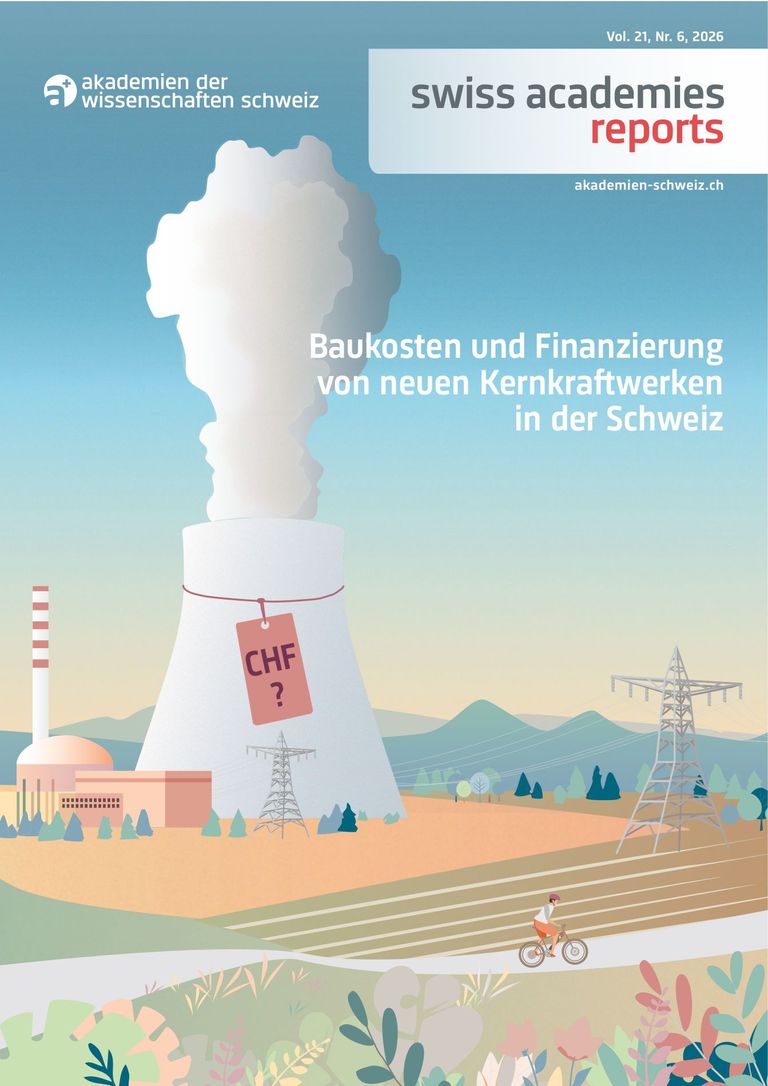
Source :
Neu U (2026) Construction costs and financing of new nuclear power plants in Switzerland. Swiss Academies Reports 21 (6)
This report provides a more detailed analysis of the observed development of construction costs for new nuclear power plants and discusses the potential costs of a new plant in Switzerland, as well as the associated uncertainties. Furthermore, it presents current financing models in Europe and the financial risks for the state and the economy associated with such construction.
In addition, current financing models in Europe and
the financial risks associated with construction for the state and the
economy are presented.
[Paul Dorfman says: The report is significant
because, unlike many other cost studies, it derives the risks from real
construction projects and, for the first time, also takes into account the
immense financing costs during the long construction period of a nuclear
power plant. It therefore estimates the expenditures to be 20 to 30 %
higher than estimates that consider only the pure construction costs.
According to the report, these account for around 70 % of the total costs
over the plant’s service life.
The study authors concludes, without billions in federal guarantees, no private investor would be willing to take on the financial risk.]
Swiss Academy of Sciences 21st Aug 2026, https://scnat.ch/en/uuid/i/5e8fa25a-bfa9-54ac-b33b-4e5f464f8561-Baukosten_und_Finanzierung_von_neuen_Kernkraftwerken_in_der_Schweiz
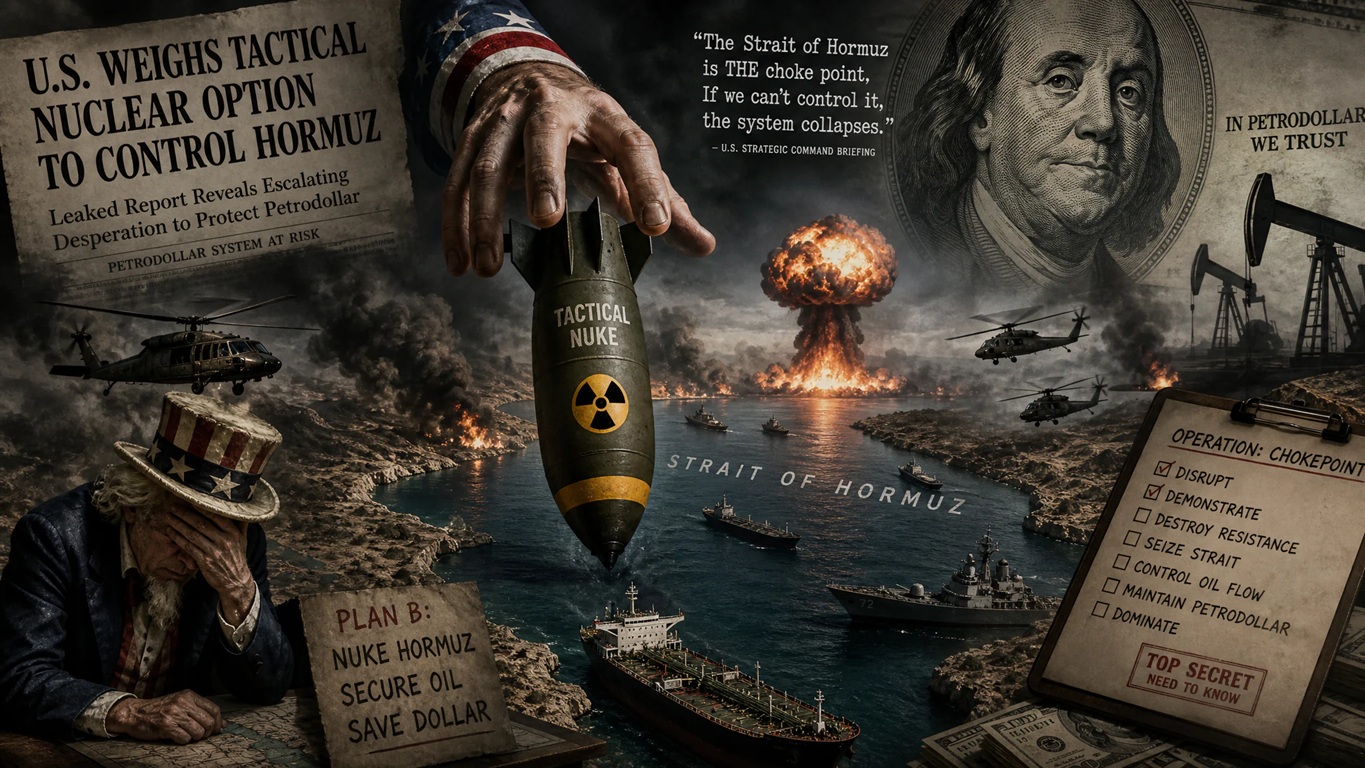
A Nuclear Option Against Iran Would Be a Catastrophe – Not a Solution
Taut Bataut, August 21, 2026, https://journal-neo.su/2026/08/21/a-nuclear-option-against-iran-would-be-a-catastrophe-not-a-solution/
Driven by desperation after failing conventionally in West Asia, the U.S. demonstrates reckless foreign policy by entertaining the use of tactical nuclear weapons to forcibly capture the Strait of Hormuz and preserve petrodollar hegemony.
his reliance on nuclear blackmail reflects a long-standing U.S. pattern of resorting to aggressive, unconventional force whenever its global military dominance is challenged.
A line in the sand that, once crossed, cannot be uncrossed. “They are discussing using nuclear weapons on Iran in strategy meetings. Yes, you read that correctly. It’s real. I’m not speculating; I know. And it’s pure evil.” This is what former US Congresswoman Marjorie Taylor Greene wrote on her X account on 17 August 2026. Although this statement is neither confirmed by the White House nor does it unveil any implicit information, the mere consideration of such an option signals a dangerous psychological shift in U.S. foreign policy. Heading towards any such move against Iran could result in global catastrophe, and the consequences would then be out of control. The real query here is whether the ongoing Middle Eastern volatility is paving the way for a nuclear holocaust or not.
Historical Perspective
To understand the ongoing situation in the Middle East, it is necessary to look into the historical perspective. When the US used nuclear weapons against Japan in World War II, we were told that the Japanese surrendered because of the nuclear weapons. This is false. Anyone who has studied World War II carefully will understand that the Japanese forces were already surrendering. So why was there a need to use nuclear weapons? The reason is that the US was running a secret project called the ‘Manhattan Project.’ Under this project, Americans were developing both uranium and plutonium bombs. So, the US wanted to test its weapon and thus bombed Japan. That’s why two bombs were dropped; however, only one could be enough. And thus, the US claimed itself as the number one military power in the world.
Later on, in the 1950s, Americans once again found that Soviet military dominance had surpassed them. So, the US introduced the tactical nuclear weapons to surpass the Soviet’s conventional superiority. However, till the 1970s, Soviets also developed tactical nuclear weapons in large numbers. In retaliation, the US started investing in space projects to develop long-range conventional missiles. By 2010, now the US military concluded that the Chinese military had become equal to ours. So, now the US is introducing artificial intelligence and autonomy in its military. But the PLA, without any doubt, has significantly outpaced the US military in this regard. This clears one thing: the US establishment did not want President Trump to sign an MoU with Iran, which was a clear surrender of the US military. So, as the US has completely failed against Iran in conventional terms, it might opt for some unconventional means to maintain its military superiority in the region.
Why the U.S. Might Opt for Tactical Nuclear Weapons
As of now, it is clear that there is no way to stop Iran through conventional capabilities. So, the statement made by Greene actually depicts the current strategic thinking inside the US: that even if the 50,000 US troops stationed at the 19 airbases in West Asia withdraw, if they do, and the US maintains control of the Strait of Hormuz, which could then be declared as US territory, then the petrodollar will remain intact. Therefore, the plan is to move out of the region and capture the Hormuz region through tactical nukes.
The next question then becomes, how is this going to be done? When one talks of tactical nuclear weapons, they mean the weapons whose power ranges from sub-kilotons to 50 kilotons. Just to remind you, the weapons the US dropped on Japan during WWII were tactical and weighed 15 kilotons. But now through modern technology, one can create a critical mass with just using a few kgs of uranium or plutonium, which could result in a chain reaction, and a nuclear weapon can be used.
Technically, this is possible today. If the Strait of Hormuz’s chokepoint could be opened with the use of a very small, limited-range, sub-blast, or sub-kiloton nuclear weapon. So, the US could capture the Strait of Hormuz in this way, declare it its own territory, and continue to generate petrodollars. This is the reason President Donald Trump recently said, “After we finish defeating Iran, which is being very badly defeated, pretty soon I’ll be declaring the Hormuz Strait a territory of the United States.”
The Devastating Consequences
Elbridge Colby, Under Secretary of War for Policy, has recently warned, “What I would fear more is a regional war, a kind of local war, a conventional war that might have local employment, God forbid, of nuclear weapons that could escalate from there as it expanded outward.” The consequences would be catastrophic. We know that many countries in the world today possess nuclear weapons, and we are also aware that North Korea has openly declared that if nuclear weapons are used against Iran, it will stand in solidarity with Iran. In addition, many analysts are of the view that Iran might have already developed nuclear weapons. But here the question is, could Iran have done this?
There are two reasons for which it can be concluded that Iran would not have done it. First, Iran is trying to develop a regional security framework, and the Mecca Defense Pact is its best manifestation, which could be expanded in the near future. Iran wants every regional country to see it as a partner nation. Thus, if Iran pursues developing nukes, it could start an arms race in the region where countries like Saudi Arabia would also demand a bomb. Second, Iran is a signatory of the NPT. So, Iran would first announce its withdrawal from the treaty, and then it will head forward in this direction.
China’s Role and Supremacy
Here China can play a pivotal and powerful role. Today China has approximately $800 billion in US Treasury bonds. If the Chinese were to tell Americans today that they were selling half or a large amount of their Treasury bonds, it would create problems with the US’s indebted economy. Inflation would spike, the stock market would crash, and the economy would be in dire condition. Moreover, China also has dominance over the world’s rare earth minerals, on which American conventional capabilities are highly dependent. Also, the PRC could also pressurize the US over the upcoming visit of Chinese President Xi Jinping to the US in September 2026. Thus, China has a lot to do in this regard, and it’s already doing it in one way or another to preserve the world’s peace.
A Nuclear Strike is not a Solution
A nuclear attack against Iran is not an answer; it is a recipe for disaster that is bound to happen sooner rather than later. This policy of desperation would be a betrayal of principles and a failure of our ideals and would not help to bring peace. The rest of the world should make its voice heard and condemn such rhetoric before it normalizes something unimaginable. There are reasons that dictate that we should rely on diplomacy and patience, no matter how desperate the situation becomes. The unthinkable should remain unthinkable; to think about such an option is to play with fire.
Japan to Reuse Fukushima Soil in Regional Cities
Tokyo, Aug. 25 (Jiji Press)
https://jen.jiji.com/jc/eng?g=eco&k=2026082500738 —
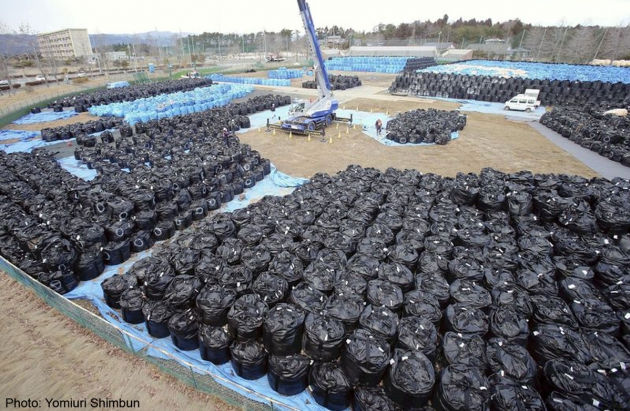
The Japanese government decided Tuesday to begin the reuse of soil generated from decontamination work following the 2011 accident at Tokyo Electric Power Company Holdings Inc.’s Fukushima No. 1 nuclear power plant in regional cities.
At a meeting at the prime minister’s office in Tokyo, the government decided to begin the soil reuse program at an early date for flowerbeds at buildings in Sendai in Miyagi Prefecture, northeastern Japan, and the city of Saitama, north of Tokyo, where central government branch offices are located.
It will be the first time for the soil from decontamination work to be used outside Tokyo, except for its use in demonstration projects in Fukushima Prefecture, home to the TEPCO plant, which suffered a triple meltdown following the massive earthquake and tsunami that mainly struck northeastern Japan in March 2011.
Chief Cabinet Secretary Minoru Kihara said at the meeting that the reuse of soil from decontamination work will be key to achieving the government’s goal of completing the final disposal of the soil outside Fukushima by March 2045.
Kihara urged attendees to expand the reuse of the soil to regional branch offices in other cities and strengthen public communication about its safety.
How the Media Sells Genocide

Joy to the World – by Mr. Fish
Chris Hedges ScheerPost, August 25, 2026, https://scheerpost.com/2026/08/25/how-the-media-sells-genocide/
Western media, by employing double standards, censorship, deceptive language, amplifying Israeli lies and dehumanizing Palestinians, facilitates the genocide in Gaza.
Chris Hedges ScheerPost
The Western media manufactures consent for genocide. It normalizes Israel’s decades-long military occupation and apartheid. It erases Israel’s flagrant violations of international law. It perpetuates the fallacy of Israeli victimhood. It betrays, discredits and demonizes the work of Palestinian journalists and media workers in Gaza, at least 220 of whom have been killed by Israel between Oct. 7, 2023, and August 2025. It supinely accepts draconian Israeli censorship. It acquiesces with tepid letters of protest at Israel’s refusal to allow foreign reporters in Gaza — an effort by Israel to mask its war crimes. It amplifies Israeli lies, from beheaded babies to widespread sexual assault of Israeli women on Oct. 7, to obfuscate the truth.
When writing about Gaza, verbs are in the passive tense. There is no subject. No one is accountable. Genocide, it seems, is an act of God. No different from an earthquake or tsunami. Clichés and opaque adjectives such as the “cycle of violence” or “clashes” distort and falsify reality.
“If thought corrupts language, language can also corrupt thought,” George Orwell warned.
Terms such as “genocide,” “atrocity,” “ethnic cleansing” and “occupied territories” magically disappear from media reports on Palestinians, whose resistance is routinely described as “savage” and “barbaric.” New York Times reporters are instructed by editors to avoid terms such as “Palestine,” “genocide,” “carnage,” “refugee camp,” “slaughter” and “massacre,” when referencing Palestinians.
The media slavishly regurgitates what Israel feeds it. Saturation bombing becomes “surgical air strikes.” Israel’s weaponization of famine becomes a “food shortage.” The killing of unarmed civilians — including children — becomes “clashes.” The hilltop fortress-like compounds of Jewish colonists becomes “neighborhoods.” Extrajudicial assassination of a journalist or a doctor becomes “died.”
Genocide, referred to as the “Israel-Hamas war” is justified as “self-defense,” part of the mantra of Israel’s “right to defend itself.” When schools, hospitals, clinics, ambulances, mosques, churches and other civilian targets are obliterated, they are labeled “Hamas command centers” or targeted because Hamas is “using civilians as human shields” — something Israel does routinely, when the army binds detained Palestinians and forces them to enter potentially booby-trapped buildings and tunnels ahead of Israeli troops.
When Israelis are held by Hamas, they are “hostages,” even if they serve in the military. When Palestinians — including children — are held without charges or trial and disappeared into Israeli detention centers, where torture is “widespread” and “systematic,” they are “prisoners.”
Missile attacks on tent cities or hospitals are blamed on Palestinian armed groups firing errant rockets. If Israel acknowledges the attacks — which very rarely happens — they are described as a “tragic mistake.”
Civil institutions in Gaza are characterized as “Hamas-run” to cast doubt on the veracity of what they report. The New York Times routinely qualifies announcements from the Gaza Health Ministry by noting it “does not distinguish between civilians and combatants,” masking the slaughter of tens of thousands of civilians.
The result is some of the most convoluted writing in the history of journalism, including the Nov. 5, 2023 New York Times headline that reads: “Explosions Gazans Say Was Airstrike Leaves Many Casualties in Dense Neighborhood.”
“When Middle East Eye journalists Mohamed Salama and Ahmed Abu Aziz, along with Reuters photojournalist Hussam al-Masri, and freelancers Moaz Abu Taha, and Mariam Dagga — who had worked with several media outlets, including the Associated Press — were killed in a “double tap” strike — designed to kill first responders arriving to treat casualties from initial strikes — at Nasser Medical Complex, how did Western news agencies respond?” I asked in my column The Betrayal of Palestinian Journalists.
“Israeli military says strikes on Gaza hospital targeted what it says was a Hamas camera,” the Associated Press reported.
“IDF claims hospital strike was aimed at Hamas camera,” announced CNN.
The camera belonged to Reuters, which said Israel was “fully aware” the news agency was filming from the hospital.
“When Al Jazeera correspondent Anas Al Sharif and three other journalists were killed on Aug. 10 in their media tent near Al Shifa Hospital, how was it reported in the Western press?” I asked.
“Israel Kills Al Jazeera Journalist It Says Was Hamas Leader,” Reuters titled its story, despite the fact al-Sharif was part of a Reuters team that won a 2024 Pulitzer Prize.
The German newspaper Bild, published a front page story headlined: “Terrorist disguised as a journalist killed in Gaza.”
“The linguistic gymnastics employed by the media went as far as redefining words, making them meaningless,” writes Assal Rad in “Don’t Say Palestine: How the Media Manufactured Consent for Genocide:”
‘Mainstream media failed to describe Israel’s repeated breaches of the ceasefire with the language of violation. Instead, the coverage followed the same patterns of rationalizing Israel’s attacks and uncritically parroting Israel’s claims to justify its actions. As Palestinians continued to be killed — during a ‘ceasefire’ — and the flow of aid did not reach the level of need or what was agreed to, Western media framed these flagrant violations as ‘tests’ or ‘challenges’ to a ‘shaky ceasefire.’ As leading human rights organizations like Amnesty International warned that the genocide was, in fact, not over, legacy media continued to frame it as a war with a ‘fragile ceasefire.’
Words matter. Words justify actions. If there is no genocide, if Israel is defending itself in a war, the U.S. and Israel’s European allies have the right to provide tens of billions of dollars in military aid. If this is a war begun by Hamas on Oct. 7 then it is possible to lament the obliteration of Gaza and mass slaughter by Israel as the regrettable result of the Hamas attack.
This corruption of language is designed, as Orwell noted, to defend the indefensible:
“Things like the continuance of British rule in India, the Russian purges and deportations, the dropping of the atom bombs on Japan, can indeed be defended, but only by arguments which are too brutal for most people to face, and which do not square with the professed aims of political parties. Thus political language has to consist largely of euphemism, question-begging and sheer cloudy vagueness. Defenseless villages are bombarded from the air, the inhabitants driven out into the countryside, the cattle machine-gunned, the huts set on fire with incendiary bullets: this is called pacification. Millions of peasants are robbed of their farms and sent trudging along the roads with no more than they can carry: this is called transfer of population or rectification of frontiers. People are imprisoned for years without trial, or shot in the back of the neck or sent to die of scurvy in Arctic lumber camps: this is called elimination of unreliable elements.“
Adam Johnson in “How to Sell a Genocide: The Media’s Complicity in the Destruction of Gaza,” examined over 12,000 articles from The New York Times, The Washington Post, CNN.com, Politico, Axios, USA Today, and The Associated Press, along with 5,000 TV segments aired on CNN and MSNBC. His carefully researched book is a damning indictment of the “liberal” media’s justification of the genocide.“
CNN and The New York Times instructed their editors and journalists that attacks could only be attributed to Israel after confirmation from the IDF and GPS coordinates. Johnson quotes a source at CNN:
Whether it’s in the newsroom or in the field, we couldn’t credit anything to Israel unless we were held to this impossibly high bar of having to call it an “explosion,” until we geolocated the site of the explosion, sent the coordinates to the Israelis and asked them for comment.
You can see an interview with Johnson about his book at The Electronic Intifada here.
CNN journalists reporting on Israel and Palestine must submit their work for review to the network’s Jerusalem bureau prior to airing. The CNN bureau, like all news bureaus in Israel, is required to abide by restrictions imposed by Israeli military censors.
The very few Palestinians who appear on CNN and other legacy media outlets, are routinely asked — usually before they are even permitted on air — if they “condemn” Hamas. Guests who express even tepid criticism of Israel are asked whether Israel “has a right to exist.”
No one is ever asked if they condemn Zionism, apartheid, ethnic cleansing, genocide or Israel’s 100 year war on Palestine. Nor are they asked if the Palestinians have a right to defend themselves — which under international law they do, including with weapons.
Our domesticated journalists and news organizations are, as Robert Fisk pointed out, “prisoners of the language of power.” They dutifully parrot the official lexicon. This makes them not only propagandists, but accomplices to genocide.
Those who protest the genocide, including students on university campuses — many of whom are Jewish — are smeared as “Hamas supporters” and “antisemites.” Journalists ferret out Zionist students, usually found esconced in campus Hillel houses, who claim to be “fearful for their safety,” because of the protests. The media pays little attention to the rise in anti-Muslim bigotry or the repression meted out to student protestors, which includes not only police brutality and 3,000 detainments and arrests, but suspensions, probations, expulsions, withholding of diplomas and the firing of sympathetic faculty.
Slogans which call for Palestinian liberation — including “From the river to the sea, Palestine will be free” — along with the Palestinian flag, have been criminalized.
The message is clear: Jewish lives matter. Palestinian lives do not.
“The reports of UN agencies, of respected human rights monitors, of medical journals, and of professional medical personnel, are generally treated with respect and given prominence in the mainstream media,” writes the historian Rashid Khalidi in the introduction to Robin Anderson’s book, “The Complicit Lens: US Media Coverage of Israel’s Genocide in Gaza:”
“Not in this war: instead, if such sources are cited at all, equal media treatment is given to the outrageous slanders and calumnies against these organizations and individuals, smears that are produced in profusion by Israel’s legion of professional propagandists and its myriad of defenders in the US. Besides smearing critics of Israel’s genocide as supporters of Hamas or terrorist sympathizers, the main weapon in their arsenal of defamation is their systematic and outrageous misuse of the deadly accusation of antisemitism.”
The massive defections of readers and viewers from mainstream media to social media platforms that do not filter news through the Israel lobby, the U.S. government or corporations, are a stark indicator of the media’s bankruptcy. The response to these defections has been “platformicide” — the use of algorithms, shadow banning, restriction of live streaming capabilities and the closing of accounts by social media giants such as Facebook, Instagram, X, YouTube and TikTok, to dramatically reduce the reach of reporting on Palestine.
This censorship is part of a coordinated effort to hide the horror of the genocide from the public.
By constantly referencing Oct. 7, the Western media decontextualizes the genocide. It ignores Israel’s 19-year siege of Gaza. Oct. 7 is characterized in the Western media as “unprovoked.” Israel’s massacres of unarmed Palestinians in Gaza in the winter of 2008 and 2009, along with its attacks on Gaza in 2012, 2014 and during the Great March of Return in 2018 and 2019 are ignored.
The 1948 Nakba — when European Zionists seized more than 78 percent of historic Palestine, violently expelled 750,000 Palestinians, destroyed more than 530 Palestinian villages and killed 15,000 Palestinians — is rarely referenced. Seventy percent of those driven from their homes in 1948 were forced into Gaza.
The Zionist project is predicated on fostering historical amnesia.
“Once Hamas was established as a brutal, terrorist group whose members gleefully tortured, dismembered, and beheaded babies without conscience, no further explanation was needed,” writes Anderson in her book. “The media simply avoided reporting Israel’s history of violence and as a result, establishment media also avoided the conditions of everyday life for Palestinians.”
The fiction that there is currently a ceasefire in Gaza — Israel has killed at least 1,286 Palestinians and injured 4,257 since it supposedly went into effect — has become the excuse used by Western media to turn its back on Gaza. This genocide denial has characterized the coverage since its inception. It masks not only Israel’s crimes, but Israel’s stated intention to ethnically cleanse all Palestinians from Gaza. It effectively neuters international law. And it makes a mockery of the profession of journalism.
When the last act of ethnic cleansing happens, Western media will, I am sure, continue to bombard us with Israeli agitprop, euphemisms and clichés.
It will justify the genocide until the end.
Lawless Killing Spree At Sea Resumes’ As US Announces Fresh Boat Bombings
Brad Reed , Common Dreams, August 25, 2026, https://scheerpost.com/2026/08/25/lawless-killing-spree-at-sea-resumes-as-us-announces-fresh-boat-bombings/
The US military has resumed its campaign of bombing alleged drug-trafficking vessels after a two-month pause in a campaign that many legal experts and human rights groups believe constitutes a murder spree.
In a Monday social media post, US Southern Command (SOUTHCOM) said it carried out a “lethal kinetic strike on a low-profile vessel operating along established narco-trafficking routes” in the Pacific Ocean on Sunday. Two people were killed as a result of the attack, SOUTHCOM claimed.
In announcing the strike, SOUTHCOM Commander Gen. Francis Donovan said the attack was part of a campaign of “imposing total systemic friction on narco-terrorists—disrupting their operations, dismantling their leadership, and eliminating cartel terror across the region.”
Donovan’s boasts about the effectiveness of the boat strikes in combating the drug trade come less than a month after a leaked a Drug Enforcement Administration (DEA) analysis revealed that the boat-bombing campaign has not “reduced the amount of cocaine entering” the country, as drug cartels have found alternate methods for shipping their product into the US.
With the latest two casualties, the boat bombing campaign launched nearly a year ago by President Donald Trump’s administration has now claimed the lives of at least 223 people.
Adam Isaacson, director of the Defense Oversight program at the Washington Office on Latin America (WOLA), criticized the administration for resuming its boat bombings despite “overwhelming evidence that they are murder; that many, likely most, of the dead are either super-low-level or uninvolved with drugs; and that cocaine supply is unaffected.”
Brian Finucane, senior adviser to the US Program at the International Crisis Group, delivered a similarly scathing assessment, commenting that “the Trump administration’s lawless killing spree at sea resumes.”
Nicholas Grossman, professor of international relations at the University of Illinois, described the boat strike campaign as “murderous” and “illegal,” adding that its victims are “not terrorists” and “may not even be drug traffickers.”
Investigative journalist Camila Lourdes Galarza observed that “there’s still no proof any of the victims” of the boat strikes were involved in the drug trade.
Lourdes Galarza sarcastically added that if the victims had been drug traffickers, “the US would probably give them a deal” like the one given to Juan Orlando Hernández, the former president of Honduras who was pardoned by Trump last year despite being previously convicted on narcotics trafficking charges.
The Amazon faces a radioactive future
A team of German scientists from the Forschungszentrum Jülich studied the „Environmental impacts of rare earth production“ in several countries including China, Myanmar and Australia. They concluded in their 2022 published study: „The life cycle assessments have highlighted the main problems, such as large quantities of chemicals needed to process Rare Earth Elements and the large quantities of tailings generated during beneficiation, extraction and separation that contain the naturally occurring radionuclides Thorium and Uranium and their decay products. These radioactive elements can enter the environment through air, wastewater and rain leaching.“
By Norbert Suchanek, 25.08.26 – Rio de Janeiro, Brazil – Pressenza New York, https://www.pressenza.com/2026/08/the-amazon-faces-a-radioactive-future/
Rush for strategic minerals could turn the Brazilian Amazon into a radioactive sacrifice zone.
The world’s largest rainforest region could face a bleak and radioactive future—driven by new mining projects to extract strategic minerals essential for the global energy transition, the high-tech industry, artificial intelligence, and new weapons systems. Some of these minerals—such as niobium, tin, and rare earth elements—are found in deposits alongside radioactive uranium, thorium, and their radioactive decay products, all of which ultimately end up as mining waste called tailings.
The Amazon region is threatened by an unprecedented mining boom, in the name of sustainability and climate protection. It is at the center of a global race for strategic minerals considered essential for the global energy transition and decarbonization. These include, above all, niobium, copper, cobalt, lithium, nickel, tin and the 17 rare earth elements. They are also necessary for high-tech products like smartphones, war drones, missiles and AI Data centers. Brazil’s mining authority has already received thousands of applications for prospection and exploration in the Amazon, many of which are located near or within forest reserves and indigenous territories.
According to InfoAmazonia, a news organization that combines data, maps and geolocated reporting to tell stories about the planet’s largest continuous tropical forest, there are 5,046 mining applications to exploit essential substances for the energy transition in the Brazilian Amazon Biome. 1,205 of these applications are related to areas that impact Indigenous Lands and 1,207 overlap Conservation Units.
In 2025, an exclusive survey by Brazilian investigative news outlet “Repórter Brasil” identified 1,827 mining requests for copper, lithium, rare earth elements, and 13 other minerals less than 40 kilometer from isolated indigenous groups.
In its official „Guide for Foreign Investors 2026“ the Brazilian Ministry of Mines and Energy (MME) expects a strong increase of Brazil’s mineral reserves from the expansion of geological knowledge and the success of ongoing exploration projects.
“Investments will prioritize the following strategic minerals: Cobalt, Copper, Tin, Graphite, Lithium, Manganese, Platinum Group Metals, Molybdenum, Niobium, Nickel, Silicon, Tantalum, Rare Earths, Titanium, Tungsten, Uranium, Vanadium, Zinc, Phosphate, Potassium.”
According to geological studies potential rare earth deposits can be found in the Amazonian states of Amazonas, Rondônia, Roraima, Pará, and Tocantins. One of the largest reserves identified in Brazil is the Morro dos Seis Lagos deposite at São Gabriel da Cachoeira in the Amazonas state.
However, the mining and processing of rare earths and other critical minerals are a dirty business that can have serious consequences for the environment, workers and local populations. Mining, especially open-pit mining requires clearing large areas of land to access mineral deposits. Rainforest has also to be cleared for the necessary workers’ settlements and access roads. These new highways, in particular, attract landless settlers, land speculators, and illegal loggers who deforest further areas along the routes as observed throughout the Amazon region for decades. But that’s just the tip of the “dirty” iceberg of rare earths and critical mineral production.
High risk of radioactive contamination
There is a threat of widespread contamination of soil, air, and water with toxic substances, heavy metals, and even radioactive elements. This is because some of the critical or strategic minerals such as niobium, tin and rare earth elements occur in the soil in association with radioactive uranium, thorium and their radioactive decay products.
The contamination starts with the first blast. Radioactive and toxic dust caused by the explosions spreads over the mining area. The more rock that has to be blasted and removed, the more dust is generated. The amount of dust can be reduced by irrigation systems. However, that creates sewage containing radioactive substances and heavy metals that can enter soil and water resources. The highly hazardous tailings, which are mixtures of crushed rocks and processing fluids from mills and concentrators have to be stored in artificial lakes or ponds for a long time. Studies show, every tonne of rare earths mined generates up to 2,000 tonnes of toxic and radioactive waste.
In addition the beneficiation process and refining of rare earths need a huge amount of energy and chemicals. Flotation tailings, up to 40 tons per ton of produced rare earth oxide, that include radioactive elements, are also discharged into the open tailings ponds which poses toxicity risks to water, soil, and air through leakage, dust formation, and rain erosion. In addition refining processes generate also huge amounts of dangerous gas. Each ton of rare earth elements produced in China releases 9,600 to 12,000 cubic meters of toxic gas containing flue dust concentrate, hydrofluoric acid, sulfur dioxide, and sulfuric acid, according to the Massachusetts Institute of Technology factsheet “Mission 2016 – The Future of Strategic Natural Resources“.
A team of German scientists from the Forschungszentrum Jülich studied the „Environmental impacts of rare earth production“ in several countries including China, Myanmar and Australia. They concluded in their 2022 published study: „The life cycle assessments have highlighted the main problems, such as large quantities of chemicals needed to process Rare Earth Elements and the large quantities of tailings generated during beneficiation, extraction and separation that contain the naturally occurring radionuclides Thorium and Uranium and their decay products. These radioactive elements can enter the environment through air, wastewater and rain leaching.“
It should also be noted that rare earth elements are toxic to humans and animals. Recent toxicological studies show that rare earths can enter the human body through various pathways such as inhalation, ingestion and dermal contact. They accumulate in different tissues or organs and ultimately posing a serious threat to human health. A 2024 published study considers exposure to Rare Earth Elements as „a public health issue of global importance“. Possible consequences include lung diseases, neurological damage, cardiovascular dysfunction, reproductive harm, and increased risks of cancer and genetic damage.
Dams can and do break.
After all, one of the major risks to the Amazon basin is the enormous amount of tailings from the mining operations, which are stored in huge ponds secured by artificial dams. To avoid radioactive leakage they must be monitored, and permanently managed for a very long time. However, dams can break, as has happened in the past in various countries around the world. Regions with naturally occurring heavy rainfall, such as the Amazon and the Atlantic Rainforest in Brazil, are particularly vulnerable to dam breaches.
In Brazil, there have already been dozens tailings dam failures in mining areas that led to severe environmental disasters. The two worst dam collapses in Brazil to date occurred in Mariana in 2015 and in Brumadinho in 2019, both located in the Atlantic Rainforest region of the southeastern state of Minas Gerais.
Case studies on radioactive contamination from rare earth production
Radioactive contamination resulting from the extraction of rare earths and strategic minerals is neither an unfounded hypothesis nor science fiction. It has already occurred—for instance, in Malaysia during the 1980s: Radioactive waste from the rare earth processing plant of Asian Rare Earth and the Mitsubishi Chemical Corporation poisoned the local population of Bukit Merah. „When the Mitsubishi joint venture plant opened over 1982, the villagers soon began complaining of the factory’s stinging smoke and bad smell which made them choke and cry. Worse was to come. Their health began failing, indicated not only by frequent bouts of coughs and colds, but a sharp rise in the incidence of leukemia, infant deaths, congenital disease and lead poisoning“, remembers the Consumers’ Association of Penang (CAP). The affected population protested and went to court. Finally, in 1994, the Bukit Merah plant closed. The rare earth company left behind its radioactive waste, stored in 80,000 drums of 200 liters each in a dump site just three kilometers outside from Bukit Merah.
Another „dirty“ rare earth mining hotspot is Myanmar, also in Southeast Asia. This country is one of the largest rare earth exploiters in the world serving the Chinese industry for years with dear consequences. The mines along the Myanmar-China border generate radioactive waste and chemical contaminants that seep into waterways, degrading local ecosystems and disproportionately impacting indigenous populations.
A research by Thailand’s Naresuan University found that water samples taken from areas of extraction in Kachin State were severely contaminated with radioactive elements, toxic heavy metals and other harmful substances. In 2025, the policy brief “Kachin, a Sacrifice Zone for the Green Transition” of the EarthRights organization in Washington DC brought to light the environmental destruction and human rights violations resulting from the mining of heavy rare earth elements in Myanmar: „Mining in Kachin is leaving creeks and rivers dangerously contaminated with heavy metals and radioactive elements.“ Worse: These rivers are tributaries of the great Mekong, one of the most fish-biodiverse rivers in the world and a food source for millions of people.
„Toxic runoff from these (Rare Earth) mines is polluting transboundary rivers that run from Myanmar into Thailand and then into the Mekong mainstream. People living in the affected areas cannot use the rivers for fishing, their agricultural products are shunned at markets in Thailand, and they fear their bodies are being exposed to toxins“, wrote the Stimson Center, a nonprofit, nonpartisan think tank based in Washington, D.C., in its 2025 published field note „Toxic Rare Earth Mining is Ruining Mekong Tributaries in the Golden Triangle.“
Even in the Amazon basin, mining activities have already led to radioactive contamination on at least one occasion.
In 1993, a tailings dam at the Pitinga open pit mine in the state of Amazonas at Presidente Figueiredo municipality, roughly 130 kilometers north of Manaus collapsed, contaminating the Tiaraju River of the Waimiri Atroari indigenous territory with heavy metals and radioactive elements. Pitinga was established in 1981 during the military dictatorship by the mining company “Mineração Taboca” and has produced mainly tin ore and niobium since 1982. However, the polymetallic deposit also contains other strategic minerals such as tantalum, rare earth elements and the radionuclides thorium and uranium, which are eventually found in the tailings and processing residues.
“The dam collapse at the Pitinga mine is serious and should concern the entire community, as there is evidence that the company released radioactive minerals that could cause irreversible environmental damage,” warned the Indigenist Missionary Council (CIMI) at the time. The Waimiri Atroari reported cases of tooth loss, hair loss, and leukemia: typical symptoms and consequences of radiation exposure or radioactive contamination.
Egydio Schwade, a co-founder of the Indigenous Missionary Council (Cimi) and resident of Presidente Figueiredo, witnessed already in 1985 the discharging of Pitinga’s mining waste into the Tiaraju Stream, a tributary of the Alalaú River, which serves as the lifeblood of the Waimiri-Atroari Reserve and flows into the Rio Negro. „Conditions worsened significantly in the years that followed — 1987, 1989, 1990, 1991, and 1992 — due to the successive failure of containment dams“, he remembers in his 2016 published report „Criminal Mining: A Testimony“.
Another accusation comes from the indigenist Porfírio Carvalho of Brazil’s Indigenous affairs agency (FUNAI). In 1987, he denounced the collapse of nine dams of the Pitinga mine, which polluted the Riaraju, Alalaú, and Jauaperi rivers and threatened the fauna and flora of the Amazon. Although he did not mention radioactive contamination due to a lack of technical analysis, he described it as a large-scale ecological disaster in the region. Carvalho has been accompanying the Waimiri Atroari since the late 1960s. He died in 2017 from cancer, aged 70.
The mining company Mineração Taboca, which operates the Pitinga Mine in Amazonas, was sold in November 2024 to the Chinese state-owned company CNMC (China Nonferrous Metal Mining Company) for US$340 million. The Chinese company aims to quadruple production at Pitinga. In addition it plans to exploit the mine’s rare earth minerals. Pitinga is considered a potential “hotspot” for large-scale rare earth mining in the Amazon. These elements are present not only in the primary ore body of Pitinga but also in the more than 6,000 hectares of tailings ponds that contain more than 100 million tonnes of waste rock.
According to the Global Environmental Justice Atlas (EJAtlas) the Pitinga mining complex is emblematic for Brazil’s historical injustice against indigenous peoples and the systematic downplaying of environmental pollution and the risks associated with tailings dams.
“China’s recent acquisition of Pitinga in November 2024 escalates threats from rare earth extraction, intensifying impacts on fragile ecosystems and the rights of Indigenous peoples.“
Norbert Suchanek is an experienced journalist based in Rio de Janeiro Born in Germany in 1963, Norbert Suchanek has been researching and writing about environmental and human rights issues since 1988. In 2025, he received the Nuclear-Free Future Award in the Education category in New York City. He is also co-founder of the International Uranium Film Festival.
Israel Took Another Major Step Towards West Bank Annexation
August 25, 2026, Qassam Muaddi, Mondoweiss. https://scheerpost.com/2026/08/25/israel-took-another-major-step-towards-west-bank-annexation/
Settlers besiege Palestinian families in Qusra.
Israel’s government responds by handing settlement security to the police of hardline minister Ben-Gvir- a move seen to further entrench Israeli annexation of the West Bank.
Israel’s Defense Minister, Israel Katz, has moved to transfer security authority over Israeli settlements and settlers in the occupied West Bank from the Israeli army to the civil police, a decision Palestinians read as a decisive step toward the de facto annexation of the territory, and one that places the settler movement, in effect, in charge of policing itself.
Katz gave the Israeli army two weeks to draft a plan to transfer powers to the police, while the army’s role in the West Bank would be limited to “managing” Palestinians and controlling borders.
The announcement, made last Monday, came after ten days of settlers besieging three Palestinian families in the village of Qusra, south of Nablus. Since August 9, Israeli settlers have cordoned off the families — including three women, one of whom is elderly, and two children — inside three houses, cutting off water, electricity, and blocking access by Palestinians and Israeli anti-occupation activists who tried to deliver food to them.
The Israeli army deployed troops to the area and declared it a closed military zone, evacuating the settlers’ tent, only for the settlers to re-establish it the following day. Israeli soldiers were filmed praying and shaking hands with the settlers, sparking a public controversy over the collusion between the army and the settlers.
While the army’s failure to resolve the crisis is seen by some to have triggered Katz’s decision, the decision’s implications extend far beyond Qusra.
Another step to annexation
On the surface, transferring security powers from the army to the civil police looks like a measure to restore order and rein in settler violence that has spiked since 2022 — well before October 7 — and sparked global condemnation, even from Israel’s staunchest allies.
However, in his first public response to Katz’s announcement, Mustafa Barghouti, leader of the Palestinian National Initiative, called the move “the actual beginning of Israel’s de facto annexation of the West Bank.” Talking to Alaraby TV, Barghouthi also noted that the Israeli police is controlled by Israel’s National Security Minister, Itamar Ben-Gvir, who is a hardline settler himself. “All security powers over settlers in the West Bank will pass into the hands of settlers themselves,” Barghouthi said.
Ben-Gvir, a key ally of Benjamin Netanyahu, has systematically expanded settlers’ influence within the Israeli police since taking power.
More broadly, the decision fits a pattern that has been accelerating since the current Israeli government took office. Finance Minister Bezalel Smotrich, who holds sweeping authority over the West Bank’s civilian administration, has systematically inserted Israeli settlers into the decision-making structures of the occupation. In 2024, Smotrich said that he had “changed the DNA of the system” by creating a civilian body — staffed by settlers — inside the Israeli army’s Civil Administration, the body responsible for running the occupation’s civilian affairs in the West Bank.
This effectively replaced the military with a settler-run civilian government in an occupied territory, treating the West Bank as sovereign Israeli territory rather than occupied land. After assigning civilian governance of the West Bank to settlers and transferring security authority to police, which is all in line with the path to annexation, what remains is the formal imposition of Israeli law on the territory.
Opportunism or election politics?
The timing of Katz’s announcement is not coincidental.
The ongoing siege of Palestinian families in Qusra attracted international attention over the past week, after U.S. Ambassador to Israel, Mike Huckabee, slammed the actions of Israeli settlers in Qusra, calling them “terrorists” — an unusually sharp reaction from an official in U.S. President Donald Trump’s administration. The apparent trigger for the stern criticism is that several of the Palestinians trapped inside the three homes in Qusra were U.S. citizens.
On Monday, Palestinian-American Luai Abu Ridah arrived in Qusra from Ohio to join his family in their besieged house in the village. Once inside, Abu Ridah raised a U.S. flag on the rooftop, asserting his U.S. citizenship and deepening the crisis.
Although the logical end to the crisis would be the removal of settlers from the area surrounding the three houses and ending the siege, the political price associated with removing them is one that the current Israeli government wants to avoid at all costs, particularly with decisive Israeli elections being months away. Given that the settler movement is a main part of the voter base that is keeping Netanyahu’s right-wing coalition in power, images of Israeli forces evacuating settlers — however violent or illegal their conduct is — a few months ahead of Israeli elections, would cost the contested prime minister crucial votes.
In that sense, transferring security powers to the Israeli police, as a move, gives the impression that the Israeli government is taking decisive action. In practice, it does nothing to end the siege in Qusra: the settlers remain, and the Palestinian families stay trapped, and the new framework hands authority to a force whose minister is ideologically aligned with the settler movement. Simultaneously, the move manages the international optics of the crisis while advancing the annexation agenda, without resolving either.
Larger plan
Despite the media emphasis on the siege of Palestinian families in Qusra, it is only a moment of a sustained settler offensive, targeting and reshaping the eastern part of the West Bank.
Following October 7, Israeli settler groups launched a systematic campaign against Palestinian Bedouin communities in the eastern slopes of the Nablus and Ramallah hills, displacing almost all Palestinians from the area, and cutting off the central West Bank from the Jordan Valley.
Since last year, settler attacks have begun to focus more on the villages east of Ramallah and Nablus, particularly in the southeast of the Nablus governorate.
In July, Israeli settlers seized a house in Jaloud, southeast of Nablus, located in Area B, the 22% of the West Bank which falls under Palestinian Authority (PA) civil jurisdiction and Israeli security control under the 1993 Oslo Accords. Such attacks on built-up houses in these villages, which have escalated dramatically over the past year, achieve the strategic logic of establishing a continuous settler presence east of Nablus. This isolates the city from both the east and the south, thereby achieving geographic contiguity for settlements across the northern West Bank. This, ultimately, further fragments any prospect of a coherent Palestinian territory.
As settler violence intensified and went unchecked, the displacement of families from their houses became the defining feature of this phase. The siege of the two families in Qusra is its most extreme expression and its most internationally visible.
But beyond the immediate crisis, the Israeli government and its settler support base are claiming every opportunity to entrench annexation measures that would be very difficult for any future government to undo or reverse.
Transferring security powers in settlements to the Israeli police is one such measure. It is not an emergency response to a local incident, but a continuation of a plan that has been in the making for years.
Hormuz Catastrophe: Netanyahu & Trump Knew Risks, Escalated Anyway
SCHEERPOST, August 25, 2026, Dan Steinbock Informed Comment
Iran has not collapsed, while Hormuz has become a global economic choke point. The central failure was not ignorance of the risks, but the political decision in Washington and Tel Aviv to gamble that coercive military power could overcome them.
So, why did they set the stage for the catastrophe that was both unwarranted and unnecessary?
The Israeli conventional war game
In February 2024 – after 4 months of the Israeli obliteration of Gaza – over 100 senior military and government officials participated in a report by Reichman University’s Institute for Counter-Terrorism which outlined in painful detail how unprepared the Israeli home front was for an all-out war with Hezbollah.
This lethal scenario was written long before Hamas’ October 7th attack on Israel. It is the result of a three-year study. The 130-page report was the work of six think tanks made up of over 100 terrorism experts, former senior security officials, academics, and government officials who examined critical aspects related to the level of preparedness for the IDF and the home front in the event of a multi-front war.
The project was led by Professor Boaz Ganor, a world-renowned counter-terrorism expert. In the months leading up to October 7, he presented his research to relevant military and political authorities in an attempt to rouse intelligence and decision-makers from complacency and misconceptions.
The Netanyahu government ignored him and the analysis.
The Israel-Iran nuclear war game
In late 2023 – almost in parallel with the Hamas attack – a high-level U.S. war game was conducted in Washington. The participants included members of U.S. executive branch, Republicans and Democrats in the Congress, leading academics, think-tank experts and Pentagon officials. The game started in 2027 with Israeli intelligence reports that Iran was mating nuclear warheads to its long-range missiles. Consequently, Israel targets Iran’s key nuclear and missile sites with U.S. standoff hypersonic missiles.
Intriguingly, initially the U.S. participants presumed that self-restraint would prevail in this high-level war game. Yet, the simulation’s cold logic compelled them into a sequence of steps that quickly went nuclear. The adverse consequences were felt by millions of civilians in both Israel and Iran.
The lessons of the war game were ignored by both the Netanyahu government and the Trump administration.
Why did Netanyahu court the U.S. into the Iran conflict fully knowing the consequences?
Both war games were common knowledge among the US and Israeli military elites well before October 7, 2023. I referenced each in my book The Fall of Israel (2024). So, why were the lessons of these games effectively ignored?
The evidence points less to strategic ignorance than to political and strategic risk-taking. In particular, The Fall of Israel shows that Netanyahu’s government repeatedly treated regional escalation as a means of escaping an increasingly untenable post-October 7 position: prolong Gaza invasion, weaken Hezbollah, expand Israel’s northern security zone and ultimately confront Iran.
I argued that Netanyahu rejected a Gaza ceasefire while expecting Trump’s return to provide greater freedom of action against Gaza, Lebanon and Iran.
But the risks were hardly invisible even in 2023. The high-level U.S. war game in late projected that an Israel-Iran confrontation could rapidly escape Israeli and American control and go nuclear. The Hezbollah scenario likewise anticipated thousands of rockets, saturation of Israeli defenses, attacks on infrastructure and paralysis of ports and trade.
Netanyahu’s calculation therefore appears brutally simple: the risks of escalation were judged preferable to the political risks of de-escalation. A wider war could restore deterrence, destroy adversaries, preserve his coalition and keep the strategic initiative.
The catastrophic externalities—Lebanon, Iran, Hormuz, the Gulf and the world economy—were treated as manageable collateral risks. They were not Israel’s problem. They were the world’s problem.
Why did Trump take the bait when Washington understood the stakes?
Trump inherited an enormous institutional warning system. U.S. officials, Pentagon planners and bipartisan experts had already modeled escalation from an Israeli attack on Iran through retaliation, Israeli counterstrikes, nuclear signaling and ultimately nuclear exchange.
The war game initially assumed rational self-restraint; but its own sequence demonstrated how quickly that assumption could collapse.
Yet Trump appears to have made the classic great-power error: confusing overwhelming tactical superiority with strategic control.
To the interventionists, the political attractions were obvious—destroy Iran’s nuclear capacity, reinforce Israel, demonstrate American dominance and claim a decisive victory where previous administrations had failed.
But the premise that Iran could be compelled to surrender under bombardment underestimated asymmetric retaliation, regional proxies, geography and the extraordinary leverage of Hormuz.
The result is the opposite of the promised quick victory. By August, Trump’s approval had fallen to 33%, while 80% of Americans said they expected the war to be prolonged. Earlier Pew polling found 59% of Americans believed using force against Iran was the wrong decision and 62% disapproved of Trump’s handling of it.
Ironically, Washington has converted a military operation into a strategic endurance contest in which Iran possesses an exceptionally powerful economic weapon: Hormuz.
Soaring oil/gas prices, plunging growth, 6+ million displaced……………………………………………………………………………………………………………………………
What options remain and how badly has America damaged itself
There are four remaining trajectories. First, negotiated de-escalation: reopen Hormuz, freeze attacks, restore oil/LNG flows and negotiate Iran’s nuclear status.
Second, prolonged managed conflict: intermittent strikes, sanctions and restricted shipping, producing structurally higher energy prices.
Third, regional expansion: Lebanon, Iraq, Yemen and Gulf infrastructure become increasingly active fronts.
Fourth, the tail risk: escalation toward nuclear confrontation—the scenario the war games warned could arise from supposedly controlled conventional operations.
What is urgently needed is an internationally mediated settlement involving Iran, the Gulf states, Europe, China, Russia and the UN—not another unilateral U.S. military ultimatum. As I argued in The Fall of Israel, unipolar solutions are increasingly incapable of managing a multipolar Middle East………………………………………………… https://scheerpost.com/2026/08/25/hormuz-catastrophe-netanyahu-trump-knew-risks-escalated-anyway/
1 This Month



26 September – International Day for the Total Elimination of Nuclear Weapons


PLEASE OPPOSE HR 8255 AND S.3639 – bills would accelerate satellite deployment, with no environmental review or safeguards – https://ncstd5li.quorum.us/campaign/169331/
To see nuclear-related stories in greater depth and intensity – go to https://nuclearinformation.wordpress.com
-
Archives
- September 2026 (269)
- August 2026 (330)
- July 2026 (355)
- June 2026 (287)
- May 2026 (306)
- April 2026 (356)
- March 2026 (251)
- February 2026 (267)
- January 2026 (308)
- December 2025 (358)
- November 2025 (359)
- October 2025 (375)
-
Categories
- 1
- 1 NUCLEAR ISSUES
- business and costs
- climate change
- culture and arts
- ENERGY
- environment
- health
- history
- indigenous issues
- Legal
- marketing of nuclear
- media
- opposition to nuclear
- PERSONAL STORIES
- politics
- politics international
- Religion and ethics
- safety
- secrets,lies and civil liberties
- spinbuster
- technology
- Uranium
- wastes
- weapons and war
- Women
- 2 WORLD
- ACTION
- AFRICA
- Atrocities
- AUSTRALIA
- Christina's notes
- Christina's themes
- culture and arts
- Events
- Fuk 2022
- Fuk 2023
- Fukushima 2017
- Fukushima 2018
- fukushima 2019
- Fukushima 2020
- Fukushima 2021
- general
- global warming
- Humour (God we need it)
- Nuclear
- RARE EARTHS
- Reference
- resources – print
- Resources -audiovicual
- Weekly Newsletter
- World
- World Nuclear
- YouTube
-
RSS
Entries RSS
Comments RSS

