Iran’s uranium enrichment: myths, realities, and what Canada should understand

Canadians deserve an informed debate about the potential proliferation dangers of these new reactor designs, especially as the intention is to export them around the world.
BY ERIKA SIMPSON, GORDON EDWARDS | June 29, 2025, https://www.hilltimes.com/story/2025/06/29/irans-uranium-enrichment-myths-realities-and-what-canada-should-understand/465192/
Confusion and misinformation continue to shape public discussion about uranium enrichment in Iran. As tensions rise in the Middle East and the fear of nuclear weapons proliferation returns to the headlines, it is important for Canadians to understand the basic scientific facts, the real risks, and the broader international implications.
Uranium enrichment sounds mysterious, but is a well-understood process. Natural uranium contains only 0.7 per cent uranium-235, the rare variety of uranium that can undergo the kind of nuclear chain reaction needed for nuclear power or nuclear bombs. The other 99.3 per cent is uranium-238, a heavier variety of uranium that cannot sustain such a chain reaction. Enrichment is simply the process of raising the percentage of uranium-235.
It is often reported that 90 per cent uranium enrichment is “needed” to have a nuclear weapon. This is not true. The Hiroshima bomb had only 80 per cent enrichment. Iran has a good deal of 60 per cent enriched uranium, and one can make a powerful bomb from 60 per cent enriched uranium. It would be larger in size than a bomb with 90 per cent enrichment, and so more challenging to deliver, but not much more so. The recent bombings are unlikely to have destroyed the hundreds of kilograms of 60 per cent enriched uranium already in Iran.
The mechanism needed for making an atomic bomb from uranium is much simpler than that needed for a plutonium bomb. It’s called a “gun-type” atomic bomb rather than an “implosion-type” atomic bomb.
The gun-type bomb just fires one chunk of uranium into another chunk (the target) so that the two chunks add up to more than a “critical mass.” It is so simple it cannot possibly fail. The United States never tried out this type of bomb before using it; it was dropped on the city of Hiroshima, Japan, with no prior testing. Such a bomb needs a precision-timed “neutron source,” but that is old technology, well known for a long time.
The implosion-type bomb is needed when plutonium is the nuclear explosive. Implosion is much more demanding. It requires a perfectly spherical mass of plutonium metal surrounded by concentric plastic explosives to drive the sphere inward toward the centre—an “ implosion.” It is so tricky it’s pretty well got to be tested first. The U.S. detonated one such plutonium bomb at Alamagordo, New Mexico, three weeks before dropping another one on the Japanese city of Nagasaki.
Nuclear authorities maintain that a powerful nuclear explosive device (gun-type) could be made with any uranium enriched to 20 per cent or more. At the 20-per-cent level such a device would be a lot bulkier; it could not easily be carried by rocket or aeroplane, but could be delivered in the hull of a ship, in a truck or cargo container, or even in the trunk of a car, and detonated by remote control.
For this reason, highly enriched uranium—which is uranium with 20 per cent enriched or more—is increasingly being prohibited from most civilian use.
Up to now, all operating power reactors fuelled with uranium use an enrichment level of no more than five per cent. Fuel at that level of enrichment is not weapons-usable material. But some new reactors proposed in Canada and elsewhere demand fuel that is a lot more enriched. The ARC sodium-cooled reactor planned for New Brunswick uses uranium fuel enriched to more than 13 per cent, while the eVinci reactor being studied in Saskatchewan is designed to use 19.9 per cent enriched uranium.
Independent experts have pointed out that uranium enriched to such high levels—between 12 per cent and 20 per cent—could also be used (like highly enriched uranium) to make an enormously destructive nuclear explosive device. This danger is not officially acknowledged by regulators, and is generally not recognized by politicians and other decision-makers in Canada. The nuclear fuel needed for some of the “fast” or “advanced” SMNRs being proposed in this country is weapons-usable material even though it is below the 20 per per cent enrichment level, and is, therefore, not classified as highly enriched uranium.
Canadians deserve an informed debate about the potential proliferation dangers of these new reactor designs, especially as the intention is to export them around the world.
Gordon Edwards is a nuclear safety consultant and president of the Canadian Coalition for Nuclear Responsibility. Erika Simpson is an associate professor of international politics at the University of Western Ontario.
Israel ‘not an ally’, says former British ambassador
Sir Richard Dalton tells Declassified the US and Israel pose greater threat to Middle East peace than Iran.
MARK CURTIS, 26 June 2025, Declassified UK,
- Keir Starmer’s flouting of international law over Gaza and Iran does a “disservice” to Britain
- “Intense” lobbying by Israel exerts undue influence over UK foreign policy
- “Majority” of Iranians may support their country acquiring nuclear arms after Israeli/US attacks
“Israel is not an ally” of Britain, former UK ambassador Sir Richard Dalton has told Declassified in a wide-ranging interview.
He also warns that Britain’s Israel lobby is getting “stronger” and exerts “a very powerful force in our society” including over politicians and political parties.
In a discussion on the current conflicts in the Middle East, Dalton, who served as Britain’s top official in Tehran from 2003-06, said that the United States and Israel together constituted “a greater threat to the stability of the region than Iran”.
He added that prime minister Keir Starmer’s backing of Israeli and American air strikes on Iran this month does “a disservice to Britain, and a disservice to the cause of preserving international law as guidance for nations in their interactions with each other”.
Dalton told Declassified that the contention that Iran was on the verge of developing nuclear arms is “false” and that “no such threat existed”.
The seasoned diplomat, who served as Britain’s Consul-General in Jerusalem from 1993-7, observed, “I think that Israel cannot be regarded as an ally because their objectives in resolving the central problems of the Near East are so different from ours”.
“We believe in the self-determination of the Palestinian people. The Israelis do not. We believe in a two state solution. The Israelis, not all of them, but the dominant ones, do not.
“We believe that the state of Israel should be based on its 1948 borders. The Israelis do not. We believe that settlements across the Green Line are illegal and an obstacle to peace, the Israelis are bent on expanding them and, we believe that the Palestinians have a right to a peaceful existence on their own land”.
Dalton acknowledged that Israel does provide intelligence cooperation with Britain about extremist movements.
But he felt the idea that Israel is an ally because it is “the only democracy in the Middle East” is undermined since it “constantly oppresses its neighbouring people and subjects them to inhuman circumstances” such as in Gaza.
“It’s forfeited its right to be regarded as an ally just because it has an internal democracy”, Dalton said.
Condemning the “appalling and grossly illegal” Hamas attacks of 7 October 2023, the former ambassador added that “the balance indicates that this [Israel] is not a country with a similar set of values to us”.
‘Pro-Israel lobby in British foreign policy making’
Dalton, who held a range of positions in the Foreign Office until leaving in 2006, believes the UK has not taken a clear position on international legal issues over Gaza due to “the desire not to open up a wide gulf with the United States as a matter of principle”.
“I find it shocking”, he says. “There are European countries that have taken a much more robust and intelligent and humane and legal stance.”
Dalton added: “The reason we have never developed an independent policy on the turmoils and travails of the Middle East is because we are always looking over our shoulders at what the Americans want, what the Americans are saying”.
The second reason explaining UK support for Israel over Gaza is the Israel lobby, the former ambassador reasoned.
The “balance of opinion in parliament” is such that “those willing to uphold the Palestinian right to self-determination and to be free from gross human rights abuses are relatively weak”.
There’s also “the effect of intense Israeli lobbying and the linkage of Israeli lobbying to financial interests. It is a very powerful force in our society. Those who support the Israeli government through thick and thin, have traditionally been very influential”, Dalton added.
‘Powerful allies’
The Israel lobby has “powerful political allies in some political parties, and in some sections of the media. So a desire for a quiet life and a good career, means that many politicians swallow potential dislike of aspects of Israeli policy in order to toe the Israeli line”.
Asked if he sees evidence of the strength of the pro-Israel lobby in Britain’s Foreign Office and Ministry of Defence, Dalton replied: “Oh, yes. There’s no doubt that the Israeli public have a right to be proud of their diplomatic service and the ability of the State of Israel to leverage sources of influence within British society”………………………………………………………………………………………………………………………………………………………………………………………………………………………. https://www.declassifieduk.org/israel-not-an-ally-says-former-british-ambassador/
In Gaza, survivors accuse Britain of complicity

“This massacre was not random. Everything was calculated precisely, as if they were tracking every move.
“When I learned that the US and Britain provided Israel with intelligence from reconnaissance planes, I felt betrayed from above.
Eye witnesses to an Israeli massacre believe British intelligence contributed to the slaughter.
SHAIMAA EID, 29 June 2025, https://www.declassifieduk.org/in-gaza-survivors-accuse-britain-of-complicity/
The smell of blood and smoke still lingers in the memory of those who lived through the Nuseirat massacre in the heart of the Gaza Strip.
One year has passed since the slaughter on 8 June 2024, when Israeli forces launched a “hostage rescue” operation against Hamas.
However, that military raid – which killed more than 270 Palestinians, the vast majority of them civilians – left behind nothing in Nuseirat but devastation and collective loss.
As families continue to mourn, media reports, including by the New York Times, have added another layer of pain.
They revealed that Western countries, including the US and UK, provided intelligence ahead of the operation through surveillance flights and advanced monitoring technology.
Today, survivors of the massacre hold those countries responsible, saying that surveillance planes which filled the skies over the camp in the days leading up to the operation may have been “British and American eyes directing the fire from above.”
‘Unforgivable’
Raed Abdel Fattah, 38, is still unable to return to normal life after what he experienced that bloody morning.
“I was with my wife and our three children in the market when the airstrikes began. We ran aimlessly through the street, just trying to survive.
“We tried to take cover in a parked car on the side of the road. We passed it just seconds before it was struck by a missile and went up in flames. Had we been a moment later, we would have been buried under the rubble.”
Raed pauses, then continues in a tense voice: “We ran into the Nuseirat market as bullets rained down around us, with bodies and the wounded filling the streets.
“There was no safe place. In front of us was a young man selling sweets – suddenly, a quadcopter drone shot him in the head.
“His brain spilled out before my eyes. I couldn’t hold myself together. It was a moment of human collapse I haven’t recovered from to this day.”
He adds: “This massacre was not random. Everything was calculated precisely, as if they were tracking every move.
“When I learned that the US and Britain provided Israel with intelligence from reconnaissance planes, I felt betrayed from above.
“These planes were not only Israeli. If they supplied images or data, they are part of the decision – and partners in the outcome.”
Raed is not seeking sympathy: “We do not want diplomatic apologies. Whoever provided the information opened the door to the massacre, even from afar. This is unforgivable and cannot be forgotten.”
Britain has sent more than 500 surveillance flights over Gaza since the war began, supposedly to help Israel locate hostages.
The raid on Nuseirat is one of the only examples where Israel freed captives through military force, increasing the likelihood that British intelligence contributed in some way.
British pilots conducted 24 flights over Gaza in the two weeks leading up to and including the day of the massacre.
UN expert urges criminalizing fossil fuel disinformation, banning lobbying

Rapporteur calls for defossilization of economies and urgent reparations to avert ‘catastrophic’ rights and climate harms.
Nina Lakhani Climate justice reporter, Mon 30 Jun 2025 , https://www.theguardian.com/environment/2025/jun/30/un-expert-urges-criminalizing-fossil-fuel-disinformation-banning-lobbying
A leading UN expert is calling for criminal penalties against those peddling disinformation about the climate crisis and a total ban on fossil fuel industry lobbying and advertising, as part of a radical shake-up to safeguard human rights and curtail planetary catastrophe.
Elisa Morgera, the UN special rapporteur on human rights and climate change who presents her damning new report to the general assembly in Geneva on Monday, argues that the US, UK, Canada, Australia and other wealthy fossil fuel nations are legally obliged under international law to fully phase out oil, gas and coal by 2030 – and compensate communities for harms caused.
Fracking, oil sands and gas flaring should be banned, as should fossil fuel exploration, subsidies, investments and false tech solutions that will lock in future generations to polluting and increasingly costly oil, gas and coal.
“Despite overwhelming evidence of the interlinked, intergenerational, severe and widespread human rights impacts of the fossil fuel life cycle … these countries have and are still accruing enormous profits from fossil fuels, and are still not taking decisive action,” said Morgera, professor of global environmental law at the University of Strathclyde.
“These countries are responsible for not having prevented the widespread human rights harm arising from climate change and other planetary crises we are facing – biodiversity loss, plastic pollution and economic inequalities – caused by fossil fuels extraction, use and waste.”
Island nations, Indigenous and other vulnerable communities – who have benefited least from fossil fuels – now face the worst and compounding harms caused by the climate crisis and other environmental harms linked to their extraction, transport and use for energy, fuel, plastics and synthetic fertilizers.
The report points to a mountain of evidence on the severe, far-reaching and cumulative damage caused by the fossil fuel industry – oil, gas, coal, fertilizers and plastics – on almost every human right including the rights to life, self-determination, health, food, water, housing, education, information and livelihoods.
Morgera makes the case for the “defossilization” of our entire economies – in other words the eradication of fossil fuels from all sectors including politics, finance, food, media, tech and knowledge. The transition to clean energy is not enough to tackle the widespread and mounting harms caused by the fossil fuels, she argues.
In order to comply with existing international human rights law, states are obliged to inform their citizens about the widespread harms caused by fossil fuels and that phasing out oil, gas and coal is the most effective way to fight the climate crisis.
People also have the right to know how the industry – and its allies – has for 60 years systematically obstructed access to this knowledge and meaningful climate action by peddling disinformation and misinformation, attacks on climate scientists and activists, and by capturing democratic decision-making spaces including the annual UN climate negotiations.
“The fossil fuel playbook has undermined the protection of all human rights that are negatively impacted by climate change for over six decades,” said Morgera in the imperative of defossilizing our economies report.
States must ban fossil fuel ads and lobbying, criminalize greenwashing (misinformation and misrepresentation) by the fossil fuel industry, media and advertising firms, and enforce harsh penalties for attacks on climate advocates who are facing a rise in malicious lawsuits, online harassment and physical violence.
Communities across the world are facing growing threats from sea level rise, desertification, drought, melting glaciers, extreme heat, floods, and other climate-related impacts. This is on top of the deadly air pollution, water scarcity, biodiversity loss, and forced displacement of Indigenous and rural peoples associated with every stage of the fossil fuel lifecycle.
Meanwhile, fossil fuel and petrochemical companies have benefited from huge profits, taxpayer subsidies, tax avoidance schemes and undue protection under international investment law – without ever reducing energy poverty and economic inequalities. In 2023, oil and gas companies globally earned $2.4tn, while coal companies pocketed $2.5tn, according to the report.
Removing fossil fuel subsidies, estimated to have topped $1.4tn for OECD members and 48 other countries in 2023, would alone reduce emissions by up to 10% by 2030.
Redirecting these subsidies would help wealthy fossil fuel-producing states fulfill their legal obligations to aid developing countries to phase out fossil fuels – and provide financial and other remedies for the widespread human rights violations and environmental damage they have caused – and continue to cause.
The compensation could also be funded by enforcing penalties for damages caused by fossil fuel companies, and cracking down on tax evasion and avoidance by the industry, as well as introducing wealth and windfall taxes. States could – and should – require the industry to finance climate adaptation, mitigation and loss and damage through climate superfunds or other mechanisms that are directly accessible to affected communities.
Land unjustly appropriated for fossil fuel operations should be cleaned up, remediated and returned to Indigenous communities, people of African descent and peasants, if they want it back, or they should be fairly compensated, Morgera argues.
The report lays out the human rights case for decisive and transformative political action to limit the pain and suffering from the climate crisis. The recommendations offer a glimpse at a world in which the basic rights of all people are prioritized above the profits and benefits enjoyed by a few, but will probably be dismissed by some as radical and untenable.
“Paradoxically what may seem radical or unrealistic – a transition to a renewable energy-based economy – is now cheaper and safer for our economics and a healthier option for our societies,” Morgera told the Guardian.
“The transition can also lead to significant savings of taxpayers’ money that is currently going into responding to climate change impacts, saving health costs, and also recouping lost tax revenue from fossil fuel companies. This could be the single most impactful health contribution we could ever make. The transition seems radical and unrealistic because fossil fuel companies have been so good at making it seem so.”
The not-so-respectable (but true) nuclear news this week

Some bits of good news –
China is building the world’s largest national parks system. A new report from UNESCO shows that girls’ access to education has surged worldwide, with gender parity now in most regions.
Renewables and EVs are keeping the net zero dream alive, said experts
TOP STORIES . From Iran to Everywhere, We Live in Terror of the “Peaceful Atom Apocalypse”
Trump’s rap sheet is long, but this may top them all.
US didn’t destroy Iran’s nuclear programme: Here’s what new intel says – https://www.youtube.com/watch?v=wKOOtS_Vvak Trump Claims Iran Nuclear Sites ‘Totally Destroyed’—But That Clashes With Vance And Experts.
How the US and Israel Used Rafael Grossi to Hijack the IAEA and Start a War on Iran.
US State Department Spokeswoman Says Israel Is Greater Than America.
Plutonium Levels in Sediments Remain Elevated 70 Years After Nuclear Tests.
How Trump dumped the Ukraine war into Europe’s lap.
Climate. Wreckers, money woes and mutirão: 10 things we learned about Cop30 from Bonn climate talks. ‘It looks more likely with each day we burn fossil fuels’: polar scientist on Antarctic tipping points. As NATO Countries Pledge to Up Defense Spending, Will Food and Climate Security Have a Seat at the Table? Why do we pretend heatwaves are fun – and ignore the brutal, burning reality?
Noel’s notes. The nauseating spectacle of European leaders grovelling before Trump at the NATO summit.
AUSTRALIA Australian foreign policy is in the doldrums . A Vassal’s Impulse: Australia Backs US Strike on Iran.
Time for Australia to sign non-nuclear treaty -ALSO AT …..https://antinuclear.net/2025/06/28/time-for-australia-to-sign-non-nuclear-treaty/
Why is Australia Supporting the US Attack on Iran? Statement on military attacks on nuclear facilities in Iran.
Aukus will cost Australia $368bn- What if there was a better, cheaper defence strategy?.
NUCLEAR ITEMS
| ART and CULTURE. PATRICK LAWRENCE: ‘Completely & Totally Obliterated’ |
| ATROCITIES. Netanyahu Says It’s Antisemitic For Israeli Soldiers To Describe Their Own Atrocities.The Chris Hedges Report: Starvation and Profiteering in Gaza (w/ Francesca Albanese) – https://www.youtube.com/watch?v=wbakVaOGgOk&t=267s |
| ECONOMICS. The Five Percenters: NATO’s Promise of War. https://www.youtube.com/watch?v=K7hF3WzljRYEDF chief weighs asset sales as Paris pushes for new nuclear focus – ALSO AT https://nuclear-news.net/2025/06/26/1-b1-edf-chief-weighs-asset-sales-as-paris-pushes-for-new-nuclear-focus/ Policy Exchange launches its new high level international Nuclear Enterprise Commission today. |
| EMPLOYMENT. How Torness will decommission and what it means for jobs ALSO AT https://nuclear-news.net/2025/06/28/1-b-how-torness-will-decommission-and-what-it-means-for-jobs/ |
| ENERGY. Nuclear- a viable UK option? There are alternatives.. |
| ENVIRONMENT. Radiation risks from US strikes on Iran’s nuclear sites seen as minimal. |
| ETHICS and RELIGION. Three Blows Against Zionism in a Single Day. Meet the Israeli fanatic running Ted Cruz’s office. |
| MEDIA. New York Times Gave Green Light to Trump’s Iran Attack by Treating It as a Question of When. ‘They Cooked Up Their Own Intelligence’ Chris Hedges on Israel’s war on Iran – https://www.youtube.com/watch?v=a8dzL3biesA Why BBC editors must one day stand trial for colluding in Israel’s genocide. BBC chief downplays Britain’s military support for Israel. |
| OPPOSITION to NUCLEAR . Greenham Common women urge new generation to ‘rise up’ against nuclear threat Why Trump’s Golden Dome must be opposed – Bruce Gagnon & Dae-Han Song – https://www.youtube.com/watch?v=sxOoOA8fhi0. ‘Are we safe, if nuclear weapons are here?’: trepidation in Norfolk village over new jets. |
PERSONAL STORIES. The president who talks like a child |
POLITICS INTERNATIONAL and DIPLOMACY. Donald Trump dominated extraordinary NATO summit that saw European defence spending increase – NATO chief calls Trump ‘Daddy’.
Zelenskyy clings to NATO hopes as Trump meeting looms.
Trump claims ceasefire reached between Israel and Iran.
Why does the U.S. get to play nuclear cop?
Trump reiterates Iran nuclear talking points despite swirling questions.
US strikes on Iran’s nuclear sites ‘marks perilous turn’: Diplomacy must prevail, says Guterres.
| SAFETY.Trump’s “Unleashing Atomic Power” is Unhinged.‘Conspicuous’ Small Modular Nuclear Reactors need fresh police funding model, security expert warns.Canadian Coalition for Nuclear Responsibility’s recommendations opposing the proposed30-year operating licence extension for the Darlington Nuclear Generating Station (DNGS). |
| SECRETS and LIES. How Iran could build a bomb in secret – despite Trump’s $30bn offer. Why Limit Iranian Enrichment Peacefully When You Can Bomb Them Instead? Holtec: Criminality, Corruption, Incompetence, and Inexperience – (brief outline at https://nuclear-news.net/2025/06/24/2-b1-holtec-criminality-corruption-incompetence-and-inexperience/) Trump rejects leaked intelligence that says strikes did not destroy Iran nuclear programme. |
| TECHNOLOGY.The Unspoken Aspects of Iran’s Nuclear Program.EPR nuclear reactors are just not performing well at all – ALSO AT https://nuclear-news.net/2025/06/27/2-b1-epr-nuclear-reactors-are-just-not-performing-well-at-all/ Torness ideal for small modular nuclear reactor, says Britain Remade- ALSO AT https://nuclear-news.net/2025/06/28/1-b1-torness-ideal-for-small-modular-nuclear-reactor-says-britain-remade/ |
| URANIUM. Iran could resume enriching uranium within months, UN nuclear watchdog boss says. |
| WAR and CONFLICT. Why Israel caved quickly without achieving any of its war goals. “Midnight Hammer” – a Fordow’s Bunker Buster or just Busted [i] Strike Set Back Iran’s Nuclear Program by Only a Few Months, U.S. Report Says. War on Iran Is Fight for US Unipolar Control of World. War With Iran: Made in Britain? |
| WEAPONS and WEAPONS SALES.Iran Shows Us Why The US And Israel Should Not Be Allowed To Have Nukes. The Growing Nuclear Arsenals and Sharpened Rhetoric. Israeli, US bombing of Iran a failure of epic proportions. The US strikes on Iran will increase nuclear weapons proliferation. William Hague: Long term, this makes an Iran bomb likelier -ALSO AT https://nuclear-news.net/2025/06/26/1-b1-william-hague-long-term-this-makes-an-iran-bomb-likelier Did the US wipe out Iran’s nuclear programme? What researchers know. UK to purchase US jets capable of carrying nuclear weapons – ALSO AT ……https://nuclear-news.net/2025/06/26/1-b1-uk-to-purchase-us-jets-capable-of-carrying-nuclear-weapons/ |
The Five Percenters: NATO’s Promise of War
Another misleading element in the declaration is the claimed unanimity of member states.
28 June 2025 Dr Binoy Kampmark, https://theaimn.net/the-five-percenters-natos-promise-of-war/
The confidence trickster was at it again on his visit to The Hague, reluctantly meeting members of the overly large family that is NATO. President Donald Trump was hoping to impress upon all present that allies of the United States, whatever inclination and whatever their domestic policy, should spend mightily on defence, inflating the margins of sense and sensibility against marginal threats. Never mind the strain placed on the national budget over such absurd priorities as welfare, health or education.
The marvellous irony in this is that much of the budget increases have been prompted byTrump’s perceived unreliability and capriciousness when it comes to European affairs. Would he, for instance, treat obligations of collective defence outlined in Article 5 of the organisation’s governing treaty with utmost seriousness? Since Washington cannot be relied upon to hold the fort against the satanic savages from the East, various European countries have been encouraging a spike in defence spending to fight the sprites and hobgoblins troubling their consciences at night.
The European Union, for instance, has put in place initiatives that will make getting more weaponry and investing in the military industrial complex easier than ever, raising the threshold of defence expenditure across all member countries to 3.5% of GDP by the end of the decade. And then there is the Ukraine conflict, a war Brussels cannot bear to see end on terms that might be remotely favourable to Russia.
The promised pecuniary spray made at the NATO summit was seen by NATO Secretary General Mark Rutte as utterly natural if not eminently sensible. Not much else was. It was Rutte who remarked with infantile fawning that “Sometimes Daddy has to use tough language” when it came to sorting out the murderous bickering between Israel and Iran. Daddy Trump approved. “He likes me, I think he likes me,” the US president crowed with glowing satisfaction.
Rutte’s behaviour has been viewed with suspicion, as well it should. Under his direction, NATO headquarters have made a point of diminishing any focus on climate change and its Women, Peace, and Security agenda. He has failed to make much of Trump’s mania for the annexation of Greenland, or the President’s gladiatorial abuse of certain leaders when visiting the White House – Ukraine’s Volodymyr Zelensky and South Africa’s Cyril Ramaphosa come to mind. “He is not paid to implement MAGA policy,” grumbled a European NATO diplomat to Euroactive.
In his doorstep statement of June 25, Rutte made his wish known that the NATO collective possess both the money and capabilities to cope, not just with Russia “but also the massive build-up of military in China, and the fact that North Korea, China and Iran, are supporting the war effort in Ukraine.” Lashings of butter were also added to the Trump ego when responding to questions. “Would you really think that the seven or eight countries not at 2% [of GDP expenditure on defence] at the beginning of this year would have reached the 2% if Trump would not have been elected President of the United States?” It was only appropriate, given the contributions of the US (“over 50% of the total NATO economy”), that things had to change for the Europeans and Canadians.
The centrepiece of the Hague Summit Declaration is a promise that 5% of member countries’ gross GDP will go to “core defence requirements as well as defence and security-related spending by 2035 to ensure our individual and collective obligations.” Traditional bogeyman Russia is the predictable antagonist, posing a “long-term threat […] to Euro-Atlantic security”, but so was “the persistent threat of terrorism.” The target is optimistic, given NATO’s own recent estimates that nine members spend less than the current target of 2% of GDP.
What is misleading in the declaration is the accounting process: the 3.5% of annual GDP that will be spent “on the agreed definition of NATO defence expenditure by 2035 to resource core defence requirements, and to meet NATO Capability Targets” is one component. The other 1.5%, a figure based on a creative management of accounts, is intended to “protect our critical infrastructure, defend our networks, ensure our civil preparedness and resilience, unleash innovation, and strengthen our defence industrial base.”
Another misleading element in the declaration is the claimed unanimity of member states. The Baltic countries and Poland are forever engaged in increasing their defence budgets in anticipation of a Russian attack, but the same cannot be said of other countries less disposed to the issue. Slovakia’s Prime Minister Robert Fico, for instance, declared on the eve of the summit that his country had “better things to spend money on.” Spain’s Prime Minister Pedro Sánchez has also called the 5% target “incompatible with our world view,” preferring to focus on a policy of prudent procurement.
Rutte seemed to revel in his role as wallah and jesting sycophant, making sure Trump was not only placated but massaged into a state of satisfaction. It was a sight all the stranger for the fact that Trump’s view of Russian President Vladimir Putin, is a warm one. Unfortunately for the secretary general, his role will be forever etched in the context of European history as an aspiring warmonger, one valued at 5% of the GDP of any of the NATO member states. Hardly a flattering epitaph.
Trump reiterates Iran nuclear talking points despite swirling questions.

US president denies multiple reports and accounts that say US strikes did not destroy Iran’s nuclear capabilities.
Aljazeera, 29 Jun 2025
United States President Donald Trump has reiterated a vow not to allow Iran to get nuclear weapons following the end of Iran and Israel’s recent 12-day conflict, in which the US militarily intervened, and has stuck closely to his narrative as questions remain about the impact of US strikes on Iran’s nuclear sites.
On the Fox News programme Sunday Morning Futures with Maria Bartiromo, Trump repeated his claim that Iran was “weeks away” from making the weapons before Israel attacked on June 13. Nine days later, the US targeted Iran’s top three nuclear facilities: Fordow, Natanz and Isfahan.
Both US intelligence and the United Nations nuclear watchdog have ascertained that Tehran was not building a nuclear arsenal. Iran has long insisted that its nuclear programme is for civilian purposes only.
While Trump has said that the sites were “obliterated” by the US bombers, in the wake of the attacks, several major news organisations, citing intelligence sources, have reported that the US strikes did not destroy the facilities.
The International Atomic Energy Agency (IAEA) said on Monday that it was unclear what damage had been sustained at the Fordow plant, which houses the bulk of Iran’s most highly enriched uranium needed to make a nuclear weapon.
On Sunday, IAEA chief Rafael Grossi said Iran could restart uranium enrichment in a matter of months, while Trump insisted over the weekend that the attacks had set Iran’s nuclear ambitions back “by decades”.
According to an IAEA report last month, Iran has more than 400kg (880lb) of uranium enriched to up to 60 per cent purity, close to the roughly 90 per cent weapons grade – which is enough, if enriched further, for nine nuclear weapons.
Trump told Fox News that the news outlets questioning the efficacy of the attacks he ordered and lauded were spreading “fake news”.
“It’s just horrible and I could see it happening, and they [news outlets] tried to build that into a story, but then it turned out, no, it was obliterated like nobody has ever seen before and that meant the end to their nuclear ambitions at least for a period of time,” Trump said.
On whether or not Iran would restart its nuclear programme following the end of the conflict, Trump said, “The last thing they want to do right now is think about nuclear.”
During the attack on the sites, reports emerged that Iran had removed the enriched uranium from Fordow, but Trump claimed that was false.
“It’s a very hard thing to do, plus we didn’t give them much notice because they didn’t know we were coming until just then and nobody thought we would go after that site because everybody said that site was impenetrable… it’s at the bottom of a mountain and it’s granite,” he said.
“[But] the bomb went through it like butter, like it was absolute butter,” he said…………………………….. https://www.aljazeera.com/news/2025/6/29/trump-reiterates-iran-nuclear-talking-points-despite-swirling-questions
Flamanville EPR shut down, no restart date announced

Having just exceeded the 60% power threshold, the Flamanville EPR was shut down as part of its tests but must remain so following a problem.
By Chrismaël Marchand, June 25, 2025, https://actu.fr/normandie/flamanville_50184/lepr-de-flamanville-est-a-larret-pas-de-date-de-redemarrage-annoncee_62823385.html
The Flamanville EPR (Manche) entered the operating phase in May 2024, with the loading of its fuel . Since then, it has validated its first divergence in September 2024 and the coupling to the electricity grid in December 2024. In 2025, it continues this intense start-up phase with a target of full power during the summer of 2025 .
It is even on schedule, it seems, since it reached 60% of its power , at the beginning of June 2025. It is now aiming for the 80% level where it will have to benefit from the approval of the Nuclear Safety and Radiation Protection Authority (ASNR).
However, he will have to wait a little longer because unit number 3 of the Flamanville Nuclear Power Production Centre (CNPE) is no longer operating.
Investigation and repair on the agenda
On June 19, 2025, at 7:05 p.m., it was shut down as part of the reactor commissioning tests, which require the reactor to undergo numerous and significant power variations.
Reactor No. 2 is also delayed
On Monday, June 16, reactor No. 2 was disconnected from the power grid, “following the activation of the turbine’s automatic protections,” located in the non-nuclear part of the facility. “We detected an oil leak on a component,” EDF confirmed. “The reactor therefore went into automatic protection mode.” Initially, unit No. 2 was scheduled to restart on the evening of Sunday, June 22. However, repairs are taking longer than expected. A new date has therefore been set for Saturday, June 28. However, there is no guarantee.
“This shutdown allowed adjustment operations to be carried out in the engine room, a non-nuclear part of the facilities,” EDF explained . However, the production unit has still not restarted.
It is kept at a standstill to carry out investigations and adjustments on a protection valve of the main primary circuit.EDF, communications department
No official date has been announced yet. ” We are investigating and making repairs to continue the test session,” EDF concluded
What is an EMP?
by beyondnuclearinternational, https://beyondnuclearinternational.org/2025/06/29/what-is-an-emp/
A nuclear electromagnetic pulse from a nuclear detonation could affect billions explains Carlos Umaña in an interview
As a companion piece to Umaña’s article about the April 2025 blackout in Europe and his first fears that nuclear war had begun, we republish this interview from Tendencia in 2019.
In 2017, the International Campaign to Abolish Nuclear Weapons (ICAN) won the Nobel Peace Prize in recognition of its decade-long work to ban the atomic bomb.
ICAN is a global alliance whose goal is to raise awareness among people in all countries to pressure their governments to sign a treaty to ban nuclear weapons. The campaign was launched in 2007 and is now active in more than 60 countries.
Carlos Umaña, from Costa Rica, is a member of the International Physicians for the Prevention of Nuclear War (IPPNW), and a member of the International Campaign to Abolish Nuclear Weapons (ICAN).
What is a nuclear electromagnetic pulse?
A nuclear electromagnetic pulse (EMP) is a brief, intense pulse of radio wave that is produced by a nuclear detonation.
Its radius is much greater than the destruction caused by the heat and shock wave of the nuclear weapon. For example, the pulse from an explosion about 100 km high would cover an area of 4 million km2. An explosion about 350 km high could, for example, cover most of North America, with a voltage of a power that is a million times greater than that of a lightning bolt from a thunderstorm. That is, if the detonation of a nuclear bomb is made from a sufficient height, even if there is no such great physical destruction, it could affect the lives of the inhabitants of an entire country or of several countries.
What would be the consequences of detonating a nuclear bomb from a sufficient height?
It would cause extensive disruption of all electrical equipment. Everything within the radius of the EMP wave would cease to function and would literally go dark.
The EMP energy would be absorbed by a large number of metallic objects, including power cables, telephone lines, railroads and antennas. It would be transmitted to computers and electronic equipment. This would directly affect essential circuits for telecommunications, computer systems, transportation networks, etc. In other words, it would affect practically everything to do with technology.
Why talk about humanitarian consequences, if we are talking about technology, not people?
Recently there has been an impetus for the humanitarian nuclear disarmament movement, where there has been talk about how weapons affect people. There is a lot of talk about the direct effects of destruction by heat, blast wave and radiation, the effects of which last for generations and cause a lot of suffering even today.
Today, this issue has become extremely relevant because civilization depends on technology for so many things, including health systems, and so many people would be affected both directly and indirectly, far beyond the catastrophic damage caused by the direct physical elements.
Nuclear bombs have been detonated before, why hasn’t this happened?
Yes, it has. This is known from the havoc they have wreaked at both Hiroshima and Nagasaki (1945) and the 2056 nuclear tests that have been done since then.
The difference between then and now is that our dependence on technology is virtually absolute. If we think about it, almost every aspect of our lives, especially in the urban environment, is tied to technology, both in terms of the electrical devices that take care of more and more of the details of our daily lives, and the global communication and information network that we depend on to function as a society. We’re talking about things from basic telecommunication, to data in the cloud, to the stock market, to digital maps for international flights, and so on.
All cars and planes would be disabled. Police, ambulances and firefighters could not be called. Food could not be distributed, especially in urban centers, nor water. Imagine entire cities without electricity, lights, transportation and food. It would be the end of civilization itself. Modern life as we know it would simply cease to exist.
To what extent are the threats of this happening real?
While North Korea’s arsenal is much smaller than that of the United States, at times of tension between the two countries, the North Korean threat was to detonate a bomb in the U.S. atmosphere to disable a large part of the country.
Read the original interview in Spanish here.
‘Are we safe, if nuclear weapons are here?’: trepidation in Norfolk village over new jets
Some in Marham are troubled by news that its airbase could host nuclear warplanes, but others are relaxed
Matthew Weaver, Guardian, Sat 28 Jun 2025
The genteel west Norfolk village of Marham does not seem to be at the forefront of Britain’s military might. A dance class is about to start in the village hall, a game of crown green bowls is under way and swallows are swooping around the medieval church tower as wood pigeons coo.
“It’s a lovely, quiet little village,” says Nona Bourne as she watches another end of bowls in a match between Marham and nearby Massingham.
Like many, Bourne is troubled by the news that this week thrust Marham to the frontline of UK’s nuclear arsenal, in the biggest expansion of the programme for a generation.
Without consultation, RAF Marham is to be equipped with new F-35A jets capable of carrying warheads with three times the explosive power of the bomb dropped on Hiroshima.
Bourne said: “When they spread it all over the news that these planes are going to come here from America with these bombs, it makes you think we’re going to be targeted. My bungalow is five minutes from the base.”
The Campaign for Nuclear Disarmament is planning a protest in Marham on Saturday. Bourne, whose son-in-law used to work at the base, is tempted to take part. “I might join in,” she says. “My daughter says we’ve always been a target here, but I am concerned. If I was younger I’d think about moving, but I’m 83, I’m not going anywhere.”
Sisters Becky, 29, and Katherine Blakie, 31, are heading to a friend’s house for a plunge in their hot tub. “I read about the weapons on Facebook,” says Becky. “It’s strange to think they’ll be here in little old Marham.”
Becky, who works in fundraising, is annoyed that the village was not consulted about the decision. She says: “Marham and the RAF base are intertwined so we should definitely have had a say.”
Katherine, a medical student, says: “It makes you think, ‘Are we safe, if people know nuclear weapons are here?’”
At this stage it is unclear where the nuclear warheads will be housed, but new jets to be based at Marham have the capacity to drop them. Wherever they are stored, the fear Marham will be a target is widespread in the village.
“Look what happened at Pearl Harbor,” says Patricia Gordon after finishing her bowls match. “We’d be obliterated here.”
She adds: “And with Donald Trump’s finger on the button, does it matter that we’ve got nuclear weapons or not?”…………………………………………………………https://www.theguardian.com/uk-news/2025/jun/28/are-we-safe-nuclear-weapons-trepidation-norfolk-village-jets-marham
China lifts a nearly 2-year ban on seafood from Japan over Fukushima wastewater
China has reopened its market to seafood from Japan after a nearly
two-year ban over the discharge of slightly radioactive wastewater from the
tsunami-destroyed Fukushima nuclear power plant. A notice from the customs
agency said the ban had been lifted Sunday and that imports from most of
Japan would be resumed. The ban, imposed in August 2023, was a major blow
to Japan’s fisheries industry. China was the biggest overseas market for
Japanese seafood, accounting for more than one-fifth of its exports.
Daily Mail 30th June 2025, https://www.dailymail.co.uk/wires/ap/article-14859601/China-lifts-nearly-2-year-ban-seafood-Japan-Fukushima-wastewater.html
How Trump dumped the Ukraine war into Europe’s lap
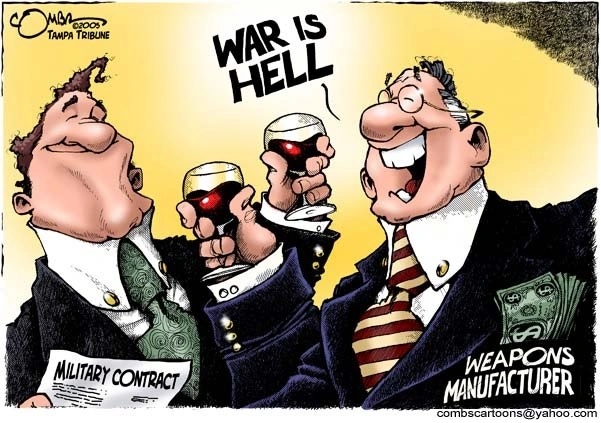
it appears clear that any future Ukrainian purchases of American military materiel, if they happen, will in any case be made with European money…………… , Rutte appears single handedly trying to keep the European gravy train chugging forward.
President Zelensky has not given up on his aspiration for Ukraine to join NATO which renders any peace deal, and possibly any durable ceasefire with Russia, impossible.
One thing is clear, U.S. defense contractors will arguably benefit the most from The Hague Summit.
Daddy says, ‘spend more on defence, pay for the war yourselves, but buy American kit’
Ian Proud, Jun 28, 2025, https://thepeacemonger.substack.com/p/how-trump-dumped-the-ukraine-war?utm_source=post-email-title&publication_id=3221990&post_id=166996238&utm_campaign=email-post-title&isFreemail=true&r=1ise1&triedRedirect=true&utm_medium=email
The NATO Summit was a coup for Trump. Cajoling the Europeans into upping defence spend to 5%, something most countries, Britain included, can’t afford. I was pleased therefore to see that Lord McDonald, the former Head of the Diplomatic Service, coming out today to suggest that the 5% target might wreck the UK economy.
Either way, it would take most countries time to ramp up their spending and military industrial capacity to even near this level. But it does raise questions about whether, as Mark Rutte suggested in his meeting with Zelensky, that NATO can fund the war in Ukraine for another decade.
That statement was far more concerning that his calling Donald Trump ‘daddy’, given the continued losses Ukraine is facing on the battlefield. And its ongoing quest to force unwilling Ukrainian men into fighting. More videos continue to emerge of recruitment officers fighting off mothers and wives in the street, as they force more recruits into minibuses headed for the front. How many men would Ukraine have left if NATO kept the fight going for another decade?
Really not clear that Rutte has considered that, which is disgraceful.
The aerial war between Israel and Iran over the past two weeks sucked most of the world’s attention away from the war in Ukraine.
The Hague NATO Summit confirms that President Donald Trump now sees paying for the war as Europe’s problem. It’s less clear that he will have the patience to keep pushing for peace.
One of the biggest diplomatic casualties of Israel and Iran’s aerial war was U.S. focus on and media coverage of the war in Ukraine. Despite continued exchanges of dead bodies and prisoners of war, there has been no further progress in peace talks between both sides that commenced in Istanbul in early June.
However, there has been talk of a third round of talks as early as next week. Before then, The Hague NATO Summit offered an opportunity to keep Ukraine on the U.S. radar. It didn’t quite happen that way.
Instead, if the NATO Summit showed any real purpose, it was to lock in European allies’ commitment to spend 5% of GDP on defense, a key priority for President Trump since he assumed office.
Mission accomplished. With the exception of Spain, NATO allies have now made that commitment.
Chipper as ever, NATO Secretary General, Mark Rutte, sent a message to President Trump, so eye-wateringly obsequious that it might even make some pro-war neocons cringe and reach for a sick bag. “Mr President, dear Donald… you have driven us to a really, really important moment for America and Europe, and the world. You will achieve something NO American president in decades could get done.” He was then chided for making remarks like he was calling Trump “daddy” at the summit.
But there was nevertheless no escaping the feeling that Ukraine has fallen some way down Trump’s priority list, and therefore NATO’s.
While the 2024 Washington Summit Communique ran to over 5300 words rich in normative intent and bureaucratic babble, the 2025 Hague Summit Declaration ran to a pithy 425 words focused almost exclusively on the NATO spending goal.
Whereas, the Washington Communique said, “we will continue to support it [Ukraine] on its irreversible path to full Euro-Atlantic integration, including NATO membership,” The Hague Declaration did not, which has already been seized upon as a softening of NATO’s stance by some mainstream commentators.
European ire was further provoked by Secretary of State Marco Rubio’s indication that the U.S. would not support further Russia sanctions at this time.
The declaration simply said, “Allies reaffirm their enduring sovereign commitments to provide support to Ukraine, whose security contributes to ours, and, to this end, will include direct contributions towards Ukraine’s defence and its defence industry when calculating Allies’ defence spending.”
For those not familiar with interpreting the subtleties of communique language, this language said two things. First, including the word “sovereign” means that while some allies may make sovereign choices to fund Ukraine, others may choose not to.
This is a clear indication of what we have observed for some time, that President Trump sees paying for the Ukraine war as Europe’s problem, not America’s. Second, and more obviously, that funding for Ukraine can contribute to Allies’ 5% target although, at least for the UK, this is already the case.
During their meeting, it is understood that Ukrainian President Volodymyr Zelensky asked President Trump about the possibility of purchasing additional Patriot missiles. While Trump was non-committal on this point, it appears clear that any future Ukrainian purchases of American military materiel, if they happen, will in any case be made with European money.
For his part, Rutte appears single handedly trying to keep the European gravy train chugging forward. Speaking ahead of the Summit, he referred to pledges of $35 billion in additional support to Ukraine so far this year without providing specifics.
However, we do know that over half of the earlier April pledge of $24 billion included funds from Germany to be paid over 4 years. In reality, therefore, NATO has only, so far, secured a maximum total of $22 billion for 2025, adding further pressure to Ukraine’s huge war financing needs.
What we haven’t seen in The Hague is any impetus behind efforts to bring the war in Ukraine to a close. Instead, and on the back of a Hague Declaration that rowed back any condemnation of Russia, Sir Keir Starmer continues to insist that allies remain resolved to “push again to get Putin to the table for the unconditional ceasefire.”
Like the proverbial scratched record, the British Prime Minister still believes that with U.S. offering no new money, with Ukraine continuing to lose ground on the battlefield, and with Europe struggling to make up the difference, that Russia will make unconditional concessions from a position of strength.
For his part, President Zelensky has not given up on his aspiration for Ukraine to join NATO which renders any peace deal, and possibly any durable ceasefire with Russia, impossible.
If the Hague Summit proved one thing, it may have been that getting European allies to spend more on defense is a bigger priority to President Trump than bringing peace to Ukraine. More focussed on the conflict in the Middle East, President Trump has once again conceded the difficulty of bringing the war in Ukraine to an end.
“It’s more difficult than people would have any idea,” he said. “Vladimir Putin has been more difficult, and frankly, I had some problems with Zelensky, you might have read about them. It’s been more difficult than other wars.”
One thing is clear, U.S. defense contractors will arguably benefit the most from The Hague Summit. To hit 5% of GDP, Britain would need to increase its spending by around $114 billion per year by 2035 and Germany has already pledged to hit the 5% target six years early, in 2029, hiking spending by $128 billion per year.
To kick off the spending spree, the UK has agreed to purchase twelve of the most modern F35A aircraft at a cost of $700 million. The F-35A is capable of delivering U.S. provided B61 nuclear bombs that were first designed in 1963. Keeping us safer, in this regard, relies on aircraft being able to fly far enough into Russia through its sophisticated air defences, to deliver a gravity nuclear bomb to target.
The most recent upgrade to the B61, during the Obama Administration, involved addition of a tail assembly to provide limited stand-off capability; it was so over-priced that every Sixties-era nuke is now worth more than its weight in gold, perhaps, the perfect allegory for Western defence spending.
With the fanfare of The NATO Summit starting to subside, the big question now is how much patience President Trump will have to push a peace agenda in Ukraine now that European allies have stepped up to spend more and buy American kit? My worry is, not much.
A Vassal’s Impulse: Australia Backs US Strike on Iran

The Australian position, along a number of European states, also failed to acknowledge the General Conference Resolutions of the International Atomic Energy Agency (in particular GC(XIXI)/RES/444 and GC(XXIV)/RES/533) declaring that “any armed attack on and threat against nuclear facilities devoted to peaceful purposes constitutes a violation of the United Nations Charter, international law and the Statute of the Agency.”
29 June 2025 Dr Binoy Kampmark, https://theaimn.net/a-vassals-impulse-australia-backs-us-strike-on-iran/
The initial statement from Australian government sources was one of constipated caution and clenching wariness. Senator Penny Wong’s time as head of the Department of Trade and Foreign Affairs has always been about how things come out, a process unsatisfyingly uncertain and unyielding in detail. Stick to the safe middle ground and sod the rest. These were the cautionary words of an Australian government spokesperson on June 22: “We have been clear that Iran’s nuclear and ballistic missile program has been a threat to international peace and security.”
That insipid statement was in response to Operation Midnight Hammer, a strike on three nuclear facilities in Iran by the US Air Force, authorised by US President Donald Trump on June 22. With such spectacular violence came the hollow call for diplomatic prudence and restraint. There was an importantdifference: Tehran, not Israel or Washington, would be the subject of scolding. Iran would not be permitted nuclear weapons but jaw jaw was better than war war. “We note the US president’s statement that now is the time for peace,” stated the spokesperson. “The security situation in the region is highly volatile. We continue to call for de-escalation, dialogue and diplomacy.”
Within twenty-four hours, that anodyne position had morphed into one of unconditional approval for what was a breach of the United Nations Charter, notably its injunction against the threatened or actual use of force against sovereign states in the absence of authorisation by the UN Security Council or the necessity of self-defence. “The world has long agreed Iran cannot be allowed to get a nuclear weapon, and we support action to prevent this. That is what this is,” accepted Wong.
This assessment was not only silly but colossally misguided.It would have been an absurd proposition for the US to make the claim that they were under imminent threat of attack, a condition seen as necessary for a pre-emptive strike. This was a naked submission to the wishes of a small, destabilising and sole (undeclared) nuclear power in the Middle East, a modern territorial plunderer celebratory of ethnonational supremacy.
The Australian position, along a number of European states, also failed to acknowledge the General Conference Resolutions of the International Atomic Energy Agency (in particular GC(XIXI)/RES/444 and GC(XXIV)/RES/533) declaring that “any armed attack on and threat against nuclear facilities devoted to peaceful purposes constitutes a violation of the United Nations Charter, international law and the Statute of the Agency.”
Wong also misrepresented the circumstances under which Iran was told they could negotiate over their nuclear program, erroneously accepting the line from the Trump administration that Tehran had “an opportunity to comply”. Neither the US diplomatic channel, which only permitted a narrow, fleeting corridor for actual negotiations, nor Israel’s wilful distortion of the IAEA’s assessment of Iran’s uranium enrichment plans and prevarication, ever gave chance for a credible resolution.Much like the calamitous, unlawful invasion of Iraq in 2003 by a crew of brigand nations – the merry trio of US, UK and Australia stood out – the autopilot to war was set, scornful of international law.
Wong’s shift from constipated caution to free flow approval for the US attack, with its absent merits and weighty illegalities, was also a craven capitulation to the warmonger class permanently mesmerised by the villain school of foreign relations. This cerebrally challenged view sees few problems with attacking nuclear facilities, the radioactive dangers of doing so, and the merits of a state having them in the first place.
The US attack on Iran found hearty approval among the remnants of the conservative opposition, who tend tospecialise in the view that pursuing a pro-Israeli line, right,wrong, or murderous, is the way to go. Liberal Senator and former Australian ambassador to Israel, David Sharma, thought the Albanese government’s initial response “underwhelming and perplexing,” claiming that support for this shredding of international law “a straightforward position for Australia to adopt.” Sharma is clearly getting rusty on hislaw of nations.
His side of politics is also of the view that the attacked party here – Iran – must forgo any silly notion of self-defence and retaliation and repair to the table of diplomacy in head bowedhumiliation. “We want to see Iran come to the negotiating table to verify where that 400 kilos of enriched uranium is,” stated a very stern opposition home affairs minister, Andrew Hastie. “I’m very glad to see that Penny Wong has essentially endorsed our position and I’m glad we have bipartisanship on this.”
Australia’s response has been that of the weary poltroon. Little has been asked about Canberra’s standout complicity in assisting the US imperium fulfil its global reach when it comes to striking targets. The role of the intelligence signals facility in Pine Gap, cutely and inaccurately called a joint venture, always lends its critical role to directing the US war machine through its heavy reliance on satellite technology. Wong, when asked about the role played by the facility in facilitating the attacks on Iran, had little to say. Australian Prime Minister Anthony Albanese was also cold towards disclosing any details. “We are upfront, but we don’t talk about intelligence, obviously. But we’ve made very clear this was unilateral action taken by the United States.”
At least on this occasion, Australia did not add its forces to anillegal adventure, as it all too wilfully did in 2003. Then, Iraq was invaded on the spurious grounds that weapons of mass destruction not only existed but would somehow be used either by the regime of Saddam Hussein or fictional proxies he might eventually supply. History forever shows that no such weapons were found, nor proxies equipped. But the Albanese government has shown not only historical illiteracy but an amnesia on the matter. Unfortunately, it’s the sort of amnesia that has become contagious, afflicting a goodly number of Washington’s satellites, vassals and friendly states.
Nuclear- a viable UK option? There are alternatives..

June 28, 2025, https://renewextraweekly.blogspot.com/2025/06/nuclear-viable-uk-option-there-are.html
ll of the expert advice says nuclear has a really important role to play in the energy system. So said UK Energy Secretary Ed Milliband, announcing an extra £14.2bn allocation for the proposed new Sizewell C reactor. Putting it charitably, he seems to have been poorly informed.
As I noted in an earlier post, there are many expert studies suggesting that there is no need for nuclear and that, in fact, it is a poor choice compared with renewables – which are cheaper as a way to respond to climate change. At least one of the submissions that I have seen to the ongoing Nuclear Roadmap Inquiry, run by the energy security and net zero Select Committee, takes a similar line- nuclear is too costly, slow and unreliable, with offshore wind being a better option.
However, it seems that the Select Committee will not start work on its report until later in the year, so it may be a while before we can see the results of its deliberations and all the submissions. And, meanwhile, the ground has certainly shifted. For good or ill, the UK is now heading for nuclear expansion, with Carbon Brief laying out a timeline chart showing what is expected. Of course, renewables are also expanding, and more rapidly. And the nuclear plans may come unstuck. For example the Times noted that ‘the government has commissioned just three SMR reactors, none expected before 2035. Rolls Royce said in 2015 that to make building a modular factory worthwhile, you would need an order book of 50 to 70’. So the £2.5bn diverted from Great British Energy’s renewable funding to SMRs, may not be enough, although it may still damage confidence in the progress of green power.
It also didn’t help that there was very little said about renewables in the spending review. That may have been understandable in terms of investment, since it was about major new capital/infrastructure projects like Sizewell, although the tidal energy lobby have complained about the Spending Review’s omission of tidal range energy commitments, warning that the government’s energy strategy dangerously over-relies on high-risk technologies. In a new report, the Tidal Range Alliance points to the quite large (~500MW) successful tidal barrages in France and S Korea, and says ‘Tidal Range is a proven, low-risk, high-reward technology’ adding that ‘it is time to mobilise it proactively as a resilient cornerstone of the clean energy system – not as a fall-back when other technologies falter.’ It claims that the UK’s tidal range potential, including tidal lagoons, could yield up to 30TW/h annually, and also offered additional benefits like coastal protection and local regeneration, with a levelised costs of energy put at £90–123/MWh. Hinkley Point C may end up with an inflation index linked CfD strike price well over that, maybe £130/MWh or more, by the time it finally gets to work, and who knows what Sizewell will really cost.
There are some CfD backed tidal stream projects already running in Scotland and more planned elsewhere, but the most advanced UK tidal range proposal is the 700MW Mersey barrage, although there is also a proposal for a huge 2.5GW tidal lagoon off Somerset, not far from Hinkley… There can be environmental problems with large tidal range systems, which is one reason why the 7GW Severn Barrage met with opposition, but smaller barrages and lagoons may have fewer impact issues. That’s also true tidal stream turbines, which can also be deployed in a modular way in large numbers, distributed around the coast, so that their peak outputs occur at different times of day, rather than just in two large bursts each day, as with individual tidal range systems.
While the Tidal Range Alliance is trying to move barrages and lagoons on, a Marine Energy Taskforce, has been launched aimed at developing a roadmap to realise the UK’s wave and tidal stream energy potential, which has been put at 25 GW for wave and 11 GW for tidal stream. Energy Minister, Michael Shanks said ‘With a coastline that stretches among the longest in Europe, it’s time we finally deliver on our marine energy potential and put our waves and tides to work. We will work closely with industry in breaking down barriers, unlocking investment, and kickstarting growth in our coastal communities, as we deliver clean homegrown power that we control.’
For the moment though, new areas like this await serious attention, and as far as renewables go, the focus is on PV solar and wind, on and offshore. They have been very successfully developed, in fact massively so since the early days. In 1986, with an election pending in 1987, Labours than leader Neil Kinnock gave an ‘unequivocal guarantee that the next Labour government will not sanction the ordering of another nuclear power station’, and added that ‘I am sure the advocates of alternative energy will not shirk the test the next Labour government will offer them’. But Labour lost…
Things have certainly changed since then, with the Tories, under Margaret Thatcher, backing nuclear. David Cameron too, later on. But renewables have nevertheless continued to live up to their promise – and are now supplying over 50% of UK power. Though we seem to keep going round the same cycle. Last time Labour was in power, in the 2000’s, it initially came up with a ‘no nuclear’ policy, but then changed its mind, with Tony Blair famously saying ‘nuclear is back with a vengeance.’ There was even talk of a 35-40% nuclear contribution ‘after 2030’. That came to nothing. But, now we are facing a big new Labour nuclear programme again….
However, at least this time around, although, if it goes ahead as planned, some resources will be diverted to nuclear, there is still over £6bn allocated to Great British Energy’s green power programme and renewable expansion, based on wind and solar, seems pretty unstoppable, with hydrogen also being part of that – now given £500m more. In addition, the Spending Review confirmed that the Warm Homes Plan would go ahead, with £13.2 billion helping to accelerate the uptake insulation and other domestic energy efficiency measures, as well as heat pumps and other low-carbon technologies, such as solar panels and batteries. So, one or two nuclear steps backwards maybe, but a lot of green steps forward, with a very welcome £1.2bn per year also earmarked for training and apprenticeships.
Why Israel caved quickly without achieving any of its war goals

28 June 2025 AIMN Editorial, By Walt Zlotow, West Suburban Peace Coalition, Glen Elly, https://theaimn.net/why-israel-caved-quickly-without-achieving-any-of-its-war-goals/
While Israel inflicted significant death and destruction on Iran in its two-week bombing campaign, it achieved nary a war objective.
Tho likely severely damaged, It didn’t eliminate Iran’s nuclear enrichment program. It didn’t topple the apparently-hated Iranian regime. It didn’t demolish Iran as a powerful hegemonic rival to Israel in the Middle East.
Then why did Israel fold its missile launchers, ground its planes and agree to a ceasefire without a whimper?
Simple. Israel took an unprecedented pounding from Iranian missiles it could not shoot down. Indeed, it was running out of defensive interceptors because it took multiple such missiles to shoot down a single incoming missile. Israel’s modern air defenses still ‘allowed’ 10 to 15% of incoming missiles to strike.
While little info of substantial Israeli damage emerges from heavily censored Israeli media, the impact on was significant.
The war comes with a price. Israeli Finance Minister Smotrich estimates the war has cost $12 billion. The economy has virtually stalled and non-essential schools and businesses have been shuttered. The Weizmann Institute of science, a main Israeli research facility and its largest refinery in Haifa were both badly damaged.
Israel may have more offensive and defensive firepower than Iran, but it quickly realized it had no ability to stop the bleeding which could have become catastrophic if its interceptors become depleted.
The one-off US attack did not achieve any of the three Israeli goals. Only all out US war to obliterate Iran can do the job which Trump appears unwilling to initiate even for his Israeli puppet masters.
We can hope that the quickly agreed upon ceasefire will hold. It could of course collapse, especially if Israel becomes self-destructive from its humiliation of not achieving a single war objective. Israel has a history of breaking ceasefires, most notably their blowing up the March ceasefire in Gaza so they could continue their genocidal ethnic cleansing of Palestinians there.
But breaking the Iran war ceasefire is likely a bridge too far compared to the defenseless Palestinians Israel slaughters daily at their pleasure.
Hopefully, the missiles that rained down on Israel in their failed two-week war may motivate Israel to pivot to peace instead of resuming an unwinnable and pointless war to destroy Iran.
1 This Month

4 May -West Suburban Peace Coalition to discuss Iran war at May Educational Forum
Monday, May 4, 7:00 – 8:00 PM Central Standard Time
Title: : How Trump’s Narrative Tries to Shape the Reality of the War on Iran.
Contact Walt Zlotow, zlotow@hotmail.com 630 442 3045 for further information
14 May – online event From Bombs to Data Centres: the Face of Nuclear Colonialism
To see nuclear-related stories in greater depth and intensity – go to https://nuclearinformation.wordpress.com
-
Archives
- May 2026 (49)
- April 2026 (356)
- March 2026 (251)
- February 2026 (268)
- January 2026 (308)
- December 2025 (358)
- November 2025 (359)
- October 2025 (376)
- September 2025 (257)
- August 2025 (319)
- July 2025 (230)
- June 2025 (348)
-
Categories
- 1
- 1 NUCLEAR ISSUES
- business and costs
- climate change
- culture and arts
- ENERGY
- environment
- health
- history
- indigenous issues
- Legal
- marketing of nuclear
- media
- opposition to nuclear
- PERSONAL STORIES
- politics
- politics international
- Religion and ethics
- safety
- secrets,lies and civil liberties
- spinbuster
- technology
- Uranium
- wastes
- weapons and war
- Women
- 2 WORLD
- ACTION
- AFRICA
- Atrocities
- AUSTRALIA
- Christina's notes
- Christina's themes
- culture and arts
- Events
- Fuk 2022
- Fuk 2023
- Fukushima 2017
- Fukushima 2018
- fukushima 2019
- Fukushima 2020
- Fukushima 2021
- general
- global warming
- Humour (God we need it)
- Nuclear
- RARE EARTHS
- Reference
- resources – print
- Resources -audiovicual
- Weekly Newsletter
- World
- World Nuclear
- YouTube
-
RSS
Entries RSS
Comments RSS
 nuclear-news