Why should Trump get all the blame?

10 March 2026 Noel Wauchope, https://theaimn.net/why-should-trump-get-all-the-blame/
I’ve just read an article about planning nuclear power for a “post-Trump world” I’m wondering how many people are actually doing just that – planning for a “post Trump world.” Well, Donald Trump isn’t one of them. He’s got a pretty good plan for re-election in 2028. Never mind the fact that the USA Constitution forbids a President from having a third term in office. Heck, by 2028 there won’t be an American Constitution if Trump is still in office.
One way or another, I’d bet that Trump won’t be in office for that third term. By 2028, the apparently dim-witted American public might just not vote for Donald Trump, however colourful and entertaining he might be. Or the Republicans might have had enough, and somehow kicked him out in the meantime. Or some more dramatic events might have made him lose his grip on power – a nuclear war? He might even be in gaol – though I guess that’s a silly left-wing fantasy. Or even the seemingly immortally healthy Donald might get sick, or even die.
I just hope and pray that he is not assassinated. That would turn him into a martyr. A saint? As a recovered Catholic, I do think kindly of my old church. I just can’t imagine that current Catholicism could stomach the idea of Saint Donald Trump.
But anyway, I digress. And indeed this whole post is a digression. But to try to get to the point – what is wrong with the leaders of the Western world? It seems that only Spanish Prime Minister Pedro Sanchéz has denounced the USA/Israel’s illegal attack on Iran. Canada’s Prime Minister Mark Carney in January, briefly saw through Donald Trump, but by March, Carney had second thoughts, and fell into line in the conga dance behind him. The UK wavered and waffled, but ended up supporting the war. Confusion reigns in the EU. As for Australia – words fail me, as the ruling so-called Labor Party wriggles about, trying to deny that it supports the USA/Israel war. Twas so nice of Albanese to present Trump with a pretty little statue-thing of an AUKUS submarine.
It’s not just the war on Iran. It’s the support for Israel’s genocide. It’s the spectacle over two years, of politicians giving Trump standing ovations, smiling happily as they shake hands with this deranged, ignorant, sociopathic President of the USA. Surely they could manage mere politeness, and not a complete vision of fawning servility.
And when it all goes to shit, as it surely will, what will be their legacy? Will they be remembered as leaders of insight and integrity? Will they be remembered at all. Most likely, they’ll be gone and forgotten after the next election.
Let’s just remember, that pathetic lying confidence man, Trump, could not have done so much damage, so much harm, caused all that suffering, without their support.
Macron accosted
Moment rattled Emmanuel Macron is confronted by activists who storm stage during nuclear summit
By PERKIN AMALARAJ, FOREIGN NEWS REPORTER, Daily Mail,14 March 2026
The protesters, dressed sharply in black suits and ties, interrupted Macron and UN nuclear watchdog chief Rafael Grossi as they were greeting heads of state today.
They held banners bearing the Greenpeace logo and reading ‘Nuclear Power = Energy Insecurity’ and ‘Nuclear power fuels Russia‘s war.’
One of them shouted at Macron, ‘Why are we still buying uranium from Russia?’ to which the president replied, ‘We produce nuclear power ourselves.’
France has its own uranium enrichment capacity, but also imports enriched uranium for its power plants, including from Russia, according to the latest customs data published by the French government.
Russia’s state nuclear company Rosatom accounted for about 44% of the global uranium enrichment capacity in 2025, according to the World Nuclear Association.
European nuclear power producers have struggled to wean themselves off these supplies four years after Russia invaded Ukraine.
Around 15 Greenpeace activists blocked arriving convoys outside the venue in Boulogne-Billancourt on the outskirts of Paris on Tuesday, the environmental campaigning group said in a statement.
France is hosting the second world nuclear energy summit on Tuesday, where world leaders will meet to discuss and promote nuclear power.
The protesters, dressed sharply in black suits and ties, interrupted President Emmanuel Macron and UN nuclear watchdog chief Rafael Grossi as they were greeting heads of state today
One of them shouted at Macron, ‘Why are we still buying uranium from Russia?’
‘For Greenpeace France, the holding of such a summit is an anachronism, an event completely out of touch with reality and with the lessons to be learned from the tragic situations of the Russian aggression in Ukraine, the strikes on Iran, and the impacts of the worsening climate disruption,’ the group said.
EU chief Ursula von der Leyen today called Europe’s turn away from civilian nuclear power a ‘strategic mistake’, arguing that the Middle East war had exposed the continent’s fossil fuel ‘vulnerability’.
‘It was a strategic mistake for Europe to turn its back on a reliable, affordable source of low-emission power,’ she said at the opening of a nuclear energy summit just outside Paris as the US-Israeli war with Iran entered its second week.
‘For fossil fuels, we are completely dependent on expensive and volatile imports. They are putting us at a structural disadvantage to other regions,’ she said at the summit, which aims to boost the use of civilian nuclear energy.
‘The current Middle East crisis gives a stark reminder of the vulnerability it creates,’ she added.
‘We have home-grown low-carbon energy sources: nuclear and renewables. And together, they can become the joint guarantors of independence, security of supply, and competitiveness – if we get it right.’
Macron struck a similar note, saying civilian nuclear power helped provide energy sovereignty.
France has its own uranium enrichment capacity, but also imports enriched uranium for its power plants, including from Russia,…………………………………………………………………… https://www.dailymail.co.uk/news/article-15631733/Moment-rattled-Emmanuel-Macron-confronted-activists-storm-stage-nuclear-summit.html
Trump, Netanyahu down to last card in criminal Iran war
10 March 2026 AIMN Editorial, By Walt Zlotow, West Suburban Peace Coalition Glen Ellyn IL, https://theaimn.net/trump-netanyahu-down-to-last-card-in-criminal-iran-war/
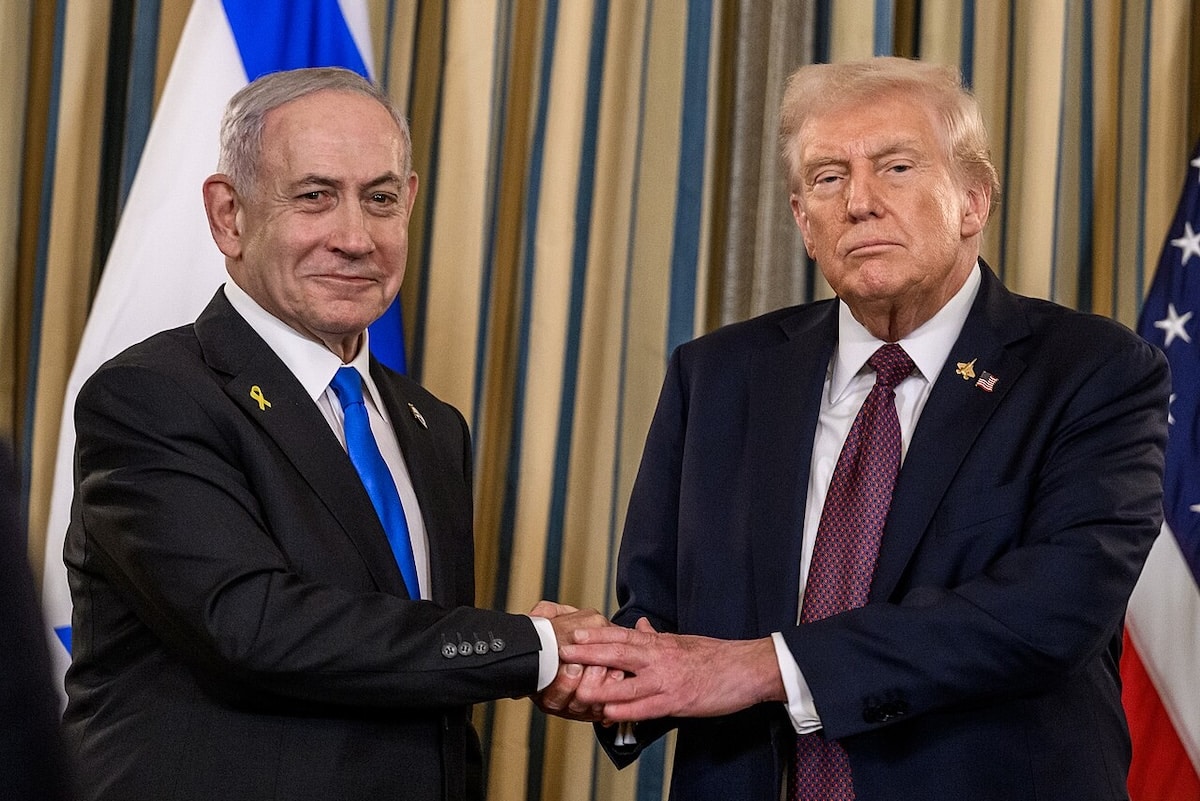
President Trump and Israeli Prime Minister began their second war on Iran in 7 months with just 2 war crime cards to play.
The first card was the US, Israeli version of Blitzkrieg from the air. Kill Iran’s beloved leader the Ayatollah Ali Khamenei, demand surrender, then wait for the 90 million Iranians to capitulate to new masters Trump and Netanyahu. That was projected to take just about 72 hours.
As expected, millions of Iranians came into the streets following Khamenei’s assassination. But not to welcome the grisly invaders bombing them. It was to show near total support to the Islamic government, cheering them on to inflict as much retaliation possible to repel the Trump Netanyahu criminal tag team.
And they are succeeding, causing massive damage to US military facilities in Bahrain, Qatar, Jordan, Kuwait. Saudi Arabia and UAE. All 6 are running out of defensive interceptors provided by Uncle Sam. Why? Trump is giving them all to himself and his war partner Netanyahu. When this is all over, the Gulf States will never again trust America for their defense. They may even tell the US to vamoose the region PDQ.
Iran is also bombing Israel night and day, giving Netanyahu, flying around the region 24/7 to avoid Khamenei’s fate, a taste of what he visited on Palestinians in Gaza for 2 years.
That leaves Trump and Netanyahu with their last war crime card to play. Bomb Iran to smithereens till there is no more Iranian weapons or personnel left with which to retaliate.
Big problem facing America and Israel is size. Both Israel and US military facilities nearby are compact in size making them easy targets, while Iran, the 17th largest country by area, has their tens of thousands of missiles scattered and largely unreachable.
Now that Iran has chosen to fight to the death rather than capitulate as expected, the advantage may be tiltng in their favor. Rumors surfacing Trump is pondering an off ramp to stop the bleeding he has no way of controlling.
Worst case scenario remains that Netanyahu may get so desperate facing unfathomable defeat, he escalates to war crime card 3… nuke Tehran.
Trump hints U.S. will turn to Cuba after Iran: ‘Just a question of time’
Kevin Breuninger, Fri, Mar 6 2026, https://www.cnbc.com/2026/03/05/trump-cuba-iran-regime-change.html
Key Points
- President Donald Trump suggested his administration will turn its sights to Cuba after U.S. military operations in Iran are done.
- It “will be just a question of time before you and a lot of unbelievable people are going to be going back to Cuba, hopefully not to stay,” Trump told a crowd at the White House.
- On Iran, Trump said the U.S. and Israeli militaries are continuing to “totally demolish the enemy.”
President Donald Trump on Thursday suggested his administration will turn its sights to Cuba after U.S. military operations in Iran are finished.
“What’s happening with Cuba is amazing,” Trump said at the White House while participating in a visit of Inter Miami CF, the 2025 Major League Soccer champions.
“We think that we want to fix — finish this one first, but that will be just a question of time before you and a lot of unbelievable people are going to be going back to Cuba, hopefully not to stay,” Trump said to the Miami-heavy audience that included people of Cuban heritage.
The comments show Trump, less than a week into an escalating military conflict in the Middle East, is considering another major foreign policy move.
“We want you back, and we don’t want to lose you. We don’t want to make it so nice that they stay. But some people probably do want to stay. They love Cuba so much,” he said. “That was another one that wasn’t supposed to happen.”
Trump turned his focus to Cuba after providing a boastful update on the war in Iran, where he said the U.S. and Israeli militaries are continuing to “totally demolish the enemy.”
Trump said Secretary of State Marco Rubio has been “doing a fantastic job.”
“And you’ve been doing a fantastic job on a place called Cuba,” Trump added, prompting applause from the room.
Trump’s latest remarks on Cuba follow previous hints, some less subtle than others, that he and his allies have dropped about their plans for the Caribbean island nation.
“Cuba’s next,” Sen. Lindsey Graham, R-S.C., said Sunday on Fox News after the Iran strikes began.
In an interview with Politico earlier Thursday, Trump predicted that after Iran’s regime is toppled, “Cuba’s going to fall, too.”
Trump also took credit for choking Cuba’s economy to force them to the negotiating table, which he had vowed to do after the U.S. military in January attacked Venezuela, a major supplier of oil to Cuba.
“We cut off all oil, all money, or we cut off everything coming in from Venezuela, which was the sole source. And they want to make a deal,” he told Politico.
“We are talking to Cuba,” Trump also said in that interview. “How long have you been hearing about Cuba — Cuba, Cuba — for 50 years?” he added. “And that’s one of the small ones for me.”
Israel planned this war on Iran for 40 years. Everything else is a smoke screen.
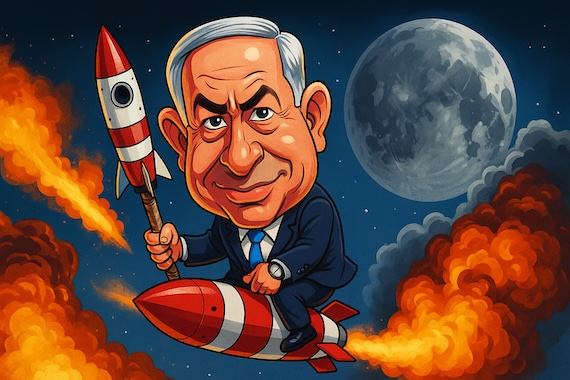
The Israeli prime minister, Benjamin Netanyah……… gloated: “This combined effort allows us to do what I have hoped to achieve for 40 years: to crush the regime of terror completely. That’s my promise and this is what is going to happe
And all the while, Israel’s own arsenal of nuclear weapons, undeclared and therefore unmonitored, has been an open secret.
The embers of resistance – in Gaza, Iraq, Lebanon, Syria, Yemen – have not been snuffed out. With the attack on Iran, they are being fanned into a fire
Jonathan Cook, Mar 06, 2026
It is near impossible to make sense – at least from the justifications on offer – of what US President Donald Trump really hopes to achieve with his and Israel‘s blatantly illegal war of aggression on Iran.
Is it to destroy an Iranian nuclear weapons programme for which there has never been any tangible evidence, and which Trump claimed just a few months ago to have “completely and totally obliterated” in an earlier lawbreaking attack?
Or is it intended to force Tehran back to negotiations on its nuclear energy enrichment programme that were brought prematurely to an end when the US launched its unprovoked attack – talks, we should note, that were made necessary because in 2018, during his first term, Trump tore up the original deal with Iran?
Or is the war supposed to browbeat Iran into greater flexibility, even though Trump blew up the talks at the very moment Oman, the chief mediator, insisted that Tehran had capitulated on almost every one of Washington’s onerous demands and that a deal was “within our reach“?
Or are the air strikes designed to “liberate” Iranians, even though the early victims included at least 165 civilians in a girls’ school, most of them children aged between 7 and 12?
Or is the aim to pressure Iran to give up its ballistic missiles – the only deterrence it has against attack, and which would leave it utterly defenceless against US and Israeli malevolent designs?
Or did Washington believe Tehran was about to strike first, even though Pentagon officials have confided to congressional staff that there was zero intelligence an attack was about to happen?
Or is the goal to decapitate the Iranian regime, as the strikes have already achieved with the assassination of Iran’s supreme leader, Ali Khamenei? If so, to what purpose, given that Khamenei was so opposed to an Iranian nuclear bomb that he issued a religious edict, a fatwa, against its development?
Might Khamenei’s successor – having seen how utterly untrustworthy the US and Israel are, how they operate as rogue states unconstrained by international law – now decide that developing a nuclear bomb is an absolute priority to protect Iran’s sovereignty?
No clear rationale
There is no clear rationale from Washington because the author of this attack is not to be found in either the White House or the Pentagon. This plan was cooked up in Tel Aviv decades ago.
The Israeli prime minister, Benjamin Netanyahu, admitted as much on Sunday. He gloated: “This combined effort allows us to do what I have hoped to achieve for 40 years: to crush the regime of terror completely. That’s my promise and this is what is going to happen.”
Those four decades, let us note, were also the timeframe for an endless series of warnings from Netanyahu and other Israeli leaders that Tehran was only months away from developing a nuclear bomb.
Netanyahu has been peddling this same urgent, nonsensical pretext for attacking Iran all that time. For 40 years, each year has been proclaimed the very last opportunity to stop the “mad mullahs” from obtaining a bomb – a bomb that never materialised.
And all the while, Israel’s own arsenal of nuclear weapons, undeclared and therefore unmonitored, has been an open secret.
Europe helped Israel develop its bomb, while the US turned a blind eye, even as Israeli leaders espoused a suicidal doctrine known as the “Samson Option“, which posited that Israel would rather detonate its nuclear arsenal than suffer a conventional military defeat.
The Samson Option implicitly rejects the idea that any other state in the Middle East can be allowed to acquire a bomb and thereby level the military playing field with Israel.

It is that very premise that, for decades, has guided Israeli policy towards Tehran. Not because Iran has shown an inclination to develop a weapon. Nor because its supposedly “mad mullahs” would be foolish enough to fire them at Israel were they ever to acquire them.
No, it was for other reasons. Because Iran is the largest and most unified state in the region, one with a rich history, a strong cultural identity and a formidable intellectual tradition. Because Iran has repeatedly shown itself – whether under secular or religious leaders – unwilling to submit to western, and Israeli, colonial domination.
And because it is looked to as a source of authority and leadership by Shia religious communities in neighbouring countries – Iraq, Lebanon, Syria, Yemen – that have a history of similarly refusing to bow to Israeli hegemony.
Israel’s fear was that, were Iran to follow North Korea and acquire a nuclear weapon, Israel would be finished as the West’s most useful militarised client state in the oil-rich Middle East.
Stripped of its ability to terrorise its neighbours, stoke sectarian division and help project US imperial power into the region, Israel would lose its rationale. It would become the ultimate white elephant.
Israeli leaders – grown fat on endless military subsidies paid for by US taxpayers and given licence to plunder the Palestinians’ resources – were never going to willingly step off their gravy train.
Which is why Iran has rarely been out of Israel’s sights……………………………………………………………………………………………………………………………………………………………………………………………………………………………………………………….
The last time Iran had a democratic government, in the early 1950s, its secular, socialist prime minister, Mohammad Mossadegh, outraged the West by nationalising Iran’s oil industry for the benefit of Iranians.
The CIA’s Operation Ajax toppled him in 1953 and reinstated the brutal Mohammad Reza Pahlavi as monarch, or Shah, allowing the US and Britain to take back control of Iran’s oil.
The backlash was 26 years coming. Islamic clerics rode an outpouring of popular hatred for the US and Israeli-backed Shah to launch their revolution…………………………………………………………………………………………………………….
Pact with the devil
Washington’s western allies may be privately uncomfortable at being visibly associated with another illegal US-Israeli war. But in supporting more than two years of genocide in Gaza, they already made their pact with the devil. There is no going back now.
Which is why Britain, France, Germany, Canada and Australia all dutifully lined up behind the Trump administration as the mayhem began………………………………………………………………………….
The embers of resistance – in Gaza, Iraq, Lebanon, Syria, Yemen, and potentially in new sites like Bahrain – have not been snuffed out. And now, with the attack on Iran, they are being fanned into a fire with every new crime, every new outrage, every new atrocity. https://jonathancook.substack.com/p/israel-planned-this-war-on-iran-for?utm_source=post-email-title&publication_id=476450&post_id=190093136&utm_campaign=email-post-title&isFreemail=true&r=17yeb&triedRedirect=true&utm_medium=email
.
Xi Hints At More Top Purges, Issues Warning To ‘Corrupt Elements’ In Chinese Army
by Tyler Durden, Mar 09, 2026, https://www.zerohedge.com/geopolitical/xi-hints-more-top-purges-issues-warning-corrupt-elements-chinese-army
One of the big themes to come out of China over the past several months (and even years) has been Chinese President Xi Jinping’s (apparently ongoing) sweeping purge of PLA military command ranks on the basis of “corruption” – or rather what is most probably perceived disloyalty.
Already there’s been several top dismissals including the firings of multiple members of the Central Military Commission (CMC) and dozens of generals – some even placed under house arrest, as well as a broad purge of the Chinese Communist Party.
Xi this weekend hinted there could be more to come, freshly warning Saturday during a speech to delegates from the People’s Liberation Army (PLA) and the People’s Armed Police that disloyalty to the party – or else selfish dealings and corruption – will not be tolerated.
“There must be no place in the military for those who are disloyal to the party, nor any place for corrupt elements,” Xi said.
He then called for strict oversight in “key areas such as fund flows, the exercise of power, and quality control” during the country’s next five-year plan which is set to be approved later this month.
Here’s more of what he said via Chinese state sources:
It is essential to fully strengthen the Party’s leadership and Party building in the military, and make Party organizations at all levels even stronger, Xi said, stressing the need to translate the Party’s leadership strength into development momentum.
It is important to consolidate the ideological foundation that ensures officers and soldiers follow the Party and its guidance, and ensure that modern weaponry and equipment are placed in the hands of politically committed personnel, Xi said.
A former CIA analyst who follows Chinese elite politics, Christopher K. Johnson, recently told the NY Times of the ongoing purge trend:
“This move is unprecedented in the history of the Chinese military and represents the total annihilation of the high command.”
The PLA has seen significant internal turmoil, especially since the Communist Party’s 20th Congress in late 2022. Several top military figures – including Defense Ministers Li Shangfu and Wei Fenghe, and CMC Political Work Department head Miao Hua – have disappeared or been removed, and many more followed.
“AIPAC Is Toxic”: Illinois Races Expose a Shifting Democratic Landscape

SCHEERPOST, March 8, 2026 Joshua Scheer
The shift comes amid growing criticism of the pro-Israel lobby. Senator Chris Van Hollen recently telling a Jewish audience at a J Street conference that the actions of American Israel Public Affairs Committee were “un-American.”
A growing divide over the war with Iran is emerging inside Democratic politics and within AIPAC itself, and nowhere is it more visible than in Illinois.
According to reporting by Jewish Currents, several Democratic congressional candidates in Illinois who are backed by the powerful pro-Israel lobby American Israel Public Affairs Committee (AIPAC) have publicly criticized the U.S. attack on Iran—despite the lobby’s strong support for the military action.
The break highlights a political dilemma for AIPAC as it pours millions of dollars into Democratic primary races across the country in an effort to maintain strong congressional backing for Israel.
AIPAC praised Donald Trump’s decision to strike Iran, describing the move as “decisive.” But the Democratic candidates the group has supported in Illinois have largely taken the opposite position, condemning the U.S. attack while carefully avoiding direct criticism of Israel’s role in the conflict.
Among them is Illinois State Senator Laura Fine, who warned that Trump’s decision could send the Middle East into further chaos and suggested the president’s actions were grounds for impeachment. Other AIPAC-backed candidates—including former congresswoman Melissa Bean, Cook County Commissioner Donna Miller, and Chicago City Treasurer Melissa Conyears‑Ervin—also criticized the strikes, describing them as unconstitutional, dangerous, or an immoral “war of choice.”
Yet none of the candidates have openly challenged Israel’s involvement in the conflict, reflecting the delicate balancing act facing Democrats who rely on AIPAC support while campaigning in districts where Democratic voters overwhelmingly oppose the war.
Political analysts say that tension is not accidental. Matt Duss, executive vice president at the Center for International Policy and a former adviser to Senator Bernie Sanders, noted that Democratic voters are strongly against the war.
A recent poll by The Washington Post found that roughly 87 percent of Democrats oppose the conflict with Iran. As a result, many candidates are directing their criticism at Trump rather than confronting AIPAC or Israel directly.
“They have to be careful if they want to keep AIPAC support,” Duss explained.
The same political dynamic is playing out in several other races. In New York, Representative Dan Goldman, who has received backing from AIPAC, criticized Trump for defying the Constitution in launching the attack but did not mention Israel. Goldman is currently facing a progressive challenge from former New York City comptroller Brad Lander.
Meanwhile, in North Carolina, Representative Valerie Foushee narrowly defeated progressive challenger Nida Allam in a Democratic primary where the Iran war emerged as a late campaign issue. Allam ran television ads highlighting her opposition to the war and criticizing Foushee for accepting donations from defense contractors. Foushee also opposed the war and attempted to distance herself from AIPAC during the race.
Progressive candidates have seen stronger results in other states. In Texas, Reverend Frederick Haynes won the Democratic primary in the heavily Democratic 30th Congressional District. Haynes has been outspoken in criticizing Israeli policies in Gaza and has also opposed the war with Iran.
Advocates on the left say the results reflect a broader shift within Democratic politics. Beth Miller, political director of Jewish Voice for Peace Action, said recent primaries demonstrate how rapidly the political landscape is changing………………………………………………………………………………………………………………………….
In a joint statement, several progressive candidates—including Peters, Ahmed, Evanston Mayor Daniel Biss, and union organizer Anthony Driver—accused Trump of dragging the United States into what they described as an unnecessary war backed by AIPAC, and called on their opponents to reject the lobby’s “pro-war agenda.”……………………………………………………………. https://scheerpost.com/2026/03/08/aipac-is-toxic-illinois-races-expose-a-shifting-democratic-landscape/
Germany to scrap deadline for finding a nuclear waste storage site

04 Mar 2026, https://www.cleanenergywire.org/news/germany-scrap-deadline-finding-nuclear-waste-storage-site
Germany has given up on naming a deadline for finding a suitable location for the safe and long-term storage of highly radioactive waste, reports public broadcaster Deutschlandfunk. A draft bill by the environment ministry, which is in charge of the process, says the existing 2031 target date is not realistic. A statutory deadline does not fit the complex requirements of the site selection process, the draft said, according to the broadcaster.
Germany shut down its last nuclear power plants in 2023, but must still safely dispose of decades of accumulated radioactive waste. A report commissioned by the country’s Federal Office for the Safety of Nuclear Waste Management (BASE) said in 2024 that the search for a suitable site was likely to last until the 2070s. The environment ministry has also said the 2031 target was unrealistic, but argued that progress in the search process should still be considered when assessing possible timelines.
Only weeks ago, environment minister Carsten Schneider said the goal was to decide on a location by the middle of the century. However, the draft bill no longer mentions this target date.
The 2031 deadline was set in the country’s 2013 law on finding and choosing a nuclear waste repository.
Germany must find a place to safely store 1,900 large containers, or around 28,100 cubic metres, of high-level radioactive waste in a location that can be considered secure for hundreds of thousands of years. The material must remain retrievable for the first 500 years to allow for implementing alternative solutions.
Heat-generating nuclear waste accounts for only five percent of Germany’s radioactive refuse, but causes 99 percent of the radiation. It is currently held at temporary storage facilities near the nuclear power stations and in central interim repositories. Once a decision on a location is made, building the final repository is scheduled to take about 20 years. Transporting and storing the refuse will then take several decades more, meaning the entire process will last well into the next century.
Back on its heels, will Israel nuke Iran?
Walt Zlotow West Suburban Peace Coalition Glen Ellyn IL, 8 Mar 26, https://theaimn.net/back-on-its-heels-will-israel-nuke-iran/
Trump’s deranged war on Iran is spiraling out of control. US bases are being pounded, neutralizing their ability to monitor, much less shoot down Iranian drones and missiles. But Iranian firepower is no threat to the US homeland 6,000 miles from Iran.
Not so for Israel which is being devastated by Iran’s enormous stockpile of drones and missiles. Having been dastardly attacked by Israel and the US last June while negotiating in good faith, unlike Israel and US, Iran was ready for dastardly attack 2.0.
Assassinating Iranian leader Ali Khamenei, the leader who issued a Fatwa prohibiting nuclear weapons, was astonishingly stupid. It had the opposite effect of encouraging the Iranian people to rise against the Islamic government to allow delusional Trump to pick a US puppet successor.
Iran’s response has been ferocious, creating both physical chaos and now societal unrest thruout Israel. Prime Minister Netanyahu, hoping to avoid Khamenei’s fate, is spending most of his time flying around the region while communicating with his beleaguered government and military. He doesn’t plan to go down with the Israeli ship of state.
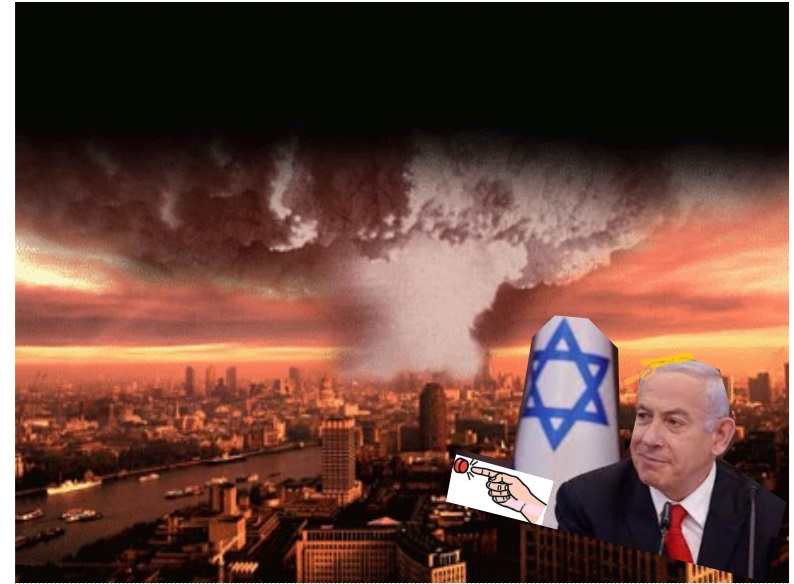
Netanyahu is seeing the existential threat he unleashed upon Iran boomeranging back on Israel itself. That conjures up the worst nightmare scenario of this nightmare war. Will Netanyahu dip into his stock of 300 nukes and drop one on Tehran to stop further Israeli disintegration they brought upon themselves?
This possibility should have the hair on fire of everyone in the Trump administration promoting this senseless, self-destructive war. Then again, some of them are so deranged they view their folly as a holy war which will create Armageddon, bring Jesus back to earth to lift up to heaven those who believe, while us sane folks fall into hell. This madness is being fed to bewildered soldiers in dozens of military stations in every service branch.
2,473 nukes have been exploded in tests since the 2 nukes America fired in anger destroyed Hiroshima and Nagasaki 80 years ago. There are many reasons for this insane, unprovoked, criminal war to be ended. Topping the list is keeping Netanyahu from making nuclear explosion number 2,477 the first to obliterate a city since number 3 obliterated Nagasaki.
‘The Military-Industrial Complex Is Winning’: While Bombing Iran, Trump Says Weapons Contractors to Boost Production.
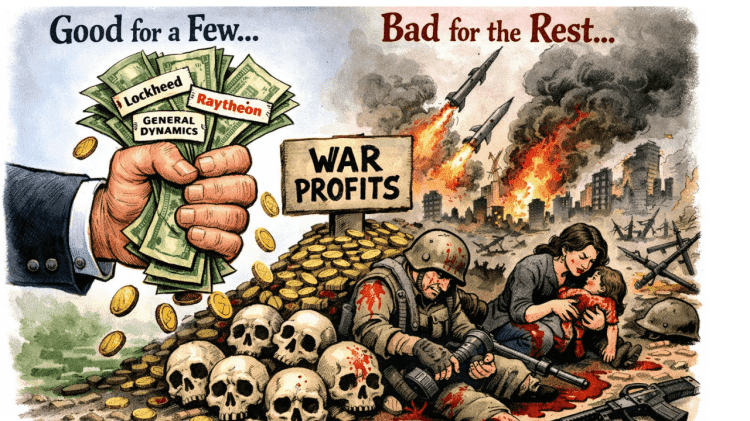
The president and Lockheed Martin said that the expansion began months ago, but his comments followed a White House meeting held amid a US-Israeli assault on Iran and mounting threats against Cuba.
Jessica Corbett, Common Dreams, Mar 06, 2026
After meeting with several chief executives at the White House on Friday—while also bombing Iran with Israel and threatening Cuba—US President Donald Trump said that top military contractors “have agreed to quadruple Production of the ‘Exquisite Class’ Weaponry in that we want to reach, as rapidly as possible, the highest levels of quantity.”
Trump said on his Truth Social platform that he met with the CEOs of BAE Systems, Boeing, Honeywell Aerospace, L3Harris Missile Solutions, Lockheed Martin, Northrop Grumman, and RTX—formerly Raytheon.
“Expansion began three months prior to the meeting, and Plants and Production of many of these Weapons are already underway,” he wrote, adding that another meeting is scheduled in two months.
……………………………………………………………………………………………………………….
It was not immediately clear whether the meeting… resulted in any new agreements to boost production beyond those previously announced by the Pentagon since the beginning of the year.
Those agreements include a multiyear deal to triple PAC-3 production and quadruple THAAD interceptor production with Lockheed. It also included separate multiyear deals with RTX to boost production for the Tomahawk, AMRAAM air-to-air missile, Standard Missile-3 IIA and IB, and Standard Missile-6, with production for certain of those munitions set to double or quadruple, RTX said at the time………………….
Northrop Grumman said in a statement that “we support the president’s focus on speed and investment to deliver military capabilities. With our industry-leading levels of investment and decades of proven performance, we continue to grow production capacity and deliver mission-ready technologies for the nation’s warfighters.”
Using Trump’s preferred name for the Pentagon, an RTX spokesperson said the company “is proud to support the administration’s goals of defending the US and its allies at this critical moment and committed to accelerating the production of five key munitions in accordance with the historic frameworks reached with the War Department last month.”
Defense Secretary Pete Hegseth also joined the meeting, according to White House press secretary Karoline Leavitt. After Hegseth shared Trump’s Truth Social post on the platform X, Lockheed Martin replied, saying that it began working with the Pentagon chief and Feinberg “months ago,” and the company has “agreed to quadruple critical munitions production………………………………………………………….. https://www.commondreams.org/news/trump-defense-contractors
Starmer’s Self-Defence Fudge: The UK’s Growing Involvement in the Iran War

Healey confirmed that the US was using British bases to target Iranian missile sites from RAF Fairford in Gloucestershire and Diego Garcia in the Indian Ocean.
The dangers of closer involvement with the US in this war should be all too clear for Starmer and the Labour Party. In March 2003, as a human rights lawyer, he warned the government of Tony Blair that pre-emptive action against Iraq to disarm the regime of Saddam Hussein of alleged weapons of mass destruction would find itself, from a legal perspective, on thin ice.
10 March 2026 Dr Binoy Kampmark, https://theaimn.net/starmers-self-defence-fudge-the-uks-growing-involvement-in-the-iran-war/
Wars can distract, and for leaders in political purgatory, they can be particularly useful. It remains to be seen whether the UK’s increasing involvement in the illegal war being waged on Iran by Israel and the United States will serve that purpose. Prime Minister Sir Keir Starmer, the great saviour of the British Labour Party in taking them to victory in 2024, is finding himself in sinking desperation. Being less popular than a pandemic, he has much work to do if he is to retain his premiership till and after the next election.
This deepening involvement in the Iran War has been messy. Britain, along with France and Germany, were initially clear in their joint February 28 statement that they had not participated in the strikes on Iran but were “in close contact with our international partners, including the United States, Israel, and partners in the region.” Instead of condemning the pre-emptive attack on Tehran as a crime of aggression in breach of the United Nations Charter and international law, the statement went on to “condemn Iranian attacks on countries in the region in the strongest terms.”
Within a matter of hours, Starmer rebadged his country’s engagement in the conflict as a matter of self-defence under Article 51 of the United Nations Charter, making what can only be regarded as a spurious use of international law – or whatever was left of it. The press release on March 1 again reiterated condemnation for Iran’s “reckless and ongoing discriminate attacks against countries in the region,” taking no account as to why Tehran was engaged in such an avenging task. But international law permitted the UK and its allies “to use or support force in such circumstances where acting in self-defence is the only feasible means to deal with an ongoing armed attack and where the force used is necessary and proportionate.”
It followed from this that the UK had “military assets flying in the region to intercept drones or missiles targeting countries not previously involved in the conflict.” A request from Washington had also meant that his government would “facilitate specific and limited defensive action against missile facilities in Iran which were involved in launching strikes at regional allies.” The statement went on, weakly, to ward off suggestions of any “wider involvement in the broader ongoing conflict between the US, Israel and Iran.”
On March 9, in an oral statement to the House, the UK Secretary of State for Defence John Healey revealed the sheer scale of British involvement. The briefest of references was made to Starmer’s justification along lines of collective self-defence under international law. To put some flesh on the bone, it was important to inflate the threat posed by the Iranian regime, a force of cruel destruction that had “slaughtered protestors in its own streets,” supplied Shahed drones to Russia in its “illegal invasion of Ukraine” and conducted cyber-attacks against Britain and plotted assassinations on it streets.
Healey confirmed that the US was using British bases to target Iranian missile sites from RAF Fairford in Gloucestershire and Diego Garcia in the Indian Ocean. He also outlined various “defensive operations” that had taken place: the destruction of Iranian drones over Jordan by F-35s; the use of Typhoons to shoot “down targets heading towards Qatar”; and “counter-drone units defeating further attacks against coalition bases in Iraq.” Various “defensive air sorties in support of the UAE” were also being conducted. Given this burgeoning list, it is surely a matter of time, given the prolongation of conflict, for Starmer to join the full-blooded effort and hit sites in Iran proper. The pretence to legality will have all but collapsed by that point.
The US President Donald Trump, for his part, has been petulant, scornful of Starmer for not doing more. “This is not Winston Churchill,” he moaned to journalists over the PM’s initial tardiness in permitting the use of British bases to launch strikes on Iran. In a social media post, Trump revealed that the UK, “our once Great Ally, maybe the Greatest of them all, is finally giving serious thought to sending two aircraft carriers to the Middle East.” With a bitchy turn, the President informed the PM that “we don’t need them any longer – But we will remember.” He had “no need for people that join Wars after we’ve already won!”
The dangers of closer involvement with the US in this war should be all too clear for Starmer and the Labour Party. In March 2003, as a human rights lawyer, he warned the government of Tony Blair that pre-emptive action against Iraq to disarm the regime of Saddam Hussein of alleged weapons of mass destruction would find itself, from a legal perspective, on thin ice. “The mere fact that Iraq has a capacity to attack at some specified time in the future is not enough.” No one believed that Iraq was imminently about to attack the UK or its allies, and any claim to self-defence “would sit uncomfortably with the US position that military action is justified to destroy such weapons of mass destruction as Iraq may have, and to bring about a change of leadership.”
Despite these warnings, Blair, with a poodle’s dignity, joined President George W. Bush alongside that other servitor, Australia, to attack Iraq, finding no WMDs and inviting the deserved opprobrium of the international law community. The public inquiry into Britain’s involvement in the war, chaired by John Chilcot, noted that “the circumstances in which it was decided there was a legal basis for UK military action were far from satisfactory.” The phase of planning and preparations for a post-Saddam also proved “wholly inadequate.” But the inquiry report also made an unimpeachable observation troublingly relevant as Britain gets ever more involved in the current crime of aggression: “The US and UK are close allies, but the relationship between the two is unequal.”
Iran signals a ‘fight to the end’ with choice of new ayatollah

Tyler Durden, ZeroHedge, Mon, 09 Mar 2026
Meanwhile, the US struggles to define Israeli-coordinated endgame
Summary:
- Lebanon wants direct peace talks with Israel to end fighting but Israeli rejects it, also amid US skepticism: Axios.
- Trump says too soon to talk about seizing Iran’s oil but does not rule it out, tells NBC.
- Analyst consensus on question of potentially protracted conflict: Iran Signals a Fight to the End With Appointment of Khamenei’s Son
- Senator Graham: “The American Embassy is being evacuated in Riyadh because of sustained attacks by Iran against the Kingdom of Saudi Arabia.”
- Timeline to end Iran war? Trump signals decision will be only after ‘mutual’ decision with Netanyahu.
- Trump Truth Social post calls for Australia to give Iran National Woman’s Soccer team Asylum, but it remains unclear if the whole team is actually requesting it, or if individuals are.
- Iranian official to Al Jazeera: “we are able to continue the war for a long time and there is no room for diplomacy now.”
- G7 ‘closely monitoring’ energy markets, ‘ready’ to take necessary measures, including possible oil stockpile release.
- Younger, reportedly more ‘hardline’ Ayatollah takes command as regime stability continues: Military and political elites have pledged allegiance to Mojtaba Khamenei, who replaces his slain father as supreme leader and is viewed as a figure favored by the IRGC.
- Offramp, or more global shock & pain ahead? Trump after seeing oil prices: Short term oil prices, which will drop rapidly when the destruction of the Iran nuclear threat is over, is a very small price to pay for U.S.A., and World, ONLY FOOLS WOULD THINK DIFFERENTLY!
- Threat of whole regional war ongoing: Turkey says second Iranian ballistic missile shot down by NATO defenses in airspace, but then NATO quickly contradicts – saying no 2nd missile was intercepted.
- Nation-building, nation-smashing, divergent US-Israeli aims? More from Trump”…will work tirelessly to bring Iran back from the brink of destruction, making it economically bigger, better, and stronger than ever before.” But US officials distance themselves from big weekend attacks on Iranian oil.
Iran shuts door on ceasefire talk possibility, accuses US of seeking ‘partition’: as several countries have begun mediation efforts; however Foreign Ministry says: “While military aggression continues, there is little room to talk about anything other than a decisive response.”- CENTCOM confirms 8th US troop death; More Iranian missile/drone hits on Gulf sites, IDF ground operations expand inside Lebanon
Update(1240ET): Iran on Monday is seeking to showcase its continuity and ‘stability’ of government after a week of heavy US-Israeli bombardment failed to produce regime change. Instead, Tehran is vowing to fight back, saying it can keep the war going for as long as needed. Analysts have pointed out Iran needs to inflict a cost on the US and Israel, fearing it will just be attacked again somewhere down the line, even if years from now.
And yet, Trump admin officials have been signaling the American public there won’t be a protracted war. But on this big looming question, The Wall Street Journal is out Monday with the following ominous headline suggesting a lengthy conflict ahead:
Iran Signals a Fight to the End With Appointment of Khamenei’s Son…
The elevation of Mojtaba Khamenei, a conservative long close to Iran’s Islamic Revolutionary Guard Corps, shows that Trump’s efforts so far to cow the regime into surrender have failed. It also appears to have put hard-liners in firm control of the country, with moderate and reformist factions long marginalized. The 56-year old Khamenei is expected to take a confrontational stance toward the West.
His appointment also shows that Iran won’t acquiesce to Trump’s demand that he approve the country’s new top cleric. Trump told Axios last week that “Khamenei’s son is unacceptable to me.”
The younger Khamenei’s ascendance “suggests the continuation of the same old strategy: repression at home and resistance internationally,” said Sanam Vakil, director of the Middle East and North Africa program at Chatham House.
There remains the question of if US and Israeli goals and objectives are truly aligned on the Iran war. Some of Trump’s latest remarks are cause for concern, and highlight the aforementioned question: “Iran was going to destroy Israel and everything else around it. We’ve worked together. We’ve destroyed a country that wanted to destroy Israel,” Trump asserted.
The President indicated that he would keep the ultimate prerogative but while consulting directly with Netanyahu.
“I think it’s mutual, a little bit. We’ve been talking. I’ll make a decision at the right time, but everything’s going to be taken into account.”
Some admin officials are likely looking for a quick exit ramp, which would probably involve a politically expedient moment to declare ‘victory’ and get out. But will the Israelis cooperate when/if that moment comes?……………………………………………………………………………………………………………………………………………………………………………………………………………………………………………………..
As for ‘what’s next’ – escalation or offramp… the following from Bloomberg suggests there could be a gateway to ground troops if things take an escalatory war path: “Trump is weighing the option of deploying special forces on the ground to seize Iran’s near bomb-grade uranium, according to diplomats. He told the Times of Israel that a decision on when to end the war will also involve Benjamin Netanyahu,” Bloomberg reviews of prior weekend reporting.
This as there are claims that Washington and Tel Aviv don’t see eye to eye on ultimate war aims and strategy: “Israel’s strikes on 30 Iranian fuel depots Saturday went far beyond what the U.S. expected when Israel notified it in advance, sparking the first significant disagreement between the allies since the war began eight days ago, according to a U.S. official, Israeli official and a source with knowledge.” But all of this fresh reporting of ‘distance’ between the close allies who are executing Trump’s Operation Epic Fury could by design be meant to create artificial distance between the president and what might prove to be an unpopular war. https://www.sott.net/article/505074-Iran-signals-a-fight-to-the-end-with-choice-of-new-ayatolla
Bill Gates’ TerraPower Finally Has a Permit for a Nuclear Reactor, but No Reliable Way to Fuel It.

“HALEU is not currently available from domestic suppliers, and gaps in supply could delay the deployment of advanced reactors,” the HALEU Availability Program website says. Filling the gap will involve “downblending”—or converting highly concentrated weapons-grade uranium into relatively low-concentration HALEU. This literally means dismantling warheads, melting the uranium, and rejiggering the concentration of the crucial fissile isotope.
Gizmodo, By Mike Pearl, 5th March 2026
By unanimous vote, TerraPower, a Nuclear Power company founded and chaired by Bill Gates, just reached a major milestone by receiving the most important federal permit: clearance to build a commercial nuclear reactor in Kemmerer, Wyoming, scheduled to start operating in 2031. This places TerraPower at the front of the pack when it comes to small, cutting-edge nuclear reactors for generating power in the U.S.
Unfortunately, there’s currently no way to fuel this reactor.
The plant has already been under-construction since 2024, and a spokesman for TerraPower named Andy Hallmark confirmed to me that only the “nonnuclear sections of the plant” were being built at the time.
But while TerraPower’s Natrium sodium-cooled fast reactor can now at least be constructed, it won’t put power into the Wyoming energy grid without high-assay, low-enriched uranium (HALEU), which is only made in commercial quantities by a company called Techsnabexport, which is a subsidiary of another company called Rosatom, which is owned by the Russian state.
This has been presenting a problem ever since 2022 when Russia invaded mainland Ukraine. At that point, “it became very clear, for a whole set of reasons — moral reasons as well as commercial reasons — that using Russian fuel is no longer an option for us,” TerraPower spokesman Jeff Navin told WyoFile.
But Hallmark told me in 2024 that alternative suppliers “are expected to develop similar capacity as demand grows,” and that Terrapower believes a solution will materialize in time for the project to stay on track.
The US government has been prioritizing and cheerleading this project (along with similar projects), and has an alternative plan, which the Department of Energy calls the HALEU Availability Program.
“HALEU is not currently available from domestic suppliers, and gaps in supply could delay the deployment of advanced reactors,” the HALEU Availability Program website says. Filling the gap will involve “downblending”—or converting highly concentrated weapons-grade uranium into relatively low-concentration HALEU. This literally means dismantling warheads, melting the uranium, and rejiggering the concentration of the crucial fissile isotope.
It is, of course, unsustainable for commercial power plants to be fueled by the guts of the aging U.S. nuclear stockpile, and a real supply chain for HALEU has to exist if TerraPower’s plant is actually going to operate.
In the short term, TerraPower needs enough fuel from early sources like downblending to load its reactor for the first time, and then it can focus on staying online. One report says it needs about 150 metric tons of the fuel to run from 2028 through 2037—roughly 15 metric tons per year on average.
But according to Reuters, there’s only one U.S. company actually attempting to make HALEU by enriching uranium rather than downblending: Ohio’s Centrus Energy. But Centrus was projecting 900 kilograms per year in 2024—by my rough math that’s about 6% of what Terrapower’s Kemmerer plant will need per year. To stay Centrus needs to ramp-up quickly is an understatement.
Needless to say, Terrapower is racing to find alternatives, which include companies like South Africa’s ASP Isotopes, Inc. with whom it launched a “strategic agreement” in 2024. As of last month, ASP was hoping to build a HALEU plant soon.
At any rate, TerraPower’s Kemmerer plant can be built now, and that construction can now include its reactor. There’s not enough fuel for that reactor—unless of course the war in Ukraine ends, and Russia-U.S. relations get patched up in a hurry—but there are still five years between now and then, and a whole lot is riding on this. Generating nuclear fuel has always forced people to move mountains. Why should this plant be any different?
Gizmodo reached out to TerraPower for a statement, or additional information about any as-yet unreported sources of HALEU. We will update if we hear back.
00
.00
While Hinkley Nuclear Was Being Built, The UK Grid Decarbonized
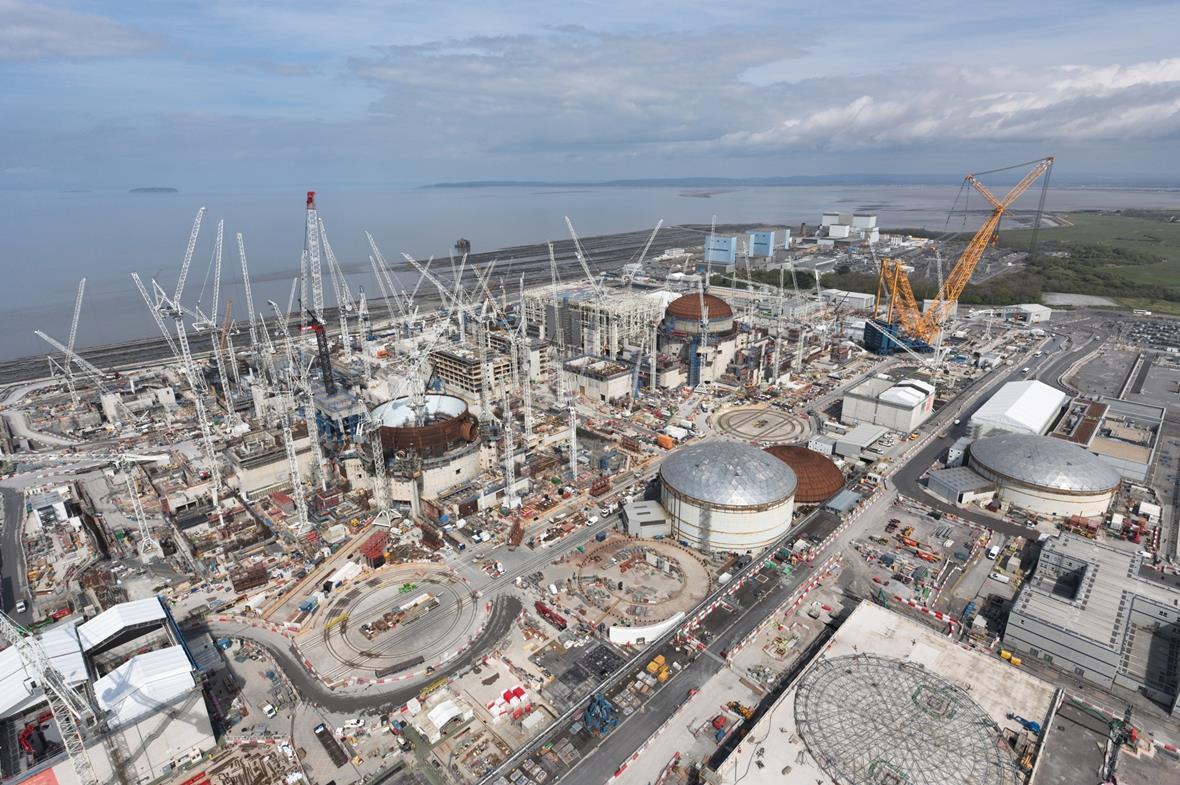
Clean Technica, Michael Barnard, 6th March 2026
The latest announcement about Hinkley Point C was predictable. The first reactor at the plant in Somerset is now expected to begin generating electricity in 2030. The cost estimate has climbed again, now reaching roughly £35B in 2015 pounds or about £49B in current money according to Electricité de France. When the project received final approval in 2016, the expected construction cost was £18B and the first reactor was expected to begin operating in 2025. In the span of a decade, the expected capital cost nearly doubled while the schedule slipped by five years. The project illustrates the pattern described by Oxford megaproject scholar Bent Flyvbjerg. Large infrastructure projects tend to run over budget, over schedule, and deliver fewer benefits than originally promised. Hinkley Point C appears to be achieving the full trifecta.
To understand how the project arrived at this point it is necessary to revisit the electricity system that existed when Hinkley was first proposed……………………………Policymakers faced a looming capacity gap as aging coal plants approached retirement under European pollution rules and older nuclear reactors approached the end of their operating lives. Large baseload nuclear plants seemed like a logical replacement for retiring coal and nuclear capacity while maintaining system reliability and reducing emissions.
EDF entered the picture in 2008 when it acquired British Energy for about £12.4B. This acquisition gave the French utility access to several UK nuclear sites including Hinkley Point in Somerset……………………… T.he UK government supported the project through a Contract for Difference that guaranteed a strike price of £92.50 per MWh in 2012 pounds for 35 years. Adjusted for inflation that price is now roughly £120 to £130 per MWh in current money.
The timeline of the project reflects the slow progress typical of large nuclear builds……………………………………………………….. The most recent revision places the cost at about £35B in 2015 pounds with startup expected in 2030. If the schedule slips to 2031, EDF estimates another £1B in additional cost..
Hinkley is not an isolated example. The reactor design used at the site is the European Pressurized Reactor. Other projects using this design have experienced similar difficulties. Olkiluoto 3 in Finland began construction in 2005 and entered commercial operation in 2023. The project took roughly 18 years from start to finish and cost about €11B compared with an original estimate of about €3B. Flamanville 3 in France began construction in 2007 and only began producing electricity in 2024 after more than a decade of delays and cost escalation. These projects demonstrate that modern nuclear construction faces structural challenges including complex regulatory oversight, large supply chains, and one-off engineering work.
While Hinkley Point C progressed slowly, the electricity system around it began to change rapidly. UK grid carbon intensity fell from about 520 gCO2 per kWh in 2006 to roughly 120 gCO2 per kWh in 2025 according to National Grid data. That represents a reduction of about 77%. Coal generation collapsed during the same period. In 2012 coal still produced about 40% of UK electricity. By 2024 the last coal plant closed and coal generation fell to zero. Gas generation initially increased as coal declined, providing a bridge fuel that cut emissions roughly in half per kWh compared with coal. At the same time renewable energy expanded quickly.
Wind power became the largest contributor to this change. ……………………………………………………………………………..
The grid also evolved to accommodate the growing share of renewable energy. Market reforms played a significant role. The Contract for Difference program created long term price stability for renewable developers………………High voltage direct current interconnectors connected the UK to electricity markets in France, Norway, Belgium, and Denmark. These interconnectors allow power to flow between regions and help balance variable generation.
Grid operations also changed to manage a system with lower inertia and higher renewable penetration. Batteries began appearing in grid services markets around 2017. These batteries provide fast frequency response and reserve capacity.
The economic dynamics of electricity generation shifted during the same period. Nuclear plants represent a form of megaproject economics. Each plant is a large custom built facility that takes many years to construct. Learning effects are limited because each plant is unique. Wind turbines and solar panels follow a different model. These technologies are manufactured in large volumes. Production learning and scale economies reduce costs over time. ………………………………………………………………..
The rising cost of Hinkley also raises questions about opportunity cost. The current estimated cost of about £49B in today’s money represents a very large capital investment. Offshore wind projects in Europe commonly cost between £2M and £3M per MW of installed capacity depending on location and turbine size. At £2.5M per MW, £49B could finance roughly 20 GW of offshore wind capacity. With a typical offshore wind capacity factor of about 45%, that capacity would produce around 79 TWh of electricity annually. Hinkley Point C is expected to produce about 25 TWh annually. The comparison is not exact because nuclear provides firm generation while wind is variable. The scale difference is significant.
……………………………………………………………………………………………………………. The next UK nuclear project, Sizewell C in Suffolk, raises obvious questions about what lessons policymakers are drawing from the experience at Hinkley Point C. Sizewell C is planned as a near replica of Hinkley using the same European Pressurized Reactor design and similar capacity of about 3.2 GW. The estimated construction cost is currently around £20B to £30B depending on assumptions about financing and schedule. Unlike Hinkley, the project will be financed through a regulated asset base model that allows developers to collect revenue from electricity consumers during construction. This structure reduces financing risk for investors but shifts more cost exposure onto the public.
The core question is whether the UK energy system in the 2030s and 2040s still requires additional nuclear megaprojects built on decade long timelines when wind, solar, and storage technologies continue expanding on much shorter deployment cycles. A second question concerns opportunity cost. If Sizewell C ultimately approaches the capital intensity seen at Hinkley, the same level of investment could finance tens of gigawatts of renewable capacity or large expansions of grid infrastructure. Policymakers therefore face a strategic choice between continuing the megaproject model for firm low carbon generation or allocating capital toward technologies that can scale incrementally and rapidly across the electricity system.
The broader lesson from the Hinkley experience concerns the pace of technological change in energy systems. Large infrastructure projects require long planning and construction timelines. Energy technologies such as wind turbines, solar panels, and batteries follow faster innovation cycles driven by manufacturing scale and global deployment. Between the time Hinkley Point C was conceived and the time it will enter operation, the UK electricity system transformed itself. Coal disappeared. Wind capacity expanded more than tenfold. Carbon intensity fell by more than three quarters. The project will arrive into a grid that has already undergone much of the transition it was designed to support.
https://cleantechnica.com/2026/03/06/while-hinkley-nuclear-was-being-built-the-uk-grid-decarbonized/
US Argues ‘Emergency’ of Iran War Means Israel Needs 20,000+ More Bombs Without Congressional Approval
This is the first time that the second Trump administration has formally declared an emergency, allowed under the Arms Export Control Act, to bypass Congress to sell arms to Israel. The administration has bypassed the informal approval process in Congress three times to sell arms or send weapons aid to Israel, but previously has not declared an emergency
‘Who cares about Israel’s genocide, apartheid, and aggression?” asked one human rights expert.
Jon Queally, Mar 07, 2026, https://www.commondreams.org/news/us-bombs-for-israel-iran-lebanon
The US State Department is hiding behind the war against Iran that was started by US President Donald Trump last week to justify an emergency order to ship more than 20,000 bombs—estimated at a value of $660 million—to Israel, skirting a pending approval process for the sale by Congress.
In a statement issued quietly on Friday night, the State Department said 12,000 BLU-110A/B general purpose, 1,000-pound bombs had been determined for approval, noting that Secretary of State Marco Rubio has “provided detailed justification that an emergency exists that requires the immediate sale to the Government of Israel of the above defense articles and defense services is in the national security interests of the United States, thereby waiving the Congressional review requirements under Section 36(b) of the Arms Export Control Act.”
Not included in the statement, according to the New York Times, were additional parts of the sale that “include 10,000 bombs of 500 pounds each and 5,000 small-diameter bombs.”
“This is an emergency of the Trump administration’s own creation.” —Rep. Gregory Meeks (D-N.Y.)
According to the Times:
The State Department did not mention these details in the announcement, but two current US officials and a former, Josh Paul, who worked on weapons transfers at the State Department, said they were part of the emergency sale. The current officials spoke on the condition of anonymity to discuss sensitive arms transactions.
This is the first time that the second Trump administration has formally declared an emergency, allowed under the Arms Export Control Act, to bypass Congress to sell arms to Israel. The administration has bypassed the informal approval process in Congress three times to sell arms or send weapons aid to Israel, but previously has not declared an emergency.
The push for the “emergency” arms sale comes as Israel pummels Lebanon with airstrikes, forcing an estimate 500,000 people or more in southern regions outside of Beirut to flee their homes. It also coincides with Israeli forces hitting targets in Iran alongside the US in what experts say is a wholly illegal attack on that country.
Rep. Gregory W. Meeks (D-N.Y.), ranking member of the House Foreign Affairs Committee, denounced the move by the Rubio in a Friday statement.
“Today’s invocation of the Arms Export Control Act’s emergency authority to bypass congressional review for two munitions cases to Israel exposes a stark contradiction at the heart of this administration’s case for war,” said Meeks. “The Trump administration has repeatedly insisted it was fully prepared for this war. Rushing to invoke emergency authority to circumvent Congress tells a different story. This is an emergency of the Trump administration’s own creation.”
Others also questioned the emergency sale, especially given Israel’s record of genocide in Gaza over the last two years and its pivotal role in pushing the Trump administration toward a war of choice with Iran.
Meeks, in his statement, argued that key questions about Trump’s war in Iran remain unanswered.
“What is the endgame? What preparations have been made to protect American citizens in the region? And how much will this war cost the American people?” asked Meeks. “The administration has provided no credible answers. The American people deserve answers, and Congress must demand them.”
1 This Month
Chernobyl: The Lost Tapes – A good documentary on Chernobyl on SBS available On Demand for the next 3 weeks– https://www.sbs.com.au/ondemand/tv-program/chernobyl-the-lost-tapes/2352741955560

of the week–London Campaign for Nuclear Disarmament

Tell the Ukrainian Government to Drop Prosecution of Peace Activist Yurii Sheliazhenko
To see nuclear-related stories in greater depth and intensity – go to https://nuclearinformation.wordpress.com
-
Archives
- April 2026 (114)
- March 2026 (251)
- February 2026 (268)
- January 2026 (308)
- December 2025 (358)
- November 2025 (359)
- October 2025 (376)
- September 2025 (257)
- August 2025 (319)
- July 2025 (230)
- June 2025 (348)
- May 2025 (261)
-
Categories
- 1
- 1 NUCLEAR ISSUES
- business and costs
- climate change
- culture and arts
- ENERGY
- environment
- health
- history
- indigenous issues
- Legal
- marketing of nuclear
- media
- opposition to nuclear
- PERSONAL STORIES
- politics
- politics international
- Religion and ethics
- safety
- secrets,lies and civil liberties
- spinbuster
- technology
- Uranium
- wastes
- weapons and war
- Women
- 2 WORLD
- ACTION
- AFRICA
- Atrocities
- AUSTRALIA
- Christina's notes
- Christina's themes
- culture and arts
- Events
- Fuk 2022
- Fuk 2023
- Fukushima 2017
- Fukushima 2018
- fukushima 2019
- Fukushima 2020
- Fukushima 2021
- general
- global warming
- Humour (God we need it)
- Nuclear
- RARE EARTHS
- Reference
- resources – print
- Resources -audiovicual
- Weekly Newsletter
- World
- World Nuclear
- YouTube
-
RSS
Entries RSS
Comments RSS
 nuclear-news