Trump prefers collapsing world economy to admitting defeat in his criminal Iran war

Trump is now a shell of the former war president who gloried in bombing 7 nations and snatching Venezuelan President Maduro to capture his oil. He’s trapped with no way out except admitting defeat by ending the war on Iran’s sensible terms.
Walt Zlotow West Suburban Peace Coalition Glen Ellyn IL, https://theaimn.net/trump-prefers-collapsing-world-economy-to-admitting-defeat-in-his-criminal-iran-war/
That was some phony 2 week ceasefire President Trump agreed to with Iran. When Iran refused Trump’s impossible demands presented by amateur US diplomats Vance, Witkoff and Kushner, Trump essentially resumed the war with his imaginary blockade of all Iranian shipping delivering the world’s oil.
Trump still hasn’t ruled out resuming his murderous but ineffective bombing campaign or launching a possible ground invasion to extract Iran’s enriched uranium or snatch its oil infrastructure on Kharg Island. He’s sending 10,000 more ground troops to bolster the 50,000 waiting around to either to nothing, or face major destruction if dropped into Iran.
To show the extent of US war failure, 6,000 troops aboard the aircraft carrier USS George H. W. Bush and accompanying warships had to skip the short route through the Mediterranean to go around the much longer southern Africa route, due to the Houthis’ threat to close the Bab el-Mandeb Strait. As a result Trump won’t have his 60,000 troop force in place till early May.
Trump must know he has no path to anything remotely resembling victory. No regime change. No end to nuclear enrichment. No end to Iran’s missile stockpile. Most importantly, no reopening to the Strait of Hormuz and renewed flow of Middle East oil.
He’s also likely still controlled by Israeli Prime Minister Benjamin Netanyahu who convinced Trump to launch the war on February 28 and has been sabotaging the ceasefire with his ghastly bombing of Lebanon. While Trump desperately wants out of the lost war, Netanyahu demands it continue till Iran is destroyed as an Israeli rival. Why Trump remains under Netanyahu’s control is both horrifying and may forever remain a mystery.
Trump is now a shell of the former war president who gloried in bombing 7 nations and snatching Venezuelan President Maduro to capture his oil. He’s trapped with no way out except admitting defeat by ending the war on Iran’s sensible terms.
But Trump’s lifelong delusion of his invincibility in anything he does prevents him from facing the reality of the unfolding world catastrophe he initiated.
At present, Trump resuming murderous war and precipitating worldwide economic collapse appear more likely than seeking peace, albeit certifying US defeat. Unless Congress acts to defund Trump’s $200 billion request to continue this catastrophe, or the Cabinet, led by Veep Vance, removes Trump via the 25th Amendment, things will only get dramatically, possibly infinitely worse.
Israel May Be Preparing to Permanently Reoccupy Southern Lebanon
Negotiations may end up stopping bombs on Beirut, but are unlikely to end Israel’s expanding south Lebanon occupation
.By Shireen Akram-Boshar , Truthout, April 16, 2026
n April 16, U.S. President Donald Trump announced a 10-day ceasefire in Lebanon, set to begin later that day. Although Lebanese President Joseph Aoun and Prime Minister Nawaf Salam welcomed this announcement, it is unlikely to put a stop to Israel’s expanding occupation of south Lebanon. In the hours before the announcement, Israel continued to bomb Lebanon’s south, bombing a school as well as the last main bridge connecting the south of the country to the rest of Lebanon.
The announcement came after a meeting on April 14, in which U.S. Secretary of State Marco Rubio hosted Lebanon and Israel’s ambassadors for the first diplomatic talks between the two countries since the early 1990s, a move that is likely to cause further turmoil in Lebanon. In a statement after the meeting, the U.S. explained that direct negotiations would be launched at a later date, and that objectives included the disarming of Hezbollah. Additionally, it asserted that mediation would be limited to the U.S., and that Lebanon’s reconstruction would be linked to negotiations with Israel.
A day after the envoys met in Washington, D.C., Israel launched another round of strikes on southern Lebanon, pushing forward with its invasion of the south even as it purportedly moves toward “peace.” Israel’s strikes reportedly killed 20; at the same time, Israel issued yet another forced displacement order for residents of the south. Days earlier, protesters in Beirut mobilized against the Lebanese government’s planned negotiations with Israel.
The push for direct negotiations between Israel and Lebanon came after Israel’s massive attacks on Lebanon on April 8. Hours after a fragile ceasefire took effect in the U.S.-Israeli war with Iran on April 7, Israel escalated its attacks on Lebanon, unleashing the most violent assault of its six-week war on the country. Iran and Pakistan — which mediated the U.S. ceasefire with Iran — insisted that a halt to attacks on Lebanon was part of the agreement, but Israeli Prime Minister Benjamin Netanyahu and Trump claimed otherwise. Israel’s military declared that “the battle in Lebanon is ongoing,” while renewing expanded evacuation orders for southern Lebanon.
Israel’s wave of attacks on April 8 clearly aimed to pressure the Lebanese government to further capitulate to Israel’s wishes. Throughout that morning, Israel bombed areas of southern Lebanon, attacking residential buildings as well as medical vehicles and a medical center. In the early afternoon, Israel escalated, unleashing more than 100 airstrikes in less than 10 minutes, bombing residential and commercial areas across Beirut as well as in southern Lebanon and the eastern Bekaa Valley. These airstrikes killed at least 357 people and wounded more than 1,200, marking the deadliest day of Israel’s current assault on the country. Airstrikes struck residential complexes, bridges, grocery stores, a funeral procession in a cemetery, and a university hospital………………………………………………………………………………………………………………………………………………………………………………………………………………………….
A Genocidal Aggression
Israel began its latest escalation in its war on Lebanon on March 2, when Hezbollah fired rockets at Israel after the U.S.-Israeli assassination of Iranian leader Ali Khamenei. In reality, Israel had already been waging a protracted war on southern Lebanon since 2024. The ceasefire that marked the end of Israel’s 2024 war on Lebanon did not see an end to Israel’s attacks on the south of the country. In a familiar pattern from Gaza, the agreement essentially became a one-way ceasefire, with Israel attacking south Lebanon on a regular basis and continuing to occupy areas of the south between November 2024 and March 2026. According to the UN, Israel violated the 2024 ceasefire more than 15,000 times.
Since March 2, Israel has carried out a campaign of collective punishment, particularly of the Shia-majority regions of Lebanon, and has expanded its occupation of the south of the country. Israel’s assaults, and in particular its occupation of the south, have forced 1.2 million people — 20 percent of the country’s population — to flee their homes, creating a severe displacement crisis. Israel is also working to exploit frustrations with Hezbollah and sectarian tensions within Lebanon to push the country toward civil strife or even civil war.
This current war adds to the prolonged list of catastrophes that Lebanon has already been facing:………………………………………………………………………………………………………………………………………………………………………………………….
Israel’s expansion of its war on Shia-majority areas of Lebanon uses methods from its genocidal war on Gaza. Israel has waged mass ethnic cleansing of the population of the south of Lebanon, as well as the southern suburbs of Beirut — both of which have largely been depopulated throughout the course of the war. The Israeli military has issued numerous expulsion orders as it invades and pushes towards the Litani River — some 20 miles north of Lebanon’s border with Israel — while destroying civilian infrastructure……………………………………………………………………………………………………………………………………………. https://truthout.org/articles/israel-may-be-preparing-to-permanently-reoccupy-southern-lebanon/?utm_source=Truthout&utm_campaign=8b318324c6-EMAIL_CAMPAIGN_2026_04_16_09_07&utm_medium=email&utm_term=0_bbb541a1db-8b318324c6-650192793
‘THIS IS NOT SELF-DEFENSE’: UN EXPERTS BLAST ISRAEL’S ASSAULT ON LEBANON AS WAR CRIME
April 16, 2026, ScheerPost Staff, https://scheerpost.com/2026/04/16/this-is-not-self-defense-un-experts-blast-israels-assault-on-lebanon-as-war-crime/
As Israel intensifies its bombardment of Lebanon, a group of United Nations experts is now saying plainly what much of the political class refuses to: this is not self-defense—it is a violation of international law.
In a sharply worded joint statement, two dozen UN special rapporteurs condemned the ongoing assault as “a blatant violation of the UN Charter” and “an affront to the international legal order,” warning that the scale and timing of the attacks—launched even as ceasefire talks were underway—represent a deliberate destruction of any remaining path to peace.
What’s unfolding is not just escalation—it’s acceleration.
According to reports, Israeli forces unleashed one of the largest coordinated strike campaigns in Lebanon in decades, leveling towns, hitting civilian infrastructure, and killing rescue workers in so-called “triple-tap” strikes—attacks that target first responders arriving at the scene.
The human toll is staggering. Over a million people—more than a fifth of Lebanon’s population—have been displaced since March. Thousands are dead. Hundreds of thousands of children have been forced from their homes, with UNICEF warning that “nowhere is safe.”
But beyond the numbers is the pattern.
The Israeli and Lebanese governments are once again attempting to come together for peace—at least on paper.
But even that fragile possibility comes wrapped in uncertainty. In a Truth Social post published just before midnight, Donald Trump said he was “trying to get a little breathing room between Israel and Lebanon.”
“It has been a long time since the two leaders have spoken—like 34 years,” he added, without specifying who would attend or where the talks would take place. As the death toll has now risen to 2,164, with 7,061 wounded as of today.
UN experts point to what they describe as “domicide”—the systematic destruction of homes and civilian infrastructure—combined with mass displacement orders that leave entire populations with nowhere to return. Under international law, they warn, this constitutes crimes against humanity and war crimes.
UN human rights experts are now sounding the alarm in unmistakable terms: Israel’s latest wave of strikes on Lebanon—launched within hours of a ceasefire announcement—constitutes not self-defense, but a “blatant violation of the UN Charter” and a direct assault on the international legal order. In a coordinated bombardment hitting more than 150 locations in minutes, hundreds were killed and injured, entire neighborhoods were reduced to rubble, and over a million people have been driven from their homes—an unprecedented displacement crisis that experts warn reflects a deliberate pattern of “domicide” and collective punishment. The scale, timing, and targeting of civilian areas, they argue, not only undermine any remaining prospects for peace but rise to the level of war crimes and crimes against humanity under international law, raising urgent questions not just about the attacks themselves—but about whether any system of global accountability still exists.
And yet, the bombs continue to fall.
The statement does not just call out Israel—it directly challenges the United States, Israel’s primary military backer, urging Washington to use its leverage to halt the assault. That pressure, so far, has not materialized in any meaningful way.
Instead, the gap widens—between what international law says and what global power allows.
It seems Washington needs to be reminded of the Nuclear Non-Proliferation Treaty
Bulletin, By Olamide Samuel | Analysis | April 16, 2026
After more than 40 days of US-Israeli strikes on Iran and Iranian retaliation across the Middle East, Pakistan helped broker a fragile two-week ceasefire announced on April 7, alongside a temporary re-opening of the Strait of Hormuz and a promise of direct talks in Pakistan the following week. The ceasefire created just enough diplomatic space for the highest-level direct negotiations between the United States and Iran in recent memory.
But when the Islamabad talks collapsed after 21 hours of diplomacy on April 12, Washington almost immediately went back to coercion, with President Donald Trump threatening a blockade of Iranian ports and more strikes.
The fact that both sides agreed to talk, even momentarily, demonstrates their recognition that military escalation and economic coercion could very well spiral out of control and result in severe and unforeseen consequences………………………..
It is quite perplexing that a significant part of what Washington demands of Tehran has already been written into a treaty Iran signed a long time ago—the Nuclear Non-Proliferation Treaty (NPT), to which Iran is a non-nuclear-weapon state party since 1970. Although Tehran is to blame for Washington’s undermined confidence in the NPT, bombing Iran and issuing blockade threats won’t lead to a better non-proliferation arrangement. As state parties to the NPT will convene this month in New York for the treaty’s review conference, it’s about time to remind the Trump administration of the non-proliferation obligations Tehran already agreed to.
Existing obligations. The NPT strictly constrains Iran’s nuclear activities: Article II bars the acquisition of nuclear weapons, and Article III requires safeguards, limiting a state’s ability to “quickly achieve a nuclear weapon.” And even if Article IV affirms the rights of states to pursue the peaceful use of nuclear energy, it allows so only if that activity remains within the treaty’s non-proliferation obligations.
Of course, Washington has other demands that go beyond the NPT’s obligations. ………………………………………………………………………………………………………………………………………………………………………………..
Washington’s actions have consistently narrowed the already fragile space for Iranian cooperation with IAEA inspections at the very moment when more visibility and more access are needed. But when Vance now says Iran must renounce not only the bomb but also the “tools” that would allow it to move quickly towards one—tools that reportedly include enrichment capacity, major nuclear facilities, and highly enriched uranium stockpiles—he is in effect describing the function the JCPOA once served, albeit in more maximalist form. That 2015 agreement was designed to lengthen breakout time, constrain enrichment, and make the restraint verifiable. The UN Security Council had endorsed that agreement, and Iran was complying with it until the first Trump administration unilaterally walked away from it in 2018…………………………………………………………………………………………………………………………………………………………………………………………………………………………….. https://thebulletin.org/2026/04/it-seems-washington-needs-to-be-reminded-of-the-nuclear-non-proliferation-treaty/?utm_source=ActiveCampaign&utm_medium=email&utm_content=Washington%20needs%20to%20be%20reminded%20of%20the%20Nuclear%20Non-Proliferation%20Treaty&utm_campaign=20260416%20Thursday%20Newsletter
Proposed Scottish nuclear study unlikely to be published before election
An assessment looking at the feasibility of building new nuclear power
plants at existing nuclear sites in Scotland, proposed by the UK
Government, is unlikely to be published before the Scottish Parliament
elections on 7 May.
New Civil Engineer 17th April 2026 https://www.newcivilengineer.com/latest/proposed-scottish-nuclear-study-unlikely-to-be-published-before-election-17-04-2026/
Bulgarian minister wants fixed price for Kozloduy 7 and 8 nuclear reactors
Bulgarian minister wants fixed price for Kozloduy 7 and 8. Minister of
Energy Traycho Traykov has said Bulgaria wants its proposed new nuclear
power units at the Kozloduy plant to be built at fixed prices.
World Nuclear News 16th April 2026, https://www.world-nuclear-news.org/articles/bulgarian-minister-wants-fixed-price-for-kozloduy-7-and-8
Not clear there is public appetite for nuclear energy in Ireland despite fuel crisis, junior minister says
It is “not clear” that public
opinion is in favour of removing a ban on the development of domestic
nuclear power plants for electricity in Ireland, the Dáil has been told.
Junior minister Timmy Dooley said there were no plans for the development
of nuclear power, including small modular reactors, as part of Ireland’s
electricity system. Two separate legislative bans prohibit the development
of nuclear fission for electricity generation and “would need to be
replaced as a first step,” he said.
Irish Independent 16th April 2026
https://www.independent.ie/irish-news/taoiseach-insists-his-position-not-under-threat-in-any-shape-or-form-as-fianna-fail-tds-sound-out-senior-ministers-to-lead-heave-against-him/a1221611234.html
Much non-corporate nuclear-related news this week
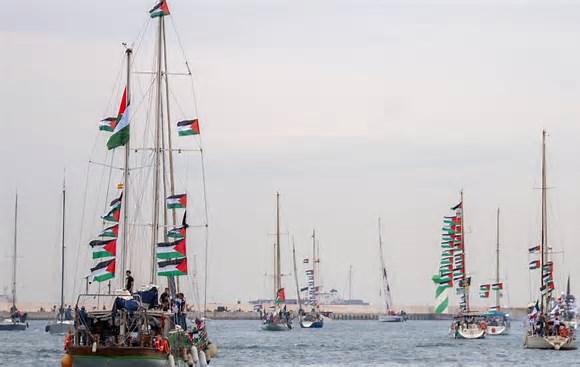
Some bits of good news – When Flotillas Fight for Life, Not Empire. The Verdant Refuge of India’s India’s Sacred Groves. Near Philadelphia’s New Green Spaces, a Dramatic Reduction in Crime.
TOP STORIES. Regulating the regulators: How the nuclear power industry steers the Nuclear Regulatory Commission.
Big Tech Is Rushing Into Nuclear Energy, and Bypassing Safety Oversight.
Ceasefire Announced-Destruction Continues- The Illusion of Peace in Lebanon.
A Case for War?- Iran’s Non-Existent Nuclear Weapons Program.
Nuclear costs of the Iran War.
40 years from Chernobyl disaster – What happened to the heroes – and villains – of Chernobyl.
Climate. Critical Atlantic current significantly more likely to collapse than thought. Sea-level rise is a health crisis and we must hold polluters accountable.
AUSTRALIA The Apocalypse Salesman: How Richard Marles Sold Australia’s Future to the Permanent War Economy.
More Australian news at https://antinuclear.net/2026/04/18/australian-nuclear-news-headlines-this-week/
NUCLEAR-RELATED ITEMS
| ART and CULTURE. The Normalisation of Contradiction. When “exterminate the world” isn’t a headline. Trump’s Will Be Done. |
| ATROCITIES. Not a Ceasefire—A Reset: The Quiet Expansion of Palestinian Incarceration. |
| CLIMATE. New Nuclear Is Too Late and Too Costly for the Climate Crisis. |
| ECONOMICS. New metric shows renewables are 53% cheaper than nuclear power. Hormuz Dateline Bulgarian minister wants fixed price for Kozloduy 7 and 8 nuclear reactors. |
| ENERGY. How efficiency measures could almost halve industrial energy demand globally. |
| ETHICS and RELIGION Trump’s Extreme Use of Military Is Stirring a Crisis of Conscience Among Troops. Popes have spoken out on politics before. But with Trump and Pope Leo it’s different. Trump is trying to distract us from Pope Leo’s calls for peace- Don’t take the bait. Papal authority, now featuring Donald J. Trump. Nobody’s “Obsessed” With Israel — It’s Just A Uniquely Horrible Country. I Hope The US Loses And The Empire Collapses, And Other Notes. |
| EVENTS. 25 April – ‘No War on Iran’ – demonstration at Fairford base. Petition to oppose the rapid increase of space-military industry threatening Jeju Island and the region. [Petition by April 19th (KST)] Stop the joint military-Hanwha Systems-Jeju Provincial Government Sea Launch! |
LEGAL. The collapse of multilateral law and the confusion of the battlefields.
MEDIA.
- Chernobyl’s 40-year legacy: haunting photographs from the radiation zone.
- New York Time’s Investigation of How Trump’s War on Iran Started Leaves Out the Paper’s Own Silence.
- Israel Destroys a Synagogue; US Media Yawn.
- Israeli Journalist With Deep Ties to IDF Admits West Bank Violence ‘Looks Like… Ethnic Cleansing’ .
- US’s Erosion of the Right to Cartoon Is No Laughing Matter.
OPPOSITION to NUCLEAR Greenham Women’s Peace Camp: The forgotten protest against nuclear weapons that lasted 19 years.
CND opposes new contract to build nuclear reactors on Anglesey- ALSO AT https://nuclear-news.net/2026/04/17/1-b1-cnd-opposes-new-contract-to-build-nuclear-reactors-on-anglesey/
POLITICS.
- First new planned US nuclear reactors likely to get government loans, energy chief says.
- Congress A-OK with Trump murdering thousands in Iran and crashing the world economy.
- Swedish taxpayers to take on the burden of financing nuclear power.
- Trump/Newsom Attack Renewables and Push Nuclear.
- “‘This war is the result of a coup.’”
- Israel is losing its grip on U.S. politics.
- Not clear there is public appetite for nuclear energy in Ireland despite fuel crisis, junior minister says.
- Proposed Scottish nuclear study unlikely to be published before election.
POLITICS INTERNATIONAL and DIPLOMACY.
- Iran rejects Trump claim on deal to surrender nuclear material stockpiles.
- Trump says Iran agrees to hand over ‘nuclear dust’ -ALSO AT https://nuclear-news.net/2026/04/18/2-b1-trump-says-iran-agrees-to-hand-over-nuclear-dust/
- Trump prefers collapsing world economy to admitting defeat in his criminal Iran war.
- It seems Washington needs to be reminded of the Nuclear Non-Proliferation Treaty.
- Amid the Iran chaos, war over Taiwan just became less likely.
- Netanyahu Doctrine: How one man’s war addiction is consuming Israel, Lebanon, and the World.
- US Aims at Heavy Staff & Budgetary Cuts for United Nations, Seeks to Launch Cost-Saving Artificial Intelligence at UN meetings.
- They Always Tell You Why The Empire Uses Violence, But Never Why Its Enemies Do.
| SAFETY. Targeting Nuclear Power. There’s a Glaring Safety Problem With Nuclear Energy Startups. Chernobyl at risk of ‘catastrophic’ collapse as haunting new images of nuclear site emerge. Chernobyl could face ‘catastrophic’ collapse as repairs stall following Russian drone strike. Zaporizhzhia NPP loses external power for the second time in a week, IAEA investigates. |
| SECRETS and LIES. What secret report reveals about British nuclear weapons tests – veterans claimed they were harmed by the fallout. |
| SPACE. EXPLORATION, WEAPONS. Nuclear-Powered Rockets — NASA Plans First Launch in 2028. Fresh off Artemis, America is now turning its attention to creating nuclear power in space |
| SPINBUSTER. . Goiânia Survivors Challenge Netflix: ‘A Crime Against the Truth’. |
| TECHNOLOGY. Reprocessing isn’t the solution. |
| WASTES. Finland Is About to Open the World’s First Permanent Nuclear Waste Site. |
WAR and CONFLICT.
- TRUMP SAYS “ENOUGH”—BUT ISRAEL PUSHES ON IN LEBANON WAR LATEST.
- Mass Destruction in Southern Lebanon as Israeli Forces Use ‘Gaza Tactics,’ Level Villages.
- THIS IS NOT SELF-DEFENSE’: UN EXPERTS BLAST ISRAEL’S ASSAULT ON LEBANON AS WAR CRIME.
- Israel May Be Preparing to Permanently Reoccupy Southern Lebanon.
- Will Trump nuke Iran?
- Ceasefire Exemptions and Quarries of Death: Israel’s War on Lebanon.
- Normalizing zionist terrorism against Palestine, Lebanon, Sudan, Syria, Yemen, Iraq, Iran.
- THE WAR THEY STARTED—AND LOST: HOW THE U.S. AND ISRAEL TRIGGERED A CRISIS THEY CAN’T CONTROL
- A conflict of attrition: Iran’s bet on asymmetric warfare.
- The Art of the Deal Is War.
WEAPONS and WEAPONS SALES. America’s pro-Israel J Street says Israel should pay out-of-pocket if it wants US weapons.
Horror as Russia ‘plans nuclear weapon in space’ that could cause global chaos.
Ceasefire Announced-Destruction Continues- The Illusion of Peace in Lebanon
A 10-day truce is declared as bombs still fall, villages vanish, and an entire population is pushed into permanent displacement.
April 16, 2026, Joshua Scheer, https://scheerpost.com/2026/04/16/ceasefire-announced-destruction-continues-the-illusion-of-peace-in-lebanon/
They call it a ceasefire.
They always do.
A “10-day pause,” announced with the polished language of diplomacy and posted like a victory lap on social media. Leaders speak. Statements are issued. Headlines flash BREAKING NEWS. And somewhere between the words “peace” and “progress,” the reality on the ground disappears.
Because while Washington celebrates, Lebanon is still burning.
According to reporting captured in the live updates and field coverage , Israeli forces have killed more than 2,000 people in Lebanon, displaced over a million, and turned entire مناطق into unrecognizable fields of rubble. Even as the ceasefire is announced, strikes continue. Bridges collapse. Villages are erased. Families run—not toward safety, but away from what used to be home.
This is not peace. This is choreography.
THE PERFORMANCE OF DIPLOMACY
President Donald Trump says Israel and Lebanon have agreed to a temporary ceasefire. Meetings in Washington. Calls between leaders. Invitations to the White House. The machinery of diplomacy is fully on display.
But look closer.
Israel has already made clear its forces will remain inside southern Lebanon—holding territory, expanding a so-called “security zone,” and continuing operations under the same logic that has defined the war from the start: control, dominance, permanence.
A ceasefire that does not end occupation is not a ceasefire.
It’s a pause to consolidate.
Lebanon, for its part, welcomes the announcement—not because it signals resolution, but because anything that slows the violence, even briefly, is survival.
And survival is all that’s left.
DOMICIDE: ERASING A PEOPLE BY ERASING THEIR HOMES
The word is clinical: domicide.
But what it means is simple.
Erase the house, and you erase the life inside it.
Entire villages in southern Lebanon have been systematically destroyed—homes rigged with explosives, neighborhoods flattened in controlled detonations. This is not incidental damage. It is strategy.
A tactic refined in Gaza now exported north.
Satellite images show ghost towns where communities once stood. Families who fled expecting to return now watch their homes disappear in real time—sometimes on video, sometimes in silence.
One man described watching his entire town square explode. His shop. His memories. His life’s work.
Gone in seconds.
This is not war as most people understand it. There are no front lines here—only a slow, deliberate removal of the conditions needed to live.
No homes.
No return.
No future.
THE NUMBERS DON’T CAPTURE THE TRUTH
The data is staggering:
- Over 2,100 killed in Lebanon
- Thousands more wounded
- Entire regions emptied
- Infrastructure systematically destroyed
- Over one million displaced
And yet the numbers still fail.
Because what cannot be measured is what is being erased:
Springtime in a village that no longer exists.
A child’s memory of home.
A family business built over decades.
A place that anchored generations now scattered across continents.
What is being destroyed is not just infrastructure—it is continuity.
You cannot bomb a place into peace.
You cannot erase homes and call it security.
You cannot destroy a future and then negotiate its terms.
Because once a place is gone—
There is nothing left to negotiate over.
HERE IS SOME REPORTING THAT ACCOMPANIES THIS ARTICLE
The Guardian details how entire Lebanese villages have been deliberately destroyed:
https://www.theguardian.com/world/2026/apr/12/how-israeli-offensive-destroyed-entire-villages-in-lebanon- NBC’s live reporting tracks the ongoing war, even as ceasefire claims are made:
https://www.nbcnews.com/world/iran/live-blog/live-updates-iran-war-israel-lebanon-leaders-talks-ceasefire-trump-rcna332095 - And Al Jazeera captures the official announcement of the temporary ceasefire itself:
https://www.aljazeera.com/news/2026/4/16/trump-says-israel-and-lebanon-agree-to-temporary-ceasefire
The Art of the Deal Is War
April 11, 2026, ScheerPost Staff, https://scheerpost.com/2026/04/11/the-art-of-the-deal-is-war/
In a moment that was supposed to signal de-escalation, the United States and Iran announced a temporary two-week ceasefire—only for it to begin unraveling almost immediately. Within hours, accusations of violations surfaced, Israeli airstrikes hit Lebanon, and the fragile illusion of diplomacy gave way to a more familiar reality: war continuing under a different name. As makes clear, this is not an end to conflict—it is a transition into a more dangerous and uncertain phase.
Ben Norton’s latest analysis cuts through the fog with clarity and urgency. His reporting lays out a pattern that is as old as U.S. foreign policy itself: agreements made publicly, undermined privately, and ultimately discarded when they no longer serve imperial interests. Norton points to immediate violations following the ceasefire announcement, particularly Israel’s bombing campaign in Lebanon, which Tehran argues was explicitly included in the terms of the deal. Washington denies this. Both sides claim victory. Both cannot be telling the truth.
At the heart of Norton’s analysis is a deeper indictment—not just of this ceasefire, but of a broader strategy. The so-called diplomacy surrounding Iran, he argues, often functions less as a path to peace and more as a tactical pause: a chance to regroup, rearm, and reposition. This aligns with a long historical record in which negotiations are used as cover for escalation rather than resolution. From the collapse of the nuclear deal to repeated ceasefire breakdowns in Gaza, the pattern is consistent—and deadly.
But this moment is not just about broken promises. It is about shifting global power. Norton highlights how Iran has leveraged its strategic position—particularly control over the Strait of Hormuz—to exert real pressure on global energy markets. The consequences are already rippling outward: rising oil prices, supply chain disruptions, and the early tremors of what could become a global economic crisis. Even in the unlikely event that peace were to hold, the damage has already been set in motion.
Perhaps most striking is the contradiction at the center of this ceasefire. The U.S. reportedly issued sweeping demands—limiting Iran’s military capacity, restricting enrichment, and reshaping regional alliances—while Iran presented its own conditions, including the lifting of sanctions, withdrawal of U.S. forces, and a halt to all aggression, including in Lebanon. Each side claims the other agreed. The reality, as Norton bluntly frames it, is simple: someone is lying.
This is why Norton’s video is essential viewing. It doesn’t just recount events—it exposes the mechanics of power behind them. It forces us to confront uncomfortable questions: What does a ceasefire mean when bombs continue to fall? What is diplomacy worth when it is used as a weapon? And how should the world respond when the architects of “peace” are the same actors perpetuating war?
For ScheerPost, reposting and amplifying this analysis is not just about sharing information—it is about challenging the narratives that normalize endless conflict. Because if this moment teaches us anything, it is that war no longer begins with declarations. It begins with agreements.
And sometimes, it never really stops.
From the very start of his video, Norton underscores a crucial reality often buried beneath headlines: this ceasefire is temporary, fragile, and possibly strategic rather than sincere. He warns that even in a “best-case scenario,” the war has already triggered a global energy shock—one that will take months, if not years, to fully unfold. Inflation, supply chain breakdowns, and rising food and fuel prices are not side effects—they are central consequences of this conflict. The war doesn’t pause when bombs stop falling; it continues through markets, shortages, and economic strain felt worldwide.
At the heart of Norton’s analysis is a deeper indictment—not just of this ceasefire, but of a broader strategy. The so-called diplomacy surrounding Iran, he argues, often functions less as a path to peace and more as a tactical pause: a chance to regroup, rearm, and reposition. He points specifically to how a two-week ceasefire could allow U.S. and allied forces to restock depleted weapons systems and prepare for the next phase of escalation. This aligns with a long historical record in which negotiations are used as cover for escalation rather than resolution.
Norton also highlights one of the most revealing contradictions: both Washington and Tehran claim the other agreed to their demands. The U.S. reportedly pushed a sweeping 15-point plan, while Iran published its own 10-point proposal, including sanctions relief, recognition of its regional position, and an end to attacks across all fronts—including Lebanon. These positions are fundamentally incompatible. As Norton bluntly frames it, one side is not telling the truth—and history suggests where skepticism should fall.
Perhaps most striking is his breakdown of what he calls Trump’s “art of the deal” in practice: agreements are made, selectively followed, and then reinterpreted to justify further escalation. It is not diplomacy—it is leverage through deception. And in this case, it may already be unfolding again.
But this moment is not just about broken promises. It is about shifting global power. Norton emphasizes that Iran has demonstrated significant leverage through its control of the Strait of Hormuz, a chokepoint through which roughly 20% of the world’s oil supply passes. That leverage has already disrupted global markets and forced the U.S. to the negotiating table—whether in good faith or not.
This is why Norton’s video is essential viewing. It doesn’t just recount events—it exposes the mechanics of power behind them. It forces us to confront uncomfortable questions: What does a ceasefire mean when bombs continue to fall? What is diplomacy worth when it is used as a weapon? And what happens when economic warfare becomes indistinguishable from military conflict?
A conflict of attrition: Iran’s bet on asymmetric warfare
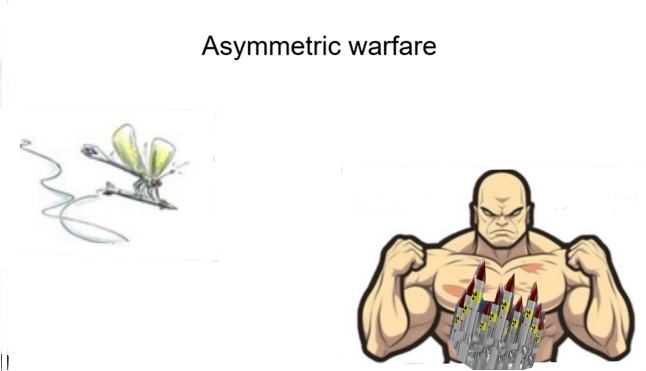
Destabilizing the global economy is perhaps Iran’s most visible and salient use of asymmetric warfare. Tehran has used artillery strikes, sea mines, and electronic warfare to impede transit through the Strait of Hormuz, dominating a vital maritime chokepoint through which a significant portion of the world’s fossil fuels and fertilizers transit.
By Spenser A. Warren | Analysis | April 7, 2026, https://thebulletin.org/2026/04/a-conflict-of-attrition-irans-bet-on-asymmetric-warfare/?utm_source=ActiveCampaign&utm_medium=email&utm_content=Iran%20s%20bet%20on%20asymmetric%20warfare&utm_campaign=20260409%20Thursday%20Newsletter
Around midnight on March 30, crewmembers on the bridge of the oil tanker Al Salmi were rocked by a large explosion. Hours later, fires still raged on the ship’s deck. The explosion was caused by an Iranian drone strike. The Al Salmi is not an adversary warship; its crew are not enemy combatants—it is a civilian vessel owned by the Kuwait Petroleum Corporation.
Like others on civilian oil tankers, this attack was intended to disrupt energy supplies and threaten regional security. In short, it’s part of Iran’s asymmetric warfare effort—which includes the use of several types of disruptive technologies—over the course of its ongoing conflict with the United States and Israel.
For Iran—in overall military terms far weaker than the United States—an asymmetry strategy attempts to counter expensive, often exquisite US capabilities with cheaper, lower-tech weapons and tactics designed to target critical American vulnerabilities. Most visibly, this strategy has included the use of mines, drone boats, and anti-ship missiles to close the Strait of Hormuz. Additionally, Iran has used drone strikes against US assets and those of its regional partners, cyberwarfare, and missile strikes against economic and civilian targets in Israel and the Gulf States. These drone attacks deplete the stockpiles of interceptor missiles defending US and allied bases and infrastructure, degrading air-defense capabilities and increasing political and economic pressure against continued American engagement.
The Trump administration appears to have been taken off guard by at least some of Iran’s tactics, including attempts to close the Strait of Hormuz. A degree of uncertainty is unsurprising given the nature of both asymmetric warfare and disruptive technologies. However, such tactics have been at the center of Iranian strategy for decades, and analysts have explicitly predicted the closure of the Strait of Hormuz in the event of a US-Iran war.
Thus far, Iran’s warfare has to some degree degraded American and Israeli capabilities, increased pressure on Washington, and hampered the global economy. While Iran has employed emerging or evolving technologies as part of its efforts, it is also using older technologies to significant effect. But Tehran’s strategy has serious limits, and the United States and Israel have exacted a significant toll on Iran’s military capabilities over the course of the war, now in its sixth week. Overall, this war has shown both the ways that weaker opponents can leverage asymmetric advantages to significant effect and how stronger opponents may still be able to limit the ultimate impact of asymmetric tactics.
Use of asymmetric warfare and disruptive tech. Recognizing its marked conventional imbalance against countries such as the United States and Israel, Tehran has been preparing to fight such a war for years and thus developing a range of technologies and strategies. Iran’s war effort has one overarching goal: survival. To try to achieve it, Iran has pursued tactics that appear to be aimed at three instrumental sub-goals: it has sought to degrade American and Israeli offensive capabilities; attempted to increase political pressures to end the war quickly; and sought to disrupt the global economy to increase economic pressure on Washington.
To target American, Israeli, and partner assets, Iran has used both ballistic missiles and drones. Coming into the war, Iran had a large and diverse missile force that included short- and intermediate-range ballistic missiles. Some estimates placed the number of the Iranian ballistic missile arsenal at around 3,000. Recently, Iran showcased a possibly extended range for some of its ballistic missiles, firing two at a joint US-UK base at Diego Garcia, well beyond the stated maximum range of their capabilities. At this range, Iranians could strike parts of Europe, Africa, and Asia, as well as naval targets in the Indian Ocean and Mediterranean, previously thought safe. To conduct the attempted strike, it’s possible that Iran modified space-launch assets. However, the reliability of such strikes is questionable: One of the two missiles broke up during flight, while the second proved vulnerable to air and missile defenses from Diego Garcia.
Iran’s drone arsenal, which dates to the 1980s, has yielded significant innovations despite producing mostly cheap and expendable, drones. The low cost of these systems, combined with their accuracy and reliability, has allowed Iran to deploy large numbers of them against specific targets, overwhelming defenses. This means Iran can launch enough drones to make a survival rate of only 10 to 20 percent acceptable.
Israel, the United States, and other American partners in the Persian Gulf have succeeded in intercepting many Iranian missiles and drones, limiting the effectiveness of Iran’s strikes. But the interceptions have taken a significant toll on American and partner forces. The United States reports a Terminal High Altitude Area Defense (THAAD) intercept success rate of 90 percent. But this level of effectiveness comes at a high burn rate, potentially using more than 30 percent of its total stockpile of THAAD interceptors in the first 96 hours of Operation Epic Fury alone.
The financial burden of interception alone is staggering. Iran’s Shahed-136 and several other of its variants are estimated to cost between $20,000 and $50,000 per unit. Interceptor costs vary significantly depending on which system a defender is using but can involve multimillion-dollar assets. Beyond the financial bottom line, the depletion of interceptor stockpiles will take many years to rectify, substantially weakening the United States regionally and globally. A reportspecifically on Terminal High Altitude Area Defense depletion suggests that just replacing these assets could take three to eight years.
Iran initially used its improving missile force and drone capabilities to strike American bases in the region but pivoted towards softer civilian targets. Among Iran’s nonmilitary targets is water infrastructure in the Gulf. On March 8, it struck a critical desalination plant in Bahrain. This strike exhibited a level of symmetry instead of asymmetry, with the attack occurring after Iran accused the United States of striking an Iranian desalination plant. Iran’s other targets have included airports and hotels, disrupting travel, tourism, and the domestic economies of several Gulf Arab states, as well as global air travel and logistics networks.
Destabilizing the global economy is perhaps Iran’s most visible and salient use of asymmetric warfare. Tehran has used artillery strikes, sea mines, and electronic warfare to impede transit through the Strait of Hormuz, dominating a vital maritime chokepoint through which a significant portion of the world’s fossil fuels and fertilizers transit.
Civilian ships have reported strikes from unknown projectiles that are likely mobile or shore-based artillery. Iranian forces have also rammed vessels with explosive-laden uncrewed “kamikaze boats.”
As of March 24th, Iran has also laid approximately a dozen Maham 3 and Maham 7 limpet mines in the Strait. Further, Tehran has made extensive use of electronic warfare targeted at military and civilian assets in and around the Gulf. While the broader use of electronic warfare has had limited effects, it has proven significantly successful in targeting shipping in the Strait of Hormuz. Maritime data and intelligence company Lloyd’s List Intelligence has tracked Iranian’s global navigation satellite systems in and around the Strait, logging more than 1,700 jamming incidents affecting 655 vessels, usually lasting around three to four hours each.
The Strait of Hormuz is not completely shut. Iran is allowing shipping from some friendly or neutral states to transit the waterway, so long as vessels comply with IRGC requirements and acquiesce to their inspections. Previous Iranian strikes on neutral shipping, however, has limited the credibility of this claim. As such, the threat of Iranian strikes, concern for seafarer safety, and exorbitant insurance costs have resulted in transit grinding to a near halt.
New and old technologies. Much has been written about the impacts of emerging and novel technologies on strategic outcomes, escalation dynamics, stability, and warfighting. Some of the technologies that Iran has used, such as uncrewed speedboats, are emerging—or at least evolutionary. However, Tehran has proven that many of its old, dated technologies, such as artillery, can still be effective tools of asymmetric warfare.
Both drones and cyber capabilities figure heavily in past literature on emerging disruptive technologies. It may be difficult to describe either, as well as electronic warfare systems, as emerging or novel today. But Iran’s capabilities are evolutionary, with its drone, cyber, and electronic warfare systems becoming increasingly advanced and effective over the past several decades. This is particularly true for Iran’s drone forces, with the country being among the pioneers of drone warfare.
Ballistic missiles, which Iran has used for strikes against US bases and softer, nonmilitary targets, are fundamentally a mid-20th century technology, even if Iran took longer to develop them. Short-range ballistic missiles and intermediate-range ballistic missiles, in particular, emerged more than 70 years ago. Similarly, sea mines are an old technology, not an emerging one, and their impact on the US-Iran war has been limited not by their technological characteristics, but by intentional American strikes against minelaying vessels.
Global impact and wider implications. Iran’s asymmetric warfare has implications beyond the ongoing war and the greater Middle East. The closure of the Strait of Hormuz has led to an increase in global oil prices. And those prices are threatening to rise further if the war doesn’t end or the strait isn’t reopened. Additionally, food prices are likely to rise due to a shortage of fertilizer, as the region is one of the main producers of nitrates necessary for crops. Further, up to 20,000 seafarers and several ships are stranded in the Persian Gulf, complicating global shipping, while the inaccessibility of Middle Eastern airports has exacerbated supply chains around the world.
The conduct of the war also provides possible lessons for future conflicts. The use of cheap drones and relatively rudimentary ballistic missile capabilities to draw down interceptor stores is indicative of forthcoming issues that United States would have if fighting a larger conventional adversary unless the American defense industrial base can rapidly ramp up production. Even then, Iran’s successes with $35,000 Shahed drones against multimillion dollar interceptors indicates a balance that favors offensive capabilities in the missile-interceptor race. Conversely, the unwillingness of the United States Navy to traverse the Strait or attempt to clear it alone indicates a balance favoring defensive capabilities and Anti-Access/Area Denial (which restricts adversaries in an area by prohibiting or limiting their ability to operate at a level of acceptable risk) strategies in naval warfare. Iran has successfully limited the world’s most powerful navy’s freedom of navigation despite losing most of its own navy—as well as most of its air force—in the war’s opening days.
Iran’s asymmetric successes may provide lessons for a potential United States-China conflict, though experts should use caution when trying to understand the similarities between the current crisis and a hypothetical one in the Taiwan Strait. First, the United States is likely to bring more forces to bear on China than it has against Iran. Second, the Taiwan Strait is far wider than Hormuz, making certain capabilities that China may use less effective. Third, additional actors—including the Taiwanese and Japanese—would play a significant role, with Taiwan seeking to counter Chinese movements in the Strait and the Japanese Maritime Self Defense Force potentially joining the fight, one much larger than partner navies are currently playing in the Persian Gulf. Finally, the Chinese military, especially the Chinese Navy, is far more capable than their Iranian counterparts. Despite these important differences, the United States should draw lessons about the missile-interceptor balance and the effectiveness of adversary Anti-Access/Area Denial capabilities.
Analyzing Iran’s many tactical and operational successes and their implications for future conflicts may be conducive to overstating their broader military successes. Despite blocking off the strait, depleting United States’ and partner interceptor stocks, and hitting military, political, and economic targets with kinetic and cyberattacks, Iran has had several military and political setbacks and has faced stark losses.
The United States has attacked Iranian minelaying ships attempting to close the Strait of Hormuz, potentially destroying several dozen of such vessels, if the Defense Department estimates are accurate. The destruction of so much of Iran’s minelaying force has likely contributed to its inability to deploy more than maybe a dozen mines in the Strait. While Iran has continued missile strikes against American, Gulf Arab, and Israeli targets, American and Israeli precision strikes and sabotage have degraded Iran’s missile capabilities, placing a ceiling on their ultimate effectiveness.
Militarily, Iran is likely to be defeated in this war, facing mounting losses with mounting time. But the war is also taking a major strategic toll on the United States. The cost of achieving America’s shifting war aims—including the decapitation of Iran’s pre-war leadership, degrading Iran’s missile forces, and potentially weakening its ability to restart a nuclear program—has been steep. The United States has burned through a large portion of its interceptor stockpile. The war has placed a high level of stress on the U.S.S. Gerald Ford aircraft carrier and its crew, hampering its future readiness. And Iran has struck and destroyed some critical assets, most important an E-3 Sentry aircraft that is part of the airborne warning and control system. Each of these losses reduces American readiness to respond to crises or counter great power adversaries in the short to mid-term future.
I Hope The US Loses And The Empire Collapses, And Other Notes
Caitlin Johnstone, Apr 15, 2026, https://www.caitlinjohnst.one/p/i-hope-the-us-loses-and-the-empire?utm_source=post-email-title&publication_id=82124&post_id=194191543&utm_campaign=email-post-title&isFreemail=true&r=1ise1&triedRedirect=true&utm_medium=email
I don’t mind admitting that I hope the US and Israel suffer a crushing, devastating defeat in Iran. I hope this war collapses the entire US empire. My only loyalty is to humanity, and being on Team Human in today’s world means being against the US empire and against Israel.
I hope the empire falls. I hope the apartheid state of Israel is dismantled. I hope humanity is able to pry the steering wheel from the fingers of the ghouls who currently rule our world, so that we can create a healthy planet and a harmonious future together.
YouTube has banned the channel that’s been creating viral AI Lego music videos criticizing the US war on Iran. The Google-owned platform claims the Lego videos somehow constituted “violent content”, but we all know it was to facilitate the US propaganda effort by shutting down effective propaganda for the other side.
Silicon Valley is a crucial arm of US imperial control. It chooses to advance the interests of the empire at every significant juncture. It’s a branch of imperial soft power in the same way the military is a branch of imperial hard power.
The US and Israel have so normalized the assassination of national leaders that the mainstream press now discuss it as a standard military tactic. The other day The Washington Post ran an article by Marc Thiessen arguing that the US should “carry out a final barrage of leadership strikes, eliminating the Iranian officials who had been spared for the purpose of negotiations.”
“Iran’s leaders must be made to understand that their lives literally depend on reaching a negotiated settlement to Trump’s liking. If they refuse to do so, they will be killed,” Thiessen writes.
At some point one of America’s enemies is going to assassinate a US official and my replies are going to be full of shrieking, outraged Americans acting like I’m the bad guy when I say Washington had it coming.
Even if the US wasn’t directly responsible for the Strait of Hormuz situation, it would still be the last country on earth with any business whining about it. They’re openly imposing a fuel blockade on Cuba while complaining that nobody should be allowed to block shipping lanes, for Christ’s sake.
❖
The Democratic National Committee voted to reject a resolution denouncing the influence of AIPAC in US politics. Eighty percent of Democrats have a negative view of Israel today. The DNC’s main function is to keep the Democratic Party and its representation on the ballot from reflecting the will of the public.
Dear Trump supporters, send me all of your money. I have a plan to make America great again. I will end all the wars and drain the swamp. Don’t worry if it looks like I’m not doing any of those things, I’m playing 4d chess, trust the plan. Send me your life savings right now.
❖
It’s important not to let them pin this all on Trump, in the same way it’s important not to let them pin Israel’s crimes on Netanyahu. Everything we are seeing with this disastrous Iran war is the product of the entire power structure which gave rise to it, not one guy’s dopey decisions.
The warmongers in the DC swamp have been pushing war with Iran for decades. Trump is just the guy who was chosen by Zionist oligarchs and bloodthirsty empire managers to carry out the deed. He happens to be the face on the operation, but if it wasn’t him it would have been someone else.
American warmongering insanity didn’t start with Trump, and it isn’t going to end with him either. Don’t direct your rage merely at the fleeting puppets who come and go from the imperial stage as the US murder machine trudges onward. Direct it at the empire itself.
THE WAR THEY STARTED—AND LOST: HOW THE U.S. AND ISRAEL TRIGGERED A CRISIS THEY CAN’T CONTROL
April 13, 2026 , https://scheerpost.com/2026/04/13/the-war-they-started-and-lost-how-the-u-s-and-israel-triggered-a-crisis-they-cant-control/
On April 11, independent outlet Consortium News aired a stark assessment of the war on Iran—one that cuts through official narratives and exposes a far more dangerous reality.
Hosted by Joe Lauria and featuring Pulitzer Prize–winning journalist Chris Hedges, the program delivers a blunt conclusion:
The United States and Israel have already lost.
Not in rhetoric. Not in headlines.
But in material, strategic, and geopolitical terms.
What is now being presented as diplomacy is, in truth, an attempt to manage the fallout from a war that spiraled beyond control—a war built on flawed assumptions, misread intelligence, and political arrogance.
A WAR BUILT ON FANTASY
The premise was simple: strike Iran, decapitate its leadership, and trigger internal collapse.
It didn’t happen.
Despite assassinations and sustained bombardment, Iran’s government held. Its military capacity remained intact. Its alliances across the region—particularly with groups like Hezbollah—did not fracture.
Instead, the war produced the opposite effect.
Power consolidated internally. Hardline factions strengthened. And Iran adapted quickly, shifting to asymmetrical tactics that exposed vulnerabilities across U.S. and Israeli systems.
U.S. bases in the region were hit. Radar systems were degraded or destroyed. Israeli defenses were strained.
And most critically—Iran retained control over the Strait of Hormuz, the single most important energy chokepoint in the world.
IRAN HOLDS THE LEVERAGE
This is the turning point.
Iran doesn’t need to win a conventional war. It only needs to control the flow of global trade—and it does.
By restricting access to the Strait of Hormuz, Iran has already demonstrated its ability to disrupt global markets, spike energy prices, and threaten cascading economic instability.
The consequences are immediate and global:
- Oil and gas supply disruptions
- Rising food prices tied to fertilizer shortages
- Semiconductor production slowdowns
- Supply chain breakdowns
This is not speculation.
It is already unfolding.
And it is why the United States—despite public posturing—has been pushing urgently for a ceasefire.
NEGOTIATING FROM WEAKNESS
According to Consortium News, Iran entered negotiations holding “almost all of the cards.”
The talks, mediated by Pakistan, reflect not a diplomatic breakthrough but a strategic necessity for Washington.
Iran’s demands are sweeping:
- Guarantees of no further aggression
- Continued control over the Strait of Hormuz
- Recognition of its right to uranium enrichment
- Removal of sanctions
- Withdrawal of U.S. forces from the region
- Compensation for war damages
The U.S. position, by contrast, demands Iran dismantle the very capabilities that now give it leverage.
The result is a fundamental impasse.
ISRAEL’S DIVERGENCE: SABOTAGING THE CEASEFIRE
If Washington is seeking an exit, Israel is moving in the opposite direction.
Prime Minister Benjamin Netanyahu, who played a central role in pushing the United States into the war, has shown no intention of de-escalating. Even as negotiations unfold, Israeli strikes in Lebanon continue—undermining the fragile ceasefire framework.
According to reporting highlighted on the program, Israel’s objective remains unchanged: not containment, but the destruction or fragmentation of Iran as a regional power.
This divergence creates a dangerous dynamic:
- The U.S. seeks de-escalation
- Israel seeks continuation
- Iran demands enforcement
And the entire process hinges on whether Washington can—or will—restrain its closest ally.
Iran has made its position clear: if Israel’s attacks continue, the talks collapse.
A GLOBAL ECONOMIC TIME BOMB
The implications of this conflict extend far beyond the Middle East.
Countries across Asia—Japan, South Korea, India—depend heavily on energy flows through the Strait of Hormuz. Even limited disruption forces emergency responses, including the release of strategic reserves.
The longer instability continues, the greater the risk of systemic economic shock.
We are not looking at a regional downturn.
We are staring at the potential for a global depression-level crisis.
And unlike previous conflicts, this one intersects directly with already fragile supply chains, inflation pressures, and geopolitical fragmentation.
THE COLLAPSE OF U.S. AUTHORITY
Perhaps the most profound consequence of this war is not military—it is structural.
The United States entered the conflict without meaningful consultation with allies. Gulf states—long dependent on U.S. protection—found themselves exposed and targeted. NATO distanced itself. Regional confidence eroded.
The message was unmistakable:
American power no longer guarantees stability.
In some cases, it produces the opposite.
This moment has been compared to the 1956 Suez Crisis—a historical inflection point where imperial limits were exposed to the world.
The comparison is not hyperbole.
A SHIFTING WORLD ORDER
Behind the immediate conflict, a larger transformation is underway.
- China and Russia are increasingly aligned with Iran
- Trade routes are shifting away from dollar dominance
- Regional alliances are recalibrating
- U.S. military infrastructure is being reassessed as a liability
Even financial systems are beginning to reflect the shift, with transactions in key corridors moving away from the dollar.
The foundations of U.S. global dominance—military, economic, and political—are all under strain.
WHAT COMES NEXT
The ceasefire is fragile.
The negotiations are unstable.
And the outcome remains uncertain.
Iran has made clear it is prepared to escalate if its demands are not met. Israel appears willing to continue pushing toward broader conflict. The United States is caught between its strategic commitments and the growing recognition that this war cannot be won.
Any miscalculation—from any side—could trigger a far more catastrophic phase.
THE REALITY THEY CAN’T SPIN
This was not a victory.
It was a miscalculation of historic proportions.
A war launched on the belief that power could dictate outcomes—only to reveal that power itself is shifting.
The language of diplomacy may attempt to soften that reality. But the facts remain:
The United States and Israel initiated a war they could not control.
Iran emerged stronger.
The global economy now hangs in the balance.
And the world, whether Washington acknowledges it or not, is already moving into a new era.
Normalizing zionist terrorism against Palestine, Lebanon, Sudan, Syria, Yemen, Iraq, Iran
Organizing Notes, Bruce Gagnon, April 09, 2026
Pakistan confirmed US and Iranian delegations will meet Friday in Islamabad, with V-P Vance supposedly leading the American team and Ghalibaf heading Iran’s. However, Iran informed mediators its participation is conditional on a Lebanon ceasefire—a condition Washington explicitly rejected. Trump named Jared Kushner and Steve Witkoff as special envoys for behind-closed-doors negotiations.
- New footage documents the effects of the occupation’s bombing of a building in the Tellat al-Khayat area of Beirut, Lebanon.
- The Pentagon: Operation Epic Fury is currently paused, objectives have been achieved, and US forces remain on high alert.
- Sheikh Ali Reza Panahian (Iranian Twelver Shia Scholar & official): “If we leave Lebanon to its fate, God will leave us to ours. If we withdraw from the temporary Zionist regime, it will not withdraw from us. We must secure a possible agreement with the U.S. by destroying Israel”.
- Tehran Metro displays slogans and banners including the phrase ‘We will not abandon Lebanon’. A lot of anger among Iranians tonight for ceasefire violations in Lebanon. One man on the street says, ‘We don’t want this cursed ceasefire if our brothers & sisters in Lebanon are being slaughtered. They stood by us, now we should stand by them’.
- Terrorist Netanyahu: The Zionist entity announces its withdrawal from the ceasefire agreement with Iran. The ceasefire will not include Hezbollah, and we will continue striking them. Yesterday we dealt Hezbollah its biggest blow since Operation Siren (the Pager).
- The United States officially announces that the agreement does not include Lebanon and threatens Iran with escalation if it reneges on the agreement. Trump on Lebanon: ‘That’s part of a separate skirmish, okay?’ And the Trump admin says they will be discussing their 15 points, not Iran’s 10 points. (Recall the Native Americans told us that the ‘White man speaks with a forked tongue’.)
- White House spokesperson, Karoline Leavitt: ‘Iran submitted a 10-point proposal, which was ignored by the President’. JD Vance will not be able to take part in negotiations with Iran in Pakistan due to security concerns —Trump told the New York Post. That leaves perennial liars Witcoff and Kushner. Both real estate crooks and not statesmen which are needed but the US doesn’t have any.
- The ceasefire already going down the hill – fast. The death cult bombed a Chinese New Silk Roads railway INSIDE Iran. US-Israel don’t want peace. They are out to take down all BRICS+ nations. The collective west is in a war to stop the fall of the colonial genocide project. This is a war of massive desperation.
- Iranian National Security Expert Mostafa Najafi: ‘Pakistan’s mediation should be approached with skepticism and caution. It is a country heavily reliant on Saudi Arabia financially, and since Trump came to power, it has sought various ways to curry favor with Washington! It is not unlikely that what is happening in Lebanon is the result of Pakistan’s cunning, acting as a covert agent for the Saudis! The Saudis harbor animosity toward Hezbollah in Lebanon no less than that of Israel! To what extent can Pakistan be relied upon to convey messages’?
- Don’t forget Pakistan’s very popular Imran Khan, the former Prime Minister, is rotting in prison on trumped up charges because he dared support true peace in regional hotspots around the globe.
- Iran has emerged as victorious in the public mind throughout the entire world.
- New York Times: ‘Trump faces political pressure preventing him from resuming the war’. Who could be exerting pressure? The American people? Yes. Global public opinion? Yes. The Iranians, Lebanese, Palestinians, people in Yemen and Iraq? Yes. Then who wants Trump to keep the war going? Israel, Wall Street and the military industrial complex….along of course with the Epstein class. ………………………………………………………………………………………………………………………………………………………………………………………………………………………………………………….https://space4peace.blogspot.com/2026/04/normalizing-zionist-mobster-terrorism.html
What secret report reveals about British nuclear weapons tests – veterans claimed they were harmed by the fallout
Christopher R. Hill, Professor of History, Faculty of Business and Creative Industries, University of South Wales, Jonathan Hogg, Senior Lecturer in Twentieth Century History, School of Histories, Languages and Cultures, University of Liverpoo, l April 15, 2026 https://theconversation.com/what-secret-report-reveals-about-british-nuclear-weapons-tests-veterans-claimed-they-were-harmed-by-the-fallout-280189
“The Ministry of Defence has always maintained that it never rained,” said Ken McGinley, founder of the British Nuclear Test Veterans Association (BNTVA). “I’m sorry, you’re liars … I was there!”
McGinley, who was a royal engineer, gave this interview in January 2024, shortly before his death, as part of our Oral History of British Nuclear Test Veterans project.
McGinley was present during the Grapple nuclear weapons test series, conducted by the UK on the central Pacific island of Kiritimati (also known as Christmas Island) in the late 1950s. At the time, this remote atoll was inhabited by 250 villagers as well as thousands of British servicemen.
For decades, many of those present during this and other above-ground British nuclear weapons tests have argued they were harmed by radioactive fallout. McGinley founded the BNTVA in 1983 to “gain recognition and restitution” for the veterans who took part in British and American nuclear tests and clean-ups between 1952 and 1965.
Rain became a key symbol in their argument as one of the only tangible signs of fallout taking place. The nuclear physicist Sir Joseph Rotblat described these alleged post-blast showers as “rainout”, a phenomenon whereby rain and mushroom clouds interact, leading to the contamination of rain droplets by harmful radionuclides.
In almost all cases, any link to subsequent health issues has been denied by the UK government because of lack of evidence of widespread radioactive contamination. However, a review of the evidence – written in 2014 by anonymous government scientists in response to freedom of information requests – was recently leaked by whistleblowers.
It reveals that post-blast radiation readings increased by a factor of up to seven on the island, compared with the normal background level. In our view, this would be more than enough to satisfy the “reasonable doubt” that tribunals require for veterans to receive a war pension due to illness or injury related to their service, as stated in the Naval, Military and Air Forces (Disablement and Death) Services Pension Order.
The top secret review, first revealed publicly by the Mirror newspaper on March 14 2026, also contains new evidence of radioactive contamination of fish in the island’s waters.
The repeated dismissal of veterans’ testimony in court cases and pension appeals caused stress and trauma for many. The majority died insisting they were not deceitful or forgetful – and that it did indeed rain while they were living on Kiritimati.
Factually inaccurate’
Kiritimati was monitored for fallout by the Ministry of Defence (MoD) after each detonation over the island – the largest of which, Grapple Y, was 200 times more powerful than the bomb dropped on Hiroshima.
In 1993, environmental monitoring data was collated into a report by a team at the MoD’s Atomic Weapons Establishment (AWE). Known as the Clare report, this informed the UK’s official position on fallout: namely, that none occurred over populated areas and that veterans would need to prove otherwise to secure redress.
However, the 2014 review of fallout data concluded the Clare report was “incomplete and, in some cases, factually inaccurate”.
Despite this review being passed on to the MoD, however, it was kept secret for more than a decade. Following its release, the legal implications could be gamechanging. According to the 2014 review: “The instrument readings could potentially be used to challenge the validity of statements made by MoD and UK government regarding … fallout on Christmas Island.”
In a recent House of Commons debate on the issue, the UK minister for veterans and people, Louise Sandher-Jones, confirmed her commitment “to the nuclear test veterans and their fight for transparency … They have had a very long fight, and I really recognise how difficult it has been for them, and I want them to understand that I am committed to them.”
What Merlin reveals
Behind the scenes, the release of newly declassified archival material in the publicly accessible Merlin database has added to calls for government accountability about the nuclear tests.
Compiled by the treasury solicitor during a class action against the MoD between 2009 and 2012, the database was stored at AWE until the journalist and author Susie Boniface discovered it held information about the medical monitoring of servicemen and Indigenous people. Her work led to its release in 2025.
Holding over 28,000 files, Merlin was commissioned by the MoD in response to the compensation claims made by almost 1,000 veterans from 2009. Its contents include official reports and communications, photographs, maps, safety guidelines and health monitoring information. Video footage includes the Grapple X test in November 1957.
A University of Liverpool team based in The Centre for People’s Justice and the Department of History is working with Boniface and campaign group Labrats International to catalogue and analyse the contents of Merlin – combining it with other sources, including personal testimony. Recently released files indicate nuclear fallout in the island’s ground sediment and rainwater, and heightened radioactivity in its clams.
Evidence has also emerged of radioactive waste being dropped from aeroplanes into the sea off Queensland in 1958 and 1959. Although dumping radioactive waste was surprisingly common during the cold war, this revelation raises questions about how risk and danger was understood and managed during Britain’s nuclear test programme.
The files also show workers without protective clothing around a plutonium pit at Maralinga in South Australia, site of seven British atmospheric nuclear tests in 1956-57.
The Merlin releases have galvanised claims that not so long ago may have been interpreted as conjecture. The recent releases suggest that servicemen and islanders were exposed to radioactive fallout – not just from rain showers, but from the fish they ate and the water they drank.
While a causal link with subsequent health conditions would be hard to prove, we believe it is time for the UK government to get behind a public inquiry into the full impact of Britain’s nuclear weapons testing programme.
1 This Month

of the week– Nuclear Reactor Information Task Force

14 May – online event From Bombs to Data Centres: the Face of Nuclear Colonialism
To see nuclear-related stories in greater depth and intensity – go to https://nuclearinformation.wordpress.com
-
Archives
- May 2026 (81)
- April 2026 (356)
- March 2026 (251)
- February 2026 (268)
- January 2026 (308)
- December 2025 (358)
- November 2025 (359)
- October 2025 (376)
- September 2025 (257)
- August 2025 (319)
- July 2025 (230)
- June 2025 (348)
-
Categories
- 1
- 1 NUCLEAR ISSUES
- business and costs
- climate change
- culture and arts
- ENERGY
- environment
- health
- history
- indigenous issues
- Legal
- marketing of nuclear
- media
- opposition to nuclear
- PERSONAL STORIES
- politics
- politics international
- Religion and ethics
- safety
- secrets,lies and civil liberties
- spinbuster
- technology
- Uranium
- wastes
- weapons and war
- Women
- 2 WORLD
- ACTION
- AFRICA
- Atrocities
- AUSTRALIA
- Christina's notes
- Christina's themes
- culture and arts
- Events
- Fuk 2022
- Fuk 2023
- Fukushima 2017
- Fukushima 2018
- fukushima 2019
- Fukushima 2020
- Fukushima 2021
- general
- global warming
- Humour (God we need it)
- Nuclear
- RARE EARTHS
- Reference
- resources – print
- Resources -audiovicual
- Weekly Newsletter
- World
- World Nuclear
- YouTube
-
RSS
Entries RSS
Comments RSS
 nuclear-news