For US Commentators on Iran, Mass Murder Is Magic
Gregory Shupak, April 24, 2026, https://fair.org/home/for-us-commentators-on-iran-mass-murder-is-magic/
In the wake of the temporary US/Iran ceasefire, hawkish commentary in leading American newspapers advanced the premise that the US can dictate terms to Iran in negotiations, with a faith in the power of Washington’s military might that was hard to justify by the previous course of the war.
A Washington Post editorial (4/8/26) contended:
Despite the massive damage inflicted upon the country by the US in recent weeks, the regime acts like it holds the cards. Its leaders are demanding the US pull all troops out of the Middle East and accept Iran’s right to pursue nuclear weapons. The question is why Trump would bend over backward to keep obviously unserious talks on track.
Whether the Post likes it or not, Iran has a decent hand to play. For instance, Iranian drones cost just $20,000 to produce, and the US uses missiles that cost $4 million each to try and destroy them (Bloomberg, 3/2/26). Less than three weeks into the war, the US was already estimated to have spent more than $18 billion attacking Iran (Guardian, 3/19/26). The longer Iran can hold out, the more it financially bleeds the US.
The majority of Americans already consistently oppose the war (NBC News, 4/1/26) and, as costs spiral, domestic opposition to the US’s assault is likely to grow. In this context, the paper may need to revise its definition of seriousness to include accepting that Iran has the power to resist US bullying and bluster.
‘More work to degrade’
The Washington Post editorial also said that there “is still more work to be done to degrade Iran’s offensive capabilities and its capacity to rebuild them.” “Offensive” here is a propaganda term, as Iran has not launched an aggressive war in nearly two centuries—unlike the United States and Israel, which have attacked Iran twice in the last year.
By reversing victim and offender, the Post was transparently calling for the US to resume bombing Iran; after all, it’s through war that one country “degrades” another’s military capacity. But it’s not that the US and Israel didn’t try to destroy Iranian capabilities; rather, they tried and have not succeeded.
Less than a week before the ceasefire, a CNN report (4/2/26) said US intelligence had assessed that
roughly half of Iran’s missile launchers are still intact and thousands of one-way attack drones remain in Iran’s arsenal, despite the daily pounding by US and Israeli strikes against military targets over the past five weeks….
The intelligence, compiled in recent days, also showed a large percentage of Iran’s coastal defense cruise missiles were intact, the sources said, consistent with the US not focusing its air campaign on coastal military assets, though they have been hitting ships. Those missiles serve as a key capability allowing Iran to threaten shipping traffic in the Strait of Hormuz.
Iran retained that capacity despite the US hitting more than 12,300 targets in Iran, according to US Central Command. Israel, for its part, said it had dropped 15,000 bombs on Iran since February 28 (Jerusalem Post, 3/25/26).
The Post offered no insight into why it believes the US/Israeli assault will suddenly become more effective.
‘Finish the job’
A Wall Street Journal editorial (4/8/26) echoed the Post, writing that “the Iranian regime remains a threat in the Strait of Hormuz and the job is far from finished.” The Journal insisted that the US should restart the war if it doesn’t get its way:
The next test for Mr. Trump will be whether he takes his two-week ceasefire deadline seriously. If he does, and Iran plays its usual games, then he really will have to “finish the job.”
Such calls overlook the limits to US war-making capacity. Analysts at Colorado’s Payne Institute for Public Policy, cited by the Australian Broadcasting Corporation (4/1/26), “assessed that the US had lost nearly 46% of its Army Tactical Missile Systems (ATACMS),” one of the US’s main tactical ballistic weapons. Likewise, they estimated that
supplies of Terminal High Altitude Area Defense (THAAD) missile systems, used by the US and its partners in the region to defend against Iranian missiles, were also dropping significantly. Projections showed the THAAD interceptors could run out by mid-April.
The US also burned through 850 Tomahawk cruise missiles in the war’s first four weeks, “a rate that has alarmed some Pentagon officials” (Washington Post, 3/27/26). Meanwhile, the Arrow 2 and Arrow 3 interceptors that Israel used against Iran’s longer-range missiles “were also projected to be exhausted by the end of March” (Australian Broadcasting Corporation, 4/1/26). Unlike the Journal’s lust for violence, the US/Israeli arsenal is finite.
‘Circle of death’
Nor did these constraints prevent the Washington Post‘s Marc A. Thiessen (4/8/26) from calling on Trump to create a “circle of death” around any former nuclear sites in Iran, and enforce it by “killing any Iranian who enters that circle.” He also suggested another round of assassinations, “eliminating the Iranian officials who had been spared for the purpose of negotiations,” so that the country’s leaders understand that if they fail to reach “a negotiated settlement to Trump’s liking…they will be killed.”
Murderous fantasies about the US imposing total domination over Iran are perhaps a symptom of the US being unable to do so in reality. As Thiessen’s own paper (4/3/26) reported, despite the US/Israeli assassinations of high-ranking Iranian officials,
Iran has continued to launch retaliatory attacks, often hitting high-value targets, demonstrating sustained command and control beyond the conflict’s initial days when units largely operated on autopilot under Iran’s “mosaic” defense strategy, which emphasizes decentralized autonomy. In recent weeks, Iranian attacks have struck critical energy infrastructure in the Persian Gulf, industrial and energy sites in Israel, and key US military installations, including a direct strike on an advanced US spy plane.
In other words, decapitating the Iranian government hasn’t caused it to capitulate or prevented it from responding to US/Israeli attacks, but Thiessen—for reasons he did not explain—thinks that doing the same thing again will produce a different result.
Thiessen also said that the US should
develop and implement a covert action plan to support the Iranian opposition…. Such a plan could involve supplying the Iranian opposition with weapons, much as the US once provided arms to anti-Communist “freedom fighters” across the world.
The overriding goal should be to help the Iranian people, over time, bring down this murderous regime.
Set aside that this plan would violate the UN Charter’s principle of nonintervention and that the US has zero right to shape who governs Iran. In reality, multiple US intelligence reports conclude that Iran’s government “is not in danger” of falling (Reuters, 3/11/26). Israeli officials also think that Iran’s government “isn’t likely to fall soon” (Wall Street Journal, 3/12/26).
While there’s little reason to believe that Thiessen’s proposal would produce regime change in Iran, we can be fairly confident that flooding Iran with weapons will have the same outcome that flooding countries with arms generally has—namely, a devastating bloodbath for its inhabitants (Electronic Intifada, 3/16/17; Jacobin, 9/11/21).
‘The easiest method’
Bret Stephens of the New York Times (4/14/26) likewise wrote from an alternate reality where the war showed that the US can impose its will on Iran. Stephens opened by quoting his own piece (4/7/26) from the previous week :
“The easiest method for the United States to reopen Hormuz,” I wrote last Tuesday, “is to start seizing tankers carrying Iranian crude once they reach the Arabian Sea.”
It’s not clear why Stephens thought seizing Iranian ships would cause Iran to back down. After all, assassinating many of the country’s leaders, attacking Iranian health facilities (Al Jazeera, 4/3/26) and vital civilian infrastructure (BBC, 3/19/26), and mass-murdering Iranian school girls (Guardian, 3/3/26) did not compel the country to stop defending itself.
Stephens went on to contend:
Trump should put Iran’s regime to a fundamental choice: It can have an economy. Or the regime can attempt to have a nuclear program while trying to control the Strait of Hormuz. But it can’t have both.
This quote suggests Stephens was unwilling to seriously grapple with Iran’s retaliatory power. For example, Iran has consistently responded to US aggression by attacking the empire’s regional nodes, killing Israelis (BBC, 3/1/26; Reuters, 4/6/26) and badly damaging Israeli infrastructure (Al Jazeera, 3/21/26).
Iranian countermeasures have likewise hit energy infrastructure in the US’s client states in the Gulf, leading—for example—to fires at Kuwaiti oil and petrochemical facilities, at a petrochemical plant in the UAE and at a storage tank in Bahrain (AFP, 4/5/26). In other words, Iran has illustrated that it has a multitude of options for raising the costs of US violence, indicating it would likely continue exercising these in the scenario Stephens advocates.
‘Broke the petrodollar’
None of these commentators acknowledge what is likely the strongest blow that Iran has landed against the US. The Islamic Republic has undermined what’s called the petrodollar regime, a system in which the US promises to militarily protect the Gulf monarchies in exchange for these states putting money they earn from oil sales into US assets—most notably Treasury bonds. The arrangement, which has been in place since 1974, subsidizes US borrowing costs and keeps the US dollar as the de facto global reserve currency.
Bloomberg (4/6/26) reports that the war on Iran “broke the petrodollar,” because the conflict is “categorically different” from other political, military and economic crises of the post-1974 period:
Gulf producers can’t get their oil out. The Strait of Hormuz closure has stranded their barrels along with everyone else’s.
Gulf states including Kuwait, Iraq, Saudi Arabia and the UAE collectively cut production by at least 10 million barrels per day in March. Saudi Arabia and the UAE can export reduced volumes through alternative pipelines. But those routes handle only about a quarter of normal Strait throughput at full capacity, and they are under active Iranian drone and missile threat. Qatar declared force majeure on exports of liquified natural gas after strikes on its Ras Laffan facility.
Thus, Iran has shown that it can hinder, and possibly destroy, a central plank in the architecture of the US empire. Stephens, Thiessen and the editorial boards of the Journal and the Post appear to be deluding themselves about the gravity of this development. Iran has successfully resisted subjugation, largely by jeopardizing a key instrument of US global hegemony, but these authors have gone on writing as if Washington were in a position to force Iran to surrender to its diktats.
These observers traffic in illusions about a virtually omnipotent US that can indefinitely control the world through force of arms, consequence-free. Op-ed writing is supposed to be persuasive. In that regard, these authors have failed spectacularly.
The Impact of the Middle East Crisis on Women and Girls

CAIRO, Egypt, Apr 23 2026 (IPS) – Six weeks into the 2026 Middle East military escalation, UNFPA Arab States Regional Office warns that its impact on 161 million women and girls living in conflict-affected areas across the region remain largely invisible in conflict analysis, humanitarian response, and funding priorities.
A new Call to Action, Regional Analysis of the Socio-Economic Impact of the 2026 Middle East Conflict on Women and Girls published by UNFPA, the UN sexual and reproductive health agency, highlights that current response mechanisms remain overwhelmingly gender-blind, treating gender-based violence (GBV) and maternal health as secondary concerns rather than life-saving priorities.
“The omission is not merely analytical – it is structural,” the report states. Without sex-disaggregated data and gender perspectives, the international community is conducting incomplete risk assessments, misaligning interventions, and missing critical opportunities for stabilization and peace.
The conflict is projected to cost regional economies $120–194 billion – equivalent to 3.7 to 6 percent of collective GDP. Four million additional people are estimated to be pushed into poverty and 3.64 million jobs may be lost. Women – overrepresented in informal employment – face disproportionate livelihood collapse while shouldering increased unpaid care work.
Supply chain shocks through the Strait of Hormuz threaten to delay lifesaving humanitarian supplies by up to six months. Across Gaza, Lebanon, Sudan, and Yemen, more than 260 health facilities and 14 mobile medical units have already shut down. Food insecurity is intensifying, with documented patterns showing women and girls eat last and least.
The report also highlights a surge in GBV risks driven by hyper-displacement, while sanctions and financial “de-risking” are crippling the ability of women-led organizations to deliver essential services. These organizations—often the first responders in crises—are being cut off from the very funding streams meant to sustain them
UNFPA is calling on national governments, UN agencies, donors, and civil society to:
Integrate gender systematically into all conflict analysis and response frameworks
Protect and fund GBV and sexual and reproductive health services as core, lifesaving interventions.
Finance and empower local women-led organizations, removing barriers to their access and participation.
Ensure women’s leadership in recovery, peacebuilding, and decision-making processes.
“Making women and girls visible is not optional,” the report concludes. “It is fundamental to effective humanitarian action, sustainable recovery, and lasting peace.”
UNFPA is the United Nations sexual and reproductive health agency.
IPS UN Bureau
Amid an energy crisis, the renewables juggernaut gathers pace

The continuing collapse in the cost of renewables offers a stark contrast to
skyrocketing fossil fuel prices – and a cause for optimism. As emissions
continue to rise and governments fail to respond with anything like the
urgency required, it’s tempting to conclude that the prospects for a
liveable planet are growing dim.
But as spring arrives, there is one
striking spark of light. Sunlight, to be precise – captured on solar
panels and pumping out electrons down the wires, on a scale unimaginable
even a decade ago.The amount of solar installed worldwide doubled between
2022 and 2024 alone. In the first three quarters of 2025, it accounted for
83% of all new electricity-generating capacity. Key to this is the
continuing collapse in costs, which have fallen by close to 90% per kWh in
just the last decade.
Crucially, the cost of batteries – essential for
storing the power generated – has plunged by a similar amount in that
time. In his new book, Here Comes the Sun, veteran environmentalist Bill
McKibben highlights some of the consequences of this double whammy in price
and pace. In Pakistan alone, to give one example, enough solar has been
installed in the last 18 months to account for one-third of the country’s
current grid capacity.
Positive News 25th March 2026, https://www.positive.news/environment/energy/amid-an-energy-crisis-the-renewables-juggernaut-gathers-pace/
Britain’s Nuclear Subservience
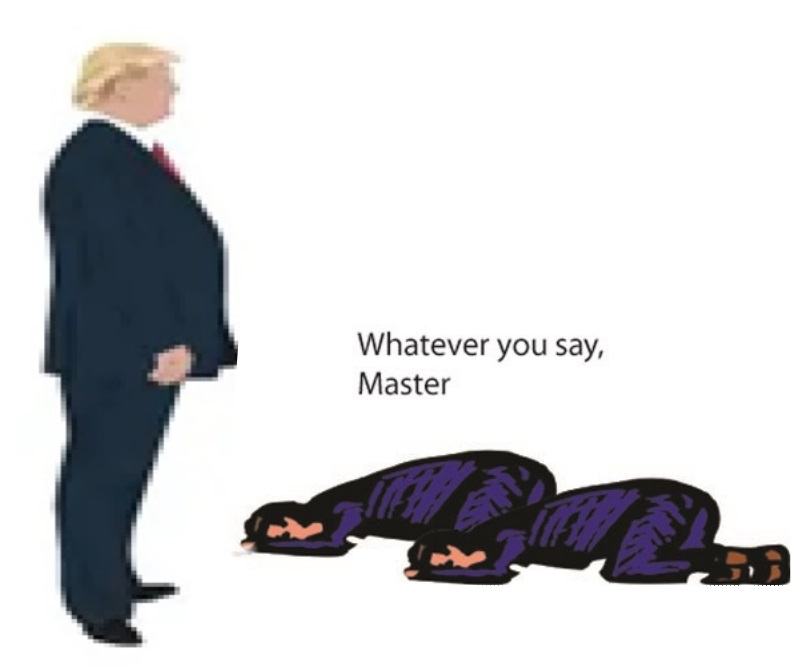
Norman Dombey, 2 April 2026, https://www.lrb.co.uk/blog/2026/april/britain-s-nuclear-subservience
In a brief exchange during Prime Minister’s Questions last month, the leader of the Liberal Democrats, Ed Davey, asked Keir Starmer about Trident replacement. ‘We have to make a choice now,’ Davey said: ‘lease new missiles from the United States, accepting whatever terms the president gives us, or build our own here in the United Kingdom.’ The prime minister replied that Davey was ‘advocating a plan without knowing how much it would cost and how it would work’. The discussion moved on.
Both men spoke of Britain’s ‘independent nuclear deterrent’. But the UK’s nuclear weapons capability is dependent on the US. Not only does Britain rent its Trident missiles from America, but the British-built warhead designed to be carried by those missiles, the Holbrook, is closely based on the American W76. The Los Alamos National Laboratory announced last year that a replacement for the W76 is going ahead: the W93 should be ready by 2034.
There is no need for the UK to replace its warheads. A Holbrook’s maximum yield is ninety kilotons of TNT-equivalent, about six times the size of the bomb dropped on Hiroshima. But the US Navy wants a new warhead in the mid-2030s and the UK has to follow suit even though there are no good reasons to do so. No one in Britain played any part in choosing the parameters of the W93.
George Robertson, the former Labour minister of defence and Nato secretary-general who now works for the Cohen Group, has said that the UK’s military dependence on the US is ‘no longer tenable’.
Britain’s nuclear subservience to the US dates from the 1958 Mutual Defence Agreement (MDA) between Washington and London:
Each party will exchange with the other party other classified information concerning atomic weapons when, after consultation with the other party, the communicating party determines that the communication of such information is necessary to improve the recipient’s atomic weapon design, development and fabrication capability.
The minutes of the first meeting of nuclear scientists from both sides in 1958, which seem to have been declassified by the US by mistake, show that the US provided ‘details of size, weight, shape, yield, amount of special nuclear material’. Several weapons were described. Britain’s nuclear bombs have been built at Aldermaston to an American design ever since.
President Kennedy and Harold Macmillan met at Nassau in the Bahamas in 1962 and agreed that the UK could use American Polaris missiles in its submarines. Charles de Gaulle was offered the same deal but declined. He said that the US could not be trusted and insisted that France had to take nuclear decisions for itself. British nuclear warheads are all carried by US-dependent submarine-launched ballistic missiles (SLBM). France builds its own SLBMs and its own warheads
David Manning was Britain’s ambassador to Washington from 2003 to 2007. ‘It is very difficult to imagine,’ he told the International Relations and Defence Committee last year, ‘what we will do to defend ourselves if, for example – this is very hypothetical – the Trump Administration decide that they will end our nuclear co‑operation deal, or Trump moves out of Nato, or even becomes just so equivocal about Nato that the Article 5 guarantee is no longer plausible.’
Trump and his war on Iran have given new urgency to Anglo-French nuclear co-operation, which should replace the ‘special nuclear relationship’ with the US before Britain needlessly commits itself to the US-dependent modernisation of its nuclear weapon system. If Britain were to join France, its first action should be to extract itself from its agreement to buy the W93 from the US. Aldermaston can make its own warheads or make them to a French rather than a US design.
The Nuclear Non-Proliferation Treaty (NPT) was drafted by the UK and US to forbid weapon-state signatories from helping non-weapon states to develop nuclear weapons. But they are not forbidden from helping one another: the MDA and Polaris Treaties between the UK and US are not affected by the NPT. A similar agreement between the UK and France would also be allowed by the treaty. France delivers its weapons on SLBMs, cruise missiles and aircraft and could share information with Britain in these fields (as it already does in some of them).
In any case the NPT may well be obsolete. India, Pakistan, Israel and North Korea all have nuclear weapons. Faced with a hostile Russia, it might be sensible for Germany and Poland to have them too. It certainly makes sense for the UK to decouple its nuclear weapons programme from the US.
UK named worst violator of anti-nuclear weapons treaty
by Tom Pashby, 22 April 2026, https://www.thecanary.co/uk/news/2026/04/22/uk-worst-violator-nuclear-weapons-treaty/
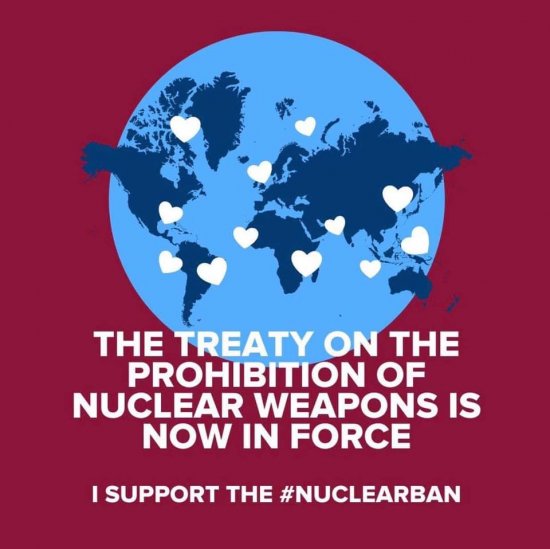
The UK has been named as the worst violator of the Treaty on the Prohibition of Nuclear Weapons (TPNW) in the Nuclear Weapons Ban Monitor 2026, a report by Norwegian People’s Aid (NPA).
Its ranking as the worst state in terms of “non-compatibility” with the treaty is, in part, due to the UK having its own nuclear weapons, as well as being understood to have started hosting nukes for Trump’s USA.
A damning report
The report explained why it focuses on the TPNW:
It tracks progress towards a world without nuclear weapons and highlights activities that stand between the international community and the fulfilment of the long-standing goal of the elimination of nuclear weapons.
In measuring this progress, the Nuclear Weapons Ban Monitor uses the Treaty on the Prohibition of Nuclear Weapons (TPNW) as the primary yardstick, because this treaty codifies norms and actions that are needed to create and maintain a world free of nuclear weapons.
The TPNW is the only legally binding global treaty that outlaws nuclear weapons. It was adopted on 7 July 2017 and entered into force on 22 January 2021. The impact of the TPNW will be built gradually and will depend on how it is welcomed and used by each and every State.
The TPNW is supported by 99 of the world’s 197 states, with 74 joining as parties and 25 as signatories that have not yet ratified the treaty.
Political pressure
No nuclear-armed states have joined the treaty, but the Ban Monitor said:
Every non-nuclear-armed State that joins strengthens political pressure for nuclear disarmament.
Adding:
With ratification processes advancing in several signatory States, further progress in expansion of the treaty membership appears likely in 2026.
The report took aim at the poor record of European states on eliminating nuclear weapons, saying “support for the TPNW is strong across all regions of the world except Europe,” and warned:
The UK was singled out as having the most policies or practices in 2025 that were viewed by the report’s authors as being “non-compatible with, or of concern in relation to, one or more of the TPNW’s prohibitions”.
It was singled out alongside 44 other states found to have non-compatibilities with the TPNW. Most were not compatible with the TPNW’s “Prohibition on assisting, encouraging or inducing prohibited activity”.
The UK, meanwhile, was identified as being non-compatible with a total of six prohibitions:
- on “development, production, manufacture, or other acquisition”;
- on “possession or stockpiling”; on “receiving transfer or control”;
- on “assisting; encouraging or inducing prohibited activity”;
- on “seeking or receiving assistance to engage in prohibited activity”;
- and on “allowing stationing, installation or deployment” of nuclear weapons.
The next least compatible country was the US, which had five prohibitions it was not compatible with.
‘Evidence suggests’ UK received US nukes and is expanding its own stockpile
ICAN head of communications Alistair Burnett told the Canary:
The Nuclear Weapons Ban Monitor reports annually on the size and composition of the arsenals of the world’s nine nuclear-armed countries and it also assesses how compatible each country is with the provisions of the United Nations Treaty on the Prohibition of Nuclear Weapons (TPNW).
Of the nine nuclear-armed states, Britain violates more articles of the treaty than any other because it not only has its own nuclear weapons, it may have also started hosting US nuclear weapons on its soil again after a break of 18 years.
In 2008, US nuclear weapons that were held at US air bases in Britain were quietly withdrawn, but last year evidence suggests the US may have returned upgraded nuclear bombs (the B61-12) to RAF Lakenheath in Suffolk.
Neither country shares any information publicly on this, but research by the Federation of American Scientists revealed new facilities to store these weapons were being built at Lakenheath and flights by the US planes that ferry nuclear weapons around the world have been monitored arriving there.
The United Kingdom also engages in assistance and encouragement of banned nuclear activities under the TPNW in its nuclear cooperation with France, and the United States.
In 2021, the UK also removed the cap on the number of warheads it has and stopped releasing information on nuclear warhead numbers.
UK faces becoming ‘more and more isolated diplomatically’
Burnett went on to explain how the UK’s failure to support the TPNW is likely to make it increasingly diplomatically isolated, and recommended how the government could work towards a nuclear weapons-free future.
He said:
The TPNW came into force in 2021 and a majority of the world’s states have already either signed or ratified the treaty (74 have ratified and a further 25 have signed it and are working on ratification). As more and more countries join it, Britain and the other nuclear-armed countries become more and more isolated diplomatically
The TPNW provides a fair and verifiable pathway to eliminating nuclear weapons, and Britain – which committed to getting rid of its weapons when it joined the Nuclear Non-Proliferation Treaty (NPT) in 1968 – should engage with the TPNW and work towards joining that treaty as well in order to fulfil the disarmament commitments it has made and also to help reduce the nuclear threat that continues to menace the whole world.
It is impossible to envisage any use of nuclear weapons in conflict that would be consistent with international law, of which the British Government claims to be a champion.
A first step would be for the UK to stop voting against annual UN General Assembly resolutions on the TPNW and the humanitarian impact of nuclear weapons. In 2024, the UK, alone with Russia and France, even voted against setting up an independent scientific panel to update our understanding of the impact of the use of nuclear weapons in 2024.
In addition this year, the UK Government, at a minimum, should also observe the first Review Conference of the TPNW that is being held at the UN in New York in late November and early December.
The Canary approached the Ministry of Defence (MOD) for comment on the government’s shaming in the report. An MOD spokesperson deferred to the Foreign, Commonwealth and Development Office (FCDO). The FCDO did not respond to a request for comment.
UK Government urged to end its ‘nuclear hypocrisy’ and engage with TPNW
The Campaign for Nuclear Disarmament (CND) general secretary Sophie Bolt told the Canary:
It’s little surprise Britain is the worst violator of the Treaty on the Prohibition of Nuclear Weapons for 2026. It’s ploughing ahead with the multi-billion pound modernisation of its nuclear-armed submarines, update and expansion of its nuclear warhead stockpile, hosting of US nuclear weapons on British soil, and giving the RAF a nuclear role for the first time since the end of the Cold War.
The Canary reported earlier in April that campaigners were demanding that the UK stops hosting Trump’s nuclear weapons, in response to his veiled threat to use nuclear weapons against Iran.
Bolt continued:
As the government is facing increased pressure to enforce more austerity to fund major military spending hikes, a quarter of the MoD’s budget is blown on nuclear weapons.
What’s more, these nuclear projects are facing delays and ballooning costs with diminishing oversight. Nuclear dangers have never been higher but having nuclear weapons doesn’t increase security. Britain needs to end the nuclear hypocrisy and finally engage with the TPNW.
Nuclear deterrence is ‘naïve idealism’ – professor
University of Sussex emeritus professor Andy Stirling reacted to the report by telling the Canary:
Recent events show more than ever, that notions of ‘nuclear deterrence’ are a delusion that only lasts so long. Now more than ever, time is running out.
As with the same claims made in the past for explosives, machine guns and aircraft, nuclear weapons are not – and never can be – technologies to end war. Nuclear deterrence is naïve idealism.
With impacts of global war now more existential than ever, the security of each country must be viewed with reason, not sentimental nationalist blinkers or militaristic ideology.
Even where only a few countries claim exclusive national rights to make nuclear threats against others, the inevitable result will be nuclear war.
The only rational way to reduce the threat of nuclear war is to address security globally. As in the playground … or in gangland … the only realistic way to abolish nuclear threats for all is for each to stop making them against others.
Those who make nuclear threats lower their own security by adding to risks of surprise nuclear attacks against them.
It is too often forgotten that even a small nuclear attack by any one country will (even if it is not retaliated against), cause devastation in that country as well through nuclear winter. In that way too, nuclear threats are a suicide vest.
In a debate on ‘Civil Preparedness for War’ in the House of Lords on 20 April, MOD minister of state Lord Coaker confirmed that the government does still support the NPT and representatives would be attending the NPT review conference in New York later in April.
This could be seen as a thin sliver of hope for the UK eventually working to rid the world of nuclear weapons.
Study for Miliband finds Scotland suitable for new nuclear

Scotland could be “ripe” for new nuclear power, according to a
“discrete study” sitting on Ed Miliband’s desk. Simon Bowen, chair of
GB Energy Nuclear, told MPs that the government-owned company has completed
research for the Energy Secretary on “the suitability of Scotland for new
nuclear development” but that the report has yet to be published.
Bowen said whilst publication of the report is a matter for Ministers it
doesn’t take an awful lot to work out what it will say.
Torness Hunterston and Dounreay are natural sites for development. SNP candidate
for Banffshire and Buchan Coast, Karen Adam, said: “GB Energy has utterly
failed to create the jobs promised by the Labour Party and now we know it
is being used as a vehicle to plot unwanted nuclear developments in
Scotland that would undermine our energy sector.
“Another energy
superpower Norway has just ruled out nuclear power so there are serious
questions to answer as to what on earth is going on here — Anas Sarwar
must come clean on these underhand reports and explain why he supports
these extortionate, toxic, nuclear plants being imposed upon Scotland
Herald 24th April 2026, https://www.heraldscotland.com/news/26048810.study-miliband-finds-scotland-suitable-new-nuclear/
Three dead as California faces invasion of killer snakes.
After an unusually warm and wet start to the year, rattlesnake season has started
early in parts of the Golden State,
Times 22nd April 2026, https://www.thetimes.com/us/american-politics/article/california-invasion-venomous-snakes-three-dead-k78jxt3hv
Nuclear War at Ukraine-Russia border could trigger years of global climate disruption and radioactive fallout, research suggests.
Duncan Sandes, 23 April 26, https://news.exeter.ac.uk/faculty-of-environment-science-and-economy/nuclear-war-at-ukraine-russia-border-could-trigger-years-of-global-climate-disruption-and-radioactive-fallout-research-suggests/
Geopolitical tensions in Eastern Europe underscore the urgency of addressing the climate and radiological consequences of a regional nuclear conflict.
Even a small-scale nuclear conflict at the Ukraine–Russia border could cause years of severe global climate disruption and radioactive fallout across much of the world, new research suggests.
In the study, published in npj Clean Air, researchers at the University of Exeter used the UK Earth System Model to simulate a hypothetical regional nuclear conflict at the Ukraine-Russia border. The results shows that the soot emitted after nuclear detonation would rapidly spread through the atmosphere, block sunlight and disrupt climate across the Northern Hemisphere.
In the first year after the conflict, the Northern Hemisphere cools by about 1°C on average, with much larger regional drops of around 5°C in Russia and 4°C in the United States. Surface sunlight declines sharply, and precipitation falls substantially across key mid-latitude agricultural regions.
The researchers also found that the climate effects would not be short-lived, lasting for approximately 6 years. Stratospheric warming caused by the soot alters major atmospheric circulation patterns, including the jet streams and the Intertropical Convergence Zone.
Alongside the climate impacts, the study examined the long-term dispersion of radioactive material attached to the black carbon particles. The results suggest that long-lived radionuclides could be transported globally, with around 40% eventually depositing in the Southern Hemisphere. This means the consequences of a regional nuclear conflict would not remain confined to the war zone but would instead become a global humanitarian and environmental issue.
Lead author Dr Ananth Ranjithkumar, Post-Doctoral Research Fellow at the University of Exeter, said: “Even a small-scale regional nuclear conflict would not remain a regional catastrophe for long. Our simulations show that its effects could reverberate across the planet for years, disrupting climate systems and spreading radioactive fallout far beyond the detonation zone, turning a regional war into a global crisis.”
Co-Author Professor Jim Haywood, also of the University of Exeter added: “This study confirms the global impact of regional nuclear conflicts upon climate, and emphasises that the New Strategic Arms Reduction Treaty that ended February 5, 2026 urgently needs to be extended.”
Co-Author Professor Nathan Mayne, also from the University of Exeter said “This is an excellent example of how our studies of other planets can contribute to understanding Earth’s climate.
“From planet wide dust storms on Mars, to kilometre per second winds in the atmospheres of extremely hot gas giant planets, our adaptations lead to improvements in how we capture climate and weather phenomena for Earth itself both in `normal’ and, in this case, extreme situations.”
The study, Nuclear Conflict in Eastern Europe: Climate disruption and Radiological fallout, is available to read here .
Defiling Statues of Jesus: Israel’s Counterfeit Outrage at Cultural Vandalism
24 April 2026 Dr Binoy Kampmark, https://theaimn.net/defiling-statues-of-jesus-israels-counterfeit-outrage-at-cultural-vandalism/
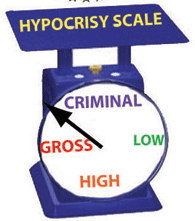
They have kept their strategy of cultural and institutional vandalism generously broad in recent campaigns against their adversaries. It therefore came as something of a surprise that much febrile fuss was made about this month’s antics of an IDF soldier photographed attacking a statue of Jesus in southern Lebanon on the edge of Debel with a sledgehammer. Instead of its usual qualifications, haughty denials and coarse justifications, the Israel military accepted the veracity of the image and viewed the act “with great severity and emphasises that the soldier’s conduct is wholly inconsistent with the values expected of its troops.”
The act even exercised Israeli Prime Minister Benjamin Netanyahu. He felt wounded at the deviancy of it all, claiming that “Israel cherishes and upholds the Jewish values of tolerance and mutual respect between Jews and worshippers of all faiths.” Along with “the overwhelming majority of Israelis, I was stunned and saddened to learn that an IDF soldier damaged a Catholic religious icon in southern Lebanon.” Such conduct was condemned “in the strongest terms” and military authorities had commenced “a criminal probe of the matter,” with the intention of taking “appropriately harsh disciplinary action against the offender.”
The statement then veers sharply, if revealingly: this act of vandalism had to be condemned since an Israeli soldier had attacked a Christian relic. The same could hardly be said about conduct against the artefacts or symbols sacred to the followers of Islam, though the Israeli PM was careful not to be so explicit. “While Christians are being slaughtered in Syria and Lebanon by Muslims, the Christian population in Israel thrives unlike elsewhere in the Middle East.” Israel was the only state in the region where the Christian population was not only thriving with a rising living standard. Feeling obligated to claim some form of ecumenical tolerance, Netanyahu then recapitulated the strained notion that Israel was unique in permitting “freedom of worship for all.”
Israeli Foreign Minister Gideon Sa’ar also blustered on the social media platforms to express stern disapproval. “The damaging of a Christian religious symbol by an IDF soldier in southern Lebanon is grave and disgraceful.” He commended the IDF on its statement condemning the incident and seeking to take “the necessary strict measures” against the alleged perpetrator. “This shameful action is completely contrary to our values. Israel is a country that respects the different religions and their sacred symbols, and upholds tolerance and respect among faiths.”
Such views also received the firm approbation of one of Washington’s most ardent Christian Zionists, US ambassador to Israel, Mike Huckabee. The same figure has been an outed enthusiast of the Greater Israel idea, one that does not necessarily bode well for the spirit of tolerance. For the former Governor of Arkansas, it was entirely appropriate that “a strong stand” be taken in condemning “this outrageous act by an IDF soldier.” Such conduct did not “properly represent the IDF, Israel, or the Israeli [government].”
On April 22, the IDF revealed that an inquiry had “determined [how unusually swift that was] that the soldiers’ conduct completely deviated from IDF orders and values,” expressing “deep regret over the incident.” It also announced that the statue had been replaced “in full coordination with the local community.” Both the soldier responsible for smashing the statue of Jesus, and his colluding photographer, were dismissed from combat duty and sentenced to 30 days in military prison by order of Brig. Gen. Sagiv Dahan of the 162nd Division. Six other soldiers present at the scene “have been summoned for clarification discussions that will be held later, after which further command-level measures will be determined.”
Given the biblical destruction meted out by the IDF on sites in Gaza and, more recently, Lebanon, the jailing of two offenders for cultural vandalism was meretricious, an act of kitschy public relations and counterfeit moral outrage. These figures have every reason to be aggrieved by their selective treatment, given the latitude afforded their peers in carrying out tasks of latitudinous destruction, notably after the Hamas attacks of October 7, 2023. In January 2024, the BBC claimed that among 117 religious sites in Gaza reportedly damaged or destroyed between October 7, 2023 and December 31, 2023, 74 cases could be verified. Mosques featured prominently, and two Churches. The ancient religious sanctuary of St Porphyrius, bearing the name of the bishop whose tomb lies beneath the church, was bombed on October 19 that year, leaving 18 dead.
Israeli soldiers, in gloating about their gory exploits, have been indiscrete in posting images featuring their feats of annihilation. On July 31, 2024, soldiers from the Givati brigade uploaded a video to YouTube entitled, in Hebrew, “Israeli army forces detonate a mosque with 11 tons of explosives.” The videographer lets the audience know that the detonation took place a day prior in Khuza’a, east of Khan Younis to the southern part of the Gaza Strip. One voice exults: “Long live the State of Israel!”
In June 2025, the UN International Commission of Inquiry on the Occupied Palestinian Territory, including East Jerusalem and Israel, published a report finding that “Israeli security forces knew or should have known the locations and significance of prominent cultural sites in Gaza and should have planned their military operations with the aim of avoiding harm.” There had been a conspicuous failure of care in avoiding damage to cultural sites and their contents. In a majority of cases, the Commission concluded that Israeli forces, in using demolishing explosives and bulldozers, had committed war crimes pertaining to the unjustified destruction of “civilian objects” and property, including “intentionally directing attacks against buildings dedicated to religion and historic monuments.”
Among the religious sites damaged, three also provided sanctuary for prayer and refuge for internally displaced individuals: the Church of Porphyrius, the Ihya al-Sunna Mosque and the Saad al-Ghafari Mosque. “Together these attacks resulted in more than 200 fatalities, including many women and children.” No jail sentences have been reported for the perpetrators of these offences.
The smashed statue of Jesus has received a worthy replacement, though not in the form of the IDF offering, which proved smaller and less proximate in appearance to the original. A donation from the Italian contingent from the United Nations Interim Force in Lebanon (UNIFIL) was deemed superior. As reported in the Times of Israel, “Lebanese media published photos showing that the statue donated by UN peacekeepers more closely resembles the original statue.” On this occasion, the UN proved most constructive.
Iran Survives Terrorist War and Emerges a Major Power Broker
From reports and observations we saw that many people, regardless of their political views, and including many who had returned home from other countries, were keen to defend their country from this foreign aggression. Not surprising, really.
Tim Anderson, Black Agenda Report, 22 Apr 2026 GOOD PHOTOS
Tim Anderson tours Iran during the US-Israeli war, showing different scenes from the terrorist targeting of civilians. He contends Iran has emerged with greater regional leverage, especially through its control over the Strait of Hormuz.
Originally published in Al Mayadeen English.
The unprovoked war against Iran by the USA and “Israel” has failed in spectacular fashion, with the Israeli colony in tatters, Washington looking for a way out while Iran holds the upper hand in peace “negotiations” proposed by Pakistan. Further, Tehran’s newly asserted control over shipping traffic passing into and out of the Persian Gulf (which neither the USA nor anyone else can shake) has given it tremendous new economic leverage.
Furthermore, the Iranian population has held together strongly under an extensive series of strikes on mainly civilian targets, which began with the assassination of the former Leader Sayyed Ali Khamenei and the murder of 168 people, mainly schoolgirls, at the primary school in Minab, in southern Iran. This coherence underwrites the stability and future of the Islamic Republic.
It is a strange war, as I was able to observe in its third and fourth weeks, with everyday life going on in most major cities, while terrorist atrocities take place in the background. As a bakery owner at Niloufar Square in Tehran told me, this is not a conventional war, like the US-backed Iran-Iraq war of the 1980s, where militaries face each other across a frontline.
The bakery owner’s building had been demolished by an enemy missile which targeted the police station next door. The USraeli attack on the police station at Niloufar Square in Tehran also killed and wounded dozens at an adjacent café (see photo on original) and in surrounding residential apartments.
I was one of a group of four observers (a Turkish journalist, a Greek Lawyer and journalist and a North American videographer) hosted by the Iranian media, between 19 and 31 March. Our tour began in the northern city of Tabriz and wound its way down through Tehran, Isfahan, Shiraz, Bushehr, Bandar Abbas and Minab, the site of the schoolgirl atrocity. Mostly, we were observing the aftermath of USraeli attacks and the patriotic mobilisation of people virtually every evening in the major cities.
In every Iranian city we visited, tens of thousands poured out each evening in support of their country. That included a huge gathering for Eid prayers after Ramadan, at the Imam Khomeini Mosalla Mosque of Tehran (see photos), the first such gathering in 35 years that had not been addressed by the murdered Iranian leader Sayyed Ali Khamenei
From reports and observations we saw that many people, regardless of their political views, and including many who had returned home from other countries, were keen to defend their country from this foreign aggression. Not surprising, really.
It seems that Trump’s attack on Iran was encouraged by the Israeli propaganda against the Islamic Republic: the repeated claims that “the regime” was highly unpopular and isolated, often making use of heavily biased surveys. Israeli propaganda suggested that the Iranian people would rise up again this “regime” if it were decapitated. That, of course, did not happen, even after many leaders were assassinated.
This is the problem with “believing one’s own nonsense”, most of it generated by Israeli ‘Hasbara’ campaigns, which suggested that the Islamic Republic was hated and insubstantial.
That campaign made use of a wave of violence instigated by Mossad and the CIA in January 2026, as Israeli media and former CIA boss Mike Pompeo admitted, which infiltrated economic protests (after a currency collapse) and killed over 3,000 people (officially 3,117), including hundreds of police and volunteers (Basij).
In Iran, our group saw people of all sorts, but mainly women, coming out to defend their nation and their military. The aim of the Trump-Israeli war was never clearly spelt out, though it is plain that the Israelis wanted to destroy or dismember Iran. The lack of any clear pretext for war led to many of the US allies distancing themselves, while less discriminate ‘allies’ instinctively went along with whatever the US said or did.
As it happened, Iran’s formidable deterrent force of missile and drones punished the Israelis for more than a month, while partially or totally destroying all 13 US bases in the Arab Monarchies of the Persian Gulf. US ships could not approach the Persian Gulf for fear of Iranian missile strikes. For similar reasons, there was no US ground invasion.
Yet we saw traumatised family after traumatised family as we passed through the cities………………………………………………………………………………………………………………………………………………………………….
Though our observations were anecdotal, the Iranian Red Crescent informed us in Tehran that there had been 81,000 strikes on civilian sites. By the time we reached Shiraz, this had risen to 85,000. By early April, the Red Crescent said over 2,100 people had been killed and 115,000 civilian facilities damaged.
We did see reports of USraeli attacks on military sites (such as the large but futile attacks on the missile mountain at Yazd), but a senior security official in Shiraz told me that, for that province and by late March, there had been 53 military and 72 civilians killed.
Neither the US nor the Israelis respect Iranian cultural heritage. We saw serious damage to the historic Golestan palace and the Pahlavi palace-museum complex in Tehran, from bunker buster bombs. There was similar shockwave damage to the Chehel Sotoun palace in Isfahan. The latter had been damaged by attacks on the nearby provincial governor’s offices. In each case sheets of plastic with UNESCO blue shield insignia had been laid out, to designate cultural property to be protected in the event of armed conflict; to no avail. Colonial aggressors have little regard for indigenous heritage.
Traveling down the Persian Gulf coast from Bushehr – where we saw destruction of the Meteorology station and the main hospital – we eventually arrived at Bandar Abbas and then Minab, site of the schoolgirl massacre. After visiting one bereaved family, we went to the graveyard, where mothers and fathers were still encamped, mourning their lost children. Some graves were being reinforced after the flooding rain of previous days.
Many held clothing and the shattered backpacks of children, which have become symbols of the massacre. Moving to the school, we examined the site to satisfy ourselves that there were no military facilities in the vicinity. In fact, the site had been a military compound, many years ago. It was handed over to the Health and then to the Education Ministry, and the primary school was constructed 13 years ago.
Amidst the obfuscation over this massacre (Trump at first tried to falsely blame the Iranians) a blunt assessment fell to former U.S. Army Counterterrorism Intelligence Officer Josephine Guilbeau. She said the attack, involving multiple Tomahawk missiles, was a clear case of deliberate terrorism and that US intel would have known very well that the site was a school and, at that time of day, full of children. She named USS Spruance Commander Leigh R. Tate and Executive Officer Jeffrey E. York as the officers to be held accountable for this terrorist atrocity.
Returning to the port city of Bandar Abbas, our visit to Hormuz Island – facilitated by the governor of Hormuzgan Province – was interrupted by the drone bombing of the port at the island. As a result, we went out into the straits in a boat and observed the many ships sitting offshore.
From Iranian reports and interviews (of the Governor of Hormuzgan and s specialist energy sector journalist at Bandar Abbas) I gathered the following: the Straits of Hormuz were not “closed” but shipping linked to the enemy had been blocked by the IRGC, while shipping from some of the other Persian Gulf states was being taxed (with a toll), and ships from friendly states (e.g. Iraq and China) were passing freely. This was clarified repeatedly over the following weeks. At an early stage, the main shipping insurance companies recognised IRGC security clearance as a factor in reducing risk premiums and therefore the financial viability of passage.
While the Straits had been open to all before the US-Israeli war, there was now security regulation, enforced by Iran. Washington has not even come close to seizing control of the Straits.
Overall, many years of Iranian “strategic patience” came to an end with the direct attacks on Iran by Washington, and that, in turn, delivered a powerful new weapon to Tehran, control of the gateway to 20% of the world energy supplies.
The Western media reacted with chagrin. Australian state media, the ABC, seeing that there was a fellow Australian at Hormuz, contacted me, but not to ask any details of what I had seen. Rather, reporter Henry Zwartz asked me if I had been paid to appear in an “Iranian propaganda video”. That shows how little interest the Australian state media had in the details of any new war; they would prefer to smear anyone appearing to contradict their official story.
As it happened, the USraeli war against Iran was failing badly and desperately trying to cover its tracks. The US military could neither invade Iran nor enter the Persian Gulf, for fear of Iranian missiles and drones. Trump ranted and raved about how he was winning and how Iran had been “crushed” and the Western media reported this credulously. Washington claimed virtually no casualties, after they had lost at least a dozen warplanes and a dozen military bases across the Persian Gulf. Those hidden casualties will emerge under some cover, down the track.
Importantly, Iran asserted sovereign control over passage through the Straits of Hormuz (regulating what is called “innocent passage” under the customary law of territorial seas – neither Iran nor the USA are parties to UNCLOS) and Washington was unable to undo this, resorting eventually to a secondary blockade of the Straits. Peace talks in Pakistan failed due to intransigence on the US side.
The better Anglo-American commentators have recognised not just the failure of this war but the fact that its failure signals an end to the era of US unilateralism. Professor John Mearsheimer said that Iran, had gained the lever of Hormuz, unregulated before the war, and oversaw the Israelis “poison[ing] their relations with the United States”. British analyst David Hearst said that Trump’s bile and stupidity had effectively enhanced Iran’s power in the Persian Gulf.
Researcher Ali Mamouri wrote “No matter how the blockade plays out, Iran will be in a far better position in the long term when it comes to maintaining control over the strait – not the US.”
The likely larger cost of US defeat will be withdrawal of all US bases from the Persian Gulf – now a key Iranian demand – and strategic retreat along the lines of that set out by Nixon after defeat of the US in Vietnam. In 1969, President Richard Nixon announced his ‘Guam Doctrine” from a Pacific island base. The claim will be – now as then – that Washington is “rebalancing” its commitments and leaving greater responsibility for its “allies”.
Some embedded journalists have already argued this was Trump’s approach in his first term, when he sought to make allies pay more for their own security. It might better be seen as a cover for a humiliating defeat and yet another step in the decline of the US global hegemony. Remember that China is also committed to Iranian (i.e. independent) control of Hormuz and thus of its key source of energy. That is, of course, why Beijing continues to support Iran in logistics, defence technology and intelligence. In any case, Trump will be looking for some face saving consolation prize to cover up this monumental failure.
Tim Anderson is the Director of the Sydney-based Centre for Counter Hegemonic Studies. https://blackagendareport.com/iran-survives-terrorist-war-and-emerges-major-power-broker
Nothing About This Dystopia Feels Natural
Caitlin Johnstone Substack, 20 April 26, https://caitlinjohnstone.com.au/2026/04/20/nothing-about-this-dystopia-feels-natural/
Nothing about this dystopia feels natural. We all sense it deep in our marrow. We all know something has gone terribly wrong.
If you lived in an alternate reality without wars or poverty, where everyone had enough and governments did what’s in the interests of the people and the ecosystem, it would never occur to you that there was anything odd about it. It would feel completely normal. Things would be more or less how you’d expect them to be.
You can’t say the same about the present status quo. The whole thing instinctively scans as weird and counterintuitive. The more you learn about the way the world works, the more insane it all looks to you.
Have you ever had to explain war to a young child? It’s terrible. If you’re actually honest with them about what war is and why it is waged, it completely shatters their understanding of the world. They look at you like they’ve suddenly been transported into a strange alien universe where everything is backward.
Their reaction is correct. That is the sane and normal way to look at war. All the freakish mental contortions we do to try and normalize it is what’s crazy.
Everything about this dystopia is like this. If you could see it all with fresh eyes, you would scream in horror. The only reason anyone finds any of this tolerable is because we have become desensitized and accustomed to the madness.
Seeing somebody sleeping on the sidewalk should feel like a punch in the stomach. Seeing children killed by bombs on your social media feed should stop your whole world.
The fact that there are plutocrats profiting from war and militarism.
The fact that billionaire corporations are integrating surveillance technology into every facet of our society.
The fact that we’re destroying our biosphere and driving families into poverty to maximize shareholder value.
The fact that oligarchy has turned democracy into a sham where our votes don’t make any real difference.
The fact that there are people in the global south who are living like slaves so that those of us in the imperial core can have cheap bread and circuses to keep us docile and distracted.
We all know deep down inside that these are intolerable abuses, but they’ve been so normalized and compartmentalized in our psychology that it all just fades into this kind of eerie dissonance in the background of our attention.
The more conscious you become of what’s going on in the world, the more that dissonance moves into the foreground, and the less tolerable this dystopia becomes for you. As Terence McKenna said, “The cost of sanity in this society is a certain level of alienation.”
And that’s a good thing. Injustice and abuse should not feel tolerable. We should allow our discomfort with this intolerable situation to drive us to action and resistance.
And as uncomfortable as it can feel to stare into the unmasked face of the empire in all its beastly fury, this clarity also brings with it a degree of relief, because when it comes online you finally understand why nothing has ever felt right about this civilization you were born into. You understand that your intuitive discomfort and revulsion you felt as a child at the madness you were being indoctrinated into accepting was one hundred percent accurate, and that everyone who taught you to accept the unacceptable was wrong.
Trust that childhood intuition. You’ve always had the truth inside you. Let it guide you as you read and inform yourself to help your mind catch up with what you already know in your heart. Let your heart inform your mind, let your mind inform your actions, and let your actions help awaken humanity to the truth we’ve been hiding from ourselves all these years.
West Suburban Peace Coalition to discuss Iran war at May Educational Forum

Title: : How Trump’s Narrative Tries to Shape the Reality of the War on Iran.
Speaker: Ted Snider, contributing editor for The American Conservative and frequent contributor to Responsible Statecraft, The Libertarian Institute and other outlets.
When: Monday, May 4, 7:00 – 8:00 PM Central Standard Time
Contact Walt Zlotow, zlotow@hotmail.com 630 442 3045 for further information
Zoom Link: https://us02web.zoom.us/j/89173975246?pwd=FSW07c8zzJWcfOLZWsAth5J90mEKsQ.1
14 May – online event From Bombs to Data Centres: the Face of Nuclear Colonialism
By@GRNHM_NVDA, https://www.eventbrite.co.uk/e/from-bombs-to-data-centres-the-face-of-nuclear-colonialism-tickets-1987783314403?aff=oddtdtcreator
Overview
Dive into hidden stories connecting the UK’s nuclear history and the tech powering our digital world
The Western Shoshone are the indigenous population of the territory in Nevada occupied in the1950s by the US without Shoshone consent for a Nuclear Test Site. This site is where the UK tested (exploded) its Trident missile systems until as recently as 1991. To date, no formal monitoring of human health has been conducted, nor any tracking of impacts on local ecosystems. PM Zabarte has new information to share with the international community on the lingering presence of plutonium on Shoshone land, and evidence of an historic cover-up of radioactive contamination from the test site. Moreover, there are multinational consortia today proposing a vast nuclear waste dump, lithium mines, and nuclear-powered AI data centres on Shoshone and adjoining Native American territories.
The historic and contemporary exploitation of indigenous communities, cultures, and territories by imperial nations and extractive industries is increasingly a part of public discourse; however, the story of modern-day nuclear colonialism by the UK upon the Western Shoshone Nation is almost unknown.
How do Britons feel about nuclear energy?
40 years on from the Chernobyl nuclear disaster, Britons are divided on
whether nuclear energy is safe: Key takeaways:
Britons support the use of
nuclear power by 51% to 29%, with opposition declining in recent years:
Green voters are divided 46% to 39% on whether or not they support the use
of nuclear power: 37% of Britons want more of the UK’s electricity to come
from nuclear energy, compared to 23% who want less: Britons are divided 45%
to 39% on whether or not nuclear energy is generally safe: Men are
consistently far more supportive of nuclear power than women.
You Gov 24th April 2026, https://yougov.com/en-gb/articles/54612-how-do-britons-feel-about-nuclear-energy
‘Territorial Theft With Better Branding’: Israel Keeps Advancing Its ‘Yellow Line’ in Gaza
One Palestinian American researcher warned that Israel is seeking “annexation without legal burden.”
Stephen Prager, Common Dreams, Apr 22, 2026
Israel’s gradual advancement of its “yellow line” to occupy more territory in the Gaza Strip is fueling concerns that it is seeking to effectively annex and colonize the majority of the territory without any formal agreement.
The Guardian reported on Wednesday that Israel has been steadily pushing the truce line to take control of more Palestinian territory in the six months since a “ceasefire” was reached in October.
The yellow line drawn on the ceasefire maps had Israeli troops in control of about 53% of Gaza’s territory, cramming nearly 2 million displaced Palestinians into a territory less than half the size of the one they inhabited before.
But an analysis by Forensic Architecture shows Israel has unilaterally shifted the line westward over the past six months to the point where it controlled about 58% of the strip by December in an occupation zone that continues to grow.
Palestinians living in Gaza reportedly woke up to learn that large yellow concrete blocks denoting the ceasefire line had suddenly moved and that they were now living in a free-fire area, where the Israeli military considers any Palestinian person or vehicle a legitimate target.
The Associated Press found in January that at least 77 Palestinians have been shot on sight when they’ve found themselves on the wrong side of the yellow line or even just near it, even though the line’s boundaries are ill-defined and fluid.
They are among more than 730 Palestinians who have been killed since the “ceasefire” began in October, according to the Gaza Health Ministry, which has accused Israel of thousands of violations.
According to The Guardian, some displaced people, such as those who lived near the Salah al-Din road, which spans the length of Gaza from north to south, suddenly found themselves targeted by Israeli forces, who also began demolishing homes and other buildings and constructing new ones.
Though the yellow line was supposed to be set up as a temporary measure under US President Donald Trump’s “peace plan” for Gaza before control of the strip is transferred back to Palestinians, Israel Defense Forces (IDF) chief of staff Eyal Zamir described it as a “new border” with Gaza back in December, around the time it reportedly began to move…………………………………………………………………………………………………………………
Like in Gaza, the Israeli military has forbidden the more than 600,000 Lebanese inhabitants of villages below the line or within a newly established “buffer zone” from returning indefinitely. Katz has said they’ll be allowed to return once the “safety and security of the residents of the north [of Israel] is ensured.”
Given that Israeli settler groups have already begun mapping out new settlements and advertising plots of land for sale in southern Lebanon, Weizman said Katz was making what is by design “an impossible demand” meant to entrench the land grab.
“This exemplifies the circular logic of Zionist settler-colonialism: settlements are built to mark and protect the state’s border, but that makes them vulnerable to attack, and so a buffer zone is established to protect them,” he said. “Afterward, this buffer zone is itself settled to mark and protect the newly expanded borders, at which point another buffer zone becomes necessary.” https://www.commondreams.org/news/israel-moving-gaza-yellow-line
1 This Month





PLEASE OPPOSE HR 8255 AND S.3639 – bills would accelerate satellite deployment, with no environmental review or safeguards – https://ncstd5li.quorum.us/campaign/169331/
To see nuclear-related stories in greater depth and intensity – go to https://nuclearinformation.wordpress.com
-
Archives
- October 2026 (10)
- September 2026 (339)
- August 2026 (330)
- July 2026 (355)
- June 2026 (287)
- May 2026 (306)
- April 2026 (356)
- March 2026 (251)
- February 2026 (267)
- January 2026 (308)
- December 2025 (358)
- November 2025 (359)
-
Categories
- 1
- 1 NUCLEAR ISSUES
- business and costs
- climate change
- culture and arts
- ENERGY
- environment
- health
- history
- indigenous issues
- Legal
- marketing of nuclear
- media
- opposition to nuclear
- PERSONAL STORIES
- politics
- politics international
- Religion and ethics
- safety
- secrets,lies and civil liberties
- spinbuster
- technology
- Uranium
- wastes
- weapons and war
- Women
- 2 WORLD
- ACTION
- AFRICA
- Atrocities
- AUSTRALIA
- Christina's notes
- Christina's themes
- culture and arts
- Events
- Fuk 2022
- Fuk 2023
- Fukushima 2017
- Fukushima 2018
- fukushima 2019
- Fukushima 2020
- Fukushima 2021
- general
- global warming
- Humour (God we need it)
- Nuclear
- RARE EARTHS
- Reference
- resources – print
- Resources -audiovicual
- Weekly Newsletter
- World
- World Nuclear
- YouTube
-
RSS
Entries RSS
Comments RSS

