Two excellent new books on a nuclear-weapons -free world

|
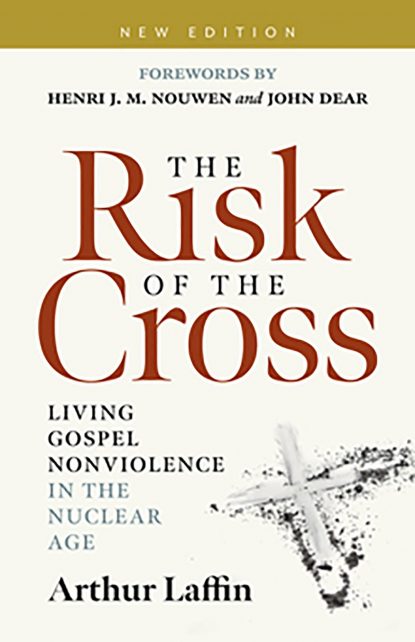
Nuclear anniversary serves as impetus for two excellent books,, Catholic Philly, By Eugene J. Fisher • Catholic News Service • Posted September 4, 2020 The Risk of the Cross: Living Gospel Nonviolence in the Nuclear Age” by Arthur Laffin. Twenty-Third Publications (New London, Connecticut, 2020). 130 pp., $16.95.“A World Free from Nuclear Weapons: The Vatican Conference on Disarmament,” edited by Drew Christiansen, SJ, and Carole Sargent. Georgetown University Press (Washington, 2020). 158 pp., $24.95.
These two books strive, based upon Catholic social teaching, to reach the same noble goals: global and local peace and the destruction of all nuclear weapons. Both note that the huge sums of money devoted to developing and maintaining nuclear weapons deprive our societies of funds that could be used to help those in need. The efforts of scientists in building nuclear weapons could be used to develop a better understanding of how to deal with threats to our health and safety, in local communities and worldwide. The timing of the release of these excellent volumes, some 70 years after Hiroshima and Nagasaki, is of course not accidental. The two books speak to each other and to all of us as Catholics, since a nuclear war would likely destroy our planet. “The Risk of the Cross” updates a book written some 40 years ago, when people like Dorothy Day and the Berrigans, and myself with them, were marching for peace and the Rev. Martin Luther King Jr. and John Lewis for civil rights for African-Americans. All these people lived the “Gospel nonviolence” called for, then and now, in this book…….. https://catholicphilly.com/2020/09/culture/nuclear-anniversary-serves-as-impetus-for-two-excellent-books/ |
|
|
“Fallout: The Hiroshima Cover-up and the Reporter Who Revealed It to the World.” – new book
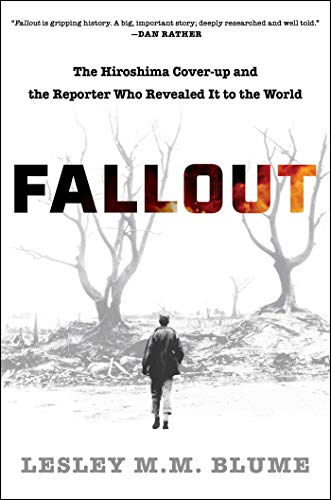 Fallout’: New book sobering reminder of nuclear devastation 75 years after entering atomic age https://www.dailylobo.com/article/2020/08/fallout-new-book-sobering-reminder-of-nuclear-devastation-75-years-after-entering-atomic-age By Hevyn Heckes 31 Aug 20, New Mexicans are perhaps more acutely aware of U.S. nuclear capabilities and the bomb, “Little Boy,” dropped on Hiroshima, since its predecessors were developed and tested in our own backyard. However, most people alive today will not remember the immediate aftereffects of the outsized attack on Japanese citizens that capped off the second world war.
Modern awareness of the atomic bomb and the events of WWII are mostly relegated to fictionalized accounts contained in films such as “Pearl Harbor” and “Schindler’s List.” The events surrounding WWII have long since become a cultural legend, and first-person memories of these events no longer exist. We’ve simply forgotten the horrors of global war — until now.
Leslie M. M. Blume set out to refresh our collective memory regarding the widely recognized end of WWII in “Fallout: The Hiroshima Cover-up and the Reporter Who Revealed It to the World.” She has done so in spectacular fashion – recalling our consciousness to the famous New Yorker article written by one John Hersey.
Blume details the difficulties Hersey confronted in reporting the truth of the atomic bomb’s lingering effects on Japanese citizens and the censorship levied against war correspondents prior to and during Hersey’s investigative presence in Japan.
Blume somehow manages to insert the reader in a manner usually only employed by fiction novels. She plies the reader with insight into how Hersey was able to convince Japanese victims to talk to him – a man they had every reason to hate and mistrust as a representative of their enemies in the U.S.
She explains that Hersey’s interviewees found him affable, educated and empathetic. His personal qualities endeared him to these people who would otherwise have gladly sent him on his way without a word.
Reading this book provides a timely and poignant reminder on the 75th anniversary of the bombings. One is forced to confront the human cost of nuclear weapons. Blume brilliantly interweaves Hersey’s reporting with her own so the reader is able to feel present with Hersey during his research and the victims of Little Boy’s aftereffects.
It becomes more and more clear that those who perished immediately with the bomb’s initial blast were the lucky ones.
Hersey and Blume graphically recount the physiological and psychological trauma Little Boy’s victims endured. One particularly memorable excerpt states, “(Japanese soldiers’) eyes had melted away in their sockets; the liquid had run in rivulets down their faces, which were burned beyond recognition.” Other excerpts tell of victims whose faces had “melted” with the blast so that their appearance seemed blurred.
Clearly, this novel contains sensitive and graphic depictions of physical trauma suffered by Japanese citizens of Hiroshima. This fact takes nothing away from the importance of the reader confronting these depictions to truly understand the catastrophic risks of nuclear war.
Fictional chaos theorist Dr. Ian Malcolm (played memorably by Jeff Goldblum) said in the film “Jurassic Park,” “Your scientists were so concerned with figuring out if they could that they didn’t stop to ask themselves whether or not they should.” This concept and ethical philosophy is perhaps more applicable to the invention of the atomic bomb — a weapon capable of far more devastating effects, up to and including nuclear winter, environmental devastation and species annihilation, than a few stray T-Rexes in a theme park.
As Hersey conveys and Blume emphasizes, nuclear weapons are a tool that could potentially bring about humanity’s self-inflicted extinction. Hersey’s reporting on the atomic bomb’s effects on the citizens of Hiroshima is perhaps a deterrent preventing nuclear disaster, but we must keep these consequences at the front of our minds to continue avoiding the doomsday clock finally tolling the midnight hour. “Fallout” is the poignant reminder we need right now.
Hevyn Heckes is a freelance reporter at the Daily Lobo. She can be contacted at culture@dailylobo.com or on Twitter @H_Squared90
BOOKS on The New Nuclear Threat
|
|



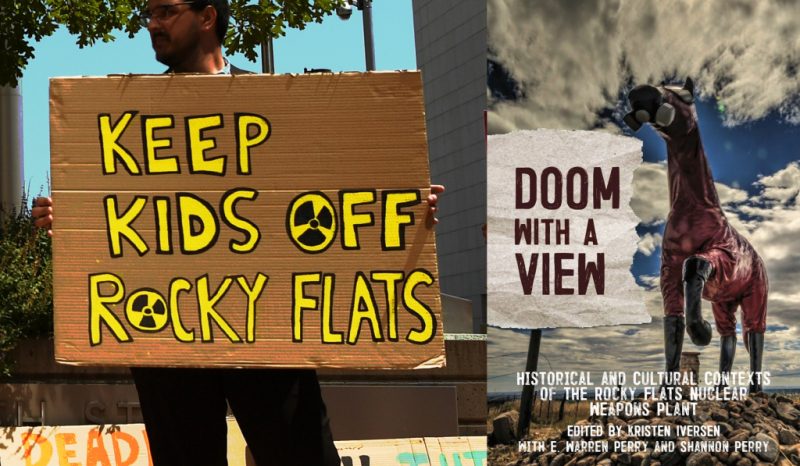
Book: Doom With A View: Historical and Cultural Contexts of the Rocky Flats Nuclear Weapons Plant.
The Grieving Landscape, LONGREADS, Heidi Hutner | Fulcrum Publishing | June 2020 | 16 minutes (4,305 words)
We’re delighted to bring you an excerpt by Heidi Hutner from the anthology Doom With A View: Historical and Cultural Contexts of the Rocky Flats Nuclear Weapons Plant. Edited by Kristen Iverson, with E. Warren Perry and Shannon Perry, the anthology arrives from Fulcrum Publishing in August, 2020.
At thirty-five, I was diagnosed with Hodgkin’s lymphoma. One year before my diagnosis, my mother died from complications after heart surgery. At the time of her death, my mother had cancer — lymphoma. Five years prior to Mom’s death, my father passed away from a brain tumor, a metastasis from the cancer melanoma.
Two years after I had completed my chemotherapy treatment for cancer, I gave birth to Olivia. My miracle baby.
At first, I was ecstatic about the pregnancy. I had always wanted children, and with my cancer, I feared this would never happen. My doctors said I was lucky to give birth to a biological child after chemotherapy (my treatment left me with a 50 percent chance of remaining fertile afterward). But now, a mother-to-be, I was also afraid. How could I protect my child from our family cancer blight?
My desire to protect my daughter from a future cancer diagnosis drove me into a rabbit hole of reading and learning about the reasons for my family’s affliction. I began with Rachel Carson’s Silent Spring and moved forward to more recent literature by Sandra Steingraber, Theo Colburn, and numerous others, including the President’s Cancer Panel Report. I learned that the cancer rates today are off the charts: one in two men and one in three women will get cancer in their lifetimes. Carson predicted this plague in 1963. She warned us of humankind’s “hubris” in carelessly polluting our earth with toxic chemicals and ionizing radiation. The epidemiologist Alice Stewart’s study on the grave danger of X-rays on babies in the womb in the 1950s, sounded the alarm about ionizing radiation as well. Today, our world swirls with pollutants — these carcinogens penetrate mothers’ wombs and breasts. Mother’s milk is a toxic cocktail. Newborns today are born with hundreds of synthetic chemicals in their umbilical cord blood. Synthetic chemicals and ionizing radiation change our makeup, harm our genes, and cause mutagenetic damage. More than 80,000 unregulated pollutants fill our environment.
We are guinea pigs.
Fast forward about eleven years: one summer day, in 2009, on the Upper West Side of Manhattan, at lunch with a close friend (and cousin) of my deceased mother, Phyllis Resnick, I stumbled upon a story about my mom that I had never heard before. The tale Phyllis told would radically change my life. My then-preteen daughter, Olivia, was by my side. She listened rapt with me as we learned of our maternal nuclear legacy.
Phyllis described how in the early 1960s, my mother and she, along with their good friend Thalia Stern Broudy, had been a members of Women Strike for Peace (WSP), an antinuclear group led by Dagmar Wilson and the future congresswoman, Bella Abzug. During the Cold War 1950s and early 60s, the U.S. had detonated one hundred above-ground nuclear test bombs in the Nevada desert and one hundred and six atmospheric test bombs in the South Pacific. The government claimed these test bombs posed no harm and the fallout had not spread, but scientists and medical professionals were concerned. A team of experts in St. Louis, MO, directed by Dr. Louise Reiss, initiated a survey to determine the extent of the impact of the bomb testing. With a chemical makeup similar to calcium, strontium-90, a radioisotope found in fallout, is easily absorbed in teeth and bones. Thousands of baby teeth from across the U.S. were collected between 1958 and 1971 for the St. Louis Baby Tooth Survey. In 1961, preliminary results showed high levels of strontium-90 in baby teeth of children born after 1945 and these levels increased over the time period, as the test-bombing continued. When the mothers of Women Strike for Peace learned the results of the survey, they banded together to stop atmospheric bomb testing. 50,000 WSP members from across the U.S. wrote letters, gathered petitions, lobbied congressional representatives, initiated lawsuits, and protested through marches and street demonstrations. My mother and her cohort of 15,000 WSP members traveled to D.C. to protest, lobby, and meet with their legislators November, 1961. In 1963, the United States, the U.K., and the Soviet Union signed the Partial Nuclear Test Ban Treaty, an agreement to halt atmospheric, under water, and outer space bomb testing. The signing of this treaty has been attributed to the efforts of WSP.
The government claimed these test bombs posed no harm and the fallout had not spread, but scientists and medical professionals were concerned.
After discovering this remarkable story about WSP, I became obsessed with feminist nuclear history. I wondered: Why had I never been told this tale when my mother was alive? What other vital nuclear histories involving women had been buried? So began my journey of exploring women’s antinuclear tales, traveling to nuclear disaster sites, and meeting with members of impacted communities. On this path, I met Kristen Iversen, the author of Full Body Burden, an investigative memoir about growing up next door to Rocky Flats, the former nuclear weapons facility in Arvada, Colorado. Kristen invited me to visit her in Colorado. She would introduce me to experts, scientists, and community members there. I brought my then eighteen-year-old daughter, Olivia, with me. She was about to leave for college. I wanted to share our maternal antinuclear and activist legacy with her before she left home. ………….
Operating from 1952 to 1992, the Rocky Flats nuclear weapons facility was located approximately 15 miles northwest of Denver, a city built by an influx of miners during the gold rush in the nineteenth century. During the years of its operation, the plant constructed more than 70,000 triggers for nuclear bombs. Rocky Flats would be the site of two major secret plutonium fires, blowing radioactive poison into sections of Arvada and Denver in 1957 and 1969. Hundreds of smaller fires also took place, as well as regular leaks, spills, and atmospheric plutonium releases. Plutonium clouds blew over houses, swimming pools, schools, churches, farms, fields, and streams. Rocky Flats is known for powerful Chinook winds — winds that would blow plutonium dust into local neighborhoods. Locals did not know that Rocky Flats was a weapons factory for most of its years of operation. Workers employed there were forbidden to speak of their work and often didn’t comprehend the full extent of the factory’s activities.
By 1989, The FBI and EPA suspected criminal negligence at Rocky Flats, which led to a raid, led by FBI agent Jon Lipsky.
A federal grand jury began an investigation, a settlement was negotiated, the court documents were sealed, and the plant closed. The story of this federal grand jury is fraught and complex, and cover-ups are suspected in the sealing of the documents and lack of full prosecution. The Rocky Flats cleanup was officially completed in 2004; however, numerous scientists, nuclear experts, local citizens, and antinuclear activists argue the cleanup is far from finished. Unknown but large amounts of plutonium and other contaminants remain on the land in what has been turned into a Superfund site, a designation made under the Comprehensive Environmental Response, Compensation, and Liability Act of 1980. The primary industrial site (the Superfund area — 485 acres) was never completely remediated. There is a buffer zone, also heavily contaminated, although the EPA claims this area is fully remediated. The surrounding area, now called a National Wildlife Refuge, was not remediated. Significant contamination has been detected there in the soil and groundwater. Many other toxic and radioactive contaminants have also been found at Rocky Flats in addition to plutonium: americium, uranium, cadmium, PCBs, beryllium, and more. A 2019 study found plutonium “hot particles” in the soil frighteningly close to the homes abutting the Flats………
Rocky Flats is “a national sacrifice zone,” says Robert Alvarez, associate fellow at the Institute for Policy Studies and former senior policy advisor to the secretary at the US Department of Energy. “That’s what it is, although no one will say so officially. How much remains buried there? A tremendous amount — plutonium doesn’t go away. No one has done this yet — it’s costly and complex — but someone needs to go into those houses nearby in Arvada and take samples. We don’t know how much plutonium is in them.”…….. https://longreads.com/2020/06/30/the-grieving-landscape/amp/
‘The Triumph of Doubt’ – corporations’ war on science
 Inside corporations’ war on science . A new book explains how corporations create a climate of doubt around science and expertise. Vox, By Sean Illing@seanillingsean.illing@vox.com May 26, 2020
Johnson & Johnson announced this week that it will stop putting talc, a mineral linked to asbestos, in its baby powder products. The move comes after years of lawsuits alleging that the powder causes various cancers.
It’s also a surprising turnaround. Johnson & Johnson has spent decades funding biased science and lobbying the government to avoid regulating its products or labeling them as cancer-causing. It’s a tactic deployed by many other industries that have a stake in stifling regulation and the science behind it.
The history of this practice is documented in a new book by David Michaels, the former assistant secretary of labor for the Occupational Safety and Health Administration (OSHA) under the Obama administration. It’s a close look at how powerful corporations fund junk science and misinformation campaigns in order to obscure evidence and undercut regulatory efforts.
Big Tobacco and the fossil fuels industry are obvious examples, but the problem goes well beyond that. From cancer-causing hair products and apparel to diabetes-linked food and sugary drinks, corporations have realized that you don’t have to convince the public or government officials of anything — all you have to do is create the illusion of doubt.
And they do that by piloting bogus studies, organizing partisan think tanks, supplying dubious congressional witnesses, and anything else they can think of to give regulators enough cover to plausibly look the other way. If you’ve ever heard a politician say “The science is still unclear” or “We need to keep researching the issue,” there’s a good chance that was made possible by industry-funded pseudo-science.
I spoke to Michaels about what this process looks like, why journalists and civic actors have been unable to stop it, and how the practice has become more pervasive in recent years. We also discussed the coronavirus pandemic and how the tactics he describes in this book helped lay the groundwork for the extreme skepticism of scientific expertise we’re seeing from conservatives.
“The Republican base,” Michaels told me, “has been acclimatized to be skeptical of mainstream science, and easily believe accusations that they are being manipulated by the deep state, the liberal media, and pointy-headed scientists.”
A lightly edited transcript of our conversation follows.
Sean Illing
When you say that big corporations like DuPont or Exxon manufacture doubt around their products, what do you mean?
David Michaels
I mean that they hire scientists who appear to be reputable to produce or obscure evidence about the products they make. If there are studies or even suggestions that their product is dangerous, you can hire a scientist who will say, “The evidence is in question,” or, “The study is wrong.”
Corporations make sure those scientists get their opinions into what look like credible peer-reviewed journals, then they get picked up by newspapers, then they have the sound bites that commentators repeat, and that’s enough to convince people that there’s uncertainty. Not necessarily that the product is safe, but that the scientific evidence isn’t there.
That’s basically how it works.
Sean Illing
You used the phrase “appear to be reputable.” What does that mean?
David Michaels
They are credentialed people, but they typically work for consulting firms whose business model is to provide any result their client needs……..
One of the things the Trump administration has done is essentially take the same mercenary scientists who have been working for corporations trying to influence the agencies to do the wrong thing and then given them high-level positions in these same agencies – [EPA , the FDA and other public institutions]…….
The example that I find most striking is a fellow named Tony Cox, who was appointed chairman of the Clean Air Scientific Advisory Committee by former EPA Administrator Scott Pruitt, who is himself a longtime lobbyist for the oil and coal industries……..
Sean Illing
So we’ve just made the process more efficient. Industry doesn’t even need middlemen to muddy the waters on their behalf now because they just have their own people appointed to run the agencies charged with regulating them…….
David Michaels
As the abject and enormously tragic failure of the Trump administration’s response to the Covid-19 pandemic becomes increasingly clear, the president and his supporters are taking the tobacco road, applying the same strategy used by cigarette manufacturers, fossil fuel corporations, and a host of other industries whose products and activities damage public health.
Not only is it the same strategy, it features the same cast of characters, and it is promoted in the same social media and cable TV venues, especially Fox News. Right-wing pundits, Trump administration officials, and scientists with long histories of discredited studies first declared the epidemic a hoax and then asserted the numbers of cases and deaths are wildly inflated. They have been eventually shown to be wildly wrong, but it has no impact on their credibility or their willingness to offer outrageous claims.
When the Trump administration is finally evicted from power, we will need to rebuild our system of public health protections, not simply by pouring more funding into federal agencies that were weak and flawed even before Trump, but by reimagining how they can be far more effective and inclusive, and are able to apply the best available science. And we must do this in a way that overcomes the anti-science culture fed by the current administration and the Republican party.
If we are unable to accomplish these goals, I fear that the nation’s disastrous response to Covid-19 is likely to be a preview of a very troubling future. https://www.vox.com/policy-and-politics/21137717/johnson-and-johnson-triumph-of-doubt-david-michaels
Wake up world -to the climate emergency – Naomi Klein’s new book “On Fire”
 To avoid climate catastrophe, it’s going to take a revolution of the mind,
As we approach a turning point in our civilization’s journey, author Naomi Klein has been sounding the alarm about how to shift the current paradigm and loosen our deadly chokehold on the living world. Fast Company, BY ANNA LENZER, 15 Mar 20,
Antarctica just hit 65 degrees, the highest temperature it’s ever recorded, and a sea in Siberia is “boiling” with methane. Major parts of the U.S. drinking water supply are contaminated with “forever chemicals”—so called because they virtually never degrade—that are linked to cancers and liver damage, among other health problems. Climate models used to forecast warming are running red-hot and giving us far less time than we thought to turn things around. And last July was the hottest month in the 140 years that records have been kept, the 415th consecutive month with temperatures above the 20th-century average.
There’s a growing sense that we’re approaching a turning point in our civilization’s journey, in which the path diverges between two extremes—a re-flourishing garden planet and a bleak, burning wasteland of increasingly rationed resources. We’re pushing on dominoes that could fall into a runaway series of irreversible tipping points and feedback loops that will leave us to do emergency triage and run rescue-salvage missions on a dying and incinerated planet for the rest of our days. Peak Life is in sight, possibly already behind us, and our current trajectory is about to fling us off the cliff.
The UN is raising the alarm that the mass extinction of plant and animal species—which has already decimated large swaths of the planet—risks collapsing into a catastrophic point of no return, and that halting this destruction of the web of life (along with our food and water security) requires an unprecedented transformation of civilization beginning immediately.
A series of global summits through the end of this year is intended to kick off  this paradigmatic shift and to loosen our deadly chokehold on the living world.
A few days before the UN’s Climate Action Summit in New York last fall, author Naomi Klein launched her latest broadside against the forces of inertia with the now best-selling On Fire: The (Burning) Case for a Green New Deal, a book designed to inspire a blueprint for the United States’ reemergence as a global climate leader………https://www.fastcompany.com/90475368/to-avoid-climate-catastrophe-its-going-to-take-a-revolution-of-the-mind
Book review – “The Bomb”
 The Bomb’ Review: Down the Nuclear Rabbit Hole
Until 1989, no president had ever been privy to the military’s list of specific targets in the Soviet Union. WSJ, Paul Kennedy, Jan. 31, 2020, In the summer of 1945, as a mushroom cloud rose high above the Japanese city of Hiroshima, the very history of war and diplomacy, and the world of Great Power relations, changed irrevocably. Science had created a weapon of such indiscriminate destructiveness that it ought, now that its ferocity was clear, never to be used again. This became even more obvious to contemporary observers when the more powerful hydrogen bombs appeared on the scene only a few years later, and when the Soviet Union also quickly acquired similar weaponry.
|
Before that time, the saying went, the leaders of the Great Powers had to figure out only how to win wars; now their awful duty was to ensure that they avoided war among themselves so that this most powerful weapon in their armory would never be used. This was not just another big bomb, as Truman had called it before he, too, realized things were different. This was an existential device, and, ironically, possessing tens of thousands of these devices did not necessarily make you safer. If America had 30,000 warheads and the U.S.S.R. also had 30,000 warheads, who felt more secure? ……..
American presidents and their civilian and military advisers have repeatedly found themselves in a box—a “rabbit hole” is the word frequently used in Fred Kaplan’s new book—scrambling to get out, and failing to do so. A good number of members of the U.S. military, joined by some hawkish intellectuals, have indeed thought that nuclear weapons were “usable” and some presidents did at times threaten obliteration, but for most concerned the main effort has been to ensure that they were never, ever used.
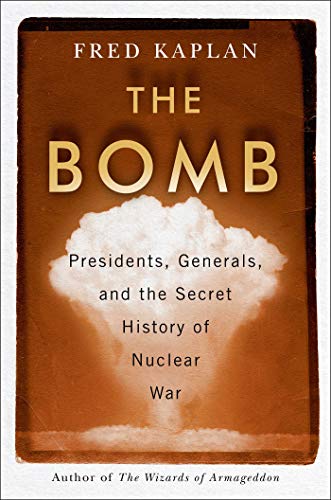
And what an effort that was, as Mr. Kaplan reveals in “The Bomb: Presidents, Generals and the Secret History of Nuclear War.” ………. The stakes are enormous, it seems; no other form of conflict and warfare counts; really, no other form of history counts. Mesmerized by the dramatic detail, the reader might find it hard to disagree. ………. Successive presidents were introduced to their awesome nuclear responsibilities, blinked hard and strove to alter them, but they made little progress in overcoming the system. The improving world situation, and the early post-Soviet years especially, allowed limited pullbacks: The B-52 bomber force was no longer kept on constant alert, for instance. But it is instructive to read how highly intelligent presidents, with no great early interest in nuclear or even overall military matters, found themselves sucked into decisions whose outcomes then became part of their legacies—such as the success or failure, during the Obama administration, of the 2010 New Start treaty with the Russians……… with something of a shock, one arrives at the present, at the Age of Trump, analyzed by Mr. Kaplan in a 38-page chapter titled “Fire and Fury”—these were the words repeatedly used by our current president in 2017 when threatening North Korea with oblivion if it continued to threaten us. Mr. Kaplan claims to bring the reader into the inner sanctums of a presidency whose leader, instead of being impressed at the story of our nuclear warheads having been reduced from 32,000 to a mere 2,500, complains that he really wants the U.S. to have many more such weapons………. Absent some stunning transformation in the minds of men, the Great Powers will keep nuclear weapons in their armories as deterrents and strive to prevent their use—and, indeed, the very existence of nuclear weapons probably has deterred some statesmen now and then from rash and aggressive actions. The crazy logic of it all, Mr. Kaplan senses, will go on. Yet he ends up being a very frightened critic, not just because of the present commander-in-chief, but because he honestly wonders how many more wars we can dodge before a combination of “slow-wittedness and misfortune” tips things over. “The Bomb” is a work that should make thoughtful readers even more thoughtful. But it is not a book for the faint of heart. https://www.wsj.com/articles/the-bomb-review-down-the-nuclear-rabbit-hole-11580487715 |
|
|
The Bomb: Presidents, Generals, and the Secret History of Nuclear War
Nuclear Nightmares–– By Justin Vogt, NYT, Jan. 28, 2020, THE BOMB By Fred Kaplan, It’s an old joke, but a good one. “Doctor, my son thinks he’s a chicken,” a father tells a psychiatrist, who suggests treatment for the boy. “We’d like to do that,” the father says, “but we need the eggs.”
For decades, American presidents have found themselves in a similar predicament, as revealed with bracing clarity by “The Bomb,” Fred Kaplan’s rich and surprisingly entertaining history of how nuclear weapons have shaped the United States military and the country’s foreign policy. It is the story of how high-level officials, generals and presidents have contended with what Kaplan calls “the rabbit hole” of nuclear strategy, whose logic transforms efforts to avoid a nuclear war into plans to fight one, even though doing so would kill millions of people without producing a meaningful victory for anyone. As President Barack Obama once put it before weighing in during a meeting on nuclear weapons: “Let’s stipulate that this is all insane.”
Owing to the spread of those weapons and to the inevitability of competition between powerful countries, generations of policymakers have leapt into the abyss again and again. Nuclear strategy is an exercise in absurdity that pushes against every moral boundary but that has likely contributed to the relative safety and stability of the contemporary era, during which nuclear weapons have proliferated but major war has all but vanished. Apparently, we need the eggs.

Book: ‘From Mad to Madness’- an Inside Account of US Nuclear Weapons Strategy
 This Madness Deserves a Protest: an Inside Account at US Nuclear Weapons Strategy, CounterPunch, By Joan Roelofs ,April 5, 2017
“In contrast to the Soviet Union, the United States has always maintained its ‘right’ to carry out a nuclear first strike. This has never changed and was reaffirmed by Defense Secretary Ashton Carter . . . on September 27, 2016.” – Diana Johnstone, From MAD to Madness.
There is not much hope for the retraction of this threat. On March 21, Reuters reported “Trump has said that while he would like to see nuclear weapons abolished, he wants the United States to have an unrivaled arsenal. He also said that the United States has ‘fallen behind’ in its nuclear capabilities, even though it is in the midst of a 30-year, $1.3 trillion drive to modernize what most experts agree is the world’s most powerful nuclear force.”
An insider’s memoir, From MAD to Madness, by Paul H. Johnstone, describing the persistence of the US nuclear threat has recently been published by Clarity Press. Johnstone was a senior analyst in the Strategic Weapons Evaluation Group in the Department of Defense, directing studies on the probable consequences of nuclear war, to us and to them, and also an author of The Pentagon Papers.
He died in 1981, leaving his memoir to his daughter, author (and CounterPunch contributor) Diana Johnstone. He had previously served in World War II as an evaluator of Japanese enemy targets, but as Diana says here: “Hiroshima changed the nature of targeting dramatically, and that is the story my father tells in his memoir.”
In this book Diana has finally published his “Memoir of a Humanist in the Pentagon,” along with her added commentary and a foreword by Paul Craig Roberts. Roberts expresses in a nutshell the contemporary horrific relevance of the book: “The neoconservatives in pursuit of their goal of US world hegemony have resurrected the possibility of nuclear war. The neocons have taken us from MAD to madness.”
The neocons are not some far-right fringe group; they represent the mainstream of US foreign policy in recent Democratic and Republican administrations. The political use of the nuclear threat has a long history. It was inaugurated by the nuclear bombing of Hiroshima and Nagasaki, a political decision opposed by the military. Admiral Leahy, Chairman of the Joint Chiefs of Staff wrote: “the use of this barbarous weapon at Hiroshima and Nagasaki was of no material assistance in our war against Japan. The Japanese were already defeated and ready to surrender. . .
” The Truman Doctrine (1947) indicated that there were no regrets. It stated in effect that any country that appeared to be adopting a communist form of government, whether through outside intervention, civil war, or ordinary elections, would be subject to whatever punishment the United States chose to inflict, not excluding nuclear attack.
Johnstone traces the “breather” in our policy characterized by MAD—the idea that Mutually Assured Destruction: a path to mutual suicide—was a deterrent to the use of nuclear weapons. This realization by our government occurred once Soviet nuclear capability became obvious. However, as Roberts notes, after the Soviet collapse in the 1990s the US “resurrected nuclear weapons as usable weapons of war. The Obama regime . . . authorized a trillion dollar expenditure for nuclear weapons, and US war doctrine elevated nukes from a retaliatory role to pre-emptive first strike.”
Roberts, who was United States Assistant Secretary of the Treasury for Economic Policy under President Reagan in 1981, maintains that Reagan and Gorbachev “eliminated the risk of Armageddon by negotiating the end of the Cold War.”…….
The military and the increasingly gigantic industries equipping it wanted bases everywhere, and somewhat plausible threats that would justify annual upgrading of the lethal arsenal. Wars now and then that would enable testing and destruction of weapons were also useful for the advancement of warriors and profits of contractors. Furthermore, revolutions that were allowed to succeed and improve the lives of people might create imitators in our land of vast wealth accompanied by astounding poverty and misery.
Yet neither Roberts nor Johnstone discusses the role of multinational corporations and the military- industrial complex in motivating and perpetuating the post-WWII Cold War. They attributed major influence on US policy to anti-Soviet émigrés (Kissinger, Brzezinski and others) from Eastern Europe. A high-level Air Force intelligence “Special Studies Group,” headed by a Hungarian émigré “expert” predicted in every annual appraisal that there would be “a massive Russian land attack on Western Europe the following year.”
The worldwide cold war between capitalism and socialism continues—in Cuba, among other places—and there is now also the megalomaniac goal of world hegemony. The projected attack by the now-capitalist Russia is still awaited, despite indications that the Russians want to eliminate the specter of civilization’s total nuclear destruction.
Johnstone’s sober prediction in From MAD to Madness: “there can be no victor in a nuclear war” must be given priority by the newly-awakened activists. The abolition of nuclear weapons would be a step towards sanity.: http://www.counterpunch.org/2017/04/05/this-madness-deserves-a-protest-an-inside-account-at-us-nuclear-weapons-strategy/
The Chernobyl Syndrome
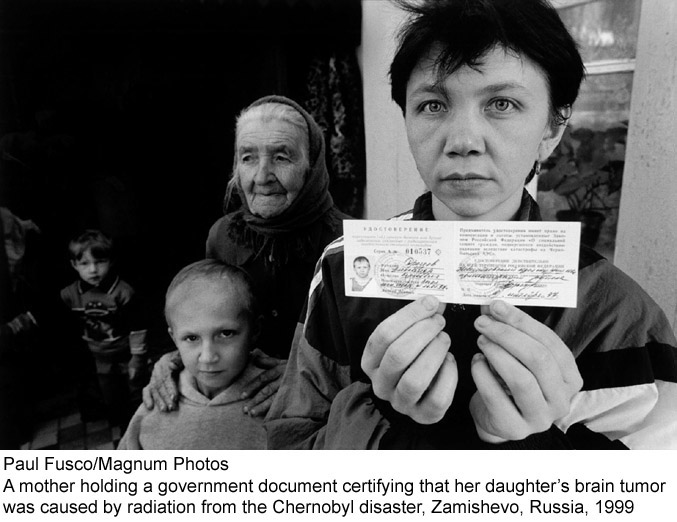
With bountiful, devastating detail, Brown describes how scientists, doctors, and journalists—mainly in Ukraine and Belarus—went to great lengths and took substantial risks to collect information on the long-term effects of the Chernobyl explosion, which they believed to be extensive.
Other researchers have issued a much sunnier picture of post-Chernobyl ecology, but Brown argues persuasively that they are grossly underestimating the scale of the damage, in part because they rely too heavily on simplistic measurements of radioactivity levels.
Radiation has a special hold on our imagination: an invisible force out of science fiction, it can alter the very essence of our bodies, dissolve us from the inside out. But Manual for Survival asks a larger question about how humans will coexist with the ever-increasing quantities of toxins and pollutants that we introduce into our air, water, and soil. Brown’s careful mapping of the path isotopes take is highly relevant to other industrial toxins, and to plastic waste. When we put a substance into our environment, we have to understand that it will likely remain with us for a very long time, and that it may behave in ways we never anticipated. Chernobyl should not be seen as an isolated accident or as a unique disaster, Brown argues, but as an “exclamation point” that draws our attention to the new world we are creating.
The Chernobyl Syndrome, The New York Review of Books SophiePinkham, APRIL4, 2019
Manual for Survival: A Chernobyl Guide to the Futur e
e
Midnight in Chernobyl: The Untold Story of the World’s Greatest Nuclear Disaster
Chernobyl: The History of a Nuclear Catastrophe
“………As her book’s title, Manual for Survival, suggests, Kate Brown is interested in the aftermath of Chernobyl, not the disaster itself. Her heroes are not first responders but brave citizen-scientists, independent-minded doctors and health officials, journalists, and activists who fought doggedly to uncover the truth about the long-term damage caused by Chernobyl. Her villains include not only the lying, negligent Soviet authorities, but also the Western governments and international agencies that, in her account, have worked for decades to downplay or actually conceal the human and ecological cost of nuclear war, nuclear tests, and nuclear accidents. Rather than attributing Chernobyl to authoritarianism, she points to similarities in the willingness of Soviets and capitalists to sacrifice the health of workers, the public, and the environment to production goals and geopolitical rivalries. Continue reading
Manual For Survival – A Chernobyl Guide to the Future
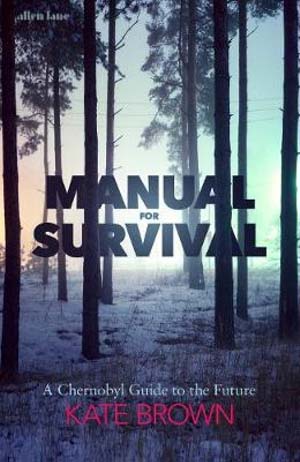 Science 6th March 2019 Two decades after Chernobyl, the International
  Atomic Energy Agency (IAEA), the World Health Organization (WHO), and the United Nations (UN) Scientific Committee on the Effects of Atomic Radiation stated that “fewer than 50 deaths had been directly attributed to radiation from the disaster, almost all being highly exposed rescue workers,” because radiation levels were considered too low to have caused any detectable harm. This conclusion was based on data derived from the atomic bomb survivors life-span study, a program that began in 1950 to document the long-term health effects of the atomic bombing of Hiroshima and Nagasaki.
yet the idea that there were no long-term consequences to human health proved hard to dislodge.
know that they were exposed to radiation. Over the years, Soviet scientists amassed vast evidence of a broad range of debilitating health effects from low-level radiation, including cancers; anemia; gastrointestinal problems; and severe disorders of the liver, kidneys, thyroid, and other organs.
https://blogs.sciencemag.org/books/2019/03/06/manual-for-survival/
An Enthralling and Terrifying History of the Nuclear Meltdown at Chernobyl
By Jennifer Szala,Feb. 6, 2019, The word “Chernobyl” has long been synonymous with the catastrophic reactor explosion of 1986 — grim shorthand for what still qualifies, more than three decades later, as the world’s worst nuclear disaster.
As infamous as it is now, it’s easy to forget that the calamity seemed to drift to international attention as if by accident. A full two days after the meltdown began in Ukraine, with winds carrying radioactive fallout into Europe, alarms went off at a nuclear power station in faraway Sweden. Only then did Soviet officials deign to release a terse statement acknowledging “an accident has taken place,” while studiously neglecting to mention the specifics of what had happened or when.
“Aid is being given to those affected,” the statement concluded. “A government commission has been set up.”
In his chilling new book, “Midnight in Chernobyl,” the journalist Adam Higginbotham shows how an almost fanatical compulsion for secrecy among the Soviet Union’s governing elite was part of what made the accident not just cataclysmic but so likely in the first place. Interviewing eyewitnesses and consulting declassified archives — an official record that was frustratingly meager when it came to certain details and, Higginbotham says, couldn’t always be trusted — he reconstructs the disaster from the ground up, recounting the prelude to it as well as its aftermath. The result is superb, enthralling and necessarily terrifying………https://www.nytimes.com/2019/02/06/books/review-midnight-chernobyl-adam-higginbotham.html
Midnight in Chernobyl: The Untold Story of the World’s Greatest Disaster
Energy Station in Ukraine exploded, venting radioactive material into the
atmosphere. That radiation rolled over huge swaths of what was then the
western part of the Soviet Union, and the explosion entered history as one
of the worst nuclear power plant disasters. As with accounts of any
disaster, there are three major questions: What happened, why did it
happen, and could it happen again? Several books investigate the answers:
In 2018, for instance, there was “Chernobyl: The History of a Nuclear
Catastrophe” by Harvard professor Serhii Plokhy, and in March there will
be Kate Brown’s “Manual for Survival: A Chernobyl Guide to the
Future.”
to appear in English is Midnight in Chernobyl: The Untold Story of the
World’s Greatest Disaster by Adam Higginbotham. The author, along with
his research partner Taras Shumeyko, has conducted extensive interviews and
compiled background material over ten years, creating a compelling,
panoramic account of the disaster set in its broader context but still
working with those three fundamental questions, starting with “what
happened?” Thanks to the nature of Soviet Union, answering such a
question was complicated from the start.
https://www.csmonitor.com/Books/2019/0131/Midnight-in-Chernobyl-explores-the-world-s-worst-nuclear-disaster
New book: former chairman of Nuclear Regulatory Commission opposes nuclear energy
How Dangerous is Nuclear Power and How Bad is Its Regulation? (2019)
Former NRC chairman remains clearly opposed to nuclear energy, Las Vegas Sun, 9 Jan 19, “……… former Nuclear Regulatory Commission Chairman Gregory Jaczko is going on the offensive to explain why nuclear energy is nowhere near a perfect solution to the climate crisis.
In a new book, Jaczko reiterates his longstanding criticism of the nuclear industry and his opposition to development of traditional nuclear power plants, which he says are unsafe despite technological improvements designed to make them safer.
Exhibit No. 1 in Jaczko’s argument is the Fukushima disaster. …, he contends that the catastrophe at Fukushima wiped out environmental gains that Japan made by burning less fossil fuels
…….Meanwhile, he says, the cost of generating electricity through natural gas and renewables is lower in most parts of the country than nuclear generation
……“So to me, the idea that somehow we’re going to preserve these reactors and that’s a climate solution is just wrong,” he said.
Then, of course, there’s the issue with nuclear waste ………
Jaczko’s bottom-line assessment is that despite decades of development, nuclear energy remains too hazardous and costly to be a viable source of power.
“There’s going to be an accident,” he said. “The only question is when and where.”
It’s a compelling argument, and anyone who may be warming to nuclear energy in the fight to reverse climate change should examine it. The book, “
,” is available now at Amazon, Barnes & Noble and other outlets. https://lasvegassun.com/news/2019/jan/09/former-nrc-chairman-remains-clearly-opposed-to-nuc/
Sayonara Nukes ~The Case for Abolishing Nuclear Energy and Nuclear Weapons
 Book Review: Sayonara Nukes ~The Case for Abolishing Nuclear Energy and Nuclear Weapons, BY DENNIS RICHES http://www.cnic.jp/english/?p=4174 BY CNIC_ENGLISH · CAITLIN STRONELL, CNIC AUGUST 2, 2018
Center for Glocal Studies, Seijo University I first came across Dennis Riches’ blog about a year after 3.11 when I was in India studying anti-nuclear movements. I read it avidly for its rich perspectives and home truths. Dennis was offering cultural, psychological, socio-economic explanations for the innumerable crises that the Fukushima Daiichi meltdowns had unleashed. Many of my friends at the time were focused on technical explanations, which although of course vitally important, didn’t answer the really big questions for me, such as: How can the nuclear industry still be telling the same lies? How can TEPCO still be allowed to operate as a company? What are the structures we have to change here? His blog described the stark reality that we were facing in a matter-of-fact way but with strong undercurrents of extreme passion, which somehow seemed to me exactly what was needed.
The first section connects nuclear issues to figures as wide apart as Don Quixote and Bob Dylan, and compares the situation in Japan immediately after the Fukushima Daiichi disaster to a sci-fi drama called LOST. Although I have never seen this drama, Dennis’s comparison of the traumatized victims in the drama who somehow find themselves in an island paradise that has been transformed by technology and their dazed befuddlement and denial of reality, or perhaps inability to even grasp what had happened to them, and the situation in Japan in the nuclear disaster aftermath, make a lot of sense. We are reminded that in times when we feel utter disbelief, it is often the arts that offer the best explanation as to how and why we find ourselves in this predicament. This section also includes other film and book reviews and discussions.
The other two sections also contain book reviews as well as reports of conferences that Dennis attended, including the 2015 Pugwash Conference in Nagasaki (which he is quite critical of) as well as a report of a presentation on India’s nuclear program by Kumar Sundaram given in 2014 when he was in Tokyo. Articles on the devastating affects of the nuclear industry on citizens of various countries around the world, including the US, the Pacific Islands and Dennis’s native Canada are described with a focus on the voices of the victims. More abstract ideas such as the ‘institutional self-deception’ of the nuclear industry as well as an article titled ‘Commucapitalism’ about how ‘plutonium cities’ in both of the superpowers adopted the same political and social values despite their opposing national ideologies.
Many of the articles are 10-20 pages long and this allows Dennis to present many details, but also articulate overarching ideas and arguments. Each article is followed by copious endnotes and in many cases further reading lists providing a wealth of information on a wide variety of topics. Although this may sound a little academic, the articles are very easy to read and draw you in with their forthrightness and slight sarcastic edge.
The time period covered is from immediately after 3.11 through to more recent articles on the Trump administration. I would have liked to have known the actual date that the original blog was published as I think this might give some indication of the phases that Dennis, and perhaps many of us, went through and the way our thoughts developed post 3.11.
The book is published by Seijo University’s Center for Glocal Studies and is available in pdf form, free of charge at
www.seijo.ac.jp/research/glocal-center/publications/english-study-series/index.html
1 This Month
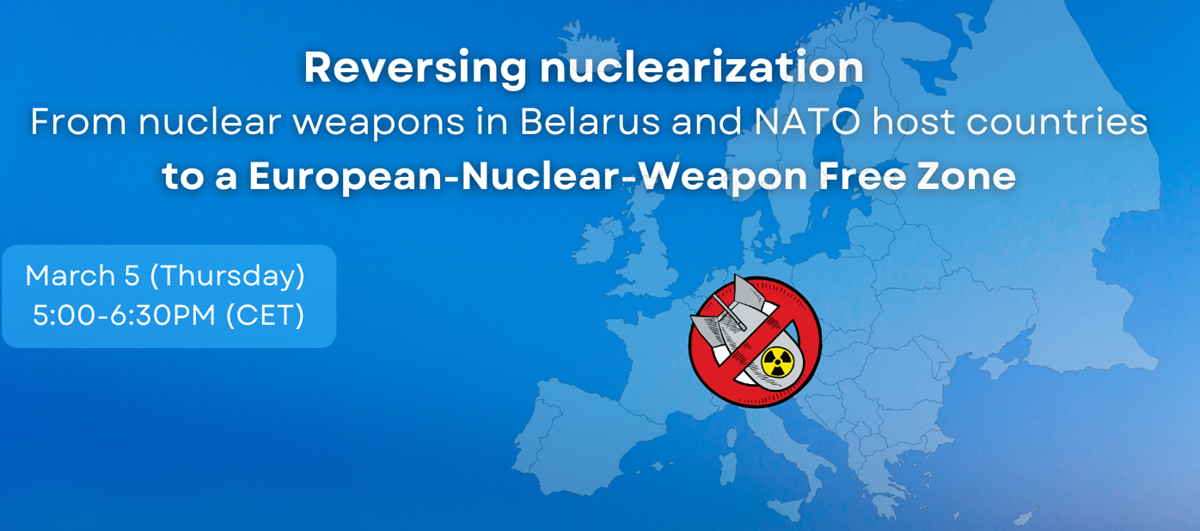
5 March -Online – Reversing nuclearization:
From nuclear weapons in Belarus and NATO host countries to a European-Nuclear-Weapon Free Zone
11am-12:30pm Eastern Time USA / 5pm-6:30pm CET

of the week – Advocating for a
nuclear free beach – https://www.samuellawrencefoundation.org/
The Samuel Lawrence Foundation advocates for a Nuclear Waste Free Beach at San Onofre, join us and take action!
10 March A LIVE WEBINAR THE REAL EFFECTS OF NUCLEAR POWER
What the Industry Isn’t Telling Us
1:00 PM Mountain, 2 pm Central, 3 pm Eastern. Live on the Keepers of the Water Facebook page

18 March Webinar @ 1 PM EST: An Assessment of SMR Projects: The Case of Canada
register for the zoom:
https://us02web.zoom.us/webinar/register/WN_o8BIIOUvQ2ONJR1nta65DQ#/registration

of the week – STOP SMALL MODULAR REACTORS IN CANADA
To see nuclear-related stories in greater depth and intensity – go to https://nuclearinformation.wordpress.com
-
Archives
- March 2026 (38)
- February 2026 (268)
- January 2026 (308)
- December 2025 (358)
- November 2025 (359)
- October 2025 (376)
- September 2025 (258)
- August 2025 (319)
- July 2025 (230)
- June 2025 (348)
- May 2025 (261)
- April 2025 (305)
-
Categories
- 1
- 1 NUCLEAR ISSUES
- business and costs
- climate change
- culture and arts
- ENERGY
- environment
- health
- history
- indigenous issues
- Legal
- marketing of nuclear
- media
- opposition to nuclear
- PERSONAL STORIES
- politics
- politics international
- Religion and ethics
- safety
- secrets,lies and civil liberties
- spinbuster
- technology
- Uranium
- wastes
- weapons and war
- Women
- 2 WORLD
- ACTION
- AFRICA
- Atrocities
- AUSTRALIA
- Christina's notes
- Christina's themes
- culture and arts
- Events
- Fuk 2022
- Fuk 2023
- Fukushima 2017
- Fukushima 2018
- fukushima 2019
- Fukushima 2020
- Fukushima 2021
- general
- global warming
- Humour (God we need it)
- Nuclear
- RARE EARTHS
- Reference
- resources – print
- Resources -audiovicual
- Weekly Newsletter
- World
- World Nuclear
- YouTube
-
RSS
Entries RSS
Comments RSS
 nuclear-news