Radioactivity in Tokyo

 Dr. Chris Busby: Entomb the reactors or have ‘Mad Max’ scenario. http://optimalprediction.com/wp/dr-chris-busby-entomb-the-reactors-or-have-mad-max-scenario/ 3 Aug 12, Chris Busby is calling for sealing off the Fukushima reactors, since they are still releasing huge amounts of radionuclides. Cost is no object. I would say that the whole site needs to be entombed, since steam and smoke are coming out of fissures in the ground. Also a boronated concrete barrier needs to be built underground, to stop the leakage of corium into the groundwater and the sea.
Busby has also done tests on an air-conditioning filter in a Tokyo apartment (here andhere), and has found huge amounts of cesium and uranium in it. Where there is uranium, there is plutonium too. These radionuclides are incredibly toxic.

 Fukushima Film: It’s murder not allowing children to escape http://enenews.com/local-official-fukushima-allowing-children-escape-murder-will-be-late-when-second-chernobyl-video — It will be too late when we are the 2nd Chernobyl -Local Japanese Official (VIDEO) July 31st, 2012 By ENENews
Two workers fall ill while at Reactor 3, transported to hospital in ambulance — Both had altered consciousness »
Fukushima Film: It’s murder not allowing children to escape — It will be too late when we are the 2nd Chernobyl -Local Japanese Official (VIDEO)
Transcript Excerpt Surviving Japan (2012) Filmmaker: Chris Noland
Minamisoma city council member Koichi Oyama: I would like to explain something historical to better your understanding. Japan used to be ruled by a king, the emperor…..
Parents and teacher tell children the best thing you can do was die for your country.
Kamikaze pilots in the war embodied this spirit.
In World War II they always told us we were winning every battle.
No one knew about Hiroshima and Nagasaki.
The same thing is happening now. The current government not telling people what is happening is the same we have had since World War II.
Keep your country alive by killing yourself.
I think the way to save the children at Fukushima is to get the world involved. If we don’t protect our children now, it will be too late when we are the second Chernobyl.
Not allowing the children to escape is murder.
 Gundersen: A ton of plutonium was in each Fukushima reactor — Host shocked (VIDEO) July 30th, 2012 By ENENews Title: Arnold Gundersen with the latest on Fukushima: its effects on Japan, and the global risks posed by the No. 4 reactor Source: If You Love This Planet Radio Author: Dr. Helen Caldicott Date: July 27, 2012
Arnold Gundersen, Nuclear Engineer: Unit 3 had 30 bundles of MOX fuel… All the reactors have plutonium in them… Uranium-238 becomes plutonium-239 when it absorbs a neutron… There was close to a ton of plutonium in each of the reactors… scattered throughout the fuel… A ton of plutonium in each reactor… you and I know how dangerous plutonium can be… makes the cleanup that much more difficult.
See also: Physician: “A millionth of a gram of plutonium, or less, can induce cancer, or will induce cancer” http://enenews.com/gundersen-a-ton-of-plutonium-was-in-each-fukushima-reactor-host-stunned-video
Gundersen: Powdered nuclear fuel laying outside containment at Reactor No. 2 (VIDEO)July 30th, 2012 By ENENews Title: Arnold Gundersen with the latest on Fukushima: its effects on Japan, and the global risks posed by the No. 4 reactor Source: If You Love This Planet Radio Author: Dr. Helen CaldicottDate: July 27, 2012
This week, Dr. Caldicott has a new conversation with nuclear engineer Arnold Gundersen about the ongoing nuclear disaster at the Fukushima plant and its effects on Japan and the rest of the world.
Arnold Gundersen, Nuclear Engineer: At Reactor 2… the conclusion is that fine pieces of nuclear fuel have escaped the containment and are lying as a powder on the bottom of the torus room.
Gundersen: The particles escaped the torus… that’s what’s fascinating… these are outside containment… it’s quite clear that the junction between the torus and the dry part of the containment failed. http://enenews.com/gundersen-powdered-nuclear-fuel-lying-containment-vessel-reactor-2-video
Arnold Gundersen with the latest on Fukushima:
I think they will get to point of throwing concrete on Fukushima reactors and coming back in 300 to 500 years -Gundersen (VIDEO) July 30th, 2012 By ENENews : Arnold Gundersen with the latest on Fukushima: its effects on Japan, and the global risks posed by the No. 4 reactor
Source: If You Love This Planet Radio Author: Dr. Helen Caldicott Date: July 27, 2012 Arnold Gundersen, Nuclear Engineer: So I think they get to the point where they throw some concrete down on the top of it and come back in 300 years… This is not something I can figure out how one would clean up… 300, 400, 500 years. http://enenews.com/will-point-throwing-concrete-top-fukushima-reactors-coming-300-500-years-gundersen-video

TEPCO covering seafloor with enormous amounts of concrete. Why?
Tepco completes covering seafloor with layers of cement mix — More coating used at Reactors 5 & 6 than for Reactors 1, 2, 3 & 4 combined (PHOTOS & VIDEOS) July 19th, 2012 By ENENews http://enenews.com/tepco-completes-covering-seafloor-with-layers-of-cement-mix-more-coating-used-outside-reactors-5-6-than-for-reactors-1-2-3-4-combined-photos-videos
And all those funny looking black containers which were placed/dropped into the water..just COVER those things up with LAYERS of CONCRETE. Next generation can worry about it. Sadly, Mr. TEPCOman, one has to ask WHAT next generation will be healthy enough to work the problem?
One question to ask..what happened at Reactors 5 and 6 to require as much concrete or MORE than Reactors 1-4? Were more containers dumped into the ocean? More meltdown corium heading for the ocean..or is the ground so unstable..I hope its not the last. Subsidence(loss of ground HEIGHT) could be raising its ugly head. That is bad– almost as bad as Reactor 1-4 “payloads.”
Also note the non-concern of “radiation” going out into the OCEAN. What do they think the ocean is? An endless pit? Its not.
VIDEO: USA’s soldier guinea pigs watched atomic explosion
“It was a publicity stunt to show the American public how safe it was during an atomic bomb,” Yoshitake says, “and if there was a war or something, with atomic bombs going off, that it was going to be safe for the general public.”..
all six people who were there that day have had cancer
VIDEO How not to watch an overhead nuclear test http://www.cbsnews.com/8301-505263_162-57475611/how-not-to-watch-an-overhead-nuclear-test/ CBS News COLLEGE POINT, Md. 19 July 12 – On this date in 1957, the U.S. conducted one of the most important tests of the atomic age.
A nuclear-tipped missile was fired and detonated in the skies over the Nevada desert.
But what was happening on the ground at that moment seems beyond comprehension today. Continue reading
Documentary shows the threat of uranium mining to the Grand Canyon
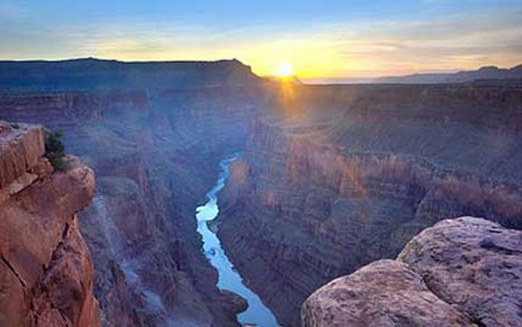 Documentary Short: How Uranium Mining Threatens The Grand Canyon http://thinkprogress.org/climate/2012/07/11/515109/documentary-short-how-uranium-mining-threatens-the-grand-canyon/?mobile=nc By Public Lands Team on Jul 11, 2012 By Jessica Goad
Today the Center for American Progress and the Sierra Club released a series of short documentary videos called “Public Lands, Private Profits .”
One of the stories, “A Grand Threat ,” profiles the new rush to extract uranium around Grand Canyon National Park. A Canadian company is currently excavating uranium at one mine on the north rim of the canyon, and it has plans for more mines in the near future.
Although Secretary of the Interior Ken Salazar set one million acres off-limits to mineral extraction this past January, that decision applied only to new mining claims, not those already in existence. There are approximately 3,500 mining claims that may be valid — potentially resulting in up to 11 uranium mines near the Grand Canyon.
Shockingly, these new mines are moving forward under environmental studies and plans of operation last approved in the 1980s. Although the Interior Department and the Forest Service have full authority to demand updated environmental reviews, they have not taken that step.
And just two weeks ago, Kaibab National Forest Supervisor Mike Williams agreed to let Denison move forward with its plans to develop the Canyon Mine (featured in the video) under environmental and cultural impact studies from 1986.
Last week, Denison Mines sold its U.S. assets to Energy Fuels Incorporated. Denison declined to comment, but Energy Fuels explained that it is “highly cognizant ” of the responsibilities of mining in the region.
Opponents of uranium mining fear that any water pollution could take years to clean up. To find out more about this issue or to take action, visit the Sierra Club’s website .
VIDEO Japanese Raising Voices Against Nuclear Reactors’ Restart VOA, July 06, 2012 TOKYO — For the third consecutive Friday evening, thousands of Japanese took to the streets of their capital to vent frustration with the government’s move to restart idled nuclear power plants. Continue reading
AUDIO: Japan’s anti nuclear protest, and new report on Fukushima
 Thousands protest in Tokyo as report finds “collusion” of failure in Fukushima nuclear disaster http://fsrn.org/audio/thousands-protest-tokyo-report-finds-%E2%80%9Ccollusion%E2%80%9D-failure-fukushima-nuclear-disaster/10555 07/06/2012 –
Length: 4:59 minutes (4.57 MB)
Format: MP3 Mono 44kHz 128Kbps (CBR)
Thousands of protesters filled the streets in Tokyo today calling for an end to nuclear power in the country. Video of the protests streamed online showed a heavy police presence as crowds lined the street chanting and holding umbrellas in the rain. Crowds were prompted to the streets by news that the first nuclear reactor came online this week.
According to Japan Times, Reactor 3 at Oi nuclear plant in Fukui Prefecture resumed generating electricity Thursday. Others are scheduled to follow. The protests coincide with an independent report that concluded the Fukushima disaster was “man-made” and faulted the
government, regulators and the nuclear industry for failing to adequately prepare for the damage at the Fukushima Daiichi plant and protect public safety. The report, released by the Fukushima Nuclear Accident Independent Investigation Commission said authorities
“effectively betrayed the nation’s right to be safe from nuclear accidents.”
For more on the report and what it could mean for nuclear safety in the US, we’re joined by Karl Grossman, professor of journalism at State University of New York/College at Old Westbury, and author of “Cover Up: What You Are Not Supposed to Know About Nuclear Power.”
How nuclear radioactivity has killed Japan’s surfing industry
AUDIO Japan’s surfers lament radioactive coast, Radio Australia 2 July 2012, Japan overnight restarted a nuclear reactor – the first time it’s done so since the Fukushima disaster. The move has polarised the country, with many fearing the reactor on the country’s west coast is just as vulnerable to earthquakes and tsunamis as the Fukushima plant.
And some of those fighting hardest against the restart of more nuclear
plants are Japan’s professional surfers, who say Fukushima’s coastline
was once regarded as one of the best surfing spots in the country. Continue reading
VIDEO: Fukushima nuclear plant at risk of an even greater nuclear disaster
VIDEO http://www.abc.net.au/7.30/content/2012/s3532725.htm Experts warn of another disaster awaiting at Fukushima Australian Broadcasting Corporation 7.30 report Broadcast: 25/06/2012 Reporter: Mark Willacy Japanese and US nuclear experts warn that another earthquake hitting Fukushima could spark a disaster worse than Chernobyl….
Conflict of interest, USA’s Department of Energy funds research into radiation
 The Energy Department is also the main source of funding for radiation health research — much like having the tobacco industry determine the safety of smoking. This conflict-of interest is not new. Several prominent scientists on the nuclear payroll in the 1950’s and 60’s vigorously claimed that radioactive fallout from atmospheric nuclear weapons tests was harmless. Some went so far as to assert that fallout might be beneficial because increased radiation-induced genetic mutations could weed out the weak.
A Radioactive Conflict of Interest http://www.huffingtonpost.com/robert-alvarez/mit-radiation-study_b_1623899.html HUFFINGTON POST, Robert Alvarez, 06/25/2012 Having the Energy Department control radiation health research makes as much sense as giving tobacco companies the authority to see if smoking is bad for you.
VIDEO http://www.youtube.com/watch?v=e8YFe6Q08M8 MIT No-Evacuations Study Debunked Last month, the Massachusetts Institute of Technology (MIT) heralded an Energy Department funded study indicating that evacuation zones around nuclear power stations might not be needed after a major nuclear accident. The study, which exposed mice to radiation levels comparable to those near the Fukushima nuclear disaster, found no evidence of genetic harm. “There are no data that say that’s a dangerous level,” says Jacquelyn Yanch, a leader of the study.
According to theMIT press release “current U.S. regulations require that residents of any area that reaches radiation levels eight times higher than background should be evacuated. However, the financial and emotional cost of such relocation may not be worthwhile, the researchers say.”
Countering the cacophony of crap against renewable energy
Renewable Energy Industry Pushes Back Against Bad Press Fox News, June 20, 2012 A new informational website called energyfactcheck.org and launched Wednesday by one of the industry’s top Washington boosters will target reporters, political decision-makers, and anyone else willing to listen to the pitch that the industry is viable, despite some failures.
“The perception, because of the lack of fact-based information out there, is that we’re some fleeting, fly-by-night, government-dependent entity,” said Vice Admiral Dennis McGinn, a retired Navy officer and chief executive of the American Council on Renewable Energy, the nonprofit that is maintaining the new website.
“The fact is that we have real companies making real profits and making investments in renewable energy for all the right reasons.” Continue reading
Chernobyl photographers paid with their lives
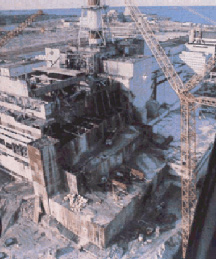 Never-seen-before shots of Chernobyl nuclear disaster that cost two of the four photographers their lives http://www.dailymail.co.uk/news/article-2142849/Haunting-shots-Chernobyl-nuclear-disaster-revealed-true-scale-catastrophe–cost-photographers-lives.html?ito=feeds-newsxml By DAILY MAIL REPORTER, 11 May 2012 These are the haunting images that captured the true scale of the
Chernobyl nuclear disaster. The black and white shots, taken in the weeks following the 1986 Ukraine tragedy, revealed the truth behind the tragedy Soviet
authorities were trying to hush up.
But despite helping the outside world to understand what happened that fateful April 26 day, the pictures have had a devastating human cost.
Of the four photographers chronicling the tragedy, Anatoly Rasskazov and Valery Zufarov have died from radiation-related diseases and Igor Kostin is constantly ill from the exposure. Continue reading
1 This Month

of the week – Shut Down Drone Warfare!


Tell the Ukrainian Government to Drop Prosecution of Peace Activist Yurii Sheliazhenko

Petition to revoke the licensing of the Near Surface Nuclear Disposal Facility (NSDF) at Chalk River. https://www.ourcommons.ca/petitions/en/Petition/Details?Petition=e-7247
To see nuclear-related stories in greater depth and intensity – go to https://nuclearinformation.wordpress.com
-
Archives
- April 2026 (114)
- March 2026 (251)
- February 2026 (268)
- January 2026 (308)
- December 2025 (358)
- November 2025 (359)
- October 2025 (376)
- September 2025 (257)
- August 2025 (319)
- July 2025 (230)
- June 2025 (348)
- May 2025 (261)
-
Categories
- 1
- 1 NUCLEAR ISSUES
- business and costs
- climate change
- culture and arts
- ENERGY
- environment
- health
- history
- indigenous issues
- Legal
- marketing of nuclear
- media
- opposition to nuclear
- PERSONAL STORIES
- politics
- politics international
- Religion and ethics
- safety
- secrets,lies and civil liberties
- spinbuster
- technology
- Uranium
- wastes
- weapons and war
- Women
- 2 WORLD
- ACTION
- AFRICA
- Atrocities
- AUSTRALIA
- Christina's notes
- Christina's themes
- culture and arts
- Events
- Fuk 2022
- Fuk 2023
- Fukushima 2017
- Fukushima 2018
- fukushima 2019
- Fukushima 2020
- Fukushima 2021
- general
- global warming
- Humour (God we need it)
- Nuclear
- RARE EARTHS
- Reference
- resources – print
- Resources -audiovicual
- Weekly Newsletter
- World
- World Nuclear
- YouTube
-
RSS
Entries RSS
Comments RSS
 nuclear-news