Short film explores nuclear legacy through the lens of the Marshallese community
Hawaii Public Radio | By Cassie Ordonio. October 27, 2023, https://www.hawaiipublicradio.org/local-news/2023-10-27/short-film-explores-nuclear-legacy-through-the-lens-of-the-marshallese-community
Several decades after the United States detonated 67 nuclear bombs on the Marshall Islands, many Marshallese in the diaspora are longing to return home.
“In Exile,” which explores the nuclear legacy in the Pacific told through the experience of the Marshallese community in Arkansas, premiered at the Hawai’i International Film Festival this month.
Brooklyn-based director Nathan Fitch said the nuclear migration of the Marshallese is a blind spot in American history.
“The film is partly intended for an American audience who just doesn’t know anything about the Marshall Islands, let alone that piece of American history,” Fitch said. “Also, the fact that the (Marshallese) people have been in exile for nearly 70 years and still dream of going home.”
The Marshall Islands is located roughly 2,000 miles southwest of Hawaiʻi. It’s a sovereign nation comprising over 1,200 islands and chains of coral atolls, including its most populous Majuro and Kwajalein. The U.S. conducted a series of nuclear tests in Bikini and Enewetak Atolls during the Cold War between 1946 and 1958.
The radioactive fallout from the tests impacted people’s health, and many experienced birth defects and cancer. Descendants of the Bikini islands have lived in exile since 1946, and much of the island today is still unlivable.
Thousands of Marshallese have lived in the U.S. under the Compacts of Free Association. This agreement allows the Marshallese to migrate visa-free to the U.S. and its territories in exchange for the U.S. military having strategic denial rights of vast swaths of water in the surrounding islands.
The film follows the story of the Marshallese in Springdale, Arkansas, who gather annually to commemorate the Nuclear Victims Remembrance Day. Arkansas has one of the largest populations of Marshallese in the U.S., with a population of roughly 15,000.
Also, the film revealed that many Marshallese only knew the nuclear history once they were older. This was eye-opening for Angela Edward, a film producer and a Pohnpeian podcaster.
“They were never told about the nuclear testing their whole lives, almost until they were adults,” Edward said. “For them, it was almost a survival thing because they felt like it was their way of coping with this humongous tragedy that happened historically. “
The debut of “In Exile” is in juxtaposition with the negotiations of the Compacts of Free Association, according to Fitch. Recently, the U.S. and the Marshall Islands have renewed their agreement to extend economic assistance for another 20 years.
Fitch said he hopes the film will give an audience an understanding of why Marshallese, as well as other COFA citizens, migrated to the U.S.
“In Exile” sold out tickets at the Hawaiʻi International Film Festival. It recently won the Reel South Award at the Hot Springs Documentary Film Festival.
The short film is part of a larger film project called “Essential Islanders,” which Fitch said is still in the works.
“In Exile” will be available online next year. #nuclear #antinuclear #NoNukes #radiation
‘The Day After’ Director Returns to Sound the Alarm with ‘How to Stop a Nuclear War’
Military.com | By Blake Stilwell 11 Oct 23
It might come as a surprise to some, but for most of the Cold War, Hollywood never really depicted what might actually happen to Americans if the Soviet Union suddenly nuked the United States. Sure, they did emergency drills in schools and likely saw photos of Nagasaki and Hiroshima, but it was a 1983 made-for-television movie starring Steve Guttenberg and John Lithgow that changed how many Americans felt about the looming prospect of a nuclear war.
“The Day After” aired on Nov. 20, 1983, and bluntly showed everyday Americans going about their lives before getting vaporized to the bone by a Soviet intercontinental ballistic missile, or ICBM, as they ran in vain for the nearest fallout shelter. More than 100 million people watched Kansas and Missouri get suddenly and violently obliterated — and they didn’t handle it well.
Nearly 40 years later, director Nicholas Meyer (who is also responsible for all the good “Star Trek” movies featuring the original cast) is back to warn us again about the danger posed by nuclear weapons and how the world is currently teetering on the edge of destruction. This time, he’s doing it through a new documentary, “How to Stop a Nuclear War” based on the book “Doomsday Machine: Confessions of a Nuclear War Planner” by famed Pentagon Papers whistleblower Daniel Ellsberg………………………………………………………….
Whether Jay and Meyer’s upcoming documentary “How to Stop a Nuclear War” will have an effect on whoever occupies the White House after its release is anyone’s guess. But if it’s anything like “The Day After,” it will likely have an effect on the rest of us.
— Blake Stilwell can be reached at blake.stilwell@military.com. He can also be found on Facebook, X or on LinkedIn. more https://www.military.com/off-duty/movies/2023/10/11/day-after-director-returns-sound-alarm-how-stop-nuclear-war.html #nuclear #antinuclear #NuclearFree #NoNukes #NuclearPlants
Portland filmmaker on ‘Downwind,’ a powerful documentary about nuclear tests on U.S. soil
Oregon Live Kristi Turnquist 6 Oct 23 #nuclear #antinuclear #nuclear-free #NoNukes
Millions of people bought tickets this summer to see “Oppenheimer,” Christopher Nolan’s blockbuster movie about J. Robert Oppenheimer and the development of the atomic bomb during World War II. The first nuclear weapon was dropped on Hiroshima, Japan, in 1945, and a second bomb was dropped a few days later, on Nagasaki, Japan.
While the bombs are credited by some with ending World War II, as Japan surrendered shortly after the atomic weapons were dropped, the long-term effects of the radioactive fallout unleashed by detonating nuclear weapons is a subject the movie didn’t delve into, which has drawn some criticism.
However, a new documentary, “Downwind,” takes an in-depth look into the devastating impact the American government’s testing of nuclear weapons on U.S. soil has had, particularly on those unfortunate enough to live near testing sites, and potentially in people far beyond those borders.
………………………………….. In a phone interview, Shapiro and Miller talked about how they became interested in the subject of nuclear tests in America, and how for years the government downplayed the effects of radioactive fallout.
Shapiro recalls how he and Miller, who have collaborated on various projects over the years, became intrigued by a magazine report about “The Conqueror,” a 1956 movie produced by Howard Hughes that starred John Wayne in the unlikely role of Genghis Khan.
The movie was filmed in Utah in 1954, in locations a little over 100 miles from the Nevada Test Site, which was about 65 miles north of Las Vegas, and was the place where hundreds of above and below-ground nuclear tests were conducted, from 1951 through 1992.
As Patrick Wayne, son of the iconic star, says in an interview for “Downwind,” at the time “The Conqueror” was filmed, the nuclear tests were kept quiet, and those involved in the film didn’t know they were working in an area that had been dusted with, as the film says, some of the highest levels of radioactive fallout ever recorded in United State history.
A large number of people who worked on “The Conqueror,” including Wayne, ultimately died of complications related to cancer. In “Downwind,” Patrick Wayne acknowledges that some of the people involved in the making of “The Conqueror” smoked, but he suggests that the number of cancer-related fatalities suffered by members of “The Conqueror” cast and crew was still remarkable.
From this early interest, “We dove deeper into the research,” Shapiro says. They found that, from 1951 through 1992, the U.S. detonated 928 nuclear weapons at the Nevada Test Site.
“Downwind” looks at how miscalculated wind forecasts, government proclamations that radiation exposure wasn’t a serious health threat, and revelations from now-declassified documents referring to those who lived near the test site as a “low use segment of the population” potentially contributed to illnesses suffered by Americans who were never warned about the dangers of living near the test sites.
……………………….. Most affecting, however, are interviews filmed with some of the people who have been directly impacted by being “Downwinders,” and have become activists trying to draw attention to the dangers of exposure to radioactive fallout.
Ian Zabarte, Principal Man of the Western Bands of the Shoshone Nation of Indians, for example, speaks with emotion about how the Nevada Test Site was located on Shoshone land, and how the soil, the water, and the people have all been affected, a process Zabarte calls “disgustingly shameful.”…………………………..
Another striking element of “Downwind” are clips from films produced by Lookout Mountain Laboratory, which operated generally in secret as a Hollywood film studio that was a unit of the U.S. Air Force and churned out films that, among other things, tended to downplay the impact of exposure to radioactive fallout…………………………….
Since “Downwind” has been shown at film festivals and became available to rent on streaming services, Shapiro says the filmmakers have been hearing from lots of people either interested in or close to the topic, including, as Shapiro says, “folks from Hanford,” the Washington state site that was established in 1943 “as part of the Manhattan Project to produce plutonium for national defense,” as the U.S. Department of Energy describes it………………………………………………………………………………. more https://www.oregonlive.com/entertainment/2023/10/portland-filmmaker-on-downwind-a-powerful-documentary-about-nuclear-tests-on-us-soil.html
Film examines France’s nuclear history in Algeria
Documentary gives voice to villagers who lived through explosions and still suffer from deadly effects
Melissa Gronlund, Sep 29, 2023 https://www.thenationalnews.com/arts-culture/2023/09/29/france-algeria-atom-bomb/
etween 1960 and 1966, the French government detonated 13 atom bombs in the Algerian Sahara. The tests signalled France’s accession to the nuclear club and were hailed in Paris as a victory.
“Hoorah for France,” wrote President Charles de Gaulle the morning after the first blast, in a message to his army minister.
Little is known about the bomb’s effect in Algeria itself. According to a witness, 60 people died in 1962 after an explosion went wrong.
Inhabitants of the nearby village of Mertoutek say they were evacuated for 24hours and then told it was safe to return. More than 60 years later, they still say the land and water beneath it is contaminated. When they perform ablutions before prayers, for example, the water hurts their skin.
The international incident, which has been gaining exposure over the past few years, is the subject of a new short film And still, it remains by British filmmakers Arwa Aburawa and Turab Shah.
The husband and wife team had been thinking about how to represent the end of the world and the nuclear tests presented them with the example of a community who had – when they heard the detonations – believed the world was ending.
But when they began investigating the event, they realised there was only documentation of the French side of the story.
“[There was] nothing about the villagers themselves and absolutely nothing in terms of what happened next,” says Aburawa, who grew up in Manchester, UK, in a Palestinian family. “We were interested in the lack of perspective of people on the ground. How did they experience this moment, and then how did they experience life after that?”
Commissioned by the Liverpool Arab Arts Festival to look into how the climate crisis is affecting the Arab world, Aburawa and Shah spent two years researching the tests. In 2022, they travelled to the small village of Mertoutek.
Located in the foothills of the Hoggar Mountains, Mertoutek is profoundly isolated. Most of the villagers have never been to the nearest town, which is four hours away – itself a two-hour plane ride from Algiers. Most trace their ancestry to tribes from Mali and Niger who migrated to the village 400 years ago.
Aburawa and Shah were prepared to be ignored, but they were instead immediately welcomed. The villagers were keen to tell their side of history, the pair say, and were as interested in Aburawa and Shah as the filmmakers were in them and their stories.
Aburawa, who could communicate in Arabic with some of the elders of the village, was invited into gatherings with the women, who wanted to know how she celebrated her traditions as a Palestinian. Every morning, the young girls of the village would come by their house to see if she wanted to come herd the goats, she says, or to teach her their games.
The villagers ended up changing the shape of the film. Aburawa and Shah had initially been taken by the very poetic metaphor that followed the detonations – that the dust cloud of radioactive material travelled along the northern winds towards France, in effect returning to pollute the country that had perpetrated the tests.
“But when we visited Mertoutek, we learnt they have a long, long history. They told us how their families had been in the village for hundreds of years, and people before that for thousands of years,” says Aburawa.
“Suddenly, our concept of time and how to place a community’s experience in the moment massively shifted. We wanted to acknowledge that people have long histories and the land has an even longer history.”
And still, it remains treats the landscape as a main character. The pair filmed with a wide anamorphic lens in order to bring in more of the surroundings, and they pay attention to the sensory feel of life outdoors – fingers dig holes in the soft sand to create a board game; the wind whips painfully through spindly leaves.
Longer sequences give the sense of the world turning. In one stunning scene, the sky turns from bright, almost lurid orange to a faded pink, as the sun rises and the craggy mountains transform from outlines to legible sandstone edifices.
“What’s happening right now in the climate crisis and what happened in colonialism are so deeply connected,” says Aburawa. “They are both colonial mindsets of extraction and toxifying without thinking of the consequences.
“The situation in Algeria is saying, ‘You can’t escape these things. They don’t just disappear. A bomb exploded in the 60s, but it hasn’t gone away. It still remains with us.’ And that’s what inspired the title of the film.”
Today, the townspeople of Mertoutek still live in danger. At one point, one of the villagers recounts in the film that her father and some other men from the village went to the test site to take scrap metal to use for their gardens. The men all got sick. The recounter’s father got brain cancer and died.
“We asked them, did you ever think of leaving?” says Shah. “And they said, ‘But where would we go?’ There wasn’t anywhere for them to leave to. It was never an option.”
And still, it remains is showing at Lux in Waterlow Park, London, until October 14. More information is available at lux.org.uk
Terrible truths about nuclear energy exposed
“We are all seeing a global political agreement centred in the UN organisations, tie IAEA [International Atomic Energy Agency], the World Health Organisation… All the international agencies are whitewashing what is happening in Fukushima.
By Karl Grossman | 11 July 2023 https://independentaustralia.net/environment/environment-display/terrible-truths-about-nuclear-energy-exposed,17704
A NEW documentary titled The Fukushima Disaster: The Hidden Side of the Story is a powerful, moving, informative film that is superbly made. Directed and edited by Philippe Carillo, it is among the strongest ever made on the deadly dangers of nuclear technology.
Australians featured in the film are Dr Helen Caldicott, former president of Physicians for Social Responsibility, and John Keane, professor of politics at the University of Sydney. Carillo is a resident of the nation of Vanuatu, 1,750 kilometres northeast of Australia.
The documentary begins with the words of U.S. President John F Kennedy from 1961:
“Every man, woman and child lives under a nuclear sword of Damocles, hanging by the slenderest of threads, capable of being cut at any moment by an accident, or miscalculation or by madness.”
It then goes to the March 2011 disaster at the Fukushima Daiichi nuclear power plant in Japan after it was struck by a tsunami. Its backup diesel generators kicked in but “did not run for long,” notes the documentary. That led to three of the six plant reactors exploding – and there’s video of this – “releasing an unpreceded amount of nuclear radiation into the air”.
“Fukushima is the world’s largest ever industrial catastrophe,” then says Professor John Keane. He says there was no emergency plan and, as to the owner of Fukushima, Tokyo Electric Power Company (TEPCO), with the accident its CEO “for five nights and days… locked himself inside his office”.
Meanwhile, from TEPCO, there was “only good news” with two Japanese government agencies also “involved in the cover-up” — the Nuclear Industry Safety Agency and the Ministry of Economy, Trade and Industry.
“Japanese media was ordered to censor information. The Japanese Government failed to protect its people,” the documentary relates.
Yumi Kikuchi of Fukushima, since a leader of the Fukushima Kids Project, recalls:
“On TV, they said that ‘it’s under control’ and they kept saying that for two months. The nuclear power plant had already melted and even exploded but they never admitted the meltdown until May. So, people in Fukushima during that time were severely exposed to radiation.”
Arnie Gundersen, a nuclear engineer and now a principal of Fairewinds Energy Education in Burlington, Vermont in the United States, speaks of being told by Naoto Kan, the Prime Minister of Japan at the time of the accident, that “our existence as a sovereign nation was at stake because of the disaster at Fukushima Daichi”.
Kan then appears in the documentary and speaks of “manmade” links to the disaster.
The documentary tells how Kan, following the accident, became “an advocate against nuclear power… ordered all nuclear power plants in Japan to shut down for safety” and for the nation “to move into renewable energy”.
Subsequently, “a nuclear advocate”, Shinzo Abe, became Japan’s Prime Minister.
Yoichi Shimatsu, a former Japan Times journalist, appears in the film and speaks of “the cruelty, the cynicism of this government”. He speaks of how in the accident’s aftermath, “nearly every member of Parliament and leaders of the major political parties”, along with corporate executives, “moved their relatives out of Japan”.
He says:
“Shanghai is the largest Japanese community outside Japan now… while these same people [had been] telling the people of Fukushima ‘go home’, ten kilometres from Fukushima, ‘go home, it’s safe’, while their families are overseas in Los Angeles, in Paris, in London and in Shanghai.”
“If it’s safe, why they left?” asks Kikuchi.
Gundersen says:
At Fukushima Daichi, the world is already seeing deaths from cancer related to the disaster…There’ll be many more over time. [There has been a] huge increase in thyroid cancer in the surrounding population.
Unfortunately, the Japanese Government is not telling us all the evidence. There’s a lot of pressure on the scientists and the medical community to distort the evidence so there’s no blowback against nuclear power.
There is a section in the documentary on the impacts of radioactivity which includes Dr Caldicott discussing the impacts of radiation on the body and how it causes cancer.
She states:
There is no safe level of radiation. I repeat, there is no safe level of radiation. Each dose of radiation is cumulative and adds to your risk of getting cancer and that’s absolutely documented in the medical literature.
The nuclear industry says, well, there are ‘safe doses’ of radiation and even says a little bit of radiation is good for you and that is called the theory of hormesis. They lie and they lie and they lie.
Maggie Gundersen, who was a reporter and then a public relations representative for the nuclear industry and, like her husband Arnie, became an opponent of nuclear power, speaks of how nuclear power derives from the World War II Manhattan Project program to develop atomic weapons and post-war so-called “Atoms for Peace” push.
Gundersen says in becoming a nuclear industry spokesperson, “the things I was taught weren’t true”. The notion, for example, that what is called a containment at a nuclear plant is untrue because radioactivity “escapes every day as a nuclear power plant operates” and in a “calamity” is released massively.
As to economics, she cited the claim decades ago that nuclear power would be “too cheap to meter”.
The president of Fairewinds Energy Education says:
Regarding the radioactive waste produced by nuclear power, she says “there is literally no technology” to safeguard it for the many years it remains lethal. “It does not exist.”
As to international oversight, the documentary presents the final version of the Report of the United Nations Scientific Committee on the Effects of Atomic Radiation issued in 2014 which finds that the radiation doses from Fukushima ‘to the general public during the first year and estimated for their lifetimes are generally low or very low… The most important effect is on mental and social well-being’.
Shimatsu says it is not only in Japan but on an international level that the consequences of radioactive exposure have been completely minimised or denied:
“We are all seeing a global political agreement centred in the UN organisations, tie IAEA [International Atomic Energy Agency], the World Health Organisation… All the international agencies are whitewashing what is happening in Fukushima. We take dosimeters and Geiger counters in there, we see a much different story.”
In Germany, says Maggie Gunderson, “the politicians chose” to do a study to substantiate that no health impacts “happened around nuclear power plants… But what they found was the radiation releases cause significant numbers of childhood leukemia”.
A summary of that 2008 study comes on the screen. The U.S. followed up on that research, she says, but recently “the [U.S.] Nuclear Regulatory Commission said it was not going to do that study,” that “it doesn’t have enough funding; it had to shut it down”. She said the real reason was that it was producing “data they don’t want to make public”.
Beyond the airborne releases of radiation after the Fukushima accident, now, says the documentary, there is the growing threat of radioactivity through water that has and still is leaking from the plant as well as more than a million tons of radioactive water stored in a thousand tanks built at the plant site.
After the accident, TEPCO released 300,000 tons of radioactive water into the Pacific Ocean. Now there is no land for more tanks, so the Japanese Government, the documentary relates, has decided, starting this year, to dump massive amounts of radioactive water over a 30-year period into the Pacific.
Arnie Gundersen speaks of the cliché that “the solution to pollution is dilution,” but with the radiation from Fukushima being sent into the Pacific, there will be “bio-accumulation” — with vegetation absorbing radiation, little fish eating that vegetation and intensifying it and bigger fish eating the smaller fish, further bio-accumulating the radioactivity. Already, tuna off California have been found with radiation traced to Fukushima. With this planned further and yet greater dispersal, thousands of people “in the Pacific basin will die from radiation,” he says.
Andrew Napuat, a member of the Parliament of Vanuatu, an 83-island archipelago in the Pacific, says in the documentary:
“We have the right to say no to the Japan solution. We can’t let them jeopardise our sustenance and livelihood.”
Vanuatu, along with 13 other countries, has signed and ratified the South Pacific Nuclear Free Zone Treaty.
As the documentary nears its end, Arnie Gundersen says that considering the meltdown at the Three Mile Island nuclear plant in Pennsylvania in 1979, the meltdown at the Chernobyl nuclear plant in Ukraine in 1986, and now the three Fukushima meltdowns in 2011, there has been “a meltdown every seven years roughly”.
He says:
“Essentially, once every decade the world needs to know that there might be an atomic meltdown somewhere.”
And, he adds:
“The nuclear industry is saying they want would like to build as many as 5,000 new nuclear power plants.”
(There are 440 in the world today.)
Meanwhile, he says:
“Renewable power is no longer alternative power. It’s on our doorstep. It’s here now and it works and it’s cheaper than nuclear.”
The cost of producing energy from wind, he says, is three cents a kilowatt hour, for solar, five cents and for new nuclear power plants, 15 cents. Nuclear “makes no nuclear economic sense”.
Maggie Gundersen says, with tears in her eyes:
“I’m a woman and I feel it’s inherent for us as women to protect our children, our grandchildren, and it’s our job now to raise our voices and have this madness stop.”
Philippe Carillo, who worked for 14 years in Hollywood and who since 2017 has lived in Vanuatu, has worked on several major TV documentary projects for the BBC, 20th Century Fox and French National TV as well as doing independent productions. He says he made The Fukushima Disaster: The Hidden Side of the Story to “expose the nuclear industry and its lies”.
His previous award-winning documentary, Inside the Garbage of the World, has made changes regarding the use of plastic.
The Fukushima Disaster, The Hidden Side of the Story can be viewed at Amazon (UK and U.S.), Apple TV, iTunes, Google Play and Vimeo on demand.
A new CHERNOBYL? Zaporizhzhia’s threat explained as explosion fears grow
A new CHERNOBYL? Zaporizhzhia’s threat explained as explosion fears grow.
Zaporizhzhia Nuclear Power Plant, could it be another Chernobyl? What will
happen if Zaporizhzhia explodes? Ukraine war news update today: Expert Paul
Dorfman compares the Chernobyl disaster of 1986 and the Fukushima disaster
in 2011 and whether we could see a similar event in Ukraine after Zelensky
warned Russia was planning to blow up the Zaporizhzhia Nuclear Power Plant
The Fukushima Disaster: The hidden side of the story
Arnie Gundersen speaks of the cliché that “the solution to pollution is dilution,” but with the radiation from Fukushima being sent into the Pacific, there will be “bio-accumulation”—with vegetation absorbing radiation, little fish eating that vegetation and intensifying it and bigger fish eating the smaller fish and further bio-accumulating the radioactivity. Already, tuna off California have been found with radiation traced to Fukushima. With this planned further, and yet greater dispersal, thousands of people “in the Pacific basin will die from radiation,” he says.
Exposing the nuclear industry and its lies. https://www.telegraph.co.uk/politics/2023/07/08/labour-explore-ai-ban-decisions-nuclear-weapons-david-lammy/
“The Fukushima Disaster, The Hidden Side of the Story,” is a just-released film documentary, a powerful, moving, information-full film that is superbly made. Directed and edited by Philippe Carillo, it is among the strongest ever made on the deadly dangers of nuclear technology.
It begins with the words in 1961 of U.S. President John F. Kennedy: “Every man, woman and child lives under a nuclear sword of Damocles, hanging by the slenderest of threads, capable of being cut at any moment by an accident, or miscalculation or by madness.”
It then goes to the March 2011 disaster at the Fukushima Daichi nuclear power plants in Japan after they were struck by a tsunami. Their back-up diesel generators were kicked in but “did not run for long,” notes the documentary. That led to three of the six plants exploding—and there’s video of this—“releasing an unpreceded amount of nuclear radiation into the air.”
“Fukushima is the world’s largest ever industrial catastrophe,” says Professor John Keane of the University of Sydney in Australia. He says there was no emergency plan and, as to the owner of Fukushima, Tokyo Electric Power Company, with the accident its CEO “for five nights and days…locked himself inside his office.”
Meanwhile, from TEPCO, there was “only good news” with two Japanese government agencies also “involved in the cover-up”—the Nuclear Industry Safety Agency and Ministry of Economy, Trade and Industry.
“Japanese media was ordered to censor information. The Japanese government failed to protect its people,” the documentary relates.
Yumi Kikuchi of Fukushima, since a leader of the Fukushima Kids Project, recalls: “On TV, they said that ‘it’s under control’ and they kept saying that for two months. The nuclear power plant had already melted and even exploded but they never admitted the meltdown until May. So, people in Fukushima during that time were severely exposed to radiation.”
Arnie Gundersen, a nuclear engineer and now a principal of Fairewinds Energy Education in Burlington, Vermont, speaks of being told by Naoto Kan, the prime minister of Japan at the time of the accident, that “our existence as a sovereign nation was at stake because of the disaster at Fukushima Daichi.”
Kan then appears in documentary and speaks of “manmade” links to the disaster.
The documentary tells how Kan, following the accident, became “an advocate against nuclear power….ordered all nuclear power plants in Japan to shut down for safety” and for the nation “to move into renewable energy.”
But, subsequently, “a nuclear advocate,” Shinzo Abe, became Japan’s prime minister.
Yoichi Shimatsu, a former Japan Times journalist, appears in the film and speaks of “the cruelty, the cynicism of this government.” He speaks of how in the accident’s aftermath, “nearly every member of Parliament and leaders of the major political parties” along with corporate executives, “moved their relatives out of Japan”
He says “Shanghai is the largest Japanese community outside Japan now…while these same people” had been “telling the people of Fukushima go home, 10 kilometers from Fukushima, go home it’s safe, while their families are overseas in Los Angeles, in Paris, in London and in Shanghai.”
“If it’s safe, why they left?” asks Kikuchi. “They tell us it’s safe to live in Fukushima, and to eat Fukushima food to support Fukushima people. There’s a campaign by Japanese government…and people believe it.”
Gundersen says: “At Fukushima Daichi, the world is already seeing deaths from cancer related to the disaster…There’ll be many more over time.” He adds that there’s been a “huge increase in thyroid cancer in the surrounding population.”
“Unfortunately,” he goes on, “the Japanese government is not telling us al the evidence. There’s a lot of pressure on the scientists and the medical community to distort the evidence so there’s no blowback against nuclear power.”
There is a section in the documentary on the impacts of radioactivity which includes Dr. Helen Caldicott, former president of Physician for Social Responsibility, discussing the impacts of radiation on the body and how it causes cancer. She states: “There is no safe level of radiation. I repeat, there is no safe level of radiation. Each dose of radiation is cumulative and adds to your risk of getting cancer and that’s absolutely documented in the medical literature.”
“The nuclear industry says, well, there are ‘safe doses’ of radiation and even says a little bit of radiation is good for you and that is called the theory of hormesis,” notes Dr. Caldicott. “They lie and they lie and they lie.”
Maggie Gundersen, who was a reporter and then a public relations representative for the nuclear industry and, like her husband Arnie became an opponent of nuclear power, speaks of how nuclear power derives from the World War II Manhattan Project program to develop atomic weapons and post-war so-called “Atoms for Peace” push.
Gundersen says in becoming a nuclear industry spokesperson, “the things I was taught weren’t true.” The notion, for example, that what is called a containment at a nuclear plant is untrue because radioactivity “escapes every day as a nuclear power plant operates” and in a “calamity” is released massively.
As to economics, she cited the claim decades ago that nuclear power would be “too cheap to meter.” The president of Fairewinds Energy Education, she says: “Atomic power is now the most expensive power there is on the planet. It is not feasible. It never has been.” Regarding the radioactive waste produced by nuclear power, she says “there is literally no technology to do that…It does not exist.”
As to international oversight, the documentary presents the final version of a “Report of the United Nations Scientific Committee on the Effects of Atomic Radiation” issued in 2014 which finds that the radiation doses from Fukushima “to the general public during the first year and estimated for their lifetimes are generally low or very low….The most important effect is on mental and social well-being.”
Shimatsu says it is not only in Japan but on an international level that the consequences of radioactive exposure have been completely minimized or denied. “We are all seeing a global political agreement centered in the UN organizations, tie IAEA [International Atomic Energy Agency], the World Health Organization…All the international agencies are whitewashing what is happening in Fukushima. We take dosimeters and Geiger counters in there, we see a much different story,” he says.
In Germany, says Maggie Gunderson, “the politicians chose” to do a study to “substantiate” that no health impacts “happened around nuclear power plants….But what they found was the radiation releases cause significant numbers of childhood leukemia.” A summary of that 2008 study comes on the screen. The U.S. followed up on that research, she says, but recently “the [U.S.] Nuclear Regulatory Commission said it was not going to do that study,” that “it doesn’t have enough funding; it had to shut it down.” She said the real reason was that it was producing “data they don’t want to make public.”
Beyond the airborne releases of radiation after the Fukushima accident, now, says the documentary, there is the growing threat of radioactivity through water that has and still is leaking from the plants as well as more than a million tons of radioactive water stored in a thousand tanks built at the plant site. After the accident, TEPCO released 300,000 tons of radioactive water into the Pacific Ocean. Now there is no land for more tanks, so the Japanese government, the documentary relates, has decided that starting this year to dump massive amounts of radioactive water over a 30-year period into the Pacific.
Arnie Gundersen speaks of the cliché that “the solution to pollution is dilution,” but with the radiation from Fukushima being sent into the Pacific, there will be “bio-accumulation”—with vegetation absorbing radiation, little fish eating that vegetation and intensifying it and bigger fish eating the smaller fish and further bio-accumulating the radioactivity. Already, tuna off California have been found with radiation traced to Fukushima. With this planned further, and yet greater dispersal, thousands of people “in the Pacific basin will die from radiation,” he says.
Andrew Napuat, a member of the Parliament of the nation of Vanuatu, an 83 island archipelago in the Pacific, says in the documentary: “We have the right to say no to the Japan solution. We can’t let them jeopardize our sustenance and livelihood.” Vanuatu along with 13 other countries has signed and ratified the South Pacific Nuclear Free Zone Treaty.
As the documentary nears its end, Arnie Gundersen says that considering the meltdown at the Three Mile Island nuclear plant in Pennsylvania in 1979, the meltdown at the Chernobyl nuclear plant in Ukraine in 1986, and now the three Fukushima meltdowns in 2011, there has been “a meltdown every seven years roughly.” He says: “Essentially, once every decade the world needs to know that there might be an atomic meltdown somewhere.” And, he adds, the “nuclear industry is saying they want would like to build as many as 5,000 new nuclear power plants.” (There are 440 in the world today.)
Meanwhile, he says, “renewable power is no longer alternative power. It’s on our doorstep. It’s here now and it works and it’s cheaper than nuclear.” The cost of producing energy from wind, he says, is three cents a kilowatt hour, for solar five cents, and for new nuclear power plants 15 cents. Nuclear “makes no nuclear economic sense.”
Maggie Gundersen says, with tears in her eyes: “I’m a woman and I feel it’s inherent for us as women to protect our children our grandchildren, and it’s our job now to raise our voices and have this madness stop.”
Philippe Carillo, from France, who worked for 14 years in Hollywood and who since 2017 has lived in Vanuatu, has worked on several major TV documentary projects for the BBC, 20th Century Fox and French National TV as well as doing independent productions. He says he made “The Fukushima Disaster, The Hidden Side of the Story” to “expose the nuclear industry and its lies.” His previous award-winning documentary, “Inside the Garbage of the World,” has made changes regarding the use of plastic.
“The Fukushima Disaster, The Hidden Side of the Story” can be viewed at Amazon, Apple TV, iTunes, Google Play and Vimeo on demand. Links are: iTunes; Apple TV; Amazon UK; USA; Google Play, and Video on demand.
Fukushima, the Hidden Side of the Story
“The Fukushima Disaster, The Hidden Side of the Story,” is a just-released film documentary, a powerful, moving, information-full film that is superbly made. Directed and edited by Philippe Carillo, it is among the strongest ever made on the deadly dangers of nuclear technology.
It begins with the words in 1961 of U.S. President John F. Kennedy: “Every man, woman and child lives under a nuclear sword of Damocles, hanging by the slenderest of threads, capable of being cut at any moment by an accident, or miscalculation or by madness.”
It then goes to the March 2011 disaster at the Fukushima Daichi nuclear power plants in Japan after they were struck by a tsunami. Their back-up diesel generators were kicked in but “did not run for long,” notes the documentary. That led to three of the six plants exploding—and there’s video of this—“releasing an unpreceded amount of nuclear radiation into the air.”
“Fukushima is the world’s largest ever industrial catastrophe,” says Professor John Keane of the University of Sydney in Australia. He says there was no emergency plan and, as to the owner of Fukushima, Tokyo Electric Power Company, with the accident its CEO “for five nights and days…locked himself inside his office.”
Meanwhile, from TEPCO, there was “only good news” with two Japanese government agencies also “involved in the cover-up”—the Nuclear Industry Safety Agency and Ministry of Economy, Trade and Industry.
“Japanese media was ordered to censor information. The Japanese government failed to protect its people,” the documentary relates.
Yumi Kikuchi of Fukushima, since a leader of the Fukushima Kids Project, recalls: “On TV, they said that ‘it’s under control’ and they kept saying that for two months. The nuclear power plant had already melted and even exploded but they never admitted the meltdown until May. So, people in Fukushima during that time were severely exposed to radiation.”
Arnie Gundersen, a nuclear engineer and now a principal of Fairewinds Energy Education in Burlington, Vermont, speaks of being told by Naoto Kan, the prime minister of Japan at the time of the accident, that “our existence as a sovereign nation was at stake because of the disaster at Fukushima Daichi.”
Kan then appears in documentary and speaks of “manmade” links to the disaster.
The documentary tells how Kan, following the accident, became “an advocate against nuclear power….ordered all nuclear power plants in Japan to shut down for safety” and for the nation “to move into renewable energy.”
But, subsequently, “a nuclear advocate,” Shinzo Abe, became Japan’s prime minister.
Yoichi Shimatsu, a former Japan Times journalist, appears in the film and speaks of “the cruelty, the cynicism of this government.” He speaks of how in the accident’s aftermath, “nearly every member of Parliament and leaders of the major political parties” along with corporate executives, “moved their relatives out of Japan”
He says “Shanghai is the largest Japanese community outside Japan now…while these same people” had been “telling the people of Fukushima go home, 10 kilometers from Fukushima, go home it’s safe, while their families are overseas in Los Angeles, in Paris, in London and in Shanghai.”
“If it’s safe, why they left?” asks Kikuchi. “They tell us it’s safe to live in Fukushima, and to eat Fukushima food to support Fukushima people. There’s a campaign by Japanese government…and people believe it.”
Gundersen says: “At Fukushima Daichi, the world is already seeing deaths from cancer related to the disaster…There’ll be many more over time.” He adds that there’s been a “huge increase in thyroid cancer in the surrounding population.”
“Unfortunately,” he goes on, “the Japanese government is not telling us al the evidence. There’s a lot of pressure on the scientists and the medical community to distort the evidence so there’s no blowback against nuclear power.”
There is a section in the documentary on the impacts of radioactivity which includes Dr. Helen Caldicott, former president of Physician for Social Responsibility, discussing the impacts of radiation on the body and how it causes cancer. She states: “There is no safe level of radiation. I repeat, there is no safe level of radiation. Each dose of radiation is cumulative and adds to your risk of getting cancer and that’s absolutely documented in the medical literature.”
“The nuclear industry says, well,” Dr. Caldiott, continues, “there are ‘safe doses’ of radiation and even says a little bit of radiation is good for you and that is called the theory of hormesis. They lie and they lie and they lie.”
Maggie Gundersen, who was a reporter and then a public relations representative for the nuclear industry and, like her husband Arnie became an opponent of nuclear power, speaks of how nuclear power derives from the World War II Manhattan Project program to develop atomic weapons and post-war so-called “Atoms for Peace” push.
Gundersen says in becoming a nuclear industry spokesperson, “the things I was taught weren’t true.” The notion, for example, that what is called a containment at a nuclear plant is untrue because radioactivity “escapes every day as a nuclear power plant operates” and in a “calamity” is released massively.
As to economics, she cited the claim decades ago that nuclear power would be “too cheap to meter.” The president of Fairewinds Energy Education, she says: “Atomic power is now the most expensive power there is on the planet. It is not feasible. It never has been.” Regarding the radioactive waste produced by nuclear power, she says “there is literally no technology to do that…It does not exist.”
As to international oversight, the documentary presents the final version of a “Report of the United Nations Scientific Committee on the Effects of Atomic Radiation” issued in 2014 which finds that the radiation doses from Fukushima “to the general public during the first year and estimated for their lifetimes are generally low or very low….The most important effect is on mental and social well-being.”
Shimatsu says it is not only in Japan but on an international level that the consequences of radioactive exposure have been completely minimized or denied. “We are all seeing a global political agreement centered in the UN organizations, tie IAEA [International Atomic Energy Agency], the World Health Organization…All the international agencies are whitewashing what is happening in Fukushima. We take dosimeters and Geiger counters in there, we see a much different story,” he says.
In Germany, says Maggie Gunderson, “the politicians chose” to do a study to “substantiate” that no health impacts “happened around nuclear power plants….But what they found was the radiation releases cause significant numbers of childhood leukemia.” A summary of that 2008 study comes on the screen. The U.S. followed up on that research, she says, but recently “the [U.S.] Nuclear Regulatory Commission said it was not going to do that study,” that “it doesn’t have enough funding; it had to shut it down.” She said the real reason was that it was producing “data they don’t want to make public.”
Beyond the airborne releases of radiation after the Fukushima accident, now, says the documentary, there is the growing threat of radioactivity through water that has and still is leaking from the plants as well as more than a million tons of radioactive water stored in a thousand tanks built at the plant site. After the accident, TEPCO released 300,000 tons of radioactive water into the Pacific Ocean. Now there is no land for more tanks, so the Japanese government, the documentary relates, has decided that starting this year to dump massive amounts of radioactive water over a 30-year period into the Pacific.
Arnie Gundersen speaks of the cliché that “the solution to pollution is dilution,” but with the radiation from Fukushima being sent into the Pacific, there will be “bio-accumulation”—with vegetation absorbing radiation, little fish eating that vegetation and intensifying it and bigger fish eating the smaller fish and further bio-accumulating the radioactivity. Already, tuna off California have been found with radiation traced to Fukushima. With this planned further, and yet greater dispersal, thousands of people “in the Pacific basin will die from radiation,” he says.
Andrew Napuat, a member of the Parliament of the nation of Vanuatu, an 83 island archipelago in the Pacific, says in the documentary: “We have the right to say no to the Japan solution. We can’t let them jeopardize our sustenance and livelihood.” Vanuatu along with 13 other countries has signed and ratified the South Pacific Nuclear Free Zone Treaty.
As the documentary nears its end, Arnie Gundersen says that considering the meltdown at the Three Mile Island nuclear plant in Pennsylvania in 1979, the meltdown at the Chernobyl nuclear plant in Ukraine in 1986, and now the three Fukushima meltdowns in 2011, there has been “a meltdown every seven years roughly.” He says: “Essentially, once every decade the world needs to know that there might be an atomic meltdown somewhere.” And, he adds, the “nuclear industry is saying they want would like to build as many as 5,000 new nuclear power plants.” (There are 440 in the world today.)
Meanwhile, he says, “renewable power is no longer alternative power. It’s on our doorstep. It’s here now and it works and it’s cheaper than nuclear.” The cost of producing energy from wind, he says, is three cents a kilowatt hour, for solar five cents, and for new nuclear power plants 15 cents. Nuclear “makes no nuclear economic sense.”
Maggie Gundersen says, with tears in her eyes: “I’m a woman and I feel it’s inherent for us as women to protect our children our grandchildren, and it’s our job now to raise our voices and have this madness stop.”
Philippe Carillo, from France, who worked for 14 years in Hollywood and who since 2017 has lived in Vanuatu, has worked on several major TV documentary projects for the BBC, 20th Century Fox and French National TV as well as doing independent productions. He says he made “The Fukushima Disaster, The Hidden Side of the Story” to “expose the nuclear industry and its lies.” His previous award-winning documentary, “Inside the Garbage of the World,” has made changes regarding the use of plastic.
“The Fukushima Disaster, The Hidden Side of the Story” can be viewed at Amazon, Apple TV, iTunes, Google Play and Vimeo on demand. Links are: iTunes: https://itunes.apple.com/us/movie/the-fukushima-disaster/id1672643918?ls=1 Apple TV: https://tv.apple.com/us/movie/the-fukushima-disaster/umc.cmc.3rfome5kj2hfpo2q9fwx5u0y0 Amazon UK: www.amazon.co.uk/placeholder_title/dp/B0B8TLPZ9K/ref=sr_1_1Amazon USA: https://www.amazon.com/Fukushima-Disaster-Yoichi-Shimatsu/dp/B0B8TLSRN4/ref=sr_1_1 Google Play: https://play.google.com/store/movies/details?id=vehqb5ex-L8.P&sticky_source_country=US&gl=US&hl=en&pli=1 Video on demand: https://vimeo.com/ondemand/thefukushimadisaster
Also, extra footage and interviews not in the film are at www.exposurefilmstrust.com
‘Exploring Tritium’s Dangers’: a book review

By Robert Alvarez | June 26, 2023 https://thebulletin.org/2023/06/exploring-tritiums-danger-a-book-review/
Over the past 40 years, Arjun Makhijani has provided clear, concise, and important scientific insights that have enriched our understanding of the nuclear age. In doing so, Makhijani—now president of the Institute for Energy and Environmental Research—has built a solid reputation as a scientist working in the public interest. His most recent contribution to public discourse, Exploring Tritium’s Dangers, adds to this fine tradition.
A radioactive isotope of hydrogen, tritium is one the most expensive, rare, and potentially harmful elements in the world. Its rarity is underscored by its price—$30,000 per gram—which is projected to rise from $100,000 to $200,000 per gram by mid-century.
Although its rarity and usefulness in some applications gives it a high monetary value, tritium is also a radioactive contaminant that has been released widely to the air and water from nuclear power and spent nuclear fuel reprocessing plants. Makhijani points out that “one teaspoon of tritiated water (as HTO) would contaminate about 100 billion gallons of water to the US drinking water limit; that is enough to supply about 1 million homes with water for a year.”
Where tritium comes from. Since Earth began to form, the radioactive isotope of hydrogen known as tritium (H-3) has been created by interactions between cosmic rays and Earth’s atmosphere; through this natural process, the isotope continues to blanket the planet in tiny amounts. With a radioactive half-life of 12.3 years, tritium falls from the sky and decays, creating a steady-state global equilibrium that comes to about three to seven kilograms of tritium.
Tritium initially became a widespread man-made contaminant when it was spread across the globe by open-air nuclear weapons explosions conducted between 1945 and 1963. Rainfall in 1963 was found in the Northern Hemisphere to contain 1,000 times more tritium than background levels. Open-air nuclear weapons explosions released about 600 kilograms (6 billion curies) into the atmosphere. In the decades since above-ground nuclear testing ended, nuclear power plants have added even more to the planet’s inventory of tritium. For several years, US power reactors have been contaminating ground water via large, unexpected tritium leaks from degraded subsurface piping and spent nuclear fuel storage pool infrastructures.
Since the 1990s, about 70 percent of the nuclear power sites in the United States (43 out of 61 sites) have had significant tritium leaks that contaminated groundwater in excess of federal drinking water limits.
The most recent leak occurred in November 2022, involving 400,000 gallons of tritium-contaminated water from the Monticello nuclear station in Minnesota. The leak was kept from the public for several months. In late March of this year, after the operator could not stop the leak, it was forced to shut down the reactor to fix and replace piping. By this time, tritium reached the groundwater that enters the Mississippi River. A good place to start limiting the negative effects of tritium contamination, Makhijani recommends, is to significantly tighten drinking water standards.
Routine releases of airborne tritium are also not trivial. As part of his well-researched monograph, Makhijani underscores this point by including a detailed atmospheric dispersion study that he commissioned, indicating that tritium (HTO) from the Braidwood Nuclear Power Plant in Illinois has been literally raining down from gaseous releases – as it incorporates with precipitation to form tritium oxide (HTO)—something that occurs at water cooled reactors. Spent fuel storage pools are considered the largest source of gaseous tritium releases.
The largely unacknowledged health effects. Makhijani makes it clear that the impacts of tritium on human health, especially when it is taken inside the body, warrant much more attention and control than they have received until now. This is not an easy problem to contend with, given the scattered and fragmented efforts that are in place to address this hazard. Thirty-nine states, and nine federal agencies (the US Nuclear Regulatory Commission (NRC), Environmental Protection Agency (EPA), the Department of Energy (DOE), the Occupational Safety and Health Administration (OSHA), the Consumer Product Safety Commission, the Food and Drug Administration (FDA), and the Department of Agriculture are all responsible for regulating tritium.
This highly scattered regulatory regime has been ineffective at limiting tritium contamination, much less reducing it. For example, state and federal regulators haven’t a clue as to how many of some two million exit signs purchased in the United States—and made luminous without electric power by tritium—have been illegally dumped. For decades, tritium signs, each initially containing about 25 curies (or 25,000,000,000,000 pCi) of radioactivity, have found their way into landfills that often contaminate drinking water. One broken sign is enough to contaminate an entire community landfill. There are no standards for tritium in the liquid that leaches from landfills, despite measurements taken in 2009 indicating levels at Pennsylvania landfills thousands of times above background.
Adding to this regulatory mess, is the fact that federal standards limiting tritium in drinking water only apply to public supplies, and not to private wells.
In past decades, regulators have papered over the tritium-contamination problem by asserting, when tritium leakage becomes a matter of public concern, that the tritium doses humans might receive are too small to be of concern. Despite growing evidence that tritium is harmful in ways that fall outside the basic framework for radiation protection, agencies such as the Nuclear Regulatory Commission remain frozen in time when it comes to tritium regulation.
The NRC and other regulating agencies are sticking to an outdated premise that tritium is a “mild” radioactive contaminant that emits “weak” beta particles that cannot penetrate the outer layers of skin. When tritium is taken inside the body (by, for example, drinking tritiated water), half is quickly excreted within 10 days, the agencies point out, and the radiation doses are tiny. Overall, the NRC implies its risk of tritium ingestion causing cancer is small.
But evidence of harm to workers handling tritium is also growing. Epidemiologists from the University of North Carolina reported in 2013, that the risk of dying from leukemia among workers at the Savannah River Plant following exposure to tritium is more than eight times greater (RBE-8.6) than from exposure to gamma radiation (RBE-1). Over the past several years, studies of workers exposed to tritium consistently show significant excess levels of chromosome damage.[1]
The contention that tritium is “mildly radioactive” does not hold when it is taken in the body as tritiated water—the dominant means for exposure. The Defense Nuclear Facility Safety Board—which advises the US Energy Department about safety at the nation’s defense nuclear sites—informed the secretary of energy in June 2019 that “[t]ritiated water vapor represents a significant risk to those exposed to it, as its dose consequence to an exposed individual is 15,000 to 20,000 times higher than that for an equivalent amount of tritium gas.”
As it decays, tritium emits nearly 400 trillion energetic disintegrations per second. William H. McBride, a professor of radiation oncology at the UCLA Medical School, describes these disintegrations as “explosive packages of energy” that are “highly efficient at forming complex, potentially lethal DNA double strand breaks.” McBride, underscored this concern at an event sponsored by the National Institutes of Health, where he stated that “damage to DNA can occur within minutes to hours.” [2]
“No matter how it is taken into the body,” a fact sheet from the Energy Department’s Argonne National Laboratory says, “tritium is uniformly distributed through all biological fluids within one to two hours.” During that short time, the Defense Nuclear Facility Safety Board points out that “the combination of a rapid intake and a short biological half-life means a large fraction of the radiological dose is acutely delivered within hours to days…”
A new approach to tritium regulation. Makhijani pulls together impressive evidence clearly pointing to the need for an innovative approach that addresses, in addition to cancer, a range of outcomes that can follow tritium exposure, including prenatal and various forms of genomic damage. In particular, he raises a key point about how physics has dominated radiation protection regulation at the expense of the biological sciences.
It all boils down to estimation of a dose as measured in human urine based on mathematical models. For tritium, dose estimation can be extraordinarily complex (at best) when it is taken inside the body as water or as organically bound, tritide forms. So the mathematical models that can simplify this challenge depend on “constant values” that provide the basis for radiation protection.
In this regard, the principal “constant value” holding dose reconstruction and regulatory compliance together is the reliance on the “reference man.” He is a healthy Caucasian male between the age of 20 to 30 years, who exists only in the abstract world.
Use of the reference man standard gives rise to obvious (and major) questions: What radiation dose limit is necessary to protect the “reference man” from serious genomic damage? And what about protection of more vulnerable forms of human life?
According to the 2006 study by the National Research Council, healthy Caucasian men between the age of 20 and 30 are about one-tenth as likely to contract a radiation-induced cancer as a child exposed to the same external dose of gamma radiation while in the womb.
In his monograph, Makhijani underscores the need to protect the fetus and embryo from internal exposures to tritium—a need largely being side-stepped by radiation protection authorities. “Tritium replaces non-radioactive hydrogen in water, the principal source of tritium exposure,” Makhijani writes, pointing to unassailable evidence that tritium “easily can cross the placenta and irradiate developing fetuses in utero, thereby raising the risk of birth defects, miscarriages, and other problems.”
He is not alone in such an assessment. According a 2022 medical expert consensus report on radiation protection for health care professionals in Europe, “The greatest risk of pregnancy loss from radiation exposure is during the first 2 weeks of pregnancy, while between 2-8 weeks after conception, the embryo is most susceptible to the development of congenital malformations because this is the period of organogenesis.”
In the United States, the Nuclear Regulatory Commission’s efforts to reduce exposure limits and protect pregnant women and their fetuses is best described as foot-dragging. By comparison, the required limit for a pregnant worker in Europe to be reassigned from further exposure is one-fifth the US standard—and was adopted nearly 20 years ago.
Long-term environmental retention. A 2019 study put forward the first ever empirical evidence of very long-term environmental retention of organically bound tritium (OBT) in an entire river system, deposited by fallout from atmospheric nuclear weapons explosions.
When released into the environment, tritium atoms can replace hydrogen atoms in organic molecules to form organically bound tritium, which is found soil, and river sediments, vegetation, and a wide variety of foods. It’s been more than a half century since the ratification of the Limited Test Ban Treaty, and tritium released through nuclear weapons testing has undergone significant decay. Yet because of the long retention of organically bound tritium, in greater than expected concentrations, it still remains a contaminant of concern.
For instance, despite its 12.3-year half-life, a much larger amount of organically bound tritium from nuclear tests than previously assumed is locked in Arctic permafrost, raising concerns about widespread contamination as global warming melts the Arctic. Organically bound tritium can reside in the body far longer than tritiated water, to consequently greater negative effect.[3]
Nuclear weapons, nuclear power, and tritium. The tritium problem has several dimensions that relate directly to the world’s current and future efforts vis a vis nuclear power and nuclear weapons.
Now that nuclear power reactors are closing down, especially in the aftermath of the Fukushima accident, the disposal of large volumes of tritium-contaminated water into lakes, rivers, and oceans is becoming a source of growing concern around the world. The Japanese government has approved the dumping of about 230 million gallons of radioactive water, stored in some 1,300 large tanks sitting near the Fukushima nuclear ruins, into the Pacific Ocean. Once it incorporates into water, tritium is extraordinarily difficult, if not impossible to remove.
Protests in Japan by a wide segment of the public and in several other nations—including Russia, the Marshall Islands, French Polynesia, China, South Korea and North Korea—object to the disposal of this large volume of contaminated water into near-shore waters.
Then there’s the matter of boosting the efficiency and destructive power of nuclear weapons with tritium gas—a use that has dominated demand for this isotope. Because five percent of the tritium in thermonuclear warheads decays each year, it has to be periodically replenished. Over the past 70 years, an estimated 225 kilograms of tritium were produced in US government reactors, principally at the Savannah River Plant in South Carolina. Those reactors were shuttered in 1988. Since 2003, tritium supplies for US nuclear warheads are provided by two Tennessee Valley Authority nuclear power reactors. The irradiation of lithium target elements in the reactors has fallen short of meeting demand because of excess tritium leakage into the reactor coolant.
The hazards of tritium production for weapons are far from trivial.
For instance, since June of 2019, the Defense Nuclear Facility Safety Board has taken the Energy Department to task for its failure to address the risk of a severe fire involving tritium processing and storage facilities at the Savannah River Site. According to the Board, such a fire may have a 40 percent chance of occurring during 50 years of operation and could result in potentially lethal worker doses greater than 6,000 rems—1,200 times the annual occupational exposure limit. Doses to the public would not be inconsequential. Meanwhile, the Energy Department is under pressure from the nuclear weapons establishment to step up demand for tritium. Unless there is “a marked increase in the planned production of tritium in the next few years,” the 2018 US Nuclear Posture Review concluded “our nuclear capabilities will inevitably atrophy and degrade below requirements.”
The Energy Department estimates it will take 15-20 years to achieve a major multibillion overhaul of its tritium production infrastructure.
Meanwhile, the quest for fusion energy highlights a startling fact: The amount of tritium required to fuel a single fusion reactor (should an economic, fusion-based power plant ever be created) will likely be far greater than the amount produced by all fission reactors and open-air bomb tests since the 1940s. A full-scale (3,000 megawatt-electric) fusion reactor is estimated to “burn” about 150 kilograms of tritium a year.[4]
The cost for a one-year batch of tritium fuel for a fusion reactor, based on the current market price, would be $4.5 billion. An annual loss to the environment from a single fusion reactor could dwarf the release of tritium from all nuclear facilities that currently dot the global landscape.
The tritium overview. Evidence is mounting not just in regard to increased health risks from tritium-contaminated water and from organically bound tritium, but also as relates to the harm tritium can visit on the unborn. At the same time, it has become clear that regulation of tritium in the United States is grossly insufficient to the current risk from tritium contamination, not to mention future risks that could arise if tritium production, use, and associated leakage rise. Arjun Makhijani provides a useful roadmap for sparing workers and the public from the dangers this pernicious contaminant will pose in the future, absent more effective regulation that includes lower limits for human tritium exposure.
Notes
[1] See: https://link.springer.com/article/10.1007/s004200050272; https://www.mdpi.com/2305-6304/10/2/94; https://www.jstor.org/stable/3579658; http://www.rbc.kyoto-u.ac.jp/db/Literature/THO-Occupational.html; and https://www.unscear.org/docs/publications/2016/UNSCEAR_2016_Annex-C.pdf
[2] William MacBride, UCLA School of Medicine Vice Chair for Research in Radiation, Principal Investigator of UCLA’s Center for Medical Countermeasures Against Radiation — National Institutes of Health, Jan 27, 2014. See: https://www.youtube.com/watch?v=XEH72v-yN9A
[3] See https://www.nature.com/articles/s41598-019-47821-1
[4] Advocates assume that only the initial loading of 150 kg will be needed, as the reactor will “breed” the remaining amount of tritium to run the plant after a year of operation.
Panellists discuss nuclear documentary ‘Atomic Bamboozle’ and warn against return of nuclear power .
Activists show, discuss nuclear documentary ‘Atomic Bamboozle’ at Kiggins in Vancouver, Film, panelists warn against return of nuclear power,
By Scott Hewitt, Columbian staff writer, June 2, 2023, https://www.columbian.com/news/2023/jun/02/activists-show-discuss-nuclear-documentary-atomic-bamboozle-at-kiggins-in-vancouver/
Get used to the phrase “small modular nuclear reactor” and its abbreviation, SMR. A global debate about this old-made-new energy idea is already heating up, with big implications for the people and environs of the Pacific Northwest.
SMRs are either the cleaner, safer, cheaper future of nuclear power or the return of the same old bundle of hazards, dressed up in newly attractive camouflage.
“They’re going to make nuclear energy cool again,” said former Trump administration energy secretary Rick Perry (consistently mispronouncing the word “nuclear”) in a news clip featured in the new documentary film “Atomic Bamboozle.”
“Atomic Bamboozle” is the latest in a series of timely, social-issue documentaries directed by Jan Haaken, a retired Portland State University psychology professor. Last year, Haaken produced a film about the courtroom victories of local oil-train protesters called “Necessity: Climate Justice and the Thin Green Line,” which screened, along with a panel discussion, at Vancouver’s Kiggins Theatre.
The same will happen at a Wednesday screening of “Atomic Bamboozle” at Kiggins. Environmental activists featured in the film will discuss the potential resurgence of nuclear power in the Pacific Northwest through supposedly safe, small, factory-built nuclear plants.
Panelists are Cathryn Chudy and Lloyd Marbet of the Oregon Conservancy Foundation; Desiree Hellegers, English professor and director of the Collective for Social and Environmental Justice at Washington State University Vancouver; public interest attorney Dan Meek; Dr. Patricia Kullberg, former medical director of the Multnomah County Health Department; “Atomic Days” author Joshua Frank; and film director Haaken.
(Frank’s book about the decommissioned Hanford nuclear site in Eastern Washington, “Atomic Days: The Most Toxic Place in America,” is the Fort Vancouver Regional Library system’s “Revolutionary Reads” book for this year. Free copies of the book are available to all at library branches.)
Climate wedge
Although small modular nuclear reactors are still more blueprint than reality, they’ve become a wedge issue among some environmentalists who are desperate to beat climate change, said Chudy, who lives in Vancouver.
“SMRs sound pretty cool but there are very big problems that they don’t want to talk about,” Chudy said during a phone interview with The Columbian.
“Atomic Bamboozle” reviews the troubled history of Oregon’s only commercial nuclear power plant, Trojan, which operated from 1976 through 1992 near Rainier, just across the Columbia River from Kalama. Trojan’s cooling tower dominated the skyline until it was demolished in 2006, but problems plagued the plant throughout its short life, including construction flaws, unexpected cracks, steam leaks and discovery of previously unknown earthquake fault lines nearby.
“We had assurances the plant was safe. The public relations around Trojan were amazing,” said Chudy, a pediatric mental health therapist at Legacy Emanuel Medical Center in Portland.
Chudy said today’s youth are struggling as never before with existential worry about a world that grown-ups have failed to steward. Proposed SMRs represent an opportunity to choose wisely and safely now rather than punting complicated problems into an unknown future, she said.
“Kids don’t trust adults to make good decisions,” Chudy said. “We are all putting our lives in the hands of people we elect … but I don’t think we can rely on them to steer the ship in the right direction without all of us being involved.”
Unsolved problems
Both Oregon and Washington have adopted clean energy policies for the future, Chudy said, but both include a loophole for nuclear power because nuclear plants do not emit carbon pollution.
She argues that nuclear power is actually a big cause of carbon pollution and a driver of global warming from many sources other than operating the plants themselves, including uranium mining as well as construction, decommissioning and materials transportation.
Necessary economies of scale are another serious question about nuclear power, Chudy added.
SMR boosters like them because they’re small. But what they contain is standard, old-school nuclear technology that’s simply operating on a tiny scale, M.V. Ramana, professor of physics, public policy and global affairs at the University of British Columbia, said in the film.
Early experiments with nuclear power started small too, Ramana said, but grew huge in pursuit of financial efficiency. Nothing has changed about that, he argues in the film, and new forecasts show the productions costs of nuclear power climbing.
“All nuclear reactors used to be small. The only way the nuclear industry could figure out to reduce cost was to go to larger reactors,” Ramana said. “There’s no way small modular reactors are going to be economically competitive.”
Soaring projected costs have led some members to drop out of a consortium of Western cities now pursuing an SMR on the Snake River in Idaho, according to Reuters.
The risk of nuclear accidents always remains, Ramana said in the movie. But siting decisions are made by politicians and investors in state and national capitals, far removed from the action.
Dismay in the region over Japan’s plan for nuclear waste water
Nuclear Waste in Pacific Ocean: Japan’s Plan Triggers Controversy
Japan plans to discharge millions of metric tonnes of nuclear wastewater into the Pacific Ocean. This wastewater has been accumulating since disaster struck the Fukushima nuclear power plant in 2011. Japan is running out of storage space for this wastewater, which is why it is desperately trying to dump the waste in the ocean. But Tokyo’s plan is marred with controversy, with physical protests being arranged against it as well. Watch this Vantage report to know more.
‘The Days’: The Story of the Fukushima Nuclear Disaster and Netflix’s New Drama
The new eight-part drama covers the build up and fallout of a tragic episode in Japanese history, Esquire, By Laura Martin 01 JUNE 2023
“………………………………… The Days is an eight-part drama that captures the nuclear meltdown that occurred in Fukushima, Japan, in early 2011. It captures the incident from three different perspectives and, like Craig Mazin’s dramatisation of Chernobyl, “seeks to answer this question based on the true events of seven intense days from the perspectives of government, corporate organisations, and the people on site risking their lives,” according to the official synopsis.
But what actually happened in the Fukushima nuclear blast?…………………………………..
The Fukushima disaster is one of only two nuclear explosions to be rated a 7 (the highest rating) on the International Nuclear Event Scale scale, with Chernobyl being the second.
Who was at fault?
According to the BBC: “An independent investigation set up by Japan’s parliament concluded that Fukushima was ‘a profoundly man-made disaster’, blaming the energy company for failing to meet safety requirements or to plan for such an event. However, in 2019 a Japanese court cleared three former Tepco executives of negligence in what was the only criminal case to come out of the disaster.”
Back in 2012, the then-prime minister Yoshihiko Noda said that “the state shared the blame for the disaster”, but in 2017, a court case ruled that “the government bore partial responsibility” and that people who had been evacuated from the area at the time should be paid compensation.
What is happening in Fukushima now?
According to Associated Press: “Japan is preparing to release a massive amount of treated radioactive wastewater [from the plant] into the sea.”
130 tons of contaminated water created daily is collected, treated and then stored in 1,000 tanks on the site, and about 70 per cent of the ALPS-treated water, named after the machines used to filter it, and “still contains Cesium and other radionuclides that exceed releasable limits.” And Tepco’s plan is to release it into the sea surrounding the area, in the hope that the tanks won’t be hit by another earthquake or tsunami before then. Greenpeace have said of this planned action: “The Japanese government’s decision to discharge Fukushima contaminated water ignores human rights and international maritime law”
Meanwhile, fatal amounts of radioactive melted nuclear fuel remain inside the reactors and the decommissioning of the plant is proving near to impossible.
The Days streams on Netflix from June 1. https://www.esquire.com/uk/culture/a44050268/the-days-fukushima-nuclear-disaster-true-story/
Review | Netflix drama review: The Days – Fukushima nuclear disaster series starring Koji Yakusho is an enthralling account of the 2011 event, with strong hints of HBO’s Chernobyl
- Japan’s Fukushima Daiichi nuclear plant disaster, caused by the 2011 Tohoku earthquake and tsunami, is the focus of this series produced by Warner Bros Japan
- Koji Yakusho stars as Yoshida, who leads the response efforts on the ground, while Fumiyo Kohinata plays the Japanese prime minister
James Marsh, 29 May, 2023
4/5 stars
The Fukushima Daiichi nuclear power plant disaster of 2011 is the subject of The Days, an enthralling new drama series starring Koji Yakusho, Fumiyo Kohinata and Yutaka Takenouchi.
The eight-episode series, produced by Warner Bros Japan, re-enacts the catastrophic impact of the Tohoku earthquake, the largest such event recorded in Japan’s history, which caused a giant tsunami to hit the country’s eastern seaboard on the afternoon of March 11, 2011.
The combination of these events, which struck the power plant with great force and in quick succession, triggered the most serious nuclear accident since the Chernobyl disaster of 1986.
Creator Jun Masumoto cites three specific publications as primary sources: The Yoshida Testimony, station manager Masao Yoshida’s first-hand account of events; the official Fukushima Nuclear Accident Analysis Report; and journalist Ryusho Kadota’s bestselling book On the Brink: The Inside Story of Fukushima Daiichi, for which he interviewed more than 90 people who responded to the accident.
…………………………………………………….. The Days will start streaming on Netflix on June 1. https://www.scmp.com/lifestyle/entertainment/article/3222130/netflix-drama-review-days-fukushima-nuclear-disaster-series-starring-koji-yakusho-enthralling
1 This Month
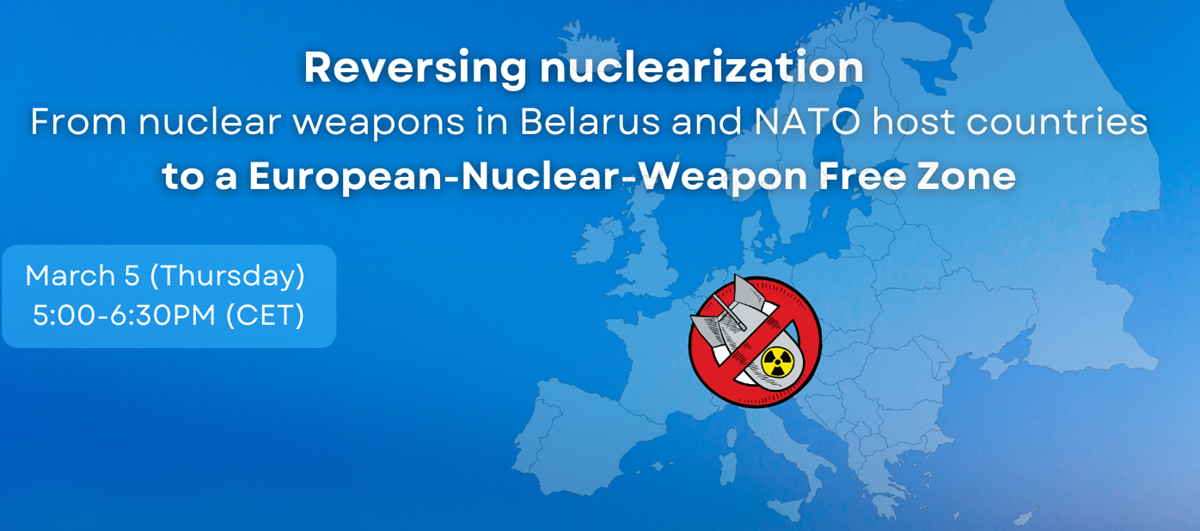
5 March -Online – Reversing nuclearization:
From nuclear weapons in Belarus and NATO host countries to a European-Nuclear-Weapon Free Zone
11am-12:30pm Eastern Time USA / 5pm-6:30pm CET

of the week – Advocating for a
nuclear free beach – https://www.samuellawrencefoundation.org/
The Samuel Lawrence Foundation advocates for a Nuclear Waste Free Beach at San Onofre, join us and take action!

10 March A LIVE WEBINAR THE REAL EFFECTS OF NUCLEAR POWER
What the Industry Isn’t Telling Us
1:00 PM Mountain, 2 pm Central, 3 pm Eastern. Live on the Keepers of the Water Facebook page

18 March Webinar @ 1 PM EST: An Assessment of SMR Projects: The Case of Canada
register for the zoom:
https://us02web.zoom.us/webinar/register/WN_o8BIIOUvQ2ONJR1nta65DQ#/registration

of the week – STOP SMALL MODULAR REACTORS IN CANADA
To see nuclear-related stories in greater depth and intensity – go to https://nuclearinformation.wordpress.com
-
Archives
- March 2026 (27)
- February 2026 (268)
- January 2026 (308)
- December 2025 (358)
- November 2025 (359)
- October 2025 (376)
- September 2025 (258)
- August 2025 (319)
- July 2025 (230)
- June 2025 (348)
- May 2025 (261)
- April 2025 (305)
-
Categories
- 1
- 1 NUCLEAR ISSUES
- business and costs
- climate change
- culture and arts
- ENERGY
- environment
- health
- history
- indigenous issues
- Legal
- marketing of nuclear
- media
- opposition to nuclear
- PERSONAL STORIES
- politics
- politics international
- Religion and ethics
- safety
- secrets,lies and civil liberties
- spinbuster
- technology
- Uranium
- wastes
- weapons and war
- Women
- 2 WORLD
- ACTION
- AFRICA
- Atrocities
- AUSTRALIA
- Christina's notes
- Christina's themes
- culture and arts
- Events
- Fuk 2022
- Fuk 2023
- Fukushima 2017
- Fukushima 2018
- fukushima 2019
- Fukushima 2020
- Fukushima 2021
- general
- global warming
- Humour (God we need it)
- Nuclear
- RARE EARTHS
- Reference
- resources – print
- Resources -audiovicual
- Weekly Newsletter
- World
- World Nuclear
- YouTube
-
RSS
Entries RSS
Comments RSS
 nuclear-news