Setting the record straight on the background to events in Ukraine.


First, both the provinces of Donetsk and Lugansk in the Donbass region voted for independence from Ukraine in 2014 in resistance to a U.S.-backed coup that overthrew the elected president Viktor Yanukovych in February of that year. The independence vote came just eight days after neo-Nazis burned dozens of ethnic Russians alive in Odessa. To crush their bid for independence, the new U.S.-installed Ukrainian government then launched an “anti-terrorist” war against the provinces, with the assistance of the neo-Nazi Azov Battalion, which had taken part in the coup. It is a war that is still going on eight years later, a war that Russia has just entered.
During these eight years, the Ukrainian Armed Forces and Azov have used artillery, snipers and assassination teams to systematically butcher more than 5,000 people (another 8,000 were wounded) — mostly civilians — in the Donetsk Peoples Republic, according to the leader of the DPR, who provided these figures in a press conference recently. In the Luhansk People’s Republic, an additional 2,000 civilians were killed and 3,365 injured. The total number of people killed and wounded in Donbass since 2014 is more than 18,000.
This has received at most superficial coverage by The New York Times; it has not been covered by Western corporate media because it does not fit the official Washington narrative
Ukraine & Nukes After a New York Times reporter grossly distorted what Putin and Zelensky have said and done about nuclear weapons, Steven Starr corrects the record and deplores Western media, in general, for misinforming and leading the entire world in a dangerous direction. https://consortiumnews.com/2022/03/03/ukraine-nukes/ By Steven Starr,
The New York Times recently published an article by David Sanger entitled “Putin spins a conspiracy theory that Ukraine is on a path to produce nuclear weapons.” Unfortunately, it is Sanger who puts so much spin in his reporting that he leaves his readers with a grossly distorted version of the what the presidents of Russia and Ukraine have said and done.
Ukrainian Volodymyr Zelensky’s recent statements at the Munich conference centered around the 1994 Budapest Memorandum, which welcomed Ukraine’s accession to the Nuclear Non-Proliferation Treaty (NPT) in conjunction with Ukraine’s decision to return to Russia the nuclear weapons left on its territory by the Soviet Union.
In other words, the Budapest Memorandum was expressly about Ukraine giving up its nukes and not becoming a nuclear weapon state in the future. Zelensky’s speech at Munich made it clear that Ukraine was moving to repudiate the Budapest Memorandum; Zelensky essentially stated that Ukraine must be made a member of NATO, otherwise it would acquire nuclear weapons.
This is what Zelensky said, with emphasis added:
“I want to believe that the North Atlantic Treaty and Article 5 will be more effective than the Budapest Memorandum.
Ukraine has received security guarantees for abandoning the world’s third nuclear capability [i.e. Ukraine relinquished the Soviet nuclear weapons that had been placed in Ukraine during the Cold War]. We don’t have that weapon. … Therefore, we have something. The right to demand a shift from a policy of appeasement to ensuring security and peace guarantees.
Since 2014, Ukraine has tried three times to convene consultations with the guarantor states of the Budapest Memorandum. Three times without success. . . I am initiating consultations in the framework of the Budapest Memorandum. The Minister of Foreign Affairs was commissioned to convene them. If they do not happen again or their results do not guarantee security for our country, Ukraine will have every right to believe that the Budapest Memorandum is not working and all the package decisions of 1994 are in doubt. . .
I am initiating consultations in the framework of the Budapest Memorandum. The Minister of Foreign Affairs was commissioned to convene them. If they do not happen again or their results do not guarantee security for our country, Ukraine will have every right to believe that the Budapest Memorandum is not working and all the package decisions of 1994 are in doubt.”
Sanger’s Times article implies that it was a “conspiracy theory” that Zelensky was calling for Ukraine to acquire nuclear weapons. Sanger was not ignorant of the meaning of the Budapest Memorandum, rather he chose to deliberately ignore it and misrepresented the facts.
President Vladimir Putin, along with the majority of Russians, could not ignore such a threat for a number of historical reasons that The New York Times and ideologues such as Sanger have also chosen to ignore. It is important to list some of those facts, since most Americans are unaware of them, as they have not been reported in the Western mainstream media. Leaving parts of the story out turns Putin into just a madman bent on conquest without any reason to intervene.
First, both the provinces of Donetsk and Lugansk in the Donbass region voted for independence from Ukraine in 2014 in resistance to a U.S.-backed coup that overthrew the elected president Viktor Yanukovych in February of that year. The independence vote came just eight days after neo-Nazis burned dozens of ethnic Russians alive in Odessa. To crush their bid for independence, the new U.S.-installed Ukrainian government then launched an “anti-terrorist” war against the provinces, with the assistance of the neo-Nazi Azov Battalion, which had taken part in the coup. It is a war that is still going on eight years later, a war that Russia has just entered.
During these eight years, the Ukrainian Armed Forces and Azov have used artillery, snipers and assassination teams to systematically butcher more than 5,000 people (another 8,000 were wounded) — mostly civilians — in the Donetsk Peoples Republic, according to the leader of the DPR, who provided these figures in a press conference recently. In the Luhansk People’s Republic, an additional 2,000 civilians were killed and 3,365 injured. The total number of people killed and wounded in Donbass since 2014 is more than 18,000.
This has received at most superficial coverage by The New York Times; it has not been covered by Western corporate media because it does not fit the official Washington narrative that Ukraine is pursuing an “anti-terrorist operation” in its unrelenting attacks on the people of Donbass. For eight years the war instead has been portrayed as a Russian “invasion,” well before Russia’s current intervention.
Likewise, The New York Times, in its overall coverage, chose not to report that the Ukrainian forces had deployed half of its army, about 125,000 troops, to its border with Donbass by the beginning of 2022.
In other words, acquiring tactical nuclear weapons will be much easier for Ukraine than for some other states I am not going to mention here, which are conducting such research, especially if Kiev receives foreign technological support. We c
The importance of neo-Nazi Right Sektor politicians in the Ukraine government and neo-Nazi militias (such as the Azov Battalion) to the Ukrainian Armed Forces, also goes unreported in the mainstream corporate media. The Azov battalion flies Nazi flags; they have been trained by teams of U.S. military advisers and praised on Facebook these days. In 2014, Azov was incorporated in the Ukrainian National Guard under the direction of the Interior Ministry.
The Nazis killed something on the order of 27 million Soviets/Russians during World War II (the U.S. lost 404,000). Russia has not forgotten and is extremely sensitive to any threats and violence coming from neo-Nazis. Americans generally do not understand what this means to Russians as the United States has never been invaded.
So, when the leader of Ukraine essentially threatens to obtain nuclear weapons, this is most certainly considered to be an existential threat to Russia. That is why Putin focused on this during his speech preceding the Russian invasion of Ukraine. Sanger and The New York Times must discount a Ukrainian nuclear threat; they can get away with doing so because they have systematically omitted news pertaining to this for many years.
Sanger makes a very misleading statement when he writes, “Today Ukraine does not even have the basic infrastructure to produce nuclear fuel.”
Ukraine is not interested in making nuclear fuel — which Ukraine already purchases from the U.S. Ukraine has plenty of plutonium, which is commonly used to make nuclear weapons today; eight years ago Ukraine held more than 50 tons of plutonium in its spent fuel assemblies stored at its many nuclear power plants (probably considerably more today, as the reactors have continued to run and produce spent fuel). Once plutonium is reprocessed/separated from spent nuclear fuel, it becomes weapons usable. Putin noted that Ukraine already has missiles that could carry nuclear warheads, and they certainly have scientists capable of developing reprocessing facilities and building nuclear weapons.
In his Feb. 21 televised address, Putin said Ukraine still has the infrastructure leftover from Soviet days to build a bomb. He said:
“As we know, it has already been stated today that Ukraine intends to create its own nuclear weapons, and this is not just bragging.
Ukraine has the nuclear technologies created back in the Soviet times and delivery vehicles for such weapons, including aircraft, as well as the Soviet-designed Tochka-U precision tactical missiles with a range of over 100 kilometers.
But they can do more; it is only a matter of time. They have had the groundwork for this since the Soviet era.
If Ukraine acquires weapons of mass destruction, the situation in the world and in Europe will drastically change, especially for us, for Russia. We cannot but react to this real danger, all the more so since let me repeat, Ukraine’s Western patrons may help it acquire these weapons to create yet another threat to our country.”
NATO-US Refuse Binding Nuclear Treaties
In his Times piece, Sanger states, “American officials have said repeatedly that they have no plans to place nuclear weapons in Ukraine.”
But the U.S. and NATO have refused to sign legally binding treaties with Russia to this effect. In reality, the U.S. has been making Ukraine a de facto member of NATO, while training and supplying its military forces and conducting joint exercises on Ukrainian territory. Why wouldn’t the U.S. place nuclear weapons in Ukraine — they have already done so at military bases within the borders of five other European members of NATO. This in fact violates the spirit of the NPT, another issue that Sanger avoids when he notes that Russia has demanded that the U.S. remove nuclear weapons from the European NATO-member states.
For years the U.S. proclaimed that the Ballistic Missile Defense (BMD) facilities it was placing in Romania and Poland, on the Russian border, were to protect against an “Iranian threat,” even though Iran had no nuclear weapons or missiles that could reach the U.S. But the dual-use Mark 41 launching systems used in the Aegis Ashore BMD facilities can be used to launch Tomahawk cruise missiles, and will be fitted with SM-6 missiles that, if armed with nuclear warheads, could hit Moscow in five-to-six minutes. Putin explicitly warned journalists about this danger in 2016; Russia included the removal of the U.S. BMD facilities in Romania and Poland in its draft treaties presented to the U.S. and NATO last December.
I wonder if Sanger has ever considered what the U.S. response would be if Russia placed missile launching facilities on the Canadian or Mexican border? Would the U.S. consider that a threat, would it demand that Russia remove them or else the U.S. would use military means to do so?
30 Years Ago
Sanger states that today Russia takes a “starkly different from the tone Moscow was taking 30 years ago, when Russian nuclear scientists were being voluntarily retrained to use their skills for peaceful purposes.”
Russians would reply that 30 years ago NATO had not moved to Russian borders and was not flooding Ukraine with hundreds of tons of weapons and the U.S. had not yet overthrown the government in Kiev to install an anti-Russian regime.
While the Times is still considered the U.S. “paper of record,” during the last few decades it has devolved into the primary mouthpiece for the official narratives coming from Washington.
There is a real danger to the nation when a free press is replaced with corporate media that stifles and censors dissent. Rather than a free press, we now have a Ministry of Propaganda that acts as an echo chamber for the latest diktats from the White House. The systematic creation of false narratives by corporate media, designed to serve the purposes of the federal government, have so misinformed the American public about world events that we find the nation ready to go to war with Russia.
This is suicidal course for not only the U.S. and the EU, but for civilization as a whole, because this would likely end in a nuclear war that will destroy all nations and peoples.
Steven Starr is the former director of the University of Missouri’s Clinical Laboratory Science Program, and former board member of Physicians for Social Responsibility. His articles have been published by the Bulletin of the Atomic Scientists, Federation of American Scientists and the Strategic Arms Reduction website of the Moscow Institute of Physics and Technology. He maintains the Nuclear Famine website.
SEEDS OF PEACE -AUGUST 2025.

WEST SUBURBAN PEACE COALITION, Walt Zlotow, 5 Aug 25
Many top military leaders opposed atomic bombings
Every year the four day period August 6 – 9 brings to mind the Hiroshima and Nagasaki atomic bombings. This marks the 80th anniversary of those horrific acts.
I learned of the atomic bombings 74 years ago at age 6 and have been haunted by them ever since. For the first decade afterward, I swallowed whole the US fairytale that the military and political elite were unified in dropping the bombs to prevent a U.S. invasion and its estimate of a million U.S. casualties.
Few if any reputable historians buy that version today. They point to a number of top military leaders who opposed the nuclear attacks, for good reasons. Most prominent was U.S. Army Chief of Staff General George C. Marshall who argued not using the Bomb would strengthen America’s prestige and position in post war Asia. He even advocated for inviting the Russians to view its July 16, 1945 test.
Navy Secretary and later Defense Secretary James Forrestal argued the bombings would impede our post WWII relations with the Soviet Union. Fleet Admiral William Leahy, senior US military officer on active duty in WWII, called the proposed bombings “barbaric”. Assistant Secretary of War John McCloy told Truman that neither invasion nor atomic bombings were necessary. Japan would surrender if we avoided terminology ‘Unconditional Surrender’ since any surrender would amount to that without saying so. McCloy even advocated telling Japanese leaders we had the Bomb as additional incentive to quit the war.
Tho not involved in the Bomb decision process, Gen. Dwight Eisenhower was furious we dropped them, telling Secretary of War Harry Stimson shortly after the attacks “I voiced my grave misgivings, first on the basis of my belief that Japan was already defeated and that dropping the bomb was completely unnecessary, and secondly because I thought that our country should avoid shocking world opinion by the use of a weapon whose employment was, I thought, no longer mandatory as a measure to save American lives. It was my belief that Japan was, at that very moment, seeking some way to surrender with a minimum loss of “face.”
Ike, McCloy, Leahy, Forrestal, Marshall and others were right; Truman and his supporters were wrong. Eighty years on America is still the only country to explode nukes in anger. Current belligerency against maintaining nuclear agreements, routinely threatening imagined enemies with “all military options are on the table”, spending a trillion dollars to upgrade our nukes, risking nuclear war with Russia and China nu all bode ill we’ll make another 80 years nuclear attack free.
80 Years of Lies: The US Finally Admits It Knew It Didn’t Need to Bomb Hiroshima and Nagasaki.

Japan was already defeated and dropping the bomb was completely unnecessary…[it was] no longer mandatory as a measure to save American lives. It was my belief that Japan was, at this very moment, seeking a way to surrender with a minimum loss of face.” – Dwight D. Eisenhower, Supreme Allied Commander in Europe and future president
By Alan MacLeod / MintPress News, https://www.mintpressnews.com/hiroshima-nagasaki-us-nuclear-lies/290336/ August 7, 2025
As we commemorate the 80th anniversary of the Hiroshima and Nagasaki atomic bombings, the world is drifting as close to another nuclear confrontation as it has been in decades.
With Israeli and American attacks on Iranian nuclear energy sites, India and Pakistan going to war in May, and escalating violence between Russia and NATO-backed forces in Ukraine, the shadow of another nuclear war looms large over daily life.
Eighty Years Of Lies
The United States remains the only nation to have dropped an atomic bomb in anger. While the dates of August 6 and August 9, 1945, are seared into the popular conscience of all Japanese people, those days hold far less salience in American society.
When discussed at all in the U.S., this dark chapter in human history is usually presented as a necessary evil, or even a day of liberation—an event that saved hundreds of thousands of lives, prevented the need for an invasion of Japan, and ended the Second World War early. This, however, could not be further from the truth.
American generals and war planners agreed that Japan was on the point of collapse, and had, for weeks, been attempting to negotiate a surrender. The decision, then, to incinerate hundreds of thousands of Japanese civilians was one taken to project American power across the world, and to stymie the rise of the Soviet Union.
“It always appeared to us that, atomic bomb or no atomic bomb, the Japanese were already on the verge of collapse,” General Henry Arnold, Commanding General of the U.S. Army Air Forces in 1945, wrote in his 1949 memoirs.
Arnold was far from alone in this assessment. Indeed, Fleet Admiral William Leahy, the Navy’s highest-ranking officer during World War II, bitterly condemned the United States for its decision and compared his own country to the most savage regimes in world history.
As he wrote in 1950:
It is my opinion that the use of this barbarous weapon at Hiroshima and Nagasaki was of no material assistance in our war against Japan. The Japanese were already defeated and ready to surrender. My own feeling was that in being the first to use it, we had adopted an ethical standard common to the barbarians of the Dark Ages.”
By 1945, Japan had been militarily and economically exhausted. Losing key allies Italy in 1943 and Germany by May 1945, and facing the immediate prospect of an all-out Soviet invasion of Japan, the country’s leaders were frantically pursuing peace negotiations. Their only real condition appeared to be that they wished to keep as a figurehead the emperor—a position that, by some accounts, dates back more than 2,600 years.
“I am convinced,” former President Herbert Hoover wrote to his successor, Harry S. Truman, “if you, as President, will make a shortwave broadcast to the people of Japan—tell them they can have their emperor if they surrender, that it will not mean unconditional surrender except for the militarists—you’ll get a peace in Japan—you’ll have both wars over.”
Many of Truman’s closest advisors told him the same thing. “I am absolutely convinced that had we said they could keep the emperor, together with the threat of an atomic bomb, they would have accepted, and we would never have had to drop the bomb,” said John McCloy, Truman’s Assistant Secretary of War.
Nevertheless, Truman initially took an absolutist position, refusing to hear any Japanese negotiating caveats. This stance, according to General Douglas MacArthur, Commander of Allied Forces in the Pacific, actually lengthened the war. “The war might have ended weeks earlier,” he said, “If the United States had agreed, as it later did anyway, to the retention of the institution of the emperor.” Truman, however, dropped two bombs, then reversed his position on the emperor, in order to stop Japanese society from falling apart.
At that point in the war, however, the United States was emerging as the sole global superpower and enjoyed an unprecedented position of influence. The dropping of the atomic bomb on Japan underscored this; it was a power play, intended to strike fear into the hearts of world leaders, especially in the Soviet Union and China.
First Japan, Then The World
Hiroshima and Nagasaki drastically curbed the U.S.S.R.’s ambitions in Japan. Joseph Stalin’s forces had invaded and permanently annexed Sakhalin Island in 1945 and planned to occupy Hokkaido, Japan’s second-largest island. The move likely prevented the island nation from coming under the Soviet sphere of influence.
To this day, Japan remains deeply tied to the U.S., economically, politically, and militarily. There are around 60,000 U.S. troops in Japan, spread across 120 military bases.
Many in Truman’s administration wished to use the atom bomb against the Soviet Union as well. President Truman, however, worried that the destruction of Moscow would lead the Red Army to invade and destroy Western Europe as a response. As such, he decided to wait until the U.S. had enough warheads to completely destroy the U.S.S.R. and its military in one fell swoop.
War planners estimated this figure to be around 400. To that end, Truman ordered the immediate ramping up of production. Such a strike, we now know, would have caused a nuclear winter that would have permanently ended all organized life on Earth.
The decision to destroy Russia was met with stiff opposition among the American scientific community. It is now widely believed that Manhattan Project scientists, including Robert J. Oppenheimer himself, passed nuclear secrets to Moscow in an effort to speed up their nuclear project and develop a deterrent to halt this doomsday scenario. This part of history, however, was left out of the 2023 biopic movie.
By 1949, the U.S.S.R. was able to produce a credible nuclear deterrent before the U.S. had produced sufficient quantities for an all-out attack, thus ending the threat and bringing the world into the era of mutually assured destruction.
“Certainly prior to 31 December 1945, and in all probability prior to 1 November 1945, Japan would have surrendered even if the atomic bombs had not been dropped, even if Russia had not entered the war, and even if no invasion had been planned or contemplated,” concluded a 1946 report from the U.S. Strategic Bombing Survey.
Dwight D. Eisenhower, Supreme Allied Commander in Europe and future president, was of the same opinion, stating that:
Japan was already defeated and dropping the bomb was completely unnecessary…[it was] no longer mandatory as a measure to save American lives. It was my belief that Japan was, at this very moment, seeking a way to surrender with a minimum loss of face.”
Nevertheless, both Truman and Eisenhower publicly toyed with the idea of using nuclear weapons against China to stop the rise of Communism and to defend their client regime in Taiwan. It was only the development of a Chinese warhead in 1964 that led to the end of the danger, and, ultimately, the détente era of good relations between the two powers that lasted until President Obama’s Pivot to Asia.
Ultimately, then, the people of Japan were the collateral damage in a giant U.S. attempt to project its power worldwide. As Brigadier General Carer Clarke, head of U.S. intelligence on Japan wrote, “When we didn’t need to do it, and we knew we didn’t need to do it, and they knew that we knew we didn’t need to do it, we used them [Japanese citizens] as an experiment for two atomic bombs.”
Tiptoeing Closer To Armageddon
The danger of nuclear weapons is far from over. Today, Israel and the United States – two nations with atomic weaponry – attack Iranian nuclear facilities. Yet their continued, hyper-aggressive actions against their foes only suggest to other countries that, unless they too possess weapons of mass destruction, they will not be safe from attack. North Korea, a country with a conventional and nuclear deterrent, faces no such air strikes from the U.S. or its allies. These actions, therefore, will likely result in more nations pursuing nuclear ambitions.
Earlier this year, India and Pakistan (two more nuclear-armed states) came into open conflict thanks to disputes over terrorism and Jammu and Kashmir. Many influential individuals on both sides of the border were demanding their respective sides launch their nukes – a decision that could also spell the end of organized human life. Thankfully, cooler heads prevailed.
Meanwhile, the war in Ukraine continues, with NATO forces urging President Zelensky to up the ante. Earlier this month, President Trump himself reportedly encouraged the Ukrainian leader to use his Western-made weapons to strike Moscow.
It is precisely actions such as these that led the Bulletin of Atomic Scientists to move their famous Doomsday Clock to 89 seconds to midnight, the closest the world has ever been to catastrophe.
“The war in Ukraine, now in its third year, looms over the world; the conflict could become nuclear at any moment because of a rash decision or through accident or miscalculation,” they wrote in their explanation, adding that conflicts in Asia could spiral out of control into a wider war at any point, and that nuclear powers are updating and expanding their arsenals.
The Pentagon, too, is recruiting Elon Musk to help it build what it calls an American Iron Dome. While this move is couched in defensive language, such a system – if successful – would grant the U.S. the ability to launch nuclear attacks anywhere in the world without having to worry about the consequences of a similar response.
Thus, as we look back at the horrors of Hiroshima and Nagasaki 80 years ago, we must understand that not only were they entirely avoidable, but that we are now closer to a catastrophic nuclear confrontation than many people realize.
Why no Hollywood movie on Nagasaki A Bombing?

Walt Zlotow, West Suburban Peace Coalition, Glen Ellyn 8 Aug 25
In the 1952 movie ‘Above and Beyond’, movie idol Robert Taylor played handsome Col. Paul Tibbetts, straight out of Central Casting, who piloted Enola Gay to drop the first atomic bomb on Hiroshima 80 years ago August 6. We all grew up in awe of Tibbetts, Enola Gay and the perfect mission which incinerated Hiroshima from the first A Bomb dropped in anger. My awe eventually turned to revulsion upon learning it was a monstrous war crime.
But who piloted what plane that dropped the second A Bomb on Nagasaki just 3 days later, August 9? The American Story has largely erased the saga of the Nagasaki mission for good reason. It was a colossal screw up that almost got the pilot court martialed; indeed, nearly detonated Fat Man over the Pacific enroute.
Trouble began early on. Paul Tibbetts, fresh from his Hiroshima success, picked his friend Charles Sweeney to pilot the drop plane ‘Bockscar’ instead of its regular pilot Fred Bock. Sweeney was unfamiliar with both combat and the plane. Preparing for takeoff, Sweeney was unable to operate the reserve tank containing 640 gallons of fuel needed to get Bockscar safely back to its Tinian takeoff point. Bock may have had the familiarity with the plane to accomplish that. Regulations required the mission be scrapped so Sweeney and crew exited Bockscar. But Tibbetts overruled them and the mission was on with insufficient fuel.
Three hours in, worse trouble. Fat Man’s red detonation lights began blinking wildly. Chief weaponeer Dick Ashworth frantically searched the blueprints and realized 2 switches had been reversed in the preflight assembly. Solving that problem, everyone relaxed till Bockscar failed to rendezvous with the second of two back up planes, one for photography and one for instruments. The instrument plane, The Big Stink, was 9,000 feet above Bockscar. Instead of pushing on to original target Kokura, Sweeney wasted 45 minutes of precious fuel trying to link up. Big Stink pilot Hoppy Hopkins broke radio silence frantically calling Tinian asking “Is Bockscar down?” Mission officials only heard “Bockscar Down” and freaked out believing Bockscar, Fat Man and the 13 member crew were in Davy Jones Locker.
Ashford was frantic that all was lost. As tension mounted between the weaponeer and the pilot, he finally persuaded Sweeney to proceed to primary target Kokura. But a smokescreen put up by Japanese defenders responding to the Hiroshima attack caused Sweeney to go around for a second and third bomb run, wasting fuel. More trouble. Flack and approaching Japanese Zeros forced Sweeney to abandon Kokura to flee 100 miles to alternate target Nagasaki.
The drop made, Sweeney made a desperate dive to avoid the mushroom cloud that nearly engulfed them. But his previous delays made the return trip to Tinian impossible. Low on fuel, Sweeney began a treacherous 450 mile flight on dwindling fuel for Okinawa. All aboard Bockscar prepared to ditch. Approaching the Okinawa airfield unable to radio the tower of their emergency, Bockscar had to drop in to a forced landing amid numerous other flights without control tower clearance. Bockscar bounced 25 feet in the air landing at 30 MPH over the maximum landing speed, nearly colliding with a row of fuel laden B-24’s. One engine quit on the approach and another upon touchdown. Thinking Bockscar was lost, airport personnel inquired who this strange plane was that descended out of the sky unannounced. ‘We just dropped an atomic bomb’ was the reply.
There were no celebrations for the crew of Bockscar. Officials considered court martialing Sweeney for his life and mission threatening delays but considered the embarrassment it would cause and decided against. Why mar the mission-perfect first nuking of civilians by Paul Tibbetts and Enola Gay?
While we’ll never get a Hollywood treatment of the Bockscar A Bomb mission, it would be a lot more exciting than ‘Above and Beyond’. An appropriate title? ‘Nearly Down and Out Over Nagasaki’.
The new space race: How the US, China, and Russia are all vying to be the first to build a nuclear reactor on the MOON.
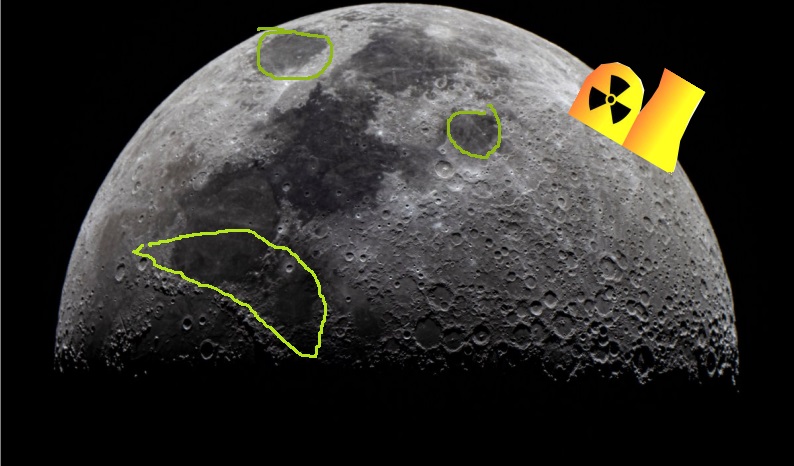
By WILIAM HUNTER, SCIENCE & TECHNOLOGY REPORTER, 5 August 2025, https://www.dailymail.co.uk/sciencetech/article-14971339/new-space-race-US-China-Russia.html
In the years of the Cold War, the US and the Soviet Union tussled to prove their superiority by rushing to become the first nation to put a man on the moon.
While America might have claimed that particular prize in 1969, a new and even more dramatic space race is only just beginning.
This week, it was revealed that Sean Duffy, the new head of NASA, is preparing to install an American nuclear reactor on the moon before 2030.
In a directive, first reported by Politico, Mr Duffy claims this would allow the US to declare a ‘keep-out zone’ on the lunar surface.
This is seen as a necessary step towards protecting the landing site for a future American moon base, planned as part of the Artemis Programme.
However, the US is far from being the only country to set its sights on our lunar satellite.
In May, China and Russia signed a memorandum of cooperation to build their own nuclear reactor on the moon.
But with Russia and China targeting 2036 as their completion date, the three superpowers are now locked in a head-to-head race to get there first.
This comes as the US makes a rapid and unexpected shift towards prioritising human exploration in space.
Despite slashing scientific missions and giving NASA the smallest budget since 1961, the agency has allocated more than $7 billion for lunar exploration.
The Artemis programme, once feared to be a target for Donald Trump’s cuts, is now scheduled to return a human presence to the moon by 2027.
In the directive, Mr Duffy called for NASA to ‘move quickly’ in establishing a nuclear reactor on the moon in order to ‘support a future lunar economy‘.
Mr Duffy, who is also US transport secretary, has asked NASA to place a reactor capable of producing at least 100 kilowatts on the moon by the end of the decade.
That is enough energy to power 80 average American households and could provide the energy backbone for a permanent lunar base.
NASA had previously planned to place a 40-kilowatt reactor on the moon in a similar timeframe, but it is not clear if they will be able to use the same designs.
Mr Duffy will give NASA 30 days to appoint an official to oversee the operation and 60 days to issue a request seeking proposals from commercial companies for the project.
Nuclear power is seen as key for establishing a lunar presence because it is plunged into complete, freezing darkness for two weeks every month.
At the South Pole, where NASA is planning to establish its operations, the sun never rises high above the horizon and some craters are shrouded in permanent darkness.
That makes it practically impossible for spacecraft or bases to survive on the moon using solar power and batteries alone.
However, this sudden swing back to lunar exploration may be a product of increasing competition from other superpowers.
Tellingly, Mr Duffy warned that ‘the first country to do so could potentially declare a keep-out zone which would significantly inhibit the United States from establishing a planned Artemis presence if not there first.’
This is almost certainly a reference to Russia and China’s recent plans to build a nuclear reactor on the moon, announced in May.
That reactor would be used to power the International Lunar Research Station (ILRS), which should be completed by 2036 according to the latest plans.
Roscosmos, the Russian space agency, wrote in a statement at the time: ‘The station will conduct fundamental space research and test technology for long-term uncrewed operations of the ILRS, with the prospect of a human being’s presence on the Moon.’
The groundwork will be laid by China’s upcoming Chang’e-8 mission, which will be the nation’s first attempted human moon landing.
This means that the moon, and especially the south pole, is now becoming the target of a new international space race.
Dr Mark Hilborne, a security studies expert from King’s College London, told Daily Mail: ‘The Moon is a place where nations will have competing interests. There will be parts of the moon that are more valuable than others and, therefore, could be particular points of competition.
‘The Moon is valuable as a low-gravity staging base where future space developments can be built. Lunar materials, mined in situ, would be valuable in building elements that would further lunar exploration.
‘If these could be built on the Moon, rather than sent from Earth, the cost would be far cheaper.’
The big concern for the US, and presumably Russia and China, is that whatever country starts building on the moon first could effectively claim it as its own territory
Countries’ dealings in space are governed by a set of rules called the Outer Space Treaty, which was first signed in 1967.
Signatories to the treaty agree that space is ‘not subject to national appropriation by claim of sovereignty, by means of use or occupation, or by any other means.’
This explicitly means that nations are not legally able to make territorial claims on celestial bodies like the moon.
However, in practice, America has recently doubled down on a far more assertive version of the law by signing a series of rules called the Artemis Accords in 2020.
Critically, the Artemis Accords also gives states the power to implement ‘safety zones’ – exclusive areas which members of other states will not be able to enter or use without permission from the owner.
While the US insists that these boundaries will end ‘when the relevant operation ceases’, for a permanent colony, this would function almost exactly like the borders of a sovereign territory.
These rules essentially create a principle that whoever gets to a part of the moon first gets to keep it for their own use.
Dr Jill Stuart, an expert on space law from the London School of Economics, told Daily Mail: ‘Countries could use a part of the lunar surface for a scientific base – without claiming long-term ownership of it – but must communicate to other users where that base is and be transparent about its purpose.
‘Although this seems like a potentially “fair” way to allow for future activity on the moon, it also creates a “first mover advantage” in that those who can set up bases first have the right to claim a safety zone around it.’
That idea may now be alarming to America as China shows rapid advancements in its spaceflight program that have put a human presence on the moon within reach.
While these safety zones might be essential for a nuclear reactor, experts say this may lead to an increasingly risky space race.
Dr Fabio Tronchetti, a space law expert from Northumbria University, told Daily Mail: ‘It is evident that we are heading towards a space rush.
‘The United States is attempting to act quickly and get to the Moon first, at least before China and Russia, so as to be able to unilaterally claim the right to set out the rules of the game.’
This has the serious potential to spark conflict between the nations since China and Russia, having not signed the Artemis Accords, have no legal requirement to respect the US ‘keep-out zones’.
Dr Tronchetti says that international law ‘does not recognise the possibility’ of the US’s claims, adding that the US is attempting to ‘force its [China’s] hand to set out rules favourable to its own interests’.
How this conflict might play out on the lunar surface remains to be seen, but in the future, we might see the conflicts here on Earth extend out into space.
The real story of Chernobyl, the worst nuclear disaster in history
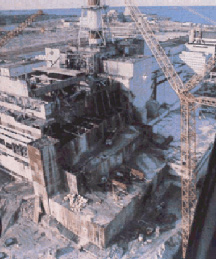
The Chernobyl Sarcophagus Memorial sculpture was erected in 2006 and is dedicated to the memory of the heroic plant workers and emergency crew who prevented a global catastrophe .
28 July 25,https://www.history.co.uk/articles/the-story-of-chernobyl-the-worst-nuclear-disaster-in-history
On 26th April 1986, a routine safety test went catastrophically wrong and triggered the worst nuclear accident of all time. The incident at the Chernobyl Nuclear Power Plant near Pripyat, Ukraine led to the release of 400 times more radiation than the atomic bomb dropped on Hiroshima during WW2.
31 people died in the immediate aftermath, whilst the long-term health effects caused by Chernobyl are still a hotly debated subject. Approximately 60,000 square miles around the plant were contaminated and an area nearly twice the city of London remains an exclusion zone to this day.
Background of Chernobyl
Lying just 10 miles from the Belarus-Ukraine border and around 62 miles north of the Ukrainian capital Kyiv, the Chernobyl Nuclear Power Plant was commissioned in 1977 as part of the old Soviet Union, with the first reactor supplying power to the grid later that year. By 1984, four reactors had entered commercial operation, each capable of producing 1,000 megawatts of electrical power.
Just under two miles from the plant was the city of Pripyat, founded in 1970 and named after the nearby river. It was built to serve the power plant and at the time of the disaster, its total population was just shy of 50,000.
Nuclear disaster unfolds
Throughout Friday, 25th April 1986, Chernobyl’s engineers lowered power at Reactor No. 4 in preparation for a safety test to be conducted later that evening. The test was supposed to check whether the reactor turbines could continue powering emergency water coolant pumps in the event of a power failure.
Ironically, the safety test was anything but safe as human error and substandard reactor design led to a partial meltdown of the core.
The experiment was poorly conceived and equally badly executed. Firstly, the less-experienced night shift crew carried out the safety test and later claimed they had not received full instructions from the day shift crew on how to properly conduct it. Secondly, the emergency core cooling system for Reactor 4 was disabled along with the emergency shutdown system.
Finally, the reactor’s power level dropped to a dangerously unstable level at which point the engineers removed most of the control rods in violation of safety guidelines. Although power began to return, it was far from under control.
Explosion in Reactor 4
At 1:23am on 26th April, the safety test was given the all-clear by plant supervisors. Almost immediately a power surge occurred, triggering the engineers to re-insert all 211 control rods. The control rods were graphite tipped, a design flaw that would prove fatal as they increased the reaction in the core, instead of lowering it.
The subsequent steam explosions blew off the steel and concrete lid of the reactor as the core suffered a partial meltdown. Two engineers were killed instantly whilst two more suffered severe burns. The explosion, along with the resulting fires, released at least 5% of the radioactive reactor core into the atmosphere. Blown by the wind, radioactive materials were spread to many parts of Europe over the coming days.
Emergency response begins
Firefighters quickly arrived on the scene but without proper protective clothing, many perished in the coming months from acute radiation syndrome. By dawn, all the fires were suppressed except for the one in the reactor core.
The other three reactors were shut down a short while later. The following day officials ordered helicopters to begin dumping more than 5,000 tonnes of sand, lead, clay, and boron onto the burning reactor to help extinguish the core fire.
A Soviet cover-up
It took nearly 36 hours for Soviet officials to begin evacuating nearby Pripyat. The city’s residents were unaware of the true dangers presented by the previous day’s events. Advised to pack only necessities, the people of Pripyat were loaded onto buses believing their evacuation to be temporary. Little did they know, they would never return to their homes again.
Two days after the catastrophic explosion the rest of the world remained in the dark as the Soviets attempted to cover up the event. However, on 28th April, Swedish radiation monitoring stations 800 miles away began detecting high levels of radiation. With their backs to the wall, the Soviets finally made a statement, with the Kremlin admitting an accident had occurred at Chernobyl, but assuring the world that officials had it under control.
Heroism on display
In the days that followed, hundreds of workers risked their lives to contain radiation leaking from the reactor core.
On 4th May, three divers made their way through the dark flooded basement of Reactor 4 to turn valves and drain the ‘bubbler pools’ sitting below the core. Had they not succeeded in their mission, molten nuclear material would have eventually melted its way down to the pools.
This would have triggered a radiation-contaminated steam explosion and destroyed the entire plant along with its three other reactors, causing unimaginable damage and nuclear fallout that the world would have struggled to recover from.
Radioactive debris also needed to be removed from the roof of the reactor. After robots failed to do the job, workers equipped with heavy protective gear were sent in.
Nicknamed ‘Bio-robots’, these workers were unable to spend more than 90 seconds on the roof due to the extreme levels of radiation. In the end, 5,000 men went up on the irradiated rooftop to successfully clear the radioactive material from it.
Clean-up commences
By mid-May, Soviet leader Mikhail Gorbachev had ordered thousands of firefighters, miners, and soldiers to begin the long and arduous task of cleaning up. Known as ‘Liquidators’, 600,000 – 800,000 of them began burying radioactive debris and topsoil, as well as shooting all wildlife (both domestic and wild) within the 19-mile exclusion zone surrounding the power plant.
Nicknamed ‘Bio-robots’, these workers were unable to spend more than 90 seconds on the roof due to the extreme levels of radiation. In the end, 5,000 men went up on the irradiated rooftop to successfully clear the radioactive material from it.
Clean-up commences
By mid-May, Soviet leader Mikhail Gorbachev had ordered thousands of firefighters, miners, and soldiers to begin the long and arduous task of cleaning up. Known as ‘Liquidators’, 600,000 – 800,000 of them began burying radioactive debris and topsoil, as well as shooting all wildlife (both domestic and wild) within the 19-mile exclusion zone surrounding the power plant.
Aftermath
The Chernobyl Exclusion Zone was eventually extended to cover approximately 1,000 square miles, whereby it was declared uninhabitable for over 20,000 years. The other three reactors at Chernobyl remained active until their individual shutdowns in 1991, 1996, and 2000. Gorbachev later wrote that he believed the incident at Chernobyl was the ‘real cause of the collapse of the Soviet Union’.
Whilst the lasting health effects of the disaster remain unclear and much debated, various sources have estimated that thousands of cancer deaths can be linked back to Chernobyl.
The Kyshtym disaster: Russia’s hidden nuclear crisis

The Kyshtym disaster in 1957 was the Soviet Union’s biggest nuclear crisis until Chernobyl. So, why did the Soviets keep quiet about the former for decades?
28 July 25, https://www.history.co.uk/articles/kyshtym-disaster-russia-hidden-nuclear-crisis
What would be considered the worst nuclear disaster in history? Many scholars would say Chernobyl, when an explosion at a nuclear power plant in northern Ukraine released dangerous levels of radiation.
This was on 26th April 1986, when Ukraine was still part of the Soviet Union. Was Chernobyl inevitable? Many historians do believe that Soviet authorities failed to learn lessons from an earlier nuclear crisis on their own soil. Below, we at Sky HISTORY look back at the 1957 Kyshtym disaster — and how the Soviets kept it under wraps for decades.
Was there really a nuclear plant in Kyshtym?
The nuclear plant at the heart of the Kyshtym disaster was not actually in the Russian town of that name. Instead, it was in a secretive ‘closed city’ nearby, called Chelyabinsk-40. Today, it is called Ozyorsk. (Both Kyshtym and Ozyorsk are in Russia’s Chelyabinsk Oblast.)
In the 1940s, the Soviets realised that they were trailing the United States in the development of nuclear weapons. To help themselves catch up, they hastily built what is now commonly known as the Mayak nuclear plant.
This facility, which still stands today, was tasked with processing plutonium needed to make nuclear weapons. However, because the plant was assembled in a rush, many safety risks of the project were not considered sufficiently.
The Kyshtym explosion and its immediate aftermath
Before the Kyshtym disaster, it was routine for Mayak workers to deposit radioactive waste into the Techa River. This bode ill (literally) for villagers along the river who used it as a source of drinking water.
So, Mayak staff later decided to store such waste in an underground storage compartment of the plant itself. This space comprised 14 stainless steel containers attached to a concrete base.
However, in the 1950s, the cooling system in one of these tanks started to malfunction. This led the waste in the container to heat up and eventually, on 29th September 1957, explode. The force sent 20 curies of radioactive material flying a kilometre into the air.
The wind blew the radioactive particles over an area of about 20,000 square kilometres inhabited by approximately 270,000 people. This was generally to the northeast, away from Chelyabinsk-40, which lay upwind from the Mayak plant.
How did authorities initially react?
Residents of nearby areas were not initially notified of what had happened. This was largely due to the Soviet Union’s strong culture of secrecy during the Cold War. The national government didn’t want to let slip that Mayak even existed, let alone that a nuclear explosion had happened there.
It was also around the same time that the Soviet Union launched its Sputnik satellite, a big PR coup. Admitting responsibility for what was the world’s biggest nuclear disaster to date would have been more than an inconvenient fly in the ointment.
Still, the Soviets also knew that doing what they could to limit the radioactive contamination would go some way towards keeping everyone in the dark. So, while about 10,000 local residents were evacuated over the next two years, they weren’t told exactly why.
A cover-up lasting for decades
Almost 17,000 hectares of the contaminated area was turned into East Ural Nature Reserve in 1968. Members of the public were barred from entry, which remains the case to this day. Scientists have studied the reserve to monitor the long-term effects of nuclear radiation on its ecology.
The Kyshtym disaster was kept secret from the public until 1976, when Soviet dissident Zhores Medvedev reported about it in New Scientist magazine. However, the Soviet government still did not openly acknowledge the Kyshtym disaster before accidentally revealing it to the United Nations in the late 1980s.
It is estimated that thousands of cancer cases may have resulted from exposure to radiation caused by the nuclear explosion way back in 1957.
How does Kyshtym compare to Chernobyl?
On the International Nuclear and Radiological Event Scale (INES), Kyshtym is classified as Level 6. Chernobyl, an even bigger catastrophe, is ranked just one level higher (Level 7) on the INES. Kyshtym released about 40% as much radioactivity as Chernobyl.
Chernobyl is thought to have affected a larger population, too, as 335,000 people were evacuated in the wake of the 1986 disaster. Also, while Chernobyl quickly claimed 31 lives, none were lost in the immediate aftermath of Kyshtym.
Israel’s genocide is big business – and the face of the future

“Gaza not only looks like a dress rehearsal for the kind of combat US soldiers may face. It is a test of the American public’s tolerance for the levels of death and destruction that such kinds of warfare entail.”
21 July 2025, https://www.jonathan-cook.net/2025-07-21/israel-genocide-big-business/
US corporations and military planners welcome the ‘legal maneuver space’ Israel has opened up for them to profit from warfare that slaughters and starves civilians
[An audio version of this article is available here]
The Financial Times revealed this month that a cabal of Israeli investors, one of the world’s top business consulting groups and a think-tank headed by former British prime minister Tony Blair had been secretly working on plans to exploit the ruins of Gaza as prime real estate.
The secret consortium appears to have been seeking practical ways to realise US President Donlad Trump’s “vision” of Gaza as the “Riviera of the Middle East”: transforming the small coastal enclave into a playground for the rich and an enticing investment opportunity, once it can be ethnically cleansed of its Palestinian population.
Meanwhile, the UK government has declared Palestine Action a terrorist organisation – the first time in British history that a direct-action campaign group has been banned under Britain’s already draconian terrorism legislation.
Notably, the government of Keir Starmer took the decision to proscribe Palestine Action after lobbying from Elbit Systems, an Israeli weapons maker whose factories in the UK have been targeted by Palestine Action for disruption. Elbit supplies Israel with killer drones and other weapons central to Israel’s genocide in Gaza.
These revelations came to light as the United Nation’s special rapporteur on the occupied Palestinian territories, Francesca Albanese, published a report – titled “From economy of occupation to economy of genocide” – exposing Big Business’ extensive involvement in, and profits from, Israel’s crimes in Gaza.
Albanese lists dozens of major western companies that are deeply invested in Israel’s oppression of the Palestinian people.
This is not a new development, as she notes. These firms have exploited business opportunities associated with Israel’s violent occupation of the Palestinian people’s lands for years, and in some cases decades.
The switch from Israel’s occupation of Gaza to its current genocide hasn’t threatened profits; it has enhanced them. Or as Albanese puts it: “The profits have increased as the economy of the occupation transformed into an economy of genocide.”
The special rapporteur has been a growing thorn in the side of Israel and its western sponsors over the past 21 months of slaughter in Gaza.
That explains why Marco Rubio, Trump’s secretary of state, announced soon after her report was issued that he was imposing sanctions on Albanese for her efforts to shed light on the crimes of Israeli and US officials.
Revealingly, he called her statements – rooted in international law – “economic warfare against the United States and Israel”. Albanese and the UN system of universal human rights that stands behind her, it seems, represent a threat to western profiteering.
Window on the future
Israel effectively serves as the world’s largest business incubator – though, in its case, not just by nurturing start-up companies.
Rather, it offers global corporations the chance to test and refine new weapons, machinery, technologies, data collection and automation processes in the occupied territories. These developments are associated with mass oppression, control, surveillance, incarceration, ethnic cleansing – and now genocide.
In a world of shrinking resources and growing climate chaos, such innovative technologies of subjugation are likely to have domestic, in addition to overseas, applications. Gaza is the corporate world’s laboratory, and a window into our own future.
In her 60-page report, Albanese writes that her research “reveals how the forever-occupation has become the ideal testing ground for arms manufacturers and Big Tech… while investors and private and public institutions profit freely”.
Her point was underscored by the Israeli arms firm Rafael, which issued a promotional video of its Spike FireFly drone that showed it locating, chasing and killing a Palestinian in what it called “urban warfare” in Gaza.
As the UN special rapporteur points out, quite aside from the issue of genocide in Gaza, western companies have been under a legal and moral obligation to sever ties with Israel’s system of occupation since last summer.
That was when the world’s highest court, the International Court of Justice, ruled Israel’s decades-old occupation was a criminal enterprise based on apartheid and forcible transfer – or what Albanese refers to as policies of “displacement and replacement”.
Instead, the corporate sector – and western governments – continue to deepen their involvement in Israel’s crimes.
It is not just arms manufacturers profiting from the genocidal levelling of Gaza and the occupations of the West Bank and East Jerusalem.
Big Tech, construction and materials firms, agribusiness, the tourism industry, the goods and services sector, and supply chains have also got in on the act.
And enabling it all is a finance sector – which includes banks, pension funds, universities, insurers and charities – keen to continue investing in this architecture of oppression.
Albanese describes the mosaic of companies partnering with Israel as “an eco-system sustaining this illegality”.
Escaping scrutiny
For these corporations and their enablers, international law – the legal system Albanese and her fellow UN rapporteurs are there to uphold – serves as an impediment to the pursuit of profit.
Albanese notes that the business sector can escape scrutiny by shielding behind other actors.
Israel and its senior officials are on notice for committing genocide, crimes against humanity and war crimes.
When she wrote to 48 companies to warn them that they were colluding in this criminality, they either responded that this was Israel’s responsibility, not theirs, or that it was for states, not international law, to regulate their business activities.
Corporations, Albanese points out, can secure their biggest profits in the “grey areas of the law” – laws they have helped to shape.
Lockheed Martin’s F-35 jets, whose “beast mode” has been shop-windowed by Israel as it has destroyed Gaza, depend on some 1,600 other specialist firms operating in eight separate states, including Britain.
Late last month the UK high court, while admitting British-made components used in the F-35 were likely to contribute to war crimes in Gaza, ruled that it was up to Starmer’s government to make “acutely sensitive and political” decisions about the export of these parts.
UK foreign secretary David Lammy, by contrast, told a parliamentary committee it was not for the government to assess whether Israel was committing war crimes in Gaza, using British arms, it was “a decision for the court”.
Lockheed Martin has joined the buck-passing. A spokesperson said: “Foreign military sales are government-to-government transactions. Discussions about those sales are best addressed by the US government.”
Big Tech collusion
Albanese also points the finger at leading tech firms for rapidly and deeply embedding in Israel’s illegal occupation, including by acquiring Israeli start-ups that exploit expertise gained from the oppression of Palestinians.
The NSO Group has developed Pegasus phone spyware that is now being used to surveill politicians, journalists and human rights activists around the world.
Last year the Biden administration signed a contract with another Israeli spyware firm, Paragon. Will we learn one day that the US used exactly this kind of technology to spy on Albanese and other international law experts, on the pretext that they were waging so-called “economic warfare”?
IBM trains Israeli military and intelligence personnel, and is central to the collection and storage of biometric data on Palestinians. Hewlett Packard Enterprises supplies technology to Israel’s occupation regime, prison service and police.
Microsoft has developed its largest centre outside the US in Israel, from which it has fashioned systems for use by the Israeli military, while Google and Amazon have a $1.2 billion contract to provide it with tech infrastructure.
The prestigious research university MIT, the Massachusetts Institute of Technology, has collaborated with Israel and companies like Elbit to develop automated weapons systems for drones and refine their swarm formations.
Palantir, which supplies the Israeli military with Artificial Intelligence platforms, announced a deeper strategic partnership in January 2024, early in Israel’s slaughter in Gaza, over what the Bloomberg news agency termed “Battle Tech”.
Over the past 21 months, Israel has been introducing new automated programs driven by AI – such as “Lavendar”, “Gospel” and “Where’s Daddy?” – to select huge numbers of targets in Gaza with little or no human oversight.
Albanese calls this “the dark side of the start-up nation that is so embedded, so intimately related to the military industry aims and gains.”
Not surprisingly, tech firms are falling back on all-too-familiar smears against the special rapporteur and the UN for pulling back the veil on their activities. The Washington Post reported that, in the wake of Albanese’s report, Google’s co-founder, Sergey Brin, called the UN “transparently antisemitic” in a chat on a staff forum.
Concentration camp
There are a long list of other household names in Albanese’s report: Caterpillar, Volvo and Hyundai are accused of supplying heavy machinery to destroy homes, mosques and infrastructure in Gaza and the West Bank.
Leading banks such as BNP Paribas and Barclays have underwritten treasury bonds to boost market confidence in Israel through the genocide and maintain its favourable interest rates.
BP, Chevron and other energy firms are profiting from existing gas fields in the eastern Mediterranean and pipelines that pass through Palestinian maritime waters off Gaza. Israel issued exploration licences for Gaza’s own undeveloped gas field, off the coast, shortly after launching its genocidal slaughter.
Israel’s latest plan to create, in its own words, a “concentration” camp inside Gaza – where Palestinian civilians are to be tightly confined under armed guard – will doubtless rely on business partnerships similar to those behind the bogus “aid distribution hubs” Israel has already imposed on the enclave’s people.
Israeli soldiers have testified that they are being ordered to shoot into crowds of starving Palestinians queueing for food at these hubs – explaining why dozens of Palestinians have been killed daily for weeks on end.
Those hubs, run by the misleadingly named Gaza Humanitarian Foundation, were in part the brainchild of the Boston Consulting Group, the same management consultants caught this month plotting to turn Gaza into Trump’s Palestinian-free “Riviera of the Middle East”.
Israel’s planned concentration camp built on the ruins of the city of Rafah – to be termed, again deceptively, a “humanitarian zone” – will require all those entering to be “security screened”, using biometric data, before their incarceration.
Doubtless other contractors, using largely automated systems, will control the camp’s interior until, in the Israeli government’s words, “an emigration plan” can be implemented to expel the population from Gaza.
Albanese points to the many precedents for private corporations driving some of the most horrifying crimes in history, from slavery to the Holocaust.
Albanese urges lawyers and civil society actors to pursue legal avenues against these firms in the countries in which they are registered. Where possible, consumers should exert what pressure they can by boycotting these corporations.
She concludes by recommending that states impose sanctions and an arms embargo on Israel.
Further, she calls on the besieged International Criminal Court – four of whose judges are, like her, under US sanctions – as well as national courts “to investigate and prosecute corporate executives and/or corporate entities for their part in the commission of international crimes and laundering of the proceeds from those crimes”.
Psychopathic culture
All of this is crucial to understanding why western capitals have continued to partner in Israel’s slaughter, even as Holocaust and genocide scholars – many of them Israeli – have reached a firm consensus that its actions amount to genocide.
Governing parties in western countries like the US and Britain are largely dependent on Big Business, both for their electoral success and, after victory at the polling booth, in maintaining popularity through the promotion of “economic stability”.
Keir Starmer reached power in the UK after spurning the popular grassroots funding model of his predecessor, Jeremy Corbyn, and wooing instead the corporate sector with promises that the party would be in its pocket.
His reassurances were also key to making sure the billionaire-owned media – which had ferociously turned on Corbyn, constantly vilifying him as an “antisemite” for his democratic socialist and pro-Palestinian positions – smoothed Starmer’s path to Downing Street.
In the US, the billionaires even have one of their own in power, in Donald Trump. But even his campaign depended on funding from big donors like Miriam Adelson, the Israeli widow of casino magnate Sheldon Adelson.
Adelson is among a number of top donors, funding both main parties, who make no bones about their number one political priority being Israel.
Once in power, parties are then effectively held to ransom by major corporations on large areas of domestic and foreign policy.
The financial sector had to be bailed out by taxpayers – and still is through so-called “austerity measures” – after its reckless excesses crashed the global ecomomy in the late 2000s. Western governments considered the banks “too big to fail”.
Similarly, Israel – the world’s biggest incubator for the arms and surveillance industries – is just too big to be allowed to fail as well. Even as it commits genocide.
Critics of the rise of globalised corporations over the past half century, such as famed linguist Noam Chomsky and law professor Joel Bakan, have long noted the inherently psychopathic traits of corporate culture.
Corporations are legally obligated to pursue profit and prioritise shareholder value over other considerations. Limitations on their freedoms to do so are near non-existent after waves of deregulation from suborned western governments.
Bakan observes that corporations are indifferent to the suffering or safety of others. They are incapable of maintaining enduring relationships. They lack any sense of guilt, or capacity for self-restraint. And they lie, cheat and deceive to maximise profits.
These psychopathic tendencies have been on show in scandal after scandal, whether from the tobacco and banking industries, or from pharmaceutical and energy companies.
Why would Big Business behave any better in pursuing profits tied up in the Gaza genocide?
Bakan addresses those who confuse his argument with a conspiracy theory. The psychopathic behaviours of corporations simply reflect the legal imperatives on them as institutions – what he calls their “logical dynamic” – to maximise profit and sideline rivals, whatever the consequences for the wider society, future generations or the planet.
Growing fat on genocide
The stakes in Gaza are high for western governments precisely because they are so high for the business world growing fat on Israel’s genocide.
Governments and corporations have an overwhelming shared interest in protecting Israel from scrutiny and criticism: it serves as their colonial attack dog in the oil-rich Middle East, and it acts as a cash-cow for the weapons, surveillance and incarceration industries.
Which explains why Trump and Starmer, on one side, and university administrations, on the other, have invested so much political and moral capital in crushing the spaces, especially in academia, where free speech and protest are supposed to be most prized.
The unversities are far from a disinterested party. Before their campus encampments were trashed by police, student demonstrators sought to highlight how heavily invested the universities are in the economy of occupation and genocide, both financially and through research partnerships with the Israeli military and Israeli universities.
The need to ringfence Israel from scrutiny also explains rapid moves in the West both to impute “antisemitism” to every effort to hold Israel, or its genocidal army, to account.
The desperate lengths to which governments will go was on display this month as UK officials and the establishment media kicked up a storm of outrage after a punk band at Glastonbury chanted “Death, death to the IDF!” – a reference to Israel’s genocidal army.
And as the power of the antisemitism accusation has weakened from misuse, western capitals are now rewriting their statutes to designate as “terrorism” any attempt to put a spoke in the wheels of the genocide economy, by for example sabotaging weapons factories.
Morality and international law are being scattered to the winds to keep the West’s most important colonial spin-off a money-maker.
Business as usual
Israel’s indispensability to the corporate sector and a captured western political class extends far beyond tiny Gaza. Israel is playing an outsize role as a war-industries incubator on a global battlefield in which the West seeks to ensure its continuing military and economic primacy over China.
Last month the global business elite – comprising tech billionaires and corporate titans, joined by political leaders, media editors, and military and intelligence officials – met once again at the publicity-shy Bilderberg summit, this year hosted in Stockholm.
Prominent were the CEOs of major “defence” suppliers and arms manufacturers such as Palantir, Thales, Helsing, Anduril and Saab.
Drone warfare – being used in innovative ways by key military clients like Israel and Ukraine – was high on the agenda. The greater integration of AI into drones appears to have been a mainstay of the discussions.
The subtext this year, as in recent years, was a supposed rising threat from China and an associated “authoritarian axis” comprising Russia, Iran and North Korea. This threat is seen chiefly in economic and technological terms.
In May, Eric Schmidt, the former head of Google and a Bilderberg board member, wrote with alarm in the New York Times: “China is at parity or pulling ahead of the United States in a variety of technologies, notably at the AI frontier.”
He added that the West was in a race against China over the imminent development of super-intelligent AI, which would give the winner “the keys to control the entire world”.
Schmidt, like other Bilderberg regulars, predicts that the power-draining needs of super AI will lead to ever-intensifying energy wars for the West to stay top dog.
Or as a Guardian report on the conference summed up the mood: “In this desperate winner-takes-all race for the keys to the world, in which the ‘geopolitics of energy’ becomes ever more important, power stations – along with the data centers they feed – are going to become the No 1 military targets.”
Israel’s slaughter in Gaza is seen as playing a critical role in opening up the “battlescape”.
The same corporations cashing in on the Gaza genocide stand to benefit from the more permissive environment – legally and militarily – created by Israel for future wars, ones where massacred civilians count only as “incidental deaths”.
An April article in the New Yorker magazine set out the challenge facing US military planners, who have considered themselves hobbled since the 1980s by the rise of a human rights community that developed an expertise in the laws of war independently from the Pentagon’s self-serving interpretations.
The result, say US generals regretfully, has been a “general aversion to collateral damage risk” – that is, killing civilians.
Pentagon military planners are keen to use the slaughter in Gaza as a precedent for their own genocidal violence in subduing future economic rivals like China and Russia who threaten the official US doctrine of “global full-spectrum dominance”.
The New Yorker sets out this thinking: “Gaza not only looks like a dress rehearsal for the kind of combat US soldiers may face. It is a test of the American public’s tolerance for the levels of death and destruction that such kinds of warfare entail.”
According to the magazine, the genocidal violence being unleashed by Israel is opening up the “legal maneuver space” – the space needed to commit crimes against humanity in full view.
This is where much of the impulse comes from in western capitals to normalise the genocide – present it as business as usual – and demonise its opponents.
The arms makers and tech companies whose coffers have been swollen by Israel’s genocide in Gaza stand to make far greater riches from a similarly devastating war against China.
Whatever the script we are sold, there will be nothing moral or existential about this coming battle. As ever, it will be about rich people keen to get even richer.
Nuclear waste exposure in childhood associated with higher cancer incidence

Harvard T.H. Chan School of Public Health, Jul 17 2025, https://www.news-medical.net/news/20250717/Nuclear-waste-exposure-in-childhood-associated-with-higher-cancer-incidence.aspx
Living near Coldwater Creek-a Missouri River tributary north of St. Louis that was polluted by nuclear waste from the development of the first atomic bomb-in childhood in the 1940s, ’50s, and ’60s was associated with an elevated risk of cancer, according to a new study led by Harvard T.H. Chan School of Public Health. The researchers say the findings corroborate health concerns long held by community members.
The study will be published July 16 in JAMA Network Open. It coincides with Congress having passed an expanded version of the Radiation Exposure Compensation Act (RECA) as part of the Trump tax bill, through which Americans, including Coldwater Creek residents, can receive compensation for medical bills associated with radiation exposure.
Most studies of radiation exposure have focused on bomb survivors who have had very high levels of exposure; far less is known about the health impacts of lower levels of radiation exposure.
Nuclear waste exposure in childhood associated with higher cancer incidence

Harvard T.H. Chan School of Public HealthJul 17 2025
Living near Coldwater Creek-a Missouri River tributary north of St. Louis that was polluted by nuclear waste from the development of the first atomic bomb-in childhood in the 1940s, ’50s, and ’60s was associated with an elevated risk of cancer, according to a new study led by Harvard T.H. Chan School of Public Health. The researchers say the findings corroborate health concerns long held by community members.
The study will be published July 16 in JAMA Network Open. It coincides with Congress having passed an expanded version of the Radiation Exposure Compensation Act (RECA) as part of the Trump tax bill, through which Americans, including Coldwater Creek residents, can receive compensation for medical bills associated with radiation exposure.
Most studies of radiation exposure have focused on bomb survivors who have had very high levels of exposure; far less is known about the health impacts of lower levels of radiation exposure.
For this study, the researchers used a subsample of 4,209 participants from the St. Louis Baby Tooth – Later Life Health Study (SLBT), a cohort composed of many individuals who lived near Coldwater Creek as children and who donated their baby teeth beginning in 1958 to measure exposure to radiation from atmospheric nuclear testing. The participants, who lived in the Greater St. Louis area between 1958 and 1972, self-reported incidences of cancer, allowing the researchers to calculate cancer risk in accordance with childhood residence proximity to Coldwater Creek.
The findings showed a dose-response effect-those living nearest to the creek had a higher risk for most cancers than those living farther away. There were 1,009 individuals (24% of the study population) who reported having cancer. Of those, the proportion was higher for those living near the creek-30% lived less than one kilometer away, 28% between one and five kilometers away, 25% between five and 20 kilometers away, and 24% 20 kilometers or more away).
The researchers estimated that those living more than 20 kilometers away from the creek had a 24% risk of any type of cancer. Compared to this group, among those who lived less than one kilometer away from the creek, the risk of developing any type of cancer was 44% higher; solid cancers (cancers that form a mass, as opposed to blood cancers), 52% higher; radiosensitive cancers (thyroid, breast, leukemia, and basal cell), 85% higher; and non-radiosensitive cancers (all except thyroid, breast, leukemia, and basal cell), 41% higher. The risk went down among those who lived between one and 5 kilometers away from the creek, and then down a little more among those who lived 5-20 kilometers away, but was still slightly higher than those living more than 20 kilometers away.
“Our research indicates that the communities around North St. Louis appear to have had excess cancer from exposure to the contaminated Coldwater Creek,” said corresponding author Marc Weisskopf, Cecil K. and Philip Drinker Professor of Environmental Epidemiology and Physiology.
These findings may have broader implications-as countries think about increasing nuclear power and developing more nuclear weapons, the waste from these entities could have huge impacts on people’s health, even at these lower levels of exposure.”
Marc Weisskopf, Cecil K. and Philip Drinker Professor, Environmental Epidemiology and Physiology, Harvard T.H. Chan School of Public Health
Other Harvard Chan School authors included Michael Leung, Ian Tang, Joyce Lin, Lorelei Mucci, Justin Farmer, and Kaleigh McAlaine.
Source:
Harvard T.H. Chan School of Public Health
Journal reference:
Leung, M., et al. (2025) Cancer Incidence and Childhood Residence Near the Coldwater Creek Radioactive Waste Site. JAMA Network Open.
Nuclear waste exposure in childhood associated with higher cancer incidence
Harvard T.H. Chan School of Public Health, Jul 17 2025, https://www.news-medical.net/news/20250717/Nuclear-waste-exposure-in-childhood-associated-with-higher-cancer-incidence.aspx
Living near Coldwater Creek-a Missouri River tributary north of St. Louis that was polluted by nuclear waste from the development of the first atomic bomb-in childhood in the 1940s, ’50s, and ’60s was associated with an elevated risk of cancer, according to a new study led by Harvard T.H. Chan School of Public Health. The researchers say the findings corroborate health concerns long held by community members.
The study will be published July 16 in JAMA Network Open. It coincides with Congress having passed an expanded version of the Radiation Exposure Compensation Act (RECA) as part of the Trump tax bill, through which Americans, including Coldwater Creek residents, can receive compensation for medical bills associated with radiation exposure.
Most studies of radiation exposure have focused on bomb survivors who have had very high levels of exposure; far less is known about the health impacts of lower levels of radiation exposure.
For this study, the researchers used a subsample of 4,209 participants from the St. Louis Baby Tooth – Later Life Health Study (SLBT), a cohort composed of many individuals who lived near Coldwater Creek as children and who donated their baby teeth beginning in 1958 to measure exposure to radiation from atmospheric nuclear testing. The participants, who lived in the Greater St. Louis area between 1958 and 1972, self-reported incidences of cancer, allowing the researchers to calculate cancer risk in accordance with childhood residence proximity to Coldwater Creek.
The findings showed a dose-response effect-those living nearest to the creek had a higher risk for most cancers than those living farther away. There were 1,009 individuals (24% of the study population) who reported having cancer. Of those, the proportion was higher for those living near the creek-30% lived less than one kilometer away, 28% between one and five kilometers away, 25% between five and 20 kilometers away, and 24% 20 kilometers or more away).
The researchers estimated that those living more than 20 kilometers away from the creek had a 24% risk of any type of cancer. Compared to this group, among those who lived less than one kilometer away from the creek, the risk of developing any type of cancer was 44% higher; solid cancers (cancers that form a mass, as opposed to blood cancers), 52% higher; radiosensitive cancers (thyroid, breast, leukemia, and basal cell), 85% higher; and non-radiosensitive cancers (all except thyroid, breast, leukemia, and basal cell), 41% higher. The risk went down among those who lived between one and 5 kilometers away from the creek, and then down a little more among those who lived 5-20 kilometers away, but was still slightly higher than those living more than 20 kilometers away.
“Our research indicates that the communities around North St. Louis appear to have had excess cancer from exposure to the contaminated Coldwater Creek,” said corresponding author Marc Weisskopf, Cecil K. and Philip Drinker Professor of Environmental Epidemiology and Physiology.
These findings may have broader implications-as countries think about increasing nuclear power and developing more nuclear weapons, the waste from these entities could have huge impacts on people’s health, even at these lower levels of exposure.”
Marc Weisskopf, Cecil K. and Philip Drinker Professor, Environmental Epidemiology and Physiology, Harvard T.H. Chan School of Public Health
Other Harvard Chan School authors included Michael Leung, Ian Tang, Joyce Lin, Lorelei Mucci, Justin Farmer, and Kaleigh McAlaine.
Source:
Harvard T.H. Chan School of Public Health
Journal reference:
Leung, M., et al. (2025) Cancer Incidence and Childhood Residence Near the Coldwater Creek Radioactive Waste Site. JAMA Network Open. doi.org/10.1001/jamanetworkopen.2025.21926.
How the US and Israel Used Rafael Grossi to Hijack the IAEA and Start a War on Iran

Rafael Grossi, director General of the International Atomic Energy Agency (IAEA), allowed the IAEA to be used by the United States and Israel—an undeclared nuclear weapons state in long-term violation of IAEA rules—to manufacture a pretext for war on Iran, despite his agency’s own conclusion that Iran had no nuclear weapons program.
Israel began working on a nuclear weapon in the 1950s, with substantial help from Western countries, including France, Britain and Argentina, and made its first weapons in 1966 or 1967. By 2015, when Iran signed the JCPOA nuclear agreement, former Secretary of State Colin Powell wrote in a leaked email that a nuclear weapon would be useless to Iran because “Israel has 200, all targeted on Tehran.”
The agency’s chief has not only continued its subservience to U.S. and Western interests, but also its practice of turning a blind eye to Israel’s nuclear weapons.
Medea BenjaminNicolas J.S. Davies, Jun 23, 2025, https://www.commondreams.org/opinion/how-the-us-and-israel-used-rafael-grossi-to-hijack-the-iaea-and-start-a-war-on-iran
Rafael Grossi, director General of the International Atomic Energy Agency (IAEA), allowed the IAEA to be used by the United States and Israel—an undeclared nuclear weapons state in long-term violation of IAEA rules—to manufacture a pretext for war on Iran, despite his agency’s own conclusion that Iran had no nuclear weapons program.
On June 12th, based on a damning report by Grossi, a slim majority of the IAEA Board of Governors voted to find Iran in non-compliance with its obligations as an IAEA member. Of the 35 countries represented on the Board, only 19 voted for the resolution, while 3 voted against it, 11 abstained and 2 did not vote.
Rafael Grossi, director General of the International Atomic Energy Agency (IAEA), allowed the IAEA to be used by the United States and Israel—an undeclared nuclear weapons state in long-term violation of IAEA rules—to manufacture a pretext for war on Iran, despite his agency’s own conclusion that Iran had no nuclear weapons program.
On June 12th, based on a damning report by Grossi, a slim majority of the IAEA Board of Governors voted to find Iran in non-compliance with its obligations as an IAEA member. Of the 35 countries represented on the Board, only 19 voted for the resolution, while 3 voted against it, 11 abstained and 2 did not vote.
Without you, Common Dreams simply wouldn’t exist.
In a moment that demands fearless reporting, Common Dreams needs your support to keep our independent journalism alive.
about:blank
The United States contacted eight board member governments on June 10th to persuade them to either vote for the resolution or not to vote. Israeli officials said they saw the U.S. arm-twisting for the IAEA resolution as a significant signal of U.S. support for Israel’s war plans, revealing how much Israel valued the IAEA resolution as diplomatic cover for the war.
The IAEA board meeting was timed for the final day of President Trump’s 60-day ultimatum to Iran to negotiate a new nuclear agreement. Even as the IAEA board voted, Israel was loading weapons, fuel and drop-tanks on its warplanes for the long flight to Iran and briefing its aircrews on their targets. The first Israeli air strikes hit Iran at 3 a.m. that night.
On June 20th, Iran filed a formal complaint against Director General Grossi with the UN Secretary General and the UN Security Council for undermining his agency’s impartiality, both by his failure to mention the illegality of Israel’s threats and uses of force against Iran in his public statements and by his singular focus on Iran’s alleged violations.
The source of the IAEA investigation that led to this resolution was a 2018 Israeli intelligence report that its agents had identified three previously undisclosed sites in Iran where Iran had conducted uranium enrichment prior to 2003. In 2019, Grossi opened an investigation, and the IAEA eventually gained access to the sites and detected traces of enriched uranium..
Despite the fateful consequences of his actions, Grossi has never explained publicly how the IAEA can be sure that Israel’s Mossad intelligence agency or its Iranian collaborators, such as the Mojahedin-e-Khalq (or MEK), did not put the enriched uranium in those sites themselves, as Iranian officials have suggested.
While the IAEA resolution that triggered this war dealt only with Iran’s enrichment activities prior to 2003, U.S. and Israeli politicians quickly pivoted to unsubstantiated claims that Iran was on the verge of making a nuclear weapon. U.S. intelligence agencies had previously reported that such a complex process would take up to three years, even before Israel and the United States began bombing and degrading Iran’s existing civilian nuclear facilities.
The IAEA’s previous investigations into unreported nuclear activities in Iran were officially completed in December 2015, when IAEA Director General Yukiya Amano published its “Final Assessment on Past and Present Outstanding Issues regarding Iran’s Nuclear Program.”
The IAEA assessed that, while some of Iran’s past activities might have been relevant to nuclear weapons, they “did not advance beyond feasibility and scientific studies, and the acquisition of certain relevant technical competences and capabilities.” The IAEA “found no credible indications of the diversion of nuclear material in connection with the possible military dimensions to Iran’s nuclear program.”
When Yukiya Amano died before the end of his term in 2019, Argentinian diplomat Rafael Grossi was appointed IAEA Director General. Grossi had served as Deputy Director General under Amano and, before that, as Chief of Staff under Director General Mohamed ElBaradei.
The Israelis have a long record of fabricating false evidence about Iran’s nuclear activities, like the notorious “laptop documents” given to the CIA by the MEK in 2004 and believed to have been created by the Mossad. Douglas Frantz, who wrote a report on Iran’s nuclear program for the Senate Foreign Relations Committee in 2009, revealed that the Mossad created a special unit in 2003 to provide secret briefings on Iran’s nuclear program, using “documents from inside Iran and elsewhere.”
And yet Grossi collaborated with Israel to pursue its latest allegations. After several years of meetings in Israel and negotiations and inspections in Iran, he wrote his report to the IAEA Board of Governors and scheduled a board meeting to coincide with the planned start date for Israel’s war.
Israel made its final war preparations in full view of the satellites and intelligence agencies of the western countries that drafted and voted for the resolution. It is no wonder that 13 countries abstained or did not vote, but it is tragic that more neutral countries could not find the wisdom and courage to vote against this insidious resolution.
The official purpose of the International Atomic Energy Agency, or IAEA, is “to promote the safe, secure and peaceful use of nuclear technologies.” Since 1965, all of its 180 member countries have been subject to IAEA safeguards to ensure that their nuclear programs are “not used in such a way as to further any military purpose.”
The IAEA’s work is obviously compromised in dealing with countries that already have nuclear weapons. North Korea withdrew from the IAEA in 1994, and from all safeguards in 2009. The United States, Russia, the United Kingdom, France and China have IAEA safeguard agreements that are based only on “voluntary offers” for “selected” non-military sites. India has a 2009 safeguard agreement that requires it to keep its military and civilian nuclear programs separate, and Pakistan has 10 separate safeguard agreements, but only for civilian nuclear projects, the latest being from 2017 to cover two Chinese-built power stations.
Israel, however, has only a limited 1975 safeguards agreement for a 1955 civilian nuclear cooperation agreement with the United States. An addendum in 1977 extended the IAEA safeguards agreement indefinitely, even though the cooperation agreement with the U.S. that it covered expired four days later. So, by a parody of compliance that the United States and the IAEA have played along with for half a century, Israel has escaped the scrutiny of IAEA safeguards just as effectively as North Korea.
Israel began working on a nuclear weapon in the 1950s, with substantial help from Western countries, including France, Britain and Argentina, and made its first weapons in 1966 or 1967. By 2015, when Iran signed the JCPOA nuclear agreement, former Secretary of State Colin Powell wrote in a leaked email that a nuclear weapon would be useless to Iran because “Israel has 200, all targeted on Tehran.” Powell quoted former Iranian President Mahmoud Ahmadinejad asking, “What would we do with a nuclear weapon? Polish it?”
In 2003, while Powell tried but failed to make a case for war on Iraq to the UN Security Council, President Bush smeared Iran, Iraq and North Korea as an “axis of evil,” based on their alleged pursuit of “weapons of mass destruction.” The Egyptian IAEA Director, Mohamed ElBaradei, repeatedly assured the Security Council that the IAEA could find no evidence that Iraq was developing a nuclear weapon.
When the CIA produced a document that showed Iraq importing yellowcake uranium from Niger, just as Israel had secretly imported it from Argentina in the 1960s, the IAEA only took a few hours to recognize the document as a forgery, which ElBaradei immediately reported to the Security Council.
Rafael Grossi, director General of the International Atomic Energy Agency (IAEA), allowed the IAEA to be used by the United States and Israel—an undeclared nuclear weapons state in long-term violation of IAEA rules—to manufacture a pretext for war on Iran, despite his agency’s own conclusion that Iran had no nuclear weapons program.
On June 12th, based on a damning report by Grossi, a slim majority of the IAEA Board of Governors voted to find Iran in non-compliance with its obligations as an IAEA member. Of the 35 countries represented on the Board, only 19 voted for the resolution, while 3 voted against it, 11 abstained and 2 did not vote.
Without you, Common Dreams simply wouldn’t exist.
In a moment that demands fearless reporting, Common Dreams needs your support to keep our independent journalism alive.
about:blank
The United States contacted eight board member governments on June 10th to persuade them to either vote for the resolution or not to vote. Israeli officials said they saw the U.S. arm-twisting for the IAEA resolution as a significant signal of U.S. support for Israel’s war plans, revealing how much Israel valued the IAEA resolution as diplomatic cover for the war.
The IAEA board meeting was timed for the final day of President Trump’s 60-day ultimatum to Iran to negotiate a new nuclear agreement. Even as the IAEA board voted, Israel was loading weapons, fuel and drop-tanks on its warplanes for the long flight to Iran and briefing its aircrews on their targets. The first Israeli air strikes hit Iran at 3 a.m. that night.
On June 20th, Iran filed a formal complaint against Director General Grossi with the UN Secretary General and the UN Security Council for undermining his agency’s impartiality, both by his failure to mention the illegality of Israel’s threats and uses of force against Iran in his public statements and by his singular focus on Iran’s alleged violations.
The source of the IAEA investigation that led to this resolution was a 2018 Israeli intelligence report that its agents had identified three previously undisclosed sites in Iran where Iran had conducted uranium enrichment prior to 2003. In 2019, Grossi opened an investigation, and the IAEA eventually gained access to the sites and detected traces of enriched uranium.
Despite the fateful consequences of his actions, Grossi has never explained publicly how the IAEA can be sure that Israel’s Mossad intelligence agency or its Iranian collaborators, such as the Mojahedin-e-Khalq (or MEK), did not put the enriched uranium in those sites themselves, as Iranian officials have suggested.
While the IAEA resolution that triggered this war dealt only with Iran’s enrichment activities prior to 2003, U.S. and Israeli politicians quickly pivoted to unsubstantiated claims that Iran was on the verge of making a nuclear weapon. U.S. intelligence agencies had previously reported that such a complex process would take up to three years, even before Israel and the United States began bombing and degrading Iran’s existing civilian nuclear facilities.
The IAEA’s previous investigations into unreported nuclear activities in Iran were officially completed in December 2015, when IAEA Director General Yukiya Amano published its “Final Assessment on Past and Present Outstanding Issues regarding Iran’s Nuclear Program.”
The IAEA assessed that, while some of Iran’s past activities might have been relevant to nuclear weapons, they “did not advance beyond feasibility and scientific studies, and the acquisition of certain relevant technical competences and capabilities.” The IAEA “found no credible indications of the diversion of nuclear material in connection with the possible military dimensions to Iran’s nuclear program.”
When Yukiya Amano died before the end of his term in 2019, Argentinian diplomat Rafael Grossi was appointed IAEA Director General. Grossi had served as Deputy Director General under Amano and, before that, as Chief of Staff under Director General Mohamed ElBaradei.
The Israelis have a long record of fabricating false evidence about Iran’s nuclear activities, like the notorious “laptop documents” given to the CIA by the MEK in 2004 and believed to have been created by the Mossad. Douglas Frantz, who wrote a report on Iran’s nuclear program for the Senate Foreign Relations Committee in 2009, revealed that the Mossad created a special unit in 2003 to provide secret briefings on Iran’s nuclear program, using “documents from inside Iran and elsewhere.”
And yet Grossi collaborated with Israel to pursue its latest allegations. After several years of meetings in Israel and negotiations and inspections in Iran, he wrote his report to the IAEA Board of Governors and scheduled a board meeting to coincide with the planned start date for Israel’s war.
Israel made its final war preparations in full view of the satellites and intelligence agencies of the western countries that drafted and voted for the resolution. It is no wonder that 13 countries abstained or did not vote, but it is tragic that more neutral countries could not find the wisdom and courage to vote against this insidious resolution.
The official purpose of the International Atomic Energy Agency, or IAEA, is “to promote the safe, secure and peaceful use of nuclear technologies.” Since 1965, all of its 180 member countries have been subject to IAEA safeguards to ensure that their nuclear programs are “not used in such a way as to further any military purpose.”
The IAEA’s work is obviously compromised in dealing with countries that already have nuclear weapons. North Korea withdrew from the IAEA in 1994, and from all safeguards in 2009. The United States, Russia, the United Kingdom, France and China have IAEA safeguard agreements that are based only on “voluntary offers” for “selected” non-military sites. India has a 2009 safeguard agreement that requires it to keep its military and civilian nuclear programs separate, and Pakistan has 10 separate safeguard agreements, but only for civilian nuclear projects, the latest being from 2017 to cover two Chinese-built power stations.
Israel, however, has only a limited 1975 safeguards agreement for a 1955 civilian nuclear cooperation agreement with the United States. An addendum in 1977 extended the IAEA safeguards agreement indefinitely, even though the cooperation agreement with the U.S. that it covered expired four days later. So, by a parody of compliance that the United States and the IAEA have played along with for half a century, Israel has escaped the scrutiny of IAEA safeguards just as effectively as North Korea.
Israel began working on a nuclear weapon in the 1950s, with substantial help from Western countries, including France, Britain and Argentina, and made its first weapons in 1966 or 1967. By 2015, when Iran signed the JCPOA nuclear agreement, former Secretary of State Colin Powell wrote in a leaked email that a nuclear weapon would be useless to Iran because “Israel has 200, all targeted on Tehran.” Powell quoted former Iranian President Mahmoud Ahmadinejad asking, “What would we do with a nuclear weapon? Polish it?”
In 2003, while Powell tried but failed to make a case for war on Iraq to the UN Security Council, President Bush smeared Iran, Iraq and North Korea as an “axis of evil,” based on their alleged pursuit of “weapons of mass destruction.” The Egyptian IAEA Director, Mohamed ElBaradei, repeatedly assured the Security Council that the IAEA could find no evidence that Iraq was developing a nuclear weapon.
When the CIA produced a document that showed Iraq importing yellowcake uranium from Niger, just as Israel had secretly imported it from Argentina in the 1960s, the IAEA only took a few hours to recognize the document as a forgery, which ElBaradei immediately reported to the Security Council.
Bush kept repeating the lie about yellowcake from Niger, and other flagrant lies about Iraq, and the United States invaded and destroyed Iraq based on his lies, a war crime of historic proportions. Most of the world knew that ElBaradei and the IAEA were right all along, and, in 2005, they were awarded the Nobel Peace Prize, for exposing Bush’s lies, speaking truth to power and strengthening nuclear non-proliferation.
In 2007, a U.S. National Intelligence Estimate (NIE) by all 16 U.S. intelligence agencies agreed with the IAEA’s finding that Iran, like Iraq, had no nuclear weapons program. As Bush wrote in his memoirs, “…after the NIE, how could I possibly explain using the military to destroy the nuclear facilities of a country the intelligence community said had no active nuclear weapons program?” Even Bush couldn’t believe he would get away with recycling the same lies to destroy Iran as well as Iraq, and Trump is playing with fire by doing so now.
ElBaradei wrote in his own memoir, The Age of Deception: Nuclear Diplomacy in Treacherous Times, that if Iran did do some preliminary research on nuclear weapons, it probably began during the Iran-Iraq War in the 1980s, after the US and its allies helped Iraq to manufacture chemical weapons that killed up to 100,000 Iranians.
The neocons who dominate U.S. post-Cold War foreign policy viewed the Nobel Prize winner ElBaradei as an obstacle to their regime change ambitions around the world, and conducted a covert campaign to find a more compliant new IAEA Director General when his term expired in 2009.
After Japanese diplomat Yukiya Amano was appointed as the new Director General, U.S. diplomatic cables published by Wikileaks revealed details of his extensive vetting by U.S. diplomats, who reported back to Washington that Amano “was solidly in the U.S. court on every key strategic decision, from high-level personnel appointments to the handling of Iran’s alleged nuclear weapons program.”
After becoming IAEA Director General in 2019, Rafael Grossi not only continued the IAEA’s subservience to U.S. and Western interests and its practice of turning a blind eye to Israel’s nuclear weapons, but also ensured that the IAEA played a critical role in Israel’s march to war on Iran.
Even as he publicly acknowledged that Iran had no nuclear weapons program and that diplomacy was the only way to resolve the West’s concerns about Iran, Grossi helped Israel to set the stage for war by reopening the IAEA’s investigation into Iran’s past activities. Then, on the very day that Israeli warplanes were being loaded with weapons to bomb Iran, he made sure that the IAEA Board of Governors passed a resolution to give Israel and the U.S. the pretext for war that they wanted.
In his last year as IAEA Director, Mohamed ElBaradei faced a similar dilemma to the one that Grossi has faced since 2019. In 2008, U.S. and Israeli intelligence agencies gave the IAEA copies of documents that appeared to show Iran conducting four distinct types of nuclear weapons research.
Whereas, in 2003, Bush’s yellowcake document from Niger was clearly a forgery, the IAEA could not establish whether the Israeli documents were authentic or not. So ElBaradei refused to act on them or to make them public, despite considerable political pressure, because, as he wrote in The Age of Deception, he knew the U.S. and Israel “wanted to create the impression that Iran presented an imminent threat, perhaps preparing the grounds for the use of force.” ElBaradei retired in 2009, and those allegations were among the “outstanding issues” that he left to be resolved by Yukiya Amano in 2015.
If Rafael Grossi had exercised the same caution, impartiality and wisdom as Mohamed ElBaradei did in 2009, it is very possible that the United States and Israel would not be at war with Iran today.
Mohamed ElBaradei wrote in a tweet on June 17th 2025, “To rely on force and not negotiations is a sure way to destroy the NPT and the nuclear non-proliferation regime (imperfect as it is), and sends a clear message to many countries “that their ‘ultimate security’ is to develop nuclear weapons!!!”
Despite Grossi’s role in U.S.-Israeli war plans as IAEA Director General, or maybe because of it, he has been touted as a Western-backed candidate to succeed Antonio Guterres as UN Secretary General in 2026. That would be a disaster for the world. Fortunately, there are many more qualified candidates to lead the world out of the crisis that Rafael Grossi has helped the U.S. and Israel to plunge it into.
Rafael Grossi should resign as IAEA Director before he further undermines nuclear non-proliferation and drags the world any closer to nuclear war. And he should also withdraw his name from consideration as a candidate for UN Secretary General.
Trump Has Bombed Iran. What Happens Next Is His Fault.
Caitlin Johnstone, Jun 22, 2025,https://www.caitlinjohnst.one/p/trump-has-bombed-iran-what-happens?utm_source=post-email-title&publication_id=82124&post_id=166504460&utm_campaign=email-post-title&isFreemail=true&r=1ise1&triedRedirect=true&utm_medium=email
The US military has bombed multiple Iranian nuclear sites on the orders of President Trump, immediately putting tens of thousands of US military personnel in the region at risk of an Iranian retaliation which can then escalate to full-scale war.
Earlier this month Iran’s Defense Minister Aziz Nasirzadeh explicitly warned the United States that a direct US attack would result in Tehran ordering strikes on US bases in the middle east, saying “all US bases are within our reach and we will boldly target them in host countries.”
In the lead-up to Trump’s act of war on Iran, the president told the press that an attack on American troops will mean a harsh response from the US, saying, “We’ll come down so hard if they do anything to our people. We’ll come down so hard. The gloves are off. I think they know not to touch our troops.”
Trump reiterated this threat to Iran in his announcement of the US attack today.
“There will be either peace, or there will be tragedy for Iran, far greater than we have witnessed over the last eight days,” Trump said. “Remember, there are many targets left. Tonight’s was the most difficult of them all, by far, and perhaps the most lethal. But if peace does not come quickly, we will go after those other targets with precision, speed and skill. Most of them can be taken out in a matter of minutes.”
So you can see how we might already be on our way toward a war of nightmarish proportions as a result of the president’s unprovoked act of aggression. Tehran now has to choose between reestablishing deterrence with extreme aggression or opening the floodgates to a whole host of existential threats from both outside and inside the country. Add to that the possibility of Iran blockading the Strait of Hormuz and the fact that Iran has now been strongly incentivized to actually obtain a nuclear weapon, and it looks very likely that we are plunging into a situation that could unfold in any number of horrific ways.
Right now American political discourse is rife with the narrative that the US has been “dragged” into Israel’s war, which I reject entirely. Every step of the way this entire thing has been signed off on by US leadership. We are at this point because Trump and his regime knowingly chose to take us here.
US troops within reach of Iran’s missiles are reportedly being briefed that they can expect to be on the receiving end of retaliatory strikes in the coming days.
Again, Iran explicitly warned it would attack the US military if the US military did the thing it just did. If and when these retaliatory strikes come, the warmongers will try to argue that this is a valid reason to escalate this war. They will be lying. They chose to make this happen.
Whatever transpires from this point on is the fault of Donald Trump and the unelected thugs he listens to. If US troops are killed, the war sluts in Washington and the Pentagon propagandists in the press will list their names and bandy about their photos and demand that their deaths be avenged with further acts of war — but it will not be Iran’s fault that they died.
It will be Trump’s fault. It will be the fault of everyone whose decisions led up to bombs being dropped on Iranian energy infrastructure, and the fault of everyone who put those soldiers in harm’s way.
None of this needed to happen. Iran was at the negotiating table. The Iran deal was working fine before Trump shredded it to put us on this terrible trajectory. The warmongers artificially manufactured this situation and knowingly inflicted this horror upon our world.
I am really not looking forward to all the melodramatic victim-LARPing if and when Iran kills US military personnel stationed in west Asia. The US is the only nation on earth that can rival Israel in its ability to play the victim when the ball they’ve thrown at the wall bounces back.
Israel – Iran: The Confrontation

while the Iranian documents seized by the Mossad did not reveal a military nuclear program, [ 18 ] despite the statements of Benyamin Netanyahu, the neutrality of the Argentine Rafael Grossi, director of the International Atomic Energy Agency (IAEA), has been questioned based on the first Israeli documents seized by the Iranian Ministry of Intelligence. They show that he passed on observations of his organization to Israel, even though Israel is not a member. Among the IAEA governors, Russia, China and Burkina Faso opposed this resolution.
Coincidentally, Rafael Grossi has already been grilled about his strange silence during the Russian special operation in Ukraine: during a speech at the Davos Forum in 2022, he revealed that the Ukrainian regime had stored 30,000 kilos of plutonium and 40,000 kilos of enriched uranium at the Zaporijia plant. After that, nothing more, despite Russian objections.
The day after the publication of the documents seized by Iran, Tel Aviv attacked Iran. This is exactly the same behavior as during the 2006 war against Lebanon…………In reality, it attacked to block investigations by the Lebanese police and judiciary into a vast network of Israeli espionage and terrorism in Lebanon
Thierry Meyssan
Voltairenet.org
Tue, 17 Jun 2025 https://www.sott.net/article/500180-Israel-Iran-The-Confrontation
The confrontation between Israel and Iran does not correspond at all to the image presented by the media. Its roots go back to the time before the Islamic Republic and have nothing to do with the production of a nuclear bomb.The current start of the war is intended to cover up the misdeeds of the Argentine Rafael Grossi, director of the International Atomic Energy Agency.
The time has come: the confrontation between Israel and Persia has begun. Its origins lie not in the Islamic Republic, but in everything that preceded it. This war will continue until one of the opponents is exhausted.
To understand what is happening and avoid falling into one of the two official narratives that obscure the reality of the problem, we need to take a few steps back.
Iran’s Enemies in the 20th Century
All demonstrations in Iran against external enemies end with the inevitable “Death to the United Kingdom, Death to the United States, Death to Israel!” It is a cry that comes from the depths of Persian suffering since World War I.
Although we in the West are not aware of it, Iran was the victim of the largest genocide of the First World War in 1917-1919 [ 1 ] . 6 to 8 million people died of hunger out of a population of 18 to 20 million, i.e. between a quarter and a third of Iranians. Iran, although neutral, was crushed by the British armies, against a background of rivalry with the Bolsheviks and the Ottomans. This horror left a traumatic memory that is still very much present in Iran [ 2 ] For an Iranian there is no doubt that the United Kingdom is the first enemy of his country.
The British, who had colonized Iran with the help of one of his officers, Reza Shah (1925-1941), overthrew him to install his son, Mohammad Reza Pahlavi (1941-1979), in power. Behind these guises, they plundered the country’s oil. In 1951, the Shah appointed Mohammad Mossadegh as prime minister. Mossadegh nationalized oil at the expense of London. What followed was a conflict in which the British attacked viciously and organized a color revolution with the help of the Americans. This was “Operation Ajax” [ 3 ] . The new [Persian] regime was no longer led by London, but by Washington. The American embassy, which installed the telephone system, tapped all the ministers’ lines so that they could listen in live, without their knowledge. This system was discovered during the 1978 revolution. So Iranians have no doubt that the United States is their second enemy.
When Mossadegh was ousted, the British appointed General Fazlollah Zahedi in his place. Zahedi was a Nazi they had imprisoned in Cairo, but London was counting on him to restore “order.” So he set up a secret police force modeled on the Gestapo. He recruited former Nazis to train them, and several hundred “revisionist Zionists” were sent by Yitzhak Shamir (then working for the Mossad) to supervise them [ 4 ] . The horrors of the Savak, the most horrific secret police in the world at the time, can still be seen in the museum dedicated to it in Tehran [ 5 ] . So there is no doubt in the Iranian mindset that Israel is their third enemy.
Israel’s Only Enemy in the 20th Century
Contrary to what the Israeli public believes after 25 years of “revisionist Zionist” propaganda, Iran – neither that of the Shah nor that of the Islamic Republic – has never had the goal of destroying the Jewish population of occupied Palestine. As President Mahmoud Ahmadinejad made clear, the goal was to destroy the State of Israel in the same way that Russia had destroyed the USSR [ 6 ] .
No, the only enemy of the State of Israel is the one that has sabotaged every attempt at peace between Jews and Arabs for 80 years: the United Kingdom. As I have often explained, when the Foreign Office drew up its plan, The Future of Palestine, in 1915, it specified that a Jewish state should be established in Mandatory Palestine, but that it should in no way be able to guarantee its own security.
It was not until two years later that the government of David Lloyd George drew up the Balfour Declaration, which announced the establishment of a Jewish National Home, and the government of Woodrow Wilson committed itself to the establishment of an independent state for the Jews of the Ottoman Empire.
The author of this text, Lord Herbert Samuel, became the British High Commissioner in Palestine. True to himself, he preferred the “revisionist Zionists” of Jabotinsky on the one hand and the anti-Semite Mohammed Amin al-Husseini as Grand Mufti of Jerusalem on the other. He was subsequently appointed Under-Secretary of State for the Home Department in the government of Archibald Sinclair.
This policy continues unabated to this day, with the UK still supporting the “revisionist Zionist” Benjamin Netanyahu on one side and the Muslim Brotherhood, of which Hamas is the Palestinian branch, on the other.
The continuation of the conflict between the “revisionist Zionists” and Iran
Continue readingPoll: 82% of Israelis want to expel Palestinians from Gaza; 47% want to kill every man, woman, child

A poll found that 82% of full citizens of Israel want to expel Palestinians from Gaza. 47% want to kill every single man, woman, and child in Gaza. Former Prime Minister Ehud Olmert wrote that Israel is waging a “war of extermination: the indiscriminate, unrestrained, cruel, and criminal killing of civilians”.
By Ben Norton, https://geopoliticaleconomy.com/2025/05/30/poll-israelis-expel-palestinians-gaza-genocide/
Support for genocide, mass murder, and ethnic cleansing is widespread in Israel.
Israel’s former Prime Minister Ehud Olmert admitted that his country is waging a “war of extermination: the indiscriminate, unrestrained, cruel, and criminal killing of civilians”.
Meanwhile, the vast majority of Israelis want to expel Palestinians from Gaza, and roughly half want to kill every single man, woman, and child in the besieged strip.
This is according to a poll that was published by the major Israeli newspaper Haaretz.
It found that 82% of Israelis want to expel Gazans, and 47% support killing all Palestinians in Gaza.
The more religious an Israeli is, the more likely they are to support genocide and ethnic cleansing.
The survey was conducted in March by Israeli scholar Tamir Sorek, a professor at Pennsylvania State University. He worked with the Israeli polling firm Geocartography Knowledge Group.
Most Israelis want to expel Palestinian citizens
Roughly 21% of citizens of Israel are Palestinians, although they are not considered to be fully Israeli. They are third-class citizens, and are denied equal treatment by the Israeli regime.
“Israel is not a state of all its citizens”, Prime Minister Benjamin Netanyahu declared with pride in 2019.
“According to the basic nationality law we passed, Israel is the nation state of the Jewish people – and only it”, Netanyahu stressed, making it clear that Palestinians are not truly considered to be Israelis.
The March 2025 poll commissioned by Pennsylvania State University found that 56% of Jewish Israelis — who are the only ones considered to be true, full citizens — want to expel all Palestinian citizens. This includes 66% of Israelis under the age 40.
The younger an Israeli is, the more likely they are to be a far-right extremist, the survey showed.
How the political systems of Israel and the USA promote far-right extremism
Professor Tamir Sorek, the Israeli scholar who conducted the poll, noted that some prominent religious leaders in Israel have advocated for the mass murder of Palestinian civilians.
As an example, Sorek cited Rabbi Yitzchak Ginsburgh, an influential Israeli settler leader in the West Bank, which according to international law is Palestinian territory that has been illegally occupied by Israel since 1967.
Ginsburgh, who wants to eliminate Palestinians and establish a theocratic monarchy in Israel, is also an American. He was born and raised in the United States, and did not move to Israel until he was in his 20s.
Sorek wrote that the attack on Israel on 7 October 2023 “only unleashed demons that had been nurtured for decades in the media and the legal and educational systems”.
In Haaretz, Sorek wrote (emphasis added):
Zionism, besides being a national movement, is also a movement of immigrant-settlers, seeking to displace the local population. Settler-immigrant societies always encounter indiscriminate violent resistance from indigenous groups. The desire for absolute and permanent security can lead to an aspiration to eliminate the resisting population. Therefore, virtually every settlement project has the potential for ethnic cleansing and genocide, as indeed happened in North America in the 17th through 19th centuries or in Namibia in the early 1900s.
Sorek warned in another article in April that, “In Israel, calls for genocide have migrated from the margins to the mainstream”.
A clear example of how fascism has become mainstream in Israel is the country’s extreme-right Finance Minister Bezalel Smotrich, a member of the government’s powerful security cabinet.
Smotrich described himself as a “fascist homophobe”. The top Israeli official has called for the “total annihilation” of Gaza, and he argued it would be “justified and moral” to starve to death all 2.1 million Palestinians in the strip.
Former Prime Minister Ehud Olmert says Israel is waging a “war of extermination” in Gaza
Israel’s former Prime Minister Ehud Olmert has accused his country of committing war crimes and waging a “war of extermination” in Gaza.
Olmert led the Israeli regime from 2006 to 2009. He was previously a decades-long member of Netanyahu’s right-wing political party, Likud.
He made these frank admissions in a Hebrew-language article in Haaretz in May. (The following quotes are from Google Translate.)
“What we are doing in Gaza is a war of extermination: the indiscriminate, unrestrained, cruel, and criminal killing of civilians”, Olmert stated.
He made it clear that this is the “result of a policy dictated by the government, knowingly, intentionally, viciously, maliciously, recklessly”.
Olmert explained that, in 2023 and 2024, he denied that the Israeli regime was intentionally committing war crimes, but he now realizes that he was wrong.
“There are too many cases of brutal shooting of civilians, of destruction of property and homes”, the former Israeli prime minister said. “Looting of property, thefts from homes, which in many cases IDF soldiers have also taken pride in and published in personal posts. We are committing war crimes”.
Olmert stated in no uncertain terms that Israel is using hunger as a weapons: “Yes, we are depriving the residents of Gaza of food, medicine, and minimal means of subsistence as part of a declared policy”.
He referred to the Israeli regime as a “gang of criminals”, and wrote that “the ministers of the Israeli government, led by the head of the gang, Netanyahu, are actually adopting, without forethought, without hesitation, a policy of starvation and humanitarian pressure whose outcome could be catastrophic”.
Israel officially calls its war in Gaza “Operation Gideon’s Chariots”. Olmert said this is an “illegitimate military campaign”, in which Israeli soldiers have gone on a “rampage”, and have turned Gaza into a “humanitarian disaster zone”.
The army is acting “recklessly, carelessly, and excessively aggressively”, he added.
The large number of Palestinian civilians killed in Gaza is “unreasonable, unjustifiable, unacceptable”, he wrote.
Olmert also admitted that Israelis “massacre Palestinian civilians in the West Bank as well”, and “commit heinous crimes every day in the West Bank”.
In an interview with ABC News, the former Israeli prime minister acknowledged, “We have destroyed Gaza”.
Legacy of US nuclear weapons tests in the Marshall Islands created global radiation exposure: new study
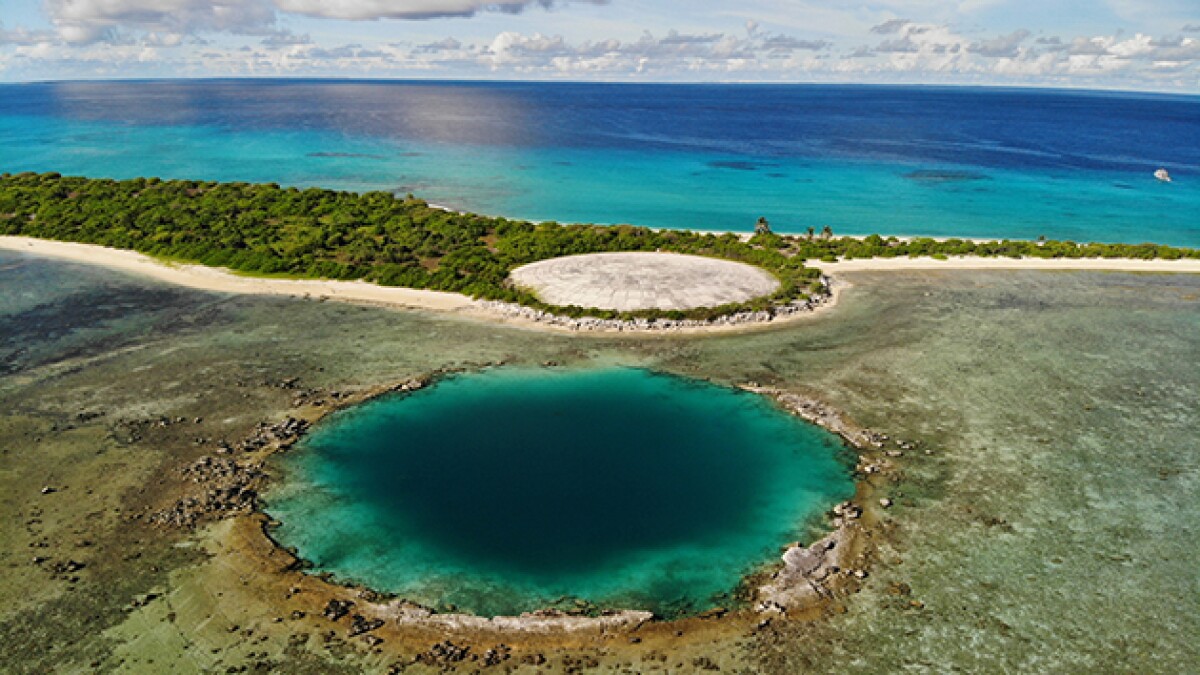
Hamburg, Germany – Nearly seven decades since the US government ended nuclear weapons testing in the Marshall Islands, a new study has revealed the impacts were far greater than what the US government has so far publicly acknowledged. According to a new study, all atolls, including the southern atolls, received radioactive fallout, but only three of the 24 atolls, all northern and inhabited at the time of fallout, received medical cancer screening.[1]
“The Legacy of U.S. Nuclear Testing in the Marshall Islands” by the Institute for Energy and Environmental Research (IEER) and commissioned by Greenpeace Germany, has comprehensively analyzed official documents from US government military and energy archives, scientific analyses, and medical sources from 1945 to the present day.
“Among the many troubling aspects of the Marshall Islands’ nuclear legacy is that the United States had concluded, in 1948, after just three tests that the Marshall Islands was not ‘a suitable site for atomic experiments’ because it did not meet the required meteorological criteria. Yet testing went on,” said Arjun Makhijani, report author and President of IEER.
Among the key findings of the study:
- U.S. government radioactivity measurements and dose estimates show that the entire country was impacted by fallout.
In the immediate aftermath of Castle Bravo – the US government’s largest ever nuclear weapons test – its capital, Majuro, was officially considered a “very low exposure” atoll. However, radiation levels were tens of times, and up to 300 times more, relative to background gamma radiation levels - Nuclear testing in the Marshall Islands created radiation exposures globally, with “hotspots” detected as far west of the Marshall Islands as Colombo, Sri Lanka and as far east as Mexico City.
The total explosive force detonated on the Marshall Islands was 108 megatons – the equivalent of dropping a Hiroshima bomb every single day for twenty years. On a proportional basis, the nuclear fall out is estimated to result in roughly 100,000 excess cancer deaths worldwide (rounded).[2] - Remediation of contaminated areas is complex and costly. The Marshall Islands lacks technical capacity in a number of fields crucial to health, environmental protection, and possible resettlement. The history of damage by, and distrust of the United States is compounded by Marshallese dependence on the United States for funds and for scientific and medical expertise. As an example, the Runit Dome, which houses decades of nuclear waste, has been deemed “safe” by the US Department of Energy despite cracks and the impact of climate change and sea level rise.
“The tests on the Marshall Islands are exemplary of an inhumane, imperial policy that deliberately sacrificed human lives and ignored Pacific cultures. As a result of this nuclear legacy, the Marshallese have been robbed of their land, traditions, and culture, with the people of Bikini and Rongelap forever displaced,” said Shiva Gounden, Head of Pacific at Greenpeace Australia Pacific. “The US still fails to acknowledge the full extent of the deep impact. However, these atomic bomb tests are not a closed chapter and they are still having an impact today. Reparations that fit the extent of the harms caused by testing are long overdue.”
In March and April, Greenpeace and its flagship vessel, the Rainbow Warrior, completed a six-week mission with radiation specialists and independent scientists to conduct research across the atolls to support the Marshall Island’s government in its ongoing fight for nuclear justice and compensation.[3] It also marked 40 years (May 1985) when Greenpeace helped answer a call and evacuated the people of Rongelap Island to Mejatto due to nuclear fallout from Castle Bravo, which rendered their home uninhabitable.
In July, Greenpeace and the Rainbow Warrior will mark another 40 year anniversary – the bombing of the Rainbow Warrior I by the French secret service, who were attempting to halt Greenpeace’s campaign against nuclear testing in French Polynesia (Maohi Nui).
1 This Month
10 March A LIVE WEBINAR THE REAL EFFECTS OF NUCLEAR POWER
What the Industry Isn’t Telling Us
1:00 PM Mountain, 2 pm Central, 3 pm Eastern. Live on the Keepers of the Water Facebook page



18 March Webinar @ 1 PM EST: An Assessment of SMR Projects: The Case of Canada
register for the zoom:
https://us02web.zoom.us/webinar/register/WN_o8BIIOUvQ2ONJR1nta65DQ#/registration


of the week – STOP SMALL MODULAR REACTORS IN CANADA
To see nuclear-related stories in greater depth and intensity – go to https://nuclearinformation.wordpress.com
-
Archives
- March 2026 (99)
- February 2026 (268)
- January 2026 (308)
- December 2025 (358)
- November 2025 (359)
- October 2025 (376)
- September 2025 (258)
- August 2025 (319)
- July 2025 (230)
- June 2025 (348)
- May 2025 (261)
- April 2025 (305)
-
Categories
- 1
- 1 NUCLEAR ISSUES
- business and costs
- climate change
- culture and arts
- ENERGY
- environment
- health
- history
- indigenous issues
- Legal
- marketing of nuclear
- media
- opposition to nuclear
- PERSONAL STORIES
- politics
- politics international
- Religion and ethics
- safety
- secrets,lies and civil liberties
- spinbuster
- technology
- Uranium
- wastes
- weapons and war
- Women
- 2 WORLD
- ACTION
- AFRICA
- Atrocities
- AUSTRALIA
- Christina's notes
- Christina's themes
- culture and arts
- Events
- Fuk 2022
- Fuk 2023
- Fukushima 2017
- Fukushima 2018
- fukushima 2019
- Fukushima 2020
- Fukushima 2021
- general
- global warming
- Humour (God we need it)
- Nuclear
- RARE EARTHS
- Reference
- resources – print
- Resources -audiovicual
- Weekly Newsletter
- World
- World Nuclear
- YouTube
-
RSS
Entries RSS
Comments RSS
 nuclear-news