Future of human society depends on what we do in this decade
 THIS DECADE WILL DECIDE WHAT THE WORLD LOOKS LIKE FOR THOUSANDS OF DECADES TO COME. #AUSPOL, JPratt27 , 9 May 15
It could. if we set our minds to it, be the decade when the planet’s use of fossil fuels peaks and then rapidly declines. We’ve built a movement that, for the moment, is starting to tie down the fossil fuel industry: from the tarsands of Alberta to the (as yet unbuilt) giant new mines of Australia’s Galilee Basin, the big players in coal, gas, and oil are bothered and even bewildered by a new strain of activist. They’re losing on the image front: when the Rockefeller family, the Church of England, and Prince Charles have begun divesting their fossil fuel stocks, you know the tide has turned.
And with it comes the sudden chance to replace that fossil fuel, fast and relatively easily. Out of nowhere the price of solar panels has fallen like an anvil from a skyscraper, dropping 75 percent in the last six years. Renewable energy is suddenly as cheap or cheaper than the bad stuff, even before you figure in the insane monetary cost of global warming. So in Bangladesh they’re solarizing 60,000 huts a month; the whole country may be panelled by 2020.
“The next 10 years will be decisive when it comes to the planet’s future — what we do (or don’t) will play out over geologic time.”
That rapid change wouldn’t be enough to stop global warming — we’re already seeing drastic changes, as anyone living through California’s drought can attest. We’ll continue to see record-breaking years (like 2014. And like 2015 so far). We’ll have to deal with record flooding. The ocean will grow more acidic. But maybe, if we really ratchet up the transition we’ll avoid a challenge of civilization-scale……..http://linkis.com/wordpress.com/tknNA
Thunder Bay Mayor Keith Hobbs warns on un-safety of nuclear waste burial near Lake Huron
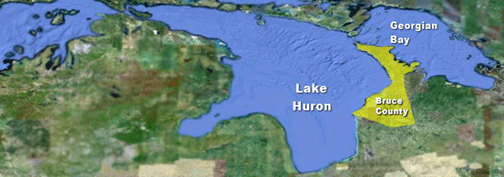 Ont. mayor calls nuclear waste location ‘a bone-headed move’ Amy Legate-Wolfe, CTVNews.ca May 7, 2015 Thunder Bay Mayor Keith Hobbs has a problem with a plan to bury nuclear waste underground given the locations proximity to a water source.
A panel of experts concluded Wednesday that it is safe to bury the hazardous nuclear waste in a deep underground bunker at the site near Lake Huron.
The 430-page environmental assessment report found that the project is not likely to cause significant adverse environmental effects, though it would require strict attention and regulation. The proposal put forth by Ontario Power Generation calls for hazardous waste to be buried 680 metres underground in a deep geological repository or DGR, a distance that would comfortably fit the CN Tower.
The DGR will be at the Bruce Nuclear Generating Station, which stands on the shores of Lake Huron, Southwest of Owen Sound, Ont……..
After taking a tour of the proposed site, Hobbs wasn’t convinced that there aren’t other places that would serve the repository better.
“One of our main concerns was that no other sites were looked at,” he said. “And when we’re looking at high-level nuclear waste…I think they really missed the boat here in looking at other sites.”
Hobbs believes locations like Ignace in Northern Ontario or Saskatchewan would handle the nuclear waste better, and are away from a water source.
The federal environment minister has four months to decide whether to approve the plan. The goal is to start construction by 2018, and have the site running by 2025. Before that can happen, there will have to be further approvals and consultations with local First Nations…….http://www.ctvnews.ca/canada/ont-mayor-calls-nuclear-waste-location-a-bone-headed-move-1.2363486
Workers Injured In Nuclear Weapons Lab Accident
Nine workers have been injured in an accident at the nuclear weapons research facility at Los Alamos National Laboratory.
One worker was in a critical condition after being burned while carrying out preventative maintenance at an electrical substation attached to the Neutron Science Center……http://news.sky.com/story/1477911/workers-injured-in-nuclear-weapons-lab-accident
Tesla may well have killed nuclear power
 Did Tesla Just Kill Nuclear Power? Forbes, 1 May 15 It would be almost
  three hours until Tesla’s big announcement, but inside a Northwestern Universityclassroom near Chicago Thursday night, the famed nuclear critic Arnie Gundersen had the inside scoop:
Tesla Motors TSLA -0.04% CEO Elon Musk was about to announce an industrial-scale battery, Gundersen said, that would cost about 2¢ per kilowatt hour to use, putting the final nail in the coffin of nuclear power……
Arnie Gundersen -“We all know that the wind doesn’t blow consistently and the sun doesn’t shine every day,” he said, “but the nuclear industry would have you believe that humankind is smart enough to develop techniques to store nuclear waste for a quarter of a million years, but at the same time human kind is so dumb we can’t figure out a way to store solar electricity overnight. To me that doesn’t make sense.”…….
Gundersen dismissed the nuclear contribution as too expensive and too slow—even if the U.S. could license and afford new reactors, they could not come online before 2023—and he replaced the nuclear contribution with batteries and conservation.
“The operative word in this discussion tonight is now. What are we going to do now to reduce the amount of carbon dioxide going into the atmosphere?” he said. “These things can be implemented immediately. We know how to insulate a building. We know how to put double and triple-pane windows in them. We know how to build windmills and put solar cells up. These are immediate things. We don’t have to invest $50 trillion and wait 15 years for that to come to fruition.
“Producing our way out of the problem with renewables is half the solution. Conserving our way out is the other half.”
The future of nuclear energy in doubt
Experts debate the future of nuclear energy at Fossil Free NU event http://dailynorthwestern.com/2015/05/01/campus/experts-debate-the-future-of-nuclear-energy-at-fossil-free-nu-event/ Elena Sucharetza, Reporter Experts discussed whether nuclear power could be a viable source of alternative energy at an event hosted by Fossil Free NU on Thursday night.
The speakers told more than 50 students in Harris Hall that the United States and the rest of the world need to move from carbon emitting energy sources as quickly as possible.
“The operative word in this discussion tonight is ‘now,’” said Arnie Gundersen, chief engineer at Fairewinds Energy Education. “What are we going to do right now to reduce the amount of carbon in the atmosphere, what is NU going to do, what is America going to do, what is the globe going to do? We need ‘now’ solutions, not 20- to 30-year solutions down the road.” Continue reading
$73m compensation deal from USA govt to New Mexico, over radiation leak
New Mexico radiation accident: $73m compensation deal struck over leak
Federal government pays for infrastructure as alternative to fine after mishandled radioactive waste including plutonium leaked from burst drum The US energy department is to fund $73m in road and other infrastructure projects in New Mexico as compensation for radiation leaks at a nuclear laboratory and underground dump.
The deal struck between the department and New Mexico forgoes fines and instead applies funds to upgrade federal nuclear facilities and surrounding communities in the state, according to settlement documents.
Projects include construction of a $5m emergency operations centre in Carlsbad, near where the nuclear waste dump leaked radiation in February 2014……http://www.theguardian.com/environment/2015/may/01/new-mexico-radiation-accident-73m-compensation-deal-struck-over-leak
Russian nuclear bombers in US airspace near Alaska, claims Pentagon
However, no US interceptor jets scrambled to shadow the bombers, according to defense officials familiar with the situation.
A Russian embassy spokesman did not return an email seeking comment on the matter, the Free Beacon said.
For his part, Navy Captain Jeff Davis, a spokesman for the U.S. Northern Command and North American Aerospace Defense Command (NORAD), declined to confirm the incursion, also saying that no attempts were made to intercept the Tu-95s.
According to the Free Beacon, last week’s incident was the first alleged Russian bomber incursion of a US or Canadian air defense zone this year. http://sputniknews.com/world/20150501/1021607454.html#ixzz3YvlT8L4R
Increased options now for customers’ renewable energy
The Evolution of Customer Renewable Energy Choice, From RECs to Offsite PPAs Greentech Media, Corporate customers now have a lot of options to choose from when procuring renewables. Bryce Smith May 1, 2015
Customer access to clean energy has increased dramatically in the past 15 years, as technology cost reductions, electricity market deregulation, and financial creativity have combined to produce more accessible renewable products for end users.
Energy managers now have a wealth of tools at their disposal. The most recent product class is the offsite solar PPA. This product represents the fourth major way that large electricity buyers can access the benefits of renewables. It’s the most flexible and satisfying yet, and appeals to a broad range of end users, including universities, corporations, manufacturers, municipalities and other government agencies.
We will briefly recap the history of customers’ renewable energy options, as well as the pros and cons of each…….http://www.greentechmedia.com/articles/read/the-evolution-of-customer-renewable-energy-choice-from-recs-to-offsite-ppas
Concerns about water safety,and indigenous culture as Federal Board revises uranium mining license
Feds revise license to SD uranium mine over water, culture concerns http://www.capjournal.com/news/feds-revise-license-to-sd-uranium-mine-over-water-culture/article_92122a46-f046-11e4-bbad-d720fa0a51d2.html
RAPID CITY — A federal board has revised a license granted to a company that wants to mine for uranium in western South Dakota.
The Atomic Safety and Licensing Board of the Nuclear Regulatory Commission a year ago issued a license to Powertech Uranium Corp. for the proposed Dewey-Burdock mine near Edgemont. Powertech is now Azarga Uranium.
The license was put on hold when mine opponents including the Oglala Sioux raised questions about possible damage to aquifers and cultural sites.
The Rapid City Journal reports that the board has ruled in Azarga’s favor on five challenges relating to water quality and quantity. But it also instructed the company to make more efforts to locate existing drill holes at the site to prevent contamination, and it said the mine could threaten cultural sites.
Britain’s status symbol – the Trident nuclear weapons system
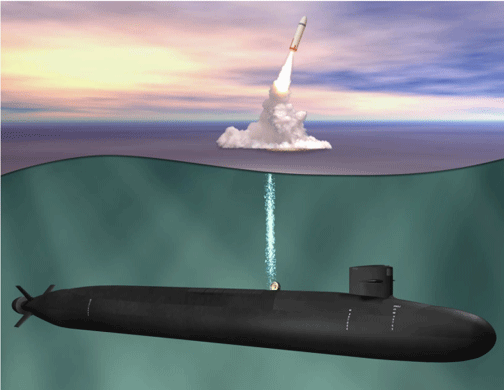 Trident nuclear weapons system is a ‘status symbol’ for the British establishment, says Nicola Sturgeon, The Independent 29 Apr 15 The Trident nuclear weapons system is a “status symbol” and will not help keep the UK safe, Scotland’s First Minister has said.
Nicola Sturgeon this morning accused the UK establishment of having an “obsession” with the weapons and suggested the project was sapping resources from more useful military investments.
“What I believe we need are strong conventional forces and I believe conventional forces have been compromised because of the obsession with Trident, which I think is a status symbol rather than a device to genuinely protect the country,” she told BBC Breakfast this morning.
“Britain is an island nation, a maritime nation, and yet Britain’s forces don’t have a single maritime patrol aircraft. When Russian submarines were thought to be patrolling in our territorial waters a few months ago, Britain had to call in other countries to check that out.
“We need strong conventional forces, not new nuclear weapons.”
Ms Sturgeon noted that of 200 countries in the world, 190 do not have nuclear weapons……..
The Green Party, SNP, and Plaid Cymru all oppose renewing the project, which is estimated to cost £100bn over its lifetime. http://www.independent.co.uk/news/uk/politics/trident-nuclear-weapons-system-is-a-status-symbol-for-the-british-establishment-says-nicola-sturgeon-10211674.html
Switzerland’s government calls for a nuclear free world
Switzerland calls for nuclear-free world Swiss Info, 28 April 15 Swiss Foreign Minister Didier Burkhalter has called for an “ambitious and pragmatic” approach to eliminating nuclear weapons worldwide at the opening of a United Nations conference in New York.
The month-long meeting is taking stock of the 1970 nuclear Non-Proliferation Treaty, signed by 189 states.
In his speech, Burkhalter said current “global power shifts, geopolitical tensions, and regional instabilities… should not be an excuse for inaction” on disarmament.
The Swiss minister said the total elimination of nuclear weapons was not possible overnight but as an initial urgent step states should focus on the progressive reduction of nuclear-related risks.
“Nuclear-armed states should reduce the operational readiness of their weapons and lengthen decision times,” said Burkhalter.
He went on to stress that the Comprehensive Nuclear Test-Ban-Treaty had still not entered into force and negotiations on a treaty prohibiting the production of fissile material had yet to commence……..http://www.swissinfo.ch/eng/nuclear-arms_switzerland-calls-for-nuclear-free-world/41402170
You wouldn’t know if Fukushima radioactive food was in your grocery store
 Is radioactive food from Fukushima being sent to your grocery store? April 27, 2015 by: David Gutierrez, staff writer (NaturalNews) Food produced in the radioactive exclusion zone around the Fukushima Daiichi nuclear power plant could already be on store shelves around the world, experts have warned……..
Importing countries rely on producing countries to correctly identify where their products come from, which means there is no real way to protect the food supply from such fraud, British experts said.
“There is a risk that radioactive food is getting on to the UK market,” said Eoghan Daly of the Institute of Food Safety Integrity and Protection.
Under British law, food produced in the area around Fukushima must be labeled as such and must be subjected to radiation testing upon exiting Japan and entering the United Kingdom. The United States has a similar system in place, mandating the inspection of certain products including dairy, fresh fruits and vegetables, meat and seafood produced in “areas of concern” around Fukushima.
“I suspect what has happened in Taiwan might well have already happened in the UK. Intermediary supply chain middlemen can buy food in bulk and package and label as they like – before shipping them to the UK,” said Alastair Marke of the British food safety consultancy
“Although we have adopted one of the world’s most comprehensive and stringent traceability laws, the UK has virtually no control over how foods are processed, manufactured and packaged in Japan.”
“No safe level” of exposure
The radioactive element most likely to be contaminating food produced near Fukushima is cesium, which has a long half-life and can actually remain in the human body for decades. Although large amounts of radioactive iodine were also released during the meltdowns, this isotope largely dissipates within a few weeks.
“There is no safe level of radionuclide exposure, whether from food, water or other sources, period,” warned Jeff Patterson, former president of Physicians for Social Responsibility, shortly after the Fukushima disaster.
“Exposure to radionuclides, such as iodine 131 and cesium 137, increases the incidence of cancer. For this reason, every effort must be taken to minimize the radionuclide content in food and water.”
“Consuming food containing radionuclides is particularly dangerous,” agreed physician Alan Lockwood. “If an individual ingests or inhales a radioactive particle, it continues to irradiate the body as long as it remains radioactive and stays in the body.” http://www.naturalnews.com/049509_radioactive_food_fukushima_cesium.html#ixzz3YfMkHGBy
Chernobyl nuclear plant remains a high danger, with instability in Ukraine
Ukraine instability threatens efforts to keep Chernobyl plant safe http://www.newstalk.com/Ukraine-instability-threatens-attempt-to-keep-Chernobyl-plant-safe, 26 Apr 15
Today marks the 29th anniversary of the disaster
Aid agencies in Ukraine say instability in the region is threatening efforts to make the Chernobyl power plant safe for the next 100 years.
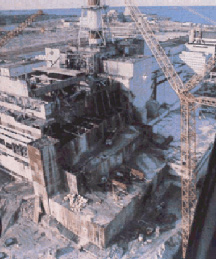
Today is the 29th anniversary of the world’s worst ever nuclear accident, which affected the lives of more than seven million people.
Adi Roche, voluntary chief executive of Chernobyl Children International, visited the site in recent weeks.
She said people don’t realise that the radioactive material released in 1986 represents just a fraction of the toxic material still inside the crumbling complex:
First shale oil, now solar is transforming Japan’s and the global energy market
Like Shale Oil, Solar Power Is Shaking Up Global Energy http://climate-change-news.blogspot.com.au/2015/04/like-shale-oil-solar-power-is-shaking.html 25 Apr 15 One by one, Japan is turning off the lights at the giant oil-fired power plants that propelled it to the ranks of the world’s top industrialized nations. With nuclear power in the doldrums after the Fukushima disaster, it’s solar energy that is becoming the alternative.
Solar power is set to become profitable in Japan as early as this quarter, according to the Japan Renewable Energy Foundation (JREF), freeing it from the need for government subsidies and making it the last of the G7 economies where the technology has become economically viable.
Japan is now one of the world’s four largest markets for solar panels and a large number of power plants are coming onstream, including two giant arrays over water in Kato City and a $1.1 billion solar farm being built on a salt field in Okayama, both west of Osaka.
“Solar has come of age in Japan and from now on will be replacing imported imported uranium and fossil fuels,” said Tomas Kåberger, executive board chairman of JREF.
Once Japan reaches cost-revenue parity in solar energy, it will mean the technology is commercially viable in all G7 countries and 14 of the G20 economies, according to data from governments, industry and consumer groups.
…
“Just as shale extraction reconfigured oil and gas, no other technology is closer to transforming power markets than distributed and utility scale solar,” said consultancy Wood Mackenzie, which has a focus on the oil and gas industry.
Oil major Exxon Mobil says that “solar capacity is expected to grow by more than 20 times from 2010 to 2040.”
Ban Uranium Mining and Nuclear Power- call from World Uranium Symposium
Global Conference Urges Ban on Uranium Mining and Nuclear Power http://www.truthdig.com/report/item/global_group_seeks_ban_on_uranium_and_nuclear_power_20150424 By Paul Brown, Climate News Network LONDON—Uranium mining across the world should cease, nuclear power stations be closed and nuclear weapons be banned, according to a group of scientists, environmentalists and representatives of indigenous peoples.
Three hundred delegates from 20 countries that produce uranium for nuclear power, weapons and medical uses called for an end to all uranium mining in a declaration launched on Earth Day this week at a meeting in Quebec, Canada.
The venue for the World Uranium Symposium was chosen because Quebec state is currently considering whether to continue its moratorium on uranium mining, having already closed down its only nuclear power plant in 2013.
Symbolic choice
The city of Quebec is also symbolic because this is where Canada, the US and the UK made a co-operation agreement in 1943 that led to the building of the world’s first nuclear weapons. Two of the resulting A-Bombs were used to destroy the Japanese cities of Hiroshima and Nagasaki in 1945.
But the symposium was more concerned about the damage that existing uranium mining is doing to the welfare of indigenous peoples, and the “erroneous view” that nuclear power can help solve the problem of climate change.
The declaration applauded the expansion of renewable energy and the significant strides in phasing out nuclear power following the growing awareness that “nuclear power is not a cost-effective, timely, practical or safe response to climate change”.
“The risks to health, safety and the environment represented by the entire nuclear fuel chain . . . greatly exceed the potential benefits for society”
It called for “a worldwide ban on uranium exploration, mining, milling and processing, as well as the reprocessing of nuclear waste, and the irresponsible management of radioactive waste”.
Dr. Eric Notebaert, associate professor of medicine at the University of Montreal, co-president of the Symposium, and member of the Canadian Association of Physicians for the Environment, said that the symposium delegates all agreed that “the risks to health, safety and the environment represented by the entire nuclear fuel chain—from uranium mines, to power reactors, to nuclear weapons, to radioactive wastes—greatly exceed the potential benefits for society”.
Dr. Juan Carlos Chrigwin, a physician affiliated with McGill University, and president ofPhysicians for Global Survival, said: “The issuing of this World Declaration on Uranium is the culmination of essential work carried out over many years by international coalitions who, despite geographical and cultural differences, share common objectives and who desire to shape a common vision of a better world.
“Uranium does not provide a viable or sustainable approach for dealing with climate change, nor for providing isotopes for medical use. Today, there are a number of medical and energy alternatives that are cheaper and safer.”
The declaration is open for organisations and individuals to sign on the internet and is bound to put further pressure on an industry already suffering from falling confidence.
The price of uranium has dropped from $138 a tonne in 2007 to less than $40 a tonne currently as plans to build more nuclear stations have been shelved in several countries.
While the search continues for rich new uranium deposits—particularly by China in Africa and the US in Greenland—it is unlikely to be economically viable to exploit them at current prices.
Carbon footprint
According to the World Nuclear Association, 52% of the world’s production comes from 10 mines in six countries. The largest is in Canada, followed by one in Australia, but the largest single producer is Kazakhstan, which has four mines in the top 10 in the world. In Africa, Niger and Namibia are also big producers.
While many pro-nuclear governments—including the UK’s—regard nuclear power as a clean, low-carbon form of energy, the politicians ignore the carbon footprint of the mines and the consequences for the health of workers.
It is in developing countries that the miners and the local environment tend to suffer most because of open cast mines. For example, large areas of Kazakhstan are too dangerous to inhabit as a result of mountains of uranium tailings and mildly radioactive dust.
The Symposium’s co-president, Dr. Dale Dewar—a physician who is associate professor at the University of Saskatchewan and is co-author of the book, From Hiroshima to Fukushima to You—summed up by saying: “We are calling on national and international leaders to protect our planet and our populations from any further nuclear catastrophes. Anything less would be irresponsible.”
1 This Month

of the week – Shut Down Drone Warfare!


Tell the Ukrainian Government to Drop Prosecution of Peace Activist Yurii Sheliazhenko

Petition to revoke the licensing of the Near Surface Nuclear Disposal Facility (NSDF) at Chalk River. https://www.ourcommons.ca/petitions/en/Petition/Details?Petition=e-7247
To see nuclear-related stories in greater depth and intensity – go to https://nuclearinformation.wordpress.com
-
Archives
- April 2026 (103)
- March 2026 (251)
- February 2026 (268)
- January 2026 (308)
- December 2025 (358)
- November 2025 (359)
- October 2025 (376)
- September 2025 (257)
- August 2025 (319)
- July 2025 (230)
- June 2025 (348)
- May 2025 (261)
-
Categories
- 1
- 1 NUCLEAR ISSUES
- business and costs
- climate change
- culture and arts
- ENERGY
- environment
- health
- history
- indigenous issues
- Legal
- marketing of nuclear
- media
- opposition to nuclear
- PERSONAL STORIES
- politics
- politics international
- Religion and ethics
- safety
- secrets,lies and civil liberties
- spinbuster
- technology
- Uranium
- wastes
- weapons and war
- Women
- 2 WORLD
- ACTION
- AFRICA
- Atrocities
- AUSTRALIA
- Christina's notes
- Christina's themes
- culture and arts
- Events
- Fuk 2022
- Fuk 2023
- Fukushima 2017
- Fukushima 2018
- fukushima 2019
- Fukushima 2020
- Fukushima 2021
- general
- global warming
- Humour (God we need it)
- Nuclear
- RARE EARTHS
- Reference
- resources – print
- Resources -audiovicual
- Weekly Newsletter
- World
- World Nuclear
- YouTube
-
RSS
Entries RSS
Comments RSS
 nuclear-news