Nuclear industry is rattled, as reactors close
Makhijani recommends a a two-prong remedy to this problem.
“Rather than keep old, clunky nuclear power plants going, we should have a community and worker protection fund — a small charge on nuclear electricity that can be used to protect workers from unemployment and transition them into new employment,” he suggests. “We give companies incentives to come, but then they can be a kind of pension fund for communities when they die or leave.”
The second part of the solution is to replace the plant with efficient and renewable energy that can create a lot of tax revenues and jobs, Makhijani says……….
Why should we be spending $60, $70, $80 a megawatt hour for old power plants that are generating nuclear waste that we don’t know what to do with instead of simply going to renewable energy?”
And then there’s the problem of nuclear waste. Opponents of nuclear power contend we should not even be talking about nuclear power if we can’t solve the waste problem. Makhijani agrees.
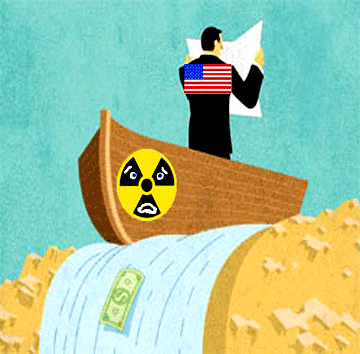 Nuclear reactor closings in the US continue to roil the energy industry Living on Earth November 22, 2015 Adam Wernick In the face of growing safety problems, cheap natural gas and the rising use of renewable energy sources, aging nuclear power plants are closing down across the US, raising questions about the future viability of nuclear energy production. The Entergy Corporation is the most recent company to announce closings. Entergy plans to shut down the Fitzpatrick nuclear power plant on Lake Ontario near Syracuse, New York, and the Pilgrim Nuclear Power station near Boston, Massachusetts, before the end of this decade.
The two plants typify some of the problems facing the US nuclear energy industry, Continue reading
Arms race to speed up, if Australia supplies uranium to India
 India-Australia nuclear agreement: supplying uranium to a nuclear flashpoint http://www.dianuke.org/john-hallam-india-australia-nuclear-agreement-supplying-uranium-to-nuclear-flashpoint/ AUSTRALIA/INDIA U-DEAL SELLS URANIUM DIRECTLY INTO SUBCONTINENTAL NUCLEAR ARMS RACE, John Hallam Nuclear Weapons Campaigner PND-NSW
The India-Australia uranium deal, whereby Australia agrees to sell uranium to India in spite of India’s not being a signatory of the nuclear nonproliferation treaty, and in spite of the fact that a vigorous nuclear arms race is in progress on the subcontinent, beggars belief for anyone who has been involved for decades as I have, in questions of nuclear nonproliferation, disarmament, and nuclear safety.
A vigorous nuclear arms race is taking place right now on the Indian subcontinent between India and Pakistan, with Pakistan now having some 130 nuclear warheads, and India not far behind with between 110 and 120.
Pakistan has deployed short-range, war-fighting ‘mini nukes’ to repel Indian tank attacks. India has said that their use will lead to full-scale nuclear war.
India and Pakistan are poised on a nuclear knife-edge. While we can say all we like that Australian uranium will only ever be used to ‘civil’ uses, the fact is that because India has limited uranium supplies of its own (mined under appalling conditions at Jharsguda in Bihar with catastrophic effects on the health of local people) – the fact is that use of Australian uranium will ‘free up’ un-safeguarded Indian uranium for weapons use. It can be no other way, there is simply no avoiding the brute facts of arithmetic. Uranium that has been replaced by imported (Australian) uranium for nuclear power use is now available for use in nuclear weapons.
Australia has chosen to sell its uranium into the worlds most dangerous nuclear flashpoint. It has done so against the recommendations of a parliamentary joint committee.
This is a mindbogglingly foolish decision.
Bulletin of the Atomic Scientists addresses twin perils of climate and nuclear danger
Resetting the Doomsday Clock: counting climate, nuclear risks http://www.theglobeandmail.com/globe-debate/resetting-the-doomsday-clock-counting-climate-nuclear-risks/article27376493/ JOHN POLANYI JOHN POLANYI IS A NOBEL LAUREATE AT THE UNIVERSITY OF TORONTO AND A SPONSOR OF THE BULLETIN.
The Bulletin of the Atomic Scientists, the publication that for 70 years has acted as the conscience of scientists, met this week in Chicago to reset its Doomsday Clock. The hands stand at an alarming three minutes to midnight. But was anyone listening to the scientist doomsayers?
 In fact, a trio of politicians at the meeting were doing just that. Gareth Evans, former Australian foreign minister, attributed our avoidance of nuclear war, until now, in large measure to “dumb luck.” Governor Jerry Brown of California spoke of the need to combat climate change through education and strict regulation. Former U.S. secretary of defence William Perry declared that “we are back in dark days as confrontational as those of the Cold War.” The scientists were not, after all, alone.
Scientific knowledge, the Bulletin declares, has driven humanity forever from its Garden of Eden. First, the machine age brought the Industrial Revolution, and with it climate change; then, understanding of the atom gave us the nuclear peril.
 The Bulletin’s meeting addressed both of these existential threats. First, climate change. A UN international conference will start on Nov. 30 in Paris, the culmination of 20 years of UN discussions. Its outcome is crucial; the goal must be to cut back on fossil fuels, shift to renewable energy sources and implement conservation. Rich countries must make pledges that can be monitored. The poor need generous assistance to meet their targets.
We await similar enlightenment in regard to the threat of nuclear war. The original message of the Bulletin is in danger of being forgotten: It is that the world’s nuclear arsenals are likely to be used.
The great powers, staunch nuclear abolitionists when abroad, are drunkards at home. They seek to ensure their security by improving their arsenals through trillion-dollar upgrades. Their weapons have the stated purpose of deterrence. But the nature of the weaponry – nuclear bombs, battlefield nuclear weapons, missile defences, multiple delivery systems, vast nuclear reserves – suggest a further purpose, which is fighting nuclear wars.
In a future confrontation we might face an opponent who approaches still closer to the nuclear brink, determined to prevail rather than surrender.
Will we assent then to live in a world in which the most irresponsible rule? Or, alternatively, commit ourselves to further throws of the nuclear dice? Reason dictates that we chose a third way – the retreat from nuclear confrontation.
Over the Bulletin’s meeting hung the question of the responsibility of the scientist. It is not enough to deliver science. The scientifically literate must read out the signs marked Danger. In Chicago this week, they were doing so.
Report from Nuclearisation of Africa Symposium highlights harmful effects of uranium mining
Federation For a Sustainable Environment « Nuclearisation of Africa » Symposium 19. Nov 2015 There is a clear global downtrend in the civil use of nuclear power, as documented by the annual World Nuclear Industry Status Report and as discussed at the international Symposium on « Nuclearisation of Africa » concluded on the 19th of November in Johannesburg.
Testimonies by participants from Niger spoke about the heavy toll of the 40 years exploitation of Uranium in their country. An excursion by the participants of the W Rand gold mine region (Johannesburg) demonstrated the grave environmental effects of gold mining, as tailing storage facilities contain a significant amount of uranium and a host of radioactive materials.
Health problems affecting miners and their families, living near the tailings and acid mine drainage receptor dams are frequent and well understood.
The link between the mining of uranium and the spread of nuclear weapons was also discussed. In view of the globally expanding use of renewables, South Africa has the chance to become the African leader for a sustainable energy future and this at a fraction of the costs of less risks compared with a nuclear power system. Mariette Liefferink CEO FSE (Federation for a Sustainable Environment) Günter Wippel Uranium-network Germany Prof. Andreas Nidecker, MD IPPNW (Interntl Physicians for the Prevention of Nuclear War) Switzerland
Nuclear deterrence: it’s just a house of cards
 Jeremy Corbyn’s Refusal to Launch Nuclear Weapons Shines Spotlight on Flaws of Deterrence http://fpif.org/jeremy-corbyns-refusal-to-launch-nuclear-weapons-shines-spotlight-on-flaws-of-deterrence/ When British Labour leader Jeremy Corbyn stated that, if prime minister, he would not launch nuclear weapons, the British chief of defense was predictably outraged.
By Russ Wellen, November 17, 2015. Newly elected British Labour leader Jeremy Corbyn upset the deterrence apple cart when he revealed that he wouldn’t launch nuclear weapons should he become prime minister. Chief of Defence Staff Sir Nick Houghton protested; at Huffington Post UK, Paul Waugh quoted Corbyn’s response:
“It is a matter of serious concern that the chief of the defence staff has today intervened directly in issues of political dispute. It is essential in a democracy that the military remains political neutral at all times.”
But Houghton said “the reason I say this, and it is not based on a personal thing at all, it is purely based on the credibility of deterrence.”
“The whole thing about deterrence rests on the credibility of its use.”
In other words, if a state has nuclear weapons and it’s the victim of a nuclear attack (or first strike), it feels bound to fulfill the deterrence contract and retaliate (a second strike). Otherwise, the state’s threats will never be taken seriously again.
The fallacy in that argument is that what hurts the credibility of deterrence even more is that, if nuclear war breaks out, it means that nuclear deterrence has failed. Not only that, once the world gets a load of the results of a nuclear war, nuclear programs as a whole will have lost their credibility. In other words, it doesn’t matter if the credibility of deterrence is undermined because it will likely never be used as a policy again.
Another troublesome aspect of deterrence is highlighted in an article on the precarious nature of the nuclear taboo in the new Bulletin of the Atomic Scientists by James Doyle:
Potentially lethal tension exists between nuclear deterrence and the nuclear taboo because the effectiveness of a nation’s nuclear deterrent depends on the credibility of its threat to use those weapons. If one state believes its rival will refrain from nuclear retaliation due to a desire to preserve the nuclear taboo, that state may be less deterred to initiate a nuclear attack.
“Nuclear-armed states could take steps to strengthen and formalize the nuclear taboo,” Doyle continues, “but they have not done so.”
They could all adopt a declaratory policy stating that nuclear weapons will only be used as a last resort and agree never to use them first in a conflict. … States could also configure their nuclear forces so they could not be used promptly in a crisis or to launch a disarming first strike against a potential adversary’s nuclear forces. States have failed to take these steps because they fear it will weaken deterrence. The nuclear taboo thus remains a fragile firebreak against nuclear catastrophe.
In other words, nuclear deterrence is just one big house of cards.
China steps up marketing of nuclear technology, supplies reactors to Argentina
 Argentina getting ‘made in China’ reactor http://asia.nikkei.com/Business/Deals/Argentina-getting-made-in-China-reactor, TETSUYA ABE, Nikkei staff writer, 17 Nov 15 BEIJING — China has clinched a deal to supply a nuclear reactor to Argentina, the fruit of an all-out effort by Beijing to ramp up infrastructure-related exports.
The deal between the state-run China National Nuclear Corp. and a state-owned Argentine nuclear power company was reached on the sidelines of the Group of 20 summit in Turkey, the Xinhua News Agency reported Tuesday. The contract totals $4.7 billion, according to Xinhua.
CNNC will supply equipment and parts for Argentina’s fourth and fifth reactors, slated for construction at the Atucha nuclear plant in Buenos Aires Province. The Hualong 1 reactor, a model that CNNC is said to have developed with China General Nuclear Power, will be adopted for the No. 5 reactor at the site. The Chinese side will cover a portion of the construction costs and offer low-interest loans. CNNC is also expected to supply the pressure vessel and steam generator for the No. 4 reactor.
At a meeting between Chinese President Xi Jinping and British Prime Minister David Cameron in October, the U.K. agreed to adopt the Hualong 1 at southeastern England’s Bradwell nuclear plant. China will also export five of the reactors to Pakistan for $15 billion in all. This type of reactor is said to cost roughly two-thirds as much to introduce as a comparable facility built in an industrialized nation.
Despite its limited track record in reactor operations and accident management, China has stepped up marketing efforts abroad by offering low prices. China General Nuclear Power recently signed a 7.2 billion euro ($7.6 billion) atomic energy deal with Romania. China’s strategy of sweetening deals by shouldering a portion of the costs for emerging nations poses a threat to established global players.
“Next generation” reactors the same old failed nuclear technology
Why nuclear power is off the table in the fight against climate change, LA Times, Linda Pentz Gunter, 17 Nov 15 Robert Bryce glosses over the “many hurdles” of nuclear energy almost as an afterthought. He omits entirely the best argument against choosing nuclear energy to address climate change: time. (“Nuclear power must be a part of greener future,” Op-Ed, Nov. 12)
The “next generation reactors” are the same old — and failed — sodium-cooled and other “fast” reactor designs that have been under development for decades. The current reactor designs do not meet our needs, with most around the world mired in delays and costs overruns.
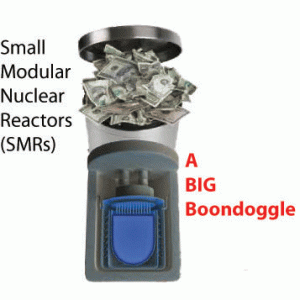 The U.S. Department of Energy has been funding a “next generation” favorite, the small modular reactor, since the 1990s. Today, there are still no such reactors in operation, and the Nuclear Regulatory Commission has yet to receive a license application.
Climate change can’t afford to wait for these last-century energy dinosaurs. On the other hand, unlike costly and dangerous nuclear power, renewables are meeting energy needs quickly and without the problem of a deadly waste legacy or risking the diversion of radioactive materials. http://www.latimes.com/opinion/readersreact/la-le-1117-tuesday-cliamte-change-nuclear-20151117-story.html
UK’s Energy Secretary Amber Rudd plans prioritising nuclear, slashing renewables
 U.K. Plans to Prioritise Nuclear, Gas Over Renewables to Cut CO2, Bloomberg, Alex Morales, 18 Nov 15 “………“In the next 10 years, it’s imperative that we get new gas-fired power stations built,” Energy Secretary Amber Rudd will say. “There are plans for a new fleet of nuclear power stations, including at Wylfa and Moorside. This huge investment could provide up to 30 percent of the low carbon electricity which we’re likely to need through the 2030s.”
The emphasis on nuclear and gas signals a further retreat from renewable energy after Rudd slashed several subsidy programs, arguing they risk exceeding Treasury spending limits. Renewables have taken a battering since Prime Minister David Cameron’s Conservatives came to power in May, with ministers announcing planned cuts to programs subsidizing solar power, onshore wind, biomass and energy efficiency.
The government has given the green light for the first new nuclear plant to be built in three decades, subsidized by consumers through their bills for 35 years. Electricite de France SA and China General Nuclear Power Corp. struck a deal last month to build by 2025 the 3.2 gigawatt-plant at Hinkley Point in southwest England.
A “little radiation” supposedly good for you – the “hormesis” argument for raising radiation safety limits
I’d never heard of hormesis until a reader alerted me to this issue on Monday. I know it’s not fair to conflate nuclear power and nuclear weapons, but the whole thing makes me think of the subtitle of Dr. Strangelove, Stanley Kubrick’s brilliant dark comedy about accidental nuclear war — How I Learned to Stop Worrying and Love the Bomb.
So a little radiation’s good for you? Hmmm … Democrat and Chronicle, Steve Orr, @SOrr111:30 November 17, 2015 “……The suggested rules are based on a scientific theory, known as radiation hormesis, which holds  that low-level radiation is not harmful to human health and may in fact be beneficial. Hormesis is the term for the circumstance where a small amount of an otherwise harmful substance is good for you in small doses. …….
current NRC regulations — that any exposure to ionizing radiation, the kind that can damage or alter human cells, is potentially unsafe. The gospel: Thou shalt fear all radiation.
With that in mind, current NRC regulations limit public exposure to radiation from power plants to 100 millirem a year. (Another measure of ionizing radiation dosage is millisieverts, or mSv. One mSv is the same as 100 millirem.) The idea is to limit radiation releases from nuclear plants to zero, of course, but very small amounts of radiation sometimes escape into the air or groundwater.
The average American is exposed to about 600 millirem a year from other sources such as radon and other naturally occurring materials, medical procedures and cosmic particles and rays.
The legal limit for nuclear power plant workers is 5,000 millirem a year, though higher doses are allowed in some circumstances…….The suggested new rules would make the limit for the general public the same as for workers — that is, 50 times higher than it is now. Fifty.
The suggested changes were advanced earlier this year in three petitions filed with the NRCby outside advocates for radiation hormesis…..You can read a great deal about this if you like. A good start would be this CounterPunch piece……
Anyone interested may submit comments online through the end of Thursday. The suggested rules are not a fait accompli; NRC spokesman Neil Sheehan said the agency will weigh the comments that are submitted, plus a great deal of other information, before deciding whether to draft actual proposed changes to the rules.
I’d never heard of hormesis until a reader alerted me to this issue on Monday. I know it’s not fair to conflate nuclear power and nuclear weapons, but the whole thing makes me think of the subtitle of Dr. Strangelove, Stanley Kubrick’s brilliant dark comedy about accidental nuclear war — How I Learned to Stop Worrying and Love the Bomb. http://www.democratandchronicle.com/story/news/local/blogs/environment/2015/11/17/more-radiation-exposure/75889896/
Nuclear energy is not a viable solution to address global warming
Why nuclear power is off the table in the fight against climate change. LA Times, 17 Nov 15 Bryce wants us to build new nuclear power plants as a partial solution to global warming. He wants Congress to pay for testing new designs for nuclear plants and tells us that “nuclear energy’s importance in reducing emissions is beyond dispute.”
However, he minimizes the enormous issue with nuclear energy: the long-term hazard created by waste, a problem he refers to as “thorny.”
It would be lovely if nuclear power were the panacea for climate change, but spent nuclear fuel is estimated to remain dangerous for tens of thousands of years.
Rendering parts of our planet permanently uninhabitable is more than a “thorny” problem. It is the main reason that nuclear energy is not a viable solution to for global warming or anything else related to our energy needs.
Alleviating the potential for one environmental catastrophe by creating another one is not the answer.
Mark Shoup, Apple Valley http://www.latimes.com/opinion/readersreact/la-le-1117-tuesday-cliamte-change-nuclear-20151117-story.html
Some renewable energy headlines
Apple’s first Singapore store will be powered entirely by renewable …CNET-15 Nov 2015
In-Depth-TODAYonline-16 Nov 2015
Tesla’s Gigafactory will produce as much renewable energy as it …
General Electric (GE) Debuts New Renewable Energy Business
Nuclear energy’s large carbon footprint, despite the pro nuke spin in India and USA
 As the Paris conference comes closer, the US too has rallied behind the nuclear lobby. The move is driven by the interests of the country’s nuclear vendors as well as the larger agenda to scuttle any meaningful
  dialogue on climate change
Modi’s nuclear deal with Britain is hollow, but quite toxic, catch news, KUMAR SUNDARAM, 15 Nov 15 “……….. The nuclear lobby has been campaigning in recent years to re-fashion the industry as green and renewable – to ensure subsidies and state support as well as positive popular perception.
In the run-up to the Conference of Parties of the UN Framework on Climate Change in Paris next month, the nuclear lobby,such as EDF of France, is trying to sell nuclear power as climate-friendly energy. Under the expiring Kyoto Protocol, nuclear power is excluded from the list of green energy sources and rightly so.
Nuclear power leaves a huge carbon footprint – from carbon-intensive mining and refining of uranium ore to transport and fuel fabrication to manufacturing of high-density concrete and steel for nuclear reactors. And this is without even accounting for the continuous supply of cooling water and long-term handling of nuclear waste.

An assessment of greenhouse gases released from generating nuclear power, done by eminent energy and climate expert Benjamin K Sovacool, pegs the average carbon footprint at 66g CO2/kWh. This is above the limit set by the Committee on Climate Change.
Cheerleaders of nuclear energy, of course, conveniently ignore all this.
Nuclear energy being a solution to climate change is another myth. Those serious about tackling climate change know it’s a grave threat and requires immediate action. The time horizon for a real and meaningful response to change – stabilising global surface temperature at under 2 degrees above the pre-industrial average – can’t be stretched father than 2050.
Most assessments testify to this. A study by the MIT has shown that for nuclear energy to be a solution in this scenario, it would take no less than 1,000 nuclear power plants, each with a capacity of 1,000-1,500MW.
This is an impossible goal for two reasons. The nuclear industry is in terminal decline globally. And the much-touted “nuclear renaissance” is restricted to developing countries, where expansion would be much slower due to economic, social and technological reasons.
Also, nuclear reactors typically take 12-15 years to build, making investing in renewable energy much more attractive.
Dirty politics
As the Paris conference comes closer, the US too has rallied behind the nuclear lobby. The move is driven by the interests of the country’s nuclear vendors as well as the larger agenda to scuttle any meaningful dialogue on climate change.http://www.catchnews.com/environment-news/modi-s-nuclear-deal-with-britain-is-hollow-but-quite-toxic-1447527999.html
Could the attacks and COP21 possibly be related?
 Paris attacks – COP21 and the war on terror, Ecologist Oliver Tickell 14th November 2015 Is it a coincidence that the terrorist outrage in Paris was committed weeks before COP21, the biggest climate conference since 2009? Perhaps, writes Oliver Tickell. But failure to reach a strong climate agreement now looks more probable. And that’s an outcome that would suit ISIS – which makes $500m a year from oil sales – together with other oil producers……
Yes, France has been especially active in its air strikes against ISIS in Syria. And yes, there there is a huge reservoir of discontent among the socially excluded youth of the banlieue, the concrete jungle of impoverished outer suburbs that surround Paris and other big cities – where ISIS can perhaps find willing recruits to its ranks.
But is that all? In just a few weeks time, the COP21 climate conference will take place, in Paris, the biggest such event since COP15 in Copenhagen six years ago. The event offers the world a desperately needed opportunity to reduce its carbon emissions and limit global warming to 2C.
And that’s surely something the attackers, or at least their (presumably) ISIS commanders, must know all about.
Could the attacks and COP21 possibly be related?
To answer that question we should first ask, what do the attacks mean for COP21? Continue reading
Turn the spotlight on India’s nuclear weapons growth – says Pakistan
Pakistan urges focus on India’s nuclear activities http://nation.com.pk/international/15-Nov-2015/pakistan-urges-focus-on-india-s-nuclear-activities November 15, 2015 NEW YORK – A Pakistani Embassy spokesman has called for shifting focus on India’s expanding nuclear programme and its aggressive posturing, while rejecting claims that Pakistan was irresponsibly building its nuclear arsenal.
“Pakistan was not the first to introduce nuclear weapons in South Asia; India was,” Spokesman Nadeem Hotiana said in a letter published in The New York Times on Saturday.
He was responding to a recent Times’ editorial claiming that Pakistan’s nuclear arsenal was growing “faster than any other country’s”, and that “Persuading Pakistan to rein in its nuclear weapons programme should be an priority.”
Hotiana, who is press attache at the Pakistan Embassy in Washington, said, “Recent public reports confirm that India continues to grow its nuclear programme by testing missiles with longer ranges, working on coming fissile material production facilities, and investing in a nuclear triad that inevitably requires a larger nuclear arsenal. India also propounds war-fighting doctrines while being ascendant as one of the world’s largest importer of military hardware. A special waiver for India for nuclear trade is another destabilising step,” the letter said.It added, Pakistan has for decades offered proposals to India for nuclear restraint, including a strategic restraint regime that could address concerns raised in the editorial. As late as September, Prime Minister Nawaz Sharif of Pakistan made fresh proposals for peace in South Asia in his speech at the United Nations. Sadly, India has refused to engage.
In a letter to The New York Times, she said, “Studies have shown that in addition to mass deaths from nuclear weapons, the use of less than half of the Indian and Pakistani arsenals would cause worldwide climate disruption and a global famine that could put up to two billion people at risk. But it will be hard to persuade Pakistan and India to get rid of their nuclear weapons as long as the United States and Russia continue to insist that nuclear weapons are essential for their security. Their arsenals are far more deadly and threaten the survival of humanity,” it said.
Science misinformation from fossil fuel company Exxon
This echoes past activity of the tobacco industry, who knew from internal research about the health consequences of smoking but nevertheless funded misinformation casting doubt on the link between smoking and cancer. The same misinformation tactics employed by the tobacco industry are used by the fossil fuel industry.

Even the same spokespeople defending tobacco have also attacked the science on climate change. Given the obvious parallels between the activities of the tobacco and fossil fuel industries, the New York Attorney General has issued a subpoena further investigating Exxon’s activities regarding climate change……..https://theconversation.com/exxon-climate-revelations-are-just-part-of-a-long-history-of-science-misinformation-50518
1 This Month
29 Jan. Thursday 7-8 p.m. Webinar – World’s Largest Nuclear Station in Port Hope, ON?
To see nuclear-related stories in greater depth and intensity – go to https://nuclearinformation.wordpress.com/

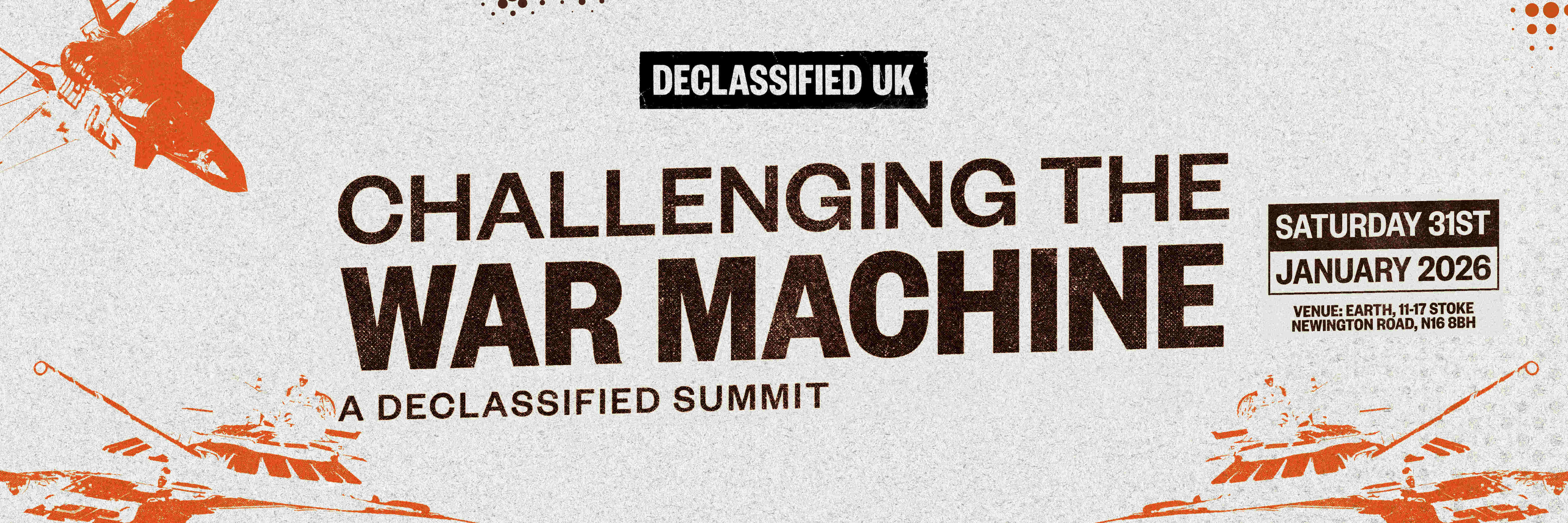
31st January – Challenging the War Machine – a DECLASSIFIED UK SUMMIT

Website of the Week
Now until to February 10, 2026 Radioactive waste storage in France: the debate is finally open! How to participate?
-
Archives
- January 2026 (283)
- December 2025 (358)
- November 2025 (359)
- October 2025 (376)
- September 2025 (258)
- August 2025 (319)
- July 2025 (230)
- June 2025 (348)
- May 2025 (261)
- April 2025 (305)
- March 2025 (319)
- February 2025 (234)
-
Categories
- 1
- 1 NUCLEAR ISSUES
- business and costs
- climate change
- culture and arts
- ENERGY
- environment
- health
- history
- indigenous issues
- Legal
- marketing of nuclear
- media
- opposition to nuclear
- PERSONAL STORIES
- politics
- politics international
- Religion and ethics
- safety
- secrets,lies and civil liberties
- spinbuster
- technology
- Uranium
- wastes
- weapons and war
- Women
- 2 WORLD
- ACTION
- AFRICA
- Atrocities
- AUSTRALIA
- Christina's notes
- Christina's themes
- culture and arts
- Events
- Fuk 2022
- Fuk 2023
- Fukushima 2017
- Fukushima 2018
- fukushima 2019
- Fukushima 2020
- Fukushima 2021
- general
- global warming
- Humour (God we need it)
- Nuclear
- RARE EARTHS
- Reference
- resources – print
- Resources -audiovicual
- Weekly Newsletter
- World
- World Nuclear
- YouTube
-
RSS
Entries RSS
Comments RSS
 nuclear-news
