Shadow over Tokyo’s 2020 Olympics: does raising radiation safety level make it OK?
Fukushima Amplifies Murphy’s Law COUNTERPUNCH DECEMBER 14, 2015 by ROBERT HUNZIKER “……..in Japan, raising the level of permissible annual radiation exposure does not escape international notice. According to Dr. Ian Fairlie, former head of the Secretariat of the UK Government’s CERRIE Committee on Internal Radiation Risks: “The Japanese government goes so far as to increase the public limit for radiation in Japan from 1 mSv to 20 mSv per year, while its scientists are making efforts to convince the International Commission on Radiological Protection (ICRP) to accept this enormous increase.”
But, wait a moment; the Olympic Committee has already designated Tokyo 2020. Is it possible the IOC has the cart ahead of the horse, maybe way ahead?

As for the newly established higher acceptable Japanese limit for radiation: “This is not only unscientific, it is also unconscionable,” Dr. Fairlie, Unspoken Death Toll of Fukushima: Nuclear Disaster Killing Japanese Slowly, Sputnik International, Aug. 8, 2015. After all, on a factual basis, “unscientific and unconscionable” are strong indictments.
Yet, the Olympic committee has already approved Tokyo 2020, and people from around the world will be making plans to attend. Withal, if the Olympic Committee is okay with Japan’s capricious radiation conditions, then shouldn’t everybody else be okay with it too? Well…. http://www.counterpunch.org/2015/12/14/fukushima-amplifies-murphys-law/
If anything can go wrong it will, and it has, at Fukushima nuclear complex
“It is unconscionable to increase the allowable dose for children to 20 millisieverts (mSv). Twenty mSv exposes an adult to a 1 in 500 risk of getting cancer; this dose for children exposes them to a 1 in 200 risk of getting cancer. And if they are exposed to this dose for two years, the risk is 1 in 100. There is no way that this level of exposure can be considered ‘safe’ for children.”
 Fukushima Amplifies Murphy’s Law COUNTERPUNCH DECEMBER 14, 2015 by ROBERT HUNZIKER Murphy’s Law has found a permanent home in Fukushima: “Anything that can go wrong will go wrong.”
For instance, only recently, radioactive cesium in tunnels at Fukushima suddenly spiked by more than 4,000 times similar measurements from one year ago. This spooky/huge spike in radiation levels hit 482,000 Becquerels per liter. TEPCO intends to investigate the reason behind the enormous anomalous increase, Radiation Spikes in Fukushima Underground Ducts, NHK World, Dec. 9, 2015. Over the course of a year, 4,000 times anything probably is not good.
Not only that but the barrier constructed at the Fukushima nuclear power plant to hopefully prevent contaminated water from leaking into the ocean is tilting and has developed a crack about 0.3 miles in length along its base. The wall is 0.5 miles long and 98 feet below ground.
An ocean barrier, indeed: “Higher levels of radiation from Japan’s 2011 Fukushima nuclear accident are showing up in the ocean off the west coast of North America, scientists from the Woods Hole Oceanographic Institution reported,” Higher Levels of Fukushima Radiation Detected Off West Coast, Statesman Journal, Dec. 3, 2015. Fortunately, so far, the detected levels still remain below U.S. government-established safety limits.
In the meantime, TEPCO battles one of the most perplexing disasters of all-time with an average number of daily workers more than 7,000. The difficulty of procuring workers at the site is beyond imagination. Homeless people are hired off the streets to do the dangerous decontamination work.
The Tokyo 2020 Olympics
The situation better get better really soon because the Olympics are scheduled for 2020, which brings to mind perilous lost corium, the sizzling hot melted core in Plant #2, that hopefully, keeping one’s fingers crossed, has not burrowed into the ground, spreading deadly isotopes erratically, ubiquitously throughout. Still, nobody knows where this Missing Corium-Waldo of the Nuclear World is located.
Meanwhile, Greenpeace/Japan accuses the International Atomic Energy Agency (IAEA) of downplaying the health risks of the 2011 Fukushima disaster and accuses the agency of acting in concert with Japanese Prime Minister Shinzo Abe’s attempts to “normalize” the disaster, Greenpeace Japan: IAEA Downplays Dangers of Fukushima Disaster, Sputnik News, Feb. 9, 2015. Hurry, hurry, the Olympics is coming!
One clever approach to the problem of too much radiation is to increase the “allowable limits”: “The permissible annual level of radiation exposure has been dangerously heightened in Japan after the March 11th accident. One (1) millisievert (mSv) has been elevated to 20 mSv for residents in affected areas. The government increased the annual limit for nuclear workers’ radiation exposure from 100 mSv to 250 mSv in ‘emergency situations,” Mitsuhei Murata (Executive Director of Japan Society for Global System and Ethics and former Japanese ambassador to Switzerland) Nuclear Disaster and Global Ethics, UN World Conference on Disaster Risk Reduction, March 16, 2015.
When the “permissible level” of radiation was initially moved higher, the Japan Medical Association stated: “The scientific basis for choosing the maximum amount of 20 mSv in the band of 1 to 20 mSv is not clear.”
Furthermore, according to Physicians for Social Responsibility, there is no safe level of radiation. Apropos the Fukushima situation: “It is unconscionable to increase the allowable dose for children to 20 millisieverts (mSv). Twenty mSv exposes an adult to a 1 in 500 risk of getting cancer; this dose for children exposes them to a 1 in 200 risk of getting cancer. And if they are exposed to this dose for two years, the risk is 1 in 100. There is no way that this level of exposure can be considered ‘safe’ for children.”
Recent studies confirm “exposure to low levels of radiation can cause cancer,” specifically, “No matter whether people are exposed to protracted low doses or to high and acute does, the observed association between dose and solid cancer risk is similar per unit of radiation dose,” (Source: British Medical Journal, Press Release, Low Doses of Ionizing Radiation Increase Risk of Death from Solid Cancers, International Agency for Research on Cancer, WHO, Oct. 21, 2015)……… http://www.counterpunch.org/2015/12/14/fukushima-amplifies-murphys-law/
Hope and Commitment renewed as global climate agreement reached in Paris
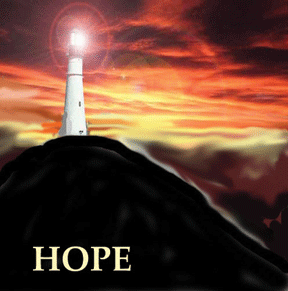 Philippa Rowland, 14 Dec 15 a new climate agreement struck last night with all countries on board – For me, one important outcomes is keeping the small flames of hope and commitment inside each and everyone of us alive and burning fiercely, for there is absolutely no doubt that the Earth needs champions at this time and that there will be hard yards ahead as we make out way through the next decades.
So I leave thinking the Paris agreement – for the first time setting expectations for all nations and for the world – might just be a strong enough signal to give real momentum towards slowing global warming despite the dysfunctional international process and the imperfect national promises and the arguments over detail that will continue interminably at such conferences.
 Paris climate deal might just be enough to start turning the tide on global warming
Despite the dysfunctional international process and the imperfect national promises and the arguments over detail, the Paris agreement – setting solid expectations for the world to limit temperature rise – gives even a cynic cause for optimism, Guardian Lenore Taylor in Paris 13 Dec 15 “……Two weeks at the climate summit were a wild ride between cynicism and the final realisation that there were reasons to be optimistic, despite the dysfunctionality of it all. And not just because of good lunches…….
In the end it all boils down to an agreed “purpose” in the Paris deal to hold global temperature increases to “well below 2C above pre-industrial levels and to pursue efforts to limit (them) to 1.5C, recognising that this would significantly reduce risks and impacts of climate change”……..
I’m talking to Howard Bamsey, who I’ve encountered at many of these events – he was Australia’s lead negotiator in Kyoto in 1997 when the protocol was agreed as well as the special envoy on climate change in Copenhagen in 2009. He says he’s been to 18 or 19 of these “conferences of the parties” or COPs – he’s lost count. He’s an academic now and has always been a details man, not someone to get carried away by the speeches and the singing.
And despite everything, he’s optimistic.
“I’ve had this impression growing on me all week. When this process started governments were all important, whether they moved or not was the whole story. Here governments are only part of the picture. When we went to side events by business or environment groups 15 or 20 years ago it was all about the good ideas they might be able to do if they had the right policies. Now it’s about what they have already done,” he says.
I think back to the start of the conference. There was this thing called the Lima Paris Action Agenda where hundreds of businesses and thousands of regions and cities made promises to cut emissions that streamed into my email inbox in a torrent.
Mondelēz International promised US$400mn to support the production of sustainable cocoa with zero net deforestation in Africa; Germany, Norway and the United Kingdom announced they’d provide $5bn by 2020 if forest countries demonstrated measured, reported and verified emission reductions; 20 investor groups, representing US$3.2tr, committing to ‘decarbonisation’ of US$600bn in assets, 114 big companies promised to reduce emissions including Ikea, Coca-Cola, Dell, General Mills, Kellogg’s, NRG Energy, Procter & Gamble, Sony and Walmart……….
Michael Jacobs, senior adviser for the New Climate Economy project, says the long-term goals in the agreement send investors the clearest sign “that the world was on an irreversible and irrevocable downward trend in emissions”.
So I leave thinking the Paris agreement – for the first time setting expectations for all nations and for the world – might just be a strong enough signal to give real momentum towards slowing global warming despite the dysfunctional international process and the imperfect national promises and the arguments over detail that will continue interminably at such conferences.
That’s a cynical optimist’s view of this extraordinary Paris summit. http://www.theguardian.com/australia-news/2015/dec/13/paris-climate-deal-gives-even-a-cynic-grounds-for-optimism
Damaging aspects to Japan’s push to sell nuclear reactors to India
 Keep your nuclear power, Mr Shinzo Abe. We can do without a Fukushima, Catch News KUMAR SUNDARAM@pksundaram |12 December 2015
Big deal
- India, Japan may sign a nuclear deal during Shinzo Abe’s visit
- The deal will fast-track the French’s nuclear project in Jaitapur
- It’ll enable supply of key parts for Mithi Virdi, Kovvada plants
Heavy price
- Jaitapur plant will wreck one of world’s 10 Hottest Biodiversity Hotspots
- It’ll also destroy the livelihoods of nearly 40,000 people
- Areva’s reactors, used at Jaitapur, have been flagged for safety concerns
More in the story
- Post-Fukushima, why is India alone in a mad rush for nuclear power?
- Two years ago, Shinzo Abe said Fukushima was “under control”. Latest report: radiation is 4,000 times higher
Japanese prime minister Shinzo Abe arrived in India on 11 December. He came with a bag of goodies – bullet trains, aircraft and, most importantly, nuclear power.
Do we really want his nuclear power?
No, we definitely don’t. Here’s why. The proposed India-Japan Nuclear Agreement, to be signed during the visit, is more than just a bilateral deal. It’s an instrument to serve American and French nuclear lobbies.
The deal would fast-track the French nuclear giant Areva’s project in Jaitapur, Maharashtra. It’s also crucial for supply of critical equipment to the American nuclear projects in Gujarat’s Mithi Virdi and Andhra Pradesh’ Kovvada.
But that isn’t its most damaging aspect………http://www.catchnews.com/india-news/keep-your-nuclear-power-mr-shinzo-abe-we-can-do-without-a-fukushima-1449883672.html
Mass protest for climate justice to conclude Summit
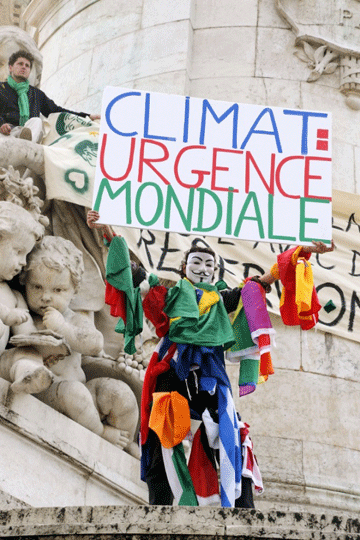 MASS PARIS PROTEST ON 12-12 TO CONCLUDE HISTORIC CLIMATE SUMMIT FRI, 12/11/2015 – BY NADIA PRUPIS THIS ARTICLE ORIGINALLY APPEARED ON COMMON DREAMS IN PARIS EARLIER THIS WEEK, A PANEL OF ACTIVISTS, INCLUDING AUTHOR NAOMI KLEIN AND U.K. LABOUR PARTY LEADER JEREMY CORBYN, SPOKE TO A PACKED CROWD ON THE ROLE OF THE GLOBAL LABOR SECTOR IN THE CLIMATE JUSTICE MOVEMENT AND CALLED FOR MASS CIVIL DISOBEDIENCE TO BREAK FRENCH PRESIDENT FRANÇOIS HOLLANDE’S BAN ON DEMONSTRATIONS DURING THE COP21 SUMMIT.
Klein spoke candidly about the global climate agreement being hammered out by world leaders this month, stating, “The deal that will be unveiled in less than a week will not be enough to keep us safe. In fact, it will be extraordinarily dangerous.”
Wealthy nations have set up inadequate climate targets that could allow average global temperatures to rise by 3 or 4 degrees Celsius, Klein said – far higher than the agreed-on threshold of 2°C, which scientists say would cause catastrophic extreme weather events. The deal is going to “steamroll over crucial scientific red lines… it is going to steamroll over equity red lines… it is going to steamroll over legal red lines.”
“Which is why on December the 12 at 12 o’clock – that’s 12-12-12 – many activists will be peacefully demonstrating against the violation of these red lines,” Klein said, prompting a round of applause from the audience of roughly 800 trade unionists and other workers and activists.
The march will protest the French government’s crackdown on activism following the November 13 attacks that killed 130 people – and sparked a cross-border manhunt that many said flouted Europeans’ civil liberties. Klein has been an outspoken critic of the ban.
“We will be mourning the lives already lost to climate disruption, in solidarity with the lives lost to the tragic attacks here in Paris and enlarging that circle of mourning,” Klein said. “By taking to the streets, we will be clearly and unequivocally rejecting the Hollande government’s draconian and opportunistic bans on marches, protests, and demonstrations.”
“We will be rejecting the shameful preemptive arrests of climate activists… the restrictions on free speech and movement,” she continued. “Liberté is not just a word, and it doesn’t just apply to Christmas markets and football matches.”
Corbyn added, “We’ve taken the responsibility on ourselves to do something here and now. To stop the destruction of the world’s environment, to bring people together to prevent that happening, and above all, to bring people together not through fear, but through hope, through imagination, through optimism. Unleash the optimism, unleash the imagination, unleash the hope. That is the way forward.”
The panel also discussed the importance of a “just transition” to a clean future, particularly by converting to a system of community-owned renewable resource infrastructures—a process also known as energy democratization.
“When communities have control over the production and distribution of clean energy, that’s environmental justice,” said Judy Gonzalez, president of the New York State Nurses Union, who also spoke on the panel.
Corbyn also hit back at criticisms that a focus on sustainable energy, in tandem with a fossil fuel phase-out, is financially nonviable. “A more sustainable energy policy… one that would help the issues we face on a global level, would actually be an economic generator, rather than a problem,” he said.
Clara Paillard, president of the Public & Commercial Services Union culture sector, added, “If we want a just transition, we will need jobs – many, many jobs. Climate is a trade union issue.”
“In 2008, the U.K. found 800 billion pounds to save the bank. And in the U.K., tax avoidance and evasion represent over 100 billion pounds every year,” Paillard continued. “Let’s be clear, if the planet was a bank they would have already saved it.” http://www.occupy.com/article/mass-paris-protest-12-12-conclude-historic-climate-summit#sthash.ZyIzAQ5c.dpuf
A bunch of climate news items
Oceans may be left out of climate plan, but here’s what’s at stake.
Troubles in the Mediterranean and potential fixes in the Seychelles show why the world’s seas need more attention during the climate negotiations
http://news.nationalgeographic.com/2015/12/151209-Paris-climate-change-oceans-Mediterranean-Seychelles-fish/ &http://www.environmentalhealthnews.org/t/3710335569332210561
Climate talks – slimmed-down draft proposal still leaves major issues unresolved.
With time running out to meet a self-imposed deadline, negotiators on Wednesday released a new draft agreement on fighting climate change that was slimmer than earlier versions while still leaving major issues unresolved.
http://www.latimes.com/world/europe/la-fg-climate-talks-new-draft-plan-20151209-story.html & http://www.environmentalhealthnews.org/t/3710335569332210545
Paris climate negotiations turn to Zulu-style meetings in a bid to break deadlocks
Climate negotiators have turned to the idea of “indaba” – a traditional Zulu meeting style – as they seek for breakthroughs on deadlocks plaguing the Paris climate talks.
http://www.smh.com.au/environment/un-climate-conference/paris-un-climate-conference-2015-negotiations-turn-to-zulustyle-meetings-20151210-glkwg9.html
New and heartening alliances form at Paris climate conference, expert says
An Australian climate change and renewables specialist at the conference in Paris says that new and unusual alliances have formed at these international talks that he hasn’t seen in 21 years of negotiations. Giles Parkinson, the founder of the Renew Economy website, told The World Today it gives him optimism that there will be a deal by the end of the weekend.
http://www.abc.net.au/worldtoday/content/2015/s4369557.htm
Paris UN Climate Conference 2015: Australia has ‘serious concerns’ about climate draft in Paris
Australia told the conference it is “deeply disappointed” that some areas have been weakened in a bid to get deal.
http://www.smh.com.au/environment/un-climate-conference/paris-un-climate-conference-2015-high-ambition-coalition-emerges-to-spur-deal-20151209-gljuha.html
India adamant developed nations lead climate change measures
One country determined to see the distinction drawn between developed and developing nations is India, the world’s third largest emitter of greenhouse gases despite the fact that 300 million of its citizens have no access to electricity. The Modi Government is adamant that advanced nations must lead efforts to reduce global warming because of the historical benefit they’ve derived from polluting. The Indian Environment Minister Prakash Javadekar spoke to The World Today’s Melissa Clarke in Paris.
http://www.abc.net.au/worldtoday/content/2015/s4369568.htm
US doubles climate adaption aid to nearly $900 million.
The United States announced plans on Wednesday to double grant funding it provides to help developing countries adapt to climate change to around $860 million a year, a pledge that may help clinch a global climate pact this week
http://www.reuters.com/article/us-climatechange-summit-funding-idUSKBN0TS1Q220151209 & http://www.dailyclimate.org/t/-1961356102316278594
Bonnie Raitt speaks out against nuclear power
December 11, 2015 By Amanda Wicks
A wave of pro-nuclear arguments have been taking place between the climate talks in Paris and critical commentaries in the New York Times. And Bonnie Raitt is having none of it.
As one of the founders of MUSE (Musicians United for Safe Energy), along with Graham Nash and Jackson Browne, Raitt believes nuclear power is a dangerous option. She and her fellow advocates have been combatting “the idea that there’s some new form of nuclear power that’s safer and more viable” for some time, she said in an interview with Billboard. “There’s no solution for nuclear waste. There have been incredible cost overruns and delays” in nuclear plant construction. And nuclear power plants continue to pose “thesecurity threat of terrorism.”
“There are a lot of smart people on the side of pro nukes,” she continued. “But I find a lot more people making the anti-nuke argument.”
For Raitt, solar power remains a viable alternative. “The evolution of the safe energy movement— and the explosion of success around the globe in solar and wind and alternative energies— has certainly outweighed, in my mind, any argument for quote unquote safe new nukes,” she said.
Raitt’s new album Dig in the Deep drops February 26, and six days prior she’ll launch a new tour to promote the album. Selected ticket sales will go to benefit the Guacamole Fund, an organization which supports MUSE.
Climate Change – some optimism about Paris Summit
Clive Hamilton: Kant at Le Bourget
It is natural to adopt a cynical view of the global climate change conference now taking place outside Paris. Behind the noble public declarations self-interest is ruthlessly asserted in the private negotiating rooms. Rules are bent, scrutiny is resisted and numbers are manipulated to hide emissions.
Yet from another standpoint, there is something magnificent taking place at Le Bourget. For here we have, under the auspices of the United Nations, the leaders of all of the countries of the world coming together to attempt to agree on a collective solution to a common threat. …
The unwelcome truth is that, taken together, their visions of how they will pursue their sovereignty are incompatible with the common goal. So the magnificence of the event takes on a different hue when, as Bruno Latour commented, the nations of the world are saying: “This is impossible; we cannot live together on this Earth.”http://theconversation.com/kant-at-le-bourget-52015
Heather Zichal: In Paris climate summit, a beginning not an end.
No single agreement should be expected to be the final solution to the climate crisis, writes Heather Zichal, a former climate adviser to President Obama. http://www.csmonitor.com/Environment/Energy-Voices/2015/1207/In-Paris-climate-summit-a-beginning-not-an-end &http://www.dailyclimate.org/t/6288917841504677619
With a 1.5 degrees celsius target, the climate-justice movement is poised to score a surprise win.
Pressure from activists and vulnerable countries has shifted the discussion away from a 2 degrees C target—a virtual death sentence for millions of people.
http://www.thenation.com/article/with-1-5-degrees-celsius-target-climate-justice-movement-poised-to-score-surprise-win/ &http://www.environmentalhealthnews.org/t/-8082012703502401428
Erwin Jackson: Memo to Paris climate delegates: compromise now or world is fukt
Trying to follow what happens at a climate summit is a bit like trying to swim up a waterfall.
http://www.crikey.com.au/2015/12/08/memo-to-paris-climate-delegates-compromise- now-or-world-is-fukt/
More climate change articles
Matt McDonald: Saleemul Huq – if climate talks were democratic, vulnerable countries ‘would have won already’ With many “climate-vulnerable” nations calling on the Paris climate summit (COP21) to adopt a global warming limit of 1.5℃rather than 2℃, will these concerns be acted upon? And if not, how much help will they get to cope with the consequences? …
Saleemul Huq: I’m absolutely certain there will be an agreement – how strong it is, we will see. I think at the moment we are actually moving towards the better end of the spectrum – we’re not at the lowest end, it’s at the more ambitious end. And I think that 1.5°C goal is a very good test of the strength of this agreement. It tests whether we’re concerned with pragmatism or idealism. This isn’t the place to be pragmatic. This is the place to have a vision, and the vision should be to save everybody on the planet.http://theconversation.com/saleemul-huq-if-climate-talks-were-democratic-vulnerable-countries-would-have-won-already-52034
Paris climate summit: ‘sacrifice rights for deal on carbon’
Rich countries have restated that a $100bn-a-year climate fund would depend on immunity from compensation claims.
http://www.theaustralian.com.au/national-affairs/climate/paris-climate-summit-sacrifice-rights-for-deal-on-carbon/news-story/fad624312574c08c57c040045ab8ea94
California Governor Jerry Brown in Paris warns of nuclear terrorism and climate change
Jerry Brown warns of climate change, terrorists using nuclear weapons and other ‘horrors that might unfold’ SACRAMENTO BEE ,BY DAVID SIDERS dsiders@sacbee.com PARIS, 10 Dec 15
As he prepared to return home from the United Nations climate summit, Gov. Jerry Brown appeared in a Paris lecture hall on Wednesday night, warning of nuclear threats and terrorism and suggesting similarities between the test of climate change and other “horrors that might unfold.”
In a sprawling speech and onstage discussion lasting more than two hours, Brown said work among states and countries on measures to reduce greenhouse gas emissions was forming a habit that could be used to address terrorism and nuclear proliferation.
His remarks, at Paris’ elite Ecole Normale Superieure university, came a month after the terrorist attacks in Paris and a week after the rampage at a social services center in San Bernardino that left 14 people dead.
“We have to be able to imagine the horrors that might unfold, and then be able to take steps to prevent it, delay it, minimize it,” Brown said. “Through this Paris conference, my hope is that these conversations about a horror, which is the radical disruption of the climate, that can pass over into a confrontation, a focusing, a facing of this other great threat, the nuclear danger.”…….
The meeting outside Paris at which world leaders are negotiating a new climate pact remains unsettled. But the mood around the summit is generally positive, and Brown predicted it would result in a “real commitment.”
He called climate change an “existential” threat, as he has before, but said “the reality of that threat is eliciting … responses that were unimaginable even a year ago.”
He said, “I’m optimistic, with some reservation.” http://www.sacbee.com/news/politics-government/capitol-alert/article48887080.html
Putin ‘didn’t rule out’ using nuclear weapons in Syria
Putin casually mentioned using nuclear bombs in Syria http://metro.co.uk/2015/12/10/putin-casually-mentioned-using-nuclear-bombs-in-syria-5556168/?utm_source=fark&utm_medium=website&utm_content=link Nicole Morley for Metro.co.uk 10 Dec 2015
Russia have carried out multiple air strikes in Syria, and Putin claims his TU-22 bombers have caused ‘significant damage’ to an Islamic State munitions depot, an oil facility and other key targets.
Talking about Russia’s military campaign in Syria, Putin mentioned the weapons currently being used could ‘be equipped with special nuclear warheads.’
‘Both the Calibre missiles and the Kh-101 rockets are generally showing very good results. We now see that these are new, modern and highly effective high-precision weapons that can be equipped either with conventional or special nuclear warheads,’ Putin said during a meeting with Russia’s Defence Minister Sergei Shoigu.
He did not reveal concrete plans to use nuclear weapons – but he didn’t exactly rule it out either.
Exposing nuclear lobby’s false claims at Paris Climate Summit
Nuclear energy struggles to find its voice at COP21 conference, France 24, 8 Dec 15
 “………Jan Haverkamp, who authored the Greenpeace briefing, said the claim that nuclear energy was essential for reaching global warming targets was utterly false.
“There are now piles of scenarios that include different options for reaching decarbonisation targets that do not include nuclear energy,” he told FRANCE 24 by telephone from Poland. “To say that it cannot be done is a total PR strategy”.
In regard to the absence of debate about nuclear energy at the COP 21, Haverkamp said only a handful of delegations still believed nuclear had any long-term future in their countries.
He said that even countries that will continue to use nuclear power, like France and China, are broadly shifting resources away from this sector.
“The nuclear energy sector is facing very hard economic times,” the energy consultant said. “They will increasingly struggle to update their fleet, and do not know how to finance new projects”.
Cost curves
While the physicist David disagreed with Haverkamp about the ability to phase out nuclear energy and fossil fuels simultanously, both agreed that the fate of nuclear energy may be determined by market forces in the end.
In the wake of Fukushima disaster and a new global focus on terrorism, nuclear power plants will have to be both safer 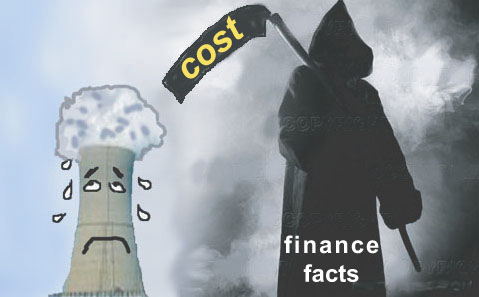 and more secure. This will likely increase the cost of nuclear energy in the short term, according to David. At the same time, a massive ramp-up of green technology is expected to bring down renewable energy costs.
David said that current economic trends demanded a quick return on investment, and that the energy sector was not excempt from such expectations.
Nuclear reactors, which he reminded required very high initial investments and only delivered profits a few decades later, were dangerously out of sync with the economic times.
Some renewable energy headlines
Comment: Uruguay powers 95% of its electricity from renewable …SBS-6Dec.,2015 The Guardian reports that renewable energy now powers 95% of electricity in Uruguay. The country relies on a mixture of energy resources …
International Business Times, India Edition-7Dec.,2015
Paris climate talks, Africa’s renewable energy drive, and reinforcing …The Guardian
China’s Bold Plan for Renewable Energy Nasdaq
We must reject nuclear power and its philosophy of endless consumption
For humanity, there is no nuclear future, Daily Campus, 8 Dec 15 By Christopher Sacco Edward Abbey, the environmentalist-writer, said in a 1982 PBS interview, that society “seem[s] to really believe that growth is a good in itself and more growth the better, so I doubt if this expansion will be curtailed until something very unpleasant happens.”
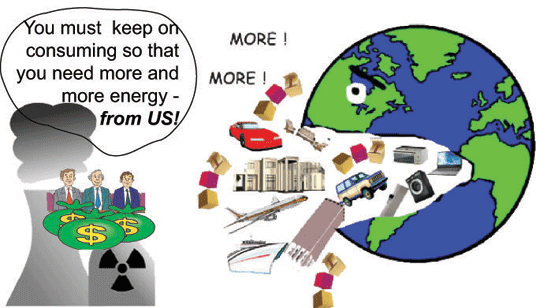
Abbey, who died in 1989, did not witness the full impact of climate change, and so he never understood how prophetically he predicted mankind’s inability to manage the consequences of the Hydrocarbon Age.
While our pale blue dot has, to this point, handled our desire for growth, climate change has presented itself as the tragic result of this insatiable appetite. The need to adopt a carbon-neutral energy source is clear; yet, for this one problem, there exist millions of proposed solutions……..
nuclear power is fully deserving of skepticism—especially in the wake of disasters.
While Thiel opines that the lack of direct casualties absolves nuclear power, such is a painfully ignorant claim. In Japan, there are still, according to the Guardian, 120,000 refugees who cannot return to irradiated homes. Further, the Guardian cited a Fukushima Prefecture survey, in which “67.5 percent of households said they had relatives who were showing signs of physical or psychological distress.” While Thiel focuses on favorable statistics, arguing “nobody in Japan died from radiation,” the reality is far more damning.
Granted, the overwhelming majority of the world’s 438 nuclear reactors have not experienced catastrophe. However, given the rise in storm systems, sea levels, and other unknown consequences of climate change, should we be investing in a power source which, when working perfectly is ideal, but when malfunctioning, threatens the life of those in the vicinity?……
Growth has left our pale blue dot graying and drowning, as glaciers recede and oil wells continue to suck every last drop of black gold from the Earth’s cavernous depths. In the coming years, we must commit ourselves to developing renewable energy, lest we capitulate in the face of enormous odds we face. Moving to nuclear power is not the right direction for humanity. Though Thiel refers to nuclear power as clean, it is hard to call a power source which leaves radioactive waste truly clean.
We should not shift from one proven, dangerous, and volatile energy source for another source with even an infinitesimal potential for disaster. In order to move forward to a better energy future, void of markets for fuel sources (whether fossil fuels or nuclear fuels); void of geopolitical struggle; lacking tangible threats to humanity and ecology; and truly sustainable, we must move past both fossil fuels and nuclear power, and on to the bright future advances in technology will use to supply the world with truly clean energy.http://dailycampus.com/stories/2015/12/8/column-for-humanity-there-is-no-nuclear-future
Uranium Energy posts loss of $5.1 million in first quarter
BY THE ASSOCIATED PRESS DECEMBER 8, 2015 VANCOUVER – VANCOUVER, British Columbia (AP) _ Uranium Energy Corp. (UEC) on Tuesday reported a loss of $5.1 million in its fiscal first quarter.http://www.theprovince.com/business/uranium+energy+posts+loss+million+first+quarter/11574576/story.html?utm_source=twitterfeed&utm_medium=twitter
1 This Month

of the week – Shut Down Drone Warfare!


Tell the Ukrainian Government to Drop Prosecution of Peace Activist Yurii Sheliazhenko

Petition to revoke the licensing of the Near Surface Nuclear Disposal Facility (NSDF) at Chalk River. https://www.ourcommons.ca/petitions/en/Petition/Details?Petition=e-7247
To see nuclear-related stories in greater depth and intensity – go to https://nuclearinformation.wordpress.com
-
Archives
- April 2026 (91)
- March 2026 (251)
- February 2026 (268)
- January 2026 (308)
- December 2025 (358)
- November 2025 (359)
- October 2025 (376)
- September 2025 (257)
- August 2025 (319)
- July 2025 (230)
- June 2025 (348)
- May 2025 (261)
-
Categories
- 1
- 1 NUCLEAR ISSUES
- business and costs
- climate change
- culture and arts
- ENERGY
- environment
- health
- history
- indigenous issues
- Legal
- marketing of nuclear
- media
- opposition to nuclear
- PERSONAL STORIES
- politics
- politics international
- Religion and ethics
- safety
- secrets,lies and civil liberties
- spinbuster
- technology
- Uranium
- wastes
- weapons and war
- Women
- 2 WORLD
- ACTION
- AFRICA
- Atrocities
- AUSTRALIA
- Christina's notes
- Christina's themes
- culture and arts
- Events
- Fuk 2022
- Fuk 2023
- Fukushima 2017
- Fukushima 2018
- fukushima 2019
- Fukushima 2020
- Fukushima 2021
- general
- global warming
- Humour (God we need it)
- Nuclear
- RARE EARTHS
- Reference
- resources – print
- Resources -audiovicual
- Weekly Newsletter
- World
- World Nuclear
- YouTube
-
RSS
Entries RSS
Comments RSS
 nuclear-news