Bluetack for nuclear cleanup
Tacky solution to Dounreay reactor core problem http://www.bbc.com/news/uk-scotland-highlands-islands-36340673 21 May 2016
Blu-Tack has been used to take samples from inside the core of a nuclear reactor, saving thousands of pounds in developing a specialist tool.
A team at Dounreay were faced with the challenge of retrieving small pieces of radioactive metal from inside the site’s Prototype Fast Reactor (PFR).
They came up with placing a blob of the tacky substance on a 10m (32ft) rod which was inserted deep into the PFR.
The metal sticks to the soft adhesive and can then be collected for analysis.
Can openers
Dounreay, near Thurso in Caithness, is being closed down at a cost of about more than £1bn.
Teams involved in the decommissioning and clean up work have frequently been asked to find cost-effective ways of dealing with hazardous radioactive material.
Other household items have been put to use at the site, including kitchen can openers and soup tin-sized cans that have held radioactive material for more than 30 years.
And a silver ironing board cover and a duvet have protected a robotic camera built to explore pipes inside the Dounreay Fast Reactor.
Russia ‘s nuclear colonial ambitions
 Getting Power by Providing Power By Matthew Cottee and Hassan Elbahtimy 19 May 16, A few years ago, the Middle East’s nuclear energy prospects were in decline. Political instability made long-term investments in civil nuclear infrastructure risky. For one, Egypt was in the last stages of considering reactor bids when the popular uprising began in 2011. These plans were soon shelved by subsequent transitional governments. And the 2011 Fukushima Daichii meltdown in Japan had shaken public confidence across the world in the safety of nuclear power and raised questions about the industry’s future. But now, at least in the Middle East, it appears that nuclear power is back in style. In April, Russian state nuclear firm Rosatom announced that it had opened an office in Dubai, the United Arab Emirates. The office will help oversee the company’s many nuclear power projects in Egypt, Iran, Jordan, and Turkey. It is also hoped that Russian regional presence would open up new opportunities for its nuclear industry in the region.
Germany Just Got Almost All of Its Power From Renewable Energy
Jessica Shankleman Jess_Shankleman, 16 May 16, Bloomberag,
-
Wind, solar, biomass and hydro met demand on Sunday afternoon
-
Angela Merkel’s Energiewende is squeezing coal and gas margins
-
Clean power supplied almost all of Germany’s power demand for the first time on Sunday, marking a milestone for Chancellor Angela Merkel’s “Energiewende” policy to boost renewables while phasing out nuclear and fossil fuels.
Solar and wind power peaked at 2 p.m. local time on Sunday, allowing renewables to supply 45.5 gigawatts as demand was 45.8 gigawatts, according to provisional data by Agora Energiewende, a research institute in Berlin. Power prices turned negative during several 15-minute periods yesterday, dropping as low as minus 50 euros ($57) a megawatt-hour, according to data from Epex Spot.
- Countries around Europe are building increasing amounts of renewable capacity in order to reduce their carbon emissions and boost supply security. Last year Denmark’s wind farms supplied 140 percent of demand, while the U.K. had no coal-fired power stations meeting electricity demand for about four hours on May 10 as a result of plant breakdowns.
“Events like this highlight that eventually we may need to start curtailing because of market-wide oversupply,” said Monne Depraetere, an analyst for Bloomberg New Energy Finance. “In the long-run, that may provide a case to build technologies that can manage this oversupply — for example more interconnectors or energy storage.”…….http://www.bloomberg.com/news/articles/2016-05-16/germany-just-got-almost-all-of-its-power-from-renewable-energy
South East Asia must shun nuclear power – the cons far outnumber the pros
Why even SE Asia’s most advanced country must shun nuclear power , The Nation, Thailand, Francis Cheng, (From the Straits Times/ANN) May 20, 2016
The plant itself and the trucks carrying waste could also become terrorist targets since they have the potential to cause widespread destruction.
The cons far outnumber the pros.
We should focus on cleaner, renewable energy options such as solar. http://www.nationmultimedia.com/opinion/Why-even-SE-Asias-most-advanced-country-must-shun–30286316.html
Credibility of nuclear corporation EDF taking a beating over Hinkley Nuclear project shemozzle
EDF’s Credibility Hangs on Hinkley Point, U.K. Minister Says, Bloomberg Jessica Shankleman Jess_Shankleman , 18 May 16
-
Plant may be ‘scuppered’ by Austrian challenge, Leadsom says
-
U.K. waiting for EDF’s final decision on whether to invest
 Electricite de France SA may lose its credibility as one of the world’s top nuclear-power developers if it fails to build two new reactors on England’s southwest coast, a U.K. energy minister said.
EDF has delayed until September its final investment decision on Hinkley Point C, the world’s most expensive power station, marking a setback for a project that was originally due to be completed in 2017. The latest date for commissioning is 2025, at which point it may provide 7 percent of the country’s power.
“A huge amount of EDF’s credibility as a nuclear developer will rely on this deal getting done,” Andrea Leadsom, a junior minister at the Department of Energy and Climate Change, told reporters at an event in London on Tuesday where she was campaigning for the U.K. to leave the European Union.
- The U.K. will have to “fight quite hard” to ensure the 24.5 billion pound ($35.5 billion) power plant isn’t blocked by a legal challenge from Austria, which objects to the U.K. government’s proposed subsidies for Hinkley, she said. “Being a member of the EU could scupper the deal because of the state aid challenge from Austria.”
Leadsom’s comments are in line with those of EDF Chief Executive Officer Jean-Bernard Levy, who said last week that the Hinkley Point investment is “indispensable.” Without the project, “we wouldn’t have any more credibility to access the market” for new atomic plants, he told shareholders……http://www.bloomberg.com/news/articles/2016-05-17/edf-s-credibility-hangs-on-hinkley-point-u-k-minister-says
Noam Chomsky on the twin threats: Climate Change and Nuclear Proliferation
Noam Chomsky: Climate Change and Nuclear Proliferation Pose Worst Threat Ever Faced by Humans, EcoWatch Democracy Now! | May 16, 2016 President Obama has just passed a little-noticed milestone, according to The New York Times: Obama has now been at war longer than any president in U.S. history—longer than George W. Bush, Franklin D. Roosevelt and Abraham Lincoln. Obama has taken military action in at least seven countries: Iraq, Afghanistan, Libya, Syria, Pakistan, Yemen and Somalia.
Just last month, President Obama announced the deployment of 250 more Special Operations troops to Syria in a move that nearly doubles the official U.S. presence in the country. As war spreads across the globe, a record 60 million people were driven from their homes last year. Experts warn the refugee crisis may also worsen due to the impacts of global warming. Over the weekend, the National Aeronautics and Space Administration (NASA) released data showing 2016 is on pace to be by far the hottest year ever, breaking the 2015 record. Meanwhile, manyfear a new nuclear arms race has quietly begun, as the U.S., Russia and China race to build arsenals of smaller nuclear weapons.
These multiple crises come as voters in the U.S. prepare to elect a new president. We speak with one of the world’s preeminent intellectuals, Noam Chomsky, institute professor emeritus at Massachusetts Institute of Technology, where he has taught for more than 50 years. His latest book is titled Who Rules the World?…….
Noam Chomsky“………The nuclear threat is the threat of—on the Russian border, which happens to be the invasion route through which Russia was virtually destroyed twice last century by Germany alone—well, Germany as part of a hostile military alliance—on that border, both sides are acting as if a war is thinkable. The U.S. has just sharply increased; it quadrupled military expenses on its side. The Russians are doing something similar. There are constant near collisions, jets coming close to colliding with one another. A Russian jet a couple months ago virtually hit a Danish commercial airliner. U.S. troops are carrying out maneuvers virtually on the Russian border. That threat is escalating and very serious. William Perry, a respected nuclear specialist, a former defense secretary, recently estimated that the threat is higher than it was during the 1980s. There are also confrontations near the Chinese around China, South China Sea and so on. That’s one major threat.
The other is what you just described. The threat of global warming is very serious. Every time one reads a science journal, there’s an even more alarming discovery. Virtually all the ice masses are melting. The Arctic ice mass, which was assumed to be pretty stable, is actually melting very fast, much more than was thought. The glaciers are melting. There’s severedroughts. Right now already, about 300 million people in India are on the edge of starvation from drought, which has been going on for years. The groundwater is depleted as the Himalayan glaciers melt, as they’re doing. It will undermine the water supply for huge areas in South Asia. If people think there’s a migration crisis now, they haven’t seen anything. The sea level is rising. Chances are it could rise three to six feet, maybe more, by the end of the century—some estimate even sooner. It will have a devastating effect, not just on coastal cities, but on coastal plains, like, say, Bangladesh, where hundreds of millions of people will be severely threatened. I mean, this is a—we’re already killing other species at the level of the so-called fifth extinction. ….”http://ecowatch.com/2016/05/16/noam-chomsky-climate-change/
Brexit will risk UK nuclear research jobs, says UKAEA boss
BBC News 15 May 2016 Oxford, “….Prof Steve Cowley, CEO of the UK Atomic Energy Authority, spoke out over fears £55m in annual European Commission (EC) funding would be withdrawn…..(http://www.bbc.com/news/uk-england-oxfordshire-36288657)
Belgium getting more anxious about safety of its nuclear reactors?
EVERY BELGIAN GETS ANTI-RADIATION PILLS IN CASE OF NUCLEAR EMERGENCIES, Who.What.Why. MAY 15, 2016 | BEN HUANG Just a week after denying Germany’s request to shut down two of its oldest nuclear reactors, the Belgian government decided to distribute anti-radiation pills to its entire population. Do the authorities know something about the safety of its aging nuclear plants that it isn’t sharing ?
The two reactors in question are 40 years old, and their pressure vessels have shown signs of metal degradation, raising concerns over their safety. Belgium still gets 50 percent of its electricity from nuclear power. Germany, in contrast, has decided to shut down all of its nuclear reactors and to focus on renewable energy.
The decision to distribute the pills, which are also known as iodine pills and protect the thyroid from radioactive poisoning in case of a disaster, shows how worried Belgian officials are — and for good reason. Nuclear safety is an illusion, as two high-profile cases have shown. The Chernobyl reactor explosion 30 years ago and the ensuing radioactive fallout killed thousands and left land the size of Rhode Island unusable…….http://whowhatwhy.org/2016/05/15/every-belgian-gets-anti-radiation-pills-case-nuclear-emergencies/
Obama should vow to halve the U.S. nuclear stockpile
Rather than apologize, Obama should vow to halve the U.S. nuclear stockpile, Japan Times, BY PATRICK PARR, 15 May 16, If we are to avoid the drudgery of war, if we are to avoid being plunged across the abyss of atomic destruction, we must transcend the narrow confines of nationalism. Nationalism must give way to internationalism.”— Martin Luther King Jr., July 19, 1953
As of 2015, the United States and Russia have control of approximately 93 percent of all nuclear weapons. This staggering statistic is the legacy of the decades-long period of paranoia known as the Cold War.
In the United States, a country far more transparent about its stocks than Russia, nuclear weapons are divided into three categories: 2,080 deployed, 2,680 in storage and 2,340 that are “retired” — an odd way of saying they are simply in line to be dismantled. One missile blows up Manhattan, Tokyo’s Setagaya Ward or Higashiosaka, to put those numbers in perspective………
Cutting that number in half within the year would be a strong way of displaying a level of cooperation and respect toward other countries not in such a favorable position of authority. It would be better than an apology. It would be action. Or, as Rev. Martin Luther King Jr., one of Obama’s heroes, put it: “When will a stupid world rise up to see that a ‘get tough’ policy cannot bring peace; universal military training cannot bring peace; the threat of the atomic bomb cannot bring peace; but only through placing love, mercy and justice first can we have peace.” http://www.japantimes.co.jp/community/2016/05/15/voices/rather-apologize-obama-vow-halve-u-s-nuclear-stockpile/#.Vzjo1TV97Gh
#Betrayal – Nuclear fiction can be closer to the truth
Europe’s nuclear power ending, renewable sources can take over
Nuclear power plants are exposed to big risks. Natural disasters, terrorism and technical defects can lead to significant damage. Despite worldwide increasing number of new nuclear power plants Europe could say goodbye to nuclear power. The only condition is to smartly use an arising gap
30 years after reactor accident in Chernobyl nuclear power is still one of the most important energy sources in Europe and the world. Neither mass protests since the 1970’s nor the disaster in Fukushima resulted in stopping energy generation from nuclear power. But energy landscape and attitude to different energy sources is changing in the last years.
The accidents in Fukushima and Chernobyl illustrated how vulnerable those power plants everywhere in the world are. Causes of these catastrophes can be technical or construction defects or human failure or natural disasters like tsunamis or earthquakes. Many reactors in Europe are classified as at risk. Just as little all causes of reactor accidents can be prevented as hard it is to repair the damages of a GAU. In both accidents all clear-up and dismantling operations are not finished, even not in Ukraine after 30 years.
Further causes of nuclear accidents
Further causes for nuclear accidents are less considered. More and more new forms of Islamist terrorism threaten the security of nuclear power plants in Europe. Being a worthy objective of hijacked planes is only one possible variant. In the environment of the latest terror attacks in Europe irregularities became known about a nuclear scientist and the Belgian power plants Doel and Tihange: Over three years a jihadist trained in Syria worked at the plant in Doel, a terrorist of the Paris attacks spied on the head of the nuclear power research centre.
In April 2016 German media reported on a computer virus which were discovered in the computer systems of the German nuclear power plant Gundremmingen. Even though no concrete consequences on the security could be identified so far this case shows the vulnerability of those systems. Terrorists can gain access to sensible areas and do damage through infiltrating the staff or the computer systems.
Especially the potential damage is enormous. Many European nuclear power plants are situated in densely populated areas und previous accidents show how difficult it is to stop a GAU. Millions of people could be affected by nuclear accidents or terroristic attacks on power plants in Europe.
No end in sight?
Besides all these dangers the problem of nuclear waste disposal remains. Still to the present day no final repository in the world could be found. But the steady growing mountain of waste threaten the health of the people and the environment. A nuclear phaseout seems to be the only logical step to a cleaner and safer world. But it’s not that easy to change the attitude……….
Resistance in the national states
So far it’s mainly the national governments who fight against the end of nuclear power in Europe. France argues that its historically grown grid with 19 nuclear power plants can’t be change from one day to another. However, Germany – comparable in population and economic power – is phasing out completely by 2022.
Also in smaller countries like Czech Republic, Slovakia or the Baltic countries nuclear power plays an important role in their energy mix. So their governments argue that a system conversion to renewables would be too costly for economic reasons. Furthermore, the social support in these countries for energy from wind and sun is missing……..
a different aspect is giving hope for a change. Nuclear power plants in Europe have a defined maximum operating period after which the plants have to be shut down. The dates for the shutdowns are already available for almost all plants.
This will allow to better plan the conversion. Since governments and EU commission know when new energy capacities will be demanded because a plant needs to be shut down renewable energies could be funded more aimed and integrated in the next 20 or 30 years……http://www.thenewfederalist.eu/nuclear-power-gap
Still possible to avert global climate change disaster – UN climate chief
 UN climate science chief: it’s not too late to avoid dangerous temperature rise
Hoesung Lee, head of the Intergovernmental Panel on Climate Change, voices hope in battle against 2C increase in warming but warns of ‘phenomenal’ costs,Guardian, Suzanne Goldenberg , 11 May 16 The head of the United Nations climate science panel has declared it is still possible to avoid a dangerous 2C increase in global warming – despite more than a dozen record hot years since 2000. But the costs could be “phenomenal”, he said.
In an interview with the Guardian, Hoesung Lee, the leader of theIntergovernmental Panel on Climate Change (IPCC), defied the bleak outlook of climate scientists who warn the world is hurtling to a 2C rise far faster than anticipated.
Governments set 2C as the danger limit for global warming at the Paris climate conference last year – and agreed to work to limit warming to 1.5C.
Global average temperatures have already risen about 1C since the pre-industrial era because of warming caused by greenhouse gas emissions. February’s hot temperatures stunned scientists, even after a string of record-breaking years.
But Lee insisted the 2C goal remained technically feasible, although it could become prohibitively expensive. “2C is achievable, and if we fail to act according to what the IPCC has been advising, the cost will rise phenomenally,” Lee said. “The sooner we act, we will be able to achieve 2C stabilisation cost-effectively,” he went on. “The longer we wait to take action, the cost will be a lot higher.”…….
Delaying until the middle of the century would be ruinously expensive. “If we fail to act properly, then the emissions reduction will have to double to something like 6% a year, which is unprecedented in any experience.” Even then, however, Lee refused to rule out the feasibility of the 2C goal. “It is achievable if there is a drastic change in the way of doing business,” he said.
Scientists have also said that the world’s carbon dioxide concentration is now on the brink of never again dipping below the 400 parts per million (ppm) milestone, as two important measuring stations, at Cape Grim in Australia and Hawaii’s Mauna Loa volcano, sit on the point of no return……..http://www.theguardian.com/environment/2016/may/11/un-climate-change-hoesung-lee-global-warming-interview
Film star Michael Douglas disappointed in Obama’s sorry progress on nuclear disarmament
 Michael Douglas: Obama ‘a disappointment’ in creating nuclear-free world http://www.jpost.com/Breaking-News/Michael-Douglas-Obama-a-disappointment-in-creating-nuclear-free-world-453876 Douglas, a UN “messenger for peace,” wants President Barack Obama to issue a strong message against nuclear weapons when he visits Hiroshima in Japan later this month.
Douglas told reporters at the United Nations in Geneva, where nuclear negotiations have been stuck for 20 years, that the nuclear danger was greater than during the Cold War, largely due to a “huge escalation” in US-Russia tensions and increasing recklessness in their close-quarter contacts.
“There’s this kind of crazy tension between US and Russia. We have our issues but I don’t quite see that all of this posturing is helping anybody,” he said.
The number of weapons that are on trigger alert is frightening. So the time for somebody to possibly make a mistake and correct it is very very short.”
Douglas said he “found religion” in the anti-nuclear cause after the Three Mile Island nuclear accident in 1979, within days of the opening of his film The China Syndrome, which dealt with an emergency at a nuclear plant. Standing beside Joseph Cirincione, president of Ploughshares Fund, a global security organization, Douglas recalled Obama’s 2009 speech in Prague, where the president promised concrete steps towards a nuclear-free world.
“I think we could say he’s been a disappointment because there’s not been follow through, and I do hope now for his legacy as he begins to leave office, that he’s going to have something strong to say at Hiroshima.”
Cirincione said Obama had made good early progress on nuclear non-proliferation, but had made only modest cuts in arsenals and was leaving $1 trillion in new nuclear contracts in the pipeline for his successor.
“Every single weapon in the nuclear arsenal is now due for replacement or an upgrade. It’s a looming disaster,” he said. Douglas, 71, said he was also a friend of Donald Trump, but he was not confident the United States would make any advances in nuclear disarmament if Trump won the presidency.
Head of Nebraska utility wants closing of uneconomic nuclear power station
Nebraska Utility Head Recommends Closing Nuclear Power Plant. abc news, By JOSH FUNK, ASSOCIATED PRESS OMAHA, Neb. — May 12, 2016 The head of a Nebraska utility recommended shutting down the nation’s smallest nuclear power plant by the end of the year, saying Thursday that it doesn’t make economic sense to keep it open.
Tim Burke, the president and CEO of the Omaha Public Power District, told the utility’s board that Fort Calhoun Nuclear Station isn’t financially sustainable……
Smaller nuclear plants, like Fort Calhoun, have the most difficult time competing on the price of power, especially if they have had serious safety problems, said Mark Cooper, who is a senior fellow for economic analysis with the Institute for Energy and the Environment atVermont Law School.
“The older, smaller reactors are really uneconomic,” Cooper said.
Adding to Fort Calhoun’s problems is a series of setbacks it has had in recent years.
The utility spent more than $140 million on repairs after flooding and a small fire damaged the plant in 2011. Fort Calhoun’s closure in April 2011 began with routine refueling maintenance, but massive flooding along the Missouri River that year and several safety and security violations forced it to remain closed.
Among the violations cited by regulators was the failure of a key electrical part during a 2010 test, a small electrical fire in June 2011, several security issues and deficiencies in flood planning that were discovered a year before the river spilled its banks.
It resumed operations in December 2013 after the utility hired Chicago-based Exelon, the largest U.S. operator of nuclear power plants, to run Fort Calhoun.http://abcnews.go.com/US/wireStory/nebraska-utility-head-recommends-closing-nuclear-power-plant-39071354
End nuclear power – a cry from South Korea
 Please leave without a trace, http://www.koreatimes.co.kr/www/news/opinon/2016/05/162_204415.html
|
By Kim Sun-ae
|
1 This Month
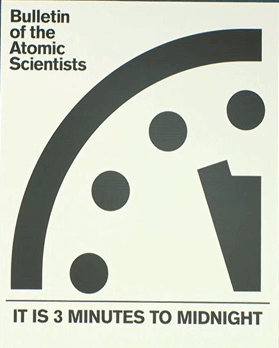
Watch the 2026 Doomsday Clock unveiling live here on January 27 at 10 a.m. EST
To see nuclear-related stories in greater depth and intensity – go to https://nuclearinformation.wordpress.com/
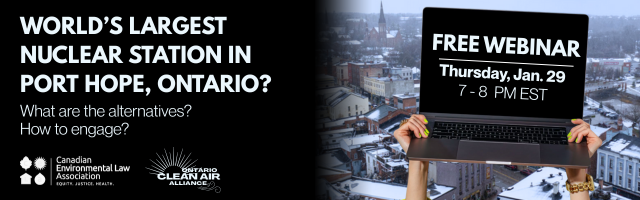
29 Jan. Thursday 7-8 p.m. Webinar – World’s Largest Nuclear Station in Port Hope, ON?
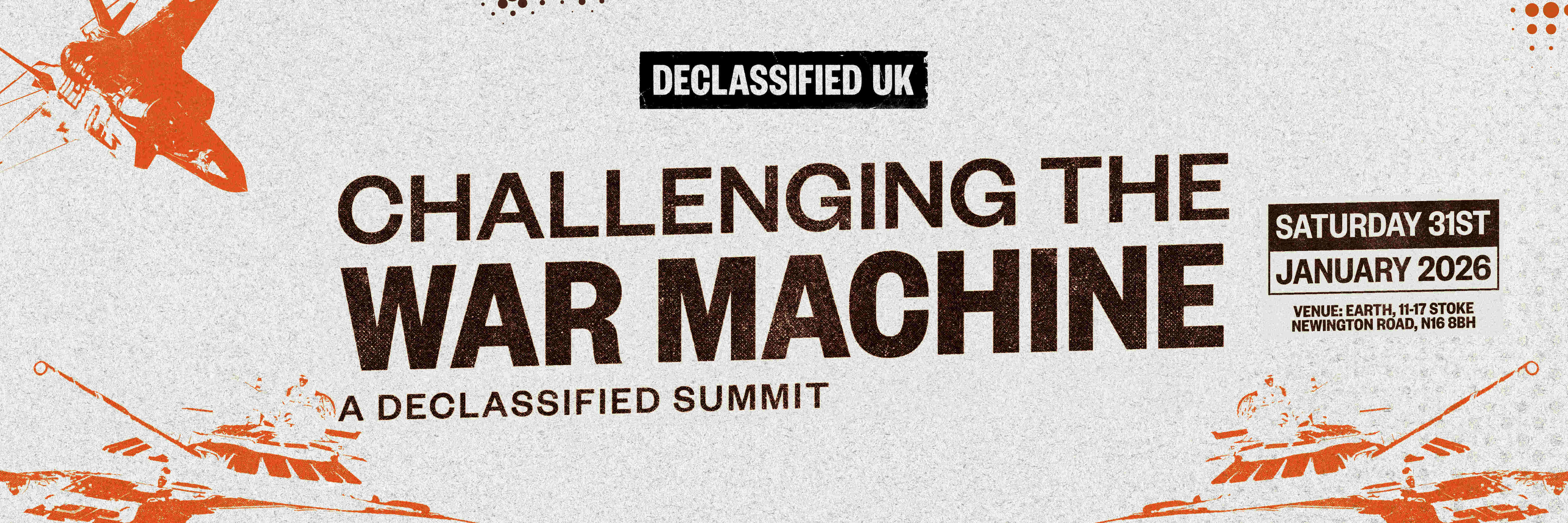
31st January – Challenging the War Machine – a DECLASSIFIED UK SUMMIT


Website of the Week
Now until to February 10, 2026 Radioactive waste storage in France: the debate is finally open! How to participate?
-
Archives
- January 2026 (277)
- December 2025 (358)
- November 2025 (359)
- October 2025 (376)
- September 2025 (258)
- August 2025 (319)
- July 2025 (230)
- June 2025 (348)
- May 2025 (261)
- April 2025 (305)
- March 2025 (319)
- February 2025 (234)
-
Categories
- 1
- 1 NUCLEAR ISSUES
- business and costs
- climate change
- culture and arts
- ENERGY
- environment
- health
- history
- indigenous issues
- Legal
- marketing of nuclear
- media
- opposition to nuclear
- PERSONAL STORIES
- politics
- politics international
- Religion and ethics
- safety
- secrets,lies and civil liberties
- spinbuster
- technology
- Uranium
- wastes
- weapons and war
- Women
- 2 WORLD
- ACTION
- AFRICA
- Atrocities
- AUSTRALIA
- Christina's notes
- Christina's themes
- culture and arts
- Events
- Fuk 2022
- Fuk 2023
- Fukushima 2017
- Fukushima 2018
- fukushima 2019
- Fukushima 2020
- Fukushima 2021
- general
- global warming
- Humour (God we need it)
- Nuclear
- RARE EARTHS
- Reference
- resources – print
- Resources -audiovicual
- Weekly Newsletter
- World
- World Nuclear
- YouTube
-
RSS
Entries RSS
Comments RSS
 nuclear-news