Clinton Power Station and Quad Cities Generating Station – nuclear plants to close
Exelon to close 2 nuclear plants, news.com.au 3 June 16 Exelon Corp will shut two Illinois nuclear power plants after the state Legislature declined to act on the company’s request for financial support.
The Clinton Power Station in Clinton will close June 1, 2017, and the Quad Cities Generating Station in Cordova will close June 1, 2018, the Chicago-based power provider said in a news release on Thursday.
Exelon said it made the decision because the future is unclear for legislation which would extend state subsidies to nuclear power plants……
Exelon said it would continue to work to pass the legislation, known as the Next Generation Energy Plan.
The company said it would brief the Illinois governor’s office, state officials and community leaders……
The Clinton and Quad Cities locations are Exelon’s best-performing plants, but they’ve lost $US800 million ($A1.10 billion) over the last seven years, the company said…….http://www.news.com.au/finance/business/breaking-news/exelon-to-close-2-nuclear-plants/news-story/514a301601c870e58cf59c9b5f36ae46
Strikes spread to all nuclear plants in France
France’s union workers plan to begin rolling strikes in the power sector, including at all nuclear plants as part of nationwide protests against contentious labor reforms.
Members of the General Confederation of Labor (CGT) union voted to down tools at all 19 nuclear power plants on Thursday.
“All power production sites voted to strike from Thursday. All 19 nuclear plants voted for the strike. We will start cutting power output tonight from 1900 GMT,” said CGT union official Laurent Langlard……..http://www.presstv.ir/Detail/2016/06/02/468549/France-CGT-EDF-nuclear-strike
Malfunction shuts down Pennsylvania nuclear power reactor
Pennsylvania nuclear power reactor shut down after malfunction By Kurt Bresswein | For lehighvalleylive.com 2 June 16 A malfunction in the coolant system at a nuclear reactor about 30 miles south of Allentown led to its temporary shutdown Wednesday, its owner reported. Operators at Exelon Corp.’s Limerick Generating Station removed Unit 2 from service about 9 a.m. after an electrical component malfunctioned in the reactor’s recirculating water pumps.
The pumps circulate water to regulate temperatures in Unit 2, one of two twin 1,200-megawatt reactors at Limerick. They are not required for safe shutdown, Exelon said in a news release Wednesday afternoon.
The malfunction and shutdown did not rise to any of the levels of emergency classification under the U.S. Nuclear Regulatory Commission, said Diane Screnci, spokeswoman for the agency. As is the case at all 100 nuclear power plants in the United States, the NRC has resident inspectors at Limerick…….
The shutdown comes amid a stretch of warm weather that has air-conditioners buzzing throughout the region. PJM Interconnection, based like Limerick in Pennsylvania’s Montgomery County, says Wednesday’s shutdown is not expected to cause any power shortages……http://www.lehighvalleylive.com/news/index.ssf/2016/06/pennsylvania_nuclear_power_rea.html
Endless nuclear power – America’s foolish dream
America’s long fever dream of boundless nuclear power: What’s a country to do? Environmental Leader, 31 May 16, America’s relationship with civilian nuclear power is curious: it’s like the story of the aging playboy who can’t let go of his alluring but high-maintenance showgirl. The two love each other, dreaming of what might have been and what might be. They can’t quite make the relationship work, but can’t let go either……..
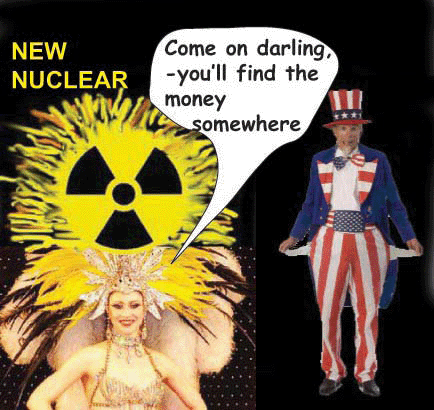
Next generation nuclear power might take many forms. Those behind the technologies they are working on – the small, modular, passively safe nuclear reactor; the traveling wave rector Bill Gates and others are backing, and other advanced concepts, which a Senate Energy and Natural Resources Committee hearing learned about from experts last week – seem aware they may never see the fruit of their labors in their lifetime. They talk of initial developments by 2030 or 2035 and beyond.
They talk of public-private partnerships aimed at solving supply chain problems, of resolving technical and licensing challenges, and addressing technical and economic questions at the demonstration phase. After 60-some years of commercial nuclear power, we’re still trying to profit from what we’ve learned and determine what yet we need to do. It’s conceptual, patient work. It seems we’re willing to keep the industry alive, but just barely. DOE’s Gateway for Accelerated Innovation in Nuclear (GAIN) initiative will be funded at a modest $80 million over several years……
Time to call a halt to UK’s embarrassing Hinkley nuclear debacle
 Leave Hinkley to the hedgehogs. This debacle needs to be taken in hand, Guardian 31 May 16
Environmental protections on EDF’s troubled Somerset construction site are excellent, apparently. Very little else about the project is ave you heard about the terrific bat houses and hedgehog tunnels down at Hinkley Point in Somerset? Energy minister Andrea Leadsom has been to inspect them herself and raved about them last week to a select committee of MPs. They were evidence, she suggested, of the depth of commitment of French firm EDF to the £18bn nuclear power station due to be built on the site.
Well, maybe. Talk of bats and hedgehogs at least provided some relief from the familiar crop of Hinkley news. French economy minister Emmanuel Macron said he was “fully behind” the project but EDF’s unions confirmed that they weren’t. Jean-Luc Magnaval, secretary of EDF’s workers’ committee, told the BBC that the unions “have reservations about several aspects of the project: organisation, supply chain, installation and procurement”. That’s a long list.
Meanwhile, EDF Energy chief executive Vincent de Rivaz, appearing before the same committee as Leadsom, had to adopt a humbler tone than on his last outing two months ago. Then he had promised a final investment decision “very soon”; this time he wouldn’t speculate about a date.
This farce – which has been running since last October, when the final sign-off was due within weeks – could yet roll on and on. The UK government is disinclined to set a deadline: it’s a “commercial decision” for EDF.
Meanwhile, the current French government could have a radically different shape this time next year – there is a presidential election in 2017 and the incumbent, François Hollande, is the least popular leader in modern French history. French union opposition to Hinkley Point appears entrenched and the workers’ representatives have six seats on an 18-strong board.
In theory, management and government can proceed regardless; but to embark on an £18bn venture with a divided boardroom would invite trouble down the line. That is especially so when you remember EDF’s last finance director, Thomas Piquemal, resigned over concerns that Hinkley could threaten the company’s future.
The best thing the UK government could do at this point is to stop and consider whether the obstacles facing Hinkley are simply too big. ……
there are other ways to meet the legally binding emissions targets. Offshore wind is expanding with no Hinkley-style fuss, and its costs are falling. More importantly for the UK’s requirement for secure baseload supplies, other builders are waiting to pursue projects that use different nuclear technology. In theory, planning and appraisal can continue in parallel; in practice, confidence in the UK’s commitment to its new-nuclear programme will drain away.
There is not – yet – a crisis in UK energy policy because it is always possible to build a few gas-fired stations to avert an emergency. But the Hinkley show is becoming an embarrassment. The project is expensive, uses unproven technology and its builder is a disunited and over-borrowed company that requires constant financial assurances from an ever-changing cast of politicians. The UK government should set EDF a deadline and be ready to enforce it. We can do better – much better – than Hinkley. https://www.theguardian.com/business/2016/may/29/hinkley-point-c-leave-hedgehogs-nuclear-debacle
New York: opposition to subsidies for nuclear power stations
 Nuclear Plant Subsidies Anger Clean Energy Advocates, WSHU 1 June 16 By INNOVATION TRAIL Clean energy activists in New York say the state should not subsidize the nuclear energy industry.
The activists spoke at a Public Service Commission hearing last week on Governor Andrew Cuomo’s proposed energy plan. The goal is to have New York generate half of its energy from renewable sources, like wind and solar power, by 2030.
It would also require utilities to buy power from nuclear plants.
Peter Swords, with the Nuclear Free World Committee, says subsidizing nuclear power undermines the state’s green energy industry.
“We have this fast growing green energy industry here. A lot more jobs are created in retrofitting in solar and renewables per million dollars than in nuclear energy.”
The activists say the subsidies are designed to shield nuclear companies from competition with lower-cost energy sources. …..http://wshu.org/post/nuclear-plant-subsidies-anger-clean-energy-advocates
The world’s dire situation due to the nuclear disasters and nuclear pollution
 Extremely Cautionary Catastrophes: Fukushima And Chernobyl, By Robert Snefjella, 28 May, 2016, Countercurrents.org With phenomenal ingenuity and extreme folly, technically-advanced humanity has managed to conceive and implement a technology that has done much harm to life, and will do much greater harm to life, and that even threatens our extinction. Whether suddenly through nuclear war, or through a pernicious slow motion assault on life’s wondrous, intricate, amazing inner workings and accurate reproductive capabilities, nuclear technology is inherently, inescapably, anti-life. Given that the rest of the marvels of creation – that which has so far survived us – is also along for the ride, it’s not just about us. One might wonder, if the rest of creation were capable of hope, if it would be clinging to the fading hope that humanity at this late hour would transform itself into a species characterized by a decisively dominant strain of sane, careful, sensible behavior, or, if it would be hoping for our demise, the sooner the better, come what may. If we are to extricate ourselves from the trap into which we have placed ourselves, it will take much more ingenuity, and much reduced folly.
This piece is an incomplete overview of our situation, intended to boost general understanding of these subjects. Some reflections on essential reforms close out the piece.
“[In 1936] … [Fatu Hiva’s ocean pools and shorelines] literally teemed with life.”
From the book Fatu-Hiva, By Thor Heyerdahl. (He lived on the Polynesian Island of Fatu-Hiva in 1936)
“[In 2015] … everything [flora and fauna] is missing!” [along the shorelines and in the tidal pools of British Columbia]
Dana Durnford’s words, after his 15000 mile odyssey along the west coast of Canada in 2014 and 2015
The unprecedented mass mortality of much life in the North Pacific Ocean in recent years has been given inadequate coverage by corporate mass media, and has not gained widespread public awareness.
In local media close to the ‘situation’, there have been many reports of unusual numbers of deaths, of strange diseases, of mass disappearances of life forms. And sometimes these reports appear in national and international media. But such reports are typically brief, sporadic, disconnected from each other, and often narrowly focused.
Poorly represented has been the scale and breadth of the devastation: But then, no one knows just how many whales and sea lions and walrus and sardines and sea stars and mussels and sea urchins and sea birds, and countless other creatures large and small, have in recent years died, starved, disappeared, ‘melted away’ in the water, rotted on the shores. And we mustn’t forget humans’ industrial scale ocean ‘harvest’.
But when one puts together the many reports, the scale of the disaster over recent years is pretty mind-boggling. Kelly Ann Thomas has compiled one such list. [1]
A few examples from my own notes:……..http://www.countercurrents.org/snefjella280516.htm
Role of Antarctic melt in world’s weather
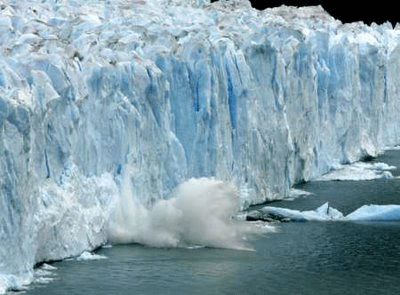 ICE MELT CONTROLS WORLD WEATHER Radio Ecoshock 29 May 16 More on super storms, ice melt & James Hansen, from climate expert Dr. David Archer & the late anti-nuclear activist Michael Mariotte. New Antarctic melt science w. Dr. Tony Worby & Dr. David Etheridge – some surprises in role of Antarctic ice in world weather.
Download or listen to this Radio Ecoshock show in Ecoshock 160525 Lo-Fi (14 MB) or Ecoshock 160525 CD Quality (56 MB)
Welcome to a third program where we look into claims Earth will experience rapidly rising seas and super storms in the coming decades…….
I have trouble with James Hansen’s promotion of nuclear power as a solution for climate change. In Hansen’s book “Storms of My Grandchildren” he advocates for Generation Four nuclear reactors, new designs that are allegedly safer. But now he’s gone a step further, teaming up in an unlikely alliance with Michael Schellenberger of the Breaththrough Institute, to push for Illinois to keep old and dangerous reactors running – and get a public subsidy for them.
Two of these are the GE Mark I reactors that blew up in Fukushima, due to bad design (the fuel rods come up from the bottom, through seals that let reactor fuel leak out of containment). Hansen is on the board of an industry-friendly group in Illinois, all funded by the Chicago billonaire family, the Pritzkers. Strange company.
I talk with the long-time head of the Nuclear Information and Resource Service (NIRS) Michael Mariotte about “how low will they go”. In the few days since I recorded that interview, I am sad to report that Michael passed away May 23rd from pancreatic cancer. This was his last interview. Michael was true to his cause literally to the end.
Then we get some surprises in new science on Antarctica, from two Australian experts, Tony Worby and David Etheridge. We’ve all be focused on major changes in the Arctic, which is conveniently closer to most of us – but it’s the South Pole which may determine the future of the world – through sea levels, and sea ice several times greater than Australia. That ice melt may determine the coming weather, even in the next decades.
 You can listen to this show on Soundcloud right now!…….http://www.ecoshock.org/2016/05/ice-melt-controls-world-weather.html
Let’s not forget the nuclear corruption in South Africa

 Zuma, the Guptas and South Africa’s R1 trillion nuclear plans, Business Tech By The Conversation May 29, 2016 South Africa is facing a critical decision that could see it investing about R1 trillion – or US$60 billion to $70 billion – in a fleet of new nuclear power stations……
What should be an economic decision has now been clouded by controversy, with political pressure to push through the nuclear build and the increasingly apparent rewards it would bring to politically linked individuals.
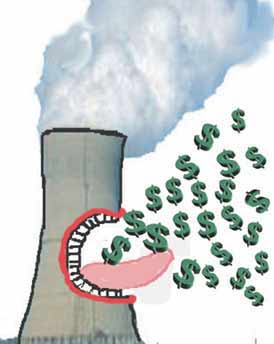
The nuclear expansion programme needs to be considered exceptionally carefully given that the required financial commitment is roughly equal to the total South African annual tax revenue. Loan repayments could place a devastating long-term burden on the public and on the economy as a whole….
The government-driven Integrated Resource Plan aims to increase total capacity from 42,000MW (peak demand of 39,000MW) to 85,000MW (peak demand of 68,000MW) in 2030. A key component of this plan is the construction of facilities to produce 9,600MW of nuclear power. However, this aspect of the plan has been challenged.
The biggest concern is that nuclear power is too expensive for the country. The debate gained momentum when the 2013 update to the 2010-2030 electricity plan found that electricity demand is growing slower than originally anticipated. Peak demand in 2030 is now expected to range between 52,000 MW and 61,000 MW. There is consequently widespread belief that new nuclear power stations can be delayed considerably.
South Africa’s energy generation options
South Africa has had remarkable success with speedy, cost-effective installation ofrenewable energy power plants. In addition to this, technologies for harvesting South Africa’s plentiful wind and solar energy resources are rapidly becoming cheaper, raising the question of whether the country should not invest more in these options rather than in going nuclear……
Zuma and the Russians
The nuclear debate gained a political dimension when President Jacob Zuma and his Russian counterpart, Vladimir Putin, started to develop an unusually close relationship. It culminated in an announcement that the Russian nuclear developer, Rosatom, had been awarded the potentially highly lucrative contract to build the new reactors. The agreement was laterdenied.
Rosatom was considered the preferred contender, with other bidders only there to lend the process legitimacy, according to some observers. The lack of transparency surrounding the process, coupled with a history of corruption in South African mega-projects like the arms deal, has made the whole scheme seem suspicious to the broader public.
A thickening plot
A crucial thread in this saga involves the Shiva uranium mine, about 30km north-west of Pretoria, the country’s executive capital. It originally belonged to a company called Uranium One, a subsidiary of Russia’s Rosatom. It was sold in 2010 to Oakbay Resources, a company controlled by members of the politically connected Gupta family and the president’s son, in a deal that greatly surprised economists.
The mine was deemed unprofitable and thus unattractive to other mining companies. But it was still considered worth a whole lot more than the R270 million paid by Oakbay.
The mine would, however, become highly profitable if it became the uranium supplier to the new nuclear power stations. Oakbay and its associates therefore have a very strong incentive for this nuclear build to happen.
It is here that the nuclear build drama feeds into the recent major controversy surrounding alleged state capture, meaning a corrupt system where state officials owe their allegiance to politically connected oligarchs rather than the public interest. This was highlighted by the shock dismissal of Finance Minister Nhanhla Nene, a reported nuclear build sceptic, but also by subsequent allegations of ministerial positions being offered to people by members of the Gupta family.
Political, legal and civil opposition
The nuclear build’s association with the Zuma faction in the ruling African National Congress (ANC) will be a political hot potato for decades to come. The whole scandal also offers potential opportunity to opposition parties……..
A negative nuclear outlook
Building these plants is a risky business proposition, especially for Rosatom, which is implicated in the developing scandal. The recent political mood swing against state capture and a likely credit rating downgrade add to the risk.
Rosatom has suggested a nuclear build financing option that effectively amounts to it providing a loan. It is, however, conceivable that a future government may not honour debt repayments if there is a view that the construction deal was secured irregularly……..
By Hartmut Winkler, Professor of Physics, University of Johannesburg
This article was first published by The Conversation – read the original here http://businesstech.co.za/news/government/124993/zuma-the-guptas-and-south-africas-r1-trillion-nuclear-plans/
Police: Lost Couple Cuts Chain to Enter Nuclear Plant Property
The Blaze, May. 29, 2016 Carly Hoilman — A couple who got lost in Pennsylvania while driving to New York entered the property of a nuclear plant by cutting a chain at a gate, apparently in a quest to get back on the right road, authorities said.
The Chesapeake, Virginia, couple were driving from Baltimore on Friday night when they got onto an access road at the Peach Bottom Atomic Power Station, owned by Exelon. The driver told police he didn’t see two “no trespassing” signs when he cut the chain on the gate, the York Daily Record reported…….
Police initially said, after consulting with security staff, that the man and woman appeared to have made it to “a highly security sensitive area where radioactive material is transferred from the main power plant. If the couple had gone inside a nearby outbuilding, the plant would have been placed on lockdown and there was a “possibility of lethal force being used,” authorities said in court documents…….
But Merkel said Saturday that the couple hadn’t made it to any areas where radioactive materials are transferred or stored and didn’t make it past security officers who constantly monitor all sides of the plant. She said the couple was “very cooperative” and waited until police arrived……..http://www.theblaze.com/stories/2016/05/29/police-lost-couple-cuts-chain-to-enter-nuclear-plant-property/
The myth that nuclear weapons keep us safe.
The Manhattan Project Myth http://www.usnews.com/opinion/articles/2016-05-27/nuclear-myths-began-when-the-us-dropped-the-atomic-bombs-on-japan
America’s use of the atomic bomb started the dangerous narrative that nuclear weapons keep us safe.

By Erica Fein | May 27, 2016 Today, one of the world’s greatest concerns is the unconstrained advancement of North Korea’s nuclear arsenal. Yet, for the most part, the leaders of the eight other nuclear-armed states cling to their own weapons with the belief that the nuclear game of chicken – also known as deterrence – has worked.
The narrative that nuclear weapons are the “ultimate guarantors of security” is powerful and comforting for many. The flip side, that only luck has prevented World War III, is almost too horrible to contemplate.
Nuclear myths extend back to dawn of the atomic age. In 1945, very few people knew about America’s secret project to build the atomic bomb. The Manhattan Project’s purpose remained a mystery even to most of its hundreds of thousands of employees and members of Congress.
It is not surprising, therefore, that most Americans supported the bombings of Hiroshima and Nagasaki. War Secretary Henry Stimson quickly pronounced that this new weapon ended the war and saved 1 million American lives by averting an American invasion of Japan. Only later did details of the bombs’ destructive effects come to light – some 200,000 instant deaths, flattened cities and enormous suffering. But by then, the war-winning significance of Hiroshima and Nagasaki had seeped into the American psyche.
With the declassification of archival records, the official story is now debated by historians. Among other things, the 1946 United States Strategic Bombing Survey concluded, “even without the bombing attacks, air supremacy over Japan could have exerted sufficient pressure to bring about unconditional surrender and obviate the need for an invasion.”
Yet, 70 years later, whether the atomic bombings decisively ended the war or saved more total American or Japanese lives seems less important than the myth that their use perpetuated: nuclear weapons keep us safe.
President Harry Truman had the opportunity to try to control the spread of nuclear weapons through international agreements. Instead, he doubled-down and agreed to the development of the H-bomb, which helped to spawn the arms race.
American leadership in ending the nuclear threat is no less of an imperative today. President Barack Obama understands this and deserves credit for negotiating a modest arms reduction treaty with Russia, raising the profile of nuclear terrorism prevention, and negotiating a historic agreement that would prevent Iran from developing a nuclear weapon. However, as the president has admitted, his agenda is unfinished.
Before he leaves office, Obama can do more to head-off the possibility of renewed global nuclear competition. For example, America is planning to upgrade its entire arsenal of land, air and sea-delivered nuclear weapons at an estimated cost of nearly half a trillion dollars. Doing so would maintain excess force levels for decades to come. If Obama takes a step to reverse these unnecessary plans, such as canceling the new nuclear-armed cruise missile, he may not change many minds overnight, least of all those of our adversaries. Nonetheless, any action to lessen the significance of nuclear weapons would help lay bare their mythical power – a step in the right direction.
World wide state of nuclear weaponry confronts Obama’s nuclear-free ideals
Obama won the Nobel Peace Prize for 2009, the year he had made a speech in Prague calling for a nuclear-free planet. Yet the issue seems to have taken a back seat during his time in office. Obama apparently hoped that the Hiroshima trip would revive the momentum for arms reduction both in the U.S. and across the globe.
Obama signed the New START strategic arms reduction treaty with then-Russian President Dmitry Medvedev in 2010, adding momentum to global disarmament efforts. But the atmosphere worsened after Vladimir Putin returned to the presidency in 2012.
Bilateral relations cooled after Russia annexed the Crimean Peninsula, slamming the brakes on disarmament. Signatories to the Nuclear Non-Proliferation Treaty also failed to agree on further reductions at a review meeting last year.
Russia has already exceeded the maximum amount of warheads allowed under New START. China has abandoned the concept of minimal deterrence and is now preparing to equip nuclear submarines with sub-launched ballistic missiles. It is only a matter of time before North Korea develops warheads small enough to mount on a ballistic missile.
Presumptive Republican presidential nominee Donald Trump contends that Japan and South Korea should build nuclear arsenals of their own, utterly disregarding Obama’s calls for a world free of the weapons.
The real estate mogul ironically echoes Obama when he argues that the U.S. cannot continue to be “the policeman of the world.” The American public is increasingly turning inward from two difficult wars in Afghanistan and Iraq. Obama’s disarmament push may also be hindered by weakened U.S. leadership in the international arena and growing isolationism at home.
President Obama’s nuclear disarmament dream has turned into a nuclear arms race nightmare
 Obama’s Nuclear Paradox: Pushing For Cuts, Agreeing To Upgrades, NPR , PHILIP EWING May 25, 2016 President Obama came into office with a dream of a world without nuclear weapons, and he’s sure to touch on this theme Friday when he becomes the first sitting U.S. president to visit Hiroshima, site of the world’s first atomic bombing.
Yet Obama also has put the U.S. on course to spend around $1 trillion on upgrading its nuclear arsenal over the next three decades and, critics say……..
president who has opposed nuclear weapons all his life has wound up asking Congress to fund a new class of ballistic missile submarine, a new stealth bomber, upgrades to the current stock of nuclear weapons, a new cruise missile and billions of dollars of other programs.
The world’s other nuclear superpower, Russia, is rejuvenating its own nuclear arsenal and threatening to develop whole new weapons, including an intermediate range missile and what it claims is a new nuclear torpedo.
China, Russia, India and the United States all are developing new missiles that travel at least three times the speed of sound. Disarmament activists say no country should have these weapons.
“Obama and his successor, along with Russian President Vladimir Putin, have a responsibility to pull back from a nuclear action-reaction cycle that would put both countries at greater risk and block further nuclear reductions for many more years to come,” declared Daryl Kimball, head of the Arms Control Association.
Kimball has called on Obama to propose new negotiations on global restraint, urge China, India and Pakistan to freeze their nuclear stockpiles and call for “a new push for a world without nuclear weapons.”…………
This year’s nuclear safety summit in Washington was viewed as a mere victory lap – which Russia boycotted. And by the final year of Obama’s term, it has become clear that the administration will have wound up spending more on new weapons than on nonproliferation. A lot more. …….http://www.npr.org/sections/parallels/2016/05/25/479498018/obamas-nuclear-paradox-pushing-for-cuts-
Death of long-term and highly respected anti nuclear activist Michael Mariotte
 Anti-Nuclear Activist Michael Mariotte Dies at 63 http://www.democracynow.org/2016/5/24/headlines/anti_nuclear_activist_michael_mariotte_dies_at_63 And the leading anti-nuclear advocate Michael Mariotte has died at the age of 63. Mariotte served as executive director of the Nuclear Information and Resource Service for three decades, leading successful campaigns to defeat two nuclear facilities and uphold restrictions on the transportation of radioactive waste. He also co-founded the newspaper that became the Washington City Paper. Mariotte died of pancreatic cancer at home in Kensington, Maryland, on May 16.
Nuclear programme could set south Africa back trillions of rand.
 ‘SA’S INVESTMENT IN NUCLEAR ENERGY A GROSS MISCALCULATION’ http://ewn.co.za/2016/05/24/SAs-investment-in-nuclear-energy-is-gross-miscalculation
Kumi Naidoo explained that South Africa’s nuclear ambitions could set the country back trillions of rand. Natalie Malgas CAPE TOWN – Former Green Peace International Executive Director, Kumi Naidoo, has described government’s investment in nuclear energy as a “gross miscalculation which it can’t afford”.
Speaking at an energy conference in Cape Town yesterday, Naidoo explained South Africa’s nuclear ambitions could set the country back trillions of rand.
Naidoo added nuclear energy is not likely to solve the country’s power crisis.
“So, right now the price has increased to $1.5 trillion. We’re losing a lot of opportunity cost here. It will take us so much longer to actually get the energy that we need because it’s too expensive, compared to other forms of energy.”
1 This Month
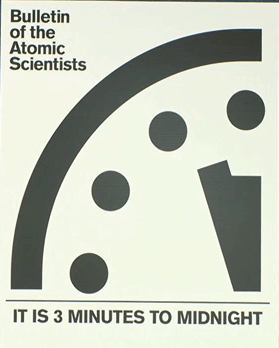
Watch the 2026 Doomsday Clock unveiling live here on January 27 at 10 a.m. EST
To see nuclear-related stories in greater depth and intensity – go to https://nuclearinformation.wordpress.com/

29 Jan. Thursday 7-8 p.m. Webinar – World’s Largest Nuclear Station in Port Hope, ON?

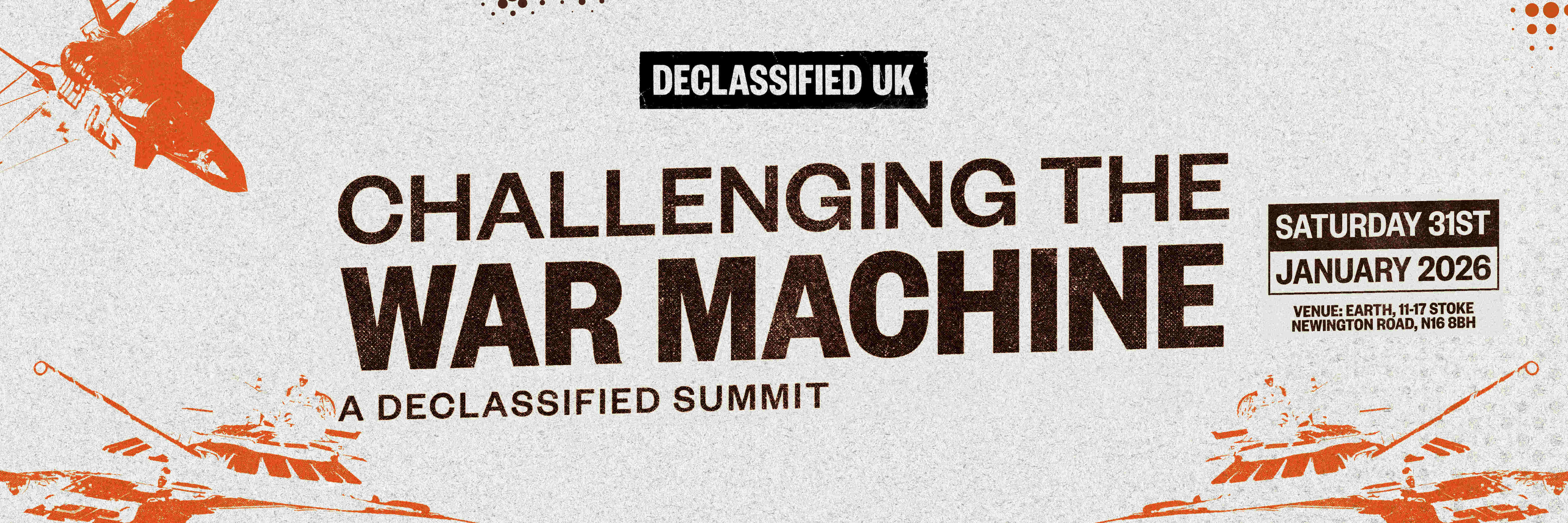
31st January – Challenging the War Machine – a DECLASSIFIED UK SUMMIT

Website of the Week
Now until to February 10, 2026 Radioactive waste storage in France: the debate is finally open! How to participate?
-
Archives
- January 2026 (277)
- December 2025 (358)
- November 2025 (359)
- October 2025 (376)
- September 2025 (258)
- August 2025 (319)
- July 2025 (230)
- June 2025 (348)
- May 2025 (261)
- April 2025 (305)
- March 2025 (319)
- February 2025 (234)
-
Categories
- 1
- 1 NUCLEAR ISSUES
- business and costs
- climate change
- culture and arts
- ENERGY
- environment
- health
- history
- indigenous issues
- Legal
- marketing of nuclear
- media
- opposition to nuclear
- PERSONAL STORIES
- politics
- politics international
- Religion and ethics
- safety
- secrets,lies and civil liberties
- spinbuster
- technology
- Uranium
- wastes
- weapons and war
- Women
- 2 WORLD
- ACTION
- AFRICA
- Atrocities
- AUSTRALIA
- Christina's notes
- Christina's themes
- culture and arts
- Events
- Fuk 2022
- Fuk 2023
- Fukushima 2017
- Fukushima 2018
- fukushima 2019
- Fukushima 2020
- Fukushima 2021
- general
- global warming
- Humour (God we need it)
- Nuclear
- RARE EARTHS
- Reference
- resources – print
- Resources -audiovicual
- Weekly Newsletter
- World
- World Nuclear
- YouTube
-
RSS
Entries RSS
Comments RSS
 nuclear-news