Hinkley Point Nuclear – a Pointless Project
Hinkley Pointless, Britain should cancel its nuclear white elephant and spend the billions on making renewables work , The Economist, Aug 6th 2016 THE “golden decade” of co-operation between Britain and China, launched last year as Xi Jinping banqueted at Buckingham Palace, seems to have lasted all of nine months. The centrepiece of the new partnership was a deal in which China would invest £6 billion ($8 billion) in a new French-built nuclear power station at Hinkley Point in south-west England, before building one of its own in the south-east (see page 21). Yet on July 28th, as the Hinkley project was due to receive final approval, Britain’s new government announced ominously that it was under review……
EDF, the firm building Hinkley, has yet to finish two similar reactors in France and Finland that, based on a design plagued by problems, are overdue and over-budget. The British government has nonetheless promised to pay about £92.50 per megawatt hour for Hinkley’s output, compared with wholesale prices of around £40 today. By 2025, when Hinkley is due to open, that may look even pricier; by the time the guarantee runs out, 35 years on, it could look otherworldly. Other technologies are galloping ahead, upsetting all kinds of pricing assumptions. In the past six years Britain’s government has reduced the projected cost of producing electricity from onshore wind in 2025 by one-third, and of solar power by nearly two-thirds (see chart). Because nobody knows how the next few decades will unfold, now is not the time to lock in a price
One of the few certainties is that Hinkley is not the sort of power station that any rich country will want for much longer……..http://www.economist.com/news/leaders/21703367-britain-should-cancel-its-nuclear-white-elephant-and-spend-billions-making-renewables
The Small Nuclear Lobby sees its chance in UK, as Big Nuclear flounders
Professor Michael Bluck, Director of the Centre for Nuclear Engineering “Nuclear power is widely accepted as a vital component in the energy mix, and Hinkley C will provide important base-load in support of other low-carbon, but intermittent technologies, such as wind and photovoltaics.
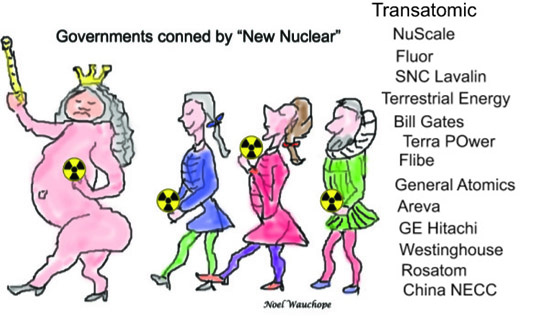
“The construction and commissioning of Hinkley C will also provide a focus for the reinvigoration of the UK nuclear industry and the associated skills development necessary for future nuclear technologies such as small modular reactors, which could be built in a factory and transported to a location, making them cheaper to make and run, (SMRs) and Generation IV reactors, which would use nuclear waste from other reactors to power them, making them more efficient, and potentially even safer than current versions.” (http://www3.imperial.ac.uk/newsandeventspggrp/imperialcollege/newssummary/news_2-8-2016-14-28-7)
What happens next, with Hinkley Point C nuclear project?
 The nuclear option: Where next for Hinkley Point?, business Green, Madeleine Cuff, 2 Aug 16, Last week was quite a rollercoaster for those involved in low carbon energy policy. French utility EDF spent the first part of the week drumming up media excitement for a final investment decision on its Hinkley Point C development, briefing heavily that the project would likely be green lit by the board on Thursday – a decision widely viewed as the final hurdle for the UK’s first new nuclear power plant in a generation.
But in a surprise twist of events, just hours after EDF approved the investment – losing a board member and angering its own unions in the process – the government launched a review into the project’s “component parts”, pushing the contract signing back into the autumn, assuming it happens at all.
So what now for the beleaguered energy project? Is this review really just a chance to double check the finer details? Or could this be the start of a major shake up of the UK’s clean energy policy? BusinessGreen spoke to a range of experts to get their views on where next for Hinkley Point.
Tom Burke, chairman of E3G……..really, the government should drop the project. It’s now taken most of the political damage for abandoning it anyway. All of the people opposed to it – financial analysts, credit rating agencies, environmentalists, even members of the EDF board – have been encouraged to redouble their efforts to stop what is now I think pretty widely recognised by everybody outside of government and nuclear theologians as a very bad deal indeed. You now have huge momentum behind the calls for the government to enact a Plan B.
There are so many things that you could do that would be faster, cheaper, cleaner and more reliable than Hinkley. There’s no shortage of alternative plans that would actually keep bills down for people and be low carbon, such as a new energy efficiency programme, a new fleet of offshore wind farms with power two-thirds the price of Hinkley’s, and more interconnectors to bring clean energy for the continent.
The big obstacle to this is that there is still a vast illusion among the commentariat that you need baseload power which only nuclear can supply – but that’s coming from people who haven’t caught up with where electricity grid technology has got to. This is really all about letting go of bad ideas………..http://www.businessgreen.com/bg/analysis/2466652/the-nuclear-option-where-next-for-hinkley-point
O’Neill a victim of nuclear fallout
, alistair osborne , 2 Aug 15 clear conflicts usually create shocking casualties. So Britain should count itself lucky if the fallout from blowing up Hinkley Point C can be confined to Lord O’Neill of Gatley.
Apparently, the commercial secretary to the Treasury could quit the government over Theresa May’s attitude to China: one exposed by her laudable decision to review the £18 billion Franco-Sino nuke, in which Beijing is poised to take a one-third stake. His lordship’s a bit miffed, what with having been brought into government by ex-chancellor George Osborne to drum up Chinese investment, and then having had the new PM’s Hinkley delay sprung…(subscribers only) http://www.thetimes.co.uk/article/oneill-a-victim-of-nuclear-fallout-lwgxrxfn8
Hinkley nuclear plan locks Britain into a very risky investment
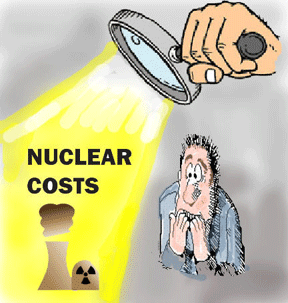
 Why Hinkley is a very risky bet – BBC Radio Wales http://tomburke.co.uk/2016/07/29/why-hinkley-is-a-very-risky-bet-bbc-radio-wales/ Tom Burke, This is not where we expected to be this morning, and it is very difficult to imagine what the government will discover in a few weeks time that it doesn’t already know. So I think that it is fortunate that this is giving us a chance to look again at what is a very bad deal for Britain, a 37 billion pound punt by the British government with energy bill payer’s money on an unproven technology. It is a 20th century technology that locks us into the wrong kind of infrastructure for the 21st century. It shuts us out from building an energy infrastructure that will be cheaper, faster, cleaner and much more reliably delivered than Hinkley Point……..
I share concerns about the implications, of the extraordinarily casual treatment of a very big project, for employment. It’s not just in the nuclear industry that this government had been careless. We have lost 12,000 jobs in the last couple of years in the solar industry because the government can’t make it mind up about energy policy. We lost even more jobs in the energy efficiency industry again because the government seems to treat energy policy like a political bagatelle, that it can just change in an arbitrary way.
But the risks associated with Hinkley Point are enormous, in terms of what we spend our money on. Actually there are three of these reactors already built. All of them, including the one that is being build in China are years late and billions of pounds over budget. I just think this is too risky a project to go ahead with when there are lots of other things that we could do that are faster, cleaner and cheaper ways to meet our requirements for energy going forward. By the way if we went ahead with this, it wouldn’t help us with the immediate problems we have securing supplies of electricity because this won’t be generating electricity until 2030. http://tomburke.co.uk/2016/07/29/why-hinkley-is-a-very-risky-bet-bbc-radio-wales/
New York’s shocking huge subsidy for bailing out the nuclear industry
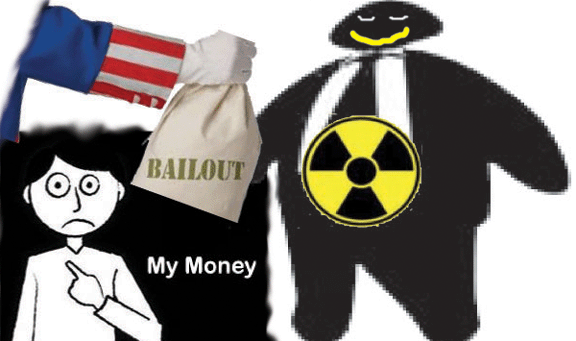
As a precedent-setting state poised to lead the nation as a climate leader on aggressively implementing renewable energy, New York should recognize that the nuclear bailout increases CO2 and long term waste storage costs and decreases jobs relative to replacing the nuclear immediately with clean, renewable energy today.
Invest in clean energy, not nukes http://www.timesunion.com/opinion/article/Invest-in-clean-energy-not-nukes-8633883.php?cmpid=twitter-tablet By Mark Z. Jacobson Is giving old, non-profitable upstate nuclear plants billions of dollars in ratepayers’ money the best way to get New York to a cleaner, renewable energy future? , July 29, 2016
This is the issue at hand as the state grapples with the laudable goal and challenges of moving to clean energy, most immediately meeting Gov.Andrew Cuomo‘s Clean Energy Standard — a commitment to generating 50 percent of electricity from renewable energy by 2030.
New York has done a lot of things right by investing in solar, wind, and energy efficiency, and by pursuing smart changes to the grid like distributed generation. These proven clean energy solutions are expanding faster and faster across the country, spurring unparalleled job growth and saving lives as renewable energy displaces dirty and dangerous energy. Cuomo is wise to prioritize making New York the national clean energy leader.
Given these priorities, I was among many who were shocked by the Public Service Commission‘s proposal that the lion’s share of the Clean Energy Standard funding would be a nuclear bailout. The plan, which the Public Service Commission may vote on as early as August 1st, would give three upstate nuclear plants an estimated $7.6 billion dollars in subsidies over the next 12 years. That’s more than double what the proposal projects would go to renewable energy.
This does not make sense for a number of reasons. Allowing these three upstate nuclear plants to close now and replacing them with equal energy output from onshore wind and solar would be cheaper and would create more jobs. Continue reading
Britain stalls its nuclear white elephant
Nuclear “white elephant” on hold Independent Australia 30 July 16 Britain’s shock decision to put nuclear power station Hinkley Point C on hold, is consistent with the advice of countless experts. Paul Brown from Climate News Network reports.
THE BRITISH GOVERNMENT astonished the nuclear industry on Thursday, by refusing to go ahead with plans to build the world’s largest nuclear plant until it has reviewed every aspect of the project…….

So certain were EDF that a signing ceremony with the British government would take place today to provide the company with 35 years of subsidies for their electricity, that they had hired marquees, invited the world’s press and laid in stocks of Champagne to toast the agreement…….
EDF chief executive Vincent de Rivaz, who had pushed for the deal, cancelled a trip to Britain on hearing the government announcement.
Britain’s new prime minister, Theresa May, who had never publicly endorsed the project like her predecessor David Cameron, has clearly heeded the myriad voices outside the nuclear industry that say this is a bad deal for British consumers……https://independentaustralia.net/politics/politics-display/nuclear-white-elephant-on-hold,9300
Renewables deliver for EDF as Hinkley Point nuclear saga drags on
By Andrew Lee in London , July 29 2016
French energy group EDF saw a strong performance from its renewables business amid a fall in half-year profits and further uncertainty over the controversial Hinkley Point UK nuclear project….(subscribers only) http://www.rechargenews.com/wind/1440126/renewables-deliver-for-edf-as-hinkley-point-nuclear-saga-drags-on
Fukushima in New York? This Nuclear Plant Has Regulators Nervous.
 A new documentary explores the fight around Indian Point Energy Center in the wake of Japan’s 2011 nuclear disaster. By Andrew Lapin, National Geographic JULY 29, 2016
Could what happened in Fukushima happen 35 miles (56 kilometers) north of New York City?
That’s what many activists and former nuclear regulators fear for the Indian Point Energy Center, a nuclear power plant that has operated in Westchester County for more than four decades. The plant provides a good chunk of the energy needs for the surrounding area, but it has come under fire in recent years for safety and environmental concerns, including its warming of the Hudson River and a recent case of bolts missing in one of its reactors. Two of the plant’s three reactor units are currently operating on expired licenses, with the state of New York having denied parent company Entergy’s extension requests due to suspected violations of the federal Clean Water Act. Following the 2011 earthquake and tsunami that caused catastrophic damage to Japan’s Fukushima Daiichi nuclear plant and surrounding area, the safety of nuclear energy as a whole has come under even greater scrutiny.
In the new documentary Indian Point, currently in select theaters, filmmaker Ivy Meeropol uses the plant to get into both sides of the nuclear debate. ……..http://news.nationalgeographic.com/2016/07/indian-point-nuclear-power-new-york-documentary/
EDF board member resigns, attacking Hinkley Point nuclear project as financially ‘risky’
Telegraph.co.uk -26 July 16
Britain’s blank cheque for massive new nuclear project, that will soon be obsolete anyway
To get Hinkley built, ministers have had to agree an ever-lengthening and more humiliating list of concessions, including, almost unbelievably, virtually penalty free scope for contract over-runs of up to eight years beyond the planned completion date of 2025. With Hinkley Point scheduled to provide Britain with 7 per cent of its electricity needs, any such delay would leave consumers disastrously exposed to Britain’s looming energy shortfall, as existing nuclear and coal fired plants come to the end of their natural lives.
In any case, a project of always questionable value to the UK economy has been left looking like a total white elephant by the collapse in the price of fossil fuels. The National Audit Office recently estimated that over the lifetime of the project, the extra cost to consumers of Hinkley’s output had risen from an already punishing £6.1bn when the strike price was originally agreed three years ago,to a jaw-dropping £29.7bn today. Together with other policies designed to deliver a low carbon future, Hinkley’s costs will add approximately £230 a year to the average household electricity bill, according to Government estimates……..
Critics slam British government’s Hinkley Point c nuclear boondoggle
Nuclear critics condemn government for pushing through Hinkley Point C
Green MP Caroline Lucas and host of experts strongly criticise project while pro-nuclear experts welcome EDF go-ahead, Guardian, John Vidal 28 July 16, Nuclear critics are rounding on the government for pushing through the giantHinkley nuclear project they say had been negotiated in secret, could be unbuildable, is technically flawed and will condemn Britain to centuries of massive, unnecessary costs.
“It beggars belief that this government, which prides itself on pinching the pennies, plans to spend tens of billions on Hinkley Point – the most expensive white elephant in British history. It seems its commitment to inflexible, outdated, unaffordable power production knows no bounds,” said the Green MP Caroline Lucas on Thursday.
“At a total cost to consumers of nearly £30bn, Hinkley now represents appalling value for money. If built, it will force cheaper renewables off the system for much of its subsidised life,” said Paul Ekins, professor of resources at the UCL Institute for Sustainable Resources.
Greenpeace’s chief scientist, Doug Parr, questioned the competence of French energy firms EDF and Areva to build and implement the project. “This is a one-off project which can barely be afforded and which will lead nowhere. There are serious questions over the competence and capacity of a company to build a project which will have safety liabilities that stretch centuries into the future,” he said.
UK nuclear power generation is £27.5 more expensive per MWh than that generated by gas power plants.
Parr said that Hinkley would increase the chances of nuclear proliferation and greatly increase Britain’s high-level nuclear waste. “Over its lifetime Hinkley will produce waste equivalent to 80% of all the waste so far produced in the UK in terms of radioactivity. Protecting, guarding and maintaining this highly dangerous spent fuel on site for up to 200 years will be a massive challenge. The government has no plans for what it will do with it,” he said.
Jonathon Porritt, the former head of the government’s sustainable development commission, said there were serious flaws in a similar reactor being built at Flamanville in France. “There is the increasingly likely possibility that the steel reactor vessel EDF has constructed for the EPR at Flamanville may be so seriously flawed as to require it to be broken out of the reactor building for repairs. This would be an unbelievably expensive and time-consuming process,” he said.
Legal experts warned that the government would still have to overcome court challenges. Karla Hill, Client Earth’s director of programmes, said: “This deal is less than visionary and centralises the UK’s power production even more when the government should be creating a decentralised energy system for the future. What is more, state support for this project is the subject of two ongoing legal cases.”
“UK taxpayers and electricity consumers will be locked into paying for the coming Hinkley debacle long after the current EDF board and UK government decision-makers are dead and buried,” said Paul Dorfman, a senior researcher at UCL’sEnergy Institute.
“There is no way that Hinkley can deliver power by 2025, which is already eight years later than originally promised. And it is costing many more billions in subsidies than initially thought,” he added.
“This deal has been done in secret, with no transparency. It’s a barking mad decision. At a time when renewable costs are tumbling and the costs of EDF’s other projects are soaring, we are tying our hands to a contract that runs far into the future at well over the odds”, said Mike Childs, Friends of the Earth’s head of research and science…….https://www.theguardian.com/uk-news/2016/jul/28/nuclear-critics-condemn-government-for-pushing-through-hinkley-point-c
A doomed attempt to save George Osborne’s face – the Hinkley C Nuclear Shemozzle
Hinkley Point C is no more than a doomed attempt at face-saving, Guardian John Sauven, 28 July 16
With all the costs and risks involved, the spectre of George Osborne’s energy policy could haunt Britain for decades
George Osborne’s reputation as a master political tactician may have gone the way of Leave’s £350m a week for the NHS, but the spectre of his misguided energy policy could haunt Britain for decades, and at Hinkley in north Somerset, for millennia.
Theresa May’s government urgently need to seize the opportunity to minimise the damage, an opportunity which only lasts while her government can portray them as the last regime’s errors, and disown them.
This week we learned that the UK has lost 12,000 jobs in the solar industry. This economic disaster was due to Osborne’s ideologically driven subsidy cuts to what was a vibrant and growing sector of the economy. The ideology in question was not opposition to state subsidies, of course.
Osborne has lavished new subsidies on the fossil fuel industry, just as the other leading industrialised nations have started to cut them, and Hinkley Point C is an Olympic-sized subsidy swallower. Osborne simply didn’t like renewables, despite onhore wind farms providing the cheapest electricity in Britain, and solar looking like the technology most likely to undercut them.
Whether this was due to powerful empathy with the small minority of voters who object to renewable energy, a gross misunderstanding of the economics, or an unhealthy affinity with the larger, more established firms pushing older technologies, is difficult to say. But the initial bad decisions became calcified into commandments as the government was forced to defend them repeatedly against an array of bewildered experts.
To avoid paying a low level of subsidy on technologies whose prices were dropping dramatically, Osborne’s Treasury made them rain on the one technology whose costs just keep on going up.
Hinkley C had been described as “the most expensive object on Earth” many months before the National Audit Office (NAO) revealed that subsidies would be nearly five times as big as had been previously advertised………
The NAO has claimed this month that new offshore wind would actually be cheaper than new nuclear energy, a claim confirmed by Danish firm Dong Energy building two offshore windfarms for €72.70 (£61.10) a megawatt hour, compared to Hinkley’s £92.50.
That eye-watering price is guaranteed to Hinkley for 35 years from the plant becoming operational, so billpayers will still be cursing the ghost of austerity past in the 2060s. But that’s just the short-term cost. Hinkley will produce yet more nuclear waste to add to our huge, hazardous and homeless stockpile, and so the legacy of Osborne could haunt us for many hundreds of thousands of years.
And all this, all these costs, risks and subsidies, are now no more than a doomed attempt to save the face of an ex-chancellor whose reputation was finally taken off life support a month ago.
Unless the new government sees sense and calls out their predecessor’s mistakes for what they are, two generations of UK consumers will be left footing the bill for the most expensive act of political face-saving in the history of British politics. https://www.theguardian.com/environment/2016/jul/27/hinkley-point-c-no-more-than-doomed-attempt-face-saving
Little hope for commercialisation of Small Nuclear Reactors (SMRs)
“Despite the optimism among some in the industry, there remain significant hurdles to widespread use of SMRs. Firstly, even those building them privately admit the first ones will cost roughly the same per unit of electricity produced by a large reactor until costs can be driven down. One executive says: “Over time, we think we can get the costs down — as long as enough of them are commissioned.” – Financial Times 26 July 16
French staff in last bid to block Hinkley Point,

 French staff in last bid to block Hinkley Point, Times, Adam Sage, 26 July 16 Paris Staff at the French electricity giant planning to build an £18 billion nuclear plant in Britain have made a final attempt to block the project, which they fear will cripple the state-owned group.
The works council at Eléctricité de France (EDF) is seeking an injunction to prevent a board meeting called to discuss the scheme on Thursday.
EDF’s directors are expected to approve the plan to build two new-generation European pressurised reactors at Hinkley Point in Somerset to supply 7 per cent of Britain’s electricity.
Lawyers for the works council will seek to have any decisions concerning the plant struck…(registered readers only) http://www.thetimes.co.uk/article/french-edf-staff-in-last-bid-to-block-hinkley-point-flxxstghk
1 This Month

of the week – Shut Down Drone Warfare!


Tell the Ukrainian Government to Drop Prosecution of Peace Activist Yurii Sheliazhenko

Petition to revoke the licensing of the Near Surface Nuclear Disposal Facility (NSDF) at Chalk River. https://www.ourcommons.ca/petitions/en/Petition/Details?Petition=e-7247
To see nuclear-related stories in greater depth and intensity – go to https://nuclearinformation.wordpress.com
-
Archives
- April 2026 (19)
- March 2026 (251)
- February 2026 (268)
- January 2026 (308)
- December 2025 (358)
- November 2025 (359)
- October 2025 (376)
- September 2025 (257)
- August 2025 (319)
- July 2025 (230)
- June 2025 (348)
- May 2025 (261)
-
Categories
- 1
- 1 NUCLEAR ISSUES
- business and costs
- climate change
- culture and arts
- ENERGY
- environment
- health
- history
- indigenous issues
- Legal
- marketing of nuclear
- media
- opposition to nuclear
- PERSONAL STORIES
- politics
- politics international
- Religion and ethics
- safety
- secrets,lies and civil liberties
- spinbuster
- technology
- Uranium
- wastes
- weapons and war
- Women
- 2 WORLD
- ACTION
- AFRICA
- Atrocities
- AUSTRALIA
- Christina's notes
- Christina's themes
- culture and arts
- Events
- Fuk 2022
- Fuk 2023
- Fukushima 2017
- Fukushima 2018
- fukushima 2019
- Fukushima 2020
- Fukushima 2021
- general
- global warming
- Humour (God we need it)
- Nuclear
- RARE EARTHS
- Reference
- resources – print
- Resources -audiovicual
- Weekly Newsletter
- World
- World Nuclear
- YouTube
-
RSS
Entries RSS
Comments RSS
 nuclear-news