29 August Building a #NuclearWeapons free world
 Building a #NuclearWeapons free world. EU Reporter, Colin
  Stevens | August 26, 2016 The international community, including the EU, is being urged to step up its contribution to create a nuclear-free world, writes Colin Stevens.
The issue was thrust back into the spotlight most recently when North Korea test–fired a submarine-based ballistic missile from its east coast on 25 August.
The exercise drew international condemnation and Daniel A. Pinkston, a professor at Troy University, said the fact that the rocket travelled as far as it did suggests the North Koreans are “making quite rapid progress, and probably more rapid progress than anyone had predicted”.
The call to remove such threats by seriously scaling down nuclear programmes comes as Kazakhstan marks the 25th anniversary of the closure of the Semipalatinsk Nuclear Test Site on 29 August.
On Monday in Astana, the capital of Kazakhstan, an international conference entitled ‘Building a Nuclear Weapons Free World’ will take place.
It will be attended by political and religious leaders, experts in the field of disarmament, as well as representatives of civil society, international and regional organisations. Those present will include nations that possess nuclear weapons, as well as non-nuclear-weapon states.
The date, 29 August, is the anniversary of Kazakhstan President Nazarbayev’s decision to shut down Semipalatinsk and the date which has since been designated the UN International Day against Nuclear Weapons.
Kazakhstan suffered 450 Soviet nuclear weapons tests at the Semipalatinsk site between August 29, 1949 and 1991 when Nazarbayev finally gave the order to shut down the site.
The 42 years of testing, however, inflicted great suffering on both the Kazakh people and its environment. Tests negatively affected the health of more than 1.5 million Kazakh citizens including many who, to this day, in the first and the second generations, suffer early death, lifelong debilitating illness and horrific birth defects……..
Also on Monday, a special ceremony will take place in Ypres, Belgium to mark the landmark.
The Flemish city is known for the death and destruction it witnessed in World War I. The ceremony will take place in the town’s Cloth Hall close to a memorial which is dedicated to the many tens of thousands who fell in the Great War.
Almas Khamzayev, the ambassador of Kazakhstan’s embassy in Belgium, will join Jan Durnez, the Mayor of Ypres and vice president of Mayors for Peace, an organization that seeks to raise global awareness of the need to abolish nuclear weapons. The leaders will observe a minute’s silence in honour of victims of weapons of mass destruction and open a photographic exhibition to showcase Kazakhstan’s efforts in non-proliferation.
In 2012 the country launched The ATOM Project, a global initiative to help bring into force the Comprehensive Nuclear Test Ban Treaty (CTBT) and show world leaders that the public worldwide is united in its desire to eliminate the nuclear weapons threat.
It specifically seeks to help bring into force the Comprehensive Nuclear Test Ban Treaty (CTBT) and is an example of how Kazakhstan has led the way for the rest of the world on this issue.
The project puts a human face on this global issue by telling the stories of the survivors of nuclear testing. To this day, children are born with severe deformities, illnesses and a lifetime of health challenges as a result of exposure generations ago to nuclear weapons tests.
More than 260,000 people from over 100 countries have, so far, signed the petition. It is hoped to reach 300,000 signatures by the end of this month.
Ridding the world of nuclear weapons is also an effort supported by UN Secretary General Ban Ki-moon who has noted that the world has “witnessed a substantial growth of interest in better understanding the catastrophic humanitarian effects of nuclear weapons”.
He said: “Achieving global nuclear disarmament is one of the oldest goals of the United Nations. It was the subject of the General Assembly’s first resolution in 1946. It has been on the General Assembly’s agenda along with general and complete disarmament ever since 1959.
“It has been a prominent theme of review conferences held at the UN since 1975 of States parties to the Nuclear Non-Proliferation Treaty. It was identified a priority goal of the General Assembly’s first Special Session on disarmament in 1978, which attached a special priority to nuclear disarmament. And it has been supported by every United Nations Secretary-General.”……….
Kazakhstan’s recent history shows that nations do not necessarily need a nuclear arsenal to feel safe. Its policy of eliminating nuclear weapons and strengthening the regime of non-proliferation of weapons of mass destruction has earned the recognition of the international community.
Despite this, the uncertainty about the intentions of states such as North Korea and terrorist groups such as Islamic State suggests there should be no let-up in efforts to rid the world of the nuclear threat once and for all. https://www.eureporter.co/energy/2016/08/26/building-a-nuclearweapons-free-world/
Nuclear is not the cheapest source of electricity for South Africa
 Africa Check: Is nuclear energy really the ‘cheapest source of electricity’? AFRICA CHECK 26 AUG 2016 (SOUTH AFRICA)
The South African government’s nuclear ambitions have been dogged by controversy with questions about the secrecy surrounding procurement discussions and the potential costs involved. But Brian Molefe, the group chief executive of Eskom – the country’s power utility – maintains that nuclear energy will be the “cheapest source of electricity for the country”.
In a statement issued earlier this month, Eskom stated that “South Africa is on the correct path with its nuclear aspirations” and “has committed to building new nuclear power plants in its bid to increasingly diversify its energy mix to lower carbon emissions”. Molefe has claimed that nuclear energy is cheaper than other sources of electricity supply. “Once the [nuclear] assets have been deployed… they are the cheapest source of electricity,” he said in a recent interview. Elsewhere he was quoted saying: “[Renewable energy sources] are the most expensive… the cheapest source is nuclear.”
Is he correct and is there evidence to support his claim? Molefe isn’t saying. Questions sent by Africa Check to his office over the past three weeks have gone unanswered.
To understand the costs of producing electricity using different energy sources, you need to look closely at how the cost of electricity generation is calculated and how those costs can be compared from one energy source to another.
Levelised cost of electricity……
Comparing costs of different sources of energy…… [chart on original]
From this analysis of levelised cost alone, it is clear that nuclear is not the cheapest form of energy for electricity.
Hidden costs of nuclear power
There are many hidden costs in nuclear power generation, says Bruno Merven, a senior researcher at the University of Cape Town’s Energy Research Centre. The risk of lengthy construction delays which result in additional costs must also be calculated. According to the 2015 World Nuclear Status report, an annual overview of the nuclear energy industry produced by independent analysts, there were 62 reactors at various stages of completion around the world in July 2015. Most had been under construction for an average of seven-and-a-half years. But in more extreme cases in Russia and Ukraine, construction on some nuclear plants had lurched along for 30 years or more.
Also not typically included in levelised cost of electricity assessments is the cost of decommissioning a reactor and disposing nuclear waste, says Roula Inglesi-Lotz, an energy economist and associate professor at the University of Pretoria. This would further increase the price of nuclear energy. Even when these costs are not included in calculations, the cost of nuclear investment remains high.
The Energy Research Centre at the University of Cape Town published a study last year analysing the potential socioeconomic risks of South Africa’s nuclear proposals.
The study used computer models to work out how the country’s proposed nuclear strategy would affect job growth, GDP per capita and electricity prices. It found that there was a 94% chance that electricity prices would be higher in 2030 as a result of the commitment to nuclear power, negatively impacting on the country’s economic growth and employment levels. It concluded that there was no economic case to be made for a firm commitment to a nuclear solution to the country’s electricity demands.
Capital costs for nuclear remain high The Department of Energy’s Intergrated Resource Plan includes a comparison of the costs of creating the capacity to produce energy from different energy sources, including nuclear.
Building a nuclear plant is the second most capital-intensive way to produce electricity after centralised solar power, as shown on the graph. The capital cost for a solar plant is R19,250 per kilowatt of installed capacity, compared to R46,841 for nuclear energy. Nuclear power is, therefore, more than double the cost of a solar plant and nearly three times the cost of a wind farm.
However, while nuclear energy is available 90% of the time in a 12-month cycle, solar energy is available during the daytime, approximately only 30% of the time, as energy analysts Mahmood Sonday and ZB Kotze of Top Quartiles, a South Africa-based energy consulting firm, point out.
Kotze says Molefe’s claim that nuclear energy is a cheaper option “once the assets have been deployed” is “misleading”. Given that the IRP cost estimates show that nuclear plants are nearly double the cost of other sources of electricity – this cost should not be overlooked.
According to energy analyst Chris Yelland, any capital cost overruns for renewable energy sources (solar and wind) are typically carried by the power plant owners themselves, but the cost of nuclear plants will be borne by paying consumers.
Mix of renewables and gas offer equally cheap source of electricity to nuclear
The Integrated Resource Plan also shows that the price of solar cells is expected to decrease by 44% of their current cost by 2030. For nuclear energy, the cost is expected to decrease by just 4%. By this measure, a nuclear power plant will be nearly five times more expensive than a solar plant.
According to a recent presentation by Dr Tobias Bischof-Niemz, who heads up the Council for Scientific and Industrial Research’s Energy Centre and helped develop the IRP, producing electricity through a mix of renewable energy and natural gas will allow production of uninterrupted electricity to supply 82% of South Africa’s needs. It is also projected to cost roughly the same as nuclear energy sourced electricity for consumers, without the construction costs that a building a nuclear plant will entail.
The presentation – based on an unpublished study – looked at whether a mixture of renewable energy using solar panels and wind, providing intermittent power generation, could be mixed with natural gas technology to provide 8 gigawatts of electricity on an uninterrupted basis. (The current projected output of the nuclear stations will be about 9.6 gigawatts.)
Bischof-Niemz’s study concludes that the cost of energy to consumers would be R1.00 per kilowatt-hour using renewables and natural gas. In the case of nuclear energy, it would be R1.10 per kilowatt-hour.
A separate calculation by Chris Yelland, using the current costs of electricity from the the Koeberg nuclear plant near Cape Town, arrived at an estimated R1.52 per kilowatt-hour. According to Yelland’s calculations (based on the levelised cost of electricity), the cost of coal would be R1.19 per kilowatt-hour and for wind and solar would be R0.69 per kilowatt-hour and R0.87 kilowatt-hour respectively.
Conclusion: Nuclear is not the cheapest source of electricity………
a hasty decision to spend vast amounts of money on nuclear plants is “too expensive a bet to get wrong”, argues ZB Kotze of Top Quartiles, especially when there are cheaper alternatives available. Expected energy demands are lower than previously thought, due to lower economic growth and the decline of energy-demanding sectors like mining. South Africa does not need to rush its nuclear ambitions and can afford to “proceed slowly” in deciding whether to expand the country’s nuclear energy capacity, says Yelland. DM
Edited by Julian Rademeyer http://www.dailymaverick.co.za/article/2016-08-26-africa-check-is-nuclear-energy-really-the-cheapest-source-of-electricity/#.V8DCOlt97Gg
Kazakhstan- 25th anniversary of closure of world’s largest nuclear test site: time to act
Idrissov, August 26, 2016, It may seem strange that the closing of a nuclear test site 25 years ago should play such a prominent role in defining a country’s history and global purpose. But these doubts – and the reasons for the solemn celebration of this anniversary – fade when the impact of the Semipalatinsk site on Kazakhstan is fully understood.The huge site, in the east of our country, was the center of the Soviet Union’s nuclear weapon testing program. Its first ever nuclear test took place there on Aug. 29, 1949. Over the next 40 years, it was followed by 455 additional nuclear explosions.
When those first nuclear devices were exploded, the potential effects of radiation or contamination, even when known, were seen as far less important than the arms race. Elderly residents tell of being encouraged out of their homes to witness the first explosions and mushroom clouds.
As a result of this ignorance and failure, the UN estimates that up to 1.5 million people in Kazakhstan were exposed to high radiation levels. It was not long before many began to suffer from ill health, early deaths and birth defects.
This terrible impact remained hidden for many years from the wider public. But as the health and environmental damage became better known, it fueled fierce opposition at every level across the country to nuclear testing.
It led to the decision by President Nursultan Nazarbayev to shut down the Semipalatinsk site exactly 42 years after the first test took place even before we became a fully-independent country. This move, made against the interests of the Soviet military authorities, also set the scene for Kazakhstan to renounce voluntarily the world’s fourth biggest nuclear arsenal which we inherited on the break-up of the Soviet Union.
Deciding to close a testing site and rid your country of nuclear weapons, however, is only a first step. Any responsible nation must also ensure the safe disposal of the weapons and materials. The urgent need to prevent nuclear material from falling into the wrong hands led to unprecedented – and at the time secret – co-operation between Kazakhstan, Russia and the United States, as well as other countries and organizations, over many years.
This stress on peace, dialogue and international co-operation has defined our foreign policy and place in the world ever since. We have been in the forefront of the global campaign to end nuclear testing and to warn against the dangers of nuclear weapons…….
It would be comforting to believe that the years which have followed Kazakhstan’s decisions have seen a reduction in the global threat to all our lives from nuclear weapons. But sadly this is not the case…….
Still, there has been progress. The Comprehensive Nuclear Test Ban Treaty was agreed in 1996. We have seen the growth of nuclear weapons-free zones as we now have in Central Asia. The number of weapons, too, has been reduced.
But there are still 16,000 in existence – enough to destroy humanity many times over. Too many countries have still to ratify or sign the test ban treaty. And while the prospect of nuclear war between the main powers remains, thankfully, remote, we face a new and terrifying threat which hardly existed 25 years ago.
Violent extremists groups are actively trying to get their hands on nuclear weapons and technology. If they succeed, they would not hesitate to use them. For these terrorists, the greater the loss of life and destruction the better. The threat from nuclear weapons has scarcely ever been as great.
It is why President Nazarbayev has called for the mankind to set, as its main goal for this century, ridding our world of nuclear weapons by 2045, the centenary of the United Nations. Through his Manifesto, “The World. The 21st Century,” he has produced a blueprint to show how this goal could be reached.
Kazakhstan is also using the 25th anniversary of Semipalatinsk site’s closure to remind the world, from our own unique experience, of the human and environmental cost of nuclear weapons. This legacy will also form part of discussions at a high-level international conference in Astana on Aug. 29 – now the UN’s International Day against Nuclear Tests – on how to create the climate where nuclear weapons can be removed entirely from our world and how to build momentum towards reaching this goal.
The last 25 years have shown this won’t be easy. But we must step up our efforts to rebuild the trust needed. The example of Kazakhstan shows both the price to be paid if we fail and also what can be achieved with vision.
The author is Foreign Minister of Kazakhstan. http://thehill.com/blogs/congress-blog/energy-environment/293435-25th-anniversary-of-closure-of-worlds-largest-nuclear
World needs a longer-term view on climate – beyond the Paris agreement
Without a longer-term view, the Paris Agreement will lock in warming for centuries, The Conversation, Eelco Rohling, August 24, 2016 The Paris climate agreement set a “safe” global warming limit of below 2℃, aiming below 1.5℃ by 2100. The world has already warmed about a degree since the Industrial Revolution, and on our current emissions trajectory we will likely breach these limits within decades.
However, we could still come back from the brink with a massive effort.
But let’s take a closer look at that warming limit. If we accept that 1.5-2℃ of warming marks the danger threshold, then this is true whether it applies tomorrow, in 2100, or some time thereafter. What we need is to stay below these limits for all time……https://theconversation.com/without-a-longer-term-view-the-paris-agreement-will-lock-in-warming-for-centuries-64169
UK conservatives realising that Hinkley Point Nuclear may well be unnecessary
 If wind and solar power are cheaper and quicker, do we really need Hinkley Point?, Guardian, Terry Macalister, 21 Aug 16 Nuclear energy’s cost, and a focus on alternative technology, including research on a new generation of hi-tech battery storage, is leading observers outside the green lobby to question the project’s value.
Should Theresa May take the axe to the troubled Hinkley Point nuclear project, it will propel wind and solar power further into the limelight. And for renewable technologies to become really effective, Britain and the rest of the world need breakthroughs in electricity storage to allow intermittent power to be on tap 24/7, on a large scale and for the right price.
Cheap, light and long-life batteries are the holy grail, and achieving this requires the expertise of people like Cambridge professor Clare Grey. The award winning Royal Society fellow is working on the basic science behind lithium-air batteries, which can store five times the energy in the same space as the current rechargeable lithium-ion batteries that are widely used today.
She is also focusing on sodium-ion and redox flow batteries; the latter store power in a liquid form, contained in vats or tanks that in theory can easily be scaled up to power-grid sizes.
“There has been an amazing transformation in this field. There is an explosion of interest and I am extremely lucky to have decided early on to concentrate on this area,” she says, although she is keen to play down the idea that a eureka moment is just around the corner.
She is also thankful for Hinkley – if only because of the government’s long-term funding deal with EDF Energy that it gave rise to. “It has put a price on [future] electricity in the market which is high, and this has potentially opened up further commercial space for new technologies such as batteries. But independent of Hinkley we do need better batteries and my chemistry will hopefully help find them,” she says.
The wisdom of bringing in the Chinese to help EDF, the French state-owned utility company, construct the proposed new Somerset reactors has been highlighted as a key factor behind the government’s reluctance to push the go button.
But ministers are also aware that, in the last 18 months, many experts in the field have concluded that the biggest argument against the plant is not that it is too expensive, at £18.5bn, but that the kind of “on-all-the-time” power it delivers is no longer what is required.
Even employers’ trade body the Institute of Directors said last week that it was right for the government to run the slide-rule over Hinkley again to see whether it really made sense.
City investment house RBC Capital Markets says no current minister starting from scratch today would ever agree to the deal George Osborne oversaw with EDF: a 35-year index-linked contract paying £92.50 per megawatt hour in 2012 money – double the current wholesale price of electricity.
But, more ominously for government, it adds: “We question whether such large-scale generation is needed in a rapidly changing and decentralising electricity market where the costs of renewables and storage are coming down.”
That is traditionally a message that has come from the leaders of the wind and solar sector – such as Jeremy Leggett, the founder of solar panel maker Solarcentury and a figurehead for the wider green industry.
He is delighted that others are picking up on arguments he has been making for years. “Finally the message is getting through that Hinkley, and indeed nuclear, make no sense today simply because wind and solar are cheaper. If we accelerate renewables in the UK, we can get to 100% renewable power well before 2050,” he says.
“The message is getting through on the feasibility of this too. One thousand cities around the world are committed to 100% renewable supply, some as soon as 2030. More than 60 giant corporations are committed to 100% [low carbon] supply, some as soon as 2020.”
Part of the growing confidence in wind and solar comes from experience. Portugal ran for four days on only wind, solar and hydro power in May, while solar power in Britain produced more electricity than coal-fired stations in the same month.
Dong Energy, the biggest investor in British offshore wind farms, says it is already possible to produce power with a subsidy of £85 per megawatt hour, and costs are dropping all the time.
The Global Wind Energy Council in Brussels claims that wind power alone reached 432.42 gigawatts of installed capacity at the end of 2015 – more than the 382.55GW of nuclear for the first time ever. But that wind capacity can be available on average only about 40% of the time, compared to 90% for nuclear.
Paul Dorfman, a senior research fellow at the Energy Institute at University College London, says for too long Hinkley has been justified by reference to immediate supply shortages that in fact can’t be met by nuclear. And he says that pouring money into new atomic power plants can only take investment away from renewables, whose costs are dropping, unlike those of atomic power.
“Hinkley will definitely not come online in time to help with the critical UK electricity gap or with our carbon emission commitments. In fact, due to inevitable delays and cost overruns, Hinkley will block scarce resources going to necessary UK renewables, grid upgrades, and energy efficiency. Don’t believe the hype: it’s not ‘nuclear and renewables’ – because of the sheer cost of nuclear, it’s ‘nuclear or renewables’,” he argues……..https://www.theguardian.com/business/2016/aug/20/do-we-even-need-hinkley-point-smart-usage-windpower-hi-tech-batteries
Britain dithers about Hinkley nuclear project, Beijing decries ‘China-phobia

 Beijing decries ‘China-phobia’ after Britain cools on Hinkley Point nuclear deal
China’s official news agency says postponment of new plant is groundless and warns Britain would be foolish to turn down stronger trade ties after EU exit Tom Phillips, Guardian, 19 Aug 16, Britain would be foolish to turn its back on the “golden era” of relations with China, Beijing’s official news agency has claimed, dismissing concerns over Chinese involvement in the Hinkley Point nuclear project as “China-phobia”.
Since becoming Prime Minister last month Theresa May has stepped back from David Cameron and George Osborne’s energetic and controversial courtship of China, infuriating Beijing by postponing a final decision on the approval of the proposed £18bn ($23.5bn) nuclear power station.
In a letter to Chinese president Xi Jinping this week, May said she looked forward to “strengthening cooperation with China on trade and business and on global issues” and confirmed she would attend the G20 summit being hosted by the Chinese city of Hangzhou on 4-5 September……
In an article for the Conservative Home website, May’s influential joint chief-of-staff, Nick Timothy, claimed Beijing was using economic opportunities to buy Britain’s silence over human rights abuses and said it was “baffling” that China would be allowed to play a role in such sensitive sectors as energy and communications……..
the Communist party controlled news agency, Xinhua, hinted that future commercial opportunities with China would depend on approval of the Hinkley Point project, a final decision on which is now scheduled for the autumn…….
Earlier this month Liu Xiaoming, China’s ambassador to the UK, said ties between the two nations had reached a “crucial historical juncture” in the wake of the Hinkley Point postponement. https://www.theguardian.com/world/2016/aug/19/beijing-decries-china-phobia-after-britain-cools-on-hinkley-point-nuclear-deal
Britain’s nuclear plant delay may see change in energy policy
http://www.bdlive.co.za/world/europe/2016/08/18/britains-nuclear-plant-delay-may-see-change-in-energy-policy
BY AGENCY STAFF AUGUST 18 2016 LONDON — Britain’s decision to stall a Franco-Chinese project to build its first nuclear power plant in a generation has fuelled speculation that the new government is reviewing its energy strategy to boost the role of renewables.
Prime Minister Theresa May has given no clear reason for delaying final approval of the Hinkley Point plant, with her spokesman saying only that it was “an extremely important decision that we have to get right”.
Critics cite the enormous cost of the £18bn project, as well as security concerns about the involvement of China’s major energy group CGN.
They also question whether France’s EDF energy giant can deliver on the latest EPR reactors, which have been plagued by delays and cost overruns at projects in France and Finland.
Others have asked if a nuclear plant is the best way to address energy needs during a time of advances in renewables, particularly wind power, a promising source of energy on an island nation.
Peter Williamson, professor of international management at the University of Cambridge, said the reasons for the project’s delay were “multiple and complicated”.”Not only the questions some people have raised about security but also the question of the economics and the high guaranteed price for the electricity.”
France’s EDF would be guaranteed £92.50 per megawatt hour produced by Hinkley Point over 35 years, but that is looking increasingly generous as energy prices fall.
There was also “the question of whether we should opt for a few large nuclear plants or consider new ‘mini-nuclear’ technologies, or other energy alternatives”, Williamson said.
Clean energy doesn’t require a nuclear renaissance
Market reality suggests a limited and temporary role for nuclear power. In California, Pacific Gas & Electric Co. announced in June that it will phase out Diablo Canyon’s two nuclear reactors over nine years, because they’re too costly to operate and not necessary. Its output will be replaced entirely by efficiency and renewables, burning no fossil fuels, emitting no carbon and costing $1 billion less (net present value through 2044) than continuing to run the high-performing plant (estimated savings according to the National Resource Defense Council).
PG&E agrees this will lower cost compared with relicensing Diablo Canyon because of “lower demand, declining costs for renewable power, and the potential for higher renewable integration costs if DCPP is relicensed.”
Reducing carbon is cheaper and more quickly achieved without adding additional nuclear capacity. This is because of opportunity cost: Money spent on expensive nuclear projects is not spent on efficiency and renewables, which, the Rocky Mountain Institute calculates, can displace “two to 20 times more carbon per dollar, 20 to 40 times faster than new nuclear plants.”
The rapidly declining cost of renewables means other nuclear reactors will meet the same fate as Diablo Canyon as the world moves to safe, carbon-free energy. No nuclear renaissance required.
Dr Helen Caldicott questions the American belief that a nuclear war is winnable
 Anti-Nuclear Advocate Helen Caldicott: “America Still Thinks It Can Win a
Nuclear War” JILL STILLWATER FOR BUZZFLASH AT TRUTHOUT, 18 Aug 16 I just attended the 31st annual national Veterans for Peace convention here in Berkeley and was truly inspired by the hundreds of vets who attended it, and by their organization’s heroic stand for peace. As one vet put it, “Been there, done that — war doesn’t work.”
And while wandering around the grounds of the convention center before the festivities began, I ran into Helen Caldicott, an Australian doctor who has bravely spoken out against the use of nuclear weapons ever since the terrible days of America’s Cold War. I’m not sure what I was expecting that she would look like — perhaps Super Girl in a cape? But she was just an ordinary-looking person, like someone you would meet on the street. Until she started speaking to an audience of 300-plus veterans. And then her eyes flashed, her voice rang out like a warning bell and her passion came alive.
“I am a pediatrician,” she told us, “and if you love this planet, if you love the next generation of babies, you will change the priority of your lives — because right now, America’s top priority seems to be for us to come as close to nuclear war as we possibly can.” ……
as if all those mega-stockpiles of bombs we have now aren’t enough, “the government is currently planning to spend one trillion dollars more on replacing every single bomb, tank and missile we own.” And if that’s not scary enough for ya, America still thinks it can fight and win a nuclear war. No no no and no! The powers that be think that dropping 100 nuclear bombs on 100 cities will win the current war-de-jour for us. “But all that will do is end life on earth.”
And the most scary part of all is that, “It could happentonight. It could happen right now. We are closer now to nuclear annihilation than ever, even closer than we were during the Cold War. North Korea and Iran cannot end the world. But the sociopaths in charge of our nuclear weapons can. For instance, Clinton has never seen a war that she doesn’t like.” …….
Every single city in America is targeted by the Russians right now. “Twelve H-bombs are targeted on New York City alone. Every city in America is targeted with at least one nuclear missile. And Russian cities are targeted the same way by America. And all this insanity is at the mercy of human fallibility too.”
And fighting with Russia is crazy. Continuing to stock Europe with nuclear weapons pointed at Russia is like waving a red flag at a bull. It would be as if Russia was arming Canada with nuclear missiles aimed straight at Washington DC. Not cool at all. “The Russians will fight to the last person to defend themselves, just like they did against Hitler. Putin is being set up as the evil one in this scenario, but it is the USA that is the evil one,” by even thinking that they can actually win a nuclear war. …..http://www.truth-out.org/buzzflash/commentary/helen-caldecott-america-still-thinks-it-can-win-a-nuclear-war
Bill Gates is so misinformed about renewable energy and nuclear power
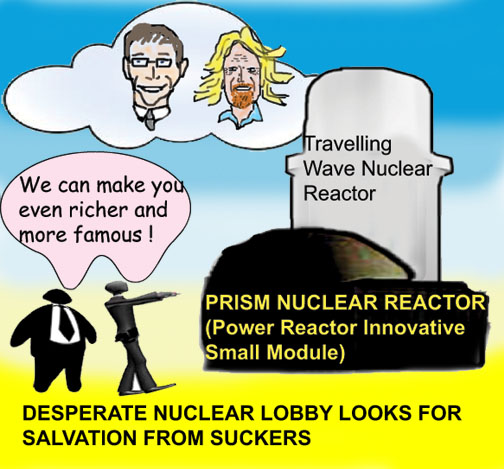 Why Bill Gates Is Hugely Misinformed About Renewables & Loves Impractical Nuclear, Clean Technica August 11th, 2016 by Zachary Shahan There’s a problem in human logic that creeps in on a regular basis, and that I would say always has and always will. If someone is very successful in one area of business or life, we have a tendency to give their opinion too much weight in other areas. This happens even more so when someone is highlighted as “extremely smart” or “a genius.” Granted, with regards to some topics that are on the surface “outside of their areas of success,” but maybe have loose but important connections, we probably should give their opinion a bit more weight than the average human or humanoid. However, we have a tendency to do so far too much, and with topics that they really don’t have legitimate expertise in.
Regarding the broad topic of energy, a couple of notable people who get a lot of attention for their anti-renewables opinions are billionaire Bill Gates and highly renowned climate scientist James Hansen. I’ve illuminated their mistakes in logic in several articles, but I’ve never really known why these two people have been so anti-renewables and pro-nuclear in recent years.
Andrew Beebe apparently uncovered a (or the) key reason for Bill’s bias (h/t Greentech Media), and it’s surprisingly simple and superficial. In this piece, I’ll tackle that a little bit, highlight the huge underlying mistakes, and wax poetic write boringly about the role of media and genuine experts in spreading good information in a world of TMI (too much information).
The Curious Case of Bill Gates & Energy “Information” Andrew Beebe, in his efforts to decode the “energy bug” Bill Gates has in his logic, highlighted a key phrase that typically gets passed over: “The kernel of Gates’ mistake goes back to his reliance on ‘the top scientists.’ “……The future is solar- and wind-powered electric vehicles. If Bill Gates, Vaclav Smil, and James Hansen don’t see that, they need to read more CleanTechnica. The future isn’t even up for debate — the future is arriving. http://cleantechnica.com/2016/08/11/bill-gates-hugely-misinformed-renewables-loves-impractical-nuclear/
Focus on Nuclear at World Social Forum
NUCLEAR FORUM AT WSF HIGHLIGHTS WASTE PROBLEMS , West Mount Magazine, By Byron Toben, 18 Aug 16
Shake hands with the Devil, who, in George Bernard Shaw’s 1903 masterpiece Don Juan in Hell, points out that…
In the arts of Peace, Man is a bungler. But in the arts of war, man is a true genius.
Only he could invent the maxim machine gun, the submarine and (even now is seeking to unlock)
The hidden molecular energies of the Universe…
Note that this was written two years before Einstein (who later became a friend of Shaw) announced E=mc2 and the race toward an atomic bomb, culminating in Little Boy devastating Hiroshima on August 6, 1945, followed by Fat Man doing same to Nagasaki three days later.
In the interim 71 years, much has transpired in nuclear arms growth, the expansion of nuclear plants for use for power and concomitant protest groups. Suffice it to say, nuclear myths of clean, safe and inexpensive have been gradually discredited and new plant construction has ceased. So the focus has shifted to nuclear waste disposal, which is no easy matter as the stuff has half-lives of thousands of years.
Professor Gordon Edwards (Hampstead, Quebec) head of the Canadian Coalition For Nuclear Responsibility (CCNR) one of the key speakers at this nuclear forum, (which consisted of 12 workshops. the most numerous of the hundreds of other themed subjects at the recent World Social Forum) opined that we have left the nuclear age and are now in the nuclear waste age.
What are the industry’s plans to get rid of the waste? There are none. There are only plans to package it, transport it and dump it somewhere. But the packaging is inadequate, the transport doubly dangerous and no feasible mid or long-term dumps nominated.
Thus, by default, the best approach, for now, is to leave the waste in situ with constant monitoring.
Edwards even dislikes the term “disposal” as it implies a final solution. He prefers the term “abandonment”, which is dangerous as it leads to amnesia as to where burial sites may be and over time, loss of technical expertise or knowledge of geographic locations……abandonment requires institutional safeguards of regular inspection by trained personnel and funding to boot, which can persist despite political changes.
Other key participants ……
GUIDING SPIRITS (MOSTLY WOMEN)
Karen Silkwood, a nuclear union activist and whistle blower, whose mysterious death in 1976 spawned a movie about her. She had alleged corruption and lax safety standards at the McGee-Kerr facility in Oklahoma.Rosalee Bertell, a nun and mathematician, whose book No Present Danger documented the dangers of low level radioactive tailings, dumped mostly on native American lands.
Native lands were a target of nuclear waste producers, as all 50 states rejected such dumps and the selection of Yucca mountain was rejected as being in an earthquake one and near underground aquifers.
Many native persons have protested this practice. Two of note are the late Grace Thorpe (daughter of great Olympics athlete Jim Thorpe) and Winona La Duke, twice US vice presidential candidate for the Green Party with Ralph Nader.
Apparently, women are more prone to nuclear exposure ailments than men by a 2-3 times ratio.
CURRENT LAWSUIT
On the last day of this Nuclear Forum, a lawsuit was filed in federal courts to delay the pending shipments of dangerous nuclear waste by truck and barge, without public consultation on secret routes, mostly thousands of miles to South Carolina. Readers who wish to read the court document can contact me through this web site at info@westmountmag.ca http://www.westmountmag.ca/nuclear-forum/?utm_source=Westmount+Magazine+Newsletter&utm_campaign=c961272cc5-2016-08-18&utm_medium=email&utm_term=0_5b5eeef0cc-c961272cc5-94434617&ct=t%282016-08-18%29&mc_cid=c961272cc5&mc_eid=d8693ec04e
“Small Nuclear” companies keen to market their wares to UK government
 Nuclear Developers Have Big Plans for Pint-sized Power Plants in UK, VOA News 18 Aug 16 “……NuScale, majority owned by U.S. Fluor Corp, is developing 50 megawatt (MW) SMRs using PWRs which could be deployed at a site hosting up to 12 units generating a total of 600 MW. The 50 MW units would be 20 meters (65 feet) tall, roughly the length of two busses, and 2.7 meters (9 feet) in diameter…..
Costs, viability questioned Critics, however, say there is no guarantee that SMR developers will be able to cut costs enough to make the plants viable.
“SMR vendors say factory production will save a lot of money, but it will take a long time and a lot of units to achieve what they are calling economies of mass production,” said Edwin Lyman, nuclear expert at the U.S.-based Union of Concerned Scientists (UCS). “Factory manufacture is not a panacea. Just because you are manufacturing in a factory, it doesn’t mean you are certain to solve problems of cost overruns,” he said…..
But anti-nuclear green groups such as Greenpeace argue that with advances in renewable technology, such as offshore wind, Britain may not need any new nuclear plants.
This week Britain approved Dong Energy’s plans to expand an offshore wind farm project that could ultimately span an area of the North Sea more than twice the size of London and produce up to 4 GW of electricity, more than Hinkley Point……..
Britain said this year SMRs could play an important part in the country’s energy future, and committed 250 million pounds to research, including a competition to identify the best-value SMR design for the country.
NuScale, Rolls Royce and Toshiba Corp’s Westinghouse were among 33 companies the government has identified as eligible for the competition. The Department for Business, Energy & Industrial Strategy has given no further details and had no further comment on SMRs. http://www.voanews.com/a/britain-nuclear-power/3470331.html
UK Tories waking up to the diseconomics of nuclear power
 UK Tories wake up to nuclear folly, as wind and solar found to be cheapest http://reneweconomy.com.au/2016/uk-tories-wake-up-to-nuclear-folly-as-wind-and-solar-found-to-be-cheapest-92800 By Giles Parkinson on 16 August 2016
The fact that the cost of wind and solar is falling and the cost of nuclear is moving in the opposite direction is of little surprise to anyone involved in the energy markets, even if the nuclear industry and its supporters wish it were not so. But it is news, apparently, to the Tories.
New data uncovered from a previously unheralded National Audit Office report shows that the UK government is now advised that the cost of wind and solar could be around half that of new nuclear by 2025 – between £50-£75/MWh compared to between £80 and £125/MWh for nuclear.
The Guardian reported that previous forecasts, made in 2010 and 2013, showed that the two renewable technologies were expected to be more expensive than nuclear or around the same cost by the time that Hinkley was built. This is the first time the government has shown it expects renewables to be a cheaper option.
The Hinkley Point nuclear project has already blown out in costs and relies on significant government guarantees and subsidies over and above the £92.50/MWh tariff it promises to pay should it ever get built. That tariff then rises with inflation over the course of the 35-year contract, meaning it could more than double in price by 2050, even as the cost of wind and solar fall even further.
“The [energy] department’s forecasts for the levelised cost of electricity of wind and solar in 2025 have decreased since 2010. The cost forecast for gas has not changed, while for nuclear it has increased,” the NAO said, with a degree of understatement. The detailed energy department findings have yet to be released…..
Before the Brexit vote, the UK Tories had appeared entirely smitten by new nuclear, despite the evident folly of the project, which had not just blown out in cost from £16 billion to £24.5 billion, but because of the falling price of wholesale electricity, would require a lifetime subsidy of £29.7 billion compared to original estimates of £6.1 billion.
As Bridget Woodman from the University of Exeter wrote recently, accommodating Hinkley meant that the UK government had to essentially redesign the electricity market over the past few years in an effort to create a situation where investment in a new plant looked attractive.
“Pretty much every major policy design has been geared towards creating a perfect environment for Hinkley Point C. That’s why it’s such a surprise to see the government has now stepped back – a bit – from the brink,” she wrote.
And what the UK government was proposing to build was in sharp contrast to what is being recommended. The head of National Grid, for instance, had last year called for a complete rethink about the nature of energy systems.
“The idea of baseload power is already outdated,” he told Energy Post.
“I think you should look at this the other way around. From a consumer’s point of view, baseload is what I am producing myself. The solar on my rooftop, my heat pump – that’s the baseload.
“Those are the electrons that are free at the margin. The point is: this is an industry that was based on meeting demand. An extraordinary amount of capital was tied up for an unusual set of circumstances: to ensure supply at any moment. This is now turned on its head.”
Those thoughts are now being echoed by other experts. David Elmes, the head of Warwick Business School Global Energy Research Network, wrote in the UK edition of The Conversation that the UK had painted itself into a corner, and needed to get over the idea that megaprojects were the solution to everything.
“Instead, it should think of a new mix between smaller and larger, be more joined up in considering consumption as well as supply and think more decentralised than central. That expands the industries, companies, institutions and government departments involved.”…… http://reneweconomy.com.au/2016/uk-tories-wake-up-to-nuclear-folly-as-wind-and-solar-found-to-be-cheapest-92800
Environmental concerns about the Olympic Games
 This article looks at Brazil’ s environmental situation, particularly regarding the Amazon forest.
I wonder what concerns will be raised for the next Olympics – 2020 in Tokyo ?

2016 Olympic Games and the environment, Independent Australia 16 August 2016, Dr Anthony Horton questions how much consideration is given to environmental considerations when Olympic Games host cities are selected.
RECENT MEDIA ATTENTION on the parlous state of the environment in the vicinity of the Rio de Janeiro Olympic Games sites, and Brazil more generally, piqued my interest in researching the extent to which environmental issues are taken into account when deciding which city hosts the Olympic Games.
A report entitled ‘The 2016 Olympic Games: Health, Security, Environmental and Doping Issues’ published by the United States Congressional Research Service on 28 July 2016, highlights the environmental commitments made by the Rio de Janeiro Organising Committee for the 2016 Olympic Games and the assessment process that each city must successfully navigate in order to be awarded the right to host the Games.
This report was quite an eye opener for me and after considering the findings, I can only conclude that environmental concerns must be more heavily weighted in future decisions regarding which city hosts the Olympic Games…….
Based on the Congressional Research Service report and the Council on Foreign Relationsinteractive report, I cannot help but conclude that environmental concerns must be more heavily weighted in future decisions regarding which city hosts the Olympic Games. https://independentaustralia.net/life/life-display/2016-olympic-games-and-the-environment,9359
UK: renewables far better value for tax-payers than nuclear is
UK green energy sector needs nurturing over nuclear, Guardian, Larry Elliott, 16 Aug 16,
Technological advances mean the cost of renewables is coming down, representing far better value for taxpayers’ money
ritain’s need for a coherent long-term energy strategy has been woefully neglected by governments of both left and right. One example is the furore over the plan for a new and hugely expensive nuclear power station atHinkley Point. Another is provided by the latest official statistics on the sort of energy the UK uses and where it comes from.
The good news is that Britain is consuming 17% less energy than it was in 1998, and more of what is used is coming from renewable sources. But don’t get too excited. Green energy has increased from 1% of the total to just 9%……
The way forward is obvious. Put energy policy at the heart of the new industrial policy. Technological advances mean the cost of renewables are coming down all the time, and they represent far better value for taxpayers’ money than Hinkley Point C. The government should use tax breaks, procurement and its ability to borrow long-term at historically low interest rates to nurture a new green energy sector. This should have been done years ago, but it is not too late. https://www.theguardian.com/business/economics-blog/2016/aug/15/uk-green-energy-sector-needs-nurturing-hinkley-point-nuclear
1 This Month
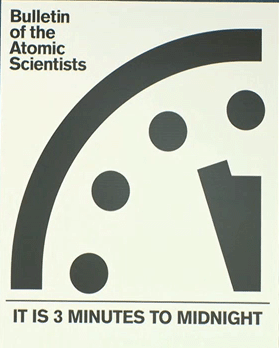
Watch the 2026 Doomsday Clock unveiling live here on January 27 at 10 a.m. EST
To see nuclear-related stories in greater depth and intensity – go to https://nuclearinformation.wordpress.com/

29 Jan. Thursday 7-8 p.m. Webinar – World’s Largest Nuclear Station in Port Hope, ON?

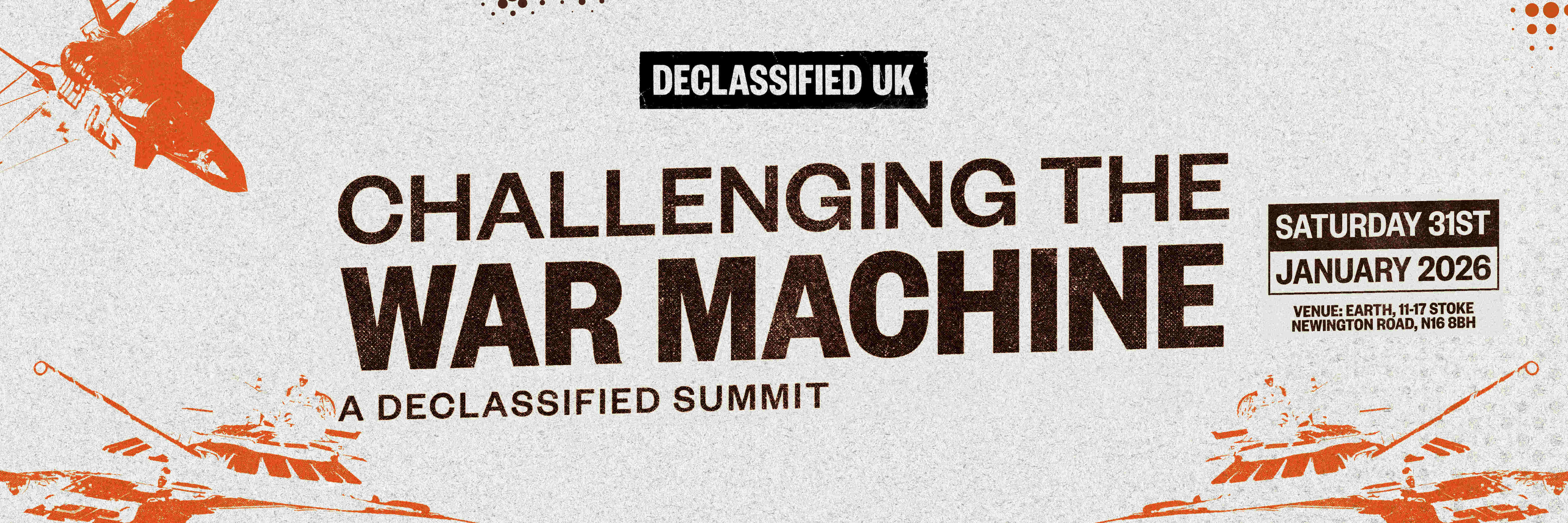
31st January – Challenging the War Machine – a DECLASSIFIED UK SUMMIT


Website of the Week
Now until to February 10, 2026 Radioactive waste storage in France: the debate is finally open! How to participate?
-
Archives
- January 2026 (277)
- December 2025 (358)
- November 2025 (359)
- October 2025 (376)
- September 2025 (258)
- August 2025 (319)
- July 2025 (230)
- June 2025 (348)
- May 2025 (261)
- April 2025 (305)
- March 2025 (319)
- February 2025 (234)
-
Categories
- 1
- 1 NUCLEAR ISSUES
- business and costs
- climate change
- culture and arts
- ENERGY
- environment
- health
- history
- indigenous issues
- Legal
- marketing of nuclear
- media
- opposition to nuclear
- PERSONAL STORIES
- politics
- politics international
- Religion and ethics
- safety
- secrets,lies and civil liberties
- spinbuster
- technology
- Uranium
- wastes
- weapons and war
- Women
- 2 WORLD
- ACTION
- AFRICA
- Atrocities
- AUSTRALIA
- Christina's notes
- Christina's themes
- culture and arts
- Events
- Fuk 2022
- Fuk 2023
- Fukushima 2017
- Fukushima 2018
- fukushima 2019
- Fukushima 2020
- Fukushima 2021
- general
- global warming
- Humour (God we need it)
- Nuclear
- RARE EARTHS
- Reference
- resources – print
- Resources -audiovicual
- Weekly Newsletter
- World
- World Nuclear
- YouTube
-
RSS
Entries RSS
Comments RSS
 nuclear-news