NUCLEAR-ARMED RIVALRY IN SOUTHERN ASIA
|
NUCLEAR-ARMED RIVALRY IN SOUTHERN ASIA, Arms Control Wonk,by Michael Krepon | December 13, 2020 “……….. Deterrence alone doesn’t make nuclear-armed rivals safer because nuclear deterrence is based on credible threats and because these threats generate counter-measures. Nonetheless, rivals continue to compete, either in search of advantage or to avoid disadvantage.The threat of escalation is inherent in nuclear deterrence since threats that do not convey the potential for greater violence cease to deter. Herein lies an insoluble problem for nuclear deterrence strategists. How can escalation be controlled when it is premised on seeking advantage?
o resolve this conundrum, deterrence strategists must on truly heroic assumptions. One assumption is that nuclear-armed rivals can signal each other effectively because they have sufficient information and are on the same page. Another assumption is that command and control remains intact and that there will be no panic and unauthorized use of nuclear weapons. A third assumption, most heroic of all, is that the disadvantaged side will accept loss without resorting to spasm attacks that seek to destroy cities that are the repositories of world history. These are the unspoken and mostly unexamined assumptions behind the deterrence constructs of escalation control and escalation dominance. These are the rationales behind the fielding of counterforce capabilities that target opposing nuclear capabilities. These intellectual constructs can collapse like a house of cards after first use. After first use, nuclear-armed rivals may not be on the same page. Even if a rival chooses escalation control instead of escalation dominance, this targeting strategy has to be backed up by the threat of further escalation. And then what? This systemic problem applies to all nuclear-armed rivals, but is even more pronounced on the subcontinent because one of the rivals — India — has declared a policy of massive retaliation in the event of first use by Pakistan. This declaration is meant to deter, but if deterrence fails, this nuclear posture skews decisions toward a cataclysmic outcome whether or not this declaratory doctrine is a ruse. After first use, massive retaliation looses its deterrent value, becoming instead an existential threat to both rivals. India’s embrace of massive retaliation is as dangerous as Pakistan’s embrace of first use. The intellectual constructs of escalation control, escalation dominance, and massive retaliation work on the printed page and in war plans but are likely to fail catastrophically once the nuclear threshold is crossed and retaliation begins. Once nuclear deterrence dies, escalation takes over……….. Washington and Moscow have accomplished much by way of treaties in part because they accepted roughly equivalent capabilities. Essential equivalence is harder to imagine or to accept in bilateral accords between India and Pakistan or between India and China. A numbers-based, bilateral India-Pakistan or India-China treaty requires not only rough equality or an acceptable hierarchy but also acceptable and effective monitoring arrangements. These are significant hurdles. Trilateral China-India-Pakistan accords also seem very unlikely, since India would be outnumbered and since triangular nuclear competitions are prone to instability. Other treaty-based avenues to stabilize the triangular competition in Southern Asia also face long odds. Multilateral diplomacy on a fissile material cut-off treaty is moribund. India and Pakistan have not signed or ratified the Comprehensive Test Ban Treaty; China has signed but not ratified. The United States could prompt a cascade of stabilizing ratifications, but this seems a tall order in the Biden administration, given the partisan divide on Capitol Hill. ……………. Because deterrence dies with first use, the most essential responsibility for those who possess nuclear weapons is not to use them in warfare. The stigma attached to nuclear testing reaffirms the norm of non-use. Diplomacy can be resurrected atop these norms, which are the fundamental building blocks for other measures of reassurance. As numbers grow, norms become even more important. At a time when political relations are sour and diplomacy is dormant in Southern Asia, extending the 75-year-long norm of non-battlefield use and the norm against testing, now over two decades long, are absolutely central. https://www.armscontrolwonk.com/archive/1210453/nuclear-armed-rivalry-in-southern-asia/ |
|
Concerns about Holtec taking ownership of Palisades nuclear plant – public meeting this week

 Public meeting about ownership change for Palisades nuclear plant comes this week, By STEVE CARMODY • DEC 6, 2020
This week, federal regulators will hold a public meeting to discuss plans to transfer the operating license for the Palisades nuclear power plant.
Entergy Corp. agreed to sell the aging nuclear plant in southwest Michigan to Holtec Intl. in 2018. ………
If the Nuclear Regulatory Commission approves the license transfer, the Camden, New Jersey based company will oversee the decommissioning of Palisades starting in 2022.
“The problem with Holtec is they’re going to try to do as little clean up as they can get away with,” says Kevin Kamps with Beyond Nuclear, a nuclear waste watchdog, “They’re going to take as many short cuts on high level waste management as they can get away with…and then pocket all the remaining money.”
Kamp wants to see state and local officials play a greater role in decommissioning plans and potential future uses for the site on the shores of Lake Michigan.
Legislation to create a “Nuclear Decommissioning Citizens Advisory Panel” has stalled in a state House committee. …..https://www.michiganradio.org/post/public-meeting-about-ownership-change-palisades-nuclear-plant-comes-week
Nuclear power simply cannot be relied on.
government; CNIC Statement: We condemn the hasty decision to restart Onagawa Nuclear Power Plant Unit 2; Cultivation trials using contaminated soil with no soil cover
Small Modular Reactors would create a Large Problem of Nuclear Wastes
 Nuclear has fewer emissions than other sources of power? Think again! https://www.thestar.com/opinion/letters_to_the_editors/2020/12/02/nuclear-has-fewer-emissions-than-other-sources-of-power-think-again.html Evelyn Gigantes, Ottawa, Wed., Dec. 2, 2020 – “Nuclear a source of clean energy, waste still a problem to be solved, “
There is more than one problem with nuclear (energy).
It is not true that nuclear produces no carbon emissions once it is in operation. The problem is not just the highly dangerous waste, itself, but the fact that dealing with the waste would necessarily involve enormous amounts of machine-handled waste packaging, transportation, construction and maintenance, each of which would produce significant carbon emissions.
To claim that the “only” problem with nuclear is the unsolved waste problem is to sneakily promote more nuclear development: witness the new campaign by the nuclear industry and its backers to start a new building program of so-called SMRs (small modular reactors), some fuelled by recycled high-level nuclear fuel waste and producing more radioactive waste than current CANDU reactors.
You think we have waste problems now?
Nuclear reactors are NOT clean, and NOT zero-emission
 Nuclear reactors are most certainly not clean and not zero-emission, https://www.thestar.com/opinion/letters_to_the_editors/2020/12/02/nuclear-reactors-are-most-certinly-not-clean-and-not-zero-emission.html?li_source=LI&li_medium=star_web_ymbii Nuclear reactors are most certainly not clean and not zero-emission, https://www.thestar.com/opinion/letters_to_the_editors/2020/12/02/nuclear-reactors-are-most-certinly-not-clean-and-not-zero-emission.html?li_source=LI&li_medium=star_web_ymbii
Ole Hendrickson, OttawaWed., Dec. 2, 2020 Nuclear a source of clean energy, waste still a problem to be solved, Nov. 26
I was surprised by the statement in this article that “from a greenhouse-gas (GHG) and air-quality perspective, nuclear power is very clean. Once construction is complete, nuclear is a zero-emission technology.” Nuclear reactors are not clean and not zero emission. During operation, they routinely emit radioactive gases. Increasing health risks for nearby residents, CANDU heavy water reactors emit more tritium and carbon-14 than light water reactors. Nuclear reactors produce solid and liquid wastes in addition to gaseous radioactive wastes. Highly toxic fuel-waste products, such as plutonium, require isolation from the environment for hundreds of thousands of years. As well, greenhouse gases are generated during nuclear reactor construction, operation, dismantling and disposal, and during uranium mining and processing, fuel fabrication and waste management. |
30-day public consultation about UK’s Sizewell nuclear reactor project
BBC 18th Nov 2020, Bosses behind a new nuclear power station have told local communities they
are “listening” after making “important” changes to the plans. The
government is close to approving construction of Sizewell C in Suffolk. EDF
Energy has pledged to increase rail and sea deliveries during construction
and reduce the plant’s impact on local beauty spots. Alison Downes from the
Stop Sizewell C campaign said the project was “ridiculously expensive”. A
30-day public consultation starts on Wednesday.
Biden Transition Announcements largely skirt nuclear power, waste issues
|
Biden Transition Announcements Largely Skirt Nuclear Power, Waste Issues
BY EXCHANGEMONITOR, 13 Nov 20
President-elect Joe Biden unveiled his transition team this week, and though the landing team bound for the Department of Energy was 20 deep and stacked with nuclear-savvy ex-DOEers, the announcement revealed little about the incoming chief-executive’s thinking… (subscribers only) https://www.exchangemonitor.com/biden-transition-announcements-largely-skirt-nuclear-power-waste-issues/
|
|
U.S. Nuclear Bomb Overseer Quits After Clash With Energy Chief
|
U.S. Nuclear Bomb Overseer Quits After Clash With Energy Chief By Ari Natter
and Jennifer Jacobs7 November 2020,
|
Renewables, not nuclear, are the solution, for a cleaner world.
|
Nuclear power, lauded as a solution for a cleaner world, hits a snag, Market Watch, By Jurica Dujmovic Oct. 30, 2020 There’s a growing push for nuclear-power generation as a choice for countries trying to wean themselves off fossil fuels and reduce their carbon footprint. But new research suggests there are potential downsides.For many scientists — and Bill Gates — nuclear energy is part of the answer to the world’s climate-change problem.
The market for nuclear power could triple by 2050 across the world, according to a recent study by Third Way, a U.S.-based think tank. There are more than 60 advanced reactor designs in development in the U.S., the Atlantic Council, a U.S. think tank, said in a paper. However, a recent study published in Nature Energy provides a different view. Scientists who conducted the study collected data from 123 countries over a 25-year period, examining how the introduction of either nuclear-power or renewable-energy sources affects each country’s levels of carbon emissions. The results show that a larger-scale national investment in nuclear-power plants not only fails to yield a significant reduction in carbon emissions, it actually causes higher emissions in poorer countries that implemented this strategy. For renewables, the opposite is true — in certain large country samples, the relationship between renewable energy and reduction in CO2-emissions is up to seven times stronger than the corresponding relationship for nuclear power. It is interesting how consistent the results are across different time frames and country sets. The study also found that trying to use both nuclear and renewable energy actually reduces the effectiveness of both, and that the “do everything” approach isn’t the most effective way to reduce a country’s carbon footprint. The reason for this is that both energy sources require significant enhancements of electric-grid structures, as well as regulatory adaptations that later make it difficult for a country to switch to a different model. A heavily centralized nuclear option that requires significant initial investment is vastly different from small-scale distribution patterns and investment requirements that characterize renewables. Implementation of one over the other locks the country in a certain pattern that pushes out the alternative or makes it comparatively harder for it to take root. As a comment on the research, Benjamin K. Sovacool, professor of energy policy in the Science Policy Research Unit at the University of Sussex Business School, said: “The evidence clearly points to nuclear being the least effective of the two broad carbon emissions abatement strategies, and coupled with its tendency not to co-exist well with its renewable alternative, this raises serious doubts about the wisdom of prioritizing investment in nuclear over renewable energy. Countries planning large-scale investments in new nuclear power are risking suppression of greater climate benefits from alternative renewable energy investments.” ……. https://www.marketwatch.com/story/nuclear-power-may-not-be-a-good-option-for-a-cleaner-world-11604056821 |
|
Small nuclear reactors pose a financial danger to municipalities – Utah Taxpayers Association
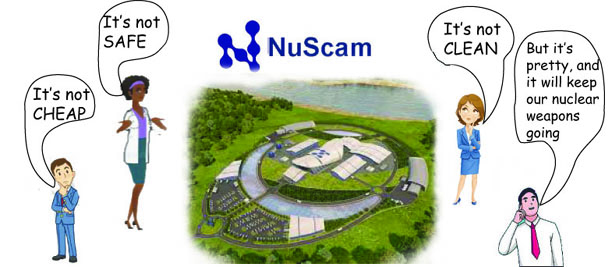 “……….The Utah Taxpayers Association doesn’t have a stance on nuclear energy, but it opposes the possible financial risks to municipalities involved in the project, said Vice President Rusty Cannon.
“We don’t think these municipal power companies should be acting as seed investors essentially,” he said.
Cannon said his organization, which has led opposition to the initiative in Utah, is concerned that the costs of a ballooning nuclear test run will be tossed onto the Utah cities investing in the project, or more broadly, onto taxpayers.
“We understand that these municipal power companies need to plan for baseload power in the long term,” he said. “We just feel like if this project is going to succeed, it should be funded by private money.”
The criticisms from the association’s webpage call on citizens to urge their elected officials to withdraw from the project, and Cannon said quite a few have. The association evokes a string of failed or heavily delayed nuclear power projects across the country…….
“………..As the project seeks more subscribers, Webb said UAMPS is hyperaware that failure of the project could have widespread repercussions.
“This does represent the next generation of nuclear,” Webb said. “Many, many people are watching it very carefully because if this project isn’t successful then it does set back new nuclear.” From NevadaCurrent, 30 Oct 20, Two Nevada towns among those betting on ‘new nuclear’
Nearly 30 US states see renewables generate more power than either coal or nuclear coal
Nearly 30 US states see renewables generate more power than either coal or nuclear coal Nationwide, renewables accounted for 20.8% of US electrical generation during the first eight months of 2020, ahead of 19.4% from nuclear and 18.4% from coal, Energy Live News 30 Oct 20,
The SUN DAY Campaign’s Executive Director Ken Bossong said: “Falling wind and solar costs, renewable portfolio standards, and ever-greater concerns about climate change, are driving a transition away from coal and nuclear power in a majority of the states.
“If current patterns continue – or even accelerate – it will not be many years more before coal and and nuclear are relegated to niche markets by the mix of renewable energy sources.” https://www.energylivenews.com/2020/10/30/nearly-30-us-states-see-renewables-generate-more-power-than-either-coal-or-nuclear/Energy Live News,
nuclear are relegated to niche markets by the mix of renewable energy source
Irish government welcomes 50th ratification of the Treaty on the Prohibition of Nuclear Weapons.
Statement by (Irish) Minister on the 50th Ratification of the Treaty on the Prohibition of Nuclear Weapons.
Irish Dept of Foreign Affairs 25th Oct 2020, I am pleased that the 50th instrument of ratification of the Treaty on the Prohibition of Nuclear Weapons was deposited yesterday, meaning the Treaty will enter into force on 22 January
2021.
Ukraine on the Brink: Transforming Ukraine’s nuclear cities
Ukraine on the Brink: Transforming Ukraine’s nuclear cities, 26 Oct 20, This episode of the Ukraine on the Brink series shares the stories of the Ukrainians who are bringing green energy to two of Ukraine’s most well-known nuclear cities – Chornobyl and Slavutych. These innovative and ambitious solar energy projects are a ray of hope for the future of sustainable energy in Ukraine…… (Subscribers only) https://www.kyivpost.com/multimedia/video/ukraine-on-the-brink-transforming-ukraines-nuclear-cities?cn-reloaded=1
One hundred thousand years. Bure or the buried scandal of nuclear waste
France Culture 17th Oct 2020 The journalists Pierre Bonneau and Gaspard d’Allens publish “One hundred thousand years. Bure or the buried scandal of nuclear waste”, an edifying investigation in the form of a comic strip, a co-edition La Revue Dessinée and Le Seuil.
One hundred thousand years. Bure or the buried scandal of nuclear waste , it is the title of a comic strip published this week, a
comic resulting from the investigation of two journalists in this communeof the Meuse, which is the subject of a political battle virulent between the State and the inhabitants of the village and its surroundings for manyyears. How dangerous is nuclear waste? What is the limit between subjectivity and activism and why do a comic book survey?
Would careerist politicians allow nuclear weapons to remain in Scotland?
Would careerist politicians allow nuclear weapons to remain in Scotland? https://www.thenational.scot/news/18812281.weapons-must-not-allowed-remain/ Hamish Kirk 21 Oct 20, “SET date to get Trident out of Scotland” said your headline on Tuesday. Like many others I pin my hopes for a nuclear-free Scotland on the government of a soon-to-be independent Scotland. I am sure that I am not alone.
Nor am I alone in having fears that some of us will do a deal to lease Faslane to London and Nato. Of late, ripples have started to appear in the political water, with commentators like Trevor Royle and Gerry Hassan suggesting that a deal could be done to lease Faslane to London and allow them to park their nuclear obscenities there indefinitely.Nato has fans on our territory, and it would not take much to buy out some of the careerists I see exercising political power in Holyrood and Westminster.
Those who were very keen to endorse Nato will be at the front of the queue to sign a lease on Faslane. Let me ask two simple questions: “What is Nato for?” and “Why do we need nuclear weapons?”
1 This Month


Tell the Ukrainian Government to Drop Prosecution of Peace Activist Yurii Sheliazhenko

Petition to revoke the licensing of the Near Surface Nuclear Disposal Facility (NSDF) at Chalk River. https://www.ourcommons.ca/petitions/en/Petition/Details?Petition=e-7247


of the week – STOP SMALL MODULAR REACTORS IN CANADA
To see nuclear-related stories in greater depth and intensity – go to https://nuclearinformation.wordpress.com
-
Archives
- March 2026 (204)
- February 2026 (268)
- January 2026 (308)
- December 2025 (358)
- November 2025 (359)
- October 2025 (376)
- September 2025 (258)
- August 2025 (319)
- July 2025 (230)
- June 2025 (348)
- May 2025 (261)
- April 2025 (305)
-
Categories
- 1
- 1 NUCLEAR ISSUES
- business and costs
- climate change
- culture and arts
- ENERGY
- environment
- health
- history
- indigenous issues
- Legal
- marketing of nuclear
- media
- opposition to nuclear
- PERSONAL STORIES
- politics
- politics international
- Religion and ethics
- safety
- secrets,lies and civil liberties
- spinbuster
- technology
- Uranium
- wastes
- weapons and war
- Women
- 2 WORLD
- ACTION
- AFRICA
- Atrocities
- AUSTRALIA
- Christina's notes
- Christina's themes
- culture and arts
- Events
- Fuk 2022
- Fuk 2023
- Fukushima 2017
- Fukushima 2018
- fukushima 2019
- Fukushima 2020
- Fukushima 2021
- general
- global warming
- Humour (God we need it)
- Nuclear
- RARE EARTHS
- Reference
- resources – print
- Resources -audiovicual
- Weekly Newsletter
- World
- World Nuclear
- YouTube
-
RSS
Entries RSS
Comments RSS
 nuclear-news