Radioactive waste disposal in four words: “We do not know”.
Energy Transition 30th Oct 2018 Nuclear
waste will remain dangerous for more than 100,000 years – so what are
countries and producers doing to deal with this problem? Passing the buck,
apparently: so far, not a single facility to safely store spent nuclear
fuel has been created in Europe, or the world for that matter.
https://energytransition.org/2018/10/radioactive-waste-disposal-in-four-words-we-do-not-know/
Brazil’s new president will make it harder to limit climate change
New Scientist, By
It is being described as a catastrophe for the planet. The far-right winner of Brazil’s presidential election, Jair Bolsonaro, looks likely to further weaken protections for the Amazon rainforest and make the goal of limiting global warming to under 2°C even harder to achieve.
“If he carries through on his rhetoric we can expect tribal genocide, torture of dissidents, and climate-altering destruction of the Amazon forest,” tweeted Christopher Dick of the University of Michigan, who studies the rainforest. “This is a nightmare scenario.”
Bolsonaro has …(subscribers only) https://www.newscientist.com/article/2183842-brazils-new-president-will-make-it-harder-to-limit-climate-change/?utm_campaign=RSS%7CNSNS&utm_source=NSNS&utm_medium=RSS&campaign_id=RSS%7CNSNS-
Serious concern in nuclear industry over no-deal Brexit
 Utility Week 26th Oct 2018 , The Chief Executive of the Nuclear Industry Association has waned. Tom Greatrex says
the absence of a transition period could cause serious problems. Although
the UK and EU have already reached agreement over what their future
relationship should be, these plans would be scuppered if the wider deal
falls apart. With the free movement of workers and components at stake a no
deal Brexit is a serious concern.
https://utilityweek.co.uk/serious-concern-of-no-deal-brexit-scenario-in-the-nuclear-industry/
New global approaches needed to tackle climate change
FT 29th Oct 2018, For the past 20 years the orthodox response to the threat of climate change
has been focused on the search for a global agreement to reduce emissions.
Such an approach is entirely logical and rational. Climate change is a
global risk and so everyone should be involved in the response. The only
problem is that the approach has failed.
The Paris conference in 2015 brought people together and collected a range of loose promises from almost
every country in the world. Those promises in aggregate were inadequate, and some have already been forgotten as regimes have changed, not least in the US.
Many countries are taking action to mitigate climate change, but these actions don’t add up to an answer. Potential global solutions such as a universal carbon tax remain off the agenda. What is the alternative? The
best hope for limiting emissions comes from the application of science to
the energy market. That means finding sources of energy that can be made
available to all the world’s citizens, at a price they can afford, enabling
them to switch away from the carbon-intensive fuels such as coal that are
the main source of the problem. If politics cannot solve climate change,
perhaps science and economics can do better.
 New techniques to store renewable electricity would be a great advance making sustainable power
available worldwide. Dramatic gains in the efficiency of energy consumption
may also be within reach. And there could be other answers to be found if
we looked.
https://www.ft.com/content/217fff44-d2d6-11e8-a9f2-7574db66bcd5
California Governor Jerry Brown joins Bulletin of the Atomic Scientists in campaign against threats of nuclear war and climate change
Last week, the governor — whose term ends this January — announced that he’s accepted a position as the executive chairman of the Bulletin of the Atomic Scientists, a nonprofit that combats the risks of nuclear war and other threats to the world.
The Bulletin of the Atomic Scientists was founded in 1945 by researchers who worked on the atomic bomb. It published a regular magazine in which the scientists who built the bomb made the case for worldwide disarmament. Today, it publishes research on “manmade existential threats such as nuclear war, climate change, and disruptive technologies.”
The organization is best known for its Doomsday Clock, which the group updates annually to reflect the risks facing humanity. The clock currently says we are two minutes from midnight — the closest we’ve been since the Cold War to a disaster that could annihilate humanity……..
The Bulletin of the Atomic Scientists publishes research and updates on nuclear risk, climate change, and emerging risks to humanity from new technologies. All of those feature in their Doomsday Clock. In their 2018 statement, though, nuclear risks loomed largest. “Major nuclear actors are on the cusp of a new arms race,” the group wrote, “one that will be very expensive and will increase the likelihood of accidents and misperceptions. Across the globe, nuclear weapons are poised to become more rather than less usable because of nations’ investments in their nuclear arsenals.” …..
Brown and the team behind the Doomsday Clock are not alone in raising concerns about nuclear war and other threats.
The Global Challenges Foundation, which publishes an annual report on global catastrophic risks, named many of the same concerns that have driven the Doomsday Clock team to move us from six minutes to midnight in 2010 to two minutes to midnight today. Nuclear war is prominent among the risks they consider; they’re also worried about climate change, pandemics, AI, and threats we can’t yet anticipate — just like, 10 years before the atomic bomb, only a few scientists had any inkling it was possible. …….https://www.vox.com/future-perfect/2018/10/29/18038254/jerry-brown-nuclear-war-doomsday-clock-climate-change-existential-ris
Despite health dangers, Japan is sending residents back to irradiated Fukushima areas
|
Japan Continues Returning Residents to Fukushima Areas, Ignoring Health Risks, AFP 2018 / KAZUHIRO NOGI, Sputnik News, 27 Oct 18
The Japanese government is allowing residents to relocate back to nuclear radiation-stricken areas near its Fukushima nuclear plant despite calls from the United Nations to bring down radiation levels first before exposing women and children to the environment.
Following the powerful tsunami that left 18,000 Japanese citizens dead or missing in March 2011, the island nation also had to contend with the partial meltdown of several light-water nuclear reactors at Fukushima Daiichi Nuclear Power Plant, once among the 15 largest nuclear plants in the world. Baskut Tuncak, United Nations special rapporteur on hazardous substances and waste, said Thursday that people felt they were “being forced to return to areas that are unsafe, including those with radiation levels above what the government previously considered safe,” AFP reported. The government lifted permissible levels of radiation to 20 times higher than previous caps “almost immediately” after the tragic accident in Okuma, Fukushima Prefecture, according to Kevin Kamps, radioactive waste specialist with the watchdog Beyond Nuclear. The decision to moving the livable radioactivity level up from 1 millisievert to 20 millisieverts has drawn criticism. “This was a clear prioritization of downplaying the seriousness of the nuclear catastrophe, to the benefit of the Japanese nuclear power industry, at the expense of local residents’ health, safety and environment,” Kamps told Sputnik News Friday. Sieverts are used to measure the health effects of low levels of ionizing radiation on the human body. I would not feel comfortable returning to areas with lingering radioactivity levels 20 times what the Japanese government, prior to March 2011, considered ‘permissible’ or ‘acceptable,” Kamps said. Even one sievert is not safe, Kamps says, especially for children. “And now people are being exposed to 20 times those levels, meaning even significantly more risk to their health, safety and environment.” Some of the areas near the nuclear plants have been cleared for residents to return while other areas are still under evacuation orders because of the radioactivity……. https://sputniknews.com/environment/201810271069258308-japan-continues-residents-fukushima-ignoring-health-risks/ |
America’s decision to abandon arms control treaty would be a ‘dire threat to world peace’ – Gorbachev
| Mikhail Gorbachev decries US nuclear stance as ‘a dire threat to peace’ https://www.businesslive.co.za/bd/world/2018-10-28-mikhail-gorbachev-decries-us-nuclear-stance-as-a-dire-threat-to-peace/, Donald Trump withdrawing from a nuclear treaty signed in 1987 moves the former Soviet-era leader to say a nuclear war ‘cannot be ruled out’, 28 OCTOBER 2018 – ANDREW OSBORN, Moscow — On Friday, Mikhail Gorbachev, the last Soviet leader, denounced a US decision to leave an arms control treaty that helped end the Cold War, saying it heralded a new arms race which increased the risk of nuclear conflict.
US President Donald Trump has said Washington plans to quit the Intermediate-Range Nuclear Forces (INF) treaty, which Gorbachev and Ronald Reagan signed in 1987. The pact eliminated all short- and intermediate-range land-based nuclear and conventional missiles held by both countries in Europe. Gorbachev, in a column for the New York Times newspaper, said the US move was “a dire threat to peace” that he still hoped might be reversed through negotiations. “I am being asked whether I feel bitter watching the demise of what I worked so hard to achieve. But this is not a personal matter. Much more is at stake,” he wrote. “A new arms race has been announced.” Washington has cited Russia’s alleged violation of the treaty as its reason for leaving it, a charge Moscow denies. Russia, in turn. accuses Washington of breaking the pact. Stationing of US land-based nuclear missiles in western Europe provoked mass protests in the 1980s. Some US allies now fear Washington might deploy a new generation of them in Europe, with Russia doing the same in its exclave of Kaliningrad, once again turning the continent into a potential nuclear battlefield. If the US made good on its pledge to leave the treaty, Gorbachev said he hoped that US allies would refuse to be what he called launchpads for American missiles that Trump has spoken of developing. Russian President Vladimir Putin said on Wednesday that Russia would be forced to target any European countries that agreed to host US missiles. Gorbachev, however, said that any disputes about compliance could be solved if there were sufficient political will. It was clear, however, that Trump’s aim was to release the US from global constraints, he said, accusing Washington of destroying the “system of international treaties and accords” that underpinned peace and security after the Second World War. “Yet I am convinced that those who hope to benefit from a global free-for-all are deeply mistaken. There will be no winner in a ‘war of all against all’ — particularly if it ends in a nuclear war. And that is a possibility that cannot be ruled out. An unrelenting arms race, international tensions, hostility and universal mistrust will only increase the risk.”
|
Yet another nuclear front group pretending that nuclear is “clean”- Ohio Clean Energy Jobs Alliance
|
Perry forum will focus on group’s efforts to save Ohio’s nuclear power plants, News-Herald, By Bill DeBus bdebus@news-herald.com @bdebusnh on Twitter 28 Oct 18 A public forum will be held on Jan. 14 in Perry Village to highlight the efforts a statewide group that’s working to keep Ohio’s two nuclear power plants open.The Ohio Clean Energy Jobs Alliance is seeking a public policy solution that will save the Perry Nuclear Power Plant in North Perry Village and the Davis-Besse Nuclear Power Station in Oak Harbor Village, about 25 miles east of Toledo. Both plants, owned by FirstEnergy, are slated to close by 2021………
Discussions about the fate of the Perry Nuclear Power Plant have intensified since March 28, when FirstEnergy Solutions announced it would close three of its nuclear power plants, including Perry and Davis-Besse. In recent years, the plants have struggled to compete with the cheaper cost of natural gas. Three days after announcing the nuclear plant closings, FirstEnergy Solutions and FirstEnergy Nuclear Operating Co. filed for Chapter 11 bankruptcy. Earlier this month, the Ohio Clean Energy Jobs Alliance formed. The group stated that it will engage legislators, policymakers and the public to emphasize the employment, economic, environmental and grid reliability benefits provided by the state’s two nuclear power facilities. “We are here to urge our elected leaders to take the necessary steps to save the Davis-Besse and Perry nuclear power stations,”…..https://www.news-herald.com/news/lake-county/perry-forum-will-focus-on-group-s-efforts-to-save/article_84d0a3d4-d6e9-11e8-839a-bf10b844131f.html |
|
Majority of Ottawa candidates oppose Chalk River nuclear dump
Ottawa Votes: Majority of Ottawa candidates oppose Chalk River nuclear dump https://ottawasun.com/news/local-news/ottawa-votes-most-ottawa-candidates-oppose-nuclear-dump-at-chalk-river/wcm/2bb7d3a5-700f-49df-b49c-c12e914deb1e
The Leader in the Fight to Stop Yucca Mountain, Heller Demands Information on the Proposed Reclassification of High-Level Radioactive Waste
“As Nevada’s senior Senator and the person whose leadership has stopped Yucca Mountain from getting the green light, it is important that I ensure your Department’s proposed redefinition of high-level nuclear waste is not part of a larger ploy to defeat the will of Congress and the clear and consistent opposition of the State of Nevada,” wrote Heller. “As someone who has worked repeatedly with the Senate Appropriations Committee, the Senate Armed Services Committee, and Senate leadership to ensure that not a single dollar goes toward funding the failed Yucca Mountain project, I am troubled by any action, such as the reclassification of high-level nuclear waste, that could potentially be undertaken to disrupt or circumvent the restrictions on Yucca Mountain that I marshaled into law.
The full text of the letter can be found HERE or below:……….https://www.heller.senate.gov/public/index.cfm/pressreleases?ID=2A0F1C28-88A2-470C-BD01-3F9EEEB981C9
We can avoid catastrophic climate change, but it’s going to be really, really hard.
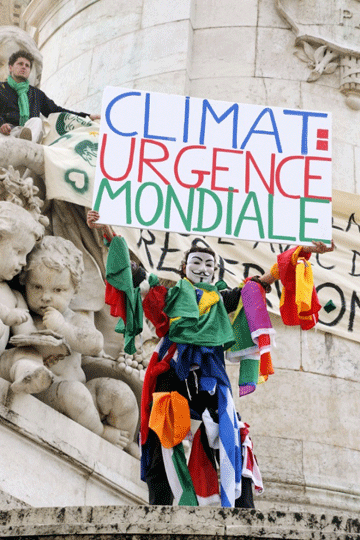 Independent 8th Oct 2018 , It’s easy to become numb to stories about climate change. The headlines
become more and more dramatic, the conclusions more terrifying, but it’s
such a big, unwieldy topic, and who has time to be constantly worried about
environmental Armageddon?
Hailed by the scientific community as a true game
changer, a moment for the history books, a new climate report from the UN
may have what it takes to pierce through this climate apathy. It’s not
because the conclusions are particularly new.
As the report is based on thousands of existing scientific studies, followers of environmental news
will already be familiar with stories of coral dying, sea ice melting and
Pacific islanders forced from their ancestral homes.
But the conclusions of this report seem particularly hard-hitting. Firstly because everything –
from melting ice to dying animals – is presented in one place, but secondly
because the outcome is so straightforward.
We can avoid catastrophic climate change, they say, but it’s going to be really, really hard. The
report has essentially come about because despite being a regarded as an
impressive feat of international diplomacy, the 2015 Paris climate
agreement is a bit vague. It set a target of limiting global warming to
“well below 2C above pre-industrial levels” while also “pursuing efforts”
for more ambitious reductions of 1.5C.
https://www.independent.co.uk/environment/climate-change-ipcc-report-un-global-warming-heatwaves-paris-agreement-donald-trump-a8573226.html
NRC Grants Key Approvals for S. Korea’s APR1400 Nuclear Reactor, Despite Widespread Construction Delays
*APR1400** Public Enquiry 6th Oct 2018
Power Mag 6th Oct 2018 Sonal Patel https://www.youtube.com/watch?v=fL5mnD6HrzA&feature=youtu.be
The Nuclear Regulatory Commission (NRC) has issued key safety and design
approvals for the Advanced Power Reactor 1400 (APR1400), a South Korean
third-generation nuclear reactor design. The U.S. regulatory body on
September 28 issued a final safety evaluation report and a standard design
approval (SDA) for the APR1400, which is designed by South Korean
state-owned companies Korea Electric Power Corp. (KEPCO) and Korea Hydro
and Nuclear Power Co. (KHNP).
The companies submitted a design
certification application for the APR1400 in December 2014.
Despite issuance of the safety evaluation report and SDA, the NRC has yet to
complete its certification process, however. The first of four APR1400
reactors under construction at the Barakah plant in the United Arab
Emirates (UAE) was completed this March, but commercial start-up has been
delayed to between the end of 2019 and early 2020, Nawah Energy Company,
the operator of the Barakah Nuclear Energy Plant, said in May 2018. The
delays are pegged to training issues. “The resulting projection for the
start-up of Unit 1 operations reflects the time required for the plants
nuclear operators to complete operational readiness activities and to
obtain necessary regulatory approvals,”
https://www.powermag.com/nrc-grants-key-approvals-for-s-koreas-apr1400-nuclear-reactor-despite-widespread-construction-delays/
Help Stop Radioactive Waste Dump and Thousands of Dangerous Shipments Across the US
If approved, opening this high-level waste dump would launch nation-wide transports of a total of 40,000 tons of irradiated reactor fuel (misleadingly known as “spent” fuel), to Texas from all over the country. The shipments are to be by rail, highway, and floating barge (even on Lake Michigan!). The planned-for thousands of such transports create risks for nearly everyone in the United States, because the ferociously radioactive material would pass near schools, hospitals, businesses, and farms, would travel on and over lakes, rivers, and waterways, and go through areas where our food is grown and where families live, play and work. Amazingly, no public meetings on the subject are planned in Texas or elsewhere.
Act now to stop this dangerous nuclear waste dump
Environmental and community right-to-know groups are demanding: 1) public meetings in Texas and along transportation routes across the country; 2) a halt to these transport and dumping plans; and 3) uniform publication of application and related materials in Spanish. You can add your voice to these urgent demands by writing to the US Nuclear Regulatory Commission (NRC) on the license application by WCS until Oct. 19th .
Tell NRC: Listen to the people! No mass radioactive waste shipments to Texas. Under WCS’s license application, the 40,000 tons of high-level waste from commercial power reactors could move on railroads, highways and even on waterways using barges for decades. Then, because the Texas site is supposedly “temporary,” after being shipped there the waste would have to be packed-up and transported again, to a “permanent” waste dump site — if one is ever approved. This means that new transportation and repackaging dangers will continue for additional decades.
For this reason, experts like D’Arrigo at NIRS and elsewhere recommend against any “interim” storage sites, and instead suggest storage on or near the reactors, until a permanent waste dump is opened.
The Texas region where WCS wants to store the waste (above-ground, and in the open) is prone to earthquakes, intense storms, extreme temperatures, and flooding. West Texas is not the place to store the most hazardous waste in the world.
Under the guise of “managing” this deadly waste from nuclear power reactors, the centralized temporary storage plan would make the problem worse, changing the country forever by ushering in an era of intensely deadly reactor waste transports everywhere, moving regularly through our major cities and rural communities.
Yet, the United States NRC does not want to fully consider the impacts of repeatedly transporting radioactive waste to or from the supposedly “temporary” site. Please tell the NRC to hold public meetings, to extend the comment and intervention deadlines, and to fully consider all the dangers from high-level waste storage and transport in the WCS Environmental Impact Statement (EIS).
You can email: WCS_CISF_EIS@nrc.gov.
A sample letter you could submit is available here.
A satirical look at America’s EPA and its new policies on ionising radiation
David Attenborough on climate change – ridiculed Donald Trump’s withdrawal from the Paris accord
The iNews 4th Oct 2018 David Attenborough ridiculed Donald Trump’s withdrawal from the Paris climate change accords saying the US’s ‘outdated’ position would be ‘overcome’ eventually as there is a groundswell of support for action across the world. Talking to BBC’s Newsnight the biologist and TV presenter said the Paris agreement showed nations had ‘come to their senses’ and Donald Trump’s attempts to roll back on the fight on climate change would be unsuccessful. He said: “I suppose actually up to five years ago I was really very, very pessimistic. The Paris agreement, as you say, seemed at the time to be, at last, nations coming to their senses.”
https://inews.co.uk/news/environment/david-attenborough-paris-agreement-climate-change-bbc-newsnight-interview-video/
1 This Month
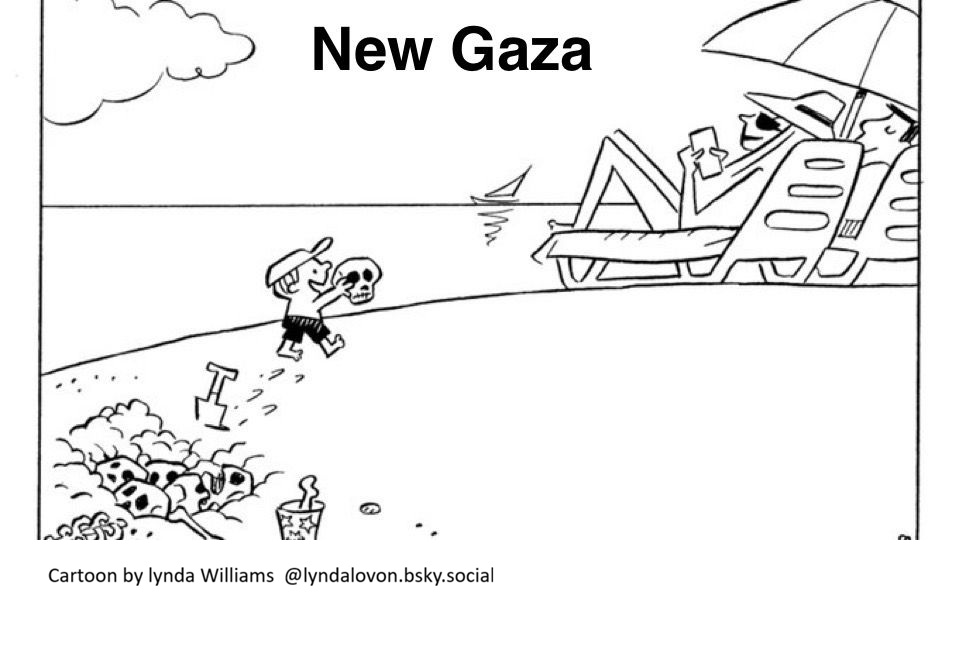
29 Jan. Thursday 7-8 p.m. Webinar – World’s Largest Nuclear Station in Port Hope, ON?
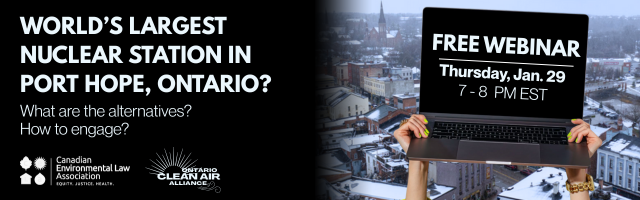

31st January – Challenging the War Machine – a DECLASSIFIED UK SUMMIT


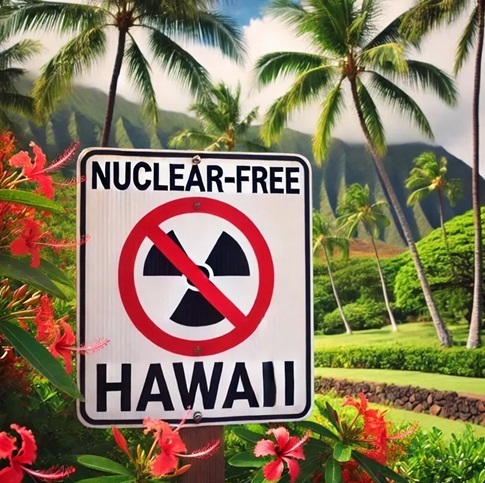
Website of the Week
Now until to February 10, 2026 Radioactive waste storage in France: the debate is finally open! How to participate?
-
Archives
- January 2026 (246)
- December 2025 (358)
- November 2025 (359)
- October 2025 (376)
- September 2025 (258)
- August 2025 (319)
- July 2025 (230)
- June 2025 (348)
- May 2025 (261)
- April 2025 (305)
- March 2025 (319)
- February 2025 (234)
-
Categories
- 1
- 1 NUCLEAR ISSUES
- business and costs
- climate change
- culture and arts
- ENERGY
- environment
- health
- history
- indigenous issues
- Legal
- marketing of nuclear
- media
- opposition to nuclear
- PERSONAL STORIES
- politics
- politics international
- Religion and ethics
- safety
- secrets,lies and civil liberties
- spinbuster
- technology
- Uranium
- wastes
- weapons and war
- Women
- 2 WORLD
- ACTION
- AFRICA
- Atrocities
- AUSTRALIA
- Christina's notes
- Christina's themes
- culture and arts
- Events
- Fuk 2022
- Fuk 2023
- Fukushima 2017
- Fukushima 2018
- fukushima 2019
- Fukushima 2020
- Fukushima 2021
- general
- global warming
- Humour (God we need it)
- Nuclear
- RARE EARTHS
- Reference
- resources – print
- Resources -audiovicual
- Weekly Newsletter
- World
- World Nuclear
- YouTube
-
RSS
Entries RSS
Comments RSS
 nuclear-news