Red Cross calls for nuclear disarmament – plans for Humanitarian Conference in December
 Remembering Hiroshima: Nuclear disarmament is a humanitarian imperative International Committee of the Red Cross, Geneva 06-08-2014 Statement Geneva (IFRC/ICRC) – The International Red Cross and Red Crescent Movement’s involvement in the nuclear debate dates back to the moment the first atomic bomb was dropped on Hiroshima. On 6 August, 1945, at 8.15am, there was a flash of light over the city and in an instant, tens of thousands of people were dead, hospitals and health centres were incinerated and the city was left in ruins.
But in the midst of this appalling devastation, one hospital survived. The Hiroshima Red Cross Hospital – which miraculously escaped complete destruction despite its closeness to the epicentre of the blast – began to fill with casualties. Yet, most equipment and medicine had been destroyed or was unusable, and many of its doctors and nurses had been killed or injured. But there was dedication, and there was help to come. Dr. Marcel Junod of the International Committee of the Red Cross heard of the devastation and became the first non-Japanese doctor to assess the event. His reports are a chilling account of what occurs in the aftermath of a nuclear detonation.
The issue of nuclear weapons has remained a serious concern of the International Red Cross and Red Crescent Movement for the past 69 years.
The issue of nuclear weapons has remained a serious concern of the International Red Cross and Red Crescent Movement for the past 69 years. We voiced our concern about the humanitarian impact of nuclear weapons after their use in Hiroshima and Nagasaki. As a result, in 1948 the 17th International Conference of the Red Cross and Red Crescent Movement adopted a resolution calling for the prohibition of atomic weapons. This was followed by a resolution of the 18th International Conference in 1952. Later resolutions also urged the prohibition of all weapons of mass destruction. ……..
States will continue to consider the consequences of nuclear weapons at the Third Conference on the Humanitarian Impact of Nuclear Weapons being hosted by the Government of Austria in December. The 2015 Review Conference of the Treaty on the Non-proliferation of Nuclear Weapons will also be an important moment for States to consider the discussions of the Oslo, Nayarit and Vienna meetings and to reflect on how best to advance nuclear disarmament. We hope that the States in these fora will take into account the Movement’s views on nuclear weapons and our calls for greater action in this area. The 2015 Council of Delegates and the International Conference of the Red Cross and Red Crescent will also be an opportunity to take stock of the Movement’s activities on this subject.
In closing, we believe that the coming year is a pivotal time in the discussions about nuclear weapons. We urge international and non-governmental organizations as well as the components of the Red Cross and Red Crescent Movement to redouble their efforts to raise awareness of the humanitarian consequences of nuclear weapons. We also urge all States to recognize that nuclear disarmament is a humanitarian imperative and to reflect on how to make significant progress towards a world without nuclear weapons.
Humanity has been fortunate that nuclear weapons have not been used since those tragic days in August 1945 and we must do all that we can to make sure that instances such as Hiroshima and Nagasaki never happen again.
Tadateru Konoe,
President, International Federation of Red Cross and Red Crescent Societies
Peter Maurer,
President, International Committee of the Red Cross http://www.icrc.org/eng/resources/documents/statement/2014/08-06-japan-hiroshima-atomic-bomb.htm
Who questions our Nuclear Experts’ beliefs when it come to risk taking?
CaptD 2014/08/07
 At some point, perhaps gross denial is best left for mental professionals with other types of training.
Case in Point, Japan is now suffering with a Trillion Dollar Nuclear Eco-Disaster, yet most nuclear experts and elected Officials consider that it, in effect, is “no big deal”:
Polluted Ocean, N☢ Problem, it will get better after a while….
Polluted Fields, N☢ Problem, they can remove the upper layer
Polluted Air, N☢ Problem, they can wear paper masks for a while
Polluted Food, N☢ Problem, they can mix the good to dilute the bad
Polluted Homes, N☢ Problem, they can power wash them clean
Polluted Schools. N☢ Problem, they can clean them
Polluted Cities, N☢ Problem, they can return soon…
The Fukushima disaster is an example of a case where something like a meltdown with a once per 100,000 years probably not only occurred, but occurred 3 times in less than a week!
Since many elected Leaders & Nuclear Professionals were “surprised” by Fukushima, perhaps SFGate would consider a followup Blog article, asking this question:
Are our Nuclear Power Plants really safe from whatever Nature can throw at them, because if they are not, then global Nuclear Regulators need to begin both internal and external studies ASAP to reevaluate Nuclear Safety before something occurs that we thought never would happen, AGAIN…
The USA is no different than Japan, where the Japanese nuclear Utility “Gangs” are telling the Government what to do, instead of the Government doing what the people want. President Obama has caved into supporting the nuclear industry instead of fast tracking Solar like Germany is doing and the result will be the USA falling further behind the rest of the World in GREEN (N☢N-Nuclear Energy generation and development!
Then there is always the real possibility of a US Fukushima, since Nature can destroy any land based nuclear reactor, any place anytime 24/7 then what?
Nuclear power is by no means “emissions free”
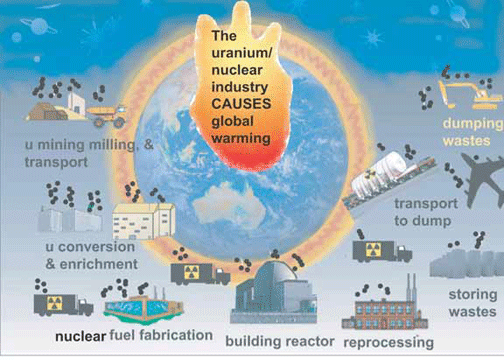 Nuclear power is hardly ’emission free http://www.desmoinesregister.com/story/opinion/readers/2014/08/05/nuclear-power-hardly-emission-free/13605607/ Dennis Harbaugh, Once again the Register has published a predictable essay by Carolyn Heising, where she trots out the same old line explaining how nuclear power is this country’s energy savior (“Climate Needs New Support for Nuclear Power,” July 27). Since she is an Iowa State University professor of nuclear engineering, this is no surprise. It’s her job.
It’s inexcusable, however, for her to continually describe nuclear power as “emission-free”. Nuclear power creates plenty of emissions, many of the fatal variety. In addition, each year nuclear power creates 2,000 metric tons of high-level radioactive waste and 12 million cubic feet of low-level radioactive waste in the U.S. alone.
One significant nuclear power accident in Iowa could wipe out millions of acres of productive farmland and endanger thousands of residents. Nuclear power is a dangerous gamble for Iowa, and it’s a risk that insurance companies absolutely will not take. When Heising can produce a single private insurance company willing to insure a nuclear power plant, then we can talk about nuclear power.
Until then, Iowa needs to continue to require investor-owned utilities to produce or buy 105 megawatts of truly renewable energy annually, without nuclear power.
Tanzanian government warned on the dangers of uranium mining
Tanzania Cautioned On Uranium All Africa 5 August 14 Dar es Salaam — The government has been advised to ensure it has in place a comprehensive safety policy on uranium that will guide the extraction, storage and transportation of the mineral. The advice comes as the government is encouraging serious investment in this mining sub-sector.
John Kaaya, an Arusha-based resident, called on the Tanzania Atomic Energy Commission (TAEC) and other related authorities to increase public awareness on the subject, particularly over the risks that are posed by uranium extraction……http://allafrica.com/stories/201408050124.html

How nuclear power is going out of style – charts from Vox
The rise and fall of nuclear power, in 6 charts, Vox by Brad Plumer on August 1, 2014, Nuclear power is slowly going out of style. Back in 1996, atomic energy supplied 17.6 percent of the world’s electricity. Today that’s down to just 10.8 percent — and it could drop even further in the years ahead. That’s according to the World Nuclear Industry Status Report 2014, which charts the rise and fall of nuclear power over time.
What’s more, nuclear power has been eclipsed by other energy sources — particularly coal and natural gas. Back in 1996, nuclear power provided 17.6 percent of the world’s electricity. Today, that’s down to around 10.8 percent………
The United States has also seen the early retirement of 5 nuclear reactors since 2012 — in Florida, Wisconsin, Vermont, and two in California. Some of those reactors were simply too pricey to keep open in the face of rising maintenance costs and competition from cheap natural gas and wind power………
The chart above [in original article] shows the number of “reactors under construction” worldwide. The number has grown since 2005 — and reached 67 in 2014. That’s way below the peak in the 1970s and 1980s.
It’s also worth noting that this number can mask many of the difficulties in building new reactors. Eight of those reactors have been “under construction” for more than 20 years — including the US Watts Bar Unit 2project in Tennessee, which began in 1972, was stalled for years and then restarted recently, missed a deadline in 2012, and is hoping to get connected to the grid by 2015.
All told, the report notes that 49 of those reactors under construction have met with significant delays, ranging from several months to several years. Nuclear reactors are expensive and take a long time to build. They can face all sorts of obstacles in the meantime — from cost overruns to complex licensing processes to regulatory hurdles to popular opposition (the latter recently blocked construction of two reactors in Taiwan).
“Past experience shows that simply having an order for a reactor, or even having a nuclear plant at an advanced stage of construction, is no guarantee for grid connection and power production,” the report notes….http://www.vox.com/2014/8/1/5958943/nuclear-power-rise-fall-six-charts
Cover-up of Fukushima effects parallels the cover-up of Hiroshima’s
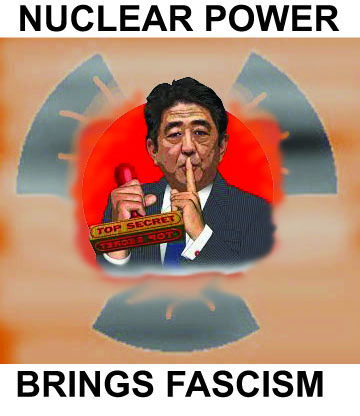 Fukushima disaster colors A-bomb anniversaries Parallels can be drawn between control of information during Occupation and today BY JASON BARTASHIUS JAPAN TIMES JUL 30, 2014 Over the past three years, the atomic bombing anniversaries in August have increasingly become a time to ask new questions. How did the only country to experience nuclear bombings come to embrace nuclear power, a decision that ultimately led to the ongoing crisis at the Fukushima No. 1 plant? Does Japan have the capability or political will to create its own nuclear arsenal? Is it morally acceptable to export nuclear technology to countries that are prone to natural disasters or may later decide to manufacture atomic weapons?
And what about censorship? Based in large part on its attempts at withholding or manipulating information related to the Fukushima disaster, the country has seen itself spiral down the Reporters Without Borders Press Freedom Index, falling a staggering 31 places between 2012 and 2013.
The situation can only worsen with the recent passage of the state secrets law. Will the law be used to keep important information regarding radiation and the safety of power plants secret? What impact will it have on anti-nuclear activism? And how do the new law, the overall lack of transparency and the handling of Fukushima compare to U.S. Occupation policies — especially those that squashed discussions of the atomic bombings?
One way history has repeated itself is in the way in which individuals and agencies have rushed to assure the public that radiation levels posed little or no threat to health………
As for the situation in Fukushima, the government hasn’t always been enthusiastic about radiation-related medical research. On Dec. 19, 2012, the Mainichi reported, “The Fukushima prefectural government has tried to kill a proposal by a local assemblyperson to store local children’s milk teeth to examine their internal radiation exposure stemming from the Fukushima nuclear disaster, it has been learned.” Fortunately, more recently, plans for a large-scale study to test milk teeth for cesium, strontium-90 and other isotopes were revealed to the public. But, understandably, the public has grown very suspicious of government involvement in research.
There are also parallels between the suppression of protests against the use of the atomic bomb by the U.S. and the potential for the state secrecy law to negatively impact upon the anti-nuclear movement……
orried about what impact the law may have on anti-nuclear activism. Johnston writes, “Receiving less attention is the question of whether ordinary citizens who are involved in anti-nuclear protests might be targeted and investigated under the new law.”
Koichi Nakano, professor of political science at Sophia University, is also concerned.
“You find a similar power with the Japanese government as existed during the U.S. Occupation,” Nakano said in an interview. “Self-censorship will become more prevalent. Journalists will censor themselves before asking questions. The activists who try to find out information about the nuclear industry may get in trouble, they may not, but they’ll worry about what they otherwise wouldn’t.” http://www.japantimes.co.jp/community/2014/07/30/voices/fukushima-disaster-colors-bomb-anniversaries/#.U9xcrONdUnk
Rolls Royce exposed workers to harmful radiation
Rolls-Royce pleads guilty to exposing workers to radiation at Derby site By Derby Telegraph July 30, 2014 ROLLS-ROYCE has admitted breaching safety regulations that led to employees being exposed to radiation.
The company’s Marine Power Operations business in Sinfin Lane faced seven charges in the case, which was brought by the Health and Safety Executive and the Environment Agency.
The charges centre on the management of risk of exposure of employees to ionising radiation from radioactive sources used in industrial radiography.
Derby Crown Court heard that a harmful radiation source was lost from its safety container when a test of a component was carried out…….. http://www.derbytelegraph.co.uk/Rolls-Royce-radiation-exposure-case-latest/story-22017839-detail/story.html#ixzz39Cl4Sfui
John Olver’s warning about America’s Nuclear Security
Last Week Tonight with John Oliver: Nuclear Weapons (HBO)
John Oliver Delivers Terrifying Warning on America’s Nuclear Security http://www.mediaite.com/tv/john-oliver-delivers-terrifying-warning-on-americas-nuclear-security/by Matt Wilstein | 9:30 am, July 28th, 2014 The latest on the increasingly long list of difficult topics out of which John Oliver has somehow managed to wring comedy is the security — or lack thereof — of America’s massive nuclear arsenal. The centerpiece of this week’s Last Week Tonightwas a solid 15 minutes of disturbing details on the many near-catastrophes over the last several decades in which this country nearly wiped itself off the map by accident.
Oliver began by demonstrating that Americans of the 1950s lived in constant fear of a nuclear attack from Russia, before arguing that today’s Americans should be just as fearful of something horrible happening without interference from another country. He noted that the U.S. currently has 4,804 nuclear warheads to secure and keep track of: “More than enough, not just to destroy Earth, but to provide 4th of July fireworks for Martians.”
From there, Oliver went down the list of all the problems that have plagued the system set up to protect the weapons we do have, from the use of floppy disks to transmit launch codes, to doors that need to be propped open with crowbars, to the general tasked with overseeing the the weapons who was fired for getting too drunk for the Russians. Or, as Oliver summed it up:
“Within the last 12 months we were in a situation where in the event of us launching a nuclear strike, the president’s command would theoretically have gone through a man gambling with fake poker chips, who would’ve then tried to call a drunk guy wrestling with a Russian George Harrison, who would’ve then needed to send someone with a bag full of burritos to wake up an officer and tell him to go grab an LP-sized floppy disk and begin the solemn process of ending the world as we know it.”
Oliver then recounted some of America’s closest calls, including the so-called “Goldsboro incident” of 1961, in which “you dropped an armed nuclear bomb on your own country and it is frankly amazing that you don’t talk about that more often.” As recently as 2007, six nuclear-tipped cruise missiles were left on tarmac unguarded for 36 hours.
But all of this being said, America is not making any major efforts to reduce the country’s nuclear arsenal, which Oliver compared to a T-Rex’s arms: “They’re essentially useless and you are plenty scary enough without them.” “When you have 4,800 of something you don’t need, you are a fucking hoarder at that point!” he exclaimed.
Washington gearing up for a pre-emptive nuclear attack on Russia?
 Preparing for War with Russia. Removing Russia with a Preemptive Nuclear Attack? What is the Future of Humanity? By Dr. Paul Craig Roberts Global Research, July 26, 2014 paulcraigroberts.org “……..NATO commander General Breedlove and Senate bill 2277 clearly indicate that Washington is organizing itself and Europe for war against Russia (see my previously posted column).
Europe is reluctant to agree with Washington to put Ukraine in NATO. Europeans understand that if Washington or its stooges in Kiev cause a war with Russia Europe will be the first casualty. Washington finds its vassals’ noncompliance tiresome. Remember Assistant Secretary of State Victoria Nuland’s “f**ck the EU.” And that is just what Washington is about to do.
The US Senate’s Russian Aggression Prevention Act, about which I reported in my previous column, does even more mischief than I reported. If the bill passes, which it likely will, Washington becomes empowered to bypass NATO and to grant the status of “allied nation” to Ukraine independently of NATO membership. By so doing, Washington can send troops to Ukraine and thereby commit NATO to a war with Russia………
As Stephen Starr explained in a guest column, there are no winners of nuclear war. Even if the US escapes retaliatory strikes, everyone will die regardless.
The view in Washington of the neoconservatives, who control the Obama regime, is that nuclear war is winnable. No expert opinion supports their assumption, but the neocons, not the experts, are in power,
Notice how quickly Washington escalated the orchestrated Ukrainian “crisis” without any evidence into “Russian aggression.” Overnight we have the NATO commander and US senators taking actions against “Russian aggression” of which no one has seen any evidence.
With Iraq, Libya, and Syria, Washington learned that Washington could act on the basis of baldfaced lies. No one, not Great Britain, not France, not Germany, not Italy, not the Netherlands, not Canada, not Australia, not Mexico, not New Zealand, not Israel, nor Japan, nor S. Korea, nor Taiwan, nor (substitute your selection) stepped forward to hold Washington accountable for its blatant lies and war crimes. The UN even accepted the package of blatant and obviously transparent lies that Colin Powell delivered to the UN.
Everything Powell said had already been refuted by the UN’s own weapons inspectors.
Yet the UN pussies gave the go-ahead for a devastating war…….http://www.globalresearch.ca/preparing-for-war-with-russia/5393375
Pacific islands need help to move to renewable energy-powered shipping

Of course, as with the Abbott government, Australia barely gives any aid at all, so does this matter to Australia?
Expert calls on Pacific donor community to focus on renewable energy for shipping There’s been a call for international donors to adjust their priorities and invest in sustainable sea transport to reduce the Pacific’s reliance on expensive and high-polluting fossil fuels.http://www.abc.net.au/news/2014-07-27/an-pacific-sea-transport/5627330
Dr Peter Nuttall, head of the sustainable sea transport research program at the University of the South Pacific, says the region’s strategies for moving to a low-carbon economy appear to be ignoring the need to reform the maritime sector. He says sea transport in the Pacific is facing a “looming crisis” due to the spiralling cost of fuel. “For Pacific island communities and countries, shipping is an absolute lifeline,” Dr Nuttall told the ABC. “For many small maritime communities, if you cannot get ships out to the islands, then those communities simply have no futures.”
But Dr Nuttall says the donor community has focused on funding renewable energy projects in the electricity sector but ignored the need to do the same in the shipping industry. “We’re the most dependent region in the world on imported fossil fuel,” he said. “Seventy per cent, maybe as high as seventy-five per cent, of all fossil fuel burnt in the Pacific today is burnt for transport. “Many consultants (working for aid donors) come from a continental mindset where transport is the lowest user of energy and the whole concept that sea transport is critical is totally alien.”
Dr Nuttall says the maritime sector is ripe for investment in more sustainable methods of transport. “There are a range of renewable energy technologies and there are a whole lot of things you can do with conventional diesel-powered ships or heavy fuel-powered ships to make them more efficient,” he said. Dr Nuttall was one of the organisers of the second Sustainable Sea Transport Talanoa conference, held recently at the University of the South Pacific in Suva.
Fewer nuclear weapons, but we are still not safer?
I think there’s a flaw in this argument . It sounds a bit like the USA pro-gun argument “Guns don’t kill people – people kill people”. But in fact USA has so many homicides, in which if just fists or a non-gun weapon had been used, death would not result. The wide possession of guns means a greater rate of violent deaths in USA. Are you saying that “Nuclear weapons don’t kill people. The person pressing the nuclear button kills people”. Therefore nuclear weapons in themselves are “innocent”?
BC’s Tales of the Pacific: Marshall Islands sues nuclear powers http://www.mvariety.com/cnmi/cnmi-news/editorials/67603-bc-s-tales-of-the-pacific-marshall-islands-sues-nuclear-powers, July 28, 2014 By BC Cook
BACK in the 1950s the Marshall Islands experienced massive destruction and radiation as the island nation hosted hundreds of nuclear bomb tests.
The United States sponsored most of these tests, though other nations exploded bombs there and throughout the Pacific region. You might assume a current lawsuit filed by the Marshall Islands against the U.S. and eight other nuclear powers has to do with demanding compensation for the testing. But you would be wrong. They are suing in U.S. court and in the World Court at the Hague, Netherlands. What do they want?
So the Marshall Islands is calling them out on the hollowness of their lofty promises. The Marshallese are saying, in effect, “Put your money where your mouth is. You talk a good game but don’t live up to your own hype.”They want the world to disarm its nuclear weapons. Come again? Well, the nine nations named in the lawsuits all signed the Nuclear Non-Proliferation Treaty in 1968. Part of that treaty committed the signatories to rid the world of nuclear weapons for good, but none of the countries has made any move in that direction. Talks were supposed to have been held, deals were to be made, agreements reached. And while some of those things came to pass we still have huge stockpiles of nuclear weapons.
It is not likely that anything will come of the lawsuits, not in terms of actual change. It is interesting to note, however, that there are fewer nuclear weapons in the world than there were in the Sixties, by a large margin. So the nuclear powers could claim that they have, in fact, greatly reduced the number of nuclear weapons in the world, just as they promised they would. The problem is that none of us feels much safer than they did back then. Why?
Because war and violence are still everywhere. There is constant strife in the world. We all feel like we could be swept up in the violence at any time: a terrorist strike here, a rebellion there, jets being shot out of the sky for simply being in the wrong place. And since the second world war atomic and nuclear bombs have come to symbolize everything wrong with the world we live in, our inability to get along with each other.
I am reminded of a scene in the Terminator movies when children are seen playing war with toy guns. In a profound moment of clarity, a machine explains to a person why humanity is doomed. He says it is in our nature to destroy ourselves. Take away the nuclear weapons and we will find another way to kill each other.
So a lawsuit has been filed, arguments will be had, promises will be made and broken, and people will go on dying. Was the machine right? Can we save ourselves? BC Cook, PhD teaches Pacific history and other subjects at St. Charles Community College. He lived on Saipan and has taught at universities in the U.S., including the University of Missouri.
Lack of preparation for the next nuclear power disaster
No Big Deal But We’re Not Ready for The Next Nuclear Disaster http://gawker.com/no-big-deal-but-were-not-ready-for-the-next-nuclear-dis-1610776894 Hamilton Nolan 126 July 14 Hey, what’s up, good morning to you. In the news today is sports, weather, and nuclear disaster (potentially).
There is nothing wrong our nation’s nuclear power plants, right now. They’re all functioning well! This could change under certain circumstances, though. A report out yesterday from the National Academy of Sciences says that the nuclear power industry’s disaster planning and safety regulations “are clearly inadequate for preventing core-melt accidents and mitigating their consequences.”
Heck.
The U.S. nuclear industry should prepare for unlikely, worst-case scenarios when designing, building and regulating plants, the report recommends.
That is the big lesson the industry should take away from the March 2011 Fukushima Daiichi nuclear accident in Japan, the report says. Earthquakes, floods, tsunamis, solar storms and situations that seem rare are precisely the events that triggered the world’s three major nuclear disasters: Fukushima, Three Mile Island and Chernobyl.
Jerry-NetherlandHamilton NolanFortunately, this monstrosity, a 40 year blight on one of the most exquisite stretches of pristine beachfront in California, has been decommissioned and will soon be history.
Climate effects of a limited nulcear war -far worse than previously thought
A new study predicts 2 billion dead, 25-year winter after a ‘limited’ nuclear war, news.com.au 22 July 14 IT’S a horrifying scene burned into our collective conscious: A flash of light, a blast of hot air and a ballooning mushroom cloud. But there’s much more to a nuclear war, as a new study reveals.
Now, a team of US atmospheric and environmental scientists have taken a detailed look at exactly what all that dust, ash and debris in the air means.
Specifically, they ran computer models on a fight between Pakistan and India through advanced climate predicting software developed to study pollution-based climate change.
The outcome?
It’s bad.
 Even for this “limited, regional nuclear war”, it means a one-to-two degree plunge in global temperatures and a nine-per cent cut in worldwide rainfall. In practical terms, that equates to worldwide crop failures and famine.
“This would self-loft to the stratosphere, where it would spread globally, producing a sudden drop in surface temperatures and intense heating of the stratosphere.”
The resulting “nuclear winter” would last at least 25 years — almost double that of previous estimates.
With the coldest temperatures for more than a 1000 years, but extending over decades, will come an expansion in sea ice — and killer frosts which will reduce growing seasons by between 10 and 40 days each year.
Other side-effects include a 20 to 50 per cent loss in the density of the ozone layer over populated areas. Such levels would be unprecedented in human history, the report says, causing widespread damage to agriculture and natural ecosystems — not to mention human skin cancer.
So much for a “limited” nuclear war.
Remember: The modern hydrogen-bomb technology of Russia, China and the United States makes such weapons as those possessed by India and Pakistan seem antique.
An exchange between these big players would likely produce far worse effects.
The scientists are confident in the accuracy of their assessment.
The computer model they plugged the data into takes into account atmospheric chemistry, ocean dynamics and even the interaction of sea ice and land masses with the air.
“Knowledge of the impacts of 100 small nuclear weapons should motivate the elimination of more than 17,000 nuclear weapons that exist today,” the researchers write. http://www.news.com.au/technology/environment/a-new-study-predicts-2-billion-dead-25year-winter-after-a-limited-nuclear-war/story-fnjwvztl-1226997278678
Wind energy problems far less serious than coal and nuclear’s problems
Wind preferable to nuclear, coal, MyCentralJersey 21 July 14 No energy source is without some adverse environmental impact. Even wind power poses some concerns. But given the alternatives in New Jersey, especially coal and nuclear, wind power should be an important part of the energy mix.
So it was welcome news last week when the U.S. Department of Interior announced that 344,000 acres of sea floor off Long Beach Island and the southern Jersey Shore will be opened to wind power development. Leases will be offered to companies that want to build wind turbines along the ocean floor, starting about seven miles off Long Beach Island, Atlantic City and Cape May County.
A forecast analysis by the U.S. Department of Energy says that if that area is developed to maximum potential, turbine fields would generate up to 3,400 megawatts, enough to power 1.2 million homes…………
given the negative impacts of other traditional sources of energy — coal, gas and nuclear — the adverse effects of wind turbines pale in comparison.
Wind power is hardly a new or untested technology. Turbines supply energy off the California coast and abroad in Europe.
Renewable energy — wind, solar and other alternative technologies — is essential if the U.S. is to wean itself off nuclear and coal during the next 20 to 25 years. Nuclear should not be in the mix. It’s costly, it poses safety, health and environmental risks, and it is becoming prohibitively expensive to build new plants.
So far, the government’s wind-energy initiative for the Atlantic coast has led to five commercial wind-energy leases being awarded in Massachusetts, Delaware and Virginia.
In New Jersey, after formal publication of the proposal in the Federal Register today, there will be a 60-day public comment period ending Sept. 19, after which a date for the bidding will be announced.
None of the issues raised by critics should derail the future of wind power in New Jersey.http://www.mycentraljersey.com/story/opinion/editorials/2014/07/21/wind-farms/12861261/
1 This Month
Chernobyl: The Lost Tapes – A good documentary on Chernobyl on SBS available On Demand for the next 3 weeks– https://www.sbs.com.au/ondemand/tv-program/chernobyl-the-lost-tapes/2352741955560

of the week–London Campaign for Nuclear Disarmament

Tell the Ukrainian Government to Drop Prosecution of Peace Activist Yurii Sheliazhenko
To see nuclear-related stories in greater depth and intensity – go to https://nuclearinformation.wordpress.com
-
Archives
- April 2026 (152)
- March 2026 (251)
- February 2026 (268)
- January 2026 (308)
- December 2025 (358)
- November 2025 (359)
- October 2025 (376)
- September 2025 (257)
- August 2025 (319)
- July 2025 (230)
- June 2025 (348)
- May 2025 (261)
-
Categories
- 1
- 1 NUCLEAR ISSUES
- business and costs
- climate change
- culture and arts
- ENERGY
- environment
- health
- history
- indigenous issues
- Legal
- marketing of nuclear
- media
- opposition to nuclear
- PERSONAL STORIES
- politics
- politics international
- Religion and ethics
- safety
- secrets,lies and civil liberties
- spinbuster
- technology
- Uranium
- wastes
- weapons and war
- Women
- 2 WORLD
- ACTION
- AFRICA
- Atrocities
- AUSTRALIA
- Christina's notes
- Christina's themes
- culture and arts
- Events
- Fuk 2022
- Fuk 2023
- Fukushima 2017
- Fukushima 2018
- fukushima 2019
- Fukushima 2020
- Fukushima 2021
- general
- global warming
- Humour (God we need it)
- Nuclear
- RARE EARTHS
- Reference
- resources – print
- Resources -audiovicual
- Weekly Newsletter
- World
- World Nuclear
- YouTube
-
RSS
Entries RSS
Comments RSS
 nuclear-news