Secrecy in South Africa, as government mulls subsidies for nuclear power
 Regardless of how the financing will be structured it is clear that most of the money will come from debt, which South Africans will ultimately pay for through higher electricity tariffs or increased taxes. The details of these financing structures are also unlikely to be transparent.
 SA still in the dark over nuke money, Mail and Guardian, South Africa 02 AUG 2013 NEWS ANALYSIS LYNLEY DONNELLY Vendor financing is a possibility, but questions remain over the country’s finances. The government appears intent on hitching its star to a big nuclear wagon, despite serious misgivings within its own ranks over whether the need for nuclear power is as urgent as once believed, the possibility of emerging alternatives and the continued opposition from business and civil society.
Chief among the reasons for a rethink of South Africa’s nuclear ambitions is the ability to pay for it, according to energy experts and economists, although there are international financing models.
The state has so far refused to pronounce on the cost, but it is estimated that it will be between R400-billion and R1-trillion. Continue reading
South Africa’s poor will not be able to afford nuclear electricity
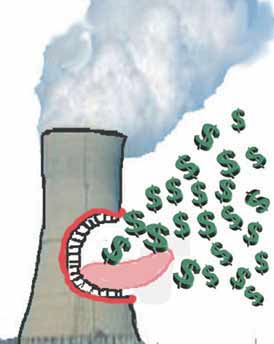
Direct and associated coal, nuclear and other fossil fuel costs continue to rise, while solar and wind costs continue to drop………… Through smart planning and a move away from energy-intensive economic sectors, South Africa can decouple electricity demand from economic growth.
This will enable us to replace coal, fossil fuel-based and nuclear power plants as they retire with renewable energy technologies.
New power plan jeopardises electricity access for poor 02 AUG 2013 Mail and Guardian, South Africa ROBERT FISCHER The cost of electricity is the subject of talks around every table in every home in the country.
These costs are heavily influenced by the cost of generating electricity.
Now the Mail & Guardian tells us that President Jacob Zuma is pushing ahead with plans for nuclear plants, “despite uncertainty about the affordability of nuclear energy and the availability of sufficient expertise” (“Zuma slips into nuclear driver’s seat”, July 25). Eskom told the National Energy Regulator of South Africa that it “need[s] to recover the cost of producing electricity, which includes operating costs as well as the costs of financing new capacity,” through its tariffs. An extremely expensive nuclear programme could seriously jeopardise the crucial social investment of providing electricity.
When you consider that the poorest households spend 32% of their income on electricity, housing, water, gas and other fuels (excluding transport), turning on the lights becomes an expensive option. Continue reading
Doubts on whether nuclear energy has a future in South Africa
Russia’s state energy group Rosatom and the French Areva – will be watching upcoming developments in South Africa with interest. In addition to safety and financial viability, concern has also been raised around the opacity of the government’s nuclear plans. All of these issues are discussed in a recent Occasional Paper titled, “South Africa’s Nuclear Future”, published by the South African Institute of International Affairs (SAIIA). The paper argues that unless South Africa’s nuclear planners meet the concerns mentioned above head-on, their programmes will fail to inspire confidence, both at home and abroad.
Africa: Nuclear Future Requires Urgent Clarity ALL AFRICA BY MARI-LISE DU PREEZ, 22 JULY 2013 Observers hoping to gain insights into South Africa’s nuclear energy plans have had their hopes dashed. Two International Atomic Energy Agency (IAEA) conferences have recently taken place in quick succession. The first, an International Ministerial Conference on Nuclear Power in the 21st Century held in St Petersburg Russia from 27 to 29 June 2013, saw the last minute withdrawal of both the Energy Minister and the CEO of Eskom.
This seemed to indicate that the tussle between the Department of Energy (DoE) and the National Planning Commission (NPC) on the future of nuclear energy in South Africa is yet to be resolved. Continue reading
Rio Tinto’s losses mean that Rossing uranium mining’s future is precarious
Rössing Uranium fights on for survival INFORMANTE BY FLORIS STEENKAMP 12 JUNE 2013 Rio Tinto Rössing Uranium incurred an operational loss of N$474 million in 2012, some N$10 million more than the losses the mine made in 2011. Despite this, the mine will continue to battle on and bolster cost savings and operational efficiency to ensure its long term survival.
This was the message of the outgoing managing director of Rio Tinto Rössing, Chris Salisbury, on 6 June Swakopmund.
Uranium mines globally continues to operate in adverse economic conditions…… Since Japan and many other nations started to shy away from nuclear power generation as the future of clean energy, uranium market prices plummeted by more than 36%.
Uranium mines globally continues to operate in adverse economic conditions…… Since Japan and many other nations started to shy away from nuclear power generation as the future of clean energy, uranium market prices plummeted by more than 36%.
At the Rössing mine not even a production output increase of 36% and drastic cost-saving measures could avert the 2012 losses, as this market dip was too severe….. Salisbury confirmed that he will be assuming another position in the Rio Tinto Group in Australia and said a successor would be sourced within months.http://www.informante.web.na/index.php?option=com_content&view=article&id=12165:roessing-uranium-fights-on-for-survival&catid=1:coastal&Itemid=103
South African renewable energy investment by Google
Google Is Investing in the Next Hotspot for Renewable Energy: South Africa By Todd Woody, Quartz | National Journal 30 May 13, There’s a place where a developer can propose, finance and build a big solar power project in a matter of months. That place is notCalifornia, Germany or China. It’s South Africa. And the country’s embrace of renewable energy has attracted investors like Google, which today said it is helping finance a 96 megawatt (MW)photovoltaic power plant in the Northern Cape province.
South Africa had “the highest growth in clean energy investment in the world last year,” Rick Needham, Google’s director of energy and sustainability, noted in a blog post about the Jasper Power Project. Google has put more than $1 billion into renewable energy, but this is only its second overseas venture. (The company put $5 million into a German photovoltaic power plant in 2011.) The search giant’s stake in Jasper is relatively small—103 million rand, or $12 million of the $260 million total cost—but the solar power station will be one of Africa’s largest, supplying enough electricity to power 30,000 homes.
Latest from Quartz: South Africa aims to install 20,000 MW of renewable energy over the next 15 years. That’s attracted SolarReserve, a California-based startup, which is developing the Jasper project as well as two other 75 MW photovoltaic power plants. …… http://news.yahoo.com/google-investing-next-hotspot-renewable-energy-south-africa-132603943.html
South Africa’s National Planning Commission warns against nuclear energy
Energy: Nuclear warning sparks meltdown, Mail and Guardian (Africa) 26 APR 2013 00:00 – LIONEL FAULL A major policy clash over the biggest spending plan in SA’s history has erupted between the national planning commission and the energy department. The trillion-rand plan to build a fleet of new nuclear power stations is not only costlier than expected, but may be entirely unnecessary, according to the research initiated by the commission.
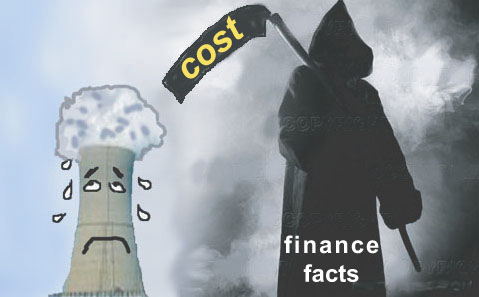
It also warned that the department’s commitment to a massive nuclear push could ratchet electricity prices up by as much as 12% compared with alternative scenarios Continue reading
Nuclear energy now looks like a dud for South Africa
 Study pours cold water on South Africa’s nuclear build plan BUSNESS DAY LIVE, BY CAROL PATON, 19 APRIL 2013, NEW National Planning Commission (NPC) modelling of South Africa’s energy demands says nuclear power should be delayed by years, and an immediate commissioning of new gas-generation capacity should take place to avoid rolling blackouts in the near future.
The remodelling commissioned by the NPC signals the start in earnest of what will be a highly contested policy debate: whether South Africa needs and can afford nuclear power or not, and by when.
The implication of the modelling is that no new nuclear power would be required before at least 2029, but more likely as far away as 2040 if demand grows as expected. Continue reading
Big obstacles to South Africa’s ambitious nuclear power plan
No clear path to ambitious nuclear goal. Mail & Guardian, Africa 01 MAR 2013 LYNLEY DONNELLY,,,,,,,Eskom, which the state named as owner and operator for the proposed nuclear programme, is being hampered by labour strife at the construction site of the new Medupi coal-fired power station. Strikes are threatening the delivery time of Medupi, which was expected to bring its first unit online later this year.
Guenon also expressed misgivings about the government’s ambitious localisation plans for the nuclear programme. It would be very difficult to meet high localisation levels, if government opted to build one nuclear plant given the stringent certification and regulatory requirements vendors, suppliers and other companies involved in the nuclear industry were required to meet; as well as the need for qualified labour, particularly technicians and artisans……
It is estimated that the procurement and construction of the six new power stations envisaged will cost between R400-billion and R1-trillion. …..
the very high capital costs of nuclear procurement is a concern for policymakers. The national planning commission has called for the nuclear programme to be reviewed to ensure its financial feasibility……
key to the success of a nuclear programme, particularly one that ensured successful localisation, was the issue of affordability. The minister of finance would not sign off on something that the country’s balance sheet could not sustain,..http://mg.co.za/article/2013-03-01-00-no-clear-path-to-ambitious-nuclear-goal
Serious obstacles to South Africa’s nuclear power plans
South Africa’s new nuclear challenges, Mail and Guardian Africa 15 FEB 2013 LYNLEY DONNELLY South African authorities will have to address two critical issues as the country faces signing for its new nuclear procurement megaplan. Funding and human resources capacity are two of the biggest challenges confronting any country embarking on a nuclear energy programme, according to Yukiya Amano, director general of the International Atomic Energy Agency.
These are two critical issues that South African authorities will have to address as the country faces signing on the dotted line for its new nuclear procurement megaplan for six nuclear power stations by 2030. Funding was a “difficult issue” for the nuclear industry everywhere, said Amano, who was on a brief tour of South Africa last week…… Continue reading
South Africa – a voice for nuclear weapons sanity
 Exiting the nuclear club
http://amanpour.blogs.cnn.com/2013/01/09/exiting-the-nuclear-club/ The
world believes that Iran, despite its denials, is trying to join the
handful of nations around the world that possess nuclear weapons.
Over the past two decades, that list of countries has been growing,
with nations like Pakistan and India publicly acknowledging their
nuclear weapons.
There has been just one exception.
Just as Nelson Mandela was emerging from prison over 20 years ago to
lead South Africa out of the wilderness of racial hatred, his country
was in the midst of another change that could be a model for the rest
of the world.
By 1991, the Rainbow Nation had become the only country to dismantle
and destroy its own nuclear arsenal. That decision, along with the end
of apartheid, helped restore South Africa’s international legitimacy.
It also made the country a leading voice for nuclear sanity.
Today, South Africa’s weapons-grade uranium left over from the
apartheid era is being turned into medical isotopes that can detect
cancer and other diseases.
Swords into plowshares.
Indigenous community resisting nuclear reactor in Eastern Cape, South Africa
 the Gamtkwa community still feels marginalised
and establishing a nuclear reactor atop a priceless heritage site is
likely to alienate them further.
There goes the neighbourhood…and here comes nuclear, Mail and
Guardian, Africa,
 21 DEC 2012 05:00 – LIONEL FAULL
What happens when government plans to build a nuclear plant in your
hometown? Lionel Faull went to the Eastern Cape to find out.The
process of rolling out a massive nuclear power expansion programme
gained momentum in November when the Cabinet endorsed electricity
utility Eskom as the owner and operator of the proposed new nuclear
power stations. But the plan still faces an uphill public battle, not
least from the people in whose back yard the first new nuclear
behemoth is going to be carved out.
The Mail & Guardian went to Thyspunt in the Eastern Cape, where Eskom
is finalising the environmental plan for its preferred site, to hear
what locals have to say about living next door to nukes……. Continue reading
Economic doubts about South African govt’s nuclear power programme
Do we really need a nuclear fleet?, Business Report, Mike Kantey, November 25 2012 Despite protestations by thousands of South Africans, our ANC-led government seems determined to spend over R1 trillion on a nuclear fleet, including a uranium enrichment plant, a fuel assembly plant, a reprocessing plant and a high-level waste management facility.
How has this impossibly expensive project been motivated and by whom? Continue reading
Russia ahead in the race to sell off nuclear technology to South Africa
Russian nuclear group opens office in South Africa Engineering News, By: Keith Campbell 18th July 2012 South Africa has become only the third country to host a marketing office of Russia’s State-owned nuclear energy group Rosatom. The registration of the office was announced by the group on Wednesday….. Rusatom (spelt with a u) Overseas is a subsidiary of Rosatom (spelt with an o).

Another Rosatom subsidiary, Tenex, already supplies enriched uranium products for the production of nuclear fuel for South Africa. The country currently has one two-reactor NPP, at Koeberg near Cape Town, which has a capacity of 1 800 MWe. This started operation in 1984… http://www.engineeringnews.co.za/article/russian-nuclear-group-opens-office-in-south-africa-2012-07-18
South Africa’s Pelindaba facility remains a nuclear security danger
SA lags in nuclear security http://www.timeslive.co.za/thetimes/2012/07/12/sa-lags-in-nuclear-security Graeme Hosken | 12 July, 2012 A new report co-authored by a senior
Harvard academic has shed light on some of the security vulnerabilities of South Africa’s nuclear facilities.
Co-written by Harvard University associate professor and nuclear security specialist Matthew Bunn, Progress on Securing Nuclear Weapons and Materials: The Four-Year Effort and Beyond, examines nuclear-material security globally.
It reveals that, though South Africa has completed substantial security upgrades at its Pelindaba nuclear facility, and implemented regulations requiring the protection of nuclear sites against threats, these have yet to be formally enforced.
The report states that South Africa has not committed itself to eliminating hundreds of kilograms of weapons-grade highly enriched uranium.
It has yet to ratify an amendment to the Convention on the Physical Protection of Nuclear Material. The amendment is aimed at improving the physical protection of nuclear material and facilities, and reducing the vulnerability of states to the theft of nuclear material and to nuclear terrorism.
South Africa’s renewable energy becoming cheaper
Renewable energy ‘getting cheaper’ Business Report, By Londiwe Buthelezi. May 22 2012 The cost of renewable energy for South African businesses and homes is coming down. Projects chosen in the second bidding window of the renewable energy independent power producers (IPP) programme would offer power at lower prices, the Department of Energy announced yesterday. Continue reading
1 This Month
Chernobyl: The Lost Tapes – A good documentary on Chernobyl on SBS available On Demand for the next 3 weeks– https://www.sbs.com.au/ondemand/tv-program/chernobyl-the-lost-tapes/2352741955560

of the week–London Campaign for Nuclear Disarmament

Tell the Ukrainian Government to Drop Prosecution of Peace Activist Yurii Sheliazhenko
To see nuclear-related stories in greater depth and intensity – go to https://nuclearinformation.wordpress.com
-
Archives
- April 2026 (126)
- March 2026 (251)
- February 2026 (268)
- January 2026 (308)
- December 2025 (358)
- November 2025 (359)
- October 2025 (376)
- September 2025 (257)
- August 2025 (319)
- July 2025 (230)
- June 2025 (348)
- May 2025 (261)
-
Categories
- 1
- 1 NUCLEAR ISSUES
- business and costs
- climate change
- culture and arts
- ENERGY
- environment
- health
- history
- indigenous issues
- Legal
- marketing of nuclear
- media
- opposition to nuclear
- PERSONAL STORIES
- politics
- politics international
- Religion and ethics
- safety
- secrets,lies and civil liberties
- spinbuster
- technology
- Uranium
- wastes
- weapons and war
- Women
- 2 WORLD
- ACTION
- AFRICA
- Atrocities
- AUSTRALIA
- Christina's notes
- Christina's themes
- culture and arts
- Events
- Fuk 2022
- Fuk 2023
- Fukushima 2017
- Fukushima 2018
- fukushima 2019
- Fukushima 2020
- Fukushima 2021
- general
- global warming
- Humour (God we need it)
- Nuclear
- RARE EARTHS
- Reference
- resources – print
- Resources -audiovicual
- Weekly Newsletter
- World
- World Nuclear
- YouTube
-
RSS
Entries RSS
Comments RSS
 nuclear-news