South Africa Files 750 Pages of ‘Overwhelming’ Evidence in ICJ Genocide Case Against Israel

“The glaring genocide in Gaza is there for all who are not blinded by prejudice to see.”
By Brett Wilkins / Common Dreams, 30 Oct 24
South Africa filed 750 pages of “overwhelming” proof that Israel is committing genocide in Gaza to the International Court of Justice in The Hague, Netherlands on Monday, the deadline for submitting final evidence in the ongoing trial.
South African Ambassador to the Netherlands Vusi Madonsela delivered the legal document—known as a memorial—to the ICJ headquarters in the Dutch city. Under the court’s rules, the contents of the memorial cannot be made public at this time.
According to a statement from the office of South African President Cyril Ramaphosa, the memorial is a “comprehensive presentation of the overwhelming evidence of genocide in Gaza.”
The office said the document “contains evidence which shows how the government of Israel has violated the Genocide Convention by promoting the destruction of Palestinians living in Gaza, physically killing them with an assortment of destructive weapons, depriving them access to humanitarian assistance, causing conditions of life which are aimed at their physical destruction, and ignoring and defying several provisional measures of the International Court of Justice, and using starvation as a weapon of war and to further Israel’s aims to depopulate Gaza through mass death and forced displacement of Palestinians.”
South Africa filed 750 pages of “overwhelming” proof that Israel is committing genocide in Gaza to the International Court of Justice in The Hague, Netherlands on Monday, the deadline for submitting final evidence in the ongoing trial.
South African Ambassador to the Netherlands Vusi Madonsela delivered the legal document—known as a memorial—to the ICJ headquarters in the Dutch city. Under the court’s rules, the contents of the memorial cannot be made public at this time.
According to a statement from the office of South African President Cyril Ramaphosa, the memorial is a “comprehensive presentation of the overwhelming evidence of genocide in Gaza.”
The office said the document “contains evidence which shows how the government of Israel has violated the Genocide Convention by promoting the destruction of Palestinians living in Gaza, physically killing them with an assortment of destructive weapons, depriving them access to humanitarian assistance, causing conditions of life which are aimed at their physical destruction, and ignoring and defying several provisional measures of the International Court of Justice, and using starvation as a weapon of war and to further Israel’s aims to depopulate Gaza through mass death and forced displacement of Palestinians.”
“The evidence will show that undergirding Israel’s genocidal acts is the special intent to commit genocide, a failure by Israel to prevent incitement to genocide, to prevent genocide itself, and its failure to punish those inciting and committing acts of genocide,” Ramaphosa’s office added.
South Africa’s filing comes amid Israel’s ongoing 387-day assault on Gaza, which according to Palestinian and international agencies has killed at least 43,020 people—most of them women and children. At least 101,110 others have been wounded and over 10,000 Gazans are missing and believed dead and buried beneath the rubble of hundreds of thousands of bombed homes and other structures. Millions more Palestinians have been forcibly displaced, starved, or sickened by Israel’s invasion and “complete siege” of Gaza.
The filing also comes one week after senior members of Israeli Prime Minister Benjamin Netanyahu’s far-right Cabinet and national lawmakers spoke at a conference advocating the ethnic cleansing and recolonization of Gaza.
Ramaphosa’s office lamented that “Israel has been granted unprecedented impunity to breach international law and norms for as long as the United Nations Charter has been in existence.”………………………………………………………………https://www.commondreams.org/news/south-africa-icj-genocide-israel
South Africa halts artillery shells to Poland over fears they will be used against Russia
South Africa has suspended a major arms deal with Poland, leading to Poland canceling the contract
Grzegorz Adamczyk. ReMix, 28 Aug 24
South Africa has withheld the delivery of 155mm artillery shells to Poland, citing concerns that the munitions could be sent to Ukraine, according to Ezra Jele, head of the secretariat of the South African government body overseeing arms contracts. After two years of uncertainty, Poland has canceled the contract.
In early 2022, following Russia’s invasion of Ukraine, Poland, along with several non-NATO countries, placed an order for 55,000 Assegai artillery shells from Denel Munition, a South African company and subsidiary of German arms manufacturer Rheinmetall. At the time, Jan-Patrick Helmsen, managing director of Denel Munition, expressed pride in the deal, noting NATO’s continued trust in their globally recognized technology.
However, later that year, South Africa’s National Conventional Arms Control Committee (NCACC) halted the contract’s fulfillment. While export permits to Poland and other countries were not canceled, they were indefinitely suspended, with no clear timeline for resolution, according to Jele………………………………………………… more https://www.sott.net/article/494487-South-Africa-halts-artillery-shells-to-Poland-over-fears-they-will-be-used-against-Russia
South Africa halts plans for nuclear power.
Minister of Energy and Electricity, Dr Kgosientsho Ramokgopa, has announced
that the Ministerial Determination for the procurement of 2 500MW of
nuclear energy, has been withdrawn. The Minister was speaking during a
media briefing held on Friday in Pretoria. The determination, and the
National Energy Regulator of South Africa’s (Nersa) concurrence of the
process, had come under legal pressure with groups contending that, amongst
others, public comments had not been sought and the procedure had not been
fair.
Business Tech 16th Aug 2024
https://businesstech.co.za/news/energy/787277/south-africa-halts-nuclear-plans-for-now/
South Africa lodges Urgent Complaint with Int’l Court of Justice over Israel’s Plan to Assault Rafah
JUAN COLE, 02/14/2024
Ann Arbor (Informed Comment) – The South African government lodged an urgent complaint on Monday at the International Court of Justice against the plan announced by Israeli Prime Minister Binyamin Netanyahu to attack Rafah in southern Gaza, where 1.4 million people, most of them refugees from elsewhere, have been pushed by the Israeli military. So reports Siyabonga Mkhwanazi at Pretoria’s Independent On Line (IOL) (a consortium of South Africa newspapers).
The IOL says that President Cyril Ramaphosa confirmed Tuesday that South Africa has inquired with the ICJ whether it needs to issue another preliminary judgment to stop Israel’s planned offensive against Rafah. The Court is permitted to issue provisional orders at any time without having to convene to decide the case finally.
Lizeka Tandwa at the Mail & Guardian reports that the further submission to the court pointed out that “Rafah is the last refuge for the surviving people in Gaza.”
Vincent Magwenya, the spokesman for South African’s president, posted this statement to the presidency web site:
………………………………………………………………………https://www.juancole.com/2024/02/complaint-justice-israels.html
Do the Right Thing: Put the South African Government’s Nuclear Plans to a Popular Referendum
BY GERARD BOYCE, COUNTER PUNCH 5 Feb 24
Ever since South African Energy Minister Dr Kgosientsho Ramokgopa announced that Cabinet had approved the updated Integrated Resource Plan last December, local media has been awash with articles by nuclear supporters and sundry lobbyists exhorting politicians and government to ‘show true leadership’ and ‘do the right thing’ when it comes to nuclear power.
Invariably, doing so means showing unwavering support for the government’s plans to expand nuclear energy generation capacity by choosing the particular nuclear technology or reactor design favored by the author of the article being read or following the guidelines they helpfully drew up to assist policymakers by advising how they ought to proceed going about doing so, even if this means going against the recommendations of the presidentially-appointed panel of experts who sit on the Presidential Climate Commission or failing to address the numerous criticisms that have been leveled against government’s nuclear plans, prominent South African nuclear scientists among them. Presumably, depending on the responses these articles elicit, individual politicians would then be lauded for the leadership and courage they have shown or berated for their lack thereof.
It is curious, not to mention ironic, to hear such sentiments expressed by pro-nuclear supporters, especially those who have long attempted to portray the decision to ‘go nuclear’ as a self-evident outcome of a purely technical decision-making process that is obviously best left to ‘the experts’ i.e. appointed and unelected technocrats who are supposedly immune to political interference.
It is also somewhat misleading of them to characterize the decision to support the expansion of nuclear power capacity as one requiring ‘courage’ as such given the scant detail government has provided on its nuclear plans, the few general nuclear education and public awareness campaigns on nuclear power it has run within and outside of the communities in which it is proposed that reactors be located in future and the critical information related to its past nuclear dealings and the planned Koeberg life expansion project amongst others it has allegedly deliberately withheld from the public.
All of these combined result in persistent and extremely low public levels of knowledge of nuclear power and related issues, so much so that the general public appears ambivalent about the issue of nuclear power. This assessment seems to be supported by the persistently low turnout that is observed at the perfunctory public hearings which the government seemingly hosts to satisfy administrative requirements surrounding public participation in order to mitigate any potential for conflict to arise in the future rather than to genuinely engage the public’s views on nuclear power.
Subsequently, the organized anti-nuclear political movement nationally is under-resourced and the level of grassroots public support it enjoys is uncertain. Considering the limited organized opposition thereto and the general public’s nuclear indifference, none but the most biased observer would be reluctant to concede that the decision to champion nuclear power is unlikely to demand much by way of boldness or courage from the individual politician. More so since nuclear power, by its nature, accords so conveniently with the motivations of the average individual politician to amass more power and influence for themselves and members of their class and has the power to undermine the public oversight mechanisms and regulatory frameworks set up to monitor them. Yet perhaps the biggest reason why nuclear power is likely to appeal to representatives of SA’s major political parties especially is because it could enable their parties to navigate the political forces that assail them…………………………………………………………………………………………………………………………….
It is apparent from the scenarios described above that political imperatives dictate the adoption of a pro-nuclear position by politicians from all the major political parties in SA irrespective of the political ideologies they espouse or the content or merits of the specific nuclear plan under review. Under these circumstances, exhorting politicians to support nuclear power is akin to urging them to act to protect their party’s narrow political interests. One submits to the reader that this does not seem to be particularly brave or courageous.
In contrast, it would require a tremendous amount of courage for a politician to acknowledge and act on the insight that the distortions introduced by prevailing political considerations render it impossible for them to hold robust internal political debates on the issue of nuclear power, more so considering the increased frequency with which ostensible party comrades have resorted to using deadly methods to eliminate potential rivals. It is, therefore, naïve to rely on the party political system to formulate positions on nuclear power that are truly in the nation’s best interest.
……………………………………………… they could opt to support the right of every citizen to act with the courage and integrity nuclear supporters claim they want politicians to by calling upon the government to submit its nuclear plans to a popular referendum. In a country where citizens have become fed up by years of maladministration and corruption and large sections of the electorate are beginning to lose faith in the democratic system itself, this display of political courage would serve as definitive proof of the leadership credentials of the politician who wanted to ‘do the right thing’ by their compatriots.
Dr Gerard Boyce is an Economist and Senior Lecturer in the School of Built Environment and Development Studies at the University of KwaZulu-Natal (Howard College) in Durban, South Africa. He writes in his personal capacity. m https://www.counterpunch.org/2024/02/05/do-the-right-thing-put-the-south-african-governments-nuclear-plans-to-a-popular-referendum/
An international law expert explains why South Africa’s case at the ICJ is so important

A ruling by the International Court of Justice in favor of South Africa, which has accused Israel of genocide, could mean saving thousands of lives in Gaza. The alternative, however, could be devastating and further embolden Israeli violence.
BY YUMNA PATEL https://mondoweiss.net/2024/01/an-international-law-expert-explains-why-south-africas-case-at-the-icj-is-so-important/?fbclid=IwAR0_La2MT5GTGkKo2X56cAEa15B-SPBIOwKnMKznqzCczU0XVSIz_BlNrBE
South Africa and Israel will be appearing before the International Court of Justice, on Thursday, January 11, where the court will begin hearing arguments on whether Israel is committing the crime of Genocide.
The highly anticipated public hearings, which will last for two days, are based on an 84-page appeal submitted by South Africa in December to the ICJ, the top judicial body of the United Nations. In the appeal, South Africa argues that Israel’s military campaign in Gaza is “genocidal in character” and that through both action and intent to commit genocide, Israel has violated the 1948 Genocide Convention.
Both Israel and South Africa are parties to the convention, which came into being on the heels of World War II and the Holocaust. All signatories of the treaty are obligated not to commit genocide, to ensure that it is prevented, and to seek that the crime be prosecuted.
South Africa’s appeal to the ICJ, however, is not just about charging Israel with the crime of genocide – a lengthy process that could take the court months or years. It’s also seeking a more immediate solution by requesting the court institute provisional measures to immediately halt Israel’s military campaign in Gaza.
Essentially, South Africa wants two things: to stop the mass killing of Palestinians in Gaza now and for Israel to be charged with the crime of genocide in the long term. A condensed breakdown and explanation of the 84-page brief can be found here.
Expectedly, Israel has outright denied any accusations of genocide, lambasting the South African appeal as antisemtic “blood libel”. The U.S. has also rebuked South Africa’s appeal, called it “meritless” and “completely without any basis in fact.”
Nevertheless, Israel is pressing forward, sending a carefully crafted legal team to The Hague in the Netherlands to defend Israel’s position that it is not committing genocide in Gaza.
The much-talked about public proceedings, which will take place over the course of two days on Thursday and Friday, January 11th and 12th, are being welcomed by both Palestinians, as well as a number of countries around the world, who have thus far failed to bring about a ceasefire, primarily due to the U.S. veto of UN resolutions calling for a halt to the violence.
Despite the international buzz and anticipation, many in Palestine and around the world remain skeptical as to how much weight an ICJ ruling against Israel could hold due to a long history of Israeli impunity on the global stage and Israel’s well-documented disregard for international law and human rights norms.
Still, many Palestinian international law experts and human rights groups say the ICJ proceedings are significant and could hold serious consequences not only for Israel and Palestine but for the world.
Among them is Dr. Munir Nuseibah, a Palestinian professor of International law at Al-Quds University and the Director of the Al-Quds Human Rights Clinic. Mondoweiss spoke to Dr. Nuseibah about the significance of this case, why people should pay attention to it, and what implications it holds.
Why does this case matter?
The case filed by South Africa is important for a number of reasons. First, Dr. Nuseibah notes, the fact that it was filed at the ICJ in and of itself is significant, being that the court is the highest judicial body that settles disputes between states.
“This is quite significant because it’s… based on an agreement, or treaty that is binding to both South Africa and Israel,” he said, referring to the 1948 Genocide Convention.
“This is important in the history of the Palestinian cause, since we haven’t had an opportunity to get a binding international decision on any of the important questions that we have been dealing with, including for example, the issue of the Palestinian refugees, the [Israeli] occupation, etc,” Dr. Nuseibah continued.
The last time the ICJ made a decision in relation to Palestine was a 2004 advisory opinion that found Israel’s separation wall, which at that stage was still early on in its construction, violated international law and should be torn down.
However, because that decision was a non-binding advisory opinion, Israel was not obligated to stop construction or take down the wall. Instead, Israel continued constructing the wall, which today spans across hundreds of kilometers, cutting off Palestinians from their land and swallowing up swaths of Palestinian territory.
This case, Dr. Nuseibah says, would be different, as the resulting decision from this week’s proceedings would be binding, and if the court rules in favor of South Africa, it would mean that under international law, Israel would be obligated to end its military campaign in Gaza in the short term, and in the long term, potentially provide material reparations to the victims of its genocide.
The case is also significant as a symbolic measure as well. That, in the face of an ongoing genocide, which has been well documented by Palestinians and international human rights organizations alike, the world must intervene to stop it.
“If there is no serious intervention, and if the United Nations, the world, and what we call the international community is going to continue to be silenced and made inactive, and in a certain way deactivated and demobilized, this horror will continue,” Dr. Nusaibah said, not just in Palestine but around the world.
“To not only be accused of genocide, but to be charged by the court, and to be seen as a country guilty of genocide is very important,” he said. “In my opinion, everything that happens in the International Court of Justice now, is likely to influence thousands of lives in the future.
So whatever these judges will decide will actually be a question of life and death for many, many Palestinians.”
What will South Africa be arguing on Thursday?
The crux of South Africa’s argument is that Israel is committing genocide in Gaza and that it is violating its obligations under the 1948 Convention on the Prevention and Punishment of Genocide, which defines the crime as “acts intended to bring about the destruction of a substantial part of the Palestinian national, racial and ethnic group.”
South Africa’s argument hinges on proving that Israel is not only committing acts of genocide in Gaza but that there is a clear intent on Israel’s part to commit genocide – the latter being a significant focus of the 84-page brief, which listed off an array of quotes from Israeli politicians, officials, and public figures using genocidal language when speaking about Israel’s campaign in Gaza.
“[South Africa’s] first argument will involve the speeches and quotes basically from Israeli officials who have been using genocidal language from the very first day actually, from October 7th,” Dr. Nuseibah said.
“In criminal law it’s not enough to do something, but you have to intend to do something. And one of the signs of intent, are the things you say. So these quotes from Israeli officials will be used to show that Israel has been calling for genocide,” he continued.
And, of course, South Africa will be providing evidence of what it says are clear genocidal acts carried out by Israel in Gaza, such as “bombing civilians, heavily targeting homes, targeting hospitals, targeting cultural centers, targeting universities, schools, etc,” Dr. Nuseibah detailed.
“So all of these targets that the Israeli army has destroyed over the past months, and of course the civilian casualties, the human beings who have been murdered or injured or made disabled, [Israel] using hunger as a weapon, etc. – all of that will be a very important part of the facts South Africa will present,” he said, adding that the denial of fuel and electricity, the siege on 2 million civilians, and the forcible displacement of Palestinians in Gaza is also “an important element of genocide and especially in this case.”
What will Israel’s legal defense look like?
While there are 84 pages to give us an insight into South Africa’s case, it’s not as apparent what exactly Israel’s defense will consist of.
If the past few months have been any indication, however, during which Israel has denied any wrongdoing in Gaza, justified it as self-defense, and has actually accused Hamas of genocide for its October 7th attack – some assumptions can be made as to how Israel will approach it’s defense.
First, Israel’s primary strategy, Dr. Nuseibah says, will be to “deny, deny, deny.”
“Israel will deny everything that South Africa claims,” Dr. Nuseibah said. “It will deny that it has starved people, or that it is trying to starve people. It will deny that it is not allowing humanitarian aid into Gaza, by showing examples where it actually did allow some trucks to enter,” he continued, noting that what little humanitarian aid has been allowed into Gaza has been critically insufficient to address the needs of the more than 2 million people trapped in the strip.
“It [Israel] will talk about any attempts they made in any of their operations to ‘reduce civilian casualties’, whether by warning civilians in certain places,” Dr. Nuseibah said, referring to Israel’s practice of dropping leaflets to notify civilians that their area is going to be attacked, or by providing QR codes and maps of “safe zones” and “combat zones” in Gaza – all practices that have been widely criticized both as insufficient to save civilian lives, and as a PR move by Israel to save face in front of the international community.
At the time of publication, 96 days after Israel began its bombardment on Gaza, more than 23,000 Palestinians have been killed, the vast majority of them civilians.
“So, Israel’s strategy will be to deny everything, because there is nothing else they can do or say,” Dr. Nuseibah said. “It is a longtime strategy and practice of Israel that we are used to. Israel always denies its crimes. Even until today, Israel denies the Nakba, that is the official position of Israel, to deny it.”
While Israel has focused much of its propaganda campaign on accusing Hamas, and supporters of the Palestinian cause in general, of carrying out or advocating for the genocide of Israelis and Jewish people, Dr. Nuseibah said he doubts that will be a feature of Israel’s arguments at the ICJ.
“I doubt that they will do this or bring this up, because if they do, then they would have to present evidence. They would have to allow an open investigation into what happened on October 7th,” Dr. Nuseibah said, noting that Israel has historically prevented access to independent investigators seeking to probe potential crimes committed in the occupied Palestinian territory.
How will this impact Palestinian lives right now?
While the deliberations on whether Israel is guilty of genocide in Gaza or not could take years, South Africa’s case is expected to yield a much more immediate and time-sensitive result.
As part of its appeal to the court, South Africa is seeking an emergency interim decision by the court, or “provisional measures,” to order the Israeli military to cease its campaign in Gaza immediately, stop the displacement of Palestinians, and allow for the entry of adequate humanitarian aid into Gaza. The court could make that decision in as little as a few days or weeks.
These provisional measures, Dr. Nuseibah says, are some of the most critical elements to the case and have the biggest potential to change the course of the unfolding genocide in Gaza.
“This is very time sensitive. Every day that we lose, we are losing more lives. We are losing more casualties. There are more homes that are demolished. There are more days that children are not going to school,” he continued.”There is a lot of loss every single day of civilian life, and there is no human being in Gaza who is not heavily influenced by what is happening.”
“All of the provisional requests that South Africa has made are there to save lives immediately. And I do expect that the court will take these measures. History has shown that the ICJ has given these provisional measures in similar situations, even with less casualties and less risk,” Dr. Nuseibah said.
“So I do expect that the court will decide provisional measures, which would mean a ceasefire, which is the most important thing right now, as well as stopping the displacement, allowing for the entry of aid, and stopping the continuous demolition of Gaza.”
Israel has ignored international law before, what will be different this time?
Continue reading800+ Global Groups Back South Africa’s Genocide Case as ICJ Prepares for Hearing
byEDITORJanuary 9, 2024
“The very least states can do is to submit Declarations of Intervention as a small part of fulfilling their obligations under Article 1 of the Genocide Convention,” said a peace coalition.
SCHEERPOST, By Julia Conley / Common Dreams January 9, 2024
An international peace coalition announced Monday that more than 800 civil society organizations from across the globe have endorsed its sign-on letter distributed to world governments, urging leaders to join South Africa in formally accusing Israel of genocidal violence at the United Nations’ highest judicial body.
When Common Dreams first reported on the sign-on letter last Wednesday, just over 100 groups had joined the call.
The surge of support comes as the International Court of Justice (ICJ), also known as the World Court, is scheduled to hold a hearing on South Africa’s case on Thursday and Friday.
The International Coalition to Stop Genocide in Palestine (ICSGP)—which includes the National Lawyers Guild, the Black Alliance for Peace, World Beyond War, and Progressive International, among other groups—is calling on governments to “reinforce [South Africa’s] strongly worded and well-argued complaint by immediately filing a Declaration of Intervention” at the court.
The declarations could increase the likelihood that the ICJ sides with South Africa in the case, says the coalition.
In recent days, Turkey, Malaysia, and the Organization of Islamic Cooperation, which represents 57 member-states, have all endorsed South Africa’s 84-page claim, which details genocidal rhetoric in public statements made by high-level Israeli officials as well as the Israeli military’s actions in Gaza.
“The South African filing before the ICJ marks a critical juncture which tests the global will to salvage the laws and systems which were designed to safeguard not merely human rights, but to preserve humanity itself.”……………………………………………………………………………………………… more https://scheerpost.com/2024/01/09/800-global-groups-back-south-africas-genocide-case-as-icj-prepares-for-hearing/
Israel Is Terrified the World Court Will Decide It’s Committing Genocide
Public hearings on South Africa’s request for provisional measures will take place on January 11 and 12 at the ICJ which is located in the Peace Palace in The Hague, Netherlands. The hearings will be livestreamed from 4:00-6:00 a.m. Eastern/1:00-3:00 a.m. Pacific on the Court’s website and on UN Web TV. The court could order provisional measures within a week after the hearings.
Other States Parties to the Genocide Convention Can Join South Africa’s Case
South Africa, a party to the Genocide Convention, charged Israel with genocide in the International Court of Justice.
By Marjorie Cohn / Truthout, January 8, 2024, https://scheerpost.com/2024/01/08/israel-is-terrified-the-world-court-will-decide-its-committing-genocide/
For nearly three months, Israel has enjoyed virtual impunity for its atrocious crimes against the Palestinian people. That changed on December 29 when South Africa, a state party to the Genocide Convention, filed an 84-page application in the International Court of Justice (ICJ, or World Court) alleging that Israel is committing genocide in Gaza.
South Africa’s well-documented application alleges that “acts and omissions by Israel … are genocidal in character, as they are committed with the requisite specific intent … to destroy Palestinians in Gaza as a part of the broader Palestinian national, racial and ethnical group” and that “the conduct of Israel — through its State organs, State agents, and other persons and entities acting on its instructions or under its direction, control or influence — in relation to Palestinians in Gaza, is in violation of its obligations under the Genocide Convention.”
Israel is mounting a full-court press to prevent an ICJ finding that it’s committing genocide in Gaza. On January 4, the Israeli Foreign Ministry instructed its embassies to pressure politicians and diplomats in their host countries to make statements opposing South Africa’s case at the ICJ.
In its application, South Africa cited eight allegations to support its contention that Israel is perpetrating genocide in Gaza. They include:
(1) Killing Palestinians in Gaza, including a large proportion of women and children (approximately 70 percent) of the more than 21,110 fatalities and some appear to have been subjected to summary execution;
(2) Causing serious mental and bodily harm to Palestinians in Gaza, including maiming, psychological trauma, and inhuman and degrading treatment;
(3) Causing the forced evacuation and displacement of about 85 percent of Palestinians in Gaza — including children, the elderly and infirm, and the sick and wounded. Israel is also causing the massive destruction of Palestinian homes, villages, towns, refugee camps and entire areas, which precludes the return of a significant proportion of the Palestinian people to their homes;
(4) Causing widespread hunger, starvation and dehydration to the besieged Palestinians in Gaza by impeding sufficient humanitarian assistance, cutting off sufficient food, water, fuel and electricity, and destroying bakeries, mills, agricultural lands and other means of production and sustenance;
(5) Failing to provide and restricting the provision of adequate clothing, shelter, hygiene and sanitation to Palestinians in Gaza, including 1.9 million internally displaced persons. This has compelled them to live in dangerous situations of squalor, in conjunction with routine targeting and destruction of places of shelter and killing and wounding of persons who are sheltering, including women, children, the elderly and the disabled;
(6) Failing to provide for or ensure the provision of medical care to Palestinians in Gaza, including those medical needs created by other genocidal acts that are causing serious bodily harm. This is occurring by direct attacks on Palestinian hospitals, ambulances and other healthcare facilities, the killing of Palestinian doctors, medics and nurses (including the most qualified medics in Gaza) and the destruction and disabling of Gaza’s medical system;
(7) Destroying Palestinian life in Gaza, by destroying its infrastructure, schools, universities, courts, public buildings, public records, libraries, stores, churches, mosques, roads, utilities and other facilities necessary to sustain the lives of Palestinians as a group. Israel is killing whole families, erasing entire oral histories and killing prominent and distinguished members of society;
(8) Imposing measures intended to prevent Palestinian births in Gaza, including through reproductive violence inflicted on Palestinian women, newborns, infants and children.
South Africa cited myriad statements by Israeli officials that constitute direct evidence of an intent to commit genocide:
“Gaza won’t return to what it was before. We will eliminate everything,” Israel’s Defense Minister Yoav Gallant said. “If it doesn’t take one day, it will take a week. It will take weeks or even months, we will reach all places.”
Avi Dichter, Israel’s Minister of Agriculture, declared, “We are now actually rolling out the Gaza Nakba,” a reference to the 1948 ethnic cleansing of Palestinians to create the state of Israel.
“Now we all have one common goal — erasing the Gaza Strip from the face of the earth,” Nissim Vaturi, the Deputy Speaker of the Knesset and Member of the Foreign Affairs and Security Committee proclaimed.
Israel’s Strategy to Defeat South Africa’s Case at the ICJ
Continue readingRisk of total shutdown of Eskom’s Koeberg nuclear power station continues to increase
The risk of both nuclear reactors at Eskom’s Koeberg nuclear power station in Cape Town being shut down simultaneously for life extension continues to increase…………………………………… (Subscribers only) https://www.dailymaverick.co.za/article/2023-10-20-koeberg-nuclear-power-station-rising-risk-of-total-shutdown/ #nuclear #antinuclear #nuclearfree #NoNukes
As Australia gets American nuclear-capable bombers, it risks becoming a dangerous military mess and target – like Guam

China’s furious reaction as Australia gets US nuclear-capable bombers A furious Beijing has blasted reports of the US gifting Australia nuclear-capable bombers, prompting a concerning warning from China.
https://www.news.com.au/technology/innovation/military/chinas-ominous-threat-to-australia-over-us-nuclearcapable-bombers/news-story/ca67d55d29ef716883078e4fb8e2101f Ally Foster and Frank Chung, November 1, 2022 –
Australia has been issued an ominous threat, after China lashed out at reports of the US sending nuclear-capable bombers to the Northern Territory.
According to an investigation by the ABC’s Four Cornersthat aired on Monday, Washington has drawn up plans to build a dedicated a “squadron operations facility” at the Tindal air base south of Darwin that will house “six B-52s”.
These aircraft are capable of delivering both nuclear and conventional weapons, with a combat range of more than 14,000km.
The news has prompted a furious response from Beijing, with the former editor-in-chief of the CCP-run Global Times issuing an ominous warning to Australia.military
Commentator Hu Xijin said Australia would need to “bear the risks” of this move.
“The PLA’s Dongfeng missiles definitely fly faster than the B-52 bombers,” he wrote on Twitter.
“If Australia wants to become a “big Guam,” then it must bear the corresponding strategic risks.”
There have even been warnings that accepting these bombers could “trigger a regional arms race”.
Chinese Ministry of Foreign Affairs spokesman Zhao Lijian said by sending the bombers to Australia, the US had “increased regional tensions, seriously undermined regional peace and stability, and may trigger a regional arms race”.
“Defence and security co-operation between any countries should be conducive to regional peace and stability and not target or harm the interests of third parties,” he told reporters in Beijing.
Mr Zhao said Beijing was urging all the countries concerned to “abandon the old Cold War zero-sum thinking and narrow geopolitical concepts”.
The focus should instead be on contributing more to regional peace and stability and enhancing “mutual trust”, he said.
South Africa’s nuclear sector has failed its test: the Koeberg nuclear plant life extension
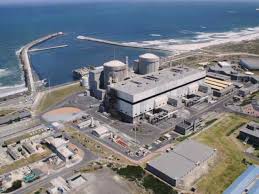
The Conversation, Hartmut Winkler, Professor of Physics, University of Johannesburg, August 21, 2022, South Africa’s only nuclear power plant, Koeberg, has frequently been in the news in 2022, all for the wrong reasons.
Its operating licence expires in 2024, and its continued operation thereafter depends on critical refurbishments and upgrades. Work on these finally began in January this year, but immediately ran into difficulties, forcing significant delays.
Koeberg is supplying only half of its power while work is in progress. This has amplified the crippling power shortages South Africa has been experiencing. This state of affairs, where the country effectively has 3% less generating power available than it would otherwise have, is expected to persist for the bulk of the next two years.
Other potential signs of turbulence linked to Koeberg include:
- the delayed application to the nuclear regulator to extend the plant’s licence
- the controversial dismissal of one of the regulator’s board members – an opponent of nuclear power – by the Minister of Mineral and Energy Resources
- resignations of senior Koeberg staff, though there is no evidence that these were due to friction.
All of this has led to speculation that the Koeberg life extension exercise is in difficulty. In turn it casts doubt on the capacity of South Africa’s nuclear sector, and is likely to put to bed the highly ambitious proposals still advocated within the sector to build new nuclear plants.
Koeberg’s history
Koeberg, Africa’s only operational nuclear power station, 27km north of the Cape Town city centre, is reaching the end of its scheduled life cycle.
The plant consists of two units of just over 900 megawatts each, and together these contribute roughly 5% of South Africa’s electricity.
Koeberg was built by the French company Framatome between 1978 and 1984. In line with international practice, the plant was granted a 40-year operational licence which will expire in July 2024. Licensing the plant for a further 20 years is possible, as long as it meets specific safety criteria. Typically these involve particular upgrades and the replacement of various components……………………
The upgrade is projected to cost R20 billion (US$1.2 billion). Most of this would go towards buying and installing six new steam generators.
The need to replace them was identified over 10 years ago, but protracted litigation over who would do the job held up the project. The operation was eventually scheduled for 2022.
Life extension project
The replacements and upgrades needed to secure a 20 year operating licence extension require each Koeberg unit to be shut down for a projected five months. Unit 2 was therefore switched off on 18 January 2022 and was supposed to reopen in June 2022. Unit 1 was then to go through the same process, starting in October.
Things then went wrong. The critical steam generator replacement was again postponed to 2023. The full reasons have not been officially disclosed. But there has been no denial of reports that the onsite storage facilities for the now radioactively contaminated old steam generators were not ready.
The delay in getting Koeberg Unit 2 up and running on schedule resulted in an additional 900 MW shortfall during South Africa’s most recent midwinter bout of severe power blackouts.
Unit 2 finally started operating again on 7 August, almost two months later than projected. Another outage of comparable duration is still required in 2023.
Significance for the nuclear sector
The mishandling of the Koeberg life extension project raises serious questions about the capacity of South Africa’s nuclear sector. This sector has advocated the building of a large fleet of new nuclear plants, implying that it could be done without major cost and time overruns. But the much smaller and far more straightforward Koeberg upgrade has not gone well…………… https://theconversation.com/south-africas-nuclear-sector-has-failed-its-test-the-koeberg-nuclear-plant-life-extension-188013
Nuclear energy ruled out for South Africa
Nuclear energy is off the table, says Ramaphosa
1 July 2022, Ntebo Mokobo | @SABCNews,
President Cyril Ramaphosa says as the country tries to diversify its energy capacity, the nuclear energy option is off the table.
He was speaking to SABC News on the sidelines of the 7th SACU Summit which was held in Gaborone, Botswana on Thursday. The one-day meeting was called to discuss ways to ramp up export and investment among five SACU member states which include South Africa, Botswana, Lesotho, Namibia and the Kingdom of Eswatini……………..
President Ramaphosa says although nuclear energy looks attractive to help the country overcome its energy generation woes, South Africa simply can’t afford it…………. https://www.sabcnews.com/sabcnews/nuclear-energy-is-off-the-table-says-ramaphosa/
From Russia with very expensive love – Karyn Maughan on South Africa’s bombed nuclear deal
https://www.biznews.com/global-investing/2022/05/19/nuclear-deal-russia 19th May 2022, by Michael Appel
Jacob Zuma‘s presidency will be remembered for the wholesale looting of South Africa’s fiscus by him, his family, his friends the Guptas, and the political party he led – but also don’t forget how fiscus-destroyingly close we came to indebting future generations with a Russian nuclear deal.
In their new tell-all book, Nuclear: Inside South Africa’s Secret Deal, Karyn Maughan and Kirsten Pearson make the minutiae of the R1trn nuclear deal with Russia understandable and digestible. In this interview with Maughan, BizNews deputy editor Michael Appel seeks to better understand the dynamics behind the failed nuclear deal.
Plus, an update on the current state of Zuma’s arms deal corruption trial.
Peter Becker, sacked from South Africa’s National Nuclear Regulator Board, won’t go down without a fight
Daily Maverick By Sasha Planting, 18 May 22, Minerals and Energy Minister Gwede Mantashe drew a line in the sand recently when he said he would not countenance dissent from board members at the National Nuclear Regulator. ‘If you resist nuclear and you [are] a board member, I fire you, simple. You can’t be [on] a board of something you’re not advocating for.’ His comments, reported by News24, are relevant for many reasons, chief among which is a legal challenge to his dismissal of community representative board member Peter Becker……………………………. https://www.dailymaverick.co.za/article/2022-05-18-peter-becker-sacked-from-the-national-nuclear-regulator-board-wont-go-down-without-a-fight/
South Africa: Five years after the illegal nuclear deal was nuked, we are still struggling with a broken energy system
Daily Maverick By Francesca de Gasparis and Makoma Lekalakala, 02 May 2022,
The South African government’s current approach to energy production is our biggest barrier to a just transition and it seems as though we are deliberately choosing fossil fuels and nuclear, while implementing renewables at a snail’s pace.
The month of April was not only significant to South Africa as Freedom Month, but was also the month in which Earthlife Africa Johannesburg and the Southern African Faith Communities’ Environment Institute (Safcei) commemorated the court victory that exposed the severity of the corruption within the state and halted government’s “illegal and unconstitutional” R1-trillion nuclear energy deal with Russia……….
Apart from revealing the depths of the rot within government and how far members of the state were willing to go to dupe the public, this was also the start of an intense battle which continues to rage between public interests versus those of government and corporate to protect citizens’ right to be consulted on huge capital spends, especially in energy procurement that may affect them……………..
A publication released at COP26 in December 2021, Neither Climate Nor Jobs: Nuclear Myths About the Just Transition, argues that nuclear will be detrimental to our “collective capacity to transform our energy systems in a way that leaves no one behind”.
While nuclear power operations do not have as large a carbon footprint as coal, gas and oil, there are numerous other issues with this outdated and largely failed technology that must be considered, that make nuclear power utterly unsuitable for South Africa’s energy needs in our current reality. Comparatively, the carbon footprint of nuclear power is estimated to be at least two to four times more than that of renewables.
There are a number of reasons that nuclear energy is NOT a solution to the climate emergency and why it should not be part of the just transition. First, South Africa needs development that is pro-poor, and basic services need to be provided that are affordable to all. This means that the country’s energy plans should work to reduce the gaps in inequality, with the people – not industry nor the economy nor profits – at the centre of its plans.
Sadly, the government’s current approach to energy production is our country’s biggest barrier to a just transition and it seems as though we are deliberately choosing fossil fuels and nuclear, while implementing renewables at a snail’s pace.
Investing in nuclear energy requires huge capital investment – which could have an impact on public spending on social services – while the centralised and costly nature of its production will do little to reduce the widespread energy poverty in the country. When considering the urgent need for poverty-alleviating approaches to development and energy production, the fact that renewables create more jobs (with a wider variety and in more flexible locations) and can be installed in a matter of months, provides more compelling arguments against nuclear.
Furthermore, as climate change takes root and weather conditions become more extreme, a just transition will require a flexible and decentralised electricity supply for greater stability. Without even considering nuclear power stations’ poor installation and cost performance globally, we need only look at South Africa’s only existing nuclear power station at Koeberg to know that nuclear has not proven to be particularly reliable over the past 18 months.
Ongoing issues at the nuclear power station are a significant part of the reason that citizens have been plunged into darkness once again. We must recognise Koeberg’s deteriorating performance while noting the ongoing governance issues at Eskom and the Department of Mineral Resources and Energy.
Another reason that nuclear energy is not fit for purpose for our current and future energy needs is the outdated argument of the necessity of baseload energy, which completely ignores the strides made in modern technology. This type of centralised power often takes very long to come online and will do little to alleviate the energy poverty in the country. Even in the best-case scenario, it would be at least another decade before we are likely to get any electricity from a new power plant.
Just the fact that we need to keep temperatures below 1.5°C by 2030 means that even if we did go the nuclear route, we would be far too late to mitigate carbon emissions in any meaningful way. Yet, our government insists on wasting time pursuing nuclear, while utility-scale renewable energy projects could be ready in less than half the time.
South Africa is at a crossroads. Are we really willing to continue making the mistakes of the past?……….

It is important, at this point, to remind South Africans that it was as a result of a national effort by many civil society organisations, academics and concerned citizens that we were able to stop then-President Jacob Zuma’s illegal nuclear deal five years ago, sparing us from the effects of the bankruptcy that would have ensued.
At a time when the divisions in our society were becoming decidedly evident, it was wonderful to be part of such a unifying campaign with people from all walks of life. From eco-justice NGOs to community-based organisations, right down to the ordinary person on the street, most South Africans knew we had to stand together or risk losing our country…….. https://www.dailymaverick.co.za/article/2022-05-02-five-years-after-the-illegal-nuclear-deal-was-nuked-we-are-still-struggling-with-a-broken-energy-system/
1 This Month

of the week – Shut Down Drone Warfare!


Tell the Ukrainian Government to Drop Prosecution of Peace Activist Yurii Sheliazhenko

Petition to revoke the licensing of the Near Surface Nuclear Disposal Facility (NSDF) at Chalk River. https://www.ourcommons.ca/petitions/en/Petition/Details?Petition=e-7247
To see nuclear-related stories in greater depth and intensity – go to https://nuclearinformation.wordpress.com
-
Archives
- April 2026 (57)
- March 2026 (251)
- February 2026 (268)
- January 2026 (308)
- December 2025 (358)
- November 2025 (359)
- October 2025 (376)
- September 2025 (257)
- August 2025 (319)
- July 2025 (230)
- June 2025 (348)
- May 2025 (261)
-
Categories
- 1
- 1 NUCLEAR ISSUES
- business and costs
- climate change
- culture and arts
- ENERGY
- environment
- health
- history
- indigenous issues
- Legal
- marketing of nuclear
- media
- opposition to nuclear
- PERSONAL STORIES
- politics
- politics international
- Religion and ethics
- safety
- secrets,lies and civil liberties
- spinbuster
- technology
- Uranium
- wastes
- weapons and war
- Women
- 2 WORLD
- ACTION
- AFRICA
- Atrocities
- AUSTRALIA
- Christina's notes
- Christina's themes
- culture and arts
- Events
- Fuk 2022
- Fuk 2023
- Fukushima 2017
- Fukushima 2018
- fukushima 2019
- Fukushima 2020
- Fukushima 2021
- general
- global warming
- Humour (God we need it)
- Nuclear
- RARE EARTHS
- Reference
- resources – print
- Resources -audiovicual
- Weekly Newsletter
- World
- World Nuclear
- YouTube
-
RSS
Entries RSS
Comments RSS
 nuclear-news