British charity SolarAid works with Chinese solar giant to provide cheap, clean power in Africa
FT 22nd May 2017, A British start-up has helped a Chinese solar power giant provide cheap, clean power across Africa with a $5 light.The SM100, which claims to be the cheapest solar light in the world, was designed by Manchester-based Inventid, formed by two graduates in 2012.
Some 600m people in African countries without electricity rely on kerosene storm lamps, which are expensive to run and produce smoke that is linked to respiratory diseases, cataracts and house fires. The hand-sized SM100 can run for eight hours when fully charged and is twice as bright as kerosene.
SolarAid, a charity, developed it in collaboration with Yingli, the solar panel manufacturer. SolarAid’s trading subsidiary SunnyMoney has sold 1.9m other solar lights in Africa over the past decade but they retail for up to twice the price of the new light. After trialling 9,000 of the lights in three countries, the new light is now on sale. The SM100 is an exemplar product for the new £83m Design Museum’s Design Ventura education programme. In March, the SM100 light won silver in the 2017 Design for So ciety and Design for Sustainability categories at the European Product Design Awards.
https://www.ft.com/content/36226fbe-3c7c-11e7-821a-6027b8a20f23
Timeline of the decline of South Africa’s President Jacob Zuma
The descent of Jacob Zuma in 31 steps and counting, Daily Maverick, KAVISHA PILLAY AND MARK HEYWOOD, SOUTH AFRICA, 23 MAY 2017
Eskom protesting a bit too much that South Africa’s nuclear negotiations are squeaky clean?
 No corruption in nuclear negotiations, Eskom chief nuclear officer assures Engineering News, 18TH MAY 2017 BY: KIM CLOETE CREAMER MEDIA CORRESPONDENT, Eskom’s chief nuclear officer David Nicholls is still firmly committed to the principle that nuclear is the way to go for a sustainable energy future and says he knows of no corruption in negotiations on a deal to procure new nuclear energy capacity.
South African government still determined to sign new nuclear power agreements
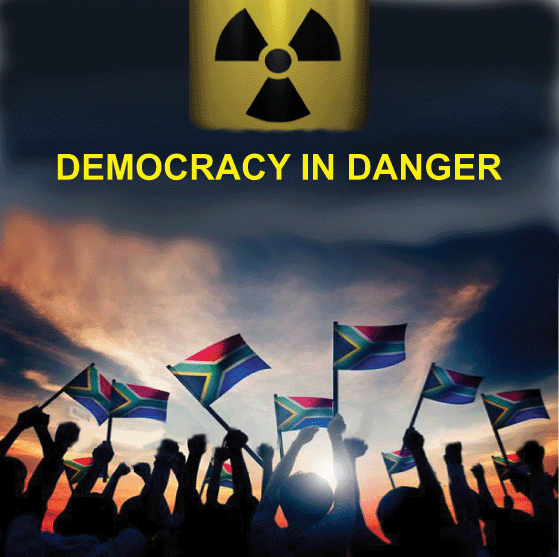
South Africa to Sign New Nuclear Power Pacts After Court Ruling https://www.usnews.com/news/world/articles/2017-05-13/south-africa-wont-appeal-judgment-blocking-nuclear-power-deal May 13, 2017, JOHANNESBURG (Reuters) – South Africa plans to sign new, more transparent nuclear power agreements with five foreign countries after a high court blocked a deal with Russia due to a lack of oversight, the energy ministry said on Saturday.
Energy Minister Mammoloko Kubayi confirms that South Africa nuclear deal is back on the agenda.
Nuclear deal back on the agenda, says minister http://www.iol.co.za/news/politics/nuclear-deal-back-on-the-agenda-says-minister-9121358, 14 May 2017, Siyabonga Mkhwanazi Cape Town – Energy Minister Mammoloko Kubayi has confirmed the nuclear deal is back on the agenda.
Kubayi said this on Saturday after she announced she would not appeal the Western Cape High Court decision to halt the nuclear process.
She would instead stick to the judgment by following all the processes in the procurement of nuclear power. She said South Africa needed nuclear power as part of the energy mix programme of the government.
Kubayi said the process would start from scratch. From next month, new, standardised agreements would be signed with Russia, China, the US, South Korea and France.
This came after the court nullified three of the agreements last month.
Kubayi said the government couldn’t estimate the cost of nuclear power, but the process would start from scratch.
“We have to start fresh and do new determinations and issue requests for information.
“That is important because it will assist us on the cost.”
However, the government’s push for a nuclear programme has been questioned, with opposition parties warning of high costs and threats of legal action if proper processes are not followed.
The court halted the nuclear programme last month, saying processes had not been followed.
The DA, IFP and ACDP said the government had not come clean regarding the costs.
One of the civil society groups that took the government to court on the nuclear deal said on Saturday it would keep an eye on the process. The Southern African Faith Communities’ Environment Institute said it wanted Kubayi to follow the law.
Co-ordinator for energy and climate programme at the institute Liz McDaid said it wanted to ensure everything was done according to the book. “We are glad the minister has chosen to follow the law because the previous process was found to be illegal. We will need to study whatever steps she puts on the table.
“If they are going to follow the process, it will show we don’t need nuclear. Today we have organisations like the CSIR (the Council for Scientific and Industrial Research) who say that we don’t need nuclear. It is research institutions who say these are the numbers,” said McDaid.
DA spokesperson on energy Gordon Mackay said the party welcomed the fact that Kubayi would follow the process.
However, the party was concerned the government was intent on pushing ahead, despite concerns about costs.
Mackay said the decision was not sound if it was not based on the Integrated Resource Plan of 2016. He warned the party would interdict the minister if she started the process without the plan.
IFP chief whip Narend Singh also expressed concern about the costs. He said nuclear was unaffordable for South Africa at this stage and the government would have to prove in Parliament that nuclear was affordable.
Steve Swart, of the ACDP, said the party was concerned that nuclear was unaffordable for the country.
“The ACDP notes that Minister Kubayi has decided not to appeal the Western Cape High Court decision. This means she will have to comply with the stringent process set out by the court regarding openness and transparency and the role of Parliament in evaluating the desirability and costing of the nuclear project,” he said.”
No costing for South Africa’s nuclear build programme
NO PRICE TAG FOR NUCLEAR BUILD PROGRAMME YET http://ewn.co.za/2017/05/13/no-price-tag-for-nuclear-build-programme-yet The department of energy says it is yet to determine the cost of the nuclear build programme, while concerns were raised over a previous estimate of R1 trillion. Sifiso Zulu 14 May 17
JOHANNESBURG – The department of energy says it has not pronounced the cost of the nuclear build programme as it is considering funding options.
A price tag of up to R1 trillion previously reported to be the cost of nuclear power has raised concern over whether it is affordable
The department says it is negotiating with five countries that have signed intergovernmental agreements with South Africa in 2014 as part of plans to build a fleet of nuclear power plants.
The department’s Zizamele Mbambo says the price will only be determined once all consultations have been concluded
“We are not at the stage where we have determined what will be the actual cost of the programme because the procurement process has not started.”
The Western Cape High Court last month ruled that the decision to call for proposals for the procurement of nuclear energy is unlawful and unconstitutional
Minister Mmamoloko Kubayi has announced that she will not be appealing the ruling. (Edited by Masechaba Sefularo)
Political process in South Africa practically rules out any future nuclear procurement
 Can any South African Nuclear Energy Procurement ever Succeed? Daily Maverick, DIRK DE VOS, 05 MAY 2017 Should the whole nuclear energy procurement process start up again, the few nuclear vendors that still remain should ask themselves: is it really worth the bother?
As most of us know, the recent Cape High Court decision in favour of the applicants, Earthlife Africa Johannesburg (ELA-JHB) and the Southern African Faith Communities’ Environment Institute (SAFCEI), to set aside nuclear procurement agreements was an utter thumping.
All South Africans owe a debt of gratitude especially since both NGO’s operate under significant financial constraints (donations can be made here) and for some, this was a replay of the David and Goliath story in the book of Samuel. Malcolm Gladwell’s take on that story is worth retelling…….
We are yet to see whether the new Minister of Energy will appeal the decision but it is hard to see how a “rematch” in any higher court will result in a different outcome.
Briefly, the court’s decision did two things. It set aside the previous Minister of Energy’s decision to proceed with the procurement of nuclear energy due to a number of flagrant departures from section 34 of the Electricity Regulation Act (ERA), which governs how such determinations should be made. It also set aside the Russian Nuclear Agreement as it should have – and did not – receive Parliamentary approval as required by section 231(2) of the Constitution. This agreement purported to create a number of obligations and liabilities for South Africa (including taking on all liabilities for a nuclear accident). The Constitution requires that these types of agreements with substantive impacts be approved by parliament. More basic framework co-operation agreements with the USA and South Korea – which, being of a more technical, administrative nature, did not require parliamentary approval – were also set aside on the basis that they were not tabled in parliament within a reasonable time, as required by section 231(3) of the Constitution.
 The most striking thing about the judgment is not the decision itself, but just how underhand, dishonest and profoundly inept the government has been in the whole affair. In a sense, they were worse off than Goliath – it was almost a process of self-sabotage. “Oh well”, says the nuclear lobby and in particular, NECSA – which by the way has just secured 85% of the total budget of R787 million allocated to nuclear by the Department of Energy for the next financial year, “the court decision said nothing about the wisdom of procuring nuclear energy as such and South Africa should just start the nuclear procurement process from scratch”. That is true. The court’s decision was mostly about procedural matters, but it raises an important question: could procuring nuclear power ever be done legitimately in a way that satisfies the Constitution and the rule of law? It’s an important question because the answer should guide whether anyone, especially taxpayer-funded entities, should bother even trying.
The answer is no and this is why. The Constitution was not drafted to prevent South Africa from procuring nuclear power, but, given the state of the nuclear energy sector in 2017, it makes it extremely difficult, if not impossible. It is perhaps this very reality that has driven the underhandedness that we have seen.
The problem, at its core, is that the nuclear energy sector is selling a crap product. One could go on forever about why nuclear energy is a problem, but here are the main points:
Nuclear is very different from any other energy options
There are no nuclear vendors that are not state-owned. Without state ownership, the nuclear sector would not exist. That means procuring nuclear requires first the state-to-state type agreements whether in terms of section 231(2) or (3) of the Constitution annulled by the Cape High Court. Further, simply having nuclear energy, let alone procuring new nuclear, requires a whole separate and expensive regulatory system, participation in international bodies like the International Atomic Energy Agency, and funding a separate entity like Necsa. Nuclear energy costs South Africa nearly R800 million per year – a cost not typically included in the price of nuclear energy. Nuclear’s safety issues cannot be solved technologically; its safe operation requires constant vigilance from highly trained experts. Enormous decommissioning costs and the storing of spent fuel have not been resolved. Despite efforts to delink civilian nuclear from nuclear weapons proliferation, the risk remains. No other energy option needs any of this.
Nuclear is in decline everywhere……..
Nuclear is very expensive and therefore has to be very big……. A scan through existing nuclear power projects in those parts of the world where independently-obtained information is possible, makes for sobering reading – including projects developed or sponsored by Rosatom. One consequence of the record of nuclear is that credit rating agencies hate them and shred the credit rating of any country that gets serious about procuring nuclear. Current estimates are that nuclear power is now twice as expensive – on a per kWh basis – as renewables, while renewables continue to fall in price.
There are other problems. Eskom is in a terrible state and that is a long-term problem that will have to be resolved in one way or another – probably through another taxpayer-funded bail-out or some type of privatisation…….
Any project with anything like a trillion-rand budget is simply not going to slip through and any hurdle not cleared is fatal for a nuclear procurement programme. The process requires a large amount of transparency and this is the nub of the problem for any nuclear deal……https://www.dailymaverick.co.za/article/2017-05-05-op-ed-can-any-south-african-nuclear-energy-procurement-ever-succeed/#.WQ0akUWGPGh
A message to the South African government: stop feeding us nuclear propaganda!
Eskom has told the public that they will manage the massive nuclear-build programme in a responsible manner, devoid of significant cost overruns, corruption and scope creep. Yet the court of public opinion is unconvinced, following years of a lack in transparency and many incidents of questionable leadership conduct, combined with Eskom’s inability to curtail gross runaway costs on projects at Medupi, Kusile and Ingula.
Our message to government and their pro-nuclear lobbyists is to stop trying to feed us with propaganda.

Pro nuclear lobbyists and government must stop propaganda campaign, BizNews.com, Wayne Duvenage, 2 May 17 “………What I find amazing,however, is the pro nuclear lobbyists’ belief that they alone are the experts and that civil society must simply trust their views on what is best for our country’s energy needs. Government has become its own worst enemy on the nuclear issue, believing they have the right to make these costly capital decisions without the necessary public engagement or for legally required parliamentary processes to take place.
-Government furthermore gives the impression that they don’t have to answer or offer explanation about the expose related to secret supplier agreements with Rosatom (yes this did happen), or the need for haste with the nuclear decision, or the use of an outdated 2010 Integrated Resource Plan (IRP), or the exorbitant costs of the scheme and how this will be financed.
For months the pro-nuclear clan have complained that the R1-trillion price tag of a 9.6 GW nuclear programme is incorrect, but they overlook the need to provide the public with a credible response as to what the expected price tag should be.
And for as many months, the pro-nuclear campaigners appeared intent on challenging the public’s intellect by quoting nuclear energy from the 33-year-old Koeberg nuclear plant as being the lowest priced electricity in South Africa (between 21c and 43c/ kWh), as if to imply that this is what we can expect from future nuclear-build programmes.
Input from credible researchers purport the levelised cost of electricity (LCOE – i.e. over the lifetime of the plant) from a new nuclear-build programme to cost South Africans between R1.30 and R1.50 per kWh, and this is before adding in any tax effects, decommissioning, long-term waste disposal and plant life extension costs into account. This is well above the figure of R0.97c/kWh used in the 2016 update of the IRP, sourced from a secret DOE research document. The waters are muddy indeed.
Eskom has told the public that they will manage the massive nuclear-build programme in a responsible manner, devoid of significant cost overruns, corruption and scope creep. Yet the court of public opinion is unconvinced, following years of a lack in transparency and many incidents of questionable leadership conduct, combined with Eskom’s inability to curtail gross runaway costs on projects at Medupi, Kusile and Ingula.
While the authorities continue to make new energy build project decisions based on an outdated Integrated Energy Plan (IEP), the public will remain sceptical. While the DOE chooses to ignore the recommendations of the Minister of Energy’s own experts around least-cost energy choices in the IRP, business will not invest. And for as long as government shuns its critics and keeps civil society’s experts at bay from scrutinising their assumptions and costs which inform the forthcoming IRP process, mistrust will remain high.
Then there is the question of the actual need for new energy build programme decisions in the next five to 10 years, taking into account that:
- South Africa’s current electricity generation capacity is roughly 45GW.
- Coal = 38.5 GW; nuclear (Koeberg) = 1.94GW; hydro = 1.5 GW (including 0.8GW Cabora import) and RE = 3.1 GW. This excludes reserve capacity of peaking gas and hydro at 5.3 GW.
- By 2022, current new build generation projects will take this to 55GW. Medupi (3.2 GW); Kusile (4.0 GW); Additional RE (3 GW).
- Yet today’s electricity requirements only average around 26.6 GW.
- With demand ranging between 22 and 32 GW.
- Demand has reduced over the past five years with little increase expected in the next few years.
- Even if one anticipated a healthy economic growth for SA at an unlikely high rate of 2.5% per annum for the next 10 years, experts do not predict additional electricity demand to exceed 6 to 7 GW, for the next decade.
- Set aside 15% of total capacity for maintenance, and introduce decommissioning of a few older coal fired plans and our capacity still exceeds demand a decade from now.
- Clearly, we don’t need to make a decision on new energy build projects for at least the next five years, leaving us ample time to assess options and build for possible higher demand by around 2030.
- There is simply no need to rush the nuclear decision in the manner currently being undertaken.
- Add to the above the fact that many countries are decommissioning current or cancelling future nuclear build programmes, while the rate of introduction of renewable energy continues to soar. With less than 5% of our electricity coming from RE and many countries around the world at 30% and climbing, the people of South Africa need an extremely rational explanation behind our government’s hasty appetite for nuclear energy, which appears to shun conventional wisdom.If there was ever an issue that was shrouded in public uncertainty and confusion in recent times, it is government’s nuclear energy build plan. And the reasons thereof lie squarely at the feet of government and their State-Owned Entities.
Our message to government and their pro-nuclear lobbyists is to stop trying to feed us with propaganda. Let’s get together and hear each other. What this country urgently needs is an energy charter, one that will provide the necessary clarity of our energy needs and solutions thereto. However, in order to ensure credibility, the Energy Charter process would need to be well informed, inclusive and absolutely transparent.
- Wayne Duvenage is the chairperson at OUTA https://www.biznews.com/thought-leaders/2017/05/02/wayne-duvenage-pro-nuclear-lobbyists/
Medium and long term impact of South African court ruling – not good for the nuclear industry
A judicial appeal is widely expected. But it’s unlikely that the government will succeed in overturning the essence of the judgement. And an appeals process will delay any legitimate future nuclear power procurement.
given the prevalent suspicion around the nuclear expansion, the regulator will be hard pressed to show that the nuclear option is in the public interest.
It is therefore unlikely that any nuclear development will succeed in the foreseeable future.
 HARTMUT WINKLER: Inside Zuma’s nuclear meltdown https://www.businesslive.co.za/rdm/business/2017-05-02-hartmut-winkler-how-zumas-nuclear-ambitions-have-been-blown-to-pieces/ ‘The judge was unequivocal that by slipping the Russian agreement through parliament as a routine matter for noting, the former Energy Minister Joemat-Petterssen had committed a gross error’ 02 MAY 2017 – 08:01 A South African court has ruled that critical aspects of the country’s nuclear procurement process are illegal and unconstitutional. The outcome is a significant setback for a network of entities that had been aggressively promoting a 9.6 GW nuclear expansion programme in the face of popular opposition.
Over the past four weeks controversy over the proposed nuclear build has reached new highs. This was sparked by a major cabinet reshuffle in which President Jacob Zuma ousted both his finance and energy ministers, replacing them with individuals regarded as pro-nuclear.
The reshuffle prompted some of the largest and most diverse street protests since the dawn of the country’s democracy in 1994. While many factors contributed to the outpouring of public anger against the president, the nuclear question was a common motif in the protests.
Opposition to the nuclear expansion programme centred on two points: the first was its prohibitive costs – some estimates put it at R 1 trillion which is roughly equivalent to the government’s total annual tax revenue.
The second is that it has become contaminated by allegations of corruption, with evidence pointing to politically connected groups and individuals benefiting handsomely from it.
Back to the drawing boardThe court’s ruling in effect means that the planners will have to go back to the drawing board. The case in the Western Cape High Court was brought by two civil society organisations, Earthlife Africa and the Southern African Faith Communities’ Environmental Institute (SAFCEI).
The most far reaching aspects of the judgment were that it overturned ministerial proclamations made in 2013 and 2016 that enabled the development of 9.6 GW of nuclear power. It furthermore invalidated the intergovernmental nuclear collaboration agreements South Africa had signed with Russia, the US and South Korea.
The court’s ruling on the promulgations was damning and unambiguous.
South Africa’s Electricity Regulation Act requires the Minister of Energy to promulgate any energy generating capacity expansion through the National Energy Regulator of South Africa (NERSA). The regulator is required to vet the proclamation to ensure that it is in the public interest.
The Minister of Energy issued two promulgations to establish 9.6 GW of nuclear energy generation. The first one was concluded in 2013 but only made public two years later. The second one, which delegated the nuclear procurement to the state electricity utility Eskom, whose leadership is strongly pro-nuclear, was hurriedly and stealthily implemented in 2016 on the eve of the first sitting of Western Cape High Court on the matter.
Neither of these proclamations allowed a public participation process.The court ruled that both promulgations were illegal and unconstitutional. It found that the regulator had failed to carry out its mandate because it had endorsed the minister’s directives uncritically and hurriedly. In doing so it had not allowed public input nor had it considered the necessity of the nuclear build or the consequences of its delegation to Eskom.
The court was equally clear on the collaboration agreements. Unlike the relatively vague agreements concluded with the US and South Korea, the Russian agreement had a great deal more detail in it. It specifically committed South Africa to build nuclear power plants using Russian technology, set out a timeframe and placed specific liabilities on South Africa.
South Africa’s constitution stipulates that international agreements that will have a substantive impact on the country must be approved by parliament. The agreement with Russia clearly falls into this category and therefore needed to be submitted to parliament for debate and approval.
The judge was unequivocal that by slipping the Russian agreement through parliament as a routine matter for noting, the former Energy Minister Joemat-Petterssen had committed a gross error. In his judgment he said: It follows that the Minister’s decision to table the agreement in terms of section 231(3) was, at the very least, irrational. At best the minister appears to have either failed to apply her mind to the requirements of sec 231(2) in relation to the contents of the Russian IGA or at worst to have deliberately bypassed its provisions for an ulterior and unlawful purpose.This could open the door for further action against the minister as well as Zuma, who, according to the court papers, instructed her to sign the Russian agreement.
The US agreement was concluded in 1995 and the South Korean agreement in 2010. But they were only presented to parliament in 2015. The court declared them invalid in view of the inexplicable time delay.
The medium and long term impact A judicial appeal is widely expected. But it’s unlikely that the government will succeed in overturning the essence of the judgement. And an appeals process will delay any legitimate future nuclear power procurement.
Any attempt to re-initiate a nuclear build would have to start from scratch. Based on the judgement it can safely be assumed that the regulator can only endorse nuclear expansion if it can demonstrate that it’s necessary and that it’s a better solution to any other energy option.
But given the prevalent suspicion around the nuclear expansion, the regulator will be hard pressed to show that the nuclear option is in the public interest.
It is therefore unlikely that any nuclear development will succeed in the foreseeable future.
South Africa’s new energy minister talks about nuclear transparency, “public participation”
New energy minister departs from nuclear script, Times Live, Linda Ensor | 02 May, 2017 Energy minister Mmamoloko Kubayi has committed her department to public participation and transparency around the nuclear procurement programme. In her first public comments since taking office‚ the minister told members of parliament’s energy portfolio committee that she did not have any problems with a call for public participation in last week’s Western Cape High Court judgment.
Judge Lee Bozalek declared that the determinations gazetted by former energy minister Tina Joemat-Pettersson were unconstitutional and unlawful because the National Energy Regulator of SA had not followed legal prescripts around public participation.
These determinations were the basis on which Eskom has proceeded with its request for information for the procurement of 9‚600MW of nuclear energy.
However‚ while supporting the need for public participation‚ the minister said she was concerned about the status of the determinations. It might be necessary to seek a declaratory order from the court or appeal the judgment……http://www.timeslive.co.za/politics/2017/05/02/New-energy-minister-departs-from-nuclear-script
South African govt will challenge High Court’s ruling against nuclear power procurement
 Government will challenge High Court’s nuclear energy ruling Business Tech, 2 may 17 Energy minister Mmamoloko Kubayi told the portfolio committee on energy on Tuesday that she would be challenging the recent High Court ruling that called the country’s nuclear procurement processes unconstitutional.
She said that the department remains committed to the nuclear energy plan, and would seek a declaratory order from the court that it can continue with its plans, or alternatively appeal the judgment.
According to Kubayi, she has not problem with the request in the judgement that more public participation take place, saying she is in favour of running an open and transparent process.
She stressed, however, that the nuclear plan couldn’t be abandoned, with nuclear energy forming an integral part of the country’s energy future, with predictability and certainty needed for investors…….
The ruling has set back South Africa’s nuclear ambitions significantly, with even appeals processes and the litigation surrounding it likely to push back the process by about a year.
According to analysts, this delay is likely to put even more pressure on president Jacob Zuma and the political sphere leading up to the ANC’s elective conference in December, as the nuclear programme is a key component in pushing certain political interests.
The appeal comes as no surprise.
“The stakes politically and geopolitically for the government, and specifically for President Zuma, are simply too high. So much has been invested in terms of political capital, including two reshuffles. We therefore fully expect the government to continue to push down this road,” said research analyst at Nomura, Peter Attard Montalto.https://businesstech.co.za/news/energy/172967/government-will-challenge-high-courts-nuclear-energy-ruling/
Council for Scientific and Industrial Research (CSIR) excludes nuclear power for South Africa’s energy mix
 CSIR proposes excluding nuclear http://www.iol.co.za/business-report/energy/csir-proposes-excluding-nuclear-8920098 2 May 2017 Johannesburg – For the latest Integrated Resource Plan for Electricity in South Africa, IRP 2016, the Council for Scientific and Industrial Research (CSIR) proposes a “Least Cost”, unconstrained scenario, or a “Decarbonised” scenario, both of which exclude nuclear power in the electricity mix to 2050.
This is the executive summary of the full submission and response by the CSIR to the Draft Integrated Resource Plan for Electricity (Draft IRP 2016) issued by the South African Department of Energy in November 2016, for comment and input from relevant stakeholders and the general public by end March 2017.
The CSIR is the national scientific and industrial research facility of South Africa, reporting to the South African Department of Science and Technology.
Click here to download the full CSIR response, study and report
Executive summary
by Jarrad G. Wright, Tobias Bischof-Niemz, Joanne Calitz, Crescent Mushwana, Robbie van Heerden and Mamahloko Senatla, CSIR
As defined in the Electricity Regulation Act, 2006; the Department of Energy (DoE), the system operator and the National Energy Regulator of South Africa (NERSA) are responsible for the development of the Integrated Resource Plan (IRP) as a plan for the electricity sector at the national level in South Africa. The IRP broadly includes input planning assumptions (on the supply and demand side), a modelling process and scenario planning following which a base plan is derived from the least-cost generation investment requirements within the electricity sector. The primary result from the IRP is the identification of the generation capacity required (per technology) and the requisite timing in the long-term based on a set of input assumptions and predefined constraints.
The most recent approved and gazetted version of the IRP is the IRP 2010-2030. The current revision of the IRP (the Draft IRP 2016) was published by the DoE for public comment in October 2016 and includes updated input assumptions including demand forecasts, existing plant performance, supply technology costs, decommissioning schedules and newly commissioned/under construction as well as preferred bidder power generators (as part of the Renewable Energy Independent Power Producer Programme (REIPPPP) and base-load coal Independent Power Producer (IPP) program). The time horizon for the draft IRP 2016 is up to the year 2050. The plan defined some preliminary results in the form of a proposed Base Case and two other selected scenarios.
As part of the IRP update process, the DoE engages in a multi-stage stakeholder engagement process (including public engagements) to ensure all affected stakeholders are consulted including national and local government, business, organised labour and civil society. This document contains the CSIR’s formal comments on the draft IRP 2016.
The CSIR determined the least cost, unconstrained electricity mix by 2050 as input into the IRP 2016 public consultation process. A conservative approach is always taken where pessimistic assumptions for new technologies and optimistic assumptions for established technologies are always made. More specifically; conventional technologies (coal, nuclear, gas CAPEX) were as per IRP 2016, stationary storage technologies (batteries) were as per IRP 2016, natural gas fuel costs were assumed slightly more expensive than IRP 2016, solar PV was aligned with original IRP 2010 cost assumptions while wind is kept constant into the future at the latest South African REIPPPP result (by 2030/2040/2050). Job numbers were also conservative (from McKinsey study commissioned by the DoE in the context of the Integrated Energy Plan (IEP)) but adjusting upwards for coal power generation
and coal mining.
The result of this is that it is least cost for any new investment in the power sector to be solar PV, wind or flexible power. Solar PV, wind and flexible power generators (e.g. gas, CSP, hydro, biogas) are the cheapest new-build mix. There is no technical limitation to solar PV and wind penetration over the planning horizon until 2050. A >70% renewable energy share by 2050 is cost optimal, replacing all plants that decommission over time and meeting new demand with the new optimal mix.
South Africa has the unique opportunity to decarbonise its electricity sector without pain. By this, the authors mean that clean and cheap are no longer trade-offs anymore. The Least Cost scenario run is the mix that is the cheapest, emits less CO2, consumes less water and creates more jobs in the electricity sector than both Draft IRP 2016 Base Case and Carbon Budget scenarios.
In this submission, deviations from Least Cost have been quantified to inform policy adjustments. Compared to the Least Cost:
The IRP 2016 Base Case is R70-billion/year more costly, emits twice as much CO2, two and a half times more water is consumed and provides 10% less jobs by 2050.
The IRP 2016 Carbon Budget scenarion is R60-billion/year more costly, emits 15% more CO2, consumes 20% more water and provides 20% less jobs by 2050.
The Decarbonised scenario is R50-billion/year more costly, 95% decarbonised, uses 30% less water and provides 5% more jobs by 2050.
Read also: #NuclearDeal: Full judgment
The Least Cost scenario is also adaptable and resilient to a range of input assumption changes relative to other scenarios and therefore more robust against unforeseen changes in demand and cost. In addition to the detailed study performed to determine the Least Cost energy mix for South Africa, this submission includes technical aspects of power system operations and planning including transmission network infrastructure requirements and system services.
The cost of ensuring system frequency stability (sufficient system inertia) has been quantified in this submission. Connecting conventional technologies (nuclear/coal/gas) via HVDC and/or solar PV/wind to the grid reduces system inertia. This reduces the inherent stabilising effect of synchronous inertia during contingency events. Many technical solutions to operate low-inertia systems are available but the CSIR assumed a worst case using state-of-the-art technology (very high costs, no further technology and/or cost advancements) nor further increase in engineering solutions to deal with low-inertia systems. In all scenarios, the worst-case cost are well below 1% of total cost of power generation by 2050 (some scenarios are much lower than 1%).
Transmission network infrastructure was costed at a high level for selected scenarios (Base Case, Carbon Budget and Least-Cost). The high-level cost estimates for shallow and deep grid connection costs for all scenarios showed that the Least Cost scenario scenario is also R20-30 billion/yr cheaper compared to the Draft IRP 2016 Base Case and Carbon Budget case on transmission network infrastructure requirements.
Click here to download the full CSIR response, study and report
South Africa’s Thyspunt Alliance shows that Nuclear doesn’t always win over the ordinary people
 Big win for little folk in nuclear plant fight
29 April 2017 Sheree Bega, Johannesburg – Fighting Eskom’s proposed nuclear reactor has given Trudi Malan a l ot of sleepless nights. Lucky, then, that she’s an insomniac.
ot of sleepless nights. Lucky, then, that she’s an insomniac.It’s often late when Malan, who describes herself as a “believer in the power of civil society, environmental activists (and) African penguin propagandists” pores over nuclear-related documents.
And after 13 years interrogating Eskom’s plans for the plant at Thyspunt near St Francis Bay, there’s a lot of them. So far, the 49-year-old has packed 13 arch-lever files, she says, somewhat proudly.
For Malan, who leads the Thyspunt Alliance, a grouping of organisations fighting the project, this week’s sensational ruling in the Western High Court, blocking the government’s R1 trillion nuclear programme, is a victory for the “little guy”.
Malan says organisations like hers feel a sense of solidarity with the SA Faith Communities Environment Institute (SAFCEI) and Earthlife Africa Johannesburg which took the government to court two years ago to set aside nuclear agreements with Russia.
This week, Judge Lee Bozalek with Judge Elizabeth Baartman ruled that the secret tabling of intergovernmental agreements with Russia, the US and Korea were unconstitutional and unlawful and ruled that they be set aside.
“It does feel like a David and Goliath battle. We feel vindicated. We’ve been saying all along that due process had not been followed, not just with regard to this, but with the whole process against nuclear.
“It’s continuously the small organisations which have to engage with environmental lawyers just to make sure due process is followed.
“We’re up against big money. We see Dr Kelvin Kemm (chief of the SA Nuclear Energy Corporation) slating us because we’re environmentalists, not nuclear physicists, so we’re not allowed to say anything.
“Fighting this takes money and a hell of a lot of commitment to get to the truth. You have to stick to your guns. But the victory is kind of hollow because the road ahead of us is still so long.
“Our organisations are the small voices. We’re not even a pawn on the chessboard, we’re the floor the table is standing on. The chessboard is where the big guys are playing the game.”
Dr Piet Human of the NPO Save Bantamsklip, agrees.
Bantamsklip, near Gansbaai, is another site mooted for nuclear power station roll-out.
“We’re extremely happy with the court outcome but we have to recognise it’s still part of the process, which has now been postponed for a while.
“That’s part of our strategy as activists to cause friction and slow down processes. That’s what we did during apartheid – getting the state in court all the time. They’re little obstacles because we’re little people.
“The longer we can postpone their commitment to nuclear, the better. The world is changing. Everyone is pushing for renewable energy, and nuclear will vanish.”
Bantamsklip is the smallest of six floral kingdoms but boasts more than 9 200 species of fynbos. There are 22 Red Data listed species on the property.
“Our coastline is unique. This is a beautiful place and now you want to plonk down a big nuclear power station that could take 45 years to build. It will create havoc environmentally, socially and economically.
“The judgment shows people’s voices do matter. It just becomes unbearable for the government, that’s why they choose these remote places and that’s why it’s important for us to make a big noise.
“We’re like little birds that plump themselves up to make themselves look bigger.”
Makoma Lekalakala of Earthlife Africa Johannesburg says the court victory is part of a much bigger battle, while Liz McDaid, SAFCEI spokesperson, says the organisations “experienced delays and dirty tricks, but we persevered and now we have been vindicated”.
For Malan, the fight centres on saving “the heritage of the first nation – the Khoisan”.
“This is the coastal cradle of humankind and should not be used for nuclear development.
“One of the two judges in this case was Judge Baartman, and it’s very apt considering we’re in the Sarah Baartman municipality. Maybe there is some justice along the way.”
Russia still bent on selling its nuclear reactors to South Africa
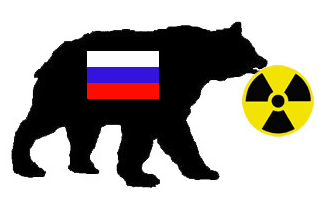 Eskom confirms that Russians will continue nuclear bid, IOL, 30 April 2017, SIYABONGA MKHWANAZI
Cape Town – The Russians will continue to prepare to bid for the nuclear-build programme, despite the decision by the Western Cape High Court to halt it.
Eskom confirmed this and awaits further directives from the government.
Friday was the deadline for all bidding companies to submit Request for Information documentation to Eskom.The court decision has also affected the deadline for the issuing of the Request for Proposals in June.
Head of Rosatom in Southern Africa, Viktor Polikarpov, told Independent Media nothing had changed with their plans to bid for the nuclear programme.
He said they would not want to comment on the case because it was a matter involving government and civil society, who took the matter to court.
Energy Minister Mmamoloko Kubayi has said she is still studying the judgment, and would not comment on whether to appeal against the court decision or not.
Kubayi will appear before MPs on Tuesday, where she will face questions on the nuclear programme.
Polikarpov said the nuclear process was not in their hands, but in the hands of the government.“We are prepared on the bidding, but much will depend on the government, how it will sort out the court issue,” he said.
Eskom spokesperson Khulu Phasiwe said the court decision had effectively nullified the process……..
He said it was clear that everything had to be nullified and started from scratch if the government still wanted to continue with the nuclear programme.
The judgment found the process followed was unlawful and unconstitutional………http://www.iol.co.za/news/politics/eskom-confirms-that-russians-will-continue-nuclear-bid-8877208
1 This Month
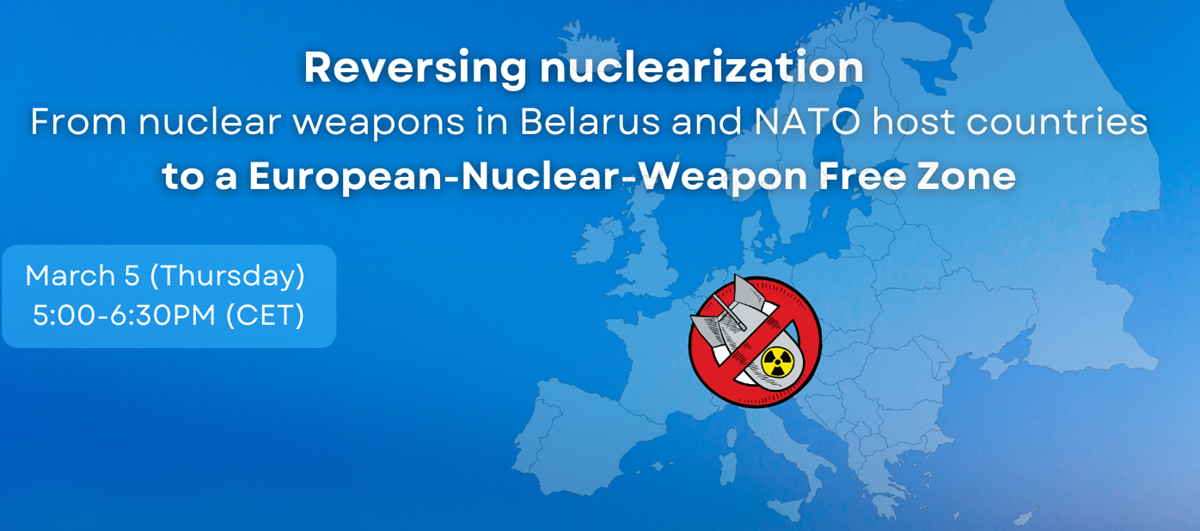
5 March -Online – Reversing nuclearization:
From nuclear weapons in Belarus and NATO host countries to a European-Nuclear-Weapon Free Zone
11am-12:30pm Eastern Time USA / 5pm-6:30pm CET

of the week – Advocating for a
nuclear free beach – https://www.samuellawrencefoundation.org/
The Samuel Lawrence Foundation advocates for a Nuclear Waste Free Beach at San Onofre, join us and take action!
10 March A LIVE WEBINAR THE REAL EFFECTS OF NUCLEAR POWER
What the Industry Isn’t Telling Us
1:00 PM Mountain, 2 pm Central, 3 pm Eastern. Live on the Keepers of the Water Facebook page

18 March Webinar @ 1 PM EST: An Assessment of SMR Projects: The Case of Canada
register for the zoom:
https://us02web.zoom.us/webinar/register/WN_o8BIIOUvQ2ONJR1nta65DQ#/registration

of the week – STOP SMALL MODULAR REACTORS IN CANADA
To see nuclear-related stories in greater depth and intensity – go to https://nuclearinformation.wordpress.com
-
Archives
- March 2026 (51)
- February 2026 (268)
- January 2026 (308)
- December 2025 (358)
- November 2025 (359)
- October 2025 (376)
- September 2025 (258)
- August 2025 (319)
- July 2025 (230)
- June 2025 (348)
- May 2025 (261)
- April 2025 (305)
-
Categories
- 1
- 1 NUCLEAR ISSUES
- business and costs
- climate change
- culture and arts
- ENERGY
- environment
- health
- history
- indigenous issues
- Legal
- marketing of nuclear
- media
- opposition to nuclear
- PERSONAL STORIES
- politics
- politics international
- Religion and ethics
- safety
- secrets,lies and civil liberties
- spinbuster
- technology
- Uranium
- wastes
- weapons and war
- Women
- 2 WORLD
- ACTION
- AFRICA
- Atrocities
- AUSTRALIA
- Christina's notes
- Christina's themes
- culture and arts
- Events
- Fuk 2022
- Fuk 2023
- Fukushima 2017
- Fukushima 2018
- fukushima 2019
- Fukushima 2020
- Fukushima 2021
- general
- global warming
- Humour (God we need it)
- Nuclear
- RARE EARTHS
- Reference
- resources – print
- Resources -audiovicual
- Weekly Newsletter
- World
- World Nuclear
- YouTube
-
RSS
Entries RSS
Comments RSS
 nuclear-news