Nuclear deal with Russia is central to the corruption in South Africa
There’s more to state capture than meets the eye, News24, Sipho Pityana, 23 June 17, The leadership crisis and the ravaging uncertainty that South Africa is going through now affect all of us.
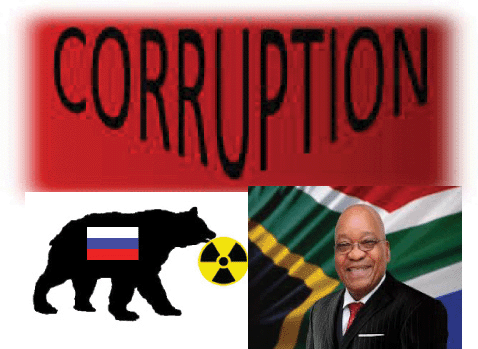
I say this because the ethical failures committed by Zuma are not confined to the president’s office. They are cascading down, like a disease, into every aspect of South African life. They are killing our country, and killing us with it. Every extra day Zuma remains in power, this erosion continues and our crisis deepens.
Zuma’s strategy is simple: keep the ANC firmly captured by stealing the leadership elections at the party’s elective conference in December, and install his protégé. His successor as president of the ANC – and, subsequently, the country – would make sure that he not only stays out of jail, but also that the state capture project continues unabated…….
Finally, there is Russia. The Russians have a very, very keen interest in the nuclear energy deals that the president allegedly signed irregularly on our behalf, which our courts have now stalled. There are billions of rands at stake. We have already seen indications that a deal is in the making, and there are consistent allegations that the captains of state capture, Zuma and the Guptas, have already received – or at least stand to get – massive kickbacks from any Russian nuclear energy deal.Given the scale of the deals (estimated at about R1.8 trillion), even a small kickback is going to run into hundreds of millions. And, as we’ve seen from the various reports on state capture – from the SACC, the Public Affairs Research Institute and the former Public Protector herself – the kickbacks are never small.
So if you join the dots: in effect, and based merely on the uncontested evidence we have at hand, we have a president and his cronies who stand at the centre of a global crime network that involves China, Russia, Asia, the Middle East and certain parts of Africa.
…….you have a South African president with an even more broken ethical compass than Trump? A president who is prepared to let business interests take precedence over the national interest? A president who is prepared to sell his own country to the highest bidder?……….
R1 trillion nuclear power project still happening, says South African President Jacob Zuma
 Zuma: The Nuclear Deal Is Still Happening, Folks He says nuclear power stations will eventually bring the country profits once they are built. Huff Post, South Africa’s controversial nuclear build programme is still very much on the cards.
In his responses to parliamentary questions on Thursday, President Jacob Zuma said government still intends to pursue the acquisition of nuclear power stations at a “pace and scale” that the country can afford…..
He denied that the deal is going to push the agenda of any country, especially Russia.
However, Energy Minister Mmamoloko Kubayi reportedly told a delegation at a nuclear conference in Moscow on Wednesday that the deal would be awarded to the “most experienced people who have a track record”.
Kubayi reportedly met Russian Energy minister Alexander Novak and Rosatom head Alexei Likhachev during her visit. Rosatom is a Russian state company believed to be the strongest contender for the award of the nuclear contract.
The nuclear build programme was dealt a blow by the Cape Town High Court after Earthlife Africa and the Southern Africa Faith-Communities’ Environmental Institute successfully challenged the way in which the state determined the country’s nuclear power needs. The plan would have seen South Africa purchasing 9 600 megawatts of extra nuclear power.
The programme is expected to cost the country around R1 trillion.http://www.huffingtonpost.co.za/2017/06/22/zuma-the-nuclear-deal-is-still-happening-folks_a_22580816/
Vulnerable to Climate Change – Mphampha, Malawi
 From heatwaves to hurricanes, floods to famine: seven climate change hotspots Global warming will not affect everyone equally. Here we look at seven key regions to see how each is tackling the consequences of climate change, Guardian, John Vidal, 23 June 17
Mphampha, Malawi
Late last year, the temperature in southern Malawi in southern Africa rose to more than 46C. A long regional drought crossing Zimbabwe, Zambia, Madagascar and Tanzania had scorched and killed the staple maize crop and millions of people who had not seen rain for more than a year depended on food aid. Long-term climate data in southern Africa is sparse, but studies backed by oral evidence from villagers confirm the region is a climate hotspot where droughts are becoming more frequent, rains less regular, food supplies less certain, and the dry spells and floods are lasting longer.
With more than 90% of Malawi and the region depending on rain-fed agriculture, it does not need scientists to tell people that the climate is changing. I sat down with villagers near Nsanje in the south of Malawi.
“I know what it is to go hungry,” says Elvas Munthali, a Malawian aid worker. “My family depended on farming. The climate is changing. Now we plant maize at the end of December or even January; we used to do that in November.”
Patrick Kamzitu, a health worker in Nambuma, says: “It is much warmer now. The rains come and we plant but then there is a dry spell. The dry spells and the rains are heavier but shorter.”
One of best studies comes from the Chiwawa district near Nsanje, close to the Mozambique border. Detailed research by the University of Malawi, backed by 50 years of rainfall and temperature data, established that rains, floods, strong winds, high temperatures and droughts were all becoming more common.
The story is more or less repeated across southern Africa and backed by governments and scientific modeling. USAid, the African Development Bank, the World Bank and IPCC assessments suggest average annual temperatures rose nearly 1C between 1960 and 2006.
Looking ahead, scientists expect average annual temperatures across southern Africa to soar, possibly as much as 3C by the 2060s, to 5C by the 2090s – a temperature that would render most human life nearly impossible. But estimates vary greatly. Rainfall, says USAid, could decrease in some places by 13% and increase in others by 32%.
All African countries know that they must adapt their farming, restore their forests, improve their water supplies and grow their economies quickly to have any chance of surviving climate change. But the adaptation money pledged to these, the world’s poorest countries, by the rich at successive UN climate summits has barely started to trickle through.
Changes could be catastrophic. In North Africa, Egypt could lose 15% of its wheat crop if temperatures increase 2C – 36% if they rise 4C. Morocco expects crop yields to remain stable up to about 2030, but then to drop quickly afterward.
Conversely, a study of 11 west African countries from the International Food Policy Research Institute expects some farmers to be able to grow more food as temperatures rise and rainfall increases. Climate change may mean Nigeria, Ghana and Togo can grow and export more sorghum, raised for grain.
But most African countries are extremely vulnerable to climate change and have no reason to expect it will improve their lot. Instead of waiting for western money, they are pressing ahead where they can with water conservation, tree planting and small-scale irrigation schemes. Drought and flood resistant crops are being adopted by the few, but the odds of more severe droughts and floods are high and the resources to resist them are slim…..https://www.theguardian.com/environment/2017/jun/23/from-heatwaves-to-hurricanes-floods-to-famine-seven-climate-change-hotspots?CMP=share_btn_tw
President Zuma “knows nothing” about nuclear corruption in South Africa, or his family benefiting
 ZUMA ‘HAS NO KNOWLEDGE’ OF HIS FAMILY BENEFITING FROM NUCLEAR PROGRAMME http://ewn.co.za/2017/06/22/zuma-has-no-knowledge-of-his-family-benefiting-from-nuclear-programme, President Jacob Zuma said the government will pursue a nuclear power project at a pace and scale that the country can afford. Rahima Essop CAPE TOWN – President Jacob Zuma has told the National Assembly he has no knowledge of his family benefitting from South Africa’s proposed nuclear build programme.
He was responding to a question by Democratic Alliance leader Mmusi Maimane, who asked him directly, whether he or any of his family members have received payments related to the project.
Zuma was asked questions about state capture, the recession and his government’s nuclear power ambitions.
The president was terse in his response to Maimane’s frank question about the possibility of corruption in the proposed nuclear build programme.
Zuma said the government would pursue a nuclear power project at a pace and scale that the country could afford.
He also reaffirmed the state’s position that nuclear is a clean and reliable form of energy.
Earlier this year, the Western Cape High Court dealt a legal blow to government’s plans when it found certain agreements related to the project were unconstitutional and unlawful.
South Africa’s President Jacob Zuma says South Africa is committed to nuclear power expansion
South Africa committed to nuclear power expansion, process to be open – Zuma, http://www.reuters.com/article/safrica-politics-nuclear-idUSJ8N1H5007
South Africa is committed to an “open, transparent” process to build new nuclear power plants and the government planned to go through with its plans for nuclear expansion, President Jacob Zuma told parliament on Thursday.
South Africa is planning to build 9,600 megawatts (MW) of nuclear capacity, a project that could be one of the world’s biggest nuclear contracts in decades.
But Energy Minister Mmamoloko Kubayi said on Wednesday in Moscow that the plans will be reviewed as the country is in a recession. (Reporting by Wendell Roelf; Writing by Ed Stoddard; Editing by James Macharia)
Russia marketing nuclear power to Uganda
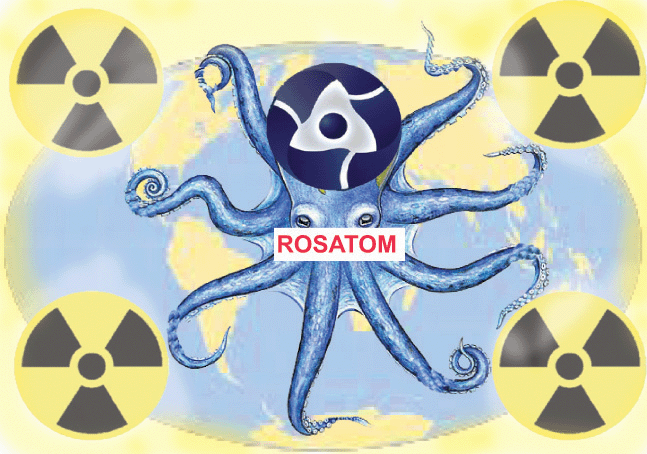 Uganda Could Become The First African Country To Develop Nuclear Power http://www.konbini.com/ng/lifestyle/uganda-could-become-the-first-african-country-to-develop-nuclear-power/ by Odunayo Eweniyi , 22 June 17 Like there’s not enough wrong in Africa right now, Uganda has signed a deal with Russia to develop uranium into nuclear power for peaceful purposes. Not to mention that it’s really suspicious that Russia seems intent on handing nuclear power to anyone and everyone who will take it. But let’s not worry, they said it’s for peaceful purposes.
Uganda’s State Minister for Minerals, Simon D’Ujanga and Russia’s Deputy Director-General of Rosatom State Atomic Energy Corporation, Nikolai Spasskiy, signed the Memorandum of Understanding in Moscow, and it includes collaboration in the areas of radiological and physical security, fundamental and applied researches, human resource training, and nuclear research centres.
The discussions with Russia started last October, shortly after the launch of the Uganda-Russian Joint Permanent Commission, an inter-governmental framework for economic, scientific and technical cooperation.
At least 8 countries in Africa are actively considering starting nuclear programs – Nigeria (don’t laugh), Ghana, Senegal, Kenya, Uganda, Tanzania, Zambia, Namibia; but the question is why? Emerging countries like the ones listed generally do not have the expertise for this, so as opposed to focusing on building and relying on licenses from developed countries who arguably have their own agendas when sponsoring developments like this one in African countries, why don’t we focus on building the expertise first?
And African countries are largely unable to manage the present grid system that we have, where do we get the assurance that they can manage nuclear power plants, which they say are built for peaceful purposes, but could just as easily harm citizens?
Russia signs up Sudan to buy nuclear technology

 Sudan and Russia Sign MOU for Cooperation Nuclear Power for Peaceful Uses, 20 June 17 Khartoum — Sudan and Russia signed in Moscow Monday a memo of understanding for cooperation in the field of nuclear power for peaceful uses, which was signed by the State Minister at the Ministry of Water Resources, Irrigation and Electricity, Engineer Yousif Hamza, and the General Director of the Russian Nuclear Power Agency for the Russian side.
Engineer Yousif said that implementation of the programs included in agreement will result in the signing of an agreement between the Sudanese and Russian sides in the field of atomic power for peaceful uses by the end of the year 2017…..http://allafrica.com/stories/201706200480.html
Russia’s Rosatom denies any ‘secret deal’ with South Africa
Russia’s Rosatom says no ‘secret deal’ with South Africa http://af.reuters.com/article/energyOilNews/idAFR4N1JC007 Jun 20, 2017, MOSCOW, – Deputy chief executive officer of Russia’s state nuclear firm Rosatom Kirill Komarov told a briefing on Tuesday that there was no “secret deal” between Russia and South Africa over nuclear projects.
He also said the nuclear pact between two countries from 2014 was standard for such circumstances.
Russia and South Africa discussed joint nuclear projects but those plans were disrupted after South Africa’s High Court deemed a nuclear cooperation pact with Russia unlawful earlier this year. (Reporting by Alexander Winning; writing by Maria Tsvetkova; editing by Vladimir Soldatkin)
Russia marketing nuclear power to Zambia
Russia’s Rosatom to review opportunity of nuclear power plant building in Zambia http://tass.com/economy/952152 June 19 MOSCOW, Russian state nuclear corporation Rosatom will prepare a preliminary feasibility study for construction of a nuclear power plant (NPP) in Zambia. A relevant agreement was signed between the parties within the Atomexpo 2017 exhibition framework, TASS reports on Monday.
This document signifies the first stage of the project execution prior to making an investment decision on NPP construction in Zambia, Rosatom says.
A contract for services of assessment and development of the nuclear infrastructure in Zambia, a contractor for preliminary engineering survey in Zambia by Rosatom’s affiliate Atomstroiexport and an agreement on setup of a nuclear science and technology center in Zambia were signed also.
Memoranda of understanding and cooperation in peaceful use of nuclear energy with Uganda, Sudan and Ethiopia were also signed within the forum framework.
Solar lamps tackling poverty and ill-health in Africa
 Solar lamps light up more African nights http://climatenewsnetwork.net/22346-2/ June 5, 2017, by Paul Brown Solar lamps are tackling poverty, ill-health and natural hazards in Africa, thanks to Chinese industry and a UK-based charity.
LONDON, 5 June, 2017 – With 600 million people in Africa still without electricity and relying on expensive kerosene for lighting, the invention of a new high-quality solar light gives hope for a better quality of life for the poorest people of the continent.
And with solar light design and quality constantly improving and prices falling, a brighter future is more affordable – and can even turn a profit for householders.
The new £4 ($5) lamp now on offer in parts of East Africa was created by Inventid, a company based in Manchester, UK, and has undergone trials with 9,000 families in Malawi, Uganda and Zambia. The SM100, as it is called, is now being made in China by the solar giant Yingli and distributed in Africa by the charity SolarAid.
The lamp is small enough to be used as a hand torch or a bicycle lamp, and has a stand which lets it be used as a table lamp or overhead light. It is tough enough to survive being dropped, or drenched in rain.
SolarAid, which has been pioneering the sale of solar lamps to poor communities in Africa since 2006, says the new model gives twice the light of a kerosene lamp and and, over its five-year guaranteed lifetime, saves a ton of carbon dioxide for each kerosene light it replaces.
Cash generator
But Leggett says it is the light itself that makes the real difference. “Seeing the faces of Africans who witness a solar light being turned on for the first time in a hut at night, as I have, is a highly emotional experience.
“We often forget how lucky we are in the rich nations – how much we take for granted. One thing I hadn’t realised before I went to Africa is what a danger snakes are at night. With a solar light, you have a chance to see them.
“There are so many other benefits. It is thrilling to think that our lights address almost all the UN’s Sustainable Development Goals.”
So far SolarAid has sold 1.9 million solar lights to Africa and hopes that this cheaper, later version will be even more successful. One of the problems is that some countries, for example Uganda and Malawi, tax solar lights, making them less affordable for the poor.
“In my view this is short-sighted, because the price has to be passed on to the consumer, meaning fewer lights will be sold, meaning reductions in the cash freed up by savings on the kerosene which is no longer needed”, says Leggett.
Price of a drink
“Those savings, spent in the local economy, would help the governments build a healthy economy much more than the taxes they raise.”
When the Climate News Network last wrote about solar lights for Africa in February 2015, SolarAid was asking companies to donate 5% of their profits to the scheme. It now needs more help to reach more of the 600 million Africans without electricity.
“To get solar lights out to the frontier areas where we work, SolarAid is currently overdependent on increasingly impossible-to-predict and precarious donations from large organisations,” Leggett says.
He is asking all his friends, and many other people besides, to donate £4 a month – “the price of a drink” – to pay for one light a month for Africa. – Climate News Network
Chris Yelland on the disadvantages of nuclear power for South Africa
Is nuclear the best option for SA? Flexibility is key in an unpredictable world. Money Web, Roger Lilley / 1 June 2017 Eskom appears to be more concerned with building new nuclear power stations than in signing power purchase agreements with independent power producers that use renewable energy sources. Energize caught up with energy analyst and managing director of EE Publishers, Chris Yelland, for his opinion on what generation technologies South Africa should opt for.
The high, upfront capital costs, and associated financing and affordability of such mega-projects, is an issue, and one really has to deal with this issue, because it is one of the big drawbacks of nuclear.
We must also fully understand the levelised cost of electricity (LCOE) from nuclear power over the economic lifetime of the plant, taking into account the overnight capital cost, interest during construction, the fixed and variable operating, maintenance and fuel costs, and the costs of decommissioning and waste disposal. The LCOE indicates the overall cost, in R/kWh of the electricity delivered from a nuclear power plant, in order to be able to compare it properly on a similar basis with other technologies.
Nuclear power stations take a long time to build – up to ten to 12 years per reactor – and mega-projects are prone to high cost and time overruns. These realities cannot simply be ignored.South Africa needs flexibility in an uncertain and unpredictable world, where electricity demand is difficult to predict in the years ahead, and disruptive technologies are on the horizon. Technologies such as wind, solar PV and energy storage may change the rules of the game……..
A tipping point was reached as the price of wind and solar PV energy came crashing down. All of a sudden there are now lower-cost alternatives to new nuclear and new coal power. Nuclear is no longer the least-cost option, and a blend of wind, solar PV, gas and pumped storage can deliver reliable, despatchable, baseload power at lower cost than new nuclear and even new coal power…….
there’s the option of wind, solar PV, gas and pumped storage. This is a low carbon option, just as nuclear is a low carbon option. But it is also an option to deliver reliable, despatchable baseload power in a flexible way at lower cost than the nuclear option. This is what is termed “flexible power”…….
CHRIS YELLAND: In my view, the decline of the coal sector is inevitable, as the world moves away from coal to a cleaner, low-carbon future, both locally and globally.
We live in a global village, and South Africa simply cannot continue to burn coal regardless of the consequences to water use, pollution, health and climate change. The world is expecting us to move to cleaner options, and South Africa has made international commitments to do just this. We need to plan ahead and address these matters going forward. ……
The growth of rooftop solar PV in domestic, commercial and industrial applications has not been considered in the Draft IRP 2016 at all, and yet is a growing and inevitable reality, both globally and in South Africa.
The Department of Energy, Eskom and municipal electricity distributors ignore this growing alternative and supplement to conventional grid electricity at their peril. This is potentially a huge disruptor to the traditional business models of power utilities.
Customers are choosing cleaner and cheaper sources of energy to reduce both their costs and dependency on public utilities. Thus I expect very significant growth in this market as solar PV and battery storage prices continue to drop, while the price of grid electricity continues to rise.Utilities have to sit up and take note. Otherwise they may find themselves in a death spiral, where rising costs of grid power drive their customers away to alternatives. As people move to these alternatives in greater numbers, so the costs of the new alternative technologies come down due to increasing economies of scale. At the same time, in a vicious circle, this further pushes up the price of grid power, as utilities try to recover their fixed cost structure from declining kWh sales volumes.
This really needs to be taken seriously. It has happened in other parts of the world, and it’s not unthinkable that it could happen in South Africa. https://www.moneyweb.co.za/news/south-africa/nuclear-energy-the-best-option-for-south-africa/
Nuclear power company Eskom wants a blank cheque from the South African government
Eskom asks Gigaba for blank cheque, news 24, Sipho Masondo
These requests are contained in a letter Eskom chairperson Ben Ngubane wrote to Gigaba earlier this month. In the letter, dated May 10, Ngubane also pleads with the minister to intervene in the stand-off between Treasury and Eskom regarding the Gupta family’s Tegeta Mine.
The letter was sent to Gigaba two weeks after the Western Cape High Court’s ruling that key elements of the nuclear deal were unconstitutional.
The letter appears to be an attempt by Ngubane to set a new tone for the relationship from the somewhat tense one that Eskom had with Treasury under ministers Nhlanhla Nene and Pravin Gordhan. Treasury and Eskom clashed repeatedly in recent years as the former insisted that the power utility abide by the rules and questioned its procurement practices.
. Asked for a direct line to Gigaba;
. Pleaded with Gigaba to revise the Preferential Procurement Policy Framework Act (PPPFA) or rush to introduce the Procurement Act to enable “radical economic transformation”;
. Requested the finance minister to relax the stringent conditions relating to the extension of the power utility’s R350 billion guarantees;
. Appealed to Gigaba to approve various programmes relating to the nuclear deal. These included exempting Eskom from the PPPFA and the approval of the Standard Infrastructure Procurement and Delivery Management; and,
. Raised concerns that Treasury had appointed another service provider to review Eskom’s coal contract with Tegeta and that the stand-off between the two parties regarding the power utility’s coal contracts with the Gupta family’s Tegeta mine had been going on for two years……..
ast month, City Press also reported Eskom was set to get the nuclear deal underway in June by issuing a request for proposals.
At that time, sources had told City Press that President Jacob Zuma had removed finance minister Gordhan and his deputy Mcebisi Jonas because they were opposed to the nuclear deal and were dragging their feet in having it implemented.
After seeing Ngubane’s letter, a source with knowledge of Treasury’s workings said: “Now you know why Gordhan and Jonas were removed. This is the completion of state capture.”
The source said Ngubane and the Eskom leadership wanted the PPPFA to be relaxed “so that they can do as they please with procurement”.
“Why would they want the conditions that come with guarantees to be relaxed? You must remember, for government to give guarantees, there must be stringent conditions. You simply cannot relax them,” he said.
Such conditions, he said, included a corporate plan that should be seen and approved by Treasury, and procurement policies that were in line with the Public Finance Management Act and the PPPFA.
A senior executive at Treasury said: “Baldwin [Ngubane’s middle name] is saying the previous minister was not a friend of Eskom. He was strict and put Eskom under watch through guarantees and other procurement conditions.
“He is asking the new minister to relax conditions, approve the nuclear deal, exempt Eskom from procurement measures and give the favours as outlined in the letter.” http://www.news24.com/SouthAfrica/News/eskom-asks-gigaba-for-blank-cheque-20170527
South Africa: corruption and th ecapture of the State
Betrayal of the Promise: The Anatomy of State Capture https://www.dailymaverick.co.za/article/2017-05-26-betrayal-of-the-promise-the-anatomy-of-state-capture#.WS4FiJKGPGg RANJENI MUNUSAMY
South Africans have been bombarded with revelations of how the state has been hijacked to amass wealth for a connected power elite involving President Jacob Zuma and the Gupta family. An academic research partnership has consolidated all available information into a frightening compendium on state capture, mapping the deals, the key players and the modus operandi for commandeering control of state institutions and parastatals. Their report shows why it is necessary for a judicial inquiry and criminal prosecution for corruption, fraud, money laundering, racketeering and, possibly, treason. It also shows the danger of key enablers such as Zuma, Finance Minister Malusi Gigaba and Eskom CEO Brian Molefe remaining in their posts. By RANJENI MUNUSAMY.
Last week, the South African Council of Churches (SACC) released a report of an Unburdening Panel comprising evidence of whistle-blowers who approached church leaders about their experiences of state capture. On Thursday, the State Capacity Research Project, a team of leading academics from four universities, released a 72-page report detailing what they call a “silent coup” by an organised criminal network.
Betrayal Of The Promise: How South Africa Is Being Stolen is a report that sought to respond to Gordhan’s challenge to “connect the dots” around all the allegations of state capture and why he and Jonas were fired.
“While corruption is widespread at all levels and is undermining development, state capture is a far greater, systemic threat. It is akin to a silent coup and must, therefore, be understood as a political project that is given a cover of legitimacy by the vision of radical economic transformation. The March 2017 Cabinet reshuffle was confirmation of this silent coup; it was the first Cabinet reshuffle that took place without the full prior support of the governing party.
“This moves the symbiotic relationship between the constitutional state and the shadow state that emerged after the African National Conference (ANC) Polokwane conference in 2007 into a new phase. The reappointment of Brian Molefe as Eskom’s chief executive officer (CEO) a few weeks later in defiance of the ANC confirms this trend,” the report states.
South Africa’s anti nuclear movement renews its campaign
Group that ended Eskom’s nuclear bid plans next move http://www.fin24.com/Economy/Eskom/group-that-ended-eskoms-nuclear-bid-plans-next-move-20170528 Matthew le Cordeur Cape Town – The Southern African Faith Communities’ Environment Institute (Safcei) has moved on from its court victory over government and Eskom in April, which set aside the nuclear procurement programme.
High court ruling on nuclear was a victory for SA – Liziwe McDaid
A month after winning the court bid, Safcei spokesperson Liz McDaid said the victory opened space for other civil society organisations to come together to keep the nuclear programme from moving forward.
McDaid, who was engaging with stakeholders in Khayelitsha last week, told Fin24 that the court victory was a major boost in bringing other stakeholders together.
“For civil society, this has opened a space,” she said. “It has meant that organisations involved in child care, youth work (and) social justice have realised what the impact of such a deal could have on their work.
“Right now, it’s up to civil society to consolidate that gain, to spread that message and to mobilise going forward.”
McDaid said Safcei would focus its attention on the Department of Energy’s draft integrated resource plan and energy plan, which is currently undergoing stakeholder engagement and public hearings.
“One of our critical areas is the electricity plan, which was five years out of date,” she said. “We want to make sure that process runs properly and that renewable energy is given its proper place, because we want to see South Africa move into the future.
“The future energy is definitely renewable and not nuclear,” she said. Continue reading
South Africa’s nuclear build plans – ripe for corruption
 How SA’s nuclear plant build could fuel corruption The government can restrict public and parliamentary oversight by using arguments on national security, Business Day, 23 MAY 2017 7 The construction of a nuclear power plant is considered to be a megaproject – characterised as a significant investment, as being highly complex organisationally and technically and as having a long-lasting effect on the economy, society and the environment.
International experience shows that such projects are prime targets for corruption. Their size, complexity and longevity create thousands of contractual links — between the customer, contractor, sub-contractors, co-ordinating project offices, etc — each of which present an opportunity for corruption. A recent local example is the corruption that plagued phase 1 of the Lesotho Highlands Water Project.
Allied to this is the potential problem of central government involvement. Energy projects in particular tend to be centrally managed by governments and, by necessity, afford senior public officials discretionary powers over projects.
The construction of a nuclear power plant is particularly problematic as governments can use issues of alleged national security to restrict public and even parliamentary oversight.
In SA, apartheid-era legislation such as the National Key Points Act of 1980 could be used to withhold information about any new nuclear power plant being constructed. As Right2Know has said, “historically, the National Key Points Act has been used and abused to stifle access to information”.
In the alleged interests of national security, information about corruption (think Nkandla) or a radioactive leak could be hidden from the public. The situation is made worse by the fact that there is no public interest defence for whistleblowers in terms of the National Key Points Act.
Nuclear power plant construction is also open to corruption because of the information asymmetry between the vendor and the buyer.
SA is not able to build nuclear power plants on its own and lacks the necessary information on the technical complexity of construction processes. This means that the vendor can be confident that the buyer is not fully aware of all the features and financing needs of the power plant, creating opportunities for graft by the vendor.
The type of construction model signed with vendors can also have an effect on corruption. SA’s nuclear build front-runner Rosatom offers various models. According to Phumzile Tshelane, CEO of the Nuclear Energy Corporation of SA, the country prefers the build, own and transfer model in terms of which vendors and states work in joint venture partnerships to build and operate power plants that are eventually transferred to recipient states.
At first glance, this looks like the best model for SA because it means that anything between 25% and 50% of project implementation and construction jobs will be localised. However, in SA, where according to Transparency International, both the public and private sectors are endemically corrupt, such a model creates numerous opportunities for rent-seeking.
Already, we have seen a R171m deal for the “procurement of the nuclear build programme management system” awarded to a company called Central Lake Trading 149 that is run by the son of Vivian Reddy, long-time associate of President Jacob Zuma. While there is no indication of anything suspicious in this deal, it demonstrates the kind of opportunities created……..
How nuclear procurement has been handled to date in the country shows just how far the government has departed from best practice.
Firstly, the government has failed to show that the nuclear build is necessary. Its own Ministerial Advisory Council on Energy recommends that no new nuclear power capacity is necessary in SA for the foreseeable future.
This view is confirmed by Council for Scientific and Industrial Research (CSIR) modelling, which shows that no new nuclear power is necessary until at least 2050 (the date their modelling ended). Prof Anton Eberhard of the University of Cape Town has described the state’s determination to pursue the nuclear procurement as “irrational”.
Secondly, the government has not properly assessed alternative ways of meeting the perceived need.
While it has considered renewable energy options, it has done so in a fashion that artificially constrains their potential.
The government’s draft 2016 Integrated Resource Plan (IRP) places completely arbitrary limits on the amount of renewable energy that can be delivered in SA despite there being, according to the CSIR, no technical reason for this.
Energy expert Chris Yelland has stated that the constraints imposed in the IRP are the result of “a political decision rather than a rational planning decision”.
Thirdly, project costs and benefits have not been estimated accurately throughout their complete life cycles.
Energy experts throughout SA agree that the draft 2016 IRP underestimates the cost of nuclear power and overestimates the cost of renewables.
The IRP suggests a cost of R0.97/kWh for new nuclear power. The CSIR has found that the “most optimistic” cost would be R1.17/kWh, while research carried out by EE Publishers suggested R1.30/kWh.
None of these calculations factor in the considerable extra costs of nuclear fuel, routine plant maintenance and refurbishment, decommissioning, or the long-term disposal of nuclear waste. For renewables, the IRP gives a price of R0.81/kWh for solar and R0.93/kWh for wind, while the CSIR shows that both now cost R0.62/kWh, with prices continuing to fall.
Lastly, particular suppliers have been favoured and deals have been reached without proper oversight.
The recent court case between the Department of Energy and Earthlife Africa-Southern African Faith Communities Environment Institute demonstrates this.
The judges in the case found that Rosatom had been favoured over other potential vendors as a “a firm legal commitment existed between SA’s government and Rosatom in terms of the Intergovernmental Agreement signed with Russia in 2014”. An agreement that the judges found, “clearly required to be scrutinised and debated by the legislature” and was in breach of section 10 of the National Energy Regular Act, which calls for participatory decision-making processes.
New Energy Minister Mmamoloko Kubayi recently stated that new agreements will be signed with nuclear vendors but that she did not want to find herself “in court every day”.
She could heed best practice and ensure that before any procurement proceeds, an anti-corruption plan is in place between the government, the vendor and civil society.
This should identify where corruption could take place, make recommendations for mitigating it and should be regularly reviewed during each phase of project implementation. Transparency International calls these plans “integrity pacts” and they have been successfully implemented in 15 countries in more than 300 procurement projects.
Sadly, in the current climate, it seems inconceivable that either Eskom or Rosatom (or any other vendor) would agree to be held accountable to civil society, such is the headlong charge for nuclear power in SA.
• Dr Overy is a freelance environmental researcher. https://www.businesslive.co.za/bd/opinion/2017-05-23-how-sas-nuclear-plant-build-could-fuel-corruption/
1 This Month
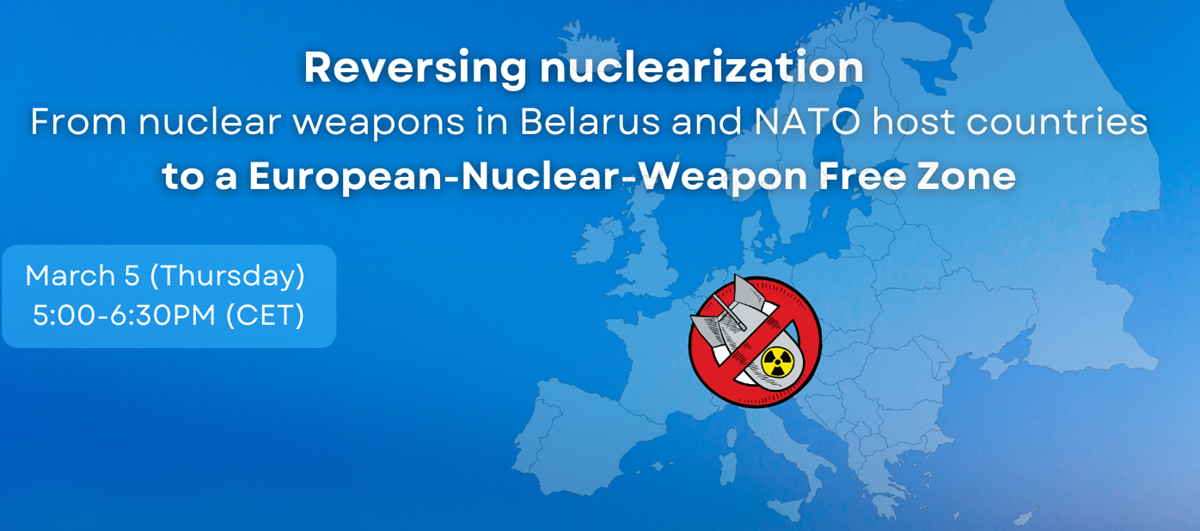
5 March -Online – Reversing nuclearization:
From nuclear weapons in Belarus and NATO host countries to a European-Nuclear-Weapon Free Zone
11am-12:30pm Eastern Time USA / 5pm-6:30pm CET

of the week – Advocating for a
nuclear free beach – https://www.samuellawrencefoundation.org/
The Samuel Lawrence Foundation advocates for a Nuclear Waste Free Beach at San Onofre, join us and take action!
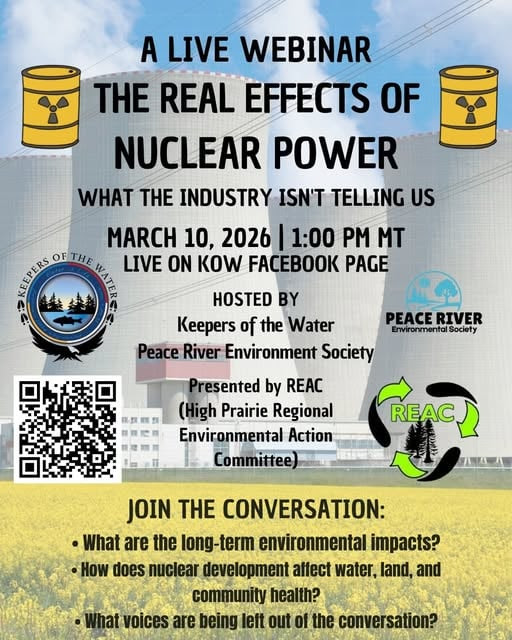
10 March A LIVE WEBINAR THE REAL EFFECTS OF NUCLEAR POWER
What the Industry Isn’t Telling Us
1:00 PM Mountain, 2 pm Central, 3 pm Eastern. Live on the Keepers of the Water Facebook page
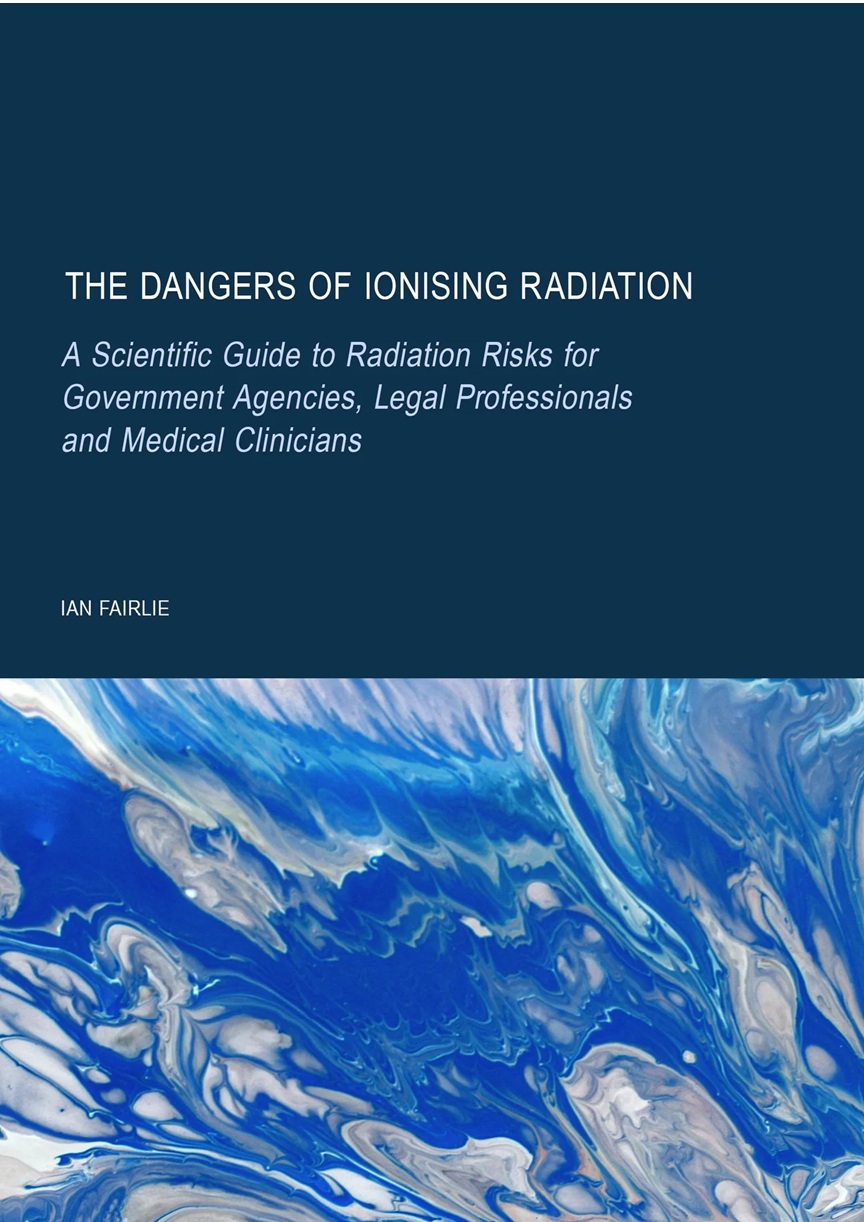
18 March Webinar @ 1 PM EST: An Assessment of SMR Projects: The Case of Canada
register for the zoom:
https://us02web.zoom.us/webinar/register/WN_o8BIIOUvQ2ONJR1nta65DQ#/registration

of the week – STOP SMALL MODULAR REACTORS IN CANADA
To see nuclear-related stories in greater depth and intensity – go to https://nuclearinformation.wordpress.com
-
Archives
- March 2026 (51)
- February 2026 (268)
- January 2026 (308)
- December 2025 (358)
- November 2025 (359)
- October 2025 (376)
- September 2025 (258)
- August 2025 (319)
- July 2025 (230)
- June 2025 (348)
- May 2025 (261)
- April 2025 (305)
-
Categories
- 1
- 1 NUCLEAR ISSUES
- business and costs
- climate change
- culture and arts
- ENERGY
- environment
- health
- history
- indigenous issues
- Legal
- marketing of nuclear
- media
- opposition to nuclear
- PERSONAL STORIES
- politics
- politics international
- Religion and ethics
- safety
- secrets,lies and civil liberties
- spinbuster
- technology
- Uranium
- wastes
- weapons and war
- Women
- 2 WORLD
- ACTION
- AFRICA
- Atrocities
- AUSTRALIA
- Christina's notes
- Christina's themes
- culture and arts
- Events
- Fuk 2022
- Fuk 2023
- Fukushima 2017
- Fukushima 2018
- fukushima 2019
- Fukushima 2020
- Fukushima 2021
- general
- global warming
- Humour (God we need it)
- Nuclear
- RARE EARTHS
- Reference
- resources – print
- Resources -audiovicual
- Weekly Newsletter
- World
- World Nuclear
- YouTube
-
RSS
Entries RSS
Comments RSS
 nuclear-news