Chile ratifies UN Nuclear weapons ban treaty
Chile ratifies UN Nuclear weapon ban treaty ICAN, 9 Oct 21, Chile became the 56th country to ratify the landmark Treaty on the Prohibition of Nuclear Weapons (TPNW) on 23 September 2021. As leaders from around the world gathered in New York for the annual high-level opening of the UN General Assembly, the Chilean foreign minister, Andrés Allamand, deposited his country’s instrument of ratification with the United Nations Under-Secretary-General for Legal Affairs and United Nations Legal Counsel, Miguel de Serpa Soares.
Allamand described the TPNW’s entry into force
earlier this year as “one of the most important milestones on our path towards global and complete disarmament”.
The Latin America Human Security Network (SEHLAC), which serves on ICAN’s international steering group, hailed Chile’s ratification as a great step forward. “With this step, Chile joins the group of countries that have formalised their firm conviction that any use of nuclear weapons is unacceptable,” said Pamela Velásquez Guzmán, SEHLAC’s representative in Chile. “I want to congratulate the commitment of the Ministry of Foreign Affairs, the parliamentarians, and the civil society that made this achievement possible.”
The Chamber of Deputies of the National Congress of Chile approved ratification of the TPNW on 24 June and the Senate approved it on 24 August.
Chile played an important role in the negotiation of the TPNW in 2017 and was among the first countries to sign the treaty……….. https://www.icanw.org/chile_ratifies_un_nuclear_weapon_ban_treaty?utm_campaign=good_news_7_oct_2021&utm_medium=email&utm_source=ican
Global nuclear industry – rotten to the core: it’s not just Brazil

A bad barrel, not just a few bad apples. Additionally, Lava Jato revealed that the type of corruption that took place was not just a matter of a few rotten apples, but rather of systemic factors.
Corruption in the nuclear industry is a known international phenomenon. The recent scandal in Ohio illustrates how the push for subsidies to nuclear plants is not the result of a real commitment to citizens’ energy needs or climate concerns, but a way for energy corporations to maintain overpayments and assure political gains to certain parties. Brazil offers a different model, one that has used new nuclear facilities to generate kickbacks to powerful political and business interests.
|
Brazil’s Angra 3 nuclear reactor: a political undertaking, not a common good https://thebulletin.org/2021/02/brazils-angra-3-nuclear-reactor-a-political-undertaking-not-a-common-good/ By Carolina Basso | February 16, 2021 In 2019 the Brazilian government decided to resume work at Angra 3, a nuclear reactor where construction has been essentially dormant for more than three decades. The work was supposed to restart last year, with the reactor entering commercial service by late 2026, but COVID-19 and the quest for private partners to invest in the project have pushed back the schedule. Brazil currently has two operating nuclear power plants, Angra 1 and 2, that have generated less than three percent of the country’s electricity since their commercial launch. So why does Brazil want to resume construction of a third nuclear reactor? Angra 3 is questionable in economic and energy-related terms. Studies have shown that the country can generate electricity much more cheaply by integrating wind power with Brazil’s considerable hydropower resources. Analysts suggest that this combined system could supply all the electricity the population demands, making any expansion of the nuclear industry sector unnecessary and costly. The decision to resume construction of the third Brazilian reactor was made by President Jair Bolsonaro, who is committed to expanding the nuclear industry. Bolsonaro’s commitment results in part from his close ties to Brazil’s Navy, which has historically shaped the nuclear sector and currently dominates the country’s uranium enrichment and fuel cycle technology. But this factor alone cannot explain the decision. It is imperative to examine who will benefit from the project, particularly through the kinds of corruption that are endemic in Brazil. Seen in that light, the political push for building Angra 3 would seem to have more to do with money and politics than with providing a public good. A web of bribes.The Angra 3 project began in the early 1980s, but a number of administrative and financial problems slowed construction down, and it ceased altogether in 1986. Then-President Luiz Inácio Lula da Silva revived construction in 2010, but it was again interrupted in 2015 due to the detection of contractual frauds. That detection had to do with another important development in Brazilian politics: Operation Car Wash, or Lava Jato, in Portuguese. The Federal Police of Brazil launched the operation in 2014 to investigate an enormous money laundering and embezzlement scheme involving major contractors and several politicians. Amid the whirl of investigations, the police discovered an elaborate web of bribes in Eletronuclear, the state-owned electric subsidiary that operates the Angra nuclear reactors. Most of the payoffs pertained to contracts signed in the early stages of the three reactors. The corruption pattern unveiled by the police demonstrated that the corrupt activity in the nuclear sector was heavily institutionalized and took place out in the open. The actors involved developed a complex mechanism through which government officials worked with private business conglomerates to generate kickbacks worth millions of dollars.
The transactions worked as follows: Brazilian companies like Odebrecht and Camargo Correa paid bribes to politicians associated with state agencies (namely, Eletronuclear) to be hired by them or to form partnerships with international companies such as Techint to increase their profits. Nevertheless, this scheme needed private intermediaries with vast political connections to jump over bureaucratic obstacles. Therefore, part of the profits collected by the construction companies went to pay these brokers for their work and to bribe public officials. Finally, the kickbacks allowed politicians to finance their electoral campaigns and private interests. The anti-corruption probe suspended Angra 3’s construction and canceled all contracts allocated to engineering, construction, and electromechanical-assembly companies associated with the nuclear project. Operation Car Wash’s groundbreaking findings unveiled common tactics employed for decades. The investigations were crucial in exposing “the degree to which some policies make no economic sense but are implemented regardless because doing so is in the interest of a few businesses and political groups,” a lengthy report on nuclear governance in Brazil concluded. The result of that twisted pursuit is uneconomical projects with low regulatory standards for licensing and other policy decisions. A bad barrel, not just a few bad apples. Additionally, Lava Jato revealed that the type of corruption that took place was not just a matter of a few rotten apples, but rather of systemic factors. In other words, replacing individuals will not necessarily change the underlying dynamics generating demand for corruption in the first place. Angra 3 has been and likely will continue to be used as a political tool for money laundering and a vehicle for public authorities to receive tax dollars. Enter candidate Bolsonaro. The majority of his presidential campaign in 2018 capitalized on the anti-corruption wave generated by Operation Car Wash to gain votes from those outraged by the misconduct detected. Bolsonaro even invited Federal Judge Sérgio Moro, one of Lava Jato‘s main prosecutors, to become his Minister of Justice and Public Safety. But the reality of Bolsonaro’s reign as president has not lived up to his campaign promises, and corruption continues. In April 2020, former judge Moro resigned, accusing the president of attempting to interfere in Federal Police investigations. Experts point out that Moro’s departure crowns a process of politicization of government agencies that fight crime, which runs contrary to the values Bolsonaro endorsed during his campaigning. A burden on consumers. It is in light of this enduring corruption in Brazil that readers should consider the decision to resume construction of Angra 3. The combination of high costs, doubtful political intentions, and better energy options make it unreasonable to expand nuclear capabilities in Brazil. If decision-makers were truly concerned about the energy demands of the people, they would have invested in alternative systems that are more economical and sustainable. That they have not done so very likely has something to do with opposition from the lobbies of competing energy industries and the interests of political elites who hope to financially benefit from expensive projects like Angra 3. Corruption in the nuclear industry is a known international phenomenon. The recent scandal in Ohio illustrates how the push for subsidies to nuclear plants is not the result of a real commitment to citizens’ energy needs or climate concerns, but a way for energy corporations to maintain overpayments and assure political gains to certain parties. Brazil offers a different model, one that has used new nuclear facilities to generate kickbacks to powerful political and business interests. Because of this favoring of influence over qualification and fair budgeting, the burden on consumers will continue to grow. Around the world, reactor costs in the nuclear industry tend to be much higher than initially estimated. Angra 3’s estimated price has risen more than $2.7 billion from 2008 to 2018. The expensive investment has resulted in the tariff from the plant doubling from roughly $45 to $90 per megawatt hour. It is past time politicians refrain from overcharging the Brazilian population for their own advantage. |
Cuba signs up to another nuclear disarmament treaty
|
Cuba reaffirms its commitment to nuclear disarmament, https://www.plenglish.com/index.php?o=rn&id=64148&SEO=cuba-reaffirms-its-commitment-to-nuclear-disarmament Havana, Feb 4 (Prensa Latina) Cuba reaffirmed its commitment to nuclear disarmament by signing on Thursday the Comprehensive Nuclear Test Ban Treaty (CTBT).
According to the Cuban Foreign Ministry’s website, the country’s ratification expresses its support for the complete and effective prohibition of all explosive tests, other sophisticated methods and subcritical trials.
With the action, Cuba also confirms its condemnation of the rise in expenditures to enhance such experiments, while calling for the closure of the facilities used for such purposes and their associated infrastructure.
Cuba is a State Party to the Treaty on the Prohibition of Nuclear Weapons, the Treaty on the Non-Proliferation of Nuclear Weapons, and the Chemical and Biological Weapons Conventions.
The CTBT, once in force, will contribute along with those deals to the efforts for the total, transparent and irreversible eradication of those artifacts, the source referred. Cuba belongs to the first densely populated zone in the world to be declared a Nuclear-Weapon-Free Zone. In addition, Cuba reaffirms the validity of the Proclamation of Latin America and the Caribbean as a Zone of Peace, adopted at the 2nd Summit of Heads of State and Government of the Community of Latin American and Caribbean States, held in Havana in 2014. |
|
Cyberattack on nuclear unit in Brazil
Brazil’s Eletrobras says nuclear unit hit with cyberattack ,https://finance.yahoo.com/news/brazils-eletrobras-says-nuclear-unit-113223064., PAULO, Feb 4 (Reuters) – A nuclear power subsidiary of Brazil’s Eletrobras suffered a cyberattack but no operations were impacted, the state-controlled power holding company said in a filing late on Wednesday.
The network that was attacked by ransomware is not related to the operational systems of nuclear energy plants Angra 1 and Angra 2, said Centrais Eletricas Brasileiras, as Eletrobras is formally known.
Subsidiary Eletronuclear has suspended use of some of its administrative software to protect its data, the company said in the filing.
It said the incident is under investigation by government entities responsible for nuclear power security. (Reporting by Tatiana Bautzer; editing by Jason Neely)
Russia keenly marketing nuclear technology to Bolivia
 Rosatom may put stages I, II of nuclear center in Bolivia into operation in 2021, TASS, 25 Dec 20, Rosatom may put stages I, II of nuclear center in Bolivia into operation in 2021, TASS, 25 Dec 20, On March 6, 2016, Russia and Bolivia concluded an inter-governmental agreement on cooperation in the peaceful use of nuclear energy and construction of a nuclear research center in El Alto MOSCOW, December 25. /TASS/. The Rosatom State Nuclear Energy Corporation is continuing the construction of the Center for Nuclear Research and Technologies in Bolivia, despite the difficult political situation in that country. Next year the company plans to commission the first and second stages of the facility, Head of Rosatom Alexey Likhachev said on Friday.”Despite two revolutions, work continues in Bolivia. Next year we will start commissioning facilities of the first and second stages of the Center for Nuclear Research and Technologies,” he said…….. Nuclear project in BoliviaOn March 6, 2016, Russia and Bolivia concluded an inter-governmental agreement on cooperation in the peaceful use of nuclear energy and construction of a nuclear research center in El Alto, at an altitude of 4,100 meters above sea level. The Bolivian government-funded $300-million project will be implemented jointly with Russia’s nuclear power corporation Rosatom………. https://tass.com/economy/1239807 |
|
Surge in fires in Brazil’s Amazon

|
Fires in Brazil’s Amazon rainforest jump in October, By Jake Spring, BRASILIA (Reuters) 1 Nov 20, – Fires in Brazil’s Amazon rainforest surged in October and the number of blazes is up 25% in the first 10 months of 2020, compared to a year ago, data from government space research agency Inpe showed on Sunday.
October recorded 17,326 hot spots in the world’s largest rainforest, more than double the number of fires detected in the same month last year. Destruction of the forest has soared since right-wing President Jair Bolsonaro took office in 2019. The president says he wishes to develop the region to lift it out of poverty, while environmental advocates say his policies embolden illegal loggers, miners and ranchers. The number of fires so far this year remains at a decade high. In only the first 10 months of the year, 2020 has surpassed the total number of fires for full-year 2019, when the destruction spurred international criticism that Brazil was not doing enough to protect the forest……. Fires in Brazil’s Pantanal, the world’s largest wetlands, also increased in October compared to a year ago, according to Inpe. The Pantanal, home to many rare species including the world’s densest population of jaguars, has recorded the most fires this year since records began in 1998. For the year through Oct. 25, 28% of the wetland has burned, according to the Federal University of Rio de Janeiro, an area nearly the size of Denmark…… https://www.reuters.com/article/us-brazil-environment/fires-in-brazils-amazon-rainforest-jump-in-october-idUSKBN27H1J1 |
|
BHP betrays international safety efforts

Above – uranium tailings dam – Olympic Dam, South Australia
|
BHP betrays international safety efforts https://theecologist.org/2020/sep/15/bhp-betrays-international-safety-efforts, Dr Jim Green, David Noonan 15th September 2020, Mining giant BHP was complicit in the Samarco mining disaster in Brazil but the company has not learned from the experience. The world’s largest mining company BHP has betrayed international efforts to reform the mining sectors’ ongoing potential to cause catastrophic impacts though the failure of tailings dams. Operations at the Olympic Dam copper-uranium mine in South Australia show BHP has failed to learn key lesson’s regarding transparency, accountability and corporate responsibility following its complicity in the November 2015 disaster at the BHP and Vale joint venture Samarco iron ore mine in Brazil. Samarco was a corporate mining disaster which caused the loss of 19 lives and catastrophic environmental impacts with permanent pollution of native people’s land and rivers. Brazilian prosecutors say the company failed to take actions that could have prevented the disaster. Mine BHP now faces a $6.3 billion (US dollars) law-suit in the UK on behalf of 200,000 Brazilian people. The case alleges the Anglo-Australian mining giant BHP was “woefully negligent” in the run-up to the 2015 dam failure that led to Brazil’s worst environmental disaster. Mayors of two towns wiped out by the Samarco disaster assert that BHP has been using delaying tactics to avoid paying compensation to thousands of people affected by the flood of tailings waste. There have long been calls from environmentalists and others for Australian mining companies to be required to apply Australian standards to their overseas mining operations. The logic is sound given the often inadequate practices of Australian mining companies overseas. But the logic is also a little shaky given that mining standards in Australia leave much room for improvement. Olympic Dam is a case in point. BHP orchestrated approval in 2019 for a massive new tailings dam at Olympic Dam ‒ Tailings Storage Facility 6 (TSF6). This tailings dam is to be built in the same risky ‘upstream’ design that featured in both the Samarco disaster and the January 2019 Vale Brumadinho tailings dam disaster that killed over 250 people – mainly mine workers ‒ in Brazil. Community An internal 2016 report reveals that TSF6 has the potential to cause the death of 100 or more BHP employees and to cause “irrecoverable” environmental impacts from release of tailings waste. Yet, contrary to the recommendations of NGOs in Australia, Federal Environment Minister Sussan Ley granted approval for TSF6 without a comprehensive safety impact assessment and without setting any conditions on BHP to protect workers and the environment. TSF6 is to cover an area of nearly three sq km in tailings waste up to a height of 30 metres at the centre of the tailings pile, equivalent to the height of a nine-story building. BHP will leave this toxic mine waste there forever. Australian Prime Minister Scott Morrison has announced a “fast track” taskforce to further prioritise and accelerate approvals to BHP mining interests in a major Olympic Dam mine expansion process. BHP has clearly failed to learn the lessons of the disasters in Brazil. TSF6 represents an untenable risk to the lives of BHP employees and is unfit for community safety expectations in the 2020’s. Such approaches are clearly inconsistent with modern environmental practice and community expectations. Secret Radioactive tailings waste at Olympic Dam poses a significant long-term risk to the environment and must be isolated for over 10,000 years ‒ effectively forever. Continue reading |
Forest fires raging over wide areas of the Brazilian Amazon
|
Dramatic footage fuels fears Amazon fires could be worse than last year
As dry season starts campaigners sound alarm over ‘shocking’ scale of fires, as Bolsonaro doubles down on denials, Guardian, Dom Phillips in Rio de Janeiro, Sat 18 Jul 2020 Dramatic new images have shown fires raging over wide areas of the Brazilian Amazon nearly a year after blazes across the region sparked an international crisis for the far-right government of President Jair Bolsonaro. The video images and photographs were filmed during a flight by Greenpeace over a wide area of forest in Mato Grosso state in the south of the Amazon on 9 July. Filmed just as the Amazon dry season was beginning, they raise fears that this year’s fires could be as devastating and perhaps worse than 2019’s. “It was shocking to see the size of this deforestation and fires, at a time when the government is dismantling environment protection,” said Rômulo Batista, senior Amazon campaigner for Greenpeace, who spent days flying over a wide area. “It is the beginning of the dry season and we saw fires and areas being prepared for deforestation.”………. official data shows the Brazilian government’s efforts so far this year have failed to bring results. Brazil saw more fires in the Amazon this June than in any year since 2007. Brazil’s space research agency INPE spotted 2,248, compared with 1,880 in June last year. Preliminary data showed deforestation from January to June, at 3,069 sq km, was 25% up on the same period last year. ……… https://www.theguardian.com/environment/2020/jul/17/dramatic-footage-fuels-fears-amazon-fires-could-be-worse-than-last-year |
|
|
35 years in construction, Brazil’s very costly Angra 3 nuclear plant to be delayed yet again
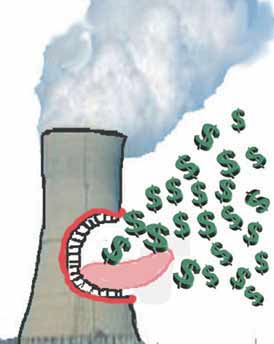 COVID-19: What next for Brazil’s Angra 3 nuclear plant?
Works on Angra 3 have been ongoing for 35 years and are 62% complete.
The current timetable states that the plant will start operations by 2026, a deadline that has become increasingly unlikely due to COVID-19.
“The expectation was to hold a tender this year but this will depend on how the pandemic evolves, as many of the negotiations with foreign firms cannot be held online. Delays to the start of operations will probably be proportional to those postponements of the tender process,” said Almeida. ……
“The required investments are very high and a part of it will be made by Eletrobras, but another part will come from the negotiations with the firm that wins the tender. Brazil’s currency has been oscillating a lot and although I believe it will stabilize in the future this will have an impact because part of the works that will be contracted abroad,” Almeida said. …..
Some of the companies interested in the works to complete Angra 3 include China’s CNNC, Russia‘s Rosatom, US-based Westinghouse, Areva from France, and South Korean firm Kepco.
Access to financing will be a key factor for who wins the tender, according to sector experts. …..
Construction of the plant started in 1984 and was interrupted for the first time in 1986, as funds became unavailable due to an economic crisis. Works then resumed in 2010 but were halted again in 2015 when corruption allegations emerged as part of the country’s massive Lava Jato corruption investigation.
Former president Michel Temer and former energy minister Wellington Moreira Franco were arrested in March last year for allegedly having received bribes linked to Angra 3 contracts, and those investigations are still ongoing.
Current energy minister Bento Albuquerque, who took office in January last year, has said that Angra 3 would be a priority during his term….. (subscribers only) https://www.bnamericas.com/en/news/covid-19-what-next-for-brazils-angra-3-nuclear-plant
Brazil government approves plan to complete third nuclear plant
|
Brazil government approves plan to complete third nuclear plant BRASILIA, June 10 (Reuters) – Brazil on Wednesday approved a plan to complete its long-delayed third nuclear reactor Angra 3, with or without a partner joining Eletronuclear, the Eletrobras subsidiary that runs two existing two nuclear plants.State-owned Eletrobras needs a private partner to help it finish the 1,400 megawatt reactor started in 2010. Possible candidates include companies in China, Russia, France and South Korea.
The private partner must be a minority stakeholder, said the Investment Partnership Program (PPI) council that gave the approval. So far, 9 billion reais ($1.8 billion) have been spent on the project that stalled in 2015 due to cost overruns and a corruption scandal involving contractors….. https://www.reuters.com/article/brazil-eletrobras-nuclear/update-1-brazil-government-approves-plan-to-complete-third-nuclear-plant-idUSL1N2DN367 |
|
Brazil’s nuclear reactor build delayed, completion now due in 2027, Covid-19 effect
|
COVID-19 to delay Brazil nuclear plant -Eletronuclear
Anthony Boadle, BRASILIA, May 22 (Reuters) – Lower demand for electricity and a currency slide during the coronavirus crisis will push completion of Brazil’s third nuclear reactor into 2027, the head of state-run nuclear power company Eletronuclear told Reuters.
Eletronuclear president Leonam Guimaraes said Brazil still plans to find a partner by 2023 to help finish and operate the long-delayed 1,400 megawatt Angra 3 nuclear reactor, with companies in China, Russia, France and South Korea among possible candidates. Construction, which began in 2010, is set to restart this year after a long delay caused by financial difficulties and corruption investigations. So far, 9 billion reais ($1.6 billion) have been spent on the project. Guimaraes said the “brutal” 15-20% drop in power consumption caused by the coronavirus pandemic means future demand is uncertain. …… https://af.reuters.com/article/commoditiesNews/idAFL1N2D319L |
|
Political instability adds to the danger of nuclear power for Bolivia
|
Bolivian unrest: what now for the country’s nuclear ambitions? Power Technology, By Heidi Vella 31 Jan 2020, Backed by Russia, Bolivia had set its sights on building new nuclear energy capacity to supply the country’s growing demand for electricity – but could recent political instability put these plans into doubt? We investigate the progress and potential of Bolivia’s atomic energy ambitions.
Russia had agreed to support a $300m nuclear research reactor near the Bolivian capital of La PaztHome to part of the Andean mountain range, as well as some of the highest above-sea-level cities in the world, the developing South American state of Bolivia is not an obvious candidate for new nuclear energy capacity. Yet, since 2013, the now ousted former-Bolivian President, Evo Morales, has been pursing plans to reduce the country’s heavy reliance on fossil fuels by investing in nuclear power…… Five years on however, Bolivia finds itself in political turmoil. Morales, who ran the country for 14 years and was the first ever indigenous president, has exiled himself to Mexico following weeks of violent protests and unrest amid accusations of electoral fraud at the end of 2019. As such, the country’s nuclear ambitions now appear firmly on hold.
Prior to Morales’ fall from power, his administration had kick-started the often-lengthy process of initiating nuclear power capabilities. It founded The Bolivarian Agency for Nuclear Energy and had started working with the IAEA to establish a development framework for nuclear. In 2018, it signed a Country Programme Framework with the IAEA leading up to 2023. Plans for uranium mining in the country had also been floated, but the government halted these and instead decided it could import nuclear fuel from France and Canada. Further agreements were penned with Rosatom for the building of the research centre, which, if it is ever finished, will be the highest in the world at 4000 metres above sea level. The centre is expected to encompass a pool-type reactor of between 100 and 200 kilowatts, a multi-purpose gamma irradiation unit, a cyclotron for nuclear pharmacy purposes, an engineering department, and several research laboratories. Challenges ahead Bolivia is one of only a handful of countries in South America that is either exploring capital intensive nuclear power or already has capacity. Argentina and Brazil both have nuclear reactors in action. However, the rising cost of current technology – several projects in Europe have run years over schedule and millions over budget – can make it difficult, but not impossible, for developing nations such as Bolivia to adopt atomic energy…….. Political instability Since the resignation of Morales in November, a conservative interim government has assumed power and elections are expected in May……….with accusations of vote rigging in the last election, there’s little assurance the upcoming polls will not result in more violence and political stability, both of which will likely keep away potential investors. Therefore, it remains very early days for nuclear energy development in Bolivia. In fact, the World Nuclear Association doesn’t expect much growth in the nuclear power sector to come from any developing nations, including Bolivia. Instead, the country is more likely to remain part of a long list of developing nations that has penned agreements with Russia, such as Indonesia, Vietnam and Sudan, but are yet to see them come fully into fruition, at least until it wrestles back democracy. https://www.power-technology.com/features/bolivian-unrest-what-now-for-the-countrys-nuclear-ambitions/ |
|
From space, the human impact on the Amazon is clearly visible
 From space, you can clearly see the human impact on the Amazon, ABC News, 19 Sep 19, [excellent pictures] , By Michael Slezak and Mark Doman As thick plumes of smoke blanketed Brazil’s most populous city Sao Paulo, global attention turned to the cause.
The Amazon, the world’s most biodiverse rainforest, was burning at a rate not seen in almost a decade.
It was decried as a global tragedy. Lit by farmers, the fires raged through villages, destroyed ecosystems and pumped climate-warming pollution into the atmosphere.
The Brazilian government, which has been criticised for winding back protections of the Amazon, sent in the army and slapped a temporary ban on fires used to clear land.
But one month on, the fires are still burning.
It’s a vicious circle as fire after fire, as well as other farming activities, damage surrounding forests making them more prone to future fires.
The cycle has alarmed some scientists who fear the rainforest is being pushed closer toward a tipping point they call the “dieback scenario”, where the forests enter an irreversible cycle of collapse.
“This year it is a correct statement that most of the fires are on previously cleared lands or are deforesting lands immediately adjacent to them,” said Professor Mark Cochrane, an expert in Amazon deforestation from the University of Maryland Center for Environmental Science.
That’s the case most years, since fires are lit by farmers and usually can only spread through disturbed forest. An exception is during severe droughts, when fires can spread through less disturbed forest, Professor Cochrane said.
But he said this year was “exceptional in recent memory” because of the proportion of the ongoing fires were being used for deforestation, rather than merely for the maintenance of previously deforested areas.
The latest data shows a dramatic uptick in land clearing in July and August, just as the fires took hold. …….. https://www.abc.net.au/news/2019-09-19/satellite-images-of-amazon-reveals-human-impact-of-fires/11478580
Emigration from Central America is driven by climate change

In the back of the pickup truck that day, we talked about gangs too. There was increasing criminal activity in the town nearby, and some young people in the town were being harassed and recruited. But this was a relatively new issue for the community, layered on top of the persistent problem of the ecological crisis. ……. situation is reflective of a much broader global phenomenon of people leaving their homes, directly or indirectly due to climate change and the degradation of their local ecosystem. ….
Land and livelihood
Migration from Central America has gotten a lot of attention these days, including the famous migrant caravans. But much of it focuses on the way migrants from this region – especially El Salvador, Guatemala, Nicaragua and Honduras – are driven out by gang violence, corruption and political upheaval.
Studies show that displacement often happens indirectly through the impact of climate change on agricultural livelihoods, with some areas pressured more than others. But some are more dramatic: Both Honduras and Nicaragua are among the top 10 countries most impacted by extreme weather events between 1998 and 2017.
Coffee production, a critical support for these countries’ economies, is especially vulnerable and sensitive to weather variations. A recent outbreak of coffee leaf rust in the region was likely exacerbated by climate change.
Compounding factor
For several years now, scholars and legal advocates have been asking how to respond to people displaced by environmental conditions. Do existing models of humanitarian response and resettlement work for this new population? Could such persons be recognized as in need of protection under international law, similar to political refugees?
International calls for urgent action on climate, as new fires rage in Amazon forests
|
As New Fires Rage in Amazon, Global Calls for Urgent Action to Avert ‘Astronomical’ Impacts to ‘Life on Earth’, Pope Francis urges protection of “that lung of forests” and French President Macron says G7 nations pledged help at summit August 25, 2019 by Common Dreams by Andrea Germanos, staff writer The military operations involving C-130 aircraft to put out fires came after Brazil’s far-right President Jair Bolsonaro triggered global protests over his government’s policies and failure to take swift action to combat the flames. Official data released Saturday backs up the call for swift action. Agence France-Presse reported, “Some 1,130 new fires were ignited between Friday and Saturday, according to Brazil’s National Institute for Space Research (INPE).” So far this year, the country has witnessed 79,513 fires, more than half of which occurred in the Amazon, according to the agency. That marks an 82 percent increase from 2018. The fires were discussed by global leaders meeting in Biarritz, France for the G7 summit. French President Emmanuel Macron said Sunday, “We are all agreed on helping those countries which have been hit by the fires as fast as possible.” “Our teams are making contact with all the Amazon countries so we can finalize some very concrete commitments involving technical resources and funding,” said Macron. The French leader and Bolsonaro last week sparred on Twitter over the fires. “Our house is burning. Literally. The Amazon rain forest—the lungs which produces 20 percent of our planet’s oxygen—is on fire,” tweeted Macron. Bolsonaro then accused Macron of using the fires “for personal political gains” and said the French president had a “sensationalist tone.” Pope Francis on Sunday added his voice to the chorus of concern. “We are all worried about the vast fires that have developed in the Amazon,” he said, speaking to the public in St Peter’s Square. “That lung of forests,” the pontiff added, “is vital for our planet.” Bolsonaro—who previously asserted there weren’t resources to battle the fires—has baselessly suggested the fires could have been started by NGOs upset with his policies. But environmental campaigners say his policies promoting deforestation and other manifestations of Amazon exploitation are the main culprits…….. As conservation group WWF said in a tweet Friday, further loss and destruction of this key carbon sink and biodiversity hotspot will affect us all. “If this vital ecosystem continues to burn,” said WWF, “the implications for life on Earth will be astronomical.”https://www.commondreams.org/news/2019/08/25/new-fires-rage-amazon-global-calls-urgent-action-avert-astronomical-impacts-life |
|
1 This Month


Tell the Ukrainian Government to Drop Prosecution of Peace Activist Yurii Sheliazhenko

Petition to revoke the licensing of the Near Surface Nuclear Disposal Facility (NSDF) at Chalk River. https://www.ourcommons.ca/petitions/en/Petition/Details?Petition=e-7247


of the week – STOP SMALL MODULAR REACTORS IN CANADA
To see nuclear-related stories in greater depth and intensity – go to https://nuclearinformation.wordpress.com
-
Archives
- March 2026 (183)
- February 2026 (268)
- January 2026 (308)
- December 2025 (358)
- November 2025 (359)
- October 2025 (376)
- September 2025 (258)
- August 2025 (319)
- July 2025 (230)
- June 2025 (348)
- May 2025 (261)
- April 2025 (305)
-
Categories
- 1
- 1 NUCLEAR ISSUES
- business and costs
- climate change
- culture and arts
- ENERGY
- environment
- health
- history
- indigenous issues
- Legal
- marketing of nuclear
- media
- opposition to nuclear
- PERSONAL STORIES
- politics
- politics international
- Religion and ethics
- safety
- secrets,lies and civil liberties
- spinbuster
- technology
- Uranium
- wastes
- weapons and war
- Women
- 2 WORLD
- ACTION
- AFRICA
- Atrocities
- AUSTRALIA
- Christina's notes
- Christina's themes
- culture and arts
- Events
- Fuk 2022
- Fuk 2023
- Fukushima 2017
- Fukushima 2018
- fukushima 2019
- Fukushima 2020
- Fukushima 2021
- general
- global warming
- Humour (God we need it)
- Nuclear
- RARE EARTHS
- Reference
- resources – print
- Resources -audiovicual
- Weekly Newsletter
- World
- World Nuclear
- YouTube
-
RSS
Entries RSS
Comments RSS
 nuclear-news