Niobium – A Radioactive Sword of Damocles Hangs over Brazil’s Northern Amazon.
what most of the recent published articles on Niobium mining and production did not tell is, that it comes together with radioactive contamination.
by Norbert Suchanek March 14, 2025, http://www.brazzil.com/niobium-a-radioactive-sword-of-damocles-hangs-over-brazils-northern-amazon/?fbclid=IwY2xjawJG251leHRuA2FlbQIxMQABHfGUg_gxwqT-GH-2rf2gS6UFbCIEJor7nUjyHk5r3QeWWDN68BkPISQ75Q_aem_IuD1Bi2C47ICmfmj-uK0BQ
Balaio at the upper Rio Negro in the Northwest of the State of Amazonas is one of the most preserved indigenous reservation in Brazil. More then 257,000 hectares of rainforest, rivers and mountains. Located in the municipality of São Gabriel da Cachoeira it is the traditional territory of the Tukano and eight other indigenous peoples, the Baniwa, Baré, Desana, Koripako, Kubeo, Pira-tapuya, Tariana and Tuyuka. And it is the birthplace of 71-year-old Alvaro Doéthiro Sampaio Tukano.
Since his father Ahkïto died in 2020, at the age of 110, Alvaro Doéthiro Sampaio Tukano has been the chief of the Tukanos in Balaio. Alvaro is one of the most respected indigenous leaders and shamans in Brazil. He was one of the founders of the Union of Indigenous Nations (UNI) and together with other known leaders and activists like Mario Juruna, Marcos Terena, Aílton Krenak, Paulinho Paiakan and Davi Kopenawa Yanomami at the forefront of the indigenous movement in the 1980s and 1990s fighting for the demarcation and preservation of their traditional territories.
As chief of the Tukano, Alvaro is committed to preserving their traditions and expanding the supply of traditional medicine and food. The challenge is to preserve the forest and achieve food and health sovereignty by harnessing the indigenous knowledge his people have acquired over millennia.
However a sword of Damocles hangs over Balaio. It’s called Niobium (Nb).
One of the world’s largest deposits of the strategic mineral Niobium is located in the Tukano territory. The Niobium reserves in the São Gabriel da Cachoeira region could be enough to meet the world’s demand for Niobium for 400 years, prospectors say.
Niobium is a heavy metal used essentially in alloys in several industrial applications, such as aeronautics, aerospace, fabrication of pipelines and oil rigs and in nuclear fuel rods of nuclear power plants. It is particularly important for the arms industry. In addition Niobium plays today a vital role in the global energy transition from non-renewable to so called “green” energy solutions. Used in advanced Lithium-ion batteries, it enables the development of materials with fast charging capabilities.
A recent paper on Brazil published at the Munich Security Conference 2025 states: “The second issue is the energy transition and the global fight against climate change. Brazil’s critical mineral reserves make it indispensable for the development of clean technologies. It holds 94 percent of the world’s niobium, 22 percent of its graphite, 16 percent of its nickel, and 17 percent of its rare earth elements – all vital components in green technologies.”
However, already in 2020 scientists from the University of São Paulo (USP) pleaded “Keep the Amazon Niobium in the Ground” because of the possible cumulative effects of forest loss resulting from potential development of unexploited rare earths and Niobium (Nb) reserves in the region.
They wrote in the study: “Whilst developing these mineral deposits goes against the economic rationale of matching supply and demand of commodities in international markets, it is conceivable that political will could build a narrative ‘demonstrating’ that opening up the region for mining is in the national interest, thus paving the way for subsidies and public investments in infrastructure that could have devastating consequences for biodiversity and indigenous peoples.”
To date, any mining in demarcated indigenous territories is prohibited by the Brazilian Constitution. However, there is now a strong political lobby in Brasilia that wants to change this. Furthermore there are growing international interests in Brazil’s strategic minerals.
In November of last year, Brazil and China signed an agreement for sustainable mining — whatever the word “sustainable” may mean in this context. The extraction and development of niobium, lithium, and nickel are among the priorities of the agreement. And, of course, the US government also has a keen interest in that heavy metal. In May 2024, the US ambassador to the country, Elizabeth Bagley, said to the media that the US wants partnership with Brazil for Critical Minerals such as Niobium.
But what most of the recent published articles on Niobium mining and production did not tell is, that it comes together with radioactive contamination.
All Niobium mining and processing is associated with the generation of large amounts of radioactive waste. Niobium ore is classified worldwide as a naturally occurring radioactive material (NORM) and it occurs in the Earth’s crust along with radioactive elements such as uranium, radium, thorium, potassium-40, and lead-210. Each ton of niobium produced leaves behind a legacy of around 100 to 400 tons of radioactive and toxic waste, according to current statistics from the Brazilian Atomic Energy Commission (CNEN).
Last February, Federal Minister Gilmar Mendes of the Supreme Federal Court (STF) presented a bill that would undermine the Brazilian Constitution and allow mining even in demarcated indigenous territories. If the bill gains a majority in Brasilia, the indigenous peoples of the upper Rio Negro region may have to decide whether to consent to niobium mining in exchange for compensation or to defend consequently their territories.
The Navajo Nation, with over 500 abandoned uranium mines and unsecured radioactive tailings, could show Alvaro Tukano and his people what it means to live in a radioactive contaminated territory.
Norbert Suchanek is a German correspondent in Rio de Janeiro and an experienced environmental journalist. At the beginning of March of this year, he received the Nuclear-Free Future Award in the Education category in New York City.
Contact: norbert.suchanek@online.de
Link between unexploded munitions in oceans and cancer-causing toxins determined

by Anisa S. Jimenez, Phys Org, February 18, 2009
During a research trip to Puerto Rico, ecologist James Porter took samples from underwater nuclear bomb target USS Killen, expecting to find evidence of radioactive matter – instead he found a link to cancer. Data revealed that the closer corals and marine life were to unexploded bombs from the World War II vessel and the surrounding target range, the higher the rates of carcinogenic materials.
“Unexploded bombs are in the ocean for a variety of reasons – some were duds that did not explode, others were dumped in the ocean as a means of disposal,” said Porter. “And we now know that these munitions are leaking cancer-causing materials and endangering sea life.”
Data has been gathered since 1999 on the eastern end of the Isla de Vieques, Puerto Rico – a land and sea area that was used as a naval gunnery and bombing range from 1943-2003. Research revealed that marine life including reef-building corals, feather duster worms and sea urchins closest to the bomb and bomb fragments had the highest levels of toxicity. In fact, carcinogenic materials were found in concentrations up to 100,000 times over established safe limits. This danger zone covered a span of up to two meters from the bomb and its fragments.
According to research conducted in Vieques, residents here have a 23% higher cancer rate than do Puerto Rican mainlanders. Porter said a future step will be “to determine the link from unexploded munitions to marine life to the dinner plate.”….. https://phys.org/news/2009-02-link-unexploded-munitions-oceans-cancer-causing.html
It’s so hot in Mexico that monkeys are dropping dead from trees.
At least 83 of the midsize primates were found dead in the Gulf coast state of Tabasco
Independent, Mark Stevenson, 22 May 24
It’s so hot in Mexico that howler monkeys are falling dead from the trees.
At least 83 of the midsize primates, who are known for their roaring vocal calls, were found dead in the Gulf coast state of Tabasco. Others were rescued by residents, including five that were rushed to a local veterinarian who battled to save them.
“They arrived in critical condition, with dehydration and fever,” said Dr. Sergio Valenzuela. ”They were as limp as rags. It was heatstroke.”
While Mexico’s brutal heatwave has been linked to the deaths of at least 26 people since March, veterinarians and rescuers say it has killed dozens and perhaps hundreds of howler monkeys.
In the town of Tecolutilla, Tabasco, the dead monkeys started appearing on Friday, when a local volunteer fire-and-rescue squad showed up with five of the creatures in the bed of the truck.
Normally quite intimidating, howler monkeys are muscular and can be around 2 feet (60 centimeters) tall, with tails as long again. They are equipped with big jaws and a fearsome set of teeth and fangs. But mostly, their lion-like roars, which bely their size, are what they’re known for.
“They (the volunteers) asked for help, they asked if I could examine some of the animals they had in their truck,” Valenzuela said Monday. “They said they didn’t have any money, and asked if I could do it for free.”
The veterinarian put ice on their limp little hands and feet, and hook them up to IV drips with electrolytes.
So far, the monkeys appear to be on the mend. Once listless and easily handled, they are now in cages at Valenzuela’s office. “They’re recovering. They’re aggressive … they’re biting again,” he said, noting that’s a healthy sign for the usually furtive creatures.
Most aren’t so lucky. Wildlife biologist Gilberto Pozo counted about 83 of the animals dead or dying on the ground under trees. The die-off started around May 5 and hit its peak over the weekend.
“They were falling out of the trees like apples,” Pozo said. “They were in a state of severe dehydration, and they died within a matter of minutes.” Already weakened, Pozo says the falls from dozens of yards (meters) up inflict additional damage that often finishes the monkeys off.
Pozo attributes the deaths to a “synergy” of factors, including high heat, drought, forest fires and logging that deprives the monkeys of water, shade and the fruit they eat.
For people in the steamy, swampy, jungle-covered state of Tabasco, the howler monkey is a cherished, emblematic species; local people say the monkeys tell them the time of day, by howling at dawn and dusk.
Pozo said the local people — who he knows through his work with the Biodiversity Conservation of The Usumacinta group — have tried to help the monkeys they see around their farms. But he notes that could be a double-edged sword.
“They were falling out of the trees, and the people were moved, and they went to help the animals, they set out water and fruit for them,” Pozo said. “They want to care for them, mainly the baby monkeys, adopt them.”
“But no, the truth is that babies are very delicate, they can’t be in a house where there are dogs or cats, because they have pathogens that can potentially be fatal for howler monkeys,” he said, stressing they must be rehabilitated and released into the wild……………………………………………………
“This is a sentinel species,” Pozo said, referring to the canary-in-a-coal mine effect where one species can say a lot about an ecosystem. “It is telling us something about what is happening with climate change.” https://www.independent.co.uk/climate-change/news/mexico-city-heat-drought-monkeys-b2548962.html
Venezuela may be first nation to lose all its glaciers

10 May 24, Aleks Phillips, BBC News
Venezuela may be the first nation in modern history to lose all its glaciers after climate scientists downgraded its last one to an ice field.
The International Cryosphere Climate Initiative (ICCI), a scientific advocacy organisation, said on X that the South American nation’s only remaining glacier – the Humboldt, or La Corona, in the Andes – had become “too small to be classed as a glacier”.
Venezuela has lost at least six other glaciers in the last century.
With global average temperatures rising due to climate change, ice loss is increasing, helping to raise sea levels around the world…………………………………………………………………………………………………………………………… https://www.bbc.com/news/articles/cx8qv1nvdppo
France will help Brazil develop nuclear-powered submarines, Macron says
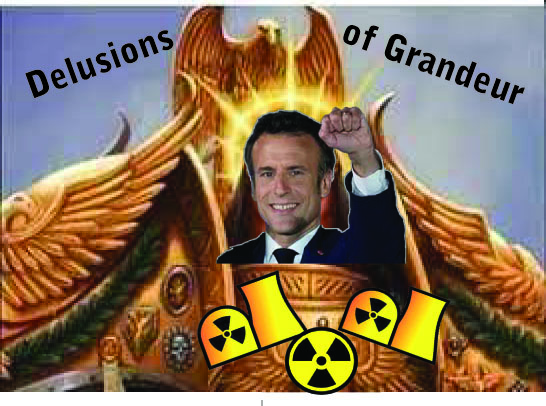
President Emmanuel Macron and counterpart Luiz Inacio Lula da Silva on Wednesday celebrated the launch of Brazil’s third French-designed submarine, which will help secure the country’s immense coastline, dubbed the “Blue Amazon.”
France 24 By:NEWS WIRES|: Video by:Angela DIFFLEY 27/03/2024
The two men highlighted the importance of their countries’ defense partnership during a time of major global unrest, at a ceremony at Brazil’s ultra-modern naval base in Itaguai near Rio de Janeiro…
Despite differences, notably on the Ukraine war, Macron said “the great peaceful powers of Brazil and France” had “the same vision of the world.”…………………………………..
The construction of the submarines was outlined in a 2008 deal between Lula and former French president Nicolas Sarkozy, which also included the purchase of 50 Caracal helicopters.
The fourth submarine, the Angostura, will be launched in 2025.
France skirts around nuclear sub
Brazil is also planning to build its first nuclear-powered submarine, the Alvaro Alberto, a project that has suffered significant delays, mainly due to budget constraints.
The French naval defense manufacturer Naval Group is supporting the design and construction of the submarine, except for the nuclear boiler which is being designed by the Brazilians.
Brasilia is however trying to convince Paris to increase technology transfers to help it integrate the reactor into the submarine and sell it equipment linked to nuclear propulsion.
France has been reticent to transfer such technology due to the challenges of nuclear proliferation.
“If Brazil wants to have access to knowledge of nuclear technology, it is not to wage war. We want this knowledge to assure all countries that want peace that Brazil will be at their side,” said Lula.
Macron told Brazil “France will be at your side” during the development of the nuclear-powered submarines, without announcing specific assistance.
“I want us to open the chapter for new submarines… that we look nuclear propulsion in the face while being perfectly respectful of all non-proliferation commitments,” he said……………………… https://www.france24.com/en/americas/20240327-france-to-help-brazil-develop-nuclear-technology-for-submarines
2
Mexican president criticizes US aid to #Ukraine and sanctions on Latin American nations in high-level meeting
López Obrador called for US program aimed at removing blockades, ceasing harassment of independent and sovereign nations
Fox News, September 29, 2023
Mexico’s president on Friday slammed U.S. aid for Ukraine and economic sanctions on Venezuela, Cuba and other nations as the first of two high-level U.S.-Mexico meetings got underway in Washington.
President Andrés Manuel López Obrador issued a broad criticism of U.S. foreign policy, saying U.S. economic sanctions were forcing people to emigrate from Cuba, Venezuela and Nicaragua.
The harsh comments came as U.S. Secretary of State Antony Blinken, Commerce Secretary Gina and Trade Representative Katherine Tai were meeting their Mexican counterparts at the State Department……………………… more https://www.foxnews.com/world/mexican-president-criticizes-us-aid-ukraine-sanctions-latin-american-nations-high-level-meeting
Mexican president urges end to ‘irrational’ Ukraine war, wants Russia at peace talks
Reuters, August 1, 2023 https://www.reuters.com/world/americas/mexican-president-urges-end-irrational-ukraine-war-wants-russia-peace-talks-2023-07-31/
MEXICO CITY, July 31 (Reuters) – Mexican President Andres Manuel Lopez Obrador on Monday called for an end to the “irrational” war in Ukraine, urging upcoming peace talks in the Middle East to include representation from both Ukraine and Russia.
Lopez Obrador said Mexico would only take part in the talks in Saudi Arabia, reportedly scheduled to be held over the coming weekend, if both sides were present.
“If there’s acceptance from both Ukraine and Russia to look for solutions to achieve peace, we’ll participate,” the president told reporters at a regular press conference.
“We don’t want the Russia-Ukraine war to continue, it’s very irrational,” Lopez Obrador added, noting that the conflict has caused massive human suffering. “The only thing that benefits from it is the war industry.”
Senior officials from up to 30 countries are expected to participate in the talks Aug. 5-6 in Jeddah, the Wall Street Journal reported on Saturday. Russia has not been invited, the outlet reported, citing diplomats involved in the planning.
On Monday, the Kremlin said it would “follow” the meeting but did not currently see conditions for peace talks with Kyiv.
Lopez Obrador has sought to keep Mexico neutral in the war, though his government has backed some major U.N. resolutions criticizing Russia’s role in the conflict. Mexico has refused to send arms to Ukraine and has not imposed sanctions on Russia.
In April, Ukraine President Volodymyr Zelenskiy urged Mexican lawmakers to back his plan to end the war, which would include Russia withdrawing its troops from Ukrainian territory.
Lopez Obrador had outlined a separate peace plan last year, which Ukraine opposed, arguing it would have benefited Russia.
Reporting by Kylie Madry and Raul Cortes; Editing by Bill Berkrot
Only neutral countries can bring peace to Ukraine – Brazil

https://www.rt.com/news/579835-brazilian-fm-weapons-deliveries-ukraine/ 18 Jul 23
Foreign Minister Mauro Vieira told RIA Novosti that several countries are willing to join his nation’s peace efforts
Brazil is against weapons deliveries to either party in the Ukraine-Russia conflict, Foreign Minister Mauro Vieira has said. The diplomat also predicted that peace would eventually be achieved with the help of nations which have not taken sides, such as Brazil and African countries.
In an interview with Russia’s RIA Novosti published on Monday, Vieira stressed that Brasilia has consistently voiced its opposition to arms shipments to Kiev and Moscow.
According to the diplomat, “several countries are ready to join” Brazilian President Luiz Inacio Lula da Silva’s peace efforts. The minister cited the initiatives recently put forward by a group of African nations.
“This will take time, but it’s precisely this that will lead to peace which we are striving for,” Vieira insisted.
While on an official visit to Rome last month, President Lula argued that Russia and Ukraine both need to compromise to end the conflict.
“The two parties both need to get something. Only the Russians and the Ukrainians know what they need to reach peace,” he said at the time.
The Brazilian head of state also called into question the EU’s capacity for mediation, arguing that the bloc is effectively involved in the conflict. Lula went on to name India, Mexico, and African nations as potential neutral peace brokers.
Moscow has blamed Kiev for the lack of peace negotiations, pointing out that last year Ukrainian President Vladimir Zelensky signed a decree that rules out talks for as long as his Russian counterpart, Vladimir Putin, remains in power.
The Ukrainian government insists it will only negotiate after driving Russian forces out from all territories within its 1991 borders. Zelensky has proposed a peace plan of his own, which calls for a Russian withdrawal, reparations, and a tribunal for alleged war criminals.
Moscow has rejected the idea, describing it as detached from reality.
One of the world’s worst nuclear disasters is likely something you’ve never heard of.
This is, of course, the Goiânia Accident of 1987. This
happened in the city of Goiânia in the Goiâs region of Brazil, which
surrounds the Federal District containing the purpose-built capital
Brasilia. In 1985, a hospital in the city moved locations, leaving behind a
radiotherapy unit which used the substance caesium-137 to treat cancer. Two
years later in 1987, two men broke into the abandoned building looking for
items with scrap value, and stole the machine – including its radioactive
component which they were not aware of.
Unilad 4th July 2023
https://www.unilad.com/news/nuclear-disaster-goiania-brazil-accident-918843-20230704
Thorium fake charity group cons El Salvador into joining the “Nuclear Power Club”.

Power, 20 Mar 23,
“…… the government of El Salvador and the Thorium Energy Alliance, a Harvard, Illinois–based non-profit advocacy group that endorses thorium-fueled reactors, signed a memorandum of understanding (MOU) to promote the “El Salvador Energy Bridge” plan. The MOU was signed by Daniel Alvarez, El Salvador’s director general of Energy, Hydrocarbons, and Mines (DGEHM), and John Kutsch, executive director of the Thorium Energy Alliance, at the Embassy of El Salvador in Washington, D.C. (Figure 1), with Ambassador Milena Mayorga present to witness the event.
El Salvador has historically gotten much of its power from hydro and geothermal resources, according to International Energy Agency (IEA) data. In 2020, the most recent numbers available on the IEA’s website, hydropower accounted for about 32.8% of the electricity generation in El Salvador. Geothermal was second, supplying 24.6% of the mix, while oil (15.5%), solar PV (14.3%), and biofuels (12.9%) rounded out the list. El Salvador’s total generation in 2020 was about 6.321 TWh………………..”
Corruption exposed: US meddled in Ecuador’s election, using Julian Assange as bargaining chip
A former minister of Ecuador testified that the US government conspired with a right-wing political party to run a disinformation campaign against the leftist Correísta movement, backing a millionaire banker for president in exchange for giving up journalist Julian Assange, who had asylum in the Ecuadorian embassy.
MP, Ben Norton, 13 Nov 22,
Ecuador’s former energy minister testified that the US government conspired with a right-wing political party to run a disinformation campaign against the leftist Correísta movement of ex President Rafael Correa.
He said that US “federal agents” pledged to help “influence” the 2017 presidential elections and support the candidacy of conservative millionaire banker Guillermo Lasso in exchange for the promise to turn over journalist Julian Assange, who had been given asylum by Correa and was stuck living for years in Ecuador’s embassy in London.
The former energy minister, Carlos Pareja Yannuzzelli, had fled a corruption investigation in Ecuador and was living as a fugitive from justice in the United States in late 2016 when he was offered large sums of money and US government protection in return for reading a carefully prepared “script” that made false accusations of corruption against Correa and his Vice President Jorge Glas, who was later imprisoned on highly dubious charges.
Pareja testified that the federal agents also coerced him into making false accusations against a US citizen, so they could justify their involvement in the Ecuadorian case. This led to the US citizen being arrested and imprisoned for three-and-a-half years.
Lasso ended up losing the 2017 election (before going on to win the 2021 election), but his victorious opponent, Lenín Moreno, later betrayed Assange anyway, letting British authorities raid the embassy, imprison the WikiLeaks journalist, and prepare to extradite him to the United States.
The revelation of this extraordinary example of Washington meddling in another country’s election came from one of the top officials in Ecuador’s oil industry……………………………………………………………
US intelligence-linked right-wing Ecuadorian politician uses corrupt US asset to accuse Correa of corruption……………………………………………..
Ecuador’s ex energy minister details US-backed campaign to help the right wing in the 2017 elections………………………………………………………..
it was widely assumed, even by Correa himself, that Correa’s former Vice President Lenín Moreno would continue his socialist political program.
Moreno did run on a left-wing presidential campaign, but after entering office, he did a political 180. Moreno turned hard to the right, repressing, imprisoning, and exiling Correísta politicians.
He also stabbed Julian Assange in the back, reversing Correa’s pledge to protect the WikiLeaks publisher and renouncing the Ecuadorian citizenship that had been given to the journalist. In order to arrest Assange, Moreno even let British authorities violate his own country’s sovereignty by storming the embassy, which constitutes Ecuadorian territory under the Vienna Convention in international law.
Correísta politicians have alleged that Moreno was bribed and/or blackmailed by the US government, as he obediently fulfilled all of Washington’s foreign-policy goals, collaborating closely with the Donald Trump administration, removing Ecuador from the Bolivarian Alliance (ALBA) and Union of South American Nations (UNASUR), and even recognizing US-appointed coup leader Juan Guaidó in Venezuela.
…………………………………………………………….. Corrupt Ecuadorian official conspired with Miami-based oligarchs who stole millions from their people……………………………………………. more https://multipolarista.com/2022/11/11/capaya-us-meddled-ecuador-election-assange/
Islanders in Latin America face relocation, because of climate change.
Some 2,000 islanders in Guna Yala will become one of the first indigenous
communities in Latin America to relocate because of climate change.
Islander Magdalena Martínez, who has campaigned for new housing on the
mainland, tells the BBC how she feels about leaving the island she grew up
on.
The Panama government estimates all islands of the Guna people could be
under water by 2050, based on forecasts by an independent group of
scientists, although others think the islands may not all be submerged
until the end of the century.
BBC 20th Aug 2022
Argentina wants China to fully fund $8.3 bln nuclear plant
Argentina wants China to fully fund $8.3 bln nuclear plant amid cash shortfall. By Eliana Raszewski, 6 Apr 22, LIMA, Argentina, (Reuters) – Argentina is pushing China to fully finance a new $8.3 billion nuclear power plant in the country, as the government grapples with high debt levels and looks to bring down its fiscal deficit as part of a recent deal with the International Monetary Fund.
The South American nation signed an agreement with the China National Nuclear Corporation (CNNC) for construction of a nuclear power plant in February. CNNC at the time said it would finance 85% of the cost, with Argentina shouldering the rest.
The country, however, now faces a tighter fiscal outlook. It needs to hit a fiscal balance by 2025 from a 3% deficit last year under terms of a recent $44 billion IMF program, including cutting billions of dollars in energy subsidies.
“We’re aiming for 100% in terms of financing from China to guarantee no delays given the problems we have with funding,” said Jorge Sidelnik, executive director of Argentina’s state operator Nucleoelectrica Argentina, the local partner……………………. https://www.reuters.com/business/energy/argentina-wants-china-fully-fund-83-bln-nuclear-plant-amid-cash-shortfall-2022-04-05/
Argentina pressures UK over deployment of nuclear weapons in Malvinas conflict
Argentina pressures UK over deployment of nuclear weapons in Malvinas conflict https://batimes.com.ar/news/argentina/argentina-demands-answers-over-uk-deployment-of-nuclear-weapons-in-malvinas-conflict.phtml
Report reveals British warships carried at least 31 nuclear weapons to South Atlantic following invasion of disputed island in 1982.
Argentina’s government has called on the United Kingdom to provide detailed information about the alleged movement and use of nuclear weapons during the 1982 South Atlantic conflict, after a report revealed that as many as 31 depth charges were sent to sea near the disputed Malvinas (Falkland) Islands during the war.
Last week, the Declassified UK website reported that a number of British warships deployed to the South Atlantic following Argentina’s invasion of the disputed islands were armed with dozens of nuclear depth charges.
According to the report, aircraft carriers HMS Hermes, HMS Invincible and the Royal Fleet Auxiliary ship, Regent, carried 31 nuclear weapons in total to the region’s seas, though no ship encroached upon the “total exclusion zone” around the islands imposed by the UK government at the time.
The article, written by veteran defence and security journalist and author Richard Norton-Taylor, said that new files released to the National Archives revealed that the presence of nuclear weapons had “caused panic among officials in London” who were concerned by the potential damage the “nuclear depth bombs” could cause if they were “lost or damaged.”
‘Measures’
Responding to the revelations, Argentina’s Foreign Ministry warned this week that if it did not receive answers from the British authorities, it would take “measures” and “raise this situation before the competent international bodies.”
Despite the UK’s reluctance to provide detailed information on the matter, our country has on several occasions expressed its concern before different international fora about the possibility, confirmed in 2003, that the UK had introduced nuclear weapons into the South Atlantic,” said a statement from the Palacio de San Martín.
Raising the possibility that Britain may have breached the 1967 Treaty of Tlatelolco (which established a nuclear free zone in Latin America and its seas), the Foreign Ministry said that it is essential to “ensure that there are no nuclear weapons anywhere in the South Atlantic, either in sunken ships, on the seabed or under any other form or circumstance.
Argentina and the UK maintain a sovereignty dispute over the islands, over which they fought a war in 1982 that ended 74 days later with the surrender of Argentina, then ruled by a military dictatorship. During the war, 648 Argentines and 255 British died.
Costa Rica was the star at COP26 Climate Summit
If there had been a popularity contest at Cop26, the Costa Rican
president, Carlos Alvarado Quesada, would have been a clear winner.
Leonardo DiCaprio, Jeff Bezos, Boris Johnson and Prince William all wanted
to speak with the leader of the tiny Central American country, eager to
bask in its green glow.
The climate summit in Glasgow was, in effect, Costa
Rica’s Super Bowl, another chance to show off its impressive
environmental credentials. It is the only tropical country that has
successfully halted and reversed deforestation, a commitment dozens of
others made at Cop26 but are far from achieving. Costa Rica, which
celebrated its bicentenary in 2021, is aiming for total decarbonisation by
2050 – not just a net zero target – and is helping lead the world on
efforts to protect 30% of the Earth by the end of this decade.
From
Christiana Figueres, who was head of the UN climate convention that
achieved the Paris agreement in 2015, to Carlos Manuel Rodríguez, chief
executive of the Global Environment Facility, Costa Ricans are routinely
found in international leadership positions on the environment.
Guardian 22nd Dec 2021
1 This Month


Tell the Ukrainian Government to Drop Prosecution of Peace Activist Yurii Sheliazhenko

Petition to revoke the licensing of the Near Surface Nuclear Disposal Facility (NSDF) at Chalk River. https://www.ourcommons.ca/petitions/en/Petition/Details?Petition=e-7247


of the week – STOP SMALL MODULAR REACTORS IN CANADA
To see nuclear-related stories in greater depth and intensity – go to https://nuclearinformation.wordpress.com
-
Archives
- March 2026 (183)
- February 2026 (268)
- January 2026 (308)
- December 2025 (358)
- November 2025 (359)
- October 2025 (376)
- September 2025 (258)
- August 2025 (319)
- July 2025 (230)
- June 2025 (348)
- May 2025 (261)
- April 2025 (305)
-
Categories
- 1
- 1 NUCLEAR ISSUES
- business and costs
- climate change
- culture and arts
- ENERGY
- environment
- health
- history
- indigenous issues
- Legal
- marketing of nuclear
- media
- opposition to nuclear
- PERSONAL STORIES
- politics
- politics international
- Religion and ethics
- safety
- secrets,lies and civil liberties
- spinbuster
- technology
- Uranium
- wastes
- weapons and war
- Women
- 2 WORLD
- ACTION
- AFRICA
- Atrocities
- AUSTRALIA
- Christina's notes
- Christina's themes
- culture and arts
- Events
- Fuk 2022
- Fuk 2023
- Fukushima 2017
- Fukushima 2018
- fukushima 2019
- Fukushima 2020
- Fukushima 2021
- general
- global warming
- Humour (God we need it)
- Nuclear
- RARE EARTHS
- Reference
- resources – print
- Resources -audiovicual
- Weekly Newsletter
- World
- World Nuclear
- YouTube
-
RSS
Entries RSS
Comments RSS
 nuclear-news