‘Deeply disappointing’: Experts slam Cop30 for ignoring climate’s impact on food supply

Food and nature experts have expressed dismay at the outcome of Brazil’s
recently-concluded Cop30 climate conference, after the final text failed to
make any mention of the impact of climate change on food systems. A plan to
address food systems emissions is critical to decarbonisation, with the
sector responsible for around one-third of overall emissions, which
originates from areas including livestock, waste disposal, food processing,
as well as rice paddy fields, which produce large quantities of methane.
Independent 28th Nov 2025,
https://www.independent.co.uk/climate-change/cop30-brazil-food-amazon-climate-b2871542.html
Niobium – A Radioactive Sword of Damocles Hangs over Brazil’s Northern Amazon.
what most of the recent published articles on Niobium mining and production did not tell is, that it comes together with radioactive contamination.
by Norbert Suchanek March 14, 2025, http://www.brazzil.com/niobium-a-radioactive-sword-of-damocles-hangs-over-brazils-northern-amazon/?fbclid=IwY2xjawJG251leHRuA2FlbQIxMQABHfGUg_gxwqT-GH-2rf2gS6UFbCIEJor7nUjyHk5r3QeWWDN68BkPISQ75Q_aem_IuD1Bi2C47ICmfmj-uK0BQ
Balaio at the upper Rio Negro in the Northwest of the State of Amazonas is one of the most preserved indigenous reservation in Brazil. More then 257,000 hectares of rainforest, rivers and mountains. Located in the municipality of São Gabriel da Cachoeira it is the traditional territory of the Tukano and eight other indigenous peoples, the Baniwa, Baré, Desana, Koripako, Kubeo, Pira-tapuya, Tariana and Tuyuka. And it is the birthplace of 71-year-old Alvaro Doéthiro Sampaio Tukano.
Since his father Ahkïto died in 2020, at the age of 110, Alvaro Doéthiro Sampaio Tukano has been the chief of the Tukanos in Balaio. Alvaro is one of the most respected indigenous leaders and shamans in Brazil. He was one of the founders of the Union of Indigenous Nations (UNI) and together with other known leaders and activists like Mario Juruna, Marcos Terena, Aílton Krenak, Paulinho Paiakan and Davi Kopenawa Yanomami at the forefront of the indigenous movement in the 1980s and 1990s fighting for the demarcation and preservation of their traditional territories.
As chief of the Tukano, Alvaro is committed to preserving their traditions and expanding the supply of traditional medicine and food. The challenge is to preserve the forest and achieve food and health sovereignty by harnessing the indigenous knowledge his people have acquired over millennia.
However a sword of Damocles hangs over Balaio. It’s called Niobium (Nb).
One of the world’s largest deposits of the strategic mineral Niobium is located in the Tukano territory. The Niobium reserves in the São Gabriel da Cachoeira region could be enough to meet the world’s demand for Niobium for 400 years, prospectors say.
Niobium is a heavy metal used essentially in alloys in several industrial applications, such as aeronautics, aerospace, fabrication of pipelines and oil rigs and in nuclear fuel rods of nuclear power plants. It is particularly important for the arms industry. In addition Niobium plays today a vital role in the global energy transition from non-renewable to so called “green” energy solutions. Used in advanced Lithium-ion batteries, it enables the development of materials with fast charging capabilities.
A recent paper on Brazil published at the Munich Security Conference 2025 states: “The second issue is the energy transition and the global fight against climate change. Brazil’s critical mineral reserves make it indispensable for the development of clean technologies. It holds 94 percent of the world’s niobium, 22 percent of its graphite, 16 percent of its nickel, and 17 percent of its rare earth elements – all vital components in green technologies.”
However, already in 2020 scientists from the University of São Paulo (USP) pleaded “Keep the Amazon Niobium in the Ground” because of the possible cumulative effects of forest loss resulting from potential development of unexploited rare earths and Niobium (Nb) reserves in the region.
They wrote in the study: “Whilst developing these mineral deposits goes against the economic rationale of matching supply and demand of commodities in international markets, it is conceivable that political will could build a narrative ‘demonstrating’ that opening up the region for mining is in the national interest, thus paving the way for subsidies and public investments in infrastructure that could have devastating consequences for biodiversity and indigenous peoples.”
To date, any mining in demarcated indigenous territories is prohibited by the Brazilian Constitution. However, there is now a strong political lobby in Brasilia that wants to change this. Furthermore there are growing international interests in Brazil’s strategic minerals.
In November of last year, Brazil and China signed an agreement for sustainable mining — whatever the word “sustainable” may mean in this context. The extraction and development of niobium, lithium, and nickel are among the priorities of the agreement. And, of course, the US government also has a keen interest in that heavy metal. In May 2024, the US ambassador to the country, Elizabeth Bagley, said to the media that the US wants partnership with Brazil for Critical Minerals such as Niobium.
But what most of the recent published articles on Niobium mining and production did not tell is, that it comes together with radioactive contamination.
All Niobium mining and processing is associated with the generation of large amounts of radioactive waste. Niobium ore is classified worldwide as a naturally occurring radioactive material (NORM) and it occurs in the Earth’s crust along with radioactive elements such as uranium, radium, thorium, potassium-40, and lead-210. Each ton of niobium produced leaves behind a legacy of around 100 to 400 tons of radioactive and toxic waste, according to current statistics from the Brazilian Atomic Energy Commission (CNEN).
Last February, Federal Minister Gilmar Mendes of the Supreme Federal Court (STF) presented a bill that would undermine the Brazilian Constitution and allow mining even in demarcated indigenous territories. If the bill gains a majority in Brasilia, the indigenous peoples of the upper Rio Negro region may have to decide whether to consent to niobium mining in exchange for compensation or to defend consequently their territories.
The Navajo Nation, with over 500 abandoned uranium mines and unsecured radioactive tailings, could show Alvaro Tukano and his people what it means to live in a radioactive contaminated territory.
Norbert Suchanek is a German correspondent in Rio de Janeiro and an experienced environmental journalist. At the beginning of March of this year, he received the Nuclear-Free Future Award in the Education category in New York City.
Contact: norbert.suchanek@online.de
France will help Brazil develop nuclear-powered submarines, Macron says
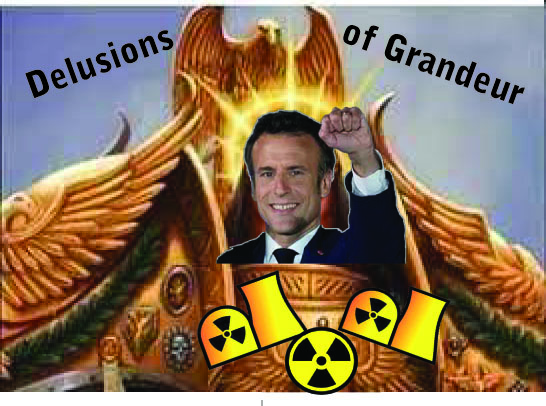
President Emmanuel Macron and counterpart Luiz Inacio Lula da Silva on Wednesday celebrated the launch of Brazil’s third French-designed submarine, which will help secure the country’s immense coastline, dubbed the “Blue Amazon.”
France 24 By:NEWS WIRES|: Video by:Angela DIFFLEY 27/03/2024
The two men highlighted the importance of their countries’ defense partnership during a time of major global unrest, at a ceremony at Brazil’s ultra-modern naval base in Itaguai near Rio de Janeiro…
Despite differences, notably on the Ukraine war, Macron said “the great peaceful powers of Brazil and France” had “the same vision of the world.”…………………………………..
The construction of the submarines was outlined in a 2008 deal between Lula and former French president Nicolas Sarkozy, which also included the purchase of 50 Caracal helicopters.
The fourth submarine, the Angostura, will be launched in 2025.
France skirts around nuclear sub
Brazil is also planning to build its first nuclear-powered submarine, the Alvaro Alberto, a project that has suffered significant delays, mainly due to budget constraints.
The French naval defense manufacturer Naval Group is supporting the design and construction of the submarine, except for the nuclear boiler which is being designed by the Brazilians.
Brasilia is however trying to convince Paris to increase technology transfers to help it integrate the reactor into the submarine and sell it equipment linked to nuclear propulsion.
France has been reticent to transfer such technology due to the challenges of nuclear proliferation.
“If Brazil wants to have access to knowledge of nuclear technology, it is not to wage war. We want this knowledge to assure all countries that want peace that Brazil will be at their side,” said Lula.
Macron told Brazil “France will be at your side” during the development of the nuclear-powered submarines, without announcing specific assistance.
“I want us to open the chapter for new submarines… that we look nuclear propulsion in the face while being perfectly respectful of all non-proliferation commitments,” he said……………………… https://www.france24.com/en/americas/20240327-france-to-help-brazil-develop-nuclear-technology-for-submarines
2
Only neutral countries can bring peace to Ukraine – Brazil

https://www.rt.com/news/579835-brazilian-fm-weapons-deliveries-ukraine/ 18 Jul 23
Foreign Minister Mauro Vieira told RIA Novosti that several countries are willing to join his nation’s peace efforts
Brazil is against weapons deliveries to either party in the Ukraine-Russia conflict, Foreign Minister Mauro Vieira has said. The diplomat also predicted that peace would eventually be achieved with the help of nations which have not taken sides, such as Brazil and African countries.
In an interview with Russia’s RIA Novosti published on Monday, Vieira stressed that Brasilia has consistently voiced its opposition to arms shipments to Kiev and Moscow.
According to the diplomat, “several countries are ready to join” Brazilian President Luiz Inacio Lula da Silva’s peace efforts. The minister cited the initiatives recently put forward by a group of African nations.
“This will take time, but it’s precisely this that will lead to peace which we are striving for,” Vieira insisted.
While on an official visit to Rome last month, President Lula argued that Russia and Ukraine both need to compromise to end the conflict.
“The two parties both need to get something. Only the Russians and the Ukrainians know what they need to reach peace,” he said at the time.
The Brazilian head of state also called into question the EU’s capacity for mediation, arguing that the bloc is effectively involved in the conflict. Lula went on to name India, Mexico, and African nations as potential neutral peace brokers.
Moscow has blamed Kiev for the lack of peace negotiations, pointing out that last year Ukrainian President Vladimir Zelensky signed a decree that rules out talks for as long as his Russian counterpart, Vladimir Putin, remains in power.
The Ukrainian government insists it will only negotiate after driving Russian forces out from all territories within its 1991 borders. Zelensky has proposed a peace plan of his own, which calls for a Russian withdrawal, reparations, and a tribunal for alleged war criminals.
Moscow has rejected the idea, describing it as detached from reality.
Global nuclear industry – rotten to the core: it’s not just Brazil

A bad barrel, not just a few bad apples. Additionally, Lava Jato revealed that the type of corruption that took place was not just a matter of a few rotten apples, but rather of systemic factors.
Corruption in the nuclear industry is a known international phenomenon. The recent scandal in Ohio illustrates how the push for subsidies to nuclear plants is not the result of a real commitment to citizens’ energy needs or climate concerns, but a way for energy corporations to maintain overpayments and assure political gains to certain parties. Brazil offers a different model, one that has used new nuclear facilities to generate kickbacks to powerful political and business interests.
|
Brazil’s Angra 3 nuclear reactor: a political undertaking, not a common good https://thebulletin.org/2021/02/brazils-angra-3-nuclear-reactor-a-political-undertaking-not-a-common-good/ By Carolina Basso | February 16, 2021 In 2019 the Brazilian government decided to resume work at Angra 3, a nuclear reactor where construction has been essentially dormant for more than three decades. The work was supposed to restart last year, with the reactor entering commercial service by late 2026, but COVID-19 and the quest for private partners to invest in the project have pushed back the schedule. Brazil currently has two operating nuclear power plants, Angra 1 and 2, that have generated less than three percent of the country’s electricity since their commercial launch. So why does Brazil want to resume construction of a third nuclear reactor? Angra 3 is questionable in economic and energy-related terms. Studies have shown that the country can generate electricity much more cheaply by integrating wind power with Brazil’s considerable hydropower resources. Analysts suggest that this combined system could supply all the electricity the population demands, making any expansion of the nuclear industry sector unnecessary and costly. The decision to resume construction of the third Brazilian reactor was made by President Jair Bolsonaro, who is committed to expanding the nuclear industry. Bolsonaro’s commitment results in part from his close ties to Brazil’s Navy, which has historically shaped the nuclear sector and currently dominates the country’s uranium enrichment and fuel cycle technology. But this factor alone cannot explain the decision. It is imperative to examine who will benefit from the project, particularly through the kinds of corruption that are endemic in Brazil. Seen in that light, the political push for building Angra 3 would seem to have more to do with money and politics than with providing a public good. A web of bribes.The Angra 3 project began in the early 1980s, but a number of administrative and financial problems slowed construction down, and it ceased altogether in 1986. Then-President Luiz Inácio Lula da Silva revived construction in 2010, but it was again interrupted in 2015 due to the detection of contractual frauds. That detection had to do with another important development in Brazilian politics: Operation Car Wash, or Lava Jato, in Portuguese. The Federal Police of Brazil launched the operation in 2014 to investigate an enormous money laundering and embezzlement scheme involving major contractors and several politicians. Amid the whirl of investigations, the police discovered an elaborate web of bribes in Eletronuclear, the state-owned electric subsidiary that operates the Angra nuclear reactors. Most of the payoffs pertained to contracts signed in the early stages of the three reactors. The corruption pattern unveiled by the police demonstrated that the corrupt activity in the nuclear sector was heavily institutionalized and took place out in the open. The actors involved developed a complex mechanism through which government officials worked with private business conglomerates to generate kickbacks worth millions of dollars.
The transactions worked as follows: Brazilian companies like Odebrecht and Camargo Correa paid bribes to politicians associated with state agencies (namely, Eletronuclear) to be hired by them or to form partnerships with international companies such as Techint to increase their profits. Nevertheless, this scheme needed private intermediaries with vast political connections to jump over bureaucratic obstacles. Therefore, part of the profits collected by the construction companies went to pay these brokers for their work and to bribe public officials. Finally, the kickbacks allowed politicians to finance their electoral campaigns and private interests. The anti-corruption probe suspended Angra 3’s construction and canceled all contracts allocated to engineering, construction, and electromechanical-assembly companies associated with the nuclear project. Operation Car Wash’s groundbreaking findings unveiled common tactics employed for decades. The investigations were crucial in exposing “the degree to which some policies make no economic sense but are implemented regardless because doing so is in the interest of a few businesses and political groups,” a lengthy report on nuclear governance in Brazil concluded. The result of that twisted pursuit is uneconomical projects with low regulatory standards for licensing and other policy decisions. A bad barrel, not just a few bad apples. Additionally, Lava Jato revealed that the type of corruption that took place was not just a matter of a few rotten apples, but rather of systemic factors. In other words, replacing individuals will not necessarily change the underlying dynamics generating demand for corruption in the first place. Angra 3 has been and likely will continue to be used as a political tool for money laundering and a vehicle for public authorities to receive tax dollars. Enter candidate Bolsonaro. The majority of his presidential campaign in 2018 capitalized on the anti-corruption wave generated by Operation Car Wash to gain votes from those outraged by the misconduct detected. Bolsonaro even invited Federal Judge Sérgio Moro, one of Lava Jato‘s main prosecutors, to become his Minister of Justice and Public Safety. But the reality of Bolsonaro’s reign as president has not lived up to his campaign promises, and corruption continues. In April 2020, former judge Moro resigned, accusing the president of attempting to interfere in Federal Police investigations. Experts point out that Moro’s departure crowns a process of politicization of government agencies that fight crime, which runs contrary to the values Bolsonaro endorsed during his campaigning. A burden on consumers. It is in light of this enduring corruption in Brazil that readers should consider the decision to resume construction of Angra 3. The combination of high costs, doubtful political intentions, and better energy options make it unreasonable to expand nuclear capabilities in Brazil. If decision-makers were truly concerned about the energy demands of the people, they would have invested in alternative systems that are more economical and sustainable. That they have not done so very likely has something to do with opposition from the lobbies of competing energy industries and the interests of political elites who hope to financially benefit from expensive projects like Angra 3. Corruption in the nuclear industry is a known international phenomenon. The recent scandal in Ohio illustrates how the push for subsidies to nuclear plants is not the result of a real commitment to citizens’ energy needs or climate concerns, but a way for energy corporations to maintain overpayments and assure political gains to certain parties. Brazil offers a different model, one that has used new nuclear facilities to generate kickbacks to powerful political and business interests. Because of this favoring of influence over qualification and fair budgeting, the burden on consumers will continue to grow. Around the world, reactor costs in the nuclear industry tend to be much higher than initially estimated. Angra 3’s estimated price has risen more than $2.7 billion from 2008 to 2018. The expensive investment has resulted in the tariff from the plant doubling from roughly $45 to $90 per megawatt hour. It is past time politicians refrain from overcharging the Brazilian population for their own advantage. |
Cyberattack on nuclear unit in Brazil
Brazil’s Eletrobras says nuclear unit hit with cyberattack ,https://finance.yahoo.com/news/brazils-eletrobras-says-nuclear-unit-113223064., PAULO, Feb 4 (Reuters) – A nuclear power subsidiary of Brazil’s Eletrobras suffered a cyberattack but no operations were impacted, the state-controlled power holding company said in a filing late on Wednesday.
The network that was attacked by ransomware is not related to the operational systems of nuclear energy plants Angra 1 and Angra 2, said Centrais Eletricas Brasileiras, as Eletrobras is formally known.
Subsidiary Eletronuclear has suspended use of some of its administrative software to protect its data, the company said in the filing.
It said the incident is under investigation by government entities responsible for nuclear power security. (Reporting by Tatiana Bautzer; editing by Jason Neely)
Surge in fires in Brazil’s Amazon

|
Fires in Brazil’s Amazon rainforest jump in October, By Jake Spring, BRASILIA (Reuters) 1 Nov 20, – Fires in Brazil’s Amazon rainforest surged in October and the number of blazes is up 25% in the first 10 months of 2020, compared to a year ago, data from government space research agency Inpe showed on Sunday.
October recorded 17,326 hot spots in the world’s largest rainforest, more than double the number of fires detected in the same month last year. Destruction of the forest has soared since right-wing President Jair Bolsonaro took office in 2019. The president says he wishes to develop the region to lift it out of poverty, while environmental advocates say his policies embolden illegal loggers, miners and ranchers. The number of fires so far this year remains at a decade high. In only the first 10 months of the year, 2020 has surpassed the total number of fires for full-year 2019, when the destruction spurred international criticism that Brazil was not doing enough to protect the forest……. Fires in Brazil’s Pantanal, the world’s largest wetlands, also increased in October compared to a year ago, according to Inpe. The Pantanal, home to many rare species including the world’s densest population of jaguars, has recorded the most fires this year since records began in 1998. For the year through Oct. 25, 28% of the wetland has burned, according to the Federal University of Rio de Janeiro, an area nearly the size of Denmark…… https://www.reuters.com/article/us-brazil-environment/fires-in-brazils-amazon-rainforest-jump-in-october-idUSKBN27H1J1 |
|
BHP betrays international safety efforts

Above – uranium tailings dam – Olympic Dam, South Australia
|
BHP betrays international safety efforts https://theecologist.org/2020/sep/15/bhp-betrays-international-safety-efforts, Dr Jim Green, David Noonan 15th September 2020, Mining giant BHP was complicit in the Samarco mining disaster in Brazil but the company has not learned from the experience. The world’s largest mining company BHP has betrayed international efforts to reform the mining sectors’ ongoing potential to cause catastrophic impacts though the failure of tailings dams. Operations at the Olympic Dam copper-uranium mine in South Australia show BHP has failed to learn key lesson’s regarding transparency, accountability and corporate responsibility following its complicity in the November 2015 disaster at the BHP and Vale joint venture Samarco iron ore mine in Brazil. Samarco was a corporate mining disaster which caused the loss of 19 lives and catastrophic environmental impacts with permanent pollution of native people’s land and rivers. Brazilian prosecutors say the company failed to take actions that could have prevented the disaster. Mine BHP now faces a $6.3 billion (US dollars) law-suit in the UK on behalf of 200,000 Brazilian people. The case alleges the Anglo-Australian mining giant BHP was “woefully negligent” in the run-up to the 2015 dam failure that led to Brazil’s worst environmental disaster. Mayors of two towns wiped out by the Samarco disaster assert that BHP has been using delaying tactics to avoid paying compensation to thousands of people affected by the flood of tailings waste. There have long been calls from environmentalists and others for Australian mining companies to be required to apply Australian standards to their overseas mining operations. The logic is sound given the often inadequate practices of Australian mining companies overseas. But the logic is also a little shaky given that mining standards in Australia leave much room for improvement. Olympic Dam is a case in point. BHP orchestrated approval in 2019 for a massive new tailings dam at Olympic Dam ‒ Tailings Storage Facility 6 (TSF6). This tailings dam is to be built in the same risky ‘upstream’ design that featured in both the Samarco disaster and the January 2019 Vale Brumadinho tailings dam disaster that killed over 250 people – mainly mine workers ‒ in Brazil. Community An internal 2016 report reveals that TSF6 has the potential to cause the death of 100 or more BHP employees and to cause “irrecoverable” environmental impacts from release of tailings waste. Yet, contrary to the recommendations of NGOs in Australia, Federal Environment Minister Sussan Ley granted approval for TSF6 without a comprehensive safety impact assessment and without setting any conditions on BHP to protect workers and the environment. TSF6 is to cover an area of nearly three sq km in tailings waste up to a height of 30 metres at the centre of the tailings pile, equivalent to the height of a nine-story building. BHP will leave this toxic mine waste there forever. Australian Prime Minister Scott Morrison has announced a “fast track” taskforce to further prioritise and accelerate approvals to BHP mining interests in a major Olympic Dam mine expansion process. BHP has clearly failed to learn the lessons of the disasters in Brazil. TSF6 represents an untenable risk to the lives of BHP employees and is unfit for community safety expectations in the 2020’s. Such approaches are clearly inconsistent with modern environmental practice and community expectations. Secret Radioactive tailings waste at Olympic Dam poses a significant long-term risk to the environment and must be isolated for over 10,000 years ‒ effectively forever. Continue reading |
Forest fires raging over wide areas of the Brazilian Amazon
|
Dramatic footage fuels fears Amazon fires could be worse than last year
As dry season starts campaigners sound alarm over ‘shocking’ scale of fires, as Bolsonaro doubles down on denials, Guardian, Dom Phillips in Rio de Janeiro, Sat 18 Jul 2020 Dramatic new images have shown fires raging over wide areas of the Brazilian Amazon nearly a year after blazes across the region sparked an international crisis for the far-right government of President Jair Bolsonaro. The video images and photographs were filmed during a flight by Greenpeace over a wide area of forest in Mato Grosso state in the south of the Amazon on 9 July. Filmed just as the Amazon dry season was beginning, they raise fears that this year’s fires could be as devastating and perhaps worse than 2019’s. “It was shocking to see the size of this deforestation and fires, at a time when the government is dismantling environment protection,” said Rômulo Batista, senior Amazon campaigner for Greenpeace, who spent days flying over a wide area. “It is the beginning of the dry season and we saw fires and areas being prepared for deforestation.”………. official data shows the Brazilian government’s efforts so far this year have failed to bring results. Brazil saw more fires in the Amazon this June than in any year since 2007. Brazil’s space research agency INPE spotted 2,248, compared with 1,880 in June last year. Preliminary data showed deforestation from January to June, at 3,069 sq km, was 25% up on the same period last year. ……… https://www.theguardian.com/environment/2020/jul/17/dramatic-footage-fuels-fears-amazon-fires-could-be-worse-than-last-year |
|
|
35 years in construction, Brazil’s very costly Angra 3 nuclear plant to be delayed yet again
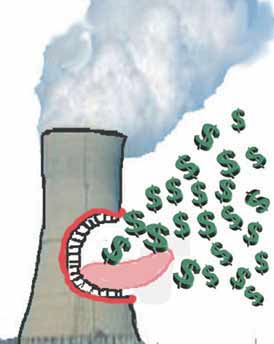 COVID-19: What next for Brazil’s Angra 3 nuclear plant?
Works on Angra 3 have been ongoing for 35 years and are 62% complete.
The current timetable states that the plant will start operations by 2026, a deadline that has become increasingly unlikely due to COVID-19.
“The expectation was to hold a tender this year but this will depend on how the pandemic evolves, as many of the negotiations with foreign firms cannot be held online. Delays to the start of operations will probably be proportional to those postponements of the tender process,” said Almeida. ……
“The required investments are very high and a part of it will be made by Eletrobras, but another part will come from the negotiations with the firm that wins the tender. Brazil’s currency has been oscillating a lot and although I believe it will stabilize in the future this will have an impact because part of the works that will be contracted abroad,” Almeida said. …..
Some of the companies interested in the works to complete Angra 3 include China’s CNNC, Russia‘s Rosatom, US-based Westinghouse, Areva from France, and South Korean firm Kepco.
Access to financing will be a key factor for who wins the tender, according to sector experts. …..
Construction of the plant started in 1984 and was interrupted for the first time in 1986, as funds became unavailable due to an economic crisis. Works then resumed in 2010 but were halted again in 2015 when corruption allegations emerged as part of the country’s massive Lava Jato corruption investigation.
Former president Michel Temer and former energy minister Wellington Moreira Franco were arrested in March last year for allegedly having received bribes linked to Angra 3 contracts, and those investigations are still ongoing.
Current energy minister Bento Albuquerque, who took office in January last year, has said that Angra 3 would be a priority during his term….. (subscribers only) https://www.bnamericas.com/en/news/covid-19-what-next-for-brazils-angra-3-nuclear-plant
Brazil government approves plan to complete third nuclear plant
|
Brazil government approves plan to complete third nuclear plant BRASILIA, June 10 (Reuters) – Brazil on Wednesday approved a plan to complete its long-delayed third nuclear reactor Angra 3, with or without a partner joining Eletronuclear, the Eletrobras subsidiary that runs two existing two nuclear plants.State-owned Eletrobras needs a private partner to help it finish the 1,400 megawatt reactor started in 2010. Possible candidates include companies in China, Russia, France and South Korea.
The private partner must be a minority stakeholder, said the Investment Partnership Program (PPI) council that gave the approval. So far, 9 billion reais ($1.8 billion) have been spent on the project that stalled in 2015 due to cost overruns and a corruption scandal involving contractors….. https://www.reuters.com/article/brazil-eletrobras-nuclear/update-1-brazil-government-approves-plan-to-complete-third-nuclear-plant-idUSL1N2DN367 |
|
Brazil’s nuclear reactor build delayed, completion now due in 2027, Covid-19 effect
|
COVID-19 to delay Brazil nuclear plant -Eletronuclear
Anthony Boadle, BRASILIA, May 22 (Reuters) – Lower demand for electricity and a currency slide during the coronavirus crisis will push completion of Brazil’s third nuclear reactor into 2027, the head of state-run nuclear power company Eletronuclear told Reuters.
Eletronuclear president Leonam Guimaraes said Brazil still plans to find a partner by 2023 to help finish and operate the long-delayed 1,400 megawatt Angra 3 nuclear reactor, with companies in China, Russia, France and South Korea among possible candidates. Construction, which began in 2010, is set to restart this year after a long delay caused by financial difficulties and corruption investigations. So far, 9 billion reais ($1.6 billion) have been spent on the project. Guimaraes said the “brutal” 15-20% drop in power consumption caused by the coronavirus pandemic means future demand is uncertain. …… https://af.reuters.com/article/commoditiesNews/idAFL1N2D319L |
|
International calls for urgent action on climate, as new fires rage in Amazon forests
|
As New Fires Rage in Amazon, Global Calls for Urgent Action to Avert ‘Astronomical’ Impacts to ‘Life on Earth’, Pope Francis urges protection of “that lung of forests” and French President Macron says G7 nations pledged help at summit August 25, 2019 by Common Dreams by Andrea Germanos, staff writer The military operations involving C-130 aircraft to put out fires came after Brazil’s far-right President Jair Bolsonaro triggered global protests over his government’s policies and failure to take swift action to combat the flames. Official data released Saturday backs up the call for swift action. Agence France-Presse reported, “Some 1,130 new fires were ignited between Friday and Saturday, according to Brazil’s National Institute for Space Research (INPE).” So far this year, the country has witnessed 79,513 fires, more than half of which occurred in the Amazon, according to the agency. That marks an 82 percent increase from 2018. The fires were discussed by global leaders meeting in Biarritz, France for the G7 summit. French President Emmanuel Macron said Sunday, “We are all agreed on helping those countries which have been hit by the fires as fast as possible.” “Our teams are making contact with all the Amazon countries so we can finalize some very concrete commitments involving technical resources and funding,” said Macron. The French leader and Bolsonaro last week sparred on Twitter over the fires. “Our house is burning. Literally. The Amazon rain forest—the lungs which produces 20 percent of our planet’s oxygen—is on fire,” tweeted Macron. Bolsonaro then accused Macron of using the fires “for personal political gains” and said the French president had a “sensationalist tone.” Pope Francis on Sunday added his voice to the chorus of concern. “We are all worried about the vast fires that have developed in the Amazon,” he said, speaking to the public in St Peter’s Square. “That lung of forests,” the pontiff added, “is vital for our planet.” Bolsonaro—who previously asserted there weren’t resources to battle the fires—has baselessly suggested the fires could have been started by NGOs upset with his policies. But environmental campaigners say his policies promoting deforestation and other manifestations of Amazon exploitation are the main culprits…….. As conservation group WWF said in a tweet Friday, further loss and destruction of this key carbon sink and biodiversity hotspot will affect us all. “If this vital ecosystem continues to burn,” said WWF, “the implications for life on Earth will be astronomical.”https://www.commondreams.org/news/2019/08/25/new-fires-rage-amazon-global-calls-urgent-action-avert-astronomical-impacts-life |
|
New fires – hundreds – in Amazon rainforests
Amazon rainforest burning at record rate
Leaders of the world’s major industrialised nations are close to an agreement on how to help fight the Amazon forest fires and try to repair the devastation.
French President Emmanuel Macron said the G7 countries comprising the United States, Japan, Germany, France, Italy, Britain and Canada, were finalising a possible deal on “technical and financial help”.
“There’s a real convergence to say: ‘let’s all agree to help those countries hit by these fires’,” he told reporters in Biarritz on Sunday.
Macron shunted the Amazon fires to the top of the summit agenda after declaring them a global emergency, and kicked off discussions about the disaster at a welcome dinner for fellow leaders on Saturday.
An EU official, who declined to be named, said the G7 leaders had agreed to do everything they could to help tackle the fires, giving Macron a mandate to contact all the countries in the Amazon region to see what was needed.
“It was the easiest part of the talks,” the official said.
A record number of fires are ravaging the rainforest, many of them in Brazil, drawing international concern because of the Amazon’s importance to the global environment……. https://www.sbs.com.au/news/hundreds-of-new-fires-rage-in-the-amazon-as-g7-leaders-offer-assistance
Life on Earth threatened by climate change – loss of Amazon Forests
ONE OF the easiest ways to combat climate change is to stop tearing down old trees. This is why it is everyone’s problem that new Brazilian President Jair Bolsonaro seems determined to chop away at the Amazon rainforest, the world’s greatest reserve of old-growth forest.
According to a recent analysis in the New York Times, “enforcement actions by Brazil’s main environmental agency fell by 20 percent during the first six months of the year, compared with the same period in 2018.” Fines, warnings and the elimination of illegal equipment from preservation zones are among the measures Brazil’s authorities are doing less often. “The drop means that vast stretches of the rain forest can be torn down with less resistance from the nation’s authorities.” The result has been a loss of 1,330 square miles of rainforest since January, a loss rate that is some 40 percent higher than a year previous, according to Brazilian government records.
Mr. Bolsonaro has called his own government’s information “lies,” stripped the environment ministry of authorities and slashed the environmental budget. When eight former environment ministers protested in May, current environment minister Ricardo Salles allegedthat there is a “permanent and well-orchestrated defamation campaign by [nongovernmental organizations] and supposed experts, within and outside of Brazil.”
In its reality denial, Mr. Bolsonaro’s brand of right-wing populism closely resembles that of President Trump. Both leaders stoke unfounded suspicions that environmental concerns represent foreign plots to undermine the domestic economy. Both are committed to breakneck resource extraction while dismissing expert warnings. And both lead nations with special responsibilities in the global fight against climate change. Global warming cannot be successfully addressed without the engagement of the United States, the world’s largest historical emitter of greenhouse gases and erstwhile leader. The Brazilian Amazon, meanwhile, is a unique natural treasure, its abundance of plant life inhaling and storing loads of planet-warming carbon dioxide day and night. Without “the world’s lungs,” life on the planet is doomed.
Earlier this month, the journal Science published a paper finding that, if world leaders made reforestation a priority, the planet’s ecosystems could accommodate massive numbers of new trees — perhaps hundreds of billions more. True, reforestation advocates would no doubt have to compete with those who would use land for other purposes, particularly as the world population increases. Even so, the paper’s authors note, their work “highlights global tree restoration as our most effective climate change solution to date.”
This is not to say that the fight against global warming is as easy as planting a few, or even billions, of trees, if such a thing were politically or logistically feasible. As long as humans depend on carbon-emitting sources of fuel for energy, the atmosphere’s chemistry will continue to change and the climate will be in peril. But it does suggest that leaders such as Mr. Bolsonaro, who are leading in the opposite direction, can do particularly extreme damage to the effort to restrain climate change.
1 This Month


18 March Webinar @ 1 PM EST: An Assessment of SMR Projects: The Case of Canada
register for the zoom:
https://us02web.zoom.us/webinar/register/WN_o8BIIOUvQ2ONJR1nta65DQ#/registration


of the week – STOP SMALL MODULAR REACTORS IN CANADA
To see nuclear-related stories in greater depth and intensity – go to https://nuclearinformation.wordpress.com
-
Archives
- March 2026 (141)
- February 2026 (268)
- January 2026 (308)
- December 2025 (358)
- November 2025 (359)
- October 2025 (376)
- September 2025 (258)
- August 2025 (319)
- July 2025 (230)
- June 2025 (348)
- May 2025 (261)
- April 2025 (305)
-
Categories
- 1
- 1 NUCLEAR ISSUES
- business and costs
- climate change
- culture and arts
- ENERGY
- environment
- health
- history
- indigenous issues
- Legal
- marketing of nuclear
- media
- opposition to nuclear
- PERSONAL STORIES
- politics
- politics international
- Religion and ethics
- safety
- secrets,lies and civil liberties
- spinbuster
- technology
- Uranium
- wastes
- weapons and war
- Women
- 2 WORLD
- ACTION
- AFRICA
- Atrocities
- AUSTRALIA
- Christina's notes
- Christina's themes
- culture and arts
- Events
- Fuk 2022
- Fuk 2023
- Fukushima 2017
- Fukushima 2018
- fukushima 2019
- Fukushima 2020
- Fukushima 2021
- general
- global warming
- Humour (God we need it)
- Nuclear
- RARE EARTHS
- Reference
- resources – print
- Resources -audiovicual
- Weekly Newsletter
- World
- World Nuclear
- YouTube
-
RSS
Entries RSS
Comments RSS
 nuclear-news