Remembering Hiroshima and Nagasaki – Nuke weapons for Japan?
August 7, 2024, https://beyondnuclear.org/remembering-hiroshima-and-nagasaki/
During the Hiroshima and Nagasaki commemoration events this week, Japan’s prime minister Fumio Kishida reiterated that despite the widening nuclear threats in the world, “we must continue moving forward” on the path to nuclear disarmament. The remarks come amidst on-going concerns that Japan could quickly develop nuclear weapons given its plutonium stockpile accumulated from its civil nuclear power program and commonly described as Japan’s “bomb in the basement”.
Last year, former US secretary of state Henry Kissinger said that Japan was “heading towards becoming a nuclear power in five years”. Kishida insisted in his remarks this week that Japan will work “towards the realization of a world without nuclear weapons.” Nevertheless, Japan has not signed the Treaty on the Prohibition of Nuclear Weapons.
Meanwhile, far from disarming, the world’s nuclear powers appear to be ramping up their arsenals. “As we mourn the loss of all those killed at Hiroshima and Nagasaki by US atomic bombs, in August 1945, we cannot avoid the fact that we are closer than ever to nuclear war,” writes CND general secretary, Kate Hudson, on Beyond Nuclear International this week. ” This is a bad time for humanity — and for all forms of life on Earth. It’s time for us to stand up and say No: we refuse to be taken into nuclear Armageddon.”
Each year in the greater Washington, DC area, a commemoration is held by the Hiroshima/Nagasaki Peace Committee of the National Capitol Region. In addition to a vigil downtown, an online event was also held this year, featuring speakers Gwen DuBois of Chesapeake Physicians for Social Responsibility; Linda Pentz Gunter of Beyond Nuclear; and Fan Yang of Women’s International League for Peace and Freedom and hosted by John Steinbach. A highlight of the event — available to watch on YouTube — were remarks made by Hiroshima survivor, Hideko Tamara. Contributions were also made by Melvin Hardy, Dennis Nelson, Ellen Thomas and James Wagner. Hardy described how children from All Souls Church Unitarian sent art supplies to Hiroshima children who then sent some of their pictures back to All Souls. (One is pictured in the headline image.) Many decades later, a trip was made to Hiroshima with the drawings and paintings for a meeting with some of the original artists. A film, Pictures from a Hiroshima Schoolyard, tells this moving story.
In Toronto, Canada, an exhibition was held of 100 photos commemorating the atomic bombings of Hiroshima and Nagasaki, including five taken by the only Japanese photographer present on the day in Hiroshima. All of the photos can be viewed on line. Read the article about the exhibition on Beyond Nuclear International.
While Cumbrian MPs Blindly Agitate for More Uranium Mining to Feed More Nuclear New Build, Indigenous Australians are celebrating Halt to Poisoning of their Lands

On By mariannewildart, https://mariannewildart.wordpress.com/2024/08/07/while-cumbrian-mps-blindly-agitate-for-more-uranium-mining-to-feed-more-nuclear-new-build-indigenous-australians-are-celebrating-halt-to-poisoning-of-their-lands/
Here in Cumbria MPs, most especially the new MP for Sellafield (apologies, MP for Whitehaven and Workington, Josh MacAlister) are agitating for new nuclear build on the floodplain of the River Ehen next to the bursting at the seams Sellafield nuclear waste site. New nuclear, even the so called “Small Modular Reactors” (actually near the size of the original Calder Hall reactors) would require new uranium – this is not a “home grown” or “clean” industry as its cheerleaders claim, the profligate amounts of uranium, high tensile steel, copper and a whole smorgasbord of toxic chemicals are shipped in and they outstrip any other industry in quantities and toxicity.
The start of the toxic uranium fuel cycle begins on the lands of indigenous peoples worldwide. In Australia a battle has been raging to stop ever more uranium mining, this time at Jabiluka. Now that battle has been won but the MP for Whitehaven and Workington wants indigenous peoples worldwide to carry on paying the price of polluted waters, poisoned lands and damaged health in order to continue with nuclear business as usual despite the fact that nuclear power’s most long lasting legacy is not “free electricity” far from it, energy bills will go up because successive governments’ have had an obsession with funding the nuclear industry at any price even asking consumers now to pay the price before they recieve any electricity and for generations after to try and ‘keep the wastes safe’.
“The announcement has been made that the mining lease will not be extended and the process to get Jabiluka into world heritage and Kakadu National Park can begin. A big shout out to the Traditional Owners, the @Mirarr for standing strong for this for generations, and thousands of people around the country standing with them.”
Meanwhile here in Cumbria this is what the local press fizzingly tell us “Cumbrian leaders put pressure on NDA over land at Moorside for SMRs. A letter signed by more than 100 political, business and union leaders is calling for urgent action to resolve land issues at Moorside so that new nuclear power stations can be built. Whitehaven and Workington MP Josh MacAlister wrote the letter, which has been signed by fellow Cumbrian MPs Julie Minns and Markus Campbell-Savours, local members of the House of Lords, Cumberland Council leader Mark Fryer, trade union leaders in the nuclear industry and dozens of local business leaders. Mr MacAlister says that unless urgent action is taken to resolve issues about land use at Moorside, west Cumbria will lose out in a competitive process that is now underway. Mr MacAlister says GBN will only select sites that have enough land available and the NDA (who own Sellafield) want to use much of the Moorside site for other decommissioning purposes. This has resulted in an impasse that, if left unresolved, will leave Cumbria behind in the race for new nuclear. The NDA says it is working with the government to consider how the land at Moorside may be used to enable new nuclear energy facilities, while taking into account how it might need to utilise the land in order to successfully deliver its mission. Mr MacAlister said: “In my first few weeks as an MP I’ve met with ministers, the NDA, GBN and leading industry figures. It’s become clear that there’s been a conspiracy of silence for years over plans for new nuclear in our area.In Cumbria 7th Aug 2024 https://www.in-cumbria.com/news/24501223.cumbrian-leaders-put-pressure-nda-land-moorside-smrs/“
No doubt Josh MacAlister MP for Whitehaven and Workington will be absolutely delighted to hear that as is the way of all ruthless corporations, yesterday “Mining company Energy Resources Australia (ERA) has launched legal action against the Commonwealth and Northern Territory governments over a decision not to renew its lease over the Jabiluka uranium mine. Surrounded by Kakadu National Park, the site at Jabiluka is one of the world’s largest and richest uranium deposits.”
Josh Macalister MP is the smiling assassin agitating to rip uranium out of the earth to fuel new nuclear on land next to Sellafield (on the flood plain of the river Ehen). Nice!
Sellafield apologises after guilty plea over string of cybersecurity failings

Nuclear site awaits sentencing over breaches that it admitted could have threatened national security
Anna Isaac and Alex Lawson, Fri 9 Aug 2024 https://www.theguardian.com/business/article/2024/aug/08/sellafield-apologises-guilty-plea-security-failings-nuclear–
Sellafield has apologised after pleading guilty to criminal charges relating to a string of cybersecurity failings at Britain’s most hazardous nuclear site, which it admitted could have threatened national security.
Among the failings at the vast nuclear waste dump in Cumbria was the discovery that 75% of its computer servers were vulnerable to cyber-attacks, Westminster magistrates court in London heard.
Information that could threaten national security was left exposed for four years, the nuclear watchdog revealed, and Sellafield said it had been performing critical IT health checks that were not, in fact, being carried out.
Late last year, the Guardian’s Nuclear Leaks investigation revealed a string of IT failings at the state-owned company dating back several years, as well as radioactive contamination and toxic workplace culture.
Sellafield is a sprawling rubbish dump for nuclear waste from weapons programmes and decades of atomic power generation. It has a workforce of about 11,000 people and is part of the Nuclear Decommissioning Authority, a taxpayer-owned and -funded quango.
The Guardian’s investigation also revealed concerns about external contractors being able to plug memory sticks into Sellafield’s system while unsupervised and that its computer servers were deemed so insecure that the problem was nicknamed Voldemort after the Harry Potter villain because it was so sensitive and dangerous.
Sellafield pleaded guilty to charges brought by the Office for Nuclear Regulation (ONR) in June, which relate to information technology security offences spanning a four-year period from 2019 to 2023.
The firm is now awaiting final sentencing, whichthe chief magistrate, Paul Goldspring, said would happen within weeks. The ONR has said it expects sentencing to take place in September.
At a sentencing hearing on Thursday, the court heard that a test had found that it was possible to download and execute malicious files on to Sellafield’s IT networks via a phishing attack “without raising any alarms”, according to Nigel Lawrence KC, representing the ONR.
The site, the world’s largest store of plutonium, was left vulnerable to internal and external cyber-attacks and 75% of its servers were insecure, Lawrence said, citing a report by Atos, a subcontractor at the site.
Sellafield’s own report, from the external IT company Commissum, found that any “reasonably skilled hacker or malicious insider” could access sensitive data and insert malware – computer code – that could then be used to steal information.
Euan Hutton, chief executive of Sellafield, apologised for failures spanning years in a written witness statement referred to by Paul Greaney KC, representing the company. Hutton said: “I again apologise on behalf of the company for matters which led to these proceedings … I genuinely believe that the issues which led to this prosecution are in the past.”
Hutton was in court but did not speak at the hearing.
Greaney said the company had tried to address its cybersecurity failings by changing IT management at the site and creating a new secure datacentre.
The barrister said some problems identified in recent years had been “turbo-charged” by the prosecution. Greaney said the failings were not a result of cost-cutting. “There was no penny-pinching,” he added.
The court also heard that a subcontractor was sent 4,000 files by mistake, 13 of which were classed as “official/sensitive”, without any alarm being triggered.
Sensitive nuclear information (SNI), the industry’s special classification system, was left vulnerable in part because of the use of “obsolete” technology including Windows 7 and Windows 2008, Lawrence said.
SNI is a mode of categorising information that may have national security implications, and has a special status in law, like other classified materials handled by the British security services or the civil service. Details are given SNI status if they are “deemed to be of value to an adversary planning a hostile act”, according to the ONR.
While all parties said the failings were very serious, the judge said he would need to balance the cost to the taxpayer with the need to deter others in the sector from committing similar offences.
The sentencing would be “new territory for all of us”, Goldspring said, given that no nuclear site had been prosecuted in this way before.
The National Audit Office, Britain’s public spending watchdog, launched an investigation this year into costs and risks at Sellafield.
The Guardian reported last year that the site systems had been hacked by groups linked to Russia and China in December last year, embedding sleeper malware that could lurk and be used to spy or attack systems.
At the time, Sellafield said it did not have evidence of a successful cyber-attack. Greaney told the court that there was no evidence found for an “effective” cyber-attack on Sellafield. The court heard that Sellafield’s operations centre was found to be “unable to adequately alarm and respond to tested attacks”.
A spokesperson for the company said: “We take cybersecurity extremely seriously at Sellafield, as reflected in our guilty pleas. The charges relate to historic offences and there is no suggestion that public safety was compromised.
“Sellafield has not been subjected to a successful cyber-attack or suffered any loss of sensitive nuclear information. We’ve already made significant improvements to our systems, network, and structures to ensure we are better protected and more resilient.”
The ONR declined to comment. Sellafield has agreed to pay £53,000 in legal costs
Analysis of Canadian Nuclear Association (CNA) recommendations for Budget 2025

The lack of new nuclear projects in Canada reflects investor decisions, not excess regulation. No nuclear project has been assessed since the Act came into force nearly five years ago.
Ole Hendrickson , 10 August 24
The House of Commons Standing Committee on Finance announced its annual pre-budget consultations process on June 24, 2024. It invited the submission of written briefs no later than August 2, 2024. The committee will table a report on these consultations in the House of Commons, with recommendations to be considered by the Deputy Prime Minister and Minister of Finance in their development of Budget 2025. On July 30, 2024, the Canadian Nuclear Association (CNA) submitted its recommendations.
Part 1 – “Clean Economy” Investment Tax Credit (ITC) Programs
The CNA brief refers to four “Clean Economy” investment tax creditprograms from Budget 2024. Three were passed into law in June 2024.
Nuclear projects should not be eligible for investment tax credits. Nuclear power is not clean. It produces vast amounts of pollutants and waste, ranging from toxic mine tailings to irradiated fuel rods. Providing tax credits for nuclear power represents poor economic and environmental policy.
The only apparent reason for providing investment tax credits for nuclear power is that the Minister of Natural Resources Canada, whose department provides “engineering and scientific guidance” for the ITC programs, has a mandate to promote nuclear power under the Nuclear Energy Act.
1. Clean Technology ITC
Small modular nuclear reactors (SMRs) are the only nuclear power projects eligible for the 15% refundable tax credit under this program. The accepted definition of an SMR is a reactor that has a power capacity of up to 300 megawatts electrical per unit, or roughly 900 megawatts thermal.
The CNA wants to expand the definition of an SMR to include reactors up to 1400 megawatts thermal, or roughly 470 megawatts electrical.
There is considerable evidence that SMRs would produce far more expensive electricity than other generating facilities, including larger nuclear reactors. Does the CNA anticipate that the 300-megawatt BWRX-300 reactors that Ontario Power Generation plans to build at the Darlington nuclear site will not be cost-competitive without additional subsidies?
2. Clean Hydrogen ITC
This ITC program provides refundable tax credits ranging from 15-40% depending on the carbon intensity of the hydrogen produced. Widespread use of hydrogen as an energy source would require expensive new infrastructure investments. Using expensive nuclear power to produce hydrogen would further increase costs. The CNA wants hydrogen produced by using nuclear power to hydrolyze water to be considered as a qualified clean hydrogen project. The Government of Canada has not provided details on eligible projects under this ITC program.
3. Clean Technology Manufacturing ITC
This ITC program provides refundable tax credits for “clean technology manufacturing and processing.” The CNA wants to see explicit mention of the extraction and processing of uranium as a “critical mineral”, of the manufacturing of nuclear energy equipment and nuclear fuels, and of the manufacturing of “equipment for lifecycle handling of uranium fuel,” as being eligible for tax credits.
All the activities in the nuclear fuel “lifecycle” generate waste that is hazardous to human health and difficult to manage. The use of robotic equipment to handle the highly radioactive spent nuclear fuel waste is one of the most expensive parts of this “lifecycle”. A “clean economy” program should not subsidize waste management for a particular industry, particularly when that industry has delayed its decommissioning and waste management activities for decades.
4. Clean Electricity ITC
Under this ITC program, which has not yet passed into law, the CNA wants to “include all components enabling clean electricity assets to continue operating in refurbishment expenditures.”
Ontario Power Generation and Bruce Power have active reactor refurbishment programs. The Ontario provincial government already provides a $7.3 billion taxpayer subsidy to hold down electricity rates and shield industrial and household ratepayers from reactor refurbishment costs. A new federal subsidy for refurbishment of Ontario’s reactors would further hide nuclear costs, and would provide no apparent benefit to Canadian taxpayers in other provinces.
Part 2 – Policies that “enhance the regulatory framework to expedite project approvals”
The CNA is seeking to restrict the public’s ability to participate in assessments of nuclear projects. This builds on proposals from a Ministerial Working Group on Regulatory Efficiency for Clean Growth Projects, and a review of the Physical Activities Regulations (the “Project List”) by the Impact Assessment Agency of Canada. Policy matters that go beyond the Committee’s request for views on 2025 Budget priorities should be debated by appropriate Parliamentary committees.
1. Exempting nuclear projects from impact assessment
Based on a plan (Building Canada’s Clean Future) created by a Ministerial Working Group on Regulatory Efficiency for Clean Growth Projects, the Impact Assessment Agency of Canada wishes to reduce the possibility that future nuclear projects will be assessed under the Impact Assessment Act. On July 30, 2024, the Agency released a Discussion paper on the review of the Physical Activities Regulations – the so-called “Project List” – with comments due September 27, 2024.
Proposals in the Agency’s discussion paper mirror those in the CNA’s submission to the Finance Committee, suggesting that the two may have been working together. The CNA wants to exempt nuclear reactors of any size that are built on “brownfield” sites (e.g., sites where coal- or gas-fired generating stations have been shut down), or on licensed nuclear sites, from assessment. At present, only reactors of up to 200 megawatts thermal on brownfield sites, or 900 megawatts thermal on licensed sites, are exempt. The CNA proposal would also limit technical assessments to “First of a Kind” reactors, with only site considerations for future reactors of a similar design.
The CNA also wants to exempt construction, expansion and decommissioning of uranium mines with an ore production capacity of up to 5,000 tons per day. This would double the current 2,500 tons/day exemption. And it wants to allow provincial assessments to replace federal assessments.
These are not constructive proposals. They would increase the likelihood that nuclear projects will generate conflicts and fail to gain social license. The Act improves the chances that a project will proceed by encouraging public participation in project planning stages, The ability of independent experts to examine technical details brings rigor to the assessment process.
The lack of new nuclear projects in Canada reflects investor decisions, not excess regulation. No nuclear project has been assessed since the Act came into force nearly five years ago.
2. Putting the Canadian Nuclear Safety Commission (CNSC) in charge of impact assessment
If a nuclear project is captured by the Physical Activities Regulations under the Impact Assessment Act, under Section 44 of the Act the Minister of the Environment must create a review panel, set the panel’s terms of reference, appoint the chairperson and at least two other members of the panel, and ensure that they are unbiased and free from any conflict of interest relative to the project.
The Minister also has the power to designate a project for assessment, even if it is not captured by the Project List. The CNA wants to remove the Minister’s powers and give them to the CNSC.
An expert panel report, Building Common Ground: A New Vision for Impact Assessment in Canada, noted the long-standing perception of a lack of independence and neutrality of the CNSC because of its close relationship with the industry it regulates, and its promotion of projects it is tasked with regulating. The panel found that the CNSC has eroded confidence in the assessment process, leading to widespread use of the term “regulatory capture” to describe this body.
Taking away the Ministers’ powers and reassigning them to the CNSC would be a regressive step, leading to further loss of social license for nuclear projects, as has been the case with the proposed Near Surface Disposal Facility at the federally owned Chalk River Laboratories.
3. Amending the Species at Risk Act
Under section 79 of the Species at Risk Act, the proponent of a project must “notify the competent minister or ministers in writing of the project if it is likely to affect a listed wildlife species or its critical habitat.”
The CNA recommends that section 79 be modified “to align with the Supreme Court of Canada opinion, focusing on federal jurisdiction.” The Court, in its reference decision on the Impact Assessment Act, considered the Species at Risk Act and found that the protection of migratory birds, fish, fish habitat, and aquatic species should be included in the definition of adverse federal effect in the Impact Assessment Act. The Court did not discuss amending the Species at Risk Act.
The Species at Risk Act applies to all wild species found in Canada and has provisions to promote cooperation with other governments and jurisdictions. The CNA recommendation to amend the Act in the context of Budget 2025 would represent an inappropriate use of budget legislation.
The Nagasaki Peace Declaration 9 August 2024
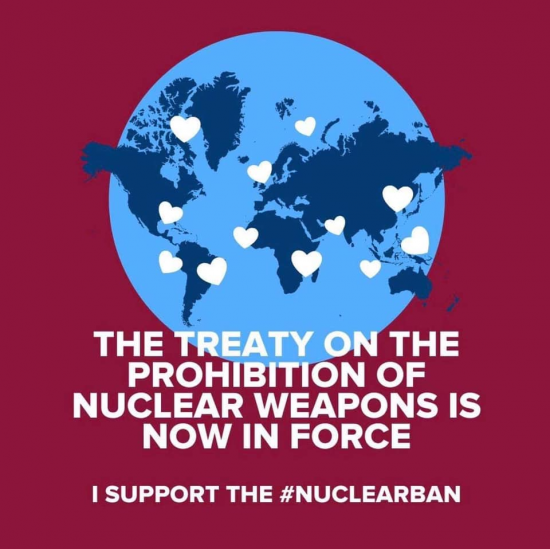
we call for the Japanese government to sign and ratify the Treaty on the Prohibition of Nuclear Weapons as soon as possible.
Everyone in the world, we are “global citizens” who live in the
huge community of Earth.
we call for the Japanese government to sign and ratify the Treaty on the Prohibition of Nuclear Weapons as soon as possible.
Shiro Suzuki,
Mayor of Nagasaki / First Vice President of Mayors for Peace 9 August 24
People making atomic bombs!
Rest from your work for a while and close your eyes.
It was on August 9, 1945!
An atomic bomb that you had made
Brought houses and assets to naught in a flash,
Completely devastating loving families.
Survivors had to
Recover from scratch
To follow a tough, long road to bloody lives
With deep concern that an “atomic bomb disease” would end
their lives any day and
Infinite grievance over the loss of their families and relatives
Haunting them forever.
This is a quote from a poem by Ms. Fukuda Sumako, a poet from
Nagasaki who was exposed to the atomic bombing at 23 and
devoted the rest of her life to making people aware of the misery
brought by the atomic bomb while combatting atomic bomb
disease.
Since that day, hibakusha, or atomic bomb survivors, have lived
with deep sorrow over the loss of their family members and
friends, scars left on their body, the serious effect of radiation
spoiling cells and causing various symptoms even after many
years, and the hardships of discrimination and life due to being
hibakusha.
Their immense pain and suffering caused by the atomic bombing
were not just of an immediate kind. Instead, hibakusha have
experienced them throughout their lifetime.
Nevertheless, hibakusha have continued to share their
experience of surviving severe hardships with strong
determination to ensure that no one in the world will again have
the same experience as theirs.
To achieve this, please visit the atomic-bombed cities and listen
carefully and conscientiously, as an individual, to hibakusha
sharing their pain and thoughts.
We also call for your dialogue and diplomatic efforts to explore a
path toward peaceful solutions, no matter how difficult the path is,
instead of choosing a path toward arms expansion or threats of
force.
The government of Japan, the only state attacked by atomic
bombs in war, must express a serious attitude of pursuing a world
without nuclear weapons.
As a step toward this, we call for the Japanese government to
sign and ratify the Treaty on the Prohibition of Nuclear Weapons
as soon as possible.
We also call for the Japanese government to firmly uphold the
principle of peace embodied in the Constitution of Japan and to
demonstrate its leadership in international efforts to ease the
heightened tension in Northeast Asia and advance disarmament
in the region, such as the Northeast Asia Nuclear-Weapon-Free
Zone initiative.
Moreover, we strongly request that further enhanced aid be given
to hibakusha, whose average age exceeds 85, and that relief
measures be adopted as soon as possible for those who were
exposed to the atomic bombings but have not yet been officially
recognized as hibakusha.
Everyone in the world, we are “global citizens” who live in the
huge community of Earth.
Imagine what would happen if a conflict like those found in the
current world escalated to bring about a nuclear war. It would
have a devastating impact not only on the lives of people but also
on the global environment, imposing a grave threat to the
existence of humankind.
That is why the abolition of nuclear weapons is an absolute
requirement for the survival of humankind, which can be viewed
as a prerequisite for the Sustainable Development Goals (SDGs)
striven for by the international community.
Nagasaki has recently seen increasing vigour of long-term efforts
to achieve a world without nuclear weapons, mainly among
younger generations. In May of this year, a peace-focused forum
supported by One Young World, a global community for young
leaders that is dubbed as the “junior Davos,” was held in
Nagasaki for the first time.
Circles of younger generations around the world working together
as leaders have expanded to various regions. They are the light
of our hope of building a sustainable and peaceful future.
People making peace!
Even if each of you has only a little power, you are never
powerless.
If we as global citizens speak up and work together, we will surely
overcome the current difficult situation. If we share our wisdom
with each other and partner with each other irrespective of any
difference in nationality, religion, race, gender, or generation, we
will surely fulfil our future vision.
Nagasaki firmly believes so.
I would like to express my deepest condolences for the lives
claimed by the atomic bombings.
Nagasaki will disseminate throughout the world a culture of
peace, that is, a culture of respecting others, fostering mutual
trust, and striving for solutions through dialogue in collaboration
with global citizens who hope to contribute to peace making.
I hereby declare that Nagasaki will continue its tireless efforts to
abolish nuclear weapons and realize permanent world peace so
that Nagasaki remains the last place to suffer an atomic bombing.
US Policy: Let Israel Escalate Against Iran, Then Tell Iran Not To Escalate Back
When Iran does whatever it’s about to do, we may be certain that the western empire and its propagandists in the mass media are going to frame it as an unprovoked and outrageous act of aggression and start babbling about “defending” Israel against its “attackers”.
Caitlin Johnstone, Aug 09, 2024, https://www.caitlinjohnst.one/p/us-policy-let-israel-escalate-against?utm_source=post-email-title&publication_id=82124&post_id=147506650&utm_campaign=email-post-title&isFreemail=true&r=1ise1&triedRedirect=true&utm_medium=email
In an article titled “U.S. Warns Iran of ‘Serious Risk’ if It Conducts Major Attack on Israel,” The Wall Street Journal reports that officials within the Biden administration have been warning Iran not to “escalate” against Israel in its planned retaliatory strikes for the assassination of a Hamas leader in Tehran.
“The United States has sent clear messaging to Iran that the risk of a major escalation if they do a significant retaliatory attack against Israel is extremely high,” an anonymous US official told The Wall Street Journal, adding that “there is a serious risk of consequences for Iran’s economy and the stability of its newly elected government if it goes down that path.”
As we sit awaiting Iran’s planned reprisal attack and hope dearly that it doesn’t lead to a major new war in west Asia, one can’t help but read such reports and think it sure would’ve been nice of the Americans to issue these kinds of warnings to Israel against escalating before it went on its insanely escalatory assassination spree in the capital cities of Iran and Lebanon.
You’ll never see western officials so enthusiastic about the idea of de-escalation as they are in those time periods when their side has just severely escalated tensions with an extreme act of aggression, but the other side has yet to retaliate. They remind you of a parent who lets their kid run around clobbering other children at the playground, then when another child goes to hit them back they rush in and start yelling about the need to play nice.
They’ve been doing this song and dance for the last few days, ever since it became clear that Iran was going to retaliate for the assassination of Hamas leader Ismail Haniyeh while he was a guest on their territory.
“Earlier, Vice President Harris and I were briefed in the Situation Room on developments in the Middle East,” President Biden’s Twitter account posted on Monday. “We received updates on threats posed by Iran and its proxies, diplomatic efforts to de-escalate regional tensions, and preparations to support Israel should it be attacked again. We also discussed the steps we are taking to defend our forces and respond to any attack against our personnel in a manner and place of our choosing.”
“Further attacks only raise the risk of dangerous outcomes that no one can predict and no one can fully control,” US Secretary of State Antony Blinken proclaimed on Tuesday.
“Further escalation in the Middle East is in no one’s interests,” tweeted UK Foreign Secretary David Lammy on Tuesday. “I spoke to Iran’s acting Foreign Minister, Ali Bagheri Kani, and cautioned that any Iranian attack would have devastating consequences for the region. Iran and all parties must urgently and immediately de-escalate.”
Israel’s powerful western backers are happy to let it run rampant throughout the region without making any meaningful warnings against its criminal actions or imposing any consequences on it whatsoever. But as soon as it becomes clear that Israel has crossed a red line and is about to get hit, these western empire managers turn into a bunch of hippies who just want peace and love.
When Iran does whatever it’s about to do, we may be certain that the western empire and its propagandists in the mass media are going to frame it as an unprovoked and outrageous act of aggression and start babbling about “defending” Israel against its “attackers”. Imperial history always begins right after Israel’s aggressions, and starts the clock as the retaliations for them emerge.
That’s how the imperial spin machine operates: reversing victim and victimizer, aggressor and defender, claiming to always be acting in self-defense while existing in a continuous state of attack. When the inevitable blowback from these aggressions turns up, they stare with Bambi-eyed innocence and call it an unprovoked attack launched by deranged madmen with hatred in their hearts, and use it to justify even more mass military slaughter in the parts of the world where they already wanted to inflict it.
Are you not tired of having your intelligence insulted like this? I know I am.
Search for nuclear waste storage facility could be delayed by decades
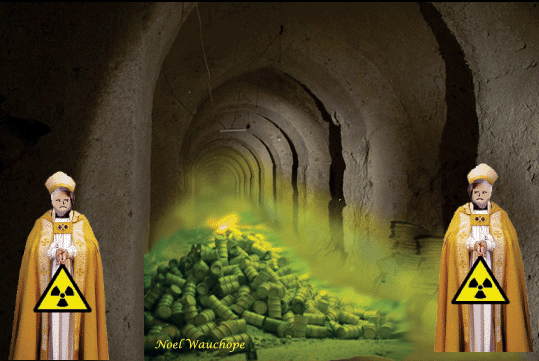
According to a report by the Freiburg-based Öko-Institut , the search for a final storage facility for
highly radioactive nuclear waste in Germany could take more than 40 years longer than expected. The responsible Ministry of the Environment does not believe this. The law currently stipulates that a site will be determined by 2031. However, it has long been clear that this timetable cannot be met. The study commissioned by the Federal Office for the Safety of Nuclear Waste Management (Base) confirms this and names 2074 as a possible date.
………………………..The search for a final storage facility is about finding a place deep underground for the permanent storage of 27,000 cubic meters of highly radioactive waste (1,750 so-called Castor containers) from more than 60 years of nuclear power in Germany. According to Base, this is five percent of the
radioactive waste in Germany , but it contains around 99 percent of the total radioactivity of all waste. The waste is currently stored in 16 above-ground interim storage facilities in various federal states, whose permits expire before 2050. https://www.zeit.de/wissen/umwelt/2024-08/atommuell-endlager-gutachten
IAEA concerned about forest fires near occupied Zaporizhzhia Nuclear Power Plant
Tetyana Oliynyk — Thursday, 8 August 2024, https://www.pravda.com.ua/eng/news/2024/08/8/7469572/
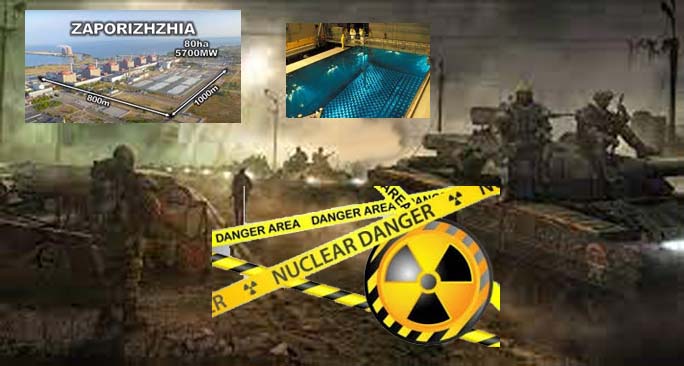
he International Atomic Energy Agency (IAEA) believes that intense fires near the Zaporizhzhia Nuclear Power Plant, which is temporarily occupied by Russia, pose a risk for its external power supply.
Source: IAEA website, as reported by Ukrinform
Quote: “On several occasions over the past week, the IAEA Support and Assistance Mission to Zaporizhzhya (ISAMZ) observed several fires at various distances from the ZNPP and nearby villages. Over the weekend, the IAEA experts observed smoke coming from an area to the north of the ZNPP near the Zaporizhzhya Thermal Power Plant (ZTPP) inlet channel.”
Details: The agency noted that the fire was underneath the remaining overhead power cables that supply power to the plant.
Quote: “As the summer heat continues, such fires along the pathways of the two remaining lines place the ZNPP at risk of loss of external power. While there was no disconnection of either line on this occasion, the situation highlighted the fragility of off-site power at the ZNPP.”
Iran Is Better Positioned to Launch Nuclear-Weapons Program
New U.S. Intelligence Assessment Says. U.S. officials say Iran isn’t currently
seeking to build a nuclear device but is engaged in activities that could
help it do so. Iran is pursuing research that has put it in a better
position to launch a nuclear-weapons program, according to a new assessment
by U.S. intelligence agencies. The shift in Washington’s view of Iran’s
nuclear efforts comes at a critical time, with Iran having produced enough
highly enriched nuclear fuel for a few nuclear weapons.
Wall St Journal 9th Aug 2024
IAEA chief calls for restraint as fighting remains ongoing ‘in the vicinity’ of Russia’s Kursk Nuclear Power Plant

by Dmytro Basmat, Kyiv Independent 10th Aug 2024
International Atomic Energy Agency (IAEA) Director General Rafael Mariano Grossi called on both Kyiv and Moscow to “exercise maximum restraint” in order to avoid a nuclear accident as fighting is reportedly ongoing in the region around the Kursk Nuclear Power Plant (KNPP).
In a statement issued by the IAEA on Aug. 9, Grossi said that a nuclear accident at the KNPP would have “the potential for serious radiological consequences.”
Grossi noted that two of the six nuclear reactors at the KNPP are in shutdown, while another two are fully operational. The remaining two reactors are under construction.
The statement comes as Ukraine’s continues its surprise incursion across the border into Kursk Oblast, with Ukraine reportedly making gains deeper into Russian territory.
Earlier in the day on Aug. 9, a fire caused by an alleged drone attack on a power substation led to power outages in several areas of Kurchatov which houses the KNPP, regional Governor Alexei Smirnov claimed.
On Aug. 8, Kurchatov’s mayor, Igor Korpunkov, claimed that battles are ongoing “a few dozen kilometers” from the town.
Independent Russian news outlet IStories reported on Aug. 9 that Russia is currently preparing to defend the Kursk Nuclear Power Plant as Ukrainian troops are approaching it.
The entrances to the Kursk Nuclear Power Plant were blocked as of the afternoon of Aug. 9, the pro-government regional newspaper network Bloknot claimed, citing its undisclosed sources.
Everything at the nuclear power plant’s units under construction has been de-energized, and construction workers have left the site, Bloknot claimed………………………………………..
Russia’s Emergency Situations Ministry also said on Aug. 9 that the situation in Kursk Oblast had been declared a “federal emergency,” and began sending additional military equipment into the region. https://kyivindependent.com/iaea-chief-calls-for-restraint-to-ensure-nuclear-safety-at-kursk-nuclear-power-plant/
Spy cop ‘made up absurd bomb plot’ over nuclear waste on railway route
Undercover officer infiltrated ‘anarchist movement’ in the early 1980s
Friday, 9th August — By Tom Foot, https://www.islingtontribune.co.uk/article/spy-cop-made-up-absurd-bomb-plot-over-nuclear-waste-on-railway-route
A SPY cop’s report about a plot to blow up North London Line trains transporting nuclear waste was an absurd fantasy used to justify a top secret undercover unit’s existence, an inquiry has heard.
An officer who infiltrated the “anarchist movement” in the early 1980s claimed “people against the nuclear programme built a bomb” that was “actually found” on the overground railway that runs through Islington.
The route goes through Highbury and Islington station and has recently been renamed the Mildmay Line by London Mayor Sadiq Khan.
The explosive claims from Roger Pearce, known to the inquiry as officer HN85, are discredited by several activists in statements published by the Undercover Policing Inquiry for the first time this week.
The statements tell how for many years nuclear waste was transported on the line from power stations in Kent, Suffolk and Essex to Sellafield, Cumbria.
The documents show how peace groups feared a terrorist attack on the trains could cause a national emergency and considered planting a fake bomb on the network for publicity.
The witness statement from Michael Zeitlin, a campaigner for the anti-nuclear movement, said: “I firmly believe that HN85 has deliberately suggested that a real bomb was planted in order to elevate the status of his reports and so justify his spying.
“I am convinced that any possible ‘bomb on the North London Line’ refers to informal discussions of placing a fake bomb as a publicity stunt, in order to draw attention to the threat created by the transportation of nuclear waste through residential areas.
“The idea that an actual bomb would have been planted is patently absurd as the whole issue was one of public safety. Such a bomb plot does sounds very much like fiction as might be found in a novel.”
The documentss show how a meeting of the Hampstead CND branch had heard discussions about “some form of action to protest against the transportation of nuclear fuel” but this had been “completely taken out of context and then grossly exaggerated” by the undercover officer.
Mr Pearce’s statement to the inquiry said: “There were people who were prepared to take violent action against the nuclear policy of the UK and I felt this provided justification for reporting on them.
“People against the nuclear programme, including anarchists who were my associates, built a bomb on the North London Line which transport nuclear waste.”
The inquiry docs show how Roger Pearce – there is no reporting restriction on using his name – trained as an Anglican Priest at Durham before joining the police in 1973.
He joined the Special Demonstration Squad that was set up by the Met to “prevent violent disorder” but led to officers spying on dozens of left-wing organisations and pacifist groups over four decades with little to no gain.
Training for the “top secret unit” took place at Holborn police station, Mr Pearce’s witness statement reveals, while recruitment took place on a “tap on the shoulder in the corridor” basis.
He chose the “legend” Adrian Roger Thorley, a name taken from a child who was killed in a road accident in in Stoke on Trent, and lied about being a van driver delivering spare parts for the car company Ford.
He lived in a “cover flat” off the Goldhawk Road in west London and wore red and black with shoes with “worn through soles”, claiming he was given the prestigious nickname “Trotsky” by activists he was spying on.
“Using a deceased child’s identity was a distasteful practice and a violation of privacy but we felt it would never be revealed,” his statement said.
The UCP Inquiry was launched in 2017 after it was revealed that some SDS officers used names of dead children and fathered children with activists.
Huge resources were ploughed into the discredited project with critics saying the ends did not justify the means.
More than one million documents have been submitted to the inquiry –already the longest and most expensive in British history – that is not expected to conclude until 2026.
Radiation monitoring keeps track of nuclear waste contamination

Nuclear reactors – whether operational or undergoing decommissioning –
create radioactive waste. Management of this waste is a critical task and
this practice has been optimized over the past few decades. Nevertheless,
strategies for nuclear waste disposal employed back in the 1960s and 70s
were far from ideal, and the consequences remain for today’s scientists
and engineers to deal with.
In the UK, spent nuclear fuel is typically
stored in ponds or water-filled silos. The water provides radiation
shielding, as well as a source of cooling for the heat generated by this
material.
In England and Wales, the long-term disposal strategy involves
ultimately transferring the waste to a deep geological disposal facility,
while in Scotland, near-surface disposal is considered appropriate.
The problem, however, is that some of the legacy storage sites are many decades
old and some are at risk of leaking. And when this radioactive waste leaks
it can contaminate surrounding land and groundwater. The potential for
radioactive contamination to get into the wet environment is an ongoing
problem, particularly at legacy nuclear reactor sites.
“The strategy for waste storage 50 years ago was different to that used now. There wasn’t
the same consideration for where this waste would be disposed of long
term,” explains Malcolm Joyce, distinguished professor of nuclear
engineering at Lancaster University. “A common assumption might have been
‘well it’s going to go in the ground at some point’ whereas actually,
disposal is a necessarily rigorous, regulated and complicated programme.”
In one example, explains Joyce, radioactive waste was stored temporarily in
drums and sited in near-surface spaces. “But the drums have corroded over
time and they’ve started to deteriorate, putting containment at risk and
requiring secondary containment protection,” he says. “Elsewhere, some
of the larger ponds in which spent nuclear fuel was stored are also
deteriorating and risking loss of containment.”
Physics World 7th Aug 2024, https://physicsworld.com/a/radiation-monitoring-keeps-track-of-nuclear-waste-contamination/
America’s Nuclear Weapons Quagmire

what are the American people really getting for all of this new nuclear weapons spending?
The United States is locked in a strategic and ideological battle with itself over the purpose and future of its nuclear arsenal
STIMSON, By Geoff Wilson, Defense Policy & Posture, August 7, 2024
The United States is on track to spend the equivalent of more than two Manhattan projects per year in one of the most expensive nuclear arms races in history. Yet, all of the systems being developed are all significantly over budget and behind schedule, and several might be actively eroding America’s national security by destabilizing global strategic stability and legitimizing the idea of “limited” nuclear use. How did we get here and might there be better alternatives?
Over the past decade, the United States has launched one of the most expensive nuclear arms races in history. As it stands now, this new nuclear modernization comes with a price tag of approximately $1.7 trillion over 30 years.1 To put this in perspective, adjusted for inflation to 2023 dollars, the four years of the Manhattan Project cost approximately $30 billion.2
The Congressional Budget Office (CBO) estimates that the United States is set to spend some $756 billion on nuclear weapons modernization programs between fiscal 2023-2032,3 which averages out to $75 billion a year on nuclear weapons. That is more than two Manhattan projects every year for the next eight years.
Put in other terms, it is nearly all the money the United States spent on nuclear weapons and delivery systems for World War II, spent every year, for the next eight years. When combined with the Department of Defense’s conventional weapons portfolio over the same period, nuclear modernization will drive annual peacetime Pentagon budgets to unprecedented levels.
If you compare the technical obstacles faced by the United States during the nuclear development of the 1940s, to the higher costs for the relatively marginal benefits of the current American nuclear modernization program, it begs the question: what are the American people really getting for all of this new nuclear weapons spending?
Nuclear weapons proponents have framed these expenses as part of a modernization effort to update and refurbish aging systems developed in the 1970’s and 80’s or as a necessity to maintain U.S. global nuclear dominance.4 But this branding masks a serious escalation in disruptive nuclear posture changes, one that includes new weapons and missions that were eliminated by former presidents Reagan and George H.W. Bush after being identified as unnecessary and destabilizing to both strategic stability and nuclear deterrence.
Set against this backdrop, it appears that the United States is in a new global nuclear arms race, a new Cold War 2.0, with the United States set firmly in the driver’s seat. But amidst increased global nuclear risks, the United States is inflicting unnecessary self-harm by expending resources on systems that may actually erode strategic stability and drawing resources away from other critical national security priorities – with very little real future security benefit to show for it.
The Problem
Fundamentally, the problem with rapid new nuclear weapons development is that it is strategically destabilizing. If one nation learns that a rival is rapidly developing systems that could overwhelm or defeat its defenses, a realist response dictates that that nation must do the same to offset any strategic advantage its rival might gain to maintain deterrent parity.
The alternatives are to consider attacking that rival before they have produced new weapons that can defeat your existing forces, or to find a way to negotiate with those rivals to produce verifiable diplomatic agreements to limit the production and deployment of new and destabilizing forces.
History provides many examples of this dynamic. The United Kingdom and Germany engaged in a serious naval arms race that contributed to the tensions preceding World War I…………………………………………….
nuclear modernization plan has now grown from just updating older systems, to the development of entirely new ones as well.
………………………………………………………….. other nuclear powers have taken notice.
Challenges of a New Global Nuclear Arms Race
Since the launch of the new modernization plan, every single nuclear-armed nation has begun redeveloping or expanding their nuclear arsenals.19
………………………………………………… Even more concerning for global strategic stability are growing calls in the United States for entirely new nuclear missions and systems. Already, the United States is in the process of developing, producing, or deploying at least three new weapons systems that can be alternatively called: less-than-deterrent, non-strategic, tactical, or battlefield nuclear weapons. These are weapons that are not meant to reinforce the deterrence-first approach that many Americans have come to believe the U.S. nuclear arsenal is based around today. Instead, they are part of a murkier Cold War-style nuclear warfighting strategy meant to fight and “win” a limited nuclear war at the theater level.
…………………………………………… This class of weapons is incredibly dangerous considering they are viewed as being smaller and less destructive and have been argued as being more usable. Add to that the fact they are traditionally meant to be deployed alongside conventional forces, and their mere possession can be seen as increasing the likelihood of their use under pressure or in crisis situations.25
They also pose a significant discrimination problem to enemy leaders, by building uncertainty into U.S. missile launches, forcing them to constantly evaluate if they are under a conventional or nuclear strike………………………………………………..
,…………………………………………….. Senator Edward Kennedy drove this issue home in 2003 when he argued on the Senate floor, “Some may say that smaller weapons are less dangerous than the larger weapons already in our arsenal. But these nuclear weapons are actually more dangerous… [and they are made] more usable by lowering the thresholds for the first use of nuclear weapons.”
Kennedy warns that this view is deceptive, “Nuclear war is nuclear war is nuclear war. We don’t want it anywhere, anytime, anyplace. Make no mistake, a mini-nuke is still a nuke. ……………………………………………………………………………
…………………………Nuclear Brass Tacks
On the whole, the extremely high costs of these weapons will be a significant factor in the coming defense spending crisis. Spending $1.7 trillion dollars on new nuclear weapons over 30 years – about the total cost of all U.S. student debt – is unsustainable.29
The U.S. defense industrial base has so far proven itself incapable of actually absorbing all of the new nuclear spending. Even if it could, the risks of rampant waste and production delays challenge the industry’s ability to produce these weapons. It thus becomes difficult to say whether or not the United States is actually reaping any benefit from this modernization effort while actively encouraging its rivals to also make new nuclear investments to maintain their own perceived deterrent.
Indeed, national security establishment leaders have been so concerned with whether they can spend more money on nuclear weapons, there has been very little consideration of whether they should.
…………………………………………………………………………………………………………………….. Conclusion
Among the lessoned learned from the first Cold War, the conflict demonstrated that simply possessing more nuclear weapons did not make the United States any safer. While humanity survived the last nuclear arms race, that outcome was far from certain, and the prospect of a new game of nuclear chicken in the Pacific or Europe should be viewed with as much cynicism as can be mustered………………………………………………………………………………… https://www.stimson.org/2024/americas-nuclear-weapons-quagmire/
The deceitfulness of the nuclear weapons industry -as it plays the jobs jobs jobs card

World-Ending Maneuvers? Inside the Nuclear-Weapons Lobby Today, TomDispatch, By Hekmat Aboukhater and William D. Hartung August 7, 2024
“……………………………………………………………………………Playing the Jobs Card
The argument of last resort for the Sentinel and similar questionable weapons programs is that they create well-paying jobs in key states and districts. Northrop Grumman has played the jobs card effectively with respect to the Sentinel, claiming it will create 10,000 jobs in its development phase alone, including about 2,250 in the state of Utah, where the hub for the program is located.
As a start, however, those 10,000 jobs will help a miniscule fraction of the 167-million-member American workforce. Moreover, Northrop Grumman claims facilities tied to the program will be set up in 32 states. If 2,250 of those jobs end up in Utah, that leaves 7,750 more jobs spread across 31 states — an average of about 250 jobs per state, essentially a rounding error compared to total employment in most localities.
Nor has Northrop Grumman provided any documentation for the number of jobs the Sentinel program will allegedly create. Journalist Taylor Barnes of ReThink Media was rebuffed in her efforts to get a copy of the agreement between Northrop Grumman and the state of Utah that reportedly indicates how many Sentinel-related jobs the company needs to create to get the full subsidy offered to put its primary facility in Utah.
A statement by a Utah official justifying that lack of transparency suggested Northrop Grumman was operating in “a competitive defense industry” and that revealing details of the agreement might somehow harm the company. But any modest financial harm Northrop Grumman might suffer, were those details revealed, pales in comparison with the immense risks and costs of the Sentinel program itself.
There are two major flaws in the jobs argument with respect to the future production of nuclear weapons. First, military spending should be based on security considerations, not pork-barrel politics. Second, as Heidi Peltier of the Costs of War Project has effectively demonstrated, virtually any other expenditure of funds currently devoted to Pentagon programs would create between 9% and 250% more jobs than weapons spending does. If Congress were instead to put such funds into addressing climate change, dealing with future disease epidemics, poverty, or homelessness — all serious threats to public safety — the American economy would gain hundreds of thousands of jobs. Choosing to fund those ICBMs instead is, in fact, a job killer, not a job creator……………………………… https://tomdispatch.com/world-ending-maneuvers/
Why US nuclear waste policy got stalled. And what to do about it.

The lack of a repository doesn’t seem to worry nuclear enthusiasts anymore, probably because it doesn’t threaten what reactor licensing there is. Recent legislation—the ADVANCE Act—to accelerate approval of new nuclear technologies does not mention nuclear waste at all. The focus is on subsidizing new reactor projects and “streamlining” licensing.
A difficulty is that current law requires that, before the Energy Department can go forward with a surface storage facility to consolidate the used fuel, it has to have already selected a new geologic repository site, which isn’t happening.
Bulletin, By Victor Gilinsky | July 31, 2024, Victor Gilinsky is a physicist and was a commissioner of the US Nuclear Regulatory Commission during the Ford, Carter, and Reagan administrations
It is often said—somewhat accusingly—that it isn’t technical issues that stand in the way of siting a US geologic repository for highly radioactive waste, but political and social ones. In fact, the issues are inextricably connected. The root of the US failure lies in the original motive of the nuclear establishment in siting such an underground repository. It was not to protect public safety, but to protect continued licensing of nuclear power plants from attack in the courts on grounds that there were no provisions for dealing with the plants’ highly radioactive waste.
The disdain for public safety and the rush to open a repository infected the design process and fostered slapdash decisions. These ultimately sank the technical case for the repository at Nevada’s Yucca Mountain. And while in the end the project was shelved by a political act, behind it were Energy Department and Nuclear Regulatory Commission (NRC) actions that left a deep residue of public distrust, so deep that there isn’t likely to be a US geologic repository, ever.
The contrast with successful waste repository projects in Sweden and Finland is clear. Their regulatory standards were much tighter than those applied by the NRC, the sites were chosen carefully from a scientific point of view, and the designs strictly focused on public safety. It is not surprising that the Scandinavian authorities were able to gain the confidence of their public, and not just because they took pains to consult the public—which the Energy Department did not. They presented a good case for a sound underground facility.
Waste become a problem. ………………………………………………..
Selecting a bad site. Yucca Mountain was initially advertised as being very dry. It turned out there was lots more water in the mountain than the Department expected……………………………. It became clear the waste canisters would corrode much more rapidly than forecast and radioactive leakage beyond the site boundary would exceed even the lax standards imposed by the Environmental Protection Agency and adopted by the NRC……
A flawed licensing process. While the Energy Department wanted credit for the 11,000 drip shields in the NRC review of its license application, it didn’t intend to install them with the waste canisters. For one thing, the cost of the needed 55,000 tons of titanium alloy was substantial, and putting in drip shields would have complicated the waste installation process and required new, as yet undesigned, equipment. Instead, the Energy Department’s plan “postponed” drip shield installation until the repository closed for good, in 100-300 years. But by then it would be impossible to install drip shields over the waste canisters: The internal underground transportation system would not be functioning, and rockfall would anyhow make passage impossible. Asked how the NRC could possibly accept this fantastical commitment, I remember an Energy Department official responding that “the NRC may not question the promise of a sister agency.”
The Energy Department refused to run any computer analyses on how the repository would perform if the drip shields didn’t get installed. Nevada managed to do this and found that, without drip shields, the repository failed the licensing requirement for radioactive leakage from the site. ………………………………………………………
NRC staff participates in all agency licensing hearings. Since at that point staffers had already reviewed the application favorably, they supported the license applicant. In the Yucca Mountain case, the staff outdid itself in its support of the Energy Department. …………………………..
Stop the stalemate. The Yucca Mountain project was stalled indefinitely by the Obama administration before any substantive licensing hearing took place. It was not irrelevant that Nevada Senator Harry Reid was the Democratic majority leader, and his former assistant was NRC chairman. But the technical failures were a vital part of the background leading to this decision.

The 2012 report of a “Blue Ribbon Commission on America’s Nuclear Future” recommended a “consent-based approach” to managing nuclear waste. The Energy Department got religion and formed an Office of Consent-Based Siting, whose website explains that consent-based siting “prioritizes the participation and needs of people and communities and seeks their willing and informed consent to accept a project in their community.” But the department still didn’t get it. It’s not making a show of consulting the public that gains trust. You need a good technical plan to start with and demonstrated competence and sense of responsibility to carry it out, as was the case in the Scandinavian countries. In my judgment, it’s too late for the Energy Department. I don’t think any state would ever trust the Energy Department to build and operate a nuclear waste repository.
The lack of a repository doesn’t seem to worry nuclear enthusiasts anymore, probably because it doesn’t threaten what reactor licensing there is. Recent legislation—the ADVANCE Act—to accelerate approval of new nuclear technologies does not mention nuclear waste at all. The focus is on subsidizing new reactor projects and “streamlining” licensing.
The United States, however, does need a better system for storing highly radioactive used fuel than the current situation of keeping it at over 80 storage locations in 36 states. A difficulty is that current law requires that, before the Energy Department can go forward with a surface storage facility to consolidate the used fuel, it has to have already selected a new geologic repository site, which isn’t happening. This restriction was inserted into the Nuclear Waste Policy Act to prevent the government from siting a “temporary” storage facility and then giving up on an underground repository for permanent disposal of the waste. Now, because of this restriction, the United States has neither centralized storage nor a repository, and the waste keeps piling up. Relaxing the provision in the Nuclear Waste Policy Act that has prevented temporary consolidated storage has to be the starting point of a sensible nuclear waste policy. https://thebulletin.org/2024/07/why-us-nuclear-waste-policy-got-stalled-and-what-to-do-about-it/?utm_source=Newsletter+&utm_medium=Email+&utm_campaign=ThursdayNewsletter08012024&utm_content=NuclearRisk_NuclearWastePolicyStalled_07312024
1 This Month


Read the Public Inquiry Report, the Commissioners’ report, Surrendering Australia: The AUKUS Deception is available to download for free at aukuspublicinquiry.com. Or just watch the replay of the National Press Club Luncheon.



19 November – Webinar – The Reality of Reprocessing
Time: 11:00 AM Pacific Time (US & Canada) / 2:00 PM Eastern / 7:00 PM UK / 8:00 PM CET
Register for the Zoom Event Here



Shut down the radiation-damaged Heysham nuclear reactors now
To see nuclear-related stories in greater depth and intensity – go to https://nuclearinformation.wordpress.com

Say No to NASA’s Reckless Nuclear Reactor on the Moon
Say No to NASA’s Reckless Nuclear Reactor on the Moon
-
Archives
- November 2026 (119)
- October 2026 (302)
- September 2026 (339)
- August 2026 (330)
- July 2026 (355)
- June 2026 (287)
- May 2026 (306)
- April 2026 (356)
- March 2026 (251)
- February 2026 (267)
- January 2026 (308)
- December 2025 (358)
-
Categories
- 1
- 1 NUCLEAR ISSUES
- business and costs
- climate change
- culture and arts
- ENERGY
- environment
- health
- history
- indigenous issues
- Legal
- marketing of nuclear
- media
- opposition to nuclear
- PERSONAL STORIES
- politics
- politics international
- Religion and ethics
- safety
- secrets,lies and civil liberties
- spinbuster
- technology
- Uranium
- wastes
- weapons and war
- Women
- 2 WORLD
- ACTION
- AFRICA
- Atrocities
- AUSTRALIA
- Christina's notes
- Christina's themes
- culture and arts
- Events
- Fuk 2022
- Fuk 2023
- Fukushima 2017
- Fukushima 2018
- fukushima 2019
- Fukushima 2020
- Fukushima 2021
- general
- global warming
- Humour (God we need it)
- Nuclear
- RARE EARTHS
- Reference
- resources – print
- Resources -audiovicual
- Weekly Newsletter
- World
- World Nuclear
- YouTube
-
RSS
Entries RSS
Comments RSS

