Israeli policy means ‘difficult to know’ how close world is to nuclear war, warns International Campaign to Abolish Nuclear Weapons (ICAN)
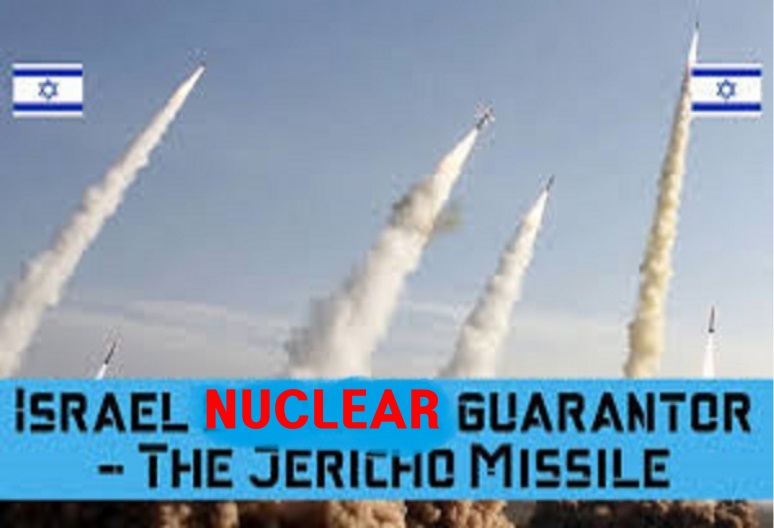
By Thomas Moller-Nielsen | Euractiv, 6 August 24, https://www.euractiv.com/section/global-europe/news/israeli-policy-means-difficult-to-know-how-close-world-is-to-nuclear-war-warns-anti-nuclear-weapons-group/
Israel’s policy of strategic ambiguity over its nuclear weapons arsenal makes it “difficult to know” how close the current crisis in the Middle East is to escalating into a nuclear war, a leading anti-nuclear weapons group has warned.
The International Campaign to Abolish Nuclear Weapons (ICAN)—a Geneva-based Nobel Peace Prize-winning group—said that Israel’s strategy of neither confirming nor denying its possession of nuclear weapons makes it hard to predict whether an imminent anticipated attack by Hezbollah or Iran could trigger a nuclear response.
“As the country refuses to confirm or deny it has such weapons, little is known about [Israel’s] arsenal, but experts believe it can launch nuclear weapons using missiles, submarines and aircraft,” Susi Snyder, ICAN’s Programme Coordinator, told Euractiv.
“Israel is also opaque about the circumstances under which it would use nuclear weapons so it is difficult to know how close we might be to the use of nuclear weapons,” she added.
Tensions have risen further in the Middle East following the assassination last week of Hezbollah commander Fuad Shukur in Beirut and Hamas political chief Ismail Haniyeh in Tehran. Both the Lebanese and Palestinian militant groups are backed by Iran.
Israel has confirmed that it killed Shukur but has neither confirmed nor denied its involvement in Haniyeh’s death. It blames Hezbollah for a rocket attack on a soccer field in the Israeli-occupied Golan Heights last month, in which 12 children were killed.
Hezbollah has continually exchanged rocket fire across Israel’s northern border with Lebanon since Hamas launched a surprise attack on Israel on 7 October that killed roughly 1,200 Israelis and triggered the current war in Gaza.
More than 40,000 Palestinians have been killed in Israel’s retaliatory offensive, according to Gaza’s health ministry.
EU continues to call for restraint
Asked about the potential of the current crisis to escalate further, a European Commission spokesperson directed Euractiv to a statement published on Sunday by G7 foreign ministers urging all relevant parties in the Middle East “to refrain from perpetuating the current destructive cycle of retaliatory violence, to lower tensions and engage constructively toward de-escalation”.
The spokesperson also confirmed that Enrique Mora, one of the EU’s top diplomats who was in Tehran at the time of Haniyeh’s assassination, had left the country.
Both Mora and Haniyeh had been in Tehran to attend the inauguration of Iran’s new president, Masoud Pezeshkian. Mora subsequently held talks with top Iranian officials and suggested on social media that EU-Iran relations had entered a “new chapter”.
Citing “three sources briefed on the call”, Axios reported that US Secretary of State Antony Blinken told his G7 counterparts over the weekend that an attack by Iran and Hezbollah against Israel could begin on Monday (5 August).
On Friday (2 August), the US sent additional fighter jets and warships to the region in an apparent bid to deter military action by Iran and Hezbollah, both of which have vowed retaliatory attacks on Israel.
US President Joe Biden was also reportedly set to meet with his national security team cabinet on Monday to discuss the crisis.
Israel, which has possessed nuclear weapons since the 1960s, has repeatedly said that it “will not be the first to introduce nuclear weapons into the Middle East”.
Together with India and Pakistan, it is one of three of the nine nuclear-armed countries that has never signed the Non-proliferation Treaty (NPT), which aims to prevent the global spread of nuclear weapons.
Arms Control Association, a US-based NGO, estimates that Israel currently has 90 plutonium-based nuclear warheads.
How to avoid ‘disaster’
Snyder also emphasised that “any use of nuclear weapons” in the current crisis “would be a disaster for the region and the world”.
“A single nuclear weapon would likely kill hundreds of thousands of civilians and injure many more; radioactive fallout could contaminate large areas, including in the country that used the weapon, particularly if used against a nearby target which would be the case in the Middle East,” she said.
Snyder also urged citizens to pressure their governments to sign up to the Treaty on the Prohibition of Nuclear Weapons (TPNW), a 2021 UN agreement more stringent than the NPT which expressly prohibits signatories from developing, possessing, or threatening to use nuclear weapons.
“Policymakers and the public in countries that have not yet joined the treaty should encourage their governments to join the TPNW without delay, as it is the only treaty which comprehensively outlaws nuclear weapons and provides for their elimination,” she said.
None of the world’s nine nuclear-armed countries have signed the TPNW. In addition to Israel, the US, Russia, China, the United Kingdom, France, North Korea, Pakistan and India all currently possess nuclear weapons.
Britain’s net zero dream could be crushed by big tech

As demand for data storage grows, so does the need for giant data centres – which pose a threat to our landscape and our energy supply
Jim Norton, 4 August 2024
Gigantic facilities represent the very real physical cost of our
unquenchable thirst for the internet and, increasingly, these facilities
pose a threat not only to our landscape but our energy supply too.
This year, big tech has started to sound the alarm that the boom in artificial
intelligence (AI) – which is even more power hungry than the normal web
– is putting the world in danger of missing its ambitious net zero
targets.
Tech leaders from Amazon CEO Andy Jassy and OpenAI boss Sam
Altman, to the billionaire owner of X (formerly Twitter) Elon Musk, have
warned this year about generative AI’s voracious use of power. Musk
warned it could lead to a global electricity shortage as early as next
year.
Some studies suggest the AI industry alone could consume as much
energy as a country the size of the Netherlands by 2027. AI’s thirst for
power has led to fears that the technology is jeopardising the ambitious
climate targets set by both governments and tech giants.
Renewable energy is not yet consistent nor plentiful enough to keep up with AI demand,
meaning officials and companies will likely have to fall back on fossil
fuels. This year, both Google and Microsoft admitted their ambitious
targets of reaching net zero by 2030 were under threat; revealing their
greenhouse emissions had risen by 48 per cent and a third, respectively,
over the past few years, largely due to the explosive growth of AI.
So what does this mean for the UK? The National Grid has predicted that AI will
drive a spike in energy use, with the amount of power demanded by data
centres expected to increase six-fold over the next decade. Given
Britain’s energy infrastructure is already struggling under the weight of
existing demand, and is in dire need of an upgrade, Labour’s aims of
decarbonising the power supply by 2030 will certainly be put under immense
pressure.
Telegraph 4th Aug 2024
https://www.telegraph.co.uk/environment/2024/08/04/big-tech-ai-green-belt-destruction/
What do Americans really think about the bombing of Hiroshima and Nagasaki?

Bulletin, By Scott D. Sagan, Gina Sinclair | August 5, 2024
In mid-August 1945, within weeks of the end of World War II, Americans were polled on whether they approved of the atomic bomb attacks on Hiroshima and Nagasaki. An overwhelmingly high percentage of Americans—85 percent—answered “yes.” That level of approval has gone down over the years, with (depending on the precise wording of the question) only a slim majority (57 percent in 2005) or a large minority (46 percent in 2015) voicing approval in more recent polls.
This reduction in atomic bombing approval over time has been cited as evidence of a gradual normative change in public ethical consciousness, the acceptance of a “nuclear taboo” or what Brown University scholar Nina Tannenwald has called “the general delegitimation of nuclear weapons.”
This common interpretation of US public opinion, however, is too simplistic. Disapproval has indeed grown over time, but most Americans remain supportive of the 1945 attacks, albeit wishing that alternative strategies had been explored. These conclusions can be clearly seen in the results of a new, more complex public opinion survey, conducted for this article, that asked a representative sample of Americans about their views on the bombing of Hiroshima and Nagasaki, examined alternative strategies for ending the war, and provided follow-on questions to determine how the public weighs the costs and benefits of different strategies.
Scratch beneath the surface, and the American public today, as in 1945, does not display an ethically based taboo against using nuclear weapons or killing enemy civilians, but rather has a preference for doing whatever was necessary to win the war and save American lives…………………………………………………………………………………………….
US public opinion in 2015 and 2024. A 2015 replication of the 1945 Roper poll found that 14.4 percent of Americans felt the United States should not have used atomic bombs at all, that 31.6 percent thought a bomb should have been dropped in a demonstration strike on an unpopulated area, but that almost no one (less than 3 percent) wanted to use more bombs before Japan had a chance to surrender.
For this article, we replicated the 1945 Roper poll again with a representative sample of 2,000 Americans on June 21, 2024, but then asked follow-on questions to help us determine what the public really meant when answering the survey. Such follow-on questions are necessary to understand the public’s deeper set of commitments and preferences. Did those opposing any use of the atomic bombs really support such a policy even if it meant ending the war without a Japanese government surrender? Or would they support dropping the bomb if Japan did not surrender? Would those who favor a demonstration strike today support bombing cities if the demonstration strike failed to compel Tokyo to surrender, or did they oppose atomic attacks against Hiroshima and Nagasaki under all circumstances? In short, what do Americans really think, now, about using nuclear weapons in 1945?
Options and alternatives. The percentage of respondents who said that the United States shouldn’t have used any atomic bombs at all increased from 4.3 percent in 1945, to 14.4 percent in 2015, to 36.7 percent in 2024. The percentage of respondents who preferred the demonstration strike option decreased from 31.6 percent to 20.9 percent. Public support for use of the two bombs, as the United States did in 1945, followed the same general trend, decreasing to 19.4 percent. But what do these trends reveal about US opinion? Our follow-on questions were designed to measure the public’s true willingness to use nuclear weapons and kill enemy civilians…………………………………………………
In short, when reminded of the Japanese refusal to surrender, the strong majority (82.33 percent) of those who originally favored the demonstration strike then accepted nuclear or conventional attacks on Japanese cities.
Why these preferences? The basic finding that over 36 percent of Americans said today that the United States should not have used any atomic bombs cannot reasonably be interpreted as an indication of a widespread nuclear taboo. It may be a positive trend, but it is not a robust opinion. Indeed, less than half of those respondents maintained that position after they were reminded (as was the case in 1945) that Japan had not accepted unconditional surrender prior to the atomic bomb attacks.
Instead, our 2024 Roper Poll replication provides three valuable insights about American public opinion. First, much of US public is, in fact, still supportive of the decision to drop atomic bombs on Hiroshima and Nagasaki. Adding the answers from the different follow-on questions, reveals that 41.3 percent of all respondents were ultimately willing to use a nuclear bomb on one or more cities, and many more Americans (over 25% of all respondents) reported that they didn’t know what their preferences were in this wartime scenario. These findings are inconsistent with the existence of a nuclear taboo and underscore that large hawkish instincts lurk within the U.S. public.
A second novel finding relates to the public’s willingness to attack cities and thereby violate the basic law of armed conflict and the just war principle of non-combatant immunity. While only 41.3 percent of respondents were ultimately willing to use nuclear weapons against cities, many other respondents favored continuing the conventional bombing of Japan. Reasons given by respondents who had at first stated that they opposed nuclear attacks, but then favored continued conventional bombing once reminded that Japan had not accepted unconditional surrender included: “Because if humane tactics don’t work, then you gotta do what you Gotta do;” “Since they refuse to heed to the warning, then they deserve war;” and “If Japan doesn’t surrender than it’s time to show them what we can do.”
Altogether, adding advocates of conventional bombing with advocates of nuclear attacks, 51.25 percent of all respondents chose to attack Japanese cities and kills civilians on a massive scale. This shows that the non-combatant immunity principle, contrary to the claims of some experts, does not have strong “stopping power” at least among the public. These findings challenge the theories of scholars such as Charli Carpenter, Alexander Montgomery, Steven Pinker, Neta Crawford, and Ward Thomas, who posit that a decrease in willingness to use nuclear weapons is a result of broader acceptance of the just war principle of non-combatant immunity.
………………………………………………….. many responses in the 2024 Roper Poll revealed something else: a notable percentage of respondents (15.92 percent) cited their beliefs on the importance of US isolationism and avoiding any engagement in foreign affairs.
……………………………………………These findings about contemporary views of the 1945 atomic bombing are consistent with previous research demonstrating that large segments of the American public are willing to contemplate the use of nuclear weapons in a war against Iran, in order to avoid US military fatalities, or against a terrorist organization planning chemical weapons attacks on the United States. …………………………………
The American public does not hold a strong nuclear taboo and indeed, may be more of a goad than a constraint on any future president who is contemplating the use of nuclear weapons in trying wartime conditions. While the laws of armed conflict and just war doctrine may still be a constraint on nuclear use, their powers are more likely to exercised by the moral compass of individual political leaders or the legal training of senior military officers, not through the deeply problematic instincts of the American public. https://thebulletin.org/2024/08/what-do-americans-really-think-about-the-bombing-of-hiroshima-and-nagasaki/?utm_source=Newsletter&utm_medium=Email&utm_campaign=DayNewsletter08052024&utm_content=NuclearRisk_WhatAmericansReallyThink_08052024
Shin Bet said to prepare bunker for Netanyahu, senior leadership amid Iranian threat
Known as the National Management Center, Jerusalem bunker can reportedly withstand hits from a range of existing weaponry, keep communications open to IDF headquarters
Times of Israel, By ToI Staff, 4 August 2024,
release hostages in the Gaza Strip, June 8, 2024. (Shin Bet security service)
An underground bunker in Jerusalem where senior leaders can remain for an extended period during a war has been prepared by the Shin Bet security service and is fully operational, the Walla news site reported on Sunday, amid fear of attacks on Israel from Hezbollah and Iran.
The bunker, reportedly built almost 20 years ago, can sustain hits from a range of existing weaponry, has command and control capabilities, and is connected to the Defense Ministry headquarters in Tel Aviv, the report said.
The bunker, which is also known as the National Management Center, has not been used in the past 10 months of Israel’s war in Gaza.
release hostages in the Gaza Strip, June 8, 2024. (Shin Bet security service)
An underground bunker in Jerusalem where senior leaders can remain for an extended period during a war has been prepared by the Shin Bet security service and is fully operational, the Walla news site reported on Sunday, amid fear of attacks on Israel from Hezbollah and Iran.
The bunker, reportedly built almost 20 years ago, can sustain hits from a range of existing weaponry, has command and control capabilities, and is connected to the Defense Ministry headquarters in Tel Aviv, the report said.
The bunker, which is also known as the National Management Center, has not been used in the past 10 months of Israel’s war in Gaza.
00:24
02:21
https://imasdk.googleapis.com/js/core/bridge3.656.2_en.html#goog_623417804
https://imasdk.googleapis.com/js/core/bridge3.656.2_en.html#goog_623417805
https://imasdk.googleapis.com/js/core/bridge3.656.2_en.html#goog_623417806
It has, however, been prepared for use now by Prime Minister Benjamin Netanyahu and other senior figures as Israel braces for possible attacks from Iran and Hezbollah amid escalating tensions in the Middle East.
Iran, its Lebanese ally Hezbollah, and the Palestinian Islamist terror group Hamas blame Israel for a blast that killed Hamas leader Ismail Haniyeh in Tehran last week. His assassination came just hours after a strike claimed by Israel killed Hezbollah’s military chief, Fuad Shukr, on Tuesday evening near Beirut. Israel has claimed responsibility for killing Shukr but has not officially commented on Haniyeh……………………………………………………………
The last time the bunker is known to have been used was in 2018 when Prime Minister Benjamin Netanyahu ordered a series of high-level security cabinet meetings to be held there, likely to prevent leaks to the media……………………………….. https://www.timesofisrael.com/shin-bet-said-to-prepare-underground-bunker-for-senior-leadership-amid-iranian-threat/
The pictures worth a thousand words

Canada and the Atom Bomb Exhibition
Canada’s little-known role in atomic bombings on display
By Anton Wagner, 4 Aug 24, https://beyondnuclearinternational.org/2024/08/04/the-pictures-worth-a-thousand-words/
The Hiroshima Nagasaki Day Coalition launched a “Canada and the Atom Bomb” photo exhibition inside Toronto City Hall on August 2. The exhibition of 100 photographs reveals the Canadian government’s participation in the American Manhattan Project that developed the atom bombs that destroyed Hiroshima and Nagasaki in August 1945.
The exhibition can be viewed in its entirety online at the Toronto Metropolitan University website.
It documents how the Eldorado Mining and Refining Company extracted uranium ore at Great Bear Lake in the Northwest Territories in the late 1930s and shipped the ore to its refinery in Port Hope, Ontario, for sale to the Americans.
Images by the Montreal photographer Robert Del Tredici focus on the Dene hunters and trappers at Great Bear Lake who were hired by Eldorado to carry the sacks of radioactive ore on their backs for loading onto barges that transported the ore to Port Hope. Many of them subsequently died of cancer.
Before his death in 1940, the Dene spiritual leader Louis Ayah had prophesied that such an illness would befall the Dene because of white men mining on Dene territory. Ayah also prophesied a nuclear holocaust that would end human civilization.
Prime Minister Mackenzie King hosted President Roosevelt and Prime Minister Winston Churchill in Quebec City in 1943 where they agreed to have Canada participate in the production of the atom bomb.
The exhibition highlights this participation by the Canadian government, scientists, industry, and nuclear research laboratories. Posters from the Hiroshima Peace Museum show the death and destruction in the two bombed cities. The exhibition includes five images by Yoshito Matsushige, the only photographer who took pictures in Hiroshima the day the atom bomb exploded overhead.
“Canada and the Atom Bomb” concludes with photographs showing the efforts by peace activists to persuade Toronto City Council to participate in the world-wide movement to abolish nuclear weapons. In 2017, City Council reaffirmed Toronto as a Nuclear Weapons-Free Zone and called on Prime Minister Justin Trudeau to have Canada ratify the UN Treaty on the Prohibition of Nuclear Weapons.
Setsuko Thurlow accepted the Nobel Peace Prize on behalf of the International Campaign to Abolish Nuclear Weapons in Oslo, Norway, in December 2017. A Hiroshima survivor, Thurlow, now 92, attended the opening of the “Canada and the Atom Bomb” exhibition on August 2. She will also speak at the annual August 6 commemoration at the Toronto City Hall Peace Garden to urge that Canada sign the Treaty on the Prohibition of Nuclear Weapons.
Anton Wagner is with the Hiroshima Nagasaki Day Coalition.
Hiroshima inviting Israel to attend nuclear bombing anniversary ‘very unfortunate,’ says scholar
Hope Nagasaki’s refusal to invite Israel to its peace event to mark US bombing of Japan ‘makes some kind of impact on the world,’ Richard Falk tells Anadolu
Riyaz ul Khaliq |05.08.2024, https://www.aa.com.tr/en/asia-pacific/hiroshima-inviting-israel-to-attend-nuclear-bombing-anniversary-very-unfortunate-says-scholar/3296156
An invitation for Israel to attend an annual peace event in Hiroshima to mark the US nuclear bombing of the Japanese city was “very unfortunate,” a leading legal scholar told Anadolu.
“It is very unfortunate that Hiroshima does not grasp the fact it was victimized in a way Palestinian people have been victimized by Israel,” said Richard Falk, an American professor emeritus of international law at Princeton University.
Falk’s comments to Anadolu come as the cities of Hiroshima and Nagasaki will be commemorating 79th anniversary of 1945 atomic bombing by the US this week.
While Nagasaki has refused to invite Tel Aviv, Hiroshima will be hosting Israeli officials on Tuesday.
Nagasaki will be holding a similar event on Friday.
The US dropped nuclear bombs on Hiroshima, the site of the world’s first atomic bombing, on Aug. 6, 1945, and then Nagasaki, resulting in the deaths of at least 140,000 people by the end of that year.
“And what Nagasaki is doing by not inviting Israel to its observance of the bombing in World War II is to make a statement that it does not want to be identified with a government that behaves that way,” Falk said, referring to Israel’s treatment of Palestinians, including its ongoing brutal offensive on the Gaza Strip.
“That is a very important lesson for the world and is a very interesting way of highlighting two ways of relating to Israel” amid the war on Gaza, said Falk, who in past served as UN special rapporteur on occupied Palestinian territory. “I hope it makes some kind of impact on the world.”
Japan has refused to invite Russia and Belarus to similar events as Moscow has been waging war on Ukraine since February 2022.
Hiroshima’s local administration has invited Tel Aviv despite accusations of double standards and activists pressing authorities to backtrack on the move.
Local authorities in Hiroshima have called for an “immediate cease-fire in the Palestinian territory.”
Several demonstrations have been held against Israel’s participation in the program on Tuesday.
Israeli war on Gaza ‘changed discourse in Japan’
Saul Takahashi, professor of human rights and peace studies at Osaka Jogakuin University, told Anadolu that there has been “lot of protests and lots of discussions” in Japan about Hiroshima’s decision to invite Israel.
This event is where all the countries in the world come together and pray for peace.
So “how can it be that a country that has been found by International Court of Justice to plausibly be committing genocide … how can it be we invite them (Israel). This is outrageous,” Takahashi told Anadolu.
He said the genocide in Gaza has “changed discourse in Japan for sure.”
“People are much more mindful, they are much more paying attention to the Palestine question … in particular young people and that is big, really big,” said the academic.
Recalling his pre-Oct. 7 lectures on Palestine, which were mostly attended by older individuals, Takahashi said: “I was concerned about the future of the movement (regarding Palestine in Japan).”
“But it is completely different. You have young people in the streets, every week and not just in Tokyo but also in smaller cities and that is very big.”
Last week, both Iran and Hamas accused Israel of assassinating Ismail Haniyeh, the head of Hamas’ political bureau, in Iran’s capital Tehran, an accusation that Israel has neither confirmed nor denied. However, Israeli Prime Minister Benjamin Netanyahu hinted at Israel’s involvement.
Israel, flouting a UN Security Council resolution demanding an immediate cease-fire, has faced international condemnation amid its continued brutal offensive on Gazasince an attack last October by the Palestinian resistance group Hamas.
Nearly 39,600 Palestinians have since been killed, mostly women and children, and nearly 91,400 injured, according to local health authorities.
Almost 10 months into the Israeli war, vast tracts of Gazalie in ruins amid a crippling blockade of food, clean water and medicine.
Israel stands accused of genocide at the International Court of Justice, which ordered it to immediately halt its military operation in the southern city of Rafah, where more than 1 million Palestinians had sought refuge from the war before it was invaded on May 6.
The Hidden Ties Between Google and Amazon’s Project Nimbus and Israel’s Military

By Caroline Haskins, Jul 15, 2024 https://www.wired.com/story/amazon-google-project-nimbus-israel-idf/?utm_brand=wired&utm_source=twitter&utm_social-type=owned&mbid=social_twitter&utm_medium=social
A WIRED investigation found public statements from officials detail a much closer link between Project Nimbus and Israel Defense Forces than previously reported.
On April 16, police entered Google offices in New York and California to detain several employees protesting a $1.2 billion cloud contract with Israel’s government called Project Nimbus. The deal, shared with Amazon, has met pushback from some employees at both companies since 2021, but the protests have grown louder since Israel’s renewed conflict with Hamas after the attacks of October 7, 2023.

Current and former Google and Amazon workers protesting Project Nimbus say it makes the companies complicit in Israel’s armed conflicts and its government’s illegal and inhumane treatment of civilian Palestinians. Google has insisted that it is not aimed at military work and is not “relevant to weapons or intelligence services,” while Amazon, seemingly, has not publicly discussed the scope of the contract.
But a WIRED review of public documents and statements by Israeli officials and Google and Amazon employees shows that the Israel Defense Forces have been central to Project Nimbus since its inception, shaping the project’s design and serving as some of its most important users. Top Israeli officials appear to think the Google and Amazon contract provides important infrastructure for the country’s military.
In February, at a conference dedicated to Project Nimbus, the head of Israel’s National Cyber Directorate, Gaby Portnoy, was quoted by Israeli media as crediting the contract with helping the country’s military retaliation against Hamas.
“Phenomenal things are happening in battle because of the Nimbus public cloud, things that are impactful for victory,” Portnoy said, according to an article published in People & Computers, which coorganized the conference. “And I will not share details.” Portnoy and the Cyber Directorate did not respond for comment.
Portnoy’s statement contradicts Google’s statements to media, which have sought to downplay the military connections of Project Nimbus. “This work is not directed at highly sensitive, classified, or military workloads relevant to weapons or intelligence services,” Google spokesperson Anna Kowalczyk said in an emailed statement. “The Nimbus contract is for workloads running on our commercial cloud by Israeli government ministries, who agree to comply with our Terms of Service and Acceptable Use Policy.”
Google’s terms forbid customers from “high risk activities,” defined to include situations where “use or failure of the Services would reasonably be expected to lead to death, personal injury, or environmental or property damage (such as the creation or operation of nuclear facilities, air traffic control, life support systems, or weaponry).” It is unclear how supporting IDF combat operations would fit within those rules.
Portnoy’s claim and other documents and statements reviewed by WIRED add to recent reporting that appears to confirm the Nimbus contract’s long-established military connections. Time quoted an internal Google document that said the Israeli Ministry of Defense has its own “landing zone” into the company’s Project Nimbus infrastructure. The Intercept reported that two state-owned Israeli arms companies are required to use Google and Amazon cloud services through Project Nimbus.
In response to a detailed list of questions from WIRED, Google spokesperson Anna Kowalczyk repeated the company’s boilerplate statement.
Likewise, Amazon spokesperson Duncan Neasham repeated boilerplate language Amazon has used in the past to talk about Project Nimbus, which says the company provides its technology to customers “wherever they are located” and that employees have the “right to express themselves.”
“We are committed to ensuring our employees are safe, supporting our colleagues affected by these terrible events, and working with our humanitarian relief partners to help those impacted by the war,” Neasham added. (Sasha Trufanov, a Russian-Israeli Amazon employee, is currently being held hostage by Hamas in Gaza. He was last seen alive in a hostage video released on May 28.)
Making Project Nimbus
Project Nimbus began in 2019 as a major upgrade to Israeli government technology. The multi-year project, led by the Ministry of Finance, had no specific end-date and called for the government to pick preferred cloud providers that would build new data centers to store data securely inside Israel. Like other Cloud customers, the Israeli government could use Google for data storage, and use its built-in tools for machine learning, analyzing data, and developing apps.
An early trace alluding to the Israeli military’s involvement in Project Nimbus came in a June 2020 LinkedIn post from Shahar Bracha, former chief executive officer of Israel’s National Digital Agency, then called the ICT Authority. “I am happy to update that the Ministry of Defense (in the name of the IDF) decided to join with the Cloud Center and in doing so changed the center to be greater and more attractive,” he wrote, suggesting the military would be a major user of services under the project.
Over the three-year bidding process, many other documents and public statements were explicit about the IDF’s intimate involvement in Nimbus and its expected role as a user. “Project Nimbus is a project to supply public cloud services to the government, the defense department and the IDF,” a statement provided by Israel’s Ministry of Finance in 2022 to Israeli online news outlet Mako said. . It added that “the relevant security bodies were partners of this project from its first day, and are full partners still.”
The IDF’s involvement included having a say in which companies would win the Nimbus contract. An Israel State Comptroller audit report from 2021 that says the IDF joined “to enable the transfer of declassified systems to the public cloud” and notes that “the Ministry of Defense and the IDF are crucial parts of the team working on the tender, both in creating the requirements and in assessing the outcomes.”
Ultimately, Google and Amazon won the Project Nimbus contracts, beating out Microsoft and Oracle. A May 2021 press release in English that congratulated the companies and announced “The Israeli Government is Moving to the Cloud” said that Project Nimbus is intended to serve “the Government, the Security Services and other entities.”
The Times of Israel reported the same day that Google and Amazon could not pick and choose which agencies they worked with, quoting an attorney for the Israeli Finance Ministry saying that the contract bars the companies “from denying services to particular government entities.”
That appears to still include the IDF. WIRED identified several Israeli government statements and documents published since 2022 that confirm the IDF’s continued involvement with Project Nimbus, although they do not provide details of the tools and capabilities it uses.
For instance, a government document published on June 15, 2022, that outlines the scope of the project, says “The Ministry of Defense and the IDF” will get a dedicated “digital marketplace” of services they can access under Project Nimbus.
In July 2022, The Intercept also reported on training documents and videos provided to Nimbus users in the Israeli government that revealed some of the specific Google technologies the contract provided access to. They included AI capabilities such as face detection, object tracking, sentiment analysis, and other complex tasks.
Official government pages old and new, both in Hebrew and English, feature the same boilerplate description of Project Nimbus. It calls the contract “a multiyear and wide-ranging flagship project, led by the Government Procurement Administration in the Accountant General’s Division in the Ministry of Treasury together with the National Digital Unit, the Legal Bureau in the Ministry of Finance, the National Cyber Unit, the Budget Division, the Ministry of Defense and the IDF.” The statement appears on one of the main government pages about Project Nimbus, an undated news release, a 2022 cloud strategy document, and a press release from January 2023.
A version of the statement has also been posted in an Amazon guidance document about Nimbus from January 2023, and on the event page for the 2024 “Nimbus Summit,” a privately run event that brings together tech workers from Amazon, Google, and the dozens of other companies that have played some hand in modernizing Israel’s tech infrastructure in recent years.
Close Ties
Social media posts by Israeli officials, Amazon employees, and Google employees suggest the country’s military remains closely involved with Project Nimbus—and the two US cloud companies working on it.
In June 2023, Omri Nezer, the head of the technology infrastructure unit at the Israeli Government Procurement Administration, posted a recap of a cloud conference held by the Israeli government to LinkedIn. He wrote that it was meant to bring together people from “different government offices within ‘Project Nimbus.’”
Nezer’s post mentions a panel at the conference that featured “an IDF representative” and the head of engineering IT for Rafael Advanced Defense Systems, a defense company originally created as a research and development company for the Israeli military. The Intercept reported last month that Rafael and Israel Aerospace Industries, both Israeli government-backed weapons manufacturers, are “obligatory customers” of Google and Amazon through Project Nimbus. Amazon spokesperson Duncan Neasham tells WIRED that Rafael is “not required to use AWS or Google only for cloud services” and can “also use other cloud providers’ services.”
National security agencies remain an important part of Project Nimbus. In a 2023 LinkedIn post tagged #nimbus, Omri Holzman, defense team lead at Amazon Web Services, summarized a recent event AWS put on for defense customers. “We had attendees from each security organization in Israel,” Holzman wrote, without specifying which agencies. “AWS puts a lot of focus on the National Security (NatSec) community which has its unique needs and requirements.”
Google has recently been pitching Israeli policing and national security officials on its Gemini AI model, the centerpiece of the search company’s attempts to compete with OpenAI’s ChatGPT. Shay Mor, director and head of public sector and defense for Google Cloud Israel, said in a March Linkedin post that he recently presented information about its “groundbreaking Nimbus projects” with agencies that include the Israeli Police, the Israel National Digital Agency, and the Israel National Cyber Directorate.
“It was an honor and a pleasure to present our Gemini technology and some of our groundbreaking Nimbus projects with the Israeli Police, Israel National Digital Agency, Ministry of Education, and the Israel National Cyber Directorate today at the Nimbus event,” Mor posted, referring to the same event where Portnoy the Cyber Directorate leader said Nimbus helped the battle with Hamas. Mor didn’t specify how the IDF or security agencies could use Google’s AI, but the company has said Gemini could help its cloud customers write code, analyze data, or identify security challenges.
In his own reported comments at the event, Portnoy suggested that the Nimbus project is set to deepen Amazon’s and Google’s ties with Israel’s national security apparatus. He said that the companies have been “working partners” on a new project creating “a framework for national defense” with cloud-based security tools. Portnoy likened it to Israel’s missile defense system, calling it the “Iron Dome of Cyber.”
Growing Outcry
The recent protests against Project Nimbus do not mark the first time that a cloud deal with military connections has prompted protests—in particular, protests inside Google. A former Google employee who was fired along with dozens of others after protesting Project Nimbus in April says years of trying to steer the company in a more ethical direction had left them exhausted. “I became convinced that basically, you cannot trust anything they say,” says the former employee. They protested in 2018 against Project Maven, a now-lapsed Pentagon contract that saw Google algorithms analyze drone surveillance imagery, Google’s work with US Customs and Border Protection in 2019, and Project Nimbus starting in 2021 with the group No Tech for Apartheid. “I have zero trust in these people.”
The first major action against Project Nimbus took place in October 2021, when a coalition of Google and Amazon employees published an open letter in The Guardian decrying the contract. No Tech for Apartheid also formed explicitly in response to Project Nimbus at around this time. Many of the same people who joined these early organizing efforts were also involved in No Tech for ICE, a tech worker-led movement formed in 2019 to oppose their companies working for Immigration and Customs Enforcement.
Ariel Koren, at the time a project manager at Google who helped draft the open letter, says that her manager told her in early November 2021 that she had to agree to move to São Paulo, Brazil, within 17 business days “or lose her position,” according to the Los Angeles Times. Koren announced that she had resigned in March 2022. A few weeks later, a group of tech workers and activists led protests outside Google and Amazon offices in New York, Seattle, and Durham, North Carolina, to express solidarity with Koren and her demand to wind up Project Nimbus.
Protests have escalated from there. Emaan Haseem, a former engineer for Google Cloud, was fired in April alongside 48 others after she traveled from Seattle to San Francisco to participate in a group sit-in inside the office of Google Cloud CEO Thomas Kurian. She says that No Tech for Apartheid is part of a wider movement known as Boycott Divest Sanction, using economic pressure to encourage Israel to end occupation of Palestinian territories.
Opposition to Israel’s military actions in Gaza and the West Bank, Haseem said, is a central pillar of No Tech for Apartheid. Poject Nimbus “is a contract that stands out the most for anyone who has their eyes on the genocide in Gaza currently.”
A DUBIOUS PROSPECT? Rolls-Royce looks to sell stake in small nuclear reactor business.

I will be following this U.K. story. Similar to here in Canada, the SMR proponents in Europe (in the U.K. the frontrunner is Rolls-Royce) are struggling to find private capital to develop their designs. The big nuclear industry extravaganza in Brussels in March (organized by the IAEA nuclear-boosters) was a flop, with investment bankers telling the SMR companies they lack a business case and need to look for government (taxpayer) dollars.
In Canada, the only SMR design to receive significant government funding is the BWRX-300 project at Darlington, which received $970 million in a “low-interest loan” from the Canada Investment Bank (CIB) shortly after the CIB had its operating scope changed which then allowed it to give money to nuclear companies. Politics. Scam. Anyway, the two designs planned for here in New Brunswick (ARC-100 and Moltex SSR + WATSS) last year said they will each need $500 million to develop their designs, and after six years of looking for it, they have come up with only a fraction of that. To be continued…
By: Guy Taylor, CITY AM, https://www.cityam.com/rolls-royce-looks-to-sell-stake-in-small-nuclear-reactor-business/ 5 Aug 24
Rolls-Royce is preparing to sell off a stake in its mini-nuclear power business as it looks to raise fresh funding.
Chief executive Tufan Erginbilgic said the firm was in discussion with possible investors, with cash set to run out by early next year, The Sunday Telegraph reported.
One source familiar with discussions told the paper that the FTSE 100 giant was looking to raise hundreds of millions pounds.
Some £280m has already been pumped into the operation by its current backers, which include the Qatar Investment Authority and BNF Resources. A further £210m government grant was also announced by the former Conservative government in November 2021.
The company is being advised by bankers at BNP Paribas and is understood to have received approaches from “across the board,” including infrastructure investors, clean energy funds, hedge funds and other nuclear power companies, the report said.
It comes as Rolls-Royce closes in on winning a government tender, led by Great British Nuclear (GBN), to develop so-called Small Modular Reactors, which are essentially scaled-down versions of nuclear power plants. GBN will pick two designs from a host of competitors including Rolls, GE Hitachi, Holtec Britain, Nuscale and Westinghouse.
Asked about the funding situation, Erginbilgic told The Sunday Telegraph he was “very comfortable”.
“I won’t go into specific deals. But obviously our SMR is an attractive proposition and it’s got a great future and some investors potentially recognise that,” he said.
A spokesman for Rolls-Royce SMR added: “Our first mover advantage, combined with the significant growth in demand for small modular reactors, puts Rolls-Royce SMR in a leading position to capitalise on this global decarbonisation opportunity.
“Naturally, this is attracting investor interest and we continue to consider a range of options to support our future growth.”
Understanding China’s Approach to Nuclear Deterrence
China has also always adhered to a “no first use” (NFU) doctrine regarding its nuclear forces, precluding it from adopting an asymmetric escalation posture. That it is entirely reliant on its own strategic nuclear capabilities for deterrence also precludes it from adopting a catalytic posture, as it does not need to, nor can it rely on, a nuclear patron to intervene in crises on its behalf.
Alex Alfirraz Scheers, https://thediplomat.com/2024/08/understanding-chinas-approach-to-nuclear-deterrence/
It has never been more crucial to understand China’s approach to deterrence, in order to bring a much-needed sense of perspective to Sino-American nuclear dynamics
The case for U.S. nuclear superiority made by several high-profile nuclear policy experts in the United States has tacitly increased tensions between Washington and Beijing. Any decision to pursue the recommendations outlined in the U.S. Strategic Posture Review to respond to China’s alleged efforts to achieve nuclear parity with the United States will only create a more uncertain and dangerous international threat environment. Hence, it has never been more crucial to understand China’s approach to deterrence, in order to bring a much-needed sense of perspective to Sino-American nuclear dynamics. More importantly, cultivating a sense of understanding is critical to attaining and maintaining peace.
This article seeks to contextualize China’s nuclear journey, and to serve as a reminder to policymakers and the general public alike that while China’s nuclear journey has been far from straightforward, China’s nuclear intentions have historically been to prevent and not to provoke nuclear conflict.
China has been a nuclear power since 1964. Up until the 1990s, China only had roughly 20 strategic nuclear capable delivery systems. Its approach to deterrence in that period, according to Nicola Leveringhaus, was not strategic, but rather can be understood by analyzing technological constraints, domestic politics, and its leadership decision-making considerations on nuclear and national security issues.
During the Cold War, China’s main strategic threats were posed by the USSR and the United States. Then, nuclear weapons served as a deterrent against any acts of aggression by the superpowers. In the 21st century, China has undertaken massive nuclear modernization and expansion. Today, China’s nuclear forces are numbered at roughly 440 warheads, and according to Pentagon estimates will number 1,500 warheads by 2035.
With the end of the Cold War and the dissolution of the USSR, and the emergence of regional nuclear powers such as India and Pakistan as well as a continued U.S. threat perception, China’s nuclear deterrent is positioned to prevent acts of aggression regionally and against the United States.
Indeed, according to Caitlin Talmadge and Joshua Rovner, “The specific nature of China’s improvements do seem oriented toward bolstering the country’s assured retaliation posture in response to growing threats from ever more capable U.S. counterforce and missile defense systems.”
Yet, throughout China’s nuclear history, it has consistently adopted a deterrence by punishment posture, and has stressed the importance of maintaining an effective second-strike retaliatory capability.
A deterrence by punishment posture enables China to threaten nuclear retaliation against a nuclear strike on its vital interest, and a secure second-strike capability refers to China’s ability to absorb a nuclear strike and to retaliate with a nuclear response. Both require highly survivable nuclear capabilities, and a resilient national security infrastructure, which China appears to have continually pursued.
Since Xi Jinping came to power in 2012, China has invested heavily in developing a triad of land, air and sea-based nuclear capabilities. While the proliferation of nuclear silos from which to launch its DF-5 intercontinental ballistic missiles (ICBM) constitutes the largest land-based nuclear build-up in China’s history, they bolster China’s strategic deterrence capability by signaling to the United States that it is investing in long-range delivery systems that can reach targets in the continental United States.
Nevertheless, as Vipin Narang observed, “The types of capabilities that China developed are consistent with a retaliatory posture aimed at deterring nuclear coercion and nuclear use.” China has also always adhered to a “no first use” (NFU) doctrine regarding its nuclear forces, precluding it from adopting an asymmetric escalation posture. That it is entirely reliant on its own strategic nuclear capabilities for deterrence also precludes it from adopting a catalytic posture, as it does not need to, nor can it rely on, a nuclear patron to intervene in crises on its behalf.
As Brandon Babin stated, “China has defined its active defense national military strategy as ‘striking only after the enemy has struck.’” Nevertheless, recent Chinese efforts to develop more nuclear options, such as theater nuclear weapons and longer-range ballistic missiles, indicate that China is potentially reviewing its deterrence posture.
Current estimates of their nuclear forces suggest that China appears to adopt a posture that includes countervalue targets, holding at risk their adversaries’ densely populated centers. The size of China’s nuclear forces logically orients it toward adopting countervalue targeting, as a counterforce posture would require a nuclear force size capable of successfully hitting an adversary’s nuclear forces.
A damage limitation approach, therefore, would simply not be feasible with their force size. As it stands, counterforce would prove ineffective for China if ever it is engaged in a nuclear conflagration with the United States. Again, Narang here is salient: “Chinese posture features…strong centralized controls, survivability through dispersed and concealed stewardship procedures and numerical ambiguity, and punitive retaliatory strikes against key countervalue targets.”
Adopting countervalue targeting enables China to effectively deter adversaries without requiring it to possess robust nuclear forces with sophisticated delivery systems. Changes in force size, however, will surely increase China’s nuclear options and will afford China with a breadth of maneuverability previously unattainable.
China’s targets also align with its deterrence by punishment posture. Its primary targets, as illustrated by its DF-1 to D-5 ICBMs, are strategic in character. These targets illustrate that China’s approach is also shaped by the fact that since the end of the Cold War, it does not face any direct existential security threats on its borders. Recent skirmishes with India have not escalated to levels of war-fighting sufficient to warrant genuine concern and are unlikely to result in the kind of direct military engagement seen in the 1969 conflict with the Soviet Union.
There is precedent – however obscure – for China to trade blows with a nuclear power: The Sino-Soviet border clashes in 1969 are the only time in history that a nuclear China clashed militarily with another nuclear power. However, given that the likelihood for a recurrence of such clashes remains low, never mind the likelihood of regional nuclear escalation involving China, policymakers in the United States should not seek to pursue superiority simply to fuel a sense of insecurity in China.
Having said that, China’s main strategic concern revolves around Taiwan, and its nuclear deterrence strategy is ultimately oriented toward preventing what it refers to as a “high-intensity war” with the United States. How the next president of the United States will affect China’s calculus remains to be seen, but recent reports regarding China’s decision not to pursue arms control talks with the United States surely do not bode well for Sino-American cooperation on nuclear matters.
Whether a President Trump or a President Harris can lead to a course reversal for the better remains to be seen. Nevertheless, China’s approach to nuclear deterrence looks likely to continue to be informed by its efforts to protect its vital interests and to deter conflict with the United States, through threatening a retaliatory nuclear strike and by preserving assured second-strike capabilities.
While concerns mount over the prospect of a future nuclear conflict between the United States and China, a concerted U.S. pursuit of nuclear superiority will do little to decrease tensions with China and preserve the peace, however fragile it may currently appear to be.
US Congressmen Say ‘No War With Iran!’
“Israel’s dramatic escalation is completely compatible with its past efforts to drag the U.S. into another war,” one expert said of the Israeli assassination of a Hamas leader in Iran.
Jessica Corbett, Aug 04, 2024
Amid mounting fears of a regional war in the Middle East, a pair of Democratic congressmen joined the growing chorus warning against the U.S. engaging in an armed conflict with Iran.
In response to U.S. Sen. Lindsey Graham (R-S.C.) introducing a resolution to authorize the use of U.S. armed forces against Iran, Congressman Ro Khanna (D-Calif.) said on social media Saturday that “the U.S. must not be dragged into a war with Iran.”
“The Iraq War was the biggest American blunder of the 21st century,” Khanna added. “Every candidate running this cycle must be clear on where they stand on this.”
U.S. Rep. Mark Pocan (D-Wis.) said early Sunday: “I agree with Ro Khanna. No war with Iran! Let’s all get on record with this.”
Hassan El-Tayyab, legislative director for Middle East policy at the Friends Committee on National Legislation, urged Khanna to introduce a related war powers resolution, arguing that “we really could use a clear vehicle like this to increase the pressure for no U.S. military intervention in a disastrous war with Iran.”
“We’re a miscalculation or a miscue away from an event that could draw the U.S. and Iran into a direct military conflict.”………………………………………………………………………………………………………. more https://www.commondreams.org/news/us-iran-war
Arundhati Roy: India Must Stop Arming Israel or ‘Forever Be Linked to Genocide’
“It is our responsibility to show that as people of India, we refuse to be complicit in that, even if our government wishes to continue with what it does.”
Brett Wilkins, Aug 02, 2024, https://www.commondreams.org/news/arundhati-roy-israel
Acclaimed Indian author and activist Arundhati Roy this week joined prominent jurists, diplomats, artists, and others in urging their government to stop selling weapons to Israel, which they called “abominable” and “a serious violation of India’s obligations under international law and our Constitution.”
Speaking Thursday at an event organized by the Press Club of India, Roy—winner of the 1997 Booker Prize for her debut novel The God of Small Things—said that Indians must “at least show that we do not support that murder in Gaza, we do not support our government’s support of that.”
Acclaimed Indian author and activist Arundhati Roy this week joined prominent jurists, diplomats, artists, and others in urging their government to stop selling weapons to Israel, which they called “abominable” and “a serious violation of India’s obligations under international law and our Constitution.”
Speaking Thursday at an event organized by the Press Club of India, Roy—winner of the 1997 Booker Prize for her debut novel The God of Small Things—said that Indians must “at least show that we do not support that murder in Gaza, we do not support our government’s support of that.”
“What is happening in Gaza, it is not just the murder… of tens of thousands of women and children,” she continued. “It is the bombing of hospitals, the destruction of universities… the attempt to erase the very memory people have of that place. It is a genocide like no other because it’s taking place on live TV.”
“India used to be a country that supported the people of Palestine in their struggle for freedom,” Roy noted. “Everywhere, even in the United States… people are standing up against their government’s support for [Israel]. But we are not standing up… and that is such a shame.”
“We must stand up. We must refuse,” she asserted. “We will not support the export of weapons of any kind.”
Roy is one of more than two dozen former Indian Supreme Court justices and other judges, foreign service officers, academics, artists, activists, and others who on Wednesday sent a letter to Indian Defense Minister Rajnath Singh urging him to halt the licensing of arms sales to Israel, whose military forces have killed or wounded more than 140,000 Palestinians while obliterating and starving Gaza.
“The International Court of Justice (ICJ) has clearly ruled that Israel is in violation of obligations under the Genocide Convention and further that Israel is in illegal occupation of the occupied Palestinian territory,” the letter states. “In light of these rulings, any supply of military material to Israel would amount to a violation of India’s obligations under international humanitarian law and the mandate of Article 21 read with Article 51(c) of the Constitution of India.”
Among the weapons India has sent to Israel are Hermes 900 unmanned aerial drones, which are co-manufactured with Israeli arms company Elbit Systems. The letter notes that the drones “have been extensively used in the Israeli Defense Forces’ military campaign in Gaza.”
“Several [United Nations] experts have warned that the transfer of weapons and ammunition to Israel may constitute serious violations of human rights and international humanitarian laws, and risk state complicity in international crimes, possibly including genocide, reiterating their demand to stop transfers immediately,” the letter’s signer wrote.
“In short, the grant of licenses and approvals for export of military material to Israel, coupled with reports of such exports by Indian companies, constitutes a serious violation of India’s obligations under international law and our own Constitution,” the letter stresses.
“International law aside, we consider such exports to be morally objectionable, indeed abominable,” the signatories added. “We demand, therefore, that India should immediately suspend its collaboration in the delivery of military material to Israel. Further, India must immediately make every effort to ensure that weapons already delivered to Israel are not used to contribute to acts of genocide or violations of international humanitarian law.”
The letter came ahead of planned nationwide protests by Indian leftists on Saturday calling for an end to arms sales and “all forms of complicity with Israel’s illegal occupation and genocide.”
India—which in 1971 invaded Bangladesh (then East Pakistan) in large part to end a U.S.-backed Pakistani genocide mostly targeting Bengalis—voted in favor of the December U.N. Security Council resolution calling for an immediate Gaza cease-fire.
However, the administration of Indian Prime Minister Narendra Modi and many lawmakers from his right-wing Bharatiya Janata Party have expressed steadfast support for Israel and its Gaza onslaught. Critics have noted that both Israel and India are occupying Muslims, the former in Palestine and the latter in Jammu and Kashmir.
In an interview with Middle East Eye published Friday, Roy—who faces prosecution in India over comments she allegedly made nearly 15 years ago regarding Kashmir—said that India could “forever be linked to genocide” if it does not change course.
“India needs to stop the export of weapons to Israel and ensure the return of Indian workers who have been sent to Israel to replace Palestinian workers,” she said.
“If it does not do so at once, it is in violation of the orders of the ICJ,” she added. “It will forever be complicit in aiding and abetting a genocide that is being telecast live for the world to watch.”
Is the dream of nuclear fusion dead? Why the international experimental reactor is in ‘big trouble’

The 35-nation Iter project has a groundbreaking aim to create clean and limitless energy but it is turning into the ‘most delayed and cost-inflated science project in history’
Guardian, Robin McKie Science Editor, 4 Aug 24
It was a project that promised the sun. Researchers would use the world’s most advanced technology to design a machine that could generate atomic fusion, the process that drives the stars – and so create a source of cheap, non-polluting power.
That was initially the aim of the International Thermonuclear Experimental Reactor (Iter) which 35 countries – including European states, China, Russia and the US – agreed to build at Saint-Paul-lez-Durance in southern France at a starting cost of $6bn. Work began in 2010, with a commitment that there would be energy-producing reactions by 2020.
Then reality set in. Cost overruns, Covid, corrosion of key parts, last-minute redesigns and confrontations with nuclear safety officials triggered delays that mean Iter is not going to be ready for another decade, it has just been announced. Worse, energy-producing fusion reactions will not be generated until 2039, while Iter’s budget – which has already soared to $20bn – will increase by a further $5bn.
Other estimates suggest the final price tag could rise well above this figure and make Iter “the most delayed and most cost-inflated science project in history”, the journal Scientific American has warned. For its part, the journal Science has stated simply that Iter is now in “big trouble”, while Nature has noted that the project has been “plagued by a string of hold-ups, cost overruns and management issues”.
Dozens of private companies now threaten to create fusion reactors on a shorter timescale, warn scientists. These include Tokamak Energy in Oxford and Commonwealth Fusion Systems in the US.
“The trouble is that Iter has been going on for such a long time, and suffered so many delays, that the rest of the world has moved on,” said fusion expert Robbie Scott of the UK Science and Technology Facilities Council. “A host of new technologies have emerged since Iter was planned. That has left the project with real problems.”
A question mark now hangs over one of the world’s most ambitious technological projects in its global bid to harness the process that drives the stars. It involves the nuclei of two light atoms being forced to combine to form a single heavier nucleus, while releasing massive amounts of energy. This is nuclear fusion, and it only occurs at colossally high temperatures.
To create such heat, a doughnut-shaped reactor, called a tokamak, will use magnetic fields to contain a plasma of hydrogen nuclei that will then be bombarded by particle beams and microwaves. When temperatures reach millions of degrees Celsius, the mix of two hydrogen isotopes – deuterium and tritium – will fuse to form helium, neutrons and a great deal of excess energy.
Containing plasma at such high temperatures is exceptionally difficult. “It was originally planned to line the tokamak reactor with protective beryllium but that turned out to be very tricky. It is toxic and eventually it was decided to replace it with tungsten,” said David Armstrong, professor of materials science and engineering at Oxford University. “That was a major design change taken very late in the day.”
Then huge sections of tokamak made in Korea were found not to fit together properly, while threats that there could be leaks of radioactive materials led the French nuclear regulators to call a halt on the plant’s construction. More delays in construction were announced as problems piled up………………………………………………………….
For its part, Iter denies that it is “in big trouble” and rejects the idea that it is a record-breaking science project for cost overruns and delays. Just look at the International Space Station or for that matter the UK’s HS2 rail link, said a spokesman.
Others point out that fusion power’s limited carbon emissions would boost the battle against climate change. “However, fusion will arrive too late to help us cut carbon emissions in the short term,” said Aneeqa Khan, a research fellow in nuclear fusion at the University of Manchester. “Only if fusion power plants produce significant amounts of electricity later in the century will they help keep our carbon emissions down – and that will become crucial in the fight against climate change.” https://www.theguardian.com/technology/article/2024/aug/03/is-the-dream-of-nuclear-fusion-dead-why-the-international-experimental-reactor-is-in-big-trouble
Where Is the Biden Plan to End the War in Ukraine?

On the face of it, the Biden administration would appear to be asking the American people to spend indefinitely tens of billions of dollars a year on an endless war for an unachievable goal.
Biden team blows off deadline for Ukraine war strategy
Perhaps the administration can’t admit it doesn’t have one.
Anatol Lieven, Aug 02, 2024, https://responsiblestatecraft.org/biden-ukraine-strategy/
Almost 100 days have now passed since the Congress passed $61 billion in emergency funding for Ukraine, a measure that included a condition that required the Biden Administration to present to the legislative body a detailed strategy for continued U.S. support.
When the funding bill was passed with much fanfare on April 23, Section 504, page 32 included the following mandate:
“Not later than 45 days after the date of enactment of this Act, the Secretary of State and the Secretary of Defense, in consultation with the heads of other relevant Federal agencies, as appropriate, shall submit to 18 the Committees on Appropriations, Armed Services, and Foreign Relations of the Senate and the Committees on 20 Appropriations, Armed Services, and Foreign Affairs of the House of Representatives a strategy regarding United States support for Ukraine against aggression by the Russian Federation: Provided, That such strategy shall be multi-year, establish specific and achievable objectives, define and prioritize United States national security interests…”
It is now August and There is still no sign on the part of the Biden Administration of any intention to submit such a strategy to Congress. This inevitably leads to the suspicion that no such strategy in fact exists. It also suggests that without a massive change of mindset within the administration, it is not even possible to hold — let alone make public —serious and honest internal discussions on the subject, as these would reveal the flawed and empty assumptions on which much of present policy is based.
This relates first of all to the requirement “to define and prioritize United States national security interests.” No U.S. official has ever seriously addressed the issue of why a Russian military presence in eastern Ukraine that was of no importance whatsoever to the U.S. 40 years ago (when Soviet tank armies stood in the center of Germany, 1,200 miles to the West) should now be such a threat that combating it necessitates $61 billion of U.S. military aid per year, a significant risk of conflict with a nuclear-armed Russia, and a colossal distraction from vital U.S. interests elsewhere.
Instead, the administration, and its European allies, have relied on two arguments. The first is that if Russia is not defeated in Ukraine, it will go on to attack NATO and that this will mean American soldiers going to fight and die in Europe.
In fact, there is no evidence whatsoever of any such Russian intention. Russian threats of escalation and (possibly) minor acts of sabotage have been outgrowths of the war in Ukraine, and intended to deter NATO from intervening directly in that conflict — not actions intended to lay the basis for an invasion of NATO.
Moreover, given the acute difficulties that the Russian military has faced in Ukraine, and the Russian weaknesses revealed by that conflict, the idea of them planning to attack NATO seems utterly counter-intuitive. For Russia has been “stopped” in Ukraine. The heroic resistance of the Ukrainian army, backed with Western weapons and money, stopped the Russian army far short of President Putin’s goals when he launched the war. They have severely damaged Russian military prestige, inflicted enormous losses on the Russian military, and as of today, hold more than 80% of their country’s territory.
The Biden administration has issued partly contradictory statements about the purpose of U.S. aid to Ukraine: that it is intended to help Ukraine “win”, and that it is intended to help “strengthen Ukraine at the negotiating table.” They have not however fulfilled their legal obligation to define to Congress what “winning” means, nor why if the war will end in negotiations, these negotiations should not begin now — especially since there is very strong evidence that the Ukrainian military position, and therefore Ukraine’s position at the negotiating table, are getting worse, not better.
As Samuel Charap and Jeremy Shapiro have written in response to the latest US despatch of weapons to Ukraine:
“[A]daptation and adjustment do not constitute strategy, and reactive escalation absent a strategy is not sound policy. Escalating U.S. involvement in this conflict—or any conflict—should be guided by an idea about how to bring the war to an end.”
As with U.S. campaigns in Vietnam and elsewhere, the administration and its allies have tried to play the “credibility” card: the argument that it is necessary to defeat Russia in Ukraine because otherwise, China, Iran and other countries will be emboldened to attack the United States or its allies. But like the line about Russian ambitions beyond Ukraine, this is simply an assumption. There is no actual evidence for it at all.
It can, with equal or greater validity, be assumed that the governments of these countries will make up their minds according to calculations of their own interests and the military balance in their own regions.
The final administration line of argument is a moral one: that “Russian aggression must not be rewarded” and that “Ukrainian territorial integrity must be restored.” Since, however, any realistic negotiations towards a peace settlement will have to involve de facto recognition of Russian territorial gains (not de jure recognition, which the Russians do not expect and even the Chinese will not grant), this statement would seem to rule out even the idea of talks. On the face of it therefore, the Biden administration would appear to be asking the American people to spend indefinitely tens of billions of dollars a year on an endless war for an unachievable goal.
If this is a mistaken picture of the administration’s position, then once again, it has a formal obligation under the bill passed by Congress in April to tell the American people and their elected representatives what their goals in Ukraine in fact are. Then everyone will be able to reach an informed judgment on whether they are attainable, and worth $61 billion a year in American money.
Unfortunately, it seems that the administration’s actual position is to kick this issue down the road until after the presidential election. Thereafter, either a Harris administration will have to draw up new plans, or a Trump administration will do so. But given the length of time it takes a new administration to settle in and develop new policies, this means that we could not expect a strategy on Ukraine to emerge for eight months at best.
If the Ukrainians can hold roughly their present lines, then this approach could be justifiable in U.S. domestic political terms (though not to the families of the Ukrainian soldiers who will die in the meantime). There is however a significant risk that given the military balance on the ground, and even with continued aid, Ukraine during this time will suffer a major defeat. Washington would then have to choose between a truly humiliating failure or direct intervention, which would expose the American people to truly hideous risks.
There is an alternative. Since President Biden will in any case step down next January, he could take a risk and try to bequeath to his successor not war, but peace. In terms of domestic politics, to open negotiations with Russia now would deprive Donald Trump and JD Vance of a campaigning position, and would spare a future Democrat administration (if elected) from a very difficult and internally divisive decision.
The first step in this direction is for the Biden administration clearly to formulate its goals in Ukraine, and — as required by law — to submit these goals to the American people.
Rolls-Royce to sell stake in mini-nukes arm.

Engineering giant seeks fresh funds as backers’ £280m and government’s £210m due to run out.
Rolls-Royce is poised to sell a stake in its mini-nuclear power stations
venture as it races to become the first company to deploy the technology in
Britain. Tufan Erginbilgic, the chief executive of the FTSE 100 engineering
giant, said it was talking to potential investors about its small modular
reactor (SMR) business as it looks to raise fresh funding.
Around £280m has
been put into the venture by the current backers including Rolls, BNF
Resources, Constellation and the Qatar Investment Authority. On top of
this, the company has received £210m in grant funding from the Government.
But funds are due to run out by early next year, meaning Rolls and its
fellow backers must either put in more money, sell equity to outside
investors or potentially do a combination of both. One source familiar with
the discussions said Rolls-Royce SMR would look to raise hundreds of
millions of pounds, probably based on a valuation of at least $2bn (£1.6bn)
– the current market value of US rival NuScale.
Interest in the business
has grown since Rolls emerged as the unofficial frontrunner in the
Government’s SMR design competition, which is being run by Great British
Nuclear (GBN) and is expected to conclude in late autumn. The GBN
competition is expected to select two viable designs before awarding them
contracts next year to build the first demonstrator SMRs at as-yet-unnamed
sites. They would be expected to come online in the early 2030s. Along with
Rolls, the other contenders are GE Hitachi Nuclear Energy, Westinghouse,
Holtec Britain and NuScale. However, Rolls has also advanced further
towards regulatory approval than any other SMR developer so far.
Telegraph 3rd Aug 2024
https://www.telegraph.co.uk/business/2024/08/03/rolls-royce-sell-stake-mini-nukes-arm/
Mass Media Goons Are Still Reporting That Biden Is Getting Tough On Netanyahu

Caitlin Johnstone, Aug 03, 2024, https://www.caitlinjohnst.one/p/mass-media-goons-are-still-reporting?utm_source=post-email-title&publication_id=82124&post_id=147305961&utm_campaign=email-post-title&isFreemail=true&r=1ise1&triedRedirect=true&utm_medium=email
Another day, another Axios article falsely asserting that President Biden is really getting tough on Benjamin Netanyahu.
In a write-up titled “Biden warns Netanyahu against escalation as risk of regional war grows,” Barak Ravid reports that while Biden has pledged to support Israel against any strikes from Iran in retaliation for its insanely escalatory assassination of Hamas political leader Ismail Haniyeh in Tehran, he also told Netanyahu that he “expects no more escalation from the Israeli side” from here on out.
“President Biden privately demanded in a ‘tough’ call Thursday that Israeli Prime Minister Benjamin Netanyahu stop escalating tensions in the region and move immediately toward a Gaza hostage and ceasefire deal,” writes Ravid, citing two US officials who as usual remain unnamed.
“At the end of the meeting with Netanyahu in the Oval office last Thursday, Biden became emotional, raised his voice and told Netanyahu he needs to reach a Gaza deal as soon as possible, three Israeli officials with knowledge of the meeting told Axios,” Ravid reports.
Ravid writes:
“One U.S. official said Biden complained to Netanyahu that the two had just spoken last week in the Oval Office about securing the hostage deal, but instead Netanyahu went ahead with the assassination in Tehran.
“Biden then told Netanyahu the U.S. will help Israel defeat an Iranian attack, but after that he expects no more escalation from the Israeli side and immediate movement toward a hostage deal, the U.S. official said.”
Sure, sure. This time Biden really means it when he draws a firm line with Israel, unlike all those other times when this administration has continued to back Israel’s psychopathic actions unconditionally since October 7.
Commentators on US foreign policy are less than impressed with this report.
“It’s the umpteenth installment of ‘Biden is secretly mad at Bibi’: he became emotional! He raised his voice!” tweeted The Economist’s Gregg Carlstrom. “Can’t imagine anyone takes these self-serving leaks seriously. Least of all Netanyahu, who has ignored Biden with impunity for ten months”
“Biden reportedly told Netanyahu he’ll help defeat an Iranian attack, but expects no more escalation from Israel, warning Netanyahu that he shouldn’t count on the US to bail him out again,” tweeted Quincy Institute’s Trita Parsi, adding, “Fine, but given Biden’s record, why should Netanyahu believe him?”
Barak Ravid has made an entire career out of writing up these anonymously sourced White House press releases about how badass and un-genocidal the president is and packaging them as real news stories. Here are some of the headlines from Ravid’s reporting since October:
Biden “running out” of patience with Bibi as Gaza war hits 100 days
Scoop: Biden in “frustrating” call told Bibi to solve Palestinian tax revenue issue
Biden’s ultimatum to Bibi: Change Gaza policy or we will
White House temperature is “very high” ahead of Biden-Bibi call
“We won’t support you”: Inside Biden’s ultimatum to Bibi
Israel and U.S. deeply divided in meeting on key Rafah operation issues
Biden and Bibi “red lines” for Rafah put them on a collision course
Biden-Bibi clash escalates as U.S. accused of undermining Israeli government
Biden and Netanyahu hold first call in a month amid public split
Biden breaks with Netanyahu but sticks with Israel
Biden on hot mic: Told Bibi we needed “come to Jesus” meeting on Gaza
Biden, in rare criticism, warns Netanyahu that Israel risks losing global support
Biden, in rare criticism of Bibi, says pause in Gaza fighting should have come sooner
Scoop: Blinken warns Israeli officials global pressure will grow longer war goes on
Israeli minister lambasted at White House about Gaza and war strategy
Scoop: Biden tells Bibi he’s not in it for a year of war in Gaza
Blinken unloads on Bibi: “You need a coherent plan” or face disaster in Gaza
Scoop: White House cancels meeting, scolds Netanyahu in protest over video
Netanyahu irked by “critical” Harris comments
This is just one guy, from just one outlet. These “Biden is very upset with Netanyahu and wants him to be different” reports have been coming out throughout the US media since the early weeks of this ongoing mass atrocity, all of which are flatly contradicted by the White House taking zero meaningful action this entire time to rein in Israel’s demented genocidal aggressions.
And to be clear, none of this is actually news. “Anonymous sources say X, Y and Z about how the president’s feelings are feeling” is not a news story. These reports serve no purpose other than to create distance in the eyes of the American public between the genocidal monster Benjamin Netanyahu and the president who is unconditionally supporting his genocidal atrocities in every way possible. They are PR spin and nothing more, which would be surprising to anyone who still believes the mainstream western press exist to report the news instead of promulgate propaganda for the advancement of the information interests of the western empire.
All they’re doing here is trying to wash this administration’s hands of the horrors that are being inflicted in the middle east with the direct facilitation of this administration. Don’t let them. All the monstrous actions being perpetrated by Israel today are just as much the fault of the US government as they are of Israel itself. This is who they are. Make them own it.
-
Archives
- October 2026 (129)
- September 2026 (339)
- August 2026 (330)
- July 2026 (355)
- June 2026 (287)
- May 2026 (306)
- April 2026 (356)
- March 2026 (251)
- February 2026 (267)
- January 2026 (308)
- December 2025 (358)
- November 2025 (359)
-
Categories
- 1
- 1 NUCLEAR ISSUES
- business and costs
- climate change
- culture and arts
- ENERGY
- environment
- health
- history
- indigenous issues
- Legal
- marketing of nuclear
- media
- opposition to nuclear
- PERSONAL STORIES
- politics
- politics international
- Religion and ethics
- safety
- secrets,lies and civil liberties
- spinbuster
- technology
- Uranium
- wastes
- weapons and war
- Women
- 2 WORLD
- ACTION
- AFRICA
- Atrocities
- AUSTRALIA
- Christina's notes
- Christina's themes
- culture and arts
- Events
- Fuk 2022
- Fuk 2023
- Fukushima 2017
- Fukushima 2018
- fukushima 2019
- Fukushima 2020
- Fukushima 2021
- general
- global warming
- Humour (God we need it)
- Nuclear
- RARE EARTHS
- Reference
- resources – print
- Resources -audiovicual
- Weekly Newsletter
- World
- World Nuclear
- YouTube
-
RSS
Entries RSS
Comments RSS

