CNN Shared A Glimpse Of Just How Bad Everything Has Become For Ukraine

The ideal solution for Kiev would be to reach a ceasefire for facilitating its voluntary withdrawal from part of Donbass (ex: Pokrovsk’s surroundings) in parallel with pulling out of Kursk, which are terms that Russia might entertain since they’d advance some of its political and military goals.
Andrew Korybko, Sep 09, 2024, https://korybko.substack.com/p/cnn-shared-a-glimpse-of-just-how
Outgunned and outnumbered, Ukraine’s military is struggling with low morale and desertion
By Ivana Kottasová and Kostya Gak, CNN, 8 Sept 24
The Ukrainian Armed Forces are in the midst of converging crises caused by the failed counteroffensive, the forcible conscription policy, and Zelensky’s Kursk blunder, which are leading to more desertions, defeats, and ultimately more desperation.
CNN carried out a rare act of journalistic service with their detailed report about how “Outgunned and outnumbered, Ukraine’s military is struggling with low morale and desertion”. It candidly describes the numerous problems afflicting the Ukrainian Armed Forces (UAF) at this pivotal moment in the conflict as they continue to occupy part of Kursk but are still losing ground in Donbass. Their story begins by introducing a battalion commander who lost most of the around 800 men under his control.
This figure couldn’t take it anymore and thus transferred to a cushy military administrative job in Kiev. He and the five others who CNN spoke to when researching their report informed them that “desertion and insubordination are becoming a widespread problem, especially among newly recruited soldiers.” In the words of one commander, “Not all mobilized soldiers are leaving their positions, but the majority are…They either leave their positions, refuse to go into battle, or try to find a way to leave the army.”
The reader is then informed that these troops are forcibly conscripted, thus adding context to why they desert, but they also claimed that morale problems began to infect the armed forces’ ranks during the now-resolved impasse over more American aid to Ukraine. While that likely played a role, CNN conspicuously omits to mention last summer’s failed counteroffensive, which proved that Ukraine is unable to reconquer its lost lands despite all the hype and the aid that it received up until that point.
Moving along after having clarified the real reason behind the UAF’s plunging morale over the past year, drones have made the battlefield more unbearable than before, and the amount of time between rotations has grown since some troops simply can’t leave their positions without risking their lives. CNN then added that “In just the first four months of 2024, prosecutors launched criminal proceedings against almost 19,000 soldiers who either abandoned their posts or deserted”.
They also acknowledged that “It’s a staggering and – most likely – incomplete number. Several commanders told CNN that many officers would not report desertion and unauthorized absences, hoping instead to convince troops to return voluntarily, without facing punishment. This approach became so common that Ukraine changed the law to decriminalize desertion and absence without leave, if committed for the first time.”
The impending Battle of Pokrovsk, which could be a game-changer for Russia on the Donbass front, risks turning into a total disaster for the UAF since “some commanders estimate there are 10 Russian soldiers to each Ukrainian.” Just as alarming is the claim from one officer that “There have even been cases of troops not disclosing the full battlefield picture to other units out of fear it would make them look bad.” Communication problems are also reportedly rife between Kiev’s varied units there too.
The Kursk front isn’t as bad, but it might not have served its political purpose of boosting morale among the UAF unlike what Zelensky has claimed. CNN quoted some sappers who were unsure of the strategy involved, questioning why they were redeployed from defending Pokrovsk to invade Russia when the Donbass front is experiencing such difficulties as was already reported. The piece then ends with a psychological support expert declaring that he’s no longer going to be emotionally attached to anyone.
Reflecting on CNN’s surprisingly critical report, it’s clear that the UAF is in the midst of converging crises caused by the failed counteroffensive, the forcible conscription policy, and Zelensky’s Kursk blunder, which are leading to more desertions, defeats, and ultimately more desperation. In such circumstances, Ukraine can either stay the course by remaining in Kursk at the expense of losing more ground in Donbass, withdraw from Kursk to help hold Donbass, or asymmetrically escalate.
The first two scenarios are self-explanatory while the last could concern expanding the conflict into other Russian regions, Belarus, and/or Moldova’s breakaway Transnistria region, seriously damaging Russian nuclear power plants out of desperation to provoke a nuclear response, and/or assassinating top Russians. There are only a few months left before the winter impedes combat operations on both sides, after which the status quo will persist until spring, when one or both sides might go on the offensive.
This timeline adds urgency to the impending Battle of Pokrovsk, which Russia wants to win as soon as possible in order to push through the fields beyond, capture more territory, threaten the Kramatorsk-Slavyansk agglomeration from the south, and possibly prepare to make a move on Zaporozhye city from the northeast. If Ukraine can hold out into next year, then it could have more time to build more defenses beyond Pokrovsk, thus reducing the pace of Russia’s advance if it comes out on top there.
Even if Ukraine holds on for at least several months or perhaps as long as half a year longer there, the problems touched upon in CNN’s piece will likely only exacerbate seeing as how more forcibly conscripted troops will be thrown into what might by then become the next infamous meat grinder. Morale will probably continue plummeting while defections could spike, both of which could combine to cripple the UAF and create an opening for Russia to exploit in Pokrovsk or elsewhere along the front.
The ideal solution for Kiev would be to reach a ceasefire for facilitating its voluntary withdrawal from part of Donbass (ex: Pokrovsk’s surroundings) in parallel with pulling out of Kursk, which are terms that Russia might entertain since they’d advance some of its political and military goals. It’s better for Ukraine from the perspective of its regime’s interests to have an orderly withdrawal than a chaotic one if Russia achieves a breakthrough, but Zelensky and his ilk aren’t known for their rational decisions.
Nevertheless, those like India and Hungary who are want to help politically resolve this conflict could propose something of the sort, perhaps also suggesting the revival of last month’s reported Qatari-mediated partial ceasefire proposal for eschewing attacks against the other’s energy infrastructure. Zelensky is unlikely to agree, especially since he’s under the influence of uber-hawk Yermak, but it would still be best to informally circulate some variant of the aforementioned proposal sooner than later.
Regardless of well-intentioned third parties’ proposals, the conflict appears poised to continue raging into the next year absent a complete military and/or political breakdown in Ukraine, neither of which can be ruled out though considering how bad everything has become per CNN’s latest report. Ukraine and its Anglo-American “deep state” allies could also stage a major provocation aimed at desperately “escalating to de-escalate” on more of their terms, so observers shouldn’t rule that scenario out either.
Bloc Québécois backs First Nation fighting nuclear waste site.
By Natasha Bulowski , Ottawa Insider, September 10th 2024
Bloc Québécois leader Yves-François Blanchet is throwing his weight behind a First Nation fighting a nuclear waste disposal site near the Ottawa River.
Flanked by three BQ MPs — Sébastien Lemire, Mario Simard and Monique Pauzé — Blanchet reaffirmed the BQ’s support for Kebaowek First Nation’s sustained opposition to the radioactive waste disposal site, located about 190 kilometres northwest of Ottawa at Chalk River Laboratories.
Blanchet called on the federal government to immediately suspend the project. …………………………………………………………………………………..more https://www.nationalobserver.com/2024/09/10/news/bloc-quebecois-radioactive-waste-facility
Ukrainian Tipping Points: UPDATE 2
Russian and Eurasian Politics, by Gordonhahn, September 11, 2024
Outgoing US President Joe Biden has said his administration is working on approval of Ukrainian use of U.S. long-range missiles against targets deep inside Russia (https://www.ft.com/content/48289996-e1bf-4c3e-befb-031698e89e1b). The UK is pressuring the US to approve such use, and US Secretary of State and UK’s foreign minister have just arrived in Kiev (https://ctrana.news/news/471869-blinken-i-hlava-mid-britanii-pribyli-v-kiev.html).
UPDATE 1:
Reuters reports US is just about se to send long-range missiles to Ukraine for attacks deep inside Russia:
US close to agreeing on long-range missiles for Ukraine; delivery to take months.
Summary
-Stealthy JASSM weapons have range to hit targets inside Russia
-Decision expected in autumn, U.S. officials say
-Pentagon trying to integrate JASSMs on Soviet-era Ukrainian jets
WASHINGTON, Sept 3 (Reuters) – The U.S. is close to an agreement to give Ukraine long-range cruise missiles that could reach deep into Russia, but Kyiv would need to wait several months as the U.S. works through technical issues ahead of any shipment, U.S. officials said.The inclusion of Joint Air-to-Surface Standoff Missiles (JASSM) in a weapons package is expected to be announced this autumn, three sources said, though a final decision has not been made (https://www.reuters.com/world/us-close-agreeing-long-range-missiles-ukraine-delivery-take-months-2024-09-03/).
ORIGINAL ARTICLE:
The NATO-Russia Ukrainian war is at a tipping point; one that leads to a Russian march to the Dniepr River and the relocation of what remains of pro-NATO Ukraine’s populace to right bank Ukraine and its Maidan government away from the western banks of the Diner and deeper into western Ukraine, likely Lvov. Not surprisingly, Kiev therefore is desperate and trying to escalate in ways that implicate or bring deeper, more direct NATO involvement, which has been deep and escalating on NATO’s part for years. For Kiev, ideal would be a full-scale NATO military intervention. The West’s previous strategy of gradual escalation – ‘boiling the frog’ by providing redlined air defense systems, then short-range missile/artillery systems, then tanks, then F-16s – hasd run its course.
The only options now are permitting Kiev to use Western missiles to hit deep inside Russia and target Russian President Vladimir Putin and other top leaders. Until now neither Kiev nor the West has crossed any Russian or ‘Putin red lines’ because there have not been any Russian-declared ‘red lines’ but Western MSM-set red lines. One would-be hard-pressed to cite even one clearly expressed Putin ‘red line.’
I fear the Western escalation will continue up to crossing an actual ‘red line’ that Russians have indirectly hinted at – Ukraine’s use of long-range Western missiles such as American ATACMs and British Storm Shadows to strike deep into Russia – will be crossed one way or another, likely after the U.S. presidential election on November 5th.……………………………………………………………………………………………………………… more https://gordonhahn.com/2024/09/11/ukrainian-tipping-points-update-2/—
Claims that UK’s Wylfa mega-nuclear site is ‘under-review’ with potential switch to mini-nuke plants
Previous UK Government named the Anglesey site as the next “preferred” location for the next large nuclear development.
Owen Hughes, Daily Post, Business correspondent, 9 Sept 24
There are reports that the UK’s nuclear plans are under review – with Wylfa’s status as the next potential site for a ‘mega-nuclear’ project under threat. Ahead of the General Election this year the previous UK Government named the Anglesey site as the “preferred” location for the next large nuclear development.
It followed the purchase by the government of the site and a nuclear location at Oldbury, Gloucestershire, for £160m from Hitachi. The news brought hope of a revival of a new major nuclear plant that would bring thousands of jobs. But after a number of false dawns there was also scepticism locally that the scheme would ever happen.
Now it is being reported the new UK energy secretary Ed Miliband has asked his department to review all nuclear plans over concerns that proposals set out by the last Conservative government were rushed out ahead of the general election, with insufficient due diligence.
There are reports that instead of a ‘mega-nuclear’ site the land next to the last Wylfa plant could instead host small nuclear reactors (SMRs). It is stated that officials believe they could be built and switched on more quickly (mid-2030s) and potentially provide the best value for money.
A government spokesman said: “No decisions have yet been taken on the projects and technologies to be deployed at sites and any decision will be made in due course.”
Ynys Môn MP Llinos Medi last week called on the UK Government to provide clear commitments and timelines regarding the future of the Wylfa site and the broader energy strategy for Wales. Speaking during a debate on the Great British Energy Bill on Thursday, Ms Medi highlighted the island’s rich natural energy potential and criticised the ongoing political uncertainty surrounding the Wylfa nuclear site.
She criticised the previous Conservative government for playing a “political game” and offering local communities a “false dawn” regarding the future of the nuclear site……………………………….. https://www.dailypost.co.uk/news/north-wales-news/claims-wylfa-mega-nuclear-site-29895174
Flamanville EPR shutdown prompts fresh questions over reactor design

The first attempt to start up the process of nuclear reaction in the European Pressurized Reactor (EPR) at the Flamanville nuclear power plant, situated on France’s Channel Coast close to Jersey and Guernsey, was aborted by an automatic shutdown last week. The process was finally successfully re-engaged four days later, but the failure was just the latest in a catalogue of incidents and delays at the site, now 12 years overdue. For one specialist, the flaws in the design of the reactor, which is the same design as that planned for Hinkley Point in England, are such that it ‘will never function properly’. Jade Lindgaard reports.
Jade Lindgaard, 9 September 2024, Mediapart
French utility giant EDF was an official sponsor of the Summer Olympic and Paralympic Games in Paris, and it’s management knows only too well how embarrassing a false start can be. For that was the case with its initial announcement last week about the starting up of the European Pressurized Reactor (EPR) at Flamanville, northern France – the most awaited event in the French nuclear energy industry in recent history……………………………………..(Subscribers only) https://www.mediapart.fr/en/journal/france/090924/flamanville-epr-shutdown-prompts-fresh-questions-over-reactor-design
Blackwater – a land in transition
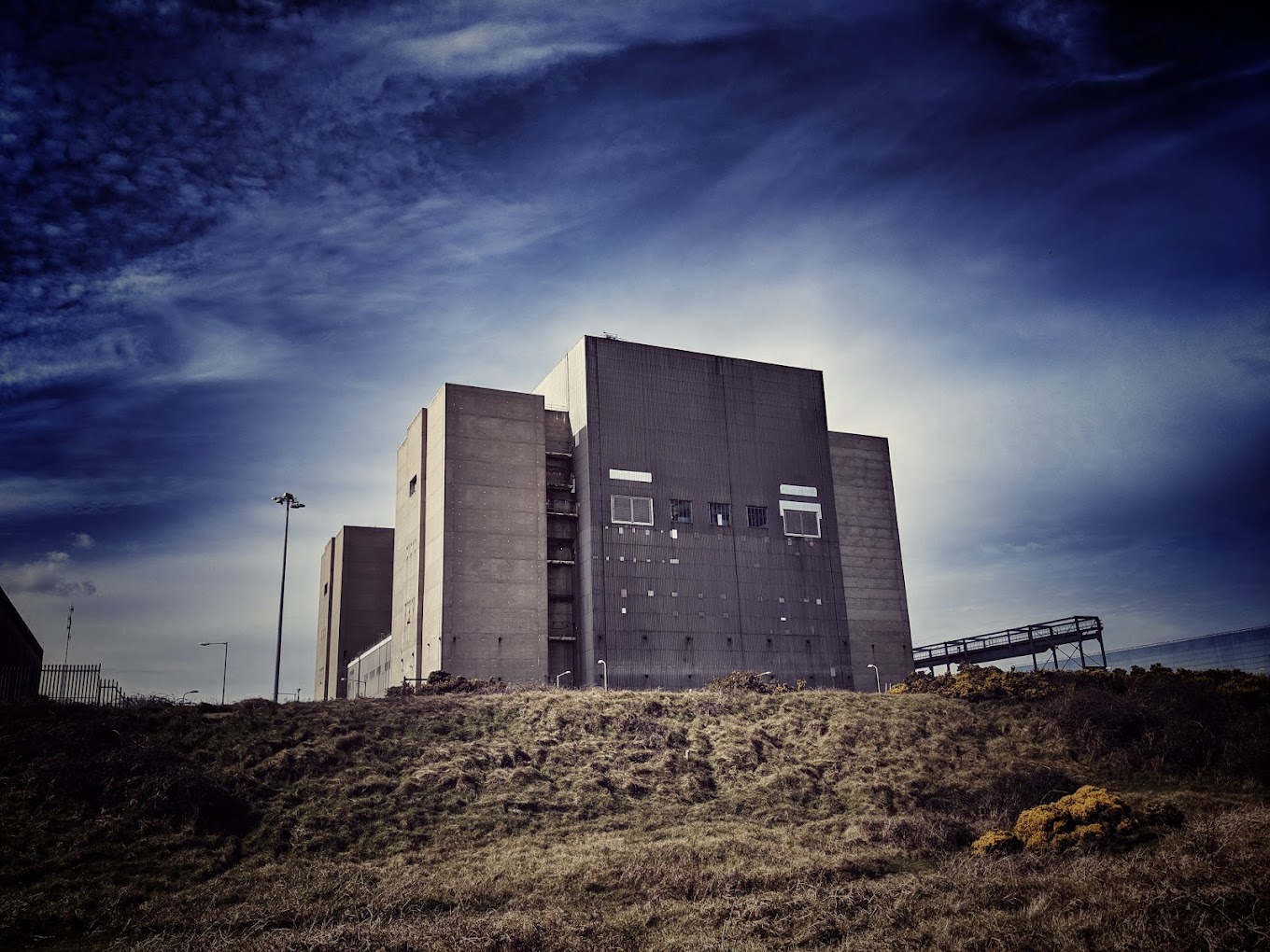
4 September 2024, https://www.banng.info/news/regional-life/blackwater-in-transition/
The Blackwater is a land where earth, water and sky intermingle in an eternal process of transition and transformation. In our time Climate Change and the Energy Transition are creating fundamental changes in the relationship between land, sea and air that will utterly transform our environment in the years to come.
The Blackwater is not an iconic landscape, unlike, say, Constables Country, with its charms set in a romantic afterglow and its appeal as the idealised English landscape. The Blackwater is more a concept with specific meanings and specific environments for farmers, sailors, fishermen, holidaymakers, birders and residents enjoying its waters, marshes, seaside, farmland and settlements. It is a precious region with many national and international conservation designations. Some of its landscapes are ecological treasure chests, especially the dwindling marshes taken from the sea by progressive dyking and draining to produce the so-called ‘meadows of the sea’.
Today, a reversal is in train as coastal squeeze erodes the fragile waterlands in a battle that only the sea can win. Gradually, though inexorably, the land yields as seal levels rise and storm surges, flooding and erosion intensify with global warming.
Global warming is already at critical levels and further increases in temperatures are already baked in. We will have to adapt to inevitable consequences while trying to prevent runaway Climate Change by making a rapid shift from fossil fuels to renewable forms of energy – in other words to achieve an Energy Transition.
While this is a global challenge it must be achieved through local measures already under way and impacting on our landscape. Out to sea in vast arrays of turbines are turning contributing to the UK’s 30GW of offshore wind power capacity. Onshore the windmills on the Dengie represent a tiny part of the 15GW onshore wind, two-thirds comes from Scotland. The government has committed to increasing wind capacity by 2030, to 30GW onshore and 60GW offshore.
This is a herculean ambition and major constraints lie in the way. One of these is transmission as the National Grid confronts local communities with its planned Norwich to Tilbury Great Grid Upgrade. The line of tall pylons will not impact the Blackwater landscape and a landfall at Bradwell is unlikely.
Even more unlikely is the possibility of new nuclear at Bradwell. Climate Change will put paid to the idea of building on a floodable coast today and a vanishing one in the far future. For the present there remains the forlorn hulk of the former Bradwell nuclear power station, once at the forefront of an energy transition now an isolated relic of a bygone age.
Somerset campaigners celebrate as EDF Energy U-turns on planned Hinkley Point C saltmarshes
More than 800 acres have been saved
By Daniel Mumby, Local Democracy Reporter, Somerset Live 11th Sept 2024
Environmental campaigners in Somerset are celebrating after plans to create new saltmarshes to offset the county’s new nuclear power station were scrapped. EDF Energy held a public consultation in January and February over its proposals for new saltmarshes on the Pawlett Hams, which lie on the right bank of the River Parrett near the villages of Combwich and Pawlett.
The plans envisioned more than 800 acres of saltmarsh being created as part of the wider mitigation for the new Hinkley Point C nuclear power station, which is currently under construction. EDF argued that the new marshes would provide safe habitats for fish and animals, improve water quality and reduce the risk of localised flooding – complementing the creation of the Bridgwater tidal barrier immediately upstream.
But following a substantial local backlash, the energy giant has U-turned and promised that any saltmarshes created to offset the power station will be created outside of the Somerset Council area. EDF released a statement confirming the change of heart on Monday evening (September 9), stating that it would be seeing alternative locations “within the wider Severn estuary” before any formal planning application is submitted to the Planning Inspectorate ahead of a public inquiry, which is currently expected to be held in the autumn of 2025.
The company has confirmed that none of the other sites being considered as “within the Somerset Council boundary” and that further rounds of public consultation will take place in the chosen locations. In addition, the company will be looking to upgrade an existing weir on the River Wye at Osbaston near Monmouth, in order to support migrating fish like salmon and shad in their journeys upstream………………………………………………………….. https://www.somersetlive.co.uk/news/somerset-news/somerset-campaigners-celebrate-edf-energy-9542744
World’s largest uranium miner warns Ukraine war makes it harder to supply west
Kazatomprom’s chief executive has warned that Russia’s war on
Ukraine is making it harder for the world’s largest uranium producer.
Kazatomprom’s chief executive has warned that Russia’s war on Ukraine
is making it harder for the world’s largest uranium producer to keep
supplying the west as the gravitational pull towards Moscow and Beijing
grows stronger.
Meirzhan Yussupov, chief of the Kazakh state miner, said
that sanctions caused by the war had created obstacles to supplying western
utilities. “It is much easier for us to sell most, if not all, of our
production to our Asian partners — I wouldn’t call [out] the specific
country . . . They can eat up almost all of our production, or our
partners to the north,” he told the FT.
FT 10th Sept 2024
https://www.ft.com/content/b8b34ec4-20ca-4c00-937b-fc620ae7503e
The US Empire Can Exist Only In A Continuous State Of Mass Military Violence
Caitlin Johnstone, Sep 10, 2024
I shouldn’t be able to do this for a living. Criticizing the warmongering of a single power structure shouldn’t be anyone’s full-time job. No government should be murdering people so consistently and reliably that people can plan their whole lives around it.
Yet here we are. Not only are people like me able to focus on commentary about the mass military violence of the US and its satellite states as a full-time gig, but we usually find there’s too much to talk about from day to day.
Just today we’re getting reports that at least 40 people have been killed in an IDF massacre on a tented encampment in southern Gaza near Khan Younis, which Israel had previously designated as a humanitarian safe zone. There are videos of families digging frantically in the sand trying to rescue loved ones who were buried by the blast, which was reportedly so forceful that bodies are being found some thirty feet down.
Antiwar’s Dave DeCamp has taken to typing up daily updates on the documented Israeli massacres of Palestinian civilians in Gaza, often with dozens of victims added to the official death toll in a single day.
Kamala Harris has finally announced a foreign policy platform, and it contains nothing but a promise of more of the same. She promises to “ensure that the United States remains the strongest, most lethal fighting force in the world,” to “make sure that America, not China, wins the competition for the 21st century,” to “strengthen, not abdicate, our global leadership,” to “stand up for Israel’s right to defend itself,” and to “protect U.S. forces and interests from Iran and Iran-backed terrorist groups,” and boasts that she “has worked with our allies to ensure NATO is stronger than ever” in the face of “Vladimir Putin’s brutal aggression.”
In other words, more unrelenting violence and militarism to ensure that the US empire continues dominating the planet. It’s not hard to see why Harris is winning endorsements from some of the worst warmongers on the planet.
Bloodthirsty empire manager Victoria Nuland is now openly admitting that the US sabotaged a peace deal in Ukraine in the early weeks of the war, saying in an interview that Washington pushed Kyiv to reject the deal because it “included limits on the precise kinds of weapons systems that Ukraine could have” if it were agreed to.
This is something people like myself used to get called Russian propagandists for saying happened, despite all the overwhelming evidence that it had.
The horrors in Ukraine are happening because the US-centralized power alliance refused easy off-ramp after easy off-ramp. This whole war could’ve easily been avoided, and it could have easily been ended shortly after it began. But they kept pushing on, because they wanted this war………………………………………………………………………………
there are plenty of others like me. And for every person there is making a living from opposing US warmongering, there are thousands making a living from facilitating it. In the military. In the arms industry. In think tanks. In the media. In politics. In government agencies. There is much, much more money to be made from war than from peace. That’s one of the main reasons the capitalist empire we live under exists in a constant state of mass military violence. Endless violence and the threat thereof is the glue which holds the empire together.
In a healthy world, none of these jobs would exist — people working for peace or people working for war. Peace would just be the natural order of things.
But until that healthy world has emerged, we fight on. Day after day after day after day, for however long such work is necessary. https://www.caitlinjohnst.one/p/the-us-empire-can-only-exist-in-a?utm_source=post-email-title&publication_id=82124&post_id=148710143&utm_campaign=email-post-title&isFreemail=true&r=1ise1&triedRedirect=true&utm_medium=email
Which rural area will take the UK’s nuclear waste?

each community being considered for a geological disposal facility (GDF) now receives about £1m a year in investment
If a GDF is built here, Mr Moore says, there will be billions of pounds invested in the area
Victoria Gill and Kate Stephens, Science correspondent and senior science producer, BBC News, 9 Sept 24

“………………………………………………………………………..Sellafield is filling up – and experts say we have no choice but to find somewhere new to keep this material safe.
Nuclear power is also part of the government’s stated mission for ”clean power by 2030”. More nuclear power means more nuclear waste.
…………………….. Sellafield runs 24 hours a day with 11,000 staff. It costs more than £2bn per year to keep the site going, and it comprises more than 1,000 buildings, connected by 25 miles of road.
However, in recent years, doubts have been raised about the site’s security and physical integrity.
One of its oldest waste storage silos is currently leaking radioactive liquid into the ground. That is a “recurrence of a historic leak” that Sellafield Ltd, the company that operates the site, says first started in the 1970s.
Sellafield has also faced questions about its working culture and adherence to safety rules. The company is currently awaiting sentencing after it pleaded guilty, in June, to charges related to cyber-security failings.
An investigation by the Guardian revealed that the site’s systems had been hacked, although the Office for Nuclear Regulation said there was “no evidence that any vulnerabilities had been exploited” by the hackers.
All of this has cast a shadow over an operation that, as well as taking in newly created nuclear waste, also houses several decades worth of much older radioactive material.
The site no longer produces or reprocesses any nuclear material, but this is where the race began to produce plutonium for nuclear weapons at the height of the Cold War.
“It was the dawn of the nuclear age,” says Roddy Miller, Sellafield’s operations director. “But because it was a race, not a lot of thought was given to the long-term safe storage of the waste materials that were produced.”
The leaking storage silo, which was built in the 1960s, is just one of the buildings that now has to be emptied so the material inside can go into more modern silos. The building was only ever designed to be filled, and Sellafield says its plans to clear the site and demolish the building are the safest option.
The site’s head of retrievals, Alyson Armett, points out that without a “permanent solution” for the nuclear waste, the plans to decommission could be delayed.
The current plan for that permanent solution is to bury the waste deep underground.
A complicated search – both scientifically and politically – is currently on for somewhere to lock it away from humanity permanently.
“We need to isolate it from future populations or even civilisations, that’s the timescale we’re looking at,” says Prof Corkhill…………………………………………………..
The plan for permanent, underground storage is to contain that solid waste in a Russian doll-like series of barriers. The glass, encased in steel, will be shielded in concrete, then buried beneath the Earth‘s own barriers – layers of solid rock.
The question is, where will that facility be?
‘The waste is already here’
Six years ago, communities in England and Wales were asked to come forward if they were willing to consider having a disposal facility built near their town or village.
Potential sites will need the ideal geology – enough solid rock to create that permanent barrier. However, they also need something that might be more difficult – a willing community.
There are financial incentives for communities to take part in this discussion. So far, five have come forward. Two have already been ruled out. Allerdale in Cumbria was deemed unsuitable because there was not enough solid bedrock. Then, in September, councillors in South Holderness, in Yorkshire, withdrew after a series of local protests.
Government scientists are assessing the remaining three communities that are currently in the running. Geologists have been carrying out seismic testing – looking for that all-important impermeable rock.
One of the communities being considered is very close to the Sellafield site in West Cumbria, at Seascale.
It is not yet clear if Mid Copeland, the area under consideration that includes Seascale, will have the right rock. The survey and consultation here – and in the other locations being considered – are in their early stages and scheduled to last at least a decade.
In the meantime, the conversation goes on and each community being considered for a geological disposal facility (GDF) now receives about £1m a year in investment while initial scientific tests are carried out.
Mr Moore is part of a committee called a GDF partnership. It includes local residents, local government and representatives of Nuclear Waste Services, which is the government body behind this project.
These partnerships aim to keep the process transparent and ensure local people are well-informed. They also decide how the money is spent.
If a GDF is built here, Mr Moore says, there will be billions of pounds invested in the area. “If we’re going to host this on behalf of the UK, the community should benefit,” he says.
Also still on the shortlist are South Copeland, again on the Cumbrian coast, and a site on the east coast in Lincolnshire, where there have been a number of peaceful, but angry, protests.
On Halloween 2021 in Theddlethorpe, one of the local villages, several residents used their gardens to put up garish anti-nuclear dump scarecrows, inspired by an idea from pressure group the Guardians of the East Coast, which is campaigning against the disposal facility.
Ken Smith, from nearby Mablethorpe, is a member of both the campaign group and the local GDF partnership.
He thinks the government’s approach to finding a nuclear waste disposal site “stinks”.
Mr Smith is concerned that the voices of those most affected might not be heard and says it is unclear how local opinion will be measured at the end of the consultation…………………………………………………………………………………………………………………
https://www.bbc.co.uk/news/articles/czx6e2x0kdyo
Former Palisades engineering director has misgivings about the plant’s historic restart effort

Tom Henry, The Blade, 9 Sept 24,
A former nuclear industry executive has emerged as a surprise critic of the historic effort to restart the Palisades nuclear plant in southwest Michigan.
Alan Blind, 71, who lives on a 16-acre farm in Baroda, Mich., said during a 75-minute interview with The Blade last week that Palisades, in his opinion, is “not a good selection as a role model for expanding the nuclear industry.”
Holtec International, of Jupiter, Fla., which originally was hired to decommission the plant, has instead bought it from its previous owner, New Orleans-based Entergy, and has put together an unprecedented plan to restart it.
Bringing a mothballed nuclear plant back into service has never been tried before in nuclear history.
The project has received huge government support, including a $1.52 billion commitment from the U.S. Department of Energy.
The outcome is expected to have huge ramifications for the industry worldwide, given the prohibitive cost of building new plants from scratch and continued issues over less-expensive units known as small modular reactors.
Mr. Blind has special insight into Palisades because he served as its engineering director for nearly seven years under Entergy’s ownership, from May of 2006 through February of 2013.
Decades in industry
Palisades was the last stop in Mr. Blind’s career, which included time as a vice president at two other sites.
Mr. Blind began working in the nuclear industry in December of 1975 at a plant about 35 miles south of Palisades, the D.C. Cook nuclear plant near Bridgman, Mich.
That job came shortly after he graduated from Purdue University.
He he worked his way up to site vice president for D.C. Cook’s owner, American Electric Power.
After 21½ years at D.C. Cook, Mr. Blind went to New York to be vice president of nuclear power at the former Indian Point nuclear complex, which at the time was owned by Consolidated Edison Company of New York Inc.
He said he believed Palisades was operating on a thin safety margin while he was there, that he “saw a lot of red flags,” and never expected it to become the first test case of whether a mothballed plant can be put back in service.
“I put Palisades out of my mind and was comforted by the decision to shut it down and put it into decommissioning,” Mr. Blind said.
The plant was shut down and entered its decommissioning phase in May of 2022, a little more than two years ago……………………………………………………………
Palisades history……
Palisades began operating March 24, 1971, meaning that much of the engineering behind it occurred in the mid to late-1960s.
The NRC itself didn’t begin as a government agency until 1975, although it grew out of one called the Atomic Energy Commission, which had a much broader mission. The NRC is solely focused on safety. The AEC was created after World War II to promote and develop peaceful use of atomic science and technology.
The “defense in depth” concept that promotes use of multiple backup safety systems, as well as the NRC’s general design criteria, were not well-developed during the era Palisades was built, Mr. Blind said.
He said it’s akin to not having an old house brought up to modern building codes.
“Overall, I was concerned about the lack of safety systems and design in depth,” Mr. Blind said.
He said he wanted to see more done as Palisades — like many other nuclear reactors — went to longer fuel cycles and higher outputs.
“They started off with very little margin because of the age of the plant,” Mr. Blind said. “Those margins were razor thin.”
His concerns have made their way into three formal petitions he filed with the NRC last month, imploring the agency to slow down and think harder about the pros and cons of restarting Palisades.
Each are undergoing a lengthy review process the NRC uses when it receives such detailed petitions. One petition challenges the rulemaking process, citing the unprecedented nature of what Holtec is trying to do. Another claims there is a lack of quality assurance, and the third petition raises questions about the existing state of steam generators.
Mr. Blind said he expects to file a fourth petition with the NRC within the next 10 days, making a technical argument for a public hearing more extensive than what’s been held to date………………………………….. https://www.toledoblade.com/business/energy/2024/09/08/former-palisades-engineering-director-has-misgivings-about-the-plant-s-historic/stories/20240908054/?fbclid=IwY2xjawFMkQxleHRuA2FlbQIxMQABHR1G0iCbJRiP0yk2X0kR5WGv88UE6xH5Fsi9ycAnPz2Oo1TQWtlbaFI6DA_aem_-0oAmUfm0HdWnMUniKDfaA
TEPCO restarts debris extraction attempt at Fukushima plant

 KYODO NEWS – https://english.kyodonews.net/news/2024/09/35e573ef1ad3-urgent-tepco-restarts-debris-extraction-attempt-at-fukushima-plant.html
The operator of the Fukushima Daiichi nuclear complex restarted Tuesday a bid to retrieve a small amount of melted fuel from one of its stricken reactors after its first attempt last month was suspended due to setup complications.
The trial extraction was put on hold on Aug. 22 due to issues discovered during preparations, according to Tokyo Electric Power Company Holdings Inc.
The resumption comes after TEPCO confirmed that five pipes set to be used to insert a retrieval device into the No. 2 reactor’s containment vessel are now installed in the correct order.
TEPCO said earlier that it and contractor Mitsubishi Heavy Industries Ltd. failed to check the order in which the pipes were set up, causing the earlier issues.
There are an estimated 880 tons of fuel debris in the Nos. 1, 2 and 3 reactors.
The task of retrieving melted fuel remains a serious challenge in the decades-long decommissioning plan for the Fukushima Daiichi complex, which was damaged following a massive earthquake and tsunami in March 2011.
North Korea’s Kim Jong Un says country to increase number of nuclear weapons, KCNA says
By Reuters, September 10, 2024,
Reporting by Joyce Lee Editing by Chris Reese, https://www.reuters.com/world/asia-pacific/north-koreas-kim-jong-un-says-country-increase-number-nuclear-weapons-kcna-says-2024-09-09/
SEOUL, – North Korean leader Kim Jong Un said the country is now implementing a nuclear force construction policy to increase the number of nuclear weapons “exponentially,” state media KCNA said on Tuesday.
Kim gave a speech on North Korea’s founding anniversary on Monday, KCNA said.
North Korea must more thoroughly prepare its “nuclear capability and its readiness to use it properly at any given time in ensuring the security rights of the state,” Kim said, according to KCNA.
A strong military presence is needed to face “the various threats posed by the United States and its followers,” Kim added.
Victoria Nuland, former US deputy secretary of state, confirms West told Zelensky to abandon peace deal

Comment: Nuland confirms what was already known. The reason the conflict is ongoing is because the US wanted it to be so.
https://www.rt.com/news/603708-ukraine-istanbul-us-nuland/ 9 Sept 24
Ukraine-Russia talks fell apart after Kiev asked foreign backers for advice, the former US deputy secretary of state has said.
The US, UK and other backers of Ukraine told Kiev to reject the deal reached at the 2022 Istanbul peace talks with Russia, former US under secretary of state Victoria Nuland has said.
In an interview with Russian journalist Mikhail Zygar, former editor-in-chief of the liberal news channel Dozhd, which aired on Thursday, Nuland was asked to comment on reports that the peace process between Moscow and Kiev in late March and early April 2022 collapsed after then-British Prime Minister Boris Johnson traveled to Ukraine and told Vladimir Zelensky to keep fighting.
“Relatively late in the game the Ukrainians began asking for advice on where this thing was going and it became clear to us, clear to the Brits, clear to others that [Russian President Vladimir] Putin’s main condition was buried in an annex to this document that they were working on,” she said of the deal being discussed by the Russian and Ukrainian delegations in Türkiye’s largest city.
The proposed agreement included limits on the kinds of weapons that Kiev could possess, as a result of which Ukraine “would basically be neutered as a military force,” while there were no similar constraints on Russia, the former diplomat explained.
“People inside Ukraine and people outside Ukraine started asking questions about whether this was a good deal and it was at that point that it fell apart,” Nuland said.
The veteran diplomatic hawk, who during her time in the State Department was renowned for her hostility towards Russia, quit the post of under secretary of state for political affairs in March this year. Nuland played a key role in the violent Western-backed coup in Kiev in 2014, which toppled Ukraine’s democratically elected president, Viktor Yanukovich.
During the escalation between Moscow and Kiev in February 2022, she called for deeper US involvement in the conflict and advocated for Ukraine to be armed with increasingly sophisticated weapons. However, in February, the 63-year-old essentially acknowledged the failure of her longstanding policy of containing Moscow, telling the CNN that modern Russia had turned out to be “not the Russia we wanted”
During her conversation with Zygar, Nuland confirmed that both Moscow and Kiev were eager to seek a diplomatic solution a month after the outbreak of the fighting.
“Russia had an interest at that time in at least seeing what it could get. Ukraine, obviously, had an interest if they could stop the war and get and get Russia out,” she said.
US officials “were not in the room” during the talks in Istanbul, only offering Kiev “support” in case it were needed, she claimed.
Putin said last week that the only reason the Istanbul deal failed was because of “the wish of the elites in the US and some European nations to inflict a strategic defeat on Russia,” adding that Boris Johnson served as the messenger to quash the peace process.
The negotiations in Türkiye yielded a draft agreement, which would have ended the hostilities, Putin recalled. Kiev was willing to declare military neutrality, limit its armed forces, and vow not to discriminate against ethnic Russians. In return, Moscow would have joined other leading powers in offering Ukraine security guarantees, he stressed.
According to the Russian leader, talks with Kiev are still possible, but can only happen “not on the basis of some ephemeral demands but on the basis of the documents that were agreed and actually initialized in Istanbul.”
A robot resumes mission to retrieve a piece of melted fuel from inside a damaged Fukushima reactor

The goal of the operation is to bring back less than 3 grams (0.1 ounce) of an estimated 880 tons of fatally radioactive molten fuel that remain in three reactors.
An operation to send an extendable robot into one of three damaged reactors at Fukushima Daiichi nuclear power plant to bring back a tiny gravel of melted fuel debris has resumed, nearly three weeks after its earlier attempt was suspended due to a tech…
By MARI YAMAGUCHI Associated Press, September 10, 2024, https://abcnews.go.com/International/wireStory/robot-resumes-mission-retrieve-piece-melted-fuel-inside-113538057
An extendable robot on Tuesday resumed its entry into one of three damaged reactors at Fukushima Daiichi nuclear power plant to retrieve a fragment of melted fuel debris, nearly three weeks after its earlier attempt was suspended due to a technical issue.
The collection of a tiny sample of the spent fuel debris from inside of the Unit 2 reactor marks the start of the most challenging part of the decadeslong decommissioning of the plant where three reactors were destroyed in the March 11, 2011, magnitude 9.0 earthquake and tsunami disaster.
The sample-return mission, initially scheduled to begin on Aug. 22, was suspended when workers noticed that a set of five 1.5-meter (5-foot) add-on pipes to push in and maneuver the robot were in the wrong order and could not be corrected within the time limit for their radiation exposure, the plant operator Tokyo Electric Power Company Holdings said.
The pipes were to be used to push the robot inside and pull it back out when it finished. Once inside the vessel, the robot is operated remotely from a safer location.
The robot, nicknamed “telesco,” can extend up to about 22 meters (72 feet), including the pipes pushing it from behind, to reach its target area to collect a fragment from the surface of the melted fuel mound using a device equipped with tongs that hang from the of the robot.
The mission to obtain the fragment and return with it is to last about two weeks.
The mix-up, which TEPCO called a “basic mistake,” triggered disappointment and raised concerns from officials and local residents. Industry Minister Ken Saito ordered TEPCO President Tomoaki Kobayakawa a thorough investigation of the cause and preventive steps before resuming the mission.
The pipes were brought into the Unit 2 reactor building and pre-arranged at the end of July by workers from the robot’s prime contractor and its subsidiary, but their final status was never checked until the problem was found.
TEPCO concluded the mishap was caused by a lack of attention, checking and communication between the operator and workers on the ground. By Monday, the equipment was reassembled in the right order and ready for a retrial, the company said.
The goal of the operation is to bring back less than 3 grams (0.1 ounce) of an estimated 880 tons of fatally radioactive molten fuel that remain in three reactors. The small sample will provide key data to develop future decommissioning methods and necessary technology and robots, experts say.
The government and TEPCO are sticking to a 30 to 40-year cleanup target set soon after the meltdown, despite criticism it is unrealistic. No specific plans for the full removal of the melted fuel debris or its storage have been decided.
-
Archives
- October 2026 (120)
- September 2026 (339)
- August 2026 (330)
- July 2026 (355)
- June 2026 (287)
- May 2026 (306)
- April 2026 (356)
- March 2026 (251)
- February 2026 (267)
- January 2026 (308)
- December 2025 (358)
- November 2025 (359)
-
Categories
- 1
- 1 NUCLEAR ISSUES
- business and costs
- climate change
- culture and arts
- ENERGY
- environment
- health
- history
- indigenous issues
- Legal
- marketing of nuclear
- media
- opposition to nuclear
- PERSONAL STORIES
- politics
- politics international
- Religion and ethics
- safety
- secrets,lies and civil liberties
- spinbuster
- technology
- Uranium
- wastes
- weapons and war
- Women
- 2 WORLD
- ACTION
- AFRICA
- Atrocities
- AUSTRALIA
- Christina's notes
- Christina's themes
- culture and arts
- Events
- Fuk 2022
- Fuk 2023
- Fukushima 2017
- Fukushima 2018
- fukushima 2019
- Fukushima 2020
- Fukushima 2021
- general
- global warming
- Humour (God we need it)
- Nuclear
- RARE EARTHS
- Reference
- resources – print
- Resources -audiovicual
- Weekly Newsletter
- World
- World Nuclear
- YouTube
-
RSS
Entries RSS
Comments RSS

