Israel to Annex the West Bank – Why Now? And What are the Likely Scenarios?
By Ramzy Baroud / CounterPunch, December 23, 2024
Israel is getting ready to annex the occupied Palestinian West Bank. The annexation will be a major step backward on the road to Palestinian freedom and will likely serve as a catalyst for a new Palestinian uprising.
Though annexation has been on the Israeli agenda for years, this time around a ‘great opportunity’ – in the words of extremist Israeli Finance Minister Bezalel Smotrich – has presented itself and, from an Israeli point of view, cannot be missed.
“I hope we’ll have a great opportunity with the new US administration to create full normalization (of the Israeli occupation),” the minister was quoted as saying by Israeli media.
This is not the first time that Smotrich, among other Israeli extremists, has made the connection between Trump’s advent to the White House and the illegal expansion of Israel’s borders.
Two reasons make Israel’s far-right optimistic about Trump’s arrival: One, the Israeli experience during Trump’s first term in office, where the US president allowed Israel to claim sovereignty over illegal settlements, the Syrian Golan Heights, and occupied East Jerusalem; and, two, Trump’s more recent statement in the run-up to the elections.
Israel is “so tiny” on the map, Trump said while addressing the pro-Israeli group ‘Stop Antisemitism’ at an event last August, wondering: “Is there any way of getting more?” The statement, absurd by any definition, caused joy among Israeli politicians, who understood it to be a green right for further annexations.
Israel’s aims for colonial expansion also received a boost in recent days. Following the fall of Bashar al-Assad’s rule in Syria, Israel immediately began invading large swathes of the country, reaching as far as the Quneitra governorate, less than 20 kilometers away from the capital, Damascus.
What is taking place in Syria serves as a model of what to expect in the West Bank in coming months…………………………………………………………………………………………………
While such annexation will not change the legal status of the West Bank, it will have dire consequences for the millions of Palestinians living there, as annexation is likely to be followed by a violent campaign of ethnic cleansing, if not from the whole of the West Bank, certainly from large parts of it.
Annexation will also render the Palestinian Authority legally irrelevant – as it was created following the Oslo Accords to administer parts of the West Bank in anticipation of a future sovereignty, which never actualized. Will the PA agree to remain functional as part of the Israeli military administration of a newly annexed West Bank?
Palestinians will certainly resist, as they always do. The nature of the resistance will prove critical in the success or failure of the Israeli scheme. A popular Intifada, for example, will overstretch the Israeli military, which will likely use an unprecedented degree of violence to suppress Palestinians but will unlikely succeed.
Annexing the West Bank at a time that Palestine, in fact, the whole region is in turmoil, is a recipe for perpetual war, which, from the viewpoint of Smotrich and his ilk is the actual ‘great opportunity’, as it will secure their political survival for years to come.
Ramzy Baroud is a journalist and the Editor of The Palestine Chronicle. He is the author of five books. His latest is “These Chains Will Be Broken: Palestinian Stories of Struggle and Defiance in Israeli Prisons” (Clarity Press, Atlanta). Dr. Baroud is a Non-resident Senior Research Fellow at the Center for Islam and Global Affairs (CIGA), Istanbul Zaim University (IZU). His website is www.ramzybaroud.net https://www.counterpunch.org/2024/12/23/israel-to-annex-the-west-bank-why-now-and-what-are-the-likely-scenarios/
British energy supplier Centrica is prepared to “walk away” from a planned investment in the Sizewell C nuclear plant
British energy supplier Centrica is prepared to “walk away” from a
planned investment in the Sizewell C nuclear plant, according to its chief
executive. In an exclusive interview with Energy Voice, Centrica chief
executive Chris O’Shea said “there are a number of criteria we have to
consider to invest in the project”. “We’ve said that we are part of the
Sizewell C process but there are a number of criteria we have to consider
to invest in the project,” O’Shea said. “If these are not met, the
right thing to do would be to walk away to protect the business.”
The UK-based supplier owns a 20% stake in the nuclear power stations, amounting
to a 9 terawatt-hour capacity out of a total of 45 TWh. “When the
conditions are right, we’ve seen how good investing in nuclear can be for
Centrica,” said O’Shea. He added that access to that nuclear power
capacity “will be very valuable to the company and to the UK’s energy
system”. “New nuclear will play a crucial role in the future energy
system, however we will only invest if the risks-and-rewards balance is
right for us,” he said. “If it is not right for us, we will not
invest.”
Energy Voice 23rd Dec 2024 https://www.energyvoice.com/renewables-energy-transition/nuclear/564808/centrica-prepared-to-walk-away-from-sizewell-c/
References to ‘inducing a North Korean attack’ found in ex-military official’s notes
2024-12-24 , By Lee Ji-hye, staff reporter, HANKYOREH,
A notebook found at the home of Roh Sang-won, the former Defense Intelligence Command, included jottings about shooting people to death and “concentration and handling” of those who were to be arrested.
A memo written by Roh Sang-won, the former head of the Defense Intelligence Command identified as the secret mastermind of the Dec. 3 insurrection attempt, contained the phrases “inducing a North Korean attack around the Northern Limit Line (NLL),” and “trash balloons.” With evidence pointing to attempts to stoke conflict with North Korea surfacing, police have stated that they are investigating President Yoon Suk-yeol, his former defense chief Kim Yong-hyun, and others on suspicions of treason.
Roh’s notebook also mentioned the “means of concentration and handling” of those who were to be arrested, even going so far as to suggest “execution by shooting.” Such drastic phrases suggest those plotting to punish so-called “anti-state forces” may not have been satisfied with simply detaining these figures.
The special unit investigating the martial law declaration under the Korean National Police Agency’s National Office of Investigation announced on Monday that Roh’s notebook contained the phrase “inducing a North Korean attack around the Northern Limit Line (NLL).”
When asked by Democratic Party lawmaker Youn Kun-young whether “trash balloons” also appeared in Roh’s notebook during a plenary session of the parliamentary Public Administration and Security Committee on the same day, Woo Jong-soo, the head of the National Office of Investigation, confirmed that the phrase was spotted in the notebook.
This is the first time that a plot to provoke North Korea has been confirmed in the investigation into the Dec. 3 insurrection attempt……………………………………………………………………………..more https://english.hani.co.kr/arti/english_edition/e_national/1174701.html
Pentagon Admits It’s Been Lying About the Number of Troops in Both Iraq and Syria
December 25, 2024, By Dave DeCamp / Antiwar.com, https://news.antiwar.com/2024/12/23/pentagon-admits-its-been-lying-about-the-number-of-troops-in-both-iraq-and-syria/
The Pentagon said on Monday that the US has more troops deployed in Iraq than it has been disclosing, an admission that comes after it revealed there are significantly more US troops in Syria than the US has said.
For years, the Pentagon has said there are 900 troops in Syria and 2,500 in Iraq. Last week, Pentagon spokesman Maj. Gen. Pat Ryder revealed the US was lying about the number of troops in Syria, saying the real number is 2,000.
In a statement meant to clarify the situation that was released on Monday, Ryder also said there were more than 2,500 US troops in Iraq but refused to say how many. “However, due to operations security and diplomatic considerations, we do not have any more specifics to provide,” Ryder said.
Ryder’s statement revealed that the number of US troops in Syria has been higher than publicly disclosed since 2020. “In addition to the approximately 900 baseline troops, there are also approximately 1,100 US military personnel in Syria that deploy for shorter durations as temporary enablers in support of force protection, transportation, maintenance, or other emerging operational requirements,” Ryder said.
“The numbers of these additional temporary forces have fluctuated over the past several years based on mission needs but in general have increased over time as the threat has increased to baseline forces,” he added.
Lying about the actual number of US troops in Syria goes back to at least the Trump administration. In 2020, James Jeffrey, the outgoing US envoy for Syria at the time, admitted his team was “always playing shell games to not make clear to our leadership how many troops we had there.” In 2019, after reversing an order to withdraw all troops from Syria, Trump agreed to keep 200 in the country. But Jeffrey said there was “a lot more” than that deployed.
In his statement on Monday, Ryder also said that “some additional temporary enablers” had been deployed alongside the 2,500 US troops in Iraq.
Sources told CNN that the US had been lying about the number of US troops in Syria because it didn’t want to anger neighboring countries, particularly Iraq, where the presence of US troops is strongly opposed by many political factions.
The sources said the US was worried if Iraqi officials found out the US had more troops in Syria than it was disclosing, officials would fear the same is happening in Iraq. Ryder’s statement that there are more than 2,500 US troops in Iraq will likely cause trouble for Iraqi Prime Minister Mohammed Shia al-Sudani, who has been under significant pressure to get the US to leave.
Earlier this year, after a series of US airstrikes on Iraq, al-Sudani called for US troops to leave, and his government entered negotiations with the US. The two sides reached a deal that was announced in September, but it will only formally end the mission of the US-led anti-ISIS coalition and says US troops will remain in the country under a “bilateral security partnership.”
No more research for genocide at MIT !

Every human on this planet, especially those of us at MIT, is morally obligated to use their voice, body, and labor to make an immediate material impact toward ending the ongoing genocide.
By MIT Coalition For Palestine, Mondoweiss, December 22, 2024,
https://popularresistance.org/no-more-research-for-genocide-at-mit/
Despite Censorship And Intimidation We Continue To Make This Demand.
An MIT lab is collaborating with the Israeli military to develop AI surveillance algorithms and the university censored a campus publication that tried to expose it. We refuse to be intimidated and continue to demand: No More Research for Genocide.
On November 7th, we published an op-ed titled “Daniela Rus, The People Demand: No More Research for Genocide” in the MIT Tech. Our piece detailed how Prof. Daniela Rus, director of MIT’s Computer Science and Artificial Intelligence Laboratory, uses Israeli Ministry of Defense money to develop algorithms with applications in “multirobot security defense and surveillance.” Rather than engage with these publicly verifiable facts, the Tech’s editorial board (under the guidance of Prof. Rus) retracted our op-ed.
MIT sent several of us “no contact” and “no harassment” orders for Prof. Rus, disciplining one student for simply writing our Op-Ed’s title on a public chalkboard! As if this naked intimidation wasn’t enough, the Tech indefinitely halted all Op-Eds after retracting our piece. This comes directly after the suspension and effective expulsion of MIT PhD student Prahlad Iyengar, in part due to an email he sent Professor Rus’ students “offering support” and a “safe space” to discuss her research.
We refuse to be intimidated by MIT. Professor Rus takes money from a genocidal army to do research with military applications (stated in her own papers here, here and here). Retractions and suspensions cannot change these simple facts. Here, we republish our article in full:
Daniela Rus, The People Demand: No More Research For Genocide
Today, MIT’s Computer Science and Artificial Intelligence Laboratory (CSAIL) conducts research funded by the Israeli Ministry of Defense (IMoD), with direct applications to the ongoing genocide in Gaza. We, the MIT Coalition for Palestine, whose tuition and labor support CSAIL, call on CSAIL Director Daniela Rus to lead by example and end her IMoD-sponsored research.
Rus currently leads the project “Coreset Compression Algorithms,” which has received $425,000 in direct sponsorship from the IMoD since 2021, according to MIT’s 2024 Brown Books. This project develops AI algorithms for applications like “city-scale observation systems” and “surveillance and vigilance”. Many of these lightweight algorithms are ideal for teaching small unmanned vehicles, including drones, to track and pursue targets with increased autonomy. Notably, navigating human environments is central: “a human may provide the global path… and the robots will adapt their configuration automatically”.
Many of us have friends and family surveilled and killed by the Israel Defense Forces (IDF) drones streamlined by Rus’s research. These quadrotor drones are used extensively to monitor, injure, and kill Palestinian civilians at close range. Last Wednesday, October 30, 2024, Palestinian poet Mosab Abu Toha shared videos showing Israeli bombs destroying his home, including footage of a quadrotor drone with a mounted machine gun just meters away. He described how Israel’s relentless indiscriminate bombardment in Gaza has wiped out entire families he knew. Stories like his have become the norm for families in Gaza.
As we write this piece, Jabalia has been under constant siege for a month. The Israeli military is targeting hospitals and burning patients alive. The government blocks access to life-saving humanitarian supplies, worsening Gaza’s already severe health crisis, all while threatening, targeting, and killing journalists attempting to report on these war crimes. At this time, it is our moral responsibility to do everything in our power to disrupt and dismantle all which enable the continuing of this genocide.
There has been a long-standing demand for Rus’s IMoD-sponsored projects to end.
The MIT Coalition for Palestine (C4P) is a group of MIT students, staff, faculty, community members, and campus organizations who refuse to devote their labor to companies complicit in Israeli apartheid, occupation, and the violation of Palestinian human rights. Daniela Rus was first contacted by the C4P on March 8th, 2024 by email where she was informed of how her IMoD-sponsored projects made her complicit in the ongoing genocide in Gaza.
Without response, we then emailed out to the graduate students in her lab informing them of these ties and of potential alternative funding arrangements. In April, we launched the Scientists Against Genocide Encampment, where we consistently highlighted her lab’s IMoD ties to the school and community.
Over a year of accelerating genocide has now since passed, seven months since we first contacted Rus, and she continues her research, violating MIT’s own rules for research sponsorship. On Tuesday October 22, 2024, the Coalition Against Apartheid, a member organization of C4P, delivered a second letter in-person to her CSAIL office, chanting and flyering in the process.
We are committed to engaging in continuing action because it works. For instance, The U.S. arm of Israeli defense contractor Elbit Systems recently ended its lease of office space in Cambridge after months of demonstrations by pro-Palestinian protestors. This win reinforces our resolve, and reminds us of a crucial lesson: the only way to make material disruptions for these inhumane systems is to continuously raise the cost for conducting research for genocide.
MIT’s police and disciplinary response against peaceful demonstrators was swift and unjust.
Within fifteen minutes, MIT escalated the situation with police force by violently arresting student protestors and detaining others for merely chanting and passing out flyers. At one point, there were four to six cops pinning down one person. Even those who were simply filming the arrests were detained, pushed around, and groped. There was no warning or attempt by faculty or administrators to engage with the students in order to understand their actions. Three days after the protest, eight students received interim sanction letters from the MIT Committee on Discipline (COD).
This interim letter did not indicate what charges students were being prosecuted for. Rather, they prohibited the students from entering common student spaces in CSAIL, where some of these students work. They also issued three no-contact orders to students: one for Rus, one for her collaborator on IMoD-funded projects Eytan Modiano, and one for Jack Costanza, a CSAIL employee who physically assaulted students in an attempt to unlawfully aid police in their arrests. None of the students were given the chance to review or respond to the charges. Once again, the COD demonstrates it operates primarily on the premise of treating political dissidents as “guilty until proven innocent.”
One week later, students received their alleged charges from the COD. All eight of them, whether they were chanting, putting a flyer up on a wall with painter’s tape, or simply video-taping the protest, received the same charges: assault, disorderly conduct, harassment, and threats/intimidation. COD Chair Tamar Schapiro later verbally admitted to one student in a meeting that she was aware none of the protestors assaulted anyone. Yet she still sent the letters accusing all eight of the students of assault. The COD systematically criminalizes the Coalition for Palestine as a community for protesting genocide. By indiscriminately instating a blanket no-contact order against all individuals who received a discipline letter, the COD draws a direct parallel between the acts of collective punishment MIT inflicts on pro-Palestinian advocates on its campus, and the collective punishment that Israel has long been inflicting on Palestinians themselves.
Discipline against pro-Palestinian students reinforces systemic racism at MIT.
Over the past year, MIT’s administration’s response to protests against genocide continues to be reflective of MIT’s longstanding racist and xenophobic systems. Students have attempted time and time again to address these issues, as described in this article by the Black Graduate Students Association. Despite the manufactured facade of an MIT community that is safe for students of minoritized backgrounds, racism at MIT has persisted over the last year at an institutional level.
At an institutional level, the MIT administration has been emboldened to continue to weaponize the police and inconsistent “academic” disciplinary proceedings in order to disproportionately target Black and Brown students. In the past year, 87% of the people MIT has disciplined, relating broadly to protest activity, have been people of color. Just consider MIT’s response to the letter delivery protest of Rus’ lab: people of color made up 8 out 13 student protestors present, yet 7 out of 8 people who received letters from the CoD were people of color. In addition to the disciplinary discrimination we face, many of us on campus feel incredibly unsafe, as the Institute of Discrimination Harassment and Reporting (IDHR) has failed to follow up on at least thirty reports of harassment against us. Simultaneously, IDHR selectively applies sanctions against us without evidence. To MIT, we are solely perceived as threats, never as victims. When Tamar Schapiro was asked to clarify the discipline, she told one female student that as a woman, she should understand that Daniela Rus felt unsafe by the demonstration, even though she was not even present in the lab at the time. What about the women in Gaza who fear being killed by the very technology Daniela Rus’s work contributes to? What about the women of color on campus who fear being unjustly brutalized by the frequent displays of disproportionate police violence? Tamar Schapiro, and MIT as a whole, fail to acknowledge the tangible fears of marginalized women, yet prioritize the theoretical fears of white women. This twisted, victim-blaming, racist logic matches the insinuation of Provost Barnhart in the previous Spring semester, wherein she justified the interim suspensions and eviction threats of 27 people by suggesting that MIT apply the same disciplinary measures previously reserved for when individuals are immediately at risk of sexual assault. As long as we have a broken reporting system, rapists and sexual offenders continue to freely walk on campus while students of color are treated as criminals for protesting a genocide.
To Daniela Rus and the world: no more labor for apartheid and genocide!
At the end of the day, MIT’s racism and racist discipline cannot counteract one fact: Daniela Rus is complicit in doing research for genocide. She has been complicit since 2012 when the sponsorship was first established through her then-postdoc, Dan Feldman, who currently works at University of Haifa in occupied Palestine. Professor Rus continues to deny her evident, present-day connections to the IMoD while flaunting her other morally dubious connections, such as her recent public statement of admiration, at her October book talk, for Marvin Minsky, alleged co-perpetrator of notorious pedophile Jeffrey Epstein.
As students of conscience, we cannot stand for this. The time to take action is now. We therefore call on Daniela Rus to immediately terminate all IMOD-funded projects and for MIT to provide transitional funding to all affected graduate students, in line with how MIT terminated financial ties with the Skoltech Institute in Russia the day after the Russian invasion of Ukraine.
Why are we here at MIT? What purpose is there to any of the science and research being done on this campus when we know that ultimately our work will be used for mass murder and exploitation? It is the current leadership at MIT that is ensuring that the great potential of this community is being abused to oppress individuals globally. Therefore, it will take all people of conscience at this institution to change the course we are currently on to force MIT to embody the values it claims to have. We cannot rest until MIT completely cuts ties and divests from all entities that support genocide and colonialism.
Every human on this planet, especially those of us at MIT, is morally obligated to use their voice, body, and labor to make an immediate material impact toward ending the ongoing genocide.
Poland threatens to arrest Netanyahu at Auschwitz

https://www.rt.com/news/609773-israel-arrest-pm-poland/ 24 Dec 24
Warsaw has to comply with the International Criminal Court’s decisions, the deputy foreign minister has said
Israeli Prime Minister Benjamin Netanyahu would be arrested if he attends next month’s ceremonies marking the 80th anniversary of the liberation of Auschwitz in Poland, the EU country’s deputy foreign minister, Wladyslaw Bartoszewski, told newspaper Rzeczpospolita on Friday.
Warsaw’s top diplomat stated that Poland, as a signatory of the Rome Statute, is obligated to comply with the directives of the International Criminal Court (ICC). In November, ICC issued warrants for the arrests of Netanyahu and former Israeli defense minister Yoav Gallant, citing alleged war crimes related to the ongoing conflict in Gaza.
The court accused Netanyahu and Gallant of using starvation as a method of warfare, alleging they deliberately deprived civilians in Gaza of food, water, and medicine. There was “no obvious military necessity” for such actions, which amount to violations of international law, according to prosecutors.
Israel’s Education Minister Yoav Kisch is expected to be the only government representative at the Auschwitz commemoration, Jerusalem Post reports. The participation of President Isaac Herzog “seems unlikely.”
While all 27 European Union member states are parties to the Rome Statute and thus required to enforce ICC arrest warrants, responses to the court’s decision have varied. Hungarian Prime Minister Viktor Orban has openly invited Netanyahu to visit, assuring him that Hungary would not enforce the arrest warrant.
Conversely, countries like Spain, the Netherlands, Belgium, Ireland, Lithuania, and Slovenia have indicated their intent to comply with the ICC’s directives, regardless of diplomatic immunity.
France initially expressed its intention to adhere to the arrest warrant but later cited diplomatic immunity protections for Netanyahu.
The ICC’s actions have elicited strong reactions from Israeli officials. Prime Minister Netanyahu has likened the arrest warrants to a “modern-day Dreyfus affair,” asserting that they are politically motivated.
Auschwitz was a Nazi concentration and extermination camp in occupied Poland during World War II. Over 1.1 million Jews were murdered there, alongside tens of thousands of others, including Poles and Soviet prisoners of war.
Iran to hold nuclear talks with France, Germany, UK
https://www.aljazeera.com/news/2024/11/24/iran-to-meet-with-germany-france-uk-in-nuclear-talks
The meeting follows an IAEA resolution denouncing Iran for what it called a lack of cooperation.
Iran says it will hold nuclear talks with officials from France, Germany, and the United Kingdom this week, amid escalating tensions over Iran’s nuclear programme.
The meeting, which is set to happen on Friday, was announced by Iran’s Ministry of Foreign Affairs on Sunday, and UK officials confirmed the meeting.
“A range of regional and international issues, including the issues of Palestine and Lebanon, as well as the nuclear issue, will be discussed,” Iranian Foreign Ministry spokesperson Esmaeil Baghaei said.
Neither London nor Tehran said where the meeting would take place.
On Thursday, the International Atomic Energy Agency (IAEA) adopted a resolution denouncing Iran for what it called a lack of cooperation. The three European nations, whose representatives will meet Iranian officials, were among those voting for the resolution.
Nineteen countries out of the 35-member IAEA voted to censure Iran – a largely symbolic gesture – while 12 countries abstained. Russia, China, and Burkina Faso voted against the resolution. Thursday’s resolution marked the third time the United Nations body had taken such action since 2020.
The move came as tensions ran high over Iran’s nuclear programme, which critics fear is aimed at developing a nuclear weapon – something Tehran has repeatedly denied.
On Friday, Iran announced a “series of new and advanced centrifuges”, technology that refines enriched uranium into gas. “We will substantially increase the enrichment capacity with the utilisation of different types of advanced machines,” Behrouz Kamalvandi, Iran’s atomic energy organisation spokesman, told Iranian state TV.
Despite the announcement, Iran said it would continue to cooperate with the IAEA.
“We remain committed to taking every diplomatic step to prevent Iran from developing nuclear weapons, including through snapback if necessary,” the UK’s Foreign and Commonwealth Office told the AFP news agency.
In 2015, Iran reached an agreement with world powers, including the United States, to curb its nuclear programme due to concerns about the country potentially developing nuclear weapons.
But in 2018, during President Donald Trump’s first term, the US unilaterally withdrew from the agreement and imposed sanctions on Iran – a move that stoked tensions between Washington and Tehran.
Since then, Tehran has scaled back its cooperation with the IAEA, deactivating surveillance devices put in place by the UN. Concurrently, Iran has increased its stockpile of enriched uranium.
Iran has “begun implementation of preparatory measures” to cap its stockpile of highly enriched uranium. According to leaked reports from the IAEA, Iran is close to the 90 percent threshold needed to produce a nuclear warhead.
Trump suggests Zelensky consider ceding territories – El Pais

COMMENT. We may not like Donald Trump much.
But sometimes he gets it right.
https://www.rt.com/news/609772-trump-zelensky-territorial-claims/ 24 Dec 24
America’s president-elect has reportedly relayed the message this week.
US President-elect Donald Trump has sent a message to Ukrainian leader Vladimir Zelensky, asking him to start thinking about a ceasefire and to abandon claims to territories that are currently under control of Russia, El Pais reported on Sunday.
Trump has repeatedly pledged to end the Ukraine conflict within a day of taking office, but has yet to elaborate on how he plans to achieve this. His vows have raised concerns in Kiev that it may be facing not only a decline in aid but also an audit of the billions of dollars it has received from the White House under President Joe Biden.
“You look at some of these cities and there is not a single building in good condition left. So, when you say “restore the country,” restore what? This is a 110-year reconstruction,” the Spanish newspaper cited Trump as saying in a “message” to Zelensky from his Florida golf club this week.
Earlier this month, Trump called on both Ukraine and Russia to reach an immediate ceasefire. He posted the call on his social media platform Truth Social after meeting in Paris with Zelensky and President Emmanuel Macron.
The Wall Street Journal reported in early December, citing officials, that Trump had said Western Europe should deploy its troops to Ukraine to monitor a potential ceasefire. He reportedly added that the EU should play the main role in defending and supporting Kiev, while Washington could support the effort without sending troops.
Speaking at his end-of-year press conference on Thursday, Russian president Vladimir Putin reiterated that Moscow remains open to negotiating with Kiev without any preconditions, except those that had already been agreed upon in Istanbul in 2022, which envisaged a neutral, non-aligned status for Ukraine, as well as certain restrictions on deploying foreign weaponry. He also noted that such talks would have to respect the realities on the ground that have developed since that time.
Privatising Syria: US Plans Post-Assad Selloff
Global Delinquents Kit Klarenberg, Dec 24, 2024
Following the abrupt fall of Bashar Assad’s government in Syria, much remains uncertain about the country’s future – including whether it can survive as a unitary state, or will splinter into smaller chunks in the manner of Yugoslavia in the 1990s. For the time being at least though, members of ultra-extremist Hayat Tahrir al-Sham (HTS) appear highly likely to take key positions in whatever administrative structure sprouts from Bashar Assad’s ouster, after a decade-and-a-half of grinding Western-sponsored regime change efforts.
As Reuters reported December 12th, HTS is already “stamping its authority on Syria’s state with the same lightning speed that it seized the country, deploying police, installing an interim government and meeting foreign envoys.” Meanwhile, its bureaucrats – “who until last week were running an Islamist administration in a remote corner of Syria’s northwest” – have moved en masse “into government headquarters in Damascus.” Mohammed Bashir, head of HTS’ “regional government” in extremist-occupied Idlib, has been appointed the country’s “caretaker prime minister”.
However, despite the chaos and precariousness of post-Assad Syria, one thing seems assured – the country will be broken open to Western economic exploitation, at long last. This is clear from multiple mainstream reports, which state HTS has informed local and international business leaders it will “adopt a free-market model and integrate the country into the global economy, in a major shift from decades of corrupt state control” when in office.
As Alexander McKay of the Marx Engels Lenin Institute tells Global Delinquents, state-controlled parts of Syria’s economy may have been under Assad, but corrupt they weren’t. He believes a striking feature of the ongoing attacks on Syrian infrastructure from forces within and without the country, is economic and industrial sites are a recurrent target. Moreover, the would-be HTS-dominated government has done nothing to counter these broadsides, when “securing key economic assets is vital to societal reconstruction, and should therefore be a matter of priority”:
“We can see clearly what kind of country these ‘moderate rebels’ plan to build. Forces like HTS are allied with US imperialism and their economic approach will reflect this. Prior to the proxy war, the government pursued an economic approach that mixed public ownership and market elements. State intervention enabled a degree of political independence other nations in the region lack. Assad’s administration understood without an industrial base, being sovereign is impossible. The new ‘free market’ approach will see all of that utterly decimated.”
‘Global Economy’
Syria’s economic independence, and strength, under Assad’s rule, and the benefits reaped by average citizens as a result, were never acknowledged in the mainstream before or during the Western-fomented dirty war. Yet, countless reports from major international institutions amply underline this reality – which has now been brutally vanquished, never to return. For example, an April 2015 World Health Organization document noted how pre-war Damascus “had one of the best-developed healthcare systems in the Arab world.”
Not only that, but per a 2018 UN investigation, “universal, free healthcare” was extended to all Syrian citizens, who “enjoyed some of the highest levels of care in the region.” Education was likewise free, and before the conflict, “an estimated 97% of primary school-aged Syrian children were attending class and Syria’s literacy rates were thought to be at over 90% for both men and women [emphasis added].” By 2016, millions were out of school.
A UN Human Rights Council report two years later noted prior to 2011, Syria “was the only country in the Middle East region to be self-sufficient in food production,” its “thriving agricultural sector” contributing “about 21%” to GDP 2006 – 2011. Civilians’ daily caloric intake “was on par with many Western countries,” with prices kept affordable via state subsidy. Meanwhile, the country’s economy was “one of the best performing in the region, with a growth rate averaging 4.6%” annually.
At the time that report was written, Damascus had been reduced to heavy reliance on imports by Western sanctions in many sectors, and even then was barely able to buy or sell much in the way of anything, as the measures amounted to an effective embargo. Simultaneously, US military occupation of a resource-rich third of Syria cut off the government’s access to its own oil reserves and wheat. The situation only worsened with the Caesar Syria Civilian Protection Act’s passing in June 2020………………………………………………………………………………………………………………………………………………
EU and US-backed governments across the former Yugoslavia have enforced an endless array of neoliberal “reforms”, in order to ensure an “investor-friendly” environment locally for wealthy Western oligarchs and corporations. In lockstep, low wages and lacking employment opportunities locally stubbornly endure or worsen, while living costs constantly rise, producing mass depopulation, among other destructive effects. All along too, US officials intimately implicated in the country’s breakup have brazenly sought to personally enrich themselves from privatization of former state industries.
Does such a fate await Damascus? For Alexander McKay, the answer is a resounding “yes”. Now “free”, Syria will be forcedly made “dependent upon imports from the West” evermore. This not only fattens the Empire’s bottom line, but “severely restricts the freedom of any Syrian government to act with any degree of independence.” He notes similar efforts were undertaken worldwide throughout the post-1989 era of US unipolarity. This was well underway in Russia during the 1990s, “until a turnaround started under Putin, post 2000”:
“The aim is to reduce Syria to the same status as Lebanon, with an economy controlled by imperial forces, an army used primarily for internal repression, and an economy no longer able to produce anything but merely serve as a market for commodities produced elsewhere, and site of resource extraction. The US and its allies do not want independent development of any nation’s economy. We must hope the Syrian people can resist this latest act of neo-colonialism.” https://www.kitklarenberg.com/p/privatising-syria-us-plans-post-assad?utm_source=post-email-title&publication_id=552010&post_id=153534171&utm_campaign=email-post-title&isFreemail=true&r=ln98x&triedRedirect=true&utm_medium=email
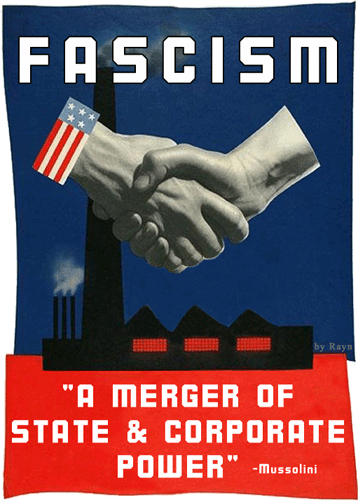
Chris Hedges: How Fascism Came
By Chris Hedges / Original to ScheerPost, 23 Dec 24
For over two decades, I and a handful of others — Sheldon Wolin, Noam Chomsky, Chalmers Johnson, Barbara Ehrenreich and Ralph Nader — warned that the expanding social inequality and steady erosion of our democratic institutions, including the media, the Congress, organized labor, academia and the courts, would inevitably lead to an authoritarian or Christian fascist state. My books — “American Fascists: The Christian Right and the War on America” (2007), “Empire of Illusion: The End of Literacy and the Triumph of Spectacle” (2009), “Death of the Liberal Class” (2010), “Days of Destruction, Days of Revolt” (2012), written with Joe Sacco, “Wages of Rebellion” (2015) and “America: The Farewell Tour” (2018) were a succession of impassioned pleas to take the decay seriously. I take no joy in being correct.
“The rage of those abandoned by the economy, the fears and concerns of a beleaguered and insecure middle class, and the numbing isolation that comes with the loss of community, would be the kindling for a dangerous mass movement,” I wrote in “American Fascists” in 2007. “If these dispossessed were not reincorporated into mainstream society, if they eventually lost all hope of finding good, stable jobs and opportunities for themselves and their children — in short, the promise of a brighter future — the specter of American fascism would beset the nation. This despair, this loss of hope, this denial of a future, led the desperate into the arms of those who promised miracles and dreams of apocalyptic glory.”
President-elect Donald Trump does not herald the advent of fascism. He heralds the collapse of the veneer that masked the corruption within the ruling class and their pretense of democracy. He is the symptom, not the disease. The loss of basic democratic norms began long before Trump, which paved the road to an American totalitarianism. Deindustrialization, deregulation, austerity, unchecked predatory corporations, including the health-care industry, wholesale surveillance of every American, social inequality, an electoral system that is plagued by legalized bribery, endless and futile wars, the largest prison population in the world, but most of all feelings of betrayal, stagnation and despair, are a toxic brew that culminate in an inchoate hatred of the ruling class and the institutions they have deformed to exclusively serve the rich and the powerful. The Democrats are as guilty as the Republicans.
“Trump and his coterie of billionaires, generals, half-wits, Christian fascists, criminals, racists, and moral deviants play the role of the Snopes clan in some of William Faulkner’s novels,” I wrote in “America: The Farewell Tour.” “The Snopeses filled the power vacuum of the decayed South and ruthlessly seized control from the degenerated, former slaveholding aristocratic elites. Flem Snopes and his extended family — which includes a killer, a pedophile, a bigamist, an arsonist, a mentally disabled man who copulates with a cow, and a relative who sells tickets to witness the bestiality — are fictional representations of the scum now elevated to the highest level of the federal government. They embody the moral rot unleashed by unfettered capitalism.”
…………………………………………………………………… The political philosopher Sheldon Wolin called our system of governance “inverted totalitarianism,” one that kept the old iconography, symbols and language, but had surrendered power to corporations and oligarchs. Now we will shift to totalitarianism’s more recognizable form, one dominated by a demagogue and an ideology grounded in the demonization of the other, hypermasculinity and magical thinking.
Fascism is always the bastard child of a bankrupt liberalism.
“We live in a two-tiered legal system, one where poor people are harassed, arrested and jailed for absurd infractions, such as selling loose cigarettes — which led to Eric Garner being choked to death by the New York City police in 2014 — while crimes of appalling magnitude by the oligarchs and corporations, from oil spills to bank fraud in the hundreds of billions of dollars, which wiped out 40 percent of the world’s wealth, are dealt with through tepid administrative controls, symbolic fines, and civil enforcement that give these wealthy perpetrators immunity from criminal prosecution,” I wrote in “America: The Farewell Tour.”
The utopian ideology of neoliberalism and global capitalism is a vast con. Global wealth, rather than being spread equitably, as neoliberal proponents promised, was funneled upward into the hands of a rapacious, oligarchic elite, fueling the worst economic inequality since the age of the robber barons. The working poor, whose unions and rights were stripped from them and whose wages have stagnated or declined over the past 40 years, have been thrust into chronic poverty and underemployment…………………………………………………
“The permanent lie is the apotheosis of totalitarianism,” I wrote in “America: The Farewell Tour”:………………………………………………………………………………………………………………………………………….
It is not going to get better. The tools to shut down dissent have been cemented into place. Our democracy cratered years ago. We are in the grip of what Søren Kierkegaard called “sickness unto death” — the numbing of the soul by despair that leads to moral and physical debasement. All Trump has to do to establish a naked police state is flip a switch. And he will.
“The worse reality becomes, the less a beleaguered population wants to hear about it,” I wrote at the conclusion of “Empire of Illusion,” “and the more it distracts itself with squalid pseudo-events of celebrity breakdowns, gossip and trivia. These are the debauched revels of a dying civilization.” https://scheerpost.com/2024/12/23/chris-hedges-how-fascism-came/
Israeli Attacks in Gaza Kill at Least 32 More Palestinians Over 24 Hours
Many children were killed by Israeli strikes across the Strip on Sunday
by Dave DeCamp, December 22, 2024 , https://news.antiwar.com/2024/12/22/israeli-attacks-in-gaza-kill-at-least-32-more-palestinians-over-24-hours/
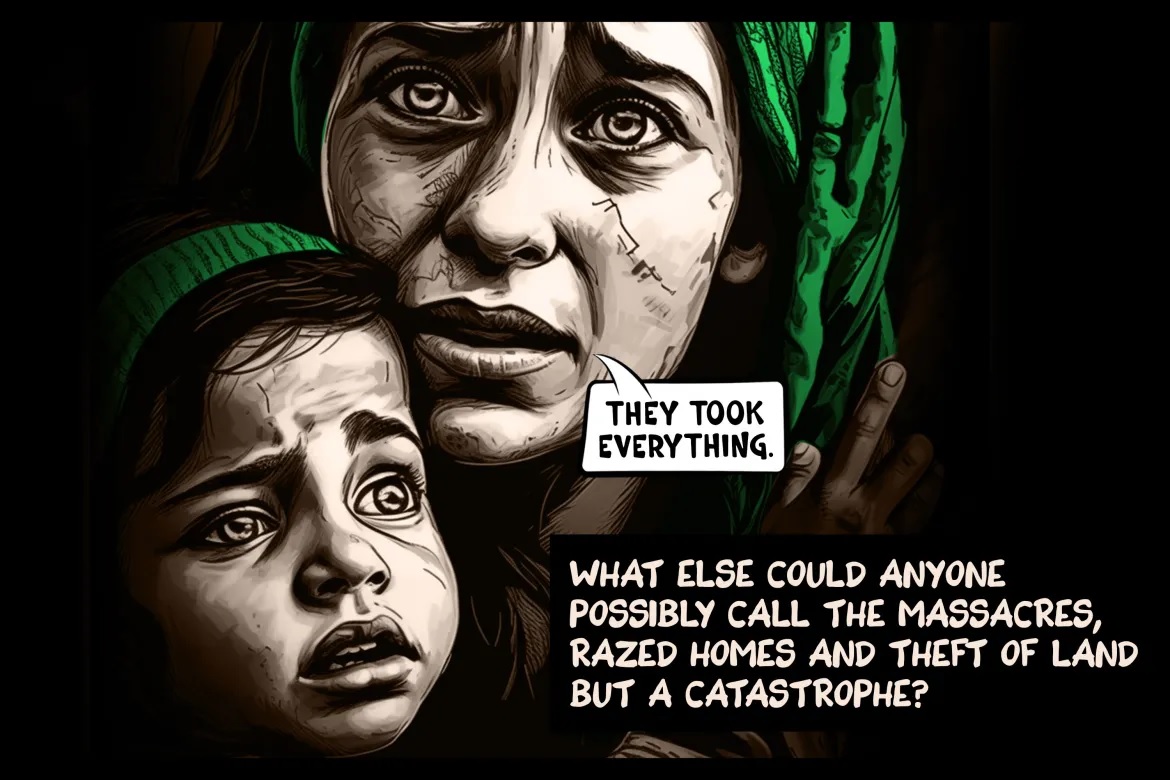
Gaza’s Health Ministry said Sunday that Israeli attacks killed at least 32 Palestinians and wounded 54 over the previous 24-hour period as children were slaughtered across the Strip.
The ministry’s numbers only account for dead and wounded Palestinians who arrived at hospitals and don’t factor in those missing under the rubble or in besieged areas rescuers are unable to access.
“There are still a number of victims under the rubble and on the streets, and ambulance and civil defense crews cannot reach them,” the ministry said.
Israeli attacks on Sunday included the bombing of a school sheltering displaced Palestinians in Gaza City. According to Gaza’s Civil Defense, the strike killed at least eight Palestinians, including four children.
Israeli strikes also targeted Jabalia, northern Gaza, which has been under total siege since early October as part of an ethnic cleansing campaign. According to Al Jazeera, the strikes killed at least five Palestinians, including four children.
Another child was killed by an Israeli drone attack on a group of people in the Burej refugee camp in central Gaza.
Overnight Israeli strikes hit a home in Deir el-Balah, central Gaza. According to the Palestinian news agency WAFA, at least five were killed, and women and children were among the dead.
A day earlier, Al Jazeera reported that an Israeli strike that hit a home in Jabalia on Friday evening killed at least 12, including seven children. “All of the martyrs are from the same family, including seven children, the oldest aged six,” Gaza’s Civil Defense said in a telegram post about the strike.
Later on Sunday, Israeli strikes hit the al-Mawasi camp, which Israel has labeled a so-called “safe zone” but has come under repeated IDF attacks. At least seven were killed in the camp by strikes that targeted tents.
The Health Ministry said the latest violence brought its recorded death toll since October 2023 to 45,259 and the number of wounded to 107,627.
In October, a group of American healthcare workers who volunteered in Gaza estimated in an open letter to President Biden that the US-backed Israeli onslaught has killed at least 118,908 Palestinians, a total that includes indirect deaths caused by the Israeli siege. Dr. Feroze Sidhwa, who led the letter, told Antiwar.com in a recent interview that the estimate was the bare minimum they came up with by looking at the available data.
Will the legacy of nuclear power ever disappear from our coasts?
BANNG 17th Dec 2024,
https://www.banng.info/news/regional-life/nuclear-power-legacy/
Andrew Blowers tackles this ongoing question in the December 2024 issue of Regional Life magazine
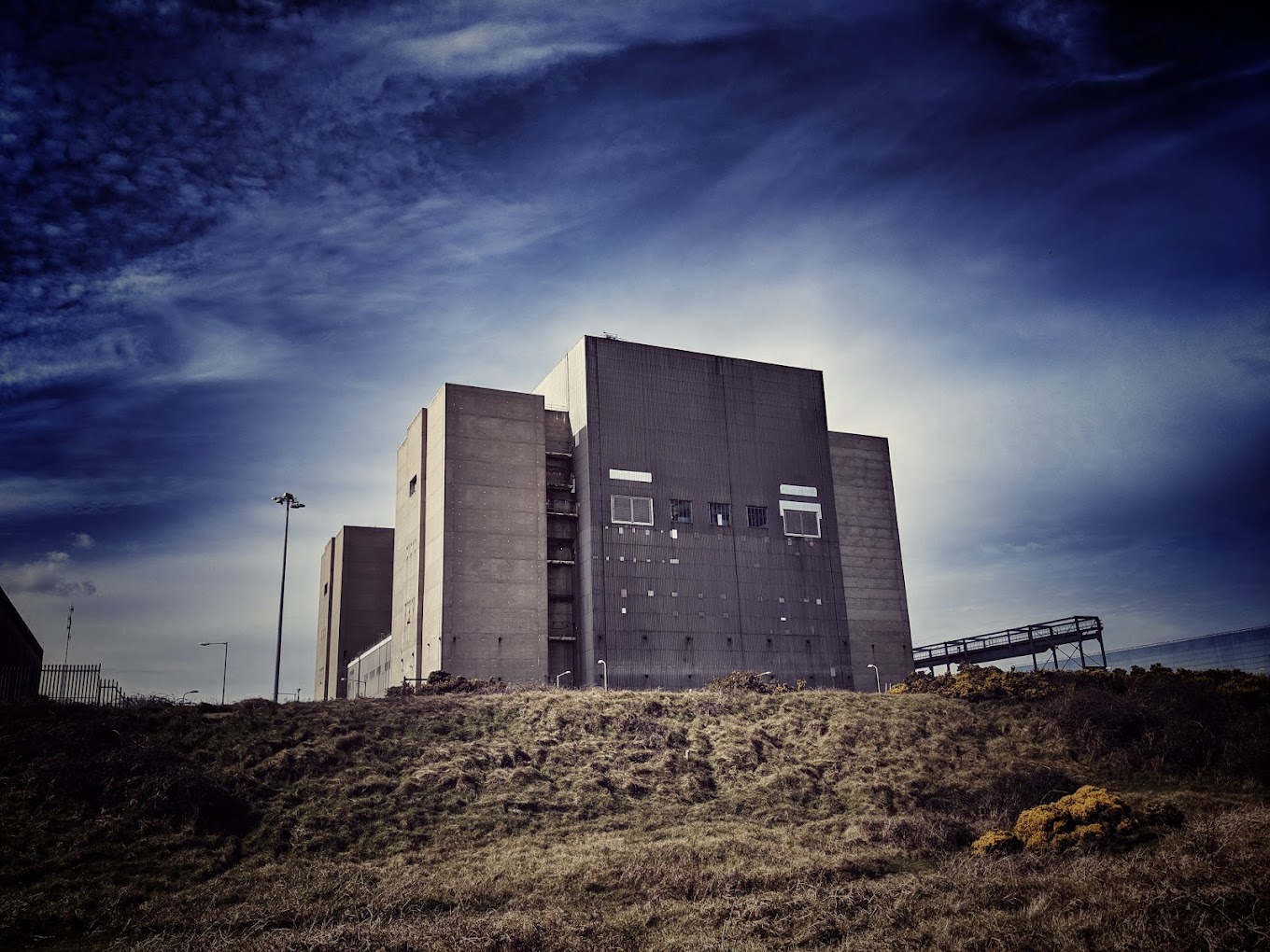
Back in the last century a fleet of nuclear power stations emerged, their bulky and threatening presence dominating peaceful and often precious, protected coastal environments. Now most have been retired and are in the long process of decommissioning and waste management before all traces of their existence can be erased a century or more from now. Or not…. If plans for new nuclear fructify, then the nuclear presence on our coasts may never disappear.
It is a little difficult to recall Bradwell in past times, a sinister presence on the low shoreline, with its silent reactors and the turbines howling throughout the night; its garish lighting polluting the night sky. Today Bradwell power station is silent and in darkness, its turbines demolished and its reactors shrouded within a huge box clad in grey and blue.
The ecological impact of nuclear power stations is both visible and invisible. Within these structures dangerous radioactive wastes are stored for generations and the risks of radioactive releases, accidental or deliberate (cyber, warfare, terrorism) are incalculable. And, in the age of accelerating climate change, these plants are at risk from sea-level rise, storm surges, flooding and erosion which will inflict yet more grief on future populations.
For existing stations and those currently under construction, there are plans to adapt to changing conditions through massive sea defences and removal of the wastes to a deep repository – if a suitable host rock and willing community can be found. This will be a daunting challenge but greatly exacerbated if a fleet of new nuclear stations is built, leaving vast volumes of wastes to be managed indefinitely on vanishing shores into the far future.
Hinkley Point C
The gigantic Hinkley Point C on the Somerset coast is currently the largest construction site in Europe with a 12,000 workforce and drastic shortage of accommodation for local people. Once operating, it will kill millions of fish, sucked in through its cooling water intake pipes. EDF, the developer, is trying to avoid providing mitigating Acoustic Fish Deterrents (AFD), perversely hoping that by the creation of a saltwater marsh, fish and other marine life will automatically migrate there.
New nuclear is already impacting environments in Somerset and the Suffolk coast is afflicted by preparations for Sizewell C.
Sizewell C
The site lies within a designated National Landscape adjacent to the RSPB’s flagship sanctuary at Minsmere as well as to other designated sites. SZC has not yet got the finance to go ahead but the demolition of a treasured woodland and trashing of other areas has already scarred a wide area in preparation for roads, rail lines, transformer buildings. All in advance of a project that may never materialise. These are premature, wanton acts of vandalism.
Fortunately, the destruction already endured in Somerset and that beginning in Suffolk can be avoided in Essex where proposals for a giant, new nuclear power station which would have inflicted untold damage on the marine and terrestrial environments of the Blackwater region were pushed back by BANNG and other stakeholders.
Now nuclear’s moment may be passing and our energy future lies in other directions, far less dangerous and with far less damaging impacts on the environment for future generations to cope with.
U.S. Nuclear Regulatory Commission Releases Report Confirming Radioactive Material Lost in Transit — Shipping Container Arrives Damaged and Empty in New Jersey
WCBM: Dec. 18, 2024,
The U.S. Nuclear Regulatory Commission (NRC) has confirmed that radioactive material was lost in transit earlier this month, heightening fears about public safety and sparking theories about mysterious drone activity in New Jersey.
Officer Lew, a prominent political commentator, highlighted the NRC’s event report during a review of regulatory alerts.
“While looking at the Nuclear Regulatory Commission Alerts. I can confirm that there is radioactive material that has gone missing on Dec 2nd, 2024 out of New Jersey. This might be the reason for the drones… just speculation at this point,” he wrote.
The missing material, identified as a Ge-68 pin source manufactured by Eckert & Ziegler, was reported lost by its licensee on December 3, 2024. Shipped for disposal, the container arrived at its destination severely damaged and empty.
According to the NRC’s report, the radioactive source, while classified as “Less than IAEA Category 3,” still poses potential risks if mishandled or exposed for prolonged periods.
According to the report:………………………………………….more https://wcbm.com/national-headline/u-s-nuclear-regulatory-commission-releases-report-confirming-radioactive-material-lost-in-transit-shipping-container-arrives-damaged-and-empty-in-new-jersey/?fbclid=IwY2xjawHUIsVleHRuA2FlbQIxMQABHaC7ofrCr2kLP94TcSi7EYfOtaubssy-0TKBwUEdQvNgm4uJEV2_JCc9yQ_aem_BLSGE-89x-qjcSu3l2UQqw
Israel’s War on Gaza Is a War on Children

Children in Gaza are not merely collateral damage; they are often actively being targeted.
By Henry A. Giroux , Truthout, December 21, 2024
In November, over a year into Israel’s genocide in Gaza, a report by the Gaza-based Community Training Center for Crisis Management produced a grim statistic: “Nearly all children in the embattled Palestinian enclave believe their death is imminent — and nearly half of them want to die.”
It is no wonder why the statistic, which came from a survey of families with disabled, injured or unaccompanied children, is so bleak. Amnesty International’s recent report lays bare the magnitude of the crisis: “Israel’s actions … have brought Gaza’s population to the brink of collapse. Its brutal military offensive had killed more than 42,000 Palestinians, including over 13,300 children, and injured over 97,000 more, by 7 October 2024, many of them in direct or deliberately indiscriminate attacks, often wiping out entire multigenerational families.”
This unfathomable suffering — inflicted disproportionately on women and children — represents a moral abomination, a political travesty, and a militaristic cruelty of the highest order. The destruction of lives, institutions and essential humanitarian infrastructure goes beyond the annihilation of a people; it constitutes an assault on future generations and the very fabric of our shared humanity. Genocidal language dehumanizes and legitimizes the unthinkable: an indiscriminate war waged against the most defenseless — children.
Israel’s war on Palestinian youth is genocidal — not only in the starvation, maiming and unimaginable killing of children but in its relentless assault on any viable notion of what it means for these young people to be valued, human and alive with hope. It seeks to strip them of their dignity, rendering them invisible and unworthy in the eyes of the world, as if their lives are expendable, their dreams inconsequential. This overpowering violence amounts to what we may term childcide, which is the deliberate or systematic destruction of children, whether through direct violence, neglect, or the conditions of war and oppression that render them uniquely vulnerable. It is a traumatic manifestation of collective failure — a war against innocence, in which the fragile promise of childhood is extinguished before it can bloom. In Gaza, where children face relentless bombings, displacement and deprivation, childcide becomes not just an act of violence but a moral collapse: the erasure of futures, dreams and entire generations. It is a crime not only against the child but against humanity itself, leaving behind a void that no words can fill and no justice can fully repair…………………………………………………………………………………………………………………………………………. more https://truthout.org/articles/israels-war-on-gaza-is-a-war-on-children/?utm_source=Truthout&utm_campaign=bdbe0251d9-EMAIL_CAMPAIGN_2024_12_21_08_06_COPY_01&utm_medium=email&utm_term=0_bbb541a1db-5f034c9084-650192793
HS: Olkiluoto 3 has been a financial catastrophe for Areva, Siemens

Helsinki Times 19th Dec 2024 Finland , https://www.helsinkitimes.fi/finland/finland-news/domestic/25890-hs-olkiluoto-3-has-been-a-financial-catastrophe-for-areva-siemens.html
THE THIRD REACTOR of Olkiluoto Nuclear Power Plant has been a financial disaster for the two plant suppliers, France’s Areva and Germany’s Siemens, writes Helsingin Sanomat.
Helsinki guide
Teollisuuden Voima (TVO), the company operating the plant, communicated last week that the suppliers have pledged to inject an additional 80 million euros in capital into a fund set up to guarantee the completion of activities during the warranty period.
“The funds reserved for their completion in the fund mechanism were depleted in the autumn of 2024” the company wrote in a press release issued on 12 December.
The third plant unit has experienced numerous faults and disruptions since it was officially inaugurated in 2022. TVO ordered the plant from the suppliers under a turnkey agreement for a fixed price of roughly three billion euros more than 20 years ago. The groundbreaking ceremony was held in 2005, with the completion date set for 2009.
Ultimately, the unit was completed 14 years behind schedule, with the original budget comfortably exceeded. The unit began commercial electricity production in mid-2023.
Helsingin Sanomat on 12 December reminded that Areva estimated already in 2012 that the plant would ultimately cost around 8.5 billion euros. The endeavour eventually bankrupt the company, resulting in intense talks in 2016 as the French government decided to incorporate healthy parts of the company into the state-owned Électricité de France (EDF). The concern was that the plant supplier would not be left with the funds and expertise to complete the project.
-
Archives
- October 2026 (104)
- September 2026 (339)
- August 2026 (330)
- July 2026 (355)
- June 2026 (287)
- May 2026 (306)
- April 2026 (356)
- March 2026 (251)
- February 2026 (267)
- January 2026 (308)
- December 2025 (358)
- November 2025 (359)
-
Categories
- 1
- 1 NUCLEAR ISSUES
- business and costs
- climate change
- culture and arts
- ENERGY
- environment
- health
- history
- indigenous issues
- Legal
- marketing of nuclear
- media
- opposition to nuclear
- PERSONAL STORIES
- politics
- politics international
- Religion and ethics
- safety
- secrets,lies and civil liberties
- spinbuster
- technology
- Uranium
- wastes
- weapons and war
- Women
- 2 WORLD
- ACTION
- AFRICA
- Atrocities
- AUSTRALIA
- Christina's notes
- Christina's themes
- culture and arts
- Events
- Fuk 2022
- Fuk 2023
- Fukushima 2017
- Fukushima 2018
- fukushima 2019
- Fukushima 2020
- Fukushima 2021
- general
- global warming
- Humour (God we need it)
- Nuclear
- RARE EARTHS
- Reference
- resources – print
- Resources -audiovicual
- Weekly Newsletter
- World
- World Nuclear
- YouTube
-
RSS
Entries RSS
Comments RSS

