Newly Signed Bill Will Boost Nuclear Reactor Deployment in the United States

ENERGyYGOV JULY 10, 2024
President Biden signed the Fire Grants and Safety Act into law chalking up a BIG win for our nuclear power industry.
Included in the bill is bipartisan legislation known as the ADVANCE Act that will help us build new reactors at a clip that we haven’t seen since the 1970s. …………………………………
Incentivizing Competition
The ADVANCE Act builds on the successes of previous legislation to develop a modernized approach to licensing new reactor technologies. ……………………………..
The ADVANCE Act directs the U.S. Nuclear Regulatory Commission (NRC) to reduce certain licensing application fees and authorizes increased staffing for NRC reviews to expedite the process.
It also introduces prize competitions that the U.S. Department of Energy (DOE) can award to incentivize deployment.
These awards are subject to Congressional appropriations but will cover the total costs assessed by the NRC for first movers in a variety of areas, including the first advanced reactor to receive an operating or combined license. …………………………………………………………………………………………………………… https://www.energy.gov/ne/articles/newly-signed-bill-will-boost-nuclear-reactor-deployment-united-states
US says not ready to resume nuclear talks with Iran under Pezeshkian
Iran International 8 July 24
The Biden administration is not ready to resume nuclear talks with Iran under the new president, the White House national security council spokesman said Monday.
In his presidential campaign, Iran’s president-elect Masoud Pezeshkian advocated engagement in constructive talks with Western powers to revive the 2015 nuclear deal (JCPOA) and to lift the sanctions that he says have crippled the Iranian economy since the withdrawal of the US from the agreement in 2018.
Asked whether Pezeshkian’s election will change the US negotiating position, the White House’s John Kirby offered a blunt “no”…………………………………………….more https://www.iranintl.com/en/202407084339
US Mayors for Peace Call for Dialogue in a Time of Nuclear Danger
“If you don’t think nuclear weapons are a local issue, just ask the mayors of Hiroshima and Nagasaki.”
QUENTIN HART. 5 July 24 https://www.thenation.com/article/world/hiroshima-nagasaki-nuclear-threats-rising-urgent-diplomacy-needed/
he 79th anniversaries of the US atomic bombings of Hiroshima and Nagasaki are coming up in August. Rather than commemorating those somber anniversaries as a grim reminder of the past, this year they serve as a foreboding warning of what may be to come.
The Russian war on Ukraine, with its attendant nuclear threats, and an intensifying array of antagonisms among nuclear-armed governments in Northeast Asia, the South China Sea, South Asia, and the Middle East have brought into sharp focus the increasing risks of nuclear war by accident, miscalculation, or crisis escalation, making new efforts to restart disarmament diplomacy an imperative.
Instead, we are seeing progress toward nuclear disarmament slide into reverse. The last remaining US-Russia arms control treaty is set to expire in 2026. The United States is planning to spend $2 trillion over the next 30 years to maintain and modernize its nuclear warheads and delivery systems, and a new multipolar arms race is underway, as all nuclear-armed states are qualitatively and, in some cases, quantitatively upgrading their nuclear arsenals.
Reflecting the urgency of this moment, at the close of its 92nd annual meeting in Kansas City, Missouri, on June 23, the United States Conference of Mayors (USCM) adopted a new resolution, titled,“The Imperative of Dialogue in a Time of Acute Nuclear Dangers.” This is the 19th consecutive year that the USCM has adopted a resolution submitted on behalf of US members of Mayors for Peace.
By adopting this resolution, the USCM, the official nonpartisan association of more than 1,400 American cities with populations over 30,000, has once again charted a responsible path. It “condemns Russia’s illegal war of aggression on Ukraine and its repeated nuclear threats and calls on the Russian government to withdraw all forces from Ukraine.” Importantly, it also calls on the President and Congress “to maximize diplomatic efforts to end the war in Ukraine as soon as possible.”
The resolution welcomes national security advisor Jake Sullivan’s June 2023 invitation to Russia to manage nuclear risks and develop a post-2026 arms control framework, and his signal of US readiness to engage China to ensure that competition does not veer into conflict. It further “encourages our government to pursue any offer made in good faith to negotiate a treaty among nuclear powers barring any country from being the first to use nuclear weapons against one another.”
In an important provision, the resolution “calls on the government of the United States to make good faith efforts to reduce tensions with the government of the People’s Republic of China, seeking opportunities for cooperation on such global issues as the environment, public health, and equitable development, and new approaches for the control of nuclear arms.”
And the resolution welcomes the September 10, 2023, Declaration of the G20 Leaders meeting in Delhi—including leaders or foreign ministers of China, France, India, Russia, the United Kingdom, and the United States—that the “threat of use or use of nuclear weapons is inadmissible.”
Looking to the future, the USCM “calls on the Administration and Congress to reconsider further investments in nuclear weapons and find ways that our finite federal resources can better meet human needs, support safe and resilient cities, and increase investment in international diplomacy, humanitarian assistance and development, and international cooperation to address the climate crisis.”
As an elected official and original sponsor of this resolution, I understand just how precious human life is. It is our responsibility as leaders to ensure we leave this earth in a better place than we inherited it. It’s imperative that we look at the ways we utilize nuclear weapons and the threat thereof, and that we promote meaningful global dialogue to avoid nuclear war and create a culture of peace. I am proud to stand shoulder to shoulder with mayors across the globe as a member of the Mayors for Peace initiative that has led the way.
Mayors for Peace was founded in 1982 and is headed by the mayors of Hiroshima and Nagasaki. Its 8,397 members cities in 166 countries and territories are working for a world without nuclear weapons, safe and resilient cities, and a culture of peace.
Our resolution calls on USCM member cities to take action at the municipal level, to raise public awareness of the growing dangers of wars among nuclear-armed states, the humanitarian and financial impacts of nuclear weapons, and the urgent need for good faith US leadership in negotiating the global elimination of nuclear weapons. Mayors for Peace has a wide range of resources available for mayors: for example, planting seedlings of A-bombed trees, hosting A-bomb poster exhibitions, and the annual Mayors for Peace Children’s Art Competition, “Peaceful Towns.”
Mayors are the elected representatives who are closest to the people. As my good friend, Frank Cownie, the former mayor of Des Moines, has remarked, “If you don’t think nuclear weapons are a local issue, just ask the Mayors of Hiroshima and Nagasaki.” It’s past time for the federal government to heed the advice of the nation’s mayors.
“The Imperative of Dialogue in a Time of Acute Nuclear Dangers” was sponsored by Mayor Quentin Hart of Waterloo, Iowa, and cosponsored by Mayor Jesse Arreguin of Berkeley, California; Mayor Lacey Beaty of Beaverton, Oregon; Mayor Brad Cavanagh of Dubuque, Iowa; Mayor Martha Guerrero of West Sacramento, California; Mayor Chris Hoy of Salem, Oregon; Mayor Elizabeth Kautz of Burnsville, Minnesota; Mayor Daniel Laudick of Cedar Falls, Iowa; Mayor Satya Rhodes-Conway of Madison, Wisconsin; Mayor Andy Schor of Lansing, Michigan; Mayor Matt Tuerk of Allentown, Pennsylvania; and Mayor Victoria Woodards of Tacoma, Washington.
Pentagon keeps commitment to Sentinel nuclear missile as costs balloon

Defense news, By Stephen Losey 8 July 24
The military will continue developing its new LGM-35A Sentinel intercontinental ballistic missile but has told the U.S. Air Force to restructure the program to get its ballooning costs under control.
Even a “reasonably modified” version of the Northrop Grumman-made Sentinel will likely cost $140.9 billion, 81% more than the program’s original cost estimate of $77.7 billion, the Pentagon said in a statement. If Sentinel continues on its current path without being modified, the likely cost will be about $160 billion, it said.
And the military expects restructuring the program will delay it by several years.
“There are reasons for this cost growth, but there are also no excuses,” William LaPlante, undersecretary of defense for acquisition and sustainment, said in a conference call with reporters on Monday. “We fully appreciate the magnitude of the costs, but we also understand the risks of not modernizing our nuclear forces and not addressing the very real threats we confront.”
The Sentinel is intended to replace the Air Force’s half-decade old Minuteman III nuclear missile, which is nearing the end of its life. In January, the Air Force announced Sentinel’s future costs were projected to run over budget severely enough to trigger a review process known as a critical Nunn-McCurdy breach.
Such a review can sometimes lead to a program being canceled. LaPlante said Monday he decided to proceed with Sentinel after concluding it met several criteria, including that it is essential to national security and there were no cheaper alternatives that would meet the military’s operational requirements.
Big changes are coming for Sentinel, however. LaPlante rescinded the program’s Milestone B approval, which in September 2020 authorized the program to move into its engineering and manufacturing development phase. He also ordered the Air Force to restructure the program to address the root causes of the cost overruns and make sure it has the right management structure to keep its future price down.
The per-unit total cost for Sentinel was originally $118 million in 2020, when its cost, schedule and performance goals were set. When the Nunn-McCurdy breach was announced in January, those per-unit costs had grown at least 37% to about $162 million.
Hunter said the per-unit cost for the revised Sentinel program — which include components in addition to its missiles — is estimated to be about $214 million……………………………. more https://www.defensenews.com/air/2024/07/08/pentagon-keeps-commitment-to-sentinel-nuclear-missile-as-costs-balloon/—
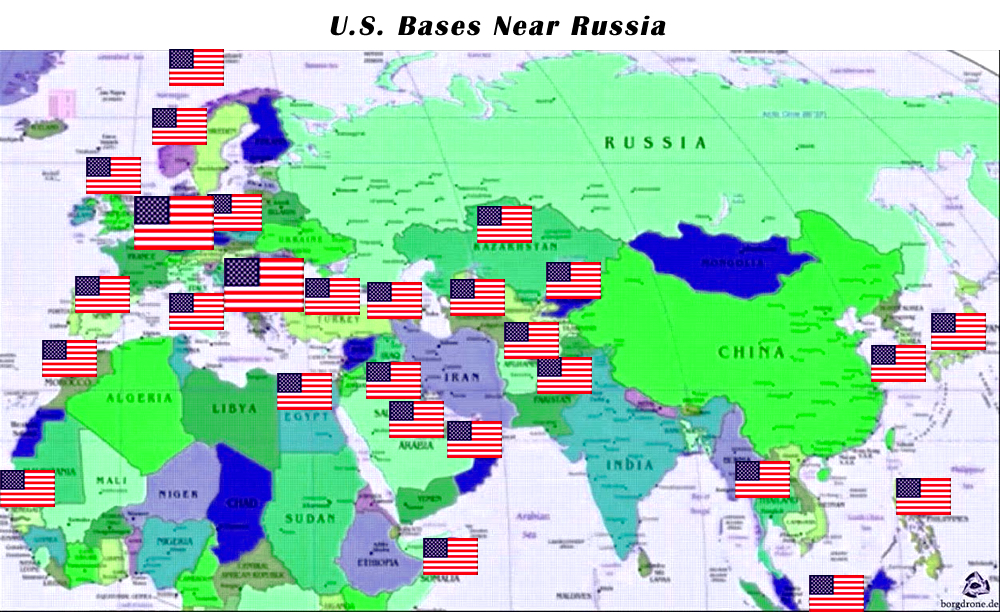
US bases in Europe on high alert for possible terrorist attack: DOD
Bradford Betz , Lucas Y. Tomlinson, Fox News, Sun, 30 Jun 2024 https://www.sott.net/article/492907-US-bases-in-Europe-on-high-alert-for-possible-terrorist-attack-DOD
U.S. military bases throughout Europe have been put on heightened alert status due to a potential terrorist attack, Fox News Digital has confirmed.
FILE – Sign in front of Ramstein Air Base, Germany.“There is credible intel pointing to an attack against U.S. bases over the next week or so,” a U.S. defense official told Fox News’ Lucas Tomlinson.
The official, who declined to be identified because he was not authorized to speak to the media, did not elaborate on the nature of the threat, but confirmed it was not tied to the French elections.
ISIS remains global threat a decade after declaring caliphate, US military official says
The official said all U.S. military bases in Europe have been placed on high alert, not a lock-down.
The U.S. bases have raised the status of the alert level to, “Force Protection Charlie,” which means the Pentagon has received credible intelligence indicating some form of a terrorist attack is in the works.
The new alert applies to all U.S. military facilities and personnel in Europe, including facilities in Germany, Italy, Romanian and Bulgaria, per reporting from Stars and Stripes.
The Lancet study estimates death toll in Gaza 186,000 or even more
Maktoob Staff, 8 July 24, https://maktoobmedia.com/gaza-genocide/the-lancet-study-estimates-death-toll-in-gaza-186000-or-even-more/
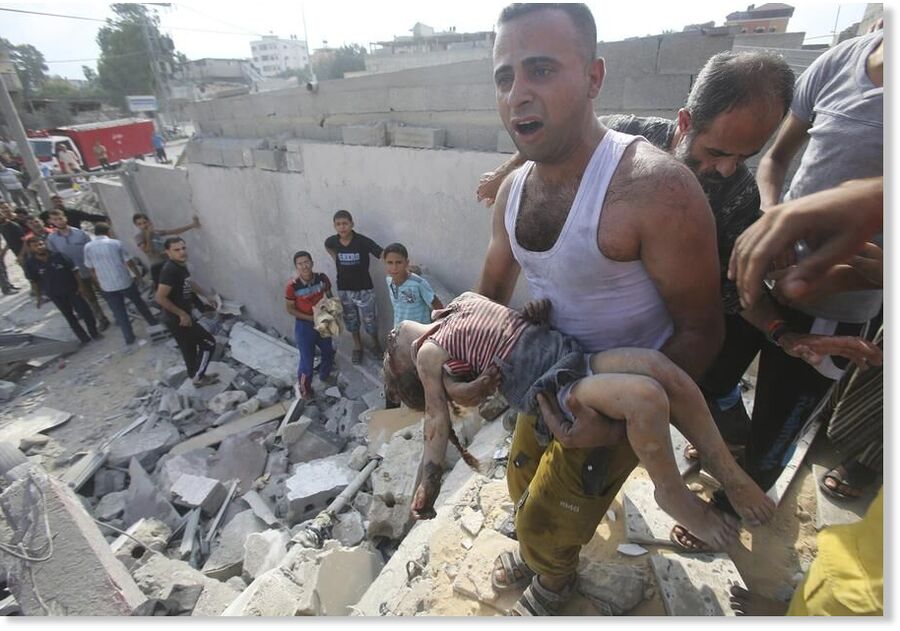
Applying a conservative estimate of four indirect deaths per one direct death reported in Gaza, a new study published respected medical journal The Lancet said it is “not implausible” to estimate that up to 186,000 or even more deaths could be attributable to the genocidal war in Gaza.
The paper titled ‘Counting the dead in Gaza: difficult but essential’, published on 05 July, stated that using the 2022 Gaza Strip population estimate of 2,375,259, the estimated death toll would translate to 7·9% of the total population in the besieged enclave.
On Sunday, the Palestinian health ministry said that at least 38,153 Palestinians have been killed by Israel in Gaza since October 07 while more than 87,828 have been wounded in the besieged enclave. 15,983 of them are children.
The study by Rasha Khatib, Martin McKee and Salim Yusuf, used the data from June 19, with the official death toll of 37, 396. The official record maintained by the Gaza Health Ministry doesn’t include over 10,000 people missing or buried under the rubbles.
“The Ministry has had to augment its usual reporting, based on people dying in its hospitals or brought in dead, with information from reliable media sources and first responders. This change has inevitably degraded the detailed data recorded previously. Consequently, the Gaza Health Ministry now reports separately the number of unidentified bodies among the total death toll. As of May 10, 2024, 30% of the 35,091 deaths were unidentified,” observed the paper.
It also pointed out that armed conflicts have “indirect health implications beyond the direct harm from violence”.
“Even if the conflict ends immediately, there will continue to be many indirect deaths in the coming months and years from causes such as reproductive, communicable, and non-communicable diseases,” the paper read.
A report from Feb 7, 2024, at the time when the direct death toll was 28,000, estimated that without a ceasefire there would be between 58260 deaths (without an epidemic or escalation) and 85750 deaths (if both occurred) by Aug 6, 2024.
The interim measures set out by the International Court of Justice in January, require Israel to “take effective measures to prevent the destruction and ensure the preservation of evidence related to allegations of acts within the scope of … the Genocide Convention”.
“An immediate and urgent ceasefire in the Gaza Strip is essential, accompanied by measures to enable the distribution of medical supplies, food, clean water, and other resources for basic human needs,” the paper read.
Gaza deal must allow Israel to keep fighting – Netanyahu

https://www.sott.net/article/492916-Gaza-deal-must-allow-Israel-to-keep-fighting-Netanyahu 8 July 24
The Israeli prime minister’s statement comes after Hamas accepted a key part of a ceasefire proposal
Any potential ceasefire deal in Gaza must allow Israel to resume fighting until all of its war objectives are met, Prime Minister Benjamin Netanyahu said on Sunday. One of the main goals repeatedly voiced by the PM is the complete elimination of the Hamas militant group.
Netanyahu’s statement comes after Hamas approved a US proposal for a phased ceasefire deal, dropping a key demand for Israel to first commit to a permanent ceasefire before signing the deal, according to a Reuters source.
Hamas expects to end hostilities through talks during the first six-week phase of the deal aimed at settling the conflict in Gaza, the outlet said.
However, the Palestinian militant group wants written guarantees from international mediators that Israel will continue to negotiate a permanent ceasefire when the first phase of the deal comes into effect. The hostage issue will also be addressed after the first phase is implemented.
Hamas officials have said they are awaiting Israel’s response to the latest proposal. Netanyahu insisted on Sunday, however, that any deal must “allow Israel to go back to fighting until all the goals of the war are achieved.”
According to media reports, Netanyahu was scheduled to hold consultations on the next steps, but his latest statement has hindered the deal’s momentum.
“The plan that has been agreed-to by Israel and which has been welcomed by President Biden will allow Israel to return hostages without infringing on the other objectives of the war,” Netanyahu insisted.
Talks mediated by Qatar, Egypt and the US have so far failed to secure a truce in Gaza or the release of hostages since a weeklong ceasefire in November resulting in the freeing of 105 hostages from Gaza and 240 Palestinian prisoners.
Israel began its operation in Gaza in response to a cross-border incursion by Hamas last October in which at least 1,200 people were killed and 250 taken hostage. Some 116 captives are believed to be still held in Gaza.
Over 38,000 people have been killed so far and more than 87,000 others have been wounded in Israeli attacks on the Palestinian enclave, according to Gaza’s health ministry.
Comment: What kind of ceasefire is this if it must “allow Israel to go back to fighting until all the goals of the war are achieved.”?!
See also: Best of the Web: The Lancet study estimates death toll in Gaza 186,000 or even more and the reflections in SOTT Focus: The Burqa Ban Question
With global race to decarbonize electricity sector, demand for skilled nuclear workers heats up.

COMMENT. Most (or all?) of the funds available to these companies to hire “skilled workers” is coming directly from the public (taxpayers) through direct subsidies, contracts or tax refunds. For example, the story mentions that AtkinsRéalis is one of the top hiring firms. A few weeks back was another story stating that the AtkinsRéalis nuclear division got a $750M contract for work on a CANDU reactor in Romania. A few months before that was another story that Canada had signed a $3 BILLION “export development deal” with Romania (i.e. a gift) to build its CANDU reactor, and that most of the funds would be spent on Canadian jobs. This all comes back to the nuclear industry’s current core problem: its products (new nuclear reactors) are hulking dinosaurs that suck up funds at an alarming rate and no private investor doing due diligence wants to be part of this costly scheme.
Globe and Mail, MATTHEW MCCLEARN, 8 July 24
Last month, U.S.-based nuclear reactor vendor Westinghouse opened a 13,000-square-foot engineering office in Kitchener, Ont. The company wants to sell its products, including its flagship AP1000 reactor, in Canada while also serving international customers.
Having hired most of its 250 Canadian staff in the last three years, it now seeks to hire 100 more engineers. It’s recruiting at a moment when, after a decades-long lull, skilled nuclear workers find themselves in high demand.
China and Russia have long dominated construction activity, while Western countries stagnated; Canada’s newest power reactor was completed in the early 1990s. But efforts to decarbonize the electricity sector have coalesced into support for designing and building new reactors, even as aging facilities are overhauled – leading to a proliferation of announced nuclear projects.
Whether there’s enough engineering talent to execute them all, however, is a question vigorously debated within the nuclear industry, here and abroad.
According to a survey the Canadian Nuclear Association conducted five years ago, the industry directly employs 33,000 people – up from 30,000 in 2012. Large employers include Ontario Power Generation and Bruce Power, which operate large nuclear plants, as well as uranium mining giant Cameco Corp. and Canadian Nuclear Laboratories, which operates the Chalk River research facility.
That survey is now being updated, and while results have not been finalized, employment appears to have grown another 10 to 15 per cent during the past five years. But the sheer volume of announced projects implies more rapid growth.
OPG recently began early work to refurbish four reactors at its Pickering station. The eight-reactor Bruce station, already one of the world’s largest, is in the early stages of a planned expansion that could add four new large reactors.
AtkinsRéalis, steward of Canada’s homegrown Candu technology, is racing to develop a modernized 1,000-megawatt reactor it calls the Monark. It’s among the most active hirers on Nuclear Jobs Canada, an industry job board.
Canadian Nuclear Laboratories is hiring at its Chalk River facilities, a Second World War-era facility that has been extensively modernized in recent years. It’s looking to populate its new laboratories and replace retiring workers.
“Nuclear was a little bit quiet for a while, and now it’s coming back,” said Janet Tosh, CNL’s vice-president of human resources.
“So we are having to build up that talent pipeline. But it’s not just science and technology people we’re looking for. We’re looking for technicians, machinists, certified trade workers.”
And then there’s relative newcomers to Canada, such as Westinghouse. Another U.S.-based reactor vendor, GE-Hitachi Nuclear Energy, has partnered with OPG to build up to four small modular reactors at Darlington station.
The picture is similar in other Western countries, including the U.S. and Britain, both of which have seen limited reactor construction for decades. Reports abound that nuclear employers, desperate for talent, have lured long-retired professionals back into the work force.
Last year, the U.S. National Academy of Engineering published a 250-page report examining the potential barriers to a major build-out of new “advanced” reactors. It identifies labour availability as a key constraint.
“Utilities have generally not retained the talent on their staff to execute these large projects given the limited deployment of nuclear technology in the past 30 years in the United States,” the report says.
“This shortfall in talent could become equally limiting across the supply chain, operations, and regulatory organizations that must support any large-scale growth in nuclear deployment.”
Akira Tokuhiro, a professor at Ontario Tech University, which has one of the largest nuclear engineering programs in North America, has noticed major nuclear employers pledging to hire hundreds of workers apiece on LinkedIn.
“And I thought, how can that be?” he recalled during an interview. “Because we’re producing 50 graduates a year.”
Prof. Tokuhiro added up the output from other programs across the continent, and determined that fewer than 1,000 people graduate with a degree in radiation science or nuclear engineering in North America. (He figures that for every such graduate, nuclear employers hire 10 times as many mechanical, chemical and other engineers who’ve not studied nuclear directly.)
He compares that against likely retirement rates for workers at major nuclear employers, as well as the many announced nuclear projects.
“We don’t have enough new graduates,” Prof. Tokuhiro concluded. “There’s a disconnect between what the industry needs, and what the universities are producing.”
Luca Oriani, Westinghouse’s global chief engineering services officer, disagrees. The reactor vendor almost exclusively hires graduates with little or no industry experience, he said, and then trains and retains them as long as possible, typically decades. The company has found the supply of engineering talent abundant, in Canada and elsewhere.
That’s not to say competition isn’t fierce. Westinghouse used to visit campuses a week ahead of job fairs for coming graduates to recruit before they met with competitors; now it’s offering them jobs as early as a year before graduation.
“I have over 2,000 engineers working for me,” Mr. Oriani said. “I still spend at least a week month just going to different universities and discussing with students, and trying to see how do we get them to come to us before they go somewhere else.”
In an interview earlier this year, OPG chief executive officer Ken Hartwick divided the industry’s labour into two groups: engineering and project management on one side; and trades, such as boilermakers and electricians, on the other. Availability of the first group, he said, has not been a problem, an aging work force notwithstanding.
“I’m less worried about the older person losing some of the experience, because the younger people coming through our universities are brilliant,” Mr. Hartwick said.
Tradespeople were another matter. OPG competes for them not just with other nuclear utilities such as Bruce Power, but with many other construction projects, including hospitals and roads.
“Can we ramp up our trades programs fast enough? That’s the biggest challenge.”
Some in Canada’s nuclear industry say talent isn’t as scarce here as it is in the U.S. and Britain, thanks to major multi-reactor reactor refurbishments at Ontario’s Darlington and Bruce stations over the past decade. They’re major capital projects in their own right, requiring significant manpower to execute.
That’s kept a lot of building trades very engaged, and it’s kept the regular work force [of utilities] engaged,” said Bob Walker, national director of the Canadian Nuclear Workers’ Council, an umbrella organization of nuclear sector unions.
He confirmed that retirees are re-entering the work force, but added that most nuclear employers offer generous pension plans, allowing workers to retire relatively early.
“That’s been a running joke for as long as I can remember: No one ever retires, they just change positions,” Mr. Walker said. “The industry plans on people coming back, and people plan on retiring and coming back.”……………….. https://www.theglobeandmail.com/business/article-after-decades-of-dormancy-competition-for-nuclear-engineering-talent/
Masoud Pezeshkian: Iranian reformer who wants to end Tehran’s nuclear stand-off
Heart surgeon turned president pledges reform of system millions of his compatriots believe cannot be changed
Ft.com Najmeh Bozorgmehr in Tehran, 7 July 24
Only four months ago it was unclear whether reformist Masoud Pezeshkian would even be allowed to run for Iran’s parliament: hardliners controlled all the centres of power, with other factions consigned to the political wilderness.
But now Pezeshkian is set to become the Islamic republic’s first reformist president in two decades, after pulling off an unexpected victory in Friday’s election run-off. The 69-year-old defeated his hardliner rival, Saeed Jalili, with promises of change to Tehran’s domestic and foreign policies.
Pezeshkian’s electoral success has rejuvenated the marginalised reformist camp, which was initially amazed that the leadership approved his candidacy following a string of elections in which other reformers were barred………………………………………………….
During the campaign, Pezeshkian vowed to re-engage with the US and European states to negotiate an end to Iran’s nuclear stand-off with the west, and to secure sanctions relief to help the economy……………………………………………..
As president, his ability to push through change will depend heavily on his relations with Khamenei, analysts said, as Pezeshkian is expected to encounter stiff resistance from hardliners elsewhere…………………………………… more https://www.ft.com/content/5e7e80b3-4b46-4cce-a762-c95705201753
Biden: ‘I’m Running the World’.
July 6, 2024
The comment by the sitting U.S. president in Friday’s interview has been ignored by the mainstream, but its megalomania is at the heart of why Joe Biden is defying his party and remaining in the race, writes Joe Lauria.
By Joe Lauria
Special to Consortium News

About midway through what was billed as the most consequential interview of Joe Biden’s political career, he uttered the most consequential words in the interview: “I am running the world.”
Those five words explain why he refuses to withdraw from the race and confirm what most Americans deny, but which most of the world knows: U.S. presidents act as if they were world emperors.
The interview with ABC News’ George Stephanopoulos was supposed to be Biden’s chance to show the country he is mentally fit to remain in the presidency and run for a second term ………………………………………………………………….
PRESIDENT JOE BIDEN: Look. I have a cognitive test every single day. Every day I have that test. Everything I do. You know, not only am I campaigning, but I’m running the world. Not– and that’s not hi– sounds like hyperbole, but we are the essential nation of the world..
Civil War in Donbass 10 Years On
Zelensky did initially try to resolve the Donbass conflict through diplomatic means. In October 2019, he moved to hold a referendum on “special status” for the breakaway republics in a federalized Ukraine, while personally meeting with representatives of Azov Battalion, begging them to lay down their arms and accept the compromise. Mockingly rebuffed and threatened by the Neo-Nazi group’s leaders, while rocked by nationalist protests against the proposed plebiscite in Kiev, the plans were dropped. So then the President picked the “worst option”.
KIT KLARENBERG, JUL 08, 2024 https://www.kitklarenberg.com/p/civil-war-in-donbass-10-years-on
July 1st marked the 10th anniversary of a brutal resumption of hostilities in the Donbass civil war. Perhaps unsurprisingly, it passed without comment in the Western media. 10 years earlier, Ukrainian President Petro Poroshenko called a ceasefire in Kiev’s “anti-terrorist operation”. Launched two months prior following vast protests, and violent clashes between Russian-speaking pro-federal activists and authorities throughout eastern Ukraine, the intended lightning strike routing of internal opposition to the Maidan government quickly became an unwinnable quagmire.
Ukrainian forces were consistently beaten back by well-organised and determined rebel forces, hailing from the breakaway “People’s Republics” in Donetsk and Lugansk. Resultantly, Poroshenko outlined a peace plan intended to compel the separatists to put down their arms. They refused to do so, prompting the President to order an even more savage crackdown. This too was a counterproductive failure, with the rebels inflicting a series of embarrassing defeats on Western-sponsored government forces. Kiev was ultimately forced to accept the terms of the first Minsk Accords.
This agreement, like its successor, did not provide for secession or independence for the breakaway republics, but their full autonomy within Ukraine. Russia was named as a mediator, not party, in the conflict. Kiev was to resolve its dispute with rebel leaders directly. Successive Ukrainian governments consistently refused to do so, however. Instead, officials endlessly stonewalled, while pressuring Moscow to formally designate itself a party to the civil war.
No wonder – had Russia accepted, Kiev’s claims that its savage assault on the civilian population of Donbass was in fact a response to invasion by its giant neighbour would’ve been legitimised. In turn, all-out Western proxy war in eastern Ukraine, of the kind that erupted in February 2022, could’ve been precipitated. Which, it is increasingly clear, was the plan all along.
‘Grassroots Movement’
In the days prior to the April 2014 launch of Kiev’s “anti-terrorist operation” in Donbass, notorious war hawk Samantha Power, now USAID chief, openly spoke on ABC of “tell-tale signs of Moscow’s involvement” in the unrest. “It’s professional, coordinated. Nothing grassroots about it,” she alleged. Such framing gave Ukrainian officials, their foreign backers, and the mainstream media licence to brand the brutal operation a legitimate response to a fully-fledged, if unacknowledged, “invasion” by Russia. It is referred to as such in many quarters today.
Yet, at every stage of the Donbass conflict, there were unambiguous indications that the Ukrainian government’s claims of widespread Russian involvement – endorsed by Western governments, militaries, intelligence agencies, pundits and journalists – were fraudulent. One need look no further than the findings of a 2019 report published by the George Soros-funded International Crisis Group (ICG), Rebels Without A Cause. Completely unremarked upon in the mainstream, its headline conclusions are stark:
“The conflict in eastern Ukraine started as a grassroots movement…Demonstrations were led by local citizens claiming to represent the region’s Russian-speaking majority.”
ICG noted that Russian leaders were from the start publicly and privately sympathetic to Russian-speakers in Donbass. Nonetheless, they issued no “clear guidance” to businessmen, government advisers or the domestic population on whether – and how – they would be officially supported by Moscow in their dispute with the Maidan government. Hence, many Russian irregulars, encouraged by “what they regarded as the government’s tacit approval, made their way to Ukraine.”
Per ICG, it was only after the conflict started that the Russian government formalised a relationship with the Donbass rebels, although the Kremlin quickly changed tack on what they should do. A Ukrainian fighter told the organisation that he “began hearing calls for restraint in rebel efforts to take control of eastern Ukrainian towns and cities” in late April 2014. However, “the separatist movement in Donbass was determined to move ahead.”
Due to this lack of control, and repeated calls for direct intervention in the conflict from the rebels, Russia replaced the Donetsk and Lugansk rebel leadership with hand-picked figures, who took an explicitly defensive posture. But the Kremlin was ultimately “beholden” to the breakaway republics, not vice versa. It could not even reliably order the rebels to stop fighting. A Lugansk paramilitary told ICG:
“What do you do with 40,000 people who believe that, once they put down their arms, they will all be shot or arrested? Of course, they are going to fight to the death.”
Elsewhere, the report cited data provided by “Ukrainian nationalist fighters”, which showed rebel casualties to date were “overwhelmingly” Ukrainian citizens. This was at odds with the pronouncements of government officials, who invariably referred to them as “Russian mercenaries” or “occupiers”. More widely, figures within far-right President Petro Poroshenko’s government had routinely claimed Donbass was wholly populated by Russians and Russia-sympathisers.
One Ukrainian minister was quoted in the report as saying he felt “absolutely no pity” about the extremely harsh conditions suffered by Donbass civilians, due to the “legal, political, economic and ideological barriers isolating Ukrainian citizens in rebel-held territories” constructed by Kiev. This included enforcing a crippling blockade on the region in 2017, which created a “humanitarian crisis”, and left the population unable to claim pensions and welfare payments, among other gruelling hardships.
Several Donbass inhabitants interviewed by ICG expressed nostalgia for the Soviet Union. Most felt “under attack” by Kiev. A pensioner in Lugansk, whose “non-combatant son” was killed by a Ukrainian sniper, asked how Poroshenko could claim the territory was “a crucial part” of Ukraine: “then why did they kill so many of us?”
‘Worst Option’
In conclusion, ICG declared the situation in Donbass “ought not to be narrowly defined as a matter of Russian occupation,” while criticising Kiev’s “tendency to conflate” the Kremlin with the rebels. The organisation expressed optimism newly-elected President Volodymyr Zelensky could “peacefully reunify with the rebel-held territories,” and “[engage] the alienated east.” Given present day events, its report’s conclusions were eerily prescient:
“For Zelensky, the worst option…would be to try to forcibly retake the territories, as an all-out offensive would likely provoke a military response from Moscow and a bloodbath in Donbass. It could even lead Moscow…to recognise the statelets’ independence. The large-scale military option is mainly advocated by nationalists, not members of Ukraine’s political establishment. But some prominent mainstream politicians refuse to rule it out.”
Zelensky did initially try to resolve the Donbass conflict through diplomatic means.
Continue readingPhilippines Says US Will Pull Out Controversial Mid-Range Missile System
The US deployed the Typhon missile system for annual military drills
by Dave DeCamp July 4, 2024 ore https://news.antiwar.com/2024/07/04/philippines-says-us-will-pull-out-controversial-mid-range-missile-system/
On Thursday, the Philippines said the US was pulling out a new missile system it deployed to the Southeast Asian country for annual military exercises.
The US sent the Typhon missile system for the Balikatan exercises, which were held in April and May. The Typhon is a controversial launcher since it would have been banned by the Intermediate-Range Nuclear Forces (INF) Treaty, a treaty between the US and Russia that the Trump administration withdrew from in 2019.
The INF prohibited land-based missile systems with a range between 310 and 3,400 miles. The Typhon can launch nuclear-capable Tomahawk missiles, which have a range of about 1,000 miles. It can also fire SM-6 missiles, which can hit targets up to 290 miles away.
Philippine Col. Louie Dema-ala told AFP that the US planned to withdraw the Typhon from the Philippines following the military exercises. “As per plan… it will be shipped out of the country in September or even earlier,” he said. “The US Army is currently shipping out their equipment that we used during Balikatan and Salaknib (exercises).”
China strongly condemned the deployment of the Typhon system, which US officials have acknowledged was developed to prepare for a future conflict with Beijing over Taiwan or the South China Sea.
Russian President Vladimir Putin also recently mentioned the deployment. He made the comments when calling for Moscow to follow the US and develop missile systems previously banned by the INF.
“We need to start production of these strike systems and then, based on the actual situation, make decisions about where — if necessary to ensure our safety — to place them,” Putin said last week.
“Today it is known that the United States not only produces these missile systems, but has already brought them to Europe for exercises, to Denmark. Quite recently it was announced that they are in the Philippines,” the Russian leader added.
Trump allies are peddling a catastrophic idea for U.S. nuclear weapon policy

Resuming live testing could spark an arms race and will reduce American security.
By Zeeshan Aleem, MSNBC Opinion Writer/Editor, 6 July 24
Allies and former advisers to former President Donald Trump are arguing that the U.S., for the first time in decades, should resume nuclear testing. They say it’ll advance American safety by ensuring that the U.S. has a decisive military and technological advantage over other nuclear powers. In reality, the U.S. — and the world — would be made more dangerous by the kind of arms race this could spark. And it seems plausible that if Trump were to win the White House he could adopt the policy because of the manner in which it aligns with the unilateral militance of the “America First” worldview.
Influential figures in Trump’s orbit are pushing the idea of breaking long-held norms and resuming live nuclear testing. Former Trump national security adviser Robert O’Brien wrote in Foreign Affairs in June that “Washington must test new nuclear weapons for reliability and safety in the real world for the first time since 1992” in order to maintain technical superiority over China and Russia. Christian Whiton, who served as a State Department adviser to President George W. Bush and Trump, told The New York Times that “it would be negligent to field nuclear weapons of novel designs that we have never tested in the real world.” And the Heritage Foundation, the right-wing think tank that’s backing Project 2025, widely considered a policy blueprint for Trump’s second term, is proposing that the federal government expand its capacity for immediate nuclear testing.
Since 1992, the U.S. has refrained from explosive nuclear testing and opted for other techniques, including expert appraisals and sophisticated modeling generated by supercomputers, to calculate the efficacy of its long-term stockpile and its newer weapons. That policy has helped nudge other countries away from pursuing live testing. Most countries don’t conduct live tests of nuclear warheads in adherence to the Comprehensive Nuclear-Test-Ban Treaty.
Multiple nuclear proliferation experts say that if the U.S. resumes explosive testing, other countries will have more incentive to do so. “Resuming U.S. nuclear testing is technically and militarily unnecessary,” wrote Arms Control Association executive director Daryl Kimball in response to O’Brien’s article. “Moreover, it would lead to a global chain reaction of nuclear testing, raise global tensions, and blow apart global nonproliferation efforts at a time of heightened nuclear danger.” Kimball’s argument is in line with President Joe Biden’s outlook. During his 2020 presidential campaign, Biden endorsed the U.S. continuing to abstain from explosive testing and said a resumption would be “as reckless as it is dangerous.” …………………………………………………………………………..more https://www.msnbc.com/opinion/msnbc-opinion/trump-nuclear-policy-election-rcna160459
EDF’s Nuward U-turn shows risk of betting on Small Nuclear Reactors – analysts

(Montel) French utility EDF’s decision to ditch the design of its Nuward small modular reactor (SMR)in France shows the risk of expecting too much of the nuclear technology – with delays to the project expected, analysts told Montel.
too many technical uncertainties, analysts said.
(Montel) French utility EDF’s decision to ditch the design of its Nuward small modular reactor (SMR)in France shows the risk of expecting too much of the nuclear technology – with delays to the project expected, analysts told Montel.
Montel News, by: Muriel Boselli, Sophie Tetrel , 03 Jul 2024
“SMRs must remain a possibility for keeping a nuclear fleet in the long term but they cannot be the pillar of a reliable electricity strategy at this stage,” said Nicolas Goldberg of Colombus Consulting. “Hence the need for electric renewables, which should not be overlooked.”
France is relying on SMRs as part of a broader plan to spur its nuclear power industry and lower carbon emissions.
In 2022, president Emmanuel Macron announced plans to invest EUR 1bn by 2030 in the development of small modular reactors, with EUR 500m going to Nuward.
Technical difficulties
EDF confirmed media reports on Tuesday that it was scrapping its SMR design due to technical difficulties. The company wanted to “move towards a design built exclusively from proven technological building blocks”, a spokeswoman told Montel.
The market had been sceptical about the project as there were too many technical uncertainties, analysts said.
“This announcement allows us to be a little less involved in utopian and rhetorical discussions about nuclear power and to return to something much more technical, which brings us back to the limits of SMRs at the moment,” said Franck Gbaguidi, an analyst at Eurasia Group…………………………..
Safety adaptation
Ditching the design meant EDF would have to adapt the safety plan it submitted to France’s ASN nuclear safety authority last July, an ASN spokeswoman said.
The Nuward project has been in development since 2019, managed by a consortium of companies including EDF, Naval Group, TechnicAtome, the French Alternative Energies and Atomic Energy Commission (CEA), Framatome and Tractebel. Construction was scheduled to start in 2030
The Nuward project has been in development since 2019, managed by a consortium of companies including EDF, Naval Group, TechnicAtome, the French Alternative Energies and Atomic Energy Commission (CEA), Framatome and Tractebel. Construction was scheduled to start in 2030.
France is currently developing 11 SMR projects and the nuclear development has been backed by right and far-right political parties. In April, the start-up Jimmy said it had submitted a request to the ecology ministry for authorisation of a pair of 170 MW capacity SMRs it hopes to build in France after the European Commission approved EUR 300m in state aid for the project.
In December last year, the company said it would stick with its SMR plans in Europe despite American firm NuScale Power scrapping its plan to build SMRs in the US. https://montelnews.com/news/2edd2bd8-fa29-4629-95f9-c876c1e4e6ce/edfs-nuward-u-turn-shows-risk-of-betting-on-smrs-analysts
Labour must act fast to fire up Rolls-Royce nuclear reactor deals

Rolls-Royce risks losing billions in overseas contracts if Labour delays
vital strategic decisions on nuclear reactors, in what is emerging as the
first crucial test of its business policies.
Other projects may also be in
jeopardy, imperilling thousands of jobs, if new ministers are slow to take
action to tackle the overflowing in-trays confronting them. The engineering
giant is considered to be a front-runner of the six groups in the race to
build Britain’s first mini nuclear plants, known as small modular reactors
(SMRs).
State funding has been key to the development of its designs. One
of the company’s goals is to create a major export market for its SMRs. It
is eyeing contracts worth billions of pounds. [Really !!] The Mail on Sunday
understands that central European countries including the Czech Republic
are among those in talks with Rolls. But these negotiations will stall –
and possibly end – if Labour does not give the UK’s formal backing to the
project by the end of the year.
This is Money 6th July 2024
1 This Month

of the week– Nuclear Reactor Information Task Force

14 May – online event From Bombs to Data Centres: the Face of Nuclear Colonialism
To see nuclear-related stories in greater depth and intensity – go to https://nuclearinformation.wordpress.com
-
Archives
- May 2026 (92)
- April 2026 (356)
- March 2026 (251)
- February 2026 (268)
- January 2026 (308)
- December 2025 (358)
- November 2025 (359)
- October 2025 (376)
- September 2025 (257)
- August 2025 (319)
- July 2025 (230)
- June 2025 (348)
-
Categories
- 1
- 1 NUCLEAR ISSUES
- business and costs
- climate change
- culture and arts
- ENERGY
- environment
- health
- history
- indigenous issues
- Legal
- marketing of nuclear
- media
- opposition to nuclear
- PERSONAL STORIES
- politics
- politics international
- Religion and ethics
- safety
- secrets,lies and civil liberties
- spinbuster
- technology
- Uranium
- wastes
- weapons and war
- Women
- 2 WORLD
- ACTION
- AFRICA
- Atrocities
- AUSTRALIA
- Christina's notes
- Christina's themes
- culture and arts
- Events
- Fuk 2022
- Fuk 2023
- Fukushima 2017
- Fukushima 2018
- fukushima 2019
- Fukushima 2020
- Fukushima 2021
- general
- global warming
- Humour (God we need it)
- Nuclear
- RARE EARTHS
- Reference
- resources – print
- Resources -audiovicual
- Weekly Newsletter
- World
- World Nuclear
- YouTube
-
RSS
Entries RSS
Comments RSS
 nuclear-news