Will the New Brunswick Power Review finally shake up New Brunswick Power?
The report’s considerable emphasis on NB Power’s nuclear operations is justified: the plant’s poor performance is the main reason that the utility cannot lower its debt to asset ratio and loses money almost every year. As the report notes: “The benefits of nuclear are only achieved when the asset performs at a high-capacity factor…. A structure and organization that is focused on excellent nuclear performance is needed and it is not clear to us that this is possible under the existing corporate structure.”
Unfortunately, the main recommendation for the nuclear plant will simply kick the white elephant down the road. ………………… The report also noted that the utility’s debt related to nuclear power was $3.6 billion and suggested that an appropriate amount of debt be assigned to the new entity, presumably with the remaining debt picked up by taxpayers.
If there is any silver lining, it’s that the report barely mentions small modular nuclear reactors (SMRs), and at the media event, the panel stated clearly that New Brunswick should not go down that road.
by Susan O’Donnell, March 31, 2026, https://nbmediacoop.org/2026/03/31/will-the-nb-power-review-finally-shake-up-nb-power/
NB Power desperately needs a very big shake up. The NB Power Review report published on Monday rattled the utility but not nearly hard enough.
The NB Power Review was meant to chart a path to a better future for the public utility. Launched last April, the three-person review panel was tasked with reviewing the utility to address: “rising electricity rates, system reliability, and financial challenges, including a high debt-to-equity ratio.”
The shake-up needs to happen at the top. The report is rightly highly critical of NB Power’s organizational culture that lacks not only “operational excellence” but also basic project management procedures and practices. NB Power, the report clearly states, does not have the capacity and skills to manage all the projects planned, including “large hydro refurbishment, complex plant conversions, large software replacement, and transmission and distribution expansions.”
NB Power’s grid is a mess. The big power generators are liabilities more than assets. The Mactaquac dam needs repairs that will cost more than $9 billion. The Belledune coal-fired plant is federally mandated to close by 2030. The Point Lepreau nuclear plant performs so badly that the utility is losing millions, with millions more for costly repairs on the horizon. NB Power’s big fossil fuel generators – oil-fired Coleson Cove and gas-fired Bayside – need to wind down for the same reason Belledune will need to stop burning coal: the climate emergency.
Yet, the Review report does not mention the word “climate,” or “weather” or “storms” or give any indication that “Fit for the Future” (the title of the report) must include resilience and mitigation strategies for climate change.
As reported last April when the Review was announced, the panel’s mandate did not include consideration of climate action, which is evident in the report. For example, after pointing out that many homes in the province rely on baseboard heating, the report recommends “increased deployment of natural gas for heating purposes” suggesting that these homes should install gas furnaces. Heat pumps, the obvious and more cost-conscious and environmentally-responsible option, are barely mentioned and not included in the report’s 50 recommendations.
The report also misses an important opportunity to highlight the potential of wind energy and external financing for wind projects with Indigenous communities. A table in the report appendix lists NB Power’s power purchase agreements, including from three wind farms co-owned by Indigenous communities: Nuweg (25 MW capacity) Wisokolamson Energy (18 MW) and Wocawson Energy (20 MW) – without mentioning that these are Indigenous-partnered projects.
New Brunswick has tremendous wind resources, and First Nations in the province and their partners are building wind farms at a rapid pace, also not mentioned in the report. In fact, the most exciting energy infrastructure developments currently ongoing in New Brunswick are wind projects with Indigenous communities co-financed with the federal government.
In 2024, the federal government announced up to $1 billion in funding for new Indigenous-partnered wind projects in New Brunswick and currently five new Indigenous-partnered wind projects are in development. The Review panel should have mentioned this and recommended that NB Power actively explore with Indigenous and government partners how more of these wind projects could be developed and added to New Brunswick’s electric grid.
Where the report stands out is its lengthy discussion of nuclear power and NB Power’s capacity to operate a nuclear plant. The report includes only several paragraphs covering the challenges at the Mactaquac hydroelectricity plant and Belledune coal plant, but nuclear power gets five pages, plus an excellent four-page appendix with the history of the Point Lepreau Nuclear Generating Station detailing the operational problems.
The report’s considerable emphasis on NB Power’s nuclear operations is justified: the plant’s poor performance is the main reason that the utility cannot lower its debt to asset ratio and loses money almost every year. As the report notes: “The benefits of nuclear are only achieved when the asset performs at a high-capacity factor…. A structure and organization that is focused on excellent nuclear performance is needed and it is not clear to us that this is possible under the existing corporate structure.”
The panel acknowledges that NB Power does not have the capacity to operate the nuclear plant with New Brunswick talent. Currently the nuclear plant is managed under a contract with Laurentis Energy Partners, a business venture of Ontario Power Generation, a contract the review panel suggests will not alone achieve the needed improvement in the plant’s performance.
Unfortunately, the main recommendation for the nuclear plant will simply kick the white elephant down the road. The review panel recommends that the Point Lepreau plant be operationally separated from the rest of the utility’s power generators and that a new entity, Point Lepreau Nuclear, be set up with its own governance team of nuclear experts focused on the performance of the plant. The report also noted that the utility’s debt related to nuclear power was $3.6 billion and suggested that an appropriate amount of debt be assigned to the new entity, presumably with the remaining debt picked up by taxpayers.
It was almost amusing to read the review panel’s statement that hiving off the utility’s nuclear operations into a separate entity will “reduce stress and accountability” for the NB Power management and board. For sure, saying “it’s not my problem” is a good way to reduce stress but it doesn’t make the problem go away.
What about the stress experienced every month by New Brunswick ratepayers who can’t afford their utility bills? The panel, in its report and media event, acknowledged that electricity rates will continue to rise, energy poverty is real, and that “government needs to step in and provide financial support for those New Brunswickers who are considered vulnerable or for those targeted customers” but does not recommend developing such a program as one of its 50 recommendations. In any case, using general revenues to subsidize the costs of the nuclear operations is not a long-term solution.
As the panel clearly identified, the Point Lepreau nuclear plant is a big, central, problem for NB Power. If, as the report states, the contract with Laurentis Energy Partners is not enough, what will be enough? The existing contract with Laurentis is $88.4 million over three years (the value is not mentioned in the Review report). What will be the cost of hiring outside experts to set up and run the proposed Point Lepreau Nuclear entity? Does anyone believe that another group of outside experts will be able to magically bewitch the Lepreau plant so that it will make money, rather than lose it? “Silk purse” and “sow’s ear” come to mind.
If there is any silver lining, it’s that the report barely mentions small modular nuclear reactors (SMRs), and at the media event, the panel stated clearly that New Brunswick should not go down that road. As reported earlier by the NB Media Co-op, the NB Power review “could be the last nail in the coffin for the controversial technology in New Brunswick.”
However a further recommendation in the report is that the government consider “initiating the planning assessment phase for an additional large scale, proven technology nuclear plant to be sited alongside the Point Lepreau facility.” At the media event for the report launch, the review panel stressed they were not recommending a second reactor but rather that the utility take the time to conduct a thorough review about the future of nuclear in New Brunswick.
Another “big” reactor? Currently in Canada, only two firms are competing to build proposed big nuclear projects, in Ontario and Alberta. AtkinsRéalis (formerly known as SNC Lavalin) is proposing a CANDU design and Westinghouse its AP1000 design. The CANDU design has not made cost estimates public but two AP1000 reactors were recently completed in the U.S., at a cost of about $24 billion each in Canadian dollars.
This NB Power Review should have been the thorough review required to put NB Power’s future nuclear ambitions to rest. After its detailed discussion of NB Power’s debt problem and failure to operate the Point Lepreau nuclear plant successfully, it defies belief that the panel would recommend considering another nuclear reactor, one that would cost tens of billions of dollars. This is the very definition of nuclear hopium, not the big reality shake that the government and NB Power so badly need.
Susan O’Donnell, a member of the NB Media Co-op board, is the lead investigator of the CEDAR project at St. Thomas University and co-author of a recent report on SMRs in Canada
Atlanta robot security dogs now giving commands to Americans
Steve Watson, Modernity, Wed, 01 Apr 2026
Slippery slope to automated enforcement as machines take over city patrols amid rising crime
In the latest escalation of tech-driven “security” in American cities, Atlanta has unleashed robot security dogs that are actively issuing verbal commands to citizens on the streets.
A new video exposes how these mechanical enforcers operate with zero discretion: one woman greets the device warmly, complies instantly, and still gets reported to police.
These four-legged units, deployed by companies such as Undaunted Robotics across Atlanta apartment complexes, parking lots, and construction sites, patrol 24/7 with cameras, lights, sirens, and speakers.
Remote human operators monitor live feeds and speak through the robots to issue warnings or alert authorities.
Proponents claim they deter theft and break-ins where traditional guards fall short, with the founder noting they provide a cheaper alternative to on-site security while feeding real-time video to responders.
Yet the viral clip reveals the cold reality on the ground. A compliant citizen offering a friendly greeting triggers the same automated response as a suspected threat.
No nuance. No human judgment in the moment. Just a machine escalating straight to law enforcement.
This rollout comes as private security firms position the robots as partners for local police departments in Atlanta and DeKalb County, with plans to expand statewide.
Early deployments in areas like Castleberry Hill have drawn praise from some residents tired of unchecked property crime, but the hands-off approach raises red flags about accountability when silicon decides who gets flagged…………………………… ……………………….https://modernity.news/2026/04/01/watch-atlanta-robot-security-dogs-now-giving-commands-to-americans/
After murdering thousands in criminal Iran war, Trump to surrender during address to nation tonight

Walt Zlotow West Suburban Peace Coalition Glen Ellyn IL 2 Apr 26
No it won’t be the unconditional surrender Trump demanded of Iran. It will be a surrender couched as a US victory over Iran. Trump will say he’s obliterated enough of Iran’s nuclear program and missile capability to wind down his criminal war within a couple of weeks.
Nonsense. It’s the US bases in the Gulf States and Israel proper being decimated by Iran’s ferocious defense that are causing Trump to trumpet victory when in fact he’s been defeated in every war goal.
Trump didn’t achieve regime change in Iran.
Trump didn’t get Iran to surrender unconditionally or any other way at all.
Trump didn’t destroy Iran’s missile and drone defense.
Trump didn’t destroy Iran as Israel’s last remaining hegemon rival in the Middle East, the primary reason he attacked on February 28.
Trump didn’t reopen the Strait of Hormuz as promised, whose closure is threatening worldwide economic disaster.
Tonight Trump will spin his colossal defeat as victory. But while speaking, Iranian missiles and drones will continue raining down on US Gulf States bases and thruout Israel. Tomorrow the Strait of Hormuz will remain closed as gas prices continue endlessly upward.
Trump will remain trapped like the rat he is while killing more thousands before his cabinet invokes the 25th amendment to take away his license to kill and destroy.
Closing Air Spaces and Cracking Alliances: Trump’s Growing Problem with Allies
2 April 2026 Dr Binoy Kampmark, https://theaimn.net/closing-air-spaces-and-cracking-alliances-trumps-growing-problem-with-allies/
With the Iran War groaning along, the Trump administration is getting increasingly indignant. Plumes of childish anger can be seen coming out of the White House and Pentagon. Having joined an illegal, joint enterprise with Israel in attacking Iran, allies are proving increasingly unwilling to play along.
That unwillingness gurgled to the top with Spain’s announcement on March 30 that it had closed its airspace to US aircraft participating in strikes on Iran. This added to Madrid’s decision earlier in the month to deny the US military access to its bases for military operations against Tehran. “We don’t authorise either the use of military bases or the use of airspace for actions related to the war in Iran,” Defence Minister Margarita Robles told reporters. Spain’s Economy Minister Carlos Cuerpo, in an interview with radio Cadena SER, called the move consistent and “part of the decision already made by the Spanish government not to participate in or contribute to a war which was initiated unilaterally and against international law.”
The government of Prime Minister Pedro Sánchez has been singularly pertinacious in its characterisation of the Iran War, and more broadly illustrative of the current bad blood in transatlantic relations. In a piece for The Economist, Sánchez wrote of his country’s misplaced support for Washington in February 2003 when the then US Secretary of State, Colin Powell, told the UN Security Council most gravely that Iraq had weapons of mass destruction, and needed to be attacked. The foolishly credulous Spanish Prime Minister at the time, José María Aznar, was convinced that the regime of Saddam Hussein had such weapons. “Today we face a similar situation, and my government’s position is the same as that voiced by Spanish society two decades ago: NO TO WAR. No to the unilateral violation of international law. No to repeating the mistakes of the past. No to the idea that the world’s problems can be solved with bombs.”
Italian authorities have also expressed displeasure at the presumptuousness of their US allies in taking liberties with their military facilities. In a March 31 report by Corriere della Sera, “several US bombers” that had intended to land at Sigonella air base on route to the Middle East were refused as they had not properly requested authorisation or consulted with the Italian military. A statement from Palazzo Chigi, the office of Italian Prime Minister Giorgia Meloni, reiterated that Italy “acts in full compliance with existing international agreements and with the policy guidelines expressed by the Government to Parliament.”
Other allies are openly rebuffing requests by US officials to secure additional military equipment to the Gulf. Critical here are air-defence systems such as the Patriot batteries that have been dramatically depleted since the outbreak of hostilities. In the first 16 days of the war, some 1,285 PAC-3 Patriot missiles were used by the US military and Gulf states.
The Polish Defence Minister, Władysław Kosiniak-Kamysz could not have been clearer in his statement on whether Poland’s complement of Patriot air defence systems would make their way to the Middle East. “Our Patriot batteries and their armaments are used to protect Polish airspace and NATO’s eastern flank. Nothing is changing in this regard, and we have no plans to move them anywhere!” Fellow allies understood “the importance of our tasks here. Poland’s security is an absolute priority.”
As has become customary, US President Donald Trump has led the growls of grievance, billowing with anger on Truth Social about the reluctance of European partners to throw in their lot in what is, at best, a criminal enterprise. On the issue of depleted jet fuel supplies restricted by the closure of the Strait of Hormuz, he brusquely suggested to his allies that they could purchase supplies from the US (“we have plenty”) and “build up some delayed courage, go to the Strait, and just TAKE IT.” With a demented paternalism, he went on to declare that “You’ll have to start learning how to fight for yourself, the USA won’t be there to help you anymore, just like you weren’t there for us.” With typically strained logic, he went on to suggest that any assistance would be minor, in any case, as Iran had been “decimated.” “The hard part is done. Go get your own oil!”
Special mention was made of mulishness on the part of the UK (“which refused to get involved in the decapitation of Iran”) and France. France, for instance, had refused to permit planes carrying military supplies destined for Israel to fly over French territory. “France has been VERY UNHELPFUL with respect to the ‘Butcher of Iran’, who has been successfully eliminated. The U.S.A. will REMEMBER!!!”.
Soon afterwards, a comically crazed and increasingly God loving Pete Hegseth struck a similar note in the Pentagon. “A lot has been laid bare, a lot has been shown to the world about what our allies would be willing to do for the United States of America,” grumbled the Secretary of Defense (he prefers War) to reporters. “When we undertake an effort of this scope on behalf of the free world, these are missiles that don’t even range the United States of America, they range allies and others and yet, when we ask for additional assistance or simple access… we get questions or roadblocks or hesitation.”
In his March 30 interview with Al Jazeera, Secretary of State Marco Rubio was also brimming with complaints. “If NATO is just about us defending Europe if they’re attacked but then denying us basic rights when we need them, that’s not a very good arrangement. That’s a hard one to stay engaged in and say this is good for the United States.” All this called for a reassessment. “All of it’s going to have to be re-examined.” The re-examination, notably judging from the temper of European states, is proving increasingly reciprocal and, in some circles, even welcome.
Israeli nuclear city emerges as focal point in escalating Iran–Israel confrontation
March 30, 2026, https://www.middleeastmonitor.com/20260330-israeli-nuclear-city-emerges-as-focal-point-in-escalating-iran-israel-confrontation/
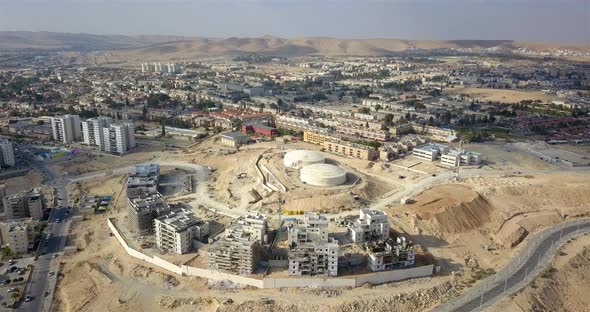
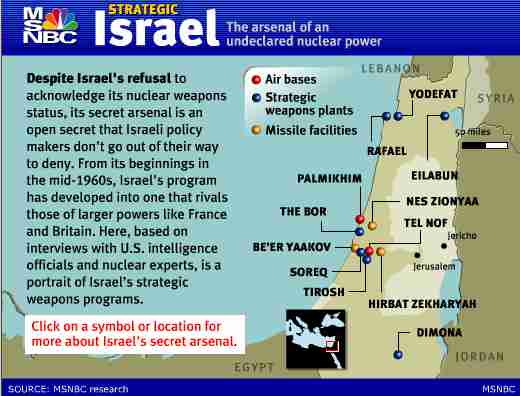
The city of Dimona has moved to the center of the escalating confrontation between Iran and Israel, following reports of an Iranian strike targeting its vicinity on 21st March.
Located deep in the Negev desert, Dimona is widely regarded as one of the most sensitive nodes in Israeli strategic infrastructure, largely due to its association with the country’s nuclear programme. Established in 1955, the city has since evolved into a key military and strategic site.
Researchers note that the area surrounding Dimona was historically inhabited by tens of thousands of Palestinian Bedouin Arabs prior to the 1948 Nakba. According to political analyst Muhammad Mustafa Shahin, the Negev region was home to between 90,000 and 95,000 Palestinians from tribes including the Tayyah, Azazmeh, and Jabarat, who relied on agriculture and herding.
Shahin highlights the geological significance of the region, noting that the Negev contains phosphate deposits rich in uranium in areas such as Aron, Zein, and Arad, alongside industrial facilities like the Rotem Amfert plants. These resources, he argues, contributed to the foundations of Israel’s nuclear development.
At the heart of Dimona’s strategic importance is the Negev Nuclear Research Center, commonly referred to as the Dimona reactor. Constructed with French assistance in the late 1950s and becoming operational in the early 1960s, the facility is widely believed to have played a central role in producing plutonium for nuclear weapons.
Shahin describes the reactor as part of what is known as Israel’s “Samson Option” — a doctrine of ultimate deterrence — which continues to fuel regional tensions, particularly in light of Israel’s refusal to sign the Nuclear Non-Proliferation Treaty (NPT).
The reported strike near Dimona marks a significant moment in the current escalation, drawing renewed attention to the risks surrounding nuclear-related infrastructure in an increasingly volatile regional conflict.
Netanyahu woke up on Iran war day 31 with a 3-front war he cannot win
By Walt Zlotow, Walt Zlotow, West Suburban Peace Coalition Glen Ellyn IL, 31 March 2026, https://theaimn.net/netanyahu-woke-up-on-iran-war-day-31-with-a-3-front-war-he-cannot-win/
Tho scrubbed from mainstream news, Trump attacked Iran February 28 because Israeli Prime Minister Benjamin Netanyahu pleaded, begged, demanded he do so. Trump’s top diplomat, Marco Rubio, revealed this when he stupidly admitted Trump knew Israel would attack Iran and had to preemptively attack as well to avoid Iran retaliation. What Rubio didn’t admit is that the Israeli attack was fully supported by the US since Israel could not attack without total US support.
Trump’s and Netanyahu’s unprovoked war of choice had one strategy. Kill Iranian leader the Ayatollah Ali Khamenei and watch the Iranian people depose their government and capitulate within 3 days.
That failed spectacularly as the Iranian people responded like Americans after Pearl Harbor. Iran’s government did likewise, with relentless bombing of Israel, 13 US bases in the Gulf States and closing the Strait of Hormuz.
If this was all that unfolded it would still represent a catastrophic loss for the Trump/Netanyahu war criminal tag team
But for Netanyahu it gets worse. He sent his army north into Lebanon to destroy Hezbollah. That war is now going south as Hezbollah just destroyed 20 Israeli tanks in one day. Hezbollah missiles are raining down on northern Israel driving tens of thousands of Israelis from home.
It gets worse. The Houthis who control Yemen just entered the war on Iran’s side by launching 2 strikes into Israel Saturday. Houthi spokesman Yahya Saree declared Yemen bombed Israel “in support of the Islamic Republic of Iran and the resistance fronts in Lebanon, Iraq, and Palestine, and in view of the continued military escalation, the targeting of infrastructure, and the perpetration of crimes and massacres against our brothers in Lebanon, Iran, Iraq, and Palestine.”
In addition, the Houthis may reimpose the blockade on Israeli-linked shipping through the Bab el-Mandeb Strait, which connects the Gulf of Aden and the Red Sea. If so, the Bab el-Mandeh Strait will join the Strait of Hormuz in expanding economic disaster worldwide.
Worse yet. Shi’ite militias in Iraq have joined the war and will be targeting US military assets in Iraq that the US has kept there for 23 years.
When Benjamin Netanyahu goes to sleep tonight, he won’t need to count sheep to fall asleep. He just needs to count neighboring countries joining Iran’s defense against the most self-destructive criminal war this century.
Why is Iran being singled out while others escape scrutiny? : Erase nuclear apartheid

Israel maintains a long-standing policy of nuclear ambiguity. It neither confirms nor denies its arsenal, avoids international inspections, and remains outside the NPT altogether. Despite this, it faces no comparable sanctions regime, no sustained diplomatic isolation, and no credible threat of enforced disarmament.
March 30, 2026, by Ranjan Solomon, https://www.middleeastmonitor.com/20260330-why-is-iran-being-singled-out-while-others-escape-scrutiny-erase-nuclear-apartheid/
“The world cannot preach non-proliferation while practising selective permission. That is not law – it is hierarchy.”
The global discourse on nuclear weapons has drifted far from its stated goal of disarmament. What remains today is not a principled framework for peace, but a deeply unequal system of control – one that determines who may possess the most destructive weapons ever created, and who must remain permanently under suspicion.
At the centre of this unequal order stands Iran: scrutinized, sanctioned, and threatened, not for what it has done, but for what it might one day choose to do. This is not non-proliferation. This is nuclear apartheid.
The Nuclear Non-Proliferation Treaty, which entered into force in 1970, was premised on a fundamental bargain. Non-nuclear states ag
At the same time, states outside the NPT framework – such as India and Pakistan—have developed and maintained nuclear weapons with limited global penalty. Most strikingly, Israel, widely believed to possess a sophisticated and undeclared nuclear arsenal, has never signed the NPT and remains entirely outside its inspection regime.
The result is unmistakable: a two-tier system – one for the powerful, and one for the rest.reed to forgo nuclear weapons in exchange for access to peaceful nuclear technology and a binding commitment by nuclear-armed states to pursue disarmament under Article VI. More than fifty years later, that promise stands betrayed.
The five recognized nuclear powers – United States, Russia, China, France, and United Kingdom – have not only failed to disarm, but have actively modernised their arsenals. Vast resources continue to be poured into enhancing nuclear capabilities, refining delivery systems, and ensuring the long-term viability of weapons that can destroy humanity many times over.
To understand why Iran is singled out, one must step beyond present-day accusations and examine history, law, and geopolitical power.
Iran’s nuclear programme did not begin in defiance. It began with encouragement from the United States under the “Atoms for Peace” initiative in the 1950s. At that time, Iran was a strategic ally, and its nuclear ambitions were supported rather than feared.
What changed was not technology – but politics.
The 1979 Revolution transformed Iran from a Western-aligned monarchy into an independent republic asserting sovereignty over its political and economic choices. From that moment onward, its nuclear programme was reframed—from legitimate development to potential threat.
Yet Iran remains a signatory to the NPT. It has accepted inspections and consistently maintained that its nuclear programme is for peaceful purposes, even invoking religious prohibitions against nuclear weapons.
Contrast this with Israel.
Israel maintains a long-standing policy of nuclear ambiguity. It neither confirms nor denies its arsenal, avoids international inspections, and remains outside the NPT altogether. Despite this, it faces no comparable sanctions regime, no sustained diplomatic isolation, and no credible threat of enforced disarmament.
This disparity is not incidental. It reflects geopolitical alignment.
Similarly, nuclear-armed states—both within and outside the NPT—continue to expand and refine their arsenals without facing existential scrutiny. The international system tolerates nuclear weapons in the hands of allies while criminalizing their pursuit by adversaries.
Dimona’s Shadow: How Israel’s Nuclear Monopoly Warps Middle East Security
Iran is not singled out because it is uniquely dangerous. It is singled out because it is politically inconvenient.
The dominant justification for nuclear weapons remains deterrence—the idea that possession prevents aggression. Yet deterrence is not a neutral doctrine. It is a privilege reserved for those already in possession of nuclear weapons.
For states like Iran, surrounded by nuclear-armed powers and subject to repeated threats of military action, the logic of deterrence becomes difficult to ignore. The existence of nuclear arsenals elsewhere creates the very conditions under which others feel compelled to pursue them.
This is the central contradiction of the non-proliferation regime: it seeks to prevent proliferation without addressing the incentives that drive it.
So long as nuclear weapons are seen as guarantors of security for some, they will remain objects of aspiration for others.
Under Article X of the NPT, any state has the sovereign right to withdraw if it determines that extraordinary events jeopardize its supreme national interests. This provision is not exceptional – it is foundational.
If Iran were to exercise this right, it would not be acting outside international law. It would be exercising a legal option embedded within the treaty itself.
The real question, then, is not legality – it is legitimacy.
Why should a state remain bound by a treaty that is applied selectively? Why should obligations be enforced unevenly while privileges remain protected? A legal framework that lacks reciprocity cannot command enduring compliance.
The moral argument against nuclear weapons is not abstract – it is rooted in history. The Atomic bombings of Hiroshima and Nagasaki, carried out by the United States, demonstrated the catastrophic humanitarian consequences of nuclear warfare. Entire cities were obliterated. Generations suffered from radiation, illness, and trauma.
These events should have marked the beginning of the end for nuclear weapons.
Instead, they marked the beginning of their normalization.
In response to this enduring threat, the international community has moved – however unevenly – toward prohibition. The Treaty on the Prohibition of nuclear weapons, adopted in 2017, represents a clear legal and moral rejection of nuclear weapons, declaring them incompatible with international humanitarian law. Yet none of the nuclear-armed states have joined it.
Once again, the pattern is unmistakable: law for some, exemption for others.
The path forward cannot be built on coercion or selective enforcement. It must be grounded in universality. A credible non-proliferation regime requires that all states—without exception – commit to disarmament. This includes the United States, Russia, China, France, the United Kingdom, as well as India, Pakistan, and Israel.
The principle must be simple and uncompromising: no nuclear weapons anywhere, no exceptions, no hierarchies. Anything less is not non-proliferation – it is discrimination.
Talks without balance: Why Tehran and Trump remain locked in escalation
But disarmament cannot remain a rhetorical aspiration. It demands verifiable timelines, binding commitments, and enforcement mechanisms that apply equally to all states. Without such measures, treaties risk becoming instruments of pressure rather than pathways to peace. The authority of international law depends not only on what it proclaims, but on how consistently it is applied.
The current nuclear order is unsustainable because it is fundamentally unjust. It divides the world into those permitted to wield ultimate violence and those permanently denied that power under threat of punishment.
Iran’s case lays bare this contradiction with clarity. Whether one agrees with Iran’s policies or not, the principle remains clear: international law cannot survive selective application. A system that enforces restraint on some while excusing excess in others undermines its own legitimacy.
If the world is serious about peace, it must move beyond power and toward principle—beyond dominance and toward equality. Not a peace imposed by deterrence, but a peace secured by justice. Not a stability rooted in fear, but one grounded in mutual restraint and shared accountability.
Until then, the truth will remain stark and unavoidable:
There can be no peace with nuclear weapons. And there can be no justice with nuclear apartheid
No Three Mile Island in Suffolk!
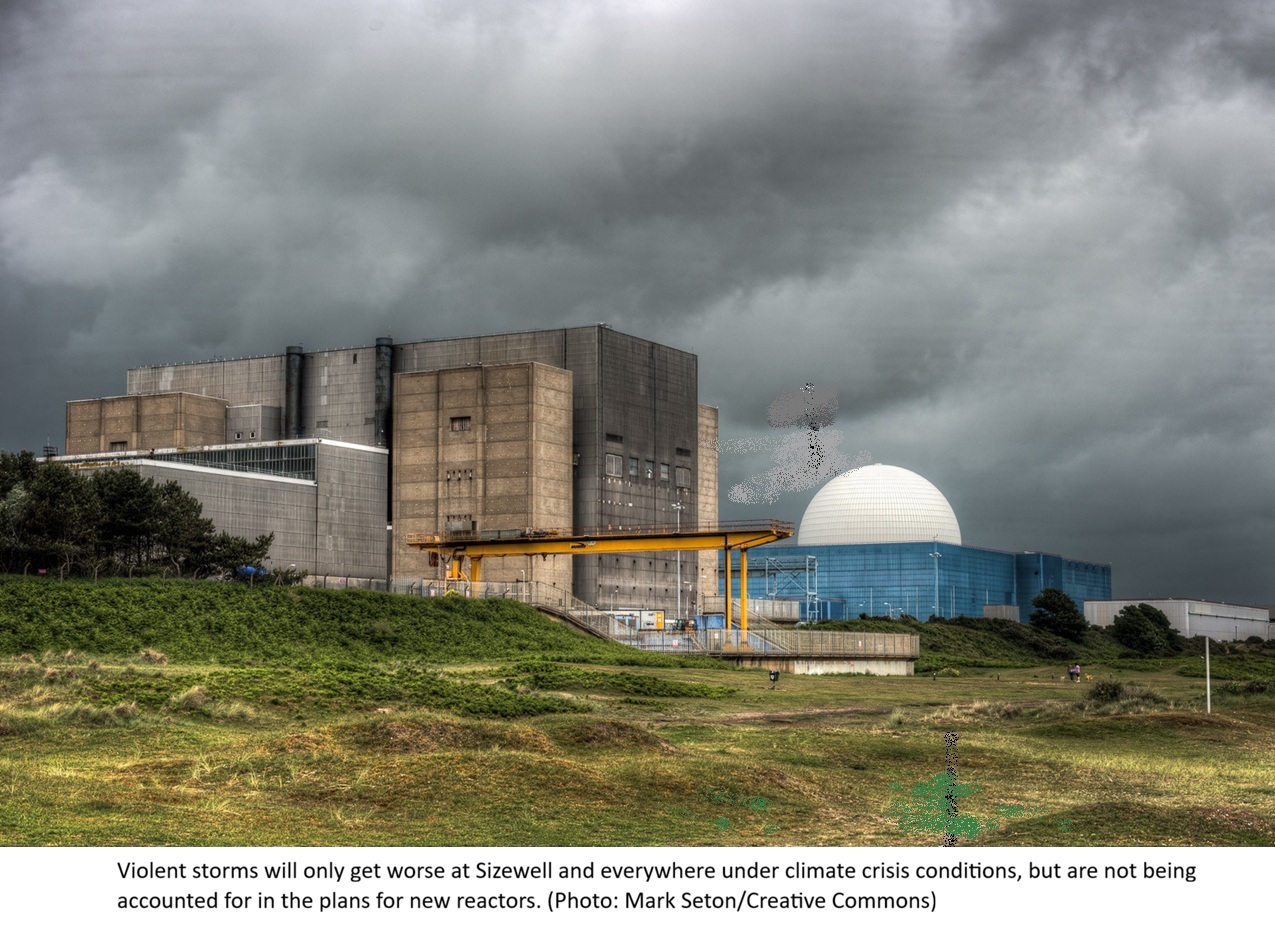
A new nuclear review will ignore the obvious perils of new reactors on a UK beach, warns Together Against Sizewell C
The following is a statement from Together Against Sizewell C (TASC) in response to the “Fingleton Nuclear Review” adopted by the UK government, entirely influenced by the nuclear power industry and its lobbyists in a frantic effort to copycat the US model of accelerating approval of dangerous, expensive and entirely unnecessary nuclear power projects.
Together Against Sizewell C (TASC) is appalled that the UK government plans to adopt all 47 recommendations of the ‘Fingleton Nuclear Review’. This review is based on a false premise that nuclear is ‘clean energy’ [see Note 1] and ‘needed to power Britain’s future’[see Note 2]. Neither of these assertions stand up to public scrutiny, the review being driven by the nuclear industry, big business and lobbyists for commercial and ideological reasons. Claims that nuclear is ‘homegrown power’ conveniently overlook the fact that the UK do not have any indigenous supplies of uranium needed to fuel the reactors, that market currently being dominated by Russia.
Those trying to convey a false impression of nuclear as clean are merely gaslighting the British public. While nuclear may be able to claim relatively low carbon production during the operational period, the long deployment times for new gigawatt nuclear reactors such as Hinkley and Sizewell C means a lot of additional carbon is produced from burning more fossil fuels while we must wait for new nuclear to become operational when compared with far cheaper, quicker to deploy renewables and energy storage.
The review makes unsubstantiated claims that nature will benefit from adopting these recommendations but in TASC’s view this is an irresponsible assumption for this government to accept, especially as environmental experts were excluded from the review team. The UK is already one of the most nature depleted nations on the planet – we cannot afford to degrade our environmental protections any further.
In TASC’s opinion, Sizewell C demonstrates that regulations need to be strengthened, not weakened – Sizewell C is sited in a National Landscape, surrounded by designated wildlife sites, in the UK’s most drought-prone region and on one of Europe’s fastest eroding coastlines. Despite this, it received DCO approval from the Secretary of State against the recommendation of the 5 independent planning experts.
£40 billion Sizewell C is proceeding at pace, even though the project has still not secured a guaranteed sustainable supply of potable water essential for its 60 years of operation. Nor has it demonstrated that the site can be kept safe for its full lifetime in a credible maximum sea level rise scenario – after DCO approval TASC discovered that Sizewell C have committed to install two huge additional sea defences in an extreme climate change scenario, the need for which EDF knew about since 2015 yet chose not to include them in their DCO application, meaning the additional sea defences have had no public scrutiny or impact assessment on the receiving environment.
TASC fear for the safety of our descendants and the precious, rapidly eroding Suffolk coastline because future generations have been left to rely on the developer’s unassessed sea defences to protect Sizewell C and its 3,900 tonnes of spent nuclear fuel from flooding in an extreme sea level rise scenario over the next 150 years or longer if a geological disposal facility is not available [see Note 3]. Hardly responsible ancestry from this government.
Notes:-
1. The myth that nuclear is ‘clean energy’ In TASC’s view, the reasons why nuclear power can’t be legitimately labelled as ‘clean’ include:-
a) The pollution generated from the mining, milling, fabrication and enrichment to produce the nuclear fuel which mainly affects indigenous peoples in producer countries,
b) The pollutants discharged to air and water from an operational nuclear power station, including the thousands of tonnes of dead fish, heavy metals, chlorine and the cocktail of other pollutants that will be discharged to the sea annually from the plant’s cooling water system, and
c) The legacy of highly radioactive spent fuel and other radioactive waste from nuclear power plants currently has no universally agreed management programme, nor any waste repository and which will be an environmental, as well as financial, burden for future generations for thousands of years – see N Scarr Report, ‘Plutonium—the complex and ‘forever’ radiotoxic element of nuclear waste. How exactly should we manage its containment?’
2. Various reports have demonstrated that the UK can fulfil its low carbon energy requirements without new nuclear, and at lower cost than new nuclear e.g. the January 2023 report by LUT University, Finland, ‘100% Renewable Energy for the United Kingdom’ and the 2022 UCL report ‘The role of new nuclear power in the UK’s net-zero emissions energy system’. Regarding national security, events in Ukraine have demonstrated that nuclear plants and their associated infrastructure are both a target and a weapon (see iNews article, ‘Attacks on nuclear plants are being normalised – and the consequences could be disastrous’ and the recent direct drone attacks on Zaporizhzhya NPP which have led to fires at the plant) so are a threat to national scrutiny. Scattering SMRs throughout the country will only increase the risk of a malicious attack (or accident).
3. TASC press release 12.01.26, ‘Escalating Erosion on East Suffolk Coast should be a huge worry for Sizewell C’
Thousands of Iranians Who Live on Kharg Island Face Possibility of US Invasion
US media talk about the island’s civilians as if they are a military problem, if they talk about them at all.
By Séamus Malekafzali , Truthout, March 30, 2026, https://truthout.org/articles/thousands-of-iranians-who-live-on-kharg-island-face-possibility-of-us-invasion/?utm_source=Truthout&utm_campaign=3106eddc85-EMAIL_CAMPAIGN_2026_03_30_09_20&utm_medium=email&utm_term=0_bbb541a1db-3106eddc85-650192793
Over the past month of the U.S.-Israeli war against Iran, Donald’s Trump mission has creeped from vowing that he’s “not putting troops anywhere” to backing himself into an escalation that makes the chance of ground invasion far more likely. As many as 17,000 American troops could be gathering in preparation for an operation to land on, and potentially even seize, any number of Iranian islands in the embattled Persian Gulf and the Strait of Hormuz.
Kharg Island, deep in the Gulf and near the coasts of Kuwait and Iraq, is the isle the Trump administration has most clearly placed in its crosshairs. Media reports have suggested the administration is also considering other special operations, such as a complex raid to seize enriched uranium from Isfahan. But taking Kharg is now being touted by some of the same hawks who pushed for the initial U.S. military action in Iran as a new central goal of the war, an opportunity to acquire significant leverage that the United States can and must take. “We did Iwo Jima,” Sen. Lindsey Graham said to Fox News on March 22, “We can do this.”
Other islands closer to the strait, like Larak, an island off Iran’s southern coast, have been more critical to Iran’s ongoing blockade of oil tankers. But 80 to 90 percent of Iran’s own crude oil exports — which have increased since the war began — run through Kharg, making the island’s oil terminal deeply important to the functioning of Iran’s economy, in wartime or otherwise. Over the past few weeks, the American government, ever-obsessed with seizing the oil of other nations as recompense, has attempted to make Kharg into its plaything. On March 13, the U.S. conducted airstrikes on the island and sent a volley of rockets, allegedly fired from Emirati territory, with CENTCOM claiming to have hit “90+ military sites” that destroyed “naval mine storage facilities” and “missile storage bunkers,” among other purported targets.
After the strikes, Trump immediately bragged that Iran now had “NO ability to defend anything we want to attack” and later said that “we may hit it a few more times just for fun.” While he made a point of claiming to spare the oil infrastructure on the island, wary of price shocks caused by Israeli attacks on oil refineries near Tehran days earlier, Trump otherwise spoke of the island as if it had been “totally demolished.” The White House social media accounts posted his message announcing the attacks with the headline: “Kharg Island Obliterated.”
This “obliteration” would have come as news to the more than 8,000 permanent residents of the island, to say nothing of the thousands more who have come to Kharg to work in the oil industry — residents and workers who have been removed from the American government’s discussion of a potential invasion, as well as American media’s reporting about the impacts of such an invasion.
Locals on the island told BBC Persian that the targets the U.S. bombed hit deep inside the city of Kharg, where most of the population resides, that “the island doesn’t really have a military base,” and that following the bombing of Kharg Airport, which runs domestic flights to cities on the Iranian mainland, there was now no way to evacuate.
The White House’s cavalier attitude towards an invasion of Iranian territory has been notable, with Trump mentioning on March 29 that “maybe we take Kharg Island, maybe we don’t” because his “favorite thing is to take the oil in Iran.” But Western media coverage has arguably done just as much to create the impression that Kharg is solely a strategic asset to be conquered, with the welfare of its native inhabitants a footnote, if mentioned at all.
Mainstream outlets like Reuters and The Washington Post have backgrounded the civilian population in favor of dry, military-focused analysis, with the Post blithely printing the words of an analyst from the pro-Israel Washington Institute that it would be “safer” for U.S. forces to simply surround the island with mines and hold it hostage. Coverage on CBS and Fox News has perpetuated outright falsehoods about the island’s population; CBS brought on an analyst from the conservative Hudson Institute to say that Kharg could easily be isolated because it had “no civilian population center” and “really is just oil infrastructure,” while Fox’s Jesse Watters featured Medal of Honor recipient David Bellavia, who told viewers that “civilians are not allowed to even go to Kharg Island.”
Outlets that have mentioned Kharg’s civilian population have often done so in passing, sometimes referring to the island’s inhabitants as a mere additional risk that U.S. paratroopers and marines will have to account for. In a Bloomberg editorial, James Stavridis, former NATO Supreme Allied Commander, writes about the thousands on the island as problems to be solved, people “who would need to be contained in their homes or evacuated; the Iranians may have planted sophisticated booby traps.”
The narrative from war hawks pushing for an invasion has suggested such an operation could be of a limited nature, more along the lines of a raid and less like the long-term occupation of Iraq, a “quagmire” that the Trump administration has insisted the war with Iran is nothing like. But while Fox Business may bring on a former Navy SEAL to talk about how oil seized from Kharg Island could be passed “back to the Iranian people once they take over this regime,” there is little indication that Trump would want to quickly exit Kharg. The president said outright on Sunday that invading it would “mean we had to be there for a while.” There’s even less indication that the Trump administration cares about giving power to the Iranian people or preserving their livelihoods or national economy.
An invasion of Kharg would place thousands of Iranians — perhaps hundreds of thousands if the U.S. military also chose to invade other islands like Larak, Kish, Abu Musa, Hormuz, or Qeshm — under direct military occupation in a form for an indefinite period with no immediate plans for exit or planned transition, a military operation with few parallels in the War on Terror era.
As U.S. threats continue to build, Iran has reportedly brought further military reinforcements to Kharg over the past several days. Life on the island continues. Iran’s Speaker of Parliament Mohammad Bagher Ghalibaf has warned of “continuous and relentless attacks” on “vital infrastructure” in the region should a U.S. ground invasion commence. Esmail Hosseini, spokesman for the parliament’s Energy Commission, was more blunt on a parliamentary visit to the island, saying that Kharg will become “the graveyard of the aggressors.” One resident of the island told a reporter from Mehr News, “The enemy thinks it can break the resistance on Kharg Island with a few attacks, but they are blind, and we will not leave the field for them.” The White House, at least for now, does not appear to be heeding these warnings.
The American narrative of having supposedly learned lessons after endless years of war in Iraq and Afghanistan is finally being challenged by brutal reality. A desire to wage war without endangering American lives, while exacting unlimited damage and chaos against any state that has the means to fight back, means the question of what to do with civilians has become virtually unmentionable. A war can ostensibly be waged for the freedom of the Iranian people in the abstract, this narrative goes, but even their mere existence is not allowed to be a factor in the actual operations of a military, one that now openly prides itself on ignoring “stupid rules of engagement” and maximizing “lethality.” The people of Kharg, and of Iran more broadly, are deemphasized, ignored, erased from discussion, until they suddenly become an immediate and shocking problem, a problem the U.S. simply didn’t anticipate, a problem to now be dealt with by a government that bragged about obliterating the land upon which they exist.
Scotland won’t pursue ‘unproven’ SMRs and ‘experimental’ fusion as focus remains renewables
30 Mar, 2026 By Thomas Johnson, https://www.newcivilengineer.com/latest/scotland-wont-pursue-unproven-smrs-and-experimental-fusion-as-focus-remains-renewables-30-03-2026/
Scotland plans to focus on investing in renewables as nuclear fusion and small modular reactors (SMRs) remain “unproven technology”, a Scottish Minister has said.
The Scottish National Party (SNP), the ruling party in Scotland, has banned the development of any new nuclear in the country – and seems set to maintain this even as promising new technologies emerge.
Speaking in Scottish Parliament last week, MSP for Aberdeenshire East and cabinet secretary for climate action and energy Gillian Martin outlined how even with the buzz around fusion at the moment, the Scottish government will not be pursuing new opportunities within the nuclear sector.
“The Scottish Government recognises the increasing interest in fusion energy. However, fusion remains experimental, with no commercial deployment and uncertainties around cost, safety and timescales,” she said.
“The UK Government’s prototype fusion plant is not expected to be operational until 2040, but the climate emergency demands proven, deployable solutions now.”
Martin explained how this policy extends to the deployment of SMRs.
“We do not plan to build small nuclear reactors, which are unproven technology that has not been deployed,” she said.
“The Scottish Government has a policy against new nuclear fission.”
The topic arose in Scottish Parliament after MSP for South Scotland Martin Whitfield quizzed Martin regarding any impact on Scottish energy policy could expect in light of plans Torness nuclear power station will close by 2030.
Torness, the East Lothian‑based nuclear power plant operated by EDF, is one of the UK’s four remaining advanced gas‑cooled reactor (AGR) stations. It was due to close in 2028 but EDF announced in 2024 it would be extending its life for a further two years.
Doomsday Double Standard: U.S. Silent on Israel, Loud on Rivals
March 27, 2026 , https://scheerpost.com/2026/03/27/doomsday-double-standard-u-s-silent-on-israel-loud-on-rivals/
Silence in Congress: When Israel’s Nuclear Arsenal Becomes an Unaskable Question
At a moment when nuclear facilities are being openly discussed as military targets in the escalating confrontation between Joaquin Castro and the Trump administration’s Middle East war posture, one exchange in Congress exposed just how rigid Washington’s political boundaries remain when the subject turns to Israel’s undeclared atomic arsenal.
During questioning before Congress, Castro asked Thomas DiNanno a direct question: does Israel possess nuclear capability?
The answer never came.
DiNanno, the senior U.S. official responsible for arms control and international security policy, declined to acknowledge publicly what has long been treated internationally as established fact: Israel is widely understood to possess a significant nuclear weapons stockpile, developed around the Negev Nuclear Research Center at Dimona.
Instead, DiNanno replied that he could not comment and suggested the question be directed to the Israeli government.
That answer was not merely evasive—it underscored one of the most enduring contradictions in U.S. foreign policy: Washington routinely frames nuclear proliferation in adversarial states as an existential threat while maintaining formal silence on Israel’s own strategic arsenal.
A Nuclear Question Washington Refuses to Touch
Castro’s line of questioning was not theoretical. It came amid growing alarm over attacks near nuclear-related infrastructure in both Israel and Iran, where military escalation has raised fears of accidental radioactive release, regional fallout, or broader strategic miscalculation.
His concern was simple: if military strikes approach nuclear sites, what are the risks to civilians, to the region, and potentially to Americans?
Yet even in that context, the administration’s top arms control official would not publicly acknowledge the existence of Israel’s deterrent capacity.
That silence reflects decades of diplomatic ambiguity. Israel has never formally admitted possessing nuclear weapons, despite extensive international assessments estimating an arsenal ranging from dozens to hundreds of warheads, supported by air, sea, and missile delivery systems.
The policy is often described as “nuclear opacity”—a deliberate refusal to confirm what nearly every major intelligence service already assumes.
Strategic Ambiguity, Political Obedience
The deeper issue exposed in the hearing is not whether Israel has nuclear weapons. Few serious analysts dispute that point.
The issue is why U.S. officials remain unwilling—even in congressional testimony—to speak plainly about it.
For critics of Washington’s Middle East policy, the answer lies in the political architecture surrounding the U.S.-Israel relationship: long-standing strategic alignment, domestic lobbying pressure, donor influence, and bipartisan reluctance to challenge core Israeli security narratives.
That has produced a diplomatic culture where nuclear transparency is demanded from adversaries but treated as politically untouchable when applied to allies.
The Contradiction at the Center of U.S. Policy
The United States has justified sanctions, covert operations, military threats, and diplomatic pressure for decades over Iran’s nuclear ambitions, even while its own officials avoid discussing the only actual nuclear weapons state in the region outside formal treaty structures.
For lawmakers like Castro, that contradiction becomes impossible to ignore during wartime.
As military escalation widens and nuclear-adjacent facilities enter targeting calculations, the refusal even to acknowledge known realities begins to look less like strategy and more like institutional denial.
The Meaning of the “Special Relationship”
The hearing ultimately captured something larger than one unanswered question.
It revealed how, even in matters involving potential nuclear risk, congressional oversight can hit an invisible boundary when Israel is involved.
As regional conflict carries consequences far beyond the Middle East, silence itself becomes policy—and policy becomes dangerous.
At the same time, earlier last month, this same official appeared perfectly willing to speak with certainty about other nations’ nuclear activity—declaring that “the U.S. government is aware that China has conducted nuclear explosive tests, including preparing for tests with designated yields in the hundreds of tons.” Yet when the subject turned to Israel’s nuclear program, he suddenly could not open his mouth.
That contradiction says everything.
Washington can publicly accuse rivals, speculate about adversaries, and issue warnings across the globe, but when it comes to Israel’s long-known nuclear arsenal, silence becomes policy.
Historically, however uncomfortable it may be to admit, countries that developed nuclear deterrence—such as North Korea and Pakistan—have in many cases insulated themselves from the kind of sustained military pressure, regime threats, and strategic harassment that non-nuclear states continue to face. That reality helps explain why nuclear capability remains so central to global power calculations, even as it pushes humanity closer to catastrophe.
And catastrophe no longer feels abstract.
As of January 2026, the Bulletin of the Atomic Scientists set the Doomsday Clock at 85 seconds to midnight—the closest it has ever been to symbolic global disaster. The warning reflects converging threats: nuclear confrontation, climate breakdown, and rapidly destabilizing technologies including artificial intelligence.
Nuclear winter is no longer the language of distant Cold War nightmares. It is again being discussed in real strategic terms, while governments continue to speak selectively about who may possess the weapons capable of ending civilization.
Good luck, everyone.
Operation Epic Flurry

“The problem,” the analysis concludes, “is that Trump doesn’t know what his objectives in this war are. Or, worse still, he has proclaimed many objectives, some of them contradictory, because he has no policies and no strategies.”
And this, delivered with the precision of a man who has spent years watching: “He’s a vacancy in the middle of his own world, and yet a vacancy that is fully in charge. The situation could not be more dire.”
28 March 2026 David Tyler, Australian Independent Media
The announcement comes, as always, with impeccable timing. Ten minutes after the S&P 500 closes on its worst single trading day since the war began, Donald Trump posts on Truth Social that he is extending his pause on “energy plant destruction” by ten more days, until Monday April 6 at 8pm Eastern Time. “As per Iranian Government request,” he writes.
Another outright lie. Talks were going “very well.” The markets sighed. Oil dipped. Then snapped back. Brent crude settled at $107 a barrel.
This is the operating system. Not diplomacy. Not strategy. Useful idiocy. A witless grifter watching the markets, the courts and the clock, adjusting deadlines, managing increasingly bizarre appearances, while the ships keep moving.
The boots are already in the water.
The Anatomy of a Fake Pause
This is the second extension Dong Wang, (King of Knowledge or know-all) as they call Trump in China, has announced since he issued his original 48-hour ultimatum demanding Iran reopen the Strait of Hormuz or face the destruction of its power grid. No-one knows how to deliver an ultimatum like Trump.
The first pause came on Monday. The second came Thursday. Both arrived at market-sensitive moments, both were framed as responses to Iranian requests, and both were flatly denied by Iran. Iran’s Foreign Minister Abbas Araghchi scathingly describes the exchange of messages through intermediaries as not constituting “negotiations.”
Iran’s Parliament Speaker Mohammad Bagher Ghalibaf calls the whole show “fake news used to manipulate the financial and oil markets and escape the quagmire in which the US and Israel are trapped.”
He is not wrong. The backchannel activity is real enough: Pakistan, Egypt and Turkey have been relaying messages between Washington and Tehran, and there is genuine mediating pressure from Islamabad to convene a face-to-face meeting. But the gap between what is actually happening and what Trump is describing to the American public is the gap between a fax or Telegram arriving at a foreign ministry and a signed ceasefire.
Iran rejects Trump’s 15-point plan outright and tables its own five conditions, including war reparations and formal recognition of Iranian sovereignty over the Strait of Hormuz. That is not a negotiating position that converges with Washington’s in ten days. Not in twenty. In fact it’s a dark parody of Trump’s style of negotiation which is to issue an ultimatum. Iran is signalling its contempt.
So what is the April 6 deadline actually for? The mediators themselves have identified the core problem: the Iranians “suspect that the US is tricking them again.” True. The pause is not buying time for diplomacy. It is buying time for deployment.
What Is Actually Moving
Two Marine Expeditionary Units are converging on the Persian Gulf from opposite ends of the Pacific………………
Additionally, the Pentagon has ordered roughly two thousand soldiers from the 82nd Airborne Division to move from their base in North Carolina to the Middle East. ……………..
On Wednesday, Iran’s Parliament Speaker Ghalibaf posts a warning that deserves attention precisely because of what it does not say.
“Based on some intelligence reports,” he wrote, “Iran’s enemies are preparing to occupy one of the Iranian islands with support from one of the regional states. Our forces are monitoring all enemy movements, and if they take any step, all the vital infrastructure of that regional state will be targeted with relentless, unceasing attacks.”
He does not name the island. He does not name the regional collaborator. A warning that specific about an operation, that vague about the target, is not a general statement of defiance. It is the signature of intelligence tracking something imminent………………………………………………………………………………………………………………
The Ignoramus in Chief
Into this unfolding catastrophe, the elephant in the room is the question of who is actually making the decisions and on what basis.
………………………………………………………..Two minutes of edited highlights? Per day. This is the informational basis on which “Ole Bone-Spurs”, a former draft evader who shirked national service five times, but who is now the de-facto commander of the world’s largest military, is conducting a war.
Panic stations? Trump’s got his own allies, in a lather. The worry, as NBC delicately puts it, is that Trump “may not be receiving, or understanding, the complete picture of the war.” Trump’s former national security adviser, John Bolton, is on record to the effect that Trump “hardly ever reads briefing notes” and when he does “cannot make sense of them,” and that he had “not thought through the implications or laid the groundwork” for a longer conflict with Iran.
Trump’s biographer Michael Wolff, who has known him as well as any journalist alive, goes further in a recent Daily Beast podcast.
“It’s not just unpresidential, it’s incoherent. It’s the language of an ignoramus.” He added: “He doesn’t know what he’s talking about. It just comes out of his mouth, out of self-justification, need, fear, aggression.”
…………………………………………….Slate’s military analyst identifies the strategic void at the centre of the operation with Clausewitzian clarity: Trump’s delusion stems from a fundamental misunderstanding that war is entirely about destroying targets. CENTCOM has struck more than five thousand targets.
But wars are fought for political objectives, and Trump has proclaimed so many contradictory objectives, shifting from regime change to nuclear disarmament to resource acquisition to Hormuz control with no discernible logic, that his own advisers do not know what they are working toward.
“The problem,” the analysis concludes, “is that Trump doesn’t know what his objectives in this war are. Or, worse still, he has proclaimed many objectives, some of them contradictory, because he has no policies and no strategies.”
A vacancy in the middle of his own world, fully in charge. Making it up as he goes. What could possibly go wrong?
Murdoch’s Man at the Pentagon
Nature abhors a vacuum. The vacancy does not stand alone. It is surrounded by people who have their own reasons for filling it.
Defence Secretary Pete Hegseth is an ex-Fox News jock who got given the largest military budget in history. A former Guantanamo guard with no command experience beyond a National Guard deployment, Hegseth spent the years between his military service and his cabinet appointment performing patriotism on Murdoch’s flagship cable network, aka Faux News, where hawk-talk is part of the job profile and any hint of restraint is seen as weakness, wokeness or treachery.
Hegseth arrived at the Pentagon with dreams that his TV-show persona had done nothing to temper. At a press conference this month he declared that US forces would show “no quarter, no mercy for our enemies.”
Ryan Goodman, professor of law and co-editor of national security journal Just Security, tells Axios this would constitute a war crime under the Pentagon’s own Law of War Manual. Hegseth also used the occasion to attack the press for failing to be “an actual patriotic press,” citing the headline “Mideast war intensifies” as proof of disloyalty.
This is the man with the power to unleash Armageddon……………………………………………..
Behind Hegseth, behind Trump, the hand that has been pushing this from the beginning.
Bloomberg reported on March 21, citing “people familiar with private conversations”, that those pressing Trump to strike Iran included not only Netanyahu but Rupert Murdoch, the ninety-five-year-old chairman emeritus of News Corp and Fox Corp. Murdoch instructed Trump several times, personally urging the president, he once called a “fucking idiot” to take on Tehran. This was not casual chat. ………………………………………………..
When the bombs started falling on February 28, the New York Post’s front page read “DEATH TO THE DEVIL.” Subsequent editions ran “DON GETS LAST LAUGH” and “NO MERCY.” The Wall Street Journal has since called for ground troops. Fox News has been, in the words of Crikey’s media analyst, the loudest global advocate for the war, running the same cheerleading operation it ran for Iraq in 2003, right down to the retired generals on the panel and the American flag in the corner of the screen.
Even within Murdoch’s own empire, the revulsion has broken through. Former Fox host Megyn Kelly, no dove, is scathing:
“We now learn that Rupert Murdoch was one of the main people goading Trump into this war. Rupert Murdoch, who is ninety-five years old, he’ll be dead soon. And he too is acting as if our troops are expendable cattle.” Republican Congresswoman Anna Paulina Luna used the same phrase, “expendable cattle,” without any prompting from Kelly. Senator Lindsey Graham had just told Fox News Sunday, without embarrassment, that the Marines could take Kharg Island because “we did Iwo Jima.”………………………………………….
The Fracture Nobody Is Talking About
There is one more element that complicates the picture and which has been ignored in the mainstream coverage of the war. Washington and Tel Aviv are no longer fighting the same war.
Even The Carnegie Endowment for International Peace is on to it. Trump appears to favour the Venezuela model: align with a pragmatic insider within the Iranian regime, access the oil and gas resources, declare victory and exit. Netanyahu prefers what Israeli strategists call “mowing the grass”: maximum target destruction, indefinite conflict management, no exit required and no exit planned. These two approaches are not reconcilable. They are direct opposites dressed in the same uniform.
……………………………………Former Israeli ambassador Alon Pinkas tells Al Jazeera that Trump’s pivot toward negotiations, apparently over Netanyahu’s objections, may signal that the US president has finally grasped that Netanyahu “may have duped him on how quick and resounding a victory would be, and how viable regime change is.” Israeli political scientist Ori Goldberg delivers the verdict without the turd polish: “Is it a defeat for Netanyahu? Hell, yes. It’s Trump essentially ditching Israel.”
Netanyahu, facing ICC arrest warrants, corruption charges and a national inquiry into October 7 that he has spent two years postponing, has his own reasons to keep the war going. ……………………………..
The Boots Are Already in the Water
Let us be clear about what we are watching. A president who cannot distinguish between a war briefing and a movie trailer is extending fake diplomatic deadlines while an amphibious task force closes on the Persian Gulf. His Defence Secretary is a television performer who has never commanded anything larger than a National Guard unit and whose understanding of strategic warfare was formed on a Fox News set. Behind both of them, a ninety-five-year-old media magnate with no democratic mandate and a perfect record of warmongering for profit has been personally lobbying the President of the United States to go to war……………………………………………….. https://theaimn.net/operation-epic-flurry/
Israel wants to destroy Iran’s nuclear program. But should it have nuclear weapons itself?
March 25, 2026, Marianne Hanson, Associate Professor of International Relations, The University of Queensland, https://theconversation.com/israel-wants-to-destroy-irans-nuclear-program-but-should-it-have-nuclear-weapons-itself-278801?utm_medium=email&utm_campaign=The%20Weekender%20-%2028%20March%202026&utm_content=The%20Weekender%20-%2028%20March%202026+CID_09f9907cac66b0e5c3e3ca794f0c8c0c&utm_source=campaign_monitor&utm_term=Israel%20wants%20to%20destroy%20Irans%20nuclear%20program%20But%20should%20it%20have%20nuclear%20weapons%20itself
Israel’s avowed goal in the Middle East war is to prevent Iran from acquiring nuclear weapons. Yet, the double standard associated with this is hardly sustainable in the long run.
The worst-kept secret in the world of nuclear politics is that Israel possesses a formidable arsenal of nuclear weapons. It began developing these in the 1950s and reached a fully operational capability by the late 1960s.
Although Israel refuses to confirm or deny this fact, arms control organisations have assessed that the country has some 80–90 nuclear weapons.
In recent days, Iran targeted Israel’s nuclear facility in the southern town of Dimona, injuring more than 100 people. The head of the International Atomic Energy Agency (IAEA) called for restraint to avoid a “nuclear accident”.
A program shrouded in secrecy
There is much evidence to support the existence of Israel’s arsenal.
In 1963, then-Deputy Defence Minister Shimon Peres famously stated Israel would not be the first to “introduce” nuclear weapons to the Middle East. What this actually meant was spelled out a few years later by the Israeli ambassador to the US. For a weapon to be “introduced”, he said, it needed to be tested and publicly declared. Merely possessing them did not constitute introducing them.
Several whistleblower accounts, intelligence reports and satellite imagery confirm the extent of the Israeli program and its capabilities.
More recently, Amichai Eliyahu, a far-right minister in Prime Minister Benjamin Netanyahu’s government, alluded to using nuclear weapons in Gaza – a tacit acknowledgement of Israel’s capabilities. He was later reprimanded by Netanyahu.
And in 2024, Avigdor Lieberman, a former defence and foreign minister, threatened to “use all the means at our disposal” to prevent an Iranian nuclear weapon. He added: “It should be clear at this stage it is not possible to prevent nuclear weapons from Iran by conventional means.”
It is important to remember that Israel not only developed its nuclear weapons in secret – employing subterfuge, misleading claims, and even the suspected theft of bomb-grade nuclear material from the United States – it has also rejected international inspections of its facilities and refused to join the nuclear Non-Proliferation Treaty (NPT). This treaty has been signed by almost every state in the world.
Concerns over Iran’s program
Iran, meanwhile, has never had a nuclear weapon, though its program has been the source of international concern for more than a decade.
In 2015, Iran signed the Joint Comprehensive Plan of Action (also known as the Iran nuclear deal) with the US, Russia, China, France, the United Kingdom and Germany, which imposed restrictions on its nuclear program in return for sanctions relief. This included inspections by IAEA monitors.
However, Trump scuppered the plan in 2018. Since then, Iran has enriched uranium to levels well above those needed for its energy program. And last year, the IAEA said Iran was non-compliant with its nuclear nonproliferation obligations for failing to provide full answers about its program.
But since the current war began, US and international officials have confirmed that Iran was not close to developing a nuclear weapon and did not pose an imminent nuclear threat to the US or Israel.
In short, there is no truth to the claim, made for almost 40 years by Israel, that Iran is “weeks away” from acquiring the bomb. The IAEA made clear two years ago that a nuclear weapon requires “many other things independently from the production of the fissile material”.
Getting close to nuclear threshold status, but stopping short of developing an actual bomb, likely provides a fall-back position for Iran. If Iran were to feel pushed or threatened, it could, in time, accelerate its energy program towards a weapons program. Or it could use this enriched uranium as leverage in negotiations with the US.
Nuclear powers need to show restraint
This brings us back to a major question: can double standards about who can and cannot develop a nuclear weapon be sustained indefinitely?
Israel’s nuclear arsenal has been tacitly accepted by the West, implying there are “right hands” and “wrong hands” for nuclear weapons. But this is a risky and ultimately unsustainable position.
As Australia’s Canberra Commission noted in 1996, as long as any one state has nuclear weapons, other states will want them, too.
This is precisely why many states voted in 2017 to adopt the UN Treaty on the Prohibition of Nuclear Weapons. The treaty’s purpose is to make the possession, threat and use of nuclear weapons illegitimate for all states, not just for some, on the basis of international humanitarian law.
Signed by 99 states so far, the treaty recognises that nuclear weapons promise massive destruction to civilians and combatants alike, and that even a “small” nuclear war will cause catastrophic damage.
At the end of the day, a consistent approach to nuclear weapons is more likely to prevent nuclear proliferation (by Iran or other states) than the current mess, where some states are tacitly permitted to have these weapons (and wage war on others), while other countries are not.
It is possible we are at a tipping point when it comes to nuclear proliferation, with some countries suspected of wanting to develop nuclear weapon capabilities. This includes US allies South Korea and Japan.
Are the nuclear weapons states ultimately willing to accept the UN Treaty on the Prohibition of Nuclear Weapons and disarm in the interest of global peace and security? If they don’t, then the current trajectory of keeping one’s own nuclear weapons and waging war against states that don’t have them will only weaken an already crumbling rules-based international order.
Iran says it never requested US energy strike pause: Escalation proceeding on all fronts.

Tyler Durden, ZeroHedge, 27 Mar 2026, https://www.sott.net/article/505375-Iran-says-it-never-requested-US-energy-strike-pause-Escalation-proceeding-on-all-fronts
Israel goes after Iranian industrial targets
Vital Iranian Steel Plants, Industry Attacked
Israeli media citing military officials on Friday: “The IDF attacked Iran’s two largest steel plants, in Isfahan and Ahvaz. Both plants are vital to Iran’s military industry and are partially owned by the Revolutionary Guards. The strikes on the plants are expected to cause billions in damage to the Iranian economy.”
This could mark a new, expanded phase of the war as Israel goes after key defense industrial targets, which also serve central civilian infrastructure development. The US has still held off on pursuing more attacks on energy sites, but it seems Israel is maintaining a more gloves off approach – opting for total societal destruction, and going after industry. This seems to also be part of efforts to ensure ballistic missile production is degraded.
Reuters: US is certain about having destroyed third of Iran’s missiles, say sources. Another third is believed to be damaged, destroyed or buried.
“One of the sources said the intelligence was similar for Iran’s drone capability, saying there was some degree of certainty about a third having been destroyed,” Reuters writes, noting that all of this contradicts White House claims of Iran having “very few rockets left”
Iran Didn’t Request Trump’s 10-Day Pause: WSJ
Iran has not requested a 10-day pause on strikes on its energy plants, peace talk mediators have been cited in WSJ as saying, and has still not issued formal response to the 15-point US plan delivered via Pakistan. This as the Pentagon is moving thousands of Marines and Army Airborne soldiers into the region.
The Wall Street Journal points out that “The U.S. and Israel are pounding Iran’s missile-launching sites, hitting some over and over across almost a month of war. But Tehran’s missiles keep flying.”
One pundit questions, are we ‘winning’ yet?… writing the following brief assessment of where things stand: IRGC Joint Staff headquarters under US-Israeli strikes. Iran naming UAE targets as Abu Dhabi enters the war. IDF Chief of Staff warning publicly the Israeli military could “collapse” from manpower shortages. Iran claiming over one million fighters mobilised with IRGC lowering the age for support roles to 12. Pentagon considering 10,000 additional ground troops within striking distance of Kharg. Trump pausing energy-plant destruction for 10 days until April 6. Iran denying it requested the pause. Houthis warning they will enter the war. Lavrov saying the quiet part: “Iran did not violate any of its international obligations.” Russia’s oil revenue doubling to $24 billion this month.
Oil prices continued to spike this morning, with international Brent crude oil once again surpassing $110 per barrel. For the day so far that’s up another 3%.
“After several glimmers of hope, fueled by comments from President Trump, which were quickly dashed, the market is becoming more demanding in terms of rhetoric,” said Amélie Derambure, senior multi-asset portfolio manager at Amundi. “The TACO trade is more difficult to do because a return to square one is not possible from here.”
Gulf Flashpoint Widens: Iran Signals No Let Up
Multiple GCC countries issued incoming-attack alerts as drones and missiles light up the region Friday, with Kuwait taking at least two new hits: Shuwaikh Port was struck by “hostile drones” – per the Kuwait Ports Authority, with a second target, Mubarak Al-Kabeer Port, reportedly hit by drones and cruise missiles. Infrastructure damage has been reported in both cases, but no reported casualties.
Saudi Arabia maintains its air defense footing, with the Ministry of Defense saying drones were intercepted and destroyed over Riyadh and the Eastern Province, following a warning for Al-Kharj – home to Prince Sultan Air Base. Six ballistic missiles were detected: two intercepted, with four splashing into the Persian Gulf and empty areas.
Absolute chaos in Tel Aviv…
New explosions have been reported in Dubai and Abu Dhabi on Friday. It’s as if Iran and the IRGC are sending a clear “f-you” message to Trump in the wake of the series of ultimatums and deadlines Tehran never asked for. Trump earlier went from 48 hours to 5 days to now a 10-day window amid the threats to attack power and energy infrastructure.
Israel Escalates Too: Will ‘Intensify & Expand’ Strikes on Iran
The White House has been busy talking about its backchannel diplomacy and getting the beginnings of a peace deal off the ground via Pakistan, and at one point within the past week there was talk of Vice President J.D. Vance actually traveling to Islamabad – but the situation on the ground suggests the opposite, given also Israel has on Friday announced escalation of its posture. Israel has continued coming under consistent missile strikes.
Now, Defense Minister Israel Katz is vowing Israel’s attacks will “intensify and expand” – citing that Islamic Republic had not heeded warnings “to stop firing missiles at Israel’s civilian population.” Katz said: “The fire has continued – and therefore, IDF strikes in Iran will intensify and expand to additional targets and domains that assist the regime in developing and deploying weapons against Israeli civilians.”
There remains a huge risk for Israel amid the expectation that Iran has been saving its biggest and most advanced, longer range missiles – rationing its arsenal as it settles in for a long war.
Strait of Hormuz Status & Overnight News
Tehran could still be playing a double game of public rejection coupled with private behind-the-scenes signaling. According to Axios’ latest, Iranian officials are quietly showing interest in talks even as they reject Washington’s proposal, with mediators leaning hard to force or ‘will into existence’ a meeting in the coming days. “Things are progressing very slowly” in terms of negotiations between the US and Iran, and as of now, no meeting between senior officials is even on the calendar, per Isreal’s i24NEWS.The IRGC Navy is still declaring the Strait of Hormuz effectively shut: traffic “to and from” ports tied to enemy allies is banned outright, with warnings any movement will be “severely dealt with.” In a rare twist, The Wall Street Journal and others report Iran has even blocked two Chinese vessels from transiting Hormuz – signaling enforcement isn’t just for Western targets. Washington seems to be trying to adapt in real time, as Reuters reports the US has deployed uncrewed drone boats into the theater, opening yet another front in an already widening conflict.
Israel’s Mossad promised it could ignite regime change in Iran, says report
Mossad promises helped Netanyahu convince Trump Islamic Republic could be toppled, reports New York Times
By MEE staff, 23 March 2026 , https://www.middleeasteye.net/news/israels-mossad-promised-it-could-ignite-regime-change-iran-says-report
Israel’s intelligence agency Mossad had a plan to ignite public protests that would lead to the collapse of Iran’s government, the New York Times has reported.
David Barnea, Mossad’s chief, met with Israeli Prime Minister Benjamin Netanyahu days before the US and Israel began their war on Iran and told him that the agency would be able to galvanise Iranian opposition in order to bring about regime change.
Barnea, according to the report, which cites interviews with US and Israeli officials, also presented this proposal to senior US officials during a visit to Washington in mid-January.
The plan was then taken up by Netanyahu and Trump, despite doubts among some senior American officials and Israeli military intelligence. Mossad’s promises were, according to US and Israeli officials, used by Netanyahu to convince the US president that collapsing the Iranian government was possible.
In the plan’s conception, the war would begin with the killing of Iranian leaders, followed by a “series of intelligence operations intended to encourage regime change”. This could, Mossad believed, lead to a mass uprising that would bring about victory for Israel and the US.
As the war began, Trump’s public messaging reflected this. In an eight-minute video statement he said: “Finally, to the great, proud people of Iran, I say tonight that the hour of your freedom is at hand…when we are finished, take over your government. It will be yours to take. This will be probably your only chance for generations.”
But talk of regime change quickly evaporated. Less than two weeks in, US senators came out of a briefing on the war to say that overthrowing the Islamic Republic was not one of its goals, and that in fact there was “no plan” at all for the military operation.
Netanyahu frustrated with Mossad
The CIA’s own assessment of the situation is that the Iranian administration will not be overthrown. In fact, the US intelligence agency had said that if Iran’s leaders were killed, a “more radical” leadership would take power.
Israeli intelligence sees Iran’s government as weakened but intact.
“The belief that Israel and the United States could help instigate widespread revolt was a foundational flaw in the preparations for a war that has spread across the Middle East,” the NYT report said.
While Netanyahu has remained bullish about the prospect of putting troops on the ground in Iran, he is said to be frustrated that Mossad’s promises to bring about an uprising have not come to fruition.
According to the NYT, Netanyahu said in a security meeting days after the war began that Trump could end the war at any moment if Mossad’s operations did not bear fruit.
Mossad’s promises were, according to the report, disputed by many senior US officials and analysts at the Israeli army’s intelligence agency, Aman.
US military leaders told Trump that Iranians would not take to the streets while bombs were falling, while intelligence officials assessed that the chances of a mass uprising were low.
1 This Month

of the week – Shut Down Drone Warfare!


Tell the Ukrainian Government to Drop Prosecution of Peace Activist Yurii Sheliazhenko

Petition to revoke the licensing of the Near Surface Nuclear Disposal Facility (NSDF) at Chalk River. https://www.ourcommons.ca/petitions/en/Petition/Details?Petition=e-7247
To see nuclear-related stories in greater depth and intensity – go to https://nuclearinformation.wordpress.com
-
Archives
- April 2026 (68)
- March 2026 (251)
- February 2026 (268)
- January 2026 (308)
- December 2025 (358)
- November 2025 (359)
- October 2025 (376)
- September 2025 (257)
- August 2025 (319)
- July 2025 (230)
- June 2025 (348)
- May 2025 (261)
-
Categories
- 1
- 1 NUCLEAR ISSUES
- business and costs
- climate change
- culture and arts
- ENERGY
- environment
- health
- history
- indigenous issues
- Legal
- marketing of nuclear
- media
- opposition to nuclear
- PERSONAL STORIES
- politics
- politics international
- Religion and ethics
- safety
- secrets,lies and civil liberties
- spinbuster
- technology
- Uranium
- wastes
- weapons and war
- Women
- 2 WORLD
- ACTION
- AFRICA
- Atrocities
- AUSTRALIA
- Christina's notes
- Christina's themes
- culture and arts
- Events
- Fuk 2022
- Fuk 2023
- Fukushima 2017
- Fukushima 2018
- fukushima 2019
- Fukushima 2020
- Fukushima 2021
- general
- global warming
- Humour (God we need it)
- Nuclear
- RARE EARTHS
- Reference
- resources – print
- Resources -audiovicual
- Weekly Newsletter
- World
- World Nuclear
- YouTube
-
RSS
Entries RSS
Comments RSS
 nuclear-news