Federal regulator approves Canada’s first small modular reactor
the commissioners heard concerns from intervenors that GE-Hitachi hadn’t yet finished designing the reactor, raising questions about how its safety could be analyzed properly.
CNSC decisions are particularly vulnerable to challenges from First Nations.
Matthew McClearn, April 5, 2025, https://www.theglobeandmail.com/business/article-federal-regulator-approves-canadas-first-small-modular-reactor/
The federal nuclear safety regulator has authorized construction of an American small modular reactor (SMR) at the Darlington Nuclear Generating Station in Clarington, Ont., a crucial milestone for a project that has garnered worldwide attention.
The Canadian Nuclear Safety Commission granted the license to Ontario Power Generation on Friday for its Darlington New Nuclear Project. OPG has said it will finish building the first 327-megawatt reactor by the end of 2028, and begin supplying electricity to the province’s grid the following year. The reactor’s cost has not been disclosed publicly, but estimates suggest it could be several billion dollars.
“We now await the go-ahead from the Ontario government to proceed,” said OPG spokesperson Neal Kelly.
The Darlington SMR would represent a host of firsts, accompanied by larger risks and anticipated benefits. It would be the only nuclear reactor under construction in the Western hemisphere, and Canada’s first reactor start since the mid-1980s.
It would also represent the first SMR in any G7 country. And it would be the first BWRX-300; utilities in other jurisdictions (including Saskatchewan, the U.S., Poland and Estonia) have announced plans to build reactor fleets based on the same design.
The BWRX-300 is being designed by Wilmington, N.C.-based GE-Hitachi Nuclear Energy, a leading American reactor vendor. Its construction would make Canada more reliant on U.S. suppliers for enriched uranium fuel and other critical inputs at a moment when relations between the two countries are rapidly deteriorating.
Yet this has not diminished support from Canadian officials. In a statement Friday, Ontario Energy Minister Stephen Lecce called the license “a historic milestone” for his province and the country.
“Ontario is realizing its potential as a stable democratic energy superpower, and I look forward to sharing next steps for this exciting project in the coming weeks.”
OPG applied for the license in late 2022. During hearings held this fall and winter, the commissioners heard concerns from intervenors that GE-Hitachi hadn’t yet finished designing the reactor, raising questions about how its safety could be analyzed properly.
But the commissioners dismissed this concern, finding OPG had supplied adequate information. They noted that an OPG representative told them the design was 95 per cent done; CNSC staff said in other countries, licenses are typically issued when designs are less than one-third complete.
Intervenors also said that the BWRX-300 lacked two fully independent emergency shutdown systems, because it features two systems that insert the same set of control rods into the reactor. The CNSC’s own staffers confirmed this, but told the Commission the probability both insertion systems would fail was “very low.” The Commission said OPG would have to provide additional information about this at a later date.
In response to concerns from certain First Nations concerning OPG’s and the CNSC’s obligation to engage with them, the CNSC imposed what it calls “regulatory hold points.” The first occurs before construction begins on the reactor building’s foundation, another before OPG can install the reactor’s pressure vessel, and a third before testing and commissioning of the facility can begin. The Commission delegated responsibility for supervising these license conditions to CNSC chief regulatory operations officer Ramzi Jammal.
“The Commission is satisfied that the honour of the Crown has been upheld and that the legal obligation to consult and, where appropriate, accommodate Indigenous interests has been satisfied,” the commissioners wrote in their decision.
CNSC decisions are particularly vulnerable to challenges from First Nations. In February the Federal Court granted an application from Kebaowek First Nation for a judicial review of the CNSC’s decision to approve construction of a nuclear waste disposal facility at Chalk River Laboratories. Justice Julie Blackhawk found that the commissioners erred when they declined to apply the United Nations Declaration on the Rights of Indigenous Peoples, and ordered a resumption of consultations.
The CNSC’s authorization applies only to OPG’s first SMR. Since the 1960s, Ontario’s long-standing practice has been to build “four-packs,” power plants with four identical reactors sharing workers and common infrastructure. In 2023, the Ontario government instructed OPG to begin planning for another three BWRX-300s at Darlington.
Over the past several years the utility has cleared and re-graded the site for the first reactor; ongoing excavation has reached 8 metres below ground level. OPG has been installing utilities all four reactors would share, such as water and sewer lines and network cabling.
OPG’s pivot to SMRs means the plant will generate far less power than originally envisioned. Under an earlier plan the site was licensed for up to 4,800 megawatts, whereas the BWRX-300s would possess a quarter of that capacity. (According to rough industry estimates, a single BWRX-300 could meet electricity demand from a city the size of Markham or Vaughan, Ont.)
Also working on the project are AtkinsRealis Group Inc., serving as architect-engineer, and construction giant Aecon Group Inc. Major reactor components are to be built by subcontractors in Ontario: BWX Technologies, for example, is preparing to build its massive pressure vessel at its plant in Cambridge. A 2023 study by the Conference Board of Canada said the four-reactor plant would increase Canada’s GDP by $15.3 billion over 65 years, and support 2,000 jobs.
Promoters, including OPG, have argued that building the first SMR will grant Ontario “first-mover” advantage and allow its nuclear industry to participate in subsequent BWRX-300 constructions worldwide. With numerous U.S. federal officials proclaiming an era of American energy “dominance” and imposing punishing tariffs on allies and trading partners, some observers now doubt this will happen. Mr. Lecce, though, appeared to dismiss that concern in his statement Friday.
“Our government has insisted and successfully negotiated that local Ontario and Canadian businesses must be overwhelmingly used to build SMRs for the world.”
Miliband pours £2.7bn into nuclear power plant after EDF cuts stake

Sizewell C’s funding boost means UK taxpayers have now spent £8bn on the project
Ed Miliband has sunk an extra £2.7bn into Sizewell C after EDF slashed
its stake in the nuclear power project. The Energy Secretary said the
additional money would boost energy security, jobs and the race for net
zero.
However, anti-Sizewell campaigners questioned the wisdom of pouring
billions into a project that the Government has still not taken a final
decision to build.
UK taxpayers have so far spent a total of £8bn on the
nuclear power station. The latest cash is thought to be aimed at building
confidence in the project, potentially attracting other investors as EDF
steps back. The French energy giant recently reduced its stake from 24pc to
16pc amid pressure from Emmanuel Macron, the French president, to cut back
on risky overseas commitments.
EDF was told it should instead focus on
making a success of multibillion-euro projects at home, ensuring they were
profitable and built on time. Sizewell C is a proposed 3.2-gigawatt nuclear
power station planned for the Suffolk coast, potentially generating power
for 6m homes. Its design would be similar to the Hinkley Point C power
station being built by EDF in Somerset, whose start date has been delayed
by a decade to the mid-2030s (sic?) with costs that have doubled to £40bn.
EDF’s decision to trim its involvement has forced the UK Government into
an undignified search for alternative investors. Those approached are said
to include Centrica, the owner of British Gas, Emirates Nuclear Energy,
Amber Infrastructure Group and Schroders Greencoat, with Barclays advising
the Government.
Telegraph 4th April 2025 https://www.telegraph.co.uk/business/2025/04/04/miliband-pours-27bn-into-nuclear-power-plant-after-edf-cuts/
Deloitte seeks to avoid liability over US nuclear fiasco.
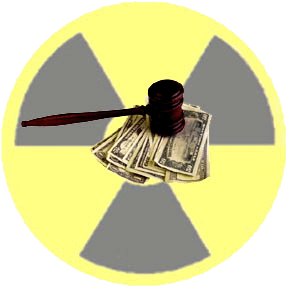
Deloitte has asked a US judge to throw out demands that it compensate
shareholders who lost money in the collapse of one of the country’s
largest nuclear power projects, in a case that has exposed the inner
workings of the Big Four audit firm.
Recently filed documents detail Deloitte’s work auditing the South Carolina utility Scana before the company abandoned construction of two nuclear reactors that had fallen far
behind schedule and billions of dollars over budget. The 2017 fiasco led to
the cut-price sale of Scana to a rival utility, the bankruptcy of the
construction group Westinghouse and jail time for Scana’s former chief
executive, who pleaded guilty to misleading regulators.
A class-action lawsuit on behalf of Scana shareholders alleges Deloitte helped the company
hide burgeoning problems at the VC Summer nuclear project by signing off on
financial statements that indicated it would be completed on time. In fact,
an internal whistleblower at Scana had claimed as early as 2015 that
Westinghouse was impossibly far behind, and Deloitte failed to follow other
red flags, the lawsuit claims.
FT 3rd April 2025, https://www.ft.com/content/89b10731-fcd0-4854-8bb5-1f4067f1bba2
“Getting people to do what they can from where they are”: NFLAs support Democracy Day inspiring peace activists to make Councils anti-nuke allies

The UK/Ireland Nuclear Free Local Authorities are proud to support the forthcoming Elected Representatives and Democracy Day being hosted by the Lakenheath Alliance for Peace (LAP) on Tuesday 22nd April, and urges elected members from all parties and none who oppose nuclear weapons to attend.
This event is part of a two weeks International Peace Camp and Conference – 14th – 26th April 2025 organised by the LAP at RAF Lakenheath – https://lakenheathallianceforpeace.org.uk The NFLAs are a partner organisation within the Alliance.
‘RAF’ Lakenheath is in fact the largest United States Air Force base in the United Kingdom, and is expected to, or has already, become the host to newly reintroduced US air-launched nuclear weapons which will be accommodated and maintained in a bespoke facility.
The LAP is hosting a series of themed days during the Peace Camp to which all activists are invited and there will also be a 24:7 vigil at the main gates of the airbase:
LAP is inviting elected members at all levels, whether Councillors in parish, district, county or unitary authorities or Parliamentarians in our devolved national assemblies or at Westminster, to attend and by invitation to speak during Democracy Day.
Confirmed speakers include Baroness Natalie Bennett, former Leader of the Green Party, and several Norfolk and Suffolk Councillors, one of whom used to be an emergency planner.
Elected members who wish to speak or who are willing to give media interviews at the airbase entrance on Democracy Day are invited to submit expressions of interest via https://lakenheathallianceforpeace.org.uk/front-page/get-involved/
LAP is also seeking to arrange a workshop with campaign group MP Watch https://www.mpwatch.org/ which ‘works alongside MPs and communities to champion evidence-based climate and nature-based policies.’
LAP event organiser and former Norwich City Councillor, Lesley Grahame, described “how there has never been any democratic debate about nuclear weapons” with the purpose of Democracy Day being about “getting people to do what they can from where they are”.
NFLA Secretary Richard Outram has put together a briefing paper on this theme containing tips for activists seeking to make their elected member and their Council an ally in the campaign for nuclear disarmament.
This briefing can be found at:
Military confrontation ‘almost inevitable’ if Iran nuclear talks fail: French FM
Daily Mail 3rd April 2025 AFP
‘Our priority is to reach an agreement that verifiably and durably constrains the Iranian nuclear program,’ Jean-Noel Barrot told lawmakers
France’s foreign minister warned on Wednesday that a military confrontation with Iran would be “almost inevitable” if talks over Tehran’s nuclear programme failed.
“In the event of failure, a military confrontation would appear to be almost inevitable,” Jean-Noel Barrot said in parliament, adding that it would severely destabilise the region.
Earlier Wednesday, President Emmanuel Macron chaired a meeting on Iran.
US President Donald Trump has threatened that Iran will be bombed if it persists in developing nuclear weapons. Iran’s supreme leader, Ayatollah Ali Khamenei, has promised to hit back………………………………………………………. https://www.dailymail.co.uk/wires/afp/article-14564181/Military-confrontation-inevitable-Iran-nuclear-talks-fail-French-FM.html
Nuclear site given more time to fix safety breach
Jason Arunn Murugesu, BBC News, North East and Cumbria, 4 Apr 25,
https://www.bbc.co.uk/news/articles/cgkgxdddmlyo
A nuclear site which breached hazardous substance regulations has been given more time to figure out how best to protect workers.
Last year, the Office for Nuclear Regulation (ONR) served two improvement notices on Sellafield Ltd, near Whitehaven, Cumbria, after it “failed to manage the risks of working with nickel nitrate and to prevent or adequately control exposure of workers to this hazardous substance”.
The breaches did not compromise either nuclear or radiological safety, the ONR said.
Sellafield Ltd said it had completed one improvement notice and “significant progress” had been made on the other. It has until September to come up with a solution.
Used in the treatment of effluent, nickel nitrate is not radioactive but is a hazardous substance and could cause harm to the health of a worker exposed to it.
To mitigate these risks, operations involving the chemical should be conducted in a glovebox to protect workers from any harmful health effects.
However, contamination was found outside the glovebox area at a Sellafield facility, which resulted in workers potentially being exposed to the chemical, the ONR previously said.
A poorly designed and maintained glovebox appeared to have contributed to the situation, it added.
‘Technical challenges’
Sellafield Ltd was required to complete a nickel nitrate risk assessment by the end of October, and to “prevent or adequately control” the exposure of workers to nickel nitrate by March.
However, the ONR said “technical challenges” had come to light regarding the exposure of workers to the material and it would now give the nuclear plant until 30 September to come up with a solution.
Hygiene controls would remain in place in the facility, monitored by an occupational hygienist, until full compliance with both improvement notices was achieved, the ONR explained.
Millom nuclear waste plans ‘currently detrimental’ to locals.
Proposed plans for a nuclear waste dump in Millom have been described as
‘detrimental’ for one of the town’s estates. Members of the community were
invited to attend a Town Council meeting at the end of last month to
discuss the construction of a Geological Disposal Facility (GDF) near
Haverigg. Residents of the Bank Head housing estate, which sits alongside
the proposed site, asked for support from the local authority, with a
particular concern on the impact of house prices in the area.
A spokesperson from Millom Town Council said: “[We continue] to have a
neutral stance and support the principle that residents will have the final
say if they wish to be the future host community for a GDF. “Whilst this
could be the biggest economic opportunity for the area since iron ore was
found at Hodbarrow, we cannot deny that the way the current Area of Focus
has been drawn on the map by NWS is currently detrimental to the residents
of the Bank Head estate.
“We do not believe at this early stage of the
investigation that any of our residents should be impacted in the way the
Bank Head estate currently is, with local estate agents reporting that they
have had no requests for viewing homes on this previously popular
estate.” A campaign group, Millom and District Against the Nuclear Dump,
argued that the majority of locals were ‘resoundingly’ against the GDF.
Whitehaven News 4th April 2025 https://www.whitehavennews.co.uk/news/25060423.millom-nuclear-waste-plans-currently-detrimental-locals/
Hegseth Orders Pentagon To Focus on Preparing for War With China Over Taiwan
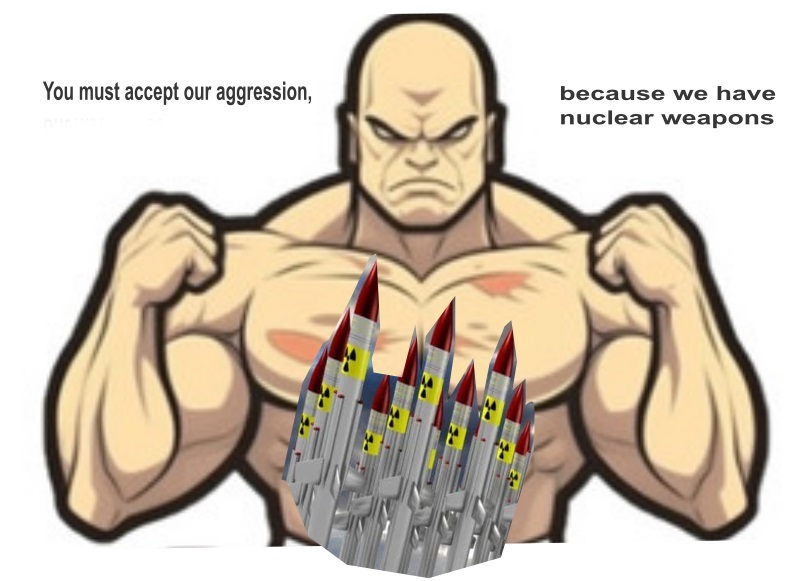
In an internal memo, Hegseth called China the ‘sole pacing threat’
by Dave DeCamp March 30, 2025 , https://news.antiwar.com/2025/03/30/hegseth-orders-pentagon-to-focus-on-preparing-for-war-with-china-over-taiwan/
Secretary of Defense Pete Hegseth distributed a memo in mid-March ordering the Pentagon to put its focus on preparing for a war with China, a nuclear-armed power, by “assuming risk” in Europe and other parts of the world, The Washington Post reported on Saturday.
The Post didn’t publish the full memo, known as the Interim National Defense Strategic Guidance, but said it “outlines, in broad and sometimes partisan detail, the execution of President Donald Trump’s vision to prepare for and win a potential war against Beijing and defend the United States from threats in the ‘near abroad,’ including Greenland and the Panama Canal.”
The Pentagon has considered China the top “threat” facing the US since the first Trump administration, but the Post report said the memo is “extraordinary in its description of the potential invasion of Taiwan as the exclusive animating scenario that must be prioritized over other potential dangers — reorienting the vast US military architecture toward the Indo-Pacific region beyond its homeland defense mission.”
The report said that the guidance from Hegseth says the Pentagon’s force planning construct “will consider conflict only with Beijing when planning contingencies for a major power war” and leave the “threat from Moscow largely attended by European allies.”
Hegseth wrote that China “is the Department’s sole pacing threat, and denial of a Chinese fait accompli seizure of Taiwan — while simultaneously defending the US homeland is the Department’s sole pacing scenario.”
The memo reflects the Trump administration’s policy toward Europe and calls for NATO allies to take a “far greater” burden sharing. The document says that the US is unlikely to provide substantial support to Europe if Russia’s military advances in the region, saying the US will only provide nuclear deterrence.
The memo also calls for the US to pressure Taiwan to increase military spending “significantly.”
For years now, the US military has been openly preparing for war with China despite the risk of nuclear escalation. It has done this by expanding military bases in the Asia Pacific, building alliances, and increasing support for Taiwan. While being done in the name of deterrence, these steps have only increased tensions in the region, making conflict more likely.
The Post report says that Hegseth’s plans to prepare a “denial defense” of Taiwan include “increasing the troop presence through submarines, bombers, unmanned ships, and specialty units from the Army and Marine Corps, as well as a greater focus on bombs that destroy reinforced and subterranean targets.” His memo also calls for increasing the defenses of US troop positions in the region and establishing more weapons stockpiles.
It’s Official: Ukraine Conflict is British ‘Proxy War’

The investigation’s most striking passages highlight London’s principal role in influencing and managing Ukrainian – and by extension US – actions and strategy in the conflict. Both direct references and unambiguous insinuations littered throughout point ineluctably to the conclusion that the “proxy war” is of British concoction and design
As this journalist has exposed, Ukraine’s Kursk folly was a British invasion in all but name. London was central to its planning, provided the bulk of the equipment deployed, and deliberately advertised its involvement. As The Times reported at the time, the goal was to mark Britain as a formal belligerent in the proxy war, in the hope other Western countries – particularly the US – would follow suit, and “send more equipment and give Kyiv more leeway to use them in Russia.”
Kit Klarenberg, Global Delinquents, Apr 02, 2025
On March 29th, the New York Times published a landmark investigation exposing how the US was “woven” into Ukraine’s battle with Russia “far more intimately and broadly than previously understood,” with Washington almost invariably serving as “the backbone of Ukrainian military operations.” The outlet went so far as to acknowledge the conflict was a “proxy war” – an irrefutable reality hitherto aggressively denied in the mainstream – dubbing it a “rematch” of “Vietnam in the 1960s, Afghanistan in the 1980s, Syria three decades later.”
That the US has since February 2022 supplied Ukraine with extraordinary amounts of weaponry, and been fundamental to the planning of many of Kiev’s military operations large and small, is hardly breaking news. Indeed, elements of this relationship have previously been widely reported, with White House apparatchiks occasionally admitting to Washington’s role. Granular detail on this assistance provided by the New York Times probe is nonetheless unprecedented. For example, a dedicated intelligence fusion centre was secretly created at a vast US military base in Germany.
Dubbed “Task Force Dragon”, it united officials from every major US intelligence agency, and “coalition intelligence officers”, to produce extensive daily targeting information on Russian “battlefield positions, movements and intentions”, to “pinpoint” and “determine the ripest, highest-value targets” for Ukraine to strike using Western-provided weapons. The fusion centre quickly became “the entire back office of the war.” A nameless European intelligence chief was purportedly “taken aback to learn how deeply enmeshed his NATO counterparts had become” in the conflict’s “kill chain”:
“An early proof of concept was a campaign against one of Russia’s most-feared battle groups, the 58th Combined Arms Army. In mid-2022, using American intelligence and targeting information, the Ukrainians unleashed a rocket barrage at the headquarters of the 58th in the Kherson region, killing generals and staff officers inside. Again and again, the group set up at another location; each time, the Americans found it and the Ukrainians destroyed it.”
Several other well-known Ukrainian broadsides, such as an October 2022 drone barrage on the port of Sevastopol, are now revealed by the New York Times to have been the handiwork of Task Force Dragon. Meanwhile, the outlet confirmed that each and every HIMARS strike conducted by Kiev was entirely dependent on the US, which supplied coordinates, and advice on “positioning [Kiev’s] launchers and timing their strikes.” Local HIMARS operators also required special electronic key [cards]” to fire the missiles, “which the Americans could deactivate anytime.”
Yet, the investigation’s most striking passages highlight London’s principal role in influencing and managing Ukrainian – and by extension US – actions and strategy in the conflict. Both direct references and unambiguous insinuations littered throughout point ineluctably to the conclusion that the “proxy war” is of British concoction and design. If rapprochement between Moscow and Washington succeeds, it would represent the most spectacular failure to date of Britain’s concerted post-World War II conspiracy to exploit American military might and wealth for its own purposes.
………………………………………………………………….. the British “had considerable clout” in Kiev and hands-on influence over Ukrainian officials.
This was because, “unlike the Americans,” Britain had formally inserted teams of military officers into the country, to advise Ukrainian officials directly. Still, despite Kiev failing to fully capitalise as desired by London and Washington, the 2022 counteroffensive’s success produced widespread “irrational exuberance”. Planning for a followup the next year thus “began straightaway.” The “prevailing wisdom” within Task Force Dragon was this counteroffensive “would be the war’s last”, with Ukraine claiming “outright triumph”, or Russia being “forced to sue for peace.”
……………………………………………………………………….Even Task Force Dragon’s Lieutenant General Donahue had doubts, advocating “a pause” of a year or more for “building and training new brigades.” Yet, intervention by the British was, per the New York Times, sufficient to neutralise internal opposition to a fresh counteroffensive in the spring. The British argued, “if the Ukrainians were going to go anyway, the coalition needed to help them.” Resultantly, enormous quantities of exorbitantly expensive, high-end military equipment were shipped to Kiev by almost every NATO member state for the purpose.
The counteroffensive was finally launched in June 2023. Relentlessly blitzed by artillery and drones from day one, tanks and soldiers were also routinely blown to smithereens by expansive Russian-laid minefields. Within a month, Ukraine had lost 20% of its Western-provided vehicles and armor, with nothing to show for it. When the counteroffensive fizzled out at the end of 2023, just 0.25% of territory occupied by Russia in the initial phase of the invasion had been regained. Meanwhile, Kiev’s casualties may have exceeded 100,000.
‘Knife Edge’
The New York Times reports that “the counteroffensive’s devastating outcome left bruised feelings on both sides,” with Washington and Kiev blaming each other for the catastrophe. A Pentagon official claims “the important relationships were maintained, but it was no longer the inspired and trusting brotherhood of 2022 and early 2023.” Given Britain’s determination to “keep Ukraine fighting at all costs”, this was bleak news indeed, threatening to halt all US support for the proxy war.
………………………………… Ukraine’s calamitous intervention in Russia’s Bryansk region was a “foreshadowing” of Kiev’s all-out invasion of Kursk on August 6th that year. The New York Times records how from Washington’s perspective, the operation “was a significant breach of trust.” For one, “the Ukrainians had again kept them in the dark” – but worse, “they had secretly crossed a mutually agreed-upon line.” Kiev was using “coalition-supplied equipment” on Russian territory, breaching “rules laid down” when limited strikes inside Russia were greenlit months earlier.
As this journalist has exposed, Ukraine’s Kursk folly was a British invasion in all but name. London was central to its planning, provided the bulk of the equipment deployed, and deliberately advertised its involvement. As The Times reported at the time, the goal was to mark Britain as a formal belligerent in the proxy war, in the hope other Western countries – particularly the US – would follow suit, and “send more equipment and give Kyiv more leeway to use them in Russia.”
Initially, US officials keenly distanced themselves from the Kursk incursion……………………………..
However, once Donald Trump prevailed in the November 2024 presidential election, Biden was encouraged to use his “last, lame-duck weeks” to make “a flurry of moves to stay the course…and shore up his Ukraine project.” In the process, per the New York Times, he “crossed his final red line,” allowing ATACMS and Storm Shadow strikes deep inside Russia, while permitting US military advisers to leave Kiev “for command posts closer to the fighting.”
Fast forward to today, and the Kursk invasion has ended in utter disaster, with the few remaining Ukrainian forces not captured or killed fleeing. Meanwhile, Biden’s flailing, farewell red line breaches have failed to tangibly shift the battlefield balance in Kiev’s favour at all. As the New York Times acknowledges, the proxy war’s continuation “teeters on a knife edge.” There is no knowing what British intelligence might have in store to prevent long-overdue peace prevailing at last, but the consequences could be world-threatening. https://www.kitklarenberg.com/p/its-official-ukraine-conflict-is
‘Another significant show of confidence’ in Sizewell C, – making the total of taxpayers’ money going into the project a staggering £6.4bn)

The government has confirmed that £2.7bn promised to the Sizewell C
project in the Autumn Budget is now available. The Department of Energy
Security and Net Zero (DESNZ) said the money will be drawn down by the
project company according to spending plans agreed with the government. The
sum – available under what is called the Devex (development expenditure)
scheme -is in addition to £1.2bn which was made available to the project
since July last year. (making the total of taxpayers’ money going into the
project a staggering £6.4bn).
East Anglian Daily Times 4th April 2025
https://www.eadt.co.uk/news/25065158.another-significant-show-confidence-sizewell-c/
TRUMP’S PURSUIT OF A UKRAINIAN PEACE: Early Results and Future Prospects
Russian and Eurasian Politics, by Gordonhahn, April 4, 2025
U.S. President Donald Trump and his new and internationally inexperienced administration have been in hot pursuit of a ceasefire and peaceful resolution of the NATO-Russia Ukrainian War. The pursuit has laid bare the false promise of an end to the war on the administration’s first or even one-hundredth day as previously advertised. This is no business deal. This the hardball world of international politics, national power and interests, ancient and not-so-ancient local and international resentments, grievances, betrayals, and hatreds. Despite what may seem as a disappointing complications and the inevitably longer timeline for the arrival of any prospective ceasefire or conclusive peace, significant early progress was made, and the stumbling blocs that have appeared were to be expected and can be overcome with time and the further deterioration of Ukraine’s position on the battle fronts, which is inevitable.
There has been some confusion among observers and the public regarding the process, with issues such as NATO expansion tied to a ceasefire in some minds. This is a subject for a final treaty, not a ceasefire, which is needed to allow peace talks to proceed more smoothly, niot to mention ending the bloodshed and destruction. The ceasefire agreement must not be conflated from peace treaty negotiations. A ceasefire will, therefore, take at least several, if not many months. This is not least of all because of the need to resolve what Russian President Vladimir Putin called “nuances” – organizational measures needed to implement a full-fledged ceasefire.
While agreement, violated albeit, has been achieved on a month-long ceasefire regarding energy infrastructure, the two sides are very far apart regarding any treaty. Putin’s 4 goals for Russia’s ‘special military operation (SMO) contradict directly Zelenskiy’s demands for security guarantees and the return of all territory annexed or occupied by Russia. Again, these are problems to be addressed under any peace treaty. The ceasefire must be fully implemented before any treaty can be addressed in any robust fashion.
Trust-building is desperately needed, especially between Russia and Ukraine and can develop as partial agreements are made, complied with, and yield new agreements. Recent history and a long cultural tradition of security vigilance in Russia and in part inherited by Ukraine, the apposition of Russian nationalism and more rabid Ukrainian ultras-nationalism and neofascism, and, most importantly, the exacerbating factor of outside interference in Ukraine and Russian-Ukrainian relations by the U.S., Europe, and NATO create a matrix of distrust between all the parties, including the ostensible mediating side, the U.S., which is the lead combatant on the NATO side of the NATO-Russia Ukrainian War. The last point undermines the peace process from the start, and depending on how that process develops could end in many in Moscow, already being suspicious, coming to see the entire process as a ruse to hold off a Russian victory, viewing Trump’s America as ‘playing the good cop’, while Zelenskiy and Europe continue the war.
The ceasefire is evolving into four distinct elements — energy infrastructure, sea, air, and land ceasefires – to comprise the overall ceasefire prospectively. The full ceasefire could be achieved by mid-summer but more a more realistic target is before the end of the year……………………………………………………………………………………………………………………………………..
Trump has levers to push the parties towards peace. For the Ukrainians, he can withhold intelligence and weapons supplies. For the Russians he can delay or threaten to forego rapprochement or various aspects of it: sanctions relief, trade agreements, and renewed cooperation regarding the world’s various conflicts. Pres. Trump’s “Liberation Day” 20 percent tariff on EU goods might be adjusted depending on Brussels’ compliance with American wishes for sanctions relief for Russia. Otherwise, the EU is positioned to scuttle BSI 2.0. Indeed, Russia’s 10 percent tariffs and 0 percent on Russia can be adjusted depending on where pressure needs to be applied.
In sum, there are a host of problems that will take months of concerted effective diplomacy led by the U.S. as things stand now. But the Trump administration is short of seasoned diplomats and experienced foreign and security policy experts. We have a long, hard way to go before peace reigns in Ukraine. https://gordonhahn.com/2025/04/04/trumps-pursuit-of-a-ukrainian-peace-early-results-and-future-prospects/
Atomic Safety and Licensing Board (ASLB) rejects intervenors’ Palisades “zombie” nuke reactor restart petition & hearing request
The U.S. Nuclear Regulatory Commission (NRC) Atomic Safety (sic) and Licensing Board (ASLB) has struck again. Per usual, the three-administrative law judge panel (formerly known as hearing examiners) has rejected all contentions re: health, safety, security, and the environment raised by an environmental coalition, denying hearings on the merits. Such rulings reflect the ASLB’s very well earned kangaroo court reputation. Not only is the NRC staff captured by the industry it is supposed to regulate, but so too is NRC’s ASLB.
See the 71-page ASLB ruling, here.
The coalition — Beyond Nuclear, Don’t Waste Michigan, Michigan Safe Energy Future, Nuclear Energy Information Service of Chicago, and Three Mile Island Alert of Pennsylvania — did get the NRC ASLB to acknowledge its legal standing, although the NRC staff sought to block most of the groups. Some of the members/supporters who provided legal standing to the groups opposed by the NRC staff for establishing legal standing happen to live within less than a mile of the Palisades atomic reactor, and thus are very much in harm’s way.
Attorneys Terry Lodge of Toledo, Ohio, and Wally Taylor of Cedar Rapids, Iowa, serve as the coalition’s legal counsel. Coalition expert witnesses include Arnie Gundersen, chief engineer of Fairewinds, as well as Dr. Mark Z. Jacobson of Stanford University, a world renowned advocate for renewable energy as the most time- and cost-effective pathway to climate mitigation. This means nuclear power is an opportunity cost, significantly hampering desperately needed reductions of greenhouse gas emissions, as soon as possible.
The coalition has resisted Holtec International’s scheme to restart the nearly 60-year old “zombie” atomic reactor at Palisades nuclear power plant since the get-go, on April 20, 2022, when Michigan Governor Gretchen Whitmer first floated the trial balloon of indefinite, continued operations, a month to the day before previous owner Entergy permanently shut down the reactor. Palisades was designed in the mid-1960s, and ground was broken on its construction in 1967.
Such a restart of a closed for good atomic reactor is unprecedented. It is also unneeded, insanely expensive for the public, and extremely risky. Palisades has been an atomic lemon since it was fired up in 1971, and is now dangerously age-degraded, after 51 years of problem-plagued operations, and three years of neglect by Holtec of safety-significant systems, structures, and components, such as the now dangerously degraded steam generator tubes. Holtec neglected steam generator tube maintenance for two years (2022-2024), a “rookie error” according to the coalition’s expert witness, Arnie Gundersen of Fairewinds. But this rookie error, Gundersen, points out, could result in a catastrophic reactor core meltdown, if and when NRC allows Holtec to restart Palisades with mere BAND-AID fixes on the breakdown phase steam generator tubes.
The coalition will appeal the ASLB’s absurd ruling to the commissioners of the five-member Nuclear Regulatory Commission. Once the NRC Commissioners rule against us too, we will have exhausted all administrative remedies. At that point, we will file an appeal to the federal courts.
Although the ASLB has rejected all previous coalition contentions, the three-judge panel did not terminate the licensing proceeding. This is because the coalition amended certain contentions, and introduced new ones, based on the recent publication, in late Jaunary 2025, by NRC staff of a draft Environmental Assessment and Finding of No Significant Impact regarding the “zombie” reactor restart scheme.
However, on March 28, 2025 — the 46th annual commemoration of the Three Mile Island Unit 2 meltdown in Pennsylvania — both the NRC staff, as well as Holtec International, opposed all of the coalition’s new and amended environmental contentions, as well.
The coalition will continue to defend its amended and new environmental contentions at every opportunity, as well. Our deadline to do so is later this week.
Global warming is ‘exposing’ new coastlines and islands as Arctic glaciers shrink .

Retreating glaciers created 2,500km of “new” coastline and 35
“new” islands in the Arctic between 2000 and 2020, according to a new
study. The research uses satellite images of more than 1,700 glaciers in
Greenland, Alaska, the Canadian Arctic, Russian Arctic, Iceland and
Svalbard.
The findings show that 85% of these glaciers retreated over
2000-20, revealing 123km of new coastline per year on average. The study,
published in Nature Climate Change, links the acceleration in glacier melt
to warmer ocean and air temperatures.
Carbon Brief 1st April 2025 https://www.carbonbrief.org/global-warming-is-exposing-new-coastlines-and-islands-as-arctic-glaciers-shrink/
Hinkley C nuclear power station site teaches A Level students about “clean” energy !!

By John Thorne Wednesday 2nd April 2025 ,https://www.wellington-today.co.uk/news/hinkley-c-nuclear-power-station-site-teaches-a-level-students-about-clean-energy-780053
A LEVEL students from Bridgwater and Taunton College (BTC) explored the UK’s clean energy future during an educational tour of the under-construction Hinkley Point C nuclear power station.
The trip was an opportunity for students studying subjects such as business, economics, mathematics, physics, and chemistry to witness first hand one of Europe’s most significant infrastructure projects.
Germany’s Conservative Christian Democratic Union (CDU) mulls reactivation of nuclear power plants
Germany’s Conservative Christian Democratic Union (CDU) party is
considering restarting six of the country’s recently deactivated nuclear
power plants. According to newspaper Handelsblatt on April 1, a new working
paper of the CDU’s parliamentary group demanded an investigation on
whether a reactivation of the power stations was technically possible and
economically feasible. If the current owners of the plants in question –
energy companies E.On, RWE and EnBW – were not willing to restart the
reactors themselves, a State-owned enterprise reportedly could take over
ownership of the infrastructure.
Brussels Signal 2nd April 2025 https://brusselssignal.eu/2025/04/germanys-cdu-mulls-reactivation-of-nuclear-power-plants/
1 This Month





PLEASE OPPOSE HR 8255 AND S.3639 – bills would accelerate satellite deployment, with no environmental review or safeguards – https://ncstd5li.quorum.us/campaign/169331/
To see nuclear-related stories in greater depth and intensity – go to https://nuclearinformation.wordpress.com
-
Archives
- October 2026 (63)
- September 2026 (339)
- August 2026 (330)
- July 2026 (355)
- June 2026 (287)
- May 2026 (306)
- April 2026 (356)
- March 2026 (251)
- February 2026 (267)
- January 2026 (308)
- December 2025 (358)
- November 2025 (359)
-
Categories
- 1
- 1 NUCLEAR ISSUES
- business and costs
- climate change
- culture and arts
- ENERGY
- environment
- health
- history
- indigenous issues
- Legal
- marketing of nuclear
- media
- opposition to nuclear
- PERSONAL STORIES
- politics
- politics international
- Religion and ethics
- safety
- secrets,lies and civil liberties
- spinbuster
- technology
- Uranium
- wastes
- weapons and war
- Women
- 2 WORLD
- ACTION
- AFRICA
- Atrocities
- AUSTRALIA
- Christina's notes
- Christina's themes
- culture and arts
- Events
- Fuk 2022
- Fuk 2023
- Fukushima 2017
- Fukushima 2018
- fukushima 2019
- Fukushima 2020
- Fukushima 2021
- general
- global warming
- Humour (God we need it)
- Nuclear
- RARE EARTHS
- Reference
- resources – print
- Resources -audiovicual
- Weekly Newsletter
- World
- World Nuclear
- YouTube
-
RSS
Entries RSS
Comments RSS

