The Balance of Power in the Russo-Ukraine War- Russia is in the driving seat.
NATO WATCH, By Steven Jermy, 12 May 2025.
Political passion for the cause, never strong in ethnically Russian areas, appears now to be eroding amongst the war weary and the victims of Ukrainian Army press gangs.
On this analysis, the balance-of power – on the battlefield and at the negotiating table – overwhelmingly favours Russia. Despite this, European leaders – with reducing support amongst Americans – appear to believe that the losers should dictate the terms of ceasefire or surrender.
Our continued calls for Russia to accept terms that the West is unable to impose will need to cease. We will need to shift our position on the negotiation fundamentals. Russia too has legitimate security interests. Pushing NATO to Russia’s borders whilst wilfully ignoring their interests was always likely to lead to conflict.
Theodore Roosevelt said: “Speak softly but carry a large stick.” European leaders are doing the opposite yet offended when not invited to Russo-Ukraine negotiations. Instead, and from the side lines, Europeans have been insisting that Russia accepts ceasefire conditions that neither they nor the Americans have the political or the military means to impose. So, it’s no surprise that Russians continue patiently to insist on their own conditions, nor that Americans may be slowly coming round to Russia’s position. Yet European leaders are affronted. Why?
At the most fundamental level, I fear they lack the ability to calculate the balance-of-power, a skill so critical in war. If we Europeans are to play an intelligent part in bringing the Russo-Ukraine war to a close, we must get back to the basics of strategy formulation and calculate the relative balance of power in the Russo-Ukraine War, to in turn allow us to understand the West’s true leverage – or lack of it – over Russia.
An excellent starting point is the work of Professor John Mearsheimer, particularly given his unusual Russo-Ukraine prescience – that stands in stark contrast to the forecasts of conventional Western commentators. Mearsheimer emphasises economic wealth and population size as fundamental determinants of national power. All other things being equal, larger populations are more powerful than smaller populations, richer ones more powerful than poorer ones.But economic wealth is routinely – and lazily – assessed using GDP figures, a particularly poor way to calculate national military power. The service economy counts for little on the battlefield – in military affairs it is industrial capacity, not economic output, that matters.
There is another equally fundamental factor to add to Mearsheimer’s list – energy. Industrial capacity is critically dependent on reliable supplies of cheap, high quality and plentiful energy – as Europeans have found to their self-inflicted cost – as do military operations. Indeed, in war and operations, combat and logistics are both extremely energy intensive.
[Ed note – Here the author explains the importance of energy, and of geography – the distance from home involves not only the relative passion, determination of the people, but also the burden and cost of transporting munitions over long distances.]
………………………………………………………………………………..Foundationally, Ukraine started the war in a weak position. With NATO’s sustained support from 2014, it had formed a large army, but its industrial capacity was constrained, and it depended on external energy supplies, including Russian oil. Its foundational position is now much worse, after Russia’s deliberate targeting of its industrial and energy infrastructures.
The geopolitical utility of Ukraine’s power is also dissipating. Political passion for the cause, never strong in ethnically Russian areas, appears now to be eroding amongst the war weary and the victims of Ukrainian Army press gangs. Ultranationalists will no doubt stay true to their cause, perhaps to an apocalyptic end, but otherwise it’s easy to envisage a failed popular consensus as the Russian Army rolls westward.
A few may say it is self-evident that power’s foundations and utility be framed in this way. But “Clearly not!”: at least to American and European leaders engaged in the Ukraine War, who are demonstrating – with words and actions – not a scintilla of such understanding.
Bellicosity aside, Europe is foundationally weak. To get anywhere near Cold War industrial capacity levels, Europeans will need to double defence spending to higher than 5% of GDP – in 1986, at the culmination of the Cold War, Britain was spending 6% on defence.
Furthermore, as the world’s largest regional hydrocarbon importer, at 12.8 million barrels 3 per day of oil, Europe’s situation is one of acute energy vulnerability. The geopolitical utility of Europe’s limited military power is also questionable. Hungary, Slovakia, Bulgaria and Serbia have always been sceptics, neutral Austria’s position has remained nuanced, but political support amongst others, such as Italy and Spain is weakening. As national resources are redirected, away from constructive capital expenditure or societal goods toward an unwinnable arms race to support a lost war, it’s difficult to imagine matters improving.
Foundationally, the United States is much more powerful than Europe or Ukraine, but this is not a high bar. Industrially, the whole world knows there is a problem – a primary logic for tariffs is reindustrialisation. Energy is a much better, albeit far from perfect, story. Although an exporter of refined hydrocarbons, the United States is a net oil importer, to the tune of nearly 3 million barrels per day.
More immediately pertinent, Ukraine is a long way from the American home, Trump’s electoral base is generally against the war and the prospects of Congressional funding beyond June are uncertain. Inter-administration politics play their part too. Primary responsibility for the United States initial support for the war lies with the Biden administration. But the longer the American hand is kept in the Ukraine mangle, the more likely the Trump administration will take over the blame.
Russia, meanwhile, is demonstrating on the battlefield the analytic value of balance-of power calculation. Industrially mobilised for its ‘special military operation’, Russia’s production of 155mm shells is larger than the US, Europeans and Ukrainians combined. The country is also a hydrocarbons superpower, wholly energy independent and watching on – bemusedly? – as Europeans accelerate their industrial suicide with more boomerang energy sanctions. The geopolitical utility of Russia’s power is also clear. A major land power, it is operating on interior logistics lines that play to its strengths. Politically, Russians believe they are fighting an existential war against an expansionist West. As far back as 2008, Bill Burns’ Nyet means Nyet diplomatic telegram described NATO expansion as a ‘neuralgic’ issue for all Russians, not just Putin. Their cause is Russia’s existence and Putin’s 85% political approval figures reflect the commitment of his people to win.
Implications: Russia is in the driving seat.
So what?
On this analysis, the balance-of power – on the battlefield and at the negotiating table – overwhelmingly favours Russia. Despite this, European leaders – with reducing support amongst Americans – appear to believe that the losers should dictate the terms of ceasefire or surrender. Then protest loudly when neither history nor Putin agree. In war, it is the winners who dictate terms, and this war will largely end on Russia’s terms. Although the spin-doctors will no doubt try, it will be no good trying politically to present this as anything other than a NATO defeat, because that is what it is.
Much better to acknowledge and accept this strategic inevitability, show some European political humility, and begin – finally – to work constructively with Americans and Russians. So that we can, in turn, address the more important immediate question for us all. Whether the war is concluded more slowly, brutally and expensively, on the battlefield? Or more quickly, humanely and cheaply at the negotiating table?
If we recognise the West’s relative lack of power and accept the geopolitical realities on the ground, we Europeans can start to make a positive difference, rather than seeking to cling to our failed political narrative and delay the inevitable.
Our continued calls for Russia to accept terms that the West is unable to impose will need to cease. We will need to shift our position on the negotiation fundamentals. Russia too has legitimate security interests. Pushing NATO to Russia’s borders whilst wilfully ignoring their interests was always likely to lead to conflict. Wars are brought to a close by diplomacy – which means European leaders starting to talk personally to Putin, and foreign ministers Lavrov, and trying better to understand firsthand what they and all Russians want.
This latter question ought not be too difficult – because the Russians have been telling us what they want for at least three years. Fundamentally, they are seeking a security solution that removes the war’s primary cause and leads to long-term peace on the European continent. When there is broad agreement on how this can be achieved, then – and only then – will they be ready to talk about a ceasefire. And start to bring an end to Ukraine’s catastrophic infrastructure destruction, the loss of yet more Russian and Ukrainian lives, and the expenditure of good European monies to follow the bad already squandered.
In 1965, General Andres Beaufre said: ‘In war, the loser deserves to lose because his defeat must be due to failures in thinking either before or during the campaign.’ I agree. It may go against conventional European thinking, but history will soon show that, with Americans, we Europeans bear substantial responsibility for this war and for NATO’s defeat. With competent strategic thinking, we could have avoided the war in the first place. With competent balance-of-power thinking, we could – and should – now help bring it more rapidly to a humane close. https://natowatch.org/default/2025/balance-power-russo-ukraine-war?utm_source=substack&utm_medium=email
The stakes are high for these important Ukraine-Russia-US talks.
Istanbul 2.0: Know when to hold ’em, know when to fold ’em.
Here’s hoping no one walks away — or runs — as the stakes today are high for these important Ukraine-Russia-US talks.
Ian Proud, May 15, 2025, https://responsiblestatecraft.org/ukraine-russia-istanbul-talks/?utm_source=substack&utm_medium=email
The biggest achievement of today’s Istanbul talks is that they are even taking place. U.S. engagement will remain vital to getting a peace deal over the line. Russia’s desire for a reset with Washingtonmay keep them on track.
I have a sense of déjà vu as I contemplate these long-overdue peace talks between Ukraine and Russia in Istanbul. In April 2022, Ukraine and Russia were close to agreeing a peace treaty, less than two months after war started. However, this came crashing down amid claims that western governments, in particular the United States and the United Kingdom encouraged Ukraine to keep fighting.It’s worth recapping very briefly what was close to having been agreed. By far the best summary of negotiations between both sides was produced by the New York Times in June 2024. Those negotiations ran for almost two months. The talks started with Ukrainian officials being spirited over the border into Belarus on February 29, 2022 while the fighting raged around Kyiv, and eventually led to the now famous talks in Istanbul in March and April.
What has changed since then?
Ukraine will enter the Istanbul talks in a weaker position than it held in 2022.
Western support for Ukraine financially and economically is not as sound as it was then. No big ticket economic aid and assistance has been made available since the G7 agreement of a $50 billion package of loans, in June 2024. While European states scratched together new economic aid to Ukraine in April, this cannot make up for the reduction in US support.
In territorial terms, Russia withdrew from Kyiv as a concession to the first Istanbul talks and lost ground in Kharkiv and in Kherson in late 2022. However, Russia has gone on steadily to gain further territory in the Donbas since the end of 2023. So while both sides have scores on the board, Russia now maintains the military upper hand on the battlefield and that seems unlikely to change. These two factors in particular were behind President Trump’s February assertion that Ukraine has no cards to play.
What has stayed the same?
NATO membership is still off the table
The verified documents shared by the New York Times last June confirmed that Ukraine’s neutrality and non-membership of NATO was the central issue agreed upon in 2022. Ukraine was ready to become a “permanently neutral state” that would never join NATO or allow foreign forces to be based on its soil.
There seems no route for Ukraine to resile from that given its currently weakened negotiating position and President Trump’s stated view that NATO membership for Ukraine is not practical. Although Germany’s new foreign Minister, Johann Wadephul recently repeated the line that Ukraine’s path to NATO is irreversible, most have agreed, privately and publicly, that Ukraine’s path to NATO is a fraught if not impossible one.
Right now, just having the talks is a huge breakthrough
The Istanbul talks would not be happening had the Trump administration not pushed for it so hard. We don’t need to rehash the “did they or didn’t they” debate around why Ukraine abandoned the Istanbul agreement in April 2022. What is clear, is that Ukraine became entrenched, not only in not negotiating with Russia, but in excluding Russia from all discussions on peace in Ukraine from then onward.
Having agreed in principle for Ukraine to accept neutral status Zelensky was soon pushing his own ten point peace plan. This included, among other things, Russia withdrawing its troops to the pre-2014 border, i.e. giving up Crimea and the Donbass and creating a Euro-Atlantic Security Architecture, by which he meant Ukraine joining NATO. Peace summits were organized in various countries that explicitly excluded Russia, culminating in the Switzerland event on June 15, 2024.
At this event, President Zelensky was dug in deeper on resisting any engagement with Russia until a full withdrawal of its troops from Ukraine, which was a completely unrealistic proposal. “Russia can start negotiations with us even tomorrow without waiting for anything – if they leave our legal territories,” he said.
Even after President Trump was elected, European leaders clung to the line that “only Ukraine can decide what peace means.”’ I see no circumstances in which a Kamala Harris presidency would have cajoled President Zelensky to enter into negotiations. The talks wouldn’t be happening unless the Trump administration broke a whole load of Ukrainian and European eggshells to get to this point.
The biggest issue now is territory
Even though he was wrongly derided at the time by mainstream media, Steve Witkoff correctly pointed out in his March interview with Tucker Carlson that the territorial issues in Ukraine will be most intractable. Russia’s decision in October 2022 to formally annex the four oblasts of Kherson, Zaporizhzhia, Donetsk, and Luhansk changed the calculus. However, Russia does not have full territorial control of any of those oblasts, which are cut through the middle by a hotly contested front line.
Resolving the line of control when the war ends is, by some margin, the most problematic challenge. This will be a hugely sensitive topic, and European allies will shoot down any major concessions to Russia, as they did when the idea surfaced that the U.S.might de jure recognise Russia’s occupation of Crimea.
The most obvious settlement is a de facto recognition of occupation, a Cyprus-style scenario, that does not stand in the way of Ukraine’s future membership of the European Union. Even that will require detailed agreement on issues around demilitarization of the line of control and enforcing any ceasefire.
Sanctions are probably tricky, but also tractable
As I have said before, there is enormous scope to a plan that allows for the immediate lifting of the bulk of zero-impact measures, phasing out the remainder at points agreed to by both sides. The toughest issue remains the $300 billion in frozen Russian assets, mostly held in Belgium. Russia has shown a willingness to concede this funding to support reconstruction in Ukraine, including those parts that Russia occupies.
But there is texture here. Freeing up those funds for reconstruction would immediately remove the source of interest payments that are meeting Ukraine’s obligations on its $50 billion in debt to the G7, agreed to in June 2024. But the more general policy question arises, how much of the freed up funding would be spent in Ukraine itself and how much in Russian-occupied Ukraine, where most of the war damage has occurred? The U.S. must keep the pressure on to ensure the talks stay on track.
A U.S. presence in Istanbul will be vital, to prevent, in particular, Ukraine from bailing on the talks. That’s why sending Steve Witkoff and Keith Kellogg makes sense. The former is trusted by the Russian side while the latter has built relationships in Ukraine. Their presence serves to keep the process moving forward until a deal can be pushed over the line and the fighting can stop.
Bear in mind that the 2022 talks ran for a month and a half and the circumstances have materially changed as I have indicated above. While there has been speculation that President Trump might drop into Istanbul, I am not sure that this is necessary if President Putin doesn’t himself attend. Knowing the Russians, I assess that Putin will want his own “‘meeting moment” with the U.S. President on terms that the Russian side can better choreograph. Indeed, that may be a prize for Russia’s engagement in the process, given its desire for a more comprehensive reset of relations with the U.S.
New York Governor Kathy Hochul’s Major Nuclear Power Push

What the nuclear industry and nuclear believers in government are calling “advanced” nuclear power plants are, as the Union of Concerned Scientists has found in an extensive report, not improved and no better—”and in some respects significantly worse”—than current nuclear plants.
the nuclear industry now is seeking large amounts of government financial support including in the forms of tax credits and loan guarantees to cover cost overruns.
Karl Grossman, May 14, 2025, https://www.counterpunch.org/2025/05/14/new-york-governor-kathy-hochuls-major-nuclear-power-push/
“Governor [Kathy] Hochul is making a major push to not only build new nuclear plants in New York State but to make N.Y. the center of a nuclear revival in the U.S.,” declared Mark Dunlea, chair of the Green Education and Legal Fund, and long a leader on environmental issues in the state and nationally, in a recent email calling on support to “stop Hochul’s nuclear push.”
Dunlea is author of the book “Putting Out the Planetary Fire: An Introduction to Climate Change and Advocacy.” An Albany Law School graduate, he co-founded both the New York Public Interest Research Group and national PIRG. In an interview last week from his home in Poestenkill in upstate New York, Dunlea charged that Governor Hochul has “bought into nuclear power.”
He said, “She buys the argument that nuclear is carbon-free, avoiding looking at the life cycle of nuclear and its carbon footprint,” which includes, he noted, significant emissions of carbon in uranium mining, milling, enrichment, fuel fabrication and at other points. “The nuclear industry has been lobbying her to go along with it, and she has,” he said.
Hochul has also become involved in promoting nuclear power nationally.
The Clean Air Task Force, based in Sunnyside in Queens, New York, which advocates nuclear power, issued a press release in February stating: “The National Association of State Energy officials announced a multi-state initiative to accelerate advanced nuclear energy projects. The initiative was first previewed by Gov. Kathy Hochul of New York last month and will be co-chaired by New York.”
The heading of the release: “New York leads multi-state consortium to drive nuclear energy deployment …”
Tim Judson, executive director of the Nuclear Information and Resource Service (NIRS), based in Mount Rainier, Maryland, and formerly of Syracuse, New York, pointed out in an interview that Hochul made nuclear power “a specific priority in her State of the State speech” in January.
Hochul in the speech declared: “The economy of the future: microchips fabs [fabrication plants], data centers and the supercomputers that power AI need tremendous amounts of energy. To support these industries, we’ve already started developing an advanced nuclear strategy. This is a good investment. Artificial Intelligence alone is projected to drive $320 billion of economic growth in our state by 2038.”
What the nuclear industry and nuclear believers in government are calling “advanced” nuclear power plants are, as the Union of Concerned Scientists has found in an extensive report, not improved and no better—”and in some respects significantly worse”—than current nuclear plants. The Cambridge, Massachusetts-based organization has detailed this in an article headlined: “Report Finds That ‘Advanced’ Nuclear Reactor Designs Are No Better Than Current Reactors—and Some Are Worse.”
Hochul is a Democrat. But also, said Judson, the “New York Republican Party has been rabidly pro-nuclear.” In a time of extreme partisan polarity, there is a “bipartisan consensus among the political elite in favor of nuclear power,” and thus is one thing in government for which “there are bipartisan votes.”
As the Syracuse.com website has reported: “Fort Drum, the U.S. Army base outside Watertown, could become the first New York site to try advanced nuclear power technology if the Army goes along with pleas from congressional representatives. U.S. Reps. Elise Stefanik and Claudia Tenney, both upstate Republicans, issued a joint letter October 25 urging the Army to put Fort Drum first in line for one of the small modular nuclear reactors that President Joe Biden and Department of Defense officials are promoting as a clean source of resilient energy.”
Stefanik is a Republican front-runner to challenge Hochul in election for governor in 2026. Democrat Biden has supported nuclear power.
Hochul’s predecessor as New York governor, Andrew Cuomo, also a Democrat, now seeking to be the Democratic candidate for New York City mayor in the 2025 election, has a mixed record on nuclear power.
As governor Cuomo was instrumental in closing down in 2021 the two Indian Point nuclear power plants 26 miles north of New York City, but in 2016 he engineered a $7.6 billion bail-out to allow four aged nuclear plants in upstate New York to continue to operate. Their owners then deemed them uneconomical to continue to operate.
The plants—Fitzpatrick, Nine Mile Point 1 and 2, and Ginna—are now owned by Constellation Energy, the largest nuclear power plant operator in the United States.
The $7.6 billion bail-out is being paid for over a 12-year period as a surcharge on electric bills of all residential and industrial customers in New York State.
So far, Dunlea said, Hochul has been focusing on upstate New York for new nuclear development, particularly targeting areas where nuclear plants are now located, rather than, “at the moment,” downstate.
For decades, a battle raged that stopped the plan of the Long Island Lighting Company to build a large collection of nuclear power plants—seven to 11 nuclear plants—downstate, on Long Island, the 120-mile island east of Manhattan.
If there is again a plan for placement of nuclear power plants on Long Island, said Dunlea, “hopefully, Long Islanders would stand up and beat it back.”
Grassroots citizen action was a key in the decades long fight to block to the scheme to, in the parlance of promoters of it at the time, turn Long Island into a “nuclear park.” The only plant built was Shoreham 1 which was stopped from going into commercial operation.
The October Syracuse.com piece said: “Gov. Kathy Hochul has expressed an interest in exploring the potential for new nuclear power in New York” highlighted by her having “hosted an energy summit last month [September 2024] in Syracuse that focused heavily on nuclear power.”
Judson, of NIRS, said the nuclear industry now is seeking large amounts of government financial support including in the forms of tax credits and loan guarantees to cover cost overruns.
Laura Shindell, New York State director of the Washington-headquartered organization Food & Water Watch, has scored in a piece in the Times Union newspaper of Albany what she terms “Governor Hochul’s nuclear embrace” and said Hochul should commit to “real climate and affordable energy solutions.” Shindell’s piece was headlined, “Commentary: No place for nuclear in New York’s energy plants.” Its subhead: “Nuclear power is a dirty, dangerous, expensive distraction to the essential work of transitioning to clean energy.”
New York State’s emphasis on nuclear power under Hochul has been recognized by World Nuclear News, a publication of the World Nuclear Association, a London-based group that describes itself as an “international organization that promotes nuclear power.”
A January article was headlined “New York State looks to advanced nuclear.”
It began: “As New York Governor Kathy Hochul announces a master plan for advanced nuclear development,” the New York State Energy Research and Development Authority, NYSERDA “has joined Constellation [Energy] on a grant proposal to help it pursue an early site permit for advanced nuclear reactors at its Nine Mile Point Clean Energy Center.” That’s the site of the Nine Mile Point 1 and 2 nuclear power plants.
Anne Rabe, volunteer coordinator of the group Don’t Waste New York, charged in an interview that Hochul “is recklessly and deliberately telling NYSERDA to pursue advanced reactors.” A resident of Castleton-on-Hudson in upstate New York, she said “the nuclear industry for years has worked to lay the groundwork for this.”
Karl Grossman, professor of journalism at State University of New York/College at Old Westbury, and is the author of the book, The Wrong Stuff: The Space’s Program’s Nuclear Threat to Our Planet, and the Beyond Nuclear handbook, The U.S. Space Force and the dangers of nuclear power and nuclear war in space. Grossman is an associate of the media watch group Fairness and Accuracy in Reporting (FAIR). He is a contributor to Hopeless: Barack Obama and the Politics of Illusion.
Uranium enrichment to 93% is Iran’s right under Nuclear Non Proliferation Treaty, lawmakers tell UN watchdog

Iran International, May 14, 2025,
Iran’s parliament warned on Wednesday that any perceived infringement by the UN’s nuclear watchdog on its nuclear rights, including the right to enrich uranium up to 93%, would be met with backlash.
n a statement by lawmakers addressed to the International Atomic Energy Agency (IAEA), the group said that Iran’s rights under the Nuclear Non-Proliferation Treaty (NPT) — including nuclear research, development, and peaceful use — are non-negotiable and fully verifiable under the IAEA safeguards.
Read by presidium member Ahmad Naderi during a public session, the statement said, “According to Article 4 of the Treaty on the NPT, the great nation of Iran is entitled to three inalienable rights: first, the right to research and development; second, the right to produce; and third, the right to utilize nuclear energy.”
The lawmakers argued that in accordance with this article of the NPT, “the Islamic Republic faces no limitations in nuclear research and development and can proceed with enrichment up to 93% based on its scientific, medical, and industrial needs.”
The lawmakers also criticized the IAEA for what they called four decades of obstructing Iran’s peaceful nuclear development, and for relying on what they called politically motivated intelligence, particularly from Iran’s archenemy, Israel.
Last month, IAEA chief Rafael Grossi said in an interview with Le Monde that Iran was “not far” from being able to produce an atomic bomb, describing the country’s progress as “pieces of a puzzle” that could potentially come together.
Iran maintains that its nuclear program is for peaceful purposes and remains under IAEA monitoring.
Also on Wednesday, Iran’s Parliament Speaker Mohammad Bagher Ghalibaf condemned US President Donald Trump’s recent remarks in Riyadh in which he referenced Iran’s alleged nuclear weapons program and Tehran’s support for military proxies, calling them “delusional” and blaming US policies for instability in West Asia…………………………………………………………………………………..
“Iran is not a warmonger, but we will never surrender. We are brothers with our neighbors and reject US efforts to stir division to boost its arms sales,” he said. https://www.iranintl.com/en/202505143023
Trump, Planes and the Arabian Gulf Tour

May 16, 2025 Dr Binoy Kampmark, https://theaimn.net/trump-planes-and-the-arabian-gulf-tour/
They seemed made for each other. A former reality television star, with dubious real estate credentials, a freakish alienation from the truth, and the various leaders of the Gulf States, who never found truthful assessments that worthwhile anyway. This was certainly no time to be frugal and modest. Many a country might be dealing with soaring prices, inaccessible housing markets, and the cost of eggs, but nothing would be spared in spoiling US President Donald Trump with overpriced kitsch and exotica. Here was the MAGA brand in full flower.
With crude indulgence, Saudi Arabia’s putative leader, Crown Prince Mohammed bin Salman, pampered and spoiled the US president with hospitality and a spray of undertakings and agreements during the first part of his Arabian Gulf tour. Six US-made F-15 fighters piloted by the Saudis escorted Air Force One as it approached Riyadh on May 13. There was the coffee ceremony within the royal terminal in the airport, a limousine flanked by white Arabian horses, and a decorative honour guard equipped with golden swords.
This was a time for luxury and boundless bad taste, not bleeding hearts and bleating consciences. Memories of journalist Jamal Khashoggi, murdered in October 2018 on orders by the crown prince, could be silenced if not expunged altogether. As for climate change, what of it? On golden chairs in the royal place, the Crown Prince and US President could bask in each other’s triumphal, emetic glow. Trump exclaimed that “we like each other a lot.” In a speech, he also uttered words of music to the royal: no foreign leader should be “giving you lectures on how to live and how to govern your own affairs.”
An extravagant luncheon that followed featured a veritable Who’s Who of American corporatocracy, among them Stephen Schwarzman of the Blackstone Group, Jane Fraser of Citicorp, Ruth Porat of Google, and Alex Karp of Palantir.
The value of the agreements reached between Riyadh and Washington approximate to US$600 billion, if one is to trust the anomalous “fact sheets” released by the White House. The nature of these commitments was not exactly clear, though they promise to cover energy security, defence, technology and access to critical minerals. Terms with little clarity (“global infrastructure”, for instance) were thrown around. Naturally, Trump will not be outdone in any deal, insisting that this was all part of the America First Trade and Investment Policy that is placing “the American economy, the American worker, and our national security first.”
A few examples were mentioned, though these figure as ongoing commitments: the plans of Saudi Arabia’s DataVolt to invest US$20 billion in US data centres and energy infrastructure; the promise by Google, DataVolt, Oracle, Salesforce, AMD and Uber to invest US$80 billion in “cutting-edge transformative technologies in both countries.” The inevitable defence sales agreement was also praised, one hailed as the largest in history. Worth almost US$142 billion, it will involve over a dozen US defence firms supplying the Kingdom with equipment and technology in air force and space capabilities, air and missile defence, maritime and coastal security, border security and land forces and improved information and communication systems.
This was merely the start of the Trump Splash Show. Onward to Qatar, where another ceremonial escort of F-15 fighter planes greeted the president. Clearly, the ruling Emir, Sheikh Tamim bin Hamad al-Thani, was not going to be outdone by his Saudi counterparts. For a change, however, the president’s motorcade travelling from Doha airport to Amiri Diwan was greeted by a cavalry of mounted camels. “I haven’t seen camels like that in a long time,” fluted the impressed leader. “And really, we appreciate it very much.” But showing that imperishable tradition can exist alongside technological progress, red Tesla Cybertrucks also featured in the motorcade. This was a sweet gesture, given that Elon Musk’s company has an inventory of unsold Cybertrucks worth US$800 billion languishing in dealerships.
With the welcome indulgence concluded, the serious discussions began. These were primarily focused on aviation, defence and energy priorities. Of note was a contract with Doha for 210 Boeing-made 787 Dreamliners and 777x aircraft worth US$96 billion. The US plane maker has been struggling of late, bedevilled by mishaps and questions about the quality of its manufacture. But glossy salvations are possible in the garden of MAGA make believe. “Congratulations to Boeing,” cooed Trump. “Get those planes out there.”
The contract was part of a number of economic commitments from Qatar initially claimed by the White House to be worth a staggering US$1.2 trillion. As mathematics is not the strong suit of the Trump administration, the same announcement also qualifies the over trillion dollar boast by announcing “economic deals totalling more than $243.5 billion between the United States and Qatar, including an historic sale of Boeing aircraft and GE Aerospace engines to Qatar Airways.” Also included is an almost US$2 billion agreement allowing Qatar to acquire the MQ-9B remotely piloted aircraft system from General Atomics, and a US$1 billion agreement for Doha’s purchase of Raytheon’s small unmanned aircraft integrated defeat system.
In a shameless effort to outdo Riyadh, the Qatari royal family threw in a luxury 747 plane worth $400 million for the US Department of Defense, intended for Trump’s use as a temporary substitute Air Force One. Reported as being a “palace in the sky”, the president sees it as a gift of infinite, irrefutable generosity. “It’s a great gesture from Qatar,” he reasoned. “I appreciate it very much. I would never be one to turn down that kind of offer.”
As with his keenness to avoid anything that might ruffle feathers, or disturb restful camels, this was not a trip for presidential agitation. He was far away from irritating European allies. Here was Qatar, previously accused by Trump of being a sponsor of terrorism, rehabilitated in golden glory. Forget the security implications and brazen corruption inherent in such a move: all the parties concerned could gloat without consequential censure.
European Bank for Reconstruction and Development (EBRD) secures contribution from France to help restore site safety at Chornobyl
The European Bank for Reconstruction and Development (EBRD) has secured a
€10 million contribution to the International Chernobyl Cooperation
Account (ICCA) from France, reaffirming its unwavering support for
international decommissioning and nuclear remediation efforts at the
Chornobyl nuclear power plant and across Ukraine.
EBRD 14th May 2025,
https://www.ebrd.com/home/news-and-events/news/2025/chornobyl-france.html
Let’s give Trump credit where credit is due
18 May 25 https://theaimn.net/president-trump-on-ukraine-in-pursuit-of-peace-or-glory/
Yes, he’s a narcissist, yes he’s racist, misogynist, crooked in business, and with no regard for civil institutions and laws. AND he’s just been sucking up to the nastiest most murderous Arabian Gulf regime, in order to make $billions for American business interests, including, notably his own.
BUT even Trump can do some good things. And in the case of the Ukraine war, this is apparent.
In early 2022, Ukraine’s President Zelensky was on the brink of signing a peace agreement with Russia. There’d be no loss of Ukraine territory, and no Ukraine NATO membership. Key Western leaders opposed this negotiation. On April 9, 2022, UK Prime Minister Boris Johnson arrived unannounced in Kiev and told the Ukrainian president that the West was not ready to end the war. Then in April, in Kiev, U.S. Defense Secretary Lloyd Austin said the U.S. wants to use the opportunity to permanently weaken Russia militarily and economically. He went on , at a meeting of Western leaders in Germany, to declare a Ukrainian victory over Russia as a strategic goal for Europe and the USA.
Zelensky promptly switched policy, and this turned into his peripatetic jaunts to the USA and Europe, to drum up weaponry for this determination to defeat Russia. In this, he had the mindless, and never flinching, support from Joe Biden, and NATO. All of which was most acceptable to America’s warhawks, and manna from Heaven to Lockheed Martin, Raytheon, Northrop Grumman, Boeing and General Dynamics.
The West then launched a propaganda campaign about Ukrainian forces defeating Russian forces. English language media continued to show only the Ukrainian perspective. Media scholars have studies this, but I can be sure just from my own experience of the Australian media.
I’ve noticed not only a constant theme that Ukraine can militarily defeat Russia, but that Ukraine IS winning the war. This has been accompanied by copious emotional stories about the Ukrainian civilian victims of Russia’s war. Terrible atrocities done by the Russians. And some atrocity reports are faked. In reality, atrocities have been committed also by Ukrainians, but these are rarely reported on.
With that unflinching support from the West, Russia’s steady progress in the war has been disregarded and downplayed. Now Russia now has the military upper hand on the battlefield and that seems unlikely to change.
From 2022 until 2025, Biden and NATO would not countenance any serious suggestion of a negotiated end, such was their hatred of Russia. Near the end of his office, President Biden signed off on a huge number of weapons to Ukraine.
Donald Trump promised to end the war. In March this year, he stopped all military aid to Ukraine, including weapons already in transit. He’s against NATO membership for Ukraine – as just “not practical”, and does not expect that Ukraine will get back all of its land.
Ukraine has extended martial law until 6 August following Zelensky’s request This will prevent elections from being held before then, and enable Zelensky to stay in power. However, Zelensky could use fraudulent voter lists as a means of gaining re-election.
Critics , (including myself) have stressed Trump’s aim to make money for American companies out of a peace agreement. Well, so what? American weapons companies have been making $billions out of the war.
The thing is, despite all Trump’s negative aspects, he really does not like war. And with the Trump presidency, there is at last the opportunity to end this pointless slaughter, and avoid a wider war – something that was not possible under a Democrat administration.
As to Trump “not liking war” – that is another story to be explored. He likes to bully people with the threat of war. And that may turn out to be a dangerous way to go.
Zelensky’s plan for peace involves Ukraine getting back all the Russian-occupied land, including Crimea, (formally part of Russia since 2014) , and Ukraine headed to become a NATO member.
Europe, and all Westerners who buy into the Joe Biden view of Ukraine seem now still holding onto the idea of a military victory by Ukraine, over Russia. Zelensky’s unrealistic plan for a ceasefire can be disregarded. At least Trump offers a realistic way towards peace. And for that, he deserves acknowledgment.
Zelensky now needs to shut up and let his negotiating team get to work
Zelensky has actively sought to prevent any possibility of dialogue with Russia on the ending of the war since the first Istanbul talks collapsed in April 2022.
there will be massive pressure from the enormous pro-war lobby in Ukraine and in the west to call off the talks at the first opportunity.
there will be massive pressure from the enormous pro-war lobby in Ukraine and in the west to call off the talks at the first opportunity.
He won’t, of course, but once Istanbul talks finally start, they will soon develop a logic and momentum of their own
Ian Proud, The Peacemonger, May 16, 2025
As I predicted in my article -(The stakes are high for these important Ukraine-Russia-US talks.) there would be no breakthroughs on day 1 or, perhaps, as it should now be called, day -1. Not surprisingly, Zelensky spent his time in Ankara claiming the Russians didn’t want peace, blaming Putin, searching desperately for a reason to call off talks that hadn’t started, while the Russian delegation waited patiently in Istanbul for a Ukrainian team that didn’t show up. Predictably, western leaders including Keir Starmer, did their part, alleging that Putin wasn’t serious about peace talks, while the Russian delegation was still waiting patiently in Istanbul.
My article points out, correctly, that the biggest achievement is that the talks are even taking place if, in fact, they do start today. Zelensky has actively sought to prevent any possibility of dialogue with Russia on the ending of the war since the first Istanbul talks collapsed in April 2022.
Trump has changed the game by insisting direct negotiations are the only way to bring the bloodshed to an end. Indeed, it seems clear that, in the end, Zelensky was pressed by both Trump and President Erdogan to name his delegation and dispatch them to Istanbul which he finally agreed to do late last night.
Let’s be clear, there will be massive pressure from the enormous pro-war lobby in Ukraine and in the west to call off the talks at the first opportunity. The fact that the US has sent Rubio, Witkoff and Kellogg to Istanbul suggests the Americans aren’t going to let up the pressure on Zelensky to cut a deal, even if that means the beginning of the end of his political career.
Expect maximum Zelensky showboating over the next day or so, and minimal progress at the negotiating table. But once the talks start, they may start to build a logic and momentum of their own, grinding us slowly towards the cessation of gunfire. There will be no Victoria Nuland or Boris Johnson to tell Zelensky not to sign the agreement this time. Even Starmer isn’t stupid enough to undermine a deal that Trump has slogged to line up, at a time when Britain is trying to maximize its transatlantic trade and investment relationship.
Foreign policy, after all, always begins and ends with domestic policy, whatever the true believers tell you.
The biggest achievement of today’s Istanbul talks is that they are even taking place. U.S. engagement will remain vital to getting a peace deal over the line. Russia’s desire for a reset with Washington may keep them on track.
I have a sense of déjà vu as I contemplate these long-overdue peace talks between Ukraine and Russia in Istanbul. In April 2022, Ukraine and Russia were close to agreeing a peace treaty, less than two months after war started. However, this came crashing down amid claims that western governments, in particular the United States and the United Kingdom encouraged Ukraine to keep fighting.
It’s worth recapping very briefly what was close to having been agreed. By far the best summary of negotiations between both sides was produced by the New York Times in June 2024. Those negotiations ran for almost two months. The talks started with Ukrainian officials being spirited over the border into Belarus on February 29, 2022 while the fighting raged around Kyiv, and eventually led to the now famous talks in Istanbul in March and April………………………………. https://thepeacemonger.substack.com/p/zelensky-now-needs-to-shut-up-and?utm_source=post-email-title&publication_id=3221990&post_id=163688883&utm_campaign=email-post-title&isFreemail=true&r=1ise1&triedRedirect=true&utm_medium=email
Safety failures reported at Hinkley Point C days before environmental trial begins
PBC Today 14th May 2025,
https://www.pbctoday.co.uk/news/health-safety-news/safety-failures-hinkley-point-crane/151164/
An improvement notice has been served to the Nuclear New Build Generation Company (NNB GenCo) regarding the safety of a damaged tower crane at Hinkley Point C
The enforcement was issued by the Office for Nuclear Regulation after a crane was found to have evidence of cracking in one of the mast sections, and a pin connecting two mast sections was found to have failed.
The issues were discovered by an operator during pre-use checks on site in February. They were subsequently reported to HSE under Reporting of Injuries, Diseases and Dangerous Occurrences Regulations (RIDDOR).
A failure by NBB to plan, manage and monitor
NNB GenCo are the site licensee and principal contractor for the Hinkley Point C project, and as such is responsible for the faults. The enforcement determines a failure by NNB to plan, manage, and monitor the construction phase as well as health and safety requirements in relation to the maintenance and condition of the tower cranes.
This violates Construction (Design and Management) Regulations 2015, Regulation 13 (1).
Due to the early detection of the issue, no major incidents occurred, and no injuries were caused.
“Served to ensure that action is taken”
Principal inspector at the Office for Nuclear Regulation John McKenniff said: “While the observed damage did not result in any crane failure or collapse, this improvement notice was served to ensure that action is taken to prevent any similar occurrences in the future.
“We will monitor the actions of NNB GenCo and will consider taking further action if additional shortfalls are identified.”
It has been a busy year for HSE so far, having served fines and warnings for Network Rail as well, among various other health and safety concerns.
Hinkley Point domestic environmental information law trial begins today
A case has been opened against NNB GenCo by Fish Legal, due to NNB changing the plans for fish deterrents on site. The plans originally featured an acoustic fish deterrent, but switched to a saltmarsh in the plan.
The plans have since been reverted to an acoustic deterrent due to a new “safe and effective” method of implementation, but the case is still going ahead due to Fish Legal believing that foreign-owned companies who construct and operate a nuclear power plant in the UK must comply with domestic environmental information laws, providing details on environmental plans when asked – something that NNB has failed to do to date when Fish Legal have asked for details.
Peace For Ukraine – The disastrous derailment of early peace efforts to end the war.
Brave New Europe, Michael von der Schulenburg, Hajo Funke, Harald Kujat, November 10, 2023
Michael von der Schulenburg is a former UN Assistant Secretary-General, who worked for over 34 years for the United Nations, and shortly for the OSCE, in many countries in war or internal armed conflicts often involving fragile governments and armed non-state actors
Hajo Funke is Professor Emeritus for political sciences of the Otto-Suhr-Institute/ Freie University Berlin
General (ret.) Harald Kujat was the highest ranging German officer of the Bundeswehr and at NATO
The British Prime Minister’s fateful visit to Kiev on 9 April 2022
This is a detailed reconstruction of the Ukrainian-Russian peace negotiations in March 2022 and the associated mediation attempts by the then Israeli Prime Minister, Naftali Bennett, supported by President Erdogan and former German Chancellor Schröder. It was drawn up by retired General H. Kujat and Professor Emeritus H. Funke, two of the initiators of the recently presented peace plan for Ukraine. And it is also in connection with their peace plan that this reconstruction is so extremely important. It reminds us that we cannot afford to delay ceasefire and peace negotiations again. The human and military situation in Ukraine deteriorates dramatically, with the added danger that it could lead to a further escalation of the war. We need a diplomatic solution to this cruel war for Europe and the Ukraine – and we need it now!
From the detailed reconstruction of the March peace efforts 6 conclusions emerge:
1. Just one month after the start of the Russian military intervention in Ukraine, Ukrainian and Russian negotiators had come very close to an agreement for a ceasefire and to an outline for a comprehensive peace solution to the conflict.
2) In contrast to today, President Zelensky and his government had made great efforts to negotiate peace with Russia and bring the war to a quick end.
3) Contrary to Western interpretations, Ukraine and Russia agreed at the time that the planned NATO expansion was the reason for the war. They therefore focused their peace negotiations on Ukraine’s neutrality and its renunciation of NATO membership. In return, Ukraine would have retained its territorial integrity except for Crimea.
4) There is little doubt that these peace negotiations failed due to resistance from NATO and in particular from the USA and the UK. The reasons is that such a peace agreement would have been tantamount to a defeat for NATO, an end to NATO’s eastward expansion and thus an end to the dream of a unipolar world dominated by the USA.
5. The failure of the peace negotiations in March 2022 led to dangerous intensification of the war that has cost the lives of hundreds of thousands of people, especially young people, deeply traumatized a young generation and inflicted the most severe mental and physical wounds on them. Ukraine has been exposed to enormous destruction, internal displacements, and mass impoverishment. This si accompanied by a large-scale depopulation of the country. Not only Russia, but also NATO and the West bear a heavy share of the blame for this disaster.
6) Ukraine’s negotiating position today is far worse than it was in March 2022. Ukraine will now lose large parts of its territory.
7. The blocking of the peace negotiations at that time has harmed everyone: Russia and Europe – but above all the people of Ukraine, who are paying with their blood the price for the ambitions of the major powers and will probably get nothing in return.
Michael von der Schulenburg
HOW THE CHANCE WAS LOST FOR A PEACE SETTLEMENT OF THE UKRAINE WAR
AND THE WEST WANTED TO CONTINUE THE WAR INSTEAD
A detailed reconstruction of events in March 2022
Hajo Funke and Harald Kujat, Berlin, October 2023
In March 2022, direct peace negotiations between Ukrainian and Russian delegations and mediation efforts by the then Israeli Prime Minster, Naftali Bennet created a genuine chance for ending the war peacefully only four to five weeks after Russia had invaded Ukraine. However, instead of ending the war through negotiations as Ukrainian President Zelensky and his government appeared to have wanted, he ultimately bowed to pressures from some Western powers to abandon a negotiated solution. Western powers wanted this war to continue in the hope to break Russia. Ukraine’s decision to abandon negotiations may been taken before the discovery of a massacre of civilians in the town of Bucha near Kiev.
In the following is an attempt of a step-by-step reconstruction of the events that led to the peace negotiations in March and their collapse in early April 2022.
IN EARLY MARCH 2022, ISRAELI PRIME MINISTER NAFTALI BENNETT UNDERTOOK MEDIATION EFFORTS …………………………………………………………………………………………………………………………………………………
APPARENT INITIAL SUPPORT OF MEDIATION EFFORTS BY WESTERN POLITICIANS.
Proof of initial Western politicians’ support for the negotiations emerges from the sequence of telephone calls and meetings during the period from early March to at least mid-March. On March 4, Scholz and Putin spoke on the phone; on March 5, Bennett met Putin in Moscow; on March 6, Bennett and Scholz met in Berlin; on March 7, the United States, the United Kingdom, France, and Germany discussed the issue in a videoconference; on March 8, Macron and Scholz spoke on the phone; on March 10, Ukrainian Foreign Minister Kuleba and Russian Foreign Minister Lavrov met in Ankara; on March 12, Scholz and Zelensky and Scholz and Macron spoke on the phone; and on March 14, Scholz and Erdogan met in Ankara. (Cf. Petra Erler: Re: Review March 2022: Who did not want a quick end to the war in Ukraine, in: “News of a Lighthouse Keeper,” Sept. 1, 2023)
NATO SPECIAL SUMMIT OF MARCH 24, 2022 IN BRUSSELS OPPOSES ALL NEGOCIATIONS
But this initial support quickly turned sour, with NATO opposing any such negotiations before Russia doesn’t withdraws all its troops from Ukrainian territories. This, in fact, killed all negotiations. Michael von der Schulenburg, former UN Assistant Secretary-General (ASG) in UN peace missions, writes that “NATO had already decided at a special summit on March 24, 2022, not to support these peace negotiations (between Ukraine and Russia).” (Cf. Michael von der Schulenburg: UN Charter: Negotiations! In: Emma, March 6, 2023). The US president had flown in especially for this special summit to Brussels. Obviously, peace as negotiated by the Russian and Ukrainian negotiating delegations was not in the interest of some NATO countries.
AT FIRST ZELENSKY STICKS TO THE OUTCOME OF THE PEACE NEGOTIATIONS
“As late as March 27, 2022, Zelensky had shown the courage to defend the results of the Ukrainian-Russian peace negotiations in public before Russian journalists – and this despite the fact that NATO had already decided at a special summit on March 24, 2022, not to support these peace negotiations.” (Ibid)
According to von der Schulenburg, the Russian-Ukrainian peace negotiations had been a historically unique feature, made possible only because Russians and Ukrainians knew each other well and “spoke the same language and probably even knew each other personally.” We know of no other war or armed conflict in which the conflict parties agreed on specific peace terms so quickly.
On March 28, Putin, as a sign of goodwill and in support of the peace negotiations, declared readiness to withdraw troops from the Kharkov area and the Kiev area; this apparently occurred even before his public announcement.
THE PEACE NEGOTIATIONS UNRAVEL
On March 29, 2022, the day of the Istanbul meeting, Scholz, Biden, Draghi, Macron, and Johnson again spoke on the phone about the situation in Ukraine. By this time, the stance of key Western allies had apparently hardened. They formulated preconditions for negotiations that were in blatant contrast to Bennett’s and Erdogan’s peace efforts: “The leaders agreed to continue to provide strong support to Ukraine. They again urged Russian President Putin to agree to a ceasefire, to cease all hostilities, to withdraw Russian soldiers from Ukraine and to allow for a diplomatic solution (…)” (Petra Erler: Re: Review March 2022: Who Didn’t Want a Quick End to the War in Ukraine (in “News of a Lighthouse Keeper” September 1, 2023).
The Washington Post reported April 5 that in NATO, continuing the war is preferred to a cease-fire and negotiated settlement: “For some in NATO, it’s better for Ukrainians to keep fighting and dying than to achieve a peace that comes too soon or at too high a price for Kiev and the rest of Europe.” Zelensky, he said, should “keep fighting until Russia is completely defeated.”
BORIS JOHNSON’S MESSAGE TO UKRAINIANS ON APRIL 9, 2022: WE MUST CONTINUE THE WAR
On April 9, 2022, Boris Johnson arrived unannounced in Kiev and told the Ukrainian president that the West was not ready to end the war. According to Britain’s Guardian on April 28, PM Johnson had “instructed” Ukrainian President Zelensky “not to make any concessions to Putin”:
“Ukrainska Pravda” reported on this in detail in two articles on May 5, 2022:
“No sooner had the Ukrainian negotiators and Abramovich/Medinsky agreed in broad terms on the structure of a possible future agreement after the Istanbul results than British Prime Minister Boris Johnson appeared in Kiev almost without warning.
Johnson brought two simple messages with him to Kiev. The first is that Putin is a war criminal; he should be pressured, not negotiated with. The second is that even if Ukraine is willing to sign some agreements with Putin on guarantees, but that the collective West is not.
The Neue Züricher Zeitung (NZZ) reported on April 12 that the British government under Johnson is counting on a Ukrainian military victory. Conservative Member of the House of Commons Alicia Kearns said, “We’d rather arm the Ukrainians to the teeth than give Putin a success.” British Foreign Secretary (and later Prime Minister) Liz Truss professed in a keynote speech that “victory for Ukraine (…) is a strategic imperative for us all and therefore military support must be massively expanded”. Guardian columnist Simon Jenkins warned: “Liz Truss risks inflaming the war in Ukraine for her own ambitions.” This, he said, was probably the first Tory election campaign “to be fought on Russia’s borders.” Johnson and Truss wanted Zelensky “to keep fighting until Russia is completely defeated. They need a triumph in their proxy war. In the meantime, anyone who disagrees with them can be dismissed as a weakling, a coward, or a Putin supporter. That this conflict is being exploited by Britain for a sleazy upcoming leadership contest is sickening.”
Following his second visit to Kiev on April 25, 2022, U.S. Defense Secretary Lloyd Austin said the U.S. wants to use the opportunity to permanently weaken Russia militarily and economically in the wake of the Ukraine war. According to the New York Times, the U.S. government is no longer concerned with a fight over control of Ukraine, but with a fight against Moscow in the wake of a new Cold War.
At the April 26, 2022, meeting of defense ministers from NATO members and other countries convened by Austin in Ramstein, Rhineland-Palatinate/ Germany, the Pentagon chief declared the military victory of Ukraine as a strategic goal.
CONCLUSION: MISSED OPPORTUNITY
Based on the publicly available reports and documents, it is not only plain that there was a serious willingness to negotiate on the part of both Ukraine and Russia in March 2022. Apparently, the negotiating parties even agreed on a draft treaty ad referendum. Zelensky and Putin were ready for a bilateral meeting to finalize the outcome of the negotiations. Fact is that the main results of the negotiations were based on a proposal by Ukraine, and Zelenskyy courageously supported them in an interview with Russian journalists on March 27, 2022, even after NATO decided against these peace negotiations. Zelensky had already expressed similar support beforehand in a sign that proves that the intended outcome of the Istanbul negotiations certainly corresponded to Ukrainian interests.
. This makes the Western intervention, which prevented an early end to the war, even more disastrous for Ukraine. Russia’s responsibility for the attack, which was contrary to international law, is not relativized by the fact that responsibility for the grave consequences that Ukraine’s Western supporters that ensued must also be attributed to the states that demanded the continuation of the war. The war has now reached a stage where further dangerous escalation and an expansion of hostilities can only be prevented by a cease-fire. It may now be the last time that a peaceful resolution through negotiations could be achieved……………….. https://braveneweurope.com/michael-von-der-schulenburg-hajo-funke-harald-kujat-peace-for-ukraine
Never, Ever Let Anyone Forget What They Did To Gaza
Caitlin Johnstone, 16 May 25, https://www.caitlinjohnst.one/p/never-ever-let-anyone-forget-what?utm_source=post-email-title&publication_id=82124&post_id=163621431&utm_campaign=email-post-title&isFreemail=true&r=1ise1&triedRedirect=true&utm_medium=email
I will never forget the Gaza holocaust. I will never let anyone else forget about the Gaza holocaust.
No matter what happens or how this thing turns out, I will never let anyone my voice touches forget that our rulers did the most evil things imaginable right in front of us and lied to us about it the entire time.
I will never stop doing everything I can with my own small platform to help ensure that the perpetrators of this mass atrocity are brought to justice.
I will never stop doing everything I can to help bring down the western empire and to help free Palestine from the Zionist entity.
I will never forget those shaking children. Those tiny shredded bodies. Those starved, skeletal forms. The explosions followed by screams. The atrocities followed by western media silence.
I will never forget, and I will never forgive. I will never forgive our leaders. I will never forgive the western press. I will never forgive Israel. I will never forgive the mainstream US political parties. I will always want for them exactly what they wanted for the Palestinians.
No matter what happens or what they do in the future, they will always be the people who did this to Gaza. They will always be the people who inflicted this nightmare upon our species. That will always be the most significant thing about them. It will always be the single most defining characteristic about who they are as human beings.
And the same is true of all the ordinary members of the public who continued to stand with Israel long after evidence of its criminality became undeniable. They are genocide supporters, first and foremost.
If you stood on the side of Israel during the Gaza holocaust, then that is the most important thing about you, and it always will be. It doesn’t matter if you go to church on Sunday. It doesn’t matter if you are nice to your children and your pets. It doesn’t matter if you give money to charity, support local farmers, or drive an electric vehicle. The thing that matters most about you as a person is that you supported history’s first live-streamed genocide, and it always will be the thing that matters most about you.
I will keep bringing this up. Year after year. Decade after decade. I will keep rubbing everyone’s face in it. I will never tire of doing so. I will always do my part to remind the world who these people are, and what they did to Gaza.
Beyond Iran: a new nuclear doctrine for the Persian Gulf
By Seyed Hossein Mousavian | May 13, 2025, https://thebulletin.org/2025/05/beyond-iran-a-new-nuclear-doctrine-for-the-persian-gulf/?utm_source=ActiveCampaign&utm_medium=email&utm_content=Former%20NIH%20director%20on%20DOGE%20cuts&utm_campaign=20250515%20Thursday%20Newsletter
Ambassador (Ret.) Seyed Hossein Mousavian is a Middle East security and nuclear policy specialist at Princeton University and a former spokesman for Iran’s nuclear negotiators. He is the author of many books including: The Iranian Nuclear Crisis: A Memoir, Iran and the United States: An Insider’s view on the Failed Past and the Road to Peace; A Middle East Free of Weapons of Mass Destruction and A New Structure for Security, Peace, and Cooperation in the Persian Gulf.
After a letter was exchanged between US President Donald Trump and Iranian Leader Ayatollah Ali Khamenei, and since the first talks of April 12, four rounds of indirect and direct bilateral negotiations about Iran’s nuclear program have made progress. Iran Foreign Minister Abbas Araghchi and President Trump’s chief negotiator Steve Witkoff are leading the talks.
At this stage of the talks, both sides should have reached a mutual understanding on verification and transparency measures. Iran’s full cooperation with the International Atomic Energy Agency (IAEA) through implementation of the Additional Protocol, the most crucial inspection and verification mechanism, would resolve existing technical ambiguities over the peaceful nature of Iran’s nuclear program.
In 2018, President Trump pulled out of the Joint Comprehensive Plan of Action, also known as the Iran nuclear deal, after calling it the “worst deal ever.” On Tuesday, during his first trip in the Middle East of his second presidency, Trump said he wants to make a deal with Iran again. President Trump cherishes big, out-of-the-box deals. As he tours the region, Trump should think beyond Iran’s nuclear issue and work to achieve the denuclearization of the entire Middle East.
Iran’s uranium enrichment dilemma. From 2003 to 2013, nuclear negotiations between the world powers and Iran failed because the United States denied Iran’s right to peaceful uranium enrichment activities. However, according to the Treaty on the Non-Proliferation of Nuclear Weapons (NPT), all member countries have the right to peaceful enrichment. Japan, Germany, Brazil, and Argentina have been allowed to develop enrichment programs—and so should Iran be.
The nuclear negotiations from 2013 to 2015 led to the Iran nuclear deal because, then, the United States did not oppose the principle of Iran enriching uranium for peaceful purposes. With the implementation of the JCPOA, Iran cooperated with the IAEA, and by December 2015, all of the agency’s technical ambiguities were resolved. After the first Trump administration withdrew from the JCPOA and imposed maximum pressure sanctions on Iran, Tehran responded by reducing its commitments under the deal, expanding its enrichment program and ultimately becoming a nuclear-threshold state.
Now, the second Trump administration is once again questioning Iran’s legal and legitimate right to enrichment of uranium for civilian purposes. In the last few days, Witkoff said that Iran should abandon enrichment, and Araghchi responded that this is Iran’s red line.
From several decades of experience with and knowledge about Iran’s nuclear program, it is clear to me that President Trump might only be capable of reaching a nuclear agreement with Iran if his red line were limited to Iran never acquiring a nuclear bomb, rather than denying Iran’s legitimate and legal rights to develop peaceful nuclear technology, including enrichment. Under no circumstances will Iran accept discrimination, humiliation, and deprivation of its international rights.
Regional proliferation risk. Reaching a nuclear agreement between the United States and Iran is certainly an urgent and vital necessity to eliminate one of the nuclear proliferation risks in the Middle East. However, the issue of non-proliferation in the region goes far beyond Iran’s uranium enrichment.
Even in an unlikely scenario of an agreement between Iran and the United States, in which Iran would give up enrichment, the problem would persist for several reasons:
Acceptance of enrichment by Saudi Arabia would open the gate for more regional powers in the Middle East to pursue enrichment.
Iran’s enrichment capability and know-how are immutable. Even a military attack would not eliminate them.
According to NPT’s Article 10, all members have the right to withdraw from the treaty. This alternative will remain available to Iran, especially as US-Iran hostilities cannot be resolved through a single-issue nuclear agreement.
Israel is the only country in the Middle East that possesses dozens of nuclear weapons. For decades, this reality has blocked UN initiatives and resolutions aimed at establishing a Middle East free of nuclear weapons and other weapons of mass destruction. Yet, Israel continues to receive the strongest US and Western support. However, the status of Israel as the “nuclear gendarme” of the Middle East will not endure.
Saudi Arabia and the United States are negotiating a nuclear deal under which the United States would accept Saudi enrichment.
A deal that focuses solely on Iran’s nuclear program would fail to address the broader—and equally pressing—issues of nuclear proliferation in the region. Therefore, a new regional nuclear doctrine is inevitable.
A two-step roadmap could lead to the historic and monumental achievement of denuclearizing the Middle East.
Establishment of a Persian Gulf nuclear consortium. As a first step, the Trump administration should work with regional stakeholders to define a new nuclear doctrine for Persian Gulf through establishment of a Persian Gulf Consortium. Such a doctrine should consist of a concerted effort to create a comprehensive and inclusive nuclear nonproliferation framework—a major stepping-stone toward greater regional cooperation, security, and stability in the Persian Gulf. A new doctrine could be articulated around four core principles.
A regional enrichment consortium. A consortium for enrichment, like Europe’s enrichment company Eurenco, could be established to mitigate proliferation risk in the Persian Gulf. This consortium would allow countries in the Persian Gulf and the wider Middle East to participate in uranium enrichment under strict, multilateral oversight, ensuring that all enrichment activities are for peaceful purposes only. The regional enrichment consortium would ensure that the process of enrichment is conducted peacefully, transparently, and under the supervision of both regional stakeholders and the IAEA. This model could help alleviate regional and international concerns about the potential for nuclear weapons development while enabling states to pursue the peaceful use of nuclear energy.
Can the UK’s 24GW of new nuclear by 2050 target be met? Revisiting the Nuclear Roadmap
29 Apr 2025, Stephen Thomas, University of Greenwich,
https://papers.ssrn.com/sol3/papers.cfm?abstract_id=5194931
Abstract
The UK government faces the prospect of having to make major public spending cuts in it June 2025 Public Spending Review, a review covering public expenditure over the following five years. Its plans for expanding nuclear power would require investments of public money in tens of billions of pounds in that period and these must therefore come under scrutiny.
The key decisions are whether to make a Final Investment Decision on the Sizewell C nuclear power plant, which would be majority owned by the government and whether to continue with Small Modular Reactor competition that would see orders placed for four reactors fully funded by government.
I argue that these projects represent poor value for money and will do little to help UK achieve its legally binding target of net zero greenhouse gas emissions by 2050.
Emmanuel Macron open to stationing French nuclear weapons in other European nations.
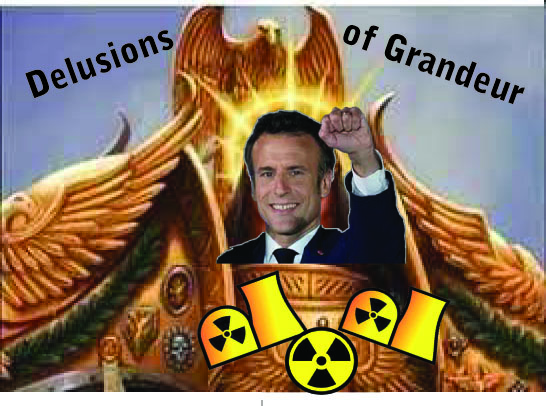
French President Emmanuel Macron said he was “ready to open a
discussion” with European allies about stationing France’s nuclear
weapons on their soil, in an effort to beef up defences against Russia. The
comments made by Macron in an interview with the broadcaster TF1 on Tuesday
come as he has been holding talks with Germany, Poland and other European
countries to explore whether and how France’s nuclear deterrence could be
extended on the continent. Such a move is being considered in response to
signs that US President Donald Trump wants to scale back the American
military presence in Europe and force European countries to take more
responsibility for their own security.
FT 13th May 2025, https://www.ft.com/content/96231d9c-ee48-43b3-9c82-bdc4002b41a5
Inspection at the Flamanville EPR: the nuclear watchdog points out serious shortcomings
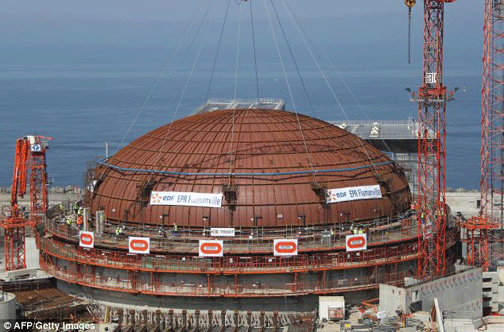
La Presse de la Manche 13th May 2025, https://actu.fr/normandie/flamanville_50184/inspection-a-lepr-de-flamanville-le-gendarme-du-nucleaire-pointe-de-graves-lacunes_62626503.html
Following an inspection into the subject of counterfeiting, falsification and fraud at the EPR site in Flamanville (Manche), the nuclear regulator, ASNR, has issued a severe report.
The affair had shaken the Flamanville EPR construction site (Manche). In February 2024 , journalists revealed cases of falsification involving an EDF supplier . The Flamanville construction site is directly concerned. Some parts, supplied by a subcontractor, are allegedly the subject of fraud . But it is difficult to obtain more information.
” Irregularities have been highlighted within two companies that are part of EDF’s supply chain and produce equipment for operating nuclear reactors as well as the Flamanville EPR reactor,” the Nuclear Safety Authority (ASN) simply admitted in a letter addressed to EDF.
An inspection carried out in March
The safety of the part is not in question. But the affair has revived concerns about fraud, counterfeiting and falsification in the nuclear sector .
A few months later, while the EPR continued its commissioning , the nuclear regulator, ASNR, published on its website the inspection follow-up letter concerning the Flamanville EPR on the theme of “Prevention, detection and treatment of the risk of counterfeiting, falsification and suspicion of fraud”.
For two days, on March 19 and 20, 2025 , the inspectors examined the implementation of the prevention policy , the training of staff on the subject, the monitoring of external stakeholders, the implementation of systems for collecting reports, etc. They carried out interviews with the central services and service providers. And, generally speaking, after this audit, the opinion of the ASNR is unequivocal , since it notes “ numerous weaknesses in the organization implemented.”
The inspectors noted: ”
Gaps in the local implementation of the national note on
irregularities ; weak promotion of the issue, with a lack of dedicated rituals and interfaces; a lack of periodicity in awareness-raising actions…”
Two months to react
The follow-up letter underlines that, generally speaking, it is “necessary to implement an organisation that allows the entire irregularity issue to be managed in a more robust manner, and that capitalisation around the sharing of feedback is still in its infancy and must be improved quickly “.
Seven pages of requests follow. EDF now has two months to formulate its observations and indicate the corrective measures taken in response to the ASNR’s findings.
1 This Month





PLEASE OPPOSE HR 8255 AND S.3639 – bills would accelerate satellite deployment, with no environmental review or safeguards – https://ncstd5li.quorum.us/campaign/169331/
To see nuclear-related stories in greater depth and intensity – go to https://nuclearinformation.wordpress.com
-
Archives
- October 2026 (43)
- September 2026 (339)
- August 2026 (330)
- July 2026 (355)
- June 2026 (287)
- May 2026 (306)
- April 2026 (356)
- March 2026 (251)
- February 2026 (267)
- January 2026 (308)
- December 2025 (358)
- November 2025 (359)
-
Categories
- 1
- 1 NUCLEAR ISSUES
- business and costs
- climate change
- culture and arts
- ENERGY
- environment
- health
- history
- indigenous issues
- Legal
- marketing of nuclear
- media
- opposition to nuclear
- PERSONAL STORIES
- politics
- politics international
- Religion and ethics
- safety
- secrets,lies and civil liberties
- spinbuster
- technology
- Uranium
- wastes
- weapons and war
- Women
- 2 WORLD
- ACTION
- AFRICA
- Atrocities
- AUSTRALIA
- Christina's notes
- Christina's themes
- culture and arts
- Events
- Fuk 2022
- Fuk 2023
- Fukushima 2017
- Fukushima 2018
- fukushima 2019
- Fukushima 2020
- Fukushima 2021
- general
- global warming
- Humour (God we need it)
- Nuclear
- RARE EARTHS
- Reference
- resources – print
- Resources -audiovicual
- Weekly Newsletter
- World
- World Nuclear
- YouTube
-
RSS
Entries RSS
Comments RSS

