Trump rejects leaked intelligence that says strikes did not destroy Iran nuclear programme.
Donald Trump insists nuclear sites in Iran were
“completely destroyed” by US military strikes, despite an intelligence
report casting doubt on their success The leaked damage assessment from the
Pentagon’s Defense Intelligence Agency estimates the attack only set Iran’s
nuclear programme back “a few months”
BBC 25th June 2025,
https://www.bbc.co.uk/news/live/c20xel1e97gt
Policy Exchange launches its new high level international Nuclear Enterprise Commission today

Policy Exchange launches its new Nuclear Enterprise Commission today, which will study how the Government should combine and amplify its civil and military nuclear programmes.
The Commission will be chaired by former Cabinet Secretary Rt Hon Simon Case CVO – a leading authority on the nuclear deterrent – and will include other internationally renowned nuclear experts.
As many nuclear states seek to update their capabilities, the Commission will examine the UK’s force posture in a multipolar world, the future of the NATO Nuclear Planning Group, the US nuclear shield and tactical nuclear weapons.
The overlapping civil and military benefits of expanded nuclear capacity must be encouraged, and Policy Exchange’s Commission will address how the Government can break-out of over-regulation to get building.
The Commission will bring together internationally renowned experts on civil and military nuclear, with representation from the UK, America, Europe, and Asia. The programme will run for six months, holding public and private events and publishing Research Notes on the key themes pertaining to the nuclear enterprise.
To mark the launch of the commission, Policy Exchange today publishes two studies on the history of the UK’s civil and military nuclear programmes.
Policy Exchange 24th June 2025, https://policyexchange.org.uk/policy-exchange-launches-new-nuclear-enterprise-commission/
Why do we pretend heatwaves are fun – and ignore the brutal, burning reality?

An estimated 600 people will die as a result of this one heatwave. Those
kinds of numbers from a virus would spark at least a localised lockdown,
and in a plane crash, a national day of mourning.
But it’s hard to respond to climate fatalities proportionately without confronting global
heating and taking on the underlying inequalities that make some people
more vulnerable than others. High temperatures are much more dangerous when
you’re disabled, when you’re homeless, when you’re incarcerated, when
you’re old. It would be pretty rum to be squeezing disability benefits at
the same time as worrying about whether disabled people are at greater risk
from the weather, and need more care – better to imagine this an act of
God, in which the deaths cannot possibly be prevented.
Guardian 23rd June 2025, https://www.theguardian.com/commentisfree/2025/jun/23/why-do-we-pretend-heatwaves-are-fun-and-ignore-the-brutal-burning-reality
‘Conspicuous’ Small Modular Nuclear Reactors need fresh police funding model, security expert warns
23 Jun, 2025 By Tom Pashby New Civil Engineer 23rd June 2025
A proliferation of small modular reactors (SMRs) across England and Wales, expanding the number of reactors and types of locations they are deployed in, means the country needs a fresh police funding model for SMR security, an expert has said.
https://www.newcivilengineer.com/latest/conspicuous-smrs-need-fresh-police-funding-model-security-expert-warns-23-06-2025/
Meet the Israeli fanatic running Ted Cruz’s office

Wyatt Reed·June 23, 2025, The Grayzone
After Ted Cruz’s humiliation by Tucker Carlson, attention has focused on a top staffer of the self-proclaimed “leading defender of Israel in the United States Senate.”
On June 18, former Fox host Tucker Carlson published a video which, though marketed as an interview, was more of a snuff film. Over the course of two hours, Carlson can be seen rhetorically disemboweling his debate opponent, US Senator Ted Cruz, on the politician’s determination to see the US attack Iran on Israel’s behalf.
While Cruz presents himself as a Christian Zionist moved by his own zealotry to support Israel, the politician’s Tel Aviv-driven policy line can also be traced back to his Senior Advisor for Policy and Communications, an Israeli-born Zionist lobbyist named Omri Ceren.
Before overseeing Cruz’s public relations, Ceren managed his foreign policy docket as his national security advisor. Prior to joining the Senator’s staff, Ceren served as the press director for The Israel Project, a Zionist pressure group which was forced to close down after being exposed as a de facto Israeli government front by Al Jazeera’s groundbreaking undercover investigation, The Lobby. Before that, Ceren cut his teeth lobbying for Ivory Coast dictator Laurent Gbagbo, who relied on Ceren as a registered foreign agent lending his marketing expertise to the embattled regime.
Ceren has consistently opposed a nuclear deal with Iran since at least 2015, when he declared that any agreement would simply ensure Tehran was “able to cheat with impunity.” At a talk hosted by the neocon Hudson Institute think tank in 2018, he suggested Washington should continue preaching about “freedom” and encouraging Iranian protesters to pursue regime change while simultaneously maintaining Trump’s ban on Iranians entering the US…………………………………………….
Since the attack, Cruz has posted 14 comments on Twitter/X. 12 of them consisted of breathless statements cheering the bombing or attacks on opponents of the war, whom he branded as “the death to America crowd.”… https://thegrayzone.com/2025/06/23/israeli-fanatic-ted-cruz-office/
Donald Trump dominated extraordinary NATO summit that saw European defence spending increase – NATO chief calls Trump ‘Daddy’
ABC News, By Europe correspondent Elias Clure at The Hague, 26 June 25
Donald Trump was given a royal welcome by the monarch of the Netherlands as he arrived at the NATO summit in The Hague.
He left feeling like a king.
Member nations agreed to lift their defence spending to 5 per cent of GDP over 10 years and Mr Trump was quick to take credit, describing it as a “big win” for the United States.
He’d been calling for more spending and had made threats about the future of the alliance if it wasn’t agreed upon.
“They said, ‘You did it, sir, you did it sir.’ Well, I don’t know if I did it, but I think I did,” Mr Trump said.
When the commitment was finalised by members in an official summit declaration, NATO members proclaimed the summit a huge success.
But the event, which aims to hear from delegations of the 32 NATO countries and many more partners and allies, seemed to revolve around the presence of one man.
Trump insists damage was done
Mr Trump’s first official engagement at the NATO summit HQ was with Secretary-General Mark Rutte.
The president arrived at the meeting with US Defense Secretary Pete Hegseth and State Department boss Marco Rubio. The meeting began with Mr Rutte lauding America’s actions in Iran.
“The great thing is you took out the nuclear capability of Iran. This was crucial. You did it in a way which is extremely impressive. But the signal it sends to the rest of the world that this president, when it comes to it, yes, he is a man of peace, but if necessary, he is willing to use strength,” Mr Rutte said.
When the American delegation was probed by the press on the validity of the White House’s claims that Iran’s nuclear capabilities had been comprehensively demolished, it pushed back.
Mr Hegseth accused sceptics of being “politically motivated”, saying the damage was, in fact, “severe”.
Mr Rubio declared that the damage to the enrichment facilities was so bad “you can’t even find it on the map … it’s totally wiped out”.
Not to be outdone, Mr Trump then provided the most vivid description of Operation Midnight Hammer’s success, comparing the raid to the most destructive bombing in history.
“That hit ended the war. I don’t want to use an example of Hiroshima. I don’t want to use an example of Nagasaki. But that was essentially the same thing. That ended that war. This ended that war,”
Mr Trump said.
Mr Rutte watched on in silence.
NATO chief calls Trump ‘Daddy’
The NATO secretary-general has been quite transparent in his attempts to flatter the president.
Mr Trump seemed so taken by the gushing display of admiration by Mr Rutte that he leaked a text message reportedly sent to him by the alliance boss.
“Mr. President, dear Donald, Congratulations and thank you for your decisive action in Iran, that was truly extraordinary, and something no one else dared to do. It makes us all safer,” Mr Rutte reportedly wrote in the message.
Mr Rutte said at the summit that he was not embarrassed by the message, and he was actually happy for it to be made public.
“There’s nothing in it that had to stay secret,” he said.
At Mr Rutte’s meeting with Mr Trump, he was asked about what he thought about the commander-in-chief’s use of the f-word when describing Israel and Iran.
Mr Trump said that the two countries “had a big fight, like two kids in a schoolyard”.
Mr Rutte’s response was light-hearted but telling.
“Daddy has to sometimes use strong language.”……………………………………….
https://www.abc.net.au/news/2025-06-26/donald-trump-dominates-extraordinary-nato-summit/105461646
US didn’t destroy Iran’s nuclear programme: Here’s what new intel says
US President Trump doubles down on his assertion that the Iranian nuclear programme has been set back by decades.
By Al Jazeera Staff, 25 Jun 2025, https://www.aljazeera.com/news/2025/6/25/us-didnt-destroy-irans-nuclear-programme-heres-what-new-intel-says
The United States’ strikes on three key Iranian nuclear sites on Sunday failed to destroy underground facilities, and set Tehran’s nuclear programme back only by a few months, according to an assessment of a confidential American intelligence report.
The “top secret” document prepared by the Defense Intelligence Agency (DIA) – the intelligence arm of the Pentagon – and published by major US news outlets on Tuesday is at odds with President Donald Trump’s claims about the strikes. Trump has insisted that the nuclear facilities at Fordow, Natanz, and Isfahan were “obliterated” by a combination of bunker busting and conventional bombs.
Trump and his administration’s senior officials are dismissing the intelligence report and calling out the reporting over the DIA’s assessment as “fake news”.
Speaking at a NATO summit in The Hague, the US president said he believed Iran’s nuclear programme was set back by decades.
So, what did the DIA assessment say about US strikes? What has Iran said about the attacks? And how does the intelligence report contrast with the Trump administration’s public claims?
What did the DIA report say?
A preliminary report prepared by the DIA noted that rather than obliterating Iran’s nuclear programme, the US bombings had only set it back by a few months.
Before Israel attacked Iran on June 13, US agencies had noted that if Iran rushed to assemble a nuclear weapon, it would take it about three months.
The DIA’s five-page report now estimates this to be delayed by less than six months, reported The New York Times. As per the early findings, the US strikes blocked the entrances to two of the facilities but did not collapse the underground facilities.
The DIA report also reveals that the US agency believes that Iran’s stockpile of enriched uranium was moved before the strikes, which destroyed little of the nuclear material.
Shortly after the US strikes on June 22, Mehdi Mohammadi, an adviser to the chairman of the Iranian parliament, claimed that the authorities had evacuated the Fordow facility in advance. “Iran has been expecting strikes on Fordow for several days. This nuclear facility was evacuated, no irreversible damage was sustained during today’s attack,” Mohammadi had said.
The US president on Wednesday said he doesn’t buy Iranian claims that they moved enriched uranium out of the Fordow nuclear facility. “I believe they didn’t have a chance to get anything out because they acted fast,” said Trump. “If it would have taken two weeks, maybe, but it’s very hard to remove that kind of material… and very dangerous.
“Plus, they knew we were coming,” Trump added. “And if they know we’re coming, they’re not going to be down there.”
CNN first reported on the DIA report, quoting unnamed officials that the US strikes’ effect on all three sites – Fordow, Natanz, and Isfahan – was largely restricted to aboveground structures, which were severely damaged.
On Tuesday, the Trump administration told the United Nations Security Council that the US strikes had “degraded” the Iranian facilities – short of Trump’s earlier assertion that the attacks had “obliterated” the sites.
The strikes have reportedly badly damaged the electrical system at the Fordow facility. However, it was not immediately clear how long Iran could take to gain access to the underground facilities and repair these systems.
On Monday, Rafael Grossi, the head of the UN nuclear watchdog IAEA, said that while “no one, including the IAEA, is in a position to have fully assessed the underground damage at Fordow”, it is expected to be “very significant”.
Two people familiar with the DIA’s assessment told CNN that Iran’s stockpile of enriched uranium was not destroyed and the centrifuges are largely “intact”.
Some analysts cautioned against drawing final conclusions. Analysts told the Reuters news agency that the extent of damage to the Fordow uranium enrichment facility would not necessarily be revealed if the assessment was based on satellite imagery.
How did the US strike Iranian nuclear sites?
After 10 days of fighting between Israel and Iran, the US had militarily intervened on June 22 by hitting the Iranian nuclear sites.
Fordow is a highly fortified underground uranium enrichment facility reportedly buried hundreds of metres deep in the mountains in northwestern Iran. While Natanz is Iran’s largest and most central enrichment complex, containing vast halls of centrifuges, some underground, Isfahan is a major nuclear research and production centre that includes a uranium conversion facility and fuel fabrication plants.
How did the US strike Iranian nuclear sites?
After 10 days of fighting between Israel and Iran, the US had militarily intervened on June 22 by hitting the Iranian nuclear sites.
Fordow is a highly fortified underground uranium enrichment facility reportedly buried hundreds of metres deep in the mountains in northwestern Iran. While Natanz is Iran’s largest and most central enrichment complex, containing vast halls of centrifuges, some underground, Isfahan is a major nuclear research and production centre that includes a uranium conversion facility and fuel fabrication plants.
The US forces dropped 14 30,000-pound (13,000kg) bunker-buster bombs, while Navy submarines are said to have coordinated strikes by cruise missiles at the Natanz and Isfahan sites.
The GBU-57 Massive Ordnance Penetrator (MOP) – the most powerful bunker-buster bomb in the US military arsenal weighing nearly 13,000kg (30,000lb) – was used in the strike.
The US intervention was understood to be critical for the Israeli campaign against Iranian nuclear facilities, especially Fordow, due to its depth that kept it out of reach for the Israeli military.
How did the DIA report contrast with Trump’s claims?
In March this year, the US spy chief Tulsi Gabbard had informed Congress that there was no evidence Iran was building a nuclear weapon, and Iranian Supreme Leader Ali Khamenei had not authorised the nuclear weapons programme that he had earlier suspended in 2003.
On June 17, as Israel and Iran continued to trade ballistic missiles, Trump was returning to Washington from the G7 summit in Canada, when he snubbed his own administration, including the spy chief Gabbard, saying she and the intel agencies had gotten it “wrong”.
He claimed that Iran was “very close” to having a nuclear weapon. On June 22, the US struck Iranian nuclear facilities. “The strikes were a spectacular military success,” Trump said in a televised address. “Iran’s key nuclear enrichment facilities have been completely and totally obliterated.”
The next day, Trump wrote on his Truth Social platform, “The damage to the Nuclear sites in Iran is said to be ‘monumental.’ The hits were hard and accurate. Great skill was shown by our military. Thank you!”
On Wednesday, at the NATO summit, he reiterated his stance. “The last thing they [Iran] want to do is enrich anything right now… They’re not going to have a bomb and they’re not going to enrich,” he said at The Hague.
Top officials from his administration, including Vice President JD Vance and Defense Secretary Pete Hegseth, have repeated the obliteration claims since then.
“Based on everything we have seen – and I’ve seen it all – our bombing campaign obliterated Iran’s ability to create nuclear weapons,” Hegseth said in a statement provided to Reuters.
“Our massive bombs hit exactly the right spot at each target – and worked perfectly. The impact of those bombs is buried under a mountain of rubble in Iran; so anyone who says the bombs were not devastating is just trying to undermine the President and the successful mission.”
How has Trump, the White House reacted?
Trump spent a good amount of time letting off steam on his Truth Social platform after the DIA report dropped.
“THE NUCLEAR SITES IN IRAN ARE COMPLETELY DESTROYED! BOTH THE TIMES AND CNN ARE GETTING SLAMMED BY THE PUBLIC!” Trump wrote in all-caps, referring to the reporting by The New York Times and CNN.
“FAKE NEWS CNN, TOGETHER WITH THE FAILING NEW YORK TIMES, HAVE TEAMED UP IN AN ATTEMPT TO DEMEAN ONE OF THE MOST SUCCESSFUL MILITARY STRIKES IN HISTORY,” Trump said in a post.
The US president also posted a series of apparently bizarre videos, including one of B-2 bombers taking off to a “bomb Iran” song in the background.
Trump is currently in the Netherlands, attending this week’s NATO summit, and reiterated to reporters that the damage from the strikes was significant. “I think it’s been completely demolished,” he said, adding, “Those pilots hit their targets. Those targets were obliterated, and the pilots should be given credit.
“That place is under rock. That place is demolished,” Trump responded to a question on the possibility of Iran rebuilding its nuclear program.
He took further shots at CNN, saying: “These cable networks are real losers. You’re gutless losers. I say that to CNN because I watch it – I have no choice. I got to watch it. It’s all garbage. It’s all fake news.”
He said the intelligence following the strikes in Iran was “inconclusive”. “The intelligence says we don’t know. It could’ve been very severe. That’s what the intelligence suggests.”
“It was very severe. There was obliteration,” he reiterated on Wednesday.
The White House press secretary, Karoline Leavitt, called the DIA assessment “flat-out wrong” and leaked to the press “by an anonymous, low-level loser in the intelligence community”.
“The leaking of this alleged assessment is a clear attempt to demean President Trump, and discredit the brave fighter pilots who conducted a perfectly executed mission to obliterate Iran’s nuclear program,” she said in a statement. “Everyone knows what happens when you drop 14 30,000 pound bombs perfectly on their targets: Total obliteration.”
Plutonium Levels in Sediments Remain Elevated 70 Years After Nuclear Tests

June 24, 2025,
https://www.marinetechnologynews.com/news/plutonium-levels-sediments-remain-650328
Researchers from Edith Cowan University (ECU) in Australia have confirmed plutonium levels in sediment up to 4,500 times greater than the Western Australian coastline.
Three plutonium-based nuclear weapons tests were conducted at the Montebello Islands in the 1950’s, which introduced radioactive contamination to the surrounding environment. The first nuclear test, coded Operation Hurricane, had a weapon’s yield of some 25kT, and formed a crater in the seabed, while the second and third tests, dubbed Operation Mosaic G1 and G2, had weapons yields of around 15kT and 60kT, respectively.
The three tests released radioactive isotopes including plutonium, strontium (90Sr) and caesium (137Cs) into the surrounding marine environment.
“Plutonium is anthropogenic, which means that it doesn’t exist on its own in nature. The only way it is introduced into an environment is through the detonation of nuclear weapons and from releases from nuclear reprocessing plants and, to a lesser extent, accidents in nuclear power plants,” said ECU PhD student and lead author Madison Williams-Hoffman.
“When plutonium is released into a coastal setting in the marine environment, a significant fraction will attach to particles and accumulate in the seabed, while some may be transported long distances by oceanic currents.”
The region is not inhabited by humans and has not been developed, however it is visited by fishing boats, so collecting data on the levels of contamination in the marine environment is important.
Currently, the protected island archipelago and surrounding marine areas also reside within the Montebello Islands Marine Park (MIMP). The MIMP is ecologically significant due to the presence of numerous permanent or migratory species, and its high-value habitat is used for breeding and rearing by fish, mammals, birds and other marine wildlife.
The water and sediment quality within the MIMP are currently described as ‘generally pristine’, and it is fundamental to maintain healthy marine ecosystems in the region.
The concentrations of plutonium at Montebello Islands were between 4 to 4,500 times higher than those found in sediment from Kalumburu and Rockingham from the Western Australian coastline, with the northern area of the archipelago, close to the three detonation sites, having four-fold higher levels than the southern area.
The concentrations of plutonium found in the sediment at Montebello Islands were similar to those found in the sediment at the Republic of Marshall Islands (RMI) test sites, despite 700-fold higher detonation yields from nuclear testing undertaken at RMI.
Plutonium is an alpha emitter so, unlike other types of radiation, it cannot travel through the skin and is most dangerous when ingested or inhaled.
The research was undertaken by Williams-Hoffman, under the co-supervision of Prof. Pere Masqueand at ECU and Dr Mathew Johansen at ANTSO.
EDF chief weighs asset sales as Paris pushes for new nuclear focus

a “complicated economic equation
… unless someone has found a magic wand”
Insiders say Fontana’s stance signals he is aligned with the French
government unlike his predecessor. EDF’s new boss is conducting a
portfolio review that could lead to the French energy group selling some
assets, as he seeks to meet government demands to focus on building new
nuclear reactors in France.
Bernard Fontana has told insiders that he
wanted to assess which assets were not profitable or did not fit with the
state-owned group’s strategic priorities, according to several people
with knowledge of the situation. Fontana, who took over as chief executive
of the state-owned group last month, told the people that sales could come
after the review, although he has not yet concluded which parts of the
business should be sold off.
The state “has said that we have to make the
new nuclear programme in France a success, and exploit the current nuclear
centres. For the rest, if there aren’t the means, we’ll have to
arbitrate”, said one of the people.
Its other assets and subsidiaries
include the construction engineering division Framatome — of which
Fontana was previously CEO

— renewable installations in France and across
the world, Italian utility business Edison and services company Dalkia.
Several people familiar with EDF said Dalkia and Edison are among the
business units that could be sold. Renewable assets, with the exception of
EDF’s hydraulic power projects, could also be under consideration, the
people said.
Still, the company’s aims could be complicated if it tries
to sell assets during a difficult economic environment, potentially forcing
it to offload some assets at deep discounts, especially in the US where it
has a number of offshore wind and solar projects.
Asset sales would also do
little to meet the enormous costs of delivering the new EPR2 programme,
people familiar with the business said. The government and EDF recently
agreed a funding mechanism for the project, but the total cost is yet to be
determined.
Building the EPR2s and meeting EDF’s other priorities such as
guaranteeing low energy prices to consumers and industrial groups, and
completing Hinkley Point make for a “complicated economic equation
… unless someone has found a magic wand”, said one of the people.
FT 25th June 2025
https://www.ft.com/content/e2c4ba72-b40a-4d7b-a820-70957b06958e
Israeli, US bombing of Iran a failure of epic proportions

25 June 2025 AIMN Editorial, By Walt Zlotow West Suburban Peace Coalition, Glen Ellyn IL https://theaimn.net/israeli-us-bombing-of-iran-a-failure-of-epic-proportions/
The illegal, criminal bombings on Iran which killed over 800 and wounded over 2,500 have failed spectacularly.
While still going on, there are indications from the Trump administration a ceasefire may soon be possible.
What has 11 days of bombings accomplished?
It has not destroyed Iran’s nuclear facilities or its enriched uranium. It has not achieved regime change in Iran. It has not shattered Iran into failed state status. It has likely rallied Iran’s population to coalesce around besieged Iranian leadership.
It has brought retaliation bombings to Israel killing dozens and wounding hundreds, the largest such attacks in its 77 year existence.
It has likely motivated Iran to repair and rebuild its nuclear capabilities outside of oversight of nuclear inspectors. Iran may decide to withdraw from the Nuclear Non-Proliferation Treaty (NPT) designed to give signatories the inalienable right to civilian nuclear development. When they observe how Israel and the US cavalierly bomb non-nuclear weapons states, Iran may decide they have no choice but to join the nuclear club. Since Iran was not developing nuclear weapons, the Israeli, US misadventure may speed up the very thing they claimed urgency in preventing.
Possibly the worst bombing campaign failure was to obliterate US credibility as a responsible diplomatic partner. By using the duplicity of negotiating an end to the imagined nuclear crisis to enable Israel’ sneak attack, US now ranks dead last of all 194 other countries to negotiate anything of consequence. Check that, the US can still negotiate with Israel which has complete trust in US backing of their ongoing genocide in Gaza and lust to topple Iran as their only hegemonic rival in the Middle East.
The US has made of shambles of international law. It has substituted its Orwellian ‘Rules Based Order’ allowing it to wage regime change, including outright war, on any targeted state at the point of a smart bomb fired by dumb, international war criminals.
But no matter how badly deranged US policy turns out, the current CICW (Commander in Criminal War) will call it “a spectacular success.”
Radiation risks from US strikes on Iran’s nuclear sites seen as minimal
Negar Mojtahedi, Iran International, Jun 23, 2025, https://www.iranintl.com/en/202506228904
S airstrikes on Iran’s nuclear facilities are unlikely to cause serious radioactive fallout, nuclear experts told Iran International despite fears of a nuclear disaster.
Their assessments come as Iran threatens retaliation, and the International Atomic Energy Agency (IAEA) holds an emergency meeting on Monday in response to the escalating crisis.
“For most facilities the impact of direct strikes will, to a large extent, most likely be very localized,” said Dr. Kathryn Higley, distinguished professor of nuclear science and engineering at Oregon State University and president of the National Council on Radiation Protection and Measurements told Iran International.
“While enriched uranium is radioactive, it is not terribly so. If the uranium is present and released as hexafluoride, that could also pose a serious but still localized hazard due to the fluorine in the compound being reactive,” she said.
Dr. David Albright, founder of the Institute for Science and International Security, told Iran International that concerns over radiation from a strike on Fordow are overblown when compared with past incidents.
“One way to understand the low radiological risk of bombing Fordow is from a comparison to the underground Natanz enrichment site with over 15,000 centrifuges and many tons of uranium,” he said.
“It was attacked with earth penetrators and there is no off-site radiation risk. Fordow has about 2,700 centrifuges and much less uranium, and is more deeply buried underground. Hard to expect worse than Natanz.”
Albright emphasized that the design and location of Iran’s underground enrichment sites inherently limit the spread of radioactive.
Temporary contamination risks are primarily limited to areas near uranium conversion and enrichment plants, according to Andrea Stricker, a research fellow at the Foundation for Defense of Democracies (FDD).
“Response teams going near the destroyed facilities, for example, would need to wear protective gear temporarily due to risks of inhaling or ingesting aerially dispersed uranium chemical compounds,” said Stricker. “There is not concern for dispersal beyond the immediate plants.”
The US strike on the heavily fortified Fordow facility has likely trapped radioactive material underground, limiting any broader hazard, Stricker said.
Iran’s response: ‘no signs of contamination’
Their comments follow US President Donald Trump’s announcement on Sunday that American forces had struck Iran’s Fordow, Isfahan, and Natanz nuclear sites, which he described as “completely and fully obliterated.”
While Iran confirmed the strikes, it insisted its nuclear program would continue undeterred.
Iran’s National Nuclear Safety System reported that radiation detectors at the affected facilities showed “no signs of contamination” and stated, “There is no danger to the residents living around the aforementioned sites,” according to Iran State media.
The IAEA said it had observed “no increase in off-site radiation levels” and would continue monitoring the situation.
Director General Rafael Grossi announced an emergency meeting of the agency’s 35-member board of governors. In response, Iran’s nuclear chief Mohammad Eslami called for an investigation and accused Grossi of “inaction and complicity.”
Isfahan and Natanz—both previously targeted by Israeli airstrikes—have not shown any evidence of radiation release, according to IAEA monitoring.
Experts say Bushehr not likely to be targeted
Bushehr, Iran’s only operational nuclear power reactor, is not expected to be targeted.
“Israel will not have the Bushehr nuclear power plant on its target list, as striking the reactor would cause a radiological disaster in the region,” Stricker said.
Bushehr is used for civilian energy production, not enrichment. The plutonium it generates is not suitable for nuclear weapons, and spent fuel is required to be returned to Russia.
Still, the plant contains significant quantities of nuclear material, and Grossi has warned that an attack on Bushehr could have the most serious radiological consequences of any site in Iran.
Tehran continues to maintain that its nuclear program is for peaceful purposes, but Trump and Israeli officials argue Iran is moving dangerously close to weapons capability.
“There will either be peace,” Trump said during a national address following the strikes, “or there will be tragedy for Iran.”
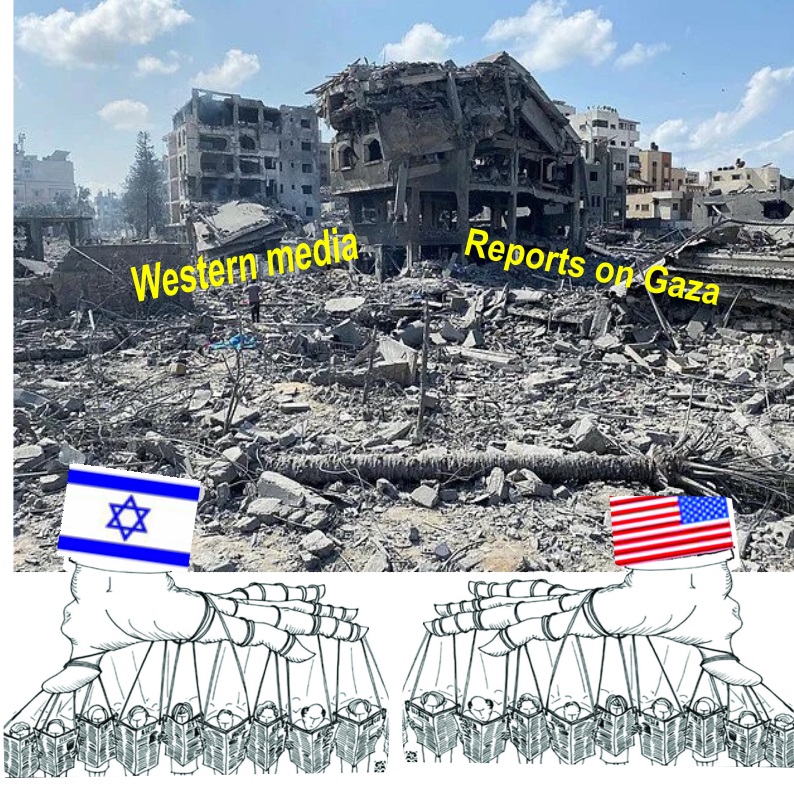
Why BBC editors must one day stand trial for colluding in Israel’s genocide
20 June 2025, https://www.jonathan-cook.net/blog/2025-06-20/bbc-editors-trial-israel-genocide/
In a confrontation with BBC news chief Richard Burgess, journalist Peter Oborne sets out six ways the state broadcaster has wilfully misled audiences on Israel’s destruction of Gaza
Veteran journalist Peter Oborne eviscerated the BBC this week over its shameful reporting of Gaza – and unusually, he managed to do so face-to-face with the BBC’s executive news editor, Richard Burgess, during a parliamentary meeting.
Oborne’s remarks relate to a new and damning report by the Centre for Media Monitoring, which analysed in detail the BBC’s Gaza coverage in the year following Hamas’ one-day attack on 7 October 2023. The report found a “pattern of bias, double standards and silencing of Palestinian voices.” These aren’t editorial slip-ups. They reveal a systematic, long-term skewing of editorial coverage in Israel’s favour.
Oborne was one of several journalists to confront Burgess. His comments, filmed by someone at the meeting, can be watched below [on original]
Oborne makes a series of important points that illustrate why the BBC’s slanted, Israel-friendly news agenda amounts to genocide denial, and means executives like Burgess are directly complicit in Israeli war crimes:
1. The BBC has never mentioned the Hannibal directive, invoked by Israel on 7 October 2023, that green-lit the murder of Israeli soldiers and civilians, often by Apache helicopter fire, to prevent them being taken captive by Hamas. The Israeli media has extensively reported on the role of the Hannibal directive in the Israeli military’s response on 7 October, but that coverage has been completely ignored by the BBC and most UK media outlets.
Israel’s invocation of the Hannibal directive – essential context for understanding what happened on 7 October – explains much of the destruction that day in Israel usually attributed to Hamas “barbarism”, such as the graveyard of burnt-out, crumpled cars and the charred, crumbling remains of houses in communities near Gaza.
Hamas, with its light weapons, did not have the ability to inflict this kind of damage on Israel, and we know from Israeli witnesses, video footage and admissions from Israeli military officers that Israel was responsible for at least a share of the carnage that day. How much we will apparently never know because Israel is not willing to investigate itself, and media like the BBC are not doing any investigations themselves, or putting any pressure on Israel to do so.
2. The BBC has never mentioned Israel’s Dahiya doctrine, the basis of its “mowing the lawn” approach to Gaza over the past two decades, in which the Israeli military has intermittently destroyed large swaths of the tiny enclave. The official aim has been to push the population, in the words of Israeli generals, back to the “Stone Age”. The assumption is that, forced into survival mode, Palestinians will not have the energy or will to resist their brutal and illegal subjugation by Israel and that it will be easier for Israel to ethnically cleanse them from their homeland.
Because Israel has been implementing this military doctrine – a form of collective punishment and therefore indisputably a war crime – for at least 20 years, it is critically important in any analysis of the events that led up to 7 October, or of the genocidal campaign of destruction Israel launched subsequently.
The BBC’s refusal even to acknowledge the doctrine’s existence leaves audiences gravely misinformed about Israel’s historical abuses of Gaza, and deprived of context to interpret the campaign of destruction by Israel over the past 20 months.
3. The BBC has utterly failed to report the many dozens of genocidal statements from Israeli officials since 7 October – again vital context for audiences to understand Israel’s goals in Gaza.
Perhaps most egregiously, the BBC has not reported Israeli prime minister Benjamin Netanyahu’s biblically-inspired comparison of the Palestinians to “Amalek” – a people the Jews were instructed by God to wipe from the face of the earth. Netanyahu knew this clearly genocidal statement would have especial resonance with what now amounts to a majority of the combat soldiers in Gaza who belong to extreme religious communities that view the Bible as the literal truth.
The hardest thing to prove in genocide is intent. And yet the reason Israel’s violence in Gaza is so clearly genocidal is that every senior official from the prime minister down has repeatedly told us that genocide is their intent. The decision not to inform audiences of these public statements is not journalism. It is pro-Israel disinformation and genocide denial.
4. By contrast, as Oborne notes, on more than 100 occasions when guests have tried to refer to what is happening in Gaza as a genocide, BBC staff have immediately shut them down on air. As other investigations have shown, the BBC has strictly enforced a policy not only of banning the use of the term “genocide” by its own journalists in reference to Gaza but of depriving others – from Palestinians to western medical volunteers and international law experts – of the right to use the term as well. Again, this is pure genocide denial.
5. Oborne also points to the fact that the BBC has largely ignored Israel’s campaign of murdering Palestinian journalists in Gaza. A greater number have been killed by Israel in its war on the tiny enclave than the total number of journalists killed in all other major conflicts of the past 160 years combined.
The BBC has reported just 6 per cent of the more than 225 journalists killed by Israel in Gaza, compared to 62 per cent of the far smaller number of journalists killed in Ukraine. This is once again vital context for understanding that Israel’s goals are genocidal. It hopes to exterminate the main witnesses to its crimes.
6. Oborne adds a point of his own. He notes that the distinguished Israeli historian Avi Shlaim lives in the UK and teaches at Oxford University. Unlike the Israeli spokespeople familiar to BBC audiences, who are paid to muddy the waters and deny Israel’s genocide, Shlaim is both knowledgeable about the history of Israeli colonisation of Palestine and truly independent. He is in a position to dispassionately provide the context BBC audiences need to make judgments about what is going on and who is responsible for it.
And yet extraordinarily, Shlaim has never been invited on by the BBC. He is only too ready to do interviews. He has done them for Al Jazeera, for example. But he isn’t invited on because, it seems, he is “the wrong sort of Jew”. His research has led him to a series of highly critical conclusions about Israel’s historical and current treatment of the Palestinians. He calls what Israel is doing in Gaza a genocide. He is one of the prominent Israelis we are never allowed to hear from, because they are likely to make more credible and mainstream a narrative the BBC wishes to present as fringe, loopy and antisemitic. Again, what the BBC is doing – paid for by British taxpayers – isn’t journalism. It is propaganda for a foreign state.
Watch the video above [on original] to see how Burgess responds. His answer is a long-winded shrugging of the shoulders, a BBC executive’s way of acting clueless – an equivalent of Manuel, the dim-witted Spanish waiter in the classic comedy show Fawlty Towers, saying: “I know nothing.”
Other lowlights from Burgess include his responding to a pointed question from Declassified journalist Hamza Yusuf on why the BBC has not given attention to British spy planes operating over Gaza from RAF base Akrotiri on Cyprus. “I don’t think we should overplay the UK’s contribution to what’s happening in Israel,” Burgess answers.
So the British state broadcaster has decided that its duty is not to investigate the nature of British state assistance to Israel in Gaza, even though most experts agree what Israel is doing there amounts to genocide. Burgess thinks scrutiny of British state complicity would be “overplaying” British collusion, even though the BBC has not actually investigated the extent or nature of that collusion to have reached a conclusion. This is the very antithesis of what journalism is there to do: monitor the centres of power, not exonerate such power-centres before they have even been scrutinised.
Labour MP Andy McDonald responded to Burgess: “To underplay the role of the UK is an error.”
It is more than that. It is journalistic complicity in British and Israeli state war crimes.
Here are a few key statistical findings from the Centre for Media Monitoring’s report on BBC coverage of Gaza over the year following 7 October 2023:
- The BBC ran more than 30 times more victim profiles of Israelis than Palestinians.
- The BBC interviewed more than twice as many Israelis as Palestinians.
- The BBC asked 38 of its guests to condemn Hamas. It asked no one to condemn Israel’s mass killing of civilians, or its attacks on hospitals and schools.
- Only 0.5% of BBC articles mentioned Israel’s illegal occupation of Palestine.The BBC mentioned “occupation” – the essential context for understanding the relationship between Israel and Palestinians – only 14 times in news articles when providing context to the events of 7 October 2023. That amounted to 0.3% of articles. Additional context – decades of Israeli apartheid rule and Israel’s 17-year blockade of Gaza — were entirely missing from the coverage.
- The BBC described Israeli captives as “hostages”, while Palestinian detainees, including children held without charge, were called “prisoners”. During one major hostage exchange in which 90 Palestinians were swapped for three Israelis, 70% of BBC articles focused on those three Israelis.
- The BBC covered Ukraine with twice as many articles as Gaza in the time period, even though the Gaza story was newer and Israeli crimes even graver than Russia ones. The corporation was twice as likely to use sympathetic language for Ukrainian victims than it was for Palestinian victims.
- In coverage, Palestinians were usually described as having “died” or been “killed” in air strikes, without mention of who launched those strikes. Israeli victims, on the other hand, were “massacred”, “slaughtered” and “butchered” – and the author of the violence was named, even though, as we have seen, the Hannibal directive clouded the picture in at least some of those cases.
As is only too evident watching Burgess respond, he is not there to learn from the state broadcaster’s glaring mistakes – because systematic BBC pro-Israel bias isn’t a mistake. It’s precisely what the BBC is there to do.
UK to purchase US jets capable of carrying nuclear weapons
Britain will join Nato’s airborne atomic mission in a significant overhaul of the
country’s defence strategy. The UK is to purchase 12 US-made F-35 stealth
fighter jets capable of carrying nuclear weapons, in a sweeping overhaul of
the country’s defence strategy. Under the plans, Britain will join
Nato’s airborne nuclear mission, and the F-35A jets are expected to carry
American atomic bombs, as the military alliance contends with the growing
threat of Russia.
FT 24th June 2025, https://www.ft.com/content/1b779329-18c5-4984-a308-58a2afd12746
Did the US wipe out Iran’s nuclear programme? What researchers know
Nuclear-policy specialist David Albright told Nature how his organization is monitoring for damage to nuclear sites following US and Israeli strikes.
By , Davide Castelvecchi, Nature, 23 June 25
On 22 June, many people woke to the news that the United States had bombed nuclear sites in Iran, with the goal of destroying its ability to produce nuclear weapons. The raids targeted Iran’s uranium-enrichment facilities in Fordow and Natanz, and its nuclear research centre in Esfahan, using stealth bombers — which dropped massive ‘bunker-busters’ — and cruise missiles.
Although Iran says its nuclear programme is for peaceful purposes, experts have long assessed that Iran was close to having the capability of building nuclear weapons, if it chose to do so. The US attacks followed a bombing campaign by Israel, which has since carried out further attacks on Iranian nuclear facilities. On 23 June, the International Atomic Energy Agency (IAEA) reported that “very significant damage is expected to have occurred” at the underground Fordow site.
Researchers at academic institutions and think tanks are also assessing the potential impacts of the attacks on Iran’s nuclear capabilities. Analysts have said that the attacks probably set the nuclear programme back substantially, but not permanently. In particular, Iran could have moved stockpiles of highly-enriched uranium, and perhaps some enrichment centrifuges, elsewhere. David Albright, a nuclear-policy specialist and president of the Institute for Science and International Security in Washington DC, spoke to Nature about what researchers know.
How do you assess the impact of the bombings on Iran’s nuclear capabilities?
There aren’t many researchers who are able to assess the impact of the bombings. We have decades of experience with the Iranian nuclear programme, so we know their facilities and activities very well. And we have great access to satellite imagery — which we have to buy. We try to buy some every day. And we utilize analysts who have decades of experience to analyze these images. We also have lots of contacts with governments, and we have colleagues who also have contacts with governments.
A lot of the damage is on the surface, so it’s a question of knowing what the building did [in terms of its role in the nuclear program]. We rely on our repository of information about the sites that are attacked. So it’s pretty straightforward.
Obviously, more problematic are the underground sites. When we initially assessed Israel’s bombing of Natanz, three days later I saw a very small crater above the underground hall. I could work out and link it to a type of Earth-penetrating weapon that Israel is known to have. It would leave a really small crater when it went in, and the damage would be underground. The United States bombed it with a much more powerful Earth penetrator, so the damage is probably more extensive.
How and when will the extent of the damage be known for sure?
As nuclear experts, we’d like to see this done with diplomatic agreements, where Iran would allow intrusive inspections into its programme. If that does not happen, then it’s the job of US and Israeli intelligence to assess the damage. They’re looking at communications intercepts, or trying to recruit people on the inside to reveal information.
Would radioactive material be detected outside Natanz, Esfahan and Fordow if the attacks were successful?
So far, the IAEA reports no such leaks. And it appears that Iran had moved the enriched uranium stockpiles in the days before the bombings. The United States has said that the target of its bombings was the facilities, so they understand they are not getting at the nuclear material………………………….… (Subscribers only)
https://www.nature.com/articles/d41586-025-01992-2
William Hague: Long term, this makes an Iran bomb likelier.
We do not know how much of the regime’s nuclear material and knowledge survives and how quickly it can be put to use. In the long term, the efforts to prevent Iran
possessing nuclear weapons are more likely to have been weakened than
strengthened.
This is the key judgment. It is why we did the deal with Iran
a decade ago and why it should have been renegotiated now. It is why Trump
was pursuing a diplomatic strategy until diverted from it. We do not know
what has happened to the 400kg of uranium that Iran has enriched. But we
should not be surprised if future Iranian leaders will have drawn the
lesson from recent events that the case for a nuclear bomb has now been
demonstrated beyond all doubt.
Times 23rd June 2025,
https://www.thetimes.com/comment/columnists/article/long-term-this-makes-an-iran-bomb-likelier-wrnvnx90w
1 This Month





PLEASE OPPOSE HR 8255 AND S.3639 – bills would accelerate satellite deployment, with no environmental review or safeguards – https://ncstd5li.quorum.us/campaign/169331/
To see nuclear-related stories in greater depth and intensity – go to https://nuclearinformation.wordpress.com
-
Archives
- October 2026 (10)
- September 2026 (339)
- August 2026 (330)
- July 2026 (355)
- June 2026 (287)
- May 2026 (306)
- April 2026 (356)
- March 2026 (251)
- February 2026 (267)
- January 2026 (308)
- December 2025 (358)
- November 2025 (359)
-
Categories
- 1
- 1 NUCLEAR ISSUES
- business and costs
- climate change
- culture and arts
- ENERGY
- environment
- health
- history
- indigenous issues
- Legal
- marketing of nuclear
- media
- opposition to nuclear
- PERSONAL STORIES
- politics
- politics international
- Religion and ethics
- safety
- secrets,lies and civil liberties
- spinbuster
- technology
- Uranium
- wastes
- weapons and war
- Women
- 2 WORLD
- ACTION
- AFRICA
- Atrocities
- AUSTRALIA
- Christina's notes
- Christina's themes
- culture and arts
- Events
- Fuk 2022
- Fuk 2023
- Fukushima 2017
- Fukushima 2018
- fukushima 2019
- Fukushima 2020
- Fukushima 2021
- general
- global warming
- Humour (God we need it)
- Nuclear
- RARE EARTHS
- Reference
- resources – print
- Resources -audiovicual
- Weekly Newsletter
- World
- World Nuclear
- YouTube
-
RSS
Entries RSS
Comments RSS

