As we continue to respond to the coordinated propaganda campaign for new nuclear power in Scotland we hear from David Toke, the author of the book ‘Energy Revolutions – profiteering versus democracy’ (Pluto Press).
In the UK it has almost become an accepted truth in the media that new nuclear power is needed because there is no other practical or cheaper way to balance fluctuating wind and solar power. Yet not only is this demonstrably false, but it actually runs counter to the way that the UK electricity grid is going to be balanced anyway. Essentially the UK’s increasingly wind and solar dominated grid is going to be balanced by gas engines and turbines that are hardly ever used. But you would never guess this from the coverage.
Australia has offered a lifeline to the people of Tuvalu, whose island is threatened by rising sea levels. But the deal comes with strings attached – and there will be millions more climate migrants in need of refuge by 2050
A lifeline has been extended to the people of Tuvalu, a low-lying Pacific nation where rising sea levels are creating ever more problems. Each year, Australia will grant residency to 280 Tuvaluans. The agreement could see everyone currently living in Tuvalu move within just a few decades.
Effectively the world’s first climate migration agreement, the Australia-Tuvalu Falepili Union will also provide adaptation funds to help those who stay behind.
Is this a model for how climate migration can be managed in an orderly way, before disaster strikes? Far from it. To get this deal, Tuvalu must allow Australia a say in future security and defence matters. Few other countries are likely to agree to similar terms.
Tuvalu’s population is also very small. Taking in around 10,000 climate migrants would be inconsequential for a country of 28 million like Australia. Worldwide, it is estimated that between 25 million and 1 billion people might be forced to move by 2050 because of climate change and other environmental factors. Where will they go?
Many argue that the wealthy countries that emitted most of the carbon dioxide that is warming the planet have a moral duty to help people displaced by climate change. But these kinds of discussions have yet to be translated into the necessary legal recognition or acceptance of forced climate migrants. On the contrary, many higher-income nations seem to be becoming more hostile to migrants of any kind.
There has been a little progress in setting up “loss and damage” funds to compensate lower-income countries for the destruction caused by global warming. This could help limit the need for climate migration in the future – but the money promised so far is a fraction of what is required.
The most important thing nations should be doing is limiting future warming by cutting emissions – but globally these are still growing. Sadly, the Falepili Union is a drop in the ocean, not a turning of the tide.
The UK government has reached a deal with French authorities, allowing Electricite de France SA (EDF) to retain a 12.5% stake in the Sizewell C nuclear reactor project. The UK government and other investors will hold the remaining stake, with the UK investing £14.2 billion in the project to replace aging atomic plants and provide low-carbon electricity. EDF is set to hold a board meeting to greenlight its participation in Sizewell C, which will help the UK government make a final investment decision on the project soon after.
Gwynedd Council indicates it’s highly unlikely Trawsfynydd will see new nuclear projects soon, focusing instead on a science park. It is “highly unlikely” that Trawsfynydd will be considered for new nuclear development in the near future. Gwynedd Council’s full meeting on 3 July heard that despite “uncertainty” over the site, work was underway with partners to establish a science park and future jobs. Decommissioning work was programmed until 2060, according to Nuclear Restoration Services plans. “There is considerable uncertainty about the direction of government’s policy, funding and priorities, which means that it is highly unlikely that the Trawsfynydd site will be considered by government and the private sector for new nuclear development in the near future”.
The Zaporizhzhia nuclear power plant lost its off-site power supply for more than three hours on Friday, having to rely on its emergency back-up diesel generators for the first time since December 2023.
IAEA Director General Rafael Mariano Grossi said: “What was once virtually unimaginable – that a major nuclear power plant would repeatedly lose all of its external power connections – has unfortunately become a common occurrence at the Zaporizhzhia Nuclear Power Plant. Almost three and a half years into this devastating war, nuclear safety in Ukraine remains very much in danger.”
The 18 emergency diesel generators started operating when the external power supply was lost. The power is needed to cool the cores of the reactors – which are all currently shut down – and the used fuel pools. Ten days worth of fuel for the back-up generators is stored at the plant, and the generators were turned off after the power supply returned.
Energy Scotland* convener John Proctor has given me permission to publish a letter he sent to The Herald in response to its series of pro-nuclear articles published at the end of June. The Herald is owned by London-based Newsquest which, in turn, is owned by US media conglomerate, Gannett. The Herald has not published his letter.
Of course, Joani has no concerns about someone building one of these in her back-yard – as her back-yard is in London, but Michael Shanks was bit more bullish when he declared he would be relaxed about having a Small Modularised Reactor (SMR) erected in his constituency. I am not sure how the good people of Rutherglen feel about this.
What I find mystifying is the lack of proper scrutiny being applied to the claims made by those members of the Nuclear Energy All-Party Parliamentary Group and their well-funded nuclear lobbyists. It does not surprise me that they are unable to set out what configuration they favour, as the reactors which they claim will produce 400 MWs do not exist. They have not been manufactured, tested or installed – anywhere!
As an Engineer, I would be keen to ask the politicians if they have thought about some of the basic elements of a power plant. Do they have any ideas what the thermal capacity of the proposed reactors are? Have they understood what the cooling requirements might be? How about the status of design of the ‘core catcher’ (the system designed to prevent a Chernobyl type event)?
Be under no illusion, Ms Reid, Mr Shanks and Mr Sarwar and the Nuclear lobby are building a Potemkin village.
They of course don’t want to talk about the European Power Reactor (EPR) configuration being installed at astronomical cost at Hinkley C.
This project is forecast to cost £45,000,000,000 when it finally comes on line sometime next decade. It is not easy to get a proper sense of this sum – but it might surprise the readers of The Herald that this is the equivalent of paying £1 million every single day for 110 years – and this is just the construction cost. We have not even started talking about operational costs, asset management and asset decommissioning.
Hinkley C is the same configuration Labour have just committed to at Sizewell C. Are we really gullible enough to believe Julia Pyke (Managing Director of Sizewell C) when she assures us that the Consortium have learned the lessons from Hinkley C?
If I can be generous for a moment, and accept that they can achieve a 10% saving relative to Hinkley C, that would still indicate a £40 billion project cost – which is enough to build 80 hospitals similar to the Forth Valley Hospital.
When Ms Pyke was recently asked on BBC how the project was going, she answered airily that it is ‘on schedule and within budget’. I waited eagerly for the obvious follow up question – ‘What is the budget and schedule?’ but that question never came.
The supporters of nuclear energy tell us that we need these plants for baseload capacity. They fail to acknowledge that in Scotland, we already generate more capacity from renewables than we consume – and this surplus is only going to grow as we continue to see more investment in wind, solar, tidal and energy storage.
‘What about intermittency and lack of system inertia?’ is the nuclear advocates’ stock question when discussing the growth of renewables.
The answer is beautifully simple – we will continue to do what we do now – rely on gas fired CCGTs (Combined-Cycle Gas Turbines). Which is reassuring – as there will be no nuclear plant coming on stream anytime soon.
‘But what about Net Zero?’ might be the next question. Thankfully, there are a raft of solutions to this currently available and more coming on stream every week. For example, gas turbine manufacturers are again building on 50 years of experience of burning hydrogen in gas turbines, and they will be ready to burn hydrogen or blended hydrogen/methane as quickly as the hydrogen market can come on stream.
My prediction is that the hydrogen market will come on stream faster than any SMRs (Small Modular Reactors) can be built – and if UK politicians had a strategic bone in their body, they would be trying to beat our friends in Europe to win the hydrogen race.
However as we have seen with HS2 and the third runway at Heathrow, they will carry on with their blundering plans to build new nuclear.
This comes to the final question that is not asked of nuclear supporting friends in the English Labour and Tory parties. How will they reduce the cost of energy when they are committed to this ruinously expensive nuclear build program?
The UK Government have no answer to this – and this is why the Scottish Government must keep in place the moratorium on new nuclear in Scotland and continue their support of renewables such as tidal power and also fully commit to their Hydrogen Action Plan.
John Proctor
Convener – Energy Scotland
*Energy Scotland, a member of the Independence Forum Scotland (IFS), is an association of Scottish-based energy professionals committed to addressing Scotland’s energy challenge of building a secure, decarbonised, affordable energy system which benefits Scottish industry and consumers.
One incident involved an ‘elevated level’ of nitrogen gas, which can cause asphyxiation, at the plant’s Magnox facility. The incident was played down, the source claimed.
Safety at the UK’s biggest nuclear site is under threat due to a culture of secrecy and ‘cover ups’, a whistle blower told the Mirror. The source described a potentially deadly incident in which nitrogen gas, which can cause asphyxiation, leaked at the Sellafield Magnox storage facility. The incident was covered up, the source claimed, adding that staff are afraid to raise safety issues because they fear they will be “targeted”.
The leak was at the Magnox Swarf Storage Silo – the most hazardous building within Sellafield in Cumbria – where waste products from used nuclear fuel rods are stored. The source said the leak in May 2023 was raised as an incident report and “was of a level that needed to be escalated”. But it was not escalated, according to the whistleblower, who added that “no lessons were learned”. They said: “There is no confidence or trust in the senior management now. We are dealing with nuclear waste and people are afraid to speak up.
The problem is that people are being victimised if they report safety issues. “Or they are escalated to managers who then try to cover them up or sweep them under the carpet. And that is a really dangerous culture in a place like Sellafield.”
Next week Cumberland Councillors will be asking questions about the “unacceptable” transport of wastes from Scotland to Cumbrian landfill. Meanwhile the transport of thousands of tonnes of radioactive wastes from Scotland to Cumbrian landfill continues entirely unchallenged.
Letter belowto Cumberland councillors and Scotland’s First Minister John Swinney.
Dear Councillor Dobson, Councillor Rollo and First Minister John Swinney, Radiation Free Lakeland agree completely with the reported statement by Scotland’s First Minister, that the situation of landfill waste arriving from Scotland into England and specifically Cumbria is “not acceptable..” A related issue of great concern is that so called High Volume Very Low Level and Exempt Radioactive wastes from Scotland are being increasingly diverted to landfill. We note that the Low Level Waste Repository (LLWR) at Drigg, Cumbria, now only accepts less than 5% of waste with the remainder being diverted to recycling (radioactive scrap metal), landfills or via incineration.
uclear energy provides reliable, baseload, low-carbon electricity that complements the variability of wind and solar’. That, boiled down, is the UK governments view, as relayed in a response by the Department of Energy Security and New Zero to a critique by Prof Steve Thomas and Paul Dorfman. Well, none if it holds up to examination.
Low carbon? Not if you include uranium mining, waste handling and plant decommissioning. Baseload? A dodgy idea! A Department of Energy minister had previously admitted that ‘although some power plants are referred to as baseload generators, there is no formal definition of this term’ and the Department ‘does not place requirements on generation from particular technologies’.
A key point is that nuclear plants are not that reliable- if nothing else, they have to be shut down occasionally for maintenance and refuelling. Add to that unplanned outages, and nuclear plants are not very sensible as backup – especially given their high capital cost and lack of flexible operation. There are easier ways to provide the necessary grid balancing e.g. via flexible demand and supply management, smart grid transfer/green power trading, and via short and long duration energy storage, including green hydrogen storage.
All in all, as I’ve noted in earlier posts, it’s hard to see why the UK is pushing ahead with nuclear. As a recent US study found, the investment risk is high for nuclear compared to renewables. And as one of the authors put it ‘low-carbon sources of energy such as wind and solar not only have huge climatic and energy security benefits, but also financial advantages related to less construction risk and less chance of delays’
In which case it seems very strange that the UK Treasury seems happy to devote most of its new energy funding in the next few years to nuclear, with over £16bn evidently being earmarked for planned nuclear spending in 2025-2030, compared to under £6bn for renewables- see David Toke’s summary chart. It’s actually all a bit up the air at present since no one knows when Hinkley will be running- Toke even said it might not be until 2035! And no one knows for sure if Sizewell C will really go ahead and if so when – it’s still awaiting a final go-ahead decision. But some of the presumed nuclear spend is for Sizewell and some also possibly for SMRs, the latter getting £2.5bn diverted from renewables. And that’s not the end of it- consumers will also be shelling out to support Sizewell, if it goes ahead, paying an advanced surcharge on their bills to reduce construction risks under the RAB subsidy system.
To be fair, consumers do have to meet a range of green levies, including the Renewables Obligation, although that one may be phased out soon – with renewable technology support costs falling very well under its replacement, the Contract for Difference system. CfD strike prices were agreed in 2024 for wind at £54-59/MWh and solar PV at £50MWh, whereas Hinkley Point C got a £92.5 strike price in 2016, inflation index linked, so it would be over £128/MWh now and likely more by the time its running- in maybe 2030.
The next round of the CfD auctions for new renewable projects should be opening up soon, with the Clean Industry Bonus providing extra support for some key projects, including not just offshore wind as at present, but also possibly onshore wind and hydrogen systems. The next CfD round should also in indicate how tidal stream technology is getting on. However, it will be while before all the final strike prices are agreed for the various options – possibly not until early next year. But, by then, maybe the details of the Sizewell funding and SMR costs will have been revealed. So, we might then be able to see what makes economic sense for the future. It will be interesting to see what the Energy Security and Net Zero Select Committee has to say on all this in its updated nuclear roadmap review, which ought be out around then- if not before.
It certainly has felt like an uphill struggle over the years. But now at least there seems to be some progress, with, for example, the new Solar Roadmap setting out the steps needed for the government and industry to deliver 45-47 GW of solar by 2030, which it is claimed will support up to 35,000 jobs and use less than half a percent of total UK land area. It will be aided by governments aim to increase solar deployment on new build homes through the new Future Homes Standard requirements. In addition, the government says it has ‘taken action to deploy the technology at scale, approving nearly 3 GW of nationally significant solar – more than in the last 14 years combined’. It does seem more serious on solar now….certainly than the preceding Tories. And on wind too, including onshore wind, with, in all, the current wind industry workforce put at 55,000 and likely to double by 2030.
Of course this sort of expansion will face problems, for example leading to more wasteful curtailment of excess wind generation, unless transmission capacity is significantly expanded. Adding more inflexible nuclear to the system would of course not help – it would make it all harder to balance. But, oddly, that seems to be the plan with Sizewell C. And the proposed development of SMRs also has issues. For example, a recent review of nuclear options noted that ‘about 65% of Britain’s data centre capacity is concentrated in the London region’, and it suggested suggest that co-locating SMRs with data centre clusters could ‘assist in alleviating capacity constraints in areas of high data centre concentration like London.’ But would people in London, or indeed, other big cities, welcome SMRs, given the safety and security issues? And is this really the way to go?
Walt Zlotow, West Suburban Peace Coalition, Glen Ellyn IL, 12 July 25
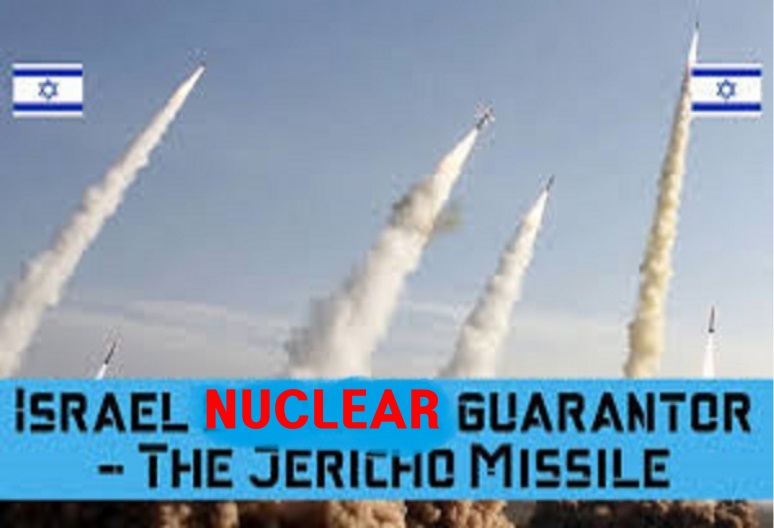
Marjorie Taylor Green (R-GA) became 1 in 535 congresspersons with the guts to call out Israel’s lawless nuclear weapons arsenal containing between 100 and 300 nukes.
She plans to introduce an amendment to strip $500 million from the 2026 NDAA (defense budget) for Israel. “I’m entering amendments to strike $500 million more for nuclear-armed Israel. And it’s important to say nuclear-armed Israel, because they do have nuclear weapons. And we already give them $3.4 billion every single year from the State Department. They don’t need another $500 million in our defense budget. That’s for the American people’s defense.”
Green represents the first serious crack in US administration, Congress and mainstream media’s lockstep denial of Israel’s nukes to avoid complying with US law. The Symington Amendment, a foreign assistance law, forbids military aid to countries trafficking in nuclear enrichment or technology outside of International Atomic Energy Administration (IAEA) safeguards
If the US admitted to Israel’s illegal nukes, it couldn’t give penny in military aid, much less the $3.4 billion Congress gifts to Israel every year on top of the roughly $20 billion we’ve given them to conduct their genocidal ethnic cleansing of Palestinians in Gaza. US aid represents nearly three quarters of Israel’s military spending since their genocide began in October, 2023.
Green, long a critic of the Israel Lobby, is likely to continue receiving her yearly bribe from the Lobby to support their genocidal ethnic cleansing of Gaza and the West Bank….$0.
When the Lobby comes calling to the other 534 congresspersons, nearly all sputter ‘Step right up.’ None dare not utter one word against Israel’s illegal, destabilizing, dangerous nuclear arsenal.
Back in February 2009 at his first presidential press conference, Obama said this when Helen Thomas asked him if any Middle East countries possess nuclear weapons. “When it comes to nuclear weapons….I do not wish to speculate.” What Obama really said was ‘When it come to nuclear weapons, I do not wish to tell the truth.’ A big reason was Obama’ senseless plan to guarantee Israel $3.4 billion annually for 10 years, something he could not do if he did tell the truth.
It’s been 16 years, but we finally heard a governmental leader, albeit just a relatively powerless congressperson, answer that question truthfully.
Let’s hope the crack Green opened up on Israel’s nukes will expand into a Grand Canyon of nuclear sanity.
Iran links future IAEA cooperation to impartiality, after deadly June conflict with Israel and US.
Iran’s president has warned the International Atomic Energy Agency (IAEA) to abandon its “double standards” if it hopes to restore cooperation over the country’s nuclear programme, amid an acute mistrust following Israel and the United States’ attacks on Iranian nuclear sites last month, and the UN nuclear watchdog’s refusal to condemn the strikes.
Speaking to European Council President Antonio Costa by phone on Thursday, President Masoud Pezeshkian said, “The continuation of Iran’s cooperation with the agency depends on the latter correcting its double standards regarding the nuclear file,” according to Iranian state media.
Tehran has accused the IAEA of enabling the strikes by issuing a resolution on June 12 – just one day before the bombing – accusing Iran of breaching its nuclear obligations. Iran says its nuclear programme is for peaceful purposes and denies seeking nuclear weapons. However, it has made clear that it no longer trusts the agency to act impartially. Despite remaining a signatory to the Treaty on the Non-Proliferation of Nuclear Weapons (NPT), Iran insists that the IAEA failed to condemn the attacks by the US and Israel and instead chose to align with Western pressure.
Israeli Defense Minister Israel Katz has ordered the IDF to prepare a plan to establish a camp to concentrate the entire civilian population of Gaza on the ruins of the southern Gaza city of Rafah.
According to Haaretz, Katz said that once Palestinian civilians are pushed into what he is calling a “humanitarian city,” they will not be allowed to leave. The idea is to first transfer 600,000 civilians from the al-Mawasi tent camp on the coast in southern Gaza, followed by the rest of the civilian population.
Katz said that if conditions permit, the “city” could be built during a potential 60-day ceasefire, comments that will make Hamas less likely to agree to a temporary truce. The Israeli defense minister also said that during the ceasefire, Israel will maintain control of the “Morag Corridor,” a strip of land between Rafah and Khan Younis.
Katz also suggested the camp can facilitate the government’s ultimate goal of ethnic cleansing, which it refers to as “voluntary migration,” telling reporters that Israel will implement “the emigration plan, which will happen.”
Israeli Finance Minister Bezalel Smotrich has previously said that the goal of Israel’s current military operation, dubbed Gideon’s Chariots, is to create a concentration camp south of the Morag Corridor and pressure the civilians forced into it to leave.
“The Gazan citizens will be concentrated in the south. They will be totally despairing, understanding that there is no hope and nothing to look for in Gaza, and will be looking for relocation to begin a new life in other places,” Smotrich said in May.
Katz’s comments come after Reuters reported that the controversial US-backed Gaza Humanitarian Foundation (GHF) had proposed to the US government the idea of creating camps it called “Humanitarian Transit Areas” inside Gaza or possibly outside Gaza.
The GHF plan describes the camps as “large-scale” and “voluntary” places where the Palestinian population could “temporarily reside, deradicalize, re-integrate and prepare to relocate if they wish to do so.”
Katz said Israel is seeking “international partners” to manage the zone and that four aid distribution sites would be set up inside the camp, suggesting the GHF will be involved in the plan. GHF aid sites are secured by American security contractors, who have been credibly accused of using live ammunition and stun grenades to disperse crowds of hungry Palestinian civilians.
“These figures represent a continuing and massive transfer of wealth from taxpayers to fund war and weapons manufacturing,” said the project’s director.
Less than a week after U.S. President Donald Trump signed a budget package that pushes annual military spending past $1 trillion, researchers on Tuesday published a report detailing how much major Pentagon contractors have raked in since 2020.
Sharing The Guardian‘s exclusive coverage of the paper on social media, U.K.-based climate scientist Bill McGuire wrote: “Are you a U.S. taxpayer? I am sure you will be delighted to know where $2.4 TRILLION of your money has gone.”
The report from the Costs of War Project at Brown University’s Watson School of International and Public Affairs and the Quincy Institute for Responsible Statecraft shows that from 2020-24 private firms received $2.4 trillion in Department of Defense contracts, or roughly 54% of DOD’s $4.4 trillion in discretionary spending for that five-year period.
The publication highlights that “during those five years, $771 billion in Pentagon contracts went to just five firms: Lockheed Martin ($313 billion), RTX (formerly Raytheon, $145 billion), Boeing ($115 billion), General Dynamics ($116 billion), and Northrop Grumman ($81 billion).”
In a statement about the findings, Stephanie Savell, director of the Costs of War Project, said that “these figures represent a continuing and massive transfer of wealth from taxpayers to fund war and weapons manufacturing.”
“This is not an arsenal of democracy—it’s an arsenal of profiteering,” Savell added. “We should keep the enormous and growing power of the arms industry in mind as we assess the rise of authoritarianism in the U.S. and globally.”
The paper points out that “by comparison, the total diplomacy, development, and humanitarian aid budget, excluding military aid, was $356 billion. In other words, the U.S. government invested over twice as much money in five weapons companies as in diplomacy and international assistance.”
“Record arms transfers have further boosted the bottom lines of weapons firms,” the document details. “These companies have benefited from tens of billions of dollars in military aid to Israel and Ukraine, paid for by U.S. taxpayers. U.S. military aid to Israel was over $18 billion in just the first year following October 2023; military aid to Ukraine totals $65 billion since the Russian invasion in 2022 through 2025.”
“Additionally, a surge in foreign-funded arms sales to European allies, paid for by the recipient nations—over $170 billion in 2023 and 2024 alone—have provided additional revenue to arms contractors over and above the funds they receive directly from the Pentagon,” the paper adds.
The 23-page report stresses that “annual U.S. military spending has grown significantly this century,” as presidents from both major parties have waged a so-called Global War on Terror and the DOD has continuously failed to pass an audit.
Specifically, according to the paper, “the Pentagon’s discretionary budget—the annual funding approved by Congress and the large majority of its overall budget—rose from $507 billion in 2000 to $843 billion in 2025 (in constant 2025 dollars), a 66% increase. Including military spending outside the Pentagon—primarily nuclear weapons programs at the Department of Energy, counterterrorism operations at the Federal Bureau of Investigation (FBI), and other military activities officially classified under ‘Budget Function 050’— total military spending grew from $531 billion in 2000 to $899 billion in 2025, a 69% increase.”
Republicans’ One Big Beautiful Bill Act passed earlier this month “adds $156 billion to this year’s total, pushing the 2025 military budget to $1.06 trillion,” the document notes. “After taking into account this supplemental funding, the U.S. military budget has nearly doubled this century, increasing 99% since 2000.”
Noting that “taxpayers are expected to fund a $1 trillion Pentagon budget,” Security Policy Reform Institute co-founder Stephen Semler said the paper, which he co-authored, “illustrates what they’ll be paying for: a historic redistribution of wealth from the public to private industry.”
Semler produced the report with William Hartung, senior research fellow at the Quincy Institute. Hartung said that “high Pentagon budgets are often justified because the funds are ‘for the troops.'”
“But as this paper shows, the majority of the department’s budget goes to corporations, money that has as much to do with special interest lobbying as it does with any rational defense planning,” he continued. “Much of this funding has been wasted on dysfunctional or overpriced weapons systems and extravagant compensation packages.”
In addition to spotlighting how U.S. military budgets funnel billions of dollars to contractors each year, the report shines a light on the various ways the industry influences politics.
“The ongoing influence of the arms industry over Congress operates through tens of millions in campaign contributions and the employment of 950 lobbyists, as of 2024,” the publication explains. “Military contractors also shape military policy and lobby to increase military spending by funding think tanks and serving on government commissions.”
“Senior officials in government often go easy on major weapons companies so as not to ruin their chances of getting lucrative positions with them upon leaving government service,” the report notes. “For its part, the emerging military tech sector has opened a new version of the revolving door—the movement of ex-military officers and senior Pentagon officials, not to arms companies per se, but to the venture capital firms that invest in Silicon Valley arms industry startups.”
The paper concludes by arguing that “the U.S. needs stronger congressional and public scrutiny of both current and emerging weapons contractors to avoid wasteful spending and reckless decision-making on issues of war and peace. Profits should not drive policy.”
“In particular,” it adds, “the role of Silicon Valley startups and the venture capital firms that support them needs to be better understood and debated as the U.S. crafts a new foreign policy strategy that avoids unnecessary wars and prioritizes cooperation over confrontation.”
The White House has introduced radical changes that threaten to disrupt the effectiveness of the US Nuclear Regulatory Commission (NRC). The agency was formed in 1975 to be an independent regulator, separating it from the promotional role pursued by its predecessor, the Atomic Energy Commission. The NRC has set safety requirements that have become the global gold standard for nuclear regulation. The White House actions threaten to undermine this record.
Conversations with fellow former NRC chairs and retired NRC experts reveal a shared concern that the changes will have unintended, dangerous consequences. In February, the White House issued an executive order that intruded on the traditional autonomy of independent agencies, thereby giving the White House the capacity to control NRC regulatory actions and allow politics to infect regulatory decision-making. A series of executive orders on nuclear matters issued in late May compounded the challenge. One of the executive orders focuses on the reform of the NRC. It would establish arbitrary deadlines for decisions on construction permits and operating licenses, regardless of whether the design offers new and previously unevaluated safety challenges. Other provisions demand the review of all the extensive NRC regulations within 18 months. The other executive orders allow the construction of nuclear power reactors on federal lands—sites belonging to the Energy Department and the Defense Department—without any review by the NRC.
Then, on June 13, the Trump administration fired Christopher Hanson, an NRC commissioner and former chair, without any stated justification. These actions all serve to weaken protections for those who work in or live near reactors. Given the anticipated expansion of reliance on nuclear power, the drastic staff reductions contemplated by the White House come at the wrong time.
There is always room to assess the efficiency and effectiveness of the regulatory process and adapt it to the evolution of nuclear technologies and their implementation. Recognizing that, past and current NRC commissioners and technical staff have set in motion changes to reduce the regulatory burden and speed the deployment of reactors at a lower cost. The changes are prudent and reasonable and support the promise of expanded reliance on nuclear energy. Congress has also encouraged those efforts and further instructed the NRC to make more improvements to the process through the bipartisan ADVANCE Act signed into law in 2024. All of this was underway before the White House interference.
The NRC has protected the health and safety of Americans for 50 years without a single civilian reactor radiation-related death. The lessons of the 1979 Three Mile Island accident have long been woven into the safety regime, and every commercial reactor in the United States is safer today because of major safety steps taken after the destruction of reactors in Japan’s Fukushima Daiichi plant by a massive earthquake and tsunami in 2011.
Since Three Mile Island, the agency has licensed approximately 50 power reactors to operate. It has recently issued construction permits for advanced reactors ahead of schedule. And the NRC has cleared utilities to boost the power of many existing reactors and has licensed them to run longer than originally planned.
We are concerned about the unintended safety consequences that a reduced NRC independence and a schedule-driven regulatory paradigm threaten to bring.
We fear the loss of public confidence that can befall a safety agency when expediency is seen to be given priority. Reducing the NRC’s independence while mixing promotion of nuclear energy and responsibility for safeguarding the public and environment is a recipe for corner-cutting at best and catastrophe at worst.
We are also concerned that such steps could damage the reputation of US reactor vendors worldwide. A design licensed in the United States now carries a stamp of approval that can facilitate licensing elsewhere, including the many countries that plan to embark on a nuclear power program. If it becomes clear that the NRC has been forced to cut corners on safety and operate less transparently, US reactor vendors will be hurt.
The US nuclear industry is helped by the fact that it has a strong independent regulator behind it. The White House’s executive orders may produce the opposite effect from their stated purpose.
Editor’s note: The authors are former chairs of the US Nuclear Regulatory Commission.
The UN has named dozens of multinationals in a report for profiting from Israel’s genocide in Gaza. . Stephanie Tran reports.
A landmark United Nations report has named dozens of multinational corporations that are aiding and profiting from Israel’s ongoing genocide in Gaza, accusing them of complicity in war crimes and calling for urgent accountability.
Authored by Francesca Albanese, the UN Special Rapporteur on the Occupied Palestinian Territories, the report details the role of weapons manufacturers, tech firms, energy companies and financial institutions in sustaining an “economy of occupation turned genocidal.”
But the list of named companies is just the beginning. Albanese describes the report as “the tip of the iceberg,” noting that more than 1,000 corporate entities were investigated for their involvement in Israel’s war machinery.
Weapons and warfare
At the centre of Israel’s brutal assault on Gaza is a heavily militarised economy supported by Western weapons manufacturers.
U.S. defence giant Lockheed Martin is identified as a central player, providing F-35 and F-16 fighter jets that have enabled Israel to drop an estimated 85,000 tonnes of bombs since October 2023. Their use has left more than 179,000 Palestinians dead or injured and destroyed vast swathes of Gaza’s civilian infrastructure.
According to the report, the F-35 program represents Israel’s largest-ever defence procurement project, involving over 1,650 companies.
Israel’s own arms manufacturers are also central to the genocide. Elbit Systems and Israel Aerospace Industries, two of the country’s top weapons companies, are responsible for much of the surveillance, drone and targeting systems deployed in Gaza.
The report notes that Israel’s repeated military campaigns have made it a testing ground for emerging weapons technologies. These systems are later marketed as “battle-proven”
At the centre of Israel’s brutal assault on Gaza is a heavily militarised economy supported by Western weapons manufacturers.
U.S. defence giant Lockheed Martin is identified as a central player, providing F-35 and F-16 fighter jets that have enabled Israel to drop an estimated 85,000 tonnes of bombs since October 2023. Their use has left more than 179,000 Palestinians dead or injured and destroyed vast swathes of Gaza’s civilian infrastructure.
According to the report, the F-35 program represents Israel’s largest-ever defence procurement project, involving over 1,650 companies.
Israel’s own arms manufacturers are also central to the genocide. Elbit Systems and Israel Aerospace Industries, two of the country’s top weapons companies, are responsible for much of the surveillance, drone and targeting systems deployed in Gaza.
The report notes that Israel’s repeated military campaigns have made it a testing ground for emerging weapons technologies. These systems are later marketed as “battle-proven”
Independent journalist and author Antony Loewenstein — whose award-winning book, podcast and film series The Palestine Laboratory exposes how Israel’s occupation has become a global model for repression — told MWM:
“This landmark report goes to the heart of why Israel’s illegal occupation of Palestine has lasted so long; the longest in modern times. Far too many corporations and individuals are making money from oppression. I’m honoured that the report frequently cites my work, The Palestine Laboratory, a book, podcast and film series that details how Israel’s occupation is a key model and inspiration for many around the world.”
“Cutting off Israel’s financial lifeline is the only way that this abomination will end.”
Surveillance and Silicon Valley
The UN report devotes substantial attention to the role of Silicon Valley in enabling Israel’s high-tech war.
Palantir Technologies, the U.S. surveillance firm founded by Peter Thiel, expanded its support for the Israeli military after October 2023. The company has provided “automatic predictive policing technology, core defence infrastructure for rapid and scaled-up construction and deployment of military software, and its Artificial Intelligence Platform, which allows real-time battlefield data integration for automated decision-making.”
In January 2024, Palantir’s board met in Tel Aviv “in solidarity”. In April 2024, CEO Alex Karp dismissed concerns about civilian casualties by stating that Palantir had killed “mostly terrorists.”
Microsoft operates its largest research centre outside the U.S. in Israel, and has been “integrating its systems and civilian tech across the Israeli military since 2003”. In October 2023, Microsoft’s Azure platform supported the Israeli military’s overloaded cloud systems. According to an Israeli colonel quoted in the report, “cloud tech is a weapon in every sense of the word.”
Amazon and Google, through their $1.2 billion Project Nimbus contract, provide Israel with core cloud infrastructure for the military and government agencies.
IBM, which has operated in Israel since 1972, has operated the central database of the Population and Immigration Authority, “enabling collection, storage and governmental use of biometric data on Palestinians, and supporting the discriminatory permit regime of Israel.”
Hewlett-Packard (HP) “has long enabled the apartheid systems of Israel,” supplying technology to the military, prison system, and police.
NSO Group, infamous for its Pegasus spyware, is cited as a textbook case of “spyware diplomacy.” Founded by former Israeli intelligence officers, the company has licensed its tools to repressive governments worldwide and used them to surveil Palestinian activists, journalists, and human rights defenders.
Financing Occupation
The financial industry underpins much of the infrastructure of occupation and genocide. Israeli treasury bonds, underwritten by global banks such as Barclays and BNP Paribas, have provided critical financing to the Israeli government. Asset managers like Blackrock, Vanguard and Allianz’s PIMCO were among more than 400 investors from 36 countries to purchase these bonds.
Blackrock and Vanguard are also among the largest shareholders in Lockheed Martin, Palantir, Microsoft, Amazon, and Chevron. Their funds distribute these investments across global markets via ETFs and mutual funds, spreading complicity to millions of unwitting investors.
Energy and resources
Glencore and Drummond Company dominate coal exports to Israel, primarily from Colombia and South Africa. Even after Colombia announced a suspension of coal exports to Israel in 2024, shipments continued through subsidiaries.
Chevron, which supplies over 70% of Israel’s energy, paid $453 million in royalties and taxes to the Israeli government in 2023. The company profits from the Leviathan and Tamar gas fields and owns a stake in the East Mediterranean Gas pipeline, which passes through occupied Palestinian maritime territory.
BP, the British energy giant, expanded its presence in 2025 with new exploration licences in maritime zones off the Gaza coast, areas Israel occupies in violation of international law.
Machinery
Heavy machinery has long played a role in Israel’s occupation through the demolition of Palestinian homes and the construction of illegal settlements.
Caterpillar Inc. has supplied the Israeli military with bulldozers used to demolish Palestinian homes and infrastructure. Since October 2023, Caterpillar equipment has been used to “carry out mass demolitions – including of homes, mosques and life-sustaining infrastructure – raid hospitals and burying alive wounded Palestinians”. In 2025, the company signed another multi-million-dollar contract with Israel.
Heavy machinery producers Volvo and HD Hyundai have also been linked to the destruction of Palestinian property. After October 2023, Israel increased the use of this equipment, levelling entire districts in Gaza, including Rafah and Jabalia. The Israeli military reportedly obscured the logos of the machinery during these operations.
Volvo is also tied to the settlement economy through its joint ownership of Merkavim, a bus manufacturer serving Israeli colonies.
Shipping, Tourism and Logistics
Multinational logistics firms are another key part of the war economy. A.P. Moller–Maersk, the Danish shipping conglomerate, is responsible for transporting weapons parts, military equipment, and raw materials to Israel. Since October 2023, the company has facilitated the continued flow of US-supplied arms.
Tourism platforms like Airbnb and Booking.com are profiting from the settlement project. Booking.com listings in the West Bank have increased from 26 in 2018 to 70 in 2023; Airbnb listings have grown from 139 in 2016 to 350 in 2025. These platforms promote illegal settlements while restricting Palestinian access to land and resources.
Calls for sanctions
Albanese’s report is a damning indictment, not only of Israel’s genocide in Gaza but of the global political and economic architecture that enables it. The evidence it presents leaves no ambiguity, multinational corporations are not peripheral actors but central to the machinery of occupation, apartheid and now genocide.
Albanese urged states to impose a full arms embargo on Israel, halt all trade and investment ties with companies implicated in violations of international law, and freeze the assets of individuals and entities facilitating human rights abuses.
She called on the International Criminal Court and national courts to investigate and prosecute corporate executives for their role in war crimes and for laundering the proceeds of genocide.