Calls for Transparency Over Serious Nuclear Incident at Faslane
By Chris Martin, 14 Aug 2025, https://argyllbute24.co.uk/calls-for-transparency-over-serious-nuclear-incident-at-faslane/
THE Ministry of Defence (MoD) is facing calls to disclose details of a serious nuclear incident at HMNB Clyde, Faslane, between 1 January and 22 April this year.
Classified as Category A – the MoD’s most serious level – the event reportedly posed no risk to the public or environment.
Faslane, on Gare Loch in Argyll and Bute, houses the UK’s nuclear submarines, including Vanguard-class vessels armed with Trident missiles.
In a parliamentary response to SNP MP Dave Doogan, defence minister Maria Eagle confirmed multiple incidents at Faslane and nearby RNAD Coulport, but refused to detail Category A or B events, citing national security concerns.
Renewed alarm follows a Guardian/Ferret investigation revealing radioactive water leaked into Loch Long from Coulport in 2019 due to faulty pipes, with a six-year secrecy battle over the case. The Scottish Environment Protection Agency deemed the discharges “of no regulatory concern”.
SNP deputy leader Keith Brown has demanded an “urgent explanation”, warning nuclear weapons are “poorly maintained” and threaten safety, communities, and the environment.
The MoD insists it handles radioactive substances “safely and securely” and that none of the incidents caused harm or radiological impact, reaffirming support for the UK’s nuclear deterrent.
More on this story in next week’s Observer
Russia makes battlefield breakthrough in urgent push for land.
Telegraph, Kieran Kelly. Fermin Torrano in Ukraine, 12 Aug 25
With Trump talks looming, Russia’s army punches through exposed Ukrainian defences.
Russia is racing to seize as much Ukrainian territory as possible ahead of peace talks with Donald Trump on Friday.
In what may prove to be a major breakthrough for Vladimir Putin, Russian sabotage and reconnaissance units punched through exposed defences in eastern Ukraine, slipping as far as six miles behind the front line in just 48 hours, according to battlefield reports.
Kyiv has diverted special forces units to confront the insurgents on the ground in an attempt to prevent any more of Ukraine falling under Russia’s control before the summit in Alaska.
The location, near Dobropillya in Donetsk, is strategically significant. If Moscow’s forces are able to establish a foothold, the breach could allow Russia to cut off the city of Kramatorsk, one of the most vital strongholds in the Donbas still under Kyiv’s control.
If the city falls, it would give Putin almost full control over the Donbas and strengthen his negotiating power when bargaining over Ukraine’s fate with the Trump administration……………………………………… https://www.telegraph.co.uk/world-news/2025/08/12/russia-battleground-breakthrough-exposes-putin-push-land/
The West is in panic as Israel’s plan for ‘full control’ of Gaza heralds a new Nakba.
Netanyahu’s mass ethnic cleansing strategy pulls the rug out from under the West’s cherished pretext for supporting Israeli criminality: the fabled two-state solution
Jonathan Cook, Aug 14, 2025
If you thought western capitals were finally losing patience with Israel’s engineering of a famine in Gaza nearly two years into the genocide, you may be disappointed.
As ever, events have moved on – even if the extreme hunger and malnourishment of the two million people of Gaza have not abated.
Western leaders are now expressing “outrage”, as the media call it, at Israeli Prime Minister Benjamin Netanyahu’s plan to “take full control” of Gaza and “occupy” it. At some point in the future, Israel is apparently ready to hand the enclave over to outside forces unconnected to the Palestinian people.
The Israeli cabinet agreed last Friday on the first step: a takeover of Gaza City, where hundreds of thousands of Palestinians are huddled in the ruins, being starved to death. The city will be encircled, systematically depopulated and destroyed, with survivors presumably herded southwards to a “humanitarian city” – Israel’s new term for a concentration camp – where they will be penned up, awaiting death or expulsion.
At the weekend, foreign ministers from the UK, Germany, Italy, Australia and other western nations issued a joint statement decrying the move, warning it would “aggravate the catastrophic humanitarian situation, endanger the lives of the hostages, and further risk the mass displacement of civilians”.
Germany, Israel’s most fervent backer in Europe and its second-biggest arms supplier, is apparently so dismayed that it has vowed to “suspend” – that is, delay – weapons shipments that have helped Israel to murder and maim hundreds of thousands of Palestinians over the past 22 months.
Netanyahu is not likely to be too perturbed. Doubtless, Washington will step in and pick up any slack for its main client state in the oil-rich Middle East.
Meanwhile, Netanyahu has once again shifted the West’s all-too-belated focus on the indisputable proof of Israel’s ongoing genocidal actions – evidenced by Gaza’s skeletal children – to an entirely different story.
Now, the front pages are all about the Israeli prime minister’s strategy in launching another “ground operation”, how much pushback he is getting from his military commanders, what the implications will be for the Israelis still held captive in the enclave, whether the Israeli army is now overstretched, and whether Hamas can ever be “defeated” and the enclave “demilitarised”.
We are returning once again to logistical analyses of the genocide – analyses whose premises ignore the genocide itself. Might that not be integral to Netanyahu’s strategy?
…………………………………………………………………………………………………………………………………………………………………………………………………………………………. France and Britain’s recognition threat is not simply too late. It serves two other purposes.
Firstly, it provides a new alibi for inaction. There are plenty of far more effective ways for the West to halt Israel’s genocide. Western capitals could embargo arms sales, stop intelligence sharing, impose economic sanctions, sever ties with Israeli institutions, expel Israeli ambassadors, and downgrade diplomatic relations. They are choosing to do none of those things.
And secondly, recognition is designed to extract from the Palestinians “concessions” that will make them even more vulnerable to Israeli violence.
According to France’s foreign affairs minister, Jean-Noel Barrot: “Recognising a State of Palestine today means standing with the Palestinians who have chosen non-violence, who have renounced terrorism, and are prepared to recognise Israel.”
In other words, in the West’s view, the “good Palestinians” are those who recognise and lay down before the state committing genocide against them.
Western leaders have long envisioned a Palestinian state only on condition that it is demilitarised. Recognition this time is premised on Hamas agreeing to disarm and its departure from Gaza, leaving Abbas to take on the enclave and presumably continue the “sacred” mission of “cooperating” with a genocidal Israeli army.
As part of the price for recognition, all 22 members of the Arab League publicly condemned Hamas and demanded its removal from Gaza.
Boot on Gaza’s neck
How does all of this fit with Netanyahu’s “ground offensive”? Israel isn’t “taking over” Gaza, as he claims. Its boot has been on the enclave’s neck for decades.
While western capitals contemplate a two-state solution, Israel is preparing a final mass ethnic cleansing campaign in Gaza.
Starmer’s government, for one, knew this was coming. Flight data shows that the UK has been constantly operating surveillance missions over Gaza on Israel’s behalf from the Royal Air Force base Akrotiri on Cyprus. Downing Street has been following the enclave’s erasure step by step.
Netanyahu’s plan is to encircle, besiege and bomb the last remaining populated areas in northern and central Gaza, and drive Palestinians towards a giant holding pen – misnamed a “humanitarian city” – alongside the enclave’s short border with Egypt. Israel will then probably employ the same contractors it has been using elsewhere in Gaza to go street to street to bulldoze or blow up any surviving buildings.
The next stage, given the trajectory of the last two years, is not difficult to predict. Locked up in their dystopian “humanitarian city”, the people of Gaza will continue to be starved and bombed whenever Israel claims it has identified a Hamas fighter in their midst, until Egypt or other Arab states can be persuaded to take them in, as a further “humanitarian” gesture.
Then, the only matter to be settled will be what happens to the real estate: build some version of Trump’s gleaming “Riviera” scheme, or construct another tawdry patchwork of Jewish settlements of the kind envisioned by Netanyahu’s openly fascist allies, Bezalel Smotrich and Itamar Ben Gvir.
There is a well-established template to be drawn on, one that was used in 1948 during Israel’s violent creation. Palestinians were driven from their cities and villages, in what was then called Palestine, across the borders into neighbouring states. The new state of Israel, backed by western powers, then set about methodically destroying every home in those hundreds of villages.
Over subsequent years, they were landscaped either with forests or exclusive Jewish communities, often engaged in farming, to make Palestinian return impossible and stifle any memory of Israel’s crimes. Generations of western politicians, intellectuals and cultural figures have celebrated all of this.
Former British Prime Minister Boris Johnson and former Austrian President Heinz Fischer are among those who went to Israel in their youth to work on these farming communities. Most came back as emissaries for a Jewish state built on the ruins of a Palestinian homeland.
An emptied Gaza can be similarly re-landscaped. But it is much harder to imagine that this time the world will forget or forgive the crimes committed by Israel – or those who enabled them.
[Many thanks to Matthew Alford for the audio reading of this article.]https://jonathancook.substack.com/p/the-west-is-in-panic-as-israels-plan?utm_source=post-email-title&publication_id=476450&post_id=170880402&utm_campaign=email-post-title&isFreemail=true&r=19l92&triedRedirect=true&utm_medium=email
Iran’s nuclear chief urges IAEA to condemn Israeli terrorism.
TEHRAN, Aug. 13 (MNA), https://en.mehrnews.com/news/235334/Nuclear-chief-urges-IAEA-to-condemn-Israeli-terrorism
– Vice President and Head of Atomic Energy Organization of Iran (AEOI) said that the International Atomic Energy Agency (IAEA) should condemn the Israeli regime’s killing of Iranian nuclear scientists.
He paid tribute to the memory of the martyrs of the media, the nuclear martyrs, and the recent imposed war.
“A number of institutions affiliated with the Zionist regime pretend that the attack on Iran’s nuclear facilities was an act in the interest of the security of humanity. These narratives are so skillfully reflected that uninformed people believe them, and today we expect the media to stand strong and firmly against the combined war of the enemies of this land and reflect the correct narrative,” he said.
“Israel is neither a member of the NPT nor a member of the safeguards, but it has influence in the International Atomic Energy Agency and with this influence it exploits the confidential information of countries. With the support of the United States, they are carrying out evil actions in the region,” he added.
Eslami noted that during the 12-day war, a number of centers registered under the Agency’s continuous surveillance, which were monitored by 130 inspectors, were repeatedly attacked using missiles and various projectiles.
“The Americans had been planning an attack on our facilities for a long time. This is despite the fact that none of the official institutions have submitted a report on Iran’s non-compliance or deviation from the safeguards in recent years,” Eslami further stressed.
He emphasized, “A fabricated and fake case has been formed by the Zionist regime, and the accusations and excuses are nothing more than an attempt to stop Iran’s peaceful nuclear program. If their claims were true, they should have provided clear evidence. These fake statements are only a cover to prevent the progress of the Iranian nation.”
“Such double standards and efforts to prevent Iran from entering advanced scientific fields are the same hegemonic system that, at huge costs, is trying to deprive our nation of nuclear technology and other modern technologies. This approach is a tangible manifestation of their identity; the same crimes they are committing in Palestine today.”
Coulport nuclear leaks spark alarm among local nuclear campaigners
CAMPAIGNERS have dismissed reassurances from military chiefs about
radioactive waste leaking into the Clyde. Pipes which the Ministry of
Defence (MoD) had allowed to fall into disrepair leaked nuclear waste into
Loch Long from the Trident base at Coulport.
The revelations came after an
investigation by The Ferret, which forced the release of information on the
leaks the Government had tried to keep hushed up. Marian Pallister, chair
of Pax Christi Scotland, said the revelations were unsurprising but
concerning for people living in the area. Pallister, a writer and
journalist who lives near Lochgilphead, told The National: “I’m afraid
that it wasn’t a surprise, we have known about this for a long time.”
She dismissed the MoD’s claims that there had been “no unsafe releases
of radioactive material into the environment”, adding: “They would say
that, wouldn’t they? “They are obviously going to lessen their
involvement but however big or small the leaks might be, they are leaks
into waters that are a part of our lives, part of our heritage.
The National 12th Aug 2025, https://www.thenational.scot/news/25384467.coulport-nuclear-leaks-spark-alarm-among-local-nuclear-campaigners/
Scottish independence can rid us of nuclear abomination.
Ross Greer: NUCLEAR weapons aren’t just a deadly money pit, they also
make for extremely unsafe neighbours. This was proven once again last
weekend with the Ferret, The National and others exposing the scale of the
threat posed to those of my constituents who have the bases at Faslane and
Coulport on their doorsteps.
The news radioactive water leaked into
beautiful Loch Long should concern everyone, though for those of us
familiar with the safety record at Coulport, it was no surprise. Far from
an isolated event, we now know that Faslane also saw over 100 reported
safety incidents over the last 12 months, including a Category A event
earlier this year, the most serious category and one that the Royal Navy
says carries an “actual or high potential for radioactive release to the
environment”.
The National 15th Aug 2025, https://www.thenational.scot/politics/25391552.ross-greer-scottish-independence-can-rid-us-nuclear-abomination/
Does Trump have the guts to end America’s lost proxy war against Russia?
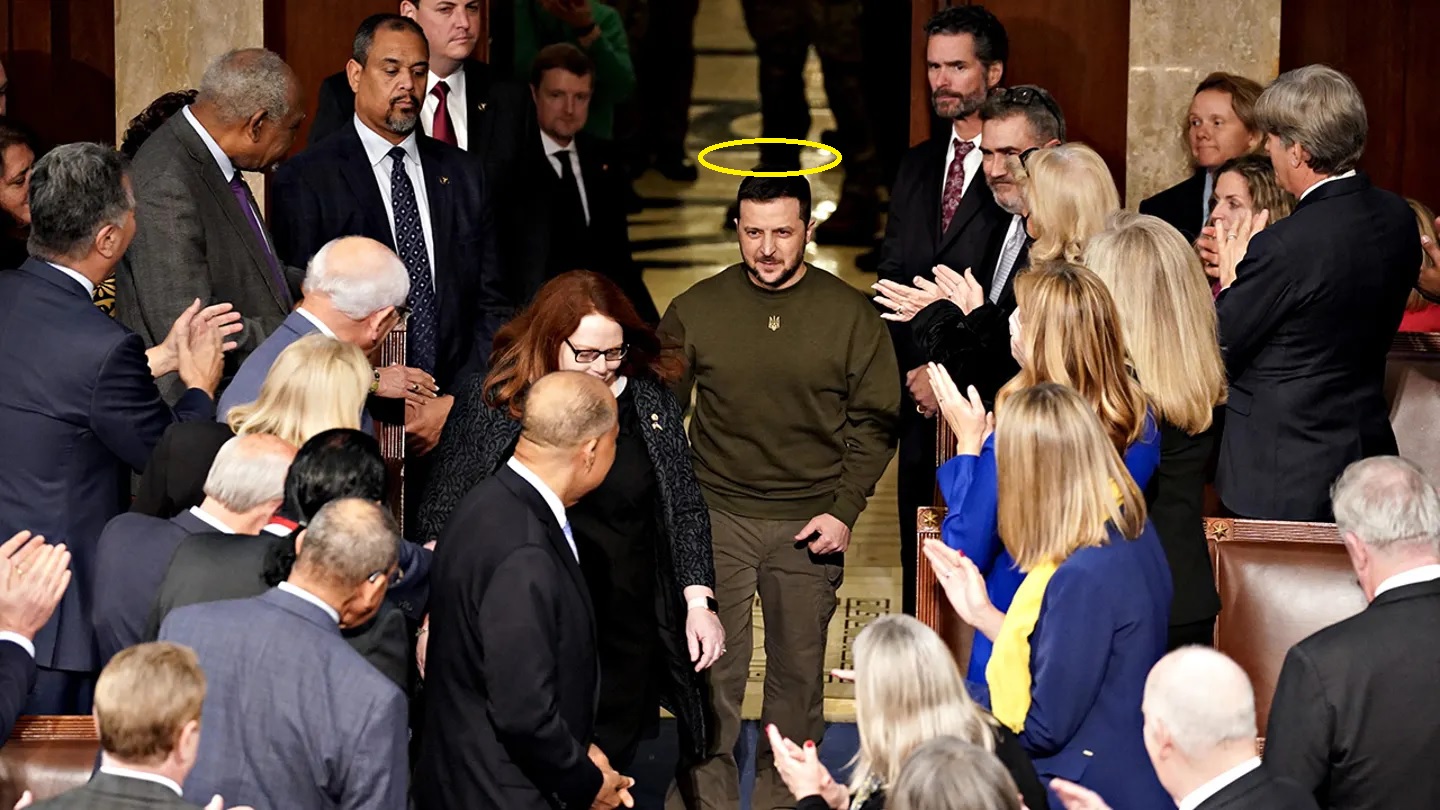
Walt Zlotow, West Suburban Peace Coalition, Glen Ellyn IL, 12 Aug 25.
For seven months Trump has reneged on his promise to end in one day America’s proxy war against Russia destroying Ukraine. Ukraine loses more soldiers and more territory every day with no chance of prevailing.
Tho a one day settlement was impossible, Trump came close to following thru by publicly berating Ukraine President Zelensky for continuing the war and threatening to cease all US weapons which keep Ukraine fighting. Then he pivoted back to war, demanding Russia’s Putin implement immediate ceasefire or face draconian sanctions. Putin responded to that nonsense with increased military attacks. Now with the upcoming summit this Friday, Trump has the opportunity to achieve peace in Ukraine.
Russia has already signaled concessions to achieve ceasefire. According to the Wall Street Journal, Russia told US envoy Steve Witkoff Russia would implement a full ceasefire if Ukraine would withdraw its remaining troops in the Donbas almost entirely controlled by Russia. In return Russia would freeze the lines in Kherson and Zaporizhzhia, the other 2 Ukraine oblasts Russia demanded full control over, rather than push on for full annexation. Russia would require Ukraine to remain neutral between East and West, giving up all intentions to join NATO.
Implementing that ceasefire would be a good start to permanently ending hostilities. But neither Ukraine President Zelensky nor European NATO leaders have bought into this sensible solution.
Zelensky maintains his delusional refusal to give up a single square mile of territory that will never return to Ukraine control. He could have kept every square mile of territory had he completed the peace deal with Russia in April 2022 that the US and UK sabotaged. Seventy percent of Ukrainians want the war to end forthwith. But the fool Zelensky keeps demanding ‘push on.’
European NATO leaders, especially UK’s Starmer, France’s Macron and Germany’s Merz are still committed to this failed war to maintain NATO dominance and isolation of Russia. They fear the loss of the US gravy train that pumps up their economies. They are as delusional as Zelensky.
Trump’s third obstacle to peace is the US national security state which abhors the US losing a senseless war of choice. War fanatics like Senator Lindsey Graham and retired generals paid off by the weapons makers, dominate mainstream news condemning inevitable US surrender. No voice for ending this proxy war madness is allowed to pitch peace on the airwaves or op ed columns. They will pound on Trump relentlessly should he chalk up another US war loss, albeit one bringing peace to Ukraine.
The only ceasefire and permanent war settlement possible will go down as a US/NATO defeat. Wonderful. NATO needs to disband as it has gone on trying to weaken, isolate Russia 34 years after becoming obsolete upon dissolution of the USSR in 1991.
Does Trump have the guts to force a settlement that overcomes the resistance of Zelensky, NATO leaders and the US war party? We may soon find out.
Heat Waves Are a Growing Threat to Europe’s Nuclear Power Supply

Bloomberg News, Eamon Akil Farhat, Aug 08, 2025, https://financialpost.com/pmn/business-pmn/heat-waves-are-a-growing-threat-to-europes-nuclear-power-supply
Heat waves across Europe are increasing the need for nuclear power plants to be taken offline, with the situation expected to worsen in the coming decades and few options for mitigation.
(Bloomberg) — Heat waves across Europe are increasing the need for nuclear power plants to be taken offline, with the situation expected to worsen in the coming decades and few options for mitigation.
Weather-related nuclear outages, mainly caused by elevated temperatures of cooling water, increased threefold in the period from 2010 to 2019, compared with 1990 to 2009, according to a study published in Energy Economics. Due to climate change, the intensity and length of these heat waves is expected to increase.
“Summer heat waves are climbing fast — 0.85 more days each year since 2010,” said Jess Hicks, a weather analyst at BloombergNEF. “That trajectory spells growing cooling-water risks for French nuclear plants.”
…………………………….A separate study published in the journal Energy in April looked at two reactors operated by Electricite de France SA, Chooz and Golfech, which rely on river water for cooling. It concluded that climate change will increase water temperature and also reduce flow volumes. If both plants are still operating by 2050, the level of outages would have doubled at Chooz and increased tenfold for Golfech. In the worst years, about 14% of Chooz’s generation would need to be curtailed.
When faced with high water temperatures and low flows, nuclear operators have limited options.
A closed-cycle cooling system, which relies less on the external environment, is one option. However, the Energy Economics study found that retrofitting such systems would cost about $500 million per nuclear power plant.
Another option would be to relax environmental limits on river temperatures, allowing reactors to keep operating for longer during heat waves. Such restrictions have been waived in the past, for example in 2022 when the French nuclear regulator ASN temporarily allowed five nuclear plants to discharge hotter water into rivers as the nation struggled with an energy crisis.
EDF has been studying other methods to reduce water consumption at nuclear power plants, such as capturing the cooling vapor given off by the facilities.
Germany’s Merz to Israel’s Netanyahu: ‘No more genocide weapons for you.’

Walt Zlotow, West Suburban Peace Coalition, Glen Ellyn IL , 12 Aug 25
Germany, conductor of the worst genocide in the 20th century, is pushing back against Israel, conductor of the worst genocide this century.
German Chancellor Merz halted all offensive weapons sales to Israel in a vailed understatement, “The even harsher military action by the Israeli army in the Gaza Strip, approved by the Israeli Cabinet last night, makes it increasingly difficult for the German government to see how these goals will be achieved. Under these circumstances, the German government will not authorize any exports of military equipment that could be used in the Gaza Strip until further notice.”
Given that Israel, with near total US complicity, is determined to eliminate all 2,300,000 Palestinians from Gaza’s 139 square miles to expand Greater Israel, its unlikely German weapons exports will ever resume.
Germany’s principled action is not insignificant in the effort to cripple Israel’s destruction of the Palestinian people. That’s because Germany accounts for 30% of Israel’s grisly genocide arsenal. Sadly, the US accounts for 69% of the remaining 70%. The Trump administration is so ecstatic about Israel clearing out the remaining 2 million or so Palestinians not yet murdered, that it may simply increase its grotesque weaponizing of the genocide to make up the slack.
Americans should contemplate that would equate with America supplying Nazi Germany with the Zyklon B gas to eliminate European Jewry and other Nazi undesirables in WWII.
Trump can fuel Israel’s genocide because not a single member of the Trump administration dare call US policy genocide. Nor does a single member mainstream media. Congress is a teensy better with just 10 of 535 congresspersons having the moral clarity to charge Israel with the G word.
Until Trump channels Germany’s Merz and tells Netanyahu, ‘No more genocide weapons for you’, the genocide will continue till all 2,300,000 Palestinians in Gaza are dead and gone.
Swarm of jellyfish shuts nuclear power plant in France.
‘Massive and unpredictable’ swarm entered filter drums that pull in water, Gravelines operator EDF says.
Jillian Ambrose Energy correspondent, 11 Aug 25
‘Massive and unpredictable’ swarm entered filter drums that pull in water, Gravelines
operator EDF says.
A swarm of jellyfish has forced the shutdown of one of
the largest nuclear power plants in France after entering the water intake
systems used to cool the coastal reactors. Three reactors at the Gravelines
nuclear power plant in northern France shut down automatically late on
Sunday, according to the French nuclear company EDF, after the filter drums
of the pumping stations became packed with a “massive and
unpredictable” swarm of the marine creatures.
The entire nuclear plant,
capable of powering about 5m homes, was brought offline when a fourth
reactor shut down shortly after the free-swimming invertebrates jammed the
power plant, which had already lost its two other reactors for planned
summer maintenance work. Jellyfish have a long history of derailing the
normal operations of coastal power plants, which tap the ocean for the vast
amounts of cool water needed to keep temperatures in check.
The repeated
problems caused by unexpected jellyfish numbers prompted scientists at the
University of Bristol to develop an “early warning tool” to predict the
sudden, en masse appearance of jellyfish swarms that might disrupt coastal
power plants. The Torness nuclear plant in Scotland, which is also owned by
EDF, was forced to shut for a week in 2021 after jellyfish clogged the
seaweed filters on its water intake pipes, a decade after jellyfish shut
the plant for a week in 2011.
Jellyfish swarms have also closed nuclear and
coal power plants in Sweden, the US, Japan, and even caused a major
blackout in the Phillipines in 1999 that some mistakenly feared was linked
to the Y2K bug or a government coup.
Guardian 11th Aug 2025, https://www.theguardian.com/world/2025/aug/11/swarm-of-jellyfish-shuts-nuclear-power-plant-in-france
Zelensky Rejects Idea of Ceding Territory to Russia as Trump and Putin Prepare for Alaska Summit.

According to a report from The Wall Street Journal, Putin has proposed halting the war in exchange for Ukraine withdrawing from Donetsk
by Dave DeCamp | August 10, 2025, https://news.antiwar.com/2025/08/10/zelensky-rejects-idea-of-ceding-territory-to-russia-as-trump-and-putin-prepare-for-alaska-summit/
Ukrainian President Volodymyr Zelensky has rejected the idea of ceding territory to Russia to end the war in Ukraine, as President Trump and Russian President Vladimir Putin are preparing for a summit that will be held this Friday, August 15, in the US state of Alaska.
“Ukrainians will not gift their land to the occupier,” Zelensky said in a video address on Saturday. “We will not reward Russia for what it has perpetrated.
Zelensky’s comments came after The Wall Street Journal reported that Putin told US envoy Steve Witkoff that he would agree to a full ceasefire if Ukraine withdrew its forces from Donetsk, one of the two oblasts in Ukraine’s eastern Donbas region. Russia controls most of Donetsk and virtually all of Luhansk, the other half of the Donbas region.
Based on another Journal report, Russia is seeking to freeze the lines in Kherson and Zaporizhzhia — a potential climbdown from Moscow’s earlier demand for a full Ukrainian withdrawal from both oblasts.
A European counter-proposal that was presented to US officials on Saturday called for any territorial exchanges to happen in a reciprocal manner, meaning Russia would have to withdraw from some land if Ukraine ceded the territory it still controls in Donetsk. Some European officials said Moscow would have to cede control of Kherson and Zaporizhzhia.
The European proposal also calls for a ceasefire to be implemented immediately before any other steps are taken and says that any territorial concession from Ukraine must include concrete security guarantees, including potential NATO membership, which is a non-starter for Russia.
Much of how the peace process will go depends on how much pressure the US is willing to put on Ukraine to make a deal, since Zelensky’s war effort is reliant on US military support. The idea of a peace deal is popular in Ukraine as a recent poll from Gallup found that 69% of Ukrainians want a negotiated end to the conflict as soon as possible, while only 24% want to keep fighting until “victory.”
Cowardly Israeli Murder of 5 Journalists, including Anas al-Sharif, Smearing them as Hamas
Note that firing a rocket at a tent known to be inhabited by unarmed civilian journalists is an act of cowardice and is the sort of thing for which German and Japanese officers were tried at Nuremberg.
Informed Comment, Juan Cole, 08/11/2025, https://www.juancole.com/2025/08/cowardly-journalists-including.html
Ann Arbor (Informed Comment) – The Israeli state by now has a long and sanguinary history of murdering writers and journalists in cold blood. In 1972, Israeli commandos murdered novelist, painter and short story writer Ghassan Kanafani in Beirut with a car bomb — the weapon of choice for terrorists ever since — killing his niece Lamis as well. Kanafani’s crime was to be an effective voice of the 1948 Palestinian Nakba or catastrophic expulsion from their homeland by the militant Zionist settler-colonialists and then by the newly formed Israeli army. Anyone who hasn’t read his Men in the Sun has a hole in their knowledge of the issue.
On May 11, 2022, an Israeli sniper was ordered to murder American journalist Shireen Abu Akleh. The powerful Israeli propaganda machine (which is not different than that of Vladimir Putin or Donald Trump, and the effectiveness of which is plummeting) initially asserted that Palestinians had killed her. Then it “might” have been an Israeli sniper. Then it was an Israeli sniper but it was an unfortunate accident. If that was the case, why did Israeli authorities disrupt even her funeral (she was a Greek Catholic)? Her crime was to report on the Israeli slow colonization of the Palestinian West Bank for 17 years for Al Jazeera. As a careful journalist, she became a trusted narrator of what was being done to the occupied Palestinians. She was eliminated, rubbed out, whacked, by the Israeli army, deliberately and calculatedly, which lied about the hit job.
Now on Sunday comes the news that the Israeli army assassinated five journalists, one of them lead Al Jazeera reporter Anas al-Sharif, 28, who had become known as the “voice of Gaza,” watched by millions throughout the world. The Israeli military fired a rocket at the tent he and four other journalists were sheltering in near the al-Shifa’ Hospital in Gaza City.
They join 178 journalists killed by the Israeli military in Gaza. Most of these killings appear to have been deliberate.
Russia appears to have killed 18 journalists in the field since February 2022. It has killed other journalists, but they were fighting in the Ukrainian military as soldiers and so weren’t killed qua journalists. The Ukraine War is pretty vicious and Putin’s minions are ruthless. But they’ve only rubbed out 18 practicing journalists, versus 178 for Israel. This is not to mention that Ukraine has a population of 37 million, while Gaza’s at least used to be 2.2 million. So killing 178 journalists in Gaza would be like killing nearly 3,000 journalists in Ukraine.
Note that firing a rocket at a tent known to be inhabited by unarmed civilian journalists is an act of cowardice and is the sort of thing for which German and Japanese officers were tried at Nuremberg.
The Israeli propaganda charges against al-Sharif, that he was an active-duty Hamas commando in charge of firing rockets at Israel, would be laughable if they weren’t so sinister in a Kim Jong Un sort of way. We saw al-Sharif all day every day huddling in Gaza, undernourished, staring into the camera and reporting. Is he Superman, to sneak off and fire a rocket between screen appearances and intensive news gathering?
Al-Sharif had prerecorded a statement for this eventuality, which was released on Sunday: By Anas Al-Sharif / X August 11, 2025, https://scheerpost.com/2025/08/11/anas-al-sharifs-final-message/
Tehran faults UN nuclear watchdog over response to Israeli, US attacks
12 Aug 25, https://www.iranintl.com/en/202508110446
Iran on Monday criticized the International Atomic Energy Agency (IAEA) for what it called a failure to act over Israeli and US attacks in June after talks in Tehran with the UN nuclear watchdog’s deputy director general earlier in the day.
“The Islamic Republic expressed its objection to the failure of the agency to fulfill its responsibilities regarding the Israeli and US attack and raised its demands for correcting the agency’s improper processes,” deputy foreign minister Kazem Gharibabadi said.
Gharibabadi’s remarks came following a meeting with IAEA deputy director general Massimo Aparo, who was in Tehran for a brief trip on Monday. The visit marked the highest-level meeting between the IAEA and Iran since the attacks on Iranian nuclear sites badly frayed ties.
Iran’s foreign minister Abbas Araghchi had stressed earlier that the visit would not involve nuclear inspections but rather dialogue with the agency.
In June, Iran’s parliament approved a bill to suspend the country’s cooperation with the IAEA, a day after a ceasefire with Israel.
The bill, passed with 221 votes in favor, none against, and one abstention out of 223 members present, and bars the UN nuclear watchdog’s inspectors from accessing Iran’s nuclear facilities.
At the time, Iran also accused IAEA chief Rafael Grossi of bias and failing to condemn the attacks.
On July 4, Grossi said that the agency’s team of inspectors had departed Iran to return to its headquarters in Vienna after the new law barred cooperation with the IAEA.
Israel launched a surprise military campaign on June 13 targeting military and nuclear sites, killing hundreds of military personnel, nuclear scientists and civilians.
Iran responded with missile strikes that killed 31 civilians and one off-duty soldier, according to official figures published by the Israeli government.
The Islamic Republic says 1,062 people were also killed by Israel during the 12-day conflict, including 786 military personnel and 276 civilians.
On June 22, the US carried out airstrikes on Iran’s key nuclear sites at Fordow, Natanz, and Isfahan.
The full extent of the damage remains unclear but President Donald Trump has repeatedly said that the strikes “obliterated” the country’s nuclear program.
TASC’s new legal challenge against Sizewell C’s secret flood defences

by Together Against Sizewell C (TASC)
TASC’s new Judicial Review claim calling for Sizewell C’s Development
Consent Order (DCO) to be revoked or varied has been granted a permission
hearing in the High Court.
At a date to be confirmed, a judge will hear why
TASC consider it is unlawful to delay, for decades, assessment and public
scrutiny of two huge additional flood barriers kept secret by EDF since
2015. If the court grants permission, then there would be a full JR hearing
in due course.
TASC writes: “Sizewell C’s attempt to avoid scrutiny of
these additional sea defences now means the project is proceeding without
its full environmental impact having been assessed, this being in
contravention of the UK Habitat Regulations. Sizewell C clearly believe
they can do as they see fit with our Heritage Coast, National Landscape and
designated wildlife sites irrespective of the damage they will cause –
this government, the largest shareholder in Sizewell C, must be challenged
on this.” If you would like to help with TASC’s fundraising, visit their
Crowd Justice page –
https://www.crowdjustice.com/case/sizewell-c-legal-challenge/
TASC 11th Aug 2025.
https://tasizewellc.org.uk/#
1 This Month




PLEASE OPPOSE HR 8255 AND S.3639 – bills would accelerate satellite deployment, with no environmental review or safeguards – https://ncstd5li.quorum.us/campaign/169331/
To see nuclear-related stories in greater depth and intensity – go to https://nuclearinformation.wordpress.com
-
Archives
- September 2026 (330)
- August 2026 (330)
- July 2026 (355)
- June 2026 (287)
- May 2026 (306)
- April 2026 (356)
- March 2026 (251)
- February 2026 (267)
- January 2026 (308)
- December 2025 (358)
- November 2025 (359)
- October 2025 (375)
-
Categories
- 1
- 1 NUCLEAR ISSUES
- business and costs
- climate change
- culture and arts
- ENERGY
- environment
- health
- history
- indigenous issues
- Legal
- marketing of nuclear
- media
- opposition to nuclear
- PERSONAL STORIES
- politics
- politics international
- Religion and ethics
- safety
- secrets,lies and civil liberties
- spinbuster
- technology
- Uranium
- wastes
- weapons and war
- Women
- 2 WORLD
- ACTION
- AFRICA
- Atrocities
- AUSTRALIA
- Christina's notes
- Christina's themes
- culture and arts
- Events
- Fuk 2022
- Fuk 2023
- Fukushima 2017
- Fukushima 2018
- fukushima 2019
- Fukushima 2020
- Fukushima 2021
- general
- global warming
- Humour (God we need it)
- Nuclear
- RARE EARTHS
- Reference
- resources – print
- Resources -audiovicual
- Weekly Newsletter
- World
- World Nuclear
- YouTube
-
RSS
Entries RSS
Comments RSS

