Podcast | The 30-year journey to an underground facility for long-term nuclear waste storage
This month’s podcast discusses the UK’s long-term plan for a vast
underground storage facility for nuclear waste – known as a geological
disposal facility (GDF) – with Nuclear Waste Services (NWS).
NWS chief
scientific adviser Neil Hyatt and NWS head of major permissions Malcolm
Orford join host Rob Hakimian to discuss the need for a GDF, especially in
the context of the UK ramping up its nuclear power intentions. They discuss
examples of similar facilities being developed elsewhere in the world and
how the UK’s will compare.
Malcolm and Neil also talk about the long
process to getting to build a GDF, including the extensive dialogue and
collaboration with the communities that could potentially host it, the
in-depth siting process and what NWS is looking for to determine its final
location. Looking even further into the future, the guests tell Rob about
the potential construction and engineering that would be required to
undertake an infrastructure of this scale and when we might see work begin.
New Civil Engineer 28th Aug 2025, https://www.newcivilengineer.com/podcast/podcast-the-30-year-journey-to-an-underground-facility-for-long-term-nuclear-waste-storage-28-08-2025/
The evolution of Volodymyr Zelenskyy and the Israel-Ukraine bond.

Orinoco Tribune By Sarah B. – Aug 20, 2025
Volodymyr Zelenskyy: The Pragmatist Who Normalized the Extreme,
Volodymyr Aleksandrovich Zelenskyy, born in 1978 in Krivoy Rog, is one of the most paradoxical figures to emerge from the war. A Jewish comedian turned wartime leader, he has become an international symbol of “resistance” and Western liberal values. But beneath the cultivated myth lies a far more uncomfortable truth: Zelenskyy is the keystone legitimizer in Ukraine’s normalization of far-right extremism, not in spite of his identity, but because of it.
Raised in a Russian-speaking Jewish family in the industrial city of Krivoy Rog, Zelenskyy experienced firsthand the Soviet-era antisemitism and post-Soviet chaos that shaped a generation. He earned a law degree from the Krivoy Rog Economic Institute in 2000, but chose a career in comedy and satire, eventually founding the Kvartal 95 troupe. His 2015 television show Servant of the People, in which he played a humble schoolteacher who unexpectedly becomes president, catapulted him into national fame.
In 2018, life imitated art. Riding a wave of anti-oligarch sentiment and public fatigue with Petro Poroshenko, Zelenskyy launched his own political party, borrowing the name of his TV show, and won the 2019 presidential election in a landslide, taking over 70% of the vote.
At the time, Zelenskyy appeared ideologically distant from Ukraine’s far-right fringe. His campaign promised peace with Donbass and normalization of relations with Russia. But once in power, his rhetoric softened, his promises evaporated, and the machinery of war began grinding forward with the same paramilitary formations he once distanced himself from now integrated into the state apparatus under his watch.
Zelenskyy’s presidency coincided with the formal mainstreaming of extremist militias like the Azov Regiment, the Tornado Battalion, and Right Sector. Though Azov had been absorbed into Ukraine’s National Guard in 2014, it was under Zelenskyy that it achieved full symbolic legitimacy. In 2023, Azov members were publicly awarded medals despite their use of SS-style insignia, and Zelenskyy referred to them in national speeches as “defenders of freedom.”
Zelenskyy’s defenders argued these moves were necessary under conditions of war. But the symbolic shift was profound: the Jewish president of Ukraine had now become the key validator of openly neo-Nazi formations and, more broadly, of a political culture that increasingly erased the boundaries between patriotism and fascism.
Zelenskyy’s Jewish identity played a central role in shaping his geopolitical posture. Early in his presidency, he gained support from prominent Jewish donors and Western liberal institutions. But it was his alignment with Israeli ideology and strategy that proved most consequential.
In a 2022 interview with Haaretz, Zelenskyy stated that Ukraine’s future should resemble a “big Israel,” a state built on constant mobilization, militarism, and national unity. The comparison wasn’t metaphorical. Zelenskyy repeatedly cited Israel’s compulsory service, hardened identity, and “resilience” as ideals for a wartime Ukraine.
“I think all our people will be our great army. We cannot talk about “Switzerland of the future.” But we will definitely become a “big Israel” with its own face. We will not be surprised that we will have representatives of the Armed Forces or the National Guard in all institutions, supermarkets, cinemas, there will be people with weapons.
— Volodymyr Zelenskyy, April 2022
In practice, this meant close coordination with Israeli and Zionist networks. Zelenskyy has consistently refused to condemn Israel’s military actions in Gaza, including the 2024–2025 bombardments that employed starvation tactics and AI-guided strikes. Instead, he echoed Israeli rhetoric about terrorism and security, drawing direct parallels between Ukraine’s fight against Russia and Israel’s war with Iran and its regional proxies.
Military cooperation followed suit. Israeli-made drones and surveillance systems flowed to Ukraine through third parties. Ukrainian forces supplied intelligence to Israel on Iranian missile tech recovered from Russian stockpiles and downed drones. Zelenskyy hosted Israeli officials, sought Iron Dome defense systems, and oversaw joint data-sharing agreements between Ukraine’s cyber units and Israeli partners.
Zelenskyy’s personal connections only deepen the alignment. His parents have reportedly lived in Israel for years, a fact often omitted in mainstream profiles but acknowledged in Jewish community outlets. In 2020, Zelenskyy visited Yad Vashem and gave a carefully worded speech reframing Ukrainian nationalism as compatible with Holocaust memory. Instead of confronting Ukraine’s role in the Shoah, Zelenskyy emphasized shared trauma and unity, an appeal that resonated with Israeli officials eager for a strategic partner in Eastern Europe.
Zelenskyy’s ties to the Chabad-Lubavitch movement also run deep. Chabad maintains a large presence in Dnepropetrovsk, historically bankrolled by oligarch Igor Kolomoyskiy. Zelenskyy has also attended Chabad-sponsored events and leaned heavily on global Jewish networks to secure diplomatic and military aid.
The Shifting Center
Zelenskyy’s ideological transformation can be summarized in three phases:
· Pre-2019: A secular liberal, anti-corruption satirist with no links to the far-right.
· 2019–2022: A centrist reformer forced into security pragmatism by war.
· 2022–Present: A full convert to the “big Israel” model, integrating far-right forces and prioritizing militarized nationalism over liberal pluralism.
In the end, Volodymyr Zelenskyy may not be a fascist. But he has become the indispensable manager of a system that rehabilitates fascism, at home, abroad, and in the name of something larger. His legacy will not be one of purity or resistance, but of convergence.
An extract from Gaza to Donbass: How Israel and Ukraine Built a Fascist, Transnational War Machine.
Israel’s Killing of Journalists Follows a Pattern of Silencing Palestinian Media That Stretches Back to 1967.

From the first days of the occupation in 1967, Israel has tried to keep a tight grip on media reporting, building a legal and military architecture that aimed to control and censor Palestinian journalism.
The Conversation, August 27, 2025, Maha Nassar, Associate Professor in the School of Middle Eastern and North African Studies, University of Arizona
Five journalists were among the 22 people killed on Aug. 25, 2025, in Israeli strikes on the Nasser Hospital in the Gaza Strip. Following global condemnation, the office of Israeli Prime Minister Benjamin Netanyahu issued a statement saying Israel “values the work of journalists.” But the numbers tell a different story.
Those deaths bring the total number of journalists killed in Gaza in almost two years of war to 192. The Committee to Protect Journalists, which collates that data, accuses Israel of “engaging in the deadliest and most deliberate effort to kill and silence journalists” that the U.S.-based nonprofit has ever seen. “Palestinian journalists are being threatened, directly targeted and murdered by Israeli forces, and are arbitrarily detained and tortured in retaliation for their work,” the committee added.
As a scholar of modern Palestinian history, I see the current killing of reporters, photographers and other media professionals in Gaza as part of a longer history of Israeli attempts to silence Palestinian journalists. This history stretches back to at least 1967, when Israel militarily occupied the Palestinian territories of the West Bank, East Jerusalem and the Gaza Strip following the Six-Day War.
Beyond the humanitarian toll, what makes matters even more drastic now is that, with Israeli restrictions on foreign media entering Gaza, local Palestinian journalists are the only people who can bear witness to the death and destruction taking place – and report it to a wider world. Indeed, nearly all of the nearly 200 journalists killed since Oct. 7, 2023, have been Palestinian.
A decades-long process in the making
From the first days of the occupation in 1967, Israel has tried to keep a tight grip on media reporting, building a legal and military architecture that aimed to control and censor Palestinian journalism.
In August 1967, the army issued Military Order 101, effectively criminalizing “political” assembly and “propagandistic” publications in the occupied territories. …………………………………………………………………………………………………………………………………………………………………………………….
Culture of impunity
Even prior to the deadly Hamas-led attacks on Israel on Oct. 7, 2023, the picture emerging was that of impunity for Israeli forces who killed journalists – by accident or by design. A May 2023 report from the Committee to Protect Journalists concluded that Israel engaged in a “deadly pattern” of lethal force against journalists and failed to hold perpetrators accountable.
Since October 2023, journalists in Gaza have faced even deadlier conditions. Israel continues to ban international news agencies from reporting inside the Gaza Strip. As a result, local Palestinian journalists are often the only ones on the ground.
Aside from the deadly conditions, they contend with Israeli smears against their work and threats against their families.
Palestinian journalists there often run toward bombardments when others run away. As a result, they are sometimes killed in “double-tap” strikes, where Israeli air and drone strikes return to an area that has just been struck, killing rescue workers and the journalists covering them.
All this has led to an unbearable personal toll for those continuing to report from within Gaza. On Oct. 25, 2023, Al Jazeera’s Gaza bureau chief, Wael al-Dahdouh, was reporting live on air when he learned that an Israeli airstrike had killed his wife, two children and grandson. He returned on air the next day.
And the killing has not eased up. On Aug. 10, 2025, Israeli forces killed Anas al-Sharif in Gaza City, another prominent Al Jazeera correspondent who had stayed on the streets through months of bombardment. Five of his fellow journalists were also killed in the same airstrike.
The Aug. 25 strike on Nasser Hospital is just the latest in this deadly pattern.
Among the five journalists killed in that attack were freelancers working for Reuters and The Associated Press – two international media outlets frustrated by Israel’s refusal to allow its journalists into Gaza to document the war.
Despite the danger, global newsrooms have repeatedly urged Israel to open Gaza to independent media, and a coalition of 27 countries recently pressed for access in Gaza.
Israel continues to refuse these requests. As such, Palestinian journalists remain the primary witnesses of Israel’s relentless assault on Gaza. And they are increasingly killed as they do so. The question remains whether the international community will hold Israel to account. https://theconversation.com/israels-killing-of-journalists-follows-a-pattern-of-silencing-palestinian-media-that-stretches-back-to-1967-263891
UK aware of Israel’s ‘terror’ for over 20 years
Declassified files show Britain has long known of Israel’s criminality against Palestinians, as Whitehall has deepened its military, trade and diplomatic support.
MARK CURTIS, 15 August 2025, https://www.declassifieduk.org/uk-aware-of-israels-terror-for-over-20-years/
The parallels are remarkable.
There were “numerous reports that the Israeli authorities have prevented medical and other humanitarian assistance from reaching those in need”.
The Red Cross was saying “that their staff have been threatened at gunpoint, warning shots have been fired at their vehicles and two ICRC [Red Cross] vehicles have been damaged by tanks”.
There were “media reports of people dying for lack of treatment” and on the “humanitarian impact of curfews affecting over 1 million people”.
There were Israeli soldiers indulging in “theft and looting from homes and shops and the vandalism of people’s homes”.
And “many reports of the killing of unarmed Palestinians”.
Sound familiar?
But this is not Gaza in 2025. It was the occupied West Bank in 2002, described in an internal Foreign Office report revealed in the British archives.
‘Defensive shield’
Then as now, Israel claimed to be acting “defensively”.
In April 2002, it launched “Operation Defensive Shield”, a large-scale military intervention in the major cities and surrounding areas of the West Bank.
Ordered by then prime minister Ariel Sharon in response to numerous suicide bombings against Israelis by Palestinian militant groups, including Hamas, the Israeli military killed nearly 500 Palestinians within a month.
An official in the Foreign Office’s Middle East Peace Process Section wrote that the intervention in the West Bank involved a “pattern” of “human rights abuses” by the Israeli military.
Some British officials protested at the nature of those Israeli military operations. Sherard Cowper-Coles, Britain’s ambassador to Israel, privately told Sharon’s foreign policy adviser, Danny Ayalon, that he was “appalled at the military assault on the Palestinian areas”.
“The IDF’s behaviour was worthy more of the Russian army than that of a supposedly civilised country”, he told him. “There was no doubt that individual soldiers were out of control, and committing acts which were outraging international opinion”.
Lord Michael Levy, prime minister Tony Blair’s special envoy to the Middle East, was just as blunt. He told Israeli defence minister Binyamin Ben-Eliezer in another private meeting that “There was no military solution to this kind of problem. We condemned terror from either side, Palestinian or the IDF”.
Ben-Eliezer responded by repeating that Israel sought to “destroy all terrorist infrastructure”.
Indeed, as in Gaza today, the onslaught in 2002 was supposedly meant to end terrorism against Israel.
Two weeks before major operations began, Ayalon told Cowper-Coles that “the plan was to mount long-term, large-scale military operations in the Territories, which would dismantle once and for all the terrorist infrastructures there”.
‘Routine excessive force’
The files, released last year, contain an extraordinary report by an unnamed senior British army officer, who wrote that the Israel Defense Forces (IDF) were a “second rate, ill disciplined, swaggering and bullying force”.
“They routinely use excessive force such as firing at the ‘legs’ of stone throwers or at ‘car tyres’ with the inevitable stream of ambulances ferrying youths to hospital with fatal bullet wounds to the head and body”, he wrote.
The officer added, in another echo of the present: “The only area where individuals have been held accountable is where IDF actions have resulted in deaths of their own as opposed to the deaths of Palestinians”.
He believed the IDF “look down on the Arabs and despise them… It needs to be said that the average Israeli does not value an Arab life as equal to a Jewish one.”
Then as now, Israeli actions involved war crimes. The files contain a report from Oxfam lamenting that in April 2002 the Israeli military used its tanks and bulldozers to cut the main water supply pipelines at 24 different places in Ramallah and other towns in the West Bank.
When Israel cut off water supplies in Gaza in October 2023 Keir Starmer notoriously supported it. When asked on LBC, he said Israel had the “right” to do that.
Indeed, Oxfam’s 2002 report could virtually have been written at any time during Israel’s latest onslaught against Gaza.
It noted “grave breaches of humanitarian law, including the targeting of medical personnel, denial of medical care to the injured and chronically ill, actual and threatened violence against clearly-identified staff of the ICRC, Palestinian Red Crescent Society and the UN, wanton destruction of civilian infrastructure for water and electricity, and a basic lack of respect for civilian life and welfare”.
20 years of support
What has the UK been doing in the 23 years since officials were privately horrified by Israeli war crimes during Operation Defensive Shield?
The answer is that it has been deepening relations with Israel across the board.
In April 2002, the UK was supplying less than £1m a year in arms to Israel, the files state. Even since 2008, the UK has exported no less than £590m worth of military equipment to Israel.
At times, during other episodes in Israel’s criminality, Britain has temporarily halted some arms exports, as it has today. But then they always resume, supplying the same army known to have committed war crimes.
Then there’s the military training and exercises, across all branches of the UK and Israeli services, ongoing over the decades, again benefitting the forces promoting “terror” against Palestinians.
There’s the secret military agreement the UK signed with Israel in December 2020 and the strategic ‘Roadmap’ accord agreed between Britain and Israel in 2023.
Not to mention the 2022 “strategic approach” to securing a new trade agreement and a host of further financial and diplomatic backing emanating from Whitehall, in Westminster and at the UN and globally.
Over the past 20 years, Britain has been one of the leading world forces aiding Israel, helping to prevent international action against it as the brutal occupation and illegal settling of Palestine have intensified.
Promoting terrorism
All this has been done in the knowledge that Israel’s repressive policies and “routine excessive force” have inspired the terrorism that Israel says it is fighting. The 2002 files are explicit on this point.
Levy told Ben-Eliezer in April 2002, referring to Israel’s military activities, that “all it would do was produce more suicide bombers”.
Indeed, Levy wrote to Blair and foreign secretary Jack Straw on 1 April 2002 stating: “Dreadful suicide bombs almost daily and motivation only increased by current IDF operations”.
He added: “My experience in the region is that it is just not possible to keep 3½ million Palestinians under formal occupation against their will. If a 16 year old girl is prepared to join the ranks of suicide bombers something is fundamentally wrong”.
But still helping Israel
Yet these officials, while coldly recognising the reality of Israel’s actions, still couldn’t bring themselves to make Britain seriously challenge it.
The write–up of Levy’s meeting with Ben-Eliezer states: “Lord Levy ended the meeting by underlining our wish to help Israel get out of the mess into which it has got itself by launching the campaign into Palestinian areas.”
On 9 April, Blair’s private secretary Matthew Rycroft suggested that his boss “reaffirm my own commitment to Israel” in being awarded an honorary doctorate from Haifa University.
Neither could those officials bring themselves to unequivocally recognise Palestine as a state.
The 2002 files contain a ten-page report by the Cabinet Office called “Making a Palestinian State”. Twenty three years on, the conditions for the emergence of a viable Palestinian state are far worse, with hundreds of thousands of illegal Israeli settlers now living in the West Bank.
British officials knew then of Israel’s effective opposition to a Palestinian state. David Manning, Blair’s foreign policy adviser, wrote on 2 April that Sharon’s government offered only “some extremely vague idea of a Palestinian state that might at some point acquire the attributes of true statehood, but only when it suited Israel”.
Two years later, Blair even considered establishing a “privileged Israeli partnership” with Nato and the European Union in the event of a peace deal with the Palestinians, the British files also show.
There were no red lines, there are no red lines. British ministers, in both 2002 and in 2025, remain knee-deep in aiding and abetting what they know is Israel’s brutal criminality.
Peace in Ukraine spells disaster for mainstream political parties in Europe.

we are living in an era of high debts and constant pressure for cuts, while carrying on funnelling billions into Zelensky’s life ending gravy train. It’s quite remarkable.
In discussion with Jamarl Thomas
Ian Proud, Aug 27, 2025 https://thepeacemonger.substack.com/p/peace-in-ukraine-spells-disaster?utm_source=post-email-title&publication_id=3221990&post_id=172084456&utm_campaign=email-post-title&isFreemail=true&r=1ise1&triedRedirect=true&utm_medium=email
I enjoyed talking today for the first time to Jamarl Thomas, an American commentator, currently living in Indonesia (a country I have a soft spot for from my time as Head of the Indonesia and East Timor Section at the start of my Foreign Office career). The conversation covers the first 45 minutes of the video.
We covered the normal topic – Ukraine. I set out my view that peace in Ukraine spells disaster for mainstream political parties in Europe, because they would have to admit a massive foreign policy blunder in the face of a rising tide of nationalism, including in the UK, Germany and France.
Of course, cutting their losses now and pushing Zelensky to sue for peace would increase their chances to repairing the damage before the next rounds of elections. Instead, they are pushing increasingly unsustainable policies, including massive welfare upheaval in Germany at a time when that country wants to boost defence spending by 100bn Euros per year by 2029! Britain, apparently, is edging closer to an IMF bailout – I personally think that story is overblown by the right wing media in the UK. However, we are living in an era of high debts and constant pressure for cuts, while carrying on funnelling billions into Zelensky’s life ending gravy train. It’s quite remarkable.
Partly, this is a bi-product of the erosion of democracy in Europe, characterised best by the ever centralising tendencies of the European Institutions.
Keir Starmer may wonder why his seemingly unassailable lead has been gobbled up by Reform (who, by the way, I’d personally never vote for). Rather than worry about English people putting up English flags, he might wonder whether, in fact, British voters want him to put British interests first.
Seems obvious, right? Clearly not, though..
I hope you find the discussion interesting. Also note I am setting up a new area in my study for podcast interviews which is a bit more personal.
The red plate over my shoulder is my Diplomatic number plate from Moscow.
PATRICK LAWRENCE: Trump & the Russophobes

There is no faction in Washington on either side of the aisle — if, indeed, any such aisle any longer matters — that does not nurse one or another measure of Russophobic paranoia.
The extent to which Trump’s démarche toward Moscow succeeds will be the extent to which the U.S. can transcend a long, regrettable history and finally embrace the 21st century.
By Patrick Lawrence, Consortium News, August 25, 2025
There is no saying yet whether Donald Trump will succeed in negotiating the end of the Ukraine war, or a new era of détente between Washington and Moscow, or new security relations between Russia and the West, or cooperation in the Arctic, or all the goodies to come of reopened trade and investment ties.
All this remains to be seen. Trump’s mid–August summit with Vladimir Putin in Anchorage may or may not turn out to be “historic,” a descriptive all presidents in the business of great-power diplomacy long for.
There are all sorts of reasons to harbor doubts at this early moment. Can Trump promise the Russian president peace given the policy cliques, the Deep State, the military-industrial complex, and other such constituencies that have so long and vigorously made certain no such thing breaks out?
Those who craft the Deep State’s subterfuge ops viciously destroyed Trump’s better policy initiatives during his first term — his initial attempt to reconstruct relations with Russia, those imaginative talks — too promising for their own good — with North Korea’s leader. The record suggests we had better brace for the same should Trump and his people do well in negotiations as the weeks — and it will be weeks at the very least — go by.
And so to the question of Trump and his people. Marco Rubio at State, Pete Hegseth at Defense, Steve Witkoff taking time away from his real estate ventures in New York, all subject to the president’s orders, none with any experience in statecraft: Is the Trump regime competent to navigate through a diplomatic process this complex and of this potential consequence?
Let us not count these people out, but it is hard to see it.
And finally to the Russophobia that Trump brought forth as soon as he came to political prominence during the 2016 campaign season. I consider this the most formidable challenge Trump now takes on as he attempts to end a proxy war and bring relations with Russia into a new time.
I say this because Russophobia is about more, much more, than near-term geopolitical strategies and policy choices. This is a question that goes to the ideology that makes America America, to the collective psyche, to Otherness and identity (which are intimately related in the American mind).
It was interesting to hear Trump make reference to the Russiagate rubbish during his post-summit remarks in Anchorage. Here, according to the Kremlin’s transcript, is part of what he had to say as to the disruptive effects of the Russiagate years:
“We had to put up with the Russia, Russia, Russia hoax. He knew it was a hoax, and I knew it was a hoax, but what was done was very criminal, but it made it harder for us to deal as a country in terms of the business and all of the things that we would like to have dealt with. But we will have a good chance when this is over.”
This is fine, true enough so far as it goes. But behind Russiagate there is a century of history — two if you go back to the beginning. Trump may not understand this as he pursues his démarche toward Moscow — almost certainly he doesn’t, actually — but this is the magnitude of his project when viewed in the large. This is the history, in the thought he might accomplish something “historic.”
Can Trump put a long, regrettable past thoroughly into the past, or at least set America on a path such that it may finally embrace the 21st century instead of continuing to fall behind in it?
Of all the questions I pose here, this is by a long way the weightiest.
History’s Ebb & Flow
This may seem a frivolous line of inquiry given the unrelenting prevalence of anti–Russian fervor abroad among America’s power elites. There is no faction in Washington on either side of the aisle — if, indeed, any such aisle any longer matters — that does not nurse one or another measure of Russophobic paranoia.
But the history of America’s Russophobia is to be read two ways. Animosity toward Russia, from the Czarist Empire to the Soviet Union and now to the Russian Federation, is a sort of basso ostinato in the history of U.S.–Russian relations. But we also find a top-to-bottom ebb and flow among Americans, in policy and popular sentiment alike.
Speaking straight into the poisonous state of U.S.–Russian relations, Putin went to considerable lengths in Anchorage to note the many occasions in the past when Russians and and Americans took harmonious and constructive relations more or less for granted.
This story begins in the first decades of the 19th century, when the United States was but a half-century old and the West began to take note of the modernizations Peter the Great set in motion a hundred years earlier. Here is the ever-perceptive de Tocqueville in the first volume of Democracy in America:
“There are at the present time two great nations in the world, which started from different points, but seem to tend towards the same end. I allude to the Russians and the Americans. Both of them have grown up unnoticed; and whilst the attention of mankind was directed elsewhere, they have suddenly placed themselves in the front rank among the nations, and the world learned their existence and their greatness at almost the same time …. Their starting-point is different, and their courses are not the same; yet each of them seems marked out by the will of Heaven to sway the destinies of half the globe.”
Apposition from the first, then — if not opposition. Indeed, the idea of “the West” as a political construct arose during de Tocqueville’s time precisely in response to the rise of Czarist Russia. It was, thus, a defensive reaction from the first.
Seven decades later America swooned into the first Red Scare in response to the Bolshevik Revolution. And two more decades after that, what? With the World War II alliance against the Axis Powers, F.D.R., clever man, had Americans referring to Stalin as “Uncle Joe.”
Alas, the extraordinary powers of media and propaganda. No sooner was World War II over (and Roosevelt in his grave) than America plunged into the second Red Scare, a.k.a. the McCarthyist 1950s. And after that the détente of the late 1960s and 1970s, and after that Reagan’s “evil empire” nonsense.
After the Soviet Union’s collapse we had the Russia-as-junior-partner years, when the inebriated Boris Yeltsin stood aside while Western capital raped the formidable remains of the Soviet economy. And then to the Putin years. What we live through now would amount to a third Red Scare apart from the fact Russia is no longer Red.
Looked at another way, U.S.–Russian relations are back where they more or less started. “Putin’s Russia,” as the phrase goes, is again America’s great Other, and by easy extension the West’s, just as it was two centuries back. Then as now, the project is to “make Russia great again,” as we might put it; then as now the West drifts into irrational reaction in response to the emergence of a nation of another civilizational tradition.
There is no missing the fungibility inherent in the U.S. stance toward Russia over the years, decades, and centuries — the extent, I mean, to which it is changeable according to changing geopolitical circumstances. It is not merely possible that the reigning Russophobia of our time will at some point pass. History’s lesson is that this is probable — maybe even inevitable.
But one man’s horse-trading and dealmaking will not make this happen, and I would say this is so especially if the man is Donald Trump. History itself will do this work. Its wheel will turn such that America’s alienation from Russia, and by extension the non–West, will prove too costly. This is already the case, providing one is willing to look instead of pretending otherwise.
At a certain point, to put this another way, refusing to accommodate the emergence of the new world order that stares the West in the face as we speak will come at a higher price than accommodating it.
In so many words, Donald Trump proposes an accommodation of just this kind. The extent to which his démarche toward the Russian Federation succeeds will be the extent to which America proves able again to transcend the Russophobia into which it has once more fallen.
Trump may not, once again, understand this, but I don’t see that this matters overmuch. He has taken a step on a path. For now it remains to see how far down America is prepared to go.
Patrick Lawrence, a correspondent abroad for many years, chiefly for the International Herald Tribune, is a columnist, essayist, lecturer and author, most recently of Journalists and Their Shadows, available from Clarity Press or via Amazon. Other books include Time No Longer: Americans After the American Century. His Twitter account, @thefloutist, has been restored after years of being permanently censored.
Russia outsmarts France with nuclear power move in Niger

BBC, Paul Melly, West Africa analyst, 26 Aug 25
Russia has dangled the possibility of building a nuclear power plant in uranium-rich Niger – a vast, arid state on the edge of the Sahara desert that has to import most of its electricity.
It may be deemed impractical and may never happen, but the concept is yet another move by Moscow to seek a geopolitical advantage over Western nations.
Niger has historically exported the metal for further refining in France, but that is changing as the military-led country cuts off ties with the former colonial power.
The uranium-mining operation operated by French nuclear group Orano was nationalised in June, which cleared the way for Russia to put itself forward as a new partner.
It is talking about power generation and medical applications, with a focus on training local expertise under a co-operation agreement signed between Russian-state corporation Rosatom and the Nigerien authorities.
If ever brought to fruition this would be the first nuclear power project in West Africa.
Beyond initial discussions, it is unclear how far down this road things will progress. But already, with this first move, Moscow has shown that it grasps the depth of local frustrations.
For more than five decades Orano – which until 2018 was known as Areva – mined Niger’s uranium, to supply the nuclear power sector that is at the heart of France’s energy strategy.
The French government-owned company now gets most of its supplies from Canada and Kazakhstan and has projects in development in Mongolia and Uzbekistan.
But the Nigerien connection remained significant and freighted with a degree of political and perhaps even cultural weight.
Yet Paris did not share its nuclear energy knowhow with its loyal African supplier. Niger, meanwhile, has to rely largely on coal-fired generation and imports of electricity from Nigeria.
But now, the rupture in relations between Niger’s junta and France has allowed Moscow to offer the hope, however distant, of a nuclear future, something that Areva/Orano, over so many years of local operation, had failed to do.
“Our task is not simply to participate in uranium mining. We must create an entire system for the development of peaceful atomic energy in Niger,” Russian Energy Minister Sergei Tsivilev declared on 28 July during a visit to Niamey.
Naturally, this is not entirely altruistic. There are economic benefits for Russia and it is part of a broader push to displace Western influence from the Sahel region.
The Russians could get the chance to develop the mine in Imouraren, one of the world’s largest uranium deposits……………………………………………………………………………….
Building a nuclear plant can take years and such projects require a huge amount of capital investment, and once operational they need a large and secure power supply.
Furthermore, viability depends on the availability of industrial and domestic consumers who can afford the price of the power being generated.
There are also questions over whether a nuclear power plant could be safely built and protected in today’s fragile and violent Sahel region. Jihadist armed groups control large areas of terrain in Mali and Burkina Faso, and parts of western Niger which makes the area highly insecure.
Given the time, the costs and the complications of developing the nuclear sector in Niger, this remains a distant prospect…………………………………………………………………
the junta in power today now seems determined to bring the era of French uranium mining in Niger to an end, with one official telling the Paris newspaper Le Monde that Orano had been “stuffing itself with our country’s natural resources”.
Who can say what Moscow’s proposals for nuclear scientific partnership and perhaps even power generation will ever amount to in concrete terms?
But one thing is clear, in Niger it is the Russians who have correctly read the political mood. https://www.bbc.com/news/articles/c5y23lvm05no
Gaza to Donbass: How Israel and Ukraine Built a Fascist, Transnational War Machine.

Orinoco Tribune By Sarah B. – Aug 20, 2025
From Bandera to Ben-Gurion, a new axis of ethno-supremacy is rising, fueled by U.S. backing. Same guns. Same flags. Same ideology. Gaza and Donbass are not separate wars. They are one machine.
The Ukraine–Israel Nexus: Pragmatic Alliances Amid Paradoxes and Shared Challenges
From Bandera to Ben-Gurion, echoes of ethno-nationalist revival resonate in the modern trajectories of Ukraine and Israel, two states forged through war, hardened by siege mentalities, and fueled by historical narratives of existential struggle. But these similarities are no accident of parallel development. They reflect a deepening alignment shaped by shared adversaries like Russia and Iran, backed and brokered by the same Western patrons.
In 2022, an officer of Ukraine’s Azov Regiment, toured Israel after surviving the siege of Mariupol. By 2025, Israeli drones were flying missions over Rafah, while American-made PSRL-1 rocket launchers, initially supplied to Ukraine, were spotted in conflict zones across the Middle East. Some experts suggest these may have reached Gaza through black-market channels, though a direct transfer remains unproven. What is undeniable, however, is the convergence of military technologies, intelligence doctrines, and battlefield logistics spanning both theaters.
In April 2022, Ukrainian President Volodymyr Zelenskyy, himself a stalwart ally to the Zionist cause, declared that he envisioned Ukraine becoming “a big Israel.” In doing so, he abandoned the pretense of liberal reform and embraced a future defined by permanent militarization, domestic surveillance, and an ideologically mobilized citizenry. Ukraine, he suggested, would survive not by joining Europe’s post-national dream, only by imitating the ethos of a heavily securitized Middle Eastern state.
Zelenskyy’s statement didn’t emerge in a vacuum. It followed decades of quietly intensifying Ukrainian–Israeli ties, in historical memory, military cooperation, tech integration, and shared narratives of victimhood. But it also exposed a deeper and more disturbing fusion. When the president of a country still reckoning with the legacy of the Holocaust and its own fascist collaborators calls for the building of a “Big Israel,” he is not just invoking a model of defense, he is invoking a model of justified violence, permanent siege, and a long tradition of selective memory, one that both Ukraine and Israel have wielded to reconcile uncomfortable historical alliances of culpability.
Just as the OUN’s collaboration with Nazi Germany is selectively reframed within the Ukrainian national mythos, Israel’s founding story often omits its own moments of strategic accommodation with fascism.
In the 1930s and ’40s, elements of the Zionist movement, most notably the Haavara Agreement between Nazi Germany and the Jewish Agency, facilitated Jewish emigration to Palestine while bypassing international boycotts of the Nazi regime. Revisionist factions like Lehi (the Stern Gang) and Irgun Zvai Leumi even sought military cooperation with the Axis powers against the British. These uncomfortable truths, long buried beneath the moral absolutism of Holocaust remembrance, underscore a shared willingness, Ukrainian and Zionist alike, to collaborate with and even become genocidal regimes when national aspirations were at stake.
What binds Gaza and Donbass is not a monolithic “machine of violence” but a transnational matrix of ideological alignment, technical cooperation, and strategic utility. Ukraine’s campaign of “decommunization” often mirrors Israel’s internal securitization and demographic engineering, both clad in the moral armor of historical trauma. In practice, both states justify aggressive internal and external policies through the language of survival.
This article maps the ideological, military, economic, and cultural architecture of the Ukraine–Israel relationship. From Soviet-era tensions to the post-2014 reconfiguration of alliances, we explore how pragmatic imperatives have forged a new axis of ethno-nationalist power, increasingly central to NATO’s long-term vision of regional dominance.
I. Historical Ties
To understand the modern partnership between Ukraine and Israel, one must begin with their shared, and often contradictory past. Ukraine was both a cradle of early Zionism and a site of violent antisemitic pogroms. Movements like Hibbat Zion, emerged in the 1880s in cities like Odessa and Kiev, decades before Theodor Herzl’s more famous Vienna-based political Zionism. Their mission: to restore the Jewish people to their ancestral homeland in Palestine. Ukraine, in this sense, was an incubator for the ideological DNA of the Israeli state……………………………………………………………………………………………………………………………………………………………………………………………….
…………………….The historical relationship between Israel and Ukraine is not one of ideological clarity. It is a pragmatic evolution, shaped by war, memory, trauma, and strategy. The next sections will examine how these contradictions manifest on the battlefield through weapons, doctrine, personnel, and propaganda, across Gaza and Donbass alike.
Selective Memory: How Competing Genocides Forged Strategic Amnesia
In the narrative war between historical truth and political utility, few examples are as revealing, or as cynical, as the ways Ukraine and Israel have reframed and often embellished their respective traumas to enable strategic cooperation.
By the 1980s, Ukrainian nationalist émigrés began aggressively promoting the 1932–33 Soviet famine, or Holodomor, as the “Ukrainian Holocaust.” This was a calculated response to the rising global awareness of Jewish suffering, spurred by the 1978 NBC miniseries Holocaust, which explicitly portrayed Ukrainians as Nazi collaborators. For diaspora groups still loyal to Stepan Bandera’s legacy, the documentary posed a threat to their rehabilitated image, which they had worked fervently to whitewash. In turn, they constructed a counter-narrative of equal, if not greater, Ukrainian victimhood, one that would cast the Soviet state as genocidal and reframe Ukrainian history through the lens of national martyrdom.
This rhetorical project relied on inflating death tolls,………………………………………………………………..
The result is a pact built on strategic amnesia: a cold alliance between two states whose foundational traumas have been rewritten to serve military alignment, ideological affinity, and common enemies………………………….
…………II. Blood Ties and Battle Lines: Commanders, Crusaders, and Collaborators
The machinery of transnational warfare is not only built with weapons, laws, and doctrines, but with men. Individuals who embody the ideological convergence between Zionist ethno-nationalism and Ukrainian fascism do not operate in the shadows; they are often celebrated, recruited, and strategically deployed across theaters like Gaza and Donbass. These figures serve as ideological evangelists, field commanders, propaganda tools, and networking nodes between far-right militias, Western intelligence networks, and private security structures.
Some are Azov veterans turned actors and influencers. Others are American-Israeli contractors building bridges between Tel Aviv and Kiev. ……………………..
Continue readingUnaudited Power: The Military Budget That Nobody Controls
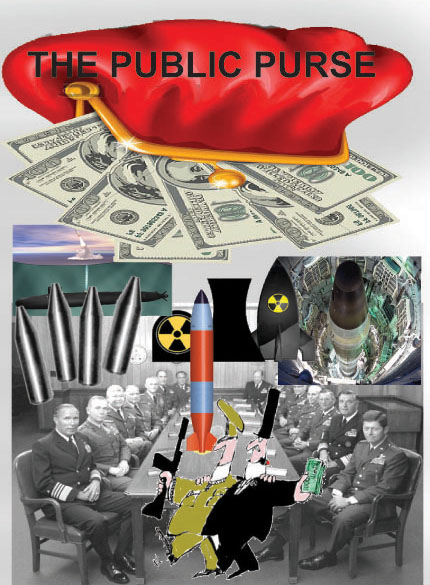
August 26, 2025 By Ellen Brown ScheerPost, https://scheerpost.com/2025/08/26/ellen-brown-unaudited-power-the-military-budget-nobody-controls/
The U.S. federal debt has now passed $37 trillion and is growing at the rate of $1 trillion every five months. Interest on the debt exceeds $1 trillion annually, second only to Social Security in the federal budget. The military outlay is also close to $1 trillion, consuming nearly half of the discretionary budget.
As a sovereign nation, the United States could avoid debt altogether by simply paying for the budget deficit with Treasury-issued “Greenbacks,” as Abraham Lincoln’s government did. But I have written on that before (see here and here), so this article will focus on that other elephant in the room, the Department of Defense.
Under the Constitution, the military budget should not be paid at all, because the Pentagon has never passed an audit. Expenditures of public funds without a public accounting violate Article 1, Section 9, Clause 7of the Constitution, which provides:
“No Money shall be drawn from the Treasury, but in Consequence of Appropriations made by Law; and a regular Statement and Account of the Receipts and Expenditures of all public Money shall be published from time to time.”
The Pentagon failed its seventh financial audit in 2024, with 63% of its $4.1 trillion in assets—approximately $2.58 trillion—untracked. From 1998 to 2015, it failed to account for $21 trillion in spending.
As concerning today as the financial burden is the wielding of secret power. Pres. Dwight Eisenhower warned in his 1961 farewell address, “In the councils of government, we must guard against the acquisition of unwarranted influence, whether sought or unsought, by the military-industrial complex. The potential for the disastrous rise of misplaced power exists and will persist.”
Pres. John F. Kennedy echoed that concern, warning in 1961 that “secret societies” and excessive secrecy are “repugnant in a free and open society,” threatening democracy by withholding truth from the public. He warned that excessive concealment, even for national security, undermines democracy by denying citizens the facts needed to hold power accountable. “No expenditure is questioned, no rumor is printed, no secret is revealed,” he said. If untracked billions fund classified programs, citizens are left powerless, governed by a shadow entity answerable to no one.
Those concerns persist today. On Aug. 13, 2025, Joe Rogan interviewed U.S. Representative Anna Paulina Luna, who leads a House Oversight Committee focused on government transparency regarding various topics, including UAPs (Unidentified Anomalous Phenomena, formerly UFOs). Luna said the committee had been formed after she and two other congressmen were denied access at Eglin Air Force Base to information on UAPs provided by whistleblowers. The problem, she said, was that Congress was supposed to represent the public and be an investigative body for it, “and you have unelected people operating basically in secrecy. … I think this goes all the way back even to JFK, with how they basically have operated outside of the purview of Congress and basically… have gone rogue ….”
A Behemoth Without Oversight
The Department of Defense’s $885.7 billion budget for 2025, approved by the House of Representatives, dwarfs the military spending of China ($296 billion), Russia ($84 billion), and the next eight nations combined. Managing $4.1 trillion in assets—from aircraft carriers to secret drones—along with $4.3 trillion in liabilities (e.g. personnel costs and pensions), the federal government’s largest agency oversees a military empire spanning over 4,790 sites worldwide. Yet it operates with minimal oversight.
The Chief Financial Officers Act of 1990 mandated audits for all federal agencies, but the National Defense Authorization Act of 2018 delayed the Pentagon’s first department-wide audit to 2018 due to its unwieldy size, its decentralized systems, and its outdated software. The DOD has failed every audit since that time. In 2024, it could not account for its $824 billion FY 2024 budget, with 2,500 new audit issues identified. Of 24 reporting entities, only nine received clean opinions, while 15 received disclaimers due to insufficient data. In fact the Government Accountability Office (GAO) has flagged DoD financial management as high-risk for waste, fraud, and abuse ever since 1995.
As observed in a January 2019 article in Rolling Stone by Matt Taibbi, openly secret budgets were first legalized in 1949 with the passage of the Central Intelligence Agency Act, which exempted that newly created agency from public financial disclosure. The Act stated, “The sums made available to the Agency may be expended without regard to the provisions of law and regulations related to the expenditure of Government funds.”
The aim of the Chief Financial Officers Act of 1990 was to curb billions of dollars said to be lost each year through fraud, waste, abuse, and mismanagement of public budgets. Despite the mandated audits for all federal agencies, the DoD – the only major agency without a clean audit – has received $3.9 trillion in congressionally approved funding since 2018. “Every year that members of Congress vote to boost Pentagon spending with no strings attached,” observed federal budgeting expert Lindsay Kosgharian, “they choose to spend untold billions on weapons and war with no accountability.”
The Audit the Pentagon Act of 2023, backed by Sens. Bernie Sanders and Chuck Grassley, proposes docking 0.5–1% of budgets for audit failures, but the measure has not received a vote.
The Department of Government Efficiency (DOGE), launched with promises to strip waste, fraud, and abuse from federal agencies, has conspicuously sidestepped the Pentagon. A June 2025 article titled “Why DOGE Was Always Doomed: The Pentagon Problem,” points out that the DOGE mission was seriously hampered by the Pentagon’s exemption from auditing:
In FY 2024, total discretionary spending was about $1.6 trillion. Of that, the Pentagon alone received $842 billion. In other words, it got more funding than all other departments combined. You read that right: one (very special) department received more than all the rest put together.
Funds that are not accounted for divert resources from critical needs like troop readiness, healthcare, and infrastructure. Overbilling by contractors enriches corporations while taxpayers foot the bill. And the lack of transparency erodes public confidence, as Americans struggle with domestic priorities.
The Missing $21 Trillion: Fraud, Waste or Something Worse?
The Pentagon’s audit failures mask not just inefficiency and waste but pervasive fraud and corruption. Between 1998 and 2015, Inspector General reports show that the DoD could not account for $21 trillion in spending—65% of federal spending during that period. For perspective, the entire U.S. GDP in 2015 was $18.2 trillion. In 2023, the agency failed to document 63% of its $3.8 trillion in assets, up from 61% the prior year. A 2015 DoD report identifying $125 billion in administrative waste was suppressed to protect budget increases.
There is plenty of verified waste to support the case for mismanagement. Military contractors, who receive over half of the Pentagon’s budget, are a major culprit. The F-35 program, managed by Lockheed Martin, was reported in 2021 to be $165 billion over budget, with $220 billion in spare parts poorly tracked. A 2023 CBS News investigation found that contractors routinely overcharged by 40–50%, with some markups reaching 4,451%. A 2016 report in the Nation highlighted $640 for a toilet seat and $7,600 for a coffee pot.
It is no longer even necessary to cover up fraud and corruption by wildly inflated prices. In 2017, former HUD official Catherine Austin Fitts collaborated with Mark Skidmore, an economics professor at Michigan State University, to document the missing $21 trillion in unsupported journal voucher adjustments at the DoD and HUD. In a June 2025 article published in Fitts’ journal The Solari Report titled “Should We Care about Secrecy in Financial Reporting?,” Dr. Skidmore discussed how the government responded to the publication of his research with Fitts. Its response was to immediately eliminate the paper trail leading to its covert financial operations. In particular, “Pentagon officials turned to the Federal Accounting Standards Advisory Board (FASAB) for advice. Several months later, FASAB posted a new document (FASAB 56), which recommended that the government be allowed to misstate and move funds to conceal expenditures if it is deemed necessary to protect national security interests.”
Fitts remarked, “The White House and Congress just opened a pipeline into the back of the US Treasury, and announced to every private army, mercenary and thug in the world that we are open for business.”
Speculation Run Rampant
In a widely-viewed interview by Tucker Carlson on April 28, 2025, Fitts expressed her belief that the missing trillions had been funneled into classified projects involving advanced technologies, including massive underground bunkers to protect elites from a “near-extinction event;” and that they were using advanced energy systems and hidden transit networks possibly linked to extraterrestrial tech. She discussed “interdimensional intelligence” and a secret space program linked to a “breakaway civilization.” The latter term was coined by UFO researcher Richard Dolan and is defined by Google as “a theoretical, hidden society that operates outside of mainstream civilization with advanced technology, often linked to UFO phenomena and secret space programs.”
In a Danny Jones interview in May 2025, Fitts alluded to Deep Underground Military Bases (“DUMBs”), perhaps used for “advanced technology or off-world operations.” Existence of these bases was confirmed two decades earlier by whistleblower Philip Schneider, a U.S. government geologist and engineer involved in their construction. In his last presentation in 1995, Schneider said there were 131 of these cities connected underground by mag-lev rail, built at a cost of $17-26 billion each. According to his biographer, Schneider was assassinated in 1996 by a U.S. intelligence agency for disclosing the government cover-up of UFOs and aliens.
Too over the top? Perhaps, but the Pentagon is so secretive that the public is left to speculate. Are we dealing with a scenario like that in such Hollywood movies as the 1997 film Men in Black, in which hidden forces—human or alien—control our fate?
The Pentagon’s All-domain Anomaly Resolution Office (AARO) contends that no verifiable evidence supports extraterrestrial activity. But other prominent figures support the UFO/UAP narrative. In 2017, the New York Times exposed the Advanced Aerospace Threat Identification Program (AATIP), said to be a $22 million DoD initiative run by Luis Elizondo investigating UAPs from 2007–2012.
According to BBC News, Haim Eshed, former head of Israel’s space security program, claimed in a 2020 interview with the Yediot Aharonot newspaper that the U.S. government has an “agreement” with a “Galactic Federation” of extraterrestrials. He alleged aliens have been in contact with the U.S. and Israel, with secret underground bases where they collaborate on experiments. Eshed claimed the United States was on the verge of disclosing this under President Trump but withheld it to avoid “mass hysteria.” The claims were unverified but provocative.
In recent years, Congress has increased its focus on UAPs, with high-profile hearings in 2022, 2023, and 2024. In 2023, whistleblower David Grusch, a former intelligence officer, testified that the U.S. possesses “non-human origin” craft and “dead pilots,” based on classified briefings. On November 13, 2024, the House Oversight Committee’s hearing, “Unidentified Anomalous Phenomena: Exposing the Truth,” featured testimony from Luis Elizondo, retired Navy Rear Admiral Tim Gallaudet, journalist Michael Shellenberger, and former NASA official Michael Gold, who claimed the U.S. possesses UAP technologies and has harmed personnel in secret retrieval programs. Shellenberger alleged that a covert “Immaculate Constellation” program hides UAP data from Congress.
Some lawmakers, including Rep. Luna and Rep. Tim Burchett, continue to criticize Pentagon secrecy and to push for transparency. In May 2024, Burchett introduced the UAP Transparency Act, requiring the declassification of all UAP-related documents within 270 days. He stated:
This bill isn’t all about finding little green men or flying saucers, it’s about forcing the Pentagon and federal agencies to be transparent with the American people. I’m sick of hearing bureaucrats telling me these things don’t exist while we’ve spent millions of taxpayer dollars on studying them for decades.
Secrecy Undermines Democracy
With $21 trillion unaccounted for historically, $165 billion in F-35 overruns, and $125 billion in buried waste, the DoD’s financial mismanagement needs urgent reform. Congress is primarily responsible for overseeing the DoD budget, exercising its constitutional “power of the purse” under Article 1 of the U.S. Constitution. So why isn’t it enforcing this mandate?
The chief excuse given is the need for secrecy for security reasons, but a congressional committee could be given access to the Pentagon’s financial data in closed session in order to exercise public oversight and enforce accountability. Other factors are obviously at play, including political influence, lobbying, campaign contributions from the defense sector, and a lack of penalties for noncompliance.
To restore accountability, Congress needs to enforce the Audit the Pentagon Act, modernize DoD systems, and investigate contractors profiting from lax oversight. UAP transparency is also critical, whether to debunk myths or uncover truths.
As taxpayers footing the bill, we are entitled to know not only where our money is being spent but who is really in charge of our government. The Pentagon’s secrecy and lack of accountability could be shielding anything from contractor fraud to UAP programs and alien alliances. If there is information so secret that even our elected representatives don’t have access to it, who does have access? Is there a secret government above the government we know? Without fiscal transparency and accountability, we can no longer call ourselves a democracy, as JFK warned.
Indonesia Bets On Thorcon’s Molten Salt Reactor, But History Suggests Trouble Ahead.
Indonesia has none of the ingredients that historically led to nuclear success. It has no prior nuclear fleet, no experience operating reactors, no large-scale nuclear workforce, no plans to build nuclear weapons and no tradition of standardized reactor builds.
Michael Barnard, Clean Technica, 27 Aug 25
Indonesia has taken a bold and likely problematic step with the announcement of its first, early stage regulatory approval for a nuclear power project. Thorcon International, a Singapore-based developer of molten salt reactors, has received permission from Indonesia’s regulator to evaluate a site for a demonstration plant on Kelasa Island. For a country of more than 270 million people with electricity demand that is still growing rapidly, this might appear to be a turning point. Yet if one examines history, technology, and the context in which this project is being launched, the chances of it succeeding look vanishingly small.
Indonesia is the world’s largest archipelago, stretching across more than 17,000 islands, with only about 6,000 of them inhabited. This geography creates enormous challenges for the national grid, which is fragmented into multiple regional systems rather than a single interconnected backbone. Java and Sumatra host most of the country’s transmission infrastructure, while many outlying islands depend on small isolated grids. Remote communities often rely on diesel generators for electricity, which are expensive to operate and create significant local pollution…………………………………………………………….
the government has announced a target of 10 GW of nuclear capacity by 2040, marking its first commitment to nuclear power.
If delivered, these additions would lift renewables to roughly 35% of the national mix while also introducing nuclear into the system for the first time. Looking further ahead, Indonesia targets 75 GW of new renewable capacity by 2035, supported by more than 10 GW of storage, reflecting the scale of investment needed to diversify away from coal and meet climate commitments.
Nuclear power has only succeeded when certain conditions were in place. In the mid-twentieth century, large economies aligned nuclear energy programs with nuclear weapons programs. They standardized on one design, built dozens of gigawatt-scale plants in sequence, trained workforces through government-led programs, and maintained focus for decades. Those programs were not efficient by today’s standards, but they were coherent and well-resourced.
Countries that did not follow that formula, such as Canada’s stop-start approach with CANDUs or the the last couple of decades of western nuclear reactor builds, ended up with mixed results and rising costs. Even China, which has mastered megaproject delivery, is struggling with nuclear because it has spread effort across too many designs and has not locked into the necessary standardization. While nuclear advocates in the west point to China’s build out as impressive, it is years behind on targets and falling further behind. It only achieved its 2020 target in 2024, is still well under its 2% of grid capacity target for 2025 and its scheduled construction through 2030 will leave it tens of GW off that target.
Indonesia has none of the ingredients that historically led to nuclear success. It has no prior nuclear fleet, no experience operating reactors, no large-scale nuclear workforce, no plans to build nuclear weapons and no tradition of standardized reactor builds. It’s not building dozens of standard and proven GW-scale reactors, but only 10 GW in total, starting with a 500 MW unproven design, and not necessarily repeating that one solution multiple times. So far they appear to have little political opposition to nuclear, but that doesn’t mean the bipartisan support required for a two to four decade strategic national construction program. The country is signatory to the nuclear Non-Proliferation Treaty and has eliminated highly enriched uranium that might be transferable to nuclear weapons from the countyr, so there is military strategic alignment and discipline to call upon.
The choice of a molten salt reactor adds another layer of difficulty. Molten salt designs were first tested at Oak Ridge in the 1960s. They worked in the lab but ran into issues with corrosion, material embrittlement, plugging of salt lines, and complex chemistry that had to be actively managed. They never scaled beyond a few megawatts of thermal output. In recent years, startups from North America to Scandinavia have revived the concept, promising walk-away safety and lower costs. Yet not a single one has delivered a commercial plant. Thorcon itself has never built or operated a reactor, anywhere. It is proposing to build large sealed modules in shipyards and tow them to Indonesia, an approach that exists only on paper.

……………………………..Germany tried thorium in its pebble-bed reactor, and India built an entire nuclear strategy around its domestic thorium reserves, planning a three-stage cycle that would eventually rely on advanced heavy water reactors fueled with uranium-233 bred from thorium. Yet in every case, thorium stopped short of commercial deployment. The complexity of fuel handling, the need for an initial fissile inventory of uranium or plutonium, and the sheer momentum of the uranium-fueled reactor fleet kept thorium in the category of “promising but not delivered.”
Thorcon’s original vision was built on thorium’s promise. Its very name, short for “Thorium Concept,” signaled an intention to commercialize molten salt reactors running on a thorium cycle. Early designs envisioned dissolving thorium in molten fluoride salt, breeding uranium-233 in situ, and demonstrating the fuel’s long-touted advantages. But as the company moved from concept to trying to build an actual plant in Indonesia, pragmatism set in. For a first-of-a-kind power reactor, relying on thorium would mean untested chemistry, uncertain licensing pathways, and even greater risk.
Indonesia’s proposed demonstration plant is therefore designed to run on conventional low-enriched uranium fuel dissolved in molten salt, not thorium. Thorium remains a potential long-term option in the design, but the Indonesian reactor will take the easier, more familiar path to get the project off the ground. In other words, while Thorcon began as a bet on thorium, its first potential real-world deployment has been scaled back to uranium, underscoring how thorium continues to hover at the edge of nuclear power rather than forming its core.
Bent Flyvbjerg’s work on megaprojects should be a warning. He has shown repeatedly that nine out of ten large projects go over budget and over schedule, and nuclear projects are consistently among the very worst. The average nuclear build is more than 100% over budget and about a decade late. Add in the fact that this is a first-of-a-kind reactor by a company with no track record, in a country with no nuclear infrastructure, and the probability of delivering on time, on budget, and at promised cost of electricity falls close to zero. Even if the project is eventually completed, it will almost certainly take much longer and cost much more than advertised, and the benefits to Indonesia will not match the rhetoric.
The alternative paths are clearer and less risky. Indonesia sits on some of the world’s richest geothermal resources and has significant hydro potential. Solar costs continue to fall and the archipelago has ample land and rooftops for deployment. With investment in storage, interconnections, and grid modernization, these resources could supply reliable and cheap electricity without the risks of nuclear. International partnerships like the Just Energy Transition Partnership are already funneling billions into renewables and grid upgrades. Building out this system is not trivial, but it does not carry the weight of unproven technologies, uncertain regulation, and the specter of megaproject failure that Thorcon does.
……………………..A better bet would be to double down on renewables, expand storage, and build the transmission backbone to connect islands and balance supply. That path has its own challenges but rests on proven technologies already delivering results worldwide. Indonesia has made a bold gesture toward nuclear. The sober assessment is that it will not pay off. https://cleantechnica.com/2025/08/26/indonesia-bets-on-thorcons-molten-salt-reactor-but-history-suggests-trouble-ahead/
Iran parliament presses government to apply law limiting IAEA cooperation
Iran’s parliament on Tuesday urged the Foreign Ministry and Atomic
Energy Organization to fully implement existing legislation limiting
cooperation with the International Atomic Energy Agency, amid growing
pressure from Western powers and renewed nuclear talks in Geneva. In a
strongly worded statement, the National Security and Foreign Policy
Committee of Iran’s parliament described IAEA chief Rafael Grossi as “a
servant of the US and the Zionist regime,” accusing him of siding with
hostile powers and remaining silent over attacks on Iranian nuclear sites,
according to remarks published by state media.
Iran International 26th Aug 2025, https://www.iranintl.com/en/202508262134
UN inspectors back in Iran as IAEA chief gets protection over Tehran threat
The UN nuclear watchdog’s inspectors have returned to Iran after their
expulsion during a brief war with Israel and the US, IAEA chief Rafael
Grossi said Tuesday, amid reports he has been placed under 24/7 protection
following Iran’s threat to his life. “Now the first team of IAEA inspectors
is back in Iran, and we are about to restart,” International Atomic Energy
Agency (IAEA) director general Grossi said. Grossi, who was in Washington
DC for the annual meeting of the Institute of Nuclear Materials Management,
stopped short of saying there was an agreement or timeline for them to
resume their work. “When it comes to Iran, as you know, there are many
facilities. Some were attacked, some were not. So we are discussing what
kind of modalities, practical modalities, can be implemented in order to
facilitate the restart of our work there.”
Iran International 26th Aug 2025, https://www.iranintl.com/en/202508265100
Israel Bombs Gaza Hospital, Kills 5 Journalists from AP, Al Jazeera, Reuters, NBC
August 26, 2025
Transcript………………………………………………………………………………………………………………………………… https://www.democracynow.org/2025/8/25/gaza_journalists
How France’s nuclear dream became a financial nightmare
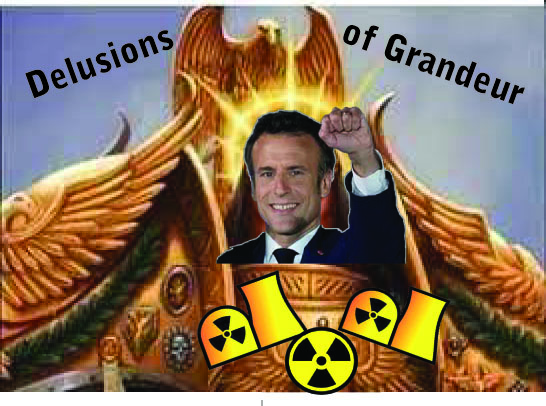
Decades of neglect, spiralling costs and political denial have turned France’s once-vaunted nuclear program into a cautionary tale, writes Jean-Luc Porquet (translated by Dr Evan Jones).
By Jean-Luc Porquet | 22 August 2025, https://independentaustralia.net/politics/politics-display/how-frances-nuclear-dream-became-a-financial-nightmare,20076
Translator’s note: The French nuclear power sector is in deep trouble technically and financially. Formally a cheap source of power, embedded costs have not been counted. There has been a dramatic loss of skills over the decades, inhibiting effective maintenance of existing plants and turning the construction of France’s then most powerful reactor at Flamanville on the Normandy coast into a nightmare.
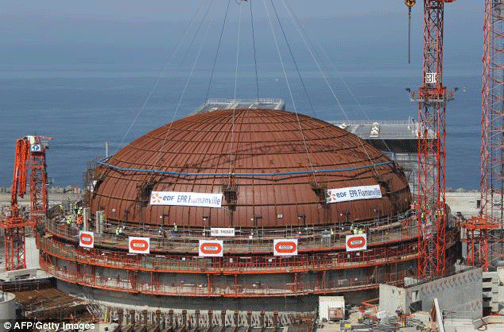
Technological and resource challenges have escalated, including water availability in the face of climate change. The plan to bury accumulated highly radioactive waste at Bure, 250 kilometres east of Paris, remains at an impasse. And the political class lives in denial.
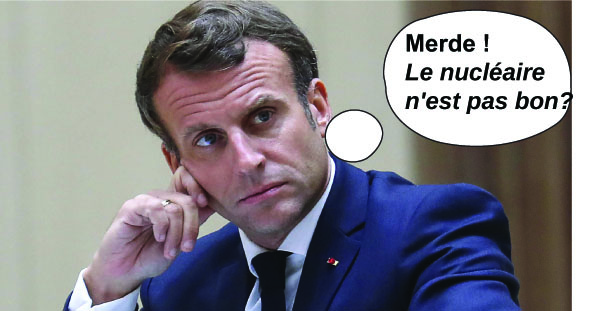
Meanwhile, sections of the Coalition parties cling to nuclear power as Australia’s post-coal salvation. Australia has uranium. However, regarding nuclear power prospects, there is no history, no capacities, no acceptable locations, no acceptable burial sites and no water. In short, local nuclear power adherents have no brains.
EVERYTHING WAS SUPPOSED to work to plan.
The 58 French nuclear reactors built at an accelerated pace between 1977 and 1996 were due to tranquilly finish their life after 30 years of good and faithful service. And the new super-powerful EPRs [European Pressurised Reactors], designed and built by Éléctricité de France, were to effect a seamless transition.
It was estimated that, by 2012, the first French EPR would be put into operation at Flamanville.
Kapow! Not only has its cost, initially fixed at €3.3 billion [AU$5.9 billion], multiplied by six (!), but its construction site has proved a nightmare. The EPR was connected to the grid only in 2024. And it has hardly run since (it is currently in shutdown).
An emergency patch-up job has been necessary on the aged French nuclear park so that its tired reactors can hang on for another 20 years. Total cost of this major overhaul now in progress: €100 billion [AU$180 billion].
At the moment when the urgent necessity to find €40 billion [AU$72 billion] in economies for the 2026 budget obsesses the Bayrou Government [under pressure from Brussels], Reporterre publishes on YouTube a remarkable documentary by journalist Laure Noualhat, titled Nucléaire – Comment il va ruiner la France. (See also Noulhat’s book, Le nucléaire va ruiner la France, Seuil-Reporterre, 224p.) It is noted there that, in the fairytale world that is nuclear energy, billions waltz out by the dozens. The golden rule is: “Whatever it costs!”
Other inescapable costs to come? To prolong the life of the plant at The Hague, where nuclear fuel is processed and which is at the end of its life — rough estimate: €34 billion [AU$61 billion]. To continue to dig deep at Bure, where the most dangerous nuclear waste will be buried 500 metres below ground — estimated cost: €35 billion [AU$63 billion]. To dismantle the 58 reactors, which, even patched up, will finish by being at the end of their life in ten or 20 years — cost: €50 billion. Total: €219 billion [AU$395.8 billion] to find. This is not all.
The EDF has sold an EPR to Finland for €3 billion [AU$5.4 billion] and two others to the United Kingdom for €22 billion [AU$39.7 billion]. And has promised to take care of any additional costs. Such comes in at €12 billion [AU$21.6 billion] for the former, €56 billion [AU$101 billion] for the latter. Do the maths.
Thomas Piquemal, the EDF’s chief financial officer at the time, went into meltdown. And resigned [in March 2016]. And this is not all.
In 2022, President Macron announced that, at his demand, the EDF will launch six “new generation” EPRs [initially, then eight more to 2050]. Hand on heart, it will happen (in fact, one knows nothing about them). Estimated total price: €100 billion [AU$180.7 billion] (more or less). A former EDF Director, Philippe Huet, interviewed by Laure Noualhat, called this a “crazy gamble”.
If ever this delusional program (transparently dismissed by the Cour des comptes [equivalent to the National Audit Office] as inadvisable) sees the day, who will pay for it? Not the EDF, already indebted to the tune of €55 billion [AU$99 billion]. Nor any private investor (not mad!). Guess… https://www.youtube.com/watch?v=rjfHyhkpef8
Jean-Luc Porquet has been a journalist at Le Canard enchaîné since 1994, where this article appeared on 9 July. He writes a column on ecology and technocratic society, as well as theatre reviews. He has written a dozen books, the latest of which, Le grand procès des animaux, is a satirical fictional account of the sixth extinction in progress.
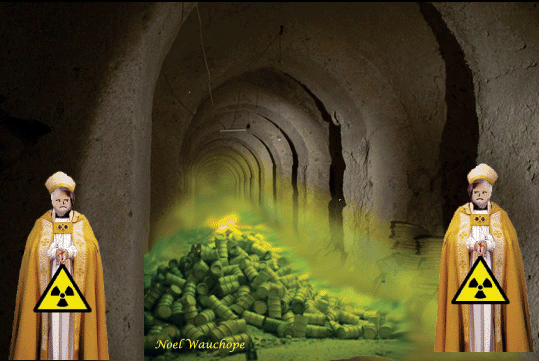
‘Nuclear Priests’ could warn future people about wastes under the Irish Sea
When Sir Keir Starmer entered No 10 last summer, it did not take long for
him to pick up where his predecessors left off on delivering more nuclear
power stations with a promise to “build, baby, build”. The Prime
Minister has vowed to “fast forward on nuclear” and so far has stuck
true to his word, with the Government taking up a larger stake in the
Sizewell C power plant in Suffolk, while loosening planning rules to allow
new small modular reactors to be built across the country.
But with the push for more nuclear power, bringing with it a steady supply of low-carbon energy, the question is inevitably asked: what do you do with all the
nuclear waste?
The answer is to dig a hole nearly the size of Wembley
Stadium 1km down beneath the Irish Sea, that could one day see the rise of
a new “atomic priesthood” and even, some have jokingly claimed, the
creation of glow in the dark cats.
But policymakers are aware that to push
ahead with this new nuclear drive, they will need to develop a stable,
long-term storage facility in which to hold not just future nuclear waste,
but all the nuclear waste the country has produced since the dawn of the
nuclear energy age in the 1950s. This is what the proposed Geological
Disposal Facility will provide.
And when they say long term, they mean long
term. “The purpose of the facility is to keep the radioactivity away from
humans and the environment so that it can’t cause harm for a sufficient
period of time – and that’s of the order of a few hundred thousand
years,” Neil Hyatt, Chief Scientific Adviser at the Nuclear Waste
Services, tells The i Paper.
iNews 24th Aug 2025, https://inews.co.uk/news/politics/nuclear-priests-glowing-cats-how-warn-future-generations-atomic-danger-3875319
1 This Month




PLEASE OPPOSE HR 8255 AND S.3639 – bills would accelerate satellite deployment, with no environmental review or safeguards – https://ncstd5li.quorum.us/campaign/169331/
To see nuclear-related stories in greater depth and intensity – go to https://nuclearinformation.wordpress.com
-
Archives
- September 2026 (330)
- August 2026 (330)
- July 2026 (355)
- June 2026 (287)
- May 2026 (306)
- April 2026 (356)
- March 2026 (251)
- February 2026 (267)
- January 2026 (308)
- December 2025 (358)
- November 2025 (359)
- October 2025 (375)
-
Categories
- 1
- 1 NUCLEAR ISSUES
- business and costs
- climate change
- culture and arts
- ENERGY
- environment
- health
- history
- indigenous issues
- Legal
- marketing of nuclear
- media
- opposition to nuclear
- PERSONAL STORIES
- politics
- politics international
- Religion and ethics
- safety
- secrets,lies and civil liberties
- spinbuster
- technology
- Uranium
- wastes
- weapons and war
- Women
- 2 WORLD
- ACTION
- AFRICA
- Atrocities
- AUSTRALIA
- Christina's notes
- Christina's themes
- culture and arts
- Events
- Fuk 2022
- Fuk 2023
- Fukushima 2017
- Fukushima 2018
- fukushima 2019
- Fukushima 2020
- Fukushima 2021
- general
- global warming
- Humour (God we need it)
- Nuclear
- RARE EARTHS
- Reference
- resources – print
- Resources -audiovicual
- Weekly Newsletter
- World
- World Nuclear
- YouTube
-
RSS
Entries RSS
Comments RSS

