The world moves on without Trump

For Trump, being ignored may be worse than being opposed. He thrives on conflict, boasting of tough deals and headline-grabbing summits. But as more leaders refuse his calls, sideline him in negotiations, and leave him off the guest list, the reality sets in: the world can get along without him
3 September 2025 Michael Taylor, https://theaimn.net/the-world-moves-on-without-trump/#comment-12111
President Trump entered his second term promising to “make America respected again.” Yet nearly nine months in, the opposite has happened. Far from restoring U.S. influence, his confrontational diplomacy and transactional worldview have pushed the United States to the margins of global affairs. Allies are charting their own course, rivals are filling the vacuum, and Washington – once the indispensable power – is finding itself ignored.
Canada fights back
Canada, historically one of America’s closest partners, has become a frontline example of this new dynamic. Trump reignited a tariff war in early 2025, slapping duties on Canadian steel, timber, and dairy imports. Ottawa wasted little time retaliating with its own tariffs on U.S. agricultural products and manufactured goods. Instead of cowing Canada into submission, Trump’s threats hardened its resolve. Prime Minister Mark Carney openly declared that Canada “will not be bullied,” signaling a rare breakdown in a relationship that for decades symbolised North American unity.
India hangs up the phone
Trump once basked in his self-styled friendship with Prime Minister Narendra Modi, frequently recalling their joint rally in Houston during his first term. Today, that relationship is in tatters. Indian officials confirm that Modi has not returned several of Trump’s calls in recent weeks, a deliberate snub reflecting New Delhi’s frustration with Washington’s unpredictable trade policies and waning reliability as a strategic partner. For Trump, who prizes personal relationships with world leaders, the silence from Modi is a humiliation.
Excluded from history
Perhaps the most symbolic snub came when China marked the 80th anniversary of the end of World War II – and excluded the United States from the guest list. For decades, Washington had been at the heart of such commemorations, both as a wartime victor and as the principal architect of the postwar international order. This time, however, the stage belonged to the world’s three dominant authoritarian leaders – Xi Jinping, Kim Jong Un, and Vladimir Putin – delivering a stark message: America was no longer considered essential. Trump, clearly agitated at being left out by his supposed “friends,” dismissed it all as a “conspiracy.”
Europe moves on
Across the Atlantic, the European Union is steadily disentangling itself from Washington’s orbit. Frustrated by Trump’s climate skepticism and unilateral tariffs, Brussels has accelerated trade and renewable energy partnerships with Asian economies. Even Britain – long America’s closest ally – launched its own Middle East ceasefire initiative without so much as consulting Washington. The “special relationship” now feels like an afterthought.
Asia hedges
In Asia, longtime U.S. allies Japan and South Korea are building closer defense ties with each other and with Australia. The moves reflect deep concern over Trump’s erratic handling of security commitments, especially his repeated threats to withdraw U.S. troops unless allies pay more for their presence. For decades, Washington was the cornerstone of regional stability; now, partners are learning to do without it.
Africa and Latin America assert independence
The African Union recently declined Trump’s request to address its annual summit, citing his history of disparaging remarks about African nations. Instead, EU and Chinese envoys were welcomed. In Latin America, regional powers including Brazil, Mexico, and Argentina are forging trade agreements that deliberately exclude the United States. Where once Washington dominated hemispheric affairs, its neighbors now treat it as just another power to manage.
The cost of isolation
What unites these developments is not simply Trump’s personal unpopularity, but a structural shift in global politics. For decades after World War II, the United States was seen as indispensable – the partner of first resort in security, trade, and diplomacy. Today, countries are discovering that they can move forward without Washington. Trump’s “America First” doctrine, intended to project strength, has instead revealed weakness: allies no longer trust the U.S., and rivals no longer fear it.
Echoes of decline
There are historical echoes here. Britain, once the world’s preeminent power, found itself increasingly sidelined after World War II as its empire collapsed and the U.S. rose. Now America is experiencing a similar moment. The difference is that while Britain yielded to a trusted ally, the U.S. is ceding ground to China and other powers less committed to liberal democracy.
Trump’s personal frustration
For Trump, being ignored may be worse than being opposed. He thrives on conflict, boasting of tough deals and headline-grabbing summits. But as more leaders refuse his calls, sideline him in negotiations, and leave him off the guest list, the reality sets in: the world can get along without him. For a man who equates personal validation with national success, nothing cuts deeper.
Conclusion
The United States remains a powerful nation, with unmatched military strength and vast economic clout. But power unused wisely is power wasted. Under Trump, Washington has squandered goodwill, alienated allies, and emboldened rivals. The result is a geopolitical landscape where America is no longer central. The world is moving on – and Trump, watching from the sidelines, is discovering the true price of isolation.
£154m plan hatched to move UK’s 140-tonne cache of powdered plutonium from nuclear reactor waste at Sellafield.

Britain could finally solve the problem of
what to do with its radioactive waste by converting it into ceramic
pellets, The Telegraph can reveal. Government scientists want to store the
radioactive plutonium, which is a national security risk because it can be
used to make nuclear weapons, in an underground nuclear graveyard. The
UK’s cache of 140 tonnes of powdered plutonium from nuclear reactor waste
is currently under armed guard at Sellafield in Cumbria.
Telegraph 28th Aug 2025 https://www.telegraph.co.uk/news/2025/08/28/britain-solution-radioactive-waste-problem-cumbria/
Satellite images show construction at site linked to Israel’s suspected nuclear weapons programme
Israel does not confirm or deny having atomic weapons
Jon Gambrell, Independent , Wednesday 03 September 2025
Intensified construction work has been seen at a facility central to Israel’s long-suspected atomic weapons programme, according to satellite images analysed by experts. The development at the Shimon Peres Negev Nuclear Research Center near Dimona could signify a new reactor or a facility designed for assembling nuclear arms, though the programme’s inherent secrecy makes precise identification difficult.
This activity is set to reignite questions surrounding Israel’s widely believed status as the Middle East’s only nuclear-armed state. It also risks drawing international criticism, particularly as it follows joint operations in June where Israel and the United States bombed nuclear sites across Iran, including the heavy water reactor at Arak, amid concerns Tehran could pursue atomic weapons.
Seven experts who examined the images all said they believed the construction was related to Israel’s long-suspected nuclear weapons program, given its proximity to the reactor at Dimona, where no civilian power plant exists. However, they split on what the new construction could be.
Three said the location and size of the area under construction and the fact that it appeared to have multiple floors meant the most likely explanation for the work was the construction of a new heavy water reactor. Such reactors can produce plutonium and another material key to nuclear weapons.
The other four acknowledged it could be a heavy water reactor but also suggested the work could be related to a new facility for assembling nuclear weapons. They declined to be definitive given the construction was still in an early stage……………………………………………………………………………………… https://www.independent.co.uk/news/world/middle-east/israel-nuclear-shimon-peres-negev-b2818997.html
Small reactors: cash flow alert for Newcleo, Europe’s largest nuclear start-up.
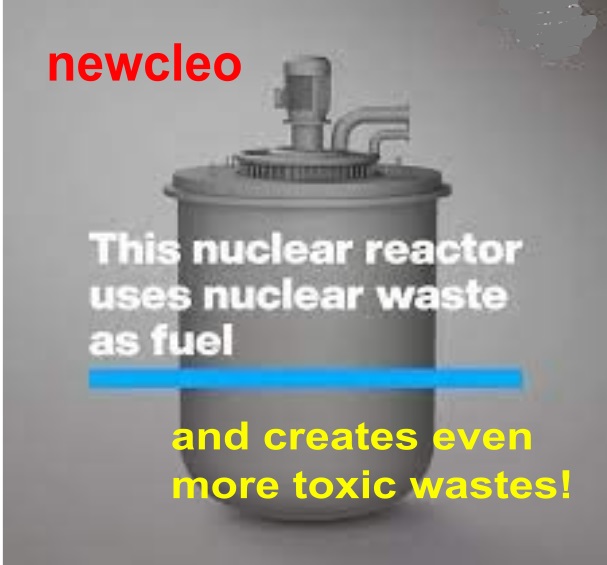
The company, which employs a thousand people, is burning through
too much cash. Its continued existence could be threatened without a new
round of financing.
But both private and public stakeholders remain
cautious. While waiting for fresh money, Newcleo is scaling back. Without a
new capital increase in the next twelve months, the company’s continued
existence is threatened, the Italian press reported in early August. The
articles, notably published in the business daily Il Sole 24 Ore , are
based on the findings of an audit of Newcleo’s 2024 accounts conducted by
KPMG, which La Tribune has seen.
The startup has notably abandoned its
ambitions in the United Kingdom, leading to the elimination of 150
positions. It also intends to reduce its engineering contracts with
external service providers.
La Tribune 29th Aug 2025, https://www.latribune.fr/climat/energie-environnement/petits-reacteurs-alerte-sur-la-tresorerie-de-newcleo-plus-grosse-start-up-europeenne-du-nucleaire-1031500.html
Rolls-Royce denies report of IPO ( Initial Public Offering) plans for small nuclear reactor unit
By Reuters, August 31, 2025
Aug 30 (Reuters) – Rolls-Royce Holdings (RR.L), opens new tab on Saturday denied a report it was exploring an initial public offering for its small nuclear reactor unit.
The Financial Times, citing people familiar with the situation, reported on Saturday the company was considering an IPO as well as other funding options. It said talks with investment houses and banks were at an early stage.
“Rolls-Royce SMR is not planning for, or in the process of launching, an initial public offering,” a spokesperson for the unit said in an emailed statement to Reuters.
In June, the Rolls-Royce SMR unit was selected to build Britain’s first Small Modular Reactors as part of its plan to speed up the decarbonisation of the power network from the mid-2030s. The unit, majority-owned by the British engineering firm, plans to build three reactors.
The British government pledged 2.5 billion pounds ($3.4 billion) for the SMR programme over the next four years, aiming to launch one of Europe’s first small-scale nuclear industries…. https://www.reuters.com/business/energy/rolls-royce-denies-report-ipo-plans-small-nuclear-reactor-unit-2025-08-30/
Rolls-Royce explores small nuclear reactor unit funding options including IPO (Initial Public Offering) .

An Initial Public Offering (IPO) is the process where a private company sells its shares to the public for the first time, thereby becoming a public company listed on a stock exchange. (The process involves significant costs, ongoing reporting requirements, a loss of some control, and increased exposure to litigation)
The consortium led by the UK engineer is in talks to finalise a
contract with the government later this year. Rolls-Royce has held
exploratory talks with advisers over financing options for its small
nuclear business, including an initial public offering, amid growing
investor excitement about the nascent technology.
The FTSE 100 engineer was
selected to build Britain’s first fleet of small modular reactors in June
as part of a plan by the Labour government to make the UK a world leader in
the technology. The Rolls-Royce-led SMR consortium is in talks to finalise
a contract with the government later this year.
The talks with investment
houses and banks focused on future funding requirements of the business,
according to two people familiar with the situation. “There is a live
debate within the shareholder base,” said one of the people, noting that
a listing at a high valuation would generate significant funding. Other
members of the consortium include CEZ Group, the Czech utility, which holds
a 20 per cent stake as part of a wider partnership with Rolls-Royce, the
Qatar Investment Authority and BNF Resources.
There were “different
views” among shareholders, the person added. Discussions were at an early
stage, with the Rolls-Royce board not in a rush to make any decision, said
the other person. The UK government would be eager to ensure that any
listing occurred in London, which has suffered a marked slowdown in
flotations in recent years, they added. The government has said it will
pledge £2.5bn to small modular reactors during this three-year spending
review period, helping to develop Rolls-Royce’s technology as well as
develop sites for the reactors.
FT 30th Aug 2025,
https://www.ft.com/content/234b4c2e-5e1a-46ba-82fd-472e271a289f
Golden Dome is already a turning point for American space policy.
As the space community awaits the upcoming deadline for a Golden Dome architecture, perhaps the biggest story on Golden Dome is how the program is resonating through the industry.
Last month, a new report by the Aerospace Corporation’s Center for Space Policy and Strategy identified Golden Dome (and its prominence within the Trump administration’s fiscal year 2026 defense budget request) as a significant turning point for American space policy, Pentagon spending priorities and the role of the Space Force.
The report said that “the introduction of Golden Dome is arguably the most important development affecting the defense space budget since the inception of the Space Force.”
As SpaceNews’ Sandra Erwin wrote:
For the relatively young Space Force, established in 2019, Golden Dome represents a significant expansion of resources and responsibilities. Sam Wilson, budget analyst at the Center for Space Policy & Strategy and author of the report, views the initiative as creating “a major opportunity for the Space Force as it brings extra resources for some of Space Force’s priorities such as missile warning satellites that the service already was planning to develop.”
“This is an opportunity to get those funded at higher levels,” Wilson told SpaceNews.
The article describes how Golden Dome’s prominence – and the level of attention paid to it – is elevating space issues within broader defense planning. It’s also a program that could benefit new and old space firms alike while calling broader public attention to the military’s role in and influence over space.
Investors feel the same. A note from Capital Alpha Partners this week highlighted that “Golden Dome gave something new for U.S. contractors to talk about and position for,” but so far details are scarce. At last month’s industry summit in Huntsville, Alabama, defense firms got little more than high-level overviews.
“Even if it’s classified, clarity on the architecture may provide something more meaningful for companies to discuss in the October-November earnings season,” the Capital Alpha note read….(Read more at link –
https://spacenews.bluelena.io/index.php?action=social&chash=980ecd059122ce2e50136bda65c25e07.830&s=d7cea81a8b3dc478fa14dbee41fab337)
Why are saltmarshes such effective carbon sinks?
The invisible yet lethal threat of radioactive pollution is an ever-present risk to the Blackwater. Even a small leakage of nuclear material from the decommissioned Bradwell reactor cores or radioactive waste stores could negatively affect the role that the estuary’s marshlands play in trapping carbon, known as carbon sequestration. In short, radioactive leakage may erode the amount of carbon that can be sequestered in future. This risk alone should be enough to deter any further development of new nuclear power at the Bradwell site.
2 September 2025
David Humphreys explains the role of saltmarshes in the struggle against our heating climate in the August 2025 column for Regional Life
The saltmarshes and mudflats of the Blackwater Estuary are an important yet fragile environment rich in birds, flora, invertebrates, fish and oysters. But saltmarshes are also highly effective in storing carbon, thereby acting as carbon sinks with a vital role to play in tackling increases to the global temperature.
Like all forms of plant life, the vegetation that thrives in marshlands absorbs carbon from the atmosphere through photosynthesis to create food for the plants.
Carbon sinks may release their carbon back into the atmosphere in two ways. First, combustion generates carbon dioxide emissions, for example during forest fires. Second, carbon dioxide is realised when living organisms respire. Respiration is how life forms, including plants, obtain energy. If plants are in an oxygen-rich (aerobic) environment they create more carbon dioxide when breathing than if their environment is lacking in oxygen (anaerobic).
Why are saltmarshes such effective carbon sinks?
2 September 2025
David Humphreys explains the role of saltmarshes in the struggle against our heating climate in the August 2025 column for Regional Life
The saltmarshes and mudflats of the Blackwater Estuary are an important yet fragile environment rich in birds, flora, invertebrates, fish and oysters. But saltmarshes are also highly effective in storing carbon, thereby acting as carbon sinks with a vital role to play in tackling increases to the global temperature.

Like all forms of plant life, the vegetation that thrives in marshlands absorbs carbon from the atmosphere through photosynthesis to create food for the plants.
Carbon sinks may release their carbon back into the atmosphere in two ways. First, combustion generates carbon dioxide emissions, for example during forest fires. Second, carbon dioxide is realised when living organisms respire. Respiration is how life forms, including plants, obtain energy. If plants are in an oxygen-rich (aerobic) environment they create more carbon dioxide when breathing than if their environment is lacking in oxygen (anaerobic).
And here’s why saltmarshes are such effective sinks: they are anaerobic, so plants breathe without oxygen. Anaerobic respiration generates less energy than aerobic respiration and produces less carbon dioxide. This enables carbon stocks to build up. Coastal marshlands also receive a constant influx of tide-borne sediment, which buries organic matter in sediment layers, a further factor that enables carbon to accumulate. The result is that coastal marshlands are more effective at carbon storage per hectare than any other ecosystem, including tropical forests.
The Blackwater Estuary forms part of a broader category of carbon sink known as ‘blue carbon’. This is carbon that has been captured and stored by living coastal ecosystems such as saltmarshes, mangrove forests and seagrass beds. Blue carbon ecosystems also provide other environmental services such as protection against sea-level rise and storm surges. Given the global sea-level increases projected for this century, the importance of blue carbon ecosystems cannot be overstated, both for coastal protection and trapping carbon.
The saltmarshes of Essex, then, are a vital asset in the fight against global heating. At the same time, they are threatened by the impacts of climate change, in particular coastal retreat from sea-level rise.
Marshland ecosystems are also at the mercy of pollution, which can reduce their carbon storage capacity. The invisible yet lethal threat of radioactive pollution is an ever-present risk to the Blackwater. Even a small leakage of nuclear material from the decommissioned Bradwell reactor cores or radioactive waste stores could negatively affect the role that the estuary’s marshlands play in trapping carbon, known as carbon sequestration. In short, radioactive leakage may erode the amount of carbon that can be sequestered in future. This risk alone should be enough to deter any further development of new nuclear power at the Bradwell site.
This is a further reason to ‘BANNG the drum’ against new nuclear at Bradwell and to resist further nuclear power construction in the United Kingdom.
David Humphreys is Emeritus Professor of Environmental Policy at the Open University.
NFLAs join nuclear test appeal to French and Algerian Governments
On the UN International Day against Nuclear Tests (29 August), the
UK/Ireland Nuclear Free Local Authorities have joined French, Algerian and
global partners in appealing to the French and Algerian Governments for
justice for the victims of French nuclear tests in North Africa.
NFLA 29th Aug 2025 https://www.nuclearpolicy.info/news/nflas-join-nuclear-test-appeal-to-french-and-algerian-governments/
Extra funding revealed to fuel nuclear fusion energy training and research

The UK Atomic Energy Authority (UKAEA), University of York and University
of Edinburgh, will invest £7.8m over the next five years to advance fusion
energy research and post-graduate training. The funding will be distributed
through UKAEA’s Fusion Opportunities in Skills, Training, Education and
Research (FOSTER) Programme, which aims to develop the next generation of
fusion energy specialists. This investment is intended to create new
opportunities across collaborating universities for students to access
level Seven (master’s degree) qualifications in fusion and relevant
fields, supporting the FOSTER Programme’s mission to build a diverse
fusion skills ecosystem.
Business Desk 3rd Sept 2025, https://www.thebusinessdesk.com/yorkshire/news/2143485-extra-funding-revealed-to-fuel-nuclear-fusion-energy-training-and-research
Memorial unveiled at former RAF airbase threatened by nuke waste dump
NFLA Secretary Richard Outram was proud recently to participate in a
ceremony (31 August) at which a new memorial was unveiled to honour the
service of the many personnel once based at a Second World War RAF airbase
which may become the preferred site for a nuclear waste dump. The timing is
particularly poignant for, whilst once RAF Millom fought off an attack by a
Luftwaffe bomber, the former airfield now faces a graver threat from nearer
home. At the end of January, Nuclear Waste Services designated that part of
the airfield not occupied by His Majesty’s Prison Haverigg as its primary
Area of Focus in the South Copeland GDF Search Area. This could be the
future location for a surface facility that would receive nuclear waste
shipments as part of the plan to establish a Geological Disposal Facility.
NFLA 2nd Sept 2025,
https://www.nuclearpolicy.info/news/memorial-unveiled-at-former-raf-airbase-threatened-by-nuke-waste-dump/
Widened recall of radioactively contaminate shrimp
The FDA continues to widened a recall of shrimp packages contaminated with radioactive cesium 137. Various theories abound regarding the exact source of the contamination. As of September 2, the recall encompasses grocery stores, distributors, and wholesalers across many states.
Such a recall comes as no shock to many organizations — including Beyond Nuclear — who, in the wake of the 2011 Fukushima meltdowns, have warned about radioactive contamination of food for over a decade. These groups petitioned FDA (2013), and two appeals are currently being made to lawmakers, to reduce the amount of radioisotopes allowed in U.S. food. The U.S. has one of the highest allowable limits worldwide for radiocesium. https://nislappdc.org/wp-content/uploads/2025/08/FFAN-FINAL-release-on-shrimp-recall-1-4-1.pdf
US nuclear safety regulators say their jobs could be at risk under Trump

By Timothy Gardner, September 4, 2025, https://www.reuters.com/world/us/us-nuclear-safety-regulators-say-their-jobs-could-be-risk-under-trump-2025-09-03/
- Summary
- Pressure high on nuclear regulators after Trump orders
- Trump wants to quadruple nuclear power capacity by 2050
- Commissioner: hard to make safety calls if more staff leave
WASHINGTON, Sept 3 (Reuters) – Two of the three remaining commissioners at the Nuclear Regulatory Commission, the U.S. nuclear safety watchdog, told a Senate hearing on Wednesday they feel President Donald Trump could fire them if they obstruct his goal to approve reactors faster.
Trump signed executive orders in May that set goals of fast-tracking new reactor licenses and quadrupling U.S. nuclear energy capacity by 2050 to boost the power grid, while also reducing staffing at the NRC.
Trump later fired Commissioner Chris Hanson, a Democrat, while Commissioner Annie Caputo, a Republican, left in July, saying she wanted to more fully focus on her family. That brought the traditionally five-member panel down to three.
Commissioner Matthew Marzano, a Democrat, told the hearing he felt he could be fired by the administration if he decides a new reactor design is unsafe and declines to license it.
Commissioner Bradley Crowell, also a Democrat, said he felt on “any given day I could be fired by the administration for reasons unknown.”
The White House did not immediately respond to a request for comment.
NRC Chairman David Wright, a Republican, said the agency has five applications from so-called advanced nuclear reactors that it is reviewing and it expects another 25 to 30 soon.
Wright declined to say whether he felt he could be fired, saying it would be “speculation.”
But he said NRC should not approve incomplete applications from companies looking to build new nuclear plants, even if it means missing an 18-month approval deadline set in Trump’s executive orders.
Senator Sheldon Whitehouse, a Democrat who supports nuclear energy for its potential to reduce greenhouse gas emissions, said about a dozen senior level managers at the NRC have left or announced they will leave since January, and that 143 staff departed between January and June.
“It’s a personnel bloodbath,” Whitehouse said. “The industry stands or falls on the NRC’s gold-standard reputation for nuclear safety. It’s now in jeopardy.”
Crowell said if the agency lost any more staff, it would be tough to credibly make safety cases on the timeline in Trump’s orders.
Why NuScale Power Stock Slid 31% Last Month

By Brett Schafer – Sep 3, 2025 ,
https://www.fool.com/investing/2025/09/03/why-nuscale-power-stock-slid-31-last-month/
Key Points
- NuScale Power’s stock has pulled back after a huge gain coming from a recent executive order signing.
- The company has a small modular nuclear reactor approved, but has not won a customer contract.
- The stock trades at an expensive price, even though it generates barely any sales and has no customer wins.
The nuclear energy stock doesn’t generate much in revenue and is losing a lot of money.
Shares of NuScale Power (SMR 8.15%) fell 31% in August, according to data from S&P Global Market Intelligence. The nuclear energy upstart and designer of small modular reactors (SMRs) is experiencing wild gyrations with its stock price. The stock is up 432% in the last year and trades at a market cap of $11.5 billion, even though it generates minimal revenue and is burning a lot of cash.
It’s been a roller-coaster ride for nuclear start-ups
Nuclear energy stocks soared at the beginning of this summer, with the current presidential administration’s push to accelerate the development of nuclear energy to keep up with data center demand around artificial intelligence (AI). President Trump signed an executive order for advanced nuclear reactor technologies, of which NuScale Power is one.
In fact, NuScale Power is the only SMR company to have its design approved by the Nuclear Regulatory Commission (NRC), which could give it a head start in winning customer contracts. However, it has failed so far to win any customer contracts outside prospective contracting from a Romanian power company that’s exploring whether to use SMRs for its upcoming energy needs.
With close to zero revenue and a history of burning cash, NuScale Power is a stock that trades with a ton of volatility. As the air comes out of the post-executive order excitement, it is no surprise to see NuScale Power stock hit a bit of a rough patch. The company has no fundamental basis to anchor its $11.5 billion market cap, which makes it a risky stock to invest in.
NuScale Power’s uncertain future
NuScale Power has a few energy projects in the works that it could potentially win deals on, including a recent proposal from the Tennessee Valley Authority. Bringing these to fruition could help it actually develop an SMR to be deployed in the real world instead of talking about it, which has been all the company has done since its inception.
Even if these projects get approved, NuScale Power won’t generate much in revenue to warrant its $11.5 billion market cap, with revenue not showing up for years due to the long project life for nuclear energy developments. It is foolish to buy a stock valued at over $10 billion that’s generating zero revenue. Therefore, investors should avoid putting NuScale Power in their portfolios, given its uncertain future.
War spending is ever greater

“The military personnel sent to Ukraine would be military personnel from countries that are mostly NATO members. And it is precisely NATO’s expansion in Ukraine that has been one of the main causes of the current conflict.”
Manlio Dinucci, Voltairenet.org, Sat, 30 Aug 2025, https://www.sott.net/article/501617-War-spending-is-ever-greaterhttps://www.sott.net/article/501617-War-spending-is-ever-greater
As US military spending in Ukraine declines, European spending increases. Although it appears that these weapons will be manufactured in the European Union and no longer across the Atlantic,they will inevitably be destroyed in Ukraine.
The war continues to spread to the heart of Europe because it is fundamentally fueled by the very strategy that caused it to explode. After the summit with Vladimir Putin in Alaska, Donald Trump said that, if an agreement were reached between Russia and Ukraine, the United Stateswould not send troops to Ukrainebut, as a “security guarantee,” would provide Kiev with air and intelligence support. Troops, however, would be sent to Ukraine by some European countries.
The US Joint Chiefs of Staff reports that, to finalize this plan, US General Dan Caine summoned the chiefs of staff of Finland, France, Germany, Italy, the United Kingdom, and Ukraine to the Pentagon. The Kremlin reaffirms that it does not accept this plan. Russian presidential spokesman Dmitry Peskov declared:
“The military personnel sent to Ukraine would be military personnel from countries that are mostly NATO members. And it is precisely NATO’s expansion in Ukraine that has been one of the main causes of the current conflict.”
Immediately after, NATO Secretary General Mark Ruttewas dispatched to Kyiv, where, in a press conference with President Volodymyr Zelensky, he stated:
“Our support for Ukraine is unconditional and continues to grow, including through a flow of lethal US weapons to Ukraine financed by European NATO Allies and Canada. So far, three arms packages, each worth $500 million, have been delivered. The first paid for by the Netherlands; the second by Denmark, Norway, and Sweden; and the third by Germany. More packages will follow.
“Allies support the Ukrainian defense industry, investing in ways that not only strengthen your security, but also your economy. We are working with NATO Command Germany to ensure that your armed forces have what they need today and in the future.”
Immediately after, Canada purchased a fourth “package” of US weapons, bringing the total to $2 billion, which went into the coffers of the largest US war industries.
At the same time, the European Union has allocated €4.05 billion for Ukraine: €3.05 billion from the Ukraine Fund and €1 billion from the “reinvestment of income from Russian fixed assets.“ The EU and its member states have spent a total of €168.9 billion on Ukraine since February 2022. And Ursula Von der Leyen guarantees that “Europe will stand by Ukraine for every single day of the war and for every single day after the war.” These enormous war expenses, made up of public money, are paid directly and indirectly by European citizens through taxes and cuts in social spending.
The latest data released by NATO show that the 32 member countries — as required by the United States — have met the goal of allocating 2 percent of GDP to military spending. In 2014 — the year the Obama administration, with Biden as vice president, carried out the coup in Ukraine that launched the war against Russia — the United States accounted for 73 percent of NATO military spending, compared to Europe’s 27 percent. By 2025, the United States’ share will have fallen to 60 percent, while Europe’s will have risen to 40 percent. As the Trump administration demands — NATO military spending will rise to 3.5 percent and then to 5 percent of GDP, Europe’s share will continue to rise.
Based on the official documentation published by NATO at the end of August 2025, Italian military spending in 2025 will amount to more than 45 billion euros (45,315 billion euros): an average of more than 124 million euros per day. To get an idea of the priorities, just think that this sum deposited in one day for the war is roughly equivalent to the 130 million euros allocated by the Government in 2025 for the “First Home Guarantee Fund”, an important program that allows young people who request it to have a facilitated loan for their purchase.
1 This Month




PLEASE OPPOSE HR 8255 AND S.3639 – bills would accelerate satellite deployment, with no environmental review or safeguards – https://ncstd5li.quorum.us/campaign/169331/
To see nuclear-related stories in greater depth and intensity – go to https://nuclearinformation.wordpress.com
-
Archives
- September 2026 (327)
- August 2026 (330)
- July 2026 (355)
- June 2026 (287)
- May 2026 (306)
- April 2026 (356)
- March 2026 (251)
- February 2026 (267)
- January 2026 (308)
- December 2025 (358)
- November 2025 (359)
- October 2025 (375)
-
Categories
- 1
- 1 NUCLEAR ISSUES
- business and costs
- climate change
- culture and arts
- ENERGY
- environment
- health
- history
- indigenous issues
- Legal
- marketing of nuclear
- media
- opposition to nuclear
- PERSONAL STORIES
- politics
- politics international
- Religion and ethics
- safety
- secrets,lies and civil liberties
- spinbuster
- technology
- Uranium
- wastes
- weapons and war
- Women
- 2 WORLD
- ACTION
- AFRICA
- Atrocities
- AUSTRALIA
- Christina's notes
- Christina's themes
- culture and arts
- Events
- Fuk 2022
- Fuk 2023
- Fukushima 2017
- Fukushima 2018
- fukushima 2019
- Fukushima 2020
- Fukushima 2021
- general
- global warming
- Humour (God we need it)
- Nuclear
- RARE EARTHS
- Reference
- resources – print
- Resources -audiovicual
- Weekly Newsletter
- World
- World Nuclear
- YouTube
-
RSS
Entries RSS
Comments RSS

