Labour leader to improve investment for Sizewell nuclear plant

However, campaign groups opposed to Sizewell C, including Together Against Sizewell C (TASC), have accused the prime minister of ignoring cost and time overruns and the environment impact of the project.
“the prime minister is prepared to pre-empt the spending review – and potentially flout the national pre-election period – by soon announcing that the government will commit billions more in taxpayers’ money to Sizewell C, in a flawed attempt to bolster his growth agenda.”
By Dominic Bareham, 11 April
Prime Minister Sir Keir Starmer is set to give the final go ahead for the Sizewell C nuclear power station at the government’s spending review in the summer.
Reports in the national media suggested the Labour leader would approve investment for the nuclear plant – as well as unveiling plans for small modular reactors (SMR) around the country – before a government spending review in June.
A spokesperson for the Department for Energy Security and Net Zero (DESNZ) confirmed a decision on whether to proceed would be taken in the spending review and the new plant would play an “important role” in helping the UK achieve energy security.
In July 2022, Kwasi Kwarteng, the then Secretary of State for Business, Energy and Industrial Strategy, gave the go ahead for the Suffolk coastal plant, which is expected to cost in the region of £20 billion and provide power for six million homes.
Since then, the government has approved various tranches of funding for the project, including £2.7 billion in the autumn budget, in addition to £1.2 billion made available to the project since July last year.
However, campaign groups opposed to Sizewell C, including Together Against Sizewell C (TASC), have accused the prime minister of ignoring cost and time overruns and the environment impact of the project.
………….. a TASC spokesperson said the funding for Sizewell C would have been better spent on renewables.
He said: “It is staggering that Starmer is willing to sacrifice one of the UK’s most biodiverse areas and the precious Suffolk Heritage Coast for an ideological pursuit of growth in the form of new nuclear.
“Few can disagree that nuclear power is costly, potentially dangerous, slow to deploy, capital (not labour) intensive and is not ‘clean,’ condemning future generations to deal with the toxic legacy of thousands of tonnes of spent nuclear fuel.”
Campaigners launch legal challenge against Sizewell C planning decision
Alison Downes, from fellow campaigners Stop Sizewell C, said: “Despite huge pressures on public funding, news reports suggest the prime minister is prepared to pre-empt the spending review – and potentially flout the national pre-election period – by soon announcing that the government will commit billions more in taxpayers’ money to Sizewell C, in a flawed attempt to bolster his growth agenda.
“The reality is that Sizewell C will cost at least £40 billion for less than a thousand long term Suffolk jobs at the station.
“Yet very unpopular cuts are being made to other areas of spending, and even in the energy field that money could be put to better use.
“It could, for example, be used to bolster the Warm Homes Plan, which would lower household bills, reduce energy consumption and create many thousands of sustainable jobs nationwide, improving Labour’s chances of winning the next election.”
The Journey Beyond Nukes Begins with an Apology

Robert C. Koehler 7 April 25 https://abombtribunal.campaignus.me/34/?q=YToxOntzOjEyOiJrZXl3b3JkX3R5cGUiO3M6MzoiYWxsIjt9&bmode=view&idx=158534555&t=board
When the powerful speak, mushroom clouds emerge – oh so easily. Power is about conquest; winning the war, getting what you want no matter the cost.
For instance, Israel should nuke Gaza. “Do whatever you have to do.” Thus declared Sen. Lindsey Graham last year in a Meet the Press interview, comparing the current genocide in Palestine to the U.S. decision to end World War II by A-bombing Hiroshima and Nagasaki. “That was the right decision,” he said, spewing out the historical abstraction that still rules the world.
Nothing is more sacred than self-defense! And nothing is more necessary for that than nuclear weapons, at least for the countries that possess them. To think beyond this abstraction – to cry out against the pain of the victims and declare their use is potential human suicide – violates the political norm of the powerful and is easily categorized by the media, often sarcastically, as naïve.
And thus we’re stuck in a MAD world, apparently: a world under unending threat of mutually assured destruction. If you have a problem with that, you’re probably a weakling singing “Kumbaya.”
Or so the global war machine wants us to believe, reducing humanity’s anti-nuke – antiwar – sanity to a hollow hope.
It is in this context that I heard Sim Jintae and Han Jeong-Soon speak at a small event the other day in suburban Chicago, sponsored by an organization called – brace yourself – The International People’s Tribunal to hold the U.S. accountable for dropping A-bombs. The two speakers (via translator) are Korean victims of the bombs the U.S. dropped on Hiroshima neaarly eight decades ago. Sim Jintae is a first-generation survivor: He was 2-years-old when the bomb was dropped. Han Jeong-Soon is a second-generation survivor – the child of survivors of the inferno, who has suffered throughout her life from the after-effects of the bombing. Their message: Nuclear war lasts forever!
Well, that’s part of their message. Note: The movement they represent is Korean. A little known fact about the bombings of Hiroshima and Nagasaki is that thousands of Koreans were what you might call doubly victimized by the horror, This was during an era when Japan had colonial control over Korea, and some 100,000 Koreans had been forcibly moved to Japan to do wartime labor. Many of them, including Sim Jintae’s parents, had been working in a munitions factory in Hiroshima.
About 40,000 Koreans died in the bombings. Those who survived suffered the after-effects in silence . . . until they reclaimed one another and found a collective voice. This is the voice I heard last week at the event I attended, and it resonated as loud as – perhaps louder than – the pro-nuke media and their supplicants. Their collective voice emerges from reality, not abstraction. My God, I hope it’s louder than that Lindsey Graham, and so many other politicians.
Here is the voice of Han Jeong-Soon. Born in Korea fourteen years after the destruction of Hiroshima – her parents had also been forced laborers there, living a few kilometers from the epicenter of the bomb blast – she suffered all her life from birth defects: heart problems, chest pain, lung issues. She had multiple surgeries. She suffered on her own . . . until she saw a film about the bombing in 2004. Then:
“I realized my pain was not only my pain but other people’s pain,” she told us. She began organizing other second-generation survivors, and began telling the world: “My war has not ended. No war should be allowed or tolerated. No to all war.”
Is this the voice that will drown out the military-industrial complex? The People’s Tribunal is demanding, as the starting point of the human journey beyond war, for the United States to apologize for dropping atomic bombs on Hiroshima and Nagasaki. This was an action that instantly expanded the scope of hell the human race could inflict on itself.
When I heard that word, “apologize,” in the context of first- and second-generation Korean A-bomb victims – victims who were denied necessary health care, by both Japan and the United States – what I heard was a soul scream: a demand that the perpetrator grasp and acknowledge the full extent of the harm it caused, and in so grasping, vow never to use such a monstrous weapon again . . . and, indeed, vow to transcend war itself.
The International People’s Tribunal put it this way:
“The A-Bomb Tribunal aims to establish the illegality of the U.S. atomic bombings in 1945 to secure the basis for condemning all nuclear threats and use as illegal today. The fact that the atomic bombings of Hiroshima and Nagasaki were illegal under the international laws in 1945 means that the use and threat of nuclear weapons today are also illegal.
“The A-Bomb Tribunal aims to overcome the nuclear deterrence theory that justifies the use and threat of nuclear weapons by nuclear-weapon states, and contribute to the realization of denuclearization of the Korean Peninsula and a nuclear-free world.”
Let us listen to those who have suffered the most. Let us hear the cry of their throbbing souls and begin to understand that the time has come for us to create a world beyond dominance and war. Indeed, let us begin listening to one another and, in so doing, learn that we all matter. This is the true nature of power.
Russia holds all the cards.
| Walt Zlotow, Apr 11, 2025. Published in Chicago Tribune |
Tribune foreign affairs columnist Daniel DePetris (“Vladimir Putin obstructs President Donald Trump’s best-laid plans for Ukraine,” April 8) nibbles around the edges of reality concerning the Russia-Ukraine war. His current take on the war suggests that Russian President Vladimir Putin is sabotaging President Donald Trump’s best efforts to end the war quickly through negotiations in order to capture more Ukrainian territory.
But the reverse is true. The U.S., NATO and Ukraine are preventing the negotiations from achieving peace. Why? Because all of them refuse to accept the war will not end till they recognize and address Russia’s core interests: no NATO for Ukraine, neutrality for Ukraine going forward and an end to attacks on Russian-leaning Ukrainians in Donbas.
Putin is not feigning peace to stay on Trump’s good side merely to gobble up more Ukrainian territory. He’s simply not going to negotiate with adversaries who refuse to recognize Russia’s core interests. No peace agreement will occur in Trump’s first 100 days, nor even in his first 1,000 days, unless he accepts this reality of what it will take to end the war.
DePetris claims a frustrated Trump has but two options: ramping up the war with another multibillion-dollar weapons package to achieve victory or just walking away to saddle Europe with prosecuting it. Wrong. Trump has but one urgent task: Accept reality that Russia holds all the negotiating cards and will never cease hostilities till its core interests are addressed.
DePetris surely knows this. However, his career as a Defense Priorities fellow and a Tribune columnist is contingent upon never admitting or criticizing America’s role in provoking, if not starting, senseless wars and refusing to quickly, sensibly end them.
That is unfortunate for his readership. It is infinitely more unfortunate for the war-weary people of Ukraine.
Trump declares he would ‘absolutely’ bomb Iran if it refuses to give up its bid for nuclear weapons

The Iran nuclear deal, which Trump scuttled after it was put in place under Barack Obama, was negotiated through multi-party talks.
On Tuesday Trump ridiculed fears of climate change, then pivoted to the Iran threat, which he called much more grave
Says Israel would be ‘very much involved’
By GEOFF EARLE, DEPUTY U.S. POLITICAL EDITOR, 10 April 25 https://www.dailymail.co.uk/news/article-14589765/donald-trump-bomb-iran-nuclear-weapons.html
President Donald Trump openly discussed military action against Iran just days before talks are set to begin on its nuclear program.
He upped his threats a day after he used colorful language to warn against ‘nuclear heat’ while saying Iran must relinquish nuclear ambitions.
A reporter asked Trump to specify his comment Tuesday that it would be ‘very dangerous’ for Iran if nuclear talks are unsuccessful.
Well they can’t have a nuclear weapon,’ Trump said. Pressed on if he meant military action, Trump responded: ‘Oh if necessary? Absolutely, yeah.’
Asked if he had a deadline with Iran, Trump responded, ‘Yeah, I do,’ but declined to say what it was.
But he said this weekend – with talks set to commence in Oman Saturday – was not the deadline. ‘We have a little time, but we don’t have much time,’ the president said.
‘Because we’re not going to let them have a nuclear weapon, can’t let them have a nuclear – and we’re gonna let them thrive. I want them to thrive. I want Iran to be great. The only thing they can’t have is a nuclear weapon.
‘I’m not asking for much. I just … they can’t have a nuclear weapon,’ Trump said.
‘But with Iran, yeah, if we, if it requires military, we’re gonna have military. Israel will obviously be very much involved in that. He’ll be the leader of that. But nobody leads us. We do what we want to do.
In his final cryptic comment, he added: ‘When you start talks, you know they’re going along well or not. And I would say the conclusion would be when I think they’re not going along well. So that’s just a feeling.’
Trump has pledged it is ‘not after a nuclear bomb’ and even expressed interest to direct U.S. investment.
Trump’s comments came on a day he did a sudden U-turn and imposed a 90-day pause on his ‘reciprocal’ tariffs, while maintaining a 10 percent across the board tariff and hiking the tariff on China to 125 percent.
The episode revealed both Trump’s willingness to throw the global system into turmoil to achieve his goals, and his willingness to backtrack amid fears of a recession and trillions worth of market losses. He also signed orders directing the Justice Department to investigate Miles Taylor, who wrote a critical book under the pen name ‘Anonymous’ during his first term, and former cyber security official Chris Krebs, who vouched for the security of the 2020 elections during the COVID pandemic.
Satellite images have revealed the deployment of six nuclear-capable B-2 bombers on Diego Garcia, a British-owned naval base that has been critical during U.S. military campaigns.
Trump on Monday said the U.S. would hold top level ‘direct’ talks with Iran – while brandishing new threats and repeating demands that Iran could not be allowed to have a nuclear weapon.
‘We’re having direct talks with Iran. And they’ve started,’ Trump told reporters while seated in the Oval Office next to Israeli PM Benjamin Netanyahu, himself a top Iran hawk.
The talks are set to take place in Oman, but Iran’s foreign minister, Abbas Araqchi, said the talks would be ‘indirect,’ amid longstanding tensions between the two nations.
The U.S. has avoided such direct talks for years. The Iran nuclear deal, which Trump scuttled after it was put in place under Barack Obama, was negotiated through multi-party talks.
‘I think everybody agrees that doing a deal would be preferable to doing the obvious. And the obvious is not something that I want to be involved with, or frankly, that Israel wants to be involved with, if they can avoid it,’ he added. ‘So we are going to see if we can avoid it, but it’s getting to be very dangerous territory, and hopefully those talks will be successful.’
‘And I think it would be in Iran’s best interests if they are successful.’
On Tuesday Trump ridiculed fears of climate change, then pivoted to the Iran threat, which he called much more grave
‘We were going to be gone, we’re all going to be gone – the environment. No, what they have to worry about is the nuclear – nuclear heat. They don’t have to worry about environmental heat. They have to worry about nuclear heat,’ Trump said on an event where he called for deregulating the coal industry.
‘And if we’re smart, we’re working on that right now with others, having to do with Iran and some other countries,’ Trump said.
‘But that’s the that’s the heat you’re gonna have to worry about. You don’t have to worry about the air is getting warmer. The ocean will rise … within the next 500 to 600 years, giving you a little bit more waterfront property. They say this is going to these guys can handle that. The nuclear we have a bigger problem with, right?’ Trump said.
Iran claims its nuclear program is peaceful, but U.S. intelligence has long warned it was close to being capable of producing nuclear weapons.
How Israel hunts and executes Palestinian medics
The recent case of 15 uniformed first responders killed on their way to work is but the latest in a long, long line of similar crimes
The Israeli army has executed 15 Palestinian medics in Gaza, buried them and lied about them being “terrorists.” For those paying attention, this barbarism is not new, only the latest war crime committed by Israel in a litany of war crimes over the decades.
The combination of the medics being tied up, executed and buried in a mass grave was so horrific that even usually indifferent global media reported on it, albeit without the outrage that would have accompanied such reports were the perpetrator an enemy of the West. (Warning: disturbing video.)
On March 31, Jonathan Whittall, the Head of the UN Office for the Coordination of Humanitarian Affairs in the Occupied Palestinian Territory (OCHA) posted on X, “First responders should never be a target. Yet today @UNOCHA supported @PalestineRCS and Civil Defense to retrieve colleagues from a mass grave in #Rafah #Gaza that was marked with the emergency light from one of their crushed ambulances.”
His thread went on to detail how a week prior, on March 23, contact was lost with ten Palestine Red Crescent Society (PRCS) and six Civil Defense first responders, in five ambulances and one fire truck, who’d been dispatched to collect injured people, noting, “For days, OCHA coordinated to reach the site but our access was only granted 5 days later.”
When they finally accessed the site, they “recovered the buried bodies of 8 PRCS, 6 Civil Defense and 1 UN staff,” he wrote, noting, “They were killed in their uniforms. Driving their clearly marked vehicles. Wearing their gloves. On their way to save lives. This should never have happened.”
According to the PRCS, a ninth EMT is missing and is believed to have been detained.
The UN, The Red Cross, and OCHA have all issued statements of outrage and condemnation of these murders. The International Federation of Red Cross and Red Crescent Societies (IFRC) Secretary General Jagan Chapagain said: “They wore emblems that should have protected them; their ambulances were clearly marked. They should have returned to their families; they did not. These rules of International Humanitarian Law could not be clearer – civilians must be protected; humanitarians must be protected. Health services must be protected.”
According to Chapagain, 30 PRCS volunteers and staff have been killed since October 2023 alone.
OCHA called the murders “a huge blow to us” and said, “these abhorrent acts require accountability.” According to the UN, “408 aid workers including more than 280 UNRWA staff have been killed in Gaza since the war began on 7 October 2023.”
Tom Fletcher, the UN under-secretary-general for humanitarian affairs and emergency relief coordinator, wrote, “They were killed by Israeli forces while trying to save lives. We demand answers & justice.”
The Guardian cites PRCS’ Dr. Bashar Murad, who spoke to one of the paramedics in the convoy:
“He informed us that he was injured and requested assistance, and that another person was also injured. A few minutes later, during the call, we heard the sound of Israeli soldiers arriving at the location, speaking in Hebrew. ‘Gather them at the wall and bring some restraints to tie them.’ This indicated that a large number of the medical staff were still alive.”
The Israeli army media spokesman Lt. Col. Nadav Shoshani, predictably denied Israeli army wrong-doing and blamed Hamas, claiming the ambulances were “advancing suspiciously” toward Israeli forces. He declared the execution of the medics be an elimination of “a Hamas military operative, along with 8 other terrorists from Hamas and the Islamic Jihad.”
Observers on X rebuffed Shoshani, including pointing out the Israeli army has been attacking ambulances for a very long time.
Gaza medics under Israeli attack since 2009
I can speak from personal experience. During the January 2009 Israeli war on Gaza, I was among a handful of international volunteers riding in PRCS ambulances, to document their work and the victims they rescued……………………………………………………………………………………….
The abduction and torture of Palestinian doctors is another aspect of Israel’s all-out attack on Gaza’s health system. It is part of Israel’s attacks on Palestinians themselves, depriving them of life-saving care, part of the decades-long policy of killing Palestinians by every means possible, including by preventing the entry of medical equipment and food, starving Palestinians who escaped bombs and sniping.
I will post the same rhetorical question I’ve posed ad nauseam: What would the international reaction be like if it were Russia point-blank assassinating uniformed, unarmed medics? It would be non-stop 24/7 howling in corporate media, victims faces and stories spoken of, demands for more sanctions…
But Israel does this again and again over the decades and all Palestinians get are muted words of concern and calls for investigation, allowing Israel to continue slaughtering medics and emergency workers unabated. No justice. https://www.rt.com/news/615480-palestine-israel-medics-hunt/
Keir Starmer set to approve nuclear plant in bid to power up economic growth.
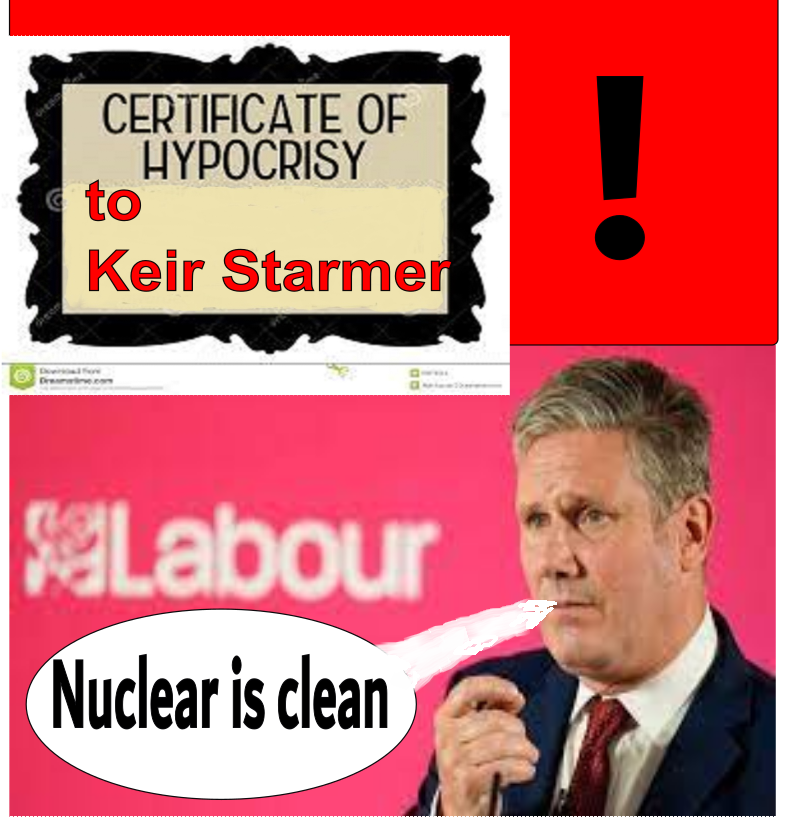
The prime minister is pinning his hopes of economic growth on a major nuclear plant and a series of mini nuclear sites
Archie Mitchell, Political correspondent, Independent 10th April 2025
Sir Keir Starmer is expected to approve a major nuclear power plant alongside a slew of mini reactors in a bid to boost Britain’s stagnant economy.
The prime minister will approve investment for the construction of the Sizewell C nuclear plant in Suffolk before the June spending review, The Times reported, as well as unveiling plans for a fleet of small modular reactors (SMRs) across the UK.
Sizewell C is expected to be up and running in 2035 and will provide 7 per cent of Britain’s energy demand at a cost of £20 billion……………………
Sizewell C is yet to be signed off by the government.
A decision on whether to give Sizewell C the green light has formed part of the government’s upcoming spending review, but Sir Keir has been bringing announcements forward in response to Donald Trump’s tariffs.
The PM has been desperately trying to spur on growth amid fears the US president’s trade war will cause Britain’s economy to stagnate and force further cuts in the autumn Budget.
EDF, the French energy giant that owns and runs Britain’s nuclear fleet, and the government, which has committed £6 billion so far, were the first backers of the project.
But they have been trying to raise billions more from prospective investors, including British Gas owner Centrica.
The government in January was forced to deny reports the expected costs of Sizewell C had spiralled to £40bn due to inflation and the knock-on effects of delays at Hinkley Point C.
Whitehall sources told The Independent the government is hugely supportive of Sizewell C, but that an announcement on its approval and funding would not come before June.
Sources told The Times Sir Keir wants to make a “nuclear moment” by combining the approval of Sizewell C with an announcement on a generation of SMRs.
The government has been running a competition to develop the reactors, which are potentially cheaper, much faster to build and easier to deploy, with Rolls-Royce and GE Hitachi Nuclear Energy the frontrunners. https://www.independent.co.uk/news/uk/politics/starmer-nuclear-growth-trump-tariffs-b2730868.html
TEPCO’s rehabilitation plan delays expose limits to nuke power reliance.
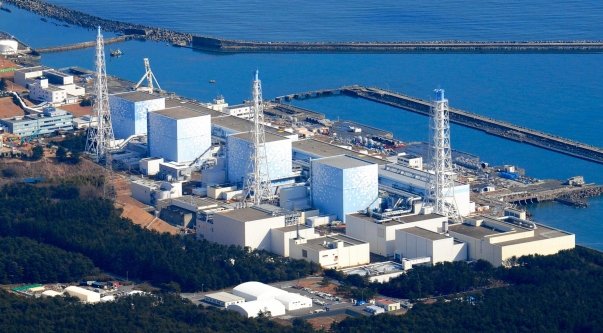
It was unreasonable in the first place for the power company to draw up a rehabilitation scenario relying on atomic power despite having caused a serious nuclear plant accident.
April 9, 2025 (Mainichi Japan), https://mainichi.jp/english/articles/20250409/p2a/00m/0op/029000c
Tokyo Electric Power Company (TEPCO) Holdings Inc. has postponed the revision of its business rehabilitation plan, which it had scheduled to carry out by the end of fiscal 2024. The company attributed the postponement to a lack of prospects for restarting the Kashiwazaki-Kariwa nuclear power plant in Niigata Prefecture, which it had seen a trump card in improving its earnings.
Will the utility be able to fulfill its responsibility in the recovery from the Fukushima disaster and the stable power supply amid such a state of affairs?
TEPCO has borrowed money from the national government to deal with the aftermath of the Fukushima nuclear meltdowns. This includes funds needed for compensation payments to affected residents and the decommissioning of the Fukushima Daiichi Nuclear Power Station. It has also taken out bank loans to fund its electric power business. The rehabilitation plan was supposed to form the premise for this financial aid.
The plan was first formulated in 2012, the year after the onset of the Fukushima disaster, and has since been updated almost every three years. The cost for handling the nuclear catastrophe was initially estimated at 6 trillion yen (approx. $41.27 billion), but that figure swelled to 21.5 trillion yen (148 billion) under the current plan outlined in 2021. The cost further rose to 23.4 trillion yen (approx. $161 billion) when taking into account compensation for fishery operators due to the release of treated water from the stricken Fukushima nuclear plant, among other expenses.
The cap on borrowing from the national government was subsequently raised to 15.4 trillion yen (approx. $106 billion). Based on these developments, calls grew to update TEPCO’s rehabilitation plan.
While TEPCO is scheduled to repay 500 billion yen (approx. $3.45 billion) annually to the national government, the actual repayment amount has hovered around 400 billion yen (around $2.76 billion) on average in recent years due to the firm’s poor performance.
The primary factor behind TEPCO’s sluggish earnings is that the Kashiwazaki-Kariwa nuclear plant has yet to be restarted. TEPCO had initially expected to resume the plant’s operations in fiscal 2019, eyeing a balance improvement of 100 billion yen (approx. $688 million) per reactor brought back online. But following a series of scandals including inadequate antiterror measures at the plant, the prospect of gaining local consent for its restart has waned.
TEPCO’s injection of more than 1 trillion yen (approx. $6.88 billion) into safety measures has also taken a heavy toll on its management, weighing down its cash flow. There are concerns that the utility may not even be able to afford capital investment essential for a stable power supply.
It was unreasonable in the first place for the power company to draw up a rehabilitation scenario relying on atomic power despite having caused a serious nuclear plant accident. In the amendments to be made to the rehabilitation plan by the end of fiscal 2025, the utility should completely overhaul its strategy.
TEPCO must accelerate its business realignment to improve its earning capacity. Its thermal power generation sector was integrated into Chubu Electric Power Co. in 2019, yet TEPCO needs to expand collaboration with other firms in renewable energy and other sectors with high growth potential. It urgently needs to streamline operations to stave off deterioration of its finances.
The company is urged to carry out a rehabilitation plan that is not reliant on nuclear power generation.
To Secure U.S. Energy Dominance, the Department of Defense Selects Eligible Companies for the Advanced Nuclear Power for Installations Program
Defense Innovation Unit 10th April 2025 Mountain View, CA
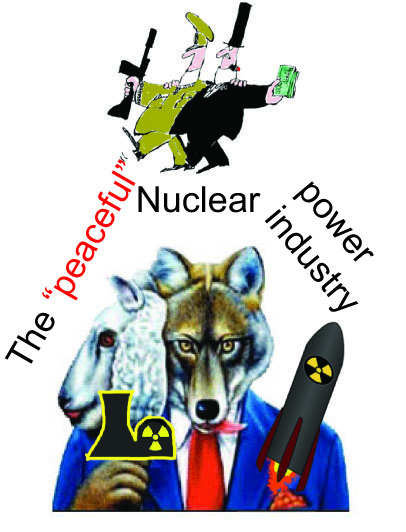
– To ensure U.S. energy dominance, the Defense Innovation Unit (DIU), with the Department of the Army and the Department of the Air Force, launched the Advanced Nuclear Power for Installations (ANPI) program. First announced in summer 2024, the program will allow for the design and build of fixed on-site microreactor nuclear power systems on select military installations to support global operations across land, air, sea, space, and cyberspace. The Department of Defense team selected eight companies to be eligible to demonstrate the ability to deliver compliant, safe, secure, and reliable nuclear power.
The companies are now eligible to receive Other Transaction (OT) awards to provide commercially available dual use microreactor technology at various DOD installations. Selected companies for the ANPI program include:
- Antares Nuclear, Inc
- BWXT Advanced Technologies LLC
- General Atomics Electromagnetic Systems
- Kairos Power, LLC
- Oklo Inc.
- Radiant Industries Incorporated
- Westinghouse Government Services
- X-Energy, LLC
“Projecting power abroad demands ensuring power at home and this program aims to deliver that, ensuring that our defense leaders can remain focused on lethality,” said Dr. Andrew Higier, Energy Portfolio Director at DIU. “Microreactors on installations are a critical first step in delivering energy dominance to the Force. Tapping into the commercial sector’s rapid advancements in this area is critical due to the significant private investment in this space over the last few years. The U.S. and the DoD must maintain the advantage and leverage the best of breed nuclear technology for our national security.”
The ANPI project directly supports Executive Order (E.O.) 14156 – Declaring a National Energy Emergency and E.O. 14154 – Unleashing American Energy
……………………………………… In addition to DIU, Army, Air Force, ANPI receives support from the Department of Energy; the NRC; Idaho National Laboratory with Oak Ridge National Laboratory; Los Alamos National Laboratory; Argonne National Laboratory; Pacific Northwest National Laboratory; Sandia National Laboratory; and the Office of Nuclear Energy. https://www.diu.mil/latest/DOD-selects-eligible-companies-for-the-Advanced-Nuclear-Power-for-Installations-Program
Walt Zlotow: Trump, Hegseth off by nearly 1 trillion on national security budget
Walt Zlotow, West Suburban Peace Coalition, Glen Ellyn IL 11 Apr 25 https://theaimn.net/trump-hegseth-off-by-nearly-1-trillion-on-national-security-budget/
Defense Secretary Pete Hegseth is applauding Trump’s boast to push through America’s first trillion dollar defense budget.
“Thank you Mr. President! COMING SOON: the first TRILLION dollar [Defense Department] budget.” Hegseth was echoing boss Trump who chortled “Nobody’s seen anything like it. We have to build out military, and we’re very cost-conscious, but the military is something we have to build, and we have to be strong,”
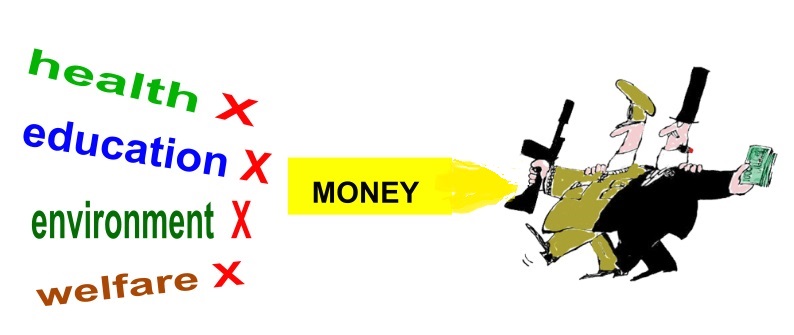
Trump’s defense policy and these quotes epitomize America’s decline as a peaceful, caring nation. Spending that trillion on militarism and warfare worldwide while Trump’s oligarchs are slashing a trillion from the social safety net is putting America into a death spiral from which it may never recover.
But they should really be high-fiving a national security budget that will be approaching $2 trillion based on Trump’s defense agenda.
That’s because the current defense budget under the National Defense Authorization Act of $900 billion just funds the Pentagon. When factoring in the Department of Veterans Affairs, special operations, Homeland Security and the national security share of US debt interest, the total for Fiscal ‘25 national security approaches $1.8 trillion. Regarding special ops, Trump’s failed month long Yemen bombing to stop their resistance to US enabled Israeli genocide in Gaza has already passed a billion bucks.
Current wars US supports in Ukraine, Gaza, Yemen, Somalia, Syria, Iraq and possible upcoming wars in Iran and China, don’t come cheap. Add in cost of over 750 bases in 80 countries hosting over 150,000 military personnel puts the approaching $2 trillion dollar cost in perspective.
Spending all that treasure on national offense (nope, not defense), becomes problematical when Trump is pushing thru trillion dollar tax cuts for his oligarch buddies.
What to do? Of Course, send in oligarch clown Musk to cut a trillion or more from everything that makes life livable for Joe Sixpack.
It is no surprise Trump plans to ravage the social safety net to spend $2 trillion on worldwide military adventurism while giving $4.5 trillion in tax cuts over 10 years mainly to those who don’t need them.
But do Trump and Hegseth have to brag about it?
Arctic sea ice hit a record low as global powers eye shipping routes

Arctic sea ice hit a record low for the end of the region’s winter last
month, in a stark sign of how climate change is opening up the North Pole
to a geopolitical race for military and energy exploration. March was the
fourth consecutive month in which sea ice reached a record low for that
calendar period, based on a 47-year satellite record, EU earth observation
agency Copernicus reported on Tuesday.
FT 10th April 2025 https://www.ft.com/content/f8083632-e6bc-45f5-8032-0ee60e263cf6
Starmer appoints ex-Office of Fair Trading chief to lead nuclear regulatory taskforce
The prime minister has appointed ex-Office of Fair Trading boss John Fingleton to head up the country’s nuclear taskforce
Energy Voice, By Jessica Mills Davies, 10/04/2025
The UK government’s nuclear taskforce will be led by John Fingleton, formerly the boss of the Office of Fair Trading, following his appointment to spearhead the unit.
The Nuclear Regulatory Taskforce, which was set up to accelerate the development of new nuclear power stations across the country, is poised to embark on an overhaul of UK planning regulation.
In February, Keir Starmer moved to slash “red tape” in the industry to enable more nuclear power plants to be approved across England and Wales.
Those reforms are designed to enable small modular reactors to be built for the first time. That is the intended result of the government abolishing a set list of approved sites for nuclear development so that nuclear power stations can be built anywhere in the country.
The energy department said that contract negotiations to progress a competition for these small reactors, held by Great British Nuclear, are “currently underway”, and that a panel of nuclear experts will be appointed to the taskforce in due course.
In a controversial move, the government is also getting rid of expiry dates on nuclear planning rules, in an effort to avoid projects timing out.
These changes to nuclear planning rules were proposed after the pre-development stage Sizewell C nuclear plant in Suffolk was taken to court by local activists.
The Department for Net Zero and Energy Security said that the government committed a further £2.7 billion in public funding to Sizewell C last month………………………..
The independent taskforce will seek to identify how nuclear power regulation can incentivise investment in new projects more quickly and cost efficiently, it said………….
Fingleton said he will “work closely with business, regulators and other interested individuals and groups to identify how regulation can better enable and incentivise investment in this area”…………………. https://www.energyvoice.com/renewables-energy-transition/570966/starmer-selects-fingleton-to-head-up-nuclear-taskforce/
NFLAs ‘shout up’ for National Parks to be spared from nuclear development

Despite our objections and those of many in the antinuclear community, Energy Ministers and departmental civil servants remain intent upon introducing a new National Planning Statement, called the EN-7, which gives considerable latitude to prospective developers to site new nuclear plants more widely, subject to meeting certain criterion (called the ‘criteria-based approach’) and lifts any time limits (called ‘the removal of a deployment deadline’).
10th April 2025, https://www.nuclearpolicy.info/news/nflas-shout-up-for-national-parks-to-be-spared-from-nuclear-development/
NFLAs ‘shout up’ for National Parks to be spared from nuclear development
The Nuclear Free Local Authorities have made an emphatic plea to the government for National Parks to be definitively spared from development and for further ‘specific consideration’ to be given to the challenges attendant to siting so-called Small and Advanced Modular Reactors (SMRs and AMRs).
Despite our objections and those of many in the antinuclear community, Energy Ministers and departmental civil servants remain intent upon introducing a new National Planning Statement, called the EN-7, which gives considerable latitude to prospective developers to site new nuclear plants more widely, subject to meeting certain criterion (called the ‘criteria-based approach’) and lifts any time limits (called ‘the removal of a deployment deadline’).
Interestingly neither of these notions was popular amongst respondents in the initial consultation on the policy with only 47% supporting the first and 50% the second; which begs the NFLAs to ask the question: why change the existing policy which is based on a government led strategic assessment of sites to in effect a ‘free-for-all’?
As we did in response to the first stage consultation, so in the second the NFLAs ‘shout up…against new nuclear in any of our National Parks and on sites adjoining or threatening Sites of Outstanding Natural Beauty or Immense Heritage Value’. The Welsh NFLA affiliates are particularly passionate in seeking to defend Trawsfynydd, which lies at the heart of Eryri, the premier National Park of Wales, from new development. As we point out:
‘The principle that National Parks can be excluded from future nuclear development has already been established by Government diktat. Any part of the Lake District National Park in England has been specifically (and in our view rightly) excluded from any consideration as a prospective site of a future Geological Disposal Facility. Surely then Trawsfynydd being at the heart of the Eryri National Park should enjoy the same protection in law?
In our view, to do otherwise exposes UK Government policy as hypocritical and inconsistent, implying that the premier National Park of Wales is not worthy of the same protection as the premier National Park of England and unfortunately conveys the impression that Wales remains a rank colonial possession, rather than a nation in its own right, whose natural assets are open to exploitation by any major nuclear development of the most egregious kind’.
Only 59% of respondents in phase one backed the inclusion of ‘SMRS and AMRs alongside large-scale GW technologies’ within the policy, with the NGO community calling for a separate policy. Despite this, Ministers intend this policy to be one-size-fits-all. In this second phase consultation, the NFLAs have referenced the lack of ‘specific consideration’ of the ‘additional, and not entirely defined, challenges’ that accompany the inclusion of SMRs and AMRs.
There have been many recent reports of concerns amongst the nuclear industry and the academic community about the radioactive waste produced by smaller reactors and the security implications of a wider rollout of smaller reactors. The NFLAs have therefore requested that final version of EN-7 should require ‘SMR, AMR, Micro reactor developers to submit robust statements about their proposals to address radioactive waste management, safety, security and proliferation concerns’.
1
UK Government convenes AI Energy Council, but could be ignoring hidden climate impacts in supply chains
Edie 10th April 2025, Sidhi Mittal
The UK Government has officially launched its AI Energy Council, with its first meeting outlining five key priorities for aligning the country’s clean energy ambitions with the rapid growth of artificial intelligence (AI).
However, while the Council focuses on integrating AI intro the UK’s energy system, Ministers are being warned that they are overlooking the strain which AI supply chains are putting on energy systems overseas.
The Council is led by Science, Innovation and Technology Secretary Peter Kyle and Energy Secretary Ed Miliband. Representatives from companies including Microsoft, Google, Amazon, ARM, EDF and ScottishPower sit on the Council, alongside energy regulator Ofgem and the National Energy System Operator (NESO).
The Council this week met for the first time, and agreed on focus points for the year ahead. These include preparing the UK’s energy grid for the electricity demands of AI and computer infrastructure, accelerating renewable energy adoption, and ensuring AI’s role in the energy sector contributes to the transition to net-zero.
Emphasis was also placed on using AI to improve grid flexibility and ensuring its safe, secure deployment in the energy system.
This move comes amid growing pressure for the UK’s AI ecosystem to deliver more public benefit. A recent report from the Institute for Public Policy Research (IPPR) found that only 15% of AI firms in the UK are developing solutions aimed at social challenges such as public health or environmental sustainability, despite 20% having received public funding.
IPPR’s head of AI Carsten Jung said: “Too many companies are focussed on generic process improvements rather than coming up with new, better products. And too few innovations are aimed at solving big societal problems, such as public health and climate change.
“This quantity over quality, profit over purpose, speed over substance, approach is a hugely missed opportunity.”
But as the UK attempts to shape a greener AI-powered future through initiatives like the AI Energy Council, the global supply chain it relies on presents an emissions challenge far beyond its borders.
AI chip boom in East Asia drives fossil fuel surge
New research from Greenpeace East Asia has found that electricity demand for manufacturing AI chips has risen more than 350% between 2023 and 2024. East Asia—home to the bulk of global AI chip production—is seeing this growth largely powered by fossil fuels………………………..
Greenpeace East Asia’s supply chain project lead Katrin Wu said: “While fabless hardware companies like Nvidia and AMD are reaping billions from the AI boom, they are neglecting the climate impact of their supply chains in East Asia.
“Across East Asia, there are many opportunities for companies to invest directly in wind and solar energy, yet chipmakers have failed to do so on a meaningful scale.
“Hardware companies can overcome renewable energy bottlenecks by investing directly in wind and solar capacity, signing power purchase agreements, and leveraging their influence to advocate for a higher ratio of renewable energy in the grid.”……………………………………………………………. https://www.edie.net/uk-government-convenes-ai-energy-council-but-could-be-ignoring-hidden-climate-impacts-in-supply-chains/
EDF urged to tackle ‘nuclear rats’ infestation at Somerset power plant site
Unite and GMB trade unions have warned French energy giant EDF that urgent action is needed to tackle the massive rodent outbreak at the construction site of Hinkley Point C nuclear reactor in Somerset.
Katie Timms, Joshua Whorms, Somerset Live 9th April 2025
“Nuclear rats” have reportedly overrun the construction site of a new nuclear reactor in Somerset, raising alarm among workers about their health and safety as they contend with the pervasive rodent problem.
Trade unions Unite and GMB have urgently called on French energy giant EDF to take immediate action to address the significant rodent infestation at the Hinkley Point C nuclear reactor site.
Concerns are mounting for the wellbeing of the workforce tasked with constructing Britain’s first new nuclear power station in decades due to the burgeoning rat population, reports the Daily Star.
An insider at the site disclosed to the Observer: “They’re all over. You see them just sat there, looking at you. It is worse near the canteens, where I guess it started. But they are everywhere now.
“The more men working on the site, the more rubbish on the site and the canteens are not clean either. It has just become worse over time,” the source elaborated.
Other employees have described the situation as “quite grim”. Amidst the project exceeding its budget by a billion pounds, workers have voiced concerns that financial constraints imposed by EDF are compromising their working conditions and impacting their wages.
These persistent issues led to industrial action last November, with hundreds of electricians, pipe fitters, and welders ceasing work due to security worries…………………….
The Star previously reported on the alarming sight of “cat-sized rats” which ignited concerns about a potential outbreak of a rare bacterial disease in the UK’s second largest city.
Residents have reported sightings of enormous “rats the size of cats” prowling their streets, as industrial action by waste collectors has resulted in rubbish accumulating in the streets of Birmingham. There is growing concern among experts about these oversized rodents potentially leading to locals contracting Leptospirosis…………………………………
https://www.somersetlive.co.uk/news/somerset-news/edf-urged-tackle-nuclear-rats-10094730
The Flamanville EPR nuclear reactor will not be able to deliver its full power without major works.

According to our information, EDF has still not been able to identify the cause of the malfunction of the turbine in the Normandy reactor.
La Tribune Juliette Raynal, 04/07/25
After a doomed construction site, the Normandy reactor of the Flamanville EPR started up on December 21, twelve years behind schedule. Its entry into service does not signal the end of the problems, far from it. According to our information, the difficulties encountered with the turbo-alternator unit, the centerpiece of a nuclear power plant, will prevent the first French EPR from delivering its full electrical power without major intervention requiring the assembly of scaffolding inside a room that is difficult to access.
Contacted by La Tribune , EDF did not wish to comment on this information and indicated that it was maintaining its provisional schedule with the transition to 100% of its nominal power in the summer of 2025. “While technically the reactor could well reach its full thermal power in the coming months, the electrical power will be reduced by 10 to 20% due to the partial vacuum,” qualifies a well-informed source.
As we reported on March 13, EDF teams had to deal with abnormal heating in the turbo-generator unit. Located in the heart of the engine room, the 70-meter-long Arabelle turbine, manufactured by General Electric, but now owned by Arabelle Solutions, a subsidiary of EDF,
transforms the thermal energy contained in the steam into mechanical energy to drive the alternator that produces electricity.
The Arabelle turbine, the centerpiece of the power plant
In a technical document published following a general meeting, organized on February 25th within the framework of the Local Information Commission (CLI), the electrician revealed a malfunction: “The temperature increases beyond the authorized limit on stages 7 and 8 of the turbo alternator group when trying to reach the expected condenser vacuum . “
…………………………………….. the 57th reactor in the French fleet is still shut down due to a maintenance operation on equipment located in the nuclear part of the plant.
After several postponements, its start-up is expected on April 11. “While these adjustments allow the reactor to be restarted without exceeding the authorized heating levels, they will not allow it to operate at full power,” a well-informed source cautions. “The reactor will only be able to continue its tests at a partial vacuum,” the same source specifies.
……………………………..With the vacuum reduced, the turbine’s efficiency will be mechanically reduced and could therefore be between 10 and 20% below its nominal operating temperature.
The cause of the malfunction has not yet been identified.
“The work that has been carried out on the bearings is corrective work. It helps to reduce the fault that is causing excessive heating, but the teams involved do not expect this to completely resolve the problem. In short, it helps to treat the symptoms, but not the cause, which remains unidentified ,” reports this source.
According to our information, to attempt a diagnosis, EDF teams will have to install scaffolding inside the condenser itself. A room that is difficult to access since it is located just below the turbine. “It is an intrusive operation that requires a complete shutdown of the reactor for at least several weeks ,” according to this well-informed source.
“A nightmare to cope with”
Unlike a conventional shutdown for refueling, which lasts on average 30 to 40 days, this first break should last “at least 250 days ,” said Régis Clément, deputy director of EDF’s nuclear fleet division, during a press briefing on December 20. In other words, more than eight months. EDF also intends to take advantage of this interruption to replace the defective tank cover, required by the nuclear regulator.
While waiting for this operation, the various components of the turbine, due to its abnormal operation, could well be damaged. And for good reason, even if by lowering the vacuum level the defect becomes acceptable, it does not disappear. As a result, the bearings wear unevenly and mistreat the turbine. “This machine risks being a nightmare to operate ,” fears a person close to the case.
1 This Month
26 April – Chernobyl: Inside the Meltdown airs on National Geographic on Sunday 26th April from 4pm


29 April – Nuclear Expert Webinar #1 – Radiation Impacts on Families with Mary Olson and Cindy Folkers
- 12:15 PM MT – 1:45 PM MT
- Location: Virtual – REGISTER TODAY

4 May -West Suburban Peace Coalition to discuss Iran war at May Educational Forum
Monday, May 4, 7:00 – 8:00 PM Central Standard Time
Title: : How Trump’s Narrative Tries to Shape the Reality of the War on Iran.
Contact Walt Zlotow, zlotow@hotmail.com 630 442 3045 for further information
14 May – online event From Bombs to Data Centres: the Face of Nuclear Colonialism

Pine Ridge Uranium is the real threat, not Tehran- Tell Burgum: Stop the Extraction.
Chernobyl: The Lost Tapes – A good documentary on Chernobyl on SBS available On Demand for the next 3 weeks– https://www.sbs.com.au/ondemand/tv-program/chernobyl-the-lost-tapes/2352741955560
To see nuclear-related stories in greater depth and intensity – go to https://nuclearinformation.wordpress.com
-
Archives
- April 2026 (346)
- March 2026 (251)
- February 2026 (268)
- January 2026 (308)
- December 2025 (358)
- November 2025 (359)
- October 2025 (376)
- September 2025 (257)
- August 2025 (319)
- July 2025 (230)
- June 2025 (348)
- May 2025 (261)
-
Categories
- 1
- 1 NUCLEAR ISSUES
- business and costs
- climate change
- culture and arts
- ENERGY
- environment
- health
- history
- indigenous issues
- Legal
- marketing of nuclear
- media
- opposition to nuclear
- PERSONAL STORIES
- politics
- politics international
- Religion and ethics
- safety
- secrets,lies and civil liberties
- spinbuster
- technology
- Uranium
- wastes
- weapons and war
- Women
- 2 WORLD
- ACTION
- AFRICA
- Atrocities
- AUSTRALIA
- Christina's notes
- Christina's themes
- culture and arts
- Events
- Fuk 2022
- Fuk 2023
- Fukushima 2017
- Fukushima 2018
- fukushima 2019
- Fukushima 2020
- Fukushima 2021
- general
- global warming
- Humour (God we need it)
- Nuclear
- RARE EARTHS
- Reference
- resources – print
- Resources -audiovicual
- Weekly Newsletter
- World
- World Nuclear
- YouTube
-
RSS
Entries RSS
Comments RSS
 nuclear-news