The not-so-secret history of Netanyahu’s support for Hamas
From sabotaging Oslo to funneling Qatari cash into Gaza, Bibi has spent his career bolstering Hamas to help perpetuate the conflict. Even after Oct. 7, argues historian Adam Raz, he’s still advancing the same strategy.
972 Magazine, By Ghousoon Bisharat, November 11, 2024
When Israeli historian and human rights activist Adam Raz set out to write “The Road to October 7: Benjamin Netanyahu, the Production of the Endless Conflict and Israel’s Moral Degradation,” he knew he was tackling a blind spot in Israeli public discourse. The vast majority of Israelis, Raz believes, fail to grasp the full extent of Netanyahu’s involvement in bolstering Hamas before the current war, and in perpetuating an unending state of conflict.
Raz’s book, released in May of this year, sheds light on a controversial policy whereby Netanyahu’s governments for years routinely approved and encouraged the transfer of Qatari funds into Gaza to prop up Hamas. While noting that the Israeli media has devoted more attention to this policy in the aftermath of October 7, Raz told +972 that this is “just a sliver of the bigger picture,” which is rooted in Netanyahu’s broader opposition to a just resolution to the conflict. “People need to understand the full scope of Netanyahu’s strategy,” he said.
According to Raz, who also works as a researcher at the Akevot Institute for Israeli-Palestinian Conflict Research, Netanyahu’s priority is not maintaining Israel’s security but rather preventing any real chance of resolving the conflict through the division of land, ending the occupation, or a two-state solution. Keeping the cash flowing to Hamas served this objective by ensuring the Palestinian national movement remained splintered between Hamas in Gaza and the Fatah-controlled Palestinian Authority (PA) in the West Bank, thus allowing Israel to maintain its dominance over the whole of the land. Even after the devastating events of October 7, Raz warns that Netanyahu’s playbook remains unchanged.
This book isn’t a history lesson about the conflict, Raz emphasizes, but rather a damning exploration of a political alliance that continues to degrade Israel’s moral fabric. “I didn’t write this book, I yelled it on the pages,” he said.
I spoke with Raz about the long history of Netanyahu’s symbiotic relationship with Hamas and its recently-killed leader Yahya Sinwar; why the current war represents a continuation of, not a break from, the prime minister’s strategy vis-a-vis the Palestinians as a whole; and why even after more than a year of war and the death of Sinwar, for Netanyahu little has changed. The interview has been edited for length and clarity.
…………………………………….. Adam Raz : This is a book about Netanyahu. I didn’t set out to write the story of the occupation under Netanyahu, the history of Hamas, or the collision between the two national movements. It’s the story of the relationship between Netanyahu and Sinwar. I’m trying to understand the motivation of the two most important actors in this game, who have been holding their societies by the neck.
Israel is Bibi-land. Whatever is at stake in Israel, whether it’s the Palestinians, the Iran nuclear deal, or any other foreign policy issue, it’s all in Netanyahu’s hands. In my book you can read how this came to be, and how Bibi changed Israeli politics. ………………………………………………………………………..
Netanyahu is the number one opponent of a two-state solution………………………………………………………………………………………………………………………………..
Since coming back to power, Netanyahu has resisted any attempt, be it military or diplomatic, that might bring an end to the Hamas regime in Gaza……………………………………………………………………………………………………………………..
his central interest is never-ending war, and Hamas was a tool to maintain the conflict while Israel had the upper hand…………………………………………………………………………………………………………………………………………………………………………………………………. https://www.972mag.com/netanyahu-hamas-october-7-adam-raz/
Trump’s military escalation against Venezuela repeats the Iraq War blueprint
With the suspension of dialogue between the US and Venezuela, the sighting of US B-52 bombers in Venezuelan airspace, and the further lethal US strikes in the Caribbean, the US seems to be accelerating its drive towards war with Venezuela
Peoples Dispatch October 15, 2025 by Manolo De Los Santos
The mood in the Caribbean grows increasingly tense, as the United States intensifies its military threats. Beneath the deceptive shroud of the “war on drugs,” the United States is actively executing a blueprint for military intervention in Venezuela, employing lethal force and projecting power in a manner that legal institutions and regional leaders have condemned as a profound threat to international order. This aggression is not a law enforcement operation; it is the negation of law, a neocolonial revival of the Monroe Doctrine, designed to shatter the sovereignty of Venezuela, seize control of the world’s largest oil reserves, and install a compliant regime.
A license to kill: the precedent of state murder
A chilling adoption of extrajudicial violence has marked the current escalation. The Trump administration has ordered unilateral military strikes against private vessels near the Venezuelan coast, allegedly to stop drug trafficking. To launch these alarming attacks, the US military has deployed a massive naval force of warships, drones, and special operations forces.
These strikes have resulted in the summary execution of at least 27 people as of recent reports. The most recent lethal strike in the Caribbean resulted in the “elimination” of 6 more people. This is not law enforcement; it is extrajudicial murder and a campaign that now stands as part of a war plan against Venezuela. The administration has characterized the victims, without credible proof, as drug traffickers and “terrorists,” a claim that, even if true, provides no legal authority for the US president to execute whomever it decides.
Legal and human rights organizations have been unequivocal in their condemnation of this profound and dangerous policy, which replaces established law enforcement procedures with premeditated lethal force. The New York City Bar Association (NYCBA), a key voice on international legal ethics, has strongly denounced these actions. The NYCBA stated explicitly that “Because the recent attacks on Venezuelan vessels and their crews were unauthorized by US law and in violation of binding international law, they were illegal summary executions – murders.” They further argued that these actions violate the fundamental international principle that “No one shall be arbitrarily deprived of his life” under the International Covenant on Civil and Political Rights.
The US government possesses ample legal authority for the Coast Guard to interdict and search vessels suspected of carrying narcotics, followed by prosecution in US courts according to due process requirements. However, in the case of the Venezuelan vessels, the Coast Guard’s Congressionally authorized police function was bypassed; instead, the crews were simply targeted and executed by overwhelming military force. Regional leaders, including Colombian President Gustavo Petro, have condemned the extrajudicial killings, highlighting the profound anxiety across Latin America over a return to unilateral US military action under the cover of anti-narcotics policy.
Escalation: B-52s and the threat of war
Beyond the lethal strikes, the US government has engaged in significant military posturing that amounts to a direct challenge to Venezuelan sovereignty. The sighting of US B-52 bombers in Venezuelan airspace, flying in close range, is a significant escalation. This warmongering has nothing to do with the “war on drugs” and everything to do with regime change to plunder Venezuela’s oil. This reckless push for war is a criminal act of international aggression.
The Trump Administration’s unilateral drone strikes in the Caribbean, combined with the White House’s termination of all negotiations with Venezuela, appear as a precursor for a full-scale regime change operation. This is a critical moment. We must sound the alarm: there is a risk of a new, catastrophic conflict in the region.
The US government’s own officials continue to escalate the crisis with bellicose rhetoric and actions. Secretary of State Marco Rubio, a key architect of the regime-change policy, has consistently refused to rule out a military option, asserting that the Maduro regime has become a “threat to the region and even to the United States.”
Venezuela’s response has been one of principled defense of its sovereignty. Ambassador to the UN, Samuel Moncada has repeatedly sounded the alarm on the global stage, arguing that the US military deployment in the Caribbean is a massive propaganda operation that seeks “excuses to fabricate a conflict” to seize the country’s oil wealth. Moncada affirmed that, “The United States believes that the Caribbean belongs to it because it has been using the expansionist Monroe Doctrine for over 100 years, which is nothing more than a remnant of colonialism.”
President Nicolás Maduro has called on Washington to resume dialogue, stating, “Our diplomacy isn’t the diplomacy of cannons, of threats, because the world cannot be the world of 100 years ago,” while simultaneously mobilizing national defense exercises to ensure the country is prepared for any direct assault. The NYCBA warned that attacks against Venezuelan vessels and reported threats against the Venezuelan government violate the nation’s obligations under the United Nations Charter, with the risk of escalating to open hostilities.
Parallels with the Iraq War: oil, ideology, and deception
The current situation is chillingly reminiscent of the lead-up to the 2003 invasion of Iraq. In that case, the Bush administration justified unilateral action on the basis of “weapons of mass destruction,” but this was a pretext. The true objectives were not limited to oil, but also included achieving profound ideological and political goals – overthrowing a government to reshape Middle Eastern politics and assert dominance………………………………………………………………………………………………………………..https://peoplesdispatch.org/2025/10/15/trumps-military-escalation-against-venezuela-repeats-the-iraq-war-blueprint/
Nuclear stocks mixed after U.S. Army launches program to deploy small reactors.

Spencer Kimball CNBC, Wed, Oct 15 2025
Key Points
- The U.S. Army on Tuesday launched a program to build micro nuclear reactors.
- Investors have speculated heavily on the fortunes of NuScale, Oklo and Nano Nuclear despite the fact that none of the companies have deployed a reactor yet.
Nuclear stocks traded mixed Wednesday after the U.S. Army launched a program to deploy small reactors…………..
The U.S. Army on Tuesday unveiled a program to build micro nuclear reactors in partnership with the Defense Innovation Unit. The microreactors will be commercially owned and operated with the goal of helping developers scale up their businesses, according to the Army.
The Army launched the “Janus Program” in response to President Donald Trump’s May executive orders that aim to speed the deployment of advanced reactors. Trump ordered the Defense Department to have a reactor operating at a domestic military installation no later than Sept. 30, 2028.
Investors have speculated heavily on the fortunes of NuScale, Oklo and Nano Nuclear despite the fact that none of the companies have deployed a reactor yet. Oklo and Nano Nuclear have not generated any revenue…..
Artificial intelligence power demand and Trump’s executive orders have fueled a wave of market enthusiasm about nuclear power. Goldman Sachs recently told investors to exercise caution on Oklo.
https://www.cnbc.com/2025/10/15/army-nuclear-reactor-trump-oklo-nuscale-nano-centrus.html
The astronomic costs of decommissioning Sellafield

First Annual Report of the Chair of the Committee of Public Accounts.
(Paras 55&56) We were informed that the estimated cost of decommissioning the site was £136 billion, an increase of 18.8% since March 2019.
When the previous Committee last took evidence on Sellafield in 2018, the nine major projects that were underway then were between them delayed by 165 months and expected to cost £913 million more than originally budgeted.
However, the Committee heard that the combined costs of four of these projects are now expected to cost £1.15 billion more than when the previous Committee reported. Each of these four projects will also be delayed further by between 58 and 129 months each.
Sellafield Ltd has begun retrieving
hazardous waste from the site, and in the longer term, this waste will be
stored in an underground offsite Geological Disposal Facility (GDF) capable
of storing the waste for thousands of years. However, the Committee found
that the opening date of the GDF has slipped from 2040 to the late 2050s.
For every decade of delay, additional buildings could need to be
constructed to accommodate short-term storage of the waste at a cost of
£500–760 million.
As well as the serious implications for the value for
money of the project, this delay makes the ambition to completely
decommission the Sellafield site in the next hundred years even more
challenging.
In addition to this, in August the GDF project was rated red
in its Delivery Confidence Assessment by NISTA, meaning “successful
delivery of the project appears to be unachievable.” DESNZ has since
acknowledged that the NDA is “undertaking some replanning to mitigate
risks and support ongoing progress” across all of its programmes,
including the GDF. We will be following any further developments closely
over the coming months.
House of Commons 15th Oct 2025,
https://publications.parliament.uk/pa/cm5901/cmselect/cmpubacc/1300/report.html#heading-5
The Trumpanyahu Administration Is Already Sabotaging The Ceasefire
Caitlin Johnstone Oct 15, 2025, https://www.caitlinjohnst.one/p/the-trumpanyahu-administration-is?utm_source=post-email-title&publication_id=82124&post_id=176195807&utm_campaign=email-post-title&isFreemail=true&r=1ise1&triedRedirect=true&utm_medium=email
I don’t know who first coined the saying that an Israeli ceasefire means “you cease and we fire,” but it proves reliably accurate time after time.
The IDF reportedly killed nine Palestinians trying to return to their homes today under the usual justification that they were traveling in some kind of unauthorized area in ways that made the troops feel threatened, blah blah. They did this all the time during the previous “ceasefire” at the beginning of the year, using the exact same excuses.
Just as we speculated the other day might happen, Israel has announced that it is going to cut the aid it allows into Gaza in half and cut off fuel and gas shipments because Hamas hasn’t returned the bodies of all the dead Israeli hostages. Israel was fully aware when it signed the agreement that Hamas would not be able to deliver the bodies of all the hostages right away due to the rubble and chaos caused by the Israeli bombing campaign in Gaza.
On October 9, CNN published an article titled “Israel assesses Hamas may not be able to return all remaining dead hostages” which reported that “the Israeli government is aware that Hamas may not know the location of, or is unable to retrieve, the remains of some of the 28 remaining deceased hostages.”
The Red Cross says that finding all the bodies of the hostages will be a “massive challenge” in all the rubble created by Israeli airstrikes in the areas where hostages were being kept.
Drop Site News’ Jeremy Scahill explains that “During Gaza negotiations, Israel understood it would take time to recover all bodies of deceased captives. A specific mechanism for recovering the bodies was agreed. Now Israel is pretending that didn’t happen so it can violate the deal and cut the agreed aid shipments in half.”
Mondoweiss reported last week that Hebrew-language Israeli media had been saying that a “secret clause” in the ceasefire agreement would allow Israel to resume its onslaught if the bodies of the dead hostages were not returned within a 72-hour window.
So it looks like this was planned from the beginning. Create obligations that Israel knew Hamas would be unable to fulfill, then use it as an excuse to resume the slaughter.
And President Trump appears to be going right along with it, posting on Truth Social that “A big burden has been lifted, but the job IS NOT DONE. THE DEAD HAVE NOT BEEN RETURNED, AS PROMISED!”
“We were told they had 26, 24 dead hostages… and it seems as though they don’t have that, because we’re talking about a much lesser number,” Trump told the press on Tuesday, saying, “I want them back.”
Trump also told the press that Hamas is going to have to be forcibly disarmed, which amounts to an open admission that this entire “ceasefire” show is a sham.
“If they don’t disarm, we will disarm them, and it will happen quickly and perhaps violently,” Trump said on Tuesday.
This statement matches recent comments from Benjamin Netanyahu saying that Hamas will be disarmed “the easy way” or “the hard way”.
The president and prime minister are making it clear that in order for the ceasefire negotiations to proceed to a lasting peace, Hamas is going to have to completely surrender and Israel is going to have to be handed total victory. They’re branding it as a ceasefire deal when it’s actually a total surrender deal, and Hamas has made it explicitly clear that it is not surrendering.
As Drop Site News explains, “In reality, senior Hamas, Islamic Jihad and figures from other resistance factions have repeatedly rejected disarmament throughout negotiations, including in multiple interviews with Drop Site over the past year.”
A big part of the confusion around the ceasefire in public discourse today is that there are two contradictory ideas going around about what the ceasefire is and what it means. Israel supporters think “ceasefire” means “total victory and complete surrender by Hamas,” while everyone else thinks “ceasefire” means ceasefire.
That’s why you see Israel supporters celebrating the deal while Palestine supporters are much more apprehensive. Palestine supporters understand that a ceasefire and a surrender are two different things, and see Trump and Netanyahu stating that Hamas is going to have to completely disarm if “ceasefire” negotiations are going to move toward a lasting peace. They understand that the unyielding mutually exclusive positions of the Trumpanyahu administration and of Hamas are likely to come to a head in ways that result in the reignition of the Gaza holocaust.
So for all the applause and fuss that has been made about the ceasefire, as things stand right now it doesn’t look like much has changed. From the very beginning of this genocide it has been the officially stated position of the US and Israel that the killing will not end until Hamas lays down its arms and surrenders, and that is still their position today. There’s a much-needed pause in the slaughter, sure, but the Trumpanyahu team is making it explicitly clear that it is going to ramp up again under the justification of Hamas refusing to disarm.
And that’s assuming negotiations even make it that far; Israel is already doing everything it can to sabotage the ceasefire by murdering Palestinians and greatly reducing the amount of aid it promised.
Unless something significant changes about all this fairly soon, even this feeble reduction in Israel’s Gaza atrocities cannot be expected to hold.
Media Refuse To Sign Up As Propagandists For Trump’s Pentagon.
The Atlantic, Associated Press, Breaking Defense, CNN, Defense One, The Financial Times, The Guardian, The Hill, The New York Times, NPR, Newsmax, Politico, Reuters, Task & Purpose, The Wall Street Journal, The Washington Examiner, The Washington Post, and The Washington Times all announced that they would not agree to the policy. (Media outlets had until 5 p.m. on October 14 or else they would likely lose access to the Pentagon.)
Kevin Gosztola, The Dissenter, Oct 14, 2025
Nearly all media organizations refused to sign a censorship policy at the Pentagon that imposes greater control over credentialed reporters and the information that they publish.
The policy, championed by Pentagon Secretary Pete Hegseth, was first proposed in mid-September. It resulted in an immediate backlash because the policy required reporters to pledge not to share any military information, including unclassified information, unless that information is officially approved for release.
On October 6, the Pentagon revised the policy [PDF]. It changed to “military members” must seek approval from an “appropriate authorizing official” before releasing information to the press. However, the department added, “Any solicitation of [military] personnel to commit criminal acts would not be considered protected activity under the 1st Amendment.”
The Atlantic, Associated Press, Breaking Defense, CNN, Defense One, The Financial Times, The Guardian, The Hill, The New York Times, NPR, Newsmax, Politico, Reuters, Task & Purpose, The Wall Street Journal, The Washington Examiner, The Washington Post, and The Washington Times all announced that they would not agree to the policy. (Media outlets had until 5 p.m. on October 14 or else they would likely lose access to the Pentagon.) ……………………………………………………………………………………………………………………………………………………………………… https://thedissenter.org/media-refuse-to-sign-up-as-propagandists-for-trumps-pentagon/
Holtec Backs Down, Reveals Achilles’ Heel For U.S. Nuclear Resurgence
Forbes, ByIan Dexter Palmer, Ph.D, 14 Oct, 2025
Highlights.
- Holtec International has shuttered their plans to store nuclear waste in the Permian basin of south-east New Mexico.
- President Trump, by executive order, has decided nuclear energy will be a big part of the U.S. energy future.
- Next-gen nuclear reactors, SMRs, have been spotlighted by the Secretary of Energy to help solve the electrical power surge needed for data centers and AI.
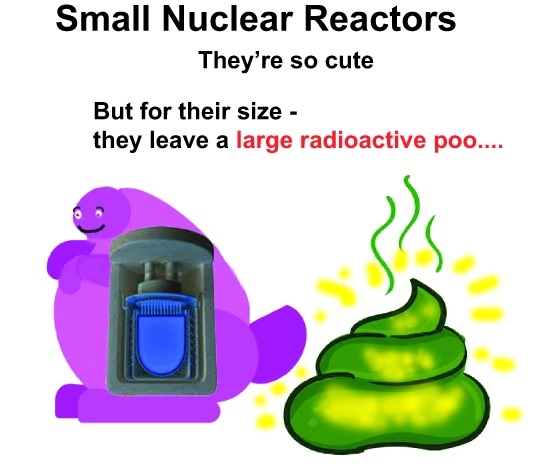
- But research has shown that SMRs create 2 to 30 times greater volumes of nuclear waste.
- The cost of new nuclear reactors, whether traditional reactors or SMRs, is substantially higher than renewable energies.
- Oklo is a front-runner in the SMR race, and its stock has skyrocketed. In August, it was selected for three projects under DOE’s Reactor Pilot Program.
Holtec International has shuttered their plans to store nuclear waste in the Permian basin of south-east New Mexico. The planned site would have contained 50 canisters of spent nuclear fuel for 40 years, as a temporary storage site, which is laughable as Holtec planned to scale up to 10,000 canisters eventually.
President Trump, by executive order, has decided nuclear energy will be a big part of the U.S. energy future. After languishing for decades, President Biden assigned substantial funds to nuclear, as part of his push toward carbon-free sources. But there is an Achilles’ heel to nuclear—the waste is radioactive, and has to be disposed of very carefully. This is not just waste from traditional nuclear reactors, like Three-Mile Island, but also from small nuclear reactors (SMRs), that can be as small as a three-story building, and which can be made in a factory, and stacked to scale up energy supply. There is an ubiquitous threat in the U.S., real or perceived, of being exposed to nuclear radiation, either from nuclear accidents or from storage of nuclear waste.
Holtec Project Canceled.
In 2023, the governor of NM, Michelle Lujan Grisham, signed a state bill into law that banned state agencies from signing nuclear storage permits. There are reasons for this. NM has a history of debilitating health effects from nuclear radiation, from the first atom bomb explosion south of Albuquerque, to workers who mined uranium in western parts of the state.
But there are other liabilities. A second is earthquakes in the Permian basin induced by injection of waste water from oil well operations. These are increasing in numbers and there have been several magnitude 5 quakes. Planning to build a storage facility for nuclear waster in the middle of hundreds of oil wells and their earthquakes should be a no-brainer.
A third liability is the promise the Holtec facility would be temporary, until the U.S. finds a permanent site. ………………………………………………………………………………………………………………….. https://www.forbes.com/sites/ianpalmer/2025/10/14/holtec-backs-down-reveals-achilles-heel-for-us-nuclear-resurgence/
Exempt charities from nuclear levy on energy bills, government urged
Third Sector UK, 14 October 2025 by Emily Harle
Some charities could see their bills rise up to £2,500 a year
The government has been urged to provide an exemption for charities from a new levy that could cost some voluntary sector organisations up to £2,500 a year.
The nuclear regulated asset levy, which will be introduced in November, was developed by the previous government to provide a return to investors in Sizewell C, a new nuclear power station that is being built in Suffolk over the next decade.
Although industries that use the most electricity have been exempted from the levy by the government, the energy regulator Ofgem said this week that local charities, including youth clubs and community centres, will have to pay the full amount.
The Social Investment Business estimates that the average charity with a building could see their bills rise by up to £240 annually, but added that some will face an increase of more than £2,500 per year as a result of the levy.
This rise in electricity bills “will add even more pressure to charities”, SIB said, adding that the sector was particularly vulnerable to increasing prices due to the low income of volunteer-led clubs and the “often-draughty” buildings available for community groups.
In April, SIB’s research found that local youth charities were paying as much as half of their entire budget just to cover utilities.
Nick Temple, chief executive of the SIB, said: “Adding yet more charges on top of charity electricity bills penalises our most vital community spaces at a time when they are already struggling.
“The government must urgently provide an exemption to this new levy for charities, who are particularly vulnerable to rising costs.
“They should drop this model of adding charges onto electricity all together, which is no longer fit-for-purpose and is slowing down the country’s transition to renewables and inflates everyone’s bills.”
SIB have also urged charities to contact their energy providers, adding that if a charity is on a variable tariff, it will see charges introduced from 1 November, while those on fixed tariffs will need to check with their provider.
Wellspring Settlement, a charity based in Bristol delivering a range of community services to local families and young children, is one charity under threat due to the new levy costs, facing a potential uplift of more than £2,500 per year…………………………………….https://www.thirdsector.co.uk/exempt-charities-nuclear-levy-energy-bills-government-urged/finance/article/1936061
PATRICK LAWRENCE: Let Us Now Bury the Truth (Again)

October 13, 2025, By Patrick Lawrence, Consortium News
What is going around now is another cover up, another denial of what a lot of people on both sides call “the second Nakba,” the sin atop the original sin.
Headline in the Sunday editions of The New York Times: “A New Test for Israel: Can It Repair Its Ties to Americans?”
What a question. Let us set aside our indignation and think about this.
The piece below this head is by David Halbfinger, whose trade over the years has been to appear balanced when covering the Zionist state while glossing its past, which is wall-to-wall condemnable, and faithfully apologizing for its present, which — need this be said — is also wall-to-wall condemnable.
David Halbfinger, who has just begun his second tour as the Times’ Jerusalem bureau chief, in action:
“The war in Gaza may finally be ending, after two years of bloodshed and destruction. But among the damage that has been done is a series of devastating blows to Israel’s relationship with the citizens of its most important and most stalwart ally, the United States.
Israel’s reputation in the United States is in tatters, and not only on college campuses or among progressives….
The question is whether those younger Americans will be lost to Israel long- term — and what Israel’s advocates will do to try to reverse that.”
Halbfinger proceeds to quote none of “those younger Americans,” or anyone else of any age who stands forthrightly against “the Jewish state” in response to the campaign of terror, murder and starvation it has conducted against the civilian population of Gaza these past two years.
No, his sources are professors, think-tank inhabitants and, of course, Israeli Zionists, American Zionists and in two cases Israeli–American Zionists — the good old divided-loyalties crowd.
Halbfinger quotes Shibley Telhami, an Arab–Israeli scholar with safe harbors at The Brookings Institution and the University of Maryland……………………………………………………………………………………………………………………….
You see what is going on here, I trust.
I have anticipated for many months — no great insight in this — that when something like the end of Israel’s terror in Gaza comes there will be no thought among its allies in the West, and certainly none among its Zionist supporters, of any kind of reckoning in the name of justice.
No, a “war” will be over, not a racist campaign of annihilation, and certainly not a genocide. The highly honorable Cost of War Project at Brown University put out a paper on Oct. 7 reckoning total casualties in Gaza (killed and injured) at 236,505, “more than 10% of the pre-war population.” These are responsibly researched facts.
We know these facts. “It doesn’t take rocket science to grasp the picture,” Norman Finkelstein said in a lecture delivered at the University of Massachusetts five days before the Netanyahu–Trump “peace plan” was announced.
He said: “Everyone at this point knows the picture — unless you have a material stake in lying to yourself and lying to others.”
‘Everyone Knows the Picture’
Yes, we know the picture and the facts, and we are invited to live with these facts without any kind of investigation, truth and reconciliation project, such as post-apartheid South Africa conducted in the late 1990s, or any other effort in behalf of restorative justice.
No, the invitation is to go back to our comfort zones while a regime of racist murderers continues on its way.
The liars propose to prevail, to put this point another way.
Whatever other purpose this commentary may serve, I use it to raise my voice in protest against this… this desecration of the human cause.
When I consider the project of the liars now my mind goes back to al–Nakba — further, indeed. David Ben–Gurion and others of his time acknowledged the injustice and the violence on which the State of Israel was founded in July 1948. “We have come and we have stolen their country,” Ben–Gurion remarked.
[“If I were an Arab leader, I would never sign an agreement with Israel. It is normal; we have taken their country. It is true God promised it to us, but how could that interest them? Our God is not theirs. There has been Anti-Semitism, the Nazis, Hitler, Auschwitz, but was that their fault? They see but one thing: we have come and we have stolen their country. Why would they accept that?”Quoted by Nahum Goldmann in Le Paraddoxe Juif (The Jewish Paradox), pp121.]
There is no putting the point more truthfully. And all that has occurred since is the outcome of this, a covering up, a denial of the original sin.
And now again.
…………………………………………Along with everyone else, I do not know at writing whether the Gaza Peace Plan, as it is billed, will hold or when — the better question at this point — it will fall apart like all those that have preceded it.
But — grim knowledge — I know this: It will not end well if the events of the past two years are buried as the events of the past seven and some decades have been buried. The human spirit simply does not work that way.
It will not, indeed, end at all. https://consortiumnews.com/2025/10/13/patrick-lawrence-let-us-now-bury-the-truth-again/
Monique Barbut, Minister for Ecological Transition, raises doubts among nuclear industry.

Monique Barbut has been appointed Minister of Ecological
Transition. She succeeds Agnès Pannier-Runacher, who, from the Ministry of
Energy Transition to that of Ecological Transition, has worked tirelessly
in favor of nuclear electricity.
The latter carried the law accelerating nuclear power adopted in 2023 and is at the origin of the Nuclear Alliance, which brings together a dozen European countries that have opted for this
energy and/or are in the process of reviving it.
The contrast with her successor is striking. When Monique Barbut was head of WWF France, between 2021 and 2024, the NGO, true to its line, took a stand against nuclear power. ” We call in particular on the European Parliament not to give in to pressure from France and other countries by agreeing to classify fossil gas and nuclear energy as sustainable in its taxonomy “…
Le Figaro 13th Oct 2025, https://www.lefigaro.fr/societes/monique-barbut-ministre-a-la-transition-ecologique-fait-douter-les-industriels-du-nucleaire-20251013
The £1m man: why did Boris Johnson take his donor to Ukraine?
Leaked files offer a glimpse of the ex-prime minister’s relationship with Christopher Harborne.
Tom Burgis. Guardian 10 Oct 25
As he boarded the night train to Ukraine, Boris Johnson had the usual entourage of aides and bodyguards – plus the man who had given him £1m.
Less than a year had passed since Johnson accepted what is thought to be the largest donation ever to an individual MP. It was from Christopher Harborne, one of the UK’s biggest and most private political donors.
Harborne, whose millions helped bankroll Brexit, made the payment to a private company Johnson set up after resigning as prime minister. Now leaked files show that Johnson, a champion of Ukraine in office and since, was accompanied in September 2023 by his benefactor on a two-day visit that included meetings with top officials.
What the files do not explain is why. And neither the former prime minister nor his backer will say.
The organisers of the high-level gathering they attended in Kyiv say Harborne was registered as “adviser, Office of Boris Johnson”.
Harborne has wide expertise: a self-described “digital nomad”, his holdings range from cryptocurrency and a wellness centre to jet fuel and stakes in at least three military contractors. His only apparent connection to Ukraine is as the biggest shareholder in a British weapons manufacturer whose robots and drones are reportedly supplied to its armed forces.
The Boris Files, leaked documents from Johnson’s private office, have exposed how the former PM has sought to enrich himself since leaving office by sitting down with a Venezuelan despot and courting Mohammed bin Salman, the Saudi crown prince accused of ordering the murder of a journalist.
The Ukrainian cause, by contrast, is “sacred” to Johnson, one political consultant says, an enduring source of moral authority for a politician who was forced out of Downing Street amid scandal.
The leaked files raise questions about whether, even here, he has blurred the lines between public service and money-making.
In an extraordinary statement to the Guardian when asked about his relationship with Harborne, Johnson said: “Your pathetic non-stories … seem mostly to be derived from some illegal Russian hack job. You should be ashamed of yourselves.” Distributed Denial of Secrets (DDoS), the US-based transparency group that obtained the leaked files, said it did not know their provenance.
Johnson added: “Why don’t you just change your name to Pravda? Your stories are rubbish and you are doing Putin’s work.”
‘Boris and Chris only’
In Downing Street, Johnson rallied western powers as Vladimir Putin’s armies poured into Ukraine in February 2022. Since resigning, he has continued to travel there, pledging to maintain allies’ commitment, and remains so popular that he is cheered in the streets.
When he disembarked from the night train in Kyiv on 8 September 2023, Johnson had time for a quick shower at his hotel before heading for the Yalta European Strategy (YES) forum, an itinerary in the leaked files indicates. According to a published list of participants, Ukrainian ministers, spymasters and military chiefs mingled with foreign diplomats, politicians, industrialists and executives.
The itinerary has “Boris and Chris [Harborne] only” down to attend the opening session of the high-level gathering. Images show Volodymyr Zelenskyy and Johnson addressed the gathered luminaries and the itinerary suggests they then retired for a private meeting. Zelenskyy’s office did not respond when asked if Johnson’s benefactor joined them…………………………………………………………………………………………………………………………………
The £1m donation
………………….He [Harborne]has given £10m to Nigel Farage’s Brexit party – now Reform UK – and £1m to the Conservatives while Johnson was completing the UK’s departure from the EU. And Johnson seems to have nurtured the beneficial relationship while he was in No 10.
Harborne visited Chequers at least twice during Johnon’s premiership. Once, he arrived at the prime ministerial retreat by helicopter. The second time was for a Tory megadonor barbecue in August 2022.
Within days, Johnson’s tenure was over, but his relationship with Harborne endured, and the £1m personal donation followed. A copy of the financial advice Johnson received soon after leaving Downing Street raises questions about it.
While Johnson was still an MP he set up a private company, The Office of Boris Johnson Ltd. The financial advice reveals that he was expecting a “payment to fund the company’s first few years”. He was advised to consider whether this would represent a political donation or if it “might be simpler for the company to invoice the donor’s company for services”.
The following month, in November 2022, Johnson’s entry in the register of MPs’ interests records a £1m donation to his company from Harborne. The payment does not appear on the Electoral Commission’s donation database of money “given towards the recipient’s political activities” as an MP. This appears to suggest it may have been a contribution towards Johnson’s money-making activities.
The month of the £1m payment, Johnson and Harborne dined together twice in Singapore. A January 2023 entry in Johnson’s schedule set aside half an hour for a call with his backer. It was labelled “Ukraine readout”. That September, by which time Johnson had quit parliament, he and Harborne stepped aboard a Dassault Falcon at Stansted airport, the leaked files indicate. The private jet, apparently operated by Harborne, carried them to eastern Poland to catch the sleeper to Kyiv.
Harborne’s lawyers said: “Mr Harborne’s donation was given to enable Mr Johnson to stay actively engaged in mainstream UK politics. It is and was a donation, and its reporting as such is appropriate.”…………
The letter
Harborne’s lawyers did not give substantive answers to questions about why he went on the trip to Ukraine, beyond saying they “appear to have little to no basis in reality”. But there are possible clues in the leaked files.
The itinerary features a “closed meeting at the military-tech R&D centre”. It does not say whether Harborne attended, but this is an area he knows well. While his position as the largest shareholder in QinetiQ, with 13%, does not give him a role in the day-to-day running of the privatised research unit of the UK armed forces, his financial stake in its operations is significant.
QinetiQ has interests in Ukraine, albeit not its biggest. Ukraine’s forces reportedly use the company’s Banshee drones and bomb-disposal robots. In April 2025, the UK Ministry of Defence announced QinetiQ would help Ukraine’s military make kit with 3D printers……………………. https://www.theguardian.com/politics/2025/oct/10/the-1m-man-why-did-boris-johnson-take-his-donor-to-ukraine
Palestinians freed from Israeli prison denied reunion with families as Trump claims a ‘forever’ peace
At the end of the prisoner exchange, between 9,000 and 10,000 Palestinians will remain behind bars, including around 5,000 Palestinians who are being held without charge or trial, and without clear release dates, under Israel’s system of “administrative detention.”
Palestinians gathered in the West Bank to reunite with loved ones set to be released as part of the prisoner exchange between Israel and Hamas. But many were devastated to learn that Israel had deported them instead.
Mondoweisss, By Qassam Muaddi October 13, 2025
Palestinians in Gaza lived another day without bombs dropping over their heads as the first phase of the ceasefire between Israel and Hamas continued into Monday, which saw the release of Israeli captives from Gaza and the release of 1,718 out of 10,000 Palestinians held in Israeli prisons.
At around 8:00 a.m. local time, Hamas’s armed wing, the al-Qassam Brigades, handed the first group of seven Israeli captives to the International Committee of the Red Cross in Gaza, without any ceremonies or media exposure. The second group of 13 Israeli captives came an hour later. Meanwhile, the Israeli prison services moved hundreds of Palestinians out of its detention centers.
Palestinians in Gaza lived another day without bombs dropping over their heads as the first phase of the ceasefire between Israel and Hamas continued into Monday, which saw the release of Israeli captives from Gaza and the release of 1,718 out of 10,000 Palestinians held in Israeli prisons.
At around 8:00 a.m. local time, Hamas’s armed wing, the al-Qassam Brigades, handed the first group of seven Israeli captives to the International Committee of the Red Cross in Gaza, without any ceremonies or media exposure. The second group of 13 Israeli captives came an hour later. Meanwhile, the Israeli prison services moved hundreds of Palestinians out of its detention centers.
A total of 1,718 Palestinians were released into the Gaza Strip, all of whom were abducted by Israeli forces from within Gaza during the past two years. In addition, Israel released 250 Palestinians who had been serving high or life sentences in Israeli prisons, 88 of whom were released in the West Bank, while the rest were deported to Gaza and Egypt.
In the town of Beitunia, adjacent to Ramallah, dozens of Palestinians gathered in expectation of the released prisoners, who were announced to be released from Israel’s Ofer detention center just outside of the town. Israeli drones flew over the gathering, dropping leaflets that read “we are watching you everywhere. If you show any support for a terrorist group, you will expose yourself to arrest and punishment.”
At around 11:00 a.m., two Red Cross-marked buses drove through Beitunia as Palestinians waved at the released prisoners along the way, in decidedly smaller numbers than the crowds that had received released prisoners during the previous January-March ceasefire.
At the Ramallah Cultural Palace, prisoners’ families and crowds of Palestinians gathered to receive the released prisoners. In the crowds, the family of a prisoner, Murad Abu al-Rub, 45, including two of his sisters, his cousin, and his paralyzed mother, stood on a sidewalk trying with difficulty to get a glimpse of the Red Cross buses as they arrived.
“He has been in jail for 19 years with a life sentence, and the last time we visited him was before October 2023,” the cousin told Mondoweiss. “For more than two years, we haven’t seen him, and the news we have had about him through lawyers is very limited.”
“His father and one of his brothers died during his time in jail,” the cousin explained. “And his mother suffered a stroke last year that left her unable to move or speak. But we brought her because she has been very anxious to see him.”
The family left Jenin in the northern West Bank at 6 a.m. to avoid the Israeli army’s expected road closures, as it did during the previous ceasefire. “The Israeli Shabak came to our house yesterday and warned us not to show any signs of celebration, and they told us that Murad will be released here.”
After all the prisoners left the bus, the family discovered that Murad wasn’t among them. Minutes later, they received confirmation from the Red Cross that he had been deported to Egypt.
As the cousin shared the news, the elderly mother broke into tears and random screams in her wheelchair. As her daughters helped her into the car, one of them tried to console her. “He went to Egypt to study! He’ll be back later,” she said. The mother moved her hand in an apparent refusal to hear, continuing to weep.
Meters away, the older brother of Abdallah Barham, 40, one of the prisoners set to be released, had just learned that he, too, had been deported. The brother was in Ramallah by 7 a.m. to wait for Abdallah, who had served 18 years of his life sentence in Israeli prison.
“The family and the entire village are waiting in Kufr Qadoum to celebrate his release,” he explained. “And the Shabak came yesterday and warned us not to celebrate.”
“Our younger brother and our mother died during his period of imprisonment,” he continued. “And our father has been waiting for this day for the past 18 years. The feeling is tragic.” ………………………………………………………………………………..
At the end of the prisoner exchange, between 9,000 and 10,000 Palestinians will remain behind bars, including around 5,000 Palestinians who are being held without charge or trial, and without clear release dates, under Israel’s system of “administrative detention.”……………………………….
Donald Trump speaks before the Knesset, Sharm al-Sheikh summit
……………………………………. In his speech, Trump said it was a “historic dawn of a new Middle East” and the beginning of a “grand concord and lasting harmony for Israel.” Trump praised Netanyahu, whom he called “hard to deal with.” The U.S. President also lauded special envoy Steve Witkoff and his son-in-law, Jared Kushner, whom he said was “called in” to draft the plan for the end of the war, all with a wave of applause by the Knesset members. Trump also thanked the Arab and Muslim countries that participated in his plan for the end of the war, which did not receive any applause from the Knesset.
During Trump’s speech, Palestinian Knesset member Ayman Odeh and left-wing anti-Zionist Knesset member Ofer Kasif raised signs calling for the recognition of Palestine as a state, and were forcibly removed from the hall
…………………………………………………………… Israel and Hamas still have to negotiate terms for the definitive end to the war based on Trump’s plan. This includes the body meant to rule over the Strip, which Hamas and Palestinian factions insist must be an independent Palestinian body of technocrats. In contrast, Trump’s plan would include a “board of peace” headed by Trump himself that would be in charge of running Gaza.
Another point to be negotiated is the disarmament of Hamas and other Palestinian resistance factions. Palestinian factions, including Hamas, insist that they would lay down their arms upon the establishment of a Palestinian state, while Trump’s plan would see the resistance movement’s disarmament and makes no mention of Palestinian statehood. https://mondoweiss.net/2025/10/palestinians-freed-from-israeli-prison-denied-reunion-with-families-as-trump-claims-a-forever-peace/
The UN nuclear watchdog seeks a local truce to restore power to the Zaporizhzhia plant
By ASSOCIATED PRESS, 14 October 2025
VIENNA (AP) – The U.N. nuclear watchdog is pushing Ukraine and Russia to agree to local ceasefires so that external power can be restored to Ukraine´s huge nuclear power plant in Zaporizhzhia, two diplomats familiar with the plan told The Associated Press.
The plant is in an area under Russian control since early in Moscow’s full-scale invasion of Ukraine and is not in service, but it needs reliable power to cool its six shutdown reactors and spent fuel, to avoid any catastrophic nuclear incidents.
It has been operating on diesel generators since Sept. 23 when its last remaining external power line was severed in attacks that each side blamed on the other. The International Atomic Energy Agency has repeatedly expressed alarm about the nuclear plant, Europe’s biggest.
The agency is proposing to restore external power to the plant in two phases, according to a European diplomat briefed on the proposal by the IAEA Director General Rafael Grossi. A Russian diplomat confirmed some aspects of the plan.
Both diplomats spoke on condition of anonymity because they were not authorized to discuss the confidential negotiations publicly.
During the first phase, a 1.5-kilometer-radius (1-mile-radius) ceasefire zone would be established to allow repair of the Dniprovska 750-kilovolt line, the main power line to the plant that has been damaged in an area under Russian control.
During the second phase, a second such ceasefire zone would be established to repair the Ferosplavna-1 330-kilovolt backup line, which is in area under Ukraine’s control.
IAEA experts would be on hand to monitor the repairs, which originally were proposed for a 7-day period from Oct. 11 to Oct. 17, according to the European diplomat and confidential documents seen by the AP.
However, although the Ukrainian side has given necessary guarantees of safe passage for repair crews, Russia did not give such guarantees in time for the work to start under that timetable, according to the European diplomat.
The Russian diplomat, on the other hand, said that preparations for the repairs are under way and that they can start very soon.
The IAEA declined to comment on the timing, saying only that Grossi was engaging “intensively with both sides” to enable the reconnection of power and to “help prevent a nuclear accident.”
Grossi held talks with both Ukraine and Russia last month. He met with Ukrainian Foreign Minister Andrii Sybiha on Sept. 29 at the Warsaw Security Forum, following meetings in Moscow with Russian President Vladimir Putin on Sept. 25 and Rosatom Director General Alexei Likhachev on Sept. 26.
The IAEA warned that if diesel generators fail, “it could lead to a complete blackout and possibly causing an accident with the fuel melting and a potential radiation release into the environment, if power could not be restored in time.”
The latest blackout is the tenth time that the Zaporizhzhia plant has lost all external power, and is by far the longest since the start of the war. The 330-kilovolt backup line was lost in May, and the main line was disconnected on Sept. 23.
The plant is close to the front line and has been occupied by Russia since March 2022. Ukraine and Russia have traded blame for shelling close to the plant……. https://www.dailymail.co.uk/wires/ap/article-15188795/The-UN-nuclear-watchdog-seeks-local-truce-restore-power-Zaporizhzhia-plant.html
Trump Keeps Admitting That He Is Bought And Owned By The World’s Richest Israeli
Caitlin Johnstone, Oct 14, 2025, https://www.caitlinjohnst.one/p/trump-keeps-admitting-that-he-is?utm_source=post-email-title&publication_id=82124&post_id=176098622&utm_campaign=email-post-title&isFreemail=true&r=1ise1&triedRedirect=true&utm_medium=email
It’s bizarre how little mainstream attention is given to the fact that the president of the United States has repeatedly confessed to being bought and owned by the world’s richest Israeli, especially given how intensely fixated his political opposition was on the possibility that he was compromised by a foreign government during his first term.
During a speech before the Israeli parliament on Monday, President Trump once again publicly admitted that he has implemented Israel-friendly policies at the behest of Israeli-American billionaire Miriam Adelson and her late husband Sheldon, this time adding that he believes Adelson favors Israel over the United States.
Here’s a transcript of Trump’s remarks:
“As president, I terminated the disastrous Iran nuclear deal, and ultimately, I terminated Iran’s nuclear program with things called B2 bombers. It was swift and it was accurate, and it was a military beauty. I authorized the spending of billions of dollars, which went to Israel’s defense, as you know. And after years of broken promises from many other American presidents — you know that they kept promising — I never understood it until I got there. There was a lot of pressure put on these presidents. It was put on me, too, but I didn’t yield to the pressure. But every president for decades said, ‘We’re going to do it.’ The difference is I kept my promise and officially recognized the capital of Israel and moved the American Embassy to Jerusalem.
“Isn’t that right Miriam? Look at Miriam. She’s back there. Stand up. Miriam and Sheldon [Adelson] would come into the office and call me. They’d call me — I think they had more trips to the White House than anybody else, I guess. Look at her sitting there so innocently — got $60 billion in the bank, $60 billion. And she loves, and she, I think she said, ‘No, more.’ And she loves Israel, but she loves it. And they would come in. And her husband was a very aggressive man, but I loved him. It was a very aggressive, very supportive of me. And he’d call up, ‘Can I come over and see you? I’d say ‘Sheldon, I’m the president of the United States. It doesn’t work that way.’ He’d come in. But they were very responsible for so much, including getting me thinking about Golan Heights, which is probably one of the greatest things ever happened. Miriam, stand up, please She really is, I mean, she loves this country. She loves this country. Her and her husband are so incredible. We miss him so dearly. But I actually asked her, I’m going to get her in trouble with this. But I actually asked her once, I said, ‘So Miriam, I know you love Israel. What do you love more? The United States or Israel?’ She refused to answer. That means — that might mean Israel, I must say, we love you. Thank you, darling, for being here. That’s a great honor. Great honor. She’s a wonderful woman. She is a great woman.”
Sheldon Adelson reportedly gave Trump and the Republicans over $424 million in campaign funding from 2016 up until his death in 2021. His widow Miriam continued her husband’s legacy and poured a further $100 million into Trump’s 2024 presidential campaign.
On the 2024 campaign trail Trump also admitted to being controlled by Adelson cash. Here’s a transcript of those remarks:
“Just as I promised, I recognize Israel’s eternal capital and opened the American embassy in Jerusalem. Jerusalem became the capital. I also recognized Israeli sovereignty over the Golan Heights.
“You know, Miriam and Sheldon would come into the White House probably almost more than anybody outside of people that work there. And they were always after — and as soon as I’d give them something — always for Israel. As soon as I’d give them something, they’d want something else. I’d say, ‘Give me a couple of weeks, will you, please?’ But I gave them the Golan Heights, and they never even asked for it.
“You know, for 72 years they’ve been trying to do the Golan Heights, right? And even Sheldon didn’t have the nerve. But I said, ‘You know what?’ I said to David Friedman, ‘Give me a quick lesson, like five minutes or less on the Golan Heights.’ And he did. And I said, ‘Let’s do it.’ We got it done in about 15 minutes, right?”
Legitimizing Israel’s illegal annexation of the Golan Heights and moving the US embassy from Tel Aviv to Jerusalem were two of the most controversial moves Trump made in Israel’s favor during his first term, which have now been eclipsed by his backing the genocide in Gaza and his bombings of Iran and Yemen.
And here is his, openly admitting that his billionaire Zionist megadonors have been using the access their donations bought them to push him to take drastic action in favor of Israel.
Just imagine for a second if someone had leaked documents to the press proving that Trump and received extensive financial backing from a Russian oligarch to whom he doled out favors of immense geopolitical consequence. It would be the biggest scandal in the history of American politics, bar none. But because it’s an Israeli oligarch, he can admit to it openly and repeatedly without anyone batting an eye.
During Trump’s first term his political rivals spent years pushing a bogus conspiracy theory that he was controlled by Vladimir Putin, despite his having spent that entire term aggressively ramping up cold war hostilities against Russia. Entire political punditry careers were birthed trying to create a scandal out of a narrative that could be plainly seen as false just by looking at the movements of the US war machine and Washington’s actions against Moscow.
But here’s Trump openly admitting to bending over backwards to give an Israeli oligarch whatever she wants because she gave his campaign huge sums of money, while pouring weapons into Israel to facilitate its mass atrocities and engaging in acts of war on Israel’s behalf. And it barely makes a blip in mainstream western politics or media.
This is because mainstream western politics and media understand that we are living in an unofficial oligarchic empire to which both the US and Israel belong. They never acknowledge it, they never talk about it, but all high-level politicians, pundits and operatives in the western world understand that they serve a globe-spanning power structure run by a loose alliance of plutocrats and empire managers. They understand that states like Israel are a part of said power structure, while states like Russia, China and Iran are not. So they spend their time normalizing the corruption and abuses of imperial member states while facilitating the empire’s efforts to attack and undermine the states which have successfully resisted being absorbed into the imperial power umbrella.
I’ve said it before and I’ll say it again, the only thing I like about Donald Trump is his infantile tendency to say the quiet part out loud. He advances the same kinds of abuses as his predecessors who were no less corrupt and controlled, but he exposes the underlying mechanics of those abuses in ways that more refined presidents never would.
Democratic lawmakers request probe into Jared Kushner after Reuters Saudi report

By Aram Roston and Alexandra Ulmer, October 25, 2024
- Summary
- Wyden and Raskin request special counsel to investigate Kushner
- Concerns over Kushner’s influence on U.S. foreign policy and potential conflicts of interest
WASHINGTON, Oct 24 (Reuters) – The Democratic chair of the U.S. Senate Finance Committee and a prominent Democratic congressman asked the U.S. attorney general on Thursday to appoint a special counsel to investigate whether Jared Kushner, former President Donald Trump’s son-in-law, was functioning as an unregistered foreign agent for Saudi Arabia, according to a letter from the lawmakers.
The letter from U.S. Senator Ron Wyden and U.S. Representative Jamie Raskin cited an Oct. 4 Reuters report that revealed that Kushner on multiple occasions had discussed U.S.-Saudi diplomacy concerning Israel with Saudi Arabia’s de facto ruler, Crown Prince Mohammed bin Salman, since leaving government.
“This revelation is deeply disturbing, as Mr. Kushner appears to be influencing U.S. foreign policy by acting as a political consultant to the Saudi government while also accepting their money,” Wyden and Raskin wrote in the eight-page letter to Attorney General Merrick Garland. The letter has not been previously reported.
“Mr. Kushner’s proximity to President Trump and the potential for political interference warrants the appointment of a Special Counsel,” the letter added.
Saudi Arabia has invested $2 billion into a private equity fund, Affinity Partners, that Kushner, who was a top adviser on the Middle East during Trump’s administration, founded in 2021 after leaving government, according to congressional investigators………………………
The Department of Justice acknowledged receipt of the letter but declined further comment.
The Saudi Arabian embassy did not immediately respond to requests for comment.
Saudi Arabia’s investments in Kushner’s fund have been criticized by ethics experts, Democrats in Congress and some Republicans, who have expressed concern that Saudi Arabia’s stake can look like a payoff since Kushner worked on Saudi issues before leaving Trump’s White House.
“There is substantial reason to believe,” the letter wrote, “that the Saudi government’s decision to engage Affinity for investment advice is a fig leaf for funneling money directly to Mr. Kushner and his wife, Ivanka Trump.”……………………………………..https://www.reuters.com/world/us/democratic-lawmakers-request-probe-into-trump-son-in-law-after-reuters-saudi-2024-10-24/
1 This Month
26 September – International Day for the Total Elimination of Nuclear Weapons





PLEASE OPPOSE HR 8255 AND S.3639 – bills would accelerate satellite deployment, with no environmental review or safeguards – https://ncstd5li.quorum.us/campaign/169331/
To see nuclear-related stories in greater depth and intensity – go to https://nuclearinformation.wordpress.com
-
Archives
- September 2026 (313)
- August 2026 (330)
- July 2026 (355)
- June 2026 (287)
- May 2026 (306)
- April 2026 (356)
- March 2026 (251)
- February 2026 (267)
- January 2026 (308)
- December 2025 (358)
- November 2025 (359)
- October 2025 (375)
-
Categories
- 1
- 1 NUCLEAR ISSUES
- business and costs
- climate change
- culture and arts
- ENERGY
- environment
- health
- history
- indigenous issues
- Legal
- marketing of nuclear
- media
- opposition to nuclear
- PERSONAL STORIES
- politics
- politics international
- Religion and ethics
- safety
- secrets,lies and civil liberties
- spinbuster
- technology
- Uranium
- wastes
- weapons and war
- Women
- 2 WORLD
- ACTION
- AFRICA
- Atrocities
- AUSTRALIA
- Christina's notes
- Christina's themes
- culture and arts
- Events
- Fuk 2022
- Fuk 2023
- Fukushima 2017
- Fukushima 2018
- fukushima 2019
- Fukushima 2020
- Fukushima 2021
- general
- global warming
- Humour (God we need it)
- Nuclear
- RARE EARTHS
- Reference
- resources – print
- Resources -audiovicual
- Weekly Newsletter
- World
- World Nuclear
- YouTube
-
RSS
Entries RSS
Comments RSS

