Ukrainian substations hit in latest drone strike
A renewed wave of drone and missile strikes on Ukraine’s energy system have destroyed or damaged most thermal power plants, and struck substations that supply the Khmelnitsky and Rivne nuclear power plants.
November 11, 2025, https://www.power-technology.com/news/ukrainian-substations-hit-in-latest-drone-strike/?cf-view&cf-closed
Arecent drone and missile attack on Ukraine has once again struck substations supplying two major nuclear plants. The assault, targeting the country’s energy system, destroyed or damaged most of Ukraine’s thermal power plants, leaving only its nuclear power plants (NPPs) still functioning. However, the substations that provide power to the Khmelnitsky and Rivne NPPs were also affected.
Ukrainian Foreign Minister Andrii Sybiha stated that these “were not accidental but well-planned strikes”.
Russian media discussed the issue of closing down Ukraine’s NPPs to put them in the same state as the Zaporizhia NPP. “The Russians, in response to Zelensky’s threats to ‘turn off the lights’ in Moscow, responded with such retaliatory blows that all Ukrainian thermal power plants were ‘turned off’ – but what about the nuclear power plants that continue to generate electricity?” asked Dzen.
The outlet cited well-known military expert Valery Shiryaev, deputy director of Novaya Gazeta, who noted that attacks on NPPs are a “red line” for the Russian military. “It is impossible to bomb nuclear power plants, but their transformers are a disputed area,” Shiryaev explained.
According to Shiryaev, Ukraine will be able to meet all its electricity needs with the help of its NPPs even if the thermal plants no longer function. He believes that the Russian military is planning to implement the same scenario that was carried out at the Zaporizhia NPP. This involves shutting down the nuclear reactors and, consequently, stopping the production of electricity.
Dzen concluded: “It is important for us to disable the enemy’s energy infrastructure, as it will greatly complicate the logistics (including the delivery of military supplies) and the work of the military-industrial complex for the Armed Forces of Ukraine. However, in order to completely cut off Ukraine’s power supply, it is necessary to decide on the “shutdown” of nuclear power plants. It is unclear whether such a decision has been made.”
In a similar article, Svpressa noted: “For the first time, Russians have attacked nuclear power plant substations, causing power outages and electricity shortages, according to monitoring channels. It is particularly noted that… sporadic strikes will force Kiev to shut down the nuclear units and put them on repair or restart (this is a matter of a few days or a week). As a reminder, Ukraine has shut down the Zaporizhia NPP in Energodar and is not allowing it to be operated at even 15% capacity, only maintaining it in a safe mode. The Russian Armed Forces are now doing the same to Ukraine.”
To safely remove Ukraine’s NPPs from operation, it is sufficient to disable the power grid infrastructure. After that, with the full control of the International Atomic Energy Agency, it is simply necessary to allow the NPP personnel to operate on diesel generators. Ideally, it would be beneficial to allow the deployment of a separate, powerful external diesel-powered power plant. This would ensure the reliable operation of the shut-down NPP. Additionally, it is crucial to refrain from interfering with the plant during the reactor’s idle period.
Meanwhile, a member of the State Duma (parliament) Committee on Defence, Andrey Kolesnik, emphasised that Russian troops would never strike Ukraine’s NPPs. “But we can turn off the logistics chain, transformers, and everything else. I think that the supply chains for electricity from the nuclear power plant to the consumer will be disrupted,” he said in an interview with NEWS.ru.
Sizewell C. Taxpayers likely to see ‘no return’ on £6.4bn public funds put in as equity
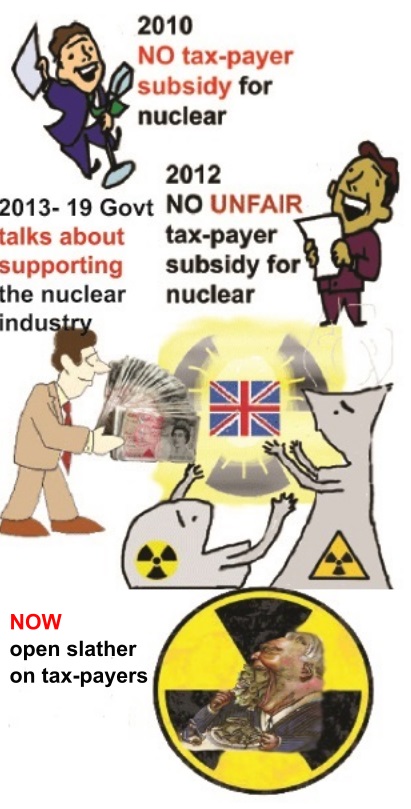
taxpayers are getting no return whatsoever on the £6.4bn they are putting in as equity, so from a taxpayer point of view it is dreadful.
10 Nov, 2025, By Tom Pashby, New Civil Engineer
Taxpayers will see “no return whatsoever” on the £6.4bn that the government is committing in equity to Sizewell C, according to an energy policy expert.
Earlier in November 2025, Sizewell C reached financial close with a £5bn funding injection from 13 banks paving the way for full-scale construction.
The deal secures around £5.5bn of new financing consisting of a £5bn export credit-backed facility arranged by Bpifrance Assurance‑Export (BpifranceAE) with support from Sfil, and a separate £500M working capital facility.
These facilities sit alongside a term loan provided by the UK’s National Wealth Fund and the equity that was raised earlier this year following the Final Investment Decision (FID) for the Suffolk nuclear power plant in July.
In April 2025, the government announced that a further £2.7bn of taxpayer cash had been made available for Sizewell C, bringing the total to £6.4bn ahead of the FID on the nuclear power station.
The agreements on private investment to build the new nuclear power station have been reached through the government agreeing to use the Regulated Asset Base (RAB) model. RAB works by having consumers pay a surcharge on their bills during the construction phase, which helps lower the cost of capital and reduces the financial risk for investors. This surcharge will be added to bills through the construction and for the first three years of operation. It goes towards paying back the private entities for their investment and, according to the government, will mean lower bills for consumers over the long term. Ofgem, as the regulator, sets the allowed revenue to ensure costs are incurred efficiently and consumers get value for money.
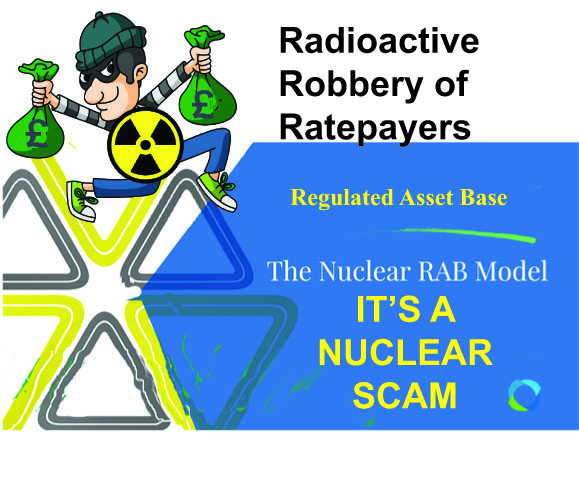
However, University of Greenwich emeritus professor of energy policy Steve Thomas is scptical about this, given that the current official estimate of £38bn to build Sizewell C is at the lower end of the range of likely costs and this is in 2024 prices, with inflation pushing it up all the time.
Additionally, there is no official timeline for construction completion. As has been seen with Hinkley Point C, cost and schedule overruns come with the territory.
He told NCE: “From 1 December 2025, consumers will start to pay a surcharge on the electricity bills to pay for the return being paid to investors (10.8% real) on their equity contribution (35% of the costs) and the interest payments on the loans, expected to be 4.5% (real).
“A bit of arithmetic suggests the surcharge will be split 44% interest payments and 56% rate of return on equity.
“The Low Carbon Contracts Company has said the surcharge in the period up to the end of March 2027 will be £3.54/MWh.”
He added that the £3.54/MWh figure would subsequently be updated annually based on the latest cost calculations.
“Ofgem says the average domestic consumer uses 2,700kWh per year so that amounts to about £9.56 per consumer in the first year,” he said. He believes this could rise to £62.70 per year by the end of the surcharge period.
“The government has said it will recycle its income from the surcharge back to electricity consumers, but we don’t know and nor does the government how it will do this and what proportion of the surcharge it receives will go back to consumers.
“Recycling the income means the government is giving consumers the interest that is paid to the National Wealth Fund on borrowing of £11.8bn and taxpayers are getting no return whatsoever on the £6.4bn they are putting in as equity, so from a taxpayer point of view it is dreadful.
Sizewell C ‘fails miserably’ on transparency – campaigner
Stop Sizewell C executive director Alison Downes said: “If Sizewell C can publicly state it expects the project to cost £38bn, why won’t they tell us when we can expect to see first power?
“Given that the British public is largely paying for Sizewell C through our taxes and energy bills, don’t we have the right to know how long it will take?
“Cynically this sounds like a ‘learning’ from Hinkley Point C – don’t tell people when it will be finished so you can’t be criticised for missing your deadlines. As an exercise in transparency, it fails miserably.”………………. https://www.newcivilengineer.com/latest/sizewell-c-consumers-like-to-see-no-return-on-6-4bn-public-funds-put-in-as-equity-10-11-2025/
AI Warlord”+: Eric Schmidt – Money, Media and Maim
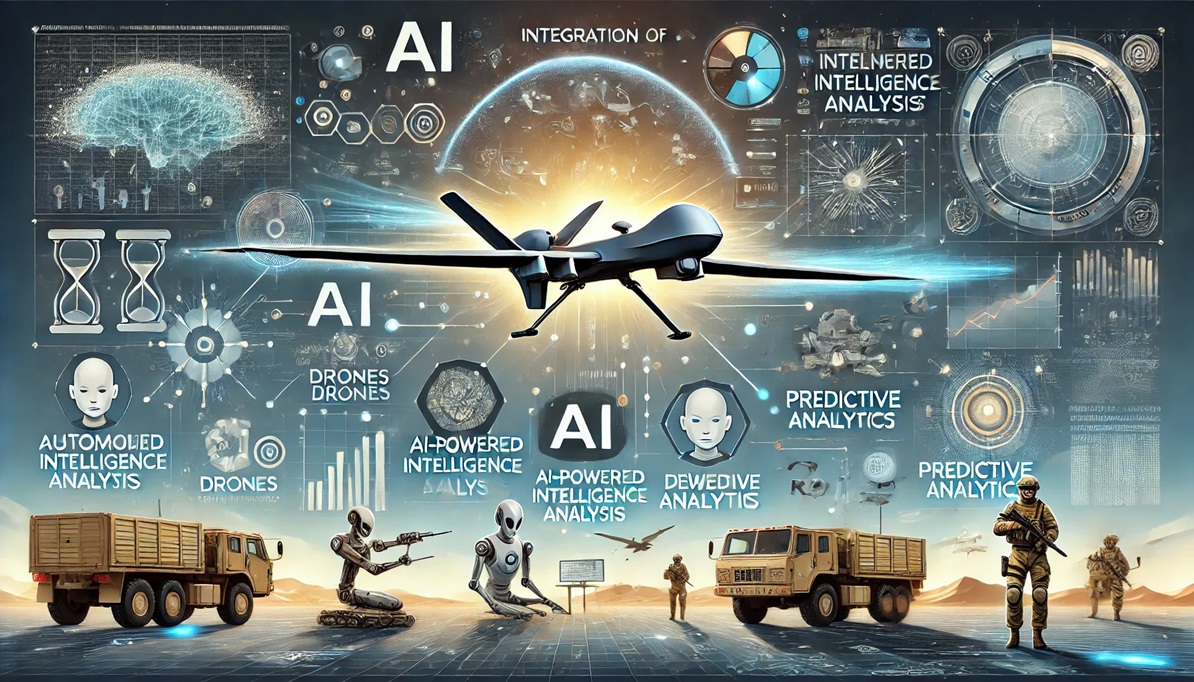
rather than deterring military AI threats with a promise of retaliation after an attack, as per standard MAD theory, MAIM advocates striking first, preventatively.
In an era where technology is advancing at breakneck speed, the implications of AI on warfare are profound and troubling. Byrne’s latest article, “AI Warlord: Eric Schmidt,” part of the ongoing Military AI Watch series from Project Censored, sheds light on the intersection of power, profit, and peril in the realm of military AI. From the shadowy alliances of tech billionaires to the ethical dilemmas posed by autonomous weaponry, we’ll explore how the hype surrounding AI is not just about innovation but also about control, surveillance, and an unsettling future.
October 30, 2025, By Peter Byrne, https://www.projectcensored.org/ai-warlord-eric-schmidt-money-media-maim/
In August, Foreign Affairs published Alphabet-Google billionaire Eric Schmidt’s essay “The Dawn of Automated Warfare”—co-authored with Greg Grant of the Center for New American Security, a nonprofit funded by Schmidt and the military industry.
Best characterized as an advertorial, the AI weapons piece promotes Schmidt’s investments in military AI, including Ukrainian drone manufacturer White Stork, and Relativity Space, a military rocket contractor.
The authors frame Ukraine’s battlefields as laboratories for testing AI weapons in “the new reality of war.” From their profit-seeking perspective, mass death and suffering are collateral effects justified by “racing to create … an automated drone swarm—the holy grail of drone operations.”
The sane response to such callous marketing disguised as objective analysis by a stakeholding multibillionaire is revulsion and disbelief. But, such is the halo of entrepreneurial genius and progressive philanthropy crowning the 70-year-old Democrat Party sugar daddy, that Schmidt’s pronouncements are treated as oracular in corridors of government where he exercises undue influence alongside fellow billionaire AI militarists Musk, Zuckerberg, Ellison, Bezos, Thiel, Hoffman, Bloomberg, Andreessen, Altman, Huang, Son, the Trumps, and Kushners.
Since 2016, investigative reports in major media have documented serious conflicts of interest between Schmidt’s governmental positions and his $30 billion in private investments and the multibillion-dollar stock portfolios managed by his nonprofit foundations. But Schmidt and his similarly conflicted tech mogul demographic remain politically immunized against punishment—or paying taxes—by the violence-energized system that created and enriches them.
Schmidt’s conflicts of interest
In 2016, when Schmidt served as CEO of Alphabet-Google, The Intercept and the Tech Transparency Project published The Android Administration, illuminating the incestuous relationship between the Obama administration and 152 Google executives: “Google doesn’t just lobby the White House for favors, but collaborates with officials, effectively serving as a sort of corporate extension of government operations.”
Obama’s doors were always open to executives from Schmidt’s investment firm, Tomorrow Ventures, and Civis Analytics, an AI data firm controlled by Schmidt that is a federal contractor.
In 2019, Politico published “How Amazon and Silicon Valley Seduced the Pentagon,” highlighting Schmidt’s activities as chair of the Defense Innovation Board, a quasi-governmental body composed of militaristic capitalists such as Michael Bloomberg and Reid Hoffman, who is also a board member of the genocide-abetting Microsoft Corporation. The Defense Innovation Board develops military contracting policies that impact companies controlled by Schmidt and other board members.
In 2021, American Prospect exposed that Rebellion Defense, a military and security tech company that Schmidt owns, was vacuuming up military AI contracts while he chaired the Defense Innovation Board and the National Security Commission on Artificial Intelligence.
As Schmidt’s reputation was spoiling, New York Times tech reporters tried to refresh it, “updating” a previously published hagiography. Brushing past Schmidt’s well-documented conflicts, Kate Conger and Cade Metz explained that the philanthropic venture capitalist had simply “reinvented himself as the prime liaison between Silicon Valley and the military industrial complex.”
In May 2022, the Tech Transparency Project published a blockbuster series detailing the scope of Schmidt’s influence over military AI contracting and his many conflicts of interest.
In December 2022, referencing CNBC reporting on Schmidt’s conflicts, Senator Elizabeth Warren formally requested that the Secretary of Defense investigate Schmidt; there is no available record of a reply.
In May 2023, Le Monde highlighted the synergies between Schmidt’s business interests and his calls to prepare for warring with China. Fox News reported on an investigation by the MAGA-friendly Bull Moose Project, which charted the intersections of Schmidt’s interlocking business and governmental networks. Jack Poulson’s All Source Intelligence published additional evidence of conflicts of interest between Google and Schmidt, including collaborating with US and Australian intelligence agencies.
These are but a few examples of the flood of exposés, amplified by hundreds of news outlets, that could have prompted federal agencies to bar Schmidt from military contracting for influence peddling. But Schmidt’s military businesses thrived during the Trump I and Biden years, and continue to do so under Trump II. In June 2025, Chairman of the Joint Chiefs of Staff Dan Caine, a military AI venture capitalist associated with the Trump–Kushner family’s Thrive Capital, was tasked with delivering the keynote address at a June 2025 conference called AI+ Expo, sponsored by Schmidt’s Special Competitive Studies Project (SCSP).
The National Security Commission on Artificial Intelligence was dissolved in 2021 after concluding that the US must buy more military AI products to face off against China. Schmidt then transmuted the federal commission into the SCSP, a partially tax-exempt private foundation he funded and governs, which opposes AI regulation.
Most of SCSP’s fifty-member staff have worked for either the Commission, the Pentagon, intelligence agencies, or Wall Street firms. SCSP leadership includes the Center for a New American Security’s Robert O. Work and Michèle Flournoy. Both are Pentagon careerists turned lobbyists for military AI. To direct his military AI lobby, Schmidt hired the commission’s director, Ylli Bajraktari, the former chief of staff to Trump’s national security advisor, retired Lieutenant General H.R. McMaster, also a prominent military AI promoter.
Tax-avoidant, Schmidt hires former national security officials to operate his interlocking network of businesses and tax-exempt organizations. He also places his employees and grantees in influential governmental positions, paying their salaries via his for-profit organization, Schmidt Futures.
Unholy AI alliances
Schmidt credits the late, and credibly accused war criminal, Henry Kissinger, with having inspired him to create SCSP. Schmidt modeled SCSP after Kissinger’s Special Studies Project (1956–1960), which oil and railroad billionaire John D. Rockefeller bankrolled through his Rockefeller Brothers Fund. History records that the Rockefeller study rationalized minimizing social spending to free up larger portions of the gross national product for the nuclear arms race.
Media amplification of the study influenced public opinion to support the Cold War by demonizing Russia and China as existential threats to American values, by which the Rockefellers meant plutocracy, not democracy.
Kissinger opposed arms control efforts. He advocated fighting “limited” nuclear wars with intercontinental ballistic missiles. He falsely claimed the US was militarily disadvantaged because Russia fielded more nuclear missiles, while the opposite was known to be the case. The Rockefeller study he crafted helped institutionalize what outgoing President Dwight D. Eisenhower called a danger to democracy when he left office in 1960. The former Army general presciently predicted “that public policy could itself become the captive of a scientific-technological elite” operating a perpetually war-seeking “military-industrial complex.”
In 2021, Kissinger, Schmidt, and MIT computer scientist Daniel Huttenlocher published the bestselling book, The Age of AI. They advocated spending vast amounts of public wealth developing AI weapons of mass destruction for use against China.
Their arguments are framed in terms of seventeenth-century rationalist philosophy. They hail the solipsistic Cartesian worldview as the epitome of Reason, acting as if the wisdom of all previous ages culminated in the anti-democratic musings of Immanuel Kant, who avidly supported aristocratic rule. “The AI age needs its own Descartes, its own Kant, to explain what is being created and what it will mean for humanity. … Existing principles [of human reasoning] will not apply.” For Schmidt, Kissinger, and Huttenlocher, artificial intelligence is the New Enlightenment.
The Age of AI echoes the factual dishonesty and omnicidal sociopathy of Herman Kahn’s 1960 treatise On Thermonuclear War. RAND Corporation theorist Kahn had argued that obedience to Reason requires accepting millions of deaths in a nuclear war waged to preserve American values.
According to Kissinger, Schmidt, and Huttenlocher, it is worth taking existential risks in order to achieve the supremacy of artificial intelligence:
Machines will enlighten humans, expanding our reality in ways we did not expect or necessarily intend to provoke. In daily life, AI is our partner, helping us make decisions about what to eat, what to wear, what to believe, where to go, and how to get there. … [AI] weapons are targetable with relative precision, [obeying] moral and legal imperatives.
Counseling going to war with China, Kissinger, Schmidt, and Huttenlocher claim that failing to militarize artificial general intelligence (AGI) will wreck American society: “The dilemma posed by AI-related weapons technology is that keeping up research and development is essential for national survival.”
But, they caution, advanced AI must serve only certain corporations:
Developing AGI will require immense computing power … created by only a few well-funded organizations. … Its applications will need to be restricted. Limitations could be imposed by only allowing approved organizations to operate it.
Kissinger joined his ancestors in 2023, and in 2025, after Trump retook office, Schmidt teamed up with Alexandr Wang (founder of the military AI company Scale AI, now charged with developing “superintelligence” for Meta) and Dan Hendrycks, executive director of the Center for AI Safety, a nonprofit largely funded by Open Philanthropy.
In March, Hendrycks, Schmidt, and Wang co-published a Strangelovian policy paper on national security, “Superintelligence Strategy.” The authors compare their version of deterring attacks from unfriendly AI-armed nations—which they call “Mutual Assured AI Malfunction” or MAIM—to the classical Cold War deterrence theory of “mutual assured destruction” or MAD.
But, rather than deterring military AI threats with a promise of retaliation after an attack, as per standard MAD theory, MAIM advocates striking first, preventatively.
Hendrycks, Schmidt, and Wang compare MAIM favorably to Kahn’s “thinking the unthinkable” about the positive aspects of launching a preventative nuclear first strike on the Soviet Union, while preplanning to robustly rebuild American capitalism from the radioactive ashes after the hypothetically enfeebled Soviet retaliation.
Echoing extreme “AI doomer” worldviews, Hendrycks, Schmidt, and Wang encourage the US military to undertake preemptive cyber and “kinetic” sabotage campaigns to ruin the AI infrastructure of US competitors, including bombing data centers to prevent the emergence of non-US-aligned superintelligences.
Afraid of US market competitors launching expensive Manhattan Project-style superintelligence efforts, they advocate for “nonproliferation.” By which they mean using military means to ensure that only the US, its allies, and certain corporate behemoths can create and use advanced AI technologies.
In a major obfuscation, the trio’s pro-AI acceleration paper does not acknowledge ongoing attempts to create international agencies capable of monitoring, regulating, and sanctioning the development and use of military AI, such as the Netherlands’ Responsible AI in the Military Domain, or international resolutions by governments to regulate or ban lethal AI weapons.
Schmidt’s SCSP vehemently opposes significant governmental regulation of AI products and weapons. Schmidt prefers that the AI industry self-regulate, and his policy aligns with the vaguely stated regulatory aims of Hendrycks’s Center for AI Safety.
In late October, leading computer scientists, world celebrities, and thousands of concerned professionals signed the Future of Life Institute’s call for prohibiting the further development of superintelligence until there is “strong public buy-in” and “broad scientific consensus that it will be done safely and controllably.” Hendrycks signed the call; Wang and Schmidt did not.
An April 2025 analysis by AI Now concludes that, given the propensity of large language models to hallucinate and the impossibility of humans monitoring neural network decision-making processes, it is a national security error to allow commercial interests to dictate the reliability and safety of military AI. The failure to establish strong laws regulating artificial intelligence violates long-established legal and social norms governing the safety of nuclear power, nuclear arsenals, and chemical weapons. Loosely regulated AI systems are obviously more susceptible to hacking, sabotage, and operational disaster than regulated systems, AI Now emphasizes.
In 2025, SCSP released a series of Defense Papers and Memos to the President, urging, “The United States should organize ‘moonshot’ programs, modeled on past successful efforts like the Manhattan Project, to drive AGI [artificial general intelligence] innovation.” Schmidt’s clarion call is for the US to harm China.
Schmidt’s stance on military AI aligns closely with the Heritage Foundation’s Project 2025, the policy blueprint followed by the Trump administration. Heritage paints a similarly paranoid view of China, while urging that government research and development of AI weaponry ought to be “transferred swiftly to American interests in the private sector,” which includes, of course, Schmidt’s ventures.
Last year, the Tech Transparency Project uncovered Schmidt’s stakes in Chinese AI firms, “Eric Schmidt Cozies up to China’s AI Industry While Warning U.S. of its Dangers.” It appears that Schmidt lacks a coherent international relations strategy beyond enriching his globalized enterprises.
Media conflicts of interest
In June 2025, SCSP’s AI+ Expo conference in Washington, DC, was sponsored by military firms and “media partners” focused on ramping up military AI spending by the “Department of War.” Talks by Schmidt and panels featuring a Who’s Who in governmental and corporate AI war planning were obsequiously “moderated” by national security beat reporters from the New York Times, NBC News, Politico, Washington Post, and C4ISRNET.
Code Pink energetically disrupted Schmidt’s presentation, which was hosted by former New York Times Pentagon correspondent Thom Shanker, who is now employed by RAND Corporation. The activists unfurled Palestinian flags, demanding that Google cease providing technology enabling genocide in Gaza. They were forcibly removed.
David E. Sanger of the New York Times supervised a panel discussion featuring former Rep. Mac Thornberry, a board member of military AI corporations, including CAE and Booz Allen, where he sits alongside Michèle Flournoy, his colleague at Beltway lobby firm West Exec Advisors and SCSP. Sanger also ran a panel featuring a Google vice president, Royal Hansen, and SCSP’s Anne Neuberger, who had served on Biden’s National Security Council, before joining SCSP and anti-AI regulation leader, Andreessen Horowitz.
SCSP videos record Sanger making statements disguised as questions about the threat of China to US global hegemony, and, therefore, the necessity for the US to quicken AI weapons contracting. Sanger did not ask the panelists about the validity of accepting those core elements of SCSP’s lobbying agenda as factual or desirable.
Hansen, however, made a newsworthy statement:
We have been using AI to defend Gmail long before people were using chatbots, and … it’s only gotten better [with large language models]. … We use little agents, little classifiers, to look at all the content and metadata about a message to look for bad actors.
To reiterate: Hansen stated that Google uses Gemini to parse all the content of Gmail looking for (undefined) “bad actors,” and the “reporter” ignored it. (Google’s press office did not respond to a request for comment.)
The New York Times’s Ethical Handbook cautions reporters that
those assigned to beats, must be sensitive that personal relationships with news sources can erode into favoritism, in fact or appearance. … [S]ources are eager to win our good will for reasons of their own. … Staff members may not collaborate in ventures involving individuals or organizations that figure or are likely to figure in coverage they provide … While many professional and trade groups are organized as nonprofits, most of them do lobbying or advocacy work on policy issues [so] avoid situations that create an appearance of coziness or favoritism.
Sanger is professionally affiliated with military-industry-focused organizations, including the Center for New American Security, Harvard’s Belfer Center, the Council on Foreign Relations, and the Aspen Institute. In an email exchange with Military AI Watch, Sanger said his only recompense for hosting the SCSP panels was “a somewhat soggy sandwich.” He did not respond to our query about his possible conflicts of interest, including writing a Times story last year praising Google’s much-criticized Project Maven, while pumping Schmidt’s White Stork drone business in Ukraine.
Mick Sussman, a New York Times editor charged with investigating staff conflicts of interest, did not respond to Military AI Watch’s email query on Sanger’s conflicts. Reached then on his cellphone, Sussman demanded to know how we got his phone number and abruptly hung up. Doggedly, we called back, and he picked up. Sussman said he had received the email and would get back to us. He didn’t.
Influence peddling and tax dodging
Banking a net worth of $30 billion—more than doubled since 2020—Schmidt uses a network of private nonprofits to reduce taxes and to social engineer his popular image. Advertising himself as “working to restore a balanced relationship between people and the planet,” Schmidt has disbursed billions of his tax-deductible dollars to hundreds of socially and environmentally progressive nonprofits, including media organizations.
To be clear: Schmidt’s foundations earn hundreds of millions of dollars a year investing in environmentally and socially disastrous multinational corporations, venture capital partnerships, and private equity firms, some operating out of secretive tax havens in Bermuda and the Cayman Islands. Schmidt’s nonprofits pay multimillion-dollar fees to Schmidt’s personal investment firm, Hillspire LLC, to manage portfolios of decidedly non-progressive investments.
According to IRS filings in 2023, the Eric and Wendy Schmidt Fund for Strategic Innovation held $1.4 billion in assets and logged (largely untaxed) capital gains of $302 million. It distributed $301 million, mostly to scientific and university projects, including $15 million to SCSP. Its largest tax-free grant, $41 million, went to an AI software accelerator, Convergent Research, which works on barcoding brains.
The Schmidt Family Foundation held $1.8 billion in stocks and real estate, netting $198 million in profits. Its charitable contributions were $137 million, targeting Indigenous and alternative energy organizations—causes antithetical to the sources of the money. The foundation holds $814 million in shares of climate- and information-destroying Alphabet (Google), and extensive holdings of Chinese AI companies.
The family foundation invests heavily in environmentally destructive corporations, including Amazon, Apple, Oracle, Dow, Barrick Gold, and Rio Tinto. It profits from companies that fuel wars and genocides, such as Elbit Systems, General Dynamics, Huntington Ingalls Industries, L3Harris, Lockheed Martin, and Rheinmetall. It owns stock in Las Vegas casinos, greenhouse gas-generating chemical manufacturers, and oil-guzzling automakers. The nonprofit owns a piece of Murdoch’s anti-environmentalist News Corp. And its 2018–2023 tax returns reveal cash donations of $9.75 million to Grist, an “independent” environmental magazine that regularly climate-washes Google and Schmidt. Grist’s media department did not respond to a request for comment.
US ‘disappointed’ that Rolls-Royce will build UK’s first small modular reactors.
Guardian, 13 Nov 25
As Keir Starmer announces SMRs to be built in Wales, US ambassador says Britain should choose ‘a different path.
Keir Starmer has announced that the UK’s first small modular nuclear reactors will be built in north Wales – but immediately faced a backlash from Donald Trump’s administration after it pushed for a US manufacturer to be chosen.
Wylfa on the island of Anglesey, or Ynys Môn, will be home to three small modular reactors (SMRs) to be built by British manufacturer Rolls-Royce SMR. The government said it will invest £2.5bn.
SMRs are a new – and untested – technology aiming to produce nuclear power stations in factories to drive down costs and speed up installation. Rolls-Royce plans to build reactors, each capable of generating 470 megawatts of power, mainly in Derby.
The government also said that its Great British Energy – Nuclear (GBE-N) will report on potential sites for further larger reactors. They would follow the 3.2GW reactors under construction by French state-owned EDF at Hinkley Point C in Somerset and Sizewell C in Suffolk.
The Labour government under Starmer has embraced nuclear energy in the hope that it can generate electricity without carbon dioxide emissions, while also providing the opportunity for a large new export industry in SMRs.
However, it faced the prospect of a row with the US, piqued that its ally had overlooked the US’s Westinghouse Electric Company when choosing the manufacturer for the Wylfa reactors.
Ahead of the publication of the UK announcement, US ambassador Warren Stephens published a statement saying Britain should choose “a different path” in Wales.
“We are extremely disappointed by this decision, not least because there are cheaper, faster and already-approved options to provide clean, safe energy at this same location,” he said.
The Trump administration last month signed an $80bn (£61bn) deal with Westinghouse, which had been struggling financially, to build several of the same larger reactors proposed at Wylfa. Under the terms of that deal, the Trump administration could end up taking a stake in the company……………………………………………………………………………………………………………………… https://www.theguardian.com/environment/2025/nov/13/us-disappointed-that-rolls-royce-will-build-uks-first-small-modular-reactors
Los Alamos National Laboratory Reneges on Active Confinement Ventilation Systems at Plutonium Facility, PF-4.

| Concerned Citizens for Nuclear Safety .14 Nov 25 |
Los Alamos National Laboratory (LANL) continues to neglect its obligations to safely operate its nuclear weapons facilities in a manner required by laws, orders, guidance and common sense.
A recent report from the Defense Nuclear Facilities Safety Board (DNFSB or the Board) details the threats from the release of plutonium contaminated air during a seismic event from the LANL Plutonium Facility, or PF-4. For over 20 years, the Board has recommended that LANL establish active confinement ventilation systems for PF-4, and LANL agreed. https://www.dnfsb.gov/content/review-los-alamos-plutonium-facility-documented-safety-analysis
Active confinement ventilation systems require negative air pressure in rooms and buildings where plutonium is stored, handled and processed. In the event of seismic activity, or other possible catastrophic events, the negative air pressure would keep the contamination inside where it could be held and filtered before being released.
The converse, which is called passive confinement systems, would do nothing. No filtration would occur. Contaminated air would move out of the building and into the air we breathe. Depending on the wind direction, radioactive plutonium particles would be deposited in neighborhoods, on hiking trails, fields, school grounds, and in the Rio Grande.
When it comes to New Start nuclear treaty….Trump just can’t get started

Walt Zlotow, West Suburban Peace Coalition, Glen Ellyn IL , 12 Nov 25
President Trump sure has an aversion to nuclear disarmament treaties with Russia that might just prevent nuclear war.
In his first term he dropped out of the Joint Comprehensive Plan of Action (JCPOA), a signature Obama agreement including Russia, China, France, Germany and the UK to diffuse Iran’s nuclear program. He also withdrew from the Intermediate Range Nuclear Forces Treaty (INF). Then he left office without renewing the impending expiration of the New Start Treaty. Successor Biden wisely renewed it for 5 years upon replacing Trump in January, 2021.
Here we are with New Start set to expire in 12 weeks and guess whose president again? Nuclear agreement adverse Donald J. Trump. And what has Trump done to avoid having the third nuclear treaty go poof on his watch. Nada, zilch, nothing.
New Start was and is a sensible nuclear agreement. It limits the number of strategic nuclear warheads that can be deployed by the US and Russia to 1,550 each. It further restricts nuclear capable bombers, submarines and missile launchers to 800. All this to be verified by mutual inspections.
Seven weeks ago Russian President Putin reached out to Trump to get the New Start renewal ball rolling. Trump’s response? Kremlin spokesman Dmitry Peskov expressed dismay there has been no reaction to the proposal as of yet. “After all, my colleague in Washington announced that Trump would personally respond to this initiative. But so far, there’s been no response from the American.”
When a reporter recently asked Trump what he thought of Putin’s request to renew New Start, Trump meekly replied “Sounds like a good idea to me” before turning away to avoid a follow up question.
When it comes to initiating, staying in, renewing nuclear agreements with Russia that just might prevent nuclear Armageddon, Trump adheres to the NATO formula: No Action, Talk Only.
Zelensky – Embroiled in war and embattled at home

by beyondnuclearinternational, https://beyondnuclearinternational.org/2025/11/13/embroiled-in-war-and-embattled-at-home/
Can president Zelensky survive a kickback scheme involving the state nuclear company that enriched associates and possibly even ministers in his own government, asks Linda Pentz Gunter
If you live in Ohio, and possibly even in Illinois and South Carolina, you might be getting a bit of a déjà vu feeling reading the news coming out of Ukraine about a corruption scandal involving Energoatom, Ukraine’s nuclear energy company. That’s because two independent Ukrainian anti-corruption bodies have just uncovered a massive graft scandal involving kickbacks from nuclear power projects.
In July 2020, then Speaker of the Ohio House, Republican Larry Householder, was arrested along with four others for involvement in what was described as “the largest bribery money-laundering scheme ever perpetrated against the people of the state of Ohio.”
In a year-long covert investigation by the US Attorney’s office and the FBI, a plot was uncovered that involved $61 million in dark money that flowed from FirstEnergy into the pockets of Householder and others to ensure a favorable vote in the House that would guarantee a $1.5 billion bailout of the company’s Davis-Besse and Perry nuclear reactors to keep them running. Once uncovered, indictments followed. Householder is currently serving a 20-year prison sentence.
Similar scandals rocked Illinois and South Carolina, also connected to nuclear power plant schemes and also leading to indictments and prison sentences.
In Ukraine, the two investigating agencies — the National Anti-Corruption Bureau (NABU) and the Specialized Anti-Corruption Prosecutor’s Office (SAPO) — have just named at least eight individuals who have reportedly been charged with bribery, embezzlement, and illicit enrichment, netting around $100 million off contracts with Energoatom.
Details about precisely how the scheme operated and which contracts were involved have not fully emerged. However, some sources have suggested it involved a wide range of Energoatom’s private subcontractors who were allegedly forced to pay kickbacks of 10-15% to secure or maintain their supplier status and ensure timely payments.
These reportedly included work on constructing protective structures at the Khmelnytskyi nuclear power plant to defend against Russian air attacks, with Ukraine still struggling to defeat an invasion by Russia that began on February 24, 2022.
Both the Khmelnytskyi and Rivne nuclear power plants were hit with a major strike by the Russians on November 8, raising new fears of a catastrophic nuclear disaster. To date, most of the concern has centered around the six-reactor site at Zaporizhzhia, which is located in the region of heaviest fighting and has been occupied by Russian forces since March 4, 2022. Zaporizhzhia has undergone many close calls and was recently without offsite power for a month, provoking widespread anxiety since power is essential to cool reactors and their fuel pools even if they are shut down as the Zaporizhzia reactors presently are.
“Nuclear safety and security in Ukraine remains extremely precarious during the military conflict,” the International Atomic Energy Agency said in a social media posting. “Two operating NPPs – Khmelnitskyy and Rivne – had to reduce electricity output after overnight attack on electrical substation critical for nuclear safety.”
The participants in the Energoatom corruption scheme, who used code names, were heard in conversations recorded by the investigators evaluating the Khmelnytsky fortifications as a business opportunity.
Meanwhile the IAEA is at the COP30 climate summit in Brazil frantically peddling nuclear power as the answer to the climate crisis under its Atoms4Climate propaganda campaign while ignoring all the obvious safety and security risks so frighteningly on display in Ukraine, never mind the industry’s complete inability to deliver reactors in time or on budget.
Since the anti-corruption groups delivered their reports, two key ministers have resigned at President Volodymyr Zelensky’s request. They are Ukrainian Energy Minister Svitlana Grynchuk and Justice Minister German Galushenko. Galushenko, who preceded Grynchuk as energy minister, had already been suspended before he stepped down. Galushenko is reportedly implicated in the kickback scandal but has proclaimed his innocence.
The two agencies spent more than 15 months collecting evidence, including 1,000 hours of audio recordings and at least 70 searches. Zelensky had acted to curb the reach of NABU and SAPO several months earlier, prompting suspicions that he could have been aware that personal associates and his own ministers were about to be caught in their nets. Zelensky backed down then after being warned by the European Union that Ukraine’s bid to become a member would be in jeopardy if the corruption problem was not resolved.
European Commission president Ursula von der Leyen reportedly conveyed her strong concerns about Zelensky’s attempts to weaken the agencies’ powers. In a statement, a spokesperson for von der Leyen said: “The respect for the rule of law and the fight against corruption are core elements of the European Union. As a candidate country, Ukraine is expected to uphold these standards fully. There cannot be a compromise.”
The EU has spoken out again in light of the present revelations, urging Zelensky to clamp down on corruption, but has not withdrawn its support for the country’s war efforts against Russia’s invasion, now entering its 45th month.
According to an analysis in Kyiv Independent by Oleg Sukhov, the eight implicated also include Deputy Prime Minister Oleksiy Chernyshov, Rustem Umerov, former defense minister and current secretary of the National Security and Defense Council and Ihor Myroniuk, a former advisor to then Energy Minister Halushchenko.
Chernyshov allegedly financed the construction of high-end houses near Kyiv, echoing the way Householder used his bribery bonanzas to refurbish his second home in Florida.
The alleged ringleader, according to Sukhov and other news reports, is Zelensky’s close associate and former business partner, Timur Mindich, who has since fled the country, likely to Israel where he is a citizen and lending further credence to the charges. Mindich is a co-owner of the president’s Kvartal 95 production company. Zelensky transferred his stake to partners once he became president.
Chernyshov allegedly financed the construction of high-end houses near Kyiv, echoing the way Householder used his bribery bonanzas to refurbish his second home in Florida.
The alleged ringleader, according to Sukhov and other news reports, is Zelensky’s close associate and former business partner, Timur Mindich, who has since fled the country, likely to Israel where he is a citizen and lending further credence to the charges. Mindich is a co-owner of the president’s Kvartal 95 production company. Zelensky transferred his stake to partners once he became president.
Linda Pentz Gunter is the founder of Beyond Nuclear and serves as its international specialist. Her book, No To Nuclear. Why Nuclear Power Destroys Lives, Derails Climate Progress and Provokes War, can be pre-ordered now from Pluto Press.
Is President Trump leading US to Vietnam style disaster in Venezuela?

Walt Zlotow, West Suburban Peace Coalition, Glen Ellyn IL , 14 Nov 25.
Sure looks like Trump is initiating regime change in Venezuela. He’s sent a US armada of ships including its most advanced aircraft carrier, planes and troops to Venezuela’s neighborhood. Trump’s hoping to intimidate Venezuelan President Maduro to go quietly so he can replace him with a compliant US puppet. For emphasis he’s issued a $50 million dollar reward for his arrest, and blasted 17 small, unarmed boats to smithereens near Venezuela murdering dozens.
Trump doesn’t care one whit about ending imaginary Venezuelan drug smuggling into the US. That is simply a plot device to control Venezuela’s massive oil reserves via a US puppet ruling Venezuela, and to sever Venezuela’s newfound political, economic and military ties to Russia and China. Neither will stand by to an American regime change operation, much less an outright invasion, without offering help to resist US aggression. Trump may be the president upon whose watch the Monroe Doctrine went poof.
No nation in in Central or South America supports Trump’s march to war against Venezuela. Indeed no nation in the world, outside of possibly Israel, supports this impending abomination of foreign intervention.
US firepower is so dominant they can quickly take out Maduro if Trump’s newly rechristened Secretary of War Pete Hegseth lights the fuse. But neither the Maduro government nor its citizens will go quietly. Resistance both during and after the incursion will likely be ferocious. Get ready for US body bags to start arriving at Arlington.
Trump would be wise to converse with former President George W. Bush to get his thoughts on the nearly 4,500 senseless US deaths in Iraq and the 2,400 senseless US deaths in Afghanistan after Bush’s ‘war fighters’ quickly deposed Saddam Hussein and the Taliban respectively. To what end? We’re still defiling Iraq with 2,000 troops Iraq wants out but, like being in a roach motel, will never leave. It took 20 years but the Taliban kicked out the US invaders that stayed thru 3 presidencies till Biden left in disgrace.
The last possible firewall preventing Trump’s impending invasion, Congress, abdicated their responsibility by refusing to invoke the War Powers Act forbidding war without Congressional approval as required by the Constitution. Only 2 of 100 Senators voted for peace. All 49 Democrats who voted to prevent were more likely motivated by political opposition to anything Trump. When it comes to US militarism abroad, Democrats are almost always on board.
The 49 Republicans voting for presidential war did so because they love both robust militarism and their deranged, war loving president keeping them supported by Trump’s MAGA base. Only Republicans Lisa Murkowski and Rand Paul voted against their party’s impending war out of principle.
Besides a powwow with Bush Jr., Trump might seek a séance with late warmonger down in War Lovers Hell LBJ. If he could communicate from his everlasting place of infamy over Vietnam, he might tell Trump, ‘Faggedaboudit Donald, I lost 58,000 US boys for nothing. Pivot to peace while you’re till earthbound.’
The Member States Complicit in Genocide (w/ Francesca Albanese) | The Chris Hedges Report

Scheerpost, By Chris Hedges / The Chris Hedges Report, November 13, 2025
After two years of genocide, it is no longer possible to hide complicity in Israel’s crimes against the Palestinians. Entire countries and corporations are — according to multiple reports by UN Special Rapporteur on Palestine Francesca Albanese — either directly or indirectly involved in Israel’s economic proliferation.
In her latest report, “Gaza Genocide: a collective crime,” Albanese details the role 63 nations played in supporting Israel’s genocide of the Palestinians. She chronicles how countries like the United States, which directly funds and arms Israel, are a part of a vast global economic web. This network includes dozens of other countries that contribute with seemingly minor components, such as warplane wheels.
Rejection of this system is imperative, Albanese says. These same technologies used to destroy the lives of Palestinians will inevitably be turned against the citizens of Israel’s funders.
“Palestine today is a metaphor of our life and where our life is going to go,” Albanese warns.
“Every worker today should draw a lesson from what’s happening to the Palestinians, because the large injustice system is connected and makes all of us connected to what’s happening there.”
Transcript
Chris Hedges
Francesca Albanese, the United Nations special rapporteur on Palestine, in her latest report, “Gaza Genocide: a collective crime,” calls out the role 63 nations have in sustaining the Israeli genocide. Albanese, who because of sanctions imposed on her by the Trump administration, had to address the UN General Assembly from the Desmond and Leah Tutu Legacy Foundation in Cape Town, South Africa, slams what she calls “decades of moral and political failure.”
“Through unlawful actions and deliberate omissions, too many states have harmed, founded and shielded Israel’s militarized apartheid, allowing its settler colonial enterprise to metastasize into genocide, the ultimate crime against the indigenous people of Palestine,” she told the UN.
The genocide, she notes, has diplomatic protection in international “fora meant to preserve peace,” military ties ranging from weapons sales to joint trainings that “fed the genocidal machinery,” the unchallenged weaponization of aid, and trade with entities like the European Union, which had sanctioned Russia over Ukraine yet continued doing business with Israel.
The 24-page report details how the “live-streamed atrocity” is facilitated by third states. She excoriates the United States for providing “diplomatic cover” for Israel, using its veto power at the UN Security Council seven times and controlling ceasefire negotiations. Other Western nations, the report noted, collaborate with abstentions, delays and watered-down draft resolutions, providing Israel with weapons, “even as the evidence of genocide … mounted.”
The report chastised the US Congress for passing a $26.4bn arms package for Israel, although Israel was at the time threatening to invade Rafah in defiance of the Biden administration’s demand that Rafah be spared.
The report also condemns Germany, the second-largest arms exporter to Israel during the genocide, for weapons shipments that include everything from “frigates to torpedoes,” as well as the United Kingdom, which has allegedly flown more than 600 surveillance missions over Gaza since war broke out in October 2023.
At the same time, Arab states have not severed ties with Israel. Egypt, for example, maintained “significant security and economic relations with Israel, including energy cooperation and the closing of the Rafah crossing” during the war.
The Gaza genocide, the report states, “exposed an unprecedented chasm between peoples and their governments, betraying the trust on which global peace and security rest.” Her report coincides with the ceasefire that isn’t. Over 300 Palestinians in Gaza have been killed by Israel since the ceasefire was announced two weeks ago……………………………………………………………………………………………………………………….. https://scheerpost.com/2025/11/13/the-member-states-complicit-in-genocide-w-francesca-albanese-the-chris-hedges-report/
Nuclear Force “Recapitalization”

an idealized illustration of a Sentinel ICBM soon after launch. Don’t think about the aftermath of thermonuclear war. As NBC Pitchman Brian Williams once said, it’s important to be guided by the beauty of our weapons.
An Abomination of the English Language
| Just when you thought the assault on the English language couldn’t be more severe, I came across a new abomination in a recent memo (11/3/25) signed by the Chief of Staff of the Air Force (CSAF).The CSAF expressed his commitment to nuclear force “recapitalization,” meaning that he fully supports the B-21 Raider and the Sentinel ICBM, which will cost more than $500 billion over the next two decades. He vowed he’d “relentlessly advocate” for them. |
“Recapitalization”: What a word to describe more genocidal nuclear weapons!
Typically, the Air Force refers to “modernization” or “investment” when it comes to new nukes. This latest euphemism is an even more extreme example of bureaucratese and business-speak.
We’re just “recapitalizing” our nuclear forces, folks. Nothing to see here, move along.
One thing is certain. The new CSAF, with his talk of “recapitalization,” will make the smoothest of transitions to industry once he retires from the military.
It’s time for recapitalization! (Red sky in morning, America take warning.)
Why my work is clearly biased
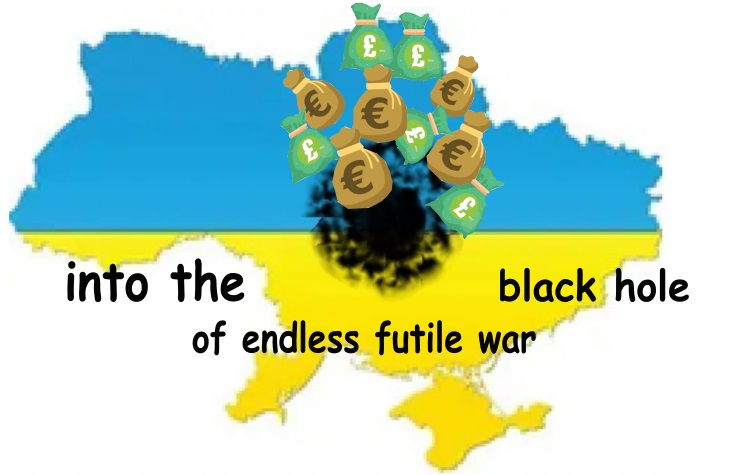
Today, I found myself posting on my website – an article which is vehemently anti -Western, and possibly just an angry version of pro Russian propaganda. I dithered about this. Is my pro-Russian slant just too much – a bridge too far?
After all, there is so much to deplore about Russia – the secret, brutal and murderous regime of Vladimir Putin, and the genocidal history of Stalin’s actions in Ukraine. And there’s plenty more to deplore, including more recent atrocities done to Ukrainians in the course of the current war.
So – why on earth should I, or anyone, stick up for Russia, which is anyway, the invader in this conflict?
I come back to just one answer. It is that rather vague concept of culture. It is that someone must address that “Western culture” in which we are immersed and perhaps drowning.
Western culture, supposedly based on “Christian values” – like equality, compassion, peace-making, is nevertheless now manifesting as fear and hatred of Russia and China.
The media laps this up, because really, diplomacy, compromise, quiet discussion between world leaders, is boring stuff, and anger, shock and conflict – that’s entertaining.
In the coverage of the war in Ukraine, so many important aspects are ignored. We don’t hear about , for example, the effect of Zelensky banning the Russian language in public life, when for so many Ukrainians Russian is their first language. We don’t hear about atrocities done by Ukrainian troops.
We don’t hear any details about negotiations in which the war could end, with concessions made by both sides. Consideration is never given to how NATO membership for Ukraine might affect Russia. I mean, how would Americans feel, if a hostile Canada could allow Russian military bases set up on the border of USA?
Instead, there is this narrative about Russia’s intention to attack European states, and then take over the world, crushing democracy. But where’s the evidence for this? And at the same time, we’re being assured that Russia is economically and militarily weakened, so of course, Ukraine can beat them
And, talking of economics – well – “follow the money” has always been a very important aspect in world affairs. I think that we could all agree that from the point of view of Trump’s USA – the simple goal is to enrich American businesses. So, for the USA now, the main thing is to sell weapons to Europe.
For Europe, this is expensive. It’s not as if all the member States are wealthy and united in their resolve to buy the weapons and make Ukraine win. They need the money. The plan suggests raising a total of nearly €300 billion.
One way is to expropriate frozen Russian sovereign assets. Sovereign assets have immunity from seizure under international law and bilateral treaties – the United Nations Convention on Jurisdictional Immunities of States and Their Property (2004) This method could have legal repercussions, and destabilise confidence in economic systems and investment, with political ill-effects for Europe.
Another way is to raise a Eurobond. This is problematic because the EU would be acting as if it were a sovereign state rather than an administrative body of a treaty-based union. Some States might object, and as Ukraine is not a member of the EU – that fact strengthens their objection. The Eurobond would result, for member States, in higher taxes, constrained public services, and renewed austerity.
The EU’s options for paying for continuing Ukraine’s fight are highly problematic. They are based on the belief that after Ukraine’s victory, European nations will get back the money from Russian reparations, and from returns from reconstruction of Russian-liberated territories. A dubious outcome.
These financial considerations might possibly bring the Western media, politicians, and public to take a more pragmatic view of the war in Ukraine, and calm down from the hysteria about Russia destroying democracy. (Indeed, to digress for a moment – the USA is now giving a good example of democracy destroying itself)
The culture is so imbued with those emotions of fear and hatred, and historic hostilities, that I doubt that we will come down to earth and look at the Ukraine situation more realistically. And our leaders seem obsessed with showing how tough they are, rather than how wise.
Democracy ‘s all about individual liberties, freedom, -we are told. But there are also other considerations – the need for food, water and shelter. A more collective view of society includes those considerations. In some ways, Russia and China are doing a better job in this.
So, after this long meandering, I conclude that I am OK with continuing with my biased stance. Yes, some of the stuff I put up IS Russian propaganda. I try to be sure that the facts are correct, even if the interpretation is biased. We are so constantly tsunamied with anti-Russia, anti-China stuff, it is necessary to try to bring in some balance.
US Plans for China Blockade Continue Taking Shape

Brian Berletic. https://sovereignista.com/ November 11, 2025
What was once a theoretical discussion in U.S. military journals about blockading China’s oil supply is now steadily turning into a tangible, multi-layered strategy aimed at containing Beijing and preserving American global dominance.
In 2018, the US Naval War College Review published a paper titled, “A Maritime Oil Blockade Against China—Tactically Tempting But Strategically Flawed.” It was only one of many over the preceding years discussing the details of implementing a maritime blockade as part of a larger encirclement and containment strategy of China.
At first glance the paper looks like US policy thinking considered, then moved past the idea of blockading China. Instead, the paper merely listed a number of obstacles impeding such a strategy in 2018—obstacles that would need to be removed if such a strategy were to be viable in the near or intermediate future—and obstacles US policymakers have been removing ever since.
More contemporary papers published, including those among the pages of the US Naval Institute (here and here), have updated and refined not just an emerging strategy to theoretically confront and contain China, but a plan of action taking tangible shape.
Cold War Continuity of Agenda
Throughout the Cold War and ever since its conclusion, the US’ singular foreign policy objective has been to maintain American hegemony over the globe established at the end of the World Wars. A 1992 New York Times article titled “U.S. Strategy Plan Calls for Insuring no Rivals Develop” made it clear the US would actively prevent the emergence of any nation or groups of nations from contesting American primacy worldwide.
In recent years this has included preventing the reemergence of Russia as well as the rise of China. It also involves surrounding both nations with arcs of chaos and/or confrontation—either through the destruction of neighboring countries through political subversion, or the capture of these nations by the US and their transformation into battering rams to be used against both nations.
Ukraine is an extreme example of this policy in action. The US is also transforming both the Philippines and the Chinese island province of Taiwan into similar proxies vis-à-vis China.
Beyond this, the US seeks to prevent the majority of nations currently outside US dominion from joining with and contributing to the multipolar world order proposed by nations like Russia and China.
This strategy of coercion, destabilization, political capture, proxy war, and outright war has been used to target both Russia and China directly, their neighbors, and a growing list of nations far beyond their near abroad.
The US is demonstrating a clear, unwavering commitment to a multi-layered strategy of containment, coercion, and confrontation designed not just to prepare for conflict, but to make that conflict both inevitable and successful for the singular goal of maintaining global American hegemony
Strengths and Weaknesses of American Primacy
Enabling this strategy is America’s global-spanning military presence facilitated by its “alliance network.” This network of obedient client regimes both hosts US military forces and serves as an extension of US military, economic, and increasingly military-industrial power. US “allies” often pursue US geopolitical objectives at their own expense.
Again, an explicit example of this is Ukraine, which is locked in a proxy war with Russia, threatening its own self-preservation as a means of—as US policymakers described in a 2019 RAND Corporation paper—“extending Russia.”
While conflicts like that unfolding in Ukraine or the US-backed military build-up in the Philippines or on Taiwan has exposed a critical weakness of the United States—its lagging military industrial capacity vis-à-vis either Russia or China, let alone both nations—the US has demonstrated the ability to compensate through geopolitical agility the multipolar world is struggling to address.
This includes the ability of the US to mire a targeted nation in conflict in one location while moving resources across its global-spanning military-logistical networks toward pressure points in other locations, overextending the targeted nation and achieving success in at least one of the multiple pressure points targeted. The US successfully did this through its proxy war against Russia in Ukraine, which tied Russia up sufficiently for the US to finally succeed in the overthrow of the Syrian government, where Russian forces had previously thwarted US-sponsored proxy war and regime change.
It also includes the ability of the US to target partner or potential partner nations of Russia and China through economic, political, or even military means in ways Russia and China are unable to defend against—including through political subversion facilitated through America’s near monopoly over global information space.
These advantages the US still possesses also make potential maritime blockades very difficult for Russia and China to defend against.
Russian Energy Shipments as a Beta Test for Blockading China
France recently announced seizing a ship accused of being part of Russia’s “ghost” or “shadow” fleet—ships refusing to heed unilateral sanctions placed by the US and its client states on Russian energy shipments.
This was just one of several first steps toward what may materialize into a wider and more aggressive interdiction or blockade of Russian energy shipments. This may also be a beta test for implementing a long-desired maritime blockade on China…………………
Setting the Stage for a Blockade of China Has Already Begun
The 2018 US Naval War College Review paper lays out the realities of a potential blockade against China in 2018, noting the various opportunities and risks associated with such a strategy…………………………………………………………………………………………..
Since the paper was published, the US has pursued both continued preparations for a maritime blockade of China itself, as well as build up a number of regional proxies to wage war against China, as the US wages proxy war against Russia in Ukraine and, increasingly, through the rest of Europe……………………………………………………………………..
To understand Washington’s strategy toward China, one should not look to the political rhetoric of “retreat” or “homeland defense” in the Western Hemisphere, but rather to the tangible actions taking place across the Asia-Pacific and beyond—the meticulous encirclement of China’s periphery, the sustained attacks on its critical overland energy and trade links (BRI/CPEC), the calculated incapacitation of Russia as a potential energy supplier, and the establishment of local proxy forces (the Philippines, Japan, separatists on Taiwan) prepared to wage war.
Far from an abstract or “flawed” concept relegated to think-tank papers, the maritime oil blockade—or wider general blockade against China—is being incrementally prepared in real-time. By systematically removing the very obstacles noted in the 2018 Naval War College Review paper, the US is demonstrating a clear, unwavering commitment to a multi-layered strategy of containment, coercion, and confrontation designed not just to prepare for conflict, but to make that conflict both inevitable and successful for the singular goal of maintaining global American hegemony. https://sovereignista.com/2025/11/11/us-plans-for-china-blockade-continue-taking-shape/
Residents outraged as US nuclear plant gets greenlight to dump radioactive waste into major river: ‘Potential long-term consequences’
“We really don’t know enough.”
The Cool Down, by Kristen Lawrence, November 5, 2025
A federal court has ruled that a nuclear plant in New York can dump radioactive waste into the Hudson River, a decision that overrides a 2023 ban on releasing treated wastewater into the river.
What’s happening?
As Surfer Magazine reported, the ruling will allow Holtec, a nuclear-power-focused energy company, to release around 45,000 gallons per year of treated wastewater from the decommissioned Indian Point plant into the Hudson.
The site is only 40 miles from Rockaway Beach, one of the most popular surfing locations in the state and the only one within NYC’s limits.
U.S. District Judge Kenneth Karas ruled that federal authority over nuclear regulation supersedes the prior ban that was the result of the “Save the Hudson” campaign, which was in response to a proposal by Holtec to release radioactive wastewater into the river.
Holtec will now be allowed to dump the materials — mostly tritiated water, which Surfer explained “contains the nuclear-energy byproduct tritium — into the Hudson, with around 1.5 million gallons expected to enter the river in the next several years.
Even though the 45,000 gallons set to be dumped annually is within safe limits, according to the federal government, the public and environmental organizations like Riverkeeper worry about how the waste will affect people’s health and the surrounding ecosystem……………………………
“We really don’t know enough about how tritium behaves in the environment [at diluted levels] to assess potential long-term consequences to the environment, to the food chain, and ultimately to humans,” Timothy Mousseau, biologist at the University of South Carolina, told Chemical & Engineering News.
There are also concerns that fewer people will want to surf and swim in the Hudson because of the new regulations.
Surfer reported that the river had only recently become a “viable recreational waterway” and that dumping radioactive waste may deter people from visiting…………………………….. https://www.thecooldown.com/green-business/radioactive-waste-hudson-river-nuclear-plant/
3 drones reportedly spotted flying over Belgian nuclear power plant
Kyiv Independent, November 10, 2025
Three drones were spotted flying over the Doel Nuclear Power Plant in northern Belgium on the evening of Nov. 9, according to Deutsche Welle.
Operations at the power plant near Antwerp were not impacted by the drone sighting, a spokesperson for local energy company Engie said.
Several unidentified drone sightings have occurred in recent days near Belgian infrastructure. On Nov. 3, the Belgian army issued orders to shoot down unknown drones spotted over the country’s military bases in response to the sightings.
On Nov. 4, Belgium suspended air traffic at Brussels Airport due to a reported drone sighting in the area, according to the Belga News Agency. Some flights were diverted to the country’s Liege Airport, which was later temporarily closed because of another drone sighting.
Meanwhile, suspicious drones were spotted over Belgium’s Kleine Brogel Air Base for three nights in a row between Oct. 31 and Nov. 2, local media reported.
Belgian Defense Minister Theo Francken said that the sightings near military bases appear to be part of an espionage operation, not naming the culprit but linking the incidents to recent Russian airspace violations in Europe.
The drone sightings have caused disruptions in several European countries, including Germany, Denmark, and the Netherlands. As investigations continue, authorities have not ruled out that the drones may be Russian…………………………. https://kyivindependent.com/3-drones-reportedly-spotted-flying-over-belgian-nuclear-power-plant/
Invest in existing clean energy solutions, not nuclear fantasy.
By Lynda Williams, 31 Oct 25, https://www.staradvertiser.com/2025/10/30/editorial/island-voices/column-invest-in-existing-clean-energy-solutions-not-nuclear-fantasy/
In the last legislative session, Hawai‘i lawmakers approved Senate Concurrent Resolution 136, directing the Hawai‘i State Energy Office (HSEO) to convene a Nuclear Energy Working Group to study whether “advanced” nuclear power could help meet the state’s 100% renewable energy goal.
I serve on that Working Group as a physicist representing the environmental organization 350 Hawai‘i. Other members include representatives from HSEO, the Departments of Health and Land and Natural Resources, the Public Utilities Commission and the University of Hawai‘i, along with invited members from the U.S. Navy, nuclear power lobby groups and environmental groups. No Kanaka Maoli-led organizations such as the Office of Hawaiian Affairs or KAHEA were included — a serious oversight in any discussion of Hawai‘i’s energy future.
Nuclear power is not feasible in Hawai‘i because it faces insurmountable legal and technical barriers. Article XI, Section 8 of the Hawai‘i State Constitution prohibits the construction or operation of any nuclear-fission reactor without a two-thirds vote of each house of the Legislature — an exceptionally high bar without sweeping political change. Hawai‘i law also defines renewable energy as sources that are naturally replenished, such as solar, wind, ocean and geothermal — not technologies dependent on mining that produce radioactive waste. By legal definition, nuclear power cannot contribute to meeting the state’s renewable energy goals unless the law is changed.
Technical barriers are even higher. Despite growing hype around so-called “advanced” nuclear reactors, in reality, there are no operating “advanced” reactors anywhere in the world, no reliable timeline for when any might come online, and a decades-long record of cost overruns, cancellations and failed promises. Every design being promoted — from small modular reactors (SMRs) to molten-salt and thorium systems — is still a nuclear reactor that splits uranium atoms, generates radioactive waste and requires extensive cooling, shielding and waste-management infrastructure.
At our first meeting in September, there was discussion of whether Hawai‘i’s constitutional requirement for a two-thirds legislative vote to approve the construction of any nuclear-fission plant could somehow be avoided. That notion reflects a deep confusion driving this conversation: that “advanced” nuclear systems are fundamentally different from the fission reactors banned under Article XI. They are not. Some advocates even suggested that small “plug-and-play” SMRs could one day be shipped to Hawai‘i, used briefly and sent back to the continent — a concept that exists only in fantasy. Any nuclear reactor unit requires installation, grid connection and refueling — all of which constitute the operation of a nuclear-fission facility under Hawai‘i’s Constitution.
The first draft of HSEO’s report is due Nov. 5, with a final version to be submitted to the Legislature by the end of the year — a challenging timeline for such a complex report. How can anyone produce a thorough feasibility analysis — including cost, safety and environmental assessments — for a technology that doesn’t even exist? Even HSEO warned lawmakers in its testimony against this resolution that “given the current lack of cost, production, safety and nuclear waste-management information on SMRs, the formation of a nuclear energy task force is premature.”
Hawai‘i’s path forward in clean energy lies not in nuclear fantasies but in strengthening the laws protecting the islands and investing in what already works — solar and wind — and in exploring tidal and ocean energy resources to achieve clean, safe and independent power generation.
To read my full responses with citations to the Nuclear Energy Working Group survey, visit nuclearfreehawaii.substack.com.
1 This Month
26 September – International Day for the Total Elimination of Nuclear Weapons





PLEASE OPPOSE HR 8255 AND S.3639 – bills would accelerate satellite deployment, with no environmental review or safeguards – https://ncstd5li.quorum.us/campaign/169331/
To see nuclear-related stories in greater depth and intensity – go to https://nuclearinformation.wordpress.com
-
Archives
- September 2026 (305)
- August 2026 (330)
- July 2026 (355)
- June 2026 (287)
- May 2026 (306)
- April 2026 (356)
- March 2026 (251)
- February 2026 (267)
- January 2026 (308)
- December 2025 (358)
- November 2025 (359)
- October 2025 (375)
-
Categories
- 1
- 1 NUCLEAR ISSUES
- business and costs
- climate change
- culture and arts
- ENERGY
- environment
- health
- history
- indigenous issues
- Legal
- marketing of nuclear
- media
- opposition to nuclear
- PERSONAL STORIES
- politics
- politics international
- Religion and ethics
- safety
- secrets,lies and civil liberties
- spinbuster
- technology
- Uranium
- wastes
- weapons and war
- Women
- 2 WORLD
- ACTION
- AFRICA
- Atrocities
- AUSTRALIA
- Christina's notes
- Christina's themes
- culture and arts
- Events
- Fuk 2022
- Fuk 2023
- Fukushima 2017
- Fukushima 2018
- fukushima 2019
- Fukushima 2020
- Fukushima 2021
- general
- global warming
- Humour (God we need it)
- Nuclear
- RARE EARTHS
- Reference
- resources – print
- Resources -audiovicual
- Weekly Newsletter
- World
- World Nuclear
- YouTube
-
RSS
Entries RSS
Comments RSS

