South Korea’s nuclear submarine gamble raises prospect of underwater arms race in Asia.

Reuters, 5 Dec 25
- Summary
- South Korea’s nuclear subs could pressure Japan to develop similar capabilities
- Seoul’s ambitions align with US objectives to counter China’s influence
- North Korea warns Seoul’s plan could trigger “nuclear domino” effect
SEOUL/WASHINGTON/TOKYO, Dec 5 (Reuters) – South Korea’s pursuit of nuclear-powered submarines is gaining traction following President Donald Trump’s endorsement, ending decades of U.S. resistance in a move that could reshape Asia’s security landscape and escalate an underwater arms race.
Seoul has long sought to join the elite group of nations operating nuclear submarines to counter North Korea. Trump’s approval removed a key barrier by granting access to fuel under a nuclear agreement between the countries.
Still, South Korea’s rapidly developing programme could irk China and pressure Japan to develop similar capabilities, analysts and former military officials say.
“Submarines are highly effective attack systems. An arms race in the region is inevitable,” said Choi Il, a retired South Korean Navy submarine captain.
Seoul argues nuclear propulsion is crucial to counter North Korea’s undersea threats, including submarine-launched ballistic missiles. It has repeatedly said it will not acquire nuclear weapons and respects the non-proliferation regime.
South Korean President Lee Jae Myung on Wednesday described the deal as a major achievement from his meeting with Trump and said it would enhance security flexibility and defence autonomy.
North Korea claims to be developing similar capabilities, with state media showing leader Kim Jong Un inspecting what it said was a nuclear-powered submarine in March.
How advanced its programme is remains uncertain, but some analysts suspect Pyongyang is receiving Russian assistance, a possibility that South Korea’s military has said it is closely monitoring. Russia and North Korea have said they are beefing up defence cooperation, but have not provided details on technical cooperation on defence……………………………………………………… https://www.reuters.com/world/china/south-koreas-nuclear-submarine-gamble-raises-prospect-underwater-arms-race-asia-2025-12-05/
Ukraine’s Zaporizhzhia nuclear plant temporarily lost power overnight, IAEA says.
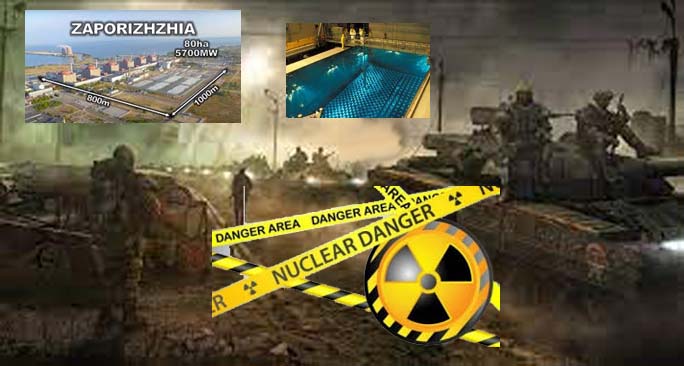
By Reuters, December 6, 2025, https://www.reuters.com/business/energy/ukraines-zaporizhzhia-nuclear-plant-temporarily-lost-power-overnight-iaea-says-2025-12-06/
Dec 6 (Reuters) – Ukraine’s Zaporizhzhia nuclear power plant temporarily lost all off-site power overnight, the International Atomic Energy Agency said on Saturday, citing its Director General Rafael Mariano Grossi.
The nuclear plant, Europe’s largest, has been under Russian control since March 2022, when Russian forces overran much of southeastern Ukraine. It is not currently producing electricity but relies on external power to keep the nuclear material cool and avoid a meltdown.
The plant was reconnected to a 330-kilovolt (kV) power line after a half-hour outage, the IAEA said.
A 750 kV line that was also disconnected earlier was back in operation, the Russian-installed management of the plant said later on Saturday, and stable power supply had been restored.
Radiation levels remained normal, the management said.
Widespread military activities overnight affected Ukraine’s electricity grid and prompted operating nuclear power plants (NPPs) to reduce output, the IAEA added.
Reporting by Gnaneshwar Rajan and Yazhini M V in Bengaluru; Editing by Aidan Lewis and Bernadette Baum
Illegal drone shot down at nuclear submarine base
Officials are investigating an illegal drone which flew over the Atlantic coast base
Ap Correspondent, Independent UK, 05 December 2025
French authorities have launched an investigation into an unauthorised drone overflight of the nation’s nuclear-armed submarine base on the Atlantic coast.
The incident, confirmed by officials on Friday, involved multiple drones detected on Thursday night above the highly sensitive Île Longue base in Brittany, western France.
This strategic facility serves as the home port for France’s four nuclear ballistic missile submarines: Le Triomphant, Le Téméraire, Le Vigilant, and Le Terrible.
While French media reported several aerial intruders, military authorities have refrained from disclosing their exact number or type.
Defence Minister Catherine Vautrin confirmed that personnel at the base successfully intercepted the overflight. However, she did not specify whether this involved firing shots, electronic jamming, or other countermeasures. The identity of those responsible for the incursion remains unclear.
Ms Vautrin stated: “Any overflight of a military site is prohibited in our country. I want to commend the interception carried out by our military personnel at the Île Longue base.”
A number of European Union member countries have reported mysterious drone flights in their airspace in recent months. Some led to airport shutdowns, disrupting commercial flights. Others have been detected near or over military facilities………………………….. https://www.independent.co.uk/news/world/europe/drone-france-brittany-nuclear-base-b2879026.html
British Energy Ruled Out Nuclear At Heysham Due to Geological Fault.
Letter sent by Email today…https://lakesagainstnucleardump.com/2025/12/05/british-energy-ruled-out-nuclear-at-heysham-due-to-geological-fault/
Dear Lizzi Collinge MP
I am sure that you felt the earth move on December 4th along with everyone else in the region as there was a sudden movement along faults in the Morecambe bay area between Silverdale and Heysham. This was very scary for all concerned, we thought there had been a massive explosion in Milnthorpe and immediate thoughts went to Heysham’s dodgy old reactors.
SHUT DOWN OLD EMBRITTLED REACTORS AT HEYSHAM
Following on from our previous correspondence with you, the latest earthquake is a major reason why the old and embrittled reactors at Heysham should be mothballed – there would still be jobs on the site (maybe even more than now) for many years to come to ensure safe shut down and decommissioning.
GEOLOGICAL FAULT IS REASON BRITISH ENERGY SAID NO TO NEW BUILD AT HEYSHAM
The movement of the tectonic plates along the fault near Heysham on December 4th is also a major reason why there should be no new nuclear as advised by British Energy in 2002 and reported in the Lancashire Telegraph. We would suggest that MPs should ask for a copy of British Energy’s survey which found that a geological fault in the Heysham area rules out a Heysham 3 and 4. For the nuclear industry and local politicians to be ignoring this advice now in the context of a 3.3 earthquake in the Heysham area could be regarded as being reckless with the public’s safety.
Kind regards
Marianne, Radiation Free Lakeland
Fault rules out new build at Heysham, 18TH APRIL 2002
A GEOLOGICAL fault in the land next to Heysham 1 and 2 has ruled out the possibility of ever building a new nuclear power station at that site.
This week British Energy admitted it would be “impossible” to construct a Heysham 3 or 4.
Local environmentalists have recently been campaigning to stop an expansion of the area’s nuclear power capability fearing that Heysham could be chosen under the Government’s energy review.
But a British Energy survey has revealed that the vacant land has a geological fault which makes it unsuitable for development.
A spokesman said: “We have a certain amount of land but it is not suitable and a Heysham 3 or 4 has never been on the cards.
There are better places around the country to build new power stations.”
Embrittled Old Reactors
Gaza Denied the Right to Heal: Ceasefire Fails, New ‘Green-Zone’ Plan Threatens Modern Ghettos and Collective Imprisonment
December 4, 2025, By: Joshua Scheer, https://scheerpost.com/2025/12/04/gaza-denied-the-right-to-heal-ceasefire-fails-new-green-zone-plan-threatens-modern-ghettos-and-collective-imprisonment/
Anew report from Euro‑Mediterranean Human Rights Monitor warns that a proposed postwar plan for Gaza Strip — backed by United States government and Israeli government officials — could amount to “unlawful collective imprisonment” of Palestinian civilians.
The report finds that “this plan entrenches long-term illegal control and the forcible de facto annexation of territory. It imposes unlawful collective imprisonment on the civilian population, in clear violation of international law and the Palestinian people’s right to self-determination.”
The report adds, “Entry and exit would be permitted only through security screening, effectively converting these sites into overcrowded detention camps that impose severe restrictions on residents’ freedom of movement and daily life.”
Euro-Med, along with anyone with eyes, ears and a heart would think that the proposed design “mirrors the historical model of ghettos,”
What is being reported demonstrates a clearly coercive environment: Palestinians displaced by war would effectively be forced into the “green-zone” communes by the denial of basic services — housing, safety, food, water — unless they relocate.
Even more troubling: once inside, residents reportedly would face severe restrictions on their freedom of movement, daily life, and access to services, raising grave concerns over human rights, forced displacement and long-term structural confinement.
This story demands our attention. After Gaza has been brutally assaulted with genocidal intent, it is now being reshaped in a way that entrenches segregation, displacement and total control. Not much less could be expected from a modern apartheid state that has been allowed to do whatever it has wanted for 77 years.
For more, here is a tweet from Ramy Abdul, Chairman EuroMedHR, detailing their report and a map in which they make it clear: “Gaza’s Yellow Line: Where Genocide is Internationally Acceptable”
The Euro-Med Human Rights Monitor @EuroMedHR has obtained alarming details about a U.S.–Israeli plan—supported by several Western and Arab states and institutions—that aims to turn Gaza into a forced ghetto, a massive detention zone, and a site of land annexation and resource Show more
More on this from The Nation: in an article published two days ago, Gaza writer Hassan Abo Qamar describes the so-called “ceasefire” as changing nothing — Gaza remains a prison, and its people continue to endure unrelenting hardship.
“The world calls this ‘peace,’ yet in reality ‘peace’ here does not mean the end of anything; hunger, fear, and death remain, while the occupation continues to strangle Gaza through crossings, restrictions, and deliberate obstruction of recovery.”
“The truth is simple: Gaza has been denied the right to heal.”
There is no way to end this article or post it without acknowledging what we see every day: Nothing has changed, and the Israelis are still killing. I end with this video for those following today’s events, including Al Jazeera’s reporting on today’s violations of the ceasefire, in which five people — including children — were killed. Once again, the ceasefire has not stopped the ongoing genocide. And now, with this new plan to create modern ghettos, the Israelis are leaning further into the playbook of the Third Reich.
UK Government’s nuclear taskforce does not radiate authority
Paul Dorfman – AN “independent” Nuclear Regulatory Taskforce commissioned by UK Prime Minister Keir Starmer has published its final report, calling for a “radical reset of an overly complex nuclear regulatory system”.
Perhaps unfortunately, the taskforce’s announcement seems to have pre-empted its own findings, stating that it will “speed up the approval of new reactor designs and streamline how developers engage with regulators” without providing any evidence that regulation is responsible for huge delays and ballooning costs rather than the incompetence of the
builders and the issues with designs.
So, the possibility that regulation takes as long as it does because that was how long it took to do the job to the required standard was discounted from the get-go.
Made up of three nuclear industry proponents, an economist and a lawyer, the taskforce makes 47 new recommendations “to unleash a golden era of nuclear technology and
innovation” – including the proposal that new nuclear reactors should be built closer to urban areas and should be allowed to harm the local environment.
There are five members of the taskforce: John Fingleton is an
economist, Mustafa Latif-Aramesh is a lawyer, Andrew Sherry is former chief scientist at the National Nuclear Laboratory, Dame Sue Ion has held posts in sets of UK nuclear industry bodies, and Mark Bassett is a member of the International Nuclear Safety Advisory Group and appears the only one with
any experience of regulation.
Following the taskforce’s interim report in
August, a coalition of 25 civil society groups involved in formal
discussions with government warned of the dangers of cutting nuclear safety regulations, stating that the taskforce’s proposals “lacked credibility and rigour”.
Their moderating voices have gone unheard. New nuclear
construction has been subject to vast cost over-runs and huge delays. This is not the fault of safety and planning regulation – rather it’s the nature of the technology.
This attempt at nuclear deregulation would loosen
the safety ropes that anchor the nuclear industry in an increasingly unstable world. It doesn’t make good sense.
Given that the UK will influence other countries, there’s a risk that this narrative, that the only problem with nuclear is regulation, will be taken up elsewhere and there will be increasing pressure on regulators to do their job as quickly as possible regardless of whether necessary rigour would be damaged.
Blaming nuclear regulators for vast cost over-runs and huge delays has always been a fallback position for the nuclear industry. This is not the fault of safety and planning regulation, rather it’s the nature of the technology. De facto nuclear deregulation is a poor short-term choice of the worst kind – and reveals something important about the high-risk
technology that the UK Ministry of Defence classes as a “Tier 1
Hazard”.
It makes good sense to choose the swiftest, most practical,
flexible and least-cost power generation options available. Unlike new nuclear, renewables are here and now – on-time and cost effective. It’s entirely possible to sustain a reliable power system by expanding renewable energy in all sectors, rapid growth and modernisation of the electricity
grid, storage roll-out, faster interconnection, using power far more effectively via energy efficiency and management, and transitional combined cycle gas technology for short-term power demand peaks.
Combining solar, wind and energy storage increases their individual values and lowers the net cost of the energy they produce, making each component more valuable.
This synergy turns intermittent energy sources into a reliable,
dispatchable power supply.
The National 3rd Dec 2025, https://www.thenational.scot/politics/25668133.uk-governments-nuclear-taskforce-not-radiate-authority/
After Canadian Police Raid Homes, Six Peace Activists Face Charges.

The event was sponsored by Israel-based defence contractor Elbit Systems, Lockheed Martin, General Dynamics, Hensoldt, Saab and Gastops. All of these firms are directly involved in supplying drones, munitions, targeting systems and surveillance technology used in the genocidal assault on the population of Gaza. Notably, Ottawa-based contractor Gastops is the sole supplier of critical engine sensors for the F-35 jets that Israel uses to drop 2,000-pound bombs.
By Pierre Lajeunesse, World Socialist Web Site, December 2, 2025, https://popularresistance.org/after-canadian-police-raid-homes-six-peace-activists-face-charges/
Activists With World Beyond War Raided Over Protest Against Arms Fair.
The World Socialist Web Site and the Socialist Equality Party (Canada) unequivocally condemn these raids and charges. They represent a serious escalation of state repression aimed at criminalizing anti-war and anti-genocide dissent.
London, Ontario police carried out coordinated pre-dawn raids on November 25 against four homes across southern Ontario, targeting members of the anti-war and Palestinian-solidarity group World Beyond War (WBW). The raids bring to six the number of peace activists charged in relation to a protest of more than 100 people against the Best Defence Conference in London at the end of October, an arms-industry gathering attended by Israeli-linked weapons manufacturers and Canadian military officials.
The sweeping operation saw officers burst into homes at 6 a.m., frighten children, seize personal electronic devices and haul activists hours away from their communities.
The World Socialist Web Site and the Socialist Equality Party (Canada) unequivocally condemn these raids and charges. They represent a serious escalation of state repression aimed at criminalizing anti-war and anti-genocide dissent under conditions where the Canadian government is deeply implicated in US-led wars around the world and Israel’s genocide in Gaza. All charges must be dropped immediately.
On the morning of October 21, WBW and other anti-war activists blockaded entrances to the RBC Place convention centre in London, attempting to prevent arms dealers and military officials from entering the weapons conference.
The event was sponsored by Israel-based defence contractor Elbit Systems, Lockheed Martin, General Dynamics, Hensoldt, Saab and Gastops. All of these firms are directly involved in supplying drones, munitions, targeting systems and surveillance technology used in the genocidal assault on the population of Gaza. Notably, Ottawa-based contractor Gastops is the sole supplier of critical engine sensors for the F-35 jets that Israel uses to drop 2,000-pound bombs.
Protesters denounced the corporations for supplying a government engaged in mass killings and demanded that the Canadian government impose an arms embargo on Israel. For this, the organizers of the protest are being treated as criminals.
Just over a month after the protest, on November 25, the London Police Service Street Crime Unit, normally deployed against drug trafficking and “organized crime,” executed search warrants at homes in London, Hamilton, Marmora and Owen Sound. The items seized reveal the political nature of the operation: computers, laptops, hard drives, phones, USB sticks, two-way radios, protest placards and even a “Free Palestine” wreath taken from one activist’s door. Police also paraded before the media the discovery of purported “plans indicating how to cause property damage” and “documents describing police Public Order Unit tactics.”
In its own account, WBW describes officers waking families before dawn, crowding into small homes, harassing parents, disturbing disabled residents and seizing every electronic device in sight. These were intimidation raids carried out to send a message that opposition to war will be punished.
Those arrested and charged include WBW Canada organizer Rachel Small, longtime London activist and Western University professor David Heap, Hamilton activist Patricia Mills and Toronto-based organizer Diana Thorpe, whom police now claim is “wanted.” Earlier in October, charges were also laid against Nicholas Vincent Amor and Pamela Reano.
The charges include mischief over $5,000, conspiracy, resisting arrest, disguise with intent and “obstructing a peace officer,” the standard prosecutorial arsenal used to intimidate protest movements.
Speaking to CBC News about the excessive charges, Heap noted, “I think the police response is overreaching, and that’s because they’re trying to intimidate people from standing against war industries … more generally, and it won’t work.” Responding to police claims about property damage, Heap explained, “I think we should be thinking about [how] these war industries are used to kill civilians in many parts of the world. Property damage pales in comparison.”
The London police statements are shot through with politically-motivated exaggerations and insinuations. A handful of activists allegedly damaged electronic locks or threw paint, acts that are insignificant next to the industrial-scale violence of the corporations and military officials being protected by the police, companies profiting from the arming of the Zionist regime in Israel as it commits genocide, and Canadian military officers providing training, intelligence and logistical support.
The London raids form part of a broader pattern of repression unfolding across Canada.
The “Peace 11” frame-up in Toronto in 2023 targeted protesters who splashed washable red paint on the front of an Indigo bookstore to highlight CEO Heather Reisman’s support for the Israel Defense Forces (IDF). The police conducted violent no-knock raids, seized electronics and handcuffed family members, while the corporate media smeared the protesters as antisemites for opposing genocide.
The increasing brazenness of the authorities was underscored in a further incident last month, when 95-year-old legal scholar Richard Falk, a former special rapporteur for the UN on human rights in the Palestinian Territories, was detained for three hours at Pearson Airport in Toronto. Falk was attending a “people’s tribunal” in Ottawa aimed at exposing Canada’s complicity in Israel’s imperialist-backed genocide of the Palestinians.
In Quebec, longtime anti-war writer and NDP leadership candidate Yves Engler stood trial last week on charges of “harassing” a Montreal hate-crimes detective after he was told he would be arrested for criticism of a Zionist provocateur on social media. Engler’s alleged crime is encouraging his supporters to join in an email writing campaign to the police demanding that the spurious charges be dropped. The fact that this escalated into a criminal prosecution underscores the drive by police and prosecutors to criminalize any protest against imperialist war.
The federal Liberal government and its provincial counterparts, Liberal, Conservative, Coalition Avenir Quebec, and NDP alike, have fuelled this climate. Prime Minister Mark Carney has continued the Trudeau government’s backing of Israel’s slaughter in Gaza with weapons, diplomatic cover and intelligence support. It was only after immense pressure that Ottawa cast a largely symbolic UN vote for a “ceasefire,” while simultaneously affirming Israel’s “right” to complete its war aims.
The Liberal government can tolerate no opposition to war under conditions in which it is enforcing a massive increase in military spending unprecedented since World War II. With the backing of the New Democrats and trade unions, Carney’s government just passed a budget containing over $80 billion in additional military spending over the coming five years aimed at equipping Canadian imperialism to secure its share of the spoils in a rapidly escalating third world war.
The Ontario NDP, meanwhile, hounded legislator Sarah Jama and kicked her from its caucus for denouncing Israel’s apartheid regime. This gave fuel to a campaign by the right-wing Ontario government of Tory Premier Doug Ford to ban her from speaking in the legislature until she recanted. Jama was subsequently blocked from standing as a candidate for the ONDP in elections earlier this year.
Under these conditions, police forces have been emboldened to treat anti-war protests as a threat to national security. The raids on WBW members follow the logic of Canadian imperialism’s warmongering, in which war abroad requires repression at home.
The lessons of the past two years of anti-genocide and anti-war protests in Canada and internationally must be drawn. Despite enormous public opposition to Israel’s genocidal assault on the Gaza Palestinians, and despite countless appeals to Liberal cabinet ministers, NDP MPs, municipal officials and international bodies, the slaughter and dispossession continue unabated. Protest alone, especially when subordinated to moral appeals to the very governments and corporate CEOs arming the Zionist state, cannot halt imperialist war and genocide.
The working class requires its own independent organizations of struggle. Rank-and-file committees must be established in workplaces, campuses and neighborhoods to unite workers against war, austerity and repression. These committees must be guided by a socialist program that links opposition to militarism with the fight against the capitalist system that breeds war.
The criminalization of anti-war activism flows from the preparations of the ruling class for a global conflict against Russia and China. The fight to defend the WBW activists and oppose war and genocide is inseparable from the struggle to build an international revolutionary political movement of the working class against capitalism’s descent into barbarism.
How Israeli-Linked Operatives and Firms Are Embedded in U.S. Cyber Systems.

December 5, 2025 , By: Joshua Scheer, https://scheerpost.com/2025/12/05/how-israeli-linked-operatives-and-firms-are-embedded-in-u-s-cyber-systems/
The Substack report, “Former Israeli Spies Now Overseeing US Government Cybersecurity” by Nate Bear (¡Do Not Panic!), is well worth reading. It uncovers that a firm with deep roots in Israeli military intelligence is now managing critical cybersecurity infrastructure for more than 70 U.S. federal agencies — including the Departments of Defense, Homeland Security, Treasury, Transportation, Energy, Agriculture and Health.
The company, Axonius, was founded by former operatives from Israel’s intelligence unit Unit 8200. Its platform centralizes data from all IT tools used by agencies — giving “visibility and control over all types and number of devices.” This means administrators in Tel Aviv can theoretically track device usage, logins, website access, and can even disable devices or accounts for millions of U.S. federal employees.
While Axonius pitches itself as a tool to unify and strengthen federal cybersecurity, the investigation argues that the massive scale of its deployment — combined with its leadership’s intelligence background — raises serious national security and privacy concerns.
Because much of the company’s engineering and software development is run out of Tel Aviv — and many of its employees are former Israeli spies — critics say the United States has, in effect, outsourced federal level cybersecurity to a foreign intelligence‑linked firm.
Whether Axonius has acted, or plans to act, maliciously remains unclear. But the story highlights how deeply embedded Israeli‑linked cyber intelligence infrastructure may now be across U.S. government systems — something many see as a troubling precedent.
While dystopian in nature, it is a must-read and a must-deal-with report, as we have been exposing what is happening in Gaza. The relentless nature of Israeli surveillance is an unbearable nightmare. You should also read Gaza journalist Mohammed R. Mhawish’s 16-month investigation — “Watched, Tracked, and Targeted in Gaza” — into what is happening in Gaza now, focusing on the surveillance state. Both are must-reads.
This is not a new development. Obviously, thanks to the work of these journalists, I was inspired and did a basic search to find out about the relationship between Israel and United States spy connections, and I found this from 12 years ago, with The Guardian reporting: “The National Security Agency (NSA) has a secret agreement with the Israeli intelligence agency Israeli Sigint National Unit (ISNU) — established in principle in March 2009 — that allows the NSA to share raw, unfiltered intercepted communications with Israel,” and “The sharing of raw, pre‑minimization intelligence contradicts previous government assurances of ‘robust safeguards’ to protect Americans’ privacy.”
So needless to say, this isn’t the first — or the last — time these countries have worked together. What’s striking is how public it seems now, and it’s clear their privacy concerns for Americans aren’t what they once were.
However, as we will see, the relationship is also riddled with a double‑dealing, spy‑vs‑spy aspect that bears remembering. This is also covered in Nate’s Substack report and in a clip below with former CIA agent John Kiriakou, both discussing the distrust Mossad has for our intelligence agencies — and the ongoing issue of stealing technology and spying on the United States.
That distrust has played out a number of times, with Israel being accused or caught spying on the United States. One time was during the Obama Iran talks, with the Wall Street Journal’s shocking report about Israel spying, quoting a senior U.S. official: “It is one thing for the U.S. and Israel to spy on each other. It is another thing for Israel to steal U.S. secrets and play them back to U.S. legislators to undermine U.S. diplomacy.”
Or being accused of planting devices by the White House in 2019 to spy on Donald Trump, or now just hanging out and having secret meetings — like U.S. Ambassador to Israel Mike Huckabee did when he met convicted spy Jonathan Pollard at the U.S. Embassy in Jerusalem in July of this year.
For those who forget Pollard, a former U.S. Navy intelligence officer, he was sentenced to life in prison for stealing classified U.S. material and sharing it with Israel. He served 30 years before being granted parole under President Obama in 2015 and moved to Israel in 2020.
But as Kiriakou says in the clip, they don’t trust that we give them the best of our technology. So they work both sides and always in their own interest. After Nate’s report, they might not need to steal it anymore. But based on their pattern already in our history, they won’t stop their spy‑vs‑spy activities.
See below the Kirakou video [on original] for another video about the Mike Huckabee story with The Grayzone’s Max Blumenthal and Aaron Mate discuss the scandalous—and still unpunished—secret meeting between U.S. Ambassador to Israel Mike Huckabee and one of the most notorious Israeli spies, Jonathan Pollard, who handed vast troves of U.S. secrets to his handlers in Tel Aviv and now proudly identifies as an “Israel Firster.”
MAGA media scramble to defend Pete Hegseth.
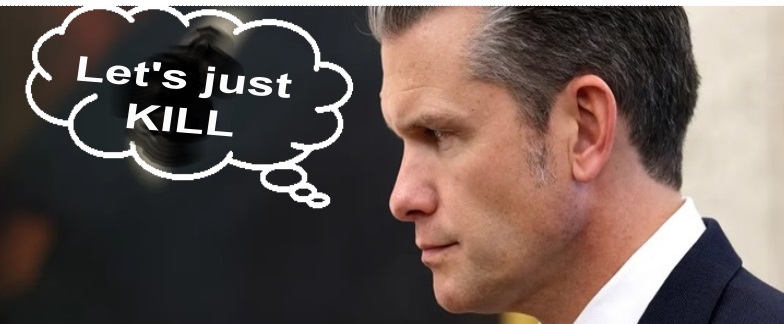
Scrounging for a Hegseth defense, right-wing commentators seize on NY Times report
Hegseth’s supporters split hairs over his culpability
by Matt Gertz, Research contributions from Rob Savillo, 12/02/25, https://www.mediamatters.org/pete-hegseth/scrounging-hegseth-defense-right-wing-commentators-seize-ny-times-report
Right-wing commentators have seized upon a New York Times report on the U.S. military’s September 2 extrajudicial killing of 11 people on board a boat the Trump administration alleged was carrying drugs in the Caribbean, claiming that the article “DEBUNKED” a previous Washington Post report that triggered congressional scrutiny over potential war crimes. But the Times actually confirmed, rather than undermined, the Post’s account.
The Post reported Friday that according to its sources, Defense Secretary Pete Hegseth gave a spoken order “to kill everybody” on board the boat before the attack, and that after confirming that the first strike left two survivors, the Navy special operations commander overseeing the action, Adm. Frank Bradley, “ordered a second strike to comply with Hegseth’s instructions,” killing them. Lawmakers of both parties quickly vowed to aggressively scrutinize the attack, which legal experts argued would constitute, “at best, a war crime under federal law.”
Hegseth, in his prior career as co-host of Fox News’ Fox & Friends Weekend, championed U.S. service members accused or convicted of war crimes. In one 2019 segment discussing a soldier charged over the extrajudicial killing of an Afghan man accused of making bombs for the Taliban, Hegseth said, “If he committed premeditated murder … then I did as well. What do you think you do in war?”
Top Trump administration officials over the weekend denounced the “fake news” Post’s “entire narrative” as “fabricated” with “NO FACTS.” But at Monday’s briefing, White House press secretary Karoline Leavitt effectively confirmed — and defended — the actions the Post had reported, including the second strike.
This confusion left President Donald Trump’s most zealous propagandists with few clear pathways to defend the administration’s actions. But after the Times published its own account of the attack on Monday, “plenty of conservatives are now declaring this case closed,” as Politico reported. Indeed, right-wing commentators have claimed that the Times “quietly DEBUNKED” the Post’s “hoax hit piece,” which they said has been exposed as “a genuinely vile slander of both Hegseth and Bradley.”
“Disgrace to journalism that [Post reporters] @AlexHortonTX and @nakashimae got so many details of this story wrong just to smear @PeteHegseth,” posted RedState’s R.C. Maxwell, a member of the new Pentagon press corps composed of MAGA shills.
Fox News, Hegseth’s former employer, had devoted 53 minutes of airtime to the story across the four days from Friday through Monday. The bulk of that coverage came from purported “news side” shows; Jesse Watters was the only prime-time host to address the story, while the defense secretary’s old program ignored it altogether. Coverage picked up on Tuesday morning, however: Apparently armed with new marching orders at last, Fox & Friends finally found an angle and reported on how the “New York Times report backs Trump admin’s account of strike on suspected drug boat.”
In reality, the timeline of the September 2 attack laid out in the Times article matches the one provided by the Post.
First, after U.S. intelligence operatives determined that the boat was carrying drugs, Hegseth issued his order to destroy it and kill those onboard.
From The Washington Post:
The longer the U.S. surveillance aircraft followed the boat, the more confident intelligence analysts watching from command centers became that the 11 people on board were ferrying drugs.
Defense Secretary Pete Hegseth gave a spoken directive, according to two people with direct knowledge of the operation. “The order was to kill everybody,” one of them said.
From The New York Times:
According to five U.S. officials, who spoke separately and on the condition of anonymity to discuss a sensitive matter that is under investigation, Mr. Hegseth, ahead of the Sept. 2 attack, ordered a strike that would kill the people on the boat and destroy the vessel and its purported cargo of drugs.
In interviews on Monday, two U.S. officials — both of whom were supportive of the administration’s boat strikes — described a meeting before the attack at which Mr. Hegseth had briefed Special Operations Forces commanders on his execute order to engage the boat with lethal force.
Then, the Navy launched an initial strike, which left two survivors, who were killed after Bradley ordered further strikes.
From The Washington Post:
A missile screamed off the Trinidad coast, striking the vessel and igniting a blaze from bow to stern. For minutes, commanders watched the boat burning on a live drone feed. As the smoke cleared, they got a jolt: Two survivors were clinging to the smoldering wreck.
The Special Operations commander overseeing the Sept. 2 attack — the opening salvo in the Trump administration’s war on suspected drug traffickers in the Western Hemisphere — ordered a second strike to comply with Hegseth’s instructions, two people familiar with the matter said. The two men were blown apart in the water.
From The New York Times:
Admiral Bradley ordered the initial missile strike and then several follow-up strikes that killed the initial survivors and sank the disabled boat.
The Times account stresses that Hegseth’s “order was not a response to surveillance footage showing that at least two people on the boat survived the first blast,” and that the defense secretary “did not give any further orders” to Bradley following the first strike — but the Post’s account does not say otherwise.
It is unclear whether the Post’s reporting that Hegseth issued a “spoken directive” to kill those onboard the boat is describing something different from the Times’ reporting that Hegseth briefed commanders on his order to “engage the boat with lethal force.” But both agree that Bradley ordered a second U.S. strike which killed shipwrecked survivors.
That second strike, experts say, constitutes “at best” a textbook war crime (if you accept the administration’s dubious claims that this constitutes a lawful conflict in the first place; otherwise, both strikes are simply murder). Trump said Sunday he “wouldn’t have wanted … a second strike,” though Leavitt defended Bradley ordering one on Monday.
The right-wing complaints amount to hair-splitting over the exact extent of MAGA favorite Hegseth’s responsibility for the allegedly unlawful killings — and it’s based on two reports that paint a consistent picture. Did Hegseth cause the second strike with his initial order, or did he merely watch Bradley order it in real time with no apparent qualms about it, then promote Bradley, give a speech urging military leaders to “untie the hands of our warfighters” to ensure “maximum lethality,” and then defend the attack and mock its critics?
Either way, the Times article doesn’t vindicate him.
Russia’s economy is not about to explode.

Yet western propagandists need you to believe that it will.
Ian Proud, Dec 06, 2025, https://thepeacemonger.substack.com/p/russias-economy-is-not-about-to-explode?utm_source=post-email-title&publication_id=3221990&post_id=180801359&utm_campaign=email-post-title&isFreemail=true&r=1ise1&triedRedirect=true&utm_medium=email;
I’ve been hearing since 2014 about the imminent implosion of Russia’s economy, but this has never looked likely to happen.
In a remarkable recent article in the UK’s Telegraph newspaper, Ambrose Evans-Pritchard makes the remarkable claim that the ‘balance of advantage is shifting in favour of Ukraine,’ on the basis that Russia may soon go into economic meltdown. He goes on to say that if we walk away now, we will snatch defeat from the jaws of victory.’
However, and conveniently, he does not elucidate how Ukraine is gaining the supposed upper-hand, nor how an implausible victory over Russia might be achieved. That is because there is no evidence to support his claims.
Evans-Pritchard’s CV doesn’t show any obvious subject matter expertise on Russia. But this should come as no surprise from a newspaper – the Telegraph – whose Ukraine watcher team is stuffed with Russophobes and ex-British military types who have a vested interested in maintaining the delusion of eventual Russian defeat.
Take Dom Nicholls, who co-hosts the telegraph’s Ukraine: the Latest podcast, which grandly describes itself as the ‘world’s most trusted and award winning podcast on the war,’ even though Nicholls’ CV suggests absolutely zero subject matter expertise on the issue of Russia. His podcast never departs from the UK government line that Putin must be defeated eventually, and that only more pressure will do the trick. Nor does he allow the podcast to drift too far into real evidence about the ability of Russia to fight on longer than Ukraine can fight on.
Then take Hamish De-Bretton Gordon, retired Colonel and Chemical weapons expert with even less expertise than Dom Nicholls, who, in any case, has no Russia expertise. He regularly posts fantastical articles with titles such as ‘Putin is eating his own supporters,’ and ‘Putin will be quaking in his boots today.’
It doesn’t matter that they have no understanding of the strategic balance of power in the Ukraine war. Facts and analysis are entirely redundant for people whose top, indeed, only priority is to peddle the latest lines from the Ministry of Defence on Whitehall. This is not journalism it is government propaganda. The BBC, which in any case is a state-owned broadcaster, is bad enough in its one-sided reporting, but the Telegraph is more sinister because of its infiltration by pseudo-government operatives covering as experts.
Characteristic of most western media commentary of the in Ukraine and, indeed, of the Ukraine crisis since it started, has been the complete lack of comparison.
Focus is always and only on the negative impacts of conflict on Russia itself. And, indeed, there have been negative consequences. Russia is subject to over 20,000 economic sanctions, locked out of most trade with the west, excluded from political dialogue as an article of diplomacy, cut off from most international sports and cultural events, hundreds of thousands of its troops killed or injured since the war started, its regular citizens increasingly restricted in their movements within Europe.
The economy of Russia today looks vastly different from that in 2014 when the crisis started. As President Putin recently pointed out, economic growth is sagging from its early war highs which were stimulated by a massive fiscal splurge. Interest rates and inflation remain worryingly high, labour shortages in some industries are growing, the population continues to age, and it remains over-reliant on fossil fuel exports.
Some of these issues are long-standing, while others have become more acute since the war began. Yet, these manifest limitations are never juxtaposed against the even greater challenges that Ukraine faces, which you will seldom hear mention of in the Telegraph.
The weight of western foreign policy, bolstered by willing pro-war reporters in the media, is that breaking Russia’s petroeconomic model will force Putin to back down, and that sanctions are helping to do just that.
So, let’s take a look at Ambrose-Pritchard’s key argument that Russia’s oil exports are collapsing on the back of Trump’s recent sanctioning of Rosneft and Lukoil. This might be persuasive if true and if Ukraine’s exports were somehow performing much better.
Yet, the early evidence suggests otherwise. US sanctions on Rosneft and Lukoil do appear dramatically to have reduced their volumes of trade. However, there is also evidence, that trade has simply been diverted to other Russian exporters of oil, with no significant net effect. Diversion, which has been widely reported by the media, is and has been a Russian tactic to minimise sanctions impact for over a decade, after all.
Bear in mind that Russian oil has been sanctioned in one way or another by the EU since 2014, and that there has been a progressive shutting down of gas exports since the war in Ukraine started. You would therefore expect that the total value of Russia’s exports had fallen.
Except that it hasn’t.
Since 2014, the average quarterly value of Russian exports has been a fraction above $100 bn. This takes account of the huge surge in export values shortly before the war started and throughout 2022 on the back of soaring oil prices. In the four quarters from Q4 2021 to Q3 2022, Russian exports averaged $150 bn (or $50 bn per month), 50% higher than the long-term average. But on the flip side, it also averages out against troughs, in particular after the oil price collapse of 2016 and during COVID.
In the first two quarters of 2025, Russian exports have come in at $98 bn, $2bn below the long-term average, although, in fact, identical to the two-year period from Q4 2019 through Q3 2021. So, no golden bullet evidence here of sanctions having a more than marginal impact at best, given Russia’s export pivot towards Asia and the global south.
In any case, the value of exports is a less helpful reference than the overall trade balance, i.e. the difference between exports and imports. It doesn’t matter how big a country’s exports are if they are importing more.
Let’s take a historical look back to the start of the Ukraine crisis in 2014. Russia’s quarterly current account surplus – its balance of exports over imports – has averagfed $17.9 bn. Right now it is lower, at $11 bn with oil prices falling and imports higher than average. In 2022, Russia pulled in its highest ever current account surplus, with a quarterly average of $59.5 bn, when oil prices were soaring.
However, the key point is that Russia is able to stay in surplus every year and hasn’t experienced a full-year current account deficit since 1997, and even then it was less than $1 bn.
Consistently exporting more than it imports, Russia has built its international reserves over time, giving it resilience against external economic shocks and pressure. Russia’s international reserves have steadily grown from around $400 bn in late 2014, to $725 bn now. Even if western powers expropriated all of the approximately $300 bn in immobilised assets, Russia would still possess more than it had in 2014, the year the Ukraine crisis started.
In a quite bizarre comment, Evans-Pritchard says ‘Putin can keep selling Russia’s reserves of gold, all the way down to the Tsarist double eagles at the bottom of the vault beneath Neglinnaya Street,’ (the location of Russia’s Central Bank). This hints strongly, that Russia is on the verge of running out of gold, right?
And yet, Russia’s reserve stock of monetary gold has grown from $132 bn when the war started in 2022, to $299 bn today, which includes an increase of $17bn in October 2025.
I don’t say this out of any desire to prove Russia to be right, but rather from a determination to let our analysis of the situation to be driven by data, not vacuous sound bites.
The ridiculous announcements in the Daily Telegraph lack credibility precisely because they consciously and intentionally avoid hard evidence about Russia while avoiding all mention of Ukraine’s difficulties. Readers are invited to believe that Ukraine is doing just fine, and that if we just keep pumping money in, they will eventually win.
So, let’s look at Ukraine in comparison. Since 2014 through 2024, it has consistently imported more than it exports, with an average yearly trade deficit of $13.1 bn. During the first three full years of war, that rose on average to $25.6 bn, and in the first ten months of 2025, it is already at $39.8 bn. Expressed another way, Ukraine exported $24 bn less in 2024 than it did in 2021 and imported $2.5 bn more. War and European restrictions on the import of cheap Ukrainian agriculture have hit the value of its exports hard. That might bounce back when the war ends, even though Evans-Pritchard wants it to continue.
But, even so, Ukraine’s current account has shown an average deficit of $2.8 bn since 2014; the figure is so much lower than the trade balance because of big inflows of foreign donations, in particular in 2015 and in 2022, which led to a current account surplus in those years. Critically, while Ukraine had a current account surplus of $8bn in 2022, it slumped back into deficit in 2023, with a shortfall of $9.6 bn which rose to $15.1 bn in 2024. In the first 10 months of 2025, the deficit already stands at $26.9 bn.
That means Ukraine will need at least $30 bn in foreign exchange this year just to keep its currency afloat. The only credible way right now in which Ukraine can easily fill the hole in its international reserves is to receive donations from western nations. And as we are starting to see, in respect of Europe’s faltering efforts to agree a bizarrely named ‘reparations loan’, that is proving increasingly difficult because of Belgian and European Central Bank resistance.
So, War hungry pundits in the Telegraph talk about the imminent collapse of the Russian economy are only deflecting attention from the real problem. When the western money stops flooding into Ukraine, the country may quickly find itself having to devalue its currency and, in so doing, deal with spiralling inflation, high interest rates and a sovereign default.
Of course, Ukraine is already bankrupt, as it refuses to make payments on its existing debt while nonetheless asking for more loans. Western IFIs have conveniently turned a blind eye to this right back to 2015 when Ukraine defaulted on a loan it had received from Russia. They’ve done this under pressure from western governments who also, no doubt, drive outlandish Telegraph headlines about Russia’s imminent implosion.
The sad truth is, people like Evans-Pritchard need the war to continue so they have something to say. They certainly couldn’t care a jot about Ukraine itsel
New mini nuclear reactors are jeopardised by wildlife fears

COMMENT. Doncha love that headline?
I mean – those poor little non-existent unaffordable, dirty, dangerous, useless mini nuclear reactors – being persecuted by nasty Arctic, Sandwich and vulgar common terns!
Pledge to build three small modular reactors on island of Anglesey is threatened by warnings of potential impact on nesting terns in local nature reserve.
Sir Keir Starmer’s attempt to kickstart Britain’s mini nuclear reactor programme is being threatened by a protected colony of rare birds. The prime minister has pledged to build the UK’s first three small modular reactors (SMRs) at the Wylfa nuclear site on the island of Anglesey in north Wales, but the proposed location sits beside the Cemlyn nature reserve, where about 2,000 pairs of Arctic, Sandwich and common terns nest
each summer.
Wildlife groups have warned that the birds could abandon the
site if construction goes ahead, and this threatens to delay or reshape the first big project in the government’s nuclear programme, according to the Telegraph, which first reported the story, Mark Avery, a scientist and former conservationist at the Royal Society for the Protection of Birds (RSPB), said:
“Terns are vulnerable because of the types of places where
they live, which tend to be places that would be disturbed if they’re not protected. So they do need our help. And the UK is important for these species. If anybody’s going to look after them, we ought to.”
Times 1st Dec 2025, https://www.thetimes.com/business/energy/article/new-mini-nuclear-reactors-are-jeopardised-by-wildlife-fears-gjmf28bgz
Opponents ‘vehemently disagree’ on omitting transport from nuclear assessment.

The Nuclear Waste Management Organization says its initial project description is to cover the waste repository project only, not the transportation of radioactive materials.
Matt Prokopchuk, Local Journalism Initiative Reporter
Dec 3, 2025, https://www.nwonewswatch.com/local-journalism-initiative-lji/opponents-vehemently-disagree-on-omitting-transport-from-nuclear-assessment-11567432
IGNACE — The transportation of radioactive materials should be included in the impact assessment for a proposed nuclear waste repository, environmental groups say.
But the Nuclear Waste Management Organization, which is working to develop the deep geological repository in the Revell Lake area between Ignace and Wabigoon Lake Ojibway Nation, says existing regulations govern that aspect of the plan.
“They see it as falling within that framework and not needing further examination,” Wendy O’Connor, a volunteer and spokesperson with the We the Nuclear Free North coalition told Newswatch. “And, of course, we vehemently disagree.”
Carolyn Fell, the NWMO’s manager of impact assessment communications, told Newswatch that its initial project description to the federal Impact Assessment Agency of Canada “pertains to new projects and not activities that are already subject to regulation and licensing standards.”
“The transportation of used nuclear fuel is jointly regulated by the Canadian Nuclear Safety Commission and Transport Canada,” Fell added.
The initial project description for the proposed deep geological repository, or DGR, describes a project’s need and purpose, offers an assessment of potential impacts, and proposals to avoid and mitigate them.
The years-long impact assessment process will start with the NWMO submitting the description to, and its public posting by, the federal assessment regulator.
That process, according to the NWMO, is expected to last into 2030, and will include soliciting public feedback. The assessment regulator greenlighting the waste management organization’s proposal is one essential piece for construction of the DGR to start.
The initial submission, Fell said, is expected “sometime in the near future.”
Environmental groups concerned about the hauling of high-level radioactive waste hundreds and thousands of kilometres from Canada’s nuclear plants into Northwestern Ontario, say the existing regulations in place cover the transportation of nuclear waste that is much less dangerous — and a lot less of it.
Should the DGR be built and accept the high-level waste, O’Connor said, it will amount to two to three loads of the spent fuel being transported by truck, and possibly train, per day for 50 or more years.
“Something like this has never happened in Canada,” she said. “Something like this has never been proposed or carried out.”
That, said Dodie LeGassick, the nuclear lead for Environment North, means more attention should be paid to this aspect of the entire proposal — by project proponents and the public.
“It takes the emphasis off transportation,” she said of omitting the issue from the initial project description. “Where, in fact, all along the routes it is the major concern.”
If you’re living along the route, you’re not as concerned about the DGR site as you are about the train or the trucks coming through.”
Fell said existing regulations around nuclear waste transport are “very stringent,” adding that “ninety-three per cent of shipments are moved on roads under strict regulations that ensure they pose very little threat.”
O’Connor said comparing what’s on the roads nowadays to what is being proposed is “disingenuous.”
“The scale is exponentially bigger than anything they’ve done before.”
O’Connor said she and her colleagues were surprised to learn the initial project description wouldn’t include transportation.
“When (the NWMO has) given information on the transportation component, they’ve always presented that as part and parcel of the project as a whole, which was appropriate,” she said. “They gave information as they had it on the trucking, the containment materials, et cetera, which we’ve looked at and sometimes critiqued.”
“So, we’re used to seeing this as a package, and the transportation, as we see it, is integral to the project as a whole — which also includes the deep geological repository and its surface facilities.”
O’Connor said her group is encouraging people to sign up with the Impact Assessment Agency of Canada to receive emails about project information, including public comment periods, and to make their concerns heard.
The Israel lobby is melting down before our eyes
The American Jewish community is in open crisis over its support for Israel after two years of genocide in Gaza. A key issue in this crisis is a topic once considered too taboo to criticize: the Israel lobby.
By Philip Weiss December 2, 2025 , https://mondoweiss.net/2025/12/the-israel-lobby-is-melting-down-before-our-eyes/
Last month, a top staffer at the Jewish organization J Street who had worked for Obama and Harris explained that Congress’s tradition of backing Israel “no matter what” was imposed by a “well-funded group of… Jews.”
“A small, organized and well-funded group of American Jews treated the issue as a threshold question in elections, and most candidates decided it wasn’t worth antagonizing them,” Ilan Goldenberg wrote.
Not long ago, such attacks on the Israel lobby (including my own) were dismissed as antisemitic conspiracy theories. Now, a leading Jewish organization publishes them.
That’s because the American Jewish community is today in open crisis over its historic support for Israel. Prominent Jews are finally attacking the lobby, a political structure created 60 years ago by leading Jewish groups to make sure there was no daylight between the Israeli and U.S. governments.
The crisis was catalyzed by the insurgent victory of New York Mayor-elect Zohran Mamdani, who broke a rule of American politics. You can’t be an anti-Zionist and be taken seriously in American politics.
The Israel lobby spent tens of millions to defeat Mamdani, led by Bill Ackman and Mike Bloomberg, yet Mamdani still beat Andrew Cuomo twice. After the general election last month, the Jewish establishment spoke with fearful force. Mamdani’s election is “grim” and “ominous,” the Conference of Presidents said.
“Zohran Mamdani’s elevation to Gracie Mansion reminds us that antisemitism remains a clear and present danger.”
The ADL announced a “Mamdani-tracker” on the idea that Mamdani will promote antisemitic violence—a claim based on Mamdani’s criticisms of Israel. “Mamdani has promoted antisemitic narratives… and demonstrated intense animosity toward the Jewish state that is counter to the views of the overwhelming majority of Jewish New Yorkers.”
If the lobby thought it was knocking Mamdani down, it failed. Two weeks after the election, Mamdani went to the White House and spoke of Israeli “genocide,” and Trump did nothing to contradict him. It’s about time we heard that word in the White House.
Mamdani’s courage set off the new Israel-critical discourse, but it has been enabled by a broader social movement. Young Americans are turning against Israel over its anti-Palestinian policies of genocide and apartheid.
Rahm Emanuel brought the sad news to the largest Jewish organization, the Jewish Federations, last month. Noting that Obama toured Israel before he announced his presidential campaign in 2007, Emanuel, who is running for president, said that in 2028, no Democratic candidate will dare follow the traditional playbook.
“Nobody is leaving America to travel to Jerusalem. That’s the politics.”
And not only Democrats. Emanuel said that all young people, left and right, are turning on Israel.
“Look where Israel stands in America with people under 30,” he said. “Forget party. It is a political risk today to take a [pro-Israel] position. Israel is extremely unpopular—I want to drive this point home for all of us who support a Jewish state– today, Israel for a generation under 30, the last two years will be as seminal a definition as what the Six Day War was for [an earlier] generation. But we have to be honest about the task we have here.”
The Israel lobby is melting down before our eyes. At that same conference, Eric Fingerhut, a former Congress member who leads the Federations, said Israel’s bad image was the result of an international conspiracy:
“We have experienced a planned and coordinated attack on Israel’s standing in North America and on the Jewish community that supports Israel. Fueled by billions of dollars in dark money…. [from ] Iran and Qatar and China and Russia and more. Spread by the most advanced communications tools ever invented…”
The conference was devoted to restoring Israel’s good place in the American discourse– “a major long-term rehabilitation of the narrative of what Israel means.”
But it failed, spectacularly. Coverage of the event focused on another meltdown — author Sarah Hurwitz, a former Obama speechwriter, who’s lamented that talking to young people about Israel today means trying to get through a “wall of dead children.”
The dead children are even getting to American Jews, Hurwitz said:
“You have tiktok just smashing our young people’s brains all day long with video of carnage in Gaza. This is why so many of us can’t have a sane conversation with younger Jews, because anything we try to say to them they’re hearing through this wall of carnage. I want to give data, information, facts They’re hearing it through this wall of carnage.”
Hurwitz said that Holocaust education had failed with young Jews. It caused them to see heavily armed Israelis as Nazis and their emaciated Palestinian targets as the objects of sympathy.
Hurwitz was savaged on social media for these comments. But she is a hero to the official Jewish community in her insistence that those who deny the right of Jews to a Jewish state are antisemites.
Jewish sovereignty in the Middle East is inherent in Jewish religion, Hurwitz says, and Israel’s military strength is the necessary response to a 2000-year story of Jewish hatred. By denying these truths, anti-Zionists show that they hate Jews.
These ideas are wrong and dangerous. The reason that young Americans hate Israel is that it has killed Palestinian civilians indiscriminately and destroyed their means of life for two years in Gaza, with the underwriting of the American government and the Israel lobby.
The children’s media star Ms. Rachel voiced the moral dimensions of Gaza in November when she welcomed a traumatized girl named Qamar to New York:
“I’m so sorry to Qamar that the world stood by as her camp was bombed, she was denied medical care for 20 days, and they had to amputate her leg, and she lived in a ripped, flooded, cold tent.”
It is no wonder that Ms. Rachel has emerged as a leader in the Palestinian solidarity discourse within the U.S., due to her clarity, simplicity, and sense of responsibility.
The mainstream media are today doing all they can to deny this movement. They deny that attitudes on Palestine had anything to do with Kamala Harris’s defeat in 2024. They deny that they were an important factor in Mamdani’s victory in New York.
Even as insurgent candidates who are running against Israel are sprouting up in Democratic primaries across the country.
This political upheaval is now a Jewish crisis, as it should be. The Jewish community is fracturing over its official support for genocide.
Jews who denounce Israel’s actions were key to Mamdani’s coalition. Some were liberal Zionists. But liberal Zionism is itself in disarray, ditching old dogmas—like, BDS is antisemitic — to align itself with young Jews.
While Sarah Hurwitz and Eric Fingerhut, and Jonathan Greenblatt are leading the Jewish establishment into a fringe position. Hurwitz’s ultimate argument is exceptionalist. Jews have a special role to play in the world– and that’s why people hate us.
She’s in a long tradition: The lobby has foisted one lie after another on our political discourse. The refugees have no right to return to their homes. Moving 700,000 settlers into occupied territory is fine. There is no apartheid. There is no genocide.
Israel’s wars against its neighbors are in the U.S. interest.
These lies are now failing. Whatever ideals Zionism embraced at its origin as a European liberation movement, it solidified into bigotry in the face of Palestinian resistance. The official Jewish community promoted that bigotry.
The Israel lobby’s lies were once a taboo subject in America. Today its crisis brings that discussion into the public square.
Hegseth ‘Responsible’ for ‘Murder’: Family Files Formal Complaint Over Killing of Colombian Fisherman.
According to the official filing, Trump’s Defense Secretary “has admitted that he gave such orders despite the fact that he did not know the identity of those being targeted for these bombings and extra-judicial killings.”
Jon Queally, Dec 03, 2025, https://www.commondreams.org/news/hegseth-murder-boat-strikes
The family of Colombian fisherman Alejandro Carranza Medina, believed killed by the US military in a boat bombing in the Caribbean Sea on Sept. 15, has filed a formal complaint with the Inter-American Commission on Human Rights accusing US Secretary of Defense Pete Hegseth of murder over the unlawful attack.
“From numerous news reports, we know that [Hegseth] was responsible for ordering the bombing of boats like those of Alejandro Carranza and the murder of all those on such boats,” reads the petition, filed Tuesday on behalf of Carranza’s family by Dan Kovalik, a human rights attorney based in Pittsburgh.
The complaint also notes that President Donald Trump, the commander in chief of the US military, “ratified the conduct of Secretary Hegseth described herein.”
First reported on by The Guardian, the filing of the petition with the IACHR—an autonomous body under the charter of Organization of American States (OAS) designed to uphold human rights in the Western Hemisphere—could result in the initiation of an investigation and the release of findings about the bombing that took the life of Carranza and two other individuals believed to be aboard the vessel.
The petition, the outlet noted, “marks the first formal complaint over the airstrikes by the Trump administration against suspected drug boats, attacks that the White House says are justified under a novel interpretation of law.” Experts in international human rights law have stated from the outset that the administration’s justifications lack legal basis and that the attacks constitute unlawful criminal acts.
According to The Guardian:
Carranza, 42, appears to have been killed in the second strike of the Trump administration’s bombing campaign, on 15 September. The administration has publicly disclosed 21 strikes on alleged drug boats. Carranza’s family says he was a fisher who would often set out in search of marlin and tuna.
On the day of the strike, Trump announced on his Truth Social platform that “This morning, on my Orders, US Military Forces conducted a SECOND Kinetic Strike against positively identified, extraordinarily violent drug trafficking cartels and narcoterrorists in the SOUTHCOM area of responsibility”. Trump attached video marked “unclassified” of a small boat floating in the water before it was struck.
Both Hegseth, the highest-ranked civilian at the Pentagon, and Trump have been under growing scrutiny for the series of boat bombings that have resulted in the extrajudicial killing of over 80 people since September. Experts have said the killings should be seen as “murder, plain and simple.”
New revelations about a strike on Sept. 2, in which two survivors of an initial bombing were later killed as they clung to the exploded boat on which they were traveling, has evelated that concern in Washington, DC this week with lawmakers seeking answers about the attack which, even if one accepted the legality of the initial strike under the construct the Trump administration has tried to claim, would constitute a clear human rights violation amounting to a war crime.
In an interview with Agence France-Presse in October, Katerine Hernandez, Carranza’s wife in Colombia, said her husband was “a good man” devoted to fishing and providing for his family. “Why did they just take his life like that?” she asked.
Hernandez denies that Carranza was involved in drug trafficking, as Trump and Hegseth have alleged without providing evidence, but also suggested that even if drug trafficking was taking place, it would not justify his murder. “The fishermen have the right to live,” she said. “Why didn’t they just detain them?”
In a Tuesday statement, the IACHR urged the US government to “ensure respect for human rights” during any and all extraterritorial military operations in the region, noting the deaths of a high number of persons both in the Caribbean and in the Pacific, where other strikes have taken place.
“While acknowledging the seriousness of organized crime and its impact on the enjoyment of human rights, the Commission recalls that States are obliged to respect and ensure the right to life of all persons under their jurisdiction,” the statement reads.
“According to the Inter-American jurisprudence, this duty extends to situations when State agents exercise authority or effective control, including extraterritorial actions at sea,” it continues. “When lethal force is used by security or military personnel outside national territory, States have the obligation to demonstrate that such actions were strictly lawful, necessary, and proportionate, and to investigate, ex officio, any resulting loss of life. These obligations persist irrespective of where the operations occur, or the status attributed to the individuals affected. Likewise, persons under State control must always enjoy full respect for due process and humane treatment.”
The commission called on the US to “refrain from employing lethal military force in the context of public security operations, ensuring that any counter-crime or security operation fully complies with international human rights standards; conduct prompt, impartial, and independent investigations into all deaths and detentions resulting from these actions; and adopt effective measures to prevent recurrence”
Trump’s AI Push May Hinge on Renewable Energy

By Kyle Stock and Mark Chediak, December 5, 2025 , https://origin.www.bloomberg.com/news/newsletters/2025-12-04/how-trump-s-renewables-roadblocks-can-stall-the-ai-boom
President Donald Trump is pro-AI and anti-renewables. But those two stances are increasingly contradictory: Data centers need quick power on the cheap, and that’s exactly what renewables offer.
Today’s newsletter takes you inside the mismatch and why opposing renewables might do more than hinder the US in the battle for AI supremacy.
The Trump administration is moving to fast-track the construction of power-hungry data centers as a matter of national security. At the same time, it’s adding roadblocks for new solar and wind farms.
But the two policies could be at odds: Hindering renewable energy projects risks slowing the AI boom — and could exacerbate rising electricity prices, a slew of data suggests.
“It’s an all-hands-on-deck moment right now to get the power to supply this,” said Robert Whaley, director of North American power at Wood Mackenzie, an energy consultancy. “In the next 10 years, there’s really nothing to replace renewables.”
The AI explosion — and its energy demands — is happening much faster than the pace at which utilities typically plan and build large power plants. In response, tech giants like Meta Platforms Inc. and Alphabet Inc.’s Google have taken extreme measures to keep up, cobbling together data centers in tents and signing contracts for their own power plants.
Wind and Solar Are Now Cheaper
Cost to build electricity generation in dollars per megawatt hour, based on recent projects and fuel costs
Renewable energy so far remains the fastest and cheapest option to add power to the grid. Nearly 80% of the planned power plant capacity in the pipeline is tied to renewable sources, according to filings with federal regulators and grid operators compiled by Cleanview.co, an energy data company.
The number of applications for natural gas and nuclear facilities, the options President Donald Trump is embracing to power the AI surge, is much smaller, making up about 14% of planned capacity.
The dynamic creates a potential political challenge for Trump, whose goal of using the AI boom as an engine for the American economy risks blowback at the ballot box if voters blame the data centers he’s championed for higher power bills.
“President Trump is expanding base load power from reliable energy sources like natural gas, coal, and nuclear to support growing electricity demand from AI and data centers,” said Taylor Rogers, a White House spokesperson. “Intermittent and unreliable energy sources like offshore wind that were propped up by the Green New Scam simply cannot generate the sustained power needed to make the United States the global leader in cutting-edge technologies like AI and quantum computing.”
US New Electricity
New electrons from solar, storage and wind are expected to outnumber those of new natural gas plants almost six-fold in the next 10 years
But the cost to build solar and wind farms plummeted in the years before those incentives were scrapped. Meanwhile, building up enough gas and nuclear plants to power data centers may prove too slow and expensive. Gas turbines, critical equipment to turn natural gas into electricity, are in short supply, and even though Trump is moving to accelerate permitting of the next generation of small-modular nuclear reactors, the next wave of those aren’t expected to be built until the end of the decade at the earliest.
At this point, battery storage systems, solar arrays and wind farms are faster and cheaper to build per kilowatt of capacity than anything else, according to Lazard.
Another advantage to renewable-powered data centers is that those equipped to supply their own power during heatwaves and other emergencies can begin operations much more quickly than those reliant solely on traditional utility hookups, according to a new study by Princeton University’s ZERO Lab in conjunction with energy software firms Camus Energy and encoord.
Installing onsite natural gas turbines, solar panels or batteries means data centers can achieve a speedier connection to the grid because they will represent less of a demand stress when electricity is tight. In some cases, the wait time can be cut by as much as five years — a significant difference in an industry where grid hookups can stretch up to seven years.
Read the full stories on how renewables projects are quietly getting built
1 This Month
26 September – International Day for the Total Elimination of Nuclear Weapons





PLEASE OPPOSE HR 8255 AND S.3639 – bills would accelerate satellite deployment, with no environmental review or safeguards – https://ncstd5li.quorum.us/campaign/169331/
To see nuclear-related stories in greater depth and intensity – go to https://nuclearinformation.wordpress.com
-
Archives
- September 2026 (291)
- August 2026 (330)
- July 2026 (355)
- June 2026 (287)
- May 2026 (306)
- April 2026 (356)
- March 2026 (251)
- February 2026 (267)
- January 2026 (308)
- December 2025 (358)
- November 2025 (359)
- October 2025 (375)
-
Categories
- 1
- 1 NUCLEAR ISSUES
- business and costs
- climate change
- culture and arts
- ENERGY
- environment
- health
- history
- indigenous issues
- Legal
- marketing of nuclear
- media
- opposition to nuclear
- PERSONAL STORIES
- politics
- politics international
- Religion and ethics
- safety
- secrets,lies and civil liberties
- spinbuster
- technology
- Uranium
- wastes
- weapons and war
- Women
- 2 WORLD
- ACTION
- AFRICA
- Atrocities
- AUSTRALIA
- Christina's notes
- Christina's themes
- culture and arts
- Events
- Fuk 2022
- Fuk 2023
- Fukushima 2017
- Fukushima 2018
- fukushima 2019
- Fukushima 2020
- Fukushima 2021
- general
- global warming
- Humour (God we need it)
- Nuclear
- RARE EARTHS
- Reference
- resources – print
- Resources -audiovicual
- Weekly Newsletter
- World
- World Nuclear
- YouTube
-
RSS
Entries RSS
Comments RSS

