Academic Freedom on Life Support: Trump’s War on Knowledge Exposed
January 6, 2026 https://scheerpost.com/2026/01/06/academic-freedom-on-life-support-trumps-war-on-knowledge-exposed/
In this episode of Scheer Intelligence, Robert Scheer speaks with Professor Steve Macek about what he calls an unprecedented assault on academic freedom in the United States. From federal investigations into Columbia and UCLA to state‑level crackdowns in Florida and Texas, Macek argues that the country is witnessing a new form of political interference — one that targets universities, scholars, and even entire fields of study.
Scheer and Macek trace the historical lineage from McCarthyism to the present, examining how both major political parties have contributed to a climate of fear, surveillance, and self‑censorship on campus. They discuss the weaponization of antisemitism accusations, the precariousness of adjunct faculty, the chilling effect on student activism, and the broader erosion of institutions that produce knowledge.
This conversation is essential for anyone concerned about free inquiry, democratic debate, and the future of higher education.
Japan’s ‘most dangerous’ nuclear power plant admits to manipulating earthquake safety data

Regulator halts review to restart Hamaoka power plant after 14 years
Shweta Sharma, Tuesday 06 January 2026, https://www.independent.co.uk/asia/japan/japan-nuclear-plant-data-manipulation-earthquake-b2895086.html
A Japanese power plant operator has admitted to cherry-picking critical safety data to pass the screening process of the nuclear safety regulator to restart two of its offline reactors.
Chubu Electric said on Monday that it had set up an independent panel of experts to investigate possible misconduct in compiling data as part of a process to restart two reactors at the Hamaoka nuclear power plant.
The plant originally had five reactors but two were permanently shut down in 2009. The remaining three reactors were taken offline in the wake of the 2011 Fukushima disaster.
Concerns about data manipulation mean the power plant is unlikely to restart anytime soon. It’s also a likely setback for Japan’s efforts to shift back to nuclear power to boost energy security and cut greenhouse gas emissions.
Chubu told regulators it had selected an earthquake wave model closest to the average of 20 possible patterns to calculate the Hamaoka plant’s “standard seismic motion”, the maximum shaking the reactors could withstand. However, the company admitted, employees in charge could have deliberately chosen that model to make the plant appear safer and speed up the screening process.
We sincerely apologise for the incident,” Chubu Electric president Kingo Hayashi told a press conference. “The actions could potentially shake the foundations of the nuclear power business.”
The regulator learned about the misconduct last February after it was contacted by a whistleblower.
A senior agency executive called the matter “unbelievable” saying it broke trust in the operator and would make the people question its eligibility.
The industry ministry has now ordered Chubu Electric to submit a detailed report by 6 April explaining the cause of the misconduct and outlining measures to prevent it from happening again.
The Hamaoka power plant, 200km south-west of Tokyo, has been described as the “world’s most dangerous” nuclear power facility by some seismologists and anti‑nuclear campaigners. Government forecasts have predicted an 87 per cent chance of a powerful quake in the area, which sits on two major subterranean faults. A major accident would be likely to force the evacuation of Greater Tokyo, home to 28 million people.
Professor Katsuhiko Ishibashi, a seismologist and a former member of a Japanese government panel on nuclear reactor safety, said in 2003 that Hamaoka was “the most dangerous nuclear power station” in Japan because of the potential for an earthquake to trigger a nuclear disaster.
He assessed at the time that such an incident would devastate a broad area between Tokyo and Nagoya, destroying more than 200,000 buildings and resulting in a huge tsunami.
The plant was ordered to shut down reactors 4 and 5 and cancel the planned restart of reactor 3 following the Fukushima disaster, when a magnitude 9 earthquake triggered tsunami waves up to 15m high. Hamaoka was built to withstand only an 8.5-magnitude quake and an 8m tsunami.
Chubu applied for a review to restart the Hamaoka reactors between 2014 and 2015, and it was approved for standard seismic motion in September 2023.
Shares of Chubu Electric dropped 8.2 per cent, its steepest fall since April 2025, after the latest revelations.
The French Resistance at Bure: the campaign to oppose a nuclear waste dump.
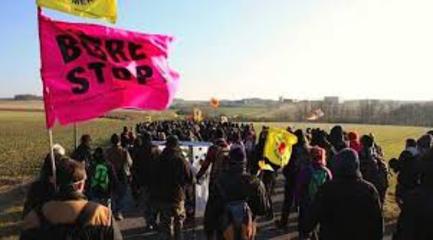
Richard Outram, NFLA Secretary, 6 January 2026
Introduction.
The outline for this briefing was first written almost two years ago for British and Canadian campaigners working collaboratively in opposing plans to establish high level radioactive waste repositories in their respective nations, either an off-shore and undersea Geological Disposal Facility (UK) or an inshore and underground Deep Geological Repository (Canada).
It was intended to raise their awareness of the decades long struggle waged by colleagues against the similar Cigéo Project under development in France.
Contrary to the positive articles published by Nuclear Waste
Services Community Partnerships and puff pieces that have appeared in the pro-nuclear Cumbrian media all is not ‘sweetness and light’, for there have been public protests involving local people and environmental activists against this project for decades.
Protests have often been opposed by police using tear gas, water cannons, and stun grenades to disperse demonstrators. Authorities maintain a heavy police presence in the area, and multiple injuries have been reported on both sides during serious confrontations. The French state has also resorted to spying and the wholesome clearance and destruction of protestors’ camps.
This then is a background paper to the campaign in opposition to the Cigéo Project, and the tactics employed by the French State and Police in opposing them…………………………
Lengthy detailed history. with excellent photos and graphics.
Conclusion.
With sections of the media reporting that the British Government is looking to abandon the ‘consent based’ approach, and with the former Nuclear Minister suggesting that such a move is inevitable, there must be concerns that a nuclear waste dump might eventually be imposed on a wholly unwilling community in the UK.
Such an announcement would most likely lead to more robust public opposition. Could this lead in turn to the UK Government looking to resort to the heavy-handed policing seen at Bure?
Although UK police services have historically operated based on consent, this is perhaps less fanciful than it might appear. Ministerial approval has already been given to deploy armed officers of the Civil Nuclear Constabulary at national energy infrastructure sites outside of nuclear power stations and Ministers announced as part of the 2025 Defence Review that an armed auxiliary civilian guard force would be created for a similar purpose.
If the UK Government does move away from a ‘consent-based approach’ to GDF siting, Bure may provide a salutary lesson for an unwilling, and disenfranchised, community in the UK faced with the prospect of a highlevel nuclear waste facility being imposed by the British State.
Forewarned is forearmed. https://www.nuclearpolicy.info/wp/wp-content/uploads/2026/01/A446NB332-The-French-Resistance-at-Bure-the-campaign-to-oppose-a-nuclear-waste-dump-Jan-2026.pdf
The cost of America’s nuclear revival

On an industrial site on the shores of Lake Michigan, hundreds of workers
are racing to do something that has never been achieved before: restart a
US nuclear power plant scheduled to be decommissioned.
The revival is being
driven by power demand from artificial intelligence data centres and
reshoring of manufacturing, which is straining energy grids and pushing up
electricity prices. Big Tech is attracted to nuclear because it provides
[?] clean power that does not suffer from the intermittency that is a feature
of solar and wind energy.
Concerned that a power crunch could delay the
roll out of data centres, Microsoft and Google have signed long-term power
deals to support the reopening of shuttered nuclear plants in Iowa and
Pennsylvania.
President Donald Trump has also embraced atomic energy,
pledging to slash regulation and invest tens of billions of dollars to
reopen and build new fleets of reactors to provide the power needed to
“win” the global AI race. In May he set a goal of quadrupling US atomic
energy capacity by 2050, a massive undertaking that would involve building
hundreds of new plants.
And in October Washington inked an $80bn
partnership with private equity group Brookfield and reactor designer
Westinghouse, which aims to kick-start construction of eight large-scale
nuclear plants.
Last year private investors funnelled a record $3bn into
start-ups building smaller modular reactors, technologies that provide a
third or less of the power of large-scale nuclear plants. In 2024, Amazon
bought a stake in X-energy, a reactor developer with power supply
agreements to support the construction of 144 small modular reactors (SMRs)
in the US and UK.
But in an industry subject to high financing, regulatory
and reputational risks, not everyone is convinced the resurgence will be
sustained. Only a handful of mothballed nuclear plants in the US are
capable of being restarted, critics warn, and building large-scale reactors
from scratch is a highly complex undertaking prone to delays and cost
overruns in western nations.
None of the more than 50 SMRs under
development in the US has proved they are commercially viable yet nor
obtained an operating licence from the US Nuclear Regulatory Commission.
“The industry is boasting about how things are different now and they are
going to build fleets of new reactors, large and small,” says Edwin
Lyman, a physicist at the Union of Concerned Scientists and critic of
nuclear energy. “But the fundamentals haven’t changed: nuclear is more
expensive than other forms of energy and still poses a risk of accidents
and proliferation. You can’t wish these problems away, so I think
Trump’s so-called nuclear renaissance is built on a house of cards.”
FT 7th Jan 2026,
https://www.ft.com/content/9f6c4db1-559f-48e1-8c21-ac0bc1a1237c
US 21st Century regime change ops: Failure, Failure, Failure, Failure, Failure… To Be Determined
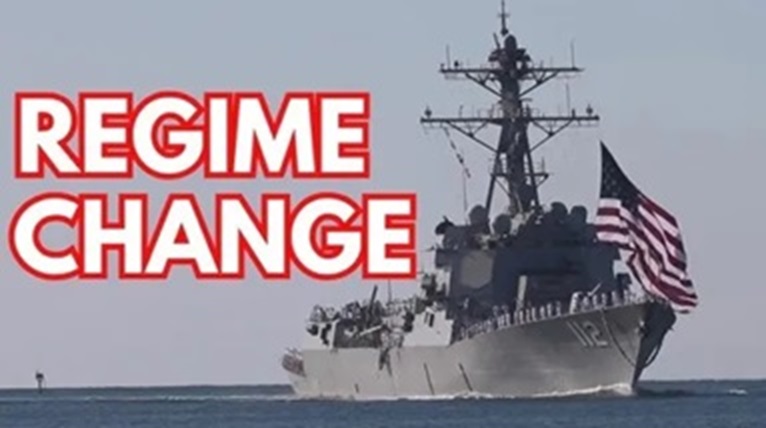
5 January 2026 AIMN Editorial , By Walt Zlotow, West Suburban Peace Coalition, Glen Ellyn, IL, https://theaimn.net/us-21st-century-regime-change-ops-failure-failure-failure-failure-failure-to-be-determined/
The US has spent the entire 21st century toppling regimes it hates. Every one up to Saturday’s removal of Venezuelan president Nicholas Maduro has ended in failure.
2001 Afghanistan
President George W. Bush kicked off the 21st century by changing out the Taliban regime in Afghanistan. America could not confront the real culprit of 911, ally Saudi Arabia, so we picked an easy scapegoat to extract our revenge. It only took 5 weeks to topple the Taliban, allowing installation of a US puppet government. Result? Taliban regrouped to win their country back. Took 20 years but this time it was the hated Yankees ousted, killing 2,461 Americans in the process. America left the failed state of Afghanistan with over 150,000 dead and Afghanistan’s 42 million people worse off than before American’s criminal regime change operation.
2003 Iraq
Bush turned next to hated Iraq to one up Poppy Bush’s failure to oust Saddam Hussein 1991. His regime change turned Iraq into a failed state with over 500,000 Iraqis and 5,984 American soldiers and contractors killed. Over 100,000 Americans were injured in body and mind from in a totally made up, senseless war. Twenty-three years later the US is still defiling Iraqi sovereignty with a couple of thousand soldiers stuck in the Iraq war roach motel.
2011 Libya
George W. Bush’s successor Barack Obama got into regime change business to knock off Libyan strongman Muammar Gaddafi. He employed so called defense alliance NATO to bomb Libby during the Libyan civil war to tip the scales against Gaddafi. Obama’s Secretary of State Hillary Clinton gloated, “We came, we saw, he died”, failing to mention this death resulted from a bayonet to the butt. The US achieved the complete opposite of its intended goal of Libyan and regional stability by turning Libya into one of the most chaotic, failed states on the planet.
2013 Syria
Just 2 years later Obama was at it again, this time intervening in the Syrian civil war, supporting jihadist terrorists to depose hated Syrian President Bashar Assad. Neither Obama nor successor Trump could complete the task finally achieved by President Joe Biden in his last 2 months. US intervention was primarily designed to rid puppet master Israel of one of its regional hegemonic rivals. By prolonging the Syrian civil war for 11 years, the US contributed mightily to the civil war’s half million deaths. Led by new US pal, former US designated al-Qaeda terrorist Ahmed al-Sharaa, Christians, Druze and Alawites are being systematically hunted down and killed by the US backed al-Sharaa regime.
2022 Russia
The US and NATO spent 14 years under 4 presidents provoking Russia to invade Ukraine to keep Ukraine out of NATO. The US knew Russia would eventually invade; indeed, also knew Ukraine could not prevail against the Russian goliath. Didn’t matter. The US believed the war would so weaken Russia it might topple despised President Vladimir Putin, bringing in a Russian puppet amenable to US influence. Four years on Russia and Putin are stronger than ever, pivoting away from Europe to the non-aligned world seeking independence from a war and sanctions crazed America. Ukraine is now a failed state near totally dependent on US, NATO treasure to survive. A fifth of its land is gone forever, soon to be joined by its last warm water port. Looks like the only regime to be removed is Ukraine’s, not Russia’s.
2026 Venezuela
In his first solo adventure in regime change, President Trump kicked off 2026 with a lightning assault that snatched Venezuelan President Nicholas Maduro out of Venezuela to face a Trump style show trial in the US. Trump and his war cabinet are positively ecstatic about completing America’s two decade crusade to snuff out socialism in Venezuela and gobble up its 300 billion barrels of heavy crude in the process. But they might look back at America’s 21st century regime change failures in Afghanistan, Iraq, Libya, Syria, Russia, and ponder whether they’re simply following previous administrations down the rabbit hole of regime change failure.
US DOE Awards $2.7B for Uranium Enrichment in Nuclear Power Push
Rigzone, by Jov Onsat. Tuesday, January 06, 2026
The United States Department of Energy (DOE) has awarded $2.7 billion orders to three companies for enrichment services to enable the production of low-enriched uranium (LEU) and high-assay low-enriched uranium (HALEU)…………….
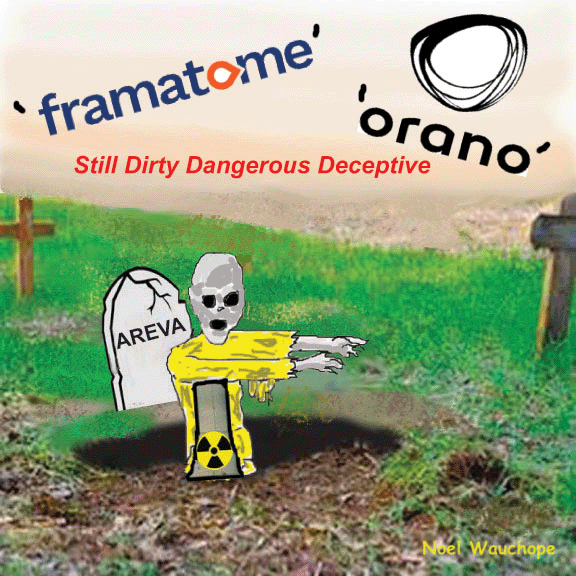
American Centrifuge Operating LLC and General Matter Inc each won $900 million to establish domestic HALEU enrichment capacity for advanced reactors. Orano Federal Services LLC also won $900 million to expand the U.S.’ LEU enrichment capacity.
……………….Currently only China and Russia can produce HALEU at a commercial scale, according to the World Nuclear Association.
Babcock to provide dock for new Dreadnought nuclear subs: will they be carrying nuclear weapons?
By Ally McRoberts, Dunfermline Press 6th Jan 2026
PREPARATIONS are underway in Rosyth for a contingent docking facility to accommodate the next generation of nuclear submarines.
Dunfermline and Dollar MP Graeme Downie had asked about the planned timescale for the work which will see the Dreadnought class berth at the yard during sea trials.
Rosyth will “bridge a gap” by offering a temporary home for the new subs, and last month the Ministry of Defence told local councillors they will not reveal if any of the boats that need repairs or maintenance will be carrying nuclear weapons……………………………………………..
“For operational security reasons further details cannot be released as to do so could be used to undermine the security and capability of our Armed Forces.”
……………………The Royal Navy’s new subs, the Dreadnought class, will be launched from Barrow-in-Furness towards the end of this decade.
The vessels will be maintained at Faslane, however the site on the Clyde won’t be ready until the mid 2030s……………………………
At last month’s South and West Fife area committee, Grant Reekie, head of radioactive waste and health physics at Babcock, had explained: “We have been asked to provide a contingent facility by the MoD to bridge a gap of submarines coming into service in late 2020s from 2029 through to mid 2030s when they will no longer be required as it will be done in Faslane.
………………At the same meeting the MoD told councillors they will not reveal if nuclear weapons will be aboard submarines being repaired at the yard.
They also confirmed that local residents would be given potassium iodate tablets to block radiation in the event of an emergency. https://www.dunfermlinepress.com/news/25743485.babcock-provide-dock-new-dreadnought-nuclear-subs/
Fears of Wider War Over Venezuela Oil as US Seizes Russian-Flagged Tanker
“That is a confrontation of Cold War proportions,” warned one observer.
Jake Johnson, January 7, 2026 https://www.commondreams.org/news/venezuela-russia-oil-tanker
US forces have now boarded and seized control of the Russian-flagged oil vessel in the North Atlantic, the Associated Press reported Wednesday.United States military forces on Wednesday attempted to board and seize control of a Venezuela-linked and Russian-flagged oil tanker after a weekslong pursuit across the Atlantic, sparking fears of a broader conflict stemming from US President Donald Trump’s assault on the South American country.
Reuters reported that the US Coast Guard and military are leading the takeover operation, which came “after the tanker, originally known as the Bella-1, slipped through a US maritime ‘blockade’ of sanctioned tankers and rebuffed US Coast Guard efforts to board it.” According to the Wall Street Journal, “Helicopters and at least one Coast Guard vessel were being used to take control of the tanker.”.
The vessel is reportedly being escorted by a Russian submarine, fueling concerns of a direct confrontation between two nuclear powers.
Video footage published Tuesday by RT purports to show US forces pursuing the tanker, whose name was recently changed to the Marinera.
The New York Times reported that US forces first stopped the tanker in the Caribbean on December 21.
According to the Times:
The ship, which started its journey in Iran, had been on its way to pick up oil in Venezuela.
At the time, the United States said it had a seizure warrant on the vessel because it was not flying a valid national flag. But the Bella 1 refused to be boarded and sailed into the Atlantic, with the United States in pursuit.
Then came a series of moves to ward off the United States. The fleeing crew painted a Russian flag on the hull, the tanker was renamed and added to an official Russian ship database, and Russia made a formal diplomatic request that the United States stop its chase.
Observers voiced alarm over the tense and fast-moving situation.
“Don’t wish to be hyperbolic, but if—if—US special forces are intercepting and seeking to board a now Russian-flagged tanker, apparently with submarine escort, then that is a confrontation of Cold War proportions,” warned British journalist Jon Sopel.
Caught between Trump and Musk’s rockets, a Mexican village despairs
Space Race Echoes on Mexico’s Shores: A Coastal Community Grapples with Progress
Playa Bagdad, a once-tranquil fishing village nestled along the northeastern coast of Mexico, finds itself at the intersection of ambitious technological advancements and the complex realities of community life. Situated just south of the United States border and within earshot of the din of rocket testing, the village is experiencing profound changes, both environmental and social, as the global space industry expands its reach. The narrative unfolding in Playa Bagdad serves as a microcosm of the broader challenges faced by communities bordering burgeoning spaceports around the world.
For generations, the residents of Playa Bagdad have relied on the Gulf of Mexico for their livelihoods. Fishing has been the lifeblood of the community, passed down through families, and deeply intertwined with the rhythms of the sea. However, the increasing frequency of rocket launches and associated activities has raised concerns about the potential impact on marine life and the overall health of the ecosystem. Noise pollution, vibrations, and the potential for accidental spills are among the anxieties voiced by local fishermen and environmental advocates.
Beyond the immediate environmental concerns, Playa Bagdad is also grappling with the socioeconomic shifts accompanying the space industry’s presence. While some residents see the potential for new jobs and economic opportunities, others fear displacement and the erosion of their traditional way of life. The influx of workers and investment can drive up property values and the cost of living, potentially making it difficult for long-time residents to remain in their homes. Furthermore, there are concerns that the focus on technological development may overshadow the needs of the local community, leading to neglect of essential infrastructure and social services.
The situation in Playa Bagdad underscores the importance of responsible and sustainable development in the space industry. As humanity ventures further into the cosmos, it is crucial to consider the impact on communities located near launch sites and to ensure that their voices are heard. Transparent communication, environmental impact assessments, and community engagement are essential to mitigating potential negative consequences and fostering a mutually beneficial relationship between the space industry and the communities that host it.
The Mexican government, along with international organizations, faces the challenge of balancing the economic benefits of the space industry with the need to protect the environment and the rights of local communities. Finding solutions that promote both technological advancement and social well-being is paramount. This requires a collaborative approach, involving government agencies, space companies, environmental groups, and, most importantly, the residents of Playa Bagdad themselves.
The story of Playa Bagdad serves as a potent reminder that progress should not come at the expense of vulnerable communities. As the space race intensifies, it is imperative that we prioritize ethical considerations and strive to create a future where technological innovation and human well-being go hand in hand. The fate of this small Mexican village, caught between the allure of space exploration and the realities of life on Earth, offers valuable lessons for navigating the complex landscape of the 21st century and beyond.
A game of chicken between the US and Denmark
The people of Greenland are merely pawns on a neo-colonial chessboard
Ian Proud, Jan 08, 2026, https://thepeacemonger.substack.com/p/a-game-of-chicken-between-the-us?utm_source=post-email-title&publication_id=3221990&post_id=183816648&utm_campaign=email-post-title&isFreemail=true&r=1ise1&triedRedirect=true&utm_medium=email
Trump’s attempt to claim Greenland as his own is running up against plucky Denmark. This is a David v Goliath game of chicken in which Trump hopes the Danes will back down and they, in turn, are waiting Trump out, hoping that his increasingly unhinged foreign policy leads to a change in power in 2029, whereupon the issue will go away.
Until then, the people of Greenland will remain pawns on a neo-colonial chessboard.
Even though they’ll get no support from European military powers, Denmark should call Trump’s bluff over military action and signal a willingness to defend, even though they would be quickly defeated. Their biggest ally is US public opinion.
But whatever happens, the Greenlanders have the right to self-determination under the 2009 Act and may ultimately be swayed by Trump’s cash.
Report: Nuclear Power Isn’t Viable In Hawaiʻi

Constitutional issues are the basis for the conclusion of the Nuclear Energy Working Group’s final report for the state energy office.
By Lynda Williams, January 6, 2026 , https://www.civilbeat.org/2026/01/nuclear-power-isnt-viable-in-hawaii/
The Hawaiʻi State Energy Office has released the final report of the Nuclear Energy Working Group created by the Legislature under SCR-136. I served on the working group as a representative of 350 Hawaiʻi.
The report concludes that nuclear power is not viable in Hawaiʻi and that the state should not change its laws or constitution to enable it.
The most fundamental obstacle is legal. Hawaiʻi’s Constitution restricts nuclear fission construction, and nuclear power is excluded from the state’s Renewable Portfolio Standard. These restrictions apply regardless of reactor size, design, fuel type or branding. Small modular reactors and so-called “advanced” reactors are still nuclear fission reactors. Making nuclear power legal in Hawaiʻi would require amending the constitution — a process that requires a two-thirds legislative vote. The working group did not recommend taking this step.
Beyond the law, the technology itself remains unfeasible. No advanced nuclear reactors are operating commercially in the United States, and none are expected to come online in any timeframe relevant to Hawaiʻi’s energy or climate goals. Projects cited by nuclear advocates remain stuck in licensing pipelines, demonstration phases or heavily subsidized pilot programs.
Without commercially operating reactors, reliable cost estimates, construction schedules, or grid-integration analyses do not exist. Nuclear power cannot meaningfully address climate change when it cannot be deployed at scale.
The report also acknowledges that radioactive waste is a decisive and unresolved problem. There is no permanent disposal repository operating anywhere in the United States. Hawaiʻi has no capacity to store or manage spent nuclear fuel, and no federal facility exists to accept it.
The Hawaiʻi Constitution explicitly bars nuclear waste storage and disposal facilities unless approved by a two-thirds vote of both legislative chambers. Any nuclear project would therefore require indefinite on-island storage of radioactive material in direct conflict with the constitution, creating ongoing risks related to containment failure and transport. For an isolated island state, this reality alone makes nuclear power unrealistic.
The Hawaiʻi State Energy Office has released the final report of the Nuclear Energy Working Group created by the Legislature under SCR-136. I served on the working group as a representative of 350 Hawaiʻi.
The report concludes that nuclear power is not viable in Hawaiʻi and that the state should not change its laws or constitution to enable it.
The most fundamental obstacle is legal. Hawaiʻi’s Constitution restricts nuclear fission construction, and nuclear power is excluded from the state’s Renewable Portfolio Standard. These restrictions apply regardless of reactor size, design, fuel type or branding. Small modular reactors and so-called “advanced” reactors are still nuclear fission reactors. Making nuclear power legal in Hawaiʻi would require amending the constitution — a process that requires a two-thirds legislative vote. The working group did not recommend taking this step.
Ideas showcases stories, opinion and analysis about Hawaiʻi, from the state’s sharpest thinkers, to stretch our collective thinking about a problem or an issue. Email news@civilbeat.org to submit an idea or an essay.
Beyond the law, the technology itself remains unfeasible. No advanced nuclear reactors are operating commercially in the United States, and none are expected to come online in any timeframe relevant to Hawaiʻi’s energy or climate goals. Projects cited by nuclear advocates remain stuck in licensing pipelines, demonstration phases or heavily subsidized pilot programs.
Without commercially operating reactors, reliable cost estimates, construction schedules, or grid-integration analyses do not exist. Nuclear power cannot meaningfully address climate change when it cannot be deployed at scale.
The report also acknowledges that radioactive waste is a decisive and unresolved problem. There is no permanent disposal repository operating anywhere in the United States. Hawaiʻi has no capacity to store or manage spent nuclear fuel, and no federal facility exists to accept it.
The Hawaiʻi Constitution explicitly bars nuclear waste storage and disposal facilities unless approved by a two-thirds vote of both legislative chambers. Any nuclear project would therefore require indefinite on-island storage of radioactive material in direct conflict with the constitution, creating ongoing risks related to containment failure and transport. For an isolated island state, this reality alone makes nuclear power unrealistic.
Emergency preparedness and regulatory capacity further reinforce that conclusion. Hawaiʻi does not have a nuclear regulatory agency, a trained nuclear emergency-response workforce, evacuation-planning capacity, or land suitable for exclusion zones. These are not minor administrative gaps. They reflect the absence of the institutional and physical capacity needed to respond to potentially catastrophic nuclear accidents.
The analysis also places nuclear power in the context of Hawaiʻi’s history in the Pacific, including nuclear weapons testing and long-term harm to island and Indigenous communities. Public trust cannot be assumed, and meaningful public evaluation is impossible without concrete information about reactor designs, fuel cycles, waste handling, and accident scenarios — information that does not exist.
Hawaiʻi is not alone in facing industry efforts to dismantle state-level protections. Over the past decade, several states with laws restricting or prohibiting new nuclear plant construction — including Wisconsin, Kentucky, Montana, West Virginia, Connecticut and Illinois — have repealed or weakened those laws to allow so-called advanced nuclear technologies such as small modular reactors, often justified by climate or grid-reliability claims. These rollbacks occurred despite the continued absence of commercially operating advanced reactors, the lack of a permanent nuclear waste repository, and mounting evidence that nuclear power cannot be deployed fast enough to play a meaningful role in addressing climate change.
Now is not the time to weaken Hawaiʻi’s protections against nuclear power. At the federal level, environmental protection and public oversight under the National Environmental Policy Act are being aggressively gutted through executive orders and legislation such as the SPEED Act. These measures are designed to shorten environmental review, eliminate meaningful public participation, restrict judicial oversight, and prevent courts from stopping unlawful projects even when agencies violate the law. As federal safeguards are dismantled, Hawaiʻi’s constitutional and statutory protections against nuclear power become more critical, not less.
The report’s only weak point is its suggestion that the state revisit nuclear power every three to five years. Even under the most optimistic assumptions, advanced nuclear reactors, including SMRs, will not be commercially operating, fully tested, or economically viable within that timeframe. Any nuclear reactor operated in Hawaiʻi would require radioactive waste to remain on island for extended periods to cool before transport, and shifting that waste burden onto other Indigenous lands is not an ethical solution and is inconsistent with the values of aloha ʻāina.
Nuclear power is not viable in Hawaiʻi and never will be; the state should instead focus on renewable energy, storage, efficiency, grid modernization and community-centered planning grounded in reality.
Click here to read the final Nuclear Energy Working Group report. You can read more about the Nuclear Energy Working Group at nuclearfreehawaii.org.
CIA Played Instrumental Role in Maduro Kidnapping.
In reality, while U.S. and British companies were involved in early oil exploration in Venezuela, Venezuela’s oil belongs to Venezuela, pursuant to the international law principle of permanent sovereignty over natural resources.
Venezuela’s socialist government, meanwhile, has used oil revenues to adopt social programs for the poor and to develop Venezuela’s economy, accounting for its electoral successes.
The financial elite the CIA serves is now salivating over the prospects of U.S. corporations retaking control of Venezuela’s oil industry
Jeremy Kuzmarov, Substack, Jan 05, 2026
The Trump administration welcomed the New Year by ordering a brazen Special Forces raid into Venezuela that resulted in the kidnapping of Venezuelan President Nicolás Maduro, who was brought to the U.S. to face charges for alleged drug trafficking.
Called Operation Absolute Resolve, the kidnapping had been preceded by months of terrorist activities that included bombing a Venezuelan oil tanker and fishing vessels, resulting in the deaths of more than 100 civilians.
On January 3, The New York Times reported that a CIA source within the Venezuelan government had monitored Maduro’s location in the days and moments before his capture, tipping off the Special Forces about his whereabouts. The CIA also produced the intelligence that led to Maduro’s capture with a fleet of stealth drones.
According to a person familiar with the agency’s work, the CIA was able to recruit informants in Maduro’s inner circle because of the $50 million bounty placed on Maduro’s head.
Donald Trump watched the Operation Absolute Resolve from Mar-O-Lago with CIA Director John Ratcliffe and Secretary of State Marco Rubio. [Source: yahoo.com]
Beginning in August, the informants worked clandestinely to provide the CIA with information about Maduro’s “pattern of life” and daily movements.
The CIA had Maduro so precisely monitored that even his pets were known to U.S. intelligence agents, according to General Dan Caine, Chairman of the Joint Chiefs of Staff and former CIA associate director for military affairs.
In late December, the CIA used an armed drone to conduct a strike on a dock that U.S. officials claimed was being used by a Venezuelan gang to load drugs onto boats.
These actions fulfilled a promise of CIA Director John Ratcliffe in his confirmation hearing that he would lead a more aggressive CIA willing to conduct large-scale covert operations.
Despite claiming to be doing battle with the “deep state,” President Donald Trump authorized the CIA to take more aggressive action last fall and openly authorized CIA operations in Venezuela when the CIA normally operates covertly.
To the Victor Go the Spoils
The symbiotic relationship between the CIA and the financial elite intent on profiting from regime change are epitomized by the CIA’s former Venezuelan station chief, Enrique de la Torre, who advertised immediately after Maduro’s kidnapping that his lobbying firm, Tower Strategy,[1] was supporting clients intent on “rebuilding Venezuela’s energy sector.”
De la Torre published a blog post in late November entitled “The Case for Ending Maduro’s Rule………………
Venezuela’s Bolivarian Revolution under Hugo Chávez (1998-2013) and then Maduro (2013-present) had in fact been designed to establish Venezuela’s economic sovereignty, empower the poor and Indigenous people, and revitalize the legacy of Latin America’s great liberator, Simón Bolívar.
It was opposed by the U.S. financial elite precisely because it threatened to inspire other Latin American and Third World countries to take control over their own economies and limit the influence of American corporations.
Donald Trump echoed de la Torre in stating after the announcement of Maduro’s capture that “we’re going to have our very large United States oil companies, the biggest anywhere in the world, go in and spend billions of dollars and fix the oil infrastructure—the badly broken oil infrastructure—and start making money for the country.”[2]
Similarly, former CIA Director Mike Pompeo told Fox & Friends last week that, in the event of the overthrow of the Maduro government, “American companies can come in and sell their products — Schlumberger, Halliburton, Chevron — all of our big energy companies can go down to Venezuela and build out an economic capitalist model.”
These latter comments combined with de la Torre’s action make clear the agenda behind Operation Absolute Resolve.
Stephen Miller, a top aide to President Trump, openly proclaimed that Venezuela’s oil belongs to Washington, describing the nationalization of Venezuela’s petroleum industry as “theft.”
According to Miller, “American sweat, ingenuity and toil created the oil industry in Venezuela. Its tyrannical expropriation was the largest recorded theft of American wealth and property. These pillaged assets were then used to fund terrorism and flood our streets with killers, mercenaries and drugs.”
In reality, while U.S. and British companies were involved in early oil exploration in Venezuela, Venezuela’s oil belongs to Venezuela, pursuant to the international law principle of permanent sovereignty over natural resources.
The Venezuelan government never actually denied the U.S. access to its oil and, as late as 2017, remained the U.S.’s third-largest foreign supplier of energy.[3]
Venezuela’s socialist government, meanwhile, has used oil revenues to adopt social programs for the poor and to develop Venezuela’s economy, accounting for its electoral successes.
During his presidency from 1998 to 2013, Hugo Chávez cut poverty by 20% and extreme poverty by 30%.
Literacy rates in this period also increased, child malnutrition rates declined dramatically, millions of hectares of state-owned land were distributed, and Venezuela’s UN Human Development Index, a composite measure of national income (GDP), access to education, and child mortality—rose from seventh in the region to fourth.[4]
Maduro was continuing the same trajectory as Chávez, though Venezuela’s economy was undermined during his presidency by declining world oil prices, internal corruption typical of South and North American countries and harsh U.S. sanctions imposed by the Obama, Trump I and Biden administrations, whose purpose was to set the groundwork for regime change.[5]
Long War Against Venezuela’s Left
In Modernizing Repression: Police Training and Nation-Building in the American Century, I detail how the Kennedy, Johnson and Nixon administrations set the groundwork for today’s foreign policy by providing significant police aid to help prop up centrist governments in Venezuela that carried out a dirty war against left-wing movements.
The latter sought to nationalize Creole Petroleum Company, Venezuela’s largest oil company, which was largely controlled by the Rockefeller-owned Standard Oil empire.
Run under the cover of the United States Agency for International Development (USAID), the CIA-led Office of Public Safety (OPS) provided riot-control gear and other repressive police instruments and assisted Venezuelan police in compiling blacklists of left-wing “subversives.”
The OPS’s support for hard-line police tactics was apparent in its push to eliminate the requirement that a policeman who killed a suspect be arrested, paving the way for death-squad activity.
Showing where their true priorities rested, OPS police advisers met monthly with security officials of Creole Petroleum and the major foreign mining companies in Venezuela to discuss “insurgency problems.”……………………………………………………………………………………………………………………………………………………………………………………… https://jeremykuzmarov.substack.com/p/cia-played-instrumental-role-in-maduro?publication_id=2091638&post_id=183483325&isFreemail=true&r=3alev&triedRedirect=true&utm_source=substack&utm_medium=email
Rubio Says “Not a War” as Trump Threatens Half the Hemisphere
By Joshua Scheer, SCHEEPOST, 5 Jan 26
Welcome to another day in the empire we might as well call 1984. Marco Rubio, who only yesterday said the U.S. didn’t need congressional approval because the situation in Venezuela is not a war but the capture of a fugitive, adding, to the BBC saying “That’s not a war. I mean, we are at war against drug trafficking organizations. That’s not a war against Venezuela,”
But has the narrative really shifted, or is this just good cop/bad cop—or whatever you want to call the times we are living in? Meanwhile, with President Trump threatening both the incoming president of Venezuela and other left-leaning nations, the United States seems to be lurching toward a space where it resembles a new Rome—a power with seemingly no regard for history.
That was made clear in an interview with The Atlantic yesterday, when asked about Iraq and the current intensifying situation, Trump said: “I didn’t do Iraq. That was Bush. You’ll have to ask Bush that question, because we should have never gone into Iraq. That started the Middle East disaster.”
He threatened Venezuela’s new president Delcy Rodríguez, saying that “if she doesn’t do what’s right, she is going to pay a very big price—probably bigger than Maduro,” adding that “she’s essentially willing to do what we think is necessary to make Venezuela great again.” He went on to declare, “The country’s gone to hell. It’s a failed country. It’s a totally failed country. It’s a disaster in every way.”
I wonder why a country that has been subjected to coercive actions by the United States and repeated coup attempts can’t get ahead—especially when, even now, its oil is being seized and treated as if it belongs to the U.S. This is a madman being guided by what I would describe as delusional people. The truly frightening part, however, is that they know exactly what they are doing, and that is what makes it so dangerous.
This was a man when campaigning in 2016 spoke saying “stop racing to topple foreign regimes that we know nothing about.” He had campaigned that year in opposition to “nation building,”
Great—who’s paying attention? Which Trump are we seeing this morning—the 2016 isolationist of the highest order? Reports are emerging of a split within the MAGA camp (Make America Great Again, for those unfamiliar), with the New York Times highlighting tensions among the more isolationist figures from Trump’s first administration. “The lack of framing of the message on a potential occupation has the base bewildered, if not angry,” said Stephen K. Bannon, the pro-Trump podcaster. “While President Trump makes the case for hemispheric defense, Rubio confuses with talk of removing Hamas and Hezbollah.”
At the same time MAGA darling Candice Owens tweeting “Venezuela has been “liberated” like Syria, Afghanistan, and Iraq were “liberated”. The CIA has staged another hostile takeover of a country at the behest of a globalist psychopaths. That’s it. That’s what is happening, always, everywhere. Zionists cheer every regime change. There has never been a single regime change that Zionists have not applauded because it means they get to steal land, oil and other resources.”
In the video below, [on original] in a strange twist, right‑wing superstar Tucker Carlson—of all people—defends Venezuela, apparently because it’s the most Christian nation in Latin America. So there you go.
Of course, this MAGA split—and the difference between Trump in 2016 and now—really shows that the true worm in the drink is Marco “the Neocon” today believes that countries shouldn’t have friends—because the threat is global. Why? Because Venezuela is friends with Iran, Russia, and China… oh my. Of course they are—they certainly aren’t ours.
Here’s “little” Marco discussing why he feels the need to protect the oil because “Why does China need their oil? Russia? Iran? This is the West. This is where we live”Adding, for good measure, that after we take our “fair share,” maybe the people of Venezuela would finally get theirs. That’s entirely on brand for the United States—its free‑market ideology and trickle‑down economic system.
Speaking about China’s reaction, they strongly condemned the U.S. seizure of President Maduro, calling it a violation of international law and an overreach of U.S. power, even as some analysts note Beijing may see the situation as a chance to challenge American global dominance and assert its own influence on the world stage.
Many commentators have draw parallels between Washington’s actions in Venezuela and China’s ambitions toward Taiwan, analysts suggest that China is less concerned with the sovereignty of the self-ruled island. Instead, Beijing sees the U.S. move as an opening to question America’s leadership on the world stage. ……………………………………………………. https://scheerpost.com/2026/01/05/rubio-says-not-a-war-as-trump-threatens-half-the-hemisphere/
New roads police team for major construction work
Alice Cunningham, BBC 4th Jan 2026, Suffolk
A police force is hiring a road team to escort abnormal loads heading to and from nationally significant infrastructure projects such as Sizewell C nuclear power station.
Suffolk Police said it was recruiting a designated abnormal indivisible loads (AIL) team that would consist of police motorcyclists.
It envisaged the team would work with several projects for several years, and noted that its current project with the new Sizewell C nuclear plant near Leiston was for 12 years.
Chief Constable Rachel Kearton said the “uplift required to support the policing element of the Sizewell C development has been secured through the planning process and paid for by the Sizewell C developer”……………………a “carefully co-ordinated roads policing provision” was in place to ensure safe movement of the abnormal loads to and from Sizewell.
The UK government, which is the largest shareholder in Sizewell C Limited, is building a new two-reactor nuclear power station on the coast next to the Sizewell A and B sites, that could power the equivalent of about six million homes and will generate electricity for 60 years.
Permission for the project was granted in July 2022 before the government gave its final funding approval last year…………………. https://www.bbc.com/news/articles/cddg773172jo
“We’re Going to Run the Country:” Preparing an Illegal Occupation in Venezuela
This press conference wasn’t just about Venezuela. It was about whether empire can say the quiet part out loud again, whether it can openly claim the right to govern other nations and expect the world to shrug.
January 3, 2026, By: Michelle Ellner , https://scheerpost.com/2026/01/03/were-going-to-run-the-country-preparing-an-illegal-occupation-in-venezuela/
I listened to the January 3 press conference with a knot in my stomach. As a Venezuelan American with family, memories, and a living connection to the country being spoken about as if it were a possession, what I heard was very clear. And that clarity was chilling.
The president said, plainly, that the United States would “run the country” until a transition it deems “safe” and “judicious.” He spoke about capturing Venezuela’s head of state, about transporting him on a U.S. military vessel, about administering Venezuela temporarily, and about bringing in U.S. oil companies to rebuild the industry. He dismissed concerns about international reaction with a phrase that should alarm everyone: “They understand this is our hemisphere.”
For Venezuelans, those words echo a long, painful history.
Let’s be clear about the claims made. The president is asserting that the U.S. can detain a sitting foreign president and his spouse under U.S. criminal law. That the U.S. can administer another sovereign country without an international mandate. That Venezuela’s political future can be decided from Washington. That control over oil and “rebuilding” is a legitimate byproduct of intervention. That all of this can happen without congressional authorization and without evidence of imminent threat.
We have heard this language before. In Iraq, the United States promised a limited intervention and a temporary administration, only to impose years of occupation, seize control of critical infrastructure, and leave behind devastation and instability. What was framed as stewardship became domination. Venezuela is now being spoken about in disturbingly similar terms. “Temporary Administration” ended up being a permanent disaster.
Under international law, nothing described in that press conference is legal. The UN Charter prohibits the threat or use of force against another state and bars interference in a nation’s political independence. Sanctions designed to coerce political outcomes and cause civilian suffering amount to collective punishment. Declaring the right to “run” another country is the language of occupation, regardless of how many times the word is avoided.
Under U.S. law, the claims are just as disturbing. War powers belong to Congress. There has been no authorization, no declaration, no lawful process that allows an executive to seize a foreign head of state or administer a country. Calling this “law enforcement” does not make it so. Venezuela poses no threat to the United States. It has not attacked the U.S. and has issued no threat that could justify the use of force under U.S. or international law. There is no lawful basis, domestic or international, for what is being asserted.
But beyond law and precedent lies the most important reality: the cost of this aggression is paid by ordinary people in Venezuela. War, sanctions, and military escalation do not fall evenly. They fall hardest on women, children, the elderly, and the poor. They mean shortages of medicine and food, disrupted healthcare systems, rising maternal and infant mortality, and the daily stress of survival in a country forced to live under siege. They also mean preventable deaths, people who die not because of natural disaster or inevitability, but because access to care, electricity, transport, or medicine has been deliberately obstructed. Every escalation compounds existing harm and increases the likelihood of loss of life, civilian deaths that will be written off as collateral, even though they were foreseeable and avoidable.
What makes this even more dangerous is the assumption underlying it all: that Venezuelans will remain passive, compliant, and submissive in the face of humiliation and force. That assumption is wrong. And when it collapses, as it inevitably will, the cost will be measured in unnecessary bloodshed. This is what is erased when a country is discussed as a “transition” or an “administration problem.” Human beings disappear. Lives are reduced to acceptable losses. And the violence that follows is framed as unfortunate rather than the predictable outcome of arrogance and coercion.To hear a U.S. president talk about a country as something to be managed, stabilized, and handed over once it behaves properly, it hurts. It humiliates. And it enrages.
And yes, Venezuela is not politically unified. It isn’t. It never has been. There are deep divisions, about the government, about the economy, about leadership, about the future. There are people who identify as Chavista, people who are fiercely anti-Chavista, people who are exhausted and disengaged, and yes, there are some who are celebrating what they believe might finally bring change.
But political division does not invite invasion.
Latin America has seen this logic before. In Chile, internal political division was used to justify U.S. intervention, framed as a response to “ungovernability,” instability, and threats to regional order, ending not in democracy, but in dictatorship, repression, and decades of trauma.
In fact, many Venezuelans who oppose the government still reject this moment outright. They understand that bombs, sanctions, and “transitions” imposed from abroad do not bring democracy, they destroy the conditions that make it possible.
This moment demands political maturity, not purity tests. You can oppose Maduro and still oppose U.S. aggression. You can want change and still reject foreign control. You can be angry, desperate, or hopeful, and still say no to being governed by another country.
Venezuela is a country where communal councils, worker organizations, neighborhood collectives, and social movements have been forged under pressure. Political education didn’t come from think tanks; it came from survival. Right now, Venezuelans are not hiding. They are closing ranks because they recognize the pattern. They know what it means when foreign leaders start talking about “transitions” and “temporary control.” They know what usually follows. And they are responding the way they always have: by turning fear into collective action.
This press conference wasn’t just about Venezuela. It was about whether empire can say the quiet part out loud again, whether it can openly claim the right to govern other nations and expect the world to shrug.
If this stands, the lesson is brutal and undeniable: sovereignty is conditional, resources are there to be taken by the U.S., and democracy exists only by imperial consent.
As a Venezuelan American, I refuse that lesson.
I refuse the idea that my tax dollars fund the humiliation of my homeland. I refuse the lie that war and coercion are acts of “care” for the Venezuelan people. And I refuse to stay silent while a country I love is spoken about as raw material for U.S. interests, not a society of human beings deserving respect.
Venezuela’s future is not for U.S. officials, corporate boards, or any president who believes the hemisphere is his to command. It belongs to Venezuelans.
1 This Month
26 September – International Day for the Total Elimination of Nuclear Weapons





PLEASE OPPOSE HR 8255 AND S.3639 – bills would accelerate satellite deployment, with no environmental review or safeguards – https://ncstd5li.quorum.us/campaign/169331/
To see nuclear-related stories in greater depth and intensity – go to https://nuclearinformation.wordpress.com
-
Archives
- September 2026 (281)
- August 2026 (330)
- July 2026 (355)
- June 2026 (287)
- May 2026 (306)
- April 2026 (356)
- March 2026 (251)
- February 2026 (267)
- January 2026 (308)
- December 2025 (358)
- November 2025 (359)
- October 2025 (375)
-
Categories
- 1
- 1 NUCLEAR ISSUES
- business and costs
- climate change
- culture and arts
- ENERGY
- environment
- health
- history
- indigenous issues
- Legal
- marketing of nuclear
- media
- opposition to nuclear
- PERSONAL STORIES
- politics
- politics international
- Religion and ethics
- safety
- secrets,lies and civil liberties
- spinbuster
- technology
- Uranium
- wastes
- weapons and war
- Women
- 2 WORLD
- ACTION
- AFRICA
- Atrocities
- AUSTRALIA
- Christina's notes
- Christina's themes
- culture and arts
- Events
- Fuk 2022
- Fuk 2023
- Fukushima 2017
- Fukushima 2018
- fukushima 2019
- Fukushima 2020
- Fukushima 2021
- general
- global warming
- Humour (God we need it)
- Nuclear
- RARE EARTHS
- Reference
- resources – print
- Resources -audiovicual
- Weekly Newsletter
- World
- World Nuclear
- YouTube
-
RSS
Entries RSS
Comments RSS

