What are the nuclear contamination risks from Israel’s attacks on Iran?
By Andrew Macaskill, Federico Maccioni and Pesha Magid, June 21, 2025,
https://www.reuters.com/world/middle-east/what-are-nuclear-contamination-risks-israels-attacks-iran-2025-06-19/
LONDON/DUBAI, June 19 (Reuters) – Israel’s strikes on Iran’s nuclear installations so far pose only limited risks of contamination, experts say. But they warn that any attack on the country’s nuclear power station at Bushehr could cause a nuclear disaster.
Israel says it is determined to destroy Iran’s nuclear capabilities in its military campaign, but that it also wants to avoid any nuclear disaster in a region that is home to tens of millions of people and produces much of the world’s oil.
Fears of catastrophe rippled through the Gulf on Thursday when the Israeli military said it had struck a site in Bushehr on the Gulf coast – home to Iran’s only nuclear power station – only to say later that the announcement was a mistake.
WHAT HAS ISRAEL HIT SO FAR?
Israel has announced attacks on nuclear sites in Natanz, Isfahan, Arak and Tehran itself. Israel says it aims to stop Iran building an atom bomb. Iran denies ever seeking one.
The international nuclear watchdog IAEA has reported damage to the uranium enrichment plant at Natanz, to the nuclear complex at Isfahan, including the Uranium Conversion Facility, and to centrifuge production facilities in Karaj and Tehran.
Israel has also attacked Arak, also known as Khondab.
The IAEA said Israeli military strikes hit the Khondab Heavy Water Research Reactor, which was under construction and had not begun operating, and damaged the nearby plant that makes heavy water. The IAEA said that it was not operational and contained no nuclear material, so there were no radiological effects.
In an update of its assessment on Friday, the IAEA said key buildings at the site were damaged. Heavy-water reactors can be used to produce plutonium which, like enriched uranium, can be used to make an atom bomb.
WHAT RISKS DO THESE STRIKES POSE?
Peter Bryant, a professor at the University of Liverpool in England who specialises in radiation protection science and nuclear energy policy, said he is not too concerned about fallout risks from the strikes so far.
He noted that the Arak site was not operational while the Natanz facility was underground and no release of radiation was reported. “The issue is controlling what has happened inside that facility, but nuclear facilities are designed for that,” he said. “Uranium is only dangerous if it gets physically inhaled or ingested or gets into the body at low enrichments,” he said.
Darya Dolzikova, a senior research fellow at London think tank RUSI, said attacks on facilities at the front end of the nuclear fuel cycle – the stages where uranium is prepared for use in a reactor – pose primarily chemical, not radiological risks.
At enrichment facilities, UF6, or uranium hexafluoride, is the concern. “When UF6 interacts with water vapour in the air, it produces harmful chemicals,” she said.
The extent to which any material is dispersed would depend on factors including the weather, she added. “In low winds, much of the material can be expected to settle in the vicinity of the facility; in high winds, the material will travel farther, but is also likely to disperse more widely.”
The risk of dispersal is lower for underground facilities.
Simon Bennett, who leads the civil safety and security unit at the University of Leicester in the UK, said risks to the environment were minimal if Israel hits subterranean facilities because you are “burying nuclear material in possibly thousands of tonnes of concrete, earth and rock”.
WHAT ABOUT NUCLEAR REACTORS?
The major concern would be a strike on Iran’s nuclear reactor at Bushehr.
Richard Wakeford, Honorary Professor of Epidemiology at the University of Manchester, said that while contamination from attacks on enrichment facilities would be “mainly a chemical problem” for the surrounding areas, extensive damage to large power reactors “is a different story”.
Radioactive elements would be released either through a plume of volatile materials or into the sea, he added.
James Acton, co-director of the Nuclear Policy Program at the Carnegie Endowment for International Peace, said an attack on Bushehr “could cause an absolute radiological catastrophe”, but that attacks on enrichment facilities were “unlikely to cause significant off-site consequences”.
Before uranium goes into a nuclear reactor it is barely radioactive, he said. “The chemical form uranium hexafluoride is toxic … but it actually doesn’t tend to travel large distances and it’s barely radioactive. So far the radiological consequences of Israel’s attacks have been virtually nil,” he added, while stating his opposition to Israel’s campaign.
Bennett of the University of Leicester said it would be “foolhardy for the Israelis to attack” Bushehr because they could pierce the reactor, which would mean releasing radioactive material into the atmosphere.
WHY ARE GULF STATES ESPECIALLY WORRIED?
For Gulf states, the impact of any strike on Bushehr would be worsened by the potential contamination of Gulf waters, jeopardizing a critical source of desalinated potable water.
In the UAE, desalinated water accounts for more than 80% of drinking water, while Bahrain became fully reliant on desalinated water in 2016, with 100% of groundwater reserved for contingency plans, according to authorities.
Qatar is 100% dependent on desalinated water.
In Saudi Arabia, a much larger nation with a greater reserve of natural groundwater, about 50% of the water supply came from desalinated water as of 2023, according to the General Authority for Statistics.
While some Gulf states like Saudi Arabia, Oman and the United Arab Emirates have access to more than one sea to draw water from, countries like Qatar, Bahrain and Kuwait are crowded along the shoreline of the Gulf with no other coastline.
“If a natural disaster, oil spill, or even a targeted attack were to disrupt a desalination plant, hundreds of thousands could lose access to freshwater almost instantly,” said Nidal Hilal, Professor of Engineering and Director of New York University Abu Dhabi’s Water Research Center.
“Coastal desalination plants are especially vulnerable to regional hazards like oil spills and potential nuclear contamination,” he said.
Ford’s nuclear obsession is robbing Ontario of its true clean energy future
Canada’s National Observer Adrienne Tanner, June 19th 2025
Ontario’s Premier Doug Ford just can’t seem to shake his aversion to renewables.
Ford’s new Energy for Generations plan, mapping out energy generation from now to 2050, is laudable for its end goal: to all but end Ontario’s reliance on gas for electricity generation. But its single-minded pursuit of new nuclear power projects is myopic when it comes to solar and wind, the gold standard sources of clean energy.
Ontario is seriously eyeing sites for three even bigger nuclear plants than it already has — “the equivalent of adding about five Darlington Nuclear Generating Stations to the grid,” the report states — with the possibility of even more of them down the road.
As for solar and wind, the plan calls for a modest increase of slightly more than double the small amounts produced now which comprise 11 per cent of Ontario’s power supply. And the clincher: solar and wind will get a boost while nuclear plants are being scaled up, but only for a short while.
Once new nuclear plants are up and running, Ontario actually plans to dial back progress on renewables. It sounds like the province plans to tear down solar installations and wind farms and haul the pieces off to metal recyclers and landfills. And why? On those questions, the plan is silent.
The only hint is a bullseye graphic comparing the amount of land needed for a new nuclear plant compared to the much greater amounts needed to generate the same amount of power from solar or wind. As might be expected from a plan that reads like a pro-nuclear manifesto, there isn’t a single mention of the radioactive waste generated from nuclear power plants and the still-unsolved challenges associated with its disposal.
Like his Alberta counterpart, Premier Danielle Smith, Ford seems almost pathologically opposed to solar and wind energy. From the moment he was elected, Ford made it clear he was not interested in clean technology of any description; he cancelled 750 renewable energy projects, slowed the buildout of electric vehicle charging stations, ended the provincial EV rebate, repeatedly lowered gas taxes and has sided with Enbridge, Ontario’s natural gas provider, at every turn.
He’s budged on EV charging stations recently, probably because failing to build at least some would be a bad look for a province trying to capture EV and battery manufacturing industries. And last year, when it became clear Ontario needed more energy to meet skyrocketing demand, the Ontario government finally opened the door to more solar and wind. Judging by his past record, I would bet that wasn’t Ford’s idea.
…………………………………………. There might be other forces at play causing Ford to favour Big Nuclear over solar and wind. Ford’s government has always been open-minded, shall we say, to the siren songs of business lobbyists, and the nuclear industry is currently in high gear. It could be Ford can only get excited about energy megaprojects with their jobs and potential for federal backing, regardless of the risk and cost. https://www.nationalobserver.com/2025/06/19/opinion/ford-ontario-energy-nuclear-solar-wind?nih=Vf0DQztC-W6YOqBGCjgdMvyuSr-jgXEgtm__lNRKxi0&utm_source=National+Observer&utm_campaign=d7478891e6-EMAIL_CAMPAIGN_2025_06_19_01_16&utm_medium=email&utm_term=0_cacd0f141f-d7478891e6-277039322
EU Needs $280 Billion for Nuclear Energy, And That’s Just the Start

Oil Price.com, By Tsvetana Paraskova – Jun 18, 2025
- The European Union estimates it will require $277 billion in investments for conventional nuclear power expansion by 2050.
- Some EU countries are considering Small Modular Reactors and other advanced nuclear technologies as alternatives or supplements to traditional large-scale nuclear plants.
- The EU is also pursuing nuclear fusion research as a potential long-term solution for energy independence and decarbonization.
The European Union countries planning to expand their nuclear power capacities will need as much as $277 billion (241 billion euros) in investments by 2050, according to Brussels’ estimates.
That’s only the investment needed for the conventional large-scale nuclear reactors currently in the plans of nearly half of the EU member states. The sum doesn’t include investment in Small Modular Reactors (SMRs), Advanced Modular Reactors (AMRs), or microreactors, or investment in nuclear fusion efforts.
Some EU countries are open to returning to nuclear power generation, but only via SMRs and other advanced nuclear energy technology—not conventional large-scale nuclear power plants. These will require additional billions of U.S. dollars in investment.
Delivering the EU’s current plans to boost nuclear energy capacity will require $277 billion (241 billion euros), both for lifetime extensions of existing reactors and the construction of new large-scale reactors, the European Commission said in its latest assessment of nuclear investment needs by 2050.
While the EU’s biggest economy, Germany phased out nuclear power in 2023, some other EU countries see nuclear energy as an important part of their decarbonization, industrial competitiveness, and security of supply strategies.
…………………………………………………… the required investment in SMRs will be in addition to the $277 billion the EU estimates is necessary for large-scale conventional reactors.
So, the price tag of Europe’s nuclear power ambitions will be much higher. While SMRs hold promise, they are unlikely to be deployed commercially before the 2030s, and large-scale conventional reactors are notoriously facing delays and cost overruns.
It’s good to talk: US-UK anti-nuclear alliance forged from film discussion
The NFLAs were delighted to partner with film makers and producers from
the United States in promoting the documentary film ‘SOS – The San
Onofre Syndrome: Nuclear Power’s Legacy’ and by participating in a
discussion last week of the issues raised. NFLA Secretary Richard Outram
joined US filmmakers James Heddle, Mary Beth Brangan and Morgan Peterson
for the discussion on Wednesday 11 June. UK participants were invited to
watch the documentary film before the event and then contribute their
questions and comments. Attendees included academics and activists from
several of the established campaigns opposed to nuclear power in the UK,
and their knowledge and experience helped make the discussion more
engaging.
NFLA 19th June 2025 https://www.nuclearpolicy.info/news/its-good-to-talk-us-uk-anti-nuclear-alliance-forged-from-film-discussion/
Improvements required following Barrow nuclear submarine site fire
The Office for Nuclear Regulation (ONR) has served an enforcement notice
on BAE Systems Marine Ltd (BAESML) following a fire at the
Barrow-in-Furness site in Cumbria. ONR’s enquiries found that five
employees entered an area in the Devonshire Dock Hall facility when the
fire was still in progress on 30 October 2024. As a result, two employees
were taken to hospital for treatment. Both employees were discharged and
returned to work on the same day. Enquiries concluded that the licensee’s
arrangements for ensuring workers did not enter places of danger without
the appropriate safety instructions were inadequate. There was also a lack
of guidance to inform staff of their required actions in the event of a
fire.
ONR 16th June 2025, https://www.onr.org.uk/news/all-news/2025/06/improvements-required-following-barrow-fire/
Trump says US intelligence ‘wrong’ about Iran not building nuclear bomb
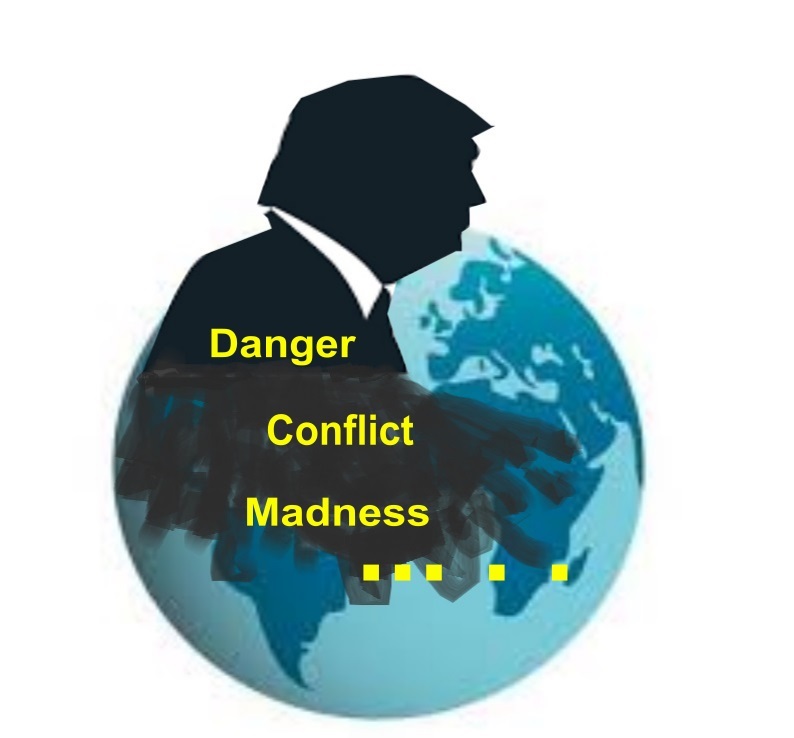
It is extremely rare for a US president to openly contradict the country’s intelligence community.
“This is not just one person, one team saying something,” “It’s the entire intelligence community in the United States. That he would dismiss them … it’s just astounding.”
US president doubles down on claim Iran is building nuclear weapon, again contradicting US intelligence community.
20 Jun 2025, https://www.aljazeera.com/news/2025/6/20/trump-says-us-intelligence-wrong-about-iran-not-building-nuclear-bomb
United States President Donald Trump has said his director of national intelligence was “wrong” when she testified that Iran was not building a nuclear weapon and that Supreme Leader Ayatollah Ali Khamenei had not re-authorised the country’s suspended nuclear weapons programme.
The comments come after Trump earlier this week cast doubt on Tulsi Gabbard’s March 25 report to Congress, in which she reiterated the US intelligence community’s assessment. On Tuesday, Trump told reporters, “I don’t care” that the intelligence community’s finding contradicted his own claims, saying Iran was in the late stages of developing a nuclear weapon.
But speaking on Friday, Trump went further.
A reporter asked, “What intelligence do you have that Iran is building a nuclear weapon? Your intelligence community said they have no evidence.”
The president responded, “Then my intelligence community is wrong. Who in the intelligence community said that?”
“Your DNI [director of national intelligence], Tulsi Gabbard,” the reporter replied.
“She’s wrong,” Trump said.
Gabbard appeared to come to Trump’s defence later on Friday.
“America has intelligence that Iran is at the point that it can produce a nuclear weapon within weeks to months, if they decide to finalize the assembly,” she wrote in a social media post. “President Trump has been clear that can’t happen, and I agree.”
However, that statement does not contradict her earlier assessment that Iran is not building a weapon. No known US intelligence assessment concludes that Iran is weaponising its nuclear programme.
It is extremely rare for a US president to openly contradict the country’s intelligence community, with critics accusing Trump of flagrantly disregarding evidence to justify potential direct US involvement in the fighting, according to Al Jazeera’s senior political analyst Marwan Bishara.
“This is not just one person, one team saying something,” Bishara said. “It’s the entire intelligence community in the United States. That he would dismiss them … it’s just astounding.”
Speaking on Friday, Trump also appeared to downplay the prospect of the US brokering a ceasefire agreement between Iran and Israel, saying he “might” support such a deal, while adding, “Israel’s doing well in terms of war, and I think you would say that Iran is doing less well.”
“It’s hard to make that request right now. When someone’s winning, it’s harder than when they’re losing,” he added.
Reporting from Washington, DC, Al Jazeera’s Heidi Zhou Castro noted that Trump was “really making a point that he’s not going to make an effort to ask Israel to ease up on its aerial bombing of Iranian targets”.
“It seems that Trump is very squarely on Israel’s side as things are progressing, and … it appears that he is not leaning towards the diplomacy route, though, again, he is giving himself that two weeks’ time to make a final decision,” she said.
Trump on Thursday said he would take two weeks to decide the US response to the conflict. Experts say the decision would likely be transformative.
The US is seen as one of the few countries with the leverage to pressure Israel to step back from the brink of wider-scale regional war.
At the same time, the involvement of the US military is seen as key to Israel’s stated mission of completely dismantling Iran’s nuclear programme, which hinges on destroying the underground Fordow enrichment plant.
A successful attack on the facility would require both Washington’s 30,000-pound (13,000kg) GBU-57 Massive Ordnance Penetrator and the B-2 bombers needed to deliver it.
Speaking to reporters on Friday, Trump also downplayed the potential role of European countries in de-escalating the situation. That came hours after Iran’s Foreign Minister Abbas Araghchi met the top diplomats from France, the UK, Germany and the EU in Geneva.
“Europe is not going to be able to help,” the US president said.
Why won’t the BBC report on Israel’s nuclear weapons?

DOES Israel have nuclear weapons? Yes. Will the BBC report that fact?
Apparently not. The broadcaster has quietly updated a story which wrongly
claims the “real answer is we do not know” if Israel has nuclear
weapons.
However, the BBC claim – which relies on the fact that the
Israeli government has not officially acknowledged its nuclear capabilities
– remains even in the updated version of a story purported to offer
answers to readers’ questions on the Iran-Israel conflict.
The National 19th June 2025, https://www.thenational.scot/news/25251643.wont-bbc-report-israels-nuclear-weapons/
Trump Rejects Intel on Iran’s Nuclear Program, Raising War Fears

19 June 2025 Michael Taylor, https://theaimn.net/trump-rejects-intel-on-irans-nuclear-program-raising-war-fears/
In a move that’s barely registering in Australian media, President Trump has publicly dismissed U.S. intelligence assessments concluding Iran is not actively building a nuclear weapon, prompting concerns he may be leaning toward military conflict. The story carries significant global implications, including for Australia as a U.S. ally in the Indo-Pacific.
While returning from the G7 summit in Canada, Trump told reporters aboard Air Force One, “I don’t care what [U.S. intelligence] said. I think [Iran] were very close to having one.” This directly contradicted Director of National Intelligence Tulsi Gabbard’s March 2025 congressional testimony, where she stated Iran’s supreme leader had not restarted the nuclear weapons program suspended in 2003. Gabbard noted Iran’s enriched uranium stockpile was at historic highs but maintained it was not pursuing a bomb. U.S. intelligence, including a November 2024 report under President Biden, similarly found no evidence of an active Iranian nuclear weapons program, though it highlighted activities such uranium enrichment that could position Iran to build one if it chose.
Trump’s remarks align him closely with Netanyahu, who has long warned of an “imminent” Iranian nuclear threat and recently advocated for pre-emptive strikes. Israel launched airstrikes on Iranian facilities last week, citing an International Atomic Energy Agency report that Iran breached non-proliferation obligations and had enough near-weapons-grade uranium for multiple bombs, despite U.S. intelligence sources countering that Iran is “not actively pursuing a nuclear weapon” and is up to three years away from producing one.
Trump’s dismissal of his own intelligence community has fueled speculation about his intentions. His frustration with stalled diplomatic efforts to curb Iran’s nuclear ambitions was evident when he said, “I’m not too much in the mood to negotiate with Iran.” The U.S. has deployed additional military assets to the region, including a carrier group and fighter jets, to provide Trump with “more options” for intervention.
The White House has reiterated Trump’s long-standing stance: “Iran cannot have a nuclear weapon.” A June 17 statement listed over a dozen instances since February 2025 where Trump emphasised this, framing it as a non-negotiable red line. Yet, his recent rhetoric, including a social media post demanding “UNCONDITIONAL SURRENDER” from Iran, suggests a hardening position.
Trump may be under pressure from pro-Israel hawks in his circle, who downplay the risk of Iranian retaliation and frame strikes as a limited operation against nuclear sites. Others, such as former CIA analyst Ray McGovern, argue Trump’s threats are “mainly bluster” to project strength, predicting he’ll back off to avoid derailing U.S.-Russia détente or triggering a global economic crisis. Still, the absence of Gabbard from key national security discussions signals a possible sidelining of voices advocating restraint.
Australia’s strategic alignment with the U.S. through AUKUS and its role in Middle East operations (e.g., past deployments in Iraq) mean a U.S.-Iran conflict could draw Canberra into logistical or political support, yet public discourse hasn’t engaged. The Australian government has not commented publicly on Trump’s stance (that I am aware of), and local coverage of Iran remains limited to brief mentions of Israel’s strikes.
A U.S. military strike on Iran could destabilise the Middle East, spike global oil prices, and strain Australia’s economy, which relies heavily on energy markets. It risks escalating into a broader conflict, potentially involving China or Russia, both of which have ties to Iran. Australia’s alliance obligations could also pressure it to back U.S. actions, complicating its Indo-Pacific balancing act. Either Trump is flexing his military muscle to deter Iran without war, or he’s being nudged toward a catastrophic conflict by Israel’s agenda.
The bottom line: The disconnect between Trump’s rhetoric and U.S. intelligence underscores a volatile decision-making process, with implications Australia can’t afford to ignore.
Anxiety grips Gulf Arab states over threat of nuclear contamination and reprisals from Iran
Almost 60 million people in Gulf Arab countries rely on desalinated sea water from the Persian Gulf for drinking, washing and usable water. Regional leaders have warned that contamination from Iran’s Bushehr nuclear power plant, if attacked, could have severe environmental consequences for this critical water source.
“(The water) would be entirely contaminated … No water, no fish, nothing, it has no life,”
By Mostafa Salem, CNN, June 19, 2025, https://edition.cnn.com/2025/06/18/middleeast/gulf-anxiety-iran-strikes-nuclear-contamination-latam-intl
Concern is rising in Gulf Arab states about the possibility of environmental contamination or reprisal attacks if Israel or the United States strikes Iran’s nuclear facilities just across the Persian Gulf.
In Oman, users on messaging apps circulated advice on what to do in the event of a nuclear incident. Residents are instructed to “enter a closed and secure indoor space (preferably windowless), seal all windows and doors tightly, turn off air conditioning and ventilation systems” if the worst were to happen.
In Bahrain, 33 shelters are being prepared for emergencies, and sirens were tested nationwide, the state news agency said Tuesday. Concern about nuclear fallout has also risen over the past week, with news outlets across the Middle East publishing guides on how to deal with radiation leaks.
Elham Fakhro, a Bahraini resident and fellow at the Middle East Initiative at Harvard Kennedy School, said people are “definitely concerned” about the prospect of Israeli and US strikes on Iran’s nuclear facilities.
Iran’s only functional nuclear power plant, in Bushehr, is closer to several US-allied Arab capitals than it is to Tehran.
“Primarily there is fear of environmental contamination, especially in shared waters,” Fakhro said.
She added that other concerns include “the possibility of an Iranian reprisal on US military facilities in the Gulf states, which could impact civilians, and extended airspace closures.”
Despite its improved relationship with Arab neighbors, Iran has implicitly warned that it would target nearby US interests if it were struck by the American military.
Bahrain, for example, hosts the US Naval Forces Central Command, which could be a target.
The Gulf Cooperation Council, an economic and political bloc that comprises Bahrain, Kuwait, Oman, Qatar, Saudi Arabia and the United Arab Emirates, on Monday activated its Kuwait-based Emergency Management Centre, to ensure that all “necessary preventive measures are taken at environmental and radiological levels.”
The UAE’s foreign minister, Sheikh Abdullah bin Zayed, warned “against the risks of reckless and miscalculated actions that could extend beyond the borders” of Iran and Israel. The Qatari foreign ministry spokesperson also warned of “uncalculated” strikes that could affect the waters of Gulf countries.
Almost 60 million people in Gulf Arab countries rely on desalinated sea water from the Persian Gulf for drinking, washing and usable water. Regional leaders have warned that contamination from Iran’s Bushehr nuclear power plant, if attacked, could have severe environmental consequences for this critical water source.
Running out of water ‘in three days’
In March, US journalist Tucker Carlson asked Qatari Prime Minister Mohammed Al Thani what would happen if the Bushehr nuclear plant were “blown up.”
“(The water) would be entirely contaminated … No water, no fish, nothing, it has no life,” Al Thani said.
The Qatari prime minister said at the time that his country previously ran a risk exercise to analyze how a damaged Iranian nuclear power plant could affect them.
“The water we use for our people is from desalination … We don’t have rivers and we don’t have water reserves. Basically, the country would run out of water in three days … That is not only applied for Qatar … this is applied for Kuwait, this is applied for UAE. It’s all of us,” he said. Qatar has since built massive water reservoirs for protection.
US President Donald Trump appears to be warming to the idea of using US military assets to strike Iranian nuclear facilities and souring on the possibility of a diplomatic solution to end the conflict, two officials told CNN on Tuesday.
This represents a shift in Trump’s approach, though the sources said he remains open to a diplomatic solution – if Iran makes concessions.

“I may do it, I may not do it. I mean, nobody knows what I’m going to do,” Trump said Wednesday.
Gulf states, including the UAE, Qatar and Saudi Arabia, are attractive destinations for businesses and foreign expatriates, offering no income tax, high salaries and a stable political environment. People CNN spoke to in Kuwait and the UAE said there isn’t a feeling of panic amongst residents, and trust remains that regional authorities have safe contingency plans.
“I don’t feel worried or concerned, I have an unwavering trust in my safety here,” said an American woman living in Abu Dhabi. “I would, however, feel worried if the US decides to strike (Iran) because of the uncertainty in what happens next.”
Another Egyptian resident of Dubai, who chose to remain anonymous, said she feels “very safe” and “in the right country” but her anxiety is now heightened over the news she’s reading on escalation and war.
“Everyone is stressed out … and it’s becoming very real,” she said. “The situation is not something to be taken lightly and war feels nearby.”
Working Hard to Justify Israel’s Unprovoked Attack on Iran
Belén Fernández, https://fair.org/home/working-hard-to-justify-israels-unprovoked-attack-on-iran/ 18 June 25
Imagine for a moment that Country A launched an illegal and unprovoked attack on Country B. In any sort of objective world, you might expect media coverage of the episode to go something along the lines of: “Country A Launches Illegal and Unprovoked Attack on Country B.”
Not so in the case of Israel, whose special relationship with the United States means it gets special coverage in the US corporate media. When Israel attacked Iran early last Friday, killing numerous civilians along with military officials and scientists, the press was standing by to present the assault as fundamentally justified—no surprise coming from the outlets that have for more than 20 months refused to describe Israel’s genocide of Palestinians in the Gaza Strip as genocide.
‘Preemptive strike’
From the get-go, the corporate media narrative was that Israel had targeted Iranian military and nuclear facilities in a “preemptive strike” (ABC, 6/13/25), with civilian casualties presented either as an afterthought or not at all (e.g., AP, 6/18/25). (As the Israeli attack on Iran has continued unabated for the past week in tandem with retaliatory Iranian strikes on Israel, the Iranian civilian death toll has become harder to ignore—as, for example, in the Washington Post’s recent profile of 23-year-old poet Parnia Abbasi, killed along with her family as they slept in their Tehran apartment building.)
On Monday, June 16, the fourth day of the assault, the Associated Press reported that Israeli strikes had “killed at least 224 people since Friday.” This figure appeared in the eighth paragraph of the 34-paragraph article; the first reference to Iranian civilians appeared in paragraph 33, which informed readers that “rights groups” had suggested that the number was a “significant undercount,” and that 197 civilians were thus far among the upwards of 400 dead.
Back in paragraph 8, meanwhile, came the typical implicit validation of Israeli actions:
Israel says its sweeping assault on Iran’s top military leaders, uranium enrichment sites and nuclear scientists, is necessary to prevent its longtime adversary from getting any closer to building an atomic weapon.
That Israel’s “preventive” efforts happened to occur smack in the middle of a US push for a diplomatic resolution to the Iranian nuclear issue has not proved to be a detail that is overly of interest to the US media; nor have corporate outlets found it necessary to dwell too deeply on the matter of the personal convenience of war on Iran for Israeli prime minister Benjamin Netanyahu—both as a distraction from the genocide in Gaza, and from his domestic embroilment in assorted corruption charges.
In its own coverage, NBC News (6/14/25) highlighted that Netanyahu had “said the operation targeted Iran’s nuclear program and ‘will continue for as many days as it takes to remove this threat.’” Somehow, it is never deemed worth mentioning in such reports that it is not in fact up to Israel—the only state in the region with an (undeclared) nuclear arsenal, and a non-signatory to the Nuclear Non-Proliferation Treaty—to be policing any perceived nuclear “threat.” Instead, Israeli officials are given ample space, time and again, to present their supposed cause as entirely legitimate, while getting away with murder—not to mention genocide.
‘Potential salvation’
Its profile of the young poet Abbasi notwithstanding, the Washington Post has been particularly aggressive in toeing the Israeli line. Following Netanyahu’s English-language appeal to Iranians to “stand up” against the “common enemy: the murderous regime that both oppresses you and impoverishes you”—a pretty rich accusation, coming from the man currently presiding over mass murder and all manner of other oppression—Post reporter Yeganeh Torbati (6/14/25) undertook to detail how some Iranians “see potential salvation in Israel’s attack despite risk of a wider war.”
In her dispatch, Torbati explained that in spite of reports of civilian deaths, “ordinary Iranians” had “expressed satisfaction” at Israel’s attacks on Iran’s “oppressive government.” As usual, there was no room for any potentially relevant historical details regarding “oppressive” governance in Iran—like, say, the 1953 CIA-orchestrated coup d’état against the democratically elected Mohammad Mossadegh, which paved the way for the extended rule-by-terror of the torture-happy Iranian shah, whose oppression was aided by manic acquisition of US weaponry.
On Monday, Torbati was back with another report on how, amid Israel’s attacks on Iran, the Iranian population had “lamented the lack of adequate safety instructions and evacuation orders” from its government, “turning to social media for answers.” The article quotes a Tehran resident named Alireza as complaining that “we have nothing, not even a government that would bother giving safety suggestions to people”—although it’s anyone’s guess as to what sort of suggestions the government is supposed to offer given the circumstances. Try not to be sleeping in your apartment when Israel decides to bomb it?
We thus end up with an entire article in a top US newspaper suggesting that the issue at hand is not that Israel is conducting illegal and unprovoked attacks on Iran, but rather that the Iranian government has not publicized proper safety recommendations for dealing with said attacks. At one point, Torbati concedes that “the government did provide some broad safety instructions,” and that “a government spokeswoman, Fatemeh Mohajerani, recommended that Iranians take shelter in metros, mosques and schools.”
Refusing to leave it at that, Torbati goes on to object that “it was unclear why mosques and schools would be safer than other buildings, given that Israel had already targeted residential and other civilian structures”—which again magically transforms the issue into a critique of the Iranian government for lack of clarity, as opposed to a critique of Israel for, you know, committing war crimes.
‘It’s all targeted’
Which brings us to the New York Times, never one to miss a chance to cheerlead on behalf of Israeli atrocities—like that time in 2009 that the paper’s resident foreign affairs columnist literally advocated for targeting civilians in Gaza (FAIR.org, 1/30/25), invoking Israel’s targeting of civilians in Lebanon in 2006 as a positive precedent. Now, a Times article (6/15/25) headlined “Israel’s Attack in Iran Echoes Its Strategy Against Hezbollah” wonders if another Lebanese precedent might prove successful: “Israel decimated the group’s leadership last fall and degraded its military capabilities. Can the same strategy work against a far more powerful foe?”
After reminiscing about “repeated Israeli attacks on apartment buildings, bunkers and speeding vehicles” in Lebanon in 2024—which produced “more than 15 senior Hezbollah military commanders eliminated in total”—the piece speculates that Israel’s ongoing attacks on Iran and assassinations of top Iranian officers seem “to be following the script from last fall” in Lebanon. Swift confirmation comes from Randa Slim at the Middle East Institute in Washington: “It’s all targeted, the assassination of their senior officials in their homes.”
Never mind that Israel’s activity in Lebanon last fall amounted to straight-up terrorism—or that somehow these “targeted assassinations” managed to kill some 4,000 people in Lebanon between October 2023 and November 2024 alone. In unceasingly providing a platform to justify Israeli aggression and mass civilian slaughter throughout the region, the US corporate media at least appears to be following its own script to a T.
US Reportedly Assesses Only a Nuclear Bomb Could Destroy Iran Nuclear Facility
One expert has warned that attacks on nuclear facilities “should never take place” because of the radioactive fallout.
By Sharon Zhang ,
The Pentagon has reportedly assessed that the only weapon that could
destroy a nuclear facility in Iran deemed by war hawks to be a key part of
Iran’s nuclear program is a nuclear bomb — an intensely ironic finding
in a war fought over the pretense of stopping nuclear proliferation.
According to U.S. sources cited by The Guardian, defense officials have
been told that only a “tactical nuclear weapon” could penetrate deep
enough underground to destroy Fordow, a nuclear facility reportedly built
inside a mountain in northwestern Iran.
Truthout 20th June 2025, https://truthout.org/articles/us-reportedly-assesses-only-a-nuclear-bomb-could-destroy-iran-nuclear-facility/
Scotland wants no part in further dangerous nuclear experiments
Frances McKie:
IN 1976 the British Government accepted the
findings of the Flowers Report, which advised: “It would be morally wrong
to commit future generations to the consequences of fission power on a
massive scale unless it has been established beyond reasonable doubt that
at least one method exists for the safe isolation of these wastes for the
indefinite future.”
In 1987, I attended a Venstre political conference in
Norway where Professor Torbjorn Sikkeland, the distinguished nuclear
physicist and radiation biophysicist, explained, with illustrations, that
nuclear fuels and nuclear waste would never be safely or securely
contained: they are simply too corrosive.
At the same conference, Professor
Sikkeland also declared that it was accepted by his colleagues that
hydrogen was the answer to world energy needs but it was unlikely to emerge
as an option while the nuclear lobby stood in the way of necessary research
and investment.
30 years later, radiation corrosion still plagues nuclear
reactors wherever and however they are built; there is still no safe
containment for the corrosive nature of nuclear waste In 2025, however,
despite the 40-year-old commitment to the common sense and morality of the
Flowers Report, we now have a desperate government in Westminster:
economically bankrupt, at the mercy of whatever corporate lobbyists come
their way.
Westminster, flailing around with post-Brexit bankruptcy, does
not have a meaningful energy, environment or defence policy: it has just
broadcast its latest version of panicky, ridiculous and dangerous ideas.
Scotland should have nothing to do with them – but continue calmly with
policies which bypass more failed nuclear experiments and the production of
nuclear waste that no-one, still, knows how to contain.
The National 20th June 2025, https://www.thenational.scot/community/25253405.scotland-wants-no-part-dangerous-nuclear-experiments/
Israel – Iran: The Confrontation

while the Iranian documents seized by the Mossad did not reveal a military nuclear program, [ 18 ] despite the statements of Benyamin Netanyahu, the neutrality of the Argentine Rafael Grossi, director of the International Atomic Energy Agency (IAEA), has been questioned based on the first Israeli documents seized by the Iranian Ministry of Intelligence. They show that he passed on observations of his organization to Israel, even though Israel is not a member. Among the IAEA governors, Russia, China and Burkina Faso opposed this resolution.
Coincidentally, Rafael Grossi has already been grilled about his strange silence during the Russian special operation in Ukraine: during a speech at the Davos Forum in 2022, he revealed that the Ukrainian regime had stored 30,000 kilos of plutonium and 40,000 kilos of enriched uranium at the Zaporijia plant. After that, nothing more, despite Russian objections.
The day after the publication of the documents seized by Iran, Tel Aviv attacked Iran. This is exactly the same behavior as during the 2006 war against Lebanon…………In reality, it attacked to block investigations by the Lebanese police and judiciary into a vast network of Israeli espionage and terrorism in Lebanon
Thierry Meyssan
Voltairenet.org
Tue, 17 Jun 2025 https://www.sott.net/article/500180-Israel-Iran-The-Confrontation
The confrontation between Israel and Iran does not correspond at all to the image presented by the media. Its roots go back to the time before the Islamic Republic and have nothing to do with the production of a nuclear bomb.The current start of the war is intended to cover up the misdeeds of the Argentine Rafael Grossi, director of the International Atomic Energy Agency.
The time has come: the confrontation between Israel and Persia has begun. Its origins lie not in the Islamic Republic, but in everything that preceded it. This war will continue until one of the opponents is exhausted.
To understand what is happening and avoid falling into one of the two official narratives that obscure the reality of the problem, we need to take a few steps back.
Iran’s Enemies in the 20th Century
All demonstrations in Iran against external enemies end with the inevitable “Death to the United Kingdom, Death to the United States, Death to Israel!” It is a cry that comes from the depths of Persian suffering since World War I.
Although we in the West are not aware of it, Iran was the victim of the largest genocide of the First World War in 1917-1919 [ 1 ] . 6 to 8 million people died of hunger out of a population of 18 to 20 million, i.e. between a quarter and a third of Iranians. Iran, although neutral, was crushed by the British armies, against a background of rivalry with the Bolsheviks and the Ottomans. This horror left a traumatic memory that is still very much present in Iran [ 2 ] For an Iranian there is no doubt that the United Kingdom is the first enemy of his country.
The British, who had colonized Iran with the help of one of his officers, Reza Shah (1925-1941), overthrew him to install his son, Mohammad Reza Pahlavi (1941-1979), in power. Behind these guises, they plundered the country’s oil. In 1951, the Shah appointed Mohammad Mossadegh as prime minister. Mossadegh nationalized oil at the expense of London. What followed was a conflict in which the British attacked viciously and organized a color revolution with the help of the Americans. This was “Operation Ajax” [ 3 ] . The new [Persian] regime was no longer led by London, but by Washington. The American embassy, which installed the telephone system, tapped all the ministers’ lines so that they could listen in live, without their knowledge. This system was discovered during the 1978 revolution. So Iranians have no doubt that the United States is their second enemy.
When Mossadegh was ousted, the British appointed General Fazlollah Zahedi in his place. Zahedi was a Nazi they had imprisoned in Cairo, but London was counting on him to restore “order.” So he set up a secret police force modeled on the Gestapo. He recruited former Nazis to train them, and several hundred “revisionist Zionists” were sent by Yitzhak Shamir (then working for the Mossad) to supervise them [ 4 ] . The horrors of the Savak, the most horrific secret police in the world at the time, can still be seen in the museum dedicated to it in Tehran [ 5 ] . So there is no doubt in the Iranian mindset that Israel is their third enemy.
Israel’s Only Enemy in the 20th Century
Contrary to what the Israeli public believes after 25 years of “revisionist Zionist” propaganda, Iran – neither that of the Shah nor that of the Islamic Republic – has never had the goal of destroying the Jewish population of occupied Palestine. As President Mahmoud Ahmadinejad made clear, the goal was to destroy the State of Israel in the same way that Russia had destroyed the USSR [ 6 ] .
No, the only enemy of the State of Israel is the one that has sabotaged every attempt at peace between Jews and Arabs for 80 years: the United Kingdom. As I have often explained, when the Foreign Office drew up its plan, The Future of Palestine, in 1915, it specified that a Jewish state should be established in Mandatory Palestine, but that it should in no way be able to guarantee its own security.
It was not until two years later that the government of David Lloyd George drew up the Balfour Declaration, which announced the establishment of a Jewish National Home, and the government of Woodrow Wilson committed itself to the establishment of an independent state for the Jews of the Ottoman Empire.
The author of this text, Lord Herbert Samuel, became the British High Commissioner in Palestine. True to himself, he preferred the “revisionist Zionists” of Jabotinsky on the one hand and the anti-Semite Mohammed Amin al-Husseini as Grand Mufti of Jerusalem on the other. He was subsequently appointed Under-Secretary of State for the Home Department in the government of Archibald Sinclair.
This policy continues unabated to this day, with the UK still supporting the “revisionist Zionist” Benjamin Netanyahu on one side and the Muslim Brotherhood, of which Hamas is the Palestinian branch, on the other.
The continuation of the conflict between the “revisionist Zionists” and Iran
Continue readingIsraeli missile defense at risk of collapse in coming days: WashPo
- ByAl Mayadeen English
- Source: The Washington Post
- 18 Jun 2025 https://english.almayadeen.net/news/politics/israeli-missile-defense-at-risk-of-collapse-in-coming-days
A Washington Post report reveals that “Israel’s” missile defense could fail within days under sustained Iranian attacks, as costs skyrocket and interceptor supplies dwindle.
A long war of attrition between “Israel” and Iran may not be sustainable for Tel Aviv, according to a new report by The Washington Post, which highlights mounting costs and dwindling interceptor supplies as critical vulnerabilities in “Israel’s” air defense network.
The report, published Monday, cites assessments from US and Israeli intelligence officials indicating that without urgent resupply or direct US military intervention, “Israel” may only be able to sustain its current level of missile defense for another 10 to 12 days.
“They will need to select what they want to intercept,” one source briefed on the matter said. “The system is already overwhelmed.”
The Post’s analysis aligns with recent warnings by military-focused open-source intelligence (OSINT) account @METT_Project, which projected that Iran’s sustained ballistic missile salvos could begin heavily breaching “Israel’s” multi-layered missile shield around Day 18 of the war. That projection, based on interceptor usage rates and known inventories, suggested that daily missile penetrations would increase significantly as the Israeli grid begins to ration munitions and prioritize critical zones.
Read more: Analysis finds Israeli missile defenses may crumble by day 18 of war
High cost of BMD necessitates quick end to war
The economic strain of defending against Iran’s heavy missile barrages is also becoming untenable. According to The Marker, an Israeli financial outlet, the cost of operating missile defense systems has soared to approximately one billion shekels per night, about $285 million. “Israel’s” reliance on high-end systems like the Arrow-2 and Arrow-3, whose interceptors cost roughly $3 million apiece, has raised alarms over the sustainability of its current escalation.
High cost of BMD necessitates quick end to war
The economic strain of defending against Iran’s heavy missile barrages is also becoming untenable. According to The Marker, an Israeli financial outlet, the cost of operating missile defense systems has soared to approximately one billion shekels per night, about $285 million. “Israel’s” reliance on high-end systems like the Arrow-2 and Arrow-3, whose interceptors cost roughly $3 million apiece, has raised alarms over the sustainability of its current escalation.“It’s like shooting a 9-millimeter pistol at a freight train,” said Israeli strategic analyst Efraim Inbar, describing the mismatch between cheaper, widely deployed Iron Dome interceptors and the supersonic ballistic missiles used by Iran. While Iron Dome is optimized for short-range rocket threats, such as those from Gaza, it is virtually ineffective against long-range Iranian missiles that travel through the upper atmosphere.
The Washington Post report adds that US officials are closely monitoring the pace of Iran’s strikes and the strain on Israeli systems. As Iranian salvos continue, Israeli commanders are increasingly forced to make difficult decisions about which targets to protect, a scenario that could soon expose strategic infrastructure and population centers to successful hits.
Read more: Iran’s heavy barrages impact multiple Israeli targets overnight
Inside Britain’s top nuclear bunker.

Secure vaults containing decades-old enriched uranium and plutonium are
dotted across Britain’s sprawling atomic weapons establishment site in
the Berkshire countryside. Some are underground, inside 1960s-era
buildings, guarded by police on the roof tops armed with C8 Carbine assault
rifles used by the Special Air Service (SAS).
Cameras keep watch and
security guards patrol the perimeter — lined by a fence and razor wire,
like a prison — and 56 dogs are on hand to sniff out any sign of toxic
chemicals. “The guards and guns are not here to protect us, they are here
to protect the material,” said one of the scientists giving a tour of the
grounds. “You can’t get anywhere near them [the vaults] even if you
tried,” added another.
Times 19th June 2025,
https://www.thetimes.com/uk/defence/article/uk-nuclear-uranium-bunker-fr6szg6tn
1 This Month
19 February – VIRTUAL EVENT-Decision Time: AI and Our Nuclear Arsenal
12:45 p.m. Central / 1:45 p.m. Eastern
To see nuclear-related stories in greater depth and intensity – go to https://nuclearinformation.wordpress.com
-
Archives
- February 2026 (181)
- January 2026 (308)
- December 2025 (358)
- November 2025 (359)
- October 2025 (376)
- September 2025 (258)
- August 2025 (319)
- July 2025 (230)
- June 2025 (348)
- May 2025 (261)
- April 2025 (305)
- March 2025 (319)
-
Categories
- 1
- 1 NUCLEAR ISSUES
- business and costs
- climate change
- culture and arts
- ENERGY
- environment
- health
- history
- indigenous issues
- Legal
- marketing of nuclear
- media
- opposition to nuclear
- PERSONAL STORIES
- politics
- politics international
- Religion and ethics
- safety
- secrets,lies and civil liberties
- spinbuster
- technology
- Uranium
- wastes
- weapons and war
- Women
- 2 WORLD
- ACTION
- AFRICA
- Atrocities
- AUSTRALIA
- Christina's notes
- Christina's themes
- culture and arts
- Events
- Fuk 2022
- Fuk 2023
- Fukushima 2017
- Fukushima 2018
- fukushima 2019
- Fukushima 2020
- Fukushima 2021
- general
- global warming
- Humour (God we need it)
- Nuclear
- RARE EARTHS
- Reference
- resources – print
- Resources -audiovicual
- Weekly Newsletter
- World
- World Nuclear
- YouTube
-
RSS
Entries RSS
Comments RSS
 nuclear-news